Who is a Stranger? — Michael Dickel

According to Jewish tradition, there are 613 Commandments (Mitzvot) in the Torah (The Hebrew Scriptures / Five Books of Moses). I’ve been taught that the Rabbinic tradition holds that repetition in the Torah indicates importance, especially for Mitzvot. The famous Ten Utterances (Ten Commandments in the Christian tradition) occur twice, in slightly different form. Another Mitvah (Commandment) however, occurs as many as 36 times: to not mistreat and even to love the Stranger (Ger, in Hebrew).

Rabbi Eliezer explains that the Torah “warns against the wronging of a ger in thirty-six places; others say, in forty-six places” (Bava Metzia 59b cited by Rabbi Lord Jonathan Sacks).

Why do I mix “not mistreat” with “love”? This this passage in Leviticus, among others in the Torah: 

“When a stranger lives with you in your land, do not mistreat him. The stranger living with you must be treated as one of your native-born. Love him as yourself, for you were strangers in Egypt. I am the Lord your God” (Leviticus 19:33–34).

Today, there are two types of ger—the ger toshav (foreign resident) and the ger tzedek (righteous convert). Some today interpret the mitzvah of loving the Stranger as a reference to converts because of this. This justifies discrimination and oppression of the Other, for example, refugees. However, this interpretation is illogical. For the passages say, “you were strangers in Egypt.” And this phrase usually appears with the admonition to love a stranger.

Jews were outsiders in Egypt and eventually enslaved as a perceived threat. They were not converts. Rabbi and Professor David Golinkin tells us: “The Bible is not familiar with a ger tzedek or righteous convert. In the Bible, a ger is a stranger or resident alien of non-Israelite origin living in Israel” (Erev Pesach: ”The Stranger Within Your Gates”). He later quotes another occurrence of this mitzvah from Exodus:

“‘You shall not wrong or oppress a stranger, for you were strangers in the land of Egypt’ (Exodus 22:20) The rabbis interpreted this to mean that you may not oppress a ger toshav either verbally or monetarily (Maimonides, Hilkhot Mekhirah 14:15-16; Shulhan Arukh Hoshen Mishpat 228:2)” (Erev Pesach: ”The Stranger Within Your Gates”).


So, who is the Stranger?

An earlier passage a few verses up in Leviticus from what I quoted earlier gives a clue: “You shall neither take revenge from nor bear a grudge against the members of your people; you shall love your neighbor as yourself. I am the Lord” (Leviticus 19:18). When compared to Leviticus 19:33 which says about the stranger to “Love him as yourself,” Rabbi Sacks does, the echo suggests to me that the Stranger is also our neighbor. Does this mean those who live in proximity, that is, our neighhborhood?

Some indeed argue resident alien, someone who is legally living with you. I have hear oral arguments that this is “the stranger within your gates” (Exodus 20:10). However, the passage from Exodus where I find this (also translate in the JPS Torah edition: “the stranger within your settlements”) refers not to loving the Stranger and does not mention “for you were strangers in Egypt.” It is the mitzvah not to work on the Sabbath, and includes those who live with you (also son, daughter, your slaves, your cattle…with the stranger listed last among those specified in addition to “you” who shall not labor).

The phrase that frequently accompanies the mitzvah of treating well and loving the stranger, “for you were strangers in Egypt,” provides a wider scope than the neighborhood—at least the dynasty of Egypt in size. And I would suggest that if we think of the whole earth as our current residence, and countries as neighborhoods, we could got further. Any stranger on earth—now less foreign from from another nation, but more stranger from another neighborhood, someone we don’t know well or at all. The “them” of “us and them.”

And this Other, all others, while we may still perceive an “us” and a “them,” the mitzvah here is to not mistreat, better, to treat well, and more than that, to love. How to love the stranger? As ourselves.


Empathy

How do we approach this revolutionary loving of the erstwhile threatening “them”? Perhaps we begin by finding common ground. The most grounding common principle for such a radical notion? That “they” are human beings desiring and deserving social connections of being treated well and loved, as are “we.” In ways small and large, we can seek to take steps to look at other human beings and see in them reflections of our own desiring and deserving of love. Thus, they become one of us.

And this is a principle of the godhead / creative force. As the Israelites are about to enter The Promised Land, Moses tells them that The Creator “shows no partiality and accepts no bribes. God defends the cause of the fatherless and the widow, and loves the stranger, giving the stranger food and clothing. And you are to love those who are strangers, for you yourselves were strangers in Egypt” (Deuteronomy 10:17–19). May we thus spiritually enter The Promised Land through loving our neighbor by finding common ground.

This is not an easy or quick task. Rachel Farbiarz explores the question of “you were strangers in Egypt.” We were not. And in the end, Moses (according to the narrative) outlives those who left Egypt. The Israelites he tells this to at the end of the journey in the wilderness were not those from the beginning of that journey. She tells us this:

“…helps us understand that empathy is work, that there is something awkward and uncomfortable about its habit. We must be schooled in its compulsory nature no less than 36 times, tutored in its essentialness through the heuristic of self-deception: ‘It was you who were a slave; it is you who knows the heart of a stranger.’ Moses’ elision [of the change in generations] thus helps us internalize that empathy is not always and already there, burrowed inside like a jack-in-the-box, awaiting an opening to spring forth. It is rather an iterative effort that demands rehearsal and repetition” (Treatment of the Stranger: Our existential relationship to our ancestors and how we learn empathy).

May peace prevail on earth.


©2021 Michael Dickel
All rights reserved

Return to ToC

A Gathering of Stones — Michael Dickel

A Gathering of Stones

I gather stones from ocean, sea, lake, river, stream, and the dry desert wadi; to protect my straw life from the storm winds of time they line the walls, shelves, walks, and a small corner rock garden. Snow buries them in winter, the outer ones, and the inner turn invisible beneath plaster and book dust as these stories and poems renovate the narrative, revise my living space into something that might hold up to erasures of climate, and my life into—something. Long after my DNA strands become a statistical probability chancing in some descendants’ groins; long after the house falls to dust, the garden to weeds, the shores of the oceans and seas recede, advance, the lakes come and go, the rivers dry and flood, the wadi erodes to flatlands; long after all of this; a few stones out of place here in a row, there in a pile, might attract some little notice, a bit of curiosity. This flint tool from Baaka.  This agate from Superior. Amethyst from Ontario. Lava from Hawaii. Mica from Pennsylvania. Polished smooth granite. In some way we will remember. Where did such stones come from? When?  How did they end up here? Why? What story do they tell? Who gathered them in? And who after all will stop to notice; in what climate will these stones be uncovered? Perhaps by a robotic rover returned from Mars…

A segment from Perseverance’s Mastcam-Z First High-Resolution Panorama
March 02, 2021 — Cropped and adjusted in Adobe® Photoshop® by Michael Dickel
Credit: NASA/JPL-Caltech/ASU/MSSS

Poem ©2012–2021 Michael Dickel
All rights reserved


An earlier version of this poem appeared in Synchronized Chaos, November 2012.


Return to Beginning

For Jamie—a poem

J. S. Bach, Unaccompanied Cello Suite No. 6 in D Major, BWV 1012: I. Prélude
Yo-Yo Ma, Six Evolutions
——
Recommended as accompaniment to the poem:
Listen to 30 seconds of the music, then read the poem. Let the music guide you. Pause when the words pause. Pause between stanzas. Listen. And at the end, listen to the rest of this amazing cello playing as the words soak into you.

For Jamie

 Thunder, wind and rain last night scattered leaves
 and small branches along the roads, covering cars
 with a blanket of fallen lives. Water that washed
 over the four quarters of Jerusalem—down the faces
 of The Western Wall, Al Aqsa Mosque, The Church
 of the Holy Sepulchre, and into the karst holding these
 buildings—today ropes into rivers threading to The Salt Sea. 

 The currents bubble up in sweet springs along the way.
 En Gedi has quenched thirst for thousands of years,
 watered dates and olives amid weathered stone.
 The sweet water also slips further along,
 ending up riding on top of the mineral-laden
 Yam HaMelech, springing up again fresh
 pure-spirited, greening desert shores.

 You taught us that a life, too, could trace
 such a path across belief and suffering, sink
 into rock-roots, form braids with others, and
 emerge as life-giving water in a parched world. 

Notes for the poem below

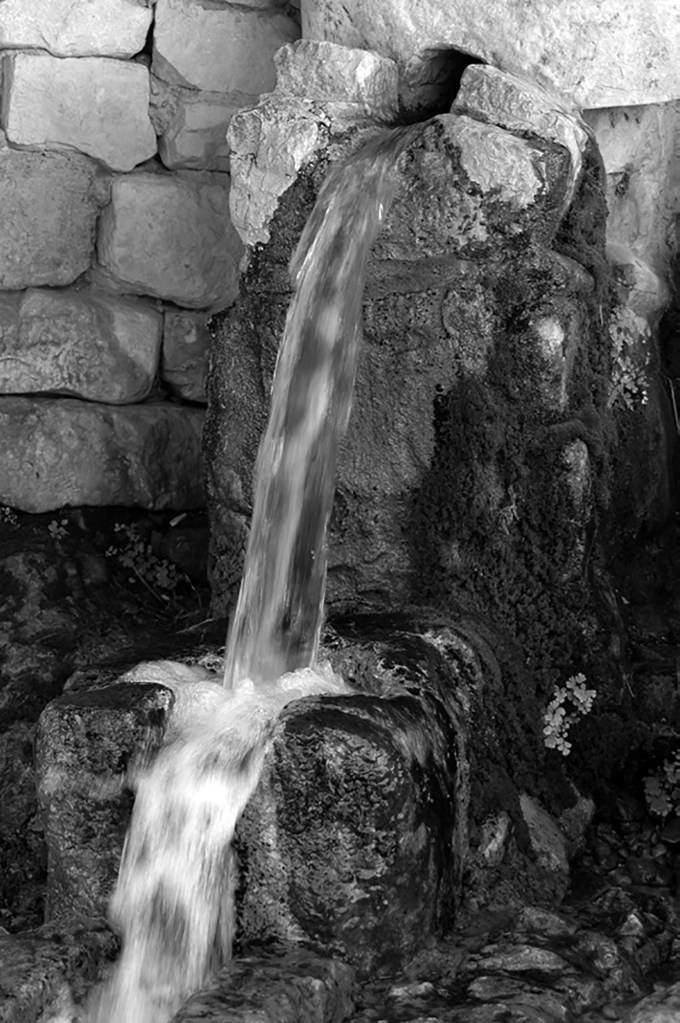
Images: Clockwise from upper left: Jamie Dedes, The BeZine files ©Jamie Dedes; Shulamit Spring, En Gedi area, ©2008 Michael Dickel; Hand in Springs, En Gedi area, ©2008 Michael Dickel; Jerusalem’s four quarters, from What makes Jerusalem so holy?, © BBC 2014

Notes for the poem

The four quarters of Jerusalem — The Armenian, Christian, Muslim, and Jewish Quarters

The Western Wall — the exposed section of wall that enclosed The Temple Mount, Jerusalem

Al Aqsa Mosque — one of the holiest Islamic sites, on top of The Temple Mount

The Church of the Holy Sepulchre — a sprawling complex of a cathedral that encompasses sites associated with the crucifixion and burial of Jesus; the management / administration of the complex is divided between several different Christian denominations, the main ones (according to Wikipedia): Greek Orthodox, Roman Catholic and Armenian Apostolic, and to a lesser degree the Coptic Orthodox, Syriac Orthodox and Ethiopian Orthodox

The Salt Sea — a literal translation of ים המלח (Yam HaMelech), the Hebrew name for what in English is called The Dead Sea (see Yam HaMelech)

En Gedi — the name of an oasis area (now a kibbutz and national park) in the cliffs above The Salt Sea, which has supported human habitation for thousands of years and been a stop-over for travelers for longer. Four springs provide water: En Gedi, En David, En Shulamit, and En Arugot

Yam HaMelech — the transliteration of the Hebrew ים המלח, literally, The Salt Sea, the Hebrew name for what in English is called The Dead Sea (see The Salt Sea); though springing from unrelated roots, the Hebrew מלח (melech — salt) and מלך (melach—king / ruler) sound similar; the word מַלְאָך (melakh, meaning messenger and translated as angel in Biblical texts), also sounds similar to מלח (melech — salt), but shares the root of מלך (melach—king / ruler); Yam HaMelech is associated with the land of Sodom, and there is a salt formation called “Lot’s Wife” in the region

©2020 Michael Dickel
All rights reserved
Breathing

inspiration / expiration

 silent blue night
 just before light
 eases tension
 by whispers—
 that moment
 I hear you breathe—
 in-drawn breath spirals,
 a gentle swish,
 brushes on cymbals
 soft shush, shush,
 shush 

©2020 Michael Dickel
All rights reserved

Strange Fire

Trumpy(un)Liberty
The words are the 2017 (POTUS inauguration) version of a 2012 poem.
The image appeared with the words below it in Meta/ Phor(e) /Play as: “An (anti-)Inauguration Poem.”


©2020 Michael Dickel
Multi-media and Audio ©2020; Poem ©2012–2017; Digital Landscape (image) ©2017.
Earlier versions of the poem, audio, and  mulit-media appeared on The BeZine in 2018 with three other multi-media poems here.


Michael Dickel, a contributing editor for The BeZine, writes, creates art, and teaches in Jerusalem, Israel, where he lives with his wife and two young children. The World Behind It, Chaos… (WV? eBookPress, 2009), one of his first books, includes photographs and digital artwork from photos in a free PDF eBook format. His resistance chapbook of poetry, Breakfast at the End of Capitalism (locofo chaps, 2017) can also be downloaded for free as a PDF (or purchased in paper). His latest collection of poetry, Nothing Remembers, came out from Finishing Line Press in September, 2019. Other books include The Palm Reading after The Toad’s Garden, a collection of Flash Fiction (art by Ayelet Cohen), and War Surrounds Us, a collection of poetry, both from Is a Rose Press.


To Write a Peace Poem


“Poetry. It’s better than war!”  Michael Rothenberg, cofounder of 100,000 Poets (and friends) for Change


Introduction for grownups

In 2013, I originally developed this exercise for some poetry workshops geared to upper-elementary school children in English language classes at The Jerusalem School of Beit Hanina, in East Jerusalem. The school’s motto is “Peace begins with me,” also the name of a poetry anthology for children. My workshops coincided with Peace Days at the school. This version is modified here a wider audience.

I posted it on my blogZine, Meta/ Phor(e) /Play in 2018. It has been a very popular post, one of the most popular on that Zine.

Please feel free to use this exercise with children, teens, adults you know or work with, and to modify it to your needs. I ask only that you give me credit for it and include the credits for the poems, if you use them.


Introduction for everybody

There are some words a poet might call “big.” They are not long words, with lots of letters. However, they are “big” because when you say them or when you read them, they hold a lot of things in them or a large, important meaning.

Now, if a word is very big, a poet may not want to use it in the poem at all. The whole poem may be about this very big word. If I put the word in my poem, though, it could break the poem. A person reading it would not know exactly what I meant by it. Or a person may mean one of the other things the word could mean.

Peace can be a very big word like that. We can all say we want peace. Every person might make a wish like this: “May Peace prevail on Earth.” (When something “prevails,” it wins, it is everywhere and leads everything.) Yet, the poet asks, “What do I mean by peace? What exactly is this peace I want?”

Poets can write about a big word like peace though, if they ask questions about it. They write about the answers they find. They do not always use the word “peace” when they do.

Let’s try to write a poem now, about peace. But don’t use the word peace!

Instead, ask some questions about peace, and write your answers down.


What kind of questions do poets ask?

Some of the questions poets ask have to do with the senses. Others have to do with places, or people, or things.

Below are some questions a poet might ask. They are here to help you write a poem about peace. You can ask your own questions, too.

Write down some answers to these questions (or your own, or both). You can make a list of words or phrases, write a sentence, a paragraph, a story, or a piece of a poem…

But you don’t have to write the whole poem. You will do that after answering the questions.

Some questions to help you start

1. What does peace look like? Is there a place that you go to or have gone to where you can see peace? Where the view looks like peace?

2. What would peace feel like, if you could touch it? Is there something you touch that feels like peace to you?

3. What does peace sound like? Is there a sound you hear every day or just sometimes that sounds like peace for you?

4 What about a taste? What would peace taste like ? Do you eat anything that tastes like peace?

5. What would peace smell like? Do you ever smell peace? What other things might smell like peace?

Some more questions

Your answers from the questions you just answered can help you answer some of these questions. Or, write new answers.

Imagine someone who doesn’t know what peace is. Try to describe peace to this person as though it is an object in the world.

What does it look like?

What does it sound like?

What does it smell like?

What does it taste like?

And, what does it feel like?

Imagine someone else who doesn’t know what peace is. Try to describe peace as something people do.

Who does it?

What do they do?

Where do they do it?

When do they do it?

Why do they do it?

How do they do it?

What do they look like doing it?

What do they sound like?

Write your own poem

Look over all of your answers. Can you think of other things to write to say more about your answers? Do you have other questions that you want to ask about peace?

Do some of your answers help you think of a poem to write?

Are some of your answers fun? Funny?

Do some excite you?

Do some seem very true to you?

Do the answers to one question seem connected to the answers to another one?

Now write down a poem. You can change it as you go. You can change it after it is all written down the first time, too. Your poem can rhyme, but it doesn’t have to. The lines of a poem are usually short, but you can also write them longer. Usually, they are not really, really long. Sometimes, they look like prose (and are called “prose poems”).

Try it now!


Now that you have written a poem

Go to page 2 to read two of my poems that I share with classes.


Another protest song | a poem


Again. War machines seek blood.
Fucking military industrialists
penetrating, Trump’s premature
timing, vampire-sucking lives dry.

Hezbollah meeting
with Hamas faction leaders.
A pre-dawn rocket fired
from southern Gaza
to north of Tel Aviv.

The pounding of Gaza
a deep bass drum.

Let’s try canceling
the Israel elections.
If Bibi-Bob does it here,
Trumpty-dump can do it

anywhere.
Tick-tock

unwind the lock
rewind the hammer,
the bell, the song.

Peace.

Peace.

Peace.

Ring your bells
across the valleys
and echo across the hills
until the war machines
break down under
pressures of harmony.

–2019 from Israel

©2019 Michael Dickel

History of Peace / History of War
Digital Landscape from Photographs
©2020 Michael Dickel


Michael Dickel
Lucky Goat Café,
Tallahassee Florida
©2018 Cindy Dickel


Michael Dickel (a contributing editor for The BeZine) has had writing and art in print and online since 1987.  His latest collection of poetry, Nothing Remembers, came out in 2019 from Finishing Line Press, and received 3rd place for poetry in the Feathered Quill Book Awards–2020. His also won the international Reuben Rose Poetry Award (2009 and 2008), and has been translated into several languages. A poetry chap book, Breakfast at the End of Capitalism, came out in 2017; The Palm Reading after The Toad’s Garden, a flash fiction collection, came out in 2016. Previous books: War Surrounds Us (2014), Midwest / Mid-East (2012), and The World Behind It, Chaos… (2009). He co-edited Voices Israel Volume 36, was managing editor for arc-23 and -24, and is a past-chair of the Israel Association of Writers in English. With producer / director David Fisher, he received a U.S.A. National Endowment of Humanities documentary-film development grant. He currently is a lecturer at David Yellin Academic College of Education, Jerusalem, Israel.


The Flood


I fold a piece of paper, a ghost from the past.
Will it rain tonight, as has been forecast?
If a downpour falls, will flash floods follow?
Water would erode the lies and the glitter,
I hear, that I freely threw out on my way.

I fold a piece of paper, a ghost of the past,
faint shadows of words once boldly painted black.
When the downpour comes, will the flash floods blast
through the rock walls that grief has packed?
Will I sift fool’s gold from that loosened silt?

I fold a piece of paper, a ghost from the past.
The fortune in my cookie was never meant to last.
I don’t know if that’s good or bad. At dinner,
the conversation turned. Falling rain drowned
out whatever sense that may have remained.

I fold a piece of paper, a ghost of a crane,
in the hopes that peace will come into my refrain.
Will the rushing waves finally clear a way?
I wonder if that time comes, will I be able
to travel the paved road that remains?

I fold a piece of paper, a ghost from the past.
Will it rain tonight, as has been forecast?
If a downpour falls, will flash floods follow?
Water would erode the lies and the glitter,
I hear, that I freely tossed in the way.

—Michael Dickel ©2019


Michael Dickel—Digital Self-Portrait from Photograph
Michael Dickel
Digital Self-Portrait from Photograph
©2019

Michael Dickel is a contributing editor for The BeZine. He writes, creates art, and teaches in Jerusalem, Israel, where he lives with his wife and two young children. The World Behind It, Chaos… (WV? eBookPress, 2009), one of his first books, includes photographs and digital artwork from photos in a free PDF eBook format. His resistance chapbook of poetry, Breakfast at the End of Capitalism (locofo chaps, 2017) can also be downloaded for free as a PDF (or purchased in paper). His latest collection of poetry, Nothing Remembers, came out from Finishing Line Press in September, 2019. Other books include The Palm Reading after The Toad’s Garden, a collection of Flash Fiction (art by Ayelet Cohen), and War Surrounds Us, a collection of poetry, both from Is a Rose Press.


Three poems on A Life of the Spirit

Poems from
Nothing Remembers
on A Life of the Spirit


Called to faith

A man stands over the culvert on the gravel road onto the farm.
The stone he hefts in his hand—igneous remnants from before time,
bits of crystal cooled across history mingled with impurities beyond memory.
He lofts this shard of the past in a slow arc that ends in the dark pool of standing water.

Sometimes he wishes he could follow, down through the water as surface tension
erases faint traces; he wishes sometimes that he could fall through the cold numbness
to sink into the soft, welcoming mud—to sleep among layers of last year’s rotting leaves
and the year’s before and the year’s before and years’ before—layers of organic memory that,

still,

do not reach the stone’s most recent memory. The stone takes no notice.
And the man does not sink with the stone into murkiness. The morning calls
him to his desire, so he chooses to return to the work at hand. There is a garden
to plow and disk. There is corn to plant and tend. There are nettles to uproot and remove.

Despite the threat of frost or hail or rabbit or deer, he trusts
that in August there will be sweet corn and tomatoes and beans.
He will gather some in and eat. He will gather some in to store. And
he will gather and save the best for next year’s seeds. These make up his act of love.


Napping in a chair

Yesterday seagulls laughed
under the storm clouds caught
in mountains behind the sea.

As I ambled through a plaza,
I heard someone playing piano
stop and start the music over.

People ate lunch, drank coffee.
The rain did not fall on them or
anyone. The ships slid slowly by.

I noticed these things. I did not
notice other things. I thought of
you, I am not sure why. I walked.

I heard sea gulls, a piano, the sea.
I listened for echoes of your voice.
I remembered something you said.

As I neared the wharf, fish swam near me.
Only faint shadows revealed them.
Two lovers sat under trees conversing.

I thought of someone. I don’t recall who.


Somewhere, a whirring fan

“With this beginning, the unknown concealed one created the palace. This palace is called אלוהים (Elohim), God. The secret is: בראשית ברא אלוהים (Bereshit bara Elohim), With beginning, _______ created God (Genesis 1:1).”     — Zohar (I:15a)

“…She knows that her beloved is searching for her; so what does she do? She opens the portal to her hidden room [in the palace] slightly and reveals her face for a moment, and then hides it again.”     — Zohar (II.99a)

Somewhere, a whirring fan
in an open window spins
possibilities into threads.
I heard a rumor that the
Oleander flowers shed
their pink and white grace
for poisonous reason.
A car slinks down traces
of a melted tar road.

You like to stand by the window,
and want him to see you there,
behind a curtain. He doesn’t
know you or you him. He walks
the span of street, infrequently
catching a glimpse of blue
eyes, a reflection in cracks
of the cotton-hued skies.

The crow calls from a tree.
Another day, green parrots
screech louder than the
traffic flees. The heat lays
like a corpse upon our city.
Bougainvillea bracts spot
gardens with false hope,
colorful arrays of forgotten
pain turned to sweet honey.

He forgets you, though you
never meet. And you, also,
forget—window, curtains,
the desire for a stranger’s
glad glance. Someone wants
this to be autobiography, a
short recollection of moments
actually lived. That person never
dreamed, does not exist anymore.

And I never existed because I
don’t stop dreaming. Poetry, like
a god, provides code for an image,
keying it to suggest a revelation-lode
from your past. You want it to be
my past. Parrots screech.
A crow calls. A beautiful Other
by the window waits. This all
happens to you while I write

these scenes tangled in dreams,
whirring fans—the poem unable
to light any form, your reading,
this page; unable to discover more
than bare wisps of meaning in the
vibrations of words—your song longing
for someone in the infinite void. Wanting
a mortal to read you into this, to see you
alive, you seek a new beginning—genesis.

Note: Zohar refers to The Book of Splendor, one of the main texts of Kabbalah. Translations from the Hebrew are from the work of Daniel Matt.


©2019 Michael Dickel

These three poems come from Nothing Remembers, by Michael Dickel, released September 2019 from Finishing Line Press.


Michael Dickel—Digital Self-Portrait from Photograph
Michael Dickel
Digital Self-Portrait from Photograph
©2019

Michael Dickel is a contributing editor for The BeZine. He writes, creates art, and teaches in Jerusalem, Israel, where he lives with his wife and two young children. The World Behind It, Chaos… (WV? eBookPress, 2009), one of his first books, includes photographs and digital artwork from photos in a free PDF eBook format. His resistance chapbook of poetry, Breakfast at the End of Capitalism (locofo chaps, 2017) can also be downloaded for free as a PDF (or purchased in paper). His latest collection of poetry, Nothing Remembers, came out from Finishing Line Press in September, 2019. Other books include The Palm Reading after The Toad’s Garden, a collection of Flash Fiction (art by Ayelet Cohen), and War Surrounds Us, a collection of poetry, both from Is a Rose Press.


Climate Crisis
Spirit

Iris
Digital art by Michael Dickel ©2019


O God methinks it were a happy life
To be no better than a homely swain;
To sit upon a hill, as I do now,
To carve out dials quaintly, point by point,
Thereby to see the minutes how they run.
  —(Shakespeare, William. Henry VI, Act II Scene 5 Lines 21-25)

In a 1972 College English article, Stanford scholar Herbert Lindenberger quotes the above lines from Shakespeare’s Henry VI (Part III). He calls them a “set speech, highly rhetorical, in fact ritualistic in nature…[that call] particular attention to themselves in the way they contrast with the prevailing mode of Shakespeare’s early historical plays” (335). They are Pastoral Poetry, a historical poetic form known to Shakespeare and one of several pastoral versions found in his work.

Pastoral poetry would see a resurgence and renewal in the Romantic Period of literature, much later. Pastoral in this literary sense, and for the Romantics, refers to nature and human dominion over it.  A life of spirit, God, Creation, are most fully experienced in Nature. From the view of Transcendentalism (closely associated with Romanticism), this comes when the spirit / soul rises, or connects, to Heaven / Paradise / God through Nature and thus transcends the physical world.

The particular version of the pastoral that Shakespeare employed above, Lindenberger writes, “has a special bearing on the pastoral of Romanticism” (335). What these lines do in particular, Lindenberger explains, is to “…provide a kind of pastoral relief from the bitter realities of the historical world with which the [history] plays are centrally concerned” (335). And how much more do we need this relief than in a time as our own, when life seems more about bitter realities than pleasant sojourns among flowers and trees?

Can we now (re)claim pastoralism / transcendentalism / sublimity in adopting a life of the spirit in our own bitter times? While wars, industry, and bitter politics contribute to the destruction of the “natural world” through habitat destruction, pollution, and global warming—perhaps ultimately destroying life on our planet through the Climate Crisis—can we still find a spiritual connection through nature? Or, as its killers, will we find a Messenger, flaming sword in hand, barring our way?


For Romanticism and Transcendentalism, Nature was not all Pastoral gardens and orchards—aesthetics and philosophy of the movement “divided the natural world into categories: the Pastoral, the Picturesque, and the Sublime,” according to Lauren Rabb, who curated the 2009–2010 University of Arizona Museum of Art exhibit on these themes (19th Century Landscape, unpaginated web page, 2009).

She goes on:

The first two represent Nature as a comforting source of physical and spiritual sustenance. The last, as articulated by Edmund Burke in his Philosophical Enquiry into the Origin of our Ideas of the Sublime and Beautiful (1757), refers to the thrill and danger of confronting untamed Nature and its overwhelming forces, such as thunderstorms and deep chasms. Whereas the Pastoral and Picturesque reference mankind’s ability to control the natural world, the Sublime is a humbling reminder that humanity is not all-powerful.

Pastoral landscapes celebrate the dominion of mankind over nature. The scenes are peaceful, often depicting ripe harvests, lovely gardens, manicured lawns with broad vistas, and fattened livestock. Man has developed and tamed the landscape – it yields the necessities we need to live, as well as beauty and safety. The Picturesque — a category developed in the late 1700s by clergyman and artist William Gilpin — refers to the charm of discovering the landscape in its natural state. Gilpin encouraged his followers to engage in “picturesque travel” – the goal of which was to discover beauty created solely by Nature. The artist and the viewer delight in unspoiled panoramas: sunsets behind majestic mountains, an egret taking off from a quiet marsh, a deer bathed in a shaft of light in the woods. These scenes are uplifting, but not frightening.

Sublime images, on the other hand, show Nature at its most fearsome; in fact, Burke believed that “terror is in all cases… the ruling principle of the sublime.” There is an awe and reverence for the wild that to Burke was akin to violent passion. Humanity is small and impotent in front of raging rivers, dizzying cliffs and canyons, ferocious animals, and violent storms. These works can also be uplifting, but in a deeply spiritual way. The Sublime emphasizes God’s dominion over humanity and considers the possible folly in mankind’s overriding confidence.

These three competing ways of looking at Nature are relevant today. In the 21st century, we still debate humanity’s right to use the planet for only our own good. Global warming, mining rights, wildlife preservation and land use are all controversial issues. As you look at these 19th century landscapes [in the exhibition], think about how artists over time have contributed to our view of the natural world and its significance in our lives. (Rabb 2009) 

Our encounters with the sublime in the 21st century come in the forms of unprecedented heat waves, storms, floods, wildfires, and winter storms—made much worse as the result of the Climate Crisis—providing terror. However, this fearsome violence shows that mankind’s domination (“dominion over”) nature is neither “uplifting” nor emphasizing “God’s dominion.”  Rather, our encounter with the sublimity of The Climate Crisis reveals all too clearly “the possible folly in mankind’s overriding confidence.” These are the consequences of using “the planet for only our own good.”


domine

[Vocative caste of Latin, domin-us lord, master]; English (obsolete), Lord, Master… (excerpted from The Compact Edition of the Oxford English Dictionary, Vol. 1 A–O, p. 786)

dominion (n.)

mid-15c., “lordship, sovereign or supreme authority,” from Old French dominion “dominion, rule, power” and directly from Medieval Latin dominionem (nominative dominio), corresponding to Latin dominium “property, ownership,” from dominus “lord, master,” from domus “house” (from PIE root *dem- “house, household”).

In law, “power of control, right of uncontrolled possession, use, and disposal” (1650s). From 1510s as “territory or people subject to a specific government or control.”

British sovereign colonies often were called dominions, hence the Dominion of Canada, the formal title after the 1867 union, Dominion Day, the Canadian national holiday in celebration of the union, and Old Dominion, the popular name for the U.S. state of Virginia, first recorded 1778. (Online Etymology Dictionary)

dominate (v.)

1610s, “to rule over, control by mastery,” a back-formation from domination or else from Latin dominatus, past participle of dominarito rule, dominate, to govern,” from dominuslord, master,” from domushouse” (from PIE root *dem- “house, household”).… (Online Etymology Dictionary)

hubris (n.)

1. Excessive pride or self-confidence.

‘the self-assured hubris among economists was shaken in the late 1980s’

2. (in Greek tragedy) excessive pride towards or defiance of the gods, leading to nemesis. (Lexico)

hubris (n.)

1884, a back-formation from hubristic or else from Greek hybriswanton violence, insolence, outrage,” originally “presumption toward the gods;” the first element probably PIE *ud- “up, out” (see out (adv.)) but the meaning of the second is debated. Spelling hybris is more classically correct and began to appear in English in translations of Nietzsche c. 1911. (Online Etymology Dictionary)

[Emphases in bold-violet added.]


The Climate Crisis results from human hubris (excessive pride, but at its root: “wanton violence, insolence, outrage”; presumption toward the gods” through holding one’s self up as equal to the gods) in trying to dominate nature without acknowledging or fully understanding the effects of our own actions. And, with even greater hubris, now that we do understand what we do, defying Creation in greed and selfishness, we resist changing our course.

We need to acknowledge that The Climate Crisis threatens to destroy all life on Earth. If a life of the spirit emerges from or in nature, then we need to transcend a self-centered human greed to embrace a life of the spirit. Then, possibly, we will treat each other better, and work with all diligence to save our planet.

—Michael Dickel ©2019

“Our house is on fire…”
           —Greta Thunberg

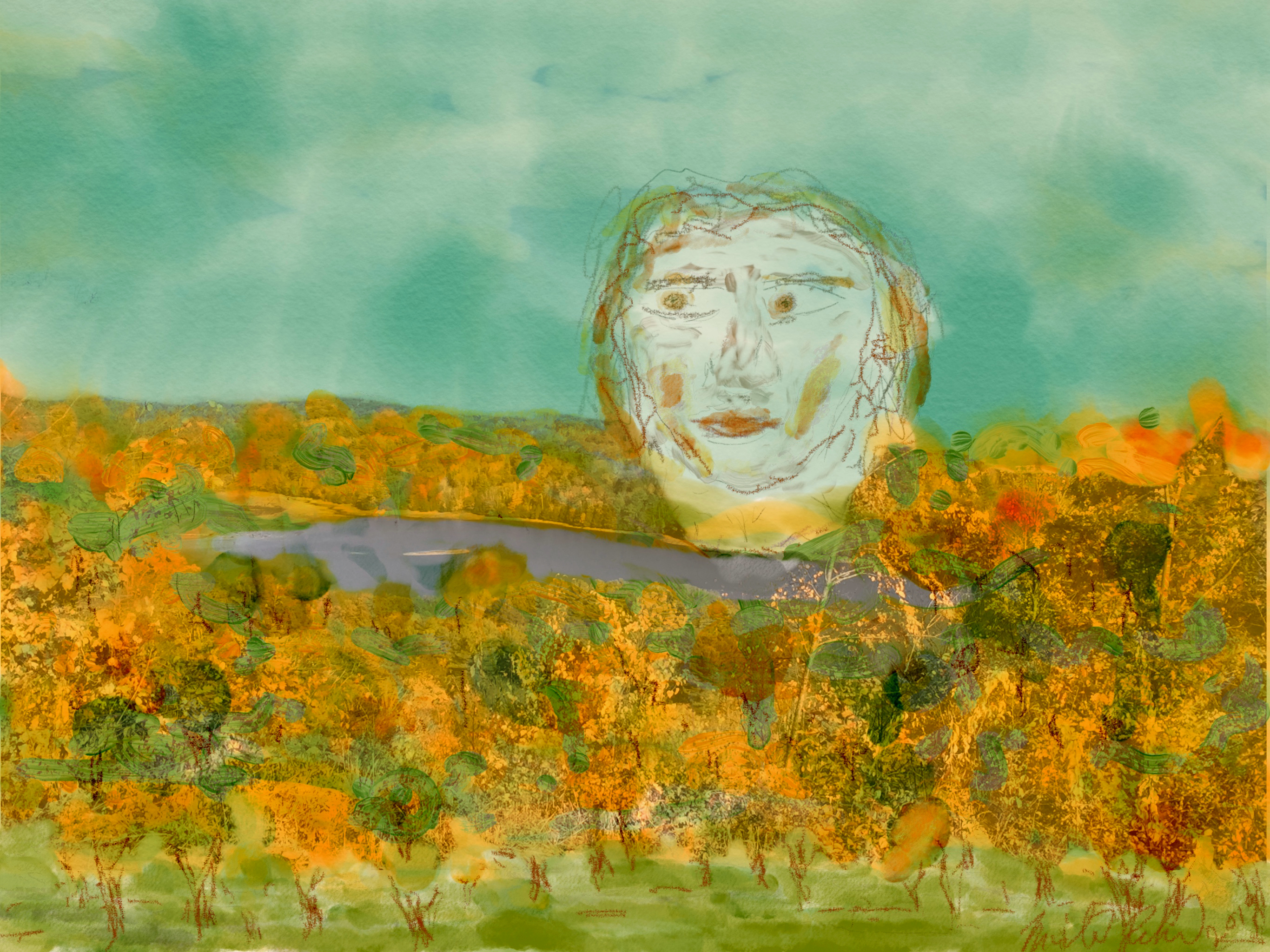
Transcendental Autumn Moon
Digital Art
©2019 Michael Dickel


Works Cited in the Essay

Lindenberger, Herbert. “The Idyllic Moment: On Pastoral and Romanticism.” College English, Vol. 34, no. 3, 1972, pp. 335–351. JSTOR, www.jstor.org/stable/375139.

Rabb, Lauren, Curator. “19th Century Landscape—The Pastoral, The Picturesque, and the Sublime.” The University of Arizona Museum of Art. Website. artmuseum.arizona.edu/events/event/19th-century-landscape-the-pastoral-the-picturesque-and-the-sublime.


Michael Dickel—Digital Self-Portrait from Photograph
Michael Dickel
Digital Self-Portrait from Photograph
©2019

Michael Dickel is a contributing editor for The BeZine. He writes, creates art, and teaches in Jerusalem, Israel, where he lives with his wife and two young children. The World Behind It, Chaos… (WV? eBookPress, 2009), one of his first books, includes photographs and digital artwork from photos in a free PDF eBook format. His resistance chapbook of poetry, Breakfast at the End of Capitalism (locofo chaps, 2017) can also be downloaded for free as a PDF (or purchased in paper). His latest collection of poetry, Nothing Remembers, came out from Finishing Line Press in September, 2019. Other books include The Palm Reading after The Toad’s Garden, a collection of Flash Fiction (art by Ayelet Cohen), and War Surrounds Us, a collection of poetry, both from Is a Rose Press.


Pastoral—Sublime

Change


“If you want change, let me throw it at you
as hard as I can at your dirty face…”
—Homeless read mean tweets (YouTube, now private)

Let me throw justice at you, let it hit your face
and wake us up. Let me throw opportunity at you,
let it hit your face and give us a chance.

Let me throw change at you, change in the world,
change creating justice and freedom,
change creating opportunity, real change
for all. Let me throw democracy at you, let it
hit us in the face so hard that it cracks open
and spills out into the land, everywhere, change—
real democracy, real hope, real opportunity.

Let me throw change and the stinking, rotten
carcass of consumer capitalism and greed at
those so privileged and shallow as to think white
teeth are more important than your humanity.

And then, god help me, let me find love
and compassion to throw as hard as I can
into our faces, into our lives, into the hearts
of us all, of us all standing here watching
in voyeuristic pleasures of despair.

© 2019, Michael Dickel

The Crab

He picks his way along the rough volcanic shelf as waves wash over his water shoes, bubbling and stirring through tide pools of red sea-anemones feeding. Sharp rock cuts into the rubber soles, trying to cut flesh. Fish dart about in their stone bowls. Crabs back into black holes, hiding from his shade.

Sea Anemone in Tide Pool
Photograph
©2017 Michael Dickel

Crabs scuttle everywhere, in the shadow of rocks, through his mind.

He stoops down and grabs one with a fast hand, taking care that claws can’t catch flesh. Eyes on stalks watch him. Into what sort of soul do such onyx spheres window?

He considers crushing the crab as a metaphoric act of defiance.


The crabs invaded quickly, furious fascists aggressively pouring over boundaries, intolerantly attacking cells and greedily taking all their victims had. Neoplasia. Neoplasm. They established bases in lymph nodes, hip bone, vertebrae, a single rib. He shelters from the belligerent strain, not wanting to face snipping claws tearing him apart.

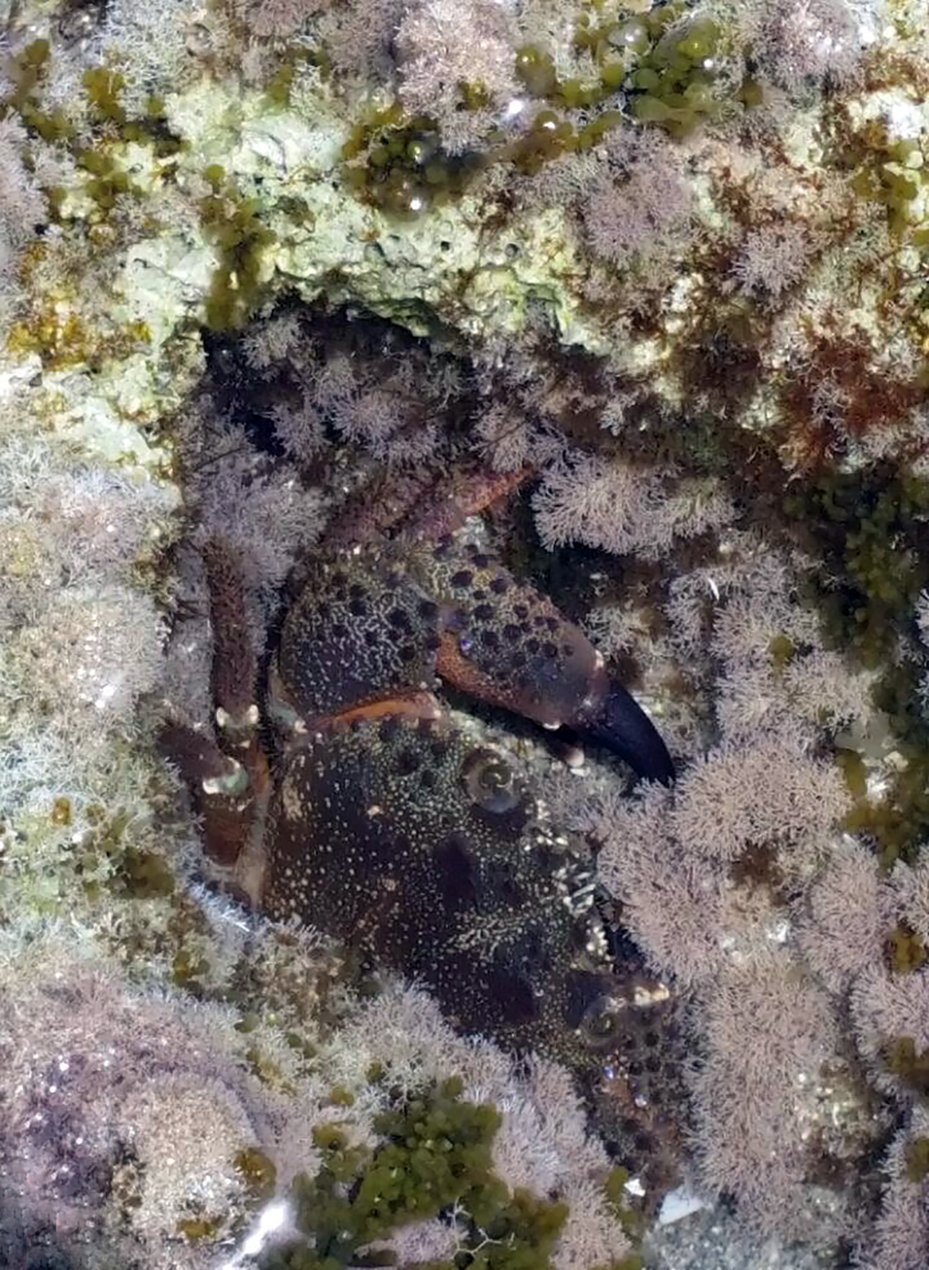
Crab in Tide Pool
Photograph
©2017 Michael Dickel

Who wants this crab?

Immunochemotherapy poisons his body like pollution in these choppy waves kill the sea. Only, his body supposedly will come back to health and strength. Watching the plastic-bottles bobbing off the shelf, out of reach behind the breaking waves, he doubts the oceans will return to health. He wonders if he will.

Does it matter whether he returns—

If the seas die? If the forests fall? If carbon dioxide blankets the globe? If our house is on fire and our children will burn?


He looks at the crab in his hand as it raises its pincers defensively.

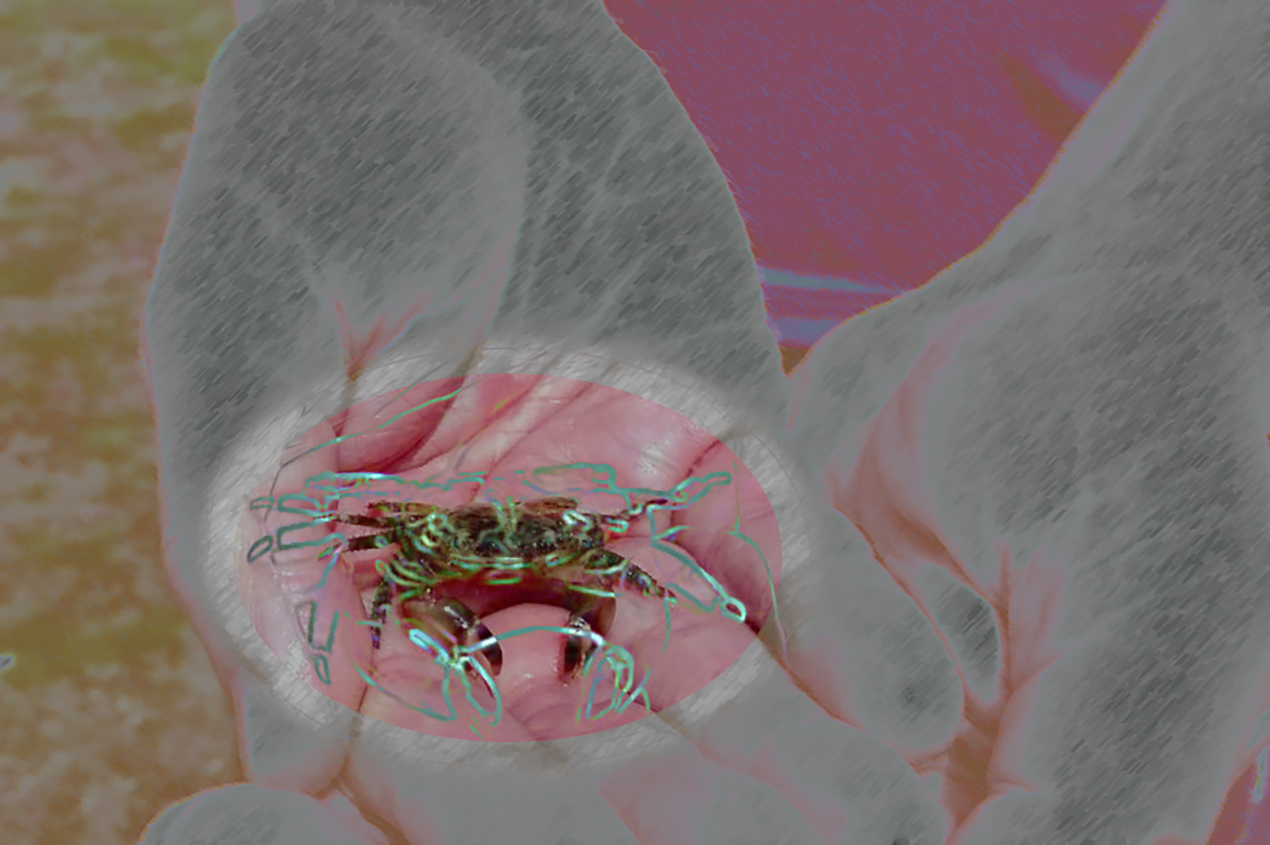
Holding the Crab
Digital art from photograph
©2019 Michael Dickel

Wind touches him, winnows emotional clouds from his skin. He releases the creature near a crevice, walks to the edge of the rock ledge. He looks out to where green meets blue at an indefinable distance, then down into unfathomable water where he sees green darkening to black—

no reflection, neither sky nor him.

Michael Dickel ©2019


Author’s note: If you check the links, many go to sources with more information about climate change (like the ones in the first paragraph, for example). Some define terms related to The Crab (cancer). The photographs of crabs and a sea anemone are from Habonim Nature Park, on the Mediterranean, south of Haifa, Israel. More info: Union of Concerned Scientists FAQ


Peace Alphabet

Average the
costs
contained in
conflicted—
me;

Brave the
challenges
chanced by
characterizing as human—
them;

Consider
another
analogy
announcing—
I

Decide
altogether
all people could be,
altruistically—
we;

Eviscerate
guilt
guile
grand schemes of—
us;

Forget
everything
everyone
ever told—
you—

Generically and
specifically this, a
species of
spelled out—
our

Historically
transfigured
transfixed
transferred—
other,

(those)

Ischemic
stories
stuttering to a
stop—
we

Join
together
today not
tomorrow to change—
ourselves;

Knowing
nothing,
no longer
noting—
I;

Lingering
longingly
looking
lost—
we

Make
connections
contacting
considerations, again—
we…

Nested in:
not us,
not them,
nothing more than
seeing the tear

(in someone
else’s eye).

Opening
crying eyes
almost,
finding—
them;

Possibly
possibility
potentiality
probability—
peace;

Questions
forming
to know,
not to tear
down;

Restoring
connections
lost
to fear;
then

Saying
what comes
from hearts
broken
un-broken,

They
offer
a slice
something almost
broken open,

Undulating
sweet tastes
of light
promising—
they;

View
us as
we view us
and we view
them

With
similar
intent
to build—
us;

Xylophone
bell tones
singing
together—
we;

Yearn
for this
peace
to be—
our;

(reality)

Zeniths—
like lemon
and orange—
sweet and sour
all together.

©2019, Michael Dickel

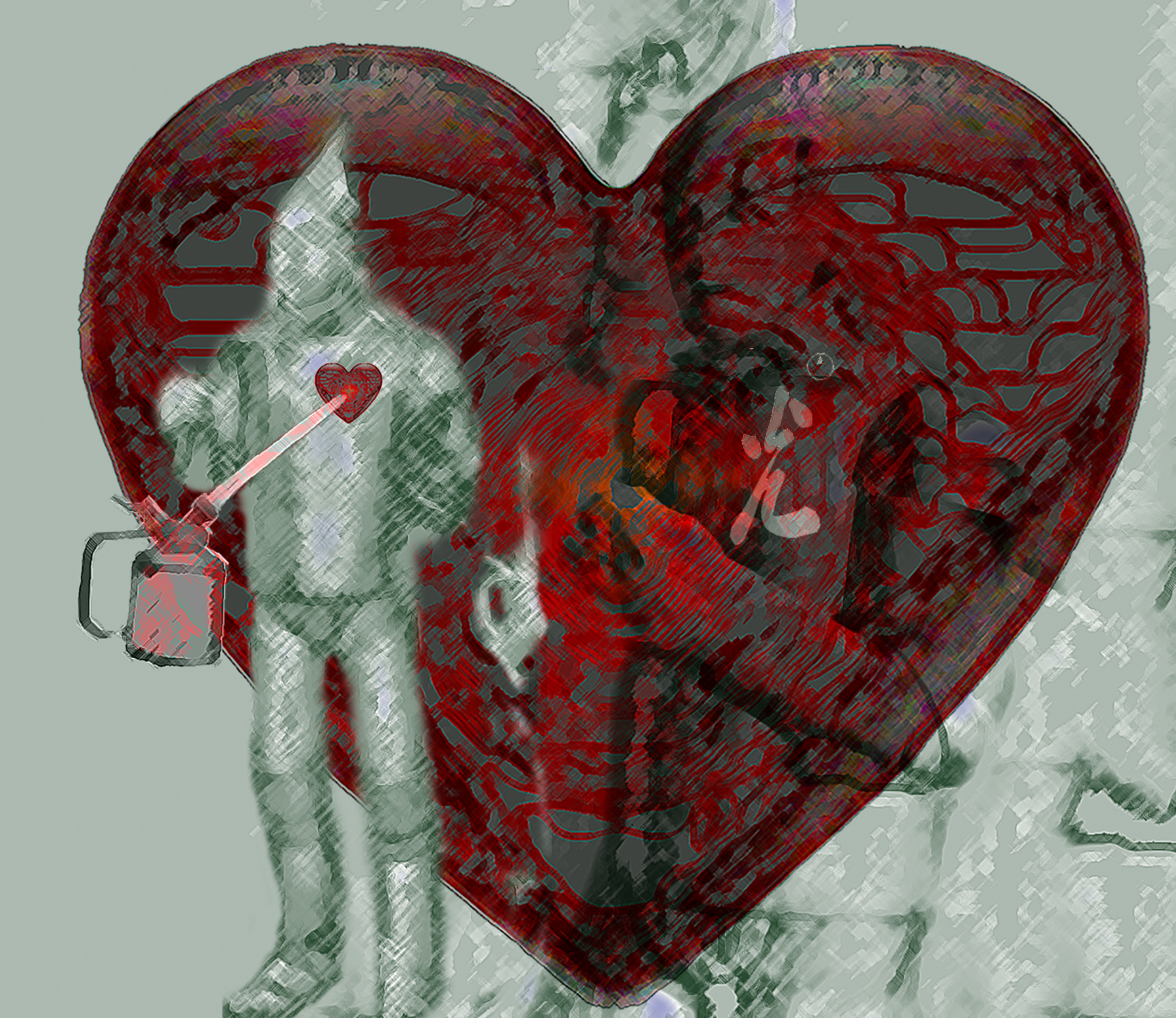
Here I Stand

I am frozen. Like a Tin Woodcutter
without oil after the monsoons.

I wait. Like a Scarecrow wanting to disturb
the debates of philosopher kings.

I weep. Like a Lion whose mask
of assurance fell off before dinner.

I have never been to Kansas, but I
know I won’t be able to go back home.

I hear the marching soldiers. I see
the torches. I feel the pitchfork prongs.

The Emerald City lies in dust.

My joints, locked with rust, refuse to move.
My mouth “ohs” at the coming train wreck.

I stand and watch in horror.
In my hollow chest, an old clock

whispers, trying to wake me,
asking me to take a stand, here.

©2019, Michael Dickel

January 2020 This poem translated into Bulgarian by Miroslava Panayotova as ТУК СТОЯ…

Here I stand… Tin Woodcutter Digital art @2019 Michael Dickel
Like a Tin Woodcutter…
Digital art
@2019 Michael Dickel

Julia Vinograd Slipped Into My Writing

Julia Vinograd died at age 75 on December 4, 2018. (Coincidentally, my mother entered the world 101 years ago on the same date.) Vinograd was recognized in 1985, when she won a Before Columbus Foundation’s American Book Award for The Book of Jerusalem, which is how she first came to my attention (I have a copy of the book on my poetry shelf). She was called “the bubble lady” in Berkeley, as she was known for blowing soap bubbles on the street—something she learned diffused tension and calmed people during the turbulent period of the late 1960s.

I found it interesting in Tom Dalzell‘s obituary of her to note that other poets she cited as influences on her work also influence my own. Her poetry influenced my own, and she slipped into a couple of my own pieces—epigraphs to a poem and an anachronistic cameo in a work of flash fiction. The event in the flash occurred in San Francisco in 1967, but according to her obituary, she first started using the bubbles in 1969—but she was in Berkeley in 1967, so why not take some poetic license?

I wish I had had the chance to meet her in person, but I am grateful to have her poetry. I offer both my poem and flash fiction here, to honor her memory with her presence in them.

Go forward, dear poet and Bubble Lady. New adventures await. May your bubbles bring peace wherever your soul now travels.

(A selection of Julia Vinograd’s current books is available from Zeitgeist Press.)

In the beginning…

                                 Jerusalem is weeping,
                                 all temples shake in that sudden storm…
                                                           —Julia Vinograd

I
As our minds turned to words the bowl
you spun and placed
	on the mantle
		shattered—
light spilled everywhere
		chaos turned on order

(but I forget how it went, now)— 
		pains?
and doubts?
	loud! voices shouted
		across empty rooms
(borders)
	we still strain to fill with remnant shards—
			(something like that)

Shadow gave shape and definition
to every thing it touched
		naming the light in harsh accents
		as it played along the edge of white-gold rings

We sought a new urn where we could place our ashes—
	(I intone)—
and desired sparks
	to ignite old passions

Grey-grit drudge of
	laundry room
	kitchen sink
	garbage pail
	lawn clippings
	scraped paint
condensed into
	doubt
	shouts
	inertia
two sparkling flames
		and shades
of memory that slips
	like drips of water from a leaky faucet
evaporate
	down the drain
		through the grease- and hair-
	clogged trap on their way
to the sewer.

Now we piece a pot together
		as though it could be
whole
	and wear baggy clothes in place of revery.


II
This dazzling street corner, then, is where it all begins;
you and I walk down different sidewalks, along right-angles
toward sunrise and sunset, north pole and south.
Some fly buzzes around my ear, you slap a mosquito
because we no longer believe in purple candles with
proud intensity, and have stopped discussing
with any sincerity the form of oak trees, or
tomorrow.  We just pay the bills today,
and to our credit keep interest

	in something or other.  In this case, we grind grain
	and wear millstones and pretend we have some deep
injury or insult
	which overshadows simple flight

To	jobs
	and play
	and children
	and marriage
	and society
to	greed
	and avarice
	and lust
	and melancholy

we dedicate
	our lives in earnest transition
from spark to ash—		(I swear)
	I live
		this death with you.

but we all know that these words lie
		to the starving child

in war-torn Jerusalem

	each child’s tear holds a bit of the shattered pot
and remembers the light we have extinguished

in our haste to turn away

                                 Jerusalem is weeping,
                                 listen with your blood.
                                                           —Julia Vinograd

In the Beginning originally appeared in Drash Pit, January 2013.


Evening

Time slows as light escapes and shadowed night falls over her face. Waves glitter moonlit sonatas in soporific rhythms of heart beat, lost sleep, then run deep in memory. Wet sand shines. The malt whiskey-mellow mood soaks into wind whispering patterns of hush, hush, hush. The bearded woman wishes for her nomadic life, no one’s wife wishes as fervently.

Neutralized like lost neutrinos whose loose cable sped them beyond light, she floats in her beach bar chair, feet digging dry, warm sand. Dinner din rises, falls, rises, falls from inside and outside, all around her the social groupings of ritual meeting, eating, drinking, mating. This world whirls faster through space than she can comprehend. Physics unravels the surrounding universes.

Night fall, an illusion. It rises up in the shadow of the earth around them. Out beyond shadow or illusion, light remains. Moon reflects evidence, an occasional passing satellite agrees, the spots of planets, if she could recall which and where, concur. Time measures itself in movement through space while flying particles imagine themselves still. Like her smooth-faced lover who so engaged dance that he seemed still, the world flowing around him impossibly in motion.

He did move. Into her life. Into her house. And, now, out of it. Gone. Like the hitchhiker long ago, and the man with the long ponytail before him.

Like 1967, the Summer of Love finished and gone. She stood on a street in the Haight one day, watching people. Then she went to Golden Gate Park for the funeral. Men, or probably boys from her current perspective, waved top hats, wore odd clothes from other eras, bright clothes tie-dyed last week. Women, or likely girls like her, showed scads of skin, tie-dye coverings, with vintage wear mixed and matched, furs even. Everyone strung out with beads. Dress-up days. Long flowing hair. Afros. The coffin hand-painted, a sign on the side: Summer of Love. Behind it, the corpse of Hippie. The Diggers dug it down to the grounded burial plot, tried to bury it next to money.

Hippie had died, they said. Killed by the media. Overexposed and misrepresented. Time covered the funeral, photo-spread opportunity. Maybe the counter culture period began here, or perhaps freaks freighted feverish transition into then.

Escapades of escaped expression extended from happenings into mediated madness; Hollywood and Madison Avenue caught the wave and surfed into the scene with conspicuous desire for consumption. She watched the mock funeral laugh at itself and joined in; Julia Vinograd blew bubbles in the procession. Someone said Ginsberg had come, but not that she saw.

A boy on stilts walked in the funeral, from the funeral into her life. She circled him on the street, he bent down, handed her a joint. Smoke and mirrors present, multimedia wonderment, diamond dream reflection, ghost stories and revelations. Rainbows refracted from his prism glasses. Nothing near but naked skin and slippery sweat.

They swam at Muir Beach. They meandered or stumbled through fairytale-fogged redwoods. One day, he drifted into the riptide and floated down to LA. She climbed a tree and joined a commune. Rumors reached out to her, reveling in revelations that he followed the Dead around the world, stilt walking the crowds and selling on the side.

Beach bar community buzzes, bees making honey. She follows the flower trail out of the whiskey haze and picks her path home. The gully crossed, she winds her way under the wind, tight into the pattern now, checkerboard laid bare, check and mate.

Matter never quite coalesced from the rambling energy randomly dominating her. She makes her way into the place, a sort of shelter sorting her out near the beach but away from everything, equidistant from the sun.

Shaking dinner from the kitchen, she eats what she wants and no more. Perhaps that is the pattern, she reflects. Then she swims into sleep on the sofa.

Evening originally appeared on Meta/ Phor(e) /Play, May 2013. It also appears in Michael Dickel’s collection of flash, The Palm Reading after The Toad’s Garden.


@2018 Michael Dickel

A Poem for the Tree of Life Synagogue


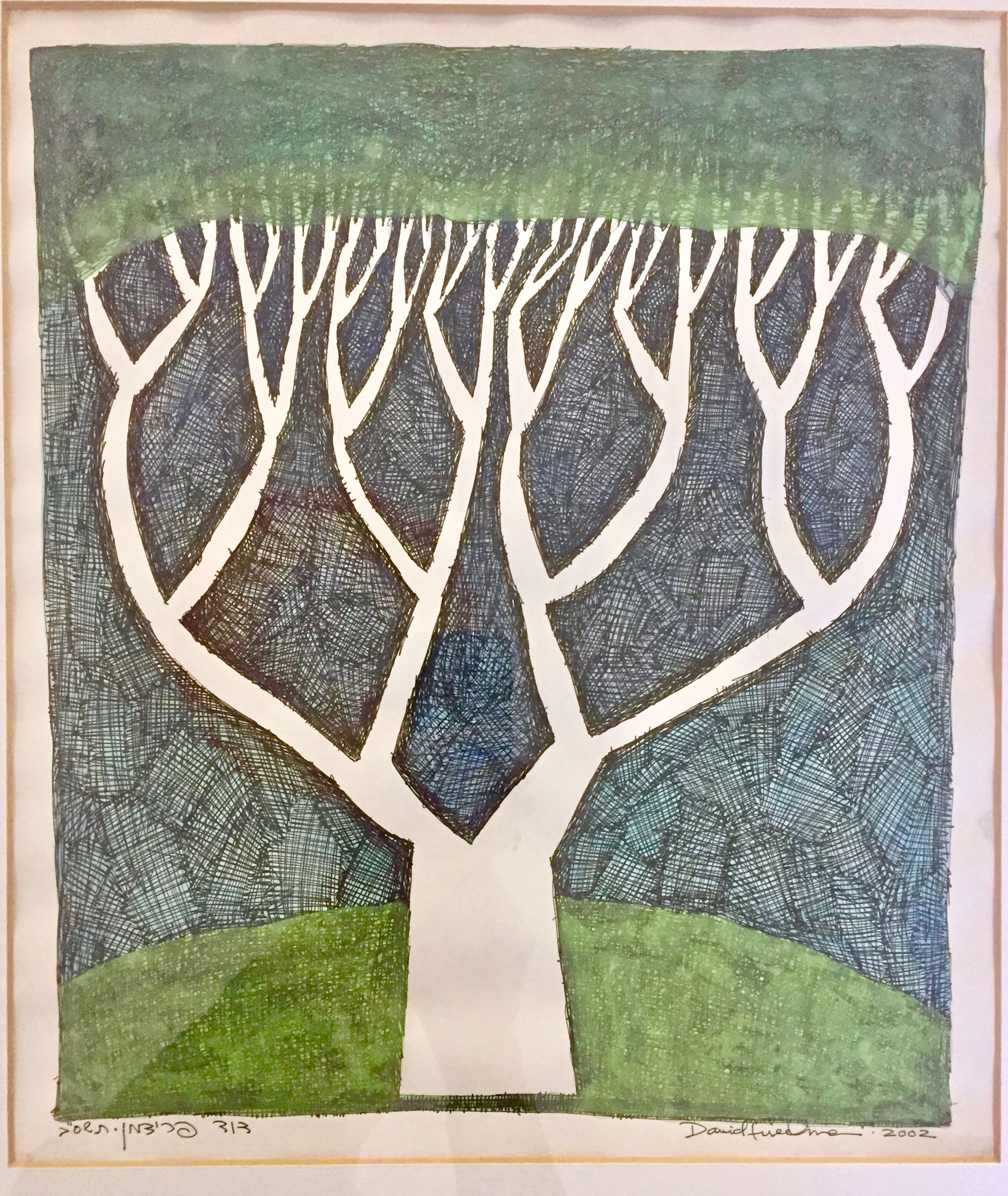
Etz Haim עצ חאים David Friedman ©2002 In the poet's collection.
Etz Haim עץ חיים
David Friedman
©2002 David Friedman
In the poet’s collection.

Etz Chaim  עץ חיים

Tonight the clocks rolled back.
Time changes, but we
cannot sleep an hour
more. Who can sleep tonight?

Man shot the Tree of Life,
riddled its trunk with lead,
that soft and poisonous
metal turned to gold

through twisted alchemy—
profit-politics a strained
Philosopher’s Stone.
Stone-cold fucked-up NRA,

stone-cold fear-monger swamp-
creature calling out loud
to lock up the Jew they
blame, honing fear’s dull blade

until it cuts the trunk,
and bloodies us all.

—Michael Dickel
Jerusalem
19 Heshvan 5779
(28 October 2018 C.E.)

©2018

Say their names:

Joyce Fienberg, 75
Richard Gottfried, 65
Rose Mallinger, 97
Jerry Rabinowitz, 66
Cecil Rosenthal, 59
David Rosenthal, 54
Bernice Simon, 84
Sylvan Simon, 86
Daniel Stein, 71
Melvin Wax, 88
Irving Younger, 69

Read about them in The New York Times.

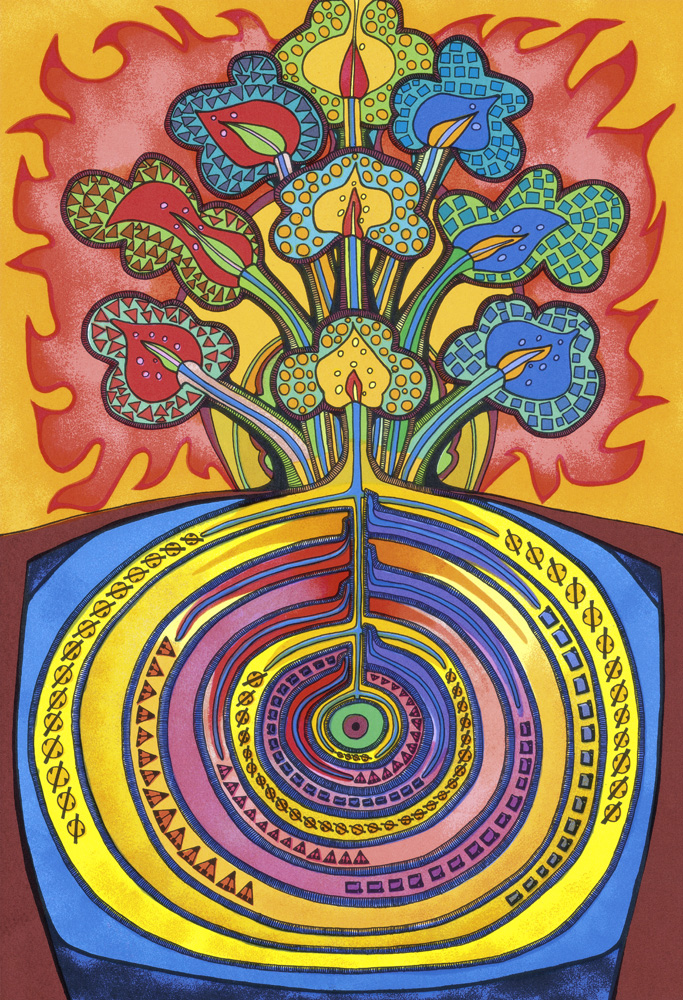
Tree of Life
David Friedman
©the artist


Just a few days before the Etz Chaim Murders…

“Just minutes after President Donald Trump called for unity in the wake of attempted bombings targeting a number of Democratic officials, he took a swing at ‘globalists’ and used the phrase ‘lock him up’ while chuckling. Trump was responding to a crowd yelling to lock up George Soros, a victim of the bombing attempt.”

—Nicole Goodkind, “Donald Trump Repeats ‘Lock Him Up’ Chant About George Soros Minutes After Calling for Unity Around Bomb Threats.” Newsweek 26 October, 2018


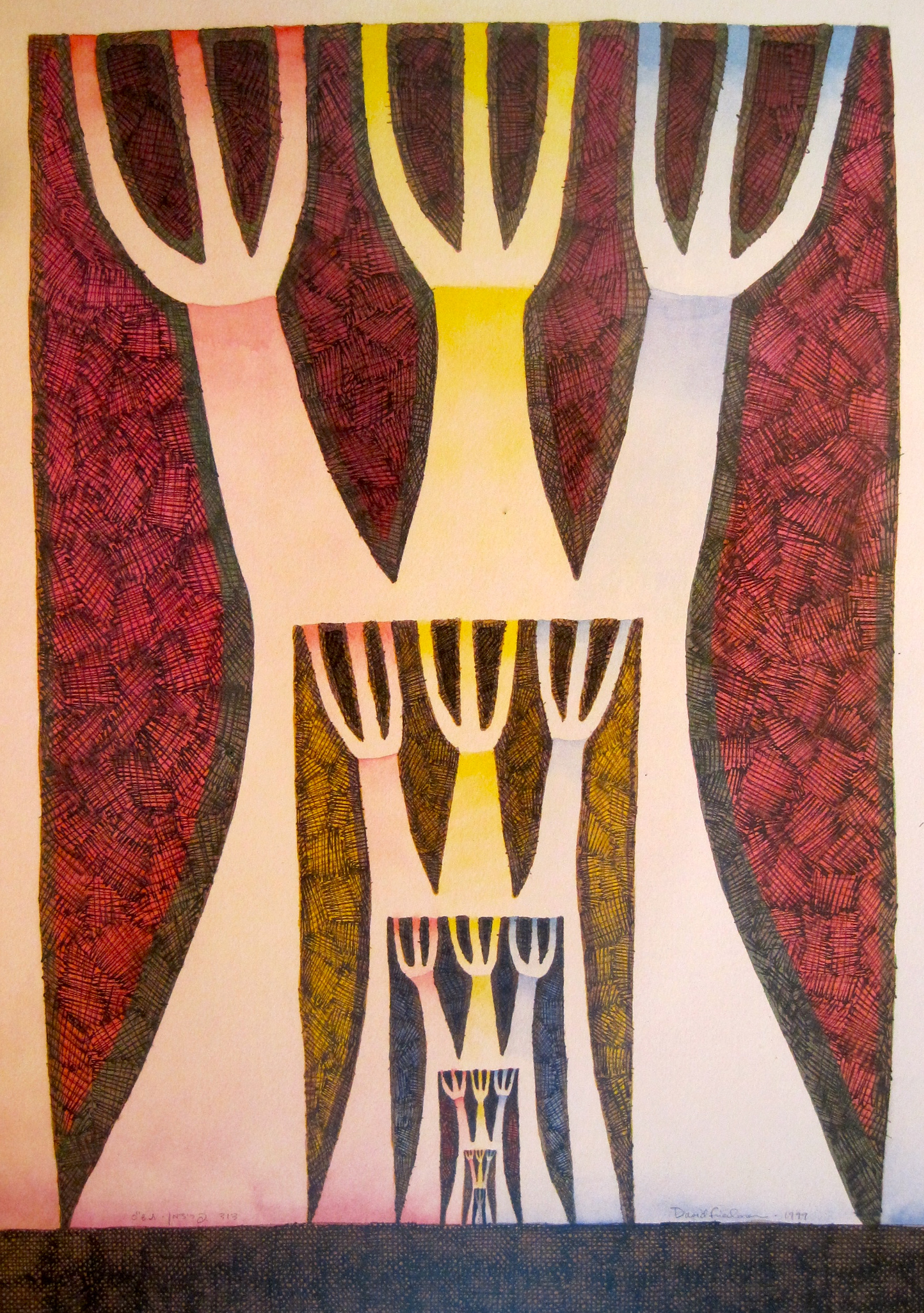
Transcending and Including
David Friedman
©the artist


Etz Chaim  עץ חיים — Hebrew for Tree of Life [return to poem]


In Israel, the roll back to Daylight Savings Time was the evening of the shooting, motsei Shabbat, the evening after the Sabbath, which is the beginning of the week. In the Jewish Calendar, days go from sundown until sundown. So, Shabbat (the Sabbath) begins on Friday evening at sundown and ends Saturday evening, after sunset (defined as when three stars can be seen in the sky, in the past, more typically about one-hour after Shabbat began on Friday, in modern times). [return to poem]