Looking for Poland

This was our first trip to Poland, and Krackow, a UNESCO World Heritage site, was our first stop. Krackow dates back to a little Stone Age settlement.

 It’s is remarkably well preserved for a city that has stood for over a thousand years, and survived the hell that was World War II.


Even the McDonalds there is deeply rooted in Poland’s ancient history.

Literally!  During its construction, medieval foundations were discovered and incorporated into the restaurant design. We bought a cup of coffee so we could go downstairs to check out the McVault in the basement, and it was like nothing you’ve ever seen in The House That Ronald Built.

Krackow suffered under the Nazis, but Warsaw got pounded.  At the Warsaw Uprising Museum we watched a movie that gave us an aerial view of post-war Warsaw. Of that bustling metropolis, only miles and miles of rubble and ruins remained.  The scale of destruction was unimaginable.


When the Poles defended themselves against the German invasion, the Nazis response was to destroy hospitals, schools, churches, universities, and commit mass murder upon both Jew and Gentile. When finally forced to retreat, out of spite the Nazis blew up anything still standing.

The Peugot Building was built where the old synagogue once stood. The Jewish Historical Institute is next door, in a reconstructed building that housed the Jewish Library.

Between the Nazis and the Soviets, over 400,000 Warsovians were murdered in the war. Those lives and all their promise can never be replaced. But the people of Warsaw rebuilt their city, brick by brick.  Canaletto’s 18th century paintings were used as visual references to recreate beloved heritage sites.  All along The Royal Way that artwork is displayed…

…in front of the structures that were rebuilt using them as guides.

You can’t say they don’t make ’em like they used to.

The Warsovians resurrected the Old Town Square too.

 Some say it’s like Disneyland, too perfect, but I thought it was beautiful, and I loved all the cool details.

 The royal palace in Warsaw…

…was also destroyed and reconstructed.

Some furniture and other treasures were spirited away before the Luftwaffe bombings, but the throne room and the banner with its royal eagles were destroyed.

  Only one of the original eagles survived, and somehow found its way to the United States.  It was used a model to replicate the original design.

 The clock in the Knight’s Hall, featuring the god of time, is forever stopped at 11:15, a moment never to be forgotten– the exact time the Nazis bombed the palace.

Poland’s history is harsh and fascinating, colorful and complicated.

Reminders of its painful past are everywhere–like the memorial to the Uprising of the Warsaw Ghetto Jews killed in this bunker by the Nazis. 

The Tomb of the Unknown Soldier on Pilsudski Square, which was called Hitler Platz when occupied by the Germans.

We saw statues honoring the Polish Resistance and the Warsaw Uprising…

…and one honoring the children who worked for the resistance, although their roles involved carrying messages more often than guns.

There was the memorial to the 15,000 Polish officers murdered in 1940 by the Soviet army at Katyn.

There were even teenage street musicians in uniform, singing war songs.

On a street corner we glanced down and realized we were standing on what used to be the Ghetto Wall.

So much suffering.  So many stories, most of which can never be told.

After living under the jackboot of the Nazis, like so many other countries of Eastern Europe, the Poles endured further decades of Soviet oppression.  But each new rebellion brought them closer to independence.

The success of the Solidarity movement was a long time coming, a difficult struggle that was as much for freedom as for bread.

It is all inextricably woven into the fabric of their nation’s past.

I wondered how it had affected the people…

…and how much of it was passed from one generation to the next.

After centuries of oppression and foreign rule…

…Poland is now a prosperous and independent Democracy.

I saw joy there, most often in stolen glimpses.

But wherever we went we felt safe.  People were always polite and helpful….

…although rarely quick to smile.

I’ve heard that Europeans believe Americans smile too much and too easily, and perhaps we do.

But in Gdansk…

…an old woman caught me watching her.  I could either avert my eyes and hurry on, or smile and give a little wave, which I did.  And when I did, she smiled back with such unexpected warmth that I couldn’t help myself–I blew her a kiss.

That was Poland in a nutshell.

All words and photos copyright 2014 Naomi Baltuck.

Holding Up the Sky

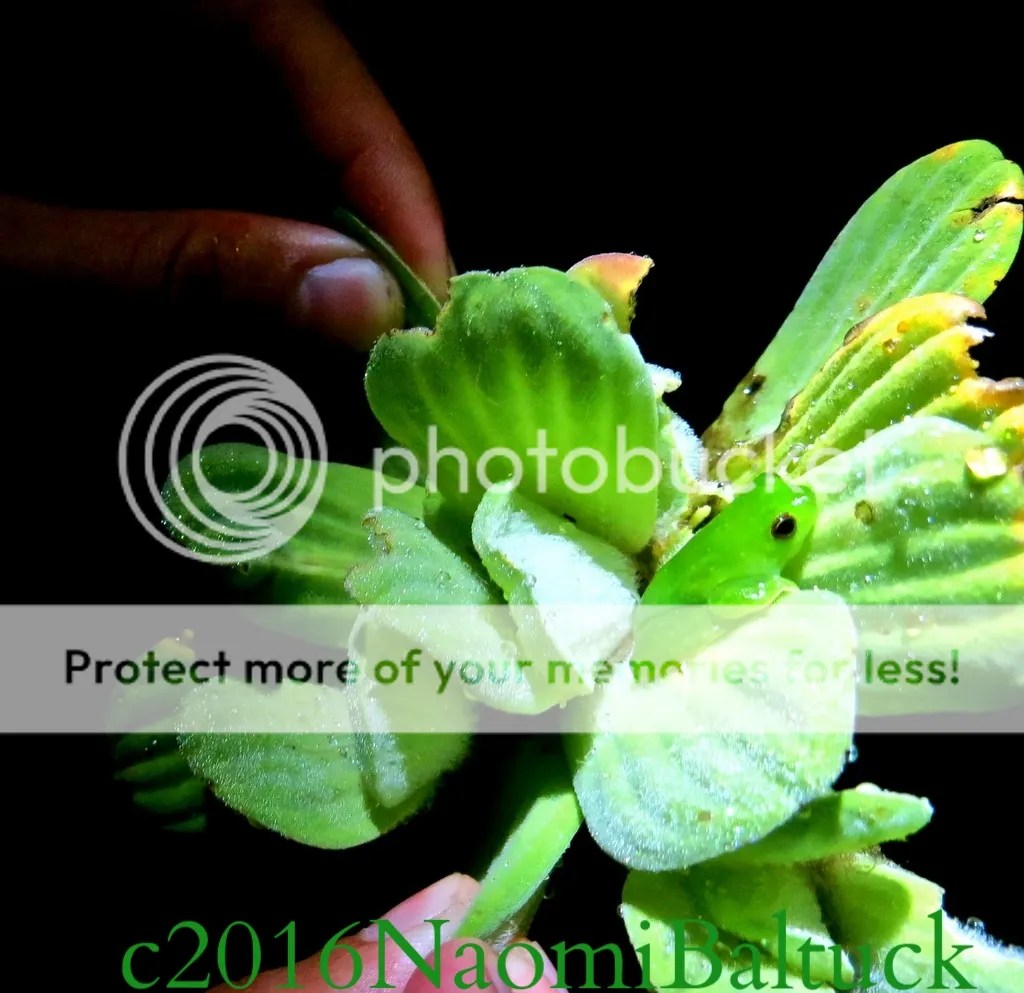
Elephant was walking through the forest when he spied a bright patch of color on the trail before him. He stopped and looked more closely.  It was Hummingbird, lying on her back in the middle of the path, with her tiny legs high up in the air.

“Hummingbird!  I almost stepped on you!” said Elephant.

“I’m sorry,” said Hummingbird.  “But I heard the sky was going to fall today, and I wanted to be ready.”

“Ready?” asked Elephant.

“Yes.  To hold up the sky,” said Hummingbird.

Elephant laughed.  “Do you you think you could hold up the sky with those skinny little legs?”

“Not all alone,” admitted Hummingbird, “but I’m ready to do my part.”

Elephant looked down at the little bird.  And he thought.  And he nodded. Then he lowered himself slowly down onto his knees, rolled over onto his back, and into the air went four big legs, and a trunk.

–a tale from China–

“Holding Up the Sky” is retold from Margaret Read MacDonald’s Peace Tales: World Folktales to Talk About.

© 2016, words and photograph, Naomi Baltuck, All rights reserved; photo as indicted in the hallmark

All Things Are Connected

The chief of a certain village had many advisors.

If there was something he wanted done, he would order it done, and it would be done.”Is it a good thing?” the chief would ask. Whether it was a wise decision or no, his counselors always agreed.  Those who did not were beaten.  There was one counselor who never said ‘yes’ and never said ‘no.’  This counselor would consider the matter and reply, “All things are connected.”


One night when the chief couldn’t sleep, he became aware of the noisy croaking of the frogs in the nearby marshes.  Once it came to his attention, he found himself listening for it each night.  The sound annoyed him so much he ordered all the frogs killed.


“Do you agree with my plan?” he asked.  His counselors all agreed, except for the one, who warned, “All things are connected.”  “Pah!” said the chief, and that night he sent his people to the marshes to kill frogs.

They killed frogs and they killed frogs until there were no frogs left to kill.

“Ah,” said the chief. “Now I shall be able to sleep.”
That night he slept very well, and for many nights thereafter.

But one night he heard another annoying sound.  “Zzzzzz…Zzzzz…Zzzzzzzzzzzz…”

He summoned his counselors.  “The mosquitoes are worse than the frogs!  Why didn’t you tell me they would rise in swarms and eat us alive without the frogs to eat them?  Tonight I will send my people to the marshes to kill all the mosquitoes!” So they killed mosquitoes and they killed mosquitoes. But as many they killed, there were many more left. The mosquitoes made life so miserable that everyone left their fields and homes to start new lives far away, until the village was deserted, except for the chief and his family.


All day long the chief sat alone in his hut, swatting mosquitoes and muttering, “All things are connected.” But it was too late for the frogs. Too late for the village. Too late for the chief.  Finally he too moved away.

The wise understand that all things are connected…

By the ground we walk on…

By the air we breathe…

By the the water we drink…

By the rhythm of the heart.

All things are connected…

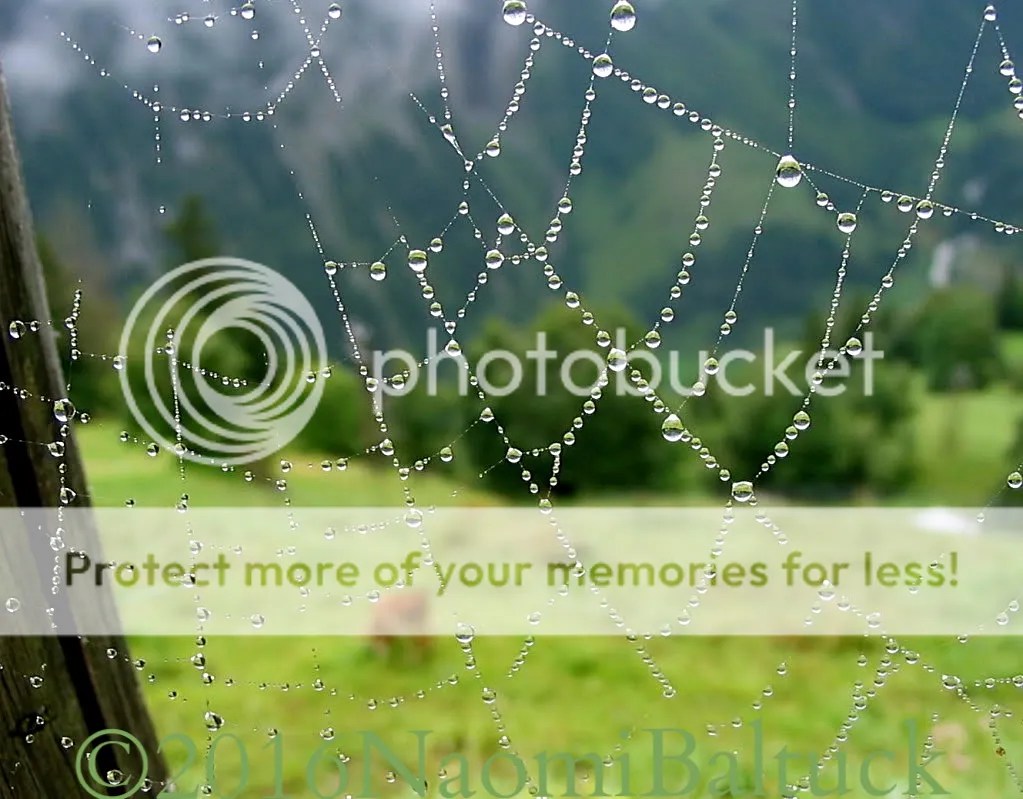
…and hang by a delicate thread.

Where is the balance between give and take?

Can we learn the difference between just enough…

…and too much?

All…

…things…

…are…

…connected.

What kind of world do we want to leave our children?

The answer is in our hands.

All words and images copyright 2016 Naomi Baltuck


You Just Never Know

Once upon a time, there was a swamp that was home to many creatures, including…

…frogs. 

Two frogs decided to see the world.  They went hop-hop, hop-hop-, hop-hop down the road in search of adventure.

They came to a big farm, and croaked out a cheery greeting to the dairy cows.

Then they went inside the big barn to explore.

There were so many new and exciting things to see in there!

But as they jumped about, they accidentally landed in a big pitcher of cream.

They tried to climb out, but the sides were too steep and slippery, and they slid back into the cream. Even frogs don’t like to die: they tried everything they could think of to escape.  When that didn’t work, they tried everything they couldn’t think of.

“It’s no use!” said the first frog. “We’re doomed!” And he sank down into the cream and disappeared.

But that second little frog…she kept swimming about with all her tiny frog might, just to keep from drowning.  The cream began to block her eyes and nose. Just when she thought she couldn’t swim another stroke, she felt something strange beneath her feet.  She was standing on a big lump…of butter!  With the brave paddling of her own tiny frog legs, she had churned that cream into butter.  She leapt out of the bowl and went hop-hop, hop-hop, hop-hop down the road, in search of another adventure.


All words and images Copyright Naomi Baltuck

A Perfect World

Four years ago my daughter Bea and I flew down to California to scout out Stanford. Last week the whole family flew in for her graduation.

She showed us the hotspots around town.

For sentimental reasons we brunched at an Anatolian restaurant. My Turkish ravioli with garlic yogurt sauce was a hit.


Amidst the chaos we found a shady spot for a game of Pandemic.

And saved the World.

We dined with the parents of Bea’s friend, Ben Bravo, who was gifted with the perfect name for a superhero or the hero of a romance novel!  After four years of hearing such good things about them, it was great to meet all the Bravos.

IMG_1925

Then we partook of a time-honored graduation ritual…in which the graduate’s family arrives with empty suitcases and packs up her stuff while she flits in and out, saying hello to her friends’ visiting parents, and farewell to her friends.

IMG_1982

Saturday morning was the Baccalaureate.

We heard a Buddhist Singing Bowl, a prayer of the Ojibway Nation, a reflection by Bea’s friend Zainub, Taiko drumming, and other benedictions, a celebration of spiritual diversity and mutual respect.

Bea graduated with honors, with distinction, and awards, including The Amy Levy and a Fulbright.  She had her village. Bea was…blessed is the only word that will do…to have been mentored by such remarkable professors as Dr. Gabriella Safran…

IMG_2177

…and Dr. Allyson Hobbs, whose hearts are as large as their intellects, and who kindly took my chick under their wing. Their encouragement made all the difference.

Bea and her brother are very close, besties, village peeps.  Eli traveled from Mexico to help her pack up, to celebrate and support her, even though he had to fly out at dawn on Sunday, missing the Commencement.

But Bea’s besties Denise and Marcus remained to cheer her on.

An airplane circling overhead trailed a message. Like many universities, Stanford is accused of sweeping those stories–and victims–under the rug, or throwing them under a bus, especially when the perpetrators are college athletes.

At Stanford commencement opens with a procession known as The Wacky Walk.

As individuals…

…or in groups…

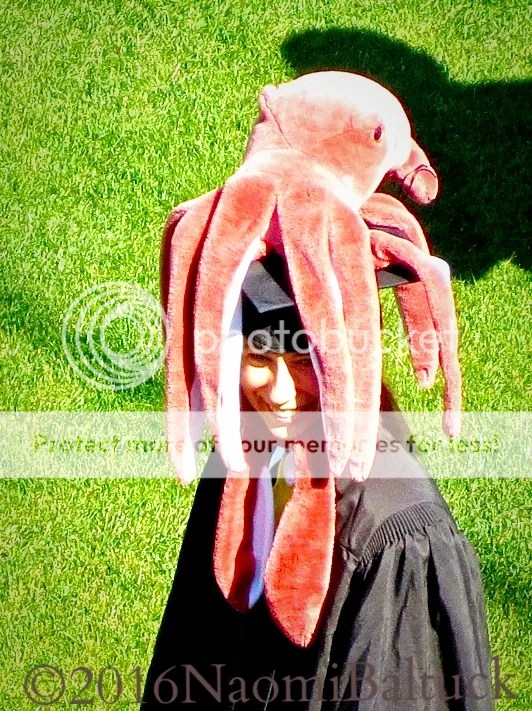
…students parade around the stadium free to express themselves as they choose.

IMG_2030

I liked the funeral procession for the fallen GPA, with a trumpet playing Taps.

IMG_2074

Some protested after a Stanford swimmer was slapped on the wrist for sexually assaulting an unconscious woman. Had two students not witnessed the crime, intervened, and apprehended him, I doubt there would’ve been any consequences for the rapist. The victim will be traumatized the rest of her life, but the actions of two heroes and the resulting prosecution sends a message to sex offenders. This time the message is “Don’t get caught,” but one day people might grow up learning to “Treat everyone, even women, with respect.”

IMG_2039.JPG

Grads welcomed commencement speaker Ken Burns, a legendary filmmaker who has spent his life shedding light on The Civil War, The War, The West, The National Parks and more.

A stark contrast, from Wacky Walk to observing a moment of silence in solidarity with survivors of sexual violence, and victims of the massacre at a gay club in Orlando that morning. I blinked back tears when the audience spontaneously began counting aloud for each victim of that vicious hate crime…47, 48, 49. Pure pride and joy for my child turned to trepidation at sending her out into our broken world.

Ken Burns proved there’s still intelligent life on the planet, and even in America. His speech was wise and courageous. He ventured off the safe path to politics. Referring to the LGBTQ massacre in Orlando,”We must ‘disenthrall ourselves’…from the culture of violence and guns.”

He implored grads to defeat Trump, “…a person who easily lies…who has never demonstrated interest in anyone or anything but himself and his own enrichment; who insults veterans, threatens free press, mocks the handicapped, denigrates women, immigrants and all Muslims…an infantile, bullying man…willing to discard old and established alliances and treaties…Asking this man to assume the highest office in the land would be like asking a newly minted car driver to fly a 747…”

A few people booed, but the majority burst into cheers. Ken concluded…  “We must remain committed to the kindness and community that are the hallmarks of civilization…”  Click here and scroll down for Mr. Burn’s excellent closing advice to grads. 

The Class of 2016, at Stanford and throughout the US, has scattered, gone home, to a new job, grad school, even to Mongolia on a Fulbright.

It’s an exciting time, and a little scary as these young adults test their wings and search out their flight path in the Real World.

IMG_2066

Bless them all!  We should have gift-wrapped a bright shiny world and tied it in a bow for them. Instead we’ve left them a mess and must ask them to help us save our precious broken world.  It isn’t a game, neatly laid out on a board, with the rules spelled out, and a clear path to winning clearly stated in the instructions.

Perfection is possible only in a perfect world.  Do you think we could ever commit ourselves to kindness and community, and treat each other and our planet with respect?  Because that would be close enough to perfect for me.

Except for quotes by Ken Burns, all words and images©2016NaomiBaltuck


You Rock

The Rock of Gibraltar is a monolithic limestone promontory so sturdy it was known in ancient times as one of the Pillars of Hercules. It marked the end of the known world. 30,000 years ago one of its caves sheltered a little band of Neanderthals. In 710 A.D. a Moorish castle was built by the Berber chieftain Tariq inb-Ziyad, who gave the Rock his name. In Arabic it is Jebel Tariq, or the Mount of Tariq. It has endured 14 sieges throughout its rocky history.  Against all odds, the British held The Rock against the Nazis in WWII.  It has proven such a stronghold that it inspired the saying, “solid as the Rock of Gibraltar,” and is used to describe a person or situation that cannot be overcome and does not fail.

https://i0.wp.com/i1176.photobucket.com/albums/x334/nbaltuck/IMG_3426-1-1.jpg

It makes me reflect upon the people in my life who are as solid as the Rock of Gibraltar, who I can count on without fail.

Thank you, Thom, dear husband, for being my rock. In so many ways, you marked the beginning of my world. Constance, dear sister, so aptly named, thank you for the friendship of a lifetime that began with two little Neanderthals sheltering in a cave carved from the Rock–our little tribe has withstood the test of time. Dear Eli and Bea, you’ve rocked my world since the day you were born, my stronghold of comfort and joy.  Rock stars, every one.

All images and words c2012 Naomi Baltuck

A MERRY LITERARY CHRISTMAS

A Merry Literary Christmas

by Alice Lowe

When Christmas shopping time draws nigh…

And I am faced with gifts to buy…

I think about one relative

Who always had one gift to give.

And every year her present came.

And every year it was the same.

While other gifts were round and fat,

(Their secrets hidden) hers was flat.

Rectangular, the corners square,

I knew exactly what was there.

I’d pass it by without a look—

My aunt had sent another book!

I’d only open it to write

A “thank you” that was too polite,

But every year when Christmas went

I’d read the book my aunt had sent,


And looking back, I realize

Each gift was treasure in disguise.

So now it’s time to write her here

A thank-you note that is sincere.

So—thanks for Alice and Sara Crewe,

For Christopher Robin and Piglet and Pooh,

For Little Nell and William Tell…

And Peter and Wendy and Tinker Bell.

Thanks for Tom and Jim and Huck,

For Robinson Crusoe and Dab-Dab the duck,

For Meg and Jo and Johnny Crow

And Papa Geppeto’s Pinocchio

For Mary Poppins and Rat and Toad

King Arthur and Dorothy’s Yellow Brick Road,

For Kipling’s Kim and tales from Grimm,

And Ferdinand, Babar and Tiny Tim.

I loved them all, I’m glad I met them.

They’re with me still, I won’t forget them.

So I’ll give books on Christmas Day

Though I know what all my nieces say–

I know it from the way they write

A “thank-you” that is too polite.


A Merry Literary Christmas©Alice Lowe

Images ©2016Naomi Baltuck

A Peace of My Mind

Last September my son Eli and I went on a road trip to deliver my daughter Bea, an incoming freshman, to Stanford University.

Then all of a sudden Bea was at school…

…and Eli and I were back in the van for the long drive home.

For our trip down, we’d booked nice hotels in advance.  It was all about our last hurrah before saying goodbye to Bea. Maybe because we didn’t want to think about returning without her, we forgot to plan the trip home.  We were unprepared, disorganized, and we both kept looking around for Bea.

It was after midnight when we pulled into Redding, CA.

We found a place that was simple, but clean, and woke refreshed and ready to move on–from Redding, and from Stanford.  We were going to write ourselves a new story.

We explored a delightfully shabby gold rush town, browsed its antique stores, and bought some dusty old tomes.  Back on the road, Eli read aloud from  The Last of the Plainsmen, Zane Grey’s 1908 memoir about the end of an era and the start of a new one.

Perhaps inspired by Grey, Eli suggested swinging by Crater Lake National Park.  It was out of our way, and we didn’t even know how far, because we hadn’t brought a proper map.  We hadn’t been there since the kids were young enough to earn their Junior Ranger Badges.  I recalled Crater Lake as a one trick pony, with one view of a lake, gorgeous, but unaccessible.  If we couldn’t get there before dark, the trip would be pointless.

It was a gamble.

We decided to go for it.  We had a few ‘Where are we going, Carl?’ moments.  Like at a crossroads, where two roads both had signage pointing to Crater Lake. The sun was sinking, and we couldn’t afford to get lost.  I kicked myself for not stopping earlier for directions.  This was a remote wilderness, late in the day and late in the season, without even another car to flag down.

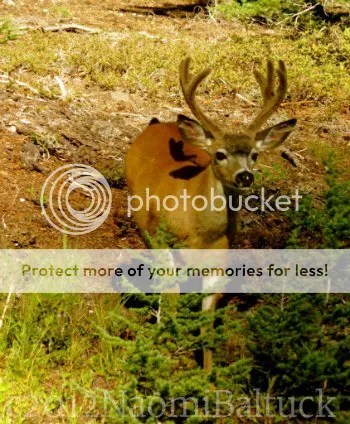
Do you believe in spirit helpers?   I took this handsome creature’s greeting as positive reinforcement.

Upon leaving the endless forest to begin our ascent.  Whatever happened, the view on the way to the crater was worth the drive.

At last we arrived at the crater rim, with sunshine to spare, but not for long.

As the sun sank behind us, the shadows crept up the side of Wizard Island, until it looked like it was wearing a little sun hat.

While we looked down on shadow, on the far side of the crater, the sun still shone.

Our goal was to visit as many viewpoints as possible before we lost the light.

Crater Lake was not a one trick pony.  It was a Horse of a Different Color.  With the constantly changing light, the landscape changed dramatically too.

Each view highlighted different sights and inspired different insights.

Whether looking from a distance…

…or close up.

We were alone on the top of the world, awestruck by the beauty surrounding us, not just of the lake, but the valley as well.

Eli captured the detail of an alpine meadow in this shot….

…while I borrowed back the camera to capture the big picture.

Feverishly, we passed the camera back and forth.  Where one of us recognized the stark beauty of an outcrop…

…the other saw a sleeping lady, turned to stone by an evil wizard.

Eli and I discovered our new superpower…

We had learned to spin straw into gold.

Golden moments.

Golden Memories.

Peace of mind.

All words and images copyright Naomi Baltuck

The Mistery of Life

One of the most breathtaking places I’ve ever been is Switzerland, and not just because of the high altitude.

How can someplace be so wild and rugged…

…and yet so tidy and tame and settled?

You can take an escalator to the top of the mountain…

…and just when you think you’re alone in the most remote place in the world…

…you stumble upon a chalet where you can buy a cup of Ovaltine.

Or you hear cowbells and realize you are not alone after all.

When you’re looking straight up at the sky, where no mountain ought to be–surprise!–you realize it’s just playing peek-a-boo from behind the clouds.

We went for a hike, but the landscape seemed so domestic that we felt we should really call it  a stroll.

We stopped to make a friend or two along the way.

And belted out the words to The Sound of Music because…why not?

Unlike the deliberate and well-defined cable car ride up to our little village, there was no clear threshold, no magic doorway from domestic to wild.  The landscape changed so gradually we hardly noticed.

No cowbells here.

And then a shroud of mist descended so swiftly.

The path was obscured and maps were useless.

We couldn’t see the landmarks described in the guidebook. It would soon be dark.  We had no choice but to put one foot ahead of the other…

…keep walking and enjoy the mystery and adventure…

…and trust that sooner or later we would get where we were going.

That’s life.

All images and words copyright Naomi Baltuck.

Lullabye

In Ireland, the ocean is everywhere.

Sometimes hiding in the mist…

History hangs heavy in the ocean air, like breath moistened by a story.

In rough weather…

Or calm…

Whether watching intently…

Or only vaguely aware of it…

You can still smell the salt in the air…like a ghost.

You can feel it like a heartbeat…

And hear it like a lullabye…

Copyright 2012 Naomi Baltuck

Birds of a Feather

Birds of Peru—so many species, so many eco systems.  This little tyke was swimming with its mom on Lake Titicaca, the world’s highest navigable lake.

The Uros people construct and live on Floating Islands of the lake, and might’ve taken their cue from the birds.

The Uros domesticated the Ibis for its eggs–they live side by side.

In the Amazon jungle, villagers living along tributaries of the Amazon River raise chickens for eggs and meat.

Other birds, like Manolo the Mealy Parrot, are kept for pets….

…and watchbirds. (Don’t even think of touching his bread.)

They wander in and out of the houses like family.

We also saw a huge variety of birds living wild in the jungle, such as the Tiger Heron.

I believe this is a Social Flycatcher.  Maybe it just eats flies at parties?

Some birds I caught only a glimpse of on the fly.

Others looked familiar, like this Pygmy Owl.

Or this Kingfisher.  The Kingfishers fly so fast I could only get an image at night, when it was roosting.

Or this White-winged Swallow, which was different but similar to our swallows.

Most of the birds’ names I never knew or have forgotten, but they were fascinating.

This one looked like a lone hunter…

…while the vultures tended to hang in a crowd.

If we have birds in the U.S. that come out at night and sit on the beach looking like, well, a beach, I haven’t heard of them.

A Black-fronted Nunbird?  The coloring is right, but the beak is smaller and it’s so fluffy.  Maybe a chick?  Oh, well, a bird by any name would sing as sweet.

The birds in the Peruvian Andes were different than the ones we saw in the Amazon.

I saw this feathered friend at Machu Picchu.

This one too.  It’s not so different from the hummingbirds that sip nectar from the hanging baskets on my deck.  

But some are very different from the birds we have at home–like the Toucan who was natural history before I could get to my camera, or the Night Heron whose portrait came out fuzzy.  Most unique was the Huatzin, a pheasant-sized bird resembling something out of  prehistoric times.  Its face is blue and unfeathered, its crest large and spiky.  It makes its home in the swamps and marshy lakes in the jungle.

A crop is an enlarged pouch of the esophagus, where food is stored before it is digested.  Some birds have them, and some dinosaurs did too.  But the Huaztin’s crop is so large it makes flying difficult.  It uses its crop to digest food using bacterial fermentation, which makes them smell very bad.  The Amazon people call them ‘Stinkbirds’ and won’t eat them.   They croak, hiss, groan, and grunt.  Huatzin young have claws on their wings.  When pursued by hawks or arboreal predators, they drop from their nest into the water and claw their way back up the tree when it is safe.  Strange and fascinating!

I don’t see anything common about a bird, even the ones found in my own backyard.  Descended from dinosaurs, these feathered creatures are miraculous to me–so varied, so delicate, so powerful, most possessed of the gift of song and the superpower of flight.  All I need is a pair of binoculars and a camera, and I am off on a flight of fancy.


All images and words copyright 2013 Naomi Baltuck

Monkey See, Monkey Do

Do you know what this is?

It’s a monkey trap from West Africa, made of clay.  When I acquired the clay pot, a rope was attached to its neck.  Hunters used to stake the other end of the rope to the ground, and bait it with fruit or nuts.  A monkey would smell the food, reach inside, and grab a handful.

The hole was large enough for a monkey’s open hand to pass through, but too small for a balled fist to come out.  As hard as the monkey pulled, it couldn’t escape, because it never occurred to the greedy monkey to let go of the food.


Monkeys repeatedly fell victim to this, because they refused to drop the food, even as the hunter approached.

This is often told as a parable denouncing greed, or as a cautionary tale about becoming trapped by a fixed mindset.  But the antique dealer who sold me my monkey trap told me the rest of the story…

In the late 1940s, a monkey was caught in a clay monkey trap, like so many before it.  It struggled to free itself, never thinking to open its fist.  On purpose or by accident, it smashed the pot against the ground, the pot broke, and the monkey escaped.  But here’s the best part…That monkey taught the other monkeys in its troop how to break and escape from a monkey trap. Neighboring troops caught on until, at least in that part of the monkey world, the traps became obsolete.

Imagine a world where we teach our young, our neighbors, and the greater community what they need to survive and thrive. Imagine a world where we open our tight fists and our closed minds and stop doing things just because that’s the way it has always been done.  Imagine smashing the status quo to leave the world a better place for our children, a place where the powerful and oppressive are outwitted, outnumbered, and they and all their ugly trappings become obsolete.

  If one little monkey can change the world, maybe there’s hope for us humans too.

  All images and words ©Naomi Baltuck.

Back Down to Earth

There is freedom in cutting loose one’s bonds to float high above the rest of the world.

To be quiet, and alone in one’s thoughts.

It is a space and place that I do sometimes share.

Just when I find myself adjusting to the elevation…

…and the solitude.

Just when I start feeling too comfortable, too removed…

…I feel a tug on the heartstrings that brings me back down to earth.

Sometimes it’s as simple as discovering on my front walk a baby bird that needs to be returned to its nest.

More often it is my own baby birds, coming home to roost.

Even just for a little while.

All words and images c2014 Naomi Baltuck.

Magnam Opus

To me, there nothing so sacred an office as parenthood.

But with every superpower, comes the great weight of responsibility.

Helping someone get from here…

…to here.

It’s the most daunting…

…most joyful…

..most challenging position I’ve ever held.

The job description is clear.  When they are tiny, love them.

Nurture them.

Love them some more.

We have a few short years to raise and guide them, and allow them to find their own way to shine.

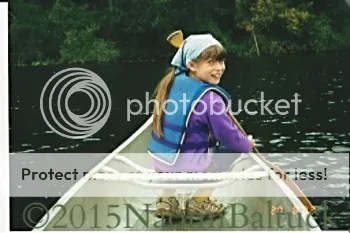
To help them acquire the skills they need to paddle their own canoe.

To allow them to test their wings.

To give them every opportunity to make decisions and exercise their own power.

Even so, one of the greatest challenges we have as parents is to let them grow up.

A few years ago, with the kids’ encouragement, we stepped out of our comfort zone into the Amazon jungle.

To ride a zip-line over the jungle canopy we had to reach a platform 125 feet above the jungle floor.  Instead of letting our guide use pulleys and ropes to haul them up, they insisted on pulling themselves up, step by step.

As they dangled from a single rope a hundred feet up, I thought of the book Charlotte’s Web.  Charlotte considered her egg sac, from which her babies hatched, her ‘magnum opus.’  One by one, the baby spiders spun a fine web into a tiny balloon and rode the breeze, floating off into the world to land somewhere and build a web of its own.

I couldn’t have been prouder–or more relieved–when they climbed to the top under their own power.

We have all traveled well together…

but children must be free to choose their own direction, just as we did when we were young.

I quell my panic when one of my chicks…

..leaves the safety of the home harbor.

I trust them to stay calm, exercise good judgement, weather the storms…

…and any other unforeseen dangers.

We cut them loose from the mother ship, then hope and pray they find a soft landing place…

…and a bright future.

And that, every now and then, they remember to phone home.

All words and images ©2015NaomiBaltuck

Pondering


I snapped this photo in my Cousin Nancy’s backyard.  We couldn’t have arranged a nicer outing.  Her husband Ian played folk music on his guitar.

Tallie, her little Papillon, and our favorite little fur person, played fetch with the kids.


Then we all roasted marshmallows for s’mores in their fire pit.


Creating a lovely backdrop for us was this fascinating arrangement for firewood that I found so pleasing to the eye.

I did pause to wonder how the tree might have felt about the arrangement. Did it feel supported and held up by the spirits of its ancestors, or was it made nervous at the thought of suffering a similar fate? Am I the only one who thinks about these things?

All words and images c2014NaomiBaltuck

The Same Boat

Last summer the Seattle Theater Group treated its season ticket holders to a champagne lunch aboard a Holland America cruise ship.

The closest we’d come to a cruise was a day trip from Helsinki to Talin. Thom dusted off his sports jacket…

…and we went to lunch with our friend Monica.

Looking up…

…down…

…or sideways…


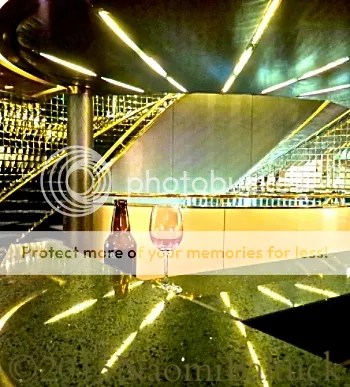
…there was unabashed glitz and glamor.

After dessert…

…they turned us loose.

We acquainted ourselves with the pool.

The art.

And the dance floor.


The lines…


…lights…

…curves…

…and colors were striking.

It was ‘The Titanic…

…meets Blade Runner.’

A place out of time.  A floating island.  Everyone the star of his or her own movie.

Across the harbor it was business as usual.


Gritty stories were played out in choppy waters, a world apart from our pampered microcosm.

As we left the parking lot, we drove through a sobering intersection of poverty and privilege.

Having just left a luxurious cruise boat, I thought of the Titanic.  Many historians believe steerage passengers were treated with indifference at best, and that racism and classism was a factor in the dismal survival rates of the poor.  Only 25% of the Third Class passengers survived, while 62% of the First Class passengers did.

One would hope for improvement in the last hundred years, and things did get better–for awhile.

From the 1950s through the 70s, middle class prosperity grew: more people could afford higher education, resulting in better jobs and owning homes. Then Ronald Reagan introduced Trickle Down Economics, claiming that by making the rich richer prosperity would trickle down to the poor, but that just kicked economic inequality into hyperdrive.  Bush’s tax cuts for the rich also made the rich richer, while depriving the nation of income that would prevent the lower and middle classes from slipping further behind.

From 1979-2007,  income of the top 1 percent grew by 275%, while the bottom 80 percent averaged 29%.   From 2009-2012, the top one percent raked in 95% of all income growth in the nation.

Economist Paul Krugman says soaring profits of the one percent are achieved by squeezing those below: cutting wages, slashing benefits, crushing unions.  Elite priorities exert a wildly disproportionate effect on policy, such as slashing social programs for the needy while lowering taxes for corporations and the wealthy.

But there is hope.

 In yesterday’s election, Seattle voted to shut big money out of politics, after having already led the nation in a vote to raise the minimum wage to $15 an hour.

I AM SO PROUD OF SEATTLE!

When Abraham Lincoln said America’s representative democracy was of the people, by the people, and for the people, I’m sure he did NOT mean corporations.

We are all in the same boat.  I’m thinking it’s time to bust out the life preservers, and this time, let’s make sure there is one for everyone.

All images and words ©2015 Naomi Baltuck

The Secret Object I Keep Hidden in My Underwear Drawer


null

Yes, I really do have a secret object hidden in the back of my underwear drawer.

It was in a bag earmarked for the Salvation Army, a tiny doll-sized white cotton undershirt, but I snatched it back from among the outgrown feet pajamas, baby booties, and Alice-in-Wonderland dresses.  Then I tucked it into the back of my underwear drawer.

It isn’t an heirloom or valuable in any way, except to me, because both my kids wore it as fuzzy-headed milk-scented most-beautiful-in-the-world newborns.  Once in awhile it still sees the light of day.  Not on those “hurry-up-or-we’re-going-to-be-late! mornings,” but on quiet afternoons when I’m putting away freshly folded laundry.  I can still smell the baby shampoo and feel the round little tummies that filled that shirt.

Recently I realized that no one in the world would know or care what happened to that little shirt unless…I showed it to my daughter Bea and told her about her first night home from the hospital. She was wearing the little shirt, or one just like it, while lying beside me on the bed to nurse.  By the soft moonlight shining in on us I watched her, filled with awe at the sight of this new person looking up at me like a little old wisewoman.  I marveled at her perfect little toes and her tiny feet and those exquisite fingers.  Just as I was moved to tears at the miracle of life and birth, she reached up with her tiny finger and DOINK! poked me right in the eye. Ever since then, I told Bea, she has kept me from taking myself too seriously.

I told her how four year old Eli rubbed her tummy and told his baby sister all she would need to know to get by in the world. “You only get to drink milk now, but when you’re big you get macaroni and cheese from a fork. You’ll learn to walk and then run, but be careful or you might fall and scrape your knee and bleed, but blood has platelets that make a scab, but don’t pick it or it’ll bleed again…”  What a warm, wise welcome into our family!

On my kitchen wall is a picture Bea drew of a paintbrush and an artist’s pallet.  Underneath she wrote,”Only the artist knows the story of her painting.”  Too true. So tell your stories to your kids, your friends or your enemies, lest they disappear when you do.

Whether you write them into your memoirs, or tell them from your mouth, let them see the light of day, feel the moisture of your breath, live in stark black beauty on a crisp white page.

One day Bea might show that tiny shirt to her children and say, “When I was a baby…” Even if it finds its way to the Salvation Army, she might say, “My mom once saved a tiny white undershirt from the rag pile and kept it in her underwear drawer.  Sometimes she took it out, and told me stories about when I was a baby…”

All words and images copyright 2014 Naomi Baltuck

(Except “Mrs. Bradley Ripley Alden and Her Children” painted by Robert Walter Weir, 1852)

Turning Night Into Day

There was once a wise old rabbi who asked his students, “How can you know the exact moment when night ends and day begins?”

“I think I know,” said one of his pupils.  “Is it when, from a great distance, you can tell a dog from a sheep?”

“No,” said the rabbi.

“I know,” said another.  “It must be when, from a distance, you can tell a date palm from a fig tree.”

“No,” said the rabbi.

His students looked at each other and then at the rabbi.  “We don’t know,” they said.  “Please tell us.”

And the rabbi replied, “It is when you look into the face of any person from any nation…

…man…

…or woman…

…Jew or gentile…

…and see your brother…

…or your sister.”

”And that is the blessed moment,” said the rabbi,  “when the dawn is come.”

c2014 words and photographs NaomiBaltuck