Drive-by | Naomi Baltuck

We are continuing in this issue our ReCollection section, looking back through The BeZine past issues and blog posts in this, our tenth year. This photo essay comes from The BeZine Volume 1 Issue 4, on February 6, 2015. Naomi Baltuck has been a long-time contributor to The BeZine and remains as a member emirata of our Core Team.


Drive-by Shooting in Detroit

I was born in The Motor City.   I graduated from U of M [Michigan—ed.], and headed West to seek my fortune. I’ve lived in Seattle for over thirty years.  It was love at first sight, it’s the home of my heart, and where my children were born…

…but I still feel unexpected tugs on my Midwestern roots.

Detroit is where my parents and grandparents are buried.

In French ‘Detroit’ means ‘channel or strait connecting two bodies of water.’  That would be the Detroit River that connects Lake Erie and Lake Huron.

That would also be my Aunt Loena,  who connects me to my mother—through memories, blood ties, and love.  Last spring I returned to the river that spawned me.

My Aunt Loena and sister Lee are always ready for a visit.

We did a drive-by shooting of the old neighborhood…with a camera [note: not a gun—ed.].  We took shots of the little house I grew up in.

Many other houses were already pretty well shot.

Across from  Newton School, a woman kept cranky geese in her yard, but the geese were long gone, and so was the house.


My high school was for sale.  It was named for Thomas M. Cooley ( 1824-1898), a local boy done good.  He started out with a small law business and ended up on the Michigan Supreme Court.  In The Cooley Doctrine, he wrote “local government is a matter of absolute right; and the state cannot…take it away.”  Cooley must be spinning in his grave since Michigan’s Republican Governor Rick Snyder gave himself the power to take over cities, remove locally elected officials, install puppet governments, and destroy labor unions.  Not in Russia.  Not in North Korea.  This is happening in the United States of America.

Yes, there are financial woes: the economy and tax base of the area were dependent upon the auto industry.  Highland Park, a town engulfed by Detroit, fought to stay independent despite the bigger city’s efforts to incorporate it.  Ford closed its Highland Park factory in the 1950s and Chrysler pulled out in 1993.  The population, once over 45,000, has decreased to 11,000.  Now it’s ‘The Detroit of Detroit’, so poor Detroit doesn’t even want it anymore. My grandparents’ Highland Park house was gone.  So was the school across the street.


If not for this sign, I wouldn’t have known Highland Park still existed.

But there must be better ways than total dictatorship to save the city.  We went to Belle Isle, an island park in the Detroit River, halfway between Canada and the United States.  It became a city park in 1904, and in 2014 it became a state park to avoid operation costs to the city.

 There used to be an elephant house, a bandstand, and a boathouse.  I learned to canoe in its waterways.

Honey Buckets are probably cheaper to maintain than the elegant brick restrooms…

…a compromise so the park might be used and enjoyed.

There was still beauty.

And history.

The Belle Isle Aquarium was built in 1904.  As kids we watched the electric eel touch an underwater wire in its tank to light up electric light bulbs.  It was the longest continually operating aquarium until 2005 when, after 101 years, it closed its doors due to lack of funding.

But in 2012 the aquarium was reopened—Saturdays only—and is run completely by volunteers from the Belle Isle Conservancy.  Admission free.

Next door is the Whitcomb Conservatory.

My folks used to turn seven kids loose in there; we played Tarzan, and our Johnny Weissmuller jungle calls bounced off that glass ceiling.

At the Detroit Institute of Art we found culture, art, and history.

 photo 14ceae3b-e762-40d1-b045-89c23581fdc4_zps21d717ba.jpg

As kids we loved the shiny suits of armor in the great hall.

As adults, we admired the Diego Rivera mural, a powerful statement about Detroit Industries.  In 1932 it was scandalous that workers with black, white, and brown skin were depicted working side by side. Members of religious communities thought it blasphemous, and called for it to be destroyed.   But Edsel Ford, who paid the bill, said he thought Rivera captured the Spirit of Detroit.

“Watson and the Shark,” my favorite painting from childhood visits to the museum, told a true story.  Copley portrayed a multiracial crew rescuing their shipmate from a shark.  Painted in 1777, a time of revolution against tyranny, artists began to depict common people as heroes. At least in Michigan, where the sharks are still circling, it is still a relevant message.

I was saddened to read so many hateful bigoted comments when researching this sculpture honoring Detroit boxer Joe Lewis.

In Detroit there was and is despair and poverty, racism and anger.

But I also saw positive action, innovative ideas for bringing life and art back into the city.  Are you a writer?  Want a free house?   Check out Write-a-House.  This organization buys abandoned houses, renovates them, and gives them to artists willing to come live in them, practice their art, enrich their community.  There are pea patches growing where, on my last visit, I saw burned out houses.

L-O-O-K.

The Spirit of Detroit is still strong.

In its past, present, and its future…

…I saw soul.

And hope.

Sweetness.

Pride.

I saw the future in a city park, where kids were playing.

 At the conservatory I saw cactus blooming in the desert, a public park taken over by volunteers who made it available to the public.

I saw open hearts.

In the most unexpected places.

 Detroit still has plenty of room to grow, room for hope.


Text and Photographs ©2015 Naomi Baltuck
All rights reserved


The End of the World

©2020 Naomi Baltuck

I dedicate this story to Jamie G. Dedes, my friend and the founder and editor of the BeZine.  When she was diagnosed with a fatal lung disease, she must have felt like her world, as she knew it, had ended.  But her poetry, more than ever, hummed with truth and wisdom, each poem a love letter to the sweetness and bitter sweetness of life.  Jamie built a new world, and with all her disabilities, she lived every day with more life and love and energy and purpose than any able bodied person I know.  She pulled together a global collective of poets, artists and writers dedicated to peace, sustainability, and social justice to carry on her work.  Her life was a gift she shared with us all, and her legacy timeless.

Alive in the Moment

—Naomi Baltuck

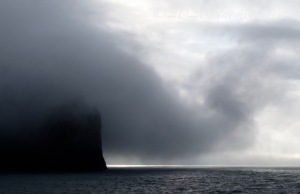
It was only last summer, but it seems a lifetime ago that we visited Iceland…

…a country very different from ours, but one of stark beauty.

IMG_5404

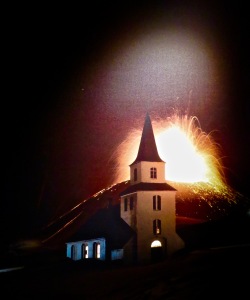
A land of fire…

(Photo from Eldheimer Museum, Westman Islands.)

…and ice.

History…

IMG_4475 3

Culture…

…and wit.

My mom used to say, “You can find something in common with everyone you meet, even if it’s only that your feet hurt.”  

A global pandemic should qualify.

At the Adalstraeti Museum, we saw old photographs of the inhabitants of Reykjavik.

An interpretive sign read, “Women in traditional costumes, boys from the Reykjavik Football Club…a professor in a coat with an opulent fur collar, several generations of a family, parents with their firstborn, Little Miss Reykjavik, a girl with a lamb, a boy in a sailor suit. It’s tempting to speculate on where they might have gone after the photographs were taken. Home to Lindargarta, or for a coffee at Hotel Island? Down to the shore to watch the lumpfish catch being landed? Or back to work after returning borrowed clothes?

All the portraits in this exhibition were taken in the first nine months of 1918…Some of the people we see in these pictures may well have perished in the epidemic: all will have lost friends or relatives. The only thing we can know for sure about these past inhabitants of Reykjavik is that in the instant the shutter opened, they were there—facing the camera—alive in the moment.”

On October 19, 1918, the Spanish flu hit Iceland like a tsunami when three infected ships made port in Reykjavik.  The first death followed twelve days later.  Ten thousand people, two thirds of Iceland’s capital city, fell ill.  The hospitals were overwhelmed.  A field hospital was set up to accommodate the overflow, and a center was created to care for children orphaned by the pandemic.  Shops closed, newspapers went dark, and when telephone operators took ill, Iceland lost contact with the outside world.

While the West and South of Iceland suffered, guards were posted to prevent travel from infected areas. They contained the spread, sparing the North and the East of the island. After a month, the infection peaked, and the dead were buried in mass graves.

The exhibit commemorated the centennial of the 1918 pandemic and celebrated the Icelanders’ laudable response. Many donated funds to feed the sick. Others brought meals to friends and strangers. Everyone in Reykjavik was assigned an official to check on them and procure help, if needed.

We were there in the summer of 2019, never suspecting that the exhibit foreshadowed the novel coronavirus that would strike the following winter, and rapidly intensify into a global pandemic. We still languish in the first wave of CoVid-19, recalling with apprehension that the Spanish flu came in four waves, infected 500 million people, and left 50 million dead.

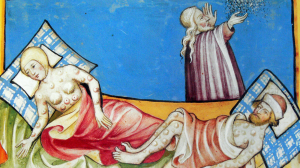
An older story harkens back to The Black Death, that raged across Asia and Europe in the 14th century, spread by sailors and rats along trade routes.  Within five years, it too had killed 50 million people.

(public domain)

At that time, an Icelandic merchant ship was preparing to sail homeward from Bergen, Norway, hoping to outrun the plague.  But before they could weigh anchor, several crew members developed symptoms.  All their instincts must have cried out for home…

…but the crew elected to remain in Bergen, knowing they would never see their home or loved ones again.

Thanks to their sacrifice in 1347, Iceland was spared the ravages of that deadly plague.

As the Adalstraeti Museum stated, the only thing we can know for certain about these people from the past is that they were there, alive in the moment. But it’s tempting to speculate.  Had you been on that ship, with buboes swelling in your groin, would you have resigned yourself to death in a foreign land to spare your countrymen a similar fate?  What if you were one of the crew with, as yet, no symptoms?  Would you still remain in Norway, surrendering any slim hope of survival, in order to contain the infection for the greater good?

I met my sister’s friend Rachel, a retired nurse, and her husband while visiting in Alaska. I was surprised last spring, when she left Juneau to fly to New York, which was suffering 600 deaths daily, as hospitals were slammed by CoVid-19 patients. Rachel joined thousands of healthcare volunteers working 12 and 16 hour shifts, collapsing into bed each night, and waking to start all over again.

A friend of mine volunteers at a shelter for homeless youth. Why risk it? I speculate that in each youth she sees a person plagued by fears and sorrows, yet clinging to hopes and dreams.  Like the girl with the lamb, these kids are alive in the moment, but their world was rife with hardship, danger, and isolation even before the pandemic struck. A pandemic shines a harsh light on society’s economic and racial disparities, and those kids are a tiny fraction of the people who’ve slipped through holes in our social safety net.

We don’t know what the next five years, or even five months will bring, but it will get worse before it gets better. Like the people of Reykjavik, we must care for each other. Some people are in no position to donate funds or volunteer outside of their place of shelter. But almost everyone can wash their hands and wear a mask when going out, if not to protect themselves, then to protect the vulnerable among us. Like those who were here–facing the camera–very much alive in the moment…

Everyone is someone’s child, parent, sibling or grandparent.

 Many have underlying conditions or circumstances you know nothing about.

Wearing a mask is inconvenient, but well worth it, if it can save even one life.

If you can’t do this one small thing for friends, family, neighbors, and community, it’s tempting to speculate…

…what kind of person are you?


Except where noted, ©2020 Naomi Baltuck
All rights reserved.

A Palace of Bird Beaks

The Queen of Sheba visited King Solomon bearing opulent gifts, and hoping to see if he was as wise as the stories claimed.

“What can I offer in return?” asked Solomon. “Only ask, and it shall be yours.”

The queen had also heard that Solomon spoke the language of the birds, but didn’t believe it. Here was her chance to kill two birds with one stone.  “Build me a palace made entirely of bird beaks,” she said, “if you can.”

“Oh, I can, ” boasted Solomon.  “You shall have it.”

To her amazement, Solomon summoned the birds, from every corner of the earth.


They heeded his call…


….from the tiniest hummingbird…


…to the majestic eagle.


“We’re going to make our nation the envy of the world,” he told his gathered flock, to the cheering of the birds.

 “But I need your beaks to build a palace.”  And the birds bowed their heads and wept.


“Stop fussing,” said the king.  “Everyone dies sooner or later.  Believe me, I know more about that than anyone else in the world.”   The king scanned his gathered flock as they waited to die.  “Where is the hoopoe bird?  Why isn’t she here?  How dare she defy me?”


Breathlessly, the hoopoe swooped in to land at his feet. “Forgive my late arrival, Sire. I’ve come from the ends of the earth, and I’ve seen so much along the way. I’ve even learned three things you don’t know.”

(photo in public domain)


“Really?”  King Solomon frowned.  “A lot of people say I’m the smartest king that ever lived.  I know more than anyone, about pretty much everything in the world.  What could you possibly know that I don’t?  Tell me quickly, before I take your beak.”

The other birds trembled, fearful that Hoopoe would upset the king, for they knew that he didn’t like his genius questioned.


“Sire,” asked Hoopoe, “do you know who it is that was never born, nor will never die?”

“Of course, I do!  The Lord of the Universe…

IMG_2901


…the Creator, who made the sky above us…

IMG_6107


…the earth we stand on…

IMG_8820


…every blade of grass…

IMG_4828


…every creature that walks…

IMG_5219


…or swims…

IMG_3049


…or crawls.

IMG_6306


King Solomon hesitated.   “Or flies.

img_2559


Solomon looked at the birds…


…each one magnificent…


…each in its own way…


…..each one created by the Lord of the Universe…

…and who had also made Solomon, and blessed him with wealth, power, and responsibility.

“What’s the second thing?” asked Solomon irritably.

“Sire, do you know what kind of water rises not from the earth nor falls from the sky?”

“Of course, I do!  It’s a tear that falls from the eye, born of sorrow.”

Solomon looked at the birds, their heads bowed, tears flowing, as they waited for him to chop off their beaks.  Might he have acted rashly in agreeing to build a palace of bird beaks?  But the Queen of Sheba, the whole world was watching, and he thought, “A promise is a promise.”

“One last question, Sire,” said the hoopoe.  “Do you know what is so delicate that it can put food into the mouth of a baby, yet is strong enough to bore holes into the hardest wood?”

“Of course, I do.  It’s a bird beak,” said the king.

(Photo by Amanda Lightfoot)


“Yes,” he repeated, “a bird beak, of course.”


Solomon looked upon the great gathering of birds, whose lives and children were as precious to them as his own were to him…


In his arrogance, he’d promised to build a useless palace to fulfill a selfish whim, and to make his own subjects pay for it, without considering the cost in blood and tears.  And he knew what he must do.


“Hoopoe, you’ve demonstrated courage for daring to resist this injustice.  I shall not demonstrate my power by destroying the defenseless.  You have helped me understand that my true power is in resisting my own cruel impulses.”

King Solomon turned to the Queen of Sheba.  “A truly wise and worthy leader must never be so proud that he can’t admit his mistakes, or do what he must to right a wrong.  There will be no palace of bird beaks, now or ever.”

The queen smiled and nodded.  “I came here to take the measure of a man, and I believe I’ve accomplished what I set out to do.”


Except where noted, all words and images ©2020 Naomi Baltuck

NAOMI BALTUCK (Writing Between the Lines)~ is the Zine’s Resident Storyteller.  She is a world-traveler and an award-winning writer, photographer, and story-teller whose works of fiction and nonfiction are available through Amazon HERE.

Naomi conducts workshops such as Peace Porridge (multicultural stories to promote cooperation, goodwill, and peaceful coexistence), Whispers in the Graveyard (a spellbinding array of haunting and mysterious stories), Tandem Tales, Traveling Light Around the World, and others. For more on her programs visit Naomi Baltuck.com.

Naomi says, “When not actually writing, I am researching the world with my long-suffering husband and our two kids, or outside editing my garden. My novel, The Keeper of the Crystal Spring (Viking Penguin), can be read in English, German, Spanish, and Italian. My storytelling anthology, Apples From Heaven, garnered four national awards, including the Anne Izard Storytellers’ Choice. I am currently working on a contemporary women’s novel.”

Bird Brains

A few years ago, our friend Pat gave us a funky little birdhouse resembling a camera.

We never expected anyone to occupy it, but to our delight, recently a pair of Bewick’s Wrens took up residence.

They built a nest, and a week ago, the eggs hatched. Now, when a parent approaches to feed the nestlings, they all peep, “Me, me, me!”

Both parents share childcare, feeding the babies…

…and changing diapers too. The nestlings poop into mucus bags resembling pea-sized white balloons, nature’s zip-locs, which contain the mess until their parents remove it. Eco-friendly disposable diapers!


Day after day, from sunrise until sunset, rain or shine, the ‘wrents’ forage for insects for their young. Every five minutes or so, they bring food and remove the fecal sack on the way out, keeping the nest clean. They’re averaging over 300 deliveries per day!

How can such fragile creatures, weighing no more than 3 or 4 ounces, sustain such a grueling pace?  Not once, but twice each season, Bewick’s Wrens produce a brood.

Once common back east, they’ve all but disappeared east of the Mississippi. Pesticides took their toll, and loss of habitat. Conditions changed, other populations moved in. House Wrens expanded their territory into that of the Bewick’s Wren, and aggressively destroyed the eggs and nests of Bewick’s Wrens.

Illustration of Bewick’s Wren by J. G. Keulemans, 1881.

A subspecies, Guadalupe Bewick’s Wren, native to Guadalupe Island, Mexico, went extinct in the 1890s, due to habitat destruction.  The San Clemente Bewick’s Wren died out in the 1940’s, due to habitat destruction by feral goats, and cats.  In California, development of canyons has caused a sharp decline in the Bewick’s Wren population.

When I saw omnivorous crows and Stellar’s Jays swoop in, I moved my office to the dining room table, where I could keep watch and shoo them away.  So much can happen, and so quickly. Babies can fall from the nest. A brood can fall prey to a cat, a snake, an invasion of wasps.  A parent can be snatched by a Cooper’s Hawk.

Last week, one of my own little Bewick’s Wrens was caught by my neighbor’s cat, who took it home via the cat door.  My neighbor saved and released the wren before it was harmed. I was relieved that it returned to its nest. If birds feel threatened by lurking predators, including humans, they sometimes abandon the nest, leaving the babies to starve.  It seems harsh, but instinct drives them to protect themselves, so they might live to breed again, and perpetuate the species.

The balance between survival and destruction is precarious.  Driven by their survival instinct, they make tough choices, and work themselves half to death to ensure the survival of the species, if not their brood.  Ironically, we call them ‘birdbrains’, and claim to be the intelligent ones.

We’ve overpopulated this planet, yet instead of conserving our resources, we’re tearing through them like there’s no tomorrow.  Instead of protecting the future of our young, we tilt at windmills; but some countries are embracing them.  Iceland gets 100% of its energy from renewable resources.  99% of Costa Rica’s, and 98% of Norway’s energy is clean and renewable. Those socially responsible governments have taken the lead, right across the high ground, and shown the whole world that it can be done.

While humanity teeters on the brink of self-destruction, other governments are taking action, but in the United States, our corrupt leaders ignore grave warnings of virtually every climate scientist in the world.  This administration behaves like common looters, greedily stuffing their own pockets, while the building they were hired to protect burns all around them.

In a BBC interview, scientific genius, the late Stephen Hawking, said that pollution, coupled with greed and stupidity, was the biggest threat to the human race, and that climate change would be humanity’s extinction event. “With the development of militarized technology and weapons of mass destruction…the best chance for the survival of the human race might be independent colonies in space.”

But what if, instead, we could be tireless caregivers, make those tough choices, those sacrifices, and be willing to do whatever it takes to ensure the survival of the species–all of them?  What if we could think like a bird that gets spit out by a cat and flies straight back to defend its nest?  Unlike birds, people can’t just pick up and go make a new nest; we have only this one small planet to call home.  Unlike people, even birds know better than to foul their own nest.


All words and images ©2019 Naomi Baltuck


Telling Tales Under the Rainbow

“When Bat came to the animals’ party, Zebra said, ‘You’re not an animal. You have wings. Go to the birds’ party!’  Bat went, but there it was the same. Eagle told Bat, ‘You’re not a bird. You’ve got fur and ears and teeth.’  Bat slunk away.  Perched on a branch, as he cried, he lost the strength to hold himself upright.  He flipped over to hang upside down, his tears dripping down to the ground.”

When the story was over, everyone in the circle applauded Allison.“It’s sad,” said the first listener. “If it were a kid’s book, the bats would get together and have their own party. But Bat doesn’t get a happy ending.”

“That’s reality. He didn’t choose to be this way and he’s rejected for it anyway.”

For me, this question of categorizing Bat is really important. It reminds me of going to the bathroom and choosing ‘Men’ or ‘Women.’ Or being bi and having everyone want to label you as either gay or straight. So begin our meetings at Under the Rainbow

 photo IMG_9528_zpswc7udftn.jpeg

As the parent of gay children, Naomi Baltuck knew that few programs or public gathering places existed for LGBTQ in Edmonds, just north of Seattle.  In a climate of increasing intolerance, she wanted to use storytelling to heal, inspire, and strengthen the community.  But that connection had to be built on trust, and that trust had to be earned. Under the auspices of the Edmonds Neighborhood Action Coalition, she partnered with a local queer-friendly game pub to launch a monthly Family Gayme Time, which drew a good crowd. Once that was established, she asked the Edmonds Library to host a monthly storytelling series called Under the Rainbow, for LGBTQ and Allies. When they agreed, she contacted the high school’s Rainbow Warrior advisor, and the Edmonds Diversity Commission.

Allison Cox, social worker and author/editor of The Healing Heart books on storytelling for healthy families and communities, lent her expertise. We needed it. Under the Rainbow was built from scratch. Should there be rules? Age limits? Time limits? Language restrictions? Could we find LGBTQ storytellers willing to work gratis, since we had no budget? We put the word out, and along came Chris Spengler, a storyteller known for her humorous and uplifting personal tales. Chris jumped on board, and we had our team. Our vision wasn’t of polished performances, but to create a place for LGBTQ and Allies to share their own stories, to support each other and be supported.  Rules proved unnecessary in a place where everyone is respected.  Age limits too; we’ve had babies, elderly, and everything in between; everyone’s welcome.  Our team comes prepared to tell, to get things started. Most of our lives aren’t centered around being a lesbian or bisexual or a supporter of those who are, so we also tell stories dealing with sexism or rejection for not fitting family expectations or having to suddenly pick up and start your life over…the human condition.

The first Under the Rainbow drew only four, we three storytellers and a straight friend. We reminded ourselves that storytelling can be healing, but to a person who has been disowned for coming out, it’s emotionally risky. Eventually Gayme Timers made the leap from playtime to storytime. We got school referrals, utilized social media, and the Seattle Storytellers Guild championed the program, lending non-profit status for grant-writing.We meet at the library every Second Monday, 6:30-8PM. Refreshments are always served, because exchanges over cupcakes can be as momentous as those happening within the Story Circle. After each tale, participants are invited to share their reactions. Listeners opened up gradually.  The first time someone volunteered to tell a personal story, we were hopeful.  The next month, when a young person prepared a story ahead of time, we were elated.  Now nearly everyone shares. The gay son of a Mormon bishop, a straight elderly woman who dated a gay man in Lebanon fifty years ago.  We heard about being gay in Mongolia. Being homeless. At last month’s meeting, one coming out story led to another and another.

Tackety Boots (The Healing Heart ~ Families, edited by Allison Cox and David Albert) is a traditional Scottish tale about Sandy, who is kicked out of a party for having no story to tell, then takes an unexpected canoe trip across the river, changing gender in the process. He lives as a woman with another man and they have a child. Sandy finds the canoe one day and is shocked when it carries him back across the river and he becomes male again. Distraught, he bursts into the party and wins a bag of gold for telling the best story of the night. But Sandy could only whisper sadly, “Oh my child! Oh my man!”Allison even told the children’s classic, “Going on a Bear Hunt,” by Michael Rosen, an acknowledgement of all the times in life you “can’t go over it, can’t go under it, can’t go around it…got to go through it!” Everyone clapped in time, grinning like a kid.

Naomi chose Tatterhood, the Norwegian story of a girl born different. No matter how hard the queen tries to mold her into a princess, she defies taming and remains true to herself, but saves the day in her own way.  While traditional stories evoke conversation, Chris’s personal stories turn listeners into tellers.

The success of this program can’t be measured in numbers, but by the impact it makes on people’s lives. One participant rarely left the house, and never did so without their service dog.  Now they work an outside job, and can leave their dog at home when necessary.  Even more good things lie ahead.  We’ve just received a grant from the Pride Foundation to bring in more LGBTQ storytellers for programs and special concerts.  Writing Rainbow is a natural offshoot of Under the Rainbow.  We meet monthly at a queer-friendly Edmonds café to write, brainstorm, and meet other LGBTQ+A writers.  A Gayme Time spinoff is LGBTQ+A Dungeons and Dragons, where gaymers roleplay a crew of gay pirates, creating their own continuing adventure story.

Here, under the rainbow, we celebrate who we are.  It looks like the bats are having a party of their own after all!

All words and images ©2018 Naomi Baltuck, Chris Spengler, and Allison Cox.

The Match from Hell


Are you familiar with The Little Match Girl by Hans Christian Anderson?  It’s a tragic tale about a child trapped in a world of poverty and abuse, hunger and homelessness…

On New Year’s Eve, someone steals her ill-fitting shoes, so the little girl wanders barefoot through the snow, trying to sell matches to uncaring people hurrying home to warm houses and holiday feasts.  No one has a farthing or even a second glance for the unfortunate waif.  If she goes home having sold no matches, her father will beat her.  To keep the cold at bay, she huddles against a wall and strikes her matches, one at a time. In each tiny flame she sees visions: a warm stove, an elegant feast, a Christmas tree lit by candles…  

Then her dead grandmother, the only person who ever treated her with kindness, appears to the shivering child, and carries her soul off to Heaven. The next morning, the strangers who walked past her the night before discover the little match girl’s icy corpse, clutching the burnt-out matches in her frozen fingers.  Too late they feel a twinge of pity.  The end.

As a child, I hated that story.  I was appalled that grownups could look away from a child’s suffering, without lifting a finger to help.  Why would anyone invent such a depressing story, and who would want to hear it?

As an adult, I still hate that story, and even more now, because I realize that when Anderson wrote The Little Match Girl in 1845, except for the bit about the grandmother, he was fictionalizing a deplorable reality he himself was witnessing. He wrote during the Industrial Revolution, when the poor were miserable and overcrowded.  Pollution from the unregulated burning of coal poisoned the air, and factories were dumping metals, chemicals, raw sewage, and other toxins into the lakes and rivers that people depended upon for drinking water.

Wages were so low that the working class toiled 12 to 16 hours a day, yet still couldn’t earn a living wage.  On the brink of starvation, they sent their children to work in factories and mines.  Many were separated from their families, left to the ‘mercy’ of strangers, working ungodly hours for only a place to sleep and the food they ate.

In 1832 it was reported, “…workers are abandoned from the moment an accident occurs; their wages are stopped, no medical attendance is provided, and whatever the extent of the injury, no compensation is afforded.”  

The wealthy were given free reign to exploit the poor. When the Industrial Revolution sparked disputes over inhumane working conditions, the government introduced measures to prevent labor from organizing. The rich got richer, the poor remained poor, and children, who were forced to work all day or starve, couldn’t get an education to help them rise from poverty.

In the USA, industrialization occurred mostly in the North, with an influx of immigrants serving as factory fodder to keep up with attrition and demand. The South had its own foul history of systemic oppression, with its agrarian economy dependent upon human slavery.

Over time, Americans have fought and died for the cause of social justice.  They organized labor unions, which brought an end to child labor, shortened the work week, and ushered in workman’s compensation for on-the-job-injuries. They are still trying to negotiate a living wage.  Public education, Social Security, Medicare, Affordable Healthcare have all helped to even the playing field and a provide a social safety net.  Civil rights, women’s suffrage, Affirmative Action, environmental protection have, too.

We still had a long way to go to overcome class, gender, religious, and racial discrimination, such as the legacy of Jim Crow that still exists.  Yet we saw the middle class grow, the standard of living rise, and each generation doing better than the preceding one, until the 1970s.  What in Hell happened?  Ronald Reagan, and his trickle down economics, for starters.  It has been a downhill slide since then, snowballing since the Trump administration took power.

Today there is a little match girl on every street corner.  Our democratic republic has degenerated into an oligarchy, bought and run by big business, with puppet strings being yanked all the way from Russia.  International treaties have been broken, environmental protections scrapped to increase company profit, families torn apart by inhumane ICE policies, cruelly punishing the innocent children of undocumented immigrants. Affordable Healthcare, Social Security and Medicare are in the administration’s crosshairs.  The three richest men in America own more than half of this country’s wealth.  Our society has regressed two hundred years to become a near perfect match for the one that inspired Hans Christian Anderson to write The Little Match Girl.  A match made in Hell.

I will always hate that story.  But we need to keep telling it, until we can pound out a new ending.  We need to keep telling it, until we never need to tell it again.

©2018 Naomi Baltuck

Flowers (are like people)

Each flower…

IMG_1642

…is a miracle of nature…

IMG_4808.JPG
…a work of art.

IMG_5611.JPG

They are like people.  Each one shines on its own.

IMG_5573.JPG

But it is through contrast..

Italy plus 075

IMG_4479.JPG

…or complement….

IMG_2841

Canon20D- 384

…and through interaction…

IMG_1519.JPG

BJsldSevenBaltuckAndBenTheDog 001

IMG_2176

IMG_1560.JPG


IMG_1985.jpg

IMG_0368.JPG

IMG_5158.JPG

IMG_6038 2

IMG_4446

…that we truly shine.

img_7151

All words and images copyright 2018 Naomi Baltuck

Looking for the Light

The things I used to write about–travel, photography, family fun–seem trivial as I watch my country die the agonizing Death by a Thousand Cuts.  It’s like staring into the sun–what little I write these days always seems to circle back to Trump and the Republican Party, as they rip apart the fabric of my homeland.  Like 72% of all liberals, I suffer from an actual phenomenon called Trump Anxiety.   Here are a few suggestions on how to stay positive.

Carry a camera wherever you go; search for beauty to photograph, and you will find it, even in the dark.  


Find comfort in a single ray of sunlight.


Get outside and let the soothing sensations of the natural world calm you…


…even in the rain.


Find a moment of peace in the simplest of pleasures.Painting by Andrew Wyeth, currently on exhibit at the Seattle Art Museum.


Like the sharing of music…

…or laughter…

…or a story…

…or even just a cup of coffee.

Be social, even if you have to stretch yourself…

 …and you will probably be glad you did.

If you need to escape, always have a good book in hand, and the next one in mind.

Patronize businesses that embrace your values.

If you can’t affect what happens in the White House, you can still help make your community a safe and welcoming place for everyone.  The local library is a good place to start.

Eva Abram, Roger Fernandes, and Allison Cox tell stories of Self and Solidarity.

To alleviate the feeling of helplessness, speak out whenever you can…


…however you can…


…wherever you are.

You will soon discover that you are not alone.

Anger eats away at you from the inside.  Love is better for your health.

Remember to be thankful for what you have, and don’t lose hope.

Especially this time of year, it is customary to push back the darkness and
celebrate the light.

It is there.

It is there.


It is there.

And keep in mind the words of King Solomon, who said, “This too shall pass.”


©2017NaomiBaltuck

Press Play

Last month I took a road trip with my kids Elijah and Beatrice, my sister Constance and her daughter Jane.

All roads lead to Grand Teton National Park, or they ought to.

We’d heard that Teton Pass might be closed due to wintry weather, and that temperatures were dropping below zero at night.  We decided to try and squeak in a quick visit before winter arrived, and were so glad we did.

The National Parks are among this country’s greatest treasures, but Grand Teton is the jewel in the crown.

It teems with history…

…and more history.

Wildlife…

…and more wildlife.

And beauty.

So much beauty.

Like my four sisters before me, I studied geology in Jackson Hole at the University of Michigan’s Rocky Mountain Field Station. I became a dedicated pedestrian, and spent a season hiking the trails in the park while waiting on tables in Colter Bay.  For more than fifty years it has been a place of pilgrimage for our celebrations and family reunions, as it has surely been for others.

Some things never change.

The town of Jackson has mushroomed, with strip malls and box stores everywhere.  Its old-fashioned drug store soda fountain has been turned into an overpriced rug store.  But Grand Teton National Park is as pristine as ever.

Every day, as we drove to a new trailhead, we popped a CD into the player and sang along, practicing our yodeling with Roy Rogers, Bill Staines, and Ranger Doug.  Every night after dinner, out came a bottle of wine and the musical instruments, usually in that order.  Back in the Saddle, Don’t Fence Me In, and My Sweet Wyoming Home were at the top of our playlist.  When we sang about a home where the buffalo roam…

…and the deer and the antelope play…

…we were really feeling it.

It had been years since the cousins had met up.  They were a little shy at first, but there’s nothing like making music to break the ice.

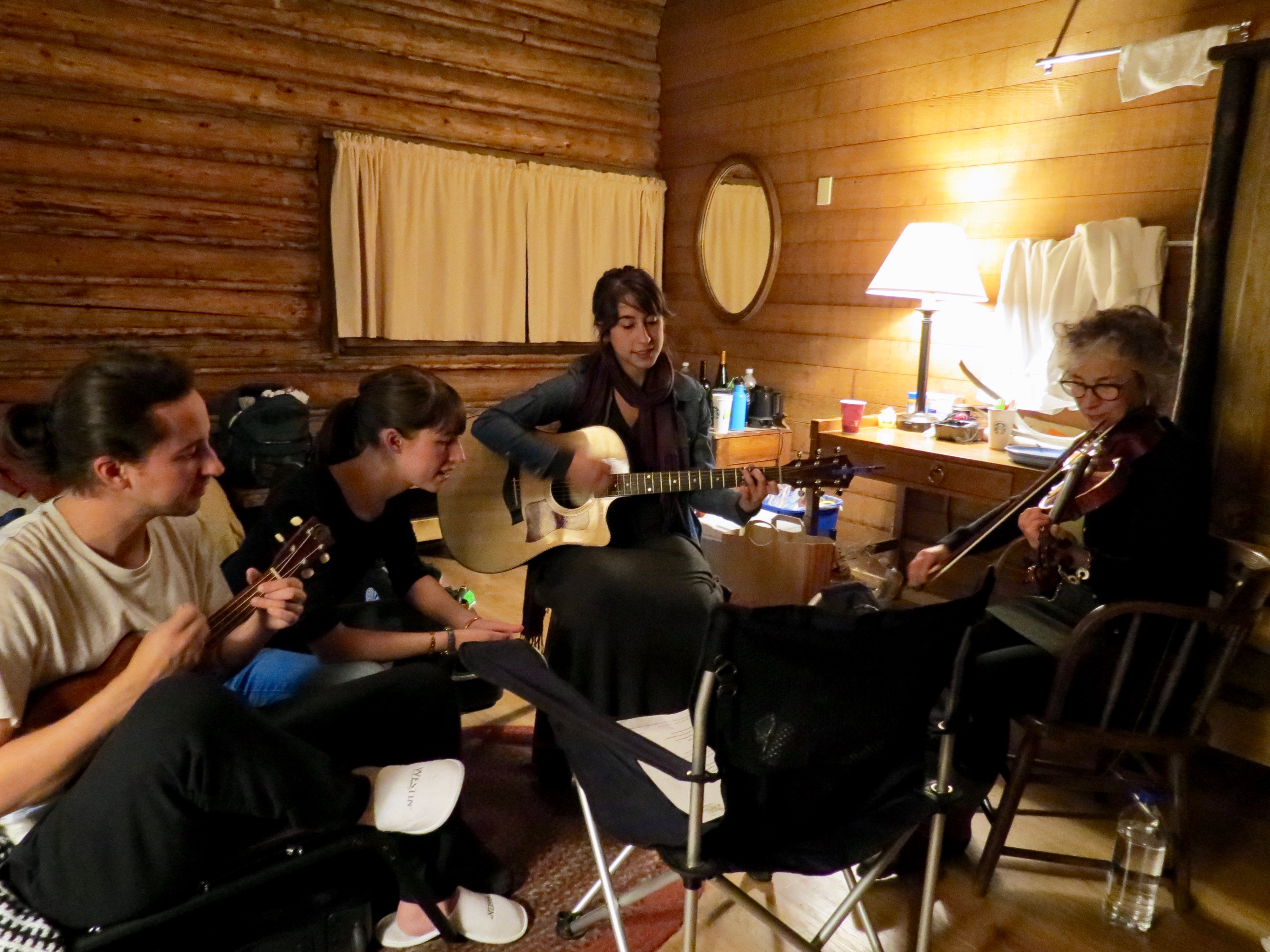
Music, for many of us, has come to mean the pre-recorded tracks on CD, iTunes, or the radio.  We experienced the joy of playing music, however imperfect, and being part of a creative endeavor larger than just ourselves.  It helped us tune into the soundscape all around us, ever changing and shifting…

…yet timeless.

© 2017 Naomi Baltuck 

.

Eclipsed

Nearly a year ago, when we first learned of the solar eclipse, most motels in the Northwest Totality Zone were either booked, or charging up to $750 for a room.  So we reserved a B&B in the Eastern Oregon town of Moro, a forty minute drive to Totality. As the day approached, epic traffic jams of eclipse chasers were reported.  We left a day earlier than we’d planned, taking two days to travel 270 miles, with emergency gear: food, water, sleeping bags, gas can, a read-aloud book and our Kingston Trio CDs.

Traffic on I-5 was heavy, but we traveled east over the Cascades, cruising the speed limit, and sighting only the occasional RV heading to the Totality Zone from Yakima.

All the guests at our B&B were eclipse chasers.  There were two couples, first-time viewers up from California, and a German couple, first-time visitors to the US, who had crossed an ocean and a continent for a ninety second peek at a natural phenomenon they’d seen many times before.  I took that as a good sign.

Moro’s population is 316.  Its only cafe had gone belly up, and the market closes early on Sundays, but the local history museum was open.  We picnicked and were playing board games in our room when Thom discovered on Facebook that college friends were also staying in Moro at the only other accommodation in town, just a five minute walk away. Lona and Scott were as enthusiastic about the eclipse as you’d expect a science teacher and a librarian to be, and they had spent the last two days scouting out the best view spots. They invited us over, pulled out their maps and notes, and suggested a place just south of Shaniko, for its off-road parking and territorial views.

Taking no chances, we allowed four hours to travel the 38 miles into the Totality Zone. Rising at 5AM, we learned that the other guests were long gone. But the roads were clear and we were halfway there before the sun rose.  At least sixty people were camped at our viewpoint, with more arriving all the time. The buzz of excitement filled the air, though the eclipse was still two hours away.  One youngster kept a faithful watch, but I dozed, catching snatches of conversation between friendly strangers.

Finally the moon’s shadow began to pass over the face of the sun. Through protective glasses it looked like a sky cookie, with a bite taken out of it.

There was a drop in temperature and a subtle change of light.  We couldn’t tell over the noise of the crowd whether the birds stopped singing, but the people-watching was superb compensation.  For an hour, the moonshadow inched across the sun, its effect hardly noticeable, except through protective glasses. Without them, even with just a sliver of the sun peeking out from behind the moon, its light was blinding.

All at once, darkness eclipsed the world.  It was as if a one-eyed sleeping giant had suddenly awakened, and the sky was staring back at us.

The crowd erupted into wild cheers, and Thom and I shared their exhilaration.

I’d seen it depicted on canvas, demonstrated in planetariums and National Geographic specials. But seeing a total solar eclipse with my own eyes was like hearing ‘Ode to Joy” sung by a heavenly choir after seeing only the musical notation on paper.

(Ivan Generalić: Solar Eclipse, 1961, CMNA )

Our dear Sol had pulled off his glasses and shirt to reveal his Superman costume. Ninety seconds later–it felt like the blink of an eye–the sun emerged from the shadow.

We took a deep breath, hugged each other, and hit the road, hoping to beat the crush of outbound traffic. We were elated as we drove north, verbally processing the experience. We both questioned whether we’d used our few precious seconds wisely. Ironically, Thom regretted not taking a single photo, while I wondered if I’d made a mistake by placing a lens between myself and an awesome once-in-a-lifetime-celestial event.  Thom knew just what to say.  “Argentina in 2019.”  Yes, please!

A friend asked, half joking, if the eclipse had changed my life. Maybe. Especially if we go chasing the next one, which will appear in the Argentine sky in 2019.  Meanwhile, there is a whole lot of Awesomeness right here on the mother planet.

I’ve read that awe is the emotion created by an extraordinary encounter that drastically affects one’s assumptions of the world.  Experiencing this emotion can make us feel small, yet connected to something larger outside of ourselves, especially when the experience is shared by others. This was borne out in Shaniko, where traffic bottlenecked at the crossroads with the only stop sign in town. Traffic on the big road had the right of way. I feared we’d be at a standstill for hours waiting for an opening.

Then some generous soul hit the brakes and gave cuts to a person who was stuck at the stop sign, before continuing on.  The next person with the right of way also stopped to allow a car through.  They were still graciously taking turns when we reached the intersection, and were also waved on.  There was a mile of backup, but not a single horn honked, no one hollered, everyone was patient and polite, and we all moved forward together.  It was an awesome display of human nature.


There are other kinds of Awesome that sneak up on you.

Again.

And again.

These days we live under a dark shadow that has eclipsed our country, and the planet too.  Instead of chasing shadows, it feels like we’re trapped in the dark, fumbling for the light switch. I found the light when I accompanied family and friends to the Women’s March in Seattle last January.

I was awestruck.

 And I was not alone.

The solar eclipse did not move me to tears.  But I couldn’t hold back tears of relief and wonder at the sight of 135,000 people speaking up for equality and compassion, and speaking out against oppression, bigotry and hatred.

Tears flowed again.

And again.

And again.

If it’s a Solar Eclipse that fills you with awe and purpose, you need only wait a year or two, and somewhere on this planet there will be a next time, another chance. But in the United States, if you’re looking for an extraordinary encounter, or want to feel a part of something larger than yourself, if you want to be more than an observer, you’d better start now.  Because in a year or two, who knows what will be left to save.

We can’t sit on our hands hoping no one will get sick, or disenfranchised, arrested, abused, deported, or thrown into a concentration camp for no good reason. Our national parks, our environmental protections, our healthcare and social safety nets are being systematically carved up and sold to the highest bidder. Our politicians and our elections seem to be for sale as well. Our civil rights, our human rights, our right to protest in our own defense–these too are endangered by the deranged sociopath in the White House. We can only hope he won’t get into a pissing match with another tyrant and launch us into nuclear war.

We have no special protective glasses for this unnatural phenomenon, but we can’t afford to look away.  It’s time to tear off our glasses and invoke our inner superheroes. Our superpowers will be to speak for those who have no voice. To protect those who cannot protect themselves. To organize, educate, donate, speak out, rally and march.

Again.

And again.

And again.

And again.

And again!

This isn’t a solar eclipse; there are no do-overs.  I’m keeping the glasses, because I want to be prepared for the next big event.  2019 will be here before we know it.

And so will 2020.  

All images and text ©2017 Naomi Baltuck


Come From Away

Every day seems to bring news of another mass shooting or terrorist attack, close to home or across the sea.  And you can be sure there is more violence happening throughout the world that goes unreported.

Colleges, theaters, shopping malls, clinics, schools, temples and churches have been targeted by Christian Fundamentalists, White Supremicists, the mentally ill, and Islamic radicals. Even the 1999 New Year’s festivities at the Space Needle were in the crosshairs, but the would-be bomber was apprehended on the Canadian border with a carload of explosives.


It was in 2015, just after the attack in Paris.  The French flag was flying throughout Seattle in solidarity with our grieving friends across the sea, when I first saw “Come From Away,” a musical based on a true story that happened immediately following the attack on the World Trade Center.  

“September 11, 2001 was an ordinary day in Gander, Newfoundland—until it wasn’t.  Thirty-eight planes were diverted to its doorstep on that fateful day, making this small town host to an international community. The camaraderie that followed reminds us all of the power that comes from opening up your heart and your home.”   

In one day the population of Gander, Newfoundland nearly doubled when 7,000 stranded travelers showed up on their airstrip on September 11th, and were invited in to be fed and housed by the residents of Gander.

With the chain of horrific events set in motion in America on 9/11, you might think what happened in a tiny Canadian town wouldn’t matter.  But it did, and it still does.  It’s a reminder that for every senseless act of violence, there are people of all races, religions, and nationalities poised to rush in to give comfort and aid to anyone and everyone who needed it.

In “Come From Away,” there is laughter and tears, racial prejudice to overcome, relationships broken and others forged in the wake of this disaster, and music to pull together all these story threads.

It is the superpower of authors, playwrights, and screenwriters to create elemental stories that shed light upon the ills and inequities of our society–prejudice, poverty, oppression, and corruption.  Some of them find their way to the stage and screen, and from there, directly into the human heart.  They’ve changed the world, or at least our way of looking at it.  They allow us to walk in another person’s shoes, see through their eyes, and put a human face on the ills of the world.

West Side Story,  Showboat, Fiddler on the Roof, South Pacific, The King and I, Hairspray, The Book of Mormon, The Crucible, Allegiance, Angels in America, To Kill a Mockingbird, Guess Who’s Coming to Dinner, to name only a few.  Groundbreaking, courageous, and timeless.

It is a miracle–no, a blessing–that we can come from away, and after two acts and an intermission, go home with the realization that we are not alone in the world, and maybe even go home with the will to change it.

And that is our superpower.

All words and images c2017 Naomi Baltuck

That Was Then, This Is Now

When traveling in Italy, we took the kids to the Florence Museum of Science, now the Museo Galileo.  It housed a collection of early scientific instruments, old maps, and, of course, the history of Galileo Galilei.

Galileo was the genius who invented, among other things, the forerunner of the thermometer and an improved military compass.  He discovered The Galilean Moons of Jupiter.  His theory, known as The Galilean Invariance, provided a jumping off point for two other scientific geniuses, Isaac Newton and Albert Einstein, to form their revolutionary theories regarding motion and relativity.  Galileo is regarded as the father of observational astronomy, the father of modern physics, the father of the scientific method, and he even made it onto the list of the top ten people in history who changed the world.  But he’s probably best known for proving the Copernican theory of heliocentricity, which states that the Earth revolves around the Sun, rather than the other way around.

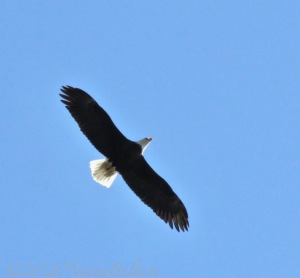
And that was his inconvenient truth.

The highlight of the Museo Galileo–at least for our kids–was the mummified finger of Galileo, resting in a fancy glass jar like a holy relic.  I suppose it’s appropriate for the revered patron saint of science.  Galileo was a pious Catholic and a martyr.  Ironically, it was the Church that made a martyr of him for Science.

In 1633, Galileo was summoned to Rome and brought to trial by the Roman Inquisition on the charge of heresy.  His crime was contradicting the Bible, which states that the Sun revolves around the Earth.

When the Inquisition threatened to extract a confession through torture, Galileo recanted, was found guilty, and sentenced to life imprisonment.  His sentence was commuted, and he spent the rest of his life under house arrest. He continued to write, although the Church slapped a gag order on him, banned his books and censored his writings for another 200 years, when even the Pope could no longer hold back the tide of scientific advancement.  When Galileo died in 1642, they weren’t even going to allow him a burial in consecrated ground.  It was thirty years before they inscribed his name on his burial place.  But in 1737, ninety-five years after his death, they brought his body out of the bad boy crypt and reburied him in a fancy marble tomb in St. Croce in Florence, across from Michelangelo’s tomb, because it was believed that Michelangelo’s spirit leapt into Galileo’s body between the former’s death and the latter’s birth.  Then, in 1992, Pope John Paul II did sort of apologize for wrongfully persecuting Galileo.

The wealthy have always had a place at the table, between religion and science, as patrons, enthusiasts, or opponents, but now Big Business sits at its head.  Big Business has bought and paid for a president that doesn’t believe in anything but the Almighty Dollar.  The Republicans sold their souls to secure their power, dropping any pretense of morality or family values, and they bought their majority by pandering to the far right, that thirty percent of America that interprets the bible as literally they might an instruction manual to the dashboard of a new car.  Science has suffered for it on both counts.

Texas is producing textbooks that not only disclaim evolution and pitch Creationism as its own brand of science, but it has cut out any reference to Climate Change.  Even the conservative Fordham Institute calls it a “politicized distortion of history.”  Texas is spoon-feeding its children claims that Moses was a Founding Father of America.  There’s a lot of money to be made in the textbook business, and the privatization of schools, not to mention the prisons.  If politics and religion, power and money are twisted into a huge tangled knot, Big Business still knows which strings to pull to get what it wants.

Civil Rights, equality, justice, education, and immigration are hot topics, but Climate Change is the new subject of denial by the Powers That Be.  A few years ago I’d have said the advancement of earth science was moving at a glacial pace, but that’s not so apt an analogy any more, because glaciers are melting at an alarming rate.  98 percent of the global scientific community now recognize climate change as real and caused by human activity, but the Republican party is in complete denial.  They stick their fingers in their ears and sing loudly to avoid hearing what they know is true.  Again, it’s all about money.  Environmental protection means restrictions, restrictions mean less profit for Big Business, and Big business gives politicians huge payoffs to deny Climate Change.  This has been an ongoing struggle for more than fifty years. The damage might already be irreversible.  A rapidly warming Arctic could loose a methane climate bomb resulting in widespread extinction in as little as nine years.

 You may be sure that history will judge them, just as it has judged the perpetrators of the Galileo affair.

But there is one huge difference in this particular power struggle.  It took 200 years for the popular tide to become too strong to resist, at which time the Church bowed to reality and accepted Galileo’s proof of a heliocentric Earth.  But in the case of Climate Change, we don’t have 200 years.  We don’t have ten years.  We can’t wait for the next Newton or Einstein to show up, and we don’t need them to.  Our climate scientists have already done the math, and it might already be too late.

And that is our inconvenient truth.

Copyright 2016 Naomi Baltuck.

Photos of Galileo courtesy of Wikipedia.


Look Upon My Works, Ye Mighty

Teachers, parents, siblings, mentors of every kind leave their mark upon us.  I was in the fifth grade at Isaac Newton Elementary school in Detroit when my teacher, Mrs. Chapman, had us memorize Ozymandias, a poem composed in 1818 by Percy Bysshe Shelley.  Then we had to recite it to our classmates.

I walked to the front of the room and paused, a dramatic device storytellers employ to command the attention of their audience.  Actually, I was just trying not to throw up: it was my first public solo performance.  I was terrified, but it was also electrifying to be able to convey such a compelling story, such unforgettable imagery.   Not only did I not throw up, but I got an A.  And I never forgot that poem.

My mother used to recite poetry to us, like “Daffodils” by Wordsworth and “The Highwayman” by Alfred Noyes.  Over the years I’ve shared Ozymandias and other gems (okay, sometimes I sing jingles from the TV commercials I watched as a kid), to a certain captive audience–my children.  Occasionally I recognize my own words reflected back to me from the mouths of my babes.  Sometimes to my chagrin, but most often to my surprise and delight.

My son Eli is home between teaching assignments…

…and tonight Bea returns from Stanford on spring break.  It will be so good for us all to be back together again.  My ritual, when the kids depart for school, is to tidy their rooms, change the sheets, and drop a tear or two as I make their rooms ready for them to come home to the next time…and they are always grateful.

The last time Eli left I was tempted to hire a bulldozer…

…but it’s like spending a little quiet time with that absent child.

Last night, in a burst of inspired procrastination (he was tired of reorganizing his own room), Eli decided to surprise Bea by cleaning her room, and not just the sort of tidying I do, but a thorough reorganization, including the mountain of books stacked haphazardly in the corner, that pile of her things parked just inside the door, not to mention the surprise found in a teacup discovered under a pile of stuff on her desk.  It’s either a science experiment or a strange new life form.  It took Eli over five hours.  He found so many new ways and places to shelve books that they almost fit on her shelves now!

But nothing comes without a price tag.  In fact, after Eli was finished, everything had a tag on it.  Oh, yes.  He had made his mark.

I love this one…

But my absolute favorite touch was the greeting on the door.

I howled with laughter. “Oh, good,” said Eli. “I didn’t know if you’d get the reference.”  “Do I get the reference?” I asked, launching into a recitation of Ozymandias.  “How did you think of it?”  He said he remembered it from all the times I’d recited it.  Of course I  ran to find my book of Shelley…

When I opened it up in search of the poem, I saw that someone else had made her mark.  Upon the book…


…and maybe even upon me.

The poetry and the stories we pass from generation to generation enrich and prepare us for the struggles we will face, within ourselves and in the outside world.  I believe they will outlast the Mighty and their monuments to themselves, and, I hope, their wars.

Thanks, Mom.  Thanks, Mrs. Chapman.  Thank you, son.  And welcome home, Bea!

All images and words (except for Mr. Shelley’s, of course) copyright Naomi Baltuck

The “H” Word

Many years ago my daughter came home from kindergarten and told me, “Michelle said a bad word at school today.”

“Which one?” I asked.

“The ‘S’ word.”

“Ohhhh.”  Subject matter we don’t want our kids learning in school.  “Do you know what it means?” I asked.

My five year old flashed me an I-wasn’t-born-yesterday look, and said, “It means stupid.”

I heaved a mental sigh of relief, and exercised my Superpower Poker Face to keep from laughing.  “Do the kids say any other bad words?”

My daughter solemnly nodded.  “The ‘H’ word,” she said.

“Help me remember what that stands for.”

“Hate,” she told me.

img_7002


I was a storyteller long before I had kids, and understood the power of words. That didn’t prevent me from indulging in colorful language, mostly offstage. But when my first child was born, I determined to turn all my verbal toads and snakes into rubies and pearls.

img_7102

Just as I saw the world anew through my children’s wondering eyes, I listened through their innocent ears.  I saw how words loaded with negativity seep into the consciousness like toxins into groundwater.  At our house, everyone was encouraged to speak their minds, using language constructively, not to hurt or humiliate.

img_6998

When my little innocents toyed with the word ‘hate,’ I explained that some words aren’t naughty but are powerful, and must be saved for emergencies or they lose their power.  Just like with TV violence or antibiotics, excessive use results in an unhealthy immunity.  Hate was a word rarely heard in our house.  But since the election, that and many other ‘H’ words have come into common usage all over America.

H is for Harassment.

img_6951

H is for Homophobic.

img_7080

H is for Hitler, for Holocaust, for He-Who-Shall-Not-Be-Named, that Haughty Hot-Tempered Hypocrite who is Hijacking our Homeland to Hell in a Hand-basket.

img_7115

A great man once said that a house divided cannot stand.  Inciting fear and hatred is the traditional means of dividing a people and strengthening a power base. Every day the Republicans implement new policies legalizing the persecution and diminishing the rights of people based on race, religion, gender, sexual orientation, national origin, and socio-economic status.

H is also for heartsick, which is how the majority of US citizens feels as American ideals are trampled and tossed aside.  So last January 21st, here in Seattle, in solidarity with people throughout America, and on every continent in the world–even Antarctica–we donned our pussy hats and marched.

img_6888

It buoys the spirits to walk shoulder to shoulder with 135,000 like-hearted people…

img_7013

…in a crowd stretching farther than the eye can see.

img_7131

People protested against the Republican threat to freedom of speech, freedom of religion, and equal justice for all.

img_7134-3

Even those who had never been politically active took to the streets.

img_6946

These were people who weren’t afraid to speak up and speak out.

img_7048

People who cared about the greater good.

img_7031

People for whom the ‘H’ word is Hope.

img_7191

Harmony.

img_6890

Healing.

img_7045-2

H is also for hero…

img_6940
…and heroine.

img_7103

H is for happening, for hookup, for hive and home and herd.

img_7078

 For heart.

img_6962

For helping hands.

img_6974-2

img_7060

img_7088

H is for holdfast.

img_7020

H is also for humanity and high ground.  And that’s why and where we’ll take our stand.


img_7151

All words and images copyright 2017 Naomi Baltuck


Boots on the Ground

Last month concerned citizens rallied in Olympia in solidarity with protestors in fifty state capitals.  We had hoped to convince electors to vote their conscience. In light of all that has passed since then, it seems naïve to have hoped they might step out of the party line.

img_6675

Those who lived through the rise of Hitler see history repeating itself. As a student of history, I looked back even further. When Trump bragged, “I could stand in the middle of 5th Avenue and shoot somebody and I wouldn’t lose voters,” I thought of the Latin phrase, agere et pati, ‘to act and to endure,’ a perfect description of medieval society.

IMG_0380.JPG

Bodiam Castle, East Sussex.

There’s a striking parallel between our current social order and that of the Middle Ages, in which the wealthy ruling class acted and peasants endured. Peasants made up ninety percent of the population. Lords squeezed serfs for taxes plus three days of unpaid work per week. The church exacted two more unpaid workdays, and a compulsory tithe, 10% of their income, forcing peasants to live hand to mouth. Nobility had the power of life and death over them, while the church tortured and executed dissenters.  Protest was not an option.

IMG_0562.JPG

Traitors Gate, Tower of London. They go in, but they don’t come out.

Like Trump and the GOP, the nobility and the church had their snits, but mostly they scratched each other’s back. Nobles gave financial support to the church, and the church justified the social order by declaring it God’s will that nobles should possess all the wealth and power, and God’s will that peasants and serfs should live to serve them.

IMG_0593.JPG

To cement the pact, the church placed highborn second sons into powerful positions in its own hierarchy. This artful deal resulted in feudal nobility with an iron grip on peasants, and peasants who were taught from birth to endure their sorry lot and wait obediently for their reward in Heaven. Nothing changed for centuries.

Burying plague victims.

It took the Black Death to upset the fruit basket. The plague hit Europe in 1347, killing half the population over the next five years.  With the workforce so reduced, nobles hadn’t the manpower to till their fields or chase down runaway serfs. Surviving peasants finally had some choice about whom to work for, and could demand decent wages or leave, maybe even to learn a trade in the city. At last upward mobility was possible, and the middle class got a toehold in society.

img_1764

Thirty-five years later, in 1381, to pay for its pricey Hundred Years War with France, the English government imposed its fourth Poll (per head) Tax in four years. It was a regressive tax, hardest on peasants, who shouldered as much of the Poll Tax burden as the wealthiest landowners.  Just when the peasants thought it couldn’t get worse…

King Richard II

…King Richard II issued The Statute of Laborers, capping wages and forcing workers to accept the same miserable conditions they had labored under before the plague struck. The new law threatened severe punishment to serfs and peasants who dared seek better conditions or higher wages.  It also forbad merchants and tradesmen to charge the market price for goods and services, and ordered a return to pre-plague prices. King Richard even tried to cut the only social security the poor had by forbidding beggars to beg.  In other words, he wanted to make England great again.

img_6627-2

In an unprecedented protest, 60,000 peasants marched to London to demand an audience with the king. 2000 protestors died in the ensuing violence, and others did too, including the archbishop, the king’s treasurer, and a number of tax collectors. The peasants dispersed after the king made promises, which he broke, and granted pardons for the rebels, which he revoked. Rebels were hunted down and executed.

jean_froissart_chroniques_154v_12148_btv1b8438605hf336_crop

Richard II meets with rebels by Jean Froissant.

After the dust settled, it might’ve seemed like nothing had changed, but historian Michael Postan says the revolt made history, “as a landmark in social development and a typical instance of working-class revolt against oppression.” If only for fear of another uprising, peasants were treated with more respect, the hated Poll Tax was never again raised, and it marked the end of feudalism. Most importantly, peasants set their sights on astonishing new, if distant goals; freedom, equality, and democracy.

img_6656

We face difficult days ahead. Our hard won democracy has deteriorated into an oligarchy—a nation ruled by a small elite group of the obscenely wealthy. Any power or constitutional rights we lose to Trump and the Republicans will be difficult to recover. In D.C., the House, the Senate, and the White House are controlled by Republicans. Trump hasn’t assumed office yet and they’re already ripping apart safeguards.

We can’t afford to surrender to despair or even resignation. We must resist. Since the Peasants’ Revolt, we’ve had shining examples of nonviolent civil disobedience from heroines and heroes like Harriet Tubman, Mahatma Ghandi, Martin Luther King, Susan B. Anthony, Cesar Chavez, Lech Walesa, and the Standing Rock Lakota. Nonviolent movements like the Underground Railroad, the Women’s Suffrage Movement, the Civil Rights Movement, United Farm Workers, and the Dakota Access Pipeline Resistance have brought change that makes a difference in all our lives. Not without sacrifice, but with hope, courage, and determination.

harriet_tubman

Harriet Tubman, civil rights activist, abolitionist, humanitarian.

Solidarity in Communist Poland began with strikes to demand a free trade union, and resulted in freedom and democracy for the Polish people. There was the Velvet Revolution of Czechoslovakia. The Singing Revolution in Estonia, Latvia, and Lithuania began with people gathering to sing national songs forbidden by the Communists. Four years later they were independent nations, free of Soviet rule.

IMG_0716.JPG

Every protest matters. It’s an act of faith, almost a prayer. Not the kind in which you petition for a miracle or  just a quick win.  The kind that lends you strength to endure however long it takes, but also transforms you from silent sufferer to person of action. You’ll be there for those who have no voice, or who need help finding their own voice. You’ll be there to inform the public and to lift each other up, to remind yourself that you are not alone.

img_6395

Each act of resistance repays a debt to those who fought and sacrificed on a battlefield, in a courtroom, or on a picket line to make our lives better. And each act of resistance is a gift to our children and grandchildren.  One day this will all be history. When people look back, and they always do, I hope to be remembered for fighting for what’s right. It’s time to call out the lies, write our congress, gather those signatures, and save our nation from a shameful demise.  It’s time to put our boots on the ground.

img_6645-2

Copyright 2017 Naomi Baltuck

Telling It to the Walls

A poor widow was living with her two sons and their wives. They treated her shamefully, but the old woman had no one to turn to with her woes and nowhere else to go, so day after day she suffered in silence.  Her sons and daughters-in-law mocked her, and begrudged her every crumb of bread, every grain of rice.  Even as the widow starved, her misery grew.

IMG_1610.JPG

One day, when she could no longer bear the pain, she slipped out of the house and walked down the road.  She had no idea where she was going, until she came to a house so decrepit there wasn’t even a roof left. She felt strangely drawn to the deserted house and stepped inside.

img_7022

To her surprise, she found herself telling the nearest wall her grievances against her firstborn son, whom she had showered with love from the first time she felt him quickening inside her, and who now had no use for her.

IMG_2169.JPG

As she finished, the wall crashed to the ground under the weight of her sorrow, and she felt her burden grow lighter.

IMG_7026.JPG

She turned to the next wall and the tears flowed as she described the cruelty of her first son’s wife…

img_0161


…who gave her only rags to wear and threatened to send her out with a bowl to beg.

IMG_0832.JPG

The second wall collapsed and she grew lighter still.

IMG_7132.JPG

She told the third wall about her second son’s ill treatment…

img_4440

…and the fourth wall her complaints against his wife.

img_5043

When she was finished, the old woman stood amidst the wreckage, watching the dust settle.  She still had nowhere else to go, but as she turned homeward to face her life,  just for the telling of the tale, she felt lighter in body and spirit than she had in a long, long time.


img_4124
–Retold in Apples From Heaven, Copyright 1994 & 2016 Naomi Baltuck.


Risistance Is NOT Futile

All the stars and planets were aligned…Just after the election I had a birthday, which I share with my binary brother, Lewis.  In sixty years we’ve never spent a birthday apart. Like so many of us, he was shocked, saddened, crushed by the election results.  There was only one thing to do.  We played space age hooky, beamed him out of the office and transported ourselves to the Seattle Center.

Specifically, to the EMP, which is celebrating 50 years of Star Trek.

I hardly remember life before Star Trek. And talk about The Next Generation! My children absorbed Star Trek by osmosis in utero. As I ascended the stairs to the EMP tribute, the Star Trek theme song elicited a visceral response that only gets stronger as I get older.  I’ve lived long enough now to see many of these stories played out on my planet in real time.


The Star Trek universe was built upon a future where poverty was eliminated, equality and diversity went hand in hand, and the good of the many took precedence over the few.  Humans had learned to cooperate, and put an end to war.  All of Earth and the Federation of Planets collaborated on peaceful missions of exploration.  What a concept!  A bit rosy, but a vision worth striving for.

Lew and I arrived early and shared the floor with only a few others, including a very cute couple in Star Fleet uniforms.

Lew and I shared a womb for nine months, and managed to both fit into a Borg Regeneration Chamber too.

Star Trek had action and adventure, but was also thoughtful and intelligent.  Writers could get away with astute critical social commentary, because it was all happening in another universe. Thinly veiled stories posed tough questions about civil rights, social disparity and racism in our own society.

Martin Luther King was marching for basic civil rights and a place at the lunch counter for African Americans when Classic Trek was filmed, featuring a black woman as fourth in command on the bridge of the Starship Enterprise.

It wasn’t long before a woman would captain the Federation Starship Voyager.

A black man was in command of the space station, Deep Space Nine.

Julian Bashir, whose Arabic name means “bringer of good news,” was the doctor on DS9.

In the original series Lt. Sulu was played by George Takei, who is gay.  Fifty years later, in the most recent Star Trek movie, writers gave Sulu a child and a husband, a powerful tribute to the actor who first brought Sulu to life. More importantly, it was an unwavering moral and political statement of inclusiveness that brought tears to my eyes.

For just a little while, it felt good to be in a place of Equal Opportunity bridges, and not walls.  Right now we are in the middle of our own episode, so scary it seems like science fiction, with the world we’ve worked so hard to build spinning out of control.  The incidence of hate crimes is rising dramatically.  Social security is threatened.  Fifty years of social progress is at risk as minorities, immigrants, women, LGBTQ, people with disabilities, and the poor are in danger of being disenfranchised.  The environment is on the brink of ruin beyond recovery because in this episode The Almighty Dollar is worshipped at all costs.  In this story, we don’t have other worlds to relocate to after we’ve ruined this planet. Too many episodes begin with civilizations that have self-destructed, or are ruled by uncaring masters who live in the clouds in their own decadent paradise, while the workers they exploit to maintain their lifestyle live in a harsh ugly world. You probably saw “Patterns of Force,” the episode pictured below; there are people old enough to have lived through that reality, and who recognize the signs in our country today.

patterns-of-force-star-trek-women-13190574-720-530

If we wait until the 24th century to be rescued, or for ‘enlightenment’ to kick in, we’re going to find ourselves back in the Dark Ages wondering what happened.  Anyone who has watched Star Trek knows how difficult it is to travel back in time to change the future.  Star Trek’s writers say,  “…start by picking a resolution…then plan each step so it drives the story toward the ending you want…”

Every episode needs conflict to give a story purpose and move the plot forward.  Star Trek writers created a terrifying foe called The Borg...”individuals who have been captured and assimilated…and transformed into mindless worker drones…What’s frightening about the Borg is not their violence…They are unhampered by empathy for other beings, believing their way is perfection…The Borg are, in essence, a virus that uses civilizations as its hosts.”

Can you see where our country is headed?  We will NOT be assimilated. Our story must end with a world where people of every race, religion, gender, and sexual orientation live and work together, without fear of banishment, punishment or judgement simply for being who they are.  Our story must end with respect, inclusivity, and compassion for all.  We must do whatever it takes to make it so.  The reason Star Trek has become such a lasting legacy is because it is hopeful and empowering and delivers a message we need to hear.  The captain’s chair is ready.  Let’s take our tall ship, keep an eye on that star to steer her by, and go full speed ahead, warp factor 10.  Whatever happens, please remember…Resistance is NOT futile.  It is the only way we ever have or ever will make any headway, and it will be a crucial message to the next generation.

©2016 Naomi Baltuck