The cows graze in the green valley
on grass studded with wildflowers,
drink from a river where trout play
voles dance on through its banks.

They walk to parlour when they want
when their bodies say they need to be milked
hitch themselves to the robotic machine
that cleans udders, sucks the milk away.

There’s little labour for the farmer
no need to round-up, milk or carry
or spray pesticides as his father did:
he’s alerted to all twenty-four hours
for the land looks after itself, rain or shine.

He’ a happy man for his milk sells
for premium prices, he exports it
for its value for its great goodness,
filled with nature’s gentle bounty
and tuned to the season’s rhythms.

The cows, and the productive land
he’ll pass in perfection to his children.

                                                          —7/2/2021
This one holds special significance for me. As a kind of cri de coeur (cri de guerre?), I think it spoke both to her battle with illness and her battles overall. 36 hours before she died, we were speaking with her doctor. Her doctor said two things that will stick with me forever. First, “she’s really tough, isn’t she?” And, second, “her lungs still sound clear.” Victory was hers.
—Richard Lingua
victory is mine, a poem
 you thrive on fear,
 but i slow you, stay you, sink my nails into you
 as i sink my nails into the moon
 knock if you must, but i have barred the door
 i have hung a magic amulet from the rafters
 my screams rise silent as a roar, black as a sun
 they rise from a living heart, pierce the numb sky
 my laugh is a cackle scratching your yellow eyes
 i grow tired but spring back again,
 a wilting rose newly watered
 night done and i’ve won battle over
 the puce and putrid that filled my lungs –
 i breathe, i breathe and tenderly i poem
 as if there would ever and always be another sun
 i am here to race and tear, to rail and gag
 still i laugh, still i love
 come you must at close of day, but
 your soul is prose and mine is poem,
 triumph belongs to the Eternal in me
 …..victory is mine
In early November, we lost one of the dearest members of The BeZine Team, our founder and editor, G. Jamie Dedes. Jamie was a huge inspiration to all of us; always a soft, gentle and encouraging voice who gave us the courage to write and the faith to succeed.
One of my favorite poems of hers is this one, where she speaks to us about spirit’s immortality. Despite the tears, I know she’s close. I can hear her enthusiastic, “Poem on!” and I know she will always be with us.
One Lifetime After Another
one day, you’ll see, i’ll come back to hobnob with ravens, to fly with the crows at the moment of apple blossoms and the scent of magnolia ~ look for me winging among the white geese in their practical formation, migrating to be here, to keep house for you by the river …
i’ll be home in time for the bees in their slow heavy search for nectar, when the grass unfurls, nib tipped ~ you’ll sense me as soft and fresh as a rose, as gentle as a breeze of butterfly wings . . .
i’ll return to honor daisies in the depths of innocence, i’ll be the raindrops rising dew-like on your brow ~ you’ll see me sliding happy down a comely jacaranda, as feral as the wind circling the crape myrtle, you’ll find me waiting, a small gray dove in the dovecot, loving you, one lifetime after another.
mountains rise round, pregnant belly of earth and the aspens dance with paper-barked madrone screeching their yellows and reds, brindle and feral like the snaked hairs of Medusa they threaten
looming over me as I lay miles away on a mesa the bones of my ancestors, the heart of my child the pelts of the brown minks my father sewed the vultures circle, ravished by my demise.
I feed on the pinion and ride mountain lions down slopes, into valleys, a wanderer, lost and lost looking eastward, seeking John Chapman he has something to say, or maybe it’s westward
John Muir, my ears are deaf, my eyes hear a song emerging from black bear, a surfeit of salmon burning sage, clearing America, the wild beasts are defanged and declawed and I am hawk-eyed
Selected by Core Team contributor Corina Ravenscraft
I cannot find the words of this, one of my favourite of Jamie’s poems. It was originally posted on on her old web site ‘Musing by Moonlight’. I did however record it and with her permission, posted it on Soundcloud. I loved this poem because it speaks to me not only of all the things that Jamie enjoyed, but her ability to deal with her limitations and replace them with her acute powers of observation …
Poem copyright Jamie Dedes. Performance by Poetjanstie.
At a time when the world is in shock and grief, mourning in black and burying in white, this week’s prompt turns the heart and mind towards the profound joy prevalent in nature. Sympathy comfort and support leads to a state of serenity, and acceptance of the harsh realities. Just as the endless sky meets the ocean line, grief slowly drowns deep, and wave after wave touches the shore to confirm eternal love and hope of more coming joy.
As the striking poem moves on the reader finds it replete with vivid imagery from the contours of the berries to the universal curves of celestial creation and can surely visualize the countless constellations beyond the moon and the solar system. The imaginative mind will leave the mundane, perhaps may not rest, but taking joy along will fly high to seek the ultimate bliss.
“A thing of beauty is a joy forever” John Keats wrote and G Jamie Dedes was so full of love positivity profound inspiration and extreme joy which she shared with everyone.
 Rest…

 In that place where endless sky meets ocean wave
 Where plump blue berry meets thin green leaf,
 Where clarity gifts a kaleidoscope of joy.

 . . . . . Breathe and breathe and never mind

 The house begging for repair, the tree wanting a trim.
 Never mind the floors awaiting the broom
 The accounts begging for their balance…

 . . . . . . Observe the contours joy…

 From the quiet mind and the stilled pen,
 Joy! dancing on sunbeams and resting
 On the limb of a moon-lit tree…
I look over the moon I look over the stars
I hide behind the eclipse I search for you on mars
I sail across oceans paddling  furiously,
racing with the sharks,
my arms become sore, my fingers painful,
my heart sorrowful, as I let go,
hold hope with love, in the fragrance of your eyes,
in your silence I hear  your voice,
your duty is your choice, your world afar,
then I see you, a light spirit  flying, along,
the bright silver heaven’s star.
For the lovely lady who was so encouraging to me when I began writing a little poetry blog…
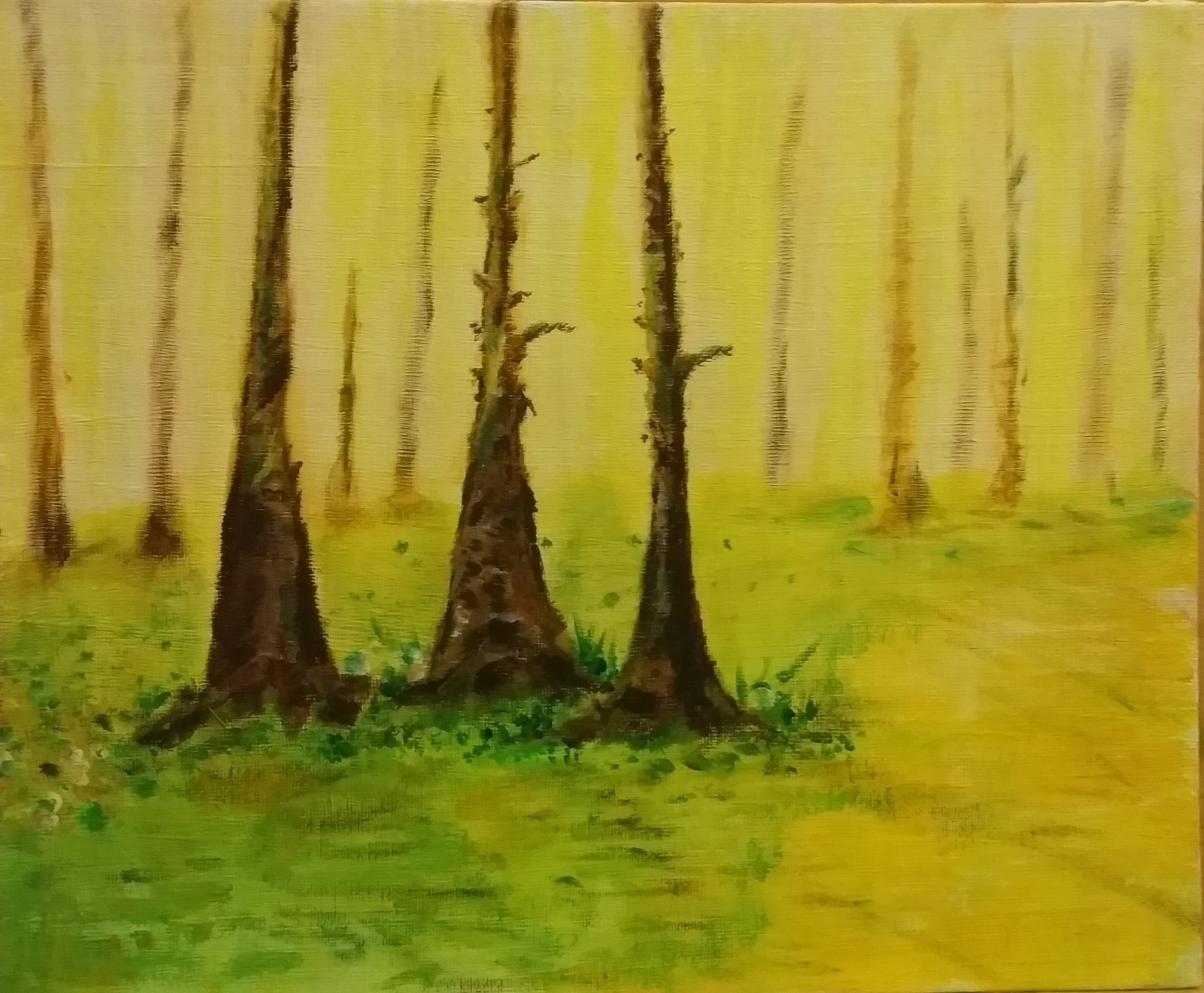
Painting: “A Walk in The Woods’ Copyright Brian Shirra. All rights reserved.
Grace some have held the gloved hand of grace,
Looked briefly at their own reflected self,
Closed their eyes to begin their eternal dream
Of what might have been, or is still to come.

Those gloves are discarded, as they must be,
But the fingers within felt the needs of others.
One pulse racing, the other dwindling down
A last, lingering empathetic embrace.

One day those gloved hands will hold a child
In winter, on a slope, sledging near their home.
The hand, like the heart, needs to feel joy once more as sorrow
Recedes to a memory of being the last one there.
Somewhere, that’s about what it seems, at least
For now, maybe.  It’s a bit like someone saying
What do you do?  To be honest with you, and
I’m not always as honest as I’d like, I’m still
Wondering about that, the what do you do
Thing.  It’s always something, wouldn’t you
Say?  There’s never been a not doing, but
Lately, that seems indeed pleasurable over
Piles of laundry and late bills.  Is that what
It all comes down to, doing something,
Somewhere, sometime, somehow?  Would
You ask a Palaeolithic hunter the same?
He and/or she is just hungry and all the
Dinner animals are either skittery or way
Too big to bring down.  Every day has a
Certain melody, sometimes operatic, but
Often, just a sweet song someone hums
Now and then, though lately, more blues
That makes both of us just want to lie
Down and die.  But, thank heavens, we
Don’t as we want to keep listening, even
A little, just to see what tomorrow might
Bring.  Isn’t everyone wondering about
Tomorrow?  Or hoping for tomorrow?
Some have already dropped dead from
Not knowing about what to do next, but
For others, maybe you, we’re already
Dreaming way ahead of where we already
Are.  It’s also very possible none of us
Really know what we’re doing, or what
We’ve done, or haven’t done, or don’t
Even know what we should have done.
But like a miracle everyone here keeps
On doing as that’s why we’re here, just
To do something.  Of course that’s right,
And even if you’re not doing, your old
Brain on life support is still scanning
The universe for what’s in front of us,
Wondering, of course, how soon we’ll
Not even have those electrical hot wires
As the way this works out is we don’t
Get to do this very long, even though
Everyone thinks this certainly could go
On, like forever, and then, forever is
Already over, and there you are either
In a tiny box of bones and ashes, or worse,
Just lying like that down below not doing
Anything again, ever, anymore, anywhere.
This originally ran in the September issue. We run it again, in memory of Jamie. —Ed.
United we stand, divided we fall.
Together we rise. Alone, we hear only the call
from sirens of an alternative kind of destiny,
where attention seeking soldiers of fortune,
their collegial architects and faceless shadows
construct a new order, birthing the unfamiliar,
wrapped in a matrix of the convincingly familiar.

A weeping iconic mater outwardly gestures
her loving hands with warnings from a handmaid
and her tale of forced labour and social media
generating artificial facts of incontestable
statistical intelligence, promising to remove
uncertainty from uncertain lives, to offer
security in a profoundly insecure way.

Yet, still small voices of independent thought,
unafraid of consequence, reality, insecurity or pain,
continue to echo the inspiration of she, who reasons
encouragingly and compassionately against
the harbingers of our future decline, against
the pornography of privilege and wealth,
against the deniers of equitable, sustainable life.

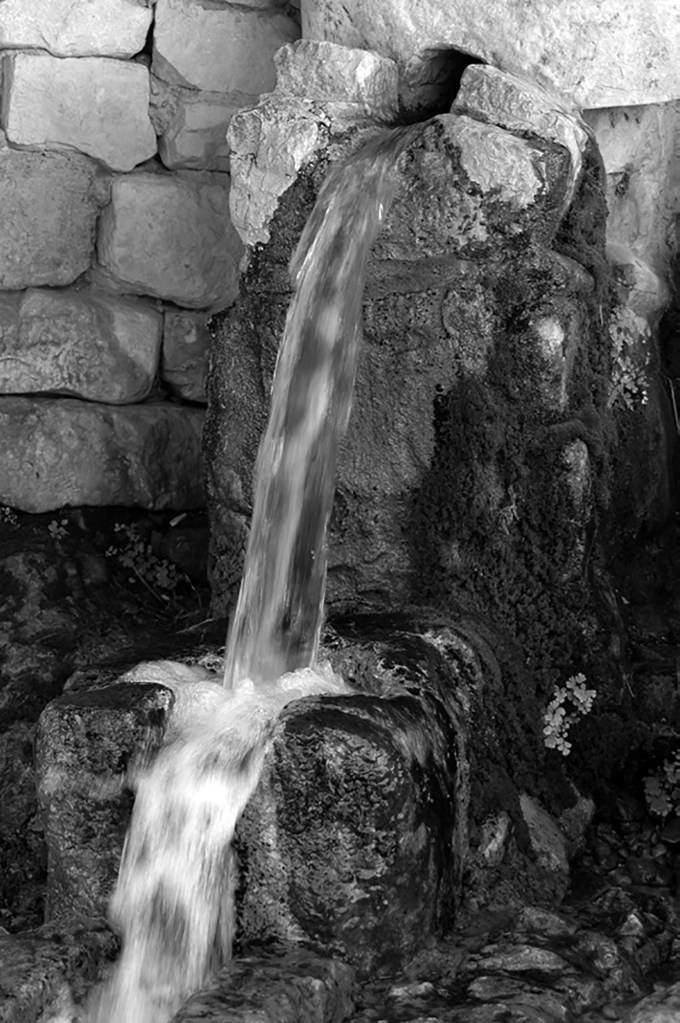
These voices endure, like those refreshing waters
of a spring that flows from deep inside humanity.

Underneath the radar of the darker web of lies,
they carve in stone the undeniable truth of history.
At the time I wrote this last August, Jamie Dedes, founder and editor in chief of The BeZine, formerly ‘Into The Bardo’, for over ten years, had already stepped down from the roll because of failing health and, in her words, feeling too exhausted from the effort required to maintain the project. Instead she has characteristically shown her faith in the team she has built up, encouraged, nurtured and, above all, imbued with her own enthusiasm for The BeZine‘s mission of promoting Peace, Sustainability and Social Justice, through the medium of the written word and all-coming art forms.
She invited me to get involved in 2013, it seems like an age ago! She said that she found the ‘About’ page in ‘My Poetry Library‘ was the most most impressive she’d ever seen! Come what may, I have never regretted a moment and further often wonder where my motivation would have come from, to write and achieve more than I would have given myself credit to achieve. This is my humble attempt to show my appreciation for her influence on me, alongside other stalwarts like Michael Dickel, who has agreed to take the tiller as Editor in Chief, and the other ten or so members of the core team, who have kept the faith. Not to mention countless guest contributors, all of whom have entered the spirit of a very, very worthy cause. This is as much a tribute to you as it is to Jamie. I salute you all.
I find it both encouraging and, in a strange way, heart warming to know that I actually ran this poem passed Jamie before publishing it in the September edition, because I didn’t want to embarrass her. She was never keen to promote herself in any way, but she did give it a nod of approval.
J. S. Bach, Unaccompanied Cello Suite No. 6 in D Major, BWV 1012: I. Prélude Yo-Yo Ma, Six Evolutions —— Recommended as accompaniment to the poem: Listen to 30 seconds of the music, then read the poem. Let the music guide you. Pause when the words pause. Pause between stanzas. Listen. And at the end, listen to the rest of this amazing cello playing as the words soak into you.
For Jamie
 Thunder, wind and rain last night scattered leaves
 and small branches along the roads, covering cars
 with a blanket of fallen lives. Water that washed
 over the four quarters of Jerusalem—down the faces
 of The Western Wall, Al Aqsa Mosque, The Church
 of the Holy Sepulchre, and into the karst holding these
 buildings—today ropes into rivers threading to The Salt Sea.

 The currents bubble up in sweet springs along the way.
 En Gedi has quenched thirst for thousands of years,
 watered dates and olives amid weathered stone.
 The sweet water also slips further along,
 ending up riding on top of the mineral-laden
 Yam HaMelech, springing up again fresh
 pure-spirited, greening desert shores.

 You taught us that a life, too, could trace
 such a path across belief and suffering, sink
 into rock-roots, form braids with others, and
 emerge as life-giving water in a parched world.
The Western Wall — the exposed section of wall that enclosed The Temple Mount, Jerusalem
Al Aqsa Mosque — one of the holiest Islamic sites, on top of The Temple Mount
The Church of the Holy Sepulchre — a sprawling complex of a cathedral that encompasses sites associated with the crucifixion and burial of Jesus; the management / administration of the complex is divided between several different Christian denominations, the main ones (according to Wikipedia): Greek Orthodox, Roman Catholic and Armenian Apostolic, and to a lesser degree the Coptic Orthodox, Syriac Orthodox and Ethiopian Orthodox
The Salt Sea — a literal translation of ים המלח (Yam HaMelech), the Hebrew name for what in English is called The Dead Sea (see Yam HaMelech)
En Gedi — the name of an oasis area (now a kibbutz and national park) in the cliffs above The Salt Sea, which has supported human habitation for thousands of years and been a stop-over for travelers for longer. Four springs provide water: En Gedi, En David, En Shulamit, and En Arugot
Yam HaMelech — the transliteration of the Hebrew ים המלח, literally, The Salt Sea, the Hebrew name for what in English is called The Dead Sea (see The Salt Sea); though springing from unrelated roots, the Hebrew מלח (melech — salt) and מלך (melach—king / ruler) sound similar; the word מַלְאָך (melakh, meaning messenger and translated as angel in Biblical texts), also sounds similar to מלח (melech — salt), but shares the root of מלך (melach—king / ruler); Yam HaMelech is associated with the land of Sodom, and there is a salt formation called “Lot’s Wife” in the region
You will not be forgotten
in a lush forest of life’s lessons,
or on a solitary path into the gloaming.

We feel your presence and hear
a voice leading from your poems.

Now, in blindness,
what more will you give?

Does hope still hold?
What brings joy?

Your name lives…
in words, in trees

“the only hope is to be the daylight.” ~ W.S. Merwin
Antoni Ooto is an internationally published poet and flash fiction writer. Well-known for his abstract expressionist art, Antoni now adds his voice to poetry. Reading and studying the works of many poets has opened another means of self-expression. His recent poems have been published in Amethyst Review, The BeZine, The Poet Magazine, The Active Muse, The Wild Word, and a number of journals and anthologies. He lives and works in upstate New York with his wife, poet and storyteller, Judy DeCroce (whose work appears elsewhere in this issue).
 silent blue night
 just before light
 eases tension
 by whispers—
 that moment
 I hear you breathe—
 in-drawn breath spirals,
 a gentle swish,
 brushes on cymbals
 soft shush, shush,
 shush
Now everybody’s got a dog
so they can have an excuse
to get some air.
You can tell which ones were adopted
after Corona appeared
because they really don’t know
the neighborhood
and they sniff around the street
like startled strangers.
They don’t even know
where other dogs live.
They start at the sound
of a local hound
barking, poking its nose
through the gate
of some guarded villa.
We came to the rescue center
too late. All the cages
were empty, and we left
knowing that when this passes
there will be more choices
than ever before.
For now, an alley cat has adopted us,
walks our 30 yard limit
whatever path we follow
knowing there will be lunch
when we get home.
And when it is over,
and the old ladies come out
to feed them again
she’ll leave us.
And then we’ll get a dog.
How Much More Noble
How much more human
We have become
Now that we can no longer touch
How much more clear
The air we breathe
Now that we can no longer tour
How dear are those we love
When they are far away
And how much more sad to be alone
How much more
We have to learn
How much more we have to live
Karen Alkalay-Gut’s latest books are the dual language Surviving Her Story: Poems of the Holocaust (Courevour Press), translated to French by Sabine Huynh, and A Word in Edgewise (Simple Conundrums Press). She lives in Tel Aviv with her husband and an outdoor alley cat.
Always in the way, in line of sight, a breed apart
littering the streets like inconvenient broken bagsof warn out clothes and rain-soaked cardboard.
It’s all right to ignore them; they brought it on
… themselves
Our way is best. Respect earned the hard way.Why can’t they see the virtue of a Protestant ethic?
These foreigners, incomers, low caste, outcast, black
brown, yellow, red, native, all comers and, yes
… white
entitled upstarts get fat and lazy; love bossing the blindlike the noble Shire who, blinkered, cannot see the whip
like slaves, to earn their keep, their salt, their corn or
cotton
know their place, like goldfish in an unfurnished bowl
… uneducated!
Wondering why they seem to know nothing; have
nothing?
A disadvantaged cerebral cortex, almost unconscious
of their need for help that rarely comes in time, savea coin, for a cup of makeshift anaesthesia, a sort of
… solution.
Aren’t we all strangers. Each of us an insular spec onthis precious Earth, a mote in the eye of the universe,
plagued by starvation, strife, poverty, climate and tearscorruption, indifference, immunity to hardship
… greed
Do you see eye to eye on every issue with your friends?
agree with your neighbours on the way to keep house?
Do they agree with you, will they ever, will you ever?
How then can broken, ragged human life be so
… different?
But they do! They do work hard to stay alive. Deprivedof something, maybe a failed family, diminishing visionof a life fulfilled, but lost somewhere along the way.
Therebut for a mutation of genes, environment and fortune
… forbidden.
The title was inspired by the lyrics of Paul Simon’s song ‘Homeless’, a collaboration with Ladysmith Black Mambazo on the Graceland album in 1986. The alternative refrain to “homeless, homeless …” half way through the song is “Strong wind destroy our home, many dead, tonight it could be you.”
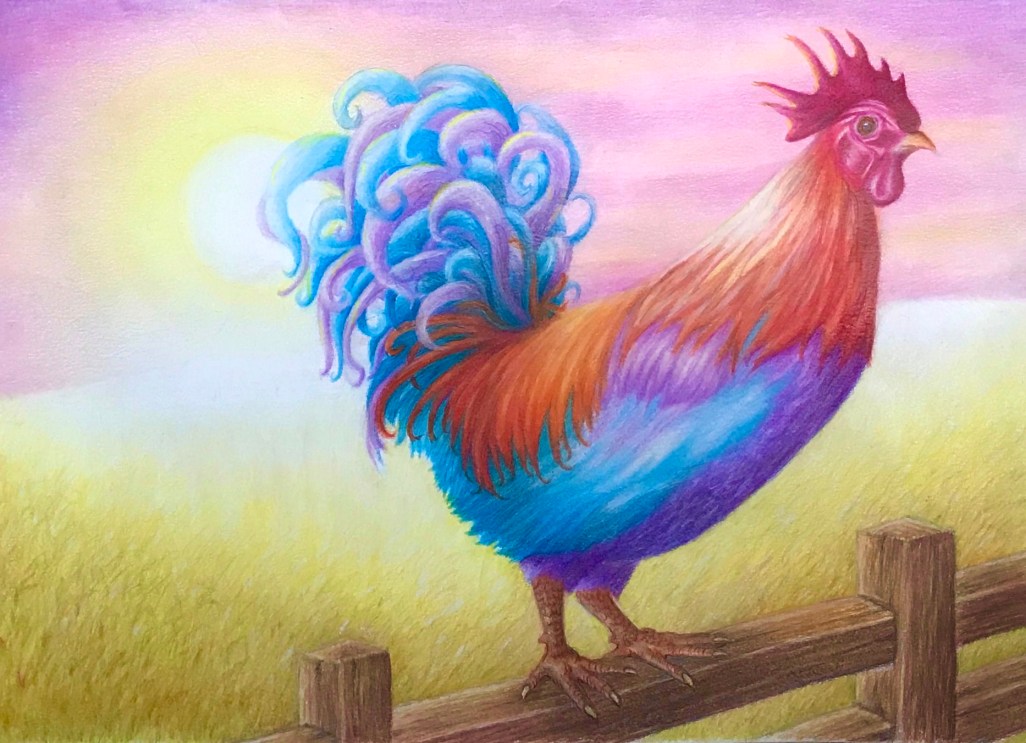
 Photo © 2020 Corina Ravenscraft All Rights Reserved
~ For Jamie ~
Gracious guide to my muse inside,
Joy lifted me every time we spoke.
Always so humble, yet beatified,
Mentor, mother, how our hearts broke
In two when we learned you’d be leaving.
Ever strong, you gently eased our grieving.
Dauntless, you waged fierce peace for us all.
Encouraged, blessed each effort we penned,
Delivered your maestro’s clarion call,
Even now, your love remains, without end.
Slip peacefully into the Bardo, Dear Friend…
Photo © 2020 Corina Ravenscraft All Rights Reserved
~ For Jamie ~
Gracious guide to my muse inside,
Joy lifted me every time we spoke.
Always so humble, yet beatified,
Mentor, mother, how our hearts broke
In two when we learned you’d be leaving.
Ever strong, you gently eased our grieving.
Dauntless, you waged fierce peace for us all.
Encouraged, blessed each effort we penned,
Delivered your maestro’s clarion call,
Even now, your love remains, without end.
Slip peacefully into the Bardo, Dear Friend…





 The BeZine