Posted in Uncategorized

The Equinox and the Medicine Wheel

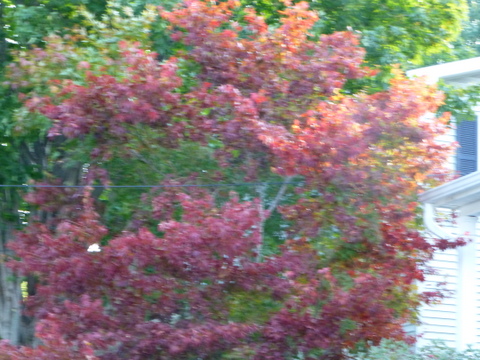
Early Autumn color, Vermont

Editorial note: My apologies to readers and to Michael for not scheduling this in sooner. An oversight on my part. J.D.

This is a reblog of a recent post to Dreaming The World.

This week marks the Autumn Equinox. The Equinoxes and other aspects of the calendar round are markers made by people; we need markers to make sense of our lives, to place ourselves in relationship to All That Is. Sometimes we forget the markers are of our creation, and we imagine they hold intrinsic meaning, rather than the meanings we assign them. This is a dangerous assumption as it tempts us to believe there is only one story, and it is true for all people, everywhere. Such thinking always causes great suffering.

Next week, in class, our friend, Alicia Daniel, is leading us in the creation and exploration of a Medicine Wheel. Alecia allows participants to explore, and assign values to, the directions.Given the freedom to make meaning opens the students to Mystery and Wonder. Not surprisingly, the values discovered by students often resemble the attributes assigned the directions by the Indigenous peoples who have lived here for thousands of years.

I usually teach the Medicine Wheel using attributes for the directions as I have been taught them by teachers from the Northeast, where we live. While there are small differences between tribal, even band, understandings of the directions, the general framework holds firm. As I understand it: The East is the place of birth and death, sunrise, spring, mentation, air, and all beings who fly. The South is home to fire, warm bloodeds, and the plants. It is the place of healing, noon time, and high summer. It is the direction of physicality, and in some traditions, sexuality. The West is home to water, dreaming, evening, and autumn. It is the place of responsibility and parenting, and of the Dream Time. The North is the home of the Ancestors and the rock people, the place of winter and night, the direction of clearly seeing the big picture, of vision. We journey sun-wise around the wheel, returning to the east to die and be reborn.

My Lakota kin likely say we are born and die in the West. That makes sense to them, where they live. The Medicine Wheel is a teaching about our locale and inner worlds, telling us much about local ecology, culture, and understanding of self. Wherever we are the Medicine Wheel speaks to us of our life journey, a road we share with the people and other beings who comprise the community in which we live.

In Western culture the wheel has a bad rap. Rather than a map for living a joyful, fulfilling life, it is often emblematic of being caged, or of soul killing work. In the East it may be something to be escaped. Yet, in Indigenous cultures around the world the wheel remains a powerful symbol for relationship, connection, and the good life.

This week we take a few minutes to acknowledge the Medicine Wheel that is our calendar year. We will express gratitude to Father Sun, and acknowledge Grandmother Water. Without them we would not have life. It is good to do this, and to have the opportunity to do so openly, for we remember the times, some quite recent, when we could not do so.

© 2013, essay and photographs (includes the one below), Michael Watson, All rights reserved
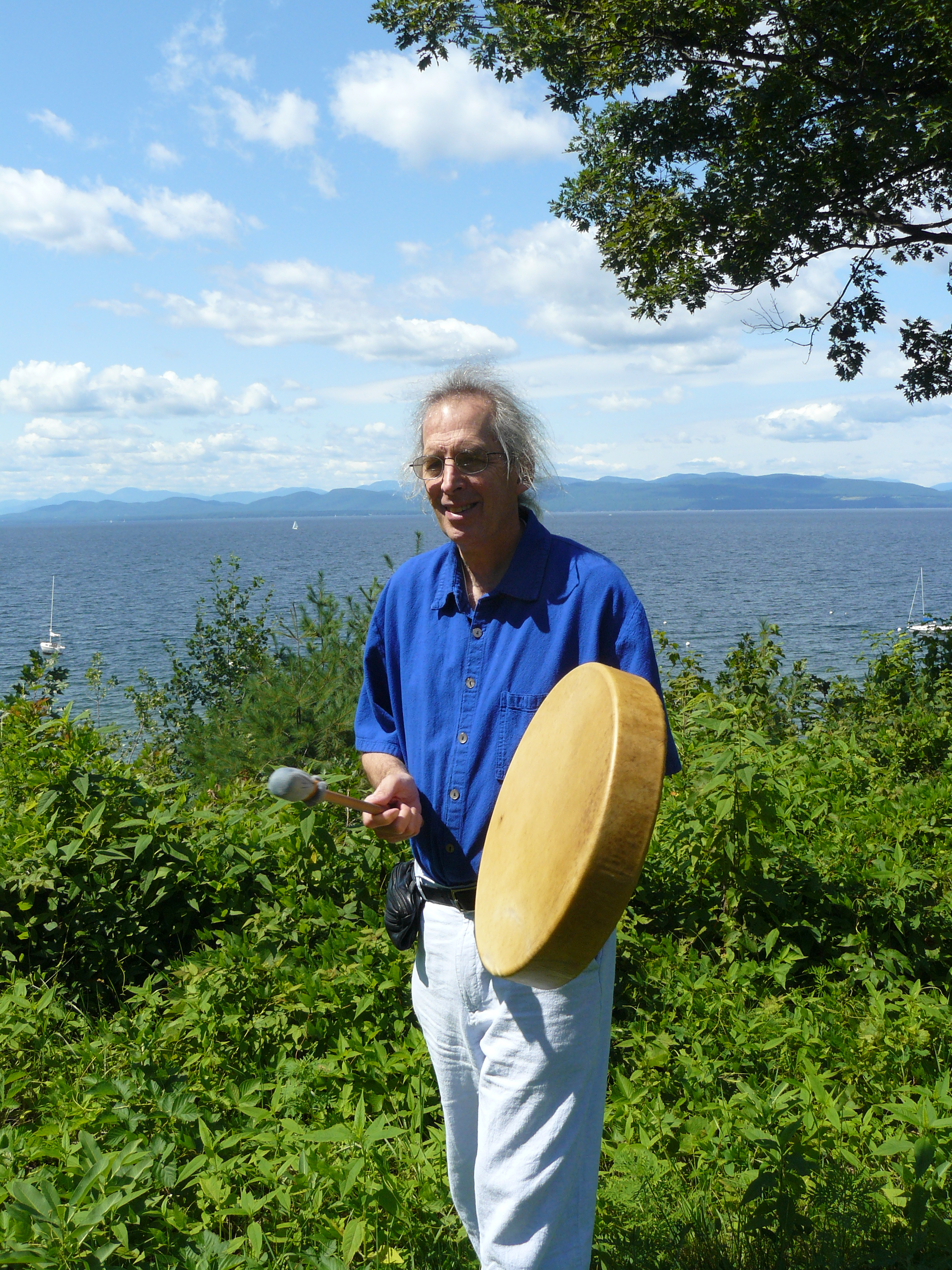
michael drumMICHAEL WATSON, M.A., Ph.D., LCMHC (Dreaming the World) ~ is a contributing editor to Into the Bardo, an essayist and a practitioner of the Shamanic arts, psychotherapist, educator and artist of Native American and European descent. He lives and works in Burlington, Vermont, where he teaches in undergraduate and graduate programs at Burlington College,. He was once Dean of Students there. Recently Michael has been teaching in India and Hong Kong. His experiences are documented on his blog. In childhood he had polio, an event that taught him much about challenge, struggle, isolation, and healing.
Posted in Bardo News

Introducing …

It is my pleasure to provide a formal introduction to two of the newer members of Bardo’s core creative team:

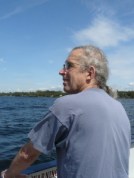
michael drumMICHAEL WATSON, M.A., Ph.D., LCMHC (Dreaming the World) ~ is a practitioner of the Shamanic arts, a psychotherapist, educator and artist of Native American and European descent. Michael tells us that in childhood he had polio, an event that taught him much about challenge, struggle, isolation, and healing. He shares his personal, professional, and shamanic experiences and insights at Dreaming the World, as well as here at Into the Bardo.
Michael lives and works in Burlington, Vermont, which is nestled snugly between Lake Champlain and the Green Mountains. (He says that most days he can see the Adirondack Mountains across the lake.) He teaches in undergraduate and graduate programs at Burlington College, where he was once Dean of Students. Recently he returned home from teaching in India and Hong Kong.

Michael is mixed blood*, which makes his genealogy “confounding at best.” His father’s father was Native American from the Black Hills (most probably Lakota). His mother was Native American from Indiana, possibly Shawnee. Periodically someone on the distaff side of the family “discovers” their grandmother’s actual tribal affiliation, but “those discoveries tend to morph.”

In attempting to discover family roots, Michael says there are many genealogical stone walls, as befits a family in hiding. His mother’s family identified as hailing from the British Isles, although there were rumors of more recent Cherokee ancestry. “My father said our family is Native on both sides. Mom was from Texas, and both families very aware of the racism Natives face in their respective states. Anyway, my family did not speak much about being Indian and we don’t have tribal affiliation. Identity politics are strong in the United States and being mixed blood teaches one much about living in between easily defined categories.”

9709-008In 2002, Michael’s teachers told him he must become more visible and teach. That was not a simple directive to fulfill. He had always been taught that one never calls oneself a shaman or medicine person: only the elders and teachers, and the people one aids, can speak to who is, or is not, a shaman. Traditionally, when asked about being a shaman the appropriate response is, ” My teachers, and my teachers’ teachers, were shamans”. In many native communities, persons who claim to be shamans are highly suspect. “I was taught to always run the other direction when confronted with someone claiming to be a shaman. Yet, the world has changed and I do not live in traditional culture. The time is near when the ancient teachings and healing practices of First Nations people will find their rightful place in the world. My teachers believe it is now important for visionary healers to stand true and straight, to acknowledge our training, and to share the teachings and practices we know.”

in the United States “mixed blood” usually indicates a mix of European and Native American, not Hispanic or Black.

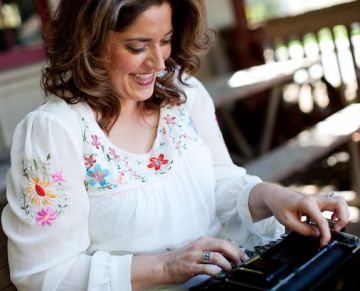
webheadshotKAREN FAYETH (Oh Fair New Mexico)~ Writer, blogger, photographer, visual artist: these are all words that can be used to describe Karen Fayeth and her work. A native of New Mexico, Karen moved to the San Francisco Bay Area in 1997 and was immediately inspired and engaged by the vibrant arts community, which is so woven into the local way of life. Karen blends the influences of the cultures where she grew up, including Hispanic, Native American, and the deep rural soul of the American West along with a newer city-sense acquired in places like San Francisco, Brooklyn, Boston, London, Singapore, and San Jose, Costa Rica.

A storyteller at heart, Karen’s main medium is words and writing, but she recognizes that words don’t always tell the tale. Karen expanded her studies to the visual arts including paint, clay, papier-mache and photography. She’s learned to craft stories using a combination of both words and images.

Karen’s been blogging at Oh Fair New Mexico since March of 2007. Her writing is featured in publications including New Mexico Magazine, Wild Violet Literary Magazine, and Foliate Oak. Her photography is regularly displayed as a part of an annual Localvision photography show and she’s received special note for her photographs of well-known baseball players. (She’s an avid baseball fan.) Karen’s won awards for her writing, photography, and crafts. When she is not spinning a tale or clicking her Canon, she works as a senior level executive for a science and research organization. She lives in the San Francisco Bay Area with her husband and her cat, and she can sometimes be found entertaining friends, family, and colleagues with her endearing sense of humor and her San Mateo County Fair blue-ribbon green chile chicken enchiladas. Yes! She even won an award for her cooking.

– Jamie Dedes

© 2013, photographs, Michael Watson and Karen Fayeth respectively, All rights reserved

Posted in Essay, Guest Writer

A WORLD OF DIFFERENCE

Early Azaleas

I am pleased to welcome my friend Michael Watson, a shaman and gifted healer to Into the Bardo.   He and I go back many years as friends, colleagues, and fellow therapists in Vermont. It is so nice to see that our minds continue to follow similar tracks.  Shared here with gratitude, Rob.

A World of Difference:

ON SEEING AND BEING SEEN

by

Michael Watson (Dreaming the World)

The cold returned this past week, and many trees and flowers seem to have taken a deep breath and halted their rush into Spring. Were the maple sugaring season ongoing, these would have been perfect sugaring days and the sugar houses would be boiling madly. (The warmth of a couple of weeks ago stopped the sugar season short.) Now, there is an air of expectancy in the natural world, a quickening and watchfulness, for we are in April, and returning warmth and renewing rains become daily more likely.

The seasonal round brings comfort and a sense of belonging. Maple sugaring gear is cleaned and put away. A few people have made it into their gardens, preparing for the warm season to come. Neighbors, yard and garden tools in hand,  wave to one another. “This sure is weird weather, ain’t it,” echoes down the block. A few daffodils have burst into bloom in south-facing flower gardens, some making their way indoors to adorn tables.  Throughout the neighborhood there is shared business and meaning.

Last week, in class, I showed the Bill Moyers interview with Bill T. JonesStill Here. The video, from 1994, follows the MacArthur Award winning choreographer as he morns the loss of his mate, faces mortality via an AIDS diagnosis, and creates his groundbreaking dance, Still/Here. The video addresses many topics our culture still finds difficult, and does so with refreshing directness: death, terminal illness, homosexuality, loss, and race, among others.

The real focus of the film is difference, a too-hot-to-handle concern in many cultures. Difference is a form of social glue, allowing us to identify ourselves in opposition to the other. It is also the source of creativity, innovation, and adventure, as well as some of our most threatening taboos. The tensions between these functions are played out daily in our cultures, our personal relationships, and our inner worlds. For many people around the world, accepting new technologies, no matter how socially disruptive, has become easier than accepting differences among human beings.

Of course, issues of difference demand attention in the therapy setting. Whether we sit with couples struggling with disagreements about how to manage daily life, young women critical of their body image, or youth and adults who carry labels of major mental illness and wrestle with unique experiences of the world, the underlying concerns are those of difference and acceptability. Always the questions held deep inside include, “Am I loveable as I am?” and “Am I safe?” These are not simple questions.

A walk in the forest offers the opportunity to see difference. No two plants of the same species are identical.  Life history and microecology play an enormous role in the development of each individual. From the point of view of the forest, each is perfect. Only through the gaze of other organisms do individual plants acquire differentiated value. When humans are involved, value is most likely culturally ascribed. Persons of diverse cultures may well read the worth of an individual plant differently from one another, as may individuals of separate species.

Ideally, psychotherapy offers persons the opportunity to challenge internalized or culturally enacted views of  difference in relationship to her or his life. In the process, it may place any number of subversive, liberatory tools at the disposal of those seeking help. Such therapy seeks to provide a space for the successful re-authoring of those stories that isolate and demean on the basis of rubrics of difference. In order to do so, patients are encouraged to challenge the authority of many voices, within and without. Yet, no one can successfully create a rewarding life alone; we each need others to witness and affirm our acts of courage and self authoring.  The therapist is a necessary, yet usually insufficient witness.

Would you share with us your healing stories of seeing, and of being seen by others?

Michael Watson ~ has been blogging (Dreaming the World) since September of 2009. He is a shamanic practitioner, psychotherapist, educator, and artist of First Nations* (Mixed Eastern Woodlands, Cherokee, and Lakota Sioux) and European (British Isles) descent. He lives and works in Burlington, Vermont.

Michael’s teachers and his teachers teachers were shamans. His work is influenced by both the traditions of the First Nations* and contemporary Western traditions. It reflects a strong sense of “connection to the forces and processes of Nature.”  The greater objective of his work is to “support others in developing intimate, transformative relationships with both Self, and the natural world.”

* First Nations – the indigineous peoples of the North America.