Posted in Essay, Meditation, meditative, Spiritual Practice, Terri Stewart, Uncategorized

Meditations of Our Hearts

I am saddened and deeply troubled by the Trayvon Martin case verdict. Mark Sandlin, a new Facebook friend of mine, offered the below. I have decided to add it to what I previously planned to publish. What I originally offered is a meditation based on a Psalm using very simple body prayer-a video that I put together. I thought about simply letting the video go for another day, but I think I, at least, need the reminder that there is something greater than the imperfection that we find in our daily living.

Questions?

Will anyone’s soul rest well tonight?
Will justice feel it was served?
Will a weary nation rest easy?
Can it believe its truths still hold true?
That all are created equal?
That truth is our nation’s highest good?
How can we sleep?
How can we slumber
when justice seems to be a game
and innocence has become relative?
Will we not grow restless?
Will our tears not matter?
Shall we continue our malaise?
Is our discontent so flaccid
that is ends in a Facebook post?
Is our will so weak that it is eased
with nothing more than words on a page?
Is the cost of our inconvenience
truly more valuable than a life…
our rights…
our jobs…
the hungry…
the sick…
the poor…
minorities…
?
Will our souls rest well tonight?
Should they?
Will our discontent respond?
Or will it slumber?
Will we drown out our malcontent
with the drone of a television…
the buzz of a beer…
the mindless escape of Candy Crush…
the busyness of our lives…
?
Will we simply get over it…
When there are parents who cannot,
When children are starving,
When there are families being buried,
While men make laws about women’s bodies,
As rights which were received
at the cost of lives
are made a mockery
for the sake of the few…
will we rest well tonight?
Will we rest?

Mark writes for Huffington Post, Sojourners, and his own blog at The God Article. This is reprinted with permission.

My fair warning before the video–this is in my living room, not professionally done! Bear with me as I learn these new skills.  Shalom.

© 2013, post and video, Terri Stewart, All rights reserved

MARK SANDLIN is an ordained PC(USA) minister currently serving at Vandalia Presbyterian Church in Greensboro, NC. Mark is a co-founder of The Christian Leftand blogs at The God Article. He has been featured on NPR’s The Story with Dick Gordon, PBS’s Religion & Ethics NewsWeekly, and the upcoming documentary filmAmendment One.

terriTERRI STEWART is Into the Bardo’s  Sunday chaplain, senior content editor, and site co-administrator. She comes from an eclectic background and considers herself to be grounded in contemplation and justice. She is the Director and Founder of the Youth Chaplaincy Coalition that serves youth affected by the justice system. As a graduate of Seattle University’s School of Theology and Ministry, she earned her Master’s of Divinity and a Post-Master’s Certificate in Spiritual Direction. She is a contributing author to the Abingdon Worship Annual. (The 2014 issue just released!)

Posted in Essay, Jamie Dedes, memoir, Poems/Poetry

EMPTY NEST PART II: Given Wings

seagull-and-chicksThis is why you were born, to pass me by,
DNA of our ancestors, it’s your turn to fly,
to be the center, the triumph, the culmination.

Though not quite zero at bone and marrow, you ~
are a merry new story, adhering to Conrad’s dictum,
with shocks and surprises in every line and chapter.

Your book, your life, your metaphor, wearing truth
as your dermis, seeking tears, not blood, and
like all good art you changed me for the better,

having read you, I’ll never be the same. So time,
My Heart, time now to fly, to leave this nest,
the generations on which you stand, this is why
you were born, now it’s your turn to fly …

Note: Conrad’s dictum is that the writer’s first responsibility is to help the reader see.

The great American novelist and educator, Toni Morrison, once wrote that it is the job of parents to provide their children both safe harbor and wings. This poem was written some time ago to convince myself, not my son. He did what son’s naturally do.

Time has seen our roles reverse in some ways. My son has the most generous heart and has had my back for thirteen years, ushering me to my pulmonologist/critical care specialist and through sundry procedures and surgeries (always my advocate), moving me to new digs each time I have to downsize, taking me home with him when I couldn’t be left alone, keeping me in computers and tech toys. Yet, our children are our children. As Naomi said yesterday in Part I, “. . .  long after they’ve gone gray, long after they are elderly orphans…they will still be our babies. “

From my vantage point as my mother’s daughter and my son’s mother, I’ve learned that making family is just another kind of love story, one in which love is not circumscribed. As we pass this love along to succeeding generations, it grows in depth and breadth. We are better people for it and the whole world becomes a better place. In the end, even mom’s are given wings and the nest in never truly empty when love remains to fill in the spaces.

– Jamie Dedes

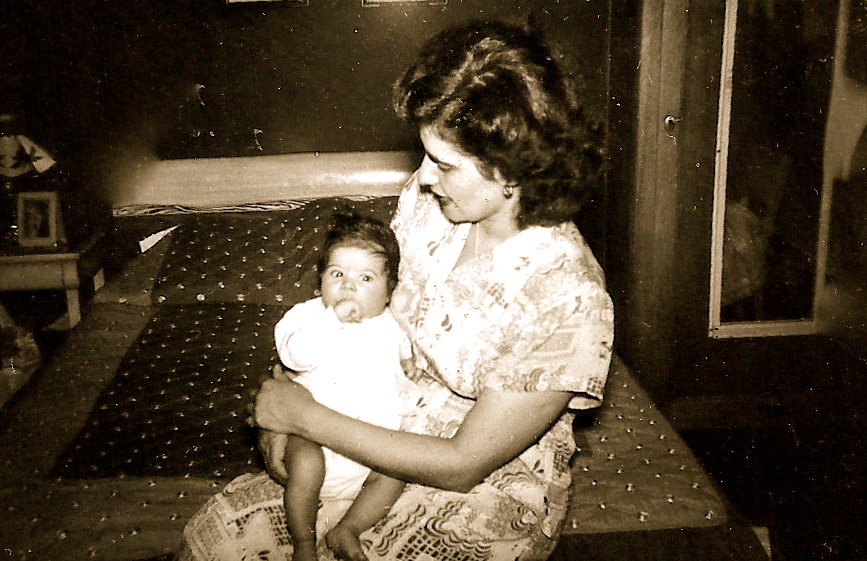
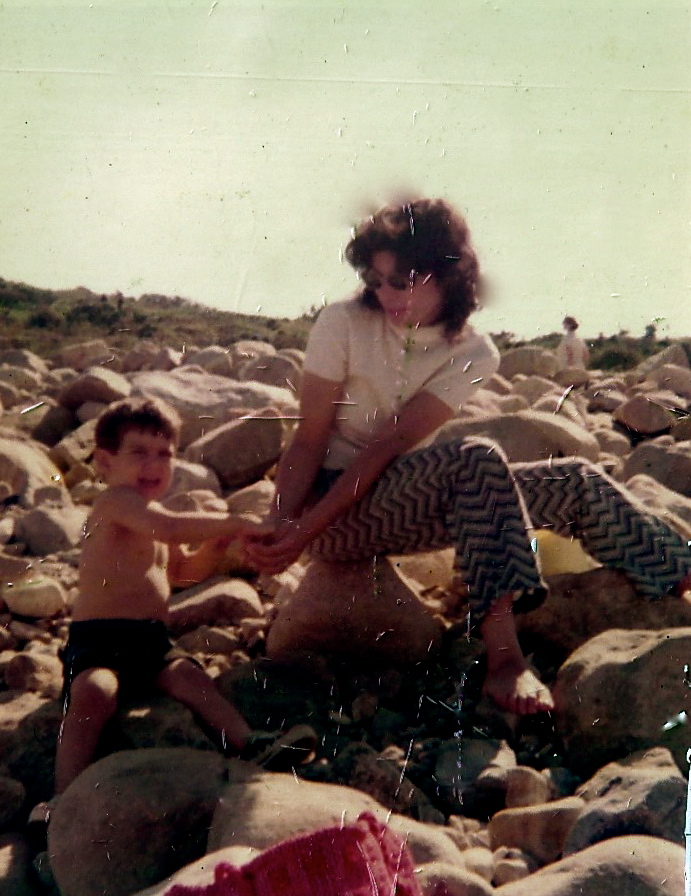
© 2013, poem, essay, and photos below, Jamie Dedes, All rights reserved
Photo credit ~ Seagull and Chicks by George Hodan, Public Domain Photographs.net; portait and family photos below are under copyright as well. Please be respectful.

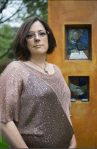
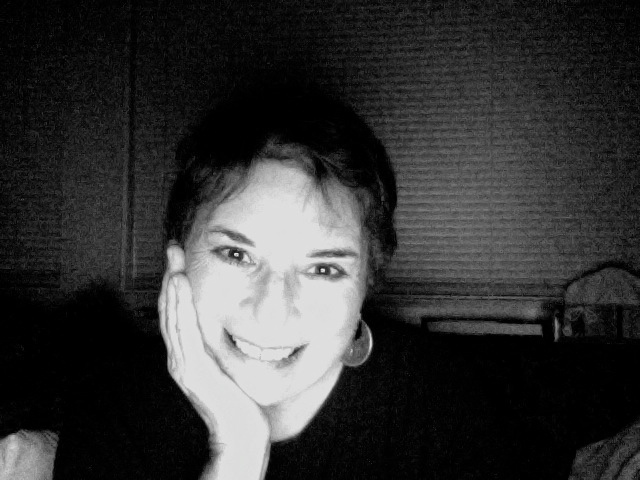
Photo on 2012-09-19 at 19.54MomJAMIE DEDES is a poet and the founder of Into the Bardo. She is a former freelance feature writer and columnist whose topic specialties were employment, vocational training, and business. She finds the blessing of medical retirement to be opportunity to play: to indulge in writing poetry, creative nonfiction, and fiction.

Jamie’s primary playground is The Poet by Day, the journey in poem (formerly Musing by Moonlight) where at any time you can read five of her most recent poems along with a growing collection of Sunday posts on poetry, poets, and writers.  She finds inspiration everywhere and in everyone. Her work is informed by the values of the multicultural/multiracial environment and classical Eastern and Roman Christianity in which she was raised as well as by a more recent introduction to Buddhism. Jamie has an abiding faith in the value of a life of the mind and spirit to heal and in the inestimable value of art and music, poetry and writing as spiritual practice.

Posted in Essay, Michael Watson

To Err is Human

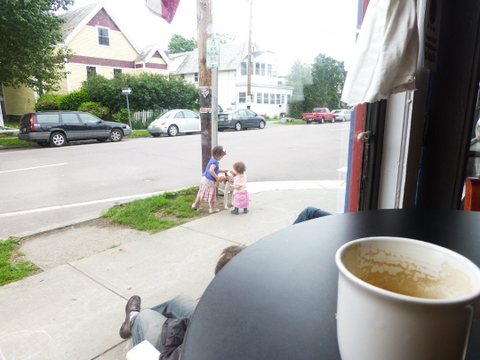
Window ViewThis morning I was driving home from one of our favorite bakeries via a well trodden, quietly residential route, one I have walked and driven for more than thirty years. I was lost in thought and focused on the many speed bumps that inhabit that street. I was thinking that the latte had been suburb, and the new pastry way too sweet and most likely going to suppress my immune system for hours. Suddenly I was aware I had run a stop light; seemingly the light had sprung up overnight in the middle of a block.

The light is long overdue and should aid elementary school students cross the sometimes busy street in route to their school. Yet, motorists are not warned of a new light, and the light itself is partially obscured by overhanging branches. (Often the city puts up warning signs for motorists approaching new stop signs and lights.) The light seems an excellent example of a well conceived project inadequately implemented.

I missed the light, in part, because, as I drove down the empty street  I was thinking about writing a post for this blog. Familiarity with the way, and a downward sighted focus on the speed bumps added to the problem. Yet, ultimately, I was a distracted driver and I drove through a red light. Clearly, my responsibility.

I imagine that most of us are doing our best to be kind and attentive to the needs and demands of life. We imagine we have things under control, forgetting our attention is divided, and the ease with which mistakes occur. How often our attention fails and we miss whatever might be important in the moment. How frequently do we become angry with others for doing the same?

Here is a paradox: maybe we take ourselves too seriously. Perhaps we would be happier were we to substitute humor for anger, playful reconsideration for aggression. Humor and playfulness support our presence in the moment and encourage us to forgive one another and ourselves for our misses.  Yes, driving is crucial business, requiring all our facilities and best judgement. Many other tasks are also decidedly important, demanding seriousness of purpose and focus. Yet, we are going to err. Most of the time a bit of laughter is more supportive of learning than is self criticism. A light heart seems to aid the brain in becoming more skillful.

The fretful side of me wonders what other hazards lurk in the midst of well trodden, usually safe paths. Those voices urge focus and attention, reminding me of the real consequences of grave mistakes. Other voices remind me few mistakes are truly harmful. They encourage breath and play, humor as well as focus. Both points of view are important in a world of hazards. I’m wondering where the balance between them lies. What do you think?

– Michael Watson

© 2013, essay and photographs (includes portrait below), Michael Watson, All rights reserved

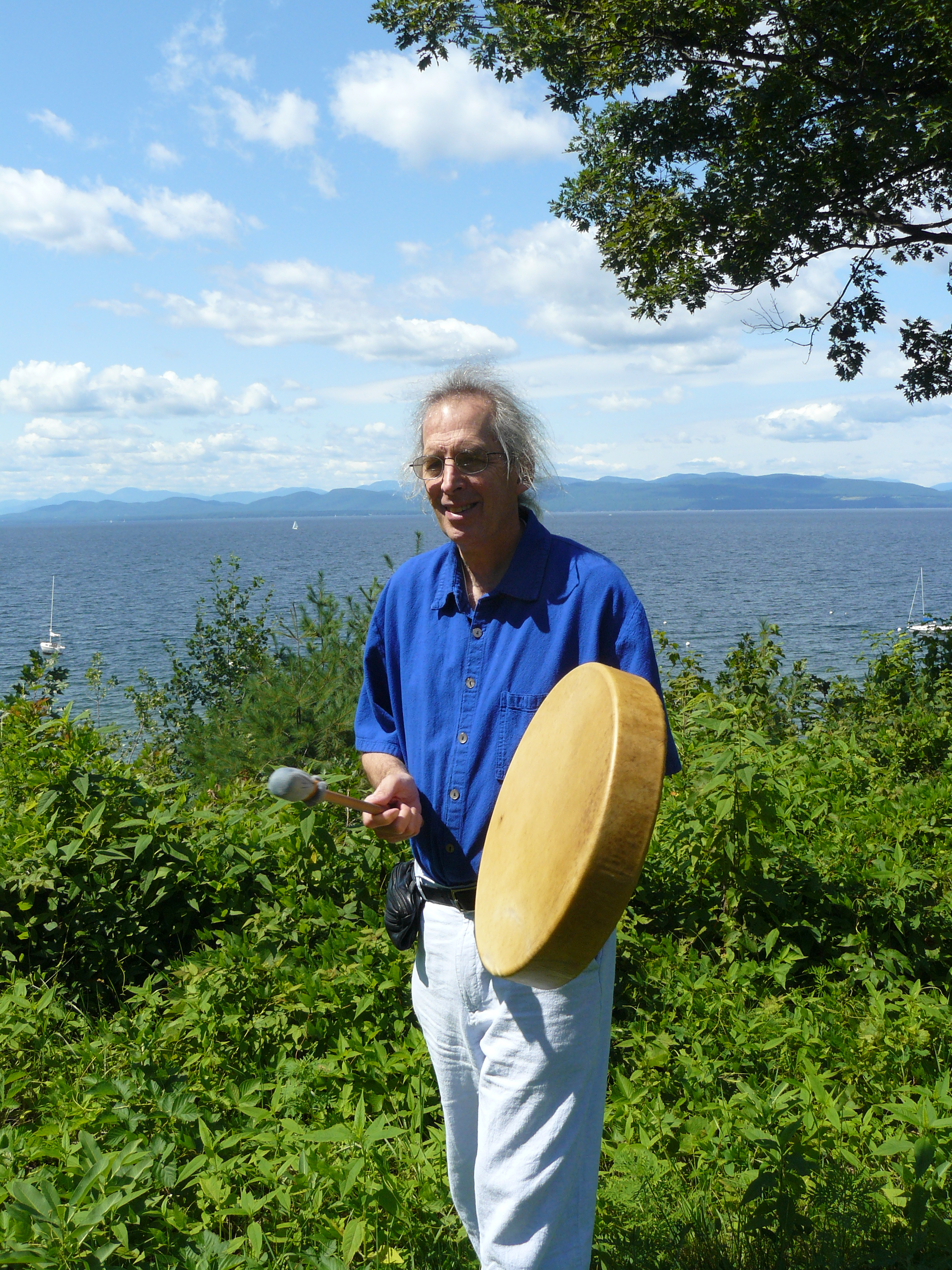
michael drumMICHAEL WATSON, M.A., Ph.D., LCMHC (Dreaming the World) ~ is a contributing editor to Into the Bardo, an essayist and a practitioner of the Shamanic arts, psychotherapist, educator and artist of Native American and European descent. He lives and works in Burlington, Vermont, where he teaches in undergraduate and graduate programs at Burlington College,. He was once Dean of Students there. Recently Michael has been teaching in India and Hong Kong. His experiences are documented on his blog. In childhood he had polio, an event that taught him much about challenge, struggle, isolation, and healing.

Posted in Essay, Nature, Photography/Photographer, Spiritual Practice, story, Story Telling, Photo Story, Terri Stewart

One Foot in Front of the Other

Walking is a spiritual practice that I am predisposed to. After all, photography would not happen unless I walked around! Simply putting one foot in front of the other, time after time, without expectation of arrival at an end point is a contemplative practice. Recently, though, I discovered a new way of viewing walking as a contemplative practice. This practice had an end point and I was completely aware of all the w’s – who, what, when, where, why. I was not letting go and receiving images (well a little). I was literally focused on my feet and putting my feet, one step at a time, on stable ground.

And this is a metaphor. Sometimes, sitting at our desk or listening to our loved ones, can be a practice of just being aware of what is now and putting your best effort towards arriving at the next now. One step at a time.

As you continue reading, consider the questions, “In what area of my life can I start (or continue) putting one foot in front of the other? What new story will be created?

Here is my story.

Monday, I went hiking to Bridal Veil Falls / Lake Serene in the Central Cascade mountains of Washington. It was a spectacular day. (The weather is forecast to be fabulous all week-long in Seattle leading me to believe somebody is playing with our emotions.) I felt confident I could do the +7 mile hike. BUT I forgot to look at the way the path is (smooth vs. rocky) and the grade or “up-ness.”

I started out on the popular path and asked a co-hiker what to expect and she told me it was steep but that it was worth it. And that there were a lot of switchbacks. OK. I can do this! I will just take my time and be careful.

In February of this year, I was going through a diagnosis of Celiac disease. Now most folks just think that this is digestive only. Well, it is not. It causes inflammation in every part of my body. It grew tumors in my ovaries. I had a period for 3 weeks. I was severely anemic. The test didn’t say, “Low,” it said “Alert!” I could not walk up a short hill without being severely out of breath because I had very few mature red blood cells to carry oxygen around. In short, it stank.

And, over the last few years I have had surgery on my left ankle (torn tendon) and my right foot (two! neuromas crowding out my middle toes). I couldn’t walk without pain until, oh, last year after the neuroma surgery. Generally, I count every pain-free step a success. Would my feet hold out? Always a question. And with the ankle surgery, I generally look for nice, solid, flat ground so my ankle will not roll.

Rats! This path is not smooth. Very rocky. Wet sometimes. Muddy sometimes. But mostly rock, rock, rock. Keep my eyes down and make sure my feet land on flat spots! That’s the plan.

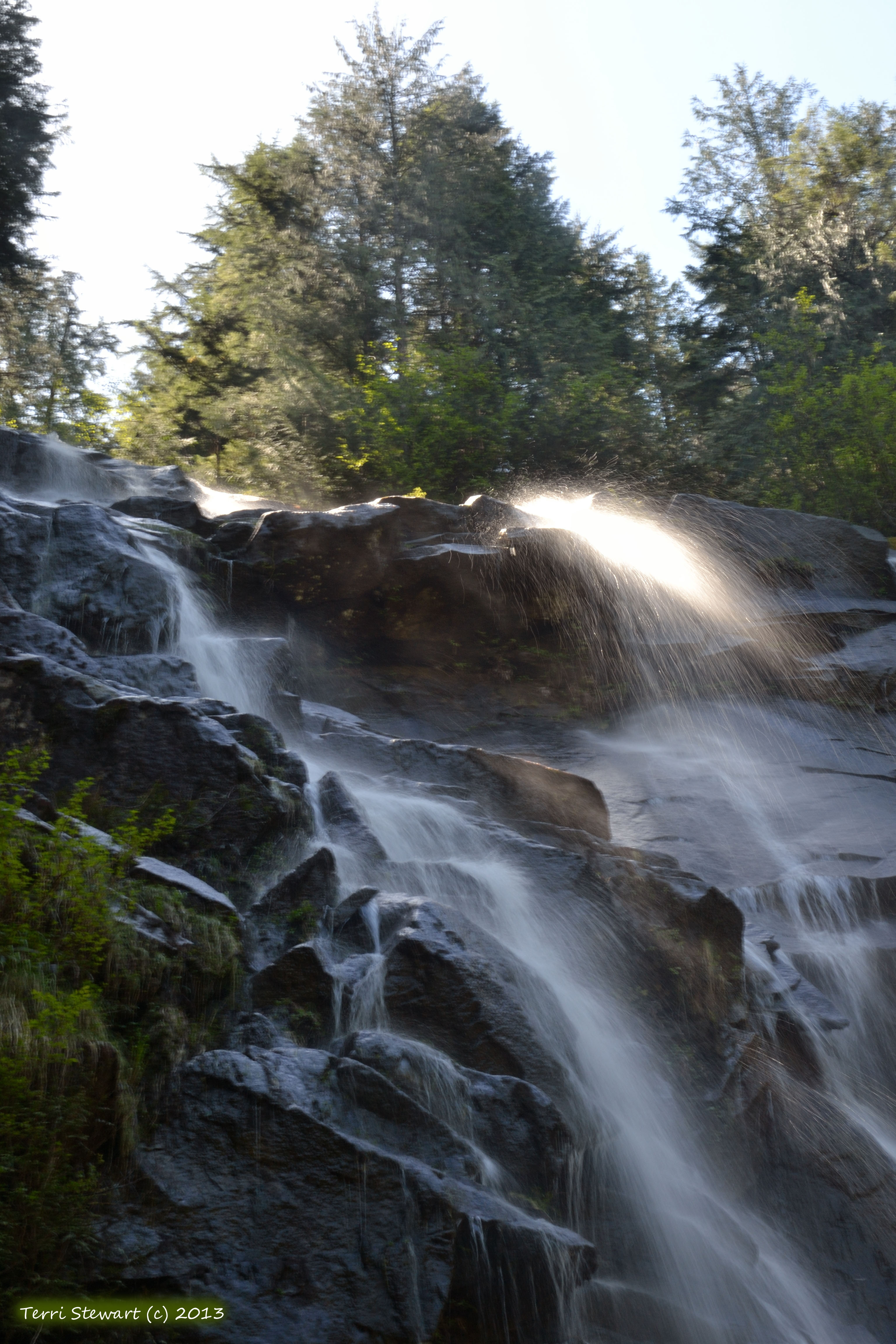
Anyway, I started up the path at my own pace. I got a little less than two miles in and found the below sight. I tried really hard to capture this thing that was happening with the sun and the water! It looked like liquid sunshine was pouring off the top of the waterfall. My eyes received the beautiful image of sunshine being poured down the mountain, could my camera receive it? A little.

Walkabouts__2013-06-03_12-05-17

At any rate, it was astounding. And it was the second set of falls I had seen. This mountain is one big slab of granite! (Hence the rocky path) And there is water everywhere. Well, okay, not everywhere, but in a lot of places. It was hard to get a good picture, but earlier, there was a set of falls that were very tall and jagged. But the trees were very overgrown so you could only get glimpses of the splash of light and water. This is the very bottom of that series. I received beautiful images of flowing water.

Walkabouts__2013-06-03_16-17-40

I got past the falls and it was two miles to Lake Serene. I was feeling good so decided my body could do this! I kept on going. And going. Up and up. Picking my way carefully through rocks. Resting when I felt overwhelmed. Then there came a moment when I thought that I was not going to be able to do it. I grounded my feet to the earth and drew on the strength of my God and the strength of the earth. I breathed deeply. This had become a spiritual quest.

I kept on going. But at that moment, I felt like giving up. I soon encountered a woman and her dog. They were resting. (Yay for rest!). I asked her how much further. She said, “When you feel like you have been through the worst possible climb, then it is just a bit more up and a little down and you’re there.”

OK. The worst possible climb. I can surely get to this.

I went up and encountered massive rocky path, with only about a 9″ clearance to skinny through. Surely, this is the worst possible spot.

I kept going and encountered another massive rocky path, with water and slipperiness. Surely, this is the worst possible spot.

Add water and repeat.

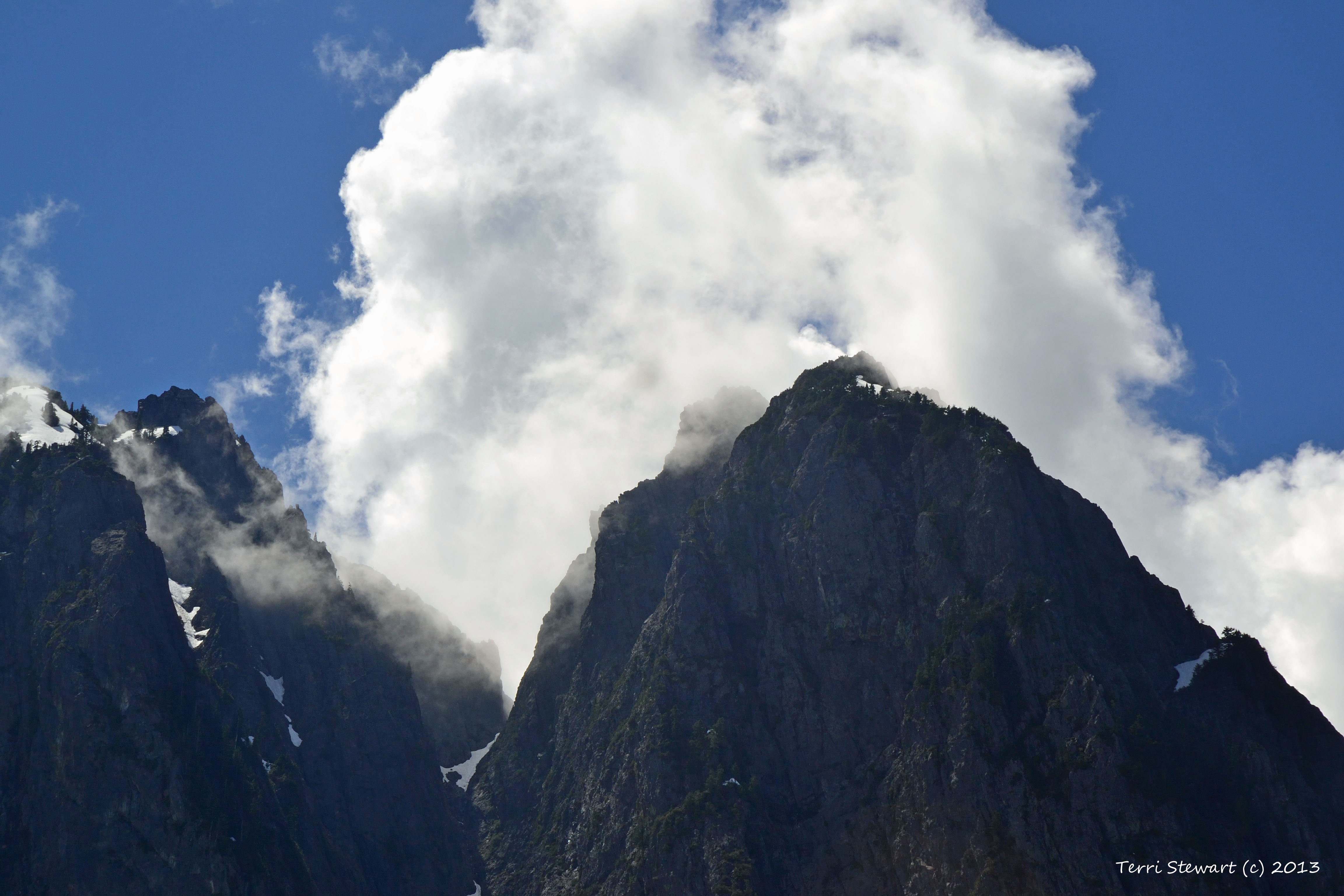
Finally, I broke through the shadows of the forest into a sunny meadowy type area (is it a meadow if it is on the side of a mountain?). I looked up and my breath left my body. It. Was. Amazing. I received the most beautiful blues intermingled with a dark granite mountain and white fluffy clouds rising like steam. I remember the story of Moses going up the mountain to be with his God and going into the cloud. This is a place to connect with spiritual strength. I felt strengthened, encouraged, excited, and alive. A complete contrast to how I felt when I was in the shadows.
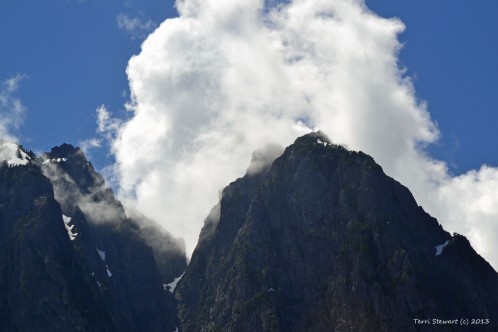
Walkabouts__2013-06-03_13-56-59

I was now in the sun, with this incredible sight, having passed through at least 5 stretches of the worst climb ever. And I saw another worst climb ever in front of me. But my spirits were jubilant. I was in the light and had left the darkness. Amen!

I kept on going. There was one more seriously worst climb ahead and then I was there. Lake Serene.

Walkabouts__2013-06-03_14-25-52

In fact, this lake feeds into the waterfalls pictured earlier. I had climbed all the way around to the other side. Here is what the top of the waterfall looks like from this same point, just facing the other way.

Walkabouts__2013-06-03_14-25-23

I clambered through the snow a bit and sat at the closest point I could get to the top of the waterfall. Ate lunch. Relaxed a moment.

Time to head back down. Surely, down would be easier! It always is. Mostly.

On the way down, I kept my head down looking to keep my feet planted so my ankle will not turn. I almost made it. Darn it. One misstep and a turned ankle. Choice – fall in a way to minimize injury or try to get that wobbly ankle to hold me up. Quick decision – my ankle will not withstand the effort to stay firmly up. Fall it is! Sheesh. I hate rocky, downhill, paths. Now, cuts and bruises, scratches and blood. I would hate to see what I looked like.

I crossed back in front of the amazing waterfall that poured sunshine and the woman I had met earlier was there with her dog! She was resting. Her dog decided to try to clean up the scratches on my legs a bit (ha ha!). We chatted a bit and she moved on. I stayed and tried to get some more photos of the falls and take a rest. Oh, and to use the water to wash my arm which has a pretty serious scratch(es).

But, gosh darn it, I did it! I am still on the path. I can still walk. My body is sustaining me. This is such a big deal, you have no idea. I was misdiagnosed for at least 20 years. To be able to do this is the most awesomely amazing thing ever. My muscles don’t even hurt as much today as they did on days the inflammation from being celiac made them hurt. (That was a bad sentence, sorry.)

I kept going. And I made it back to my car by about 5:00 p.m.

The quest was complete.

I am proud that I had the perseverance to keep on pushing through. My blood tests still say “alert” on the iron portion, but it is improving. My ankles and feet are okay today. My right arm and right shin are pretty banged up, but as long as nobody touches them (!) I will be fine.

The return hike took 2 hours. It took me 4 hours to go up.

Walking or hiking as a spiritual practice, for me, is typically about opening myself up to the images around me. Receiving images that I sometimes share here or on my blog. This time, though, it transformed into something else. Instead of receiving the beauty around me, I had to dig deep to connect to the strength of the earth, strength of my faith, and to the strength in my own body in order to find sustenance for the journey. This is a new kind of spiritual practice for me.  I had thought, Monday night, that I would not be eager to repeat this experience. But I am. Focusing on putting one foot in front of the other in this way gave me a faith in myself that I sometimes lack. Especially in my own body’s ability to sustain me. That is my new story. I trust my body.

Blessed be.

Shalom and Amen.

~Chaplain Terri

Adapted from a post at my blog. Trials on the Trail.

© 2013, post & photos, Terri Stewart, All rights reserved

terriTERRI STEWART is Into the Bardo’s  Sunday chaplain, senior content editor, and site co-administrator. She comes from an eclectic background and considers herself to be grounded in contemplation and justice. She is the Director and Founder of the Youth Chaplaincy Coalition that serves youth affected by the justice system. As a graduate of Seattle University’s School of Theology and Ministry, she earned her Master’s of Divinity and a Post-Master’s Certificate in Spiritual Direction with honors and is a rare United Methodist student in the Jesuit Honor Society, Alpha Sigma Nu. She is a contributing author to the Abingdon Worship Annual.

Her online presence is “Cloaked Monk.” This speaks to her grounding in contemplative arts and the need to live it out in the world. The cloak is the disguise of normalcy as she advocates for justice and peace. You can find her at www.cloakedmonk.com, www.twitter.com/cloakedmonk, and www.facebook.com/cloakedmonk.  To reach her for conversation, send a note to cloakedmonk@outlook.com

Posted in Essay, Guest Writer

The Noble Art of Reading in Bed

100_0088cropped-bedroom

the work of Valerie Davies

When I was young and naive, and a novice journalist, I wrote an article in a woman’s magazine which began:’ I got most of my education under the bed-clothes’, and went on to discuss children’s reading. Some wag must have been reading his wife’s copy, and the clipping appeared on the office notice-board amid crude male guffaws. Thank you chaps, I got the message. Not a quick learner, but I got there in the end.

Reading under the bed – clothes was the refuge of a child who was sent to bed at seven o clock every night, and allowed to read for fifteen minutes. Fifteen minutes! When I got older, and had more homework bed was set back to seven thirty, but the fifteen minute reading restriction still applied. Only a non-reader could have stipulated this ridiculous time limit, so under the bed-clothes it was. When I had no torch I knelt for hours, freezing in my night-clothes squinting to read by the crack of light under the door from the hall light.

Occasionally I tried the loo or the bathroom, but this was risky, as books aren’t easily hidden by a skinny child under a thin nightie. When I was fourteen I picked up Jane Eyre in the library. It exploded into my consciousness. I felt dazed and obsessed by the strange, compelling self-centred story. I could think of nothing else. I read it over and over again. I read it under the desk at school, in the bus and on the train, and of course, in bed.

Once the parents had gone to bed, I switched my light on with impunity, and read until I had finished Jane Eyre, and then started ‘Villette’, by which time it was heading for five o clock in the morning. Since I had to get up at six to cook my breakfast and catch the school bus at seven am, it seemed safer to stay awake, and soldier on. And having done it once, and finding it was possible to keep going without sleep, I quite often sacrificed my sleep for a good book after that.

Boarding school was tricky, but once again, there was always the bathroom. When I left home and became my own master, reading in bed became one of my favourite pastimes. Mostly literature and poetry in those palmy days. And usually then I had a bowl of apples to munch meditatively as the hours went by, or better still, a bar of chocolate. Sometimes decadence overcame me and I had a glass of lemonade. Marriage and motherhood dished all that of course, and reading in bed became a distant remembered pleasure.

But in the last few years since my husband’s snores have become so loud they wake me even when I’m sleeping in another room, we’ve taken a page out of the Royal Family’s domestic habits, and now sleep in separate rooms. This means I can read without disturbing him, and I’ve raised this noble pastime to a fine art.

Usually three books go to bed with me… something that I call mental knitting, a relaxing series like Georgette Heyer, (a much under-rated, very funny, witty and clever writer) or other light-hearted books like the hilarious Adrian Mole Diaries, or ‘The Jane Austen Book Club’. Georgette Heyer is sort of Jane Austen lite – but the blessed Jane is also a regular companion, along with the Thomas Hardy’s, George Eliot’s, Anthony Trollope’s, to re-read for the sheer pleasure of enjoying their writing again. In theory too, because I know the story, I kid myself I won’t be tempted to read too late. But that is a false premise. And as CS Lewis said, ‘I can’t imagine a man really enjoying a book and reading it only once.’

And then there’s the third category – those which are on the go, sometimes a new novel – Barbara Kingsolver at the moment, but not many of those – a biography, a history, a diary. And for real relaxation I sink into nature journals, often a classic like Flora Thompson’s: ‘Lark Rise at Candleford’ … Annie Dillard, Henry Beston or Ronald Lockley… mostly accounts of gentle, unpolluted country life.

But reading in bed isn’t just books. The bed matters too… preferably by the window… in summer with cool white linen-cotton blend sheets that have a silky feel, in winter comforting coloured flannelette to match the duvet. Pillows – plenty of them, to lean back on and others to support the elbows. Electric blanket a must in cold weather… I use it a bit like the hot tap in the bath… whenever it seems a bit chill, I switch it on until the bed is like toast again, and then prudently switch off again until the next time.

In summer, there’s the bliss of going to bed in day-light, knowing you have hours in front of you before dusk creeps up, before finally switching on the light. In winter, lamps on, curtains pulled, wood fire still burning in the sitting room to keep the house warm for when I emerge to make a cup of tea. And the bed, pyjamas warmed under the bed clothes on the electric blanket, cosy sheets and pillow slips, red mohair rug edged with wine-red satin, and a stash of peppermints to slowly chew as I turn the pages. No sounds, just the murmur of the soft sea, a distant owl, and occasionally a scuffle on the roof as a possum scrambles across. The sound of rain on the roof is good too.

The art of reading in bed is a silent, sybaritic, solitary joy and has nothing to do with going to sleep. It has everything to do with the pleasure of reading, frequently to the detriment of sleep. So I have to confess, in the words of L.M.Montgomery that : ‘I am simply a ‘book drunkard.’ Books have the same irresistible temptation for me that liquor has for its devotee. I cannot withstand them.’

– Valerie Davies

© 2013, essay, photograph, and portrait (below), Valerie Davies, All rights reserved

100_036634d750b1228d96f442911457fa49f7d5d3e2d8ea925f4a2067aec04be59b0e280856da42aad7d73b-thumbVALERIE DAVIES  (Valerie Davies.com) ~ our guest writer today, says she’s had an adventurous life, living through the Blitz in England, growing up in a military family, becoming a captain herself, and marrying into the military. Between one thing and another, she’s been around the world and back and had some truly hair-raising adventures. She’s worked as an editor and columnist. Valarie has been blogging for some time now. Her posts are chatty and full of wisdom and humor. They touch the heart. Valerie books are The Sound of Water and Chasing the Dragon. Find them HERE.

Posted in Essay, Michael Watson

Troubling the Post-Tribal

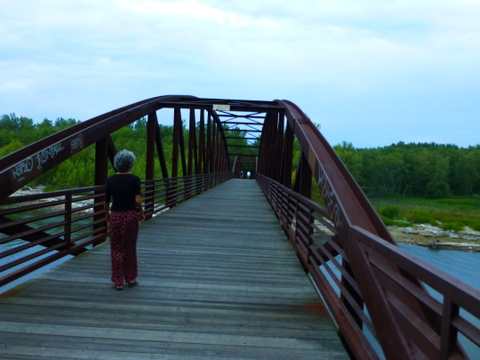
On hte BridgeRecently, I found myself in conversation with a diverse group of alternatively oriented, North American,  health care providers, some of whom integrate shamanic practices into their work. As often happens, talk turned to our various efforts to situate ourselves in the broader cultural framework. Inevitably, this proves a thorny conversation.

Identity issues cut deep, exposing the painful questions underlying the increasingly tenuous fabric of Self. When engaged in conversations about our fundamental beliefs about Self we may find ourselves asking: “Who am I? What claims may I make about my experience of Me-ness? In a world that appropriates and commodities everything, how do I understand and situate Self?”

Speaking with my colleagues I was reminded that conversations about traditional modes of living and healing generate additional anxiety. Ethical questions abound: “What constitutes appropriation? Given we learn to be adults through acts of appropriation, what may we respectfully borrow from others? Does our use of another’s knowledge diminish the other? “

My colleagues attempted to circumvent these raw issues by positioning themselves squarely in the “Post Tribal”. At that point I stopped talking and simply listened. While I see myself as situated in the uncomfortable potential space between tribal and urban, I identify strongly with my tribal heritage. From that point of reference it seems to me the idea of Post Tribal is fraught  with problems.  The greatest of these is that it effectively erases the sovereignty and authorship of the world’s thousands of active tribal cultures. In so doing it effectively dismisses any claim to ownership of knowledge, traditions, and practices these cultures may make. The idea of the Post Tribal threatens, once again, to leave tribal people behind and alone. It borrows freely and selectively from Indigenous understanding, and uses these decontextualized bits of knowledge to strengthen the very citadel  of individuality that tribal ways of knowing challenge.  This seems, at best, disrespectful, and at worst genocidal. Either way, such attitudes inflict great harm on the souls of tribal and non-tribal people alike. There must be more heart centered ways for us to negotiate these issues.

Most of my teachers walked the “Soft Path,” the way of the Heart. On this path we are encouraged to balance mind and heart, and to be courageous warriors of the Spirit. We are advised to wrestle lovingly with difficult questions and the challenges of our time. Yet we are also to stand up to tyranny in all its forms. From the place of the Tribal Heart, we can understand that in a world of eight billion people most of us will not live on the land, in tribal communities. That must not stop us from acknowledging and honoring diverse knowledges and ways of living, no matter how easy it would be to do otherwise. Rather, I believe we must, if we are to survive as persons and as a species, tend the garden of diversity, protecting and nurturing the myriad forms of culture and biological life that make Earth home.

As we consider the way onward we may well ask ourselves:”How are we to hold on to the best of the traditions from which we spring? What might we ethically incorporate into our lives from the beliefs and practices of other cultures? What shared knowledge might be of real use in our turbulent times, might aid all of us in moving towards sustainable lifeways?”

The path ahead is challenging and the view is at times bleak. Yet, we do not know how that view, or the terrain, may change around the bend, or on the other side of the mountain. I imagine we are called simply do our best as we walk on. Approaching questions of Self and appropriation with deep thought and great kindness is good to practice  as we journey along together.

– Michael Watson, M.A., Ph.D., LCMHC

© 2013, essay and photographs (includes portrait below), Michael Watson, All rights reserved

michael drumMICHAEL WATSON, M.A., Ph.D., LCMHC (Dreaming the World) ~ is a contributing editor to Into the Bardo, an essayist and a practitioner of the Shamanic arts, psychotherapist, educator and artist of Native American and European descent. He lives and works in Burlington, Vermont, where he teaches in undergraduate and graduate programs at Burlington College,. He was once Dean of Students there. Recently Michael has been teaching in India and Hong Kong. His experiences are documented on his blog. In childhood he had polio, an event that taught him much about challenge, struggle, isolation, and healing.

Posted in Essay, Michael Watson

The Past Two Weeks: A View from New England

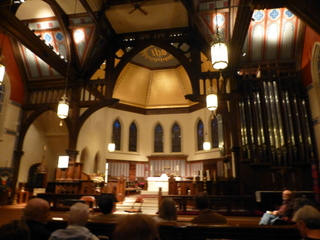
Grace Church, New Bedford, MAThis past weekend we were visiting family in southeastern Massachusetts, and decided to attend a concert by the virtuoso classical guitarist, Eliot Fisk and friends. The concert was staged in the magnificent Grace Episcopal Church in New Bedford. As we listened to music ranging over several centuries, I found my mind wandering far and wide.

Earlier in the day we had received a phone call from a woman who had run the Boston Marathon and now was preparing for another. She was feeling fearful and becoming increasingly hesitant to run. Could she come in and speak to one of us, maybe get some help sorting out her anxiety? We set a time to meet and went on with our day.

The prior couple of weeks had been quite difficult. We have family and adult children living, or going to school, in Boston. On the day of the Boston Marathon I went in to work as usual. Late in the day a client came in and told me his wife had called and said there had been a bombing at the Marathon. We turned on the office computer and looked at the news feed. At that point, there was a fire at the Kennedy Library as well as reports of possible new bomb blasts, and rumors that additional devices had been found. I explained to my client I have family in Boston, picked up the phone, and called home. Everyone was safe and accounted for. I then called my daughter who lives in the Midwest and reassured her we were all safe. Only then did we settle into the routine of our therapy session.

That session was unique in all my years of practice. I spoke about how surprised I was that I called home instead of forcing myself to wait til after the session. He spoke to feeling remorse at being the bearer of bad news. I expressed my gratitude to him for sharing the news and for being generous in allowing me to check on the safety of my family, and for simply being another human presence in a difficult moment. Together we shared our experience of living in a world where people harm one another in the service of ideology.

On Wednesday I got together with a group of old friends. Naturally, the conversation turned to the week’s events. I spoke about imagining I understood some small part of the anger and hopelessness of the two brothers accused of the bombings. I added I thought they were probably doing their best and we could detest their actions and still hold on to the brothers’ humanity. Perhaps we are all doing as we are able, and sharing, ultimately, a common bond and fate. None of this went over well.

Then came Friday, and New England was back in the middle of terror and chaos. We were hosting Bangladeshi friends who were visiting the U.S. for the first time. I was up early, turned on the radio, and was greeted by reports of shootouts and bombs, again in Boston. One of my stepsons posted to Facebook that his street was blocked off, police were everywhere, and the neighborhood was in lockdown. Once again we were on the phone to Boston and the Midwest; our family members were safe, at least for the moment.

When our Bangladeshi friends awoke and came downstairs (they had luxuriated in long, hot showers, so different from the cold showers available to them at home), we explained the situation to them. They spoke to their compassion for our plight, and told us about one day, a few years ago, when Bangladesh had suffered 400 separate blasts. By early afternoon it was apparent the situation in Boston was under relative control, so we drove up to the mountains where our friends met snow for the first time. They proceeded to frolic, build snow people, and have a snowball fight, all in near 80 degree weather. The next day was cold and windy and we built a fire in the wood stove…… Welcome to Vermont in April!

All this came back as I sat in the enormous vaulted church, surrounded by family and and friends, listening to a remarkable concert drawn from the Western canon. A reception P1050301followed the concert, but we went straight home. Although it was late (the concert lasted well over two hours), the Red Sox were still playing, and winning to boot! It was then, sitting in the family kitchen, surrounded by loved ones, drinking late night decaf cappuccinos, that I finally grasped the healing, normalizing power of baseball.

Sunday we drove home via Boston where we visited more family. The world was abloom, and the streets were filled with happy, playful people. Surprisingly we spoke very little about the events of the proceeding two weeks, other than brief recaps of how folks spent their time during the lockdowns, or decided not to attend the Marathon. Rather, we spoke about the tenacity and resilience of the people of Boston. I guess we should not have been surprised at their resiliency, given their decades of loving support of the Red Sox prior to 2004.

– Michael Watson

© 2013, essay and all photographs include the portrait below, Michael Watson, All rights reserved

michael drumMICHAEL WATSON M.A., Ph.D., LCMHC (Dreaming the World) ~ is a contributing editor to Into the Bardo, an essayist and a practitioner of the Shamanic arts, psychotherapist, educator and artist of Native American and European descent. He lives and works in Burlington, Vermont, where he teaches in undergraduate and graduate programs at Burlington College,. He was once Dean of Students there. Recently Michael has been teaching in India and Hong Kong. His experiences are documented on his blog. In childhood he had polio, an event that taught him much about challenge, struggle, isolation, and healing.

Posted in Contributing Writer, Essay, find yourself

FINDING YOURSELF Part 1: The Freedom of “I Don’t Know”

1-1213801011KG6LToday begins the first of three features on finding yourself.  “Be True to Yourself” would be another good name for this series with the perspectives of three writers:

.

Part 1: The Freedom of “I Don’t Know” ~ Natasha Head
Part 2:
What story do you have to tell? ~ Terri Stewart
Part 3:
On the Razor’s Edge ~ Jamie Dedes

The Freedom of “I Don’t Know”

There is a peace to be found in releasing labels, brands and notions we are conditioned with before we even have a chance to determine if this is who we want to be. Every day, I feel as though I am failing in the expectations others have for me, yet…I know I cannot let their preconditioned labels define me.

The little bit of myself I have been able to hang on to, throughout all the many roles we get sucked into, shows in my writing. If I had to name the biggest reason why I do write, it’s to hang on to me. The one thing I can be sure of in this world is the girl sitting in the dark corner alone, tattered notebook and cheap pen, ink spots on her fingers and a desire to be left alone with her thoughts.

This is my church. I can enter anywhere, on any day, at any time. I am always accepted, I am always welcomed, and I always feel…right.

I think that sense of “right” is one of the hardest things to find in this world. For so long, I tried to shape myself to fit in so many ways others told me I had to in order to be part of the crowd. They would fight me tooth and nail when I asked a question they couldn’t answer. They would belittle and scorn me for not taking as faith what they never had the courage to question. Where is the poetry if we are not allowed to question? Where do great ideas and new discoveries come from if we are not pushed and encouraged to seek further.

When they come at me now…wanting to know my beliefs, where I pray, where I’m going to go when I die…I’ve learned they already know the answer they want to hear…and I’ve learned the only compassionate one I can give, so as not to offend and engage is “I don’t know.” Really…what other honest answer is there? It turns a soldier into teacher, a teacher to a guide, and suddenly a new path unfolds with an invitation to explore. I have learned so very much…simply by admitting, I don’t know.

And at the end of the day…how much does it matter if it steals from the gift this lifetime is? Our true blessings are found in the now. In the time we have right now to help, to lift up, to learn, to love. Imagine, if the world could stop debating what is personal and individual to everyone, and simply come together to make the most of where we’re at with what we have? If there’s one thing I do know…it would have to make it a much better place…a much better now.

– Natasha Head

© 2013, essay and portrait, Natasha Head, All rights reserved
Photo credit ~ Petr Kratochvil, Public Domain Pictures.ent

9-1NATASHA HEAD debut poetry collection (from Winter Goose Publishing) was Nothing Left to LosePushcart Prize nominee for 2012. A year later – almost to the day – her newest offering, Pulse. was releasedNatasha blogs at The Tashtoo Parlour and participates in a leadership role on d’Verse ~ Poets Pub. She is the founder and coordinator of New World Creative Union

Posted in Essay, Guest Writer

THE ACT OF INVISIBILITY

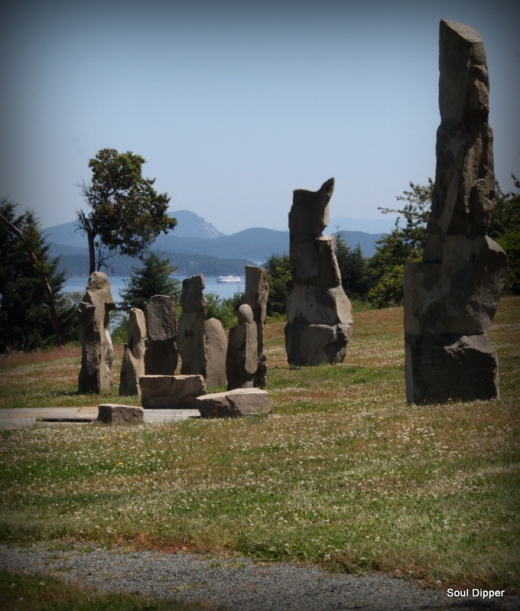
Stones, balanced with mortar-less perfection, stand on the hillside and silently watch the ferry slip through its island laden path.

THE ACT OF INVISIBILITY

by

AMY NORA DOYLE (SoulDipper)

Into the Bardo Contributing Writer

Yesterday, a professional musician read aloud The Prayer of St. Francis.  The man wasn’t performing for the crowd.  He was reading as though the prayer had been written for him.

The intonations and musicality of his voice lured me into loving the words.  I questioned the opposites contained in the prayer.   Are they better served verbally?  Or silently?

Does an effective “channel” speak love or just show it somehow?  How is it easiest to receive vibes of pardon, faith, hope, light, and joy?  Is it best to transmit consolation, understanding and love with an act of invisibility?

People who personify the virtues listed in St. Francis’ prayer are rare, but Susan Boyle came to mind.  Did she have years of invisibility?  Did it magnify her beauty?

The prayer says, “It is in dying that we are born…”  Being, instead of being seen, disciplines the ego and makes room for giving.

I wanted to know:  How can I construct my own invisibility?

This question first arose in the early 1970s in London, Ontario.  I joined the London Little Theater Group and was given the role of a seductive secretary in a murder mystery.  I was overjoyed until I realized my character was murdered in the first minute of the first act.  My only lines were repeats of phrases spoken by my lover/boss.  I was taking shorthand while he dictated a letter.  I didn’t even have to do a dying scene.  The lights went out, a shot was fired and when the stage was lit again, weeks had passed.

That kind of invisibility was easy.  The mystery revolved around my character and I didn’t have to do a thing.  I sat bored and impatient backstage, waiting for the end of the performance so I could do curtain call with the rest of the cast.

Stan, a professional actor who had retired in London, was a small, quiet man with powerful stage presence.  His role in the play suited him – a quiet, polite, detective who matched the cunning of a yet-to-be-famous Columbo.  His role required a deftness that caused players, and certainly audiences to forget he was on stage.

“How will Stan ever be invisible on stage?” I asked the director.

“It’s one of the most challenging roles for any actor,” he said.  “It’ll be especially tough for Stan because everyone likes to watch him.”

“Does that mean the other players have to do a good job of distracting the audience?”

“That’s important, but Stan can’t count on that.  What if the other players don’t pull that off?  The story relies on his shadowy observations and impeccably timed responses.”

During rehearsals, I popped in, did my one minute on stage and left.  I didn’t have a chance to ask Stan about invisibility.  He was continuously engaged with fellow cast members.

We had a packed house each night of both weekends.  I wanted to watch Stan in action, but had to stay backstage.  It wasn’t until the cast party that I finally had a chance to pose my question.

“Stan, apparently you mastered invisibility every night.  I’d love to know how to do it.  Is it the opposite of acting?”

“It’s a wonderful and artful challenge.  It’s customized with each play, each cast and each setting.”

“But how do you do it?” I asked.

“I think myself into a state of not being available.  I’m absolutely still.  I don’t draw attention to my character in any way.  I work with the timing of the other actors as I blend in with the scenery, the movements, and the mood.  I imagine myself small until it’s time to step back into the spotlight – big as life.”

“So…you are turning your visibility off and on in accordance with what’s around you?”

“Yes.  For me, being invisible requires more acting than being center stage.  It’s draining.  It is the most intense, yet rewarding, acting I have done. It’s terrifically fulfilling.”

Here I was, yesterday, listening to a professional musician invisibly read a prayer.  I listened to Susan Boyle sing the St. Francis prayer with the power of coming out “big”.  I remembered a gifted actor teaching the art of invisibility.

Am I any closer to knowing how to channel the virtues named as opposites in the prayer?

I’ll have to see how invisible I can be.  However,I’ve learned one thing.  An act of invisibility is a supreme act of giving.  Self-willed or not.  Both have purpose.

Can you become invisible?

© 2012, photograph and essay, Amy Nora Doyle, All rights reserved

AMY NORA DOYLE ( souldipper) ~ has been blogging since 2010, always write-on-target with the topics she chooses to address and her not insignificant gift of story. She is appreciated as much for her insightful comments on blogs as she is for her indefatigable efforts applied consistently to the subject and spirit of the sacred. Amy is also an intuitive. Amy’s work in the ground of the sacred derives from “a life-changing trip to an incredible country, South Africa, the longing in my soul to release concepts about the magnificence of ordinary life has blown the typical writing blocks, corks and stoppers.” The inspired and inspiring Amy lives with her cat in a house on an island in Canada. Be sure to stop and visit her on your trips around the blogospher.

Posted in Essay, Guest Writer, Uncategorized

THE AGE OF DISCONTINUITY AND THE CHINESE SHI

Shakti Ghosal

Fluidity and discontinuity are central to the reality in which we live. (1990), Mary Catherine Bateson (b. 1939), American writer and cultural anthropologist

THE AGE OF DISCONTINUITY AND THE CHINESE SHI

by

Shakti Ghosal (ESGEE musings)

 The other day, I sat leafing through the yellowing pages of that half a century old Peter Drucker classic, ‘The Age of Discontinuity’. This book never ceases to amaze me at the prescient feeling it can generate even after so many decades. Drucker of course could not have envisioned the internet and today’s information flows but his book does ask the question, “As technology becomes ubiquitous, how would we need to cope?” He also challenged us “to be prepared for the complexities”. Big discontinuities that he saw so many years back……. as yet unresolved.

Since the dawn of history, Mankind has experienced discontinuities brought in by adoption of learnt skills and technology. As the first human learnt how to seed and grow plants, Mankind did a makeover from a wandering lifestyle to that of settlers on land. Then with the successive arrivals of the steam engine and electricity, the agrarian lifestyle started morphing into industrial clusters and an associated urban way of life.

And so has been the cycle. A periodic massive disruption of the way we live, the way we work, the way we trade, all leading to a discontinuity. But always, Mankind returned back to stability. Adjusting back into the equilibrium of a new socio-economic format, till the next bout of discontinuity.

But methinks we now have reached a different arena. A space and time where technologies are no longer stabilizing. If at all, they seem to be changing at a faster and faster pace. One needs to just see what is happening to computing, information and communication to appreciate this.

As I reflect, I am left wondering if we are facing the mother of all discontinuities, a shift to a world without stability. A world in which extreme social and economic disruptions become the norm. Be it the ongoing financial turmoil in the global markets. Be it increasing volatility in commodity prices. Be it companies losing out their leadership positions at an increasing rate. Be it product life cycles becoming shorter and shorter. I wonder if these indeed be the symptoms of a world becoming increasingly unstable.

So how do we, the individuals, cope with such constant discontinuities and loss of stability? Wired as we are to cherish stability and continuity in life, how do we retain our balance and sanity?

I think of the Chinese concept of Shi. Simply put it signifies a propensity based on situation. So whenever there is the propensity to play out to an extreme, there also occurs the tendency to self correct and reverse course. And herein lies the magic of Shi- embodying the spirit of dancing in the moment.

Shi is a belief. It promotes lightness and a dynamic view of our world. In Shi, everything is in a state of becoming. So as we focus on the flows and the lightness of the moment, we lose our obsession with discrete people, objects or situations. Shi allows a holistic appreciation of the complex webs of relationships among people, objects and the broader environment.

In a world fast losing traditional reference points, the future may well belong to those who adopt a Shi mindset. Those who embrace the lightness of relationships and flows rather than the heaviness of resource ownership. I believe it would be these ‘dancers of the moment’ who would lead the world in this era of uncertainty and discontinuity.

Acknowledgements:

1  The Age of Discontinuity: Guidelines to our changing society

by Peter F Drucker,1969.

2.   The Propensity of Things: Toward a History of Efficacy in China

by Francois Julien,1999.

© 2012, Shakti Ghosal, All rights reserved

Shakti Ghosal ~ has been blogging (ESGEE musgings) since September 30, 2011. He was born at New Delhi, India. Shakti is an Engineer and  Management Post Graduate from IIM, Bangalore. Apart from Management theory, Shakti remains fascinated with diverse areas ranging from World History and Economic trends to Human Psychology and Development.

A senior management professional, Shakti has been professionally involved for over twenty-five years at both international and India centric levels spanning diverse business areas and verticals. With a strong bias towards action and results, Shakti remains passionate about team empowerment and process improvement.

Shakti currently resides in the beautiful city of Muscat in Oman with wife Sanchita, a doctorate and an educationist. They are blessed with two lovely daughters, Riya and Piya.