
Posted in Essay, General Interest, John Anstie

Good Friday, Good Fortune and Forgiveness

“Never let the sun set on an unforgiving thought” © 2012 John Anstie

It started one Good Friday morning, three years ago, sitting, as we sometimes do on a weekend, in bed, with a cup of tea, reading, reviewing, talking, relaxing.

Because the finances are my responsibility, unusually, I used this moment to run through the ‘state of the nation’. We then fell to looking ahead to our imminent retirement and the likely income from our pensions, such as they would be.

Every time we fell to talking about pensions, I was irresistibly drawn to musing about the first of my four different private pensions, which exist by virtue of changing employers. This pension was with the steel company, for whom I worked for the first eleven years of my career, which was ‘frozen’ upon its merger with another company. The process of reviewing whether to leave my original pension frozen or move it into a private fund was aided by a ‘friend’ who worked with a mutual insurance company at the time. Given that this was in the midst of the Thatcher era and the new market economy, ‘advice’ abounded that pensions should become more portable as the work force became more mobile and everyone was getting on Norman Tebbit‘s proverbial bike!

Long story short, the outcome was that I chose to move it to the private pension recommended by my ‘friend’ and the fund ended up being worth one third of what it would be had I left it where it was. So it was too late to make up the loss.

Whether or not I forgive my ‘friend’ for whatever responsibility he could himself reasonably shoulder for this advice, was rendered irrelevant by my next prompt, which occurred whilst I ate my breakfast and watched the second half of an hour-long documentary on BBC1, “What’s The Point of Forgiveness?”, presented by Historian, Bettany Hughes. It took a look at the history of this virtue, which emanates from the apocryphal words of Jesus, “forgive them, they know not what they do…”. In her thesis Hughes presents the alternative to forgiveness as being the vicious cycle of revenge, which inhibits recovery, engenders pain and does not allow us to move on.

Two significant events that I saw, cited in this programme, were the ‘Truth and Reconciliation Commission‘ setup up in South Africa, following the release of Nelson Mandela and his election as president, and an interview with the wife of the co-pilot of Flight Eleven, which was deliberately flown into one of the Twin Towers in New York in 2001, who, in spite of her emotional struggle to come to terms with the loss of her husband and father to her two children, had somehow found it in her to forgive the terrorists. Both these events stand out in a way that gives us hope for humanity and human spirit. Whilst we can all understandably feel vengeful and hateful against those who harm us or our families, our tribes, our communities, it is only by forgiveness and by not antagonising the perpetrators of atrocities against humanity into a vicious cycle of destructive and vengeful argument that they may become capable of contrition and able to feel remorse. People who have achieved genuine forgiveness, like those already mentioned, accordingly become living proof that genuine forgiveness is the only road to reconciliation and peace.

So, how can I complain when I am able, as I did at the time of writing this, to sit in our sun-bathed garden, ringing with bird song, cup of coffee in hand, in good health and with the freedom to write what I want to say on almost any subject in this blog, here, now, any time it pleases me to do so. How can I feel vengeful toward someone about a pension shortfall, when there are people in the world, who can forgive acts of inhumanity that defy belief; that have caused the loss of life, the torture of innocent people, the deprivation of the most basic of human rights affecting whole communities, populations… there is truly no need to answer this question. One question does, however, remain.

That question is simply this: how can I, in spite of all the good fortune I have had in my life, in spite of the fact I am no longer an angry young man – for which there may have been a little justification early in my life – and in spite of the fact that the sun is shining; how can I follow this advice and ensure that, deep down, I can genuinely forgive anyone, who is guilty of anything, whether it be a simple thoughtless slander or the most unspeakable inhumanity. I feel this is the question I should continually ask myself and strive to achieve the only result that common sense points toward with undoubted clarity. It is so obvious to me that to forgive someone is to take the wind out of their angry or irrational sail; make it pointless for them to consider acting in such a way again, rather like a petulant child who, in moments of insecurity, challenges their parents by pushing at the boundaries, trying to get a reaction; when they don’t get it and the parents show forgiving, but calm and disciplined resolve, they gradually adjust their behaviour. It has to be said, nonetheless, that if it were the easy option, we’d all be able to forgive.

It should be easy for me in my relatively privileged social and economic circumstances, but how much more difficult is it for someone who is wired differently from me; who is younger and is just setting out on life’s difficult journey trying to survive; who may even have more justification for their anger or who is simply wired in an ‘angry’ sort of way. I don’t know the answer to this, but, whatever happens, if the message of Easter is to mean anything, whether or not you are, unlike me, an active Christian, then we ought to keep on trying… to be grateful for good fortune, to forgive and move on. What better cause is there to encourage harmony whenever and wherever in the world we can.

[A longer version of this article was first published on John’s prose blog, ‘Forty Two’ in April 2011.]

Photo and Text © 2014 John Anstie
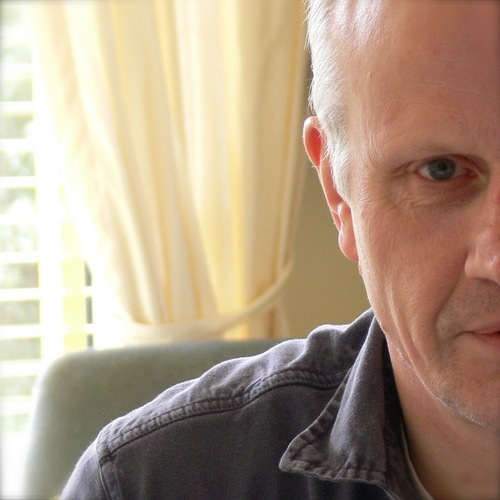
John_in_Pose_Half_Face3JOHN ANSTIE (My Poetry Library and 42) ~ is a British poet and writer, a contributing editor here at Bardo, and multi-talented gentleman self-described as a “Family man, Grandfather, Occasional Musician, Amateur photographer and Film-maker, Apple-MAC user, Implementation Manager, and Engineer. John participates in d’Verse Poet’s Pub and is a player in New World Creative Union. He’s been blogging since the beginning of 2011. John is also an active member of The Poetry Society (UK).

*****

Petrichor Rising Book Cover.phpd'Verse Anthology Book CoverJohn has been involved in the recent publication of two anthologies that are the result of online collaborations among two international groups of amateur and professional poets. One of these is The Grass Roots Poetry Group, for which he produced and edited their anthology, “Petrichor* Rising. The other group is d’Verse Poet Pub, in which John’s poetry also appears The d’Verse Anthology: Voices of Contemporary World Poetry, produced and edited by Frank Watson.

Petrichor – from the Greek pɛtrɨkər, the scent of rain on the dry earth.

Posted in Essay, Spiritual Practice, Terri Stewart

Finding Sacred Space In the Other

This week in my church, it has been filled with conflict and dissension. That makes for a tough week! Let me clarify – structurally, from the upper echelon of the decision-making bodies, there has been a reinforcement of codified discrimination and what I think is just pig-headed wrongness. Ha! I am not feeling very charitable at all. I always have the choice of staying within the system or leaving. But leaving does not really move the ball forward for me. Why? Because my basic anthropology is that we are all connected. Even if I left this system and surrounded myself with folks that were just like me (how irritating that would be!), I am still connected to the people that I find the most frustrating.

Harrumph.

Then, I discovered this exercise written by Troy Bronson in his book Drawn In. It is an exercise for integration and forgiveness. Or perhaps forgiveness and integration. I am fairly certain that full integration is not possible without forgiveness! At any rate, I have adapted his exercise and now I offer it to you as a spiritual practice to aid in integrating those people that drive us bananas.

Take a piece of paper and fold it in half twice so that you have four quadrants. In the bottom right list your enemies: those who mean harm to you and your family; those who are politically opposed to what you are for; those who persecute you and others associated with your causes and passions.

In the bottom left list your friends: advocates for those associated with your religious, political, or social causes. Write all of this so that both groups are at the bottom of the page, with only a crease separating them.

On the Horizon (c) 2013, Terri Stewart
On the Horizon
(c) 2013, Terri Stewart

Now, draw a horizontal line to separate both groups from the empty top half of the page. Read this adapted version of Psalm 121.

I look to the hills!
Where will I find help?
It will come from the immense force
that created the stars, sun, sky,
And earth.

You are protected by Love,
And Love will not sleep
Or stumble
Or snooze.
Love always is.
Protecting you,
Standing at your right side,

The Tree shades us from the sun
The sun will not harm you
Nor will the
Moon.
Protecting you,
Keeping you safe from
All
Dangers.

The incredible creative force
That was, that is, that shall be
Is with you.
Now and always.
Wherever you go.

Reflect on the line, “I look to the hills!” and imagine that the line you’ve drawn is a horizon line made by hills way off at the distance. Imagine your friends and your enemies looking into a future where all things are met with love, justice, and mercy. Where the separating walls between these two groups are healed and taken down. Where the grievances are forgiven. Where they gaze lightly upon one another and see beloved rather than the other.

Now, offer your thoughts to love and reconciliation choosing to step forward into the hills that were once a divider, but now, as we all step into them, cocoon us in beauty.

Adapted from Ephesians 2:11-22

Don’t forget that you used to be the other! The enemy! They used to call you crude and rude. You were a foreigner in this land with no understanding of tradition. You had no hope and were held far away from life giving love.

Creative, responsive love unites all in peace! Breaking down the laws that separate us – that separated us. Following religious rules that are not grounded in loving kindness is not helpful! We all suffer, feel pain. But we are all one, one body united together. We are in this one life together.

You are no longer a stranger or an enemy! You are beloved. Just as those you persecute are beloved. All who went before you are the foundation for who you are today. And it is held together by Love and grown into holy ground where Loving Kindness dwells.

You are part of that holy ground.
You are holy ground.
They are holy ground.
We are
Holy
Ground.

There is no near and no far.
There is only here.
Be one.

Shalom and Amen,

Terri

© 2013, post , Terri Stewart, All rights reserved

terriREV. TERRI STEWART is Into the Bardo’s  Sunday chaplain, senior content editor, and site co-administrator. She comes from an eclectic background and considers herself to be grounded in contemplation and justice. She is the Director and Founder of the Youth Chaplaincy Coalition that serves youth affected by the justice system. As a graduate of Seattle University’s School of Theology and Ministry, she earned her Master’s of Divinity and a Post-Master’s Certificate in Spiritual Direction. She is a contributing author to the Abingdon Worship Annual. (The 2014 issue just released!)

Her online presence is “Cloaked Monk.” This speaks to her grounding in contemplative arts and the need to live it out in the world. The cloak is the disguise of normalcy as she advocates for justice and peace. You can find her at www.cloakedmonk.com, www.twitter.com/cloakedmonk, and www.facebook.com/cloakedmonk.  To reach her for conversation, send a note to cloakedmonk@outlook.com

Posted in Essay, Naomi Baltuck

Today (we are all survivors)

We are all survivors, of our personal histories, our family lines, and of the human race.  Since the dawn of time, think of the families ended abruptly by a bullet, a spear, a club, a predator, illness, by accident and even by someone’s own hand.

Today is the anniversary of D-Day, the Normandy invasion in 1944.  It was the day my Uncle Lewis was launched onto the Normandy beaches into a cruel war.  I think it no coincidence that today is also the anniversary of my father’s death in 1965.

The day before he died, while his kids ran and laughed and played in the yard, my father planted a walnut tree—just a stick of a sapling–by the side of the house.  Did he know what he was going to do?  Did he plant that tree as his own memorial?

I hope not, because someone else is living in that little house in Detroit, and my Dad’s walnut tree is long gone, cut down in its prime.  This I know, because I drive past each time I go back to visit my Aunt Loena.   So these words must serve as a memorial to a World War II vet who came home without his little brother and best friend.  That was the sin his mother never forgave him for, the sin he could he never quite forgive himself for either.

My army buddy, Jack Oliver, attended boot camp with Uncle Lewis.  He helped me understand that my father was as much a victim of the war as my uncle.  When the War Department tallies the casualties, it counts the dead, the wounded, the missing in action.  But no one ever takes into account the broken hearts and broken families left by the wayside in the wake of war.  If they did, perhaps they would stop sending our children off to fight and die.

But today is a day a of forgiveness, a day of understanding, a day to be thankful that life goes on.  It is a day of sorrow, but most of all, today is a day to love.

– Naomi Baltuck

© 2012, essay and photographs, Naomi Baltuck, All rights reserved

NaomiPHOTO1-300ppi410xuqmD74L._SY300_NAOMI BALTUCK ~ is a Contributing Editor and Resident Storyteller here at Bardo. She is a world-traveler and an award-winning writer, photographer, and story-teller whose works of fiction and nonfiction are available through Amazon HERE. Naomi presents her wonderful photo-stories – always interesting and rich with meaning and humor – at Writing Between the Lines, Life from the Writer’s POV. She also conducts workshops such as Peace Porridge (multicultural stories to promote cooperation, goodwill, and peaceful coexistence), Whispers in the Graveyard (a spellbinding array of haunting and mysterious stories), Tandem Tales, Traveling Light Around the World, and others. For more on her programs visit Naomi Baltuck.com

Posted in Jamie Dedes

I DANCE FOR THEM

from a rain forest

Here the dancer stops

to regain her balance

and re-elaborate the distance

In the Empire of Light, Michael Palmer

·

I DANCE FOR THEM

by

Jamie Dedes

·

We danced in step we four, a pas de quatre on river rocks,

me dreaming wild of unicorns and rainbows.

In that faraway place of  raging river, ancient Cloister –

escaping to the city with my once-young mother,

embracing antique stories told in graceful moves and music

made for those with better breeding, more cultivated minds.

·

Home, our home, a place of first loves, unfounded hope

where simmering, Sidto* served soup to my sister,

a dark-olive girl-fugue in tar black  and char dust.

In that place whirling with church spires and myrtle trees,

hooting and shrieking, we strode tortured shores,

then buried our anger in silence, bitter as bile.

I broke my ballerina legs in a premature grand jeté.

I failed to heal those fissured old hearts.

·

We were lost then, somewhere out in crazy time, lazy mind –

passing green humid summers, silver crisp winters,

fielding the slings of earth-bound distress. Home  . .  .

At home, such a tangled skein of love and lies and ties,

where, by some bogey breeze, we danced lockstep on river rocks,

me dreaming wild of unicorns and rainbows . . .

Solitary now, alone now above rainforest layers of fertile mind –

my energy moves triumphant, a pas marché on gray status clouds,

which rain down hard-won poems in roses, willow greens, and light.

With twice found hope and tender love, I dance for them.

·

Sidto – grandmother, derived from the Arabic.

Dance terms:

  • pas de quatre – a dance for four.
  • grand jette – a broad, high leap with one leg stretched forward and one stretched behind. In effect, a “split” that is airborne.
  • pas marché – the regal marching-step of the premiere danseuse, the principal female dancer in a ballet company

© poem, 2011, 2012 Jamie Dedes, All rights reserved

Illustration courtesy of Fran Hogan, Public Domain Photograph.net.