Posted in Poems/Poetry, poetry, Poets/Writers

(R)Evolution — 4 poems

Crows Are Being Born Again

     It is an undeniable fact now: 
They have arisen from the bare ground
 
Like the phoenix flapping its wings out of its 
Legendary ashes, where are they going?
Nowhere but high up into a virtual space, a world 
That, like history book, is full of black headlines
 
Big names, & bold details. All transmitted
Into digital forms. Even the most unidentifiable
Has become a star above its dark caws. 
    Each 
Taken for an angel winged with the rainbows 
Of tomorrow, while all cranes and swans are lost 
In their dances to the tune of death             

(R)evolution towards Dataism 

More advanced in evolution than their human masters are chickens as they outnumber the stars in the whole universe, and occupy every corner of the entire planet, but as in-dividuals, no chicken can fly higher than a low fence, make love within its confinement or live together with its children. The only thing they do besides laying eggs and growing meat is standing there, day and night, as if meditating about the meaning of evolution:

It took hundreds…of thousands…of years for…homo erectus to evolve…into sapiens and longer…for chimpanzees to…erectus, but…engineering ourselves…by way of biochemistry…cyborg and…AI, we are upgrading…ourselves into…godlings—all it takes…will be just half a century…where science beats gods…and devils, saints and ghosts alike…at only…a fraction of second, when a whim…pops up for a human…to go back…to a wild animal, again…

Now given each organism as a biochemical algorithm, your life is a programmed process proving your consciousness is actually far less valuable than a fucking Frankenstein’s AI

As giant ants march ahead in nightly arrays
Demonstrating against the ruling humans
Along the main street of every major city
Hordes of hordes of vampires flood in, screaming
Aloud, riding on hyenas and
Octopuses, waving skeletons
In their hairy hands, whipping at old werewolves
Or all-eyed aliens standing by
With their blood-dripping tails
 
Gathering behind the masses are ghosts and spirits
Of all the dead, victims of fatal diseases
Murders, rapes, tortures, wars, starvation, plagues
Led by deformed devils and demons
As if in an uprising, to seek revenge
On every living victor in the human shape
Some smashing walls and fences, others
Barbecuing human hearts like inflated frogs
Still others biting at each other’s soul around black fires
All in a universal storm of ashes and blood
 
Up above in the sky is a red dragon flying by
With a heart infected by the human virus

Second Departure: for Yeats

 Going, going away in an ever retreating bay
The ebb starts below a quickened sun setting
People swarm here, watching, picking, fighting
Over the fishes, shrimps, crabs, shells, weeds
All left stranded, struggling for waters on the beach
They do not care if darkness stalks right behind
Their shadows, rolling like a tide upon their souls
They care only about the benefits they can gather
The sea produce they can trade with one another
 
Surely some ignorance is still in proper place
Surely the second departing is taking place
The Second Departing! The very idea stirs in the minds
A huge flock of crows beating their darkening wings
Flapping into the narrow sky of the prolonged history
It’s these crows, these very unidentifiable black birds
That are driving the light beyond the horizon, inner or outer
(Where they have found God as a redundant re-creation
Where they believe they are the right gods for themselves)

Epilogue: A Parallel Poem

Just as both God and Devil are man’s incarnation,
so are Heaven and Hell both man’s construction. 

I
From the front yard of a melodious morning
From the busy road of a sweet Saturday 
From the moist corner of a heavy march 
From the back lane of pale winter
We have come, here and now, all gathering
In big crowds gathering in big crowds
Gathering in ever-bigger crowds gathering
For the boat to cross the wide wild waters
Before the fairy ferry is fated to fall
Under our feet too heavy with earthy mud 
 
II 
You may well hate Charon
But you cannot help feeling envious:
That business of carrying the diseased
Across the River Styx is ever so prosperous
The only monopoly in the entire universe
That has a market share
Larger than the market itself
Daydreaming, on this side
Of the river, how you might wish
To be an entrepreneur like him
A success American dreamer
 
III 
Flying between sea and sky 
Between day and night 
Amid heavenly or oceanic blue
I lost all my references 
To any timed space
Or a localized time
Except the non-stop snorting 
Of a stranger neighbor
 
Then, beyond the snorts rising here
And more looming there
I see tigers, lions, leopards 
And other kinds of hunger-throated predators
Darting out of every passenger’s heart
Running amuck around us 
As if released from a huge cage

As if in a dreamland

—Changming Yuan
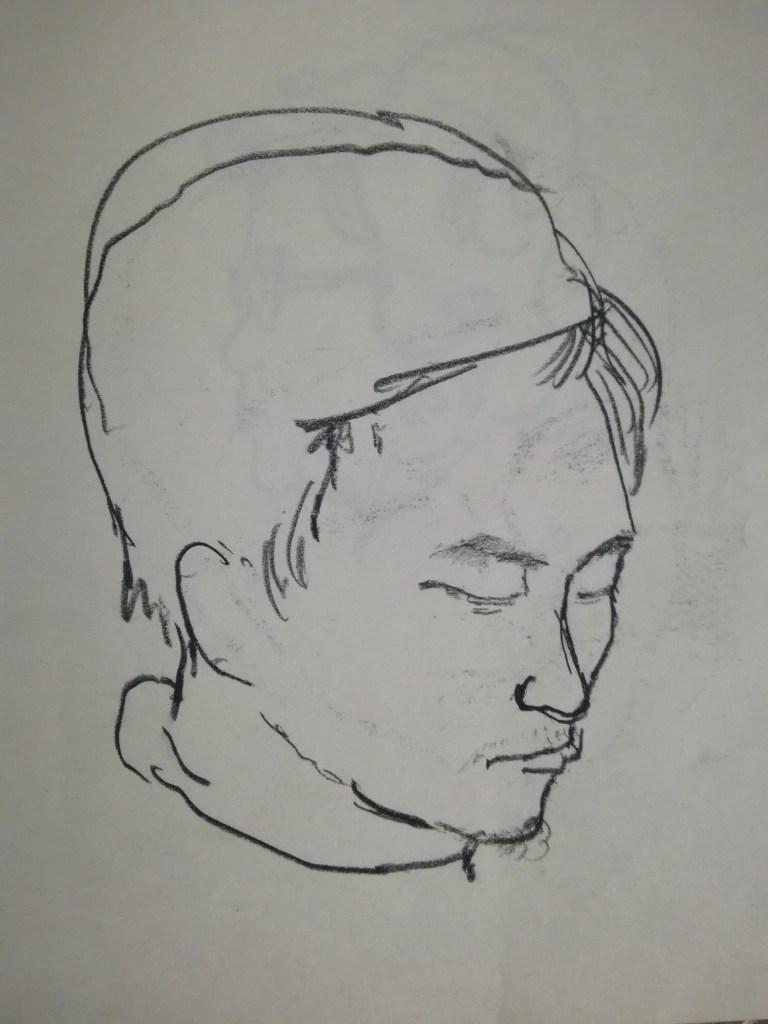

Changming Yuan

©2020 Changming Yuan
All rights reserved
Posted in Poems/Poetry, poetry, Poets/Writers, Victoria C Slotto, Writers' Fourth Wednesday, Writing

WRITERS’ FOURTH WEDNESDAY: God Is a Verb–and so Are We!

Many writers, myself included, are in love with words. In some traditions, words acquire a sacred dimension. Creation comes into being through God’s word in the Hebrew scripture. The Word became flesh in Christian belief. I often use the letters of the Hebrew alphabet to lead me into meditation as they are considered to hold the power of creation and are full of symbolic meaning and creative energy.

A few years ago I read a book by Rabbi David Cooper titled “God is a Verb.” His understanding is that God has not ceased the work of creation and that God asks us to become co-creators with him. Rabbi Cooper calls this activity of God God-ing and refers to our participation as, for example, David-ing in his case, or, in mine, Victoria-ing. As each of us uses our talents in art or writing or photography we continue the work of creation. So take your own name, add that –ing and go to it!

Image: history.com
Image: history.com

For today’s post and writing prompt, I’d like to take a look at the role of verbs. When I first ventured into the world of creative writing, one of my major flaws involved an abundant use of passive voice and boring verbs, hyperbolic adjectives and taxing adverbs…perhaps because so much of my early writing emerged in the context of business. Although I haven’t yet “arrived,” participation in critique groups and reading about the art of writing, offered an important insight: active verbs give life to prose and poetry. My earlier attempts to create character and description often fell flat.

Adverbs and adjectives are part of our language for a reason—to add color, texture and other artistic elements to our verbal armory, but discriminating use of these words, peppered with verbs that rock, do make a difference. While there is a role for telling and judicious use of passive voice, success lies in knowing how to achieve balance.

Here are a couple of examples/definitions of what I’m trying to say:

Passive voice—when something is done to the object:
The child was bitten by a bee.

Active voice, the subject is the doer:
The bee bit the child.

And overuse of adjectives and adverbs:
The hefty pass-kicker adroitly kicked the ball between the goal post in spite of the blustery wind.

I’d like to share a poem posted by fellow poet, Jane Hewey on her blog:

Scar Hopping
Copyright: Jane Hewey

Glacial divides bypass
the dusty canyons thrusting
their will. Moons crawl
through midnights; I want
to touch your singular hurt,
wrap it with my hands
and light-soaked cloths.

I would warm it through
your thick white skin, force myself
into its cold-singe. I want
to evoke you out of the scar
like arctic char augured
from an eight inch ice hole.

http://janehewey.wordpress.com/View all posts by janehewey

I’ve added italics to some of the singular verb and verb derivatives (such as gerunds) Jane chose. While she does use descriptors, the verbs add so much to the flow and strength of the poem.

I hope this inspire you to write a poem, flash fiction or essay incorporating a rich use of verbs. You may want to select something from your archives that never quite satisfied you and try to spice it us a bit. Maybe it’s heavy on adverbs and adjectives, even bordering on “purple prose.” Or grab a dictionary and discover a verb or two that’s new to you.

Feel free to share your results, if you like. To join in:

  • Write your poem and post it on your blog or website;
  • Copy and paste the direct URL to your poem to Mr. Linky at the bottom of this post, adding your name or identifier where he prompts you;
  • I’ll visit you and comment and we hope that you will visit and encourage one another
  • Above all, have fun and remember—you are a co-creator!

Special thanks to Jane for allowing me to share her copyrighted poem

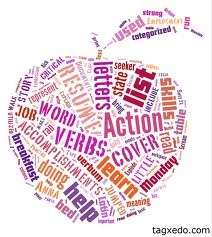
Image: tagxedo
Image: foxhugh.com

.

(Portions of this post were recently offered at dVerse Poets’ Pub, another site for which I write each month. If you write poetry and are not familiar with this poetry community, it is a source of excellent articles about all things poetic and offers several prompts each week, including a night for Open Links!)

_____________

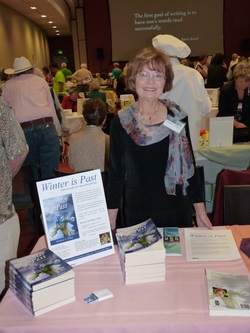
Victoria at the Palm Springs Writer's Expo March 2012
Victoria at the Palm Springs Writer’s Expo March 2012

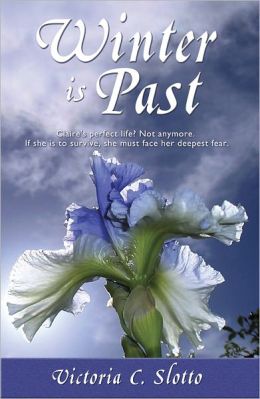
2940013445222_p0_v1_s260x420VICTORIA C. SLOTTO (Victoria C. Slotto, Author: Fiction, Poetry and Writing Prompts) ~ is an accomplished writer and poet. Winter is Past, published by Lucky Bat Books in 2012, is Victoria’s first novel. A second novel is in process. On Amazon and hot-off-the-press nonfiction is Beating the Odds: Support for Persons with Early Stage Dementia. Victoria’s ebooks (poetry and nonfiction) are free to Amazon Prime Members. Link HERE for Victoria’s Amazon page.

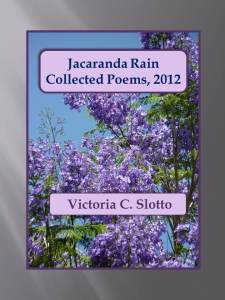
Editorial note: Congratulations, Victoria, on that the long awaited publication of print copies of Jacaranda Rain, Collected Poems, 2012, Beautifully done.

Writers’ Fourth Wednesday is hosted by Victoria from January through October and always posts at 7 p.m. PST.

Posted in Spiritual Practice, Victoria C Slotto

Kavannah–Intention

Although I am not Jewish, I have found much nourishment in studying spiritual aspects of Judaism, in particular the Hebrew Alphabet (Aleph Beit). Jewish mystics and scholars believe that God used the letters of the Aleph Beit to bring about creation. Consider the power of the Word.

Source: jewfaq.com
Source: jewfaq.com

This morning I spent time with the letter Kaph. It means “palm” as in the palm of the hand. There is power in the hand–we raise a hand in blessing, we use our hands in the act of creating, through the hand healers channel their healing energy–think of Jesus, or Reiki Masters. It is intention, kavannah, that enables this power. Kaph is the first letter of kavannah and, as such, invites us to bring intentionality to our daily actions.

Photo Credit: theseedof hope.com

A few hours ago I spent some time doing the domestic thing: folding laundry, doing the dishes, a quick “pick up/put away storm” around the house. The idea of kavannah came to mind and, as I was making the bed, I realized that I can do it grudgingly or with grace. Bringing the intention of love to simple chores transforms them–making our home a blessing. It’s true that this is something I learned at an early age, but it’s something I have to continue to strive to remember. It’s so easy to slip into unconsciousness and go through the actions of every day without awareness.

So, we write. How can kavannah/intention affect this part of our life? What happens when, before we put our palms on the keyboard, we remember that we are instruments of the divine creative Spirit?

The Letter Kaph
The Letter Kaph

This is a re-blog of a post I wrote in July of 2010. As I’ve become more involved in poetry communities, I’d like to add one more thought–the importance of bringing KAVANNAH/INTENTION to our comments. Are comments just to attract more hits, or are they truly there to encourage our fellow bloggers? 

Have a wonderful week.

Reference: If you have any interest in learning more about the Hebrew Alphabet, there are a number of books on the subject listed on Amazon.com.  The one by Richard Siedman is very accessible. A very erudite scholar, Michael Munk, wrote an in-depth, volume the include Gematria, the study of sacred numbers.

– Victoria C. Slotto

© 2013, essay, Victoria Slotto, All rights reserved

Victoria at the Palm Springs Writer's Expo March 2012
Victoria at the Palm Springs Writer’s Expo March 2012

jr-cover-2VICTORIA C. SLOTTO (Victoria C. Slotto, Author: Fiction, Poetry and Writing Prompts) ~  is an accomplished writer and poet. Winter is Past, published by Lucky Bat Books in 2012is Victoria’s first novel.  A second novel is in process.  Jacaranda Rain — Collected poems, 2012 is available on Amazon, as is the hot-off-the-press nonfiction, Beating the Odds: Support for Persons with Early Stage Dementia. Victoria’s poetry collection and non-fiction book are free to Amazon Prime Members.  Link HERE for Victoria’s Amazon page.

Posted in Essay, Spiritual Practice, Victoria C Slotto

Keeping Sabbath

The Paradise

Last Sunday, I chose to practice Sabbath—a tradition that was a strong factor in my growing up years, but that waned with my work as a nurse…patients need care every day of the week. Most of us know and understand the concept of a day of rest, but our frenetic lifestyles tend to get in the way.

Sabbath crisscrosses most cultural, spiritual, religious and secular societies, even pre-dating biblical times. The Babylonian Enuma Elish prescribed a day of repose. In the Genesis creation story, God rested after his six days of work and, I suppose it worked out well so that he added it to those tablets of stone he handed on to his people through Moses. Wicca, Islam. Buddhism, Cherokee teaching and others all caution humans to take a break, chill out, and rest.
Wisdom, it seems to me, embraces our need for refreshment, for replenishment of body, mind spirit and emotion, for regeneration and reflection.

For many of us, well, for me anyway, the need to be in control seems to take hold and it becomes oh-so-hard to let go of time, accept idleness and non-productivity and, perhaps, the feeling of uselessness. I suspect that there is a trust issue here. Can I really believe that God will take care of things in my absence? Can I believe that the work of creation on this particular day will go on without my amazing intervention?

So, what kind of things did I, Ms-Doing-Not-Being do?

• Meditation—a bit longer than my ordinary routine.
• Journaling. And in the process really waking up to what was happening around me. I wrote of all the wonderful sensory experiences that the pristine late-spring day offered—the finches song, the brilliant orange of the male oriole at our feeder, the spicy scent of new-born flowers and the basil in the vegetable garden. I noticed the play of light and shadow in the now-expansive boughs of the ash tree we planted almost twenty years ago and watched the hummingbirds fly back and forth sipping nectar from both flowers and feeders. I felt the gentle kiss of the breeze and delighted in my dogs’ warm bodies flanking me on either side. I listened to David busy chopping spices in the kitchen.

Photo Credit: D. Slotto

• Spa Stuff. I pampered myself with a Pomegranate/Cranberry exfoliating scrub courtesy of Burt’s Bees, did a manicure/pedicure and, well, thought about taking a nap. I thanked my body for its almost-seven decades of service and praised the many scars that it bears, a reminder of the life-threatening illness I have survived, for now.
• Creativity. Maybe some consider engaging in the creative process to be work. For moi, I allowed the muse to come out and play, more by way of brainstorming than actualizing any project. Sabbath time allows ideas to gestate and gives clarity as to where to take them.
• And, yes, a final confession. I did laundry. So, it wasn’t a perfect Sabbath, but for this woman who tends towards OCD, that’s probably not a bad thing. Besides, we needed clean clothes!

Photo Credit: Bergen Linen

That night I slept well, but will I be able to repeat the experience? My history tells me that this is not something that comes easily to me. I am aware that Sabbath doesn’t have to always be on Saturday or Sunday, or even occupy an entire twenty-four hours. How would life be different if, each day, I remember to tuck in an hour or even minutes for the divine repose, sit back and let go?

– Victoria C. Slotto

© 2013, essay, Victoria C. Slotto, All rights reserved

Victoria and Dave Slotto

2940013445222_p0_v1_s260x420VICTORIA C. SLOTTO (Victoria C. Slotto, Author: Fiction, Poetry and Writing Prompts) ~  a Contributing Writer to Into the Bardo ,attributes her writing influences to her spirituality, her dealings with grief and loss, and nature. Having spent twenty-eight years as a nun, Victoria left the convent but continued to work as a nurse in the fields of death and dying, Victoria has seen and experienced much. A result of Victoria’s life experience is the ability to connect with readers on an intimate level. She resides in Reno, Nevada, with her husband and two dogs and spends several months of the year in Palm Desert, California.

Winter is Past is her first novel. It was published in 2012 by Lucky Bat Books. She has a second novel in process and also a poetry chapbook. Victoria is also an accomplished blogger and poet who has assumed a leadership role in d’Verse Poet’s Pub. You can read more ofher fine poetry HERE.