Posted in Bardo News, General Interest, The B Zine, The BeZine Table of Contents

The BeZine, June 2015, Vol.1, Issue 8 – Table of Contents with Links

June 15, 2015

 DIVERSITY/INCLUSION

The evolution will be poemed, painted, photographed, documented, blogged, set to music and told in story.

The evolution will be delivered by a rainbow of human beings, everyday sort of folk ….  

The evolution will not be televised.

There are people for whom the arts exists almost exclusively as an aid to social change, to political discourse– not as some sort of didacticism – but as a discussion, a wake up call, a way of approaching some truth, finding some meaning, encouraging resolution. Many of us here number among them. All of us hope for kind, just and rational social change.

We write and dream about an inclusive appreciation of diversity that will promote a world without war, a world that respects all sentient life, all humans no matter their race or national origin, religion or lack thereof, economic or social status, mental or physical disability, age or sex, or sexual preference or gender orientation. We dream of a humanity that recognizes itself as an element of the natural environment not something apart from and over it.

We may be inspired by personal experience like Colin Stewart – our youngest ever contributor – who bravely articulates his experience of being bullied and marginalized in school in No Child Is Safe. Michael Watson, a therapist, a Native American shaman and a polio victim brings us  Still Here: Meditations on Disabilism and Lara/Trace Writes About Residential Schools, those schools established ” to save the person by removing the Indian.”

For some people the impetus is the direct experience of war, which is the ultimate expression of hate and exclusion. Silva Merjanian gifts us with an essay this month, As with any war …  Silva grew up in a war-torn Beirut. And, new to us is Michael Dickel, an American-Israeli who offers three poems from his new book War Surrounds Us.

Priscilla Galasso, whose appreciation for nature has birthed so many wonderful essays here, askes us to consider the diversity in nature, worthy of nurture and celebration not for ourselves but for its very isness in her essay Diversity and Car(ry)ing Capacity — Spiritual Lessons from Nature. 

The love of our children is a sure motivation to write about and work for respect and inclusion. We see this in Naomi Baltuck’s touching Mine (yours, ours), the second of our two lead features.

The muse is inspired by empathy and ideals, observation and proximity. Terri Stewart gives us one of our lead pieces this month, a moving poem, Created to Be Included. Sharon Frye shows a tender understanding of a Vietnamese refugee in her poem At Model Nails. This is the first time Sharon’s work is included here, but her poetry has found a home in many other publications including The Galway Review, The Portuguese journal, “O Equador das Coisas,” Mad Swirl, and The Blue Max Review (Ireland).

Sometimes the lives and work of  people who lived at other times and/or other places resonates for us. Roses and Their Homilies is an homage to Sor Juana Inez de la Cruz, the stellar poet of 17th Century New Spain. The clerical authority of her day simply could not put  her intellect together with her womanhood. Tragically for her and for us, this caused her to give up her writing five years before her death.

Each month the core team picks a theme.  We don’t dictate the slant.  We give everyone free rein. It’s always a surprise to see how the theme is addressed, who will hammer the theme dead on and who will address it obliquely. This month, when all the work was read, sorted and organized, most of us chose to “celebrate” diversity by illustrating just how slow and insufficient are the reforms and just how resistant humanity can be to inclusion. There is some deeply passionate work here.

I can’t help but think that the justice so many of us seek is rooted in transforming values. Hence, it is more evolutionary than revolutionary. Perhaps it is most evident in our blogosphere and social networking, in the heart-born prose and poems of simple folk like you and me with nary a politician or corporatist among us.

Perhaps the true evolution – the one that will foster permanent transformation – is a bottom-up thing, more likely to be blogged than broadcast, rising from homespun poetry and outsider art – sometimes rudimentary and awkward, but always quiet and true and slow like a secret whispered from one person to the next. It is something stewing even as we write, paint, make music, read and encourage one another. There is bone and muscle in what we do. Individually we have small “audiences.” Collectively we speak to enormous and geographically diverse populations.

I think I hear keyboards clicking and bare feet marching. Or perhaps poetic fancy has caught my spirit tonight and all is dream …I hope not. Write on … Read on … and be the peace …

So let some impact from my words echo resonance 
lend impulse to the bright looming dawn

Dennis Brutus (1924-2009), South African poet, journalist, activist and educator

In the spirit of peace, love and community,
Jamie Dedes

TABLE OF CONTENTS WITH LINKS

Diversity/Inclusion

Lead Features

Created To Be Included, Terri Stewart
Mine (yours, ours), Naomi Baltuck

LGBT

Darkness,  Colin Jon david Stewart
No Child Is Safe, Terri Stewart and Colin Jon david Stewart

Nature

Diversity and Car(ry)ing Capacity, Priscilla Galasso
Putting the “Action” in Activism, Corina Ravenscraft
The Clearest Way to the Universe, James Cowles

Native American

Lara/Trace Writes About Residential Schools, Michael Watson

Disabled

Still Here: Writing Against Disablism, Michael Watson

Refugee

At Model Nails, Sharon Frye

War/Conflict

Again, Michael Dickel
Musical Meditations, Michael Dickel
The Roses, Michael Dickel
As with any war …, Silva Merjanian
Borrowed Sugar, Silva Merjanian

Women

Roses and Their Homilies, Jamie Dedes

General Interest

Essay

British Bulldogs, Great Speeches … and poetry, John Anstie

Poetry

Rooftop Icarus, Joeseph Hesch
Prelude, Voice Aquiver, Sharon Frye
Growth Ring, Sharon Frye
Time Lapse, Liliana Negoi
for us, Liliana Negoi
dancing toward infinity, Jamie Dedes

Photo Stories

An Open Book, Naomi Baltuck
If Not for His Wife, Naomi Baltuck

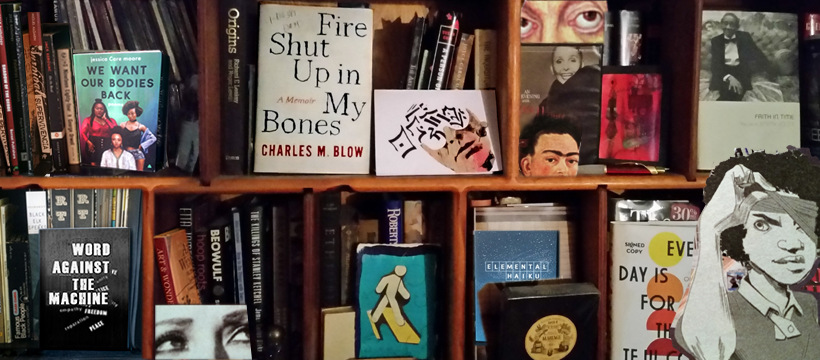
OUR FABULOUS HEADER PHOTOGRAPH THIS MONTH IS THE WORK OF TERRI STEWART UNDER CC (BY-NC) LICENSE.

BIOS WITH LINKS TO OTHER WORKS BY OUR CORE TEAM AND GUEST WRITERS

FOR UPDATES AND INSPIRATION “LIKE” OUR FACEBOOK PAGE, THE BARDO GROUP/BEGUINE AGAIN

MISSION STATEMENT

Back Issues Archive
October/November 2014, First Issue
December 2014, Preparation
January 2015, The Divine Feminine
February 2015, Abundance/Lack of Abundance
March 2015, Renewal
April 2015, interNational Poetry Month
May 2015, Storytelling

Posted in General Interest

We’re Celebrating Diversity and Inclusion …

OUR THEME FOR JUNE IS DIVERSITY and we are celebrating – we are celebrating diversity in all its manifestations: sexual/gender orientation, race, religion, culture, national origin … even nature. What we are truly celebrating is respect – as inclusion – as a big step toward peace, understanding, justice … even environmental stewardship. The June issue of The BeZine is in process and will publish on June 15th. Please join us then. It’s an exciting issue. You won’t be disappointed. Meanwhile, we bring you this feature from the U.S. Library of Congress.

This flag celebrates LGBT pride. Photo courtesy of Ludovic Bertron under CC BY 2.0 license.

Lesbian, Gay, Bisexual and Transgender Pride Month (LGBT Pride Month) is currently celebrated each year in the month of June to honor the 1969 Stonewall riots in Manhattan. The Stonewall riots were a tipping point for the Gay Liberation Movement in the United States. In the United States the last Sunday in June was initially celebrated as “Gay Pride Day,” but the actual day was flexible. In major cities across the nation the “day” soon grew to encompass a month-long series of events. Today, celebrations include pride parades, picnics, parties, workshops, symposia and concerts, and LGBT Pride Month events attract millions of participants around the world. Memorials are held during this month for those members of the community who have been lost to hate crimes or HIV/AIDS. The purpose of the commemorative month is to recognize the impact that lesbian, gay, bisexual and transgender individuals have had on history locally, nationally, and internationally.

In 1994, a coalition of education-based organizations in the United States designated October as LGBT History Month. In 1995, a resolution passed by the General Assembly of the National Education Association included LGBT History Month within a list of commemorative months.

LGBT History Month  is also celebrated with annual month-long observances of lesbian, gay, bisexual and transgender history, along with the history of the gay rights and related civil rights movements. National Coming Out Day (October 11), as well as the first “March on Washington” in 1979, are commemorated in the LGBT community during LGBT History Month.

.
Executive and Legislative Documents
The Law Library of Congress has compiled guides to commemorative observations, including a comprehensive inventory of the Public Laws, Presidential Proclamations and congressional resolutions related to Lesbian, Gay, Bisexual and Transgender Pride Month Pride.

– The United States Library of Congress

Posted in Essay, Michael Watson, theatre/spoken word

Beyond Godot

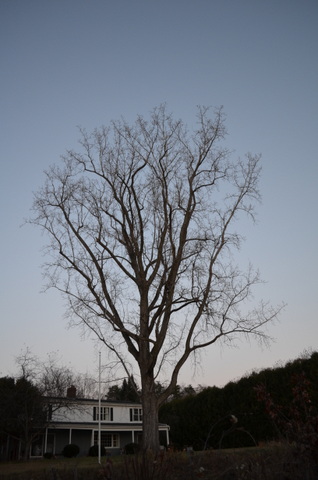
Winter TreeI first encountered Kandinski’s Concerning The Spiritual In Art while in college. While I did not necessarily experience his sense of the mystical nature of line and color, I did share, in my way, his passionate hope that art could be a vehicle for spirituality and social change. Over the years those ideas have informed my visual and performance work.

Although I no longer perform often, I continue to think about issues of theatre and performance. At the center of my theorizing, aesthetics meets concerns about ethnicity, race, class, gender and disability. In all my years of university training (BFA, two MA’s, and a Ph.D.) discussions of the power relationships inherent in aesthetic standards rarely arose. I venture to say that they never arose in my arts courses. Even those anthropology and psychology courses devoted to consideration of race, class, or gender largely ignored aesthetics as culturally mediated. Now I routinely explore the cultural construction of aesthetics with students in my courses, although they are not always comfortable with the material.

Recently I have been engaged in discussions about the societal and political dimensions of aesthetics with a variety of performance practitioners. These folks tend to land in one of three groups: teacher/artists, performance venue administrators, or performer/directors. Clearly, these categories frequently overlap, yet they remain useful. When in conversations with performer/directors I find we can usually comfortably discuss integrating persons of diverse races/ethnicities and genders into troupes, as long as the performers share an aesthetic. Perhaps not surprisingly in our present economic climate, they seem more concerned with audience than inclusion. Often, this means that performers are excluded based on disability or class. (Interestingly, some performance space administrators seem more interested in the narrative and performative power of pieces, and book innovative, inclusive companies, seek out audiences.)

Disability becomes an issue when performers bring physical or cognitive challenges to theatre. Performance making requires the creation of narrative structure if the piece is to convey meaning. The director shapes the narrative, and in so doing privileges some aesthetic choices over others. (The performance space can also shape the narrative; many stages are inaccessible!) The result is either more, or less, inclusive of both performers and audience members. (One may argue that the history of the Avante Guard, in which I was trained and participate, is one of theorizing inclusion while establishing ever more restrictive cultural elites.) Generally, directors seem to feel more comfortable making accommodations for performers who contribute to the director’s formal choices, rather than building performance around the considerable skills of the disabled, or other performers who demonstrate difference. This is understandable, yet problematic. After all, performance is about storytelling, and aesthetic choices inevitably convey the subtext for the director’s (and often the culture’s/society’s) preferred narrative. Exclusion is inevitable and it matters.

An example of  the exclusionary capacities of aesthetics took place in New Orleans a couple of years ago when a famous director from the Northeast brought his version of Waiting for Godot to town, ostensibly to make a statement about the plight of local people immediately following Katrina. Godot is a centerpiece of the Western theatre cannon, and the play in question was greeted with much critical applause. Yet the commentary about the play largely ignored the conditions of the performances. One of my acquaintances, a theatre person from the Big Easy, critiqued the play thus (my paraphrase) : “The piece sold out the Dome, but there were almost no people of color inside. Many people of color and local theater and performance artists were in the lobby trying to purchase tickets. It was embarrassing. On top of that, the play is about doing nothing, about futility. Here in New Orleans people were active after the storm, trying to help one another. We still are. Neither the media nor the play showed that. Local theatre people here have made a lot of performances showing the bravery and generosity of the people here during and after the storm, but those performances get little attention in the national media. Yet the production of Godot was in all the national media.”

Clearly the Avante Guard’s use of social engagement can be highly problematic, especially when performance is done for (some say “to”) culturally specific audiences, for instance, the New Orleans experience of Godot. Or consider a group of non-disabled actors creating and performing a show with disability themes to an audience of disabled persons. Let’s say many of  the stories utilized to create the performance had been gleaned from persons who were now in the audience. When asked why there are no disabled performers, the director responds, “We could find no disabled performers who could this physically demanding piece.” The performance may have been visually stunning and spiritually uplifting, but also conveyed a strong message of inaccessibility. The medium is, ultimately, the message. (Interestingly, in the Eighties, Bill T. Jones was harshly criticized for including persons with life threatening illnesses in his performances of Still Here, even thought those participants publicly praised Bill and spoke about the work as life changing.)

I’ve been exploring spirituality in the arts, and issues of inclusion and aesthetics since the 1960’s. There are now many people of color, disabled artists, and folks across a diversity of classes, ethnicities, and genders thinking, speaking, and writing about cultural coding in performance. That’s good; we need those voices. Many of those folks are making art that arises out of their thoughtful exploration of these issues. Often, these works are filled with spirit. I like to think we are, like the good folks of New Orleans, no longer waiting for Monsieur Godot.

Next time you attend a theatre or other performance event, consider paying attention to the cultural codes being enacted. What are the values implicit and explicit in the piece? Whose on stage and who isn’t? What description of reality is given preference? Are you invited to drink deeply from the well of Spirit? I hope you’ll let me know what you discover.

– Michael Watson, Ph.D.

© 2013, essay and photographs (includes the one below), Michael Watson, All rights reserved

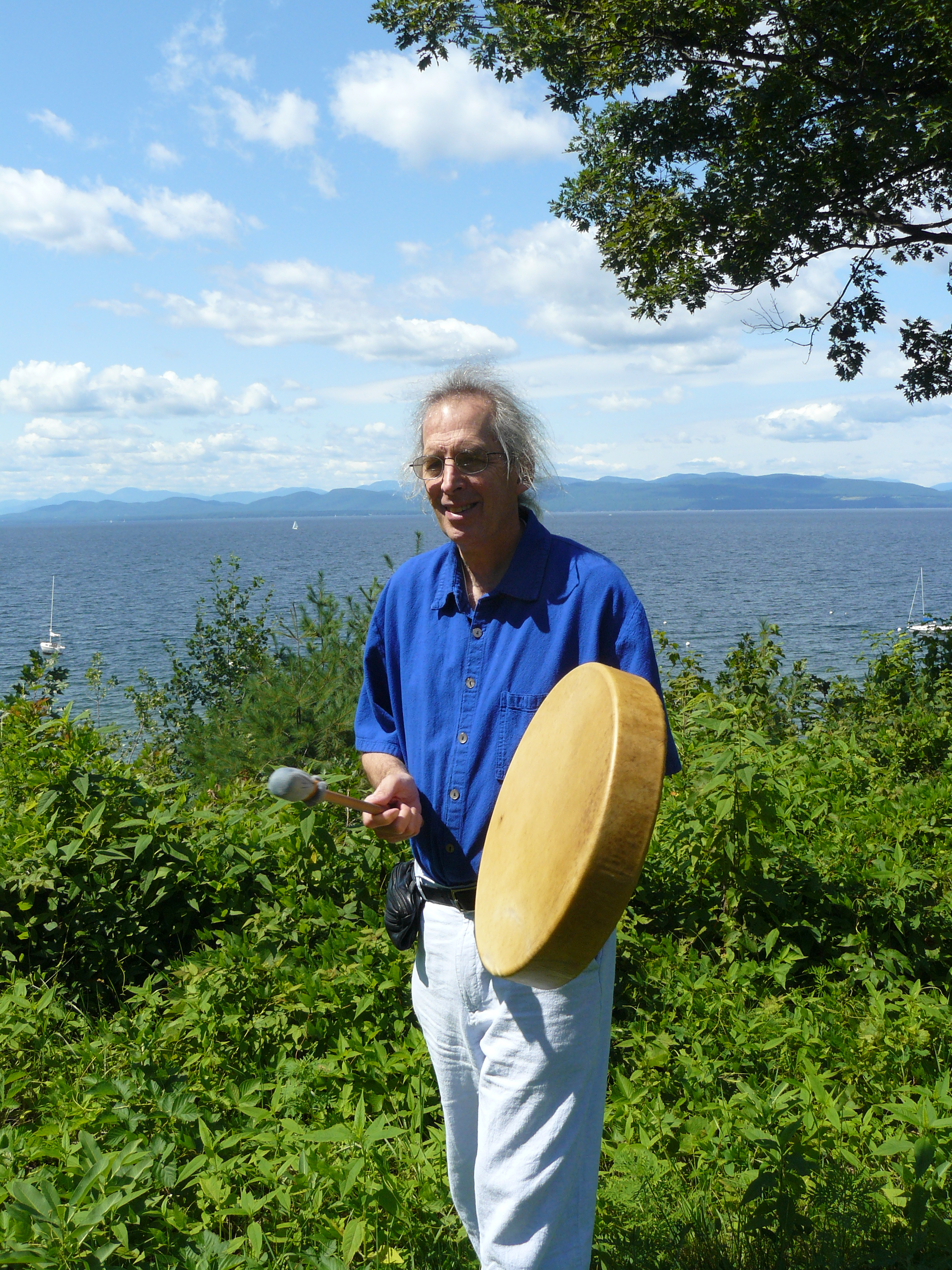
michael drumMICHAEL WATSON, M.A., Ph.D., LCMHC (Dreaming the World) ~ is a contributing editor to Into the Bardo, an essayist and a practitioner of the Shamanic arts, psychotherapist, educator and artist of Native American and European descent. He lives and works in Burlington, Vermont, where he teaches in undergraduate and graduate programs at Burlington College,. He was once Dean of Students there. Recently Michael has been teaching in India and Hong Kong. His experiences are documented on his blog. In childhood he had polio, an event that taught him much about challenge, struggle, isolation, and healing.