Posted in Disability, Essay, First Peoples, General Interest, grief, Michael Watson

PTSD and the Healing Journey

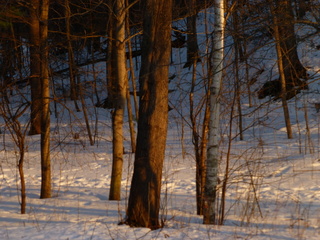
Evening-WoodsThe other night I had dinner with friends. After a traditional ceremonial meal, we watched Skins. I have read about the film, heard others talk about, and planned to watch it, for a long while. The film follows a few months in the life of a tribal police officer on a fictional reservation much like Pine Ridge, and weaves together myth and contemporary experience, violence and healing. Early in the story we are reminded that although humans like to think they are in charge, the spirits shape everything.

Earlier that day I had sat in a local bakery with a couple of medicine women, discussing a Medicine Wheel ceremony we are to hold next month as part of a conference honoring aging. As we come from different traditions and teachings it seemed important to all get on the same page. It turned out we were already in agreement, so the planning went smoothly.

Later, as I thought about the film and my delightful hour at the bakery I decided PTSD (Post Traumatic Stress Disorder) might well live in the North, the place of night and winter. Fortunately, the North is the home of the Ancestors and the place we seek vision; in winter there is little haze and one can see clearly for a long way. The North is often a place where the spirits seem more immediate and accessible.

As the police officer in Skins discovers, healing from PTSD takes patience and courage, and may involve the workings of mythic beings. When we seek a healing for PTSD, we can request guidance from both our unconscious and the spirit world, asking them to give us manageable amounts of information regarding our traumatic experiences, and to aid us find new, more life nurturing, meaning in those experiences. Healing PTSD may become a vision quest, very like going alone to ask the ancestors and spirits to aid us and our communities, to bring us a vision we may live by.

Of course, we are not truly alone. Whether we are challenging the domination of PTSD in our lives, or praying for a vision, there are others, human and spirit, supporting us. We are blessed by the knowledge and caring of those who walk with, and pray for, us, and we benefit from their experience and companionship. Still, they cannot  make the journey for us; we must each walk the healing road for ourselves.

As we walk sun-wise around the Medicine Wheel we discover that when we stand in the North the path before us faces East. East  is the place of birth and rebirth, the home of insight and understanding. It is also the place, in the view of many Indigenous cultures of the Northeastern U.S., where we pass into the spirit world. Sometimes facing long-held trauma brings us an intense fear of death; indeed, the  journey from the North to the East is fraught with both danger and promise.

When we go alone to seek  a vision, or begin the journey of healing from PTSD, we benefit from telling our families and friends, asking them to pray for us, help us prepare, and honor our return. For many, requesting support when healing from PTSD seems shaming; often asking for aid requires as much courage as does confronting PTSD itself. Yet healing seldom happens in a vacuum; we each need the support of others in our lives and on our healing journeys. Let us honor the courage of those who ask for our aid.

Healing PTSD, like any vision quest, is not for the faint of heart.  On the journey we need courage, perseverance, and compassion for ourselves and others. It is a good journey, holding the promise of healing, renewal, and vision, for Self, family, friends, and community.

– Michael Watson, Ph.D.

© 2013, essay and photographs (includes the one below), Michael Watson, All rights reserved
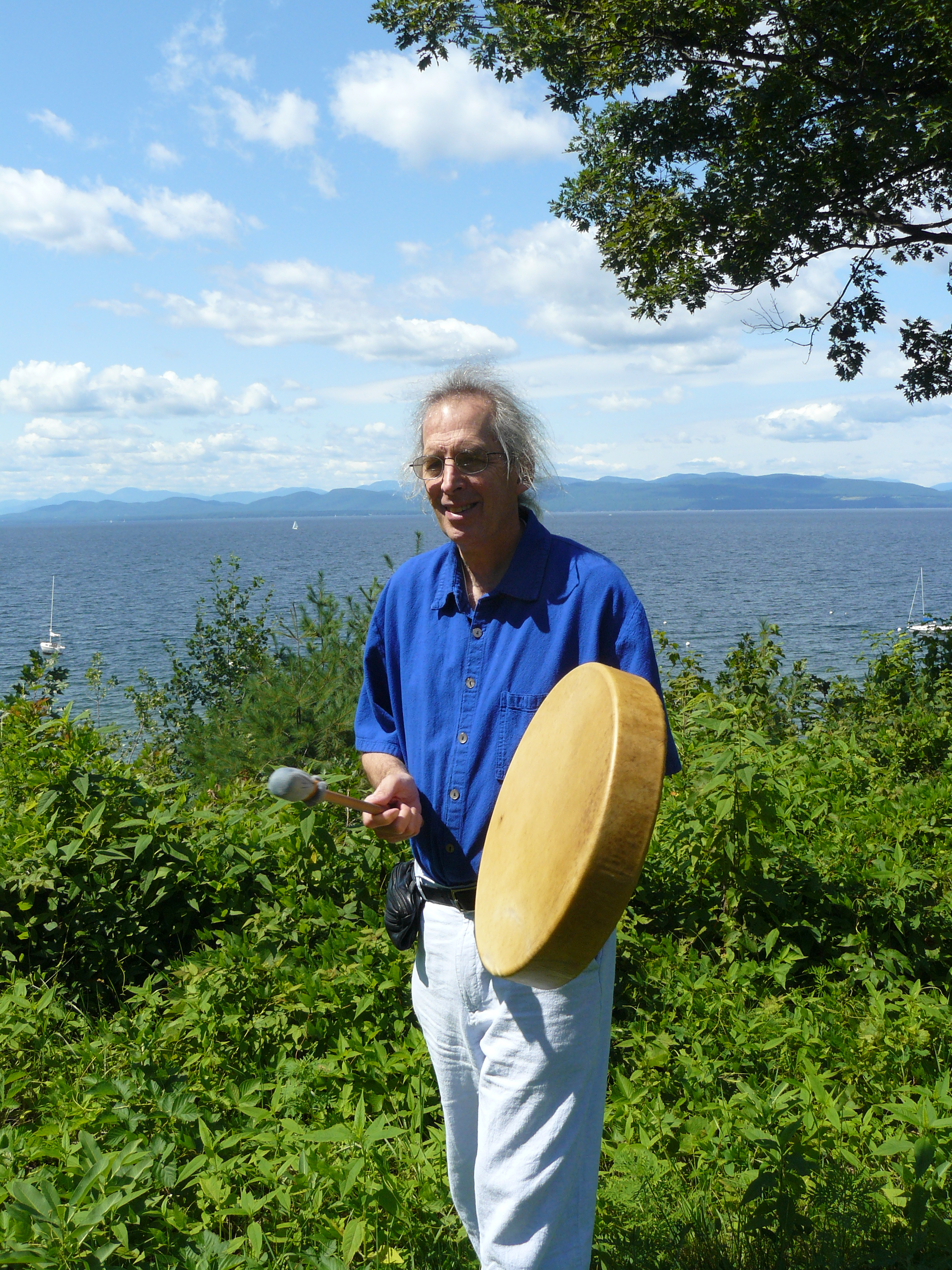
michael drumMICHAEL WATSON, M.A., Ph.D., LCMHC (Dreaming the World) ~ is a contributing editor to Into the Bardo, an essayist and a practitioner of the Shamanic arts, psychotherapist, educator and artist of Native American and European descent. He lives and works in Burlington, Vermont, where he teaches in undergraduate and graduate programs at Burlington College,. He was once Dean of Students there. Recently Michael has been teaching in India and Hong Kong. His experiences are documented on his blog. In childhood he had polio, an event that taught him much about challenge, struggle, isolation, and healing.
Posted in Disability, Essay, General Interest, Mental Health, Michael Watson

The Olympics, Polio, and the Medicine Wheel, Part Two

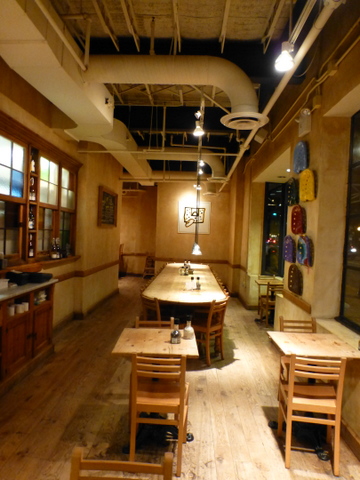
community-seatingThe Olympics have come to a close; the Paralympics follow. Saturday evening Jennie and I watched a Gimp DVD. She is planning to show it to her Expressive Therapies class, along with some material from Bill T. Jones. Its been a while since we last saw Gimp in performance so revisiting their work was a revelation.

The Paralympics is a much-needed, if under-reported competition for athletes who happen to be disabled. The Gimp Project is a collective of dancers, able-bodied and disabled. The Paralypics is a contest; Gimp is a collaboration exploring the world of disability experience.  The first seeks perfection, the latter revels in the beauty of imperfection. The Paralympics pursue inclusion, abet separate and unequal; Gimp tells stories, often casting light on the processes that marginalize and exclude.

There is a remarkable invisibility surrounding these processes, although many activists, academics, and artists have sought to illumine them. It matters little whether these forces  exclude persons on the basis of ethnicity, race, disability, or other difference, the effect is consistent. The systems are pervasive and largely invisible; they are also profoundly human.

The Medicine Wheel holds all of human experience, offering us a view of life as a whole. There is a place on the Wheel for everything that can be encountered, even a space for our collective fear of otherness and contagion. The Wheel reminds us that we will each encounter all that is, whether directly or through the experiences of others. Our fates are inexorably woven together; the fate of each is that of all.

As we meditate on the Wheel we are encouraged to consider that while they seem real, both safety and isolation are illusory, transitory states. The last few months I have found myself wandering the wilderness that is part of the Post Polio experience. Recent health concerns continue to bring up ancient unresolved feelings, along with worries about the future. I have been repeatedly thrown back to the fear and pain of the acute illness and post-illness recovery, and the social isolation imposed on me as a Polio. I am also reminded the effects of the virus continues to impact my life and thus the lives of those I hold dear.

I’ve been exploring the experience of Post Polio through the wisdom of the Wheel. For me, now, Post Polio lies in the North, the place of aging, teaching, and eventually, making preparations to return to the Spirit World. (The North is also the place of preparation for rebirth!) The journey is complicated as I find myself trying to make sense of my nearly lifelong disability from a place on the Wheel where it is also my task to embrace a declining body.

Part of the task is to acknowledge my fear of erasure. We live in an epoch in which Polio was eradicated; we are, for most purposes, a Post-Polio world. I was taught I had survived the virus and should get on with life, ignoring, as much as possible, the devastation to my body and psyche. Yet the path of forgetting and ignoring is fraught with difficulties; the way of assimilation or “passing” is thorny. The normative prescription offers the possibility of inclusion, yet to follow that road is to participate in a collective act of erasure, to become invisible, and thus lose Self.

Every human being comes to a place where s/he is vulnerable; each of us eventually faces the treat of erasure and the powerful emotions that accompany that threat. In a culture addicted to perfection, and dismissive of difference and need, such moments carry added fear and shame. How odd such an essentially human experience is marginalized, leaving so many to face the North filled with loneliness and dread.

As a society we increasingly relegate the task of accompanying folks on the journey through the North to the health care profession and the clergy. As a result, we have marginalized the insight and wisdom that may accompany disability, experiences of trauma, and aging.  In doing so we create great suffering for the very young we profess to idolize, for we deny them context. How are they, in the face of ceaseless messages about the centrality of competition and perfection, to know they are all loveable, all sacred, beautiful, and desirable in their humanness and imperfections?

Our collective focus on perfection sells products and drives our economy, yet blinds us to the fate of our neighbors and the world. Our deeply held collective desire for safety encourages us to abandon our elders, young people, and children, threatens our very being as a species, and steals our Souls. Still, as prophesy insists, we have options. We can risk relearning the wisdom of the elders, symbolized by the Medicine Wheel, accept the complexity and terror of being human, and journey together into a Sixth World. There are, if we make it so, seats for all at the table.

– Michael Watson, Ph.D.

© 2013, essay and photographs (includes the one below), Michael Watson, All rights reserved

michael drumMICHAEL WATSON, M.A., Ph.D., LCMHC (Dreaming the World) ~ is a contributing editor to Into the Bardo, an essayist and a practitioner of the Shamanic arts, psychotherapist, educator and artist of Native American and European descent. He lives and works in Burlington, Vermont, where he teaches in undergraduate and graduate programs at Burlington College,. He was once Dean of Students there. Recently Michael has been teaching in India and Hong Kong. His experiences are documented on his blog. In childhood he had polio, an event that taught him much about challenge, struggle, isolation, and healing.
Posted in Disability, Essay, General Interest, memoir, Mental Health, Michael Watson

The Olympics, Polio, and the Medicine Wheel, Part One

Snowy-MorningEditor’s Note: This is the first of a two-part piece on Perfectionism originally posted on Dreaming the World. Part II will post here tomorrow.

I am an elder, and as such I am given the task of teaching and supporting the young. On the Medicine Wheel of this lifetime I am in the Northwest, the place of honoring the challenges of my life, understanding them as best as I am able, and sharing what I have learned with others. Perhaps you will share your thoughts about the experiences I share below; I would greatly value that.

We, along with many others, spent a good deal of time during the past two weeks watching the Olympics. Over time we noticed, especially from NBC’s coverage, that the commentators seem to believe winning and perfection were all important. This is a sad thing. One does not have to watch much before one becomes aware the announcers are ceaselessly pointing out errors and failures. Rather than empathy for the competitors, one is barraged with demands for perfection and minute details about failure to achieve such.  There is very little celebration of the athletes who fail to meet the announcers’ or judges’ criteria.

This hits home on two fronts. The first is cultural. I was raised to appreciate the efforts of all. Winning is fun, but should not shame others. Nor should anyone be left behind after the games are over. Further, perfection was considered suspect. One was advised to build imperfection into one’s art and welcome it in one’s life. After all, we are not the Creator although we are aspects of His/Her creation. Only the Creator can be perfect, and it is likely even S/He makes mistakes; as we are reflective of the Creator this suggests that even mistakes can be good and holy. The unbridled pursuit of perfection endangers the individual and the culture, the community and the ecosystem.

The second part is I am a survivor of Bulbar Polio. My phsysiatrist says I am “a walking quad”; rather than disparaging, this is a simple statement of truth. I have severe neurological injuries; Polio destroyed motor neurons all over my body. My arms and hands have considerably diminished capacity; my legs and feet lack strength and mobility; breathing can be a challenge. I am not perfect by the dominant culture’s standards.

Add to this my Native American heritage and the soup becomes thick indeed. I once heard a man, who understandably thought he was with other Europeans, say something like,  “There is nothing more pathetic than a disabled Indian.”  What are we to do with that? Indeed, what are we to do with NBC’s virtual silence on the topic of the Para-Olympics?

Herein lies the difficulty. One one hand I was encouraged to accept  and honor imperfections. On the other, as a Polio survivor I was taught to do my level best to pass as normal, to overcome limitations, and to forget my illness and its  aftermath. Additionally, as a child in a Native family that was actively passing, I was taught to be invisible, a lesson that surely applied to Polio as well.

It is a profound challenge to resist the limiting messages of our families and the dehumanizing ones of the dominant culture. I have done my best, yet I have also spent much of my life seeking to achieve others’ views of perfection, even though not even normalcy was not an option.This has been painful.

I don’t know whether you have ever thought about the Wounded Healer.  In Traditional cultures ill youngsters are often expected, should they recover, to become healers. I use the term “recovery” loosely. Youngsters who face and survive catastrophic illness may not have the same physical capacities as their normative friends. Yet their illness may also give them abilities and insights not readily available to others. When the child is ill the healers do their best to aid. They also seek to discern the nature of the illness; often such illness are understood to be calls from the spirits, initiations into the realm of healers. When there is a spirit call, training in the healing arts accompanies recovery. The illness frequently leaves a footprint in the life and work of the survivor; he or she becomes a wounded healer, knowledgeable about many of the territories and challenges that accompany illness.

This is a different model than the academic learning focus of the West. Of course, the two paths are not mutually exclusive. Indeed, they may intersect, even overlap at times. Both address the needs of the body. Some Western trained healers have adopted the Indigenous understanding that the soul and psyche must also be attended to.  (Milton Erickson, although not to my knowledge Indian, comes to mind as someone who walked both roads well.)

I have come to this point on the Medicine Wheel by living my life from within this severely injured body. This is a sharp contrast to the physically perfection of elite Olympic athletes, or the health and wealth gurus we see on PBS and on innumerable infomercials. The television sages convey the message to us that illness, poverty, loneliness, and all other forms of suffering are moral failures. They do not speak this directly, rather they hold up their carefully managed perfection as a mirror to our human frailties. They offer advice, even salvation; for a fee we can be just like them. But I, and many others, cannot.  The very lifestyles they espouse harm us, and endanger our precious planetary ecosystem and all that lives therein. Where, I wonder is their wisdom and compassion?

We approach the Spring, the East in the Abenaki view of the Medicine Wheel, the place of rebirth and awakening. I am curious how my changing understanding of this beloved, traumatized body will blossom in the coming year.  I wonder whether our culture can set aside the deeply held values of independence, competition, and perfectionism that shaped the  our country (the very ones espoused by those television commentators). Can we own our imperfections, and acknowledge the harm we have inflicted on ourselves and so many others, inside and outside our country? Can we embrace those who suffer illness, poverty, displacement, abuse, or isolation?

As we follow the journey of the sun into the East, we are invited to begin again, to open our eyes and practice compassion and understanding. May we  find the courage to do so.

– Michael Watson, Ph.D.

© 2014, essay and photographs (includes the one below), Michael Watson, All rights reserved

michael drumMICHAEL WATSON, M.A., Ph.D., LCMHC (Dreaming the World) ~ is a contributing editor to Into the Bardo, an essayist and a practitioner of the Shamanic arts, psychotherapist, educator and artist of Native American and European descent. He lives and works in Burlington, Vermont, where he teaches in undergraduate and graduate programs at Burlington College,. He was once Dean of Students there. Recently Michael has been teaching in India and Hong Kong. His experiences are documented on his blog. In childhood he had polio, an event that taught him much about challenge, struggle, isolation, and healing.

Posted in Uncategorized

The Equinox and the Medicine Wheel

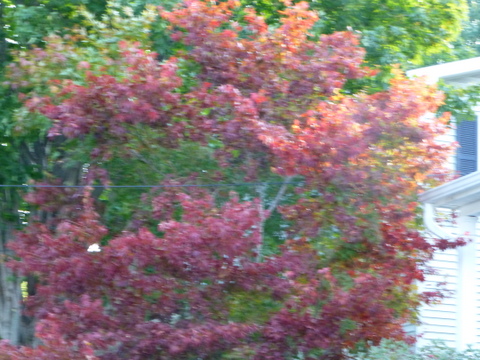
Early Autumn color, Vermont

Editorial note: My apologies to readers and to Michael for not scheduling this in sooner. An oversight on my part. J.D.

This is a reblog of a recent post to Dreaming The World.

This week marks the Autumn Equinox. The Equinoxes and other aspects of the calendar round are markers made by people; we need markers to make sense of our lives, to place ourselves in relationship to All That Is. Sometimes we forget the markers are of our creation, and we imagine they hold intrinsic meaning, rather than the meanings we assign them. This is a dangerous assumption as it tempts us to believe there is only one story, and it is true for all people, everywhere. Such thinking always causes great suffering.

Next week, in class, our friend, Alicia Daniel, is leading us in the creation and exploration of a Medicine Wheel. Alecia allows participants to explore, and assign values to, the directions.Given the freedom to make meaning opens the students to Mystery and Wonder. Not surprisingly, the values discovered by students often resemble the attributes assigned the directions by the Indigenous peoples who have lived here for thousands of years.

I usually teach the Medicine Wheel using attributes for the directions as I have been taught them by teachers from the Northeast, where we live. While there are small differences between tribal, even band, understandings of the directions, the general framework holds firm. As I understand it: The East is the place of birth and death, sunrise, spring, mentation, air, and all beings who fly. The South is home to fire, warm bloodeds, and the plants. It is the place of healing, noon time, and high summer. It is the direction of physicality, and in some traditions, sexuality. The West is home to water, dreaming, evening, and autumn. It is the place of responsibility and parenting, and of the Dream Time. The North is the home of the Ancestors and the rock people, the place of winter and night, the direction of clearly seeing the big picture, of vision. We journey sun-wise around the wheel, returning to the east to die and be reborn.

My Lakota kin likely say we are born and die in the West. That makes sense to them, where they live. The Medicine Wheel is a teaching about our locale and inner worlds, telling us much about local ecology, culture, and understanding of self. Wherever we are the Medicine Wheel speaks to us of our life journey, a road we share with the people and other beings who comprise the community in which we live.

In Western culture the wheel has a bad rap. Rather than a map for living a joyful, fulfilling life, it is often emblematic of being caged, or of soul killing work. In the East it may be something to be escaped. Yet, in Indigenous cultures around the world the wheel remains a powerful symbol for relationship, connection, and the good life.

This week we take a few minutes to acknowledge the Medicine Wheel that is our calendar year. We will express gratitude to Father Sun, and acknowledge Grandmother Water. Without them we would not have life. It is good to do this, and to have the opportunity to do so openly, for we remember the times, some quite recent, when we could not do so.

© 2013, essay and photographs (includes the one below), Michael Watson, All rights reserved

michael drumMICHAEL WATSON, M.A., Ph.D., LCMHC (Dreaming the World) ~ is a contributing editor to Into the Bardo, an essayist and a practitioner of the Shamanic arts, psychotherapist, educator and artist of Native American and European descent. He lives and works in Burlington, Vermont, where he teaches in undergraduate and graduate programs at Burlington College,. He was once Dean of Students there. Recently Michael has been teaching in India and Hong Kong. His experiences are documented on his blog. In childhood he had polio, an event that taught him much about challenge, struggle, isolation, and healing.