Posted in Essay, Meditation, meditative, Music, Spiritual Practice, Terri Stewart, Uncategorized

Desire and Intention

Today, I want to try a very simple meditation / body prayer. It involves movement of the arms, breathing, intention, and if you choose, your particular word for the divine or that which transcends.

Take a moment for contemplation. Turn your eyes inward and find two desires.

“You are what your deepest desire is.
As your desire is, so is your intention.
As your intention is, so is your will.
As your will is, so is your deed.
As your deed is, so is your destiny.”
~ Upanishads

First-your desire for yourself. This wish could be for love, for kindness, for healing. What you feel you need at this moment.

Second-your wish for the world.  This wish could be peace, love, kindness. What you feel is your unique gift of intention for the world. All that is present in the cosmos.

“He has told you, O mortal, what is good;
and what does the Lord require of you
but to do justice, and to love kindness,
and to walk humbly with your God?”
~ Micah

These desires will be your intentions.

As always, do this as you are able.

Sit comfortably however you like. Be aware of the earth supporting you. Take a moment to feel the groundedness and the ground of all being.

The breathing / motion pattern is this:

Arms loosely at sides … Inhale … and move arms to overhead in a prayer position, (hands flattened together)

Hands Overhead, Prayer Position

On exhale … Hands descend to chest / heart level while holding intention for self. Intentionally cross your eyes, your lips as you end at your heart.

Descending Towards the Heart
"om"
“om”

Express, outloud or however you feel comfortable, the particular word that encompasses the divine for you. Divine being interconnectedness to all, that which transcends all, that which is lived within, or the languaging that you choose. This could be the Sanskrit “om” (pictured), the Aramaic “abwoon” which is father, or any of the myriad words that are symbols that stand in for the divine.

Hands at heart level … Inhale

On exhale … Hands push outward, forward and go slowly to the sides (right arm going right / left arm going left). Do this while holding your intention for the world.

Pushing Intention To the World

Express, outloud or however you feel comfortable, the particular word that encompasses the divine for you.

Bring your arms gently down to your sides.

Repeat this simple meditation for as long as it feels comfortable to do so. If you desire, close the meditation with an Amen (“so be it.”)

Shalom & Amen,

Terri

© 2013, post and photos, Terri Stewart, All rights reserved

terriREV. TERRI STEWART is Into the Bardo’s  Sunday chaplain, senior content editor, and site co-administrator. She comes from an eclectic background and considers herself to be grounded in contemplation and justice. She is the Director and Founder of the Youth Chaplaincy Coalition that serves youth affected by the justice system. As a graduate of Seattle University’s School of Theology and Ministry, she earned her Master’s of Divinity and a Post-Master’s Certificate in Spiritual Direction. She is a contributing author to the Abingdon Worship Annual. (The 2014 issue just released!)

Her online presence is “Cloaked Monk.” This speaks to her grounding in contemplative arts and the need to live it out in the world. The cloak is the disguise of normalcy as she advocates for justice and peace. You can find her at www.cloakedmonk.com, www.twitter.com/cloakedmonk, and www.facebook.com/cloakedmonk.  To reach her for conversation, send a note to cloakedmonk@outlook.com

Posted in Essay, Meditation, meditative, Spiritual Practice, Terri Stewart, Uncategorized

Meditations of Our Hearts

I am saddened and deeply troubled by the Trayvon Martin case verdict. Mark Sandlin, a new Facebook friend of mine, offered the below. I have decided to add it to what I previously planned to publish. What I originally offered is a meditation based on a Psalm using very simple body prayer-a video that I put together. I thought about simply letting the video go for another day, but I think I, at least, need the reminder that there is something greater than the imperfection that we find in our daily living.

Questions?

Will anyone’s soul rest well tonight?
Will justice feel it was served?
Will a weary nation rest easy?
Can it believe its truths still hold true?
That all are created equal?
That truth is our nation’s highest good?
How can we sleep?
How can we slumber
when justice seems to be a game
and innocence has become relative?
Will we not grow restless?
Will our tears not matter?
Shall we continue our malaise?
Is our discontent so flaccid
that is ends in a Facebook post?
Is our will so weak that it is eased
with nothing more than words on a page?
Is the cost of our inconvenience
truly more valuable than a life…
our rights…
our jobs…
the hungry…
the sick…
the poor…
minorities…
?
Will our souls rest well tonight?
Should they?
Will our discontent respond?
Or will it slumber?
Will we drown out our malcontent
with the drone of a television…
the buzz of a beer…
the mindless escape of Candy Crush…
the busyness of our lives…
?
Will we simply get over it…
When there are parents who cannot,
When children are starving,
When there are families being buried,
While men make laws about women’s bodies,
As rights which were received
at the cost of lives
are made a mockery
for the sake of the few…
will we rest well tonight?
Will we rest?

Mark writes for Huffington Post, Sojourners, and his own blog at The God Article. This is reprinted with permission.

My fair warning before the video–this is in my living room, not professionally done! Bear with me as I learn these new skills.  Shalom.

© 2013, post and video, Terri Stewart, All rights reserved

MARK SANDLIN is an ordained PC(USA) minister currently serving at Vandalia Presbyterian Church in Greensboro, NC. Mark is a co-founder of The Christian Leftand blogs at The God Article. He has been featured on NPR’s The Story with Dick Gordon, PBS’s Religion & Ethics NewsWeekly, and the upcoming documentary filmAmendment One.

terriTERRI STEWART is Into the Bardo’s  Sunday chaplain, senior content editor, and site co-administrator. She comes from an eclectic background and considers herself to be grounded in contemplation and justice. She is the Director and Founder of the Youth Chaplaincy Coalition that serves youth affected by the justice system. As a graduate of Seattle University’s School of Theology and Ministry, she earned her Master’s of Divinity and a Post-Master’s Certificate in Spiritual Direction. She is a contributing author to the Abingdon Worship Annual. (The 2014 issue just released!)

Posted in Meditation, Spiritual Practice, Terri Stewart

Adrift

sweeping fog

caresses landscapes

cast adrift

Sometimes, we become unanchored from our family, friends, or traditions. Often unanchored means adrift and that is often associated with fear and the unknown.

I remember, when I was in college the first time at the age of 18. It was a time between my first and second semester at college. I felt adrift. I was away from home, away from friends – in fact losing friends as they moved away and grew into new lives – my future was unhinging from my past in good and bad ways. Instinctively, I sought home. I went to my heart-home in upstate New York and spent time absorbing the grounding there. In many ways, that geography anchored me in ways that my drifting family, friends, faith, and future could not.

By discovering my grounding, I was able to rediscover the ground of all being.

misty fog

dancing with day-break

new growth dawns

Although I felt adrift and alone at the time, looking back, I believe that being adrift deepened who I am and what I would become. Detaching from the known and reattaching to both the known and to something new became a way of being for me. This leads all the was to seminary which I describe as a continuous pattern of deconstruction and reconstruction. Each reconstruction creates something deeper, but also something more vulnerable. And the vulnerability ultimately leads to strength.

Fog, as crazy making as it may be (and we do have our foggy days here in the PacNW), has a purpose. Turns out that the Redwood trees in California get 30%-40% of their moisture needs from fog. So this misty, chilling, low-lying-cloud ultimately offers a gift to the world. It can be irritating to be in the fog, but sometimes, just sitting still and spreading your senses out to the surrounding areas that you may not clearly see can be a gift. And this gift can be translated to the world by cultivating a habit of sitting with ambiguity.

You may ask what has my head all fogged in today? My thoughts were launched by a stunning video from Simon Christen, artist. This is a meditation on the fog that he loves in San Francisco. He calls it a “love letter to the fog of the San Francisco Bay area.” It is quite wonderful.

I would encourage you to use it to launch your own meditation on fog and being adrift. What do you need to detach from? What is the beauty you will see while cast adrift? Ultimately, where will you land?

(Shared with Permission)

Shalom and Amen.

~Terri

© 2013, video, Simon Christen. All rights reserved.

© 2013, post and poetry, Terri Stewart, All rights reserved

terriTERRI STEWART is Into the Bardo’s  Sunday chaplain, senior content editor, and site co-administrator. She comes from an eclectic background and considers herself to be grounded in contemplation and justice. She is the Director and Founder of the Youth Chaplaincy Coalition that serves youth affected by the justice system. As a graduate of Seattle University’s School of Theology and Ministry, she earned her Master’s of Divinity and a Post-Master’s Certificate in Spiritual Direction with honors and is a rare United Methodist student in the Jesuit Honor Society, Alpha Sigma Nu. She is a contributing author to the Abingdon Worship Annual.

Her online presence is “Cloaked Monk.” This speaks to her grounding in contemplative arts and the need to live it out in the world. The cloak is the disguise of normalcy as she advocates for justice and peace. You can find her at www.cloakedmonk.com, www.twitter.com/cloakedmonk, and www.facebook.com/cloakedmonk.  To reach her for conversation, send a note to cloakedmonk@outlook.com

Posted in Spiritual Practice, Terri Stewart

The Invisible Spiral of Violence

What Christ Saw from the Cross

I am away working with youth affected by incarceration this weekend. I recently read the below meditation and found it to be moving. I hope you will also find inspiration. Terri

From Richard Rohr’s Daily Meditation
Center for Action and Contemplation

The Invisible Spiral of Violence

“If you cannot recognize evil on the level of what I call the world, then the flesh and the devil are inevitable consequences. They will soon be out of control, and everything is just trying to put out brush fires on already parched fields. The world or “the system” is the most hidden, the most disguised, and the most denied—but foundational—level of evil. It’s the way cultures, groups, institutions, and nations organize themselves to survive.

It is not “wrong” to survive, but for some reason group egocentricity is never seen as evil when you have only concentrated on individual egocentricity (“the flesh”). That is how our attention has been diverted from the whole spiral of violence. The “devil” then stands for all of the ways we legitimate, enforce, and justify our group egocentricity (most wars; idolization of wealth, power, and show; tyrannical governments; many penal systems; etc.), while not now calling it egocentricity, but necessity!

Once any social system exists, it has to maintain and assert itself at all cost. Things we do inside of that system are no longer seen as evil because “everyone is doing it.” That’s why North Koreans can march lockstep to a communist tyranny, and why American consumers can “shop till they drop” and make no moral connections whatsoever. You see now why most evil is hidden and denied, and why Jesus said, ‘Father forgive them, they don’t know what they are doing.’ (Luke 23:34) We don’t.”

Shalom and Amen
Chaplain Terri

Illustration ~ photograph of opaque watercolor over graphite on gray-green woven paper circa 1886 by James Tissot (1836-1902) and released into the public domain.

RICHARD ROHR, OFM is a globally recognized ecumenical teacher bearing witness to the universal awakening within Christian mystical and the Perennial Tradition. He is a Franciscan priest of the New Mexico Province and founder of the Center for Action and Contemplation. MORE

The foundational elements of The Perennial Tradition are: 1.) There is a Divine Reality underneath and inherent in the world of things. 2.) There is in the human soul a natural capacity, similarity, and longing for this Divine Reality. 3.) The final goal of existence is union with this Divine Reality.

terriTERRI STEWART is Into the Bardo’s  Sunday chaplain, senior content editor, and site co-administrator. She comes from an eclectic background and considers herself to be grounded in contemplation and justice. She is the Director and Founder of the Youth Chaplaincy Coalition that serves youth affected by the justice system. As a graduate of Seattle University’s School of Theology and Ministry, she earned her Master’s of Divinity and a Post-Master’s Certificate in Spiritual Direction with honors and is a rare United Methodist student in the Jesuit Honor Society, Alpha Sigma Nu. She is a contributing author to the Abingdon Worship Annual.

Her online presence is “Cloaked Monk.” This speaks to her grounding in contemplative arts and the need to live it out in the world. The cloak is the disguise of normalcy as she advocates for justice and peace. You can find her at www.cloakedmonk.com, www.twitter.com/cloakedmonk, and www.facebook.com/cloakedmonk.  To reach her for conversation, send a note to cloakedmonk@outlook.com

Posted in Meditation, Spiritual Practice, Terri Stewart

Meditation on the Shadow

shadow reflection self portraitI have been reflecting on shadow work a lot lately.  The shadow is that part of ourselves that we often keep hidden. It was especially prompted by Naomi’s images and thoughts in her post “Black and White (or not).” The world is shades of gray as our shadows often seem to be.

Physically, our shadows take on the colors of what they are cast on. We stand ‘here,’ the shadow projects ‘there,’ and our shadow is integrated with rock or grass or concrete or sofa–with the barest connection with our embodied self. Sometimes our shadows hang on to us by the barest toe. Sometimes we are connected fully.

The shadow is something darker, hidden, taking on different tones and different shapes than our embodied selves. But ultimately, it is a projection of our own self. What we don’t want to see in ourselves, we push into our shadow.

One of the most valuable lessons I had in seminary was a discussion of the Johari Window. It is really pretty simple! There are four ways to be known in the world (each one pane of a four paned window):

  1. Things we know about ourselves that nobody else knows
  2. Things others know about us that we don’t know
  3. Things we know and others know
  4. Things nobody knows

Our job is to shrink the part of our window that is “things nobody knows.”

γνῶθι σεαυτόν – Know Thyself, on the Temple of Apollo at Delphi

I’d like to offer a meditation on accepting the shadow self. Please only do this if you feel safe.

Find a comfortable place.  If you are sitting, ground your feet restfully, but firmly. If you are laying, sink down towards the earth. Let the earth buoy you and hold you through this exercise.

You may close your eyes if that is comfortable for you or you may keep them open. If your eyes are open, let your gaze fall gently onto a nearby spot—not particularly noticing anything about the spot, but just accepting the spot as your companion.

Let your gaze turn inward. Take an inventory. Do you feel anxious? Excited? Relaxed? Where is the energy stirring? Is your mind whirring? Or is it in your solar plexus? Or lower? What energy are you bringing to your meditation in your body? Greet the energy and invite it into your journey.

Pause and acknowledge the sacredness of joining with your energy. Breathe in. Breathe out.

Continue your inventory. Moving beyond the physical. What are all the great things you see about yourself? Your creativity? Your love? Your compassion? Mercy? Analysis? Quietness? Strength? Acceptance? Meticulousness? Acknowledge these beautiful and wonderful things and give thanks to them. Breathe in. Breathe out. Now, let them go. They will still be with you. Consider them your backbone. Holding you firmly in place, but behind you.

Reconsider your connectedness to the earth. Let her energy support you while sinking in. Reconsider your gifts—the great things about you. Let them provide structure to your body. Breathe in. Breathe out.

Before you, now, is an empty room. Just you and the energy you have brought with you. The energy from your body. The energy from the earth. The support from your gifts. A formidable group.

See the shadow.

How are you connected to the shadow? Fingertip? Toes? Fully? Check in with yourself and stop here if that feels right to you.

What contrasting energy is pulsing in the shadow? Is it a mirror of your own body’s energy? Or is it different? What is the shadow projecting onto you? Does it make you seem tall? Or small? What color does the shadow take on? What is it drawing from its surroundings? Check in with yourself and stop here if that feels right to you.

Open a dialogue with your shadow. Something like, “I see you. I know you are part of me. What do you have to teach me today?”

Listen to your shadow. Breathe in, breathe out. Check in with yourself and stop here if that feels right to you. This will be different for everybody.

If you feel brave, offer your shadow love. Compassion. Acceptance. Acknowledgement. What does that feel like? Check in with your body and see where your energy is stirring. Is your heart chakra pulsing? Or maybe your shadow has some energy swirling? Check in with yourself and stop here if that feels right to you.

Seeing your shadow, connecting, dialoguing, loving—continue to offer love and imagine love emanating towards your shadow from your energy, from the energy of the earth, and from the gifts that you bring that stabilize you. Imagine the love pouring out everywhere as light. Light as soft as a glowing sunset or as strong as a summer’s day. Whatever light is needed. As the light increases, the shadow steps closer and makes one more connection with you. Maybe just a pinky. Check in with yourself and stop here if that feels right to you.

Now, it is time to close the dialogue with the shadow.

Offer your loving kindness to the shadow. Bring your hands together over your heart chakra in a prayer position. Let your inner gaze fall gently on your shadow. Breathe in, breathe out. As you gaze at your shadow, offer Namaste.

Bring the inner light down to an inner, restful darkness. Let your shadow leave your full awareness, knowing you are that much more connected and that you will be back.

Breathe in, breathe out.

Feel your gifts that strengthened you. Thank them for being with you. Bid your gifts Namaste.

Feel the earth that supported you. Thank the earth for providing support. Bid the earth Namaste.

Feel the energy in your body that journeyed with you. Thank yourself for being present. Bring to yourself, Namaste.

Breathe in, breathe out.

Namaste.

Shalom and Amen,

~Terri

© 2013, post & photo, Terri Stewart, All rights reserved

Terri StewartTERRI STEWART is Into the Bardo’s  Sunday chaplain, senior content editor, and site co-administrator. She comes from an eclectic background and considers herself to be grounded in contemplation and justice. She is the Director and Founder of the Youth Chaplaincy Coalition that serves youth affected by the justice system. As a recent graduate of Seattle University’s School of Theology and Ministry, she earned her Master’s of Divinity and a Post-Master’s Certificate in Spiritual Direction with honors and is a rare United Methodist student in the Jesuit Honor Society, Alpha Sigma Nu. She is a contributing author to the Abingdon Worship Annual.

Her online presence is “Cloaked Monk.” This speaks to her grounding in contemplative arts (photography, mandala, poetry) and the need to live it out in the world. The cloak is the disguise of normalcy as she advocates for justice and peace. You can find her at www.cloakedmonk.com, www.twitter.com/cloakedmonk, and www.facebook.com/cloakedmonk.  To reach her for conversation, send a note to cloakedmonk@outlook.com
Posted in Meditation, Spiritual Practice, story, Terri Stewart

Candle Gazing and a Contemplative Tale

Today’s practice is two tales set to a video recording of three candles. I will confess that this was done in my living room and, well, the candles are not as flickery on the video as they were in my living room. I would suggest getting a candle and looking at it instead of the video screen! Or simply closing your eyes and listening.

Candle gazing is a contemplative meditation technique. In this manner, instead of closing your eyes, you let your eyes rest on the flame of a candle. Let your gaze rest softly, neither focusing too hard or letting the candle leave your gaze. Stay with the candle as it dances and let your mind be free.

This video is about 4 1/2 minutes long. There are a couple of brief moments of silence. Stay with the silence and get through to the other side.

The stories are from one of my favorite books, “Peace Tales: World Folktales to Talk About” by Margaret Read MacDonald. This book found us when my kids were in elementary school. (My youngest is graduating this year! Yikes!!)

Sit back. Relax. Get comfortable. Become grounded. Now listen with your heart.


Namaste, salām, shalom.


© 2013, post and video, Terri Stewart, All rights reserved

Terri StewartTERRI STEWART is Into the Bardo’s  Sunday evening chaplain. You can expect a special post from her each week. She comes from an eclectic background and considers herself to be grounded in contemplation and justice. She is the Director and Founder of the Youth Chaplaincy Coalition that serves youth affected by the justice system. As a recent graduate of Seattle University’s School of Theology and Ministry, she earned her Master’s of Divinity and a Post-Master’s Certificate in Spiritual Direction with honors and is a rare United Methodist student in the Jesuit Honor Society, Alpha Sigma Nu. She is a contributing author to the Abingdon Worship Annual.

Her online presence is “Cloaked Monk.” This speaks to her grounding in contemplative arts (photography, mandala, poetry) and the need to live it out in the world. The cloak is the disguise of normalcy as she advocates for justice and peace. You can find her at www.cloakedmonk.com,www.twitter.com/cloakedmonk, and www.facebook.com/cloakedmonk.  To reach her for conversation, send a note to cloakedmonk@outlook.com.
Posted in Meditation, Music, teacher

Mirrors on Quiet Waters

Thanks to Isadora (Mind of Isadora) for sharing this video with us.

He who would be serene and pure needs but one thing, detachment.” Meister Eckhart

Video uploaded to YouTube by MrBangthamai.

Posted in Spiritual Practice

Shift Into Heart with Quick Coherence Techniques

This article is from the folks at shiftyourlife.com-Tracy Latz M.D. and Marion Ross, PhD. Republished with permission.

Our friends at HeartMath have described a wonderful technique to rapidly get into your heart. The Quick Coherence® Technique ( a heart math trademark) helps you create a coherent state, offering access to your heart’s intelligence. It uses the power of your heart to balance thoughts and emotions, helping you to achieve a neutral, poised state for clear thinking. It is a powerful technique that connects you with your energetic heart zone to help you release stress, balance your emotions and feel better fast.

Quick Coherence® will help you find a feeling of ease and inner harmony that will be reflected in your heart rhythms. The heart is a primary generator of rhythm in your body, influencing brain processes that control your nervous system, cognitive function and emotion. More coherent heart rhythms facilitate brain function, allowing you more access to your higher intelligence so you can improve your focus, creativity, intuition and higher-level decision-making. When you’re in heart-rhythm coherence, you perform at your best – what athletes call being in the zone. You feel confident, positive, focused and calm yet energized.

Step 1: Heart Focus.
Focus your attention on the area around your heart, the area in the center of your chest. If you prefer, the first couple of times you try it, place your hand over the center of your chest to help keep your attention in the heart area.

Step 2: Heart Breathing.
Breathe deeply but normally and feel as if your breath is coming in and going out through your heart area. Continue breathing with ease until you find a natural inner rhythm that feels good to you.

Step 3: Heart Feeling.
As you maintain your heart focus and heart breathing, activate a positive feeling. Recall a positive feeling, a time when you felt good inside, and try to re-experience the feeling. One of the easiest ways to generate a positive, heart-based feeling is to remember a special place you’ve been to or the love you feel for a close friend or family member or treasured pet. This is the most important step.

Quick Coherence® is especially useful when you start to feel a draining emotion such as frustration, irritation, anxiety or stress. Using Quick Coherence at the onset of less intense negative emotions can keep them from escalating into something worse. This technique is especially useful after you’ve had an emotional blowup to bring yourself back into balance quickly.

You can do the Quick Coherence® Technique anytime, anywhere and no one will know you’re doing it. In less than a minute, it creates positive changes in your heart rhythms, sending powerful signals to the brain that can improve how you’re feeling. Apply this one-minute technique first thing in the morning, before or during phone calls or meetings, in the middle of a difficult conversation, when you feel overwhelmed or pressed for time, or anytime you simply want to practice increasing your coherence. You can also use Quick Coherence whenever you need more coordination, speed and fluidity in your reactions.

Another technique that we, The Shift Doctors, regularly teach in seminars, to patients and in our books comes from the Buddhist tradition and is called The Loving Benefactor Meditation. The meditation goes as as follows:

(This meditation can also be downloaded at iTunes and is from our 2nd companion CD for our book Shift: 12 Keys to Shift Your Life – for details see meditation page at shiftyourlife.com ). This meditation is great for getting into your heart in about 30 seconds or less.

Find a comfortable, seated position on a chair or cushion and allow your body to settle into position. Close your eyes and begin to focus your attention on your breath, following your cycles of inhalation and exhalation.  Notice the rising and falling sensations in your belly as you breathe in and out and follow this for a few cycles.

Now try to bring to mind a heartfelt sense or visual image of someone whom you believe embodies the qualities of unconditional love and compassion.  This person can be a friend or relative, a religious or historical figure, a spiritual being or just someone who embodies these qualities.  Picture this person as if they were sitting or standing right in front of you.

Look into their eyes and feel the absolute unconditional love and compassion flowing from them towards you.  Now, radiate feelings of love and gratitude back towards this person. Whenever you feel your mind wandering, gently bring your attention back to the image of the loving friend, historical or spiritual image and once again practice radiating love, empathy and compassion towards them.  Feel their love, empathy and compassion radiating back towards you.

You can choose to stay with your Loving Benefactor and feel their love flowing to you and your love flowing to them for up to 20 minutes. You can also have your Loving Benefactor move slowly around your left side and stand behind your left shoulder to be with you as you go about your day. You can still feel them present when you open your eyes! Know that this Loving Benefactor is sending you love every minute of every day.

In addition, The Mountain Meditation can be quite helpful to melt away stress or anxiety. When you are feeling helpless, powerless, inadequate or have angst about meeting a challenge that is facing you in your life, the ‘Mountain Meditation’ can prove to be a transformative experience. If you are ready to feel your inner strength, click on the meditation above, sit back, close your eyes and prepare for a journey (led by ‘The Shift Doctors’) back to vitality and your powerful inner nature. Listen to The Mountain Meditation by clicking here!

Hope these tips and tools are helpful –:)

Loads of Light to all!

Tracy Latz, M.D.and Marion Ross PhD.  (a.k.a. “The Shift Doctors”)

**The Shift Doctors (Tracy Latz, M.D. & Marion Ross, Ph.D.) are available for keynote talks, classes, events or for seminars (1/2 day or up to 2 day) on Energy Medicine personal transformation, team-building, motivation, anger management, intuitive development, or collaboration for private groups, conferences, corporations or corporate events. Contact them at info@shiftyourlife.com or find out more about their books, DVD’s, CD’s and tools for personal transformation at www.shiftyourlife.com.

Posted in Spiritual Practice, Terri Stewart

The Bridge

BridgeDuvall, WA
Bridge
Duvall, WA

In my driving to and from the youth detention center, I have discovered that I cross many bridges. I do, after all, live in the Pacific Northwest where it rains and rains and rains. Rarely are the bridges as interesting as the one pictured here. I began to wonder about the nature of bridges. When I look at this one, I see strength, shadow, radiance, and more.

If you took a few moments to enter this photo, what is calling out to you? Where is energy stirring within you? What is shimmering in your body?

Going deeper, now that you are stirring, do you hear an invitation? Seeing anything? Is there a question?

Finally, now that you have felt energy, heard a question, what are you going to do about it? Is there action growing out of your contemplation? Is the action, the act of stillness? An act of justice? An act of compassion for yourself or others? Is the bridge leading you somewhere? Or returning you home?

Random Observation-This particular bridge is found at a round-about. A circular spot in the road that both leads and returns. What if going forward is returning home?

“Sometimes, if you stand on the bottom rail of a bridge and lean over to watch the river slipping slowly away beneath you, you will suddenly know everything there is to be known.” -A. A. Milne

Shalom,
Terri

P.S. For a photo of a round-about, go HERE.

mailTERRI STEWART is Into the Bardo’s new Sunday evening chaplain. You can expect a special post from her each week. She comes from an eclectic background and considers herself to be grounded in contemplation and justice. She is the Director and Founder of the Youth Chaplaincy Coalition that serves youth affected by the justice system. As a recent graduate of Seattle University’s School of Theology and Ministry, she earned her Master’s of Divinity and a Post-Master’s Certificate in Spiritual Direction with honors and is a rare United Methodist student in the Jesuit Honor Society, Alpha Sigma Nu. She is a contributing author to the Abingdon Worship Annual.
Her online presence is “Cloaked Monk.” This speaks to her grounding in contemplative arts (photography, mandala, poetry) and the need to live it out in the world. The cloak is the disguise of normalcy as she advocates for justice and peace. You can find her at www.cloakedmonk.com,www.twitter.com/cloakedmonk, and www.facebook.com/cloakedmonk.  To reach her for conversation, send a note to cloakedmonk@outlook.com.
Posted in Teachers

MEDITATION

JIDDU KRISHNAMURTI (1895-1986)

Indian writer and speaker on spiritual subjects.

Meditation is to be aware of the activities of the mind – the mind as the mediator, how the mind divides itself as the mediator and the meditation, how the mind divides itself as the thinker and the thought, the thinker dominating thought, controlling thought, shaping thought.”  Krishnamurti

Photo credit ~ photograph form the Library of Congress George Grantham Bain collection. Under digital ID ggbain.38863. No known restrictions on publication.

Posted in Essay, Jamie Dedes, Spiritual Practice

COMPASSION AT THE CORE


1st Row: Christian CrossJewish Star of DavidHindu Aumkar

2nd Row: Islamic Star and crescentBuddhist Wheel of DharmaShinto Torii

3rd Row: Sikh KhandaBahá’í starJain Ahimsa Symbol

COMPASSION AT THE CORE

by

Jamie Dedes

“Compassion is the pillar of world peace.” H.H. 14th Dalai Lama, A Human Approach to World Peace

The peaceful path of compassion is at the core of all the wisdom traditions, the conduits by which grace flows into our lives. If our species is to overcome current conflicts and truly be at peace with ourselves, we must tread the compassionate path and we must do it with bone and muscle as well as heart and mind. It must be a path where service and meditation converge.

In the Summa Theologiae, the great work of St. Thomas Aquinas, he suggests just that. He defines mercy (a virtue) as “the compassion in our hearts for another person’s misery, a compassion which drives us to do what we can to help him.” He describes mercy as having two aspects “affective” – or emotional – and “effective,” which is positive action.

We all have something to teach. We all have something to learn ~

People from varied traditions come to Buddhism – not to convert – but to learn the meditative skills that Buddhism teaches. Buddhists also have lessons to learn from other religions:

“…many Buddhists are interested in learning social service from Christianity. Many Christian traditions emphasize that their monks and nuns be involved in teaching, in hospital work, caring for the elderly, for orphans, and so on . . .  Buddhists can learn social service from the Christians.” H.H. 14th Dalai Lama, The Buddhist View toward Other Religions

Meditative practice is central to Buddhism. Along with devotions (prayers and religious observance), action (good works) is central to Christianity and the other Abrahamic traditions, which is not to imply that there are no meditative practices or that inward practice is more important than outward action. Rather, each has its place and they are complementary. Our meditative practices enhance tranquility, ensuring that our good works are appropriate and done in the right spirit.

A compassionate heart is moved to embrace and not to judge. A compassionate hand is moved to work and to sacrifice for the greater good. Selflessness, well-seated in compassion, implies action that both materially and spiritually benefits others. The Dalai Lama and Thích Nhất Hạnh, social activists as well as spiritual leaders, are the very breath of compassion and they and the people in the organizations they lead endlessly provide selfless service and share spiritual solace with all.

Buddhism in the West is a relatively new practice. To my knowledge it is only recently that American Buddhists have organized for relief efforts with Buddhist Global Relief (BGR), which in its short life has implemented quite a number of effective projects. The main mission of BGR is hunger, not simply addressing it in its immediacy but also advocating for changes within our global food systems that will ensure social justice and ecological sustainability. BGR was started by American Buddhist monk and scholar, the Ven. Bhikkhu Bodhi, calling attention to the “narrowly inward focus of American Buddhism” and its neglect of social engagement. Moslems, Jews, and Christians have long-standing organizations for global relief and social activism.

It is healing grace when social services are delivered on a nonsectarian basis and without the expectation of conversion. The Koran admonishes (2:257): “Let there be no compulsion in religion.”

We’re each born into a path or choose (or forego) one. Our devotion to one religion shouldn’t prevent respect for the others. Abū al-Muġīṭ Husayn Manṣūr al-Ḥallāğ (Mansur Al-Hallaj, 858-922), the Persian Sufi teacher and poet wrote from his own perspective:

“My heart has opened into every form. It is a pasture for gazelles, a cloister for Christian monks, a temple for idols, the Ka’ba of the pilgrim, the tables of the Torah and the book for Koran. I practice the religion of Love. In whatever directions its caravans advance, the religion of Love shall be my religion and my faith.”

Maybe we humans will come as close to peace and perfection as we can when we combine the “specialties” of Buddhism and the Abrahamic traditions ~

Compassion without meditation can result in cruelty and confusion. Compassion without action is insufficient to address concerns of the human condition.

Orthodox Christianity offers us guidelines for corporal (material) works of mercy:

  • feed the hungry
  • give drink to the thirsty
  • clothe the naked
  • house the homeless
  • visit the sick
  • engage in conscientious activism
  • bury the dead

The guidelines for spiritual works of mercy are:

  • share insight with the spiritually curious
  • counsel the fearful
  • provide brotherly support for those who live unwisely
  • bear wrongs patiently
  • forgive offenses willingly
  • comfort those who are suffering
  • pray (unify with the Ineffable) for the welfare of the living and the dead

In the ideal, these guidelines are not simply implemented in the privacy of our own prayers and meditations or with detachment in supporting civic and religious charities, but one-to-one in our everyday lives and in a spirit of unity. Mystical Judaism teaches us that: “Kindness gives to another. Compassion knows no other.”

There are 114 chapters in the Islamic scriptures, the Koran. Each begins with the principled: Bismillah ir-Rahman ir-Rahim (In the name of God, most Gracious, most Compassionate). This reminds me of the classical Christian ideal expressed in the Koinḗ Greek agápē, the love of Christ or God for humankind. I suspect it is also – like agápē – a call to action: to live in harmony with the Divine and all creation, that is to live with grace and mercy.

Charity, self-control, and compassion are the central virtues of Hinduism. Ahimsa (do no harm) is part of the Hindu ideal of compassion. This implies action, not just abstinence.

Perhaps this wisdom from an unknown saint or bodhisattva provides us the best advice for our own peace of heart and our species’ survival ~

“The true happiness that man has searched for since the dawn of time, that inner gold that awaits any person who holds compassionately the key of generosity: Do something for your fellow-man … and you shall truly have the gold.”

Gratitude is compassion’s fulcrum ~

“The roots of all goodness lie in the soil of appreciation for goodness.” H.H. 14th Dalai Lama

Gratitude is also the emotion that compels us to give back by caring compassionately for our fellow humans and providing responsible and loving stewardship of the animals who are our companions in nature and this mother earth that sustains us. This does, of course, preclude war which is a danger to all living things.

Expressing gratitude in some way to those who are kind and caring is what nurtures their gift of compassion so that the giver can continue to give and also learn to receive. The natural law of balance is then honored.

May our compassionate paths be fully human and traveled quietly, without pronouncement, conceit, sectarianism, or self-righteousness. May our compassion be a thing of the heart and mind -yes! – but also bolstered with bone and muscle and seasoned with gratitude. May all sentient beings find peace.

© 2012, essay, Jamie Dedes All rights reserved

 Illustration ~ religious symbols by Rusus via Wikipedia and released into the public domain

Posted in Jamie Dedes, Meditation

THE DEPTHS OF YOUR HEART

Jalāl ad-Dīn Muḥammad Rūmī

Sufi Mystic and Poet (1207 A.D. – 1273 A.D.

Born in what is now Afghanistan, Died in Turkey

Your heart is the size of an ocean.

Go find yourself in its hidden depths.

Rumi

Wishing you peace of heart. Always. 

Jamie

·

Credit ~ The illustration of Rumi is in the U. S public domain.

Video ~ upload to YouTube by Mevlanaism.

Posted in Jamie Dedes, Meditation, Spiritual Practice, Teachers

THE BREATH WITHIN THE BREATH

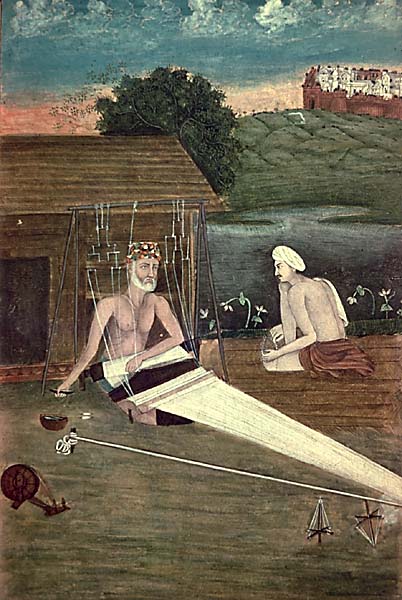
KABIR (1440-1580), MYSTIC POET OF INDIA

One of India’s great poets, Kabir’s gentle influence seems to have been broad and includes Sikhism, Bhakti, and the Sant Mat (path of the saints) sect, Kabir Panthis (Kabir’s Path). Sant Mat’s primary principle is a disciplined inward devotion to the Divine. One branch of that movement is Science of Spirituality under Sant Rajinder Singh Ji Maharaj, who has a substantial following in North and South America as well as India. Sant Mat spiritual practice involves Jyoti and Shabd meditation techniques. Jyoti is a basic practice in which the practitioner assumes a relaxed position and, with mind stilled, repeats any name of God with which s/he is comfortable. Shabd meditation is rather more complicated and involves an initiation process and a focus on the Inner Light and Sound.

In this reading of Kabir by Ram Dass, the core issues of life are explored. J.D.

·

© 2012 Jamie Dedes, All rights reserved

Illustration ~ public domain via Wikipedia

Video uploaded to YouTube by .

Posted in Poems/Poetry, Spiritual Practice

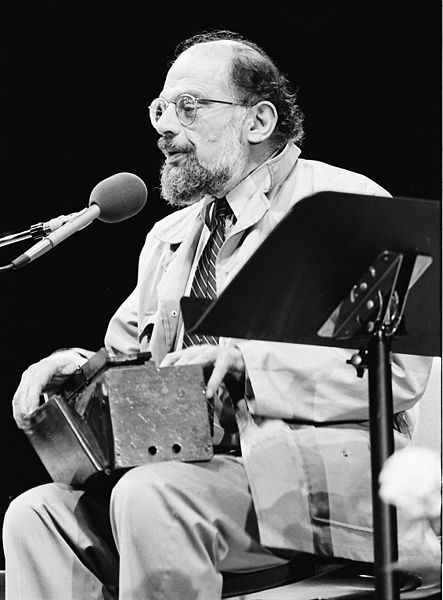
MEDITATION 101: Courtesy of Alan Ginsberg

DO THE MEDITATION ROCK

by

Allen Ginsberg 

is in this collection ~

Collected Works 1947 – 1997, Alan Ginsberg

recommended reading, three thumbs up!

Posted in Jamie Dedes, Perspectives on Cancer, Poems/Poetry

PERSPECTIVES ON CANCER #29: Nothing

NOTHING

by

Jamie Dedes

·

no buddha, no bodhi tree

no earth upon which to sit

in silent meditation

no suffering, no not suffering

nothing

rest assured

·

© poem, Jamie Dedes, 2011 all right reserved

Photo credit ~ Photo credit ~ A small temple beneath the Bodhi treeBodh Gaya, built in 7th century, after the original built by King Ashoka in 3rd century BCE, ca. 1810, British Library, public domain photograph via Wikipedia

♥ ♥ ♥ ♥

Jamie Dedes ~ is a former freelance feature writer and columnist whose topic specialties were employment, vocational training, and business. She finds the blessing of medical retirement to be more time to indulge in her poetry, creative nonfiction, and fiction. She has two novels in progress, one in final edits, and is pulling together a poetry collection. Her primary playground is Musing by Moonlight. She is the founder and editor/administrator of Into the Bardo. Jamie’s mother was diagnosed with cancer the first time at thirty-six. She went three rounds with breast cancer, one with thyroid cancer, and died at seventy-six of breast and colon cancer.

Posted in Meditation, Teachers

THE GARDEN OF MY HEART

Thich Nhat Hanh (b. 1926) Zen Monk, Dharma Teacher, Social Activist, Writer, Poet, Peacemaker

Nhat Hanh is now recognized as a Dharmacharya and as the spiritual head of the Từ Hiếu Temple and associated monasteries. On May 1, 1966 at Từ Hiếu Temple, Thich Nhat Hanh received the “lamp transmission”, making him a Dharmacharya or Dharma Teacher, from Master Chân Thật. MORE [Wikipedia]

Though a Zen Buddhist monk, Thich Nhat Hanh combines traditional Zen with techniques from Theravada Buddhism, the wisdom of the Mahayana tradition, and ideas of modern Western psychology to teach meditation and spiritual values and practices in a way that resonates for people from diverse religious, political, and cultural backgrounds. He is a writer, poet, and peacemaker with over 100 books published (many in English). He was suggested for but never received the Nobel Prize for Peace by Dr. Martin Luther King, Jr. Since 1966, Thich Nhat Hanh has lived in exhile in France. Based at Plum Village, a meditation community in the south of France, he is a leading Buddhist teacher, encourages engaged Buddhism (a movement for social activism that he founded), and conducts humanitarian efforts.

Thich Nhat Hahn coined the term “interbeing,” a pointer to the Buddhist principles of impermanence and nonself, which bring light to the idea and ideal of the inter-connectedness of all things. He founded The Order of Interbeing, the members of which include lay people. Link HERE to brief summaries of each of the fourtheen mindfulness trainings of the Order of Interbeing. J.D.

“If in our daily lives we can smile, if we can be peaceful and happy, not only we, but everyone will profit from it. If we really know how to live, what better way to start the day than with a smile? Our smile affirms our awareness and determination to live in peace and joy. The source of a true smile is an awakened mind.”

~ from Peace is Every Step by Thich Nhat Hanh

Here is  a meditative interlude. The title of this post is a quote from the meditation, which is an excerpt from an album called Graceful Passages: A Companion for Living and Dying. It features spiritual teachers from many traditions offering advice to the dying  –  in other words, advice to all of us.  Today and everyday : in metta, A.E., R.R., J.D.

Video posted to YouTube by .

Posted in Jamie Dedes, Poems/Poetry

SUNDAY MORNING MIND

MY MIND ON SUNDAY MORNING

by

Jamie Dedes

So Sunday morning I’m in bed with Cleo

She wants to sleep & I get up naked at the table

Writing

And it all snaps into focus

The World inside my head & the cat outside the window

A one-to-one relationship

While I image whatever I imagine …

The Same Old Jazz by Philip Whalen from The Collected Poems of Philip Whalen.


the poet wrote and

in writing awoke

He fell one day into an

iris and drowned in the

color purple. Freedom

rose like a geyser

raining down poems,

engraving each on the

leaf of an old oak.

Photograph of Gypsy (The Cat’s Meow) courtesy of the Cityson Philosopher.