When despair for the world grows in me
and I wake in the night at the least sound
in fear of what my life and my children’s lives may be,
I go and lie down where the wood drake
rests in his beauty on the water, and the great heron feeds.
I come into the peace of wild things
who do not tax their lives with forethought
of grief. I come into the presence of still water.
And I feel above me the day-blind stars
waiting with their light. For a time
I rest in the grace of the world, and am free.
·
Wendell Berry (born August 5, 1934) is an American man of letters, academic, cultural and economic critic, and farmer. He is a prolific author of novels, short stories, poems, and essays. He is also an elected member of the Fellowship of Southern Writers and a recipient of The National Humanities Medal. MORE
Blue-black hair, curls bursting and tied with string
Hands folded neatly, one little foot turned in
·
With dark doe eyes staring at the waiting world
Long lashed and bright with hope and longing
What future did those clear sparkling eyes behold
·
What music played the strings of that young heart
She must have dreamt of men and marriage,
Well, she would assume love as young people do
·
Some standard dreams maybe, the house with
A white porch and rocker, a picket fence and
A back yard of rich dark earth, flowers and fruit
·
Sweet children would be a part of this fairy-dream
Roses for birthdays, lilies at Easter, and garland in May
Christmas trees and mistletoe and other such …
·
As she watered rubby beets and greens on the fire escape
And helped her mother with chores and siblings
No doubt she dreamed dreams gifted by movies, magazines
·
As she tied her worn boots, getting ready for school,
Smoothing her hand-me-down dress, then running
Down the steps and on through the slums …
·
She must have dreamed then of ocean mists and
Fresh air, streets with trees and well-groomed homes
And well-polished horseless-carriages for transit
·
When she grew old enough did she wait hopeful
On well-worn curbs under jaundiced street lights
A ghetto-bound Diana waiting for her handsome Sheik
·
And he, the Sheik looking for his Sheba, did he find her
Did he take her hand as she stood lovely, innocent
And did he soon leave her only to be followed by another
·
Did each Sheik stay long enough to steal her heart
And riding off take another piece of her, a souvenir
Of yearning and promise, love and gullibility …
·
Is that why she lies here now, eyes grown pale, heart empty
And a silent wail rising from the sacred depths of her being
“The movies and the magazines”, she says, “they lied …”
Then whispered softly: “When Valentino died, women
lined the streets for his funeral cortége and cried … “
·
Rudolf Valentino as the Sheik and Agnes Ayers as Lady Diana.
“Women are not in love with me but with the picture of me on the screen. I am merely the canvas on which women paint their dreams. ”
—Rudolph Valentino – 1923
I discovered the Anglo-Irish poet Cecil Day-Lewis (C Day-Lewis) quite by accident the one day some time ago when I was preparing my Sunday news feature for the main site of an online poetry community with which I am involved. On the basis that we all benefit from knowing our roots and connections – no matter our occupation – I always start off with a snippet about a poet who either was born or died on the day of the posting. Cecil Day-Lewis died on May 22 in 1972 of pancreatic cancer. He was the British Poet Laureate from 1968 until his death. There’s lots about him and his work that nags for my attention, but one poem really struck home.
At Lemmons (1972), according to the C Day Lewis website (HERE), was written by Day-Lewis on his deathbed at the home of Sir Kingsley William Amis (1922-1995), the English poet, novelist, critic, and educator. Amis is quoted as saying that, “At no time did Cecil mention death. My own strong feeling is that he came to draw his own conclusions from his physical decline and increasingly severe – though happily intermittent – bouts of pain, but, out of kindness and abnegation of self, chose not to discuss the matter.” This last poem, which demonstrates a wonderful grace and acceptance, was published posthumously.
AT LEMMONS
by
C Day Lewis
Above my table three magnolia flowers
Utter their silent requiems.
Through the window I see your elms
In labour with the racking storm
Giving it shape in April’s shifty airs.
·
Up there sky boils from a brew of cloud
To blue gleam, sunblast, then darkens again.
No respite is allowed
The watching eye, the natural agony.
·
Below is the calm a loved house breeds
Where four have come together to dwell
– Two write, one paints, the fourth invents –
Each pursuing a natural bent
But less through nature’s formative travail
Than each in his own humour finding the self he needs.
·
Round me all is amenity, a bloom of
Magnolia uttering its requiems,
A climate of acceptance. Very well
I accept my weakness with my friends’
Good natures sweetening each day my sick room.
·
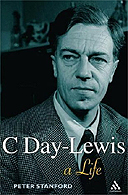
Photo credit ~ Copyrighted cover art (fair use) for Peter Stanford’s biography of Day-Lewis,C Day-Lewis, a Life. Definitely on my reading list.
Victoria Ceretto-Slotto ~ A former nurse, Victoria is a novelist, poet, artist, and a docent at Nevada Museum of Art. Currently she is hard at work with final edits on her novel, Winter Is Past, recently accepted for publication. A second novel is in progress. Victoria finds inspiration in the mysteries of life, death, art and spirituality. She lives and writes in Reno, Nevada and Palm Desert, California with her photographer husband and two canine kids. Victoria shares some of her poetry on liv2write2day’s blog, where she also provides writing prompts and offers coaching with Monday Morning Writing Prompt and Wordsmith Wednesday.
Dakshima Haputhanthri ~ is from Sri Lanka. She is a writer and poet and a lawyer by profession. She says, “I am a simple mortal with an undying passion for writing … Writing gives me wings and I fly, thinking and wondering about life and how people refuse to reveal their true selves.” Dakshima blogs at Love Among Other Things.
What do you say about dying? Holding a hand that is already like a skeleton with skin stretched over it? Standing in back of his lounge chair and putting your hands gently on his shoulders for fear of hurting him? Kissing the top of his head where only a few strands of those once thick curls remain? Saying, “I love you.” trying to make up for all those times you did not say it before?
On the night before our son, Mac, died, Jacob stopped by his daddy’s chair on his way to bed and said, “Goodnight, Dad” Mac answered “Goodnight, Jake.” John and I and Dennie had been there all day and about 10:00 I went home to get some sleep. John stayed because Mac had begun to get really agitated in his hallucinations and he was afraid Mac, though weak, could throw himself out of his chair or hurt Shelby.
At 5:30 the next morning the phone rang and Dennie said I’d better come quickly. By the time I arrived Mac had just won his war. Satan had played his last card, death, and though he won a battle, he lost the war. Mac died with his father’s arms around his shoulders and his wife’s arms holding him. Shelby let the boys sleep until the undertaker had gone, then she sat in her chair with a child held close under each arm and told them their Daddy had gone to Heaven.
When we went with Shelby to make arrangements, the first thing she said was, “I never expected to be doing this at 33.” Both the visitation and funeral service were held in our Church for there was not enough room in the funeral home. The Director said he had never held a service with so many people in attendance. Shelby and John decided to bury Mac in the little cemetery about a quarter-mile from our home. Arrangements were made and now Mac’s grave is close by.
Of course Mac is not there. He has changed the landscape of Heaven for us. No longer is it a place just to be talked about in sermons or read about in the Bible. Now it is where Mac is. And we wonder what he’s doing today. We see Heaven through the eyes of sorrow and joy. And death has truly lost its sting.
My family has lost many members to cancer; two sisters, a brother, my mother and several cousins. When the battle is done and the tears have dried, the heart regains its equilibrium and life goes on. But for the poet, part of the healing process is putting into words our thoughts and the thoughts we see reflected in the eyes of our loved ones. These are written for my son, Mac, and my sister Jackie who died of ovarian cancer.
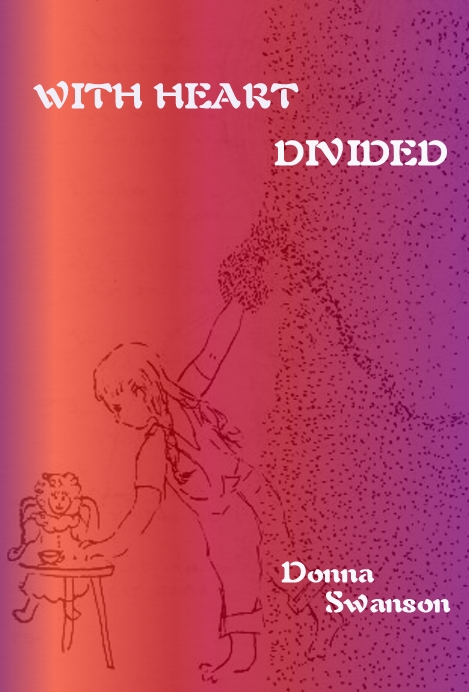
Donna Swansonwas born during the Great Depression in 1938 to an Indiana farm family.Youngest of eight children and a twin, she has lived her entire life in Warren County, Indiana. A high school graduate, she chose to marry and raise a family rather than attend college; although she took classes in art, Koine’ Greek and psychology after marriage. She has written nine books: Mind Song, published by The Upper Room in Nashville, TN;Rachel’s Daughters, The Windfallow Chronicles (a double trilogy), self-published; Splinters of Light, yet to be published, and the present autobiography. A poem, Minnie Remembers, has become a standard tool in the study of gerontology, made into a documentary film by United Methodist Communications, and given the Golden Eagle Film Award. It has been reprinted in most denominational publications and over twenty-five books. Mrs. Swanson is a Bible scholar and taught adult Bible classes for over forty years. She began prayer and share groups for women in two area Churches and hosted a teenage “rap” group in her home for four years. She counts among her mentors college professors, authors and ministers. Donna blogs at Mindsinger.
My first reaction is: I want it,
can’t wait to squeeze into
a scarlet sheath that promises
breasts round as russet apples,
a waist pinched to a pencil,
hips that know the whole dictionary
of swaying, can’t wait
to saunter down an August street
with every eye upon me.
But the moment I’m zipped in
I can’t breathe and the fabric
hugging my stomach without mercy
pronounces me a frump.
Besides, in the internet café,
where you can phone Tangiers
or Thailand for almost nothing
fourteen pairs of eyes
are absorbed by screens.
No one whistles when I smile
at boxes of tired mangoes
and seedy broccoli heads
outside the Greek superstore.
By now I’m in a fever to undo
the garment and pull it off.
And for all its flaws, for all
that it only boasts one breast,
I’m overjoyed to re-possess
my body. I remember I hate
holding in and shutting away.
What I want is a dress easy
as a plump plum oozing
juice, as a warm afternoon
in late October creeping
its ambers and cinnamons into
leaves, a dress that reassures
there’s no need to pretend,
a dress that’s as capacious
as generosity, a dress that willingly
unbuttons and whispers in the ear:
be alive every minute of your life.
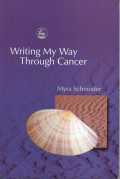
In 2000, Myra Schneider was diagnosed with breast cancer. Writing for her – as for many – was a part of the healing process, if not the cure. She journaled two weeks after diagnosis:
I have to hang onto the thought of friends and the relatives and friends of people I know who have survived for years and years after breast cancer. I owe it to myself to manage my panic and to make this a life experience not a death experience, to concentrate on possibilities, to grab every moment of life I can, to use what has happened for writing, to include the awfulnesses but also the plusses. I mustn’t forget the moments of joy: the sun lying in swathes on the grass, the sharp clean cut of the air, the disc of the sun on water. I must keep the words that came into my head about the snowdrops I saw in a garden when we walked to the shops a couple of hours ago. I think it’s the starting point of a poem. MORE
♥ ♥ ♥ ♥
Myra Schneider ~ Myra is a poet, a poetry and writing tutor, and the author of Writing My Way Through Cancer and, with John Killick, Writing Your Self. Her poetry collections, Circling the Coreand Multiply the Moon, were published by Enitharmon Press. She has eight published collections. Her long poems have been featured in Long Poem Magazine and Domestic Cherry. She co-edited with Dilys Wood, Parents, an anthology of poems by 114 women about their own parents. She started out writing fiction for children and teens. Currently she lives in North London, but she grew up in Scotland and in other parts of England. She lives with her husband and they have one son. She tutors through Poetry School, London.







 The BeZine
