Posted in Essay, Spiritual Practice, Terri Stewart

Sacred Space in our Bodies

I am going to resurrect and modify a presentation I did a few years ago with Terra Morgan, Bjorn Peterson, and Denise Ritthaler. In this presentation, we develop the case for a theology of Liberation of the Body. Although we use references, occasionally, from Christianity, the topics transcend that particularity. And unfortunately, this dialogue has framed much of western culture’s understanding of our bodies.

This will be a four part series looking at:

  1. The case for a Liberation of the Body & Liberation of our sexual being
  2. Liberation of women and particularly body image
  3. Liberation of elder bodies
  4. Liberation of men

(Note: This already is too gendered and separated! But it is the beginning of our thoughts on the topic).

And we just barely touch the iceberg!

Why do I consider this sacred space? I consider that we are in relationship with three things:

  1. us and bodies
  2. us and the world
  3. us and the divine

If we are not at peace with our bodies, our own selves, our angst and anger will spill into our treatment of the world and into our understanding of the divine. If we believe the Divine is within, and within us we hurt ourselves, then the Divine is also hurt. If we believe the Divine is outside of us, and has caused this, the Divine becomes capable of vengeance and capricious pain. Either way, it seems a difficult place to hold. Throw in the world and how we use it, and we are done for. So in an effort to move into peacefulness within ourselves and then in relationship with the world, let us consider our bodies as sacred space worth liberating.

Additionally, since nobody has really written “Let’s liberate our bodies!” what you will experience may be music, images, factual stuff, poetry…it’s all fair game!

Do you want the geeky stuff? Here it is!

The Theological Problem: Liberation of the Body
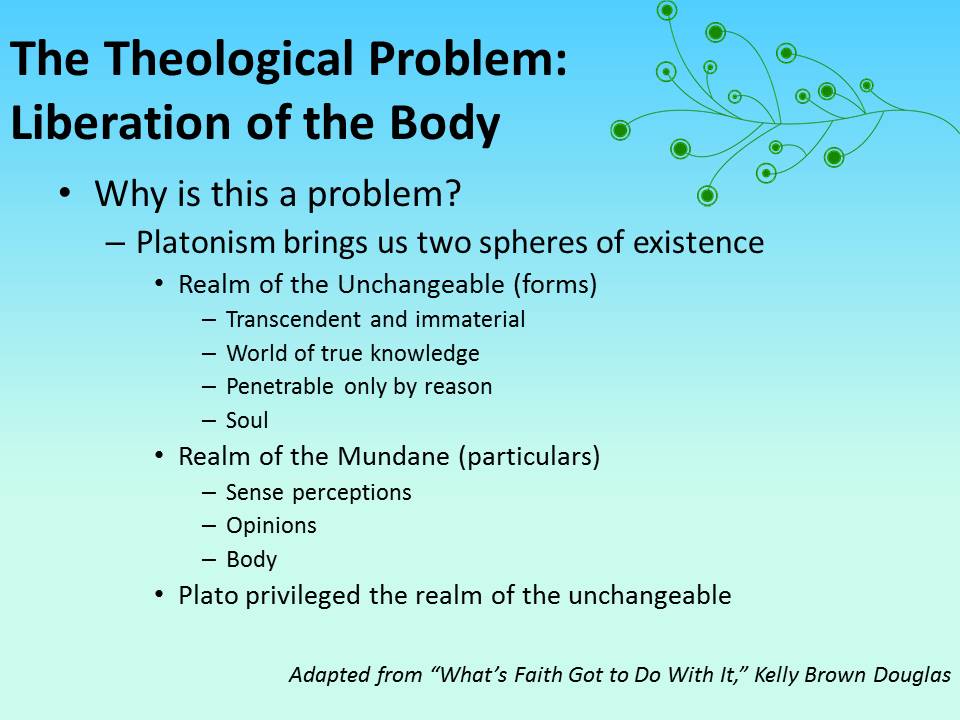
by Terri Stewart, Denise Ritthaler, Terra Morgan, and Bjorn Peterson

We are talking about liberating the body in a variety of forms. It is a theological problem that has developed from Platonism which brings us the realm of forms and particulars. In forms we have transcendence, the soul, and reason. This is the optimal way of being in the world. In the particulars, we have our senses, opinions, and our body. This is not the preferred way of being in the world. Separating ourselves into dualistic (tri-istic?) bits ignores that we are one integrated body and only one way to experience our senses.

Platonism impacts Christianity through an interpretation of Jesus’ ascetic personal practices. Then Paul, who was Greek and had a greater influence from Platonic sources, brought a more extreme sexual ethic into his writings.

Then, through the source of tradition, we then have Augustine who tells us that the body is sinful and that the soul and reason are to be preferred. This places God as “out there.” Away from the body because clearly, God is not sinful, therefore, even though the Divine is incarnational, the Divine has nothing to do with the body.

Maya Rivera, theologian, says, “This privileges “sameness over difference, of the One over the multiplicity, of the universal over the particular…in such systems there is no place for real otherness. Totalities reduce persons to categories.” (Rivera, 57)

However, Neale Donald Walsh reminds us of the inseparability.

“Your mind holds the past,
your body holds the present,
your soul holds the future.
Put another way,
the mind analyzes and remembers, Slide5
the body experiences and feels,
the soul observes and knows.”

So who are we really?

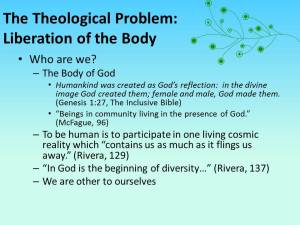
We are the body of the Divine participating in one diverse reality that would cast us all as other.

And who is the Divine?
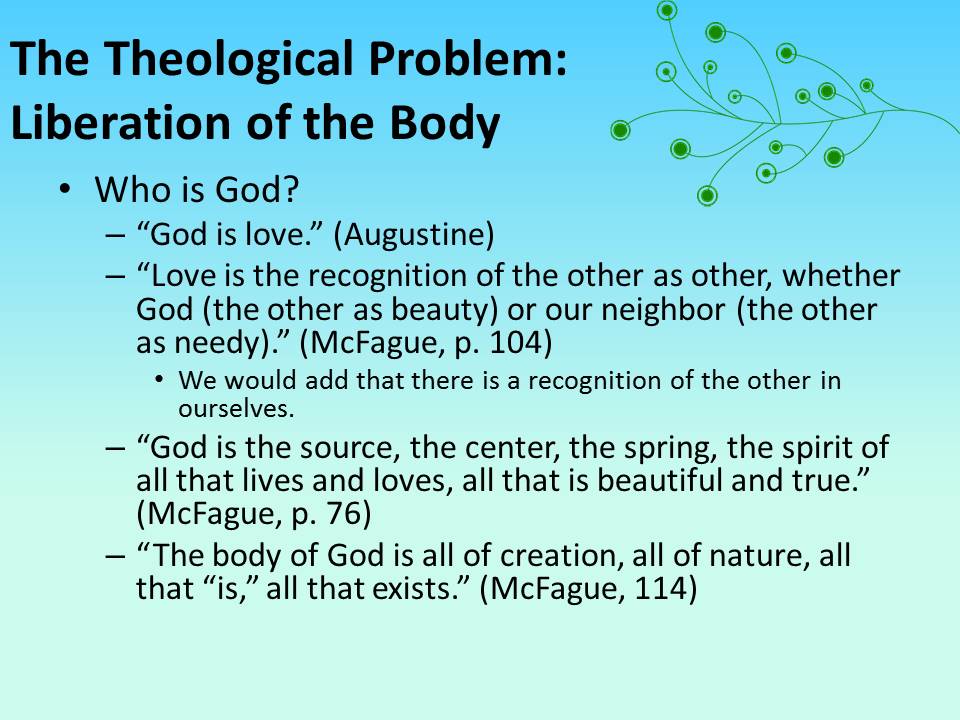
Slide6God is love in the recognition that we and all of creation exist together and yet the Divine is so much more. The source, the center, the spring of existence. The Divine is other, existence is other, and we are other to ourselves. And yet, we are all each an incarnational part of Love’s cosmic creation.

This approach to liberation of the body is through a demonstration of what it means for humans as sexual beings, humans as women and their body image, humans as the elder body, and humans as men. (Note: I would also consider that this is entirely too gendered, but it is a starting point.)

Liberation of the Sexual Body

We are all sexual beings. Whether or not we have sex, we are sexual beings. In Western culture (and many others around the world), our sexuality is frowned upon. The appreciation for eros is limited. In ancient Greek, we have three words for love – agapos, philos, and eros. Each one describing a different aspect of love. Eros is believed to be that type of love that is the seat of creativity. In sexuality, we see this as the drive to have children – create! Some scholars believe that eros is the seat of all our creative desires. But our religious authorities rarely express this. This is because of a theological battle endured 1600+ years ago between Augustine and Pelagius.
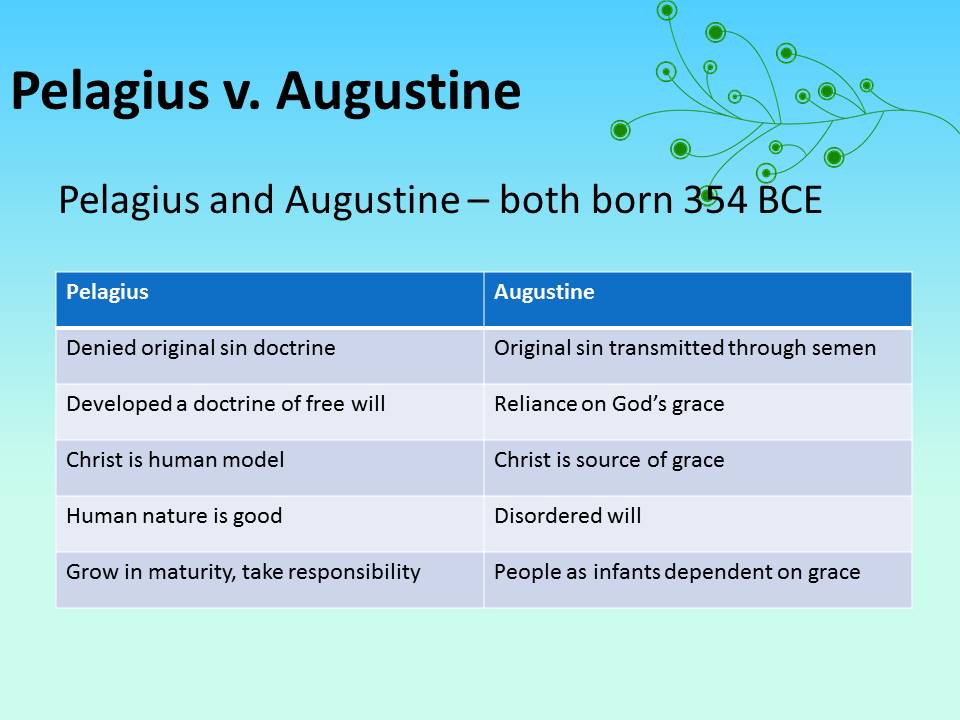
Slide9If we had only chosen Pelagius! But the foundation is there to have a theology based in free-will and the idea that we are indeed born in a state of being good rather than in a state of being a worm. And it was good! Very, very good!
created by Terri Stewart
graphic created by Terri Stewart

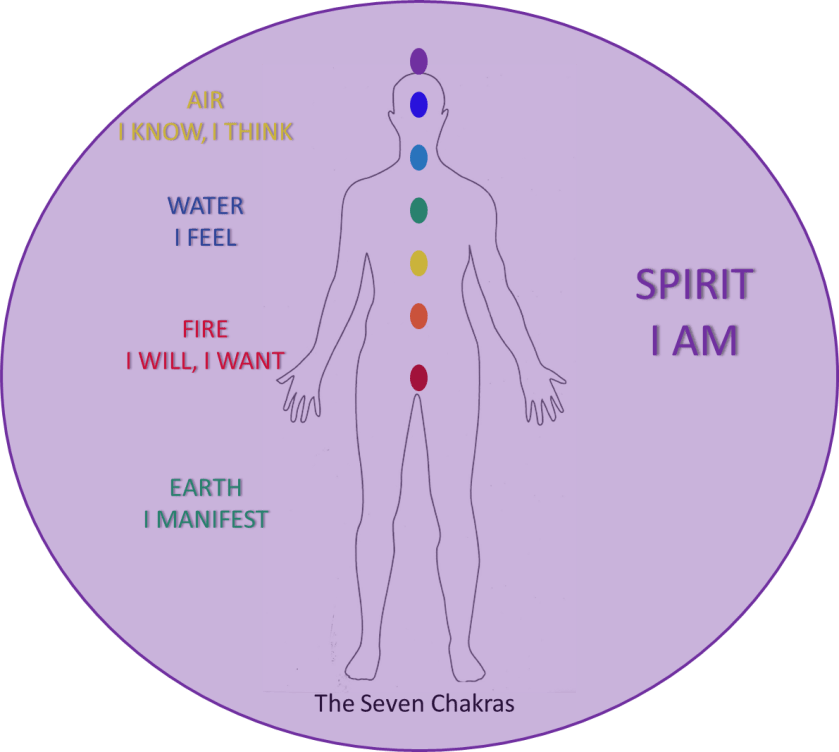
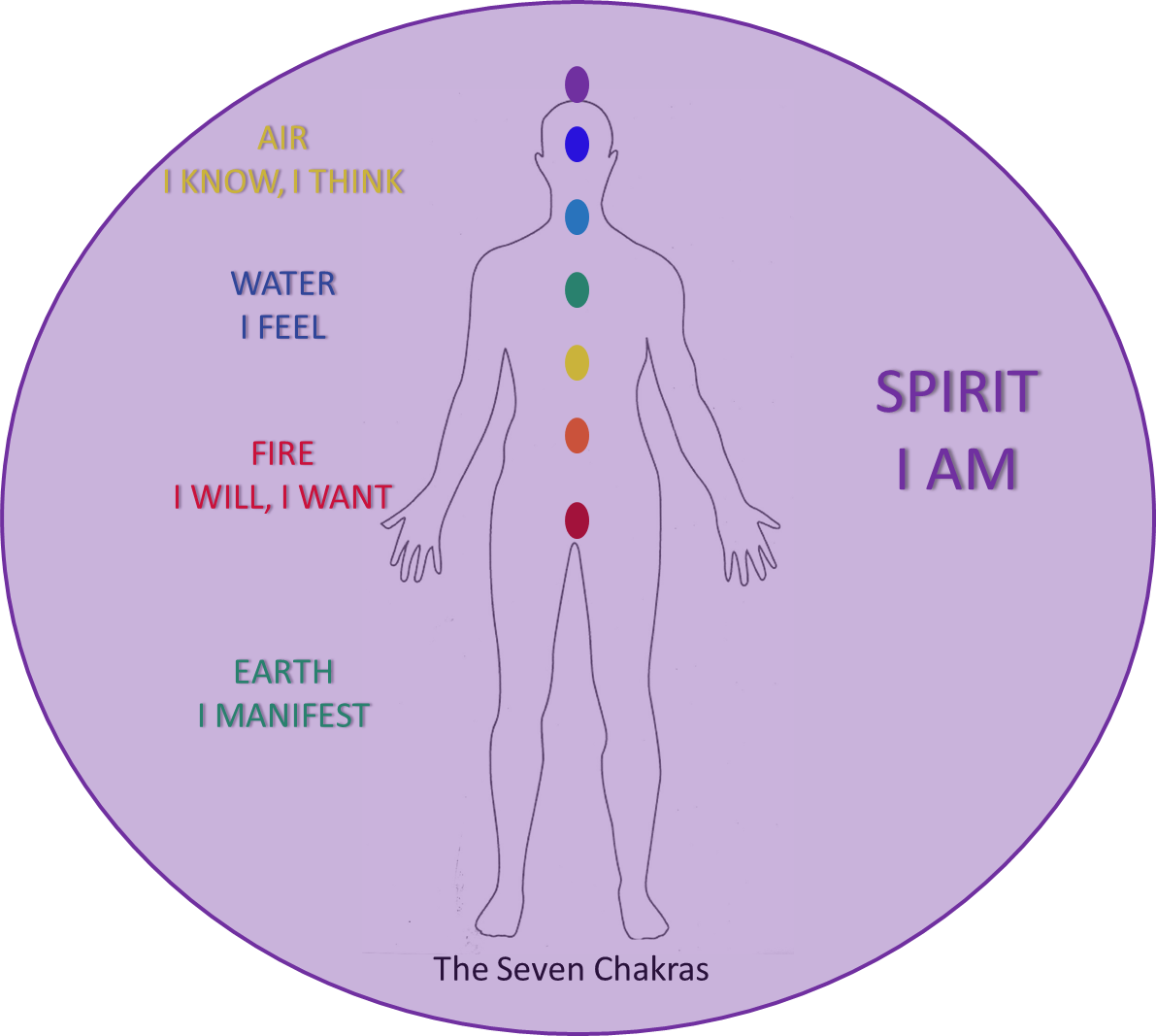
The Unity Church developed a philosophy of “The 12 Powers.” Spiritual abilities that we are perfectly able to express and that are present in every person. These powers hold that the body is good, very very good! This connects very nicely to the Chakras as described in so many ways and visualized to the right.

But through it all, from the beginning to now, the body, mind, and spirit has been connected to our bodies. Pelagius knew that and we can see it. And our creative, generative bodies can also experience being liberated through the concept of liberating our own bodies to give and receive love. We are created, we create. That is the Divine circle of our eros bodies.

One way to experience a liberated body grounded in eros-creativity is through music and movement. I encourage you to listen to the below, simple music and to move your body however you will–without shame or reservation. Reach an arm to the sky! Roll your head from side-to-side! Sway! Thou shalt do what thou shalt do! And this is the end of part 1, laying the groundwork for a Liberation of the Body and using cultural items to show that we are already liberated! Let’s claim our sexual, eros selves as liberated beings.

How would you write your eros liberation?

Pour Yourself In Me ~Rickie Byers Beckwith

A Unity Church Artist

Shalom and Amen!

terrisignoffblogBibliography

“2009 Table of Hotness” Maxim, 6 May 2009. http://www.maxim.com/amg/girls/articles/79154/2009-hot-100.html

Ara, Flora, and Taylor. Girls Making Media: Episode 4, “Body Image.” Written and presented by Ara, Flora, and Taylor. Produced by WomanKraft. Youtube.com. http://www.youtube.com/watch?v=u4GoHhnNhm4

ClassesUSA Advertisement. http://c5.zedo.com//ads2/f/851253/3840/0/0/305001042/305001042/0/305/514/zz-V1-1X1.2.html?a=s%3D514%3Bg%3D172%3Bm%3D7%3Bw%3D52%3Bu%3DsSzaTBYYEZ3Ri6hT6d7nFOXK~111010%3Bi%3D0%3B;l=;p=

Dove Beauty Evolution. Presented by Dove. 1 min., 16 sec.Youtube.com. http://www.youtube.com/watch?v=emQUHRlpeaE0.

Erickson, Latha. “Body-image pressure inundates teen girls” CNN.com, 15 March 2007. http://articles.cnn.com/2007-03-15/health/BK.girls.body.image_1_body-image-middle-school-girls-dads-daughters?_s=PM:HEALTH

Gaudiani, Caroline. “Fact Sheet: Women and Eating Disorders” National Organization for Women, http://loveyourbody.nowfoundation.org/factsheet_2.html.

Makkai, Katie. Pretty. Written and presented by Katie Makkai. 3 min., 29 sec. National Poetry Slam, 2002. Youtube.com. http://www.youtube.com/watch?v=M6wJl37N9C0.

“Model Controversies: Filippa Hamilton” MSN.com, 17 August 2010. http://lifestyle.in.msn.com/gallery.aspx?cp-documentid=4272433&page=3

Phillips, Susan S. Candlelight: Illuminating the Art of Spiritual Direction. Morehouse Publishing: Harrisburg, NY, 2008.

The Macc Lads. “Ugly Women.” From Beer to Eternity. Castle Music UK, 2007.

“Top 5 Surgical Cosmetic Procedures 2008.” American Society for Aesthetic Plastic Surgery. http://www.cosmeticplasticsurgerystatistics.com/statistics.html#2008-GRAPHS

“Who is the Most Beautiful Woman in the World?” Vanity Fair, 30 March 2009. http://www.vanityfair.com/online/daily/2009/03/who-is-the-most-beautiful-woman-alive.html

Takayanagi, Paul, Journal of Religious Gerontology, Volume 10, The Institute of Spirituality and Aging: Identifying and Promoting Spiritual Values of Elders, The Hawthorne Press, Inc. 1996

Cole, Thomas, R., The Journey of Life: A Cultural History of Aging in America, The Body As an Instrument of Control, “Women, Aging and Ethics”, New York: Cambridge University Press, Inc. 1992.

The Robert Wood Johnson Foundation, Last Acts – Rallying Points To Improve Care and Caring Near End of Life, National Resource Center on Diversity, “Diversity Notes”, September 2002.

Chrissy Fitness, July 25, 2008, “Nadine Vlazquez”, http://christyfitnessblogspot.com/2008/07/nadine- vlazquez-body.html

Prescott, Rebecca. “2010 Body Building Steroids and Great Alternatives”, http://www.fitnessfuntastic.com/BodyBuildingSterioids.html

Listal Most Beautiful Female Faces, “Freida Pinto”, January 8, 2010, http://www.listal.com/list/most- beautiful-female-faces

Scott Hoover Photography, Saturday, March 26, 2009, “Male Model and Actor Corey Grant” , http://scotthooverphotogrpahy.blogspot.com/2009/03/corey-grant.html

Shutter Stock Images, “Energetic Girl Dancing”, http://www.shutterstock.com/pic-10071150/stock- photo-of-energetic-girl-dancing-in-the-night-club-with-her-boyfriend-looking-at-her.html

Bloggy Business Today, February 4, 2008, Super Bowl Advertisement, http://bloggybiz.com/business- tools/super-bowl-save-by-tv-commercials.html

Inspirational Quotes, 2010 ”Budweiser, King of Beers”, http://www.inspirational-quotes-short-funny- stuff.com/funny-ads.html

Pierce Mattie Public Relations New York and Los Angeles, November 29, 2006, “Package Wrapping” http://www.piercemattie.com/blogs/trends

Blogger retrieved from Google Search, Titled “How Far Will Beauty Take Us?”, Victoria Secret Cover http://www.d.umn.edu/~loche006/beauty.html

False Eye Lashes Info, Davidoff Echo Woman, “Ladies Perfume for Summer”, http://falseeyelashesinfo.com/ladies/perfume/

The Scented Salamander, 2008 New Fragrances, Jennifer Lopez “Deseo for Men”, http://www.mimifroufrou.com/scentedalamander/2008/05/jennifer_lopez_for_men_2.html

Smith, Zach, Indy Week.com, August 11, 2010 “In it’s 15th Year, the N.C. Gay and Lesbian Film Festival has mainstream clout”, Photo courtesy of MAD STU MEDIA, documentary “Gen Silent”, http://www.indyweek.com/indyweek/in-its-15th-year-the-nc-gay-and-lesbian-film-festival-has- mainstream-clout/Content?09d=1594193

Wagner, John, The Hallmark Shoebox Collection, “I Keep Hitting Escape”, http://www.tcnj.edu/~hofmann/Maxine/maxine.htm e-Forwards.com, posted by John, “The Not So Golden Years”, http://www.e- forwards.com/2009/12/not-so-golden-years

Book FHR.com, “Better Access For Disabled Passengers at Prestwick Airport”, posted by Graham Greenaway October 9, 2008, http://www.fhr_net.co.uk/travel- news/1467/better_access_for- disabled_passengers_at_prestwick_airport

Department of Management & Budget, Office of Retirement Services, State Employees Defined Benefit Plan, http://www.michigan.gov/orstatedb/0,1607,7-208-30608_33437-,00.html

Lazzaretto, John, Independent Health Insurance Broker, “Medicare Supplemental Insurance Needs”, http://medicarejohn.com/medicare%20basics.html

Bayview Hunters Point Multipurpose Senior Services, Inc, 2009, “Money Management Services”,http://www.phpmss.org/aarp_money_management_services.html.

Burkhard, Brian, R., Your Funeral Guy, March 29k, 2010 “Funeral News with the Consumer in Mind”, http://yourfuneralguy.wordpress.com/2010/03/29/neptune-socieity-ad-another- cremation-marketing-blunderyourfuneralguy.html

MySA, San Antonio Home Page advertisement, http://www.legacy.com/obituaries/sanantonio/obituary-funeralhome.aspx?fh=neptune- society-&fhid=10111.

Evergreen Hospice Care, Copyright © 2008-2009 Evergreen Hospice Care, Inc. All rights, http://www.evergreenhospicecare.com/

Enya, A Day Without Rain, “Only Time” Produced by Enya and Nicky Ryan, 2000 EMI Songs Ltd./EMI Blackwood Music Inc., Warner Music UK Ltd

Hub Pages, by Peaceful Warrior, “Slow Down the Aging Process 69” http://www.hubpages.com/hub/Slow-Down-the-Aging-Process.html

Terrafolia Flowers, Advertisement, “Rutgers Study Links Flowers to Senior Citizens Well Being” http://www.terrafolia.ca/flowers-seniors.html#ixzz15INxnrfi

http://www.terrafolia.ca/flowers-seniors.html (orange shirt)

Brown Douglas, Kelly. What’s Faith Got to Do with It? Black Bodies/Christian Souls. Orbis Books: Maryknoll, NY, 2005.

Dennen, Bret. There is so Much More. So Much More. Dualtone Music Group, 2006.

McFague, Sallie. A New Climate for Theology: God, the World, and Global Warming. Fortress Press: Minneapolis, 2008.

Rivera, Mayra. The Touch of Transcendence: A Postcolonial Theology of God. Westminster John Knox Press: Louisville, 2007.

Williams, Saul. Sha-Clack-Clack. Slam: The Soundtrack. Sony, 1998.

Morgan, Fiona, Daughters of the Moon Tarot, Daughters of the Moon, Willits, CA, 1984.

Comstock, Gary David, A Whosoever Church, Westminster John Knox Press, Louisville, Ky., 2001.

Comstock, Gary David, Gay Theology Without Apology, Wipf and Stock Publishers, Eugene, Oregon, 2009.

Fillmore, Charles and Cora, The Twelve Powers, Unity House, Unity Village, MO, 1999.


Posted in Photography/Photographer, Poems/Poetry, Terri Stewart

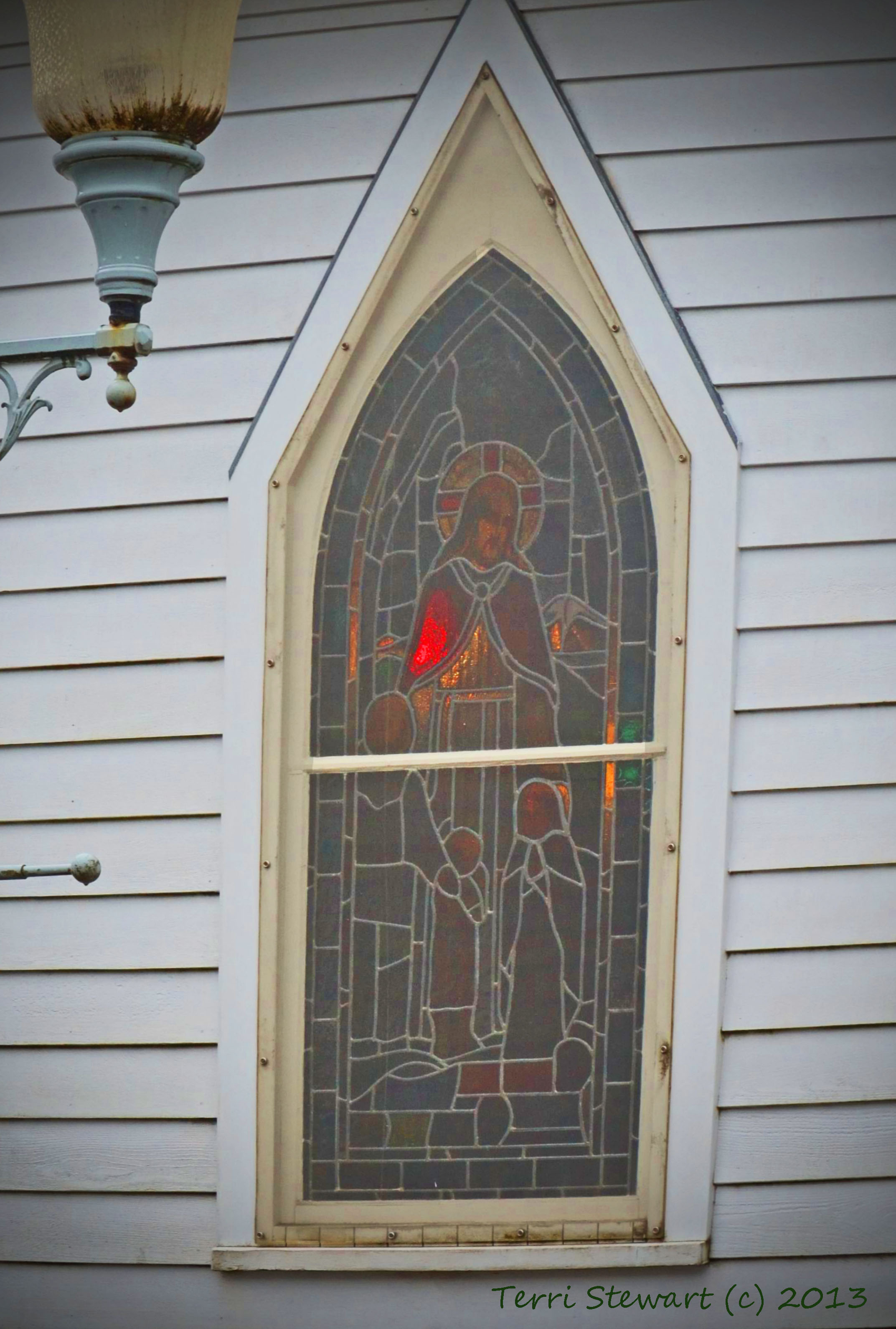
Sacred Space in the Window

One of the most difficult things that humans do is make meaning from their current situation. In seminary, we were asked to do an assignment called, “This I Believe.” I still treasure the product of that assignment and will share it below. A few questions I pondered and hoped to be thoughtful about included:

  • What is belief?
  • How is belief lived out?
  • Does belief evolve over time?
  • If belief evolves over time, what does that mean?
  • Could belief be the only particular window into the world?
  • Or is belief a particular window into the world?

windows

as i look behind
i see a path of aged stone
worn away at the edges
cementing to its neighbor
existing since the
apple flew from the tree

as i look ahead
i see tangles and brambles
and flowers and warmth
and my foot reaches out
as the stone peeks
through the grasses
for a moment
while i hesitantly
test the ground
of all being

as i place my foot
down on the rock
the path is solid and
the tangles and brambles
dissolve into nothing
as the daisies lean towards
the sun gesturing
for me to proceed

as i look up
i see a mansion
welcoming me with
the scent of lavender
and love
calling out like
mama greeting me
after a long summer
away at camp

as i reach the door
i turn the handle
shaking and trembling
with fear and awe
standing at the portal
that leads to
a new place of belonging

as i step forward
realizing this is home
my ragged teddy bear
is waiting for me
on the worn chair
joy glinting off his
button eye

Papa! Mama!
i am home!

“In the garden, child.”

as i look out
i suddenly notice
the windows
each stained to create
a beautiful invitation
of loving encouragement
and lively warmth
leading to the garden

as i run from window
to window i am stunned
by the rainbow of promise
that dances before
my eyes
until i see him
and i am caught
by his image
as love overwhelms me
and my heart dances
and the garden glistens
through the
tears in my eyes

as i peek into the garden
i see Papa waiting for me
and my hand reaches out
to touch the beauty of
him and passes
through the glass
holding me in surprise
while i walk through the
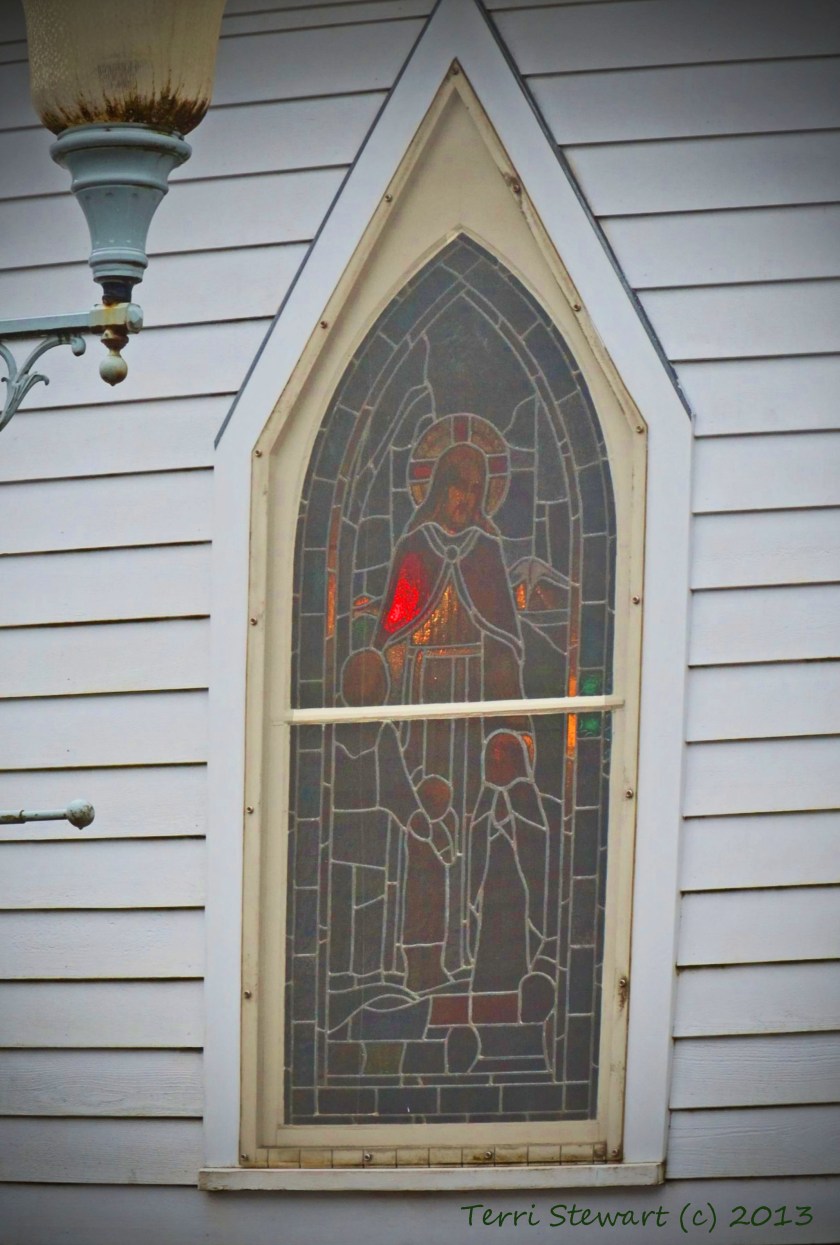
window into the light
enraptured with him

i run to Papa
and leap into His arms
knocking Him back and
He receives me with
a chuckle and twirls
me headily through the
clouds with laughter
born of love and
grace.

by Terri Stewart
by Terri Stewart

Shalom and Amen!

Poem, Terri Stewart, May, 2009
Photo, Terri Stewart, 2013
Post, Terri Stewart, updated from 2013 at http://www.BeguineAgain.com

terrisignoffblog

Posted in Charles W Martin, Photography/Photographer, poem

redirection…

redirection

the recipe
for change
is to release
the past
and follow
the line
of dreams
to the
future

© 2014, illustration and photo, Charles W. Martin, All rights reserved

678ad505453d5a3ff2fcb744f13dedc7-1CHARLES W. MARTIN (Reading Between the Minds) — earned his Ph.D. in Speech and Language Pathology with an emphasis in statistics. Throughout Charlie’s career, he maintained a devotion to the arts (literature/poetry, the theater, music and photography). Since his retirement in 2010, he has turned his full attention to poetry and photography. He publishes a poem and a photographic art piece each day at Read Between the Minds, Poetry, Photograph and Random Thoughts of Life. He is noted as a poet of social conscience. Charlie has been blogging since January 31, 2010. He has self-published a book of poetry entitled The Hawk Chronicles and will soon publish another book called A Bea in Your Bonnet: First Sting, featuring the renown Aunt Bea. In The Hawk Chronicles, Charlie provides a personification of his resident hawk with poems and photos taken over a two-year period. Charlie’s lastest book, When Spirits Touch, Dual Poetry, a collaboration with River Urke, is available through Amazon now.

product_thumbnail.phpCharlie’s long awaited Aunt Bea Collection is out. He says, “Bea In Your Bonnet: First Sting is a collection of germinal poems featuring Aunt Bea. Aunt Bea’s voice is one I’ve heard almost every day of my life. Family observations, lessons, and advice given to me and every other family member who had the good sense to listen. Her homespun philosophy most likely will not be found in any collegiate textbooks or for that matter in any local town crier newspaper catering to city dwellers. Indeed, she has a different way of viewing the world; a bit old fashion, sassy, and steely at times but a viewpoint which has engaged my imagination and heart. I sincerely hope you too will find some morsel of wisdom in her personal observations and interpretations of life’s events, but do watch out for her stingers.”

Posted in Essay, Photography/Photographer, Spiritual Practice, Terri Stewart

Sacred Space and Photography: Light v. 2

Sacred Space and Photography: Light v. 2

This month is interNational Photography month! Here, at The Bardo Group, we will be playing with this theme all month-long. On Sundays, we will be focusing on where the practice of photography intersects with our own experience and expression of spirituality.

Last week, I wrote about the symbolism in our religious traditions of light and used photography and light to show how we can point to something that transcends our understanding. Plato would say that the photo of sunset points towards the form of sunset—that perfected form of sunset-ness.

Plato’s Theory of Forms “described the common nature of all things in the world, not just of a table, for instance but of all the tables that ever were and ever will be. This Platonic form of the ideal table is eternal and changeless. It has an essential tableness, as it were, that exists whether the table is where you ate lunch in the school cafeteria or the one at a Paris café where you fell in love. In Plato’s famous allegory of the cave in “The Republic,” the things that we see on a daily basis, like the table in front of you, are merely shadows of the ideal form.” (https://www.archetypes.com/article/plato)

Any object can point towards the perfected idea of that object. And what we see in front of us is essentially a shadow of its ideal self (as no perfected form can be reached—saving this philosophical and theological discussion for another time!).

In photography, shadows are only achievable when there is light. Without light, no shadows. And sometimes, shadows can lead to beautiful pictures. When we handle shadows correctly.

Pointing Towards the Form of Tree by Terri Stewart
Pointing Towards the Form of Tree-ness
by Terri Stewart

And isn’t that true of life? We need to handle our own shadows correctly in order to have a more perfected life? Our shadows, like Plato’s cave, leave us living lives that are not quite ideal. Often, our shadow grows out of shame. Shame comes from unresolved trauma—something that we have not dealt with entirely. For me, shame is often connected to my body image. I remember, 30 years ago, sitting at the dinner table all of 5’3” and 120 pounds and being told, “No wonder I was fat.” And then crying into my plate. Logically, I know that 5’3” and 120 pounds was just fine. But that shame experienced at that moment is seared into my brain and I can recall the rush of tears that made me ashamed of my body. That feeds into self-sabotage of my embodied self in some ways and can lessen my general enjoyment of life unless I deal with it and learn to look at my shadow and bring it into the light!

I can use photography to examine both myself and my shadow. Selfies aren’t all selfish. You can use them to take photos of your shadow self, bringing yourself more and more into the light and into a fuller realization of our perfected selves.

Pointing Towards the Form of Terri-ness by Terri Stewart
Pointing Towards the Form of Terri-ness
by Terri Stewart

Someone said that photography is painting with light. It is also learning how to cope with shadows and darkness.  Do you have a shadow—in your photos? Can you peek into it and see how it points towards the fullness of life?

Shalom and Amen!

Post by Terri Stewart, 2014
Photography, CC License (CC BY-NC)

terriTerri Stewart ~ a member of our Core Team,  comes from an eclectic background and considers herself to be grounded in contemplation and justice. She is the Director and Founder of the Youth Chaplaincy Coalition that serves youth affected by the justice system. As a graduate of Seattle University’s School of Theology and Ministry, she earned her Master’s of Divinity and a Post-Master’s Certificate in Spiritual Direction with honors and is a rare United Methodist student in the Jesuit Honor Society, Alpha Sigma Nu. She is a contributing author to the Abingdon Worship Annual.

Her online presence is “CloakedMonk.” This speaks to her grounding in contemplative arts (photography, mandala, poetry) and the need to live it out in the world. The cloak is the disguise of normalcy as she advocates for justice and peace. You can find her at www.cloakedmonk.com,www.twitter.com/cloakedmonk, and www.facebook.com/cloakedmonk.  To reach her for conversation, send a note to terris@beguineagain.com


Posted in Essay, Photography/Photographer, Spiritual Practice, Terri Stewart

Sacred Space and Photography: Light

This month is interNational Photography month! Here at The Bardo Group, we will be playing with this theme all month-long. On Sundays, we will be focusing on where the practice of photography intersects with our own experience and expression of spirituality.

In my journey with photography, I have become more aware of light. The presence of light, the absence of light, how it causes reflection, my friend, Paul Jeffrey, told us once that he always turns the flash off, taking advantage of natural light. (I’m sure the rule is “almost always.”) I find that in photographing nature, that I try to stick to that rule and rely on photo-editing software to help me out if I need it. He also taught us how to make a faux tripod to steady ourselves when our shutter speed is taking just a little bit too long.

Light is a dominant theme in religious traditions also.

  • Christianity: “The light shines in the darkness and the darkness did not overcome it.” (John 1:5),
  • Islam: “Knowledge makes you free from the chains of ignorance, and revives your heart, knowledge takes you out from the darkness of suspicions and superstitions, and gives a new light to your eyes. (Hazrat Abu Ali Saqfi)
  • Judaism: “I will say to the prisoners, ‘Go free!’ and to those who are in darkness, ‘Come out to the light!’ (Isaiah 49:9)
  • Buddhism: “Doubt everything. Find your own light.” (Gautama Buddha)
  • Hinduism: “One who kindles the light of awareness within gets true light.” (Unattributed)
  • Baha’i: “Grant that the light of unity may envelop the whole earth.” (Bahá’u’lláh)

The general thrust is that light is a metaphor for that which brings us to a higher consciousness or awareness, provides hope, guidance, and love. It is a beautiful thing when, through appropriate use of light, we can communicate a deeper exploration of these qualities—awareness of what is unseen, hope, love, beauty—a very real reflection of life. And sometimes, light lets you see something in a different way.

My favorite picture that I’ve ever taken of one of my children captures light and it seems, to me, to convey innocence and an essential quality of “child” that is so easy to forget. This is an old photo, by the way! And the picture isn’t perfect, but it still conveys a lightness of being that transcends the particular quality of the photo.

by Terri Stewart CC License (BY-NC)
by Terri Stewart
CC License (BY-NC)

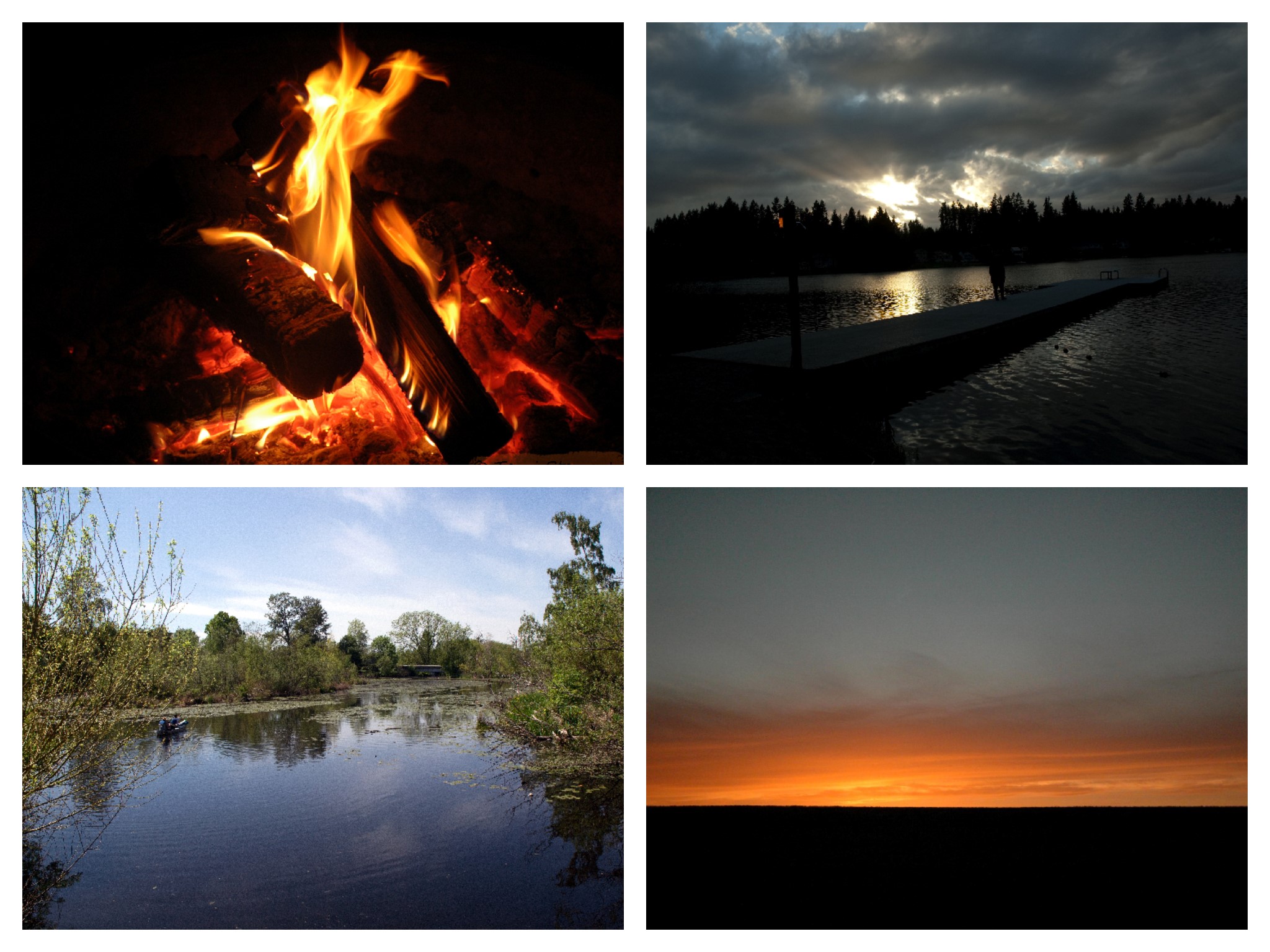
How do the following pictures and their use of light point to something beyond the images captured in the photo?

Light Collage by Terri Stewart
Light Collage
by Terri Stewart

What do thoughts of light lead you to? Do you have a favorite photo that features light or the absence of light?


Shalom and Amen!

Post by Terri Stewart, 2014
Photography, CC License (CC BY-NC)

terriTerri Stewart ~ a member of our Core Team,  comes from an eclectic background and considers herself to be grounded in contemplation and justice. She is the Director and Founder of the Youth Chaplaincy Coalition that serves youth affected by the justice system. As a graduate of Seattle University’s School of Theology and Ministry, she earned her Master’s of Divinity and a Post-Master’s Certificate in Spiritual Direction with honors and is a rare United Methodist student in the Jesuit Honor Society, Alpha Sigma Nu. She is a contributing author to the Abingdon Worship Annual.

Her online presence is “CloakedMonk.” This speaks to her grounding in contemplative arts (photography, mandala, poetry) and the need to live it out in the world. The cloak is the disguise of normalcy as she advocates for justice and peace. You can find her at www.cloakedmonk.com,www.twitter.com/cloakedmonk, and www.facebook.com/cloakedmonk.  To reach her for conversation, send a note to cloakedmonk@outlook.com.


Posted in Essay, Photography/Photographer, Spiritual Practice, Terri Stewart

Sacred Space in Photography: Perspective

This month is interNational Photography month! Here at The Bardo Group, we will be playing with this theme all month-long. On Sundays, we will be focusing on where the practice of photography intersects with our own experience and expression of spirituality.

Perspective is how we look at things. In a lot of ways it can be correlated with our privilege. When we have a lot of privilege in terms of social, economic, and political capital, we tend to see things from an empowered or “power over” perspective. When we have don’t have a lot of privilege, we tend to see things from a “power under” perspective. So our perspective on life or power placement has a lot to do with how we encounter others.

In my religious tradition, and in most spiritual movements (in my understanding), there is a movement to put power down and to empower those who have little power. Just a sampling:

  • Christianity has the beatitudes as a starting point,
  • Islam has the practice of charity,
  • Judaism has the call to care for the widow, the orphan, and the stranger among us,
  • Buddhism feels it is important to support the poor and needy,
  • Hinduism practices that all life forms are respected and should be treated well.
  • Baha’i faith which embraces loving kindness for all life forms and truth in all sacred scriptures (thank you to readers for adding on!)

And it goes on! So it seems that in the great religious traditions, the practice of caring for those who are among “the lost, the least, and the lonely” is of paramount importance. I think the challenge is moving from a position of “power over” to a position of “power with.” This involves a change of perspective. (See, I’m getting to the photographic point!)

I think that if our spiritual practices support our daily living, we will have more effective daily living! If we need to work on finding different perspectives from “power over,” then one way to do it is through photography as a spiritual practice.

How we see things tells a story. Perspective is a spiritual practice and can be embodied in our photography practice. How does it change your view if, instead of being up high as an adult, you crouched down or laid down? One recent photo I took is a great example for perspective. One of my friend’s comment was: “I wish I had a mouse on a skateboard!” Which brought an even new viewpoint because I definitely would not have thought of that! However, once she said that, I now have a perpetual picture of a mouse playing on the below log.

perspective

To get this photo, I had to crouch way down onto the log and become one with the dirt. It looks way cool from here. The photo from standing up is not nearly as fun. It loses the “going on forever” perspective.

Over time, I’ve gotten better at thinking of doing this—of finding new perspectives. The same is true in my life—almost to a fault! I might over-identify with some of my people who are among the lost, the least, and the lonely. Sometimes. But by noticing new perspectives in photography, it models for me new perspectives in my spiritual life and then new perspectives in my lived life.

  • See the world in a new way
  • See the divine in a new way
  • See others in a new way

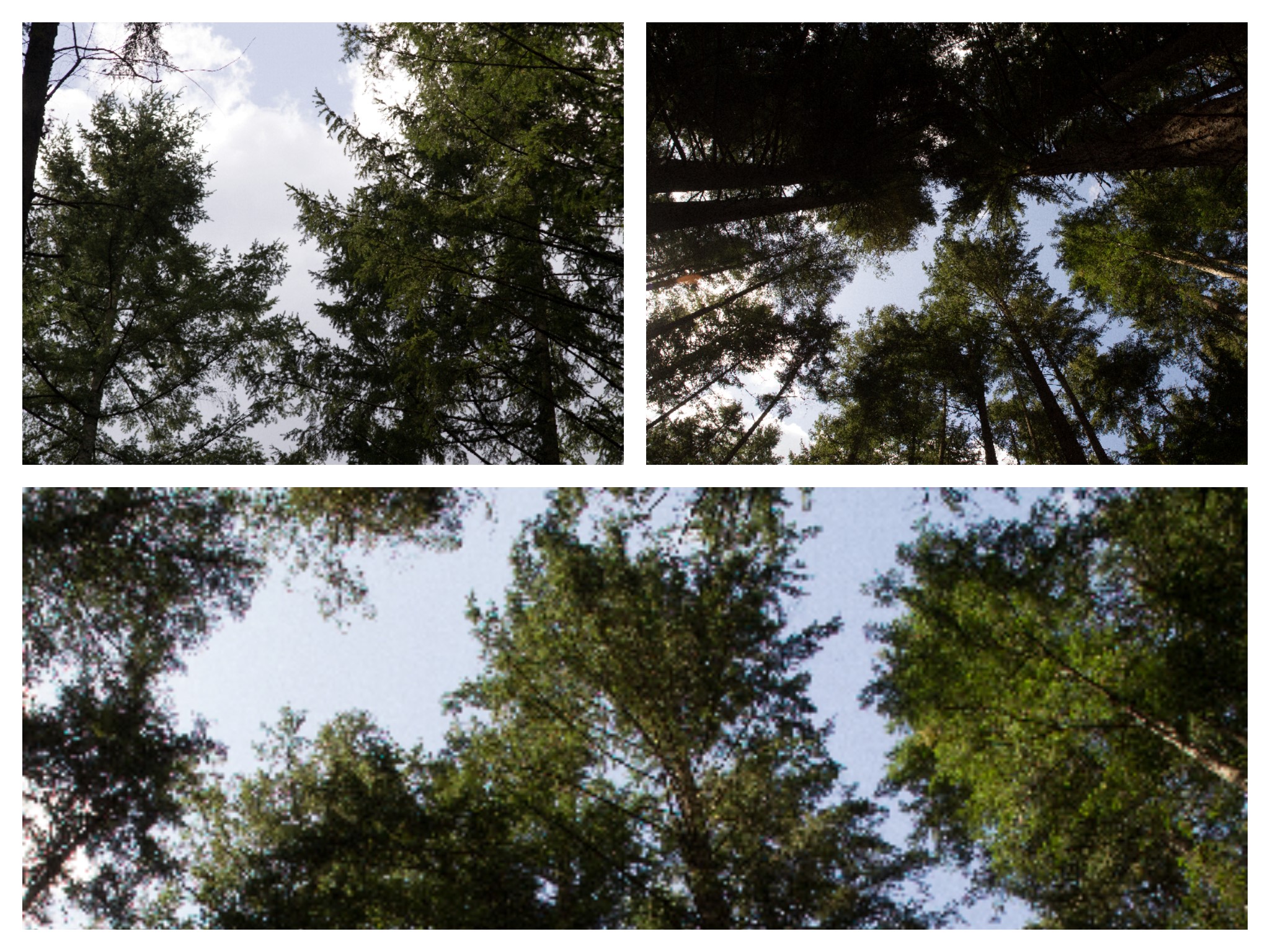
Below are three photos of trees—the same trees with different perspectives (on the same hike). I think each one tells a different story.

treecollage

Applying this to the ideas of perspective & our story as embodied in relationships of power over, power with, or power under—how can we develop the flexibility to enter into another perspective?

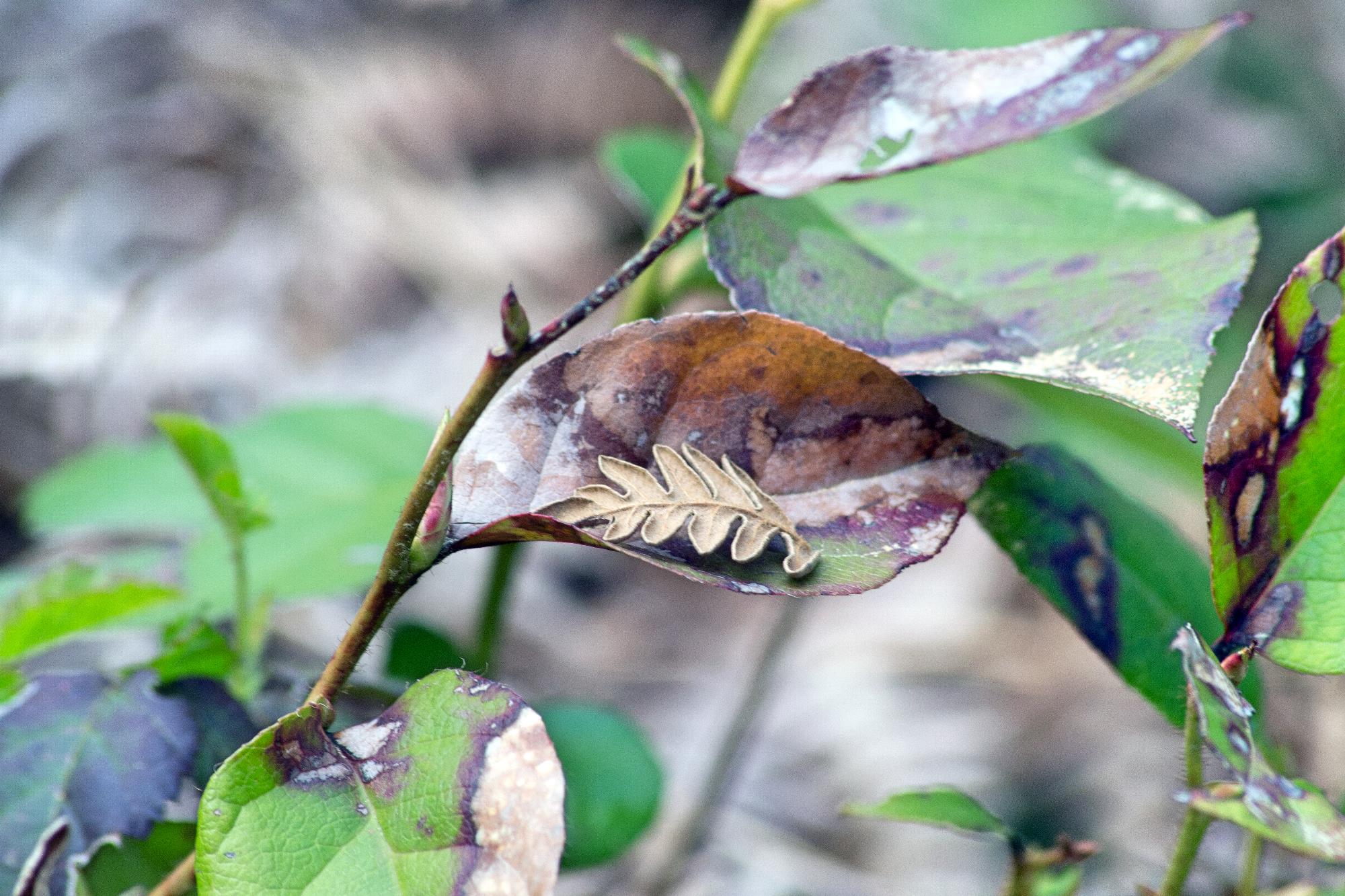
You never know what you will see when you begin to enter into another perspective. I found this lovely leaf cradling a little tiny leaf. How beautiful! And it makes me remember the way we should cradle one another.

leafinleaf

Who will you cradle today by seeing something with a new perspective?

Shalom and Amen!

Post by Terri Stewart, 2014
Photography, CC License (CC BY-NC)

terriTerri Stewart ~ a member of our Core Team,  comes from an eclectic background and considers herself to be grounded in contemplation and justice. She is the Director and Founder of the Youth Chaplaincy Coalition that serves youth affected by the justice system. As a graduate of Seattle University’s School of Theology and Ministry, she earned her Master’s of Divinity and a Post-Master’s Certificate in Spiritual Direction with honors and is a rare United Methodist student in the Jesuit Honor Society, Alpha Sigma Nu. She is a contributing author to the Abingdon Worship Annual.

Her online presence is “CloakedMonk.” This speaks to her grounding in contemplative arts (photography, mandala, poetry) and the need to live it out in the world. The cloak is the disguise of normalcy as she advocates for justice and peace. You can find her at www.cloakedmonk.com,www.twitter.com/cloakedmonk, and www.facebook.com/cloakedmonk.  To reach her for conversation, send a note to cloakedmonk@outlook.com.


Posted in Essay, Photography/Photographer, Spiritual Practice, Terri Stewart

Sacred Space in the Frame

This month is interNational Photography month! Here at The Bardo Group, we will be playing with this theme all month long. On Sundays, we will be focusing on where the practice of photography intersects with our own experience and expression of spirituality.

Thomas Merton has a photograph he titled “Sky Hook.” He wrote about it, “It is the only known picture of God.” It is definitely not what you would expect! No heavenly skies, no angels, no beard. What was Merton thinking…a simply construction hook hanging from the sky towards the earth. (You can see the photo many places on the internet, but I couldn’t find a place with clear permissions.)

Often we see photos that prompt us to stop, look, and to appreciate what we have seen but also to wonder about something more. That something more can be something bigger or something smaller. My new friend and photographer, Paul Jeffrey, takes photos for the United Methodist Church for the General Board of Global Ministries—yes! He is a photographer-missionary. He typically focuses on the beauty and stories found in people. There is a photo of a young child in a box (all kids like to sit in boxes, no matter where they are in the world!)  He recently shared this photo with us in a small group and talked about the story. He said there was a huge reaction to the photo. Such a beautiful, young child abandoned in a box! What the photo does not show is that the family was just out of the frame.

How we frame our photographs tells a story.

What if Merton’s photo had the construction equipment in it? What if Jeffrey’s photo had the family in it? Would it tell a different story? Would that story be better? Worse? More effective? Less effective? What does this say about how we frame the stories of our own lives?

Framing is a spiritual practice. Or at least knowing what we are cutting from the frame. If we willingly cut off parts of the frame to focus our attention onto another part, that is fine. For the moment. But if we willingly cut of parts of the frame and never return to the whole, something is lost. I am thinking, in particular, of people who do things like cutting science out of their lives or people who cannot see the whole spectrum of society. When we get caught up in our own particularity, we forget the universal journey. And we forget that the child in a box has a loving, concerned family.

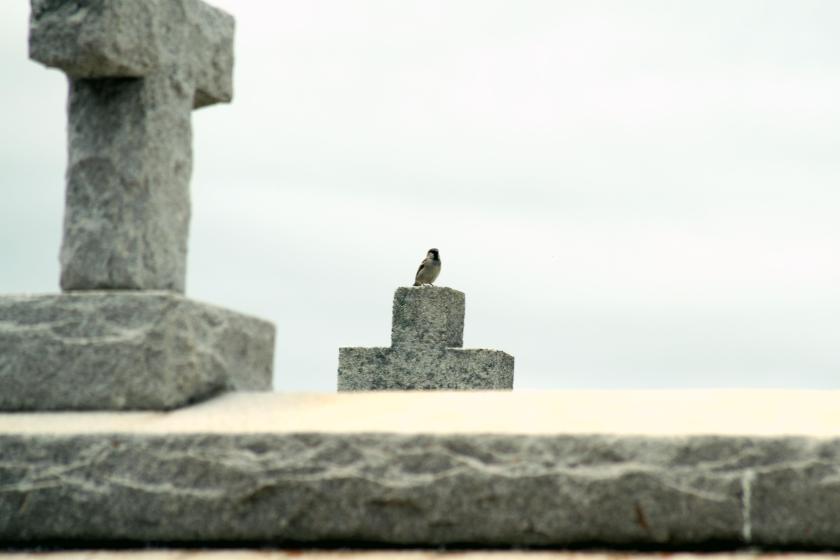
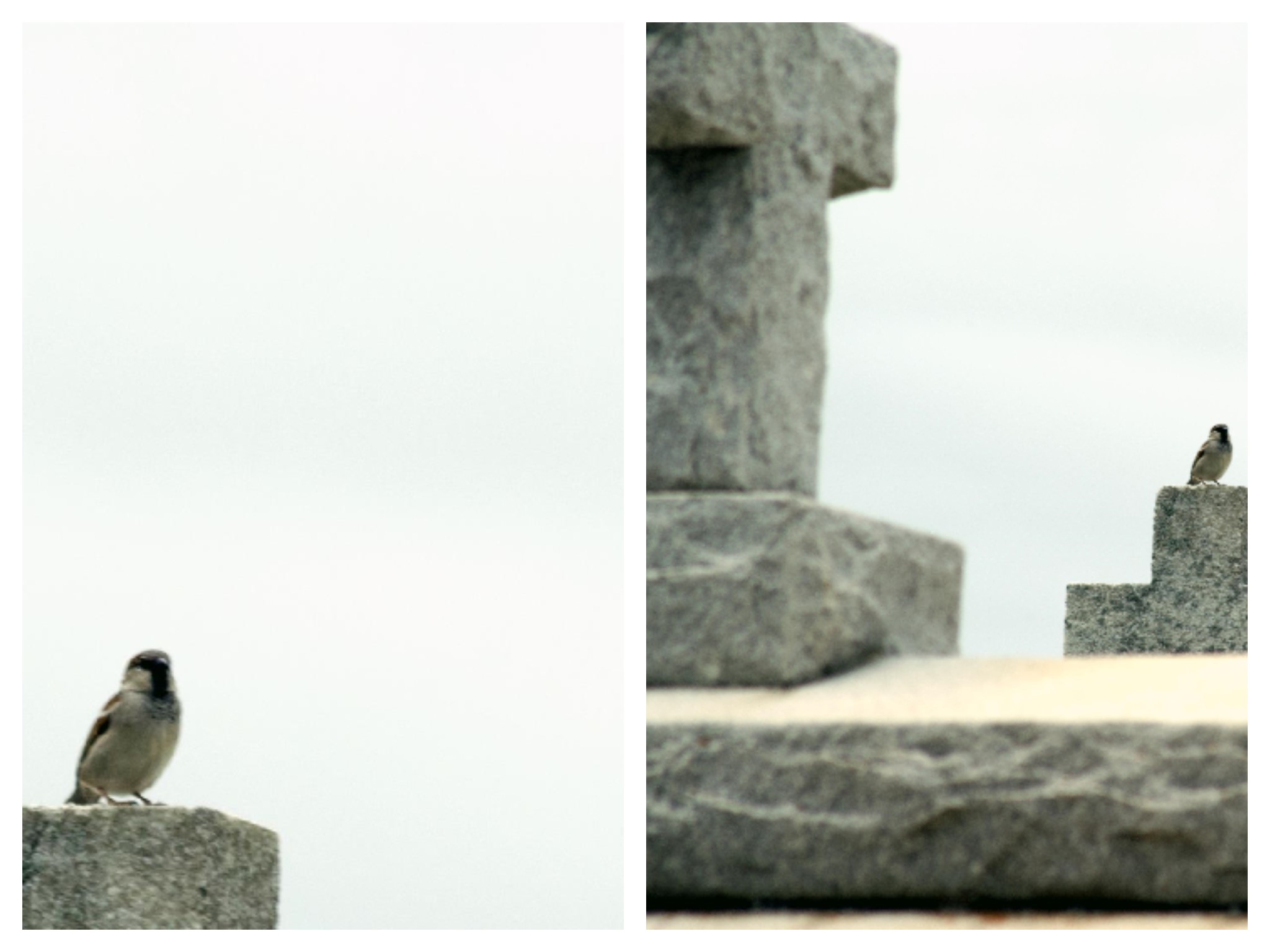
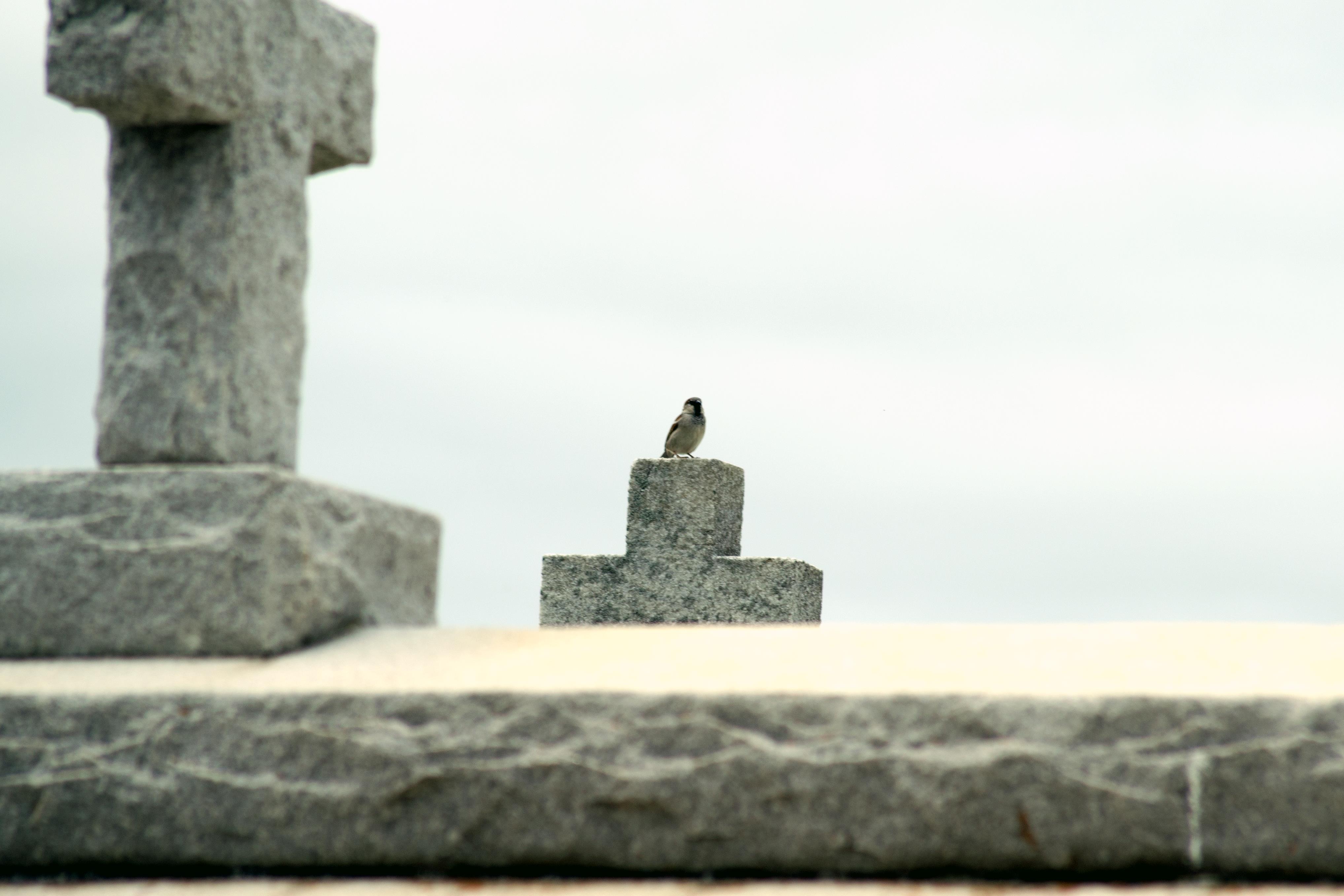
Below is a collage of one of my photos that I framed in two different ways. They tell completely different stories, in my opinion!

birdcollage

You don’t even have to be a photographer to understand the importance of framing. Hold your hands up around your face, blocking parts of your viewing field, and you will be able to frame your vision. Sitting right where you are!

In photography, we can say, “Where does framing help tell the story? Where does it hurt the story?”

In our lives we can say,

Where has framing helped you tell your own story? Where has it hurt you?

I’d love it if you would share your blog and perhaps a photo comparing two different ways of framing. That would be wonderful! 

birdatcemetary

    Shalom and Amen!

Post by Terri Stewart, 2014
CC License (CC BY-NC)

terriTerri Stewart ~ a member of our Core Team,  comes from an eclectic background and considers herself to be grounded in contemplation and justice. She is the Director and Founder of the Youth Chaplaincy Coalition that serves youth affected by the justice system. As a graduate of Seattle University’s School of Theology and Ministry, she earned her Master’s of Divinity and a Post-Master’s Certificate in Spiritual Direction with honors and is a rare United Methodist student in the Jesuit Honor Society, Alpha Sigma Nu. She is a contributing author to the Abingdon Worship Annual.

Her online presence is “CloakedMonk.” This speaks to her grounding in contemplative arts (photography, mandala, poetry) and the need to live it out in the world. The cloak is the disguise of normalcy as she advocates for justice and peace. You can find her at www.cloakedmonk.com,www.twitter.com/cloakedmonk, and www.facebook.com/cloakedmonk.  To reach her for conversation, send a note to cloakedmonk@outlook.com.
Posted in Essay, Spiritual Practice, Terri Stewart

Sacred Space in a Phrase

I think it is fair to say that most of us here are word people. I appreciate hearing fun words, seeing a well-turned phrase, being sucked into a surplus of meaning…and wonder. Today, I heard a phrase that has captured my imagination and has launched a poetic exploration along with finding an image that I thought expressed the spirit of the phrase. What is it?

The soul is such a shy creature.

That is utterly delicious to me. I hope you enjoy the following haiku and perhaps, you will offer a poetic exploration of your own in the comments! I’d love to hear your thoughts.

the soul

peeking ’round corners

stretching frail tendrils upward

such a shy creature

flower
by Terri Stewart (CC BY-NC-ND)

Post, poem, and photo, Terri Stewart (c) 2014

terriTerri Stewart ~ a member of our Core Team,  comes from an eclectic background and considers herself to be grounded in contemplation and justice. She is the Director and Founder of the Youth Chaplaincy Coalition that serves youth affected by the justice system. As a graduate of Seattle University’s School of Theology and Ministry, she earned her Master’s of Divinity and a Post-Master’s Certificate in Spiritual Direction with honors and is a rare United Methodist student in the Jesuit Honor Society, Alpha Sigma Nu. She is a contributing author to the Abingdon Worship Annual.

Her online presence is “CloakedMonk.” This speaks to her grounding in contemplative arts (photography, mandala, poetry) and the need to live it out in the world. The cloak is the disguise of normalcy as she advocates for justice and peace. You can find her at www.cloakedmonk.com,www.twitter.com/cloakedmonk, and www.facebook.com/cloakedmonk.  To reach her for conversation, send a note to cloakedmonk@outlook.com.
Posted in Essay, Spiritual Practice, Terri Stewart

Sacred Space in Opposition

I have been at a conference all week where we have been discussing how to organize ourselves to create social change. One of the most fun exercises what a Bible study linking the Book of Esther from Hebrew scripture with organizing for social change.

In the story of Esther, there is no mention of the Divine Name or any prayers offered, instead, it is a primer for racism and overcoming broken political systems.

Plot summary:

King Ahasuerus wants his wife, Queen Vashti, to come and show off her beauty to a bunch of drunk men (including the King). She says, “No.” She is then banished because she is a bad example for all women and all women must “know their place.”

Then the King is on a hunt for another wife. Mordecai pimps out Esther and Esther is brought into the royal harem. Why? She is beautiful, but primarily because she found favor with the eunuchs and maid servants. And they taught her how to find favor with the king.

Haman, one of the king’s guys, gets all pissy about Mordecai not bowing to him and asks to write a law that would destroy the Jews. The King is then able to rubber stamp the law (he gives away his ring) while never getting his own hands dirty.

When the new law passes, the Jews and Mordecai where sack cloth and mourn. Esther hears about the situation from the Eunuchs and encourages Mordecai to wear normal clothing. Mordecai then has the Eunuchs relay to her the situation (she was definitely isolated).

Esther convinces the King that this is a bad situation and the injustice that would have wiped out the Jews is fixed.

Yay! Injustice is fixed!

So, we all face injustice in our context. It may be threats to peace, the justice system, economics, poverty, etc. But we all face it! And some are actively working to correct injustice–creating sacred, healing, wholly, holy, space. In organizing ourselves, the question becomes, can we name:

  • Who are the Kings?
  • Who is the Queen who will lay down their power in order to maintain a just world?
  • Who are the Mordecais? Those who would be persecuted?
  • Who are the Esthers? The ones who know the King and can be educated as to a new way of living justly?
  • And who are the maids and Eunuchs? The ones who are also persecuted and underprivileged? Who may have sympathy for the justice issue?

What is wonderful about this is that it allows us to think creatively rather than to think that those with power are the only ones who can cause change. In this story, everyone becomes a change agent! Change for a more just world is another way of creating sacred space.

So mote it be!

And now for some inspiration from slam poetry, “Addressing Food Inequality.”

Post, Terri Stewart (c) 2014

terriTerri Stewart ~ a member of our Core Team,  comes from an eclectic background and considers herself to be grounded in contemplation and justice. She is the Director and Founder of the Youth Chaplaincy Coalition that serves youth affected by the justice system. As a graduate of Seattle University’s School of Theology and Ministry, she earned her Master’s of Divinity and a Post-Master’s Certificate in Spiritual Direction with honors and is a rare United Methodist student in the Jesuit Honor Society, Alpha Sigma Nu. She is a contributing author to the Abingdon Worship Annual.

Her online presence is “CloakedMonk.” This speaks to her grounding in contemplative arts (photography, mandala, poetry) and the need to live it out in the world. The cloak is the disguise of normalcy as she advocates for justice and peace. You can find her at www.cloakedmonk.com,www.twitter.com/cloakedmonk, and www.facebook.com/cloakedmonk.  To reach her for conversation, send a note to cloakedmonk@outlook.com.


Posted in Essay, Poems/Poetry, Terri Stewart

Sacred Space in Music and the Next Generation (Cue Star Trek Theme Song)

I am bringing a piece that I wrote some time ago about music and children and words. It relates to the post from last week inspired by Dr. Cornell West and Rabbi Abraham Joshua Heschel. That focused on the pietic, the poetic, and the prophetic. This, inspired by my children, ties the three together for me.

I can almost hear everyone asking, “What do you mean?” Well, let me tell you! The pietic are those personal practices that bring greater spiritual freedom and spaciousness – music, prayer, walking – whatever floats your boat! Poetic is the words and the music that describe that inner spaciousness (quite literally what is below). And last, the prophetic, an outward movement of the inner spaciousness to bring greater freedom to the world. Here, quite literally, it is in my children as they are moving outward now bringing an inner spaciousness outward. This is what we do here.

In addition to the poem below, inspired by listening to my children get musical, I’ve linked in a Youtube recording from my son today. He was in the National Academy of Teachers of Singing (NATS) competition in Seattle today and placed second. He inspires me and in him and his friends, I see a generation coming of young people that continue to strive to bring an expansiveness to the cosmos that we have not felt or seen yet.

OK…the video is not necessary, but being the proud mama of this chick I have inflicted out into the world, I wanted to share! Thanks for your indulgence!

Love

by Terri Stewart, April 19, 2011
there is something

about that note
and the melody that
languidly curls in the air
a feathered piece of straw
catching your ear held
by the hands of mozart
and elvis and even
p.d.q. teasing
driftly softly down
blown by the soft
breeze of progeny
cascading joy rising up
like incense
holding the gift of
past, present, and future
the slightest brush of an
angel’s wing carrying
the melody onward

Terri Stewart ~ a member of our Core Team,  comes from an eclectic background and considers herself to be grounded in contemplation and justice. She is the Director and Founder of the Youth Chaplaincy Coalition that serves youth affected by the justice system. As a recent graduate of Seattle University’s School of Theology and Ministry, she earned her Master’s of Divinity and a Post-Master’s Certificate in Spiritual Direction with honors and is a rare United Methodist student in the Jesuit Honor Society, Alpha Sigma Nu. She is a contributing author to the Abingdon Worship Annual.

Her online presence is “CloakedMonk.” This speaks to her grounding in contemplative arts (photography, mandala, poetry) and the need to live it out in the world. The cloak is the disguise of normalcy as she advocates for justice and peace. You can find her at www.cloakedmonk.com,www.twitter.com/cloakedmonk, and www.facebook.com/cloakedmonk.  To reach her for conversation, send a note to cloakedmonk@outlook.com.
Posted in Essay, Poems/Poetry, Spiritual Practice, Terri Stewart

Sacred Space and Anam Cara

The concept of Anam Cara is “soul friend” or the Celtic belief would be “soul bonding.”  John O’Donohue writes in Anam Cara: A Book of Celtic Wisdom, “If you send out goodness from yourself, or if you share that which is happy or good within you, it will all come back to you multiplied ten thousand times. In the kingdom of love there is no competition; there is no possessiveness or control. The more love you give away, the more love you will have.” 

Anam cara accepts you are you are. As a beautifully created creature of love. They see your inner light and mirror it back to you. According to John O’Donahue, “…You are joined in an ancient and eternal union with humanity that cuts across all barriers of time, convention, philosophy and definition. When you are blessed with an Anam Cara, the Irish believe, you have arrived at that most sacred place: home.”

My awakening today, is the awareness of the love that we I give and share with Anam Cara. I offer to you this poem and ask you, “Have you seen your Anam Cara? How would you describe Anam Cara?”

anam cara

i have been meaning

to sew that quilt

together. squares

sitting side-by-side

unconnected by

physical thread.

each one a perfect

gift of solitary beauty.

she sits

in pieces

waiting and

dare I say

taunts me to change

her separateness into a

cohesive creation sewing

warmth into each stitch

from rags to riches

so to speak

such lovely pieces

held together in my heart

anam cara

i know what the finished

piece

would be with each square

clinging tightly to one

another.

and she calls.

complete me.

intertwine our threads.

behold

each square a perfected

gift of beauty. together.

then i know

beyond what is seen

we are already stitched

together

photo by Martina Winkel cc licensed ( BY ) flickr
photo by Martina Winkel
cc licensed ( BY ) flickr

(c) 2014, Terri Stewart

REV. TERRI STEWART is The Bardo Group’s Sunday chaplain, senior content editor, and site co-administrator. She comes from an eclectic background and considers herself to be grounded in contemplation and justice. She is the Director and Founder of the Youth Chaplaincy Coalition that serves youth affected by the justice system. As a graduate of Seattle University’s School of Theology and Ministry, she earned her Master’s of Divinity and a Post-Master’s Certificate in Spiritual Direction.

Her online presence is “Cloaked Monk.” This speaks to her grounding in contemplative arts and the need to live it out in the world. The cloak is the disguise of normalcy as she advocates for justice and peace. You can find her at www.BeguineAgain.com ,www.twitter.com/cloakedmonk, and www.facebook.com/cloakedmonk.

Posted in Essay, General Interest, Spiritual Practice, Terri Stewart

Finding Sacred Space in the Story

Below is the beginning of a parable written by an unknown person. As an exercise of finding yourself and sacred space, please place yourself in the story from whatever perspective you feel speaks to you and finish the story! Are you a chicken? The eagle? The farmer? An unseen or unknown person? Let us know!

A long time ago in a remote valley, there lived a farmer. One day he got tired of the daily routine of running the farm and decided to climb the cliffs that brooded above the valley to see what lay beyond.

He climbed all day until he reached a ledge just below the top of the cliff; there, to his amazement was a nest, full of eggs.

Immediately he knew they were eagle’s eggs and, even though he knew it was profoundly un-ecological and almost certainly illegal, he carefully took one and stowed it in his pack; then seeing the sun was low in the sky, he realized it was too late in the day to make the top and slowly began to make his way down the cliff to his farm.

When he got home he put the egg in with the few chickens he kept in the yard. The mother hen was the proudest chicken you ever saw, sitting atop this magnificent egg; and the cockerel couldn’t have been prouder.

Sure enough, some weeks later, from the egg emerged a fine, healthy eglet. And as is in the gentle nature of chickens, they didn’t balk at the stranger in their midst and raised the majestic bird as one of their own.

So it was that the eagle grew up with its brother and sister chicks. It learned to do all the things chickens do: it clucked and cackled, scratching in the dirt for grits and worms, flapping its wings furiously,flying just a few feet in the air before crashing down to earth in a pile of dust and feathers.

It believed resolutely and absolutely it was a chicken.

Then, later in its life, the eagle, doing all the all the things chickens do – it clucked and cackled, scratching in the dirt for grits and worms, flapping its wings furiously,flying just a few feet in the air before crashing down to earth in a pile of dust and feathers – suddenly took flight and flew up into the nearest tree, high above his brother and sister chickens. And there he perched…

And now, you tell the rest of the story!

photo by Linda Tanner cc licensed (BY) flickr
photo by Linda Tanner
cc licensed (BY) flickr

(c) 2014, post, Terri Stewart

parable in its complete form found at http://www.spiritual-short-stories.com/spiritual-short-story-602-Chicken+and+the+Eagles.html

REV. TERRI STEWART is The Bardo Group’s Sunday chaplain, senior content editor, and site co-administrator. She comes from an eclectic background and considers herself to be grounded in contemplation and justice. She is the Director and Founder of the Youth Chaplaincy Coalition that serves youth affected by the justice system. As a graduate of Seattle University’s School of Theology and Ministry, she earned her Master’s of Divinity and a Post-Master’s Certificate in Spiritual Direction.

Her online presence is “Cloaked Monk.” This speaks to her grounding in contemplative arts and the need to live it out in the world. The cloak is the disguise of normalcy as she advocates for justice and peace. You can find her at www.BeguineAgain.com ,www.twitter.com/cloakedmonk, and www.facebook.com/cloakedmonk.

Posted in Essay, Spiritual Practice, Terri Stewart

Sacred Space in the Mirror

My theology and my anthropology descend from two ideas:

  • We are all created as beloved children and as an image of the divine
  • We are called to enter lovingly into sacred mystery, to enter lovingly into our deepest selves, and to enter lovingly into caring for the whole world

That makes the Divine and people ultimately loving and good in my view. The place that I believe that it is most difficult to lovingly accept is when we look into the mirror and see ourselves. What do you see in your mirror? Are you noticing every flaw? Or are you seeing perfection? Those are probably two places that are hard to be. What if we looked in the mirror and found love? acceptance? our ancestors? the future? It is all there!

I am wondering if you could offer a reflection in whatever form speaks to you on what you see in the mirror.

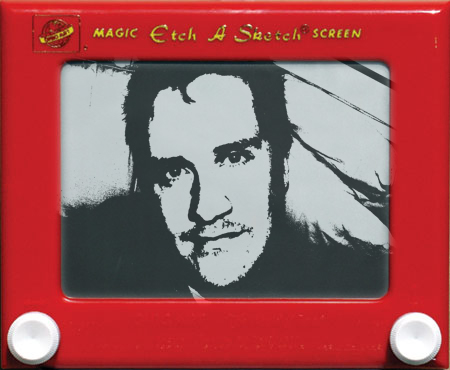
my face is not an
etch-a-sketch
the lines do
not disappear
when you shake me
they are there forever
traced over by time
lovingly etched
by laughter and
tears

my fingers
trace the lines
no knobs to turn
to change directions
the path already
traveled
knowing that each
line
knowing that each
curve
reflects love

no.

I would not trade
these engravings for
an etch-a-sketch
shake-shake-shaking
away each
memory, erasing
each person
that has walked
the line creating a
new face, a
new face, a
new face
and again, a
new face

cc licensed ( BY NC ND ) flickr photo by Welshdan: http://flickr.com/photos/welshdan/415087493/

(c) 2014, post, Terri Stewart

REV. TERRI STEWART is The Bardo Group’s Sunday chaplain, senior content editor, and site co-administrator. She comes from an eclectic background and considers herself to be grounded in contemplation and justice. She is the Director and Founder of the Youth Chaplaincy Coalition that serves youth affected by the justice system. As a graduate of Seattle University’s School of Theology and Ministry, she earned her Master’s of Divinity and a Post-Master’s Certificate in Spiritual Direction. She is a contributing author to the Abingdon Worship Annual. (The 2014 issue just released!)

Her online presence is “Cloaked Monk.” This speaks to her grounding in contemplative arts and the need to live it out in the world. The cloak is the disguise of normalcy as she advocates for justice and peace. You can find her at www.beguineagain.com ,www.twitter.com/cloakedmonk, and www.facebook.com/cloakedmonk.  To reach her for conversation, send a note to cloakedmonk@outlook.com

Posted in Essay, Spiritual Practice, Terri Stewart

Inviting Sacred Space Into our Intentions

flickr photo by B Duss  cc licensed ( BY NC )
flickr photo by B Duss
cc licensed ( BY NC )

There is a lot said now about doing things “with intention.” Deepak Chopra says that “intention is the starting point of every spiritual journey.” But sometimes I think we take the concept of intention and confuse it with goals. Setting an intention, “live more compassionately,” becomes conflated with the actions that it takes to reach the goal of compassion. What is a more compassionate life? A life that feeds the hungry? Houses the homeless? Goes into places of deep discomfort? Maybe. It is here that our intention becomes about action or about doing.

But what if it is not about what we do to become a compassionate person, but about inviting compassion to fully invade our being. Dr. Dyer says that this is the process of intention is to allow freedom to enter your consciousness and letting go, becoming free. It separates from what you want and becomes what you are.

“You have to just be. You have to let go. You have to allow. You have to be free and make this your consciousness.” He continues, “Basically, what you would see is a frequency (of energy) that manifests itself through the process of giving, of allowing, of offering and of serving. It asks nothing back.”

Dr. Dyer illustrates the concept of giving without expectations by quoting the great poet Hafiz: “Even after all this time, the sun never says to the earth ‘you owe me.’ Just think of what a love like that can do. It lights up the whole world.”

It seems it is a process of claiming an intention, inviting it in, and then releasing it. Not that we should not be doing, but our aim is not in the doing, it is in the being.

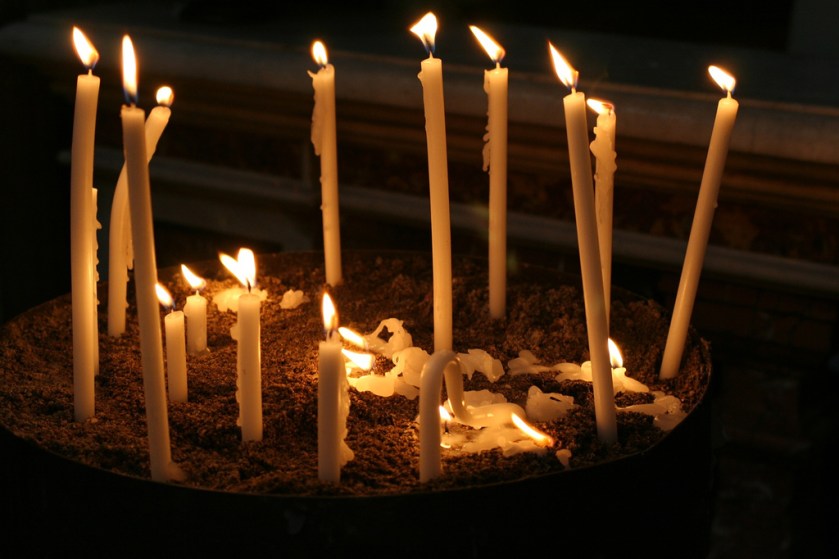
My friend, Deborah Globus at LaPadre recently wrote a short ritual for intention setting. I’d like to share it here so you can, if you like, invite sacred space into your intentions … or … release your intentions to the sacred.

What You’ll Need:

  • Candles (tapers) and candle holders
  • Matches/lighter
  • Carving knife (pocket knives, steak knives and paring knives all work equally well.)
  • Sharpies markers for decoration (optional)

What You’ll Do:

Meditate on what you’d like to bring in

Choose 1-3 words or symbols to represent what you’d like to bring in

Carefully carve into the candle (or write it on with Sharpies or paint pens.)

Light your candle. As the wax melts your intention is released to the Universe.

Resources:

Monthly Newsletter from LaPadre http://archive.constantcontact.com/fs139/1101784704875/archive/1116388396325.html

“The Power of Intention” http://www.drwaynedyer.com/articles/the-power-of-intention

“The Power of Intention” http://archive.chopra.com/namaste/intention

Youtube Time Lapse of a Candle Melting http://www.youtube.com/watch?v=edtoA4vKMyE

(c) 2014, post, Terri Stewart
terri

REV. TERRI STEWART is The Bardo Group’s Sunday chaplain, senior content editor, and site co-administrator. She comes from an eclectic background and considers herself to be grounded in contemplation and justice. She is the Director and Founder of the Youth Chaplaincy Coalition that serves youth affected by the justice system. As a graduate of Seattle University’s School of Theology and Ministry, she earned her Master’s of Divinity and a Post-Master’s Certificate in Spiritual Direction. She is a contributing author to the Abingdon Worship Annual. (The 2014 issue just released!)

Her online presence is “Cloaked Monk.” This speaks to her grounding in contemplative arts and the need to live it out in the world. The cloak is the disguise of normalcy as she advocates for justice and peace. You can find her at www.beguineagain.com ,www.twitter.com/cloakedmonk, and www.facebook.com/cloakedmonk.  To reach her for conversation, send a note to cloakedmonk@outlook.com

Posted in Essay, General Interest, Spiritual Practice, Terri Stewart

Creating Sacred Space Wherever You Live

When I first started seminary, I was totally taken aback by two things. First, they start class in prayer. (Shocker! From a secular world to this!) Second, all the professors and administrative personnel seem to have an altar of some sort in their workspace. I never thought of having an altar before that–unless it was books. Creating a place in the home or work where your sacred articles live was a new idea to me. Especially since I came from that strain of protestantism that has all “things” as mundane, therefore personal altars were simply not a thing to be done.

Thank goodness for ecumenical seminary! This exposed me to new thoughts, broader ideas about who and what other people were, and broader ideas, and yet more specific, about who I am. I went about creating an altar at home. It is a little side table with a crystal bowl of rocks with an angel in it. And on the shelf of the table, there are books I love and find inspiration in…a book on hymnody, devotional books, prayer books, and about 10 children’s books ranging from “Where the Wild Things Are” by Maurice Sendak to “You Are Special” by Max Lucado. Over time and in a busy household with youngsters, the altar and items dispersed around the home. Occasionally, I rope them back together. But there is also a gift in seeing them spread all over the place. “Oh, look! A piece of the sacred right there!” or “Oh, that is a beautiful rock, the world is an amazing and holy place!” I suppose, I am not very good at being in one place, so scattering it willy nilly ends up working and becomes an odd kind of altar. I often wish I could build beautiful altars like my friends and colleagues do, but I know! The pieces will be everywhere. Maybe someday. (Said in a wistful voice!)

Today, for our sacred space exploration, I thought we could do an exercise about altars, creating personal altars, and whatnot. However, I had a better idea just typing that paragraph above! Let’s create a virtual altar together! Everybody offer a word, picture, poem, link to something or other, that you find to be inspiring, sacred, holy, or completely whole, and next week, I will bring back a virtual collage. At the same time the offerings are made, please visit the places that other people find sacred space in. I am confident that people will leave a word or two (or more!). You wouldn’t leave me hanging, would you?

Are you ready to do this together? After all, above and beyond having a personal altar, the altar of a community – whether it is in the Christian Church, a Jewish Synagogue, or a Pagan Altar – conveys that which the community finds sacred or holy. Or maybe just important. Maybe a quick examination of the words sacred and holy is in order (from the online etymology dictionary).

Holy:

Primary (pre-Christian) meaning is not possible to determine, but probably it was “that must be preserved whole or intact, that cannot be transgressed or violated,” and connected with Old English hal and Old High German heil “health, happiness, good luck” (source of the German salutation Heil). Holy water was in Old English. 

 Sacred:

late 14c., past participle adjective from obsolete verb sacren “to make holy” (c.1200), from Old French sacrer “consecrate, anoint, dedicate” (12c.) or directly from Latin sacrare “to make sacred, consecrate; hold sacred; immortalize; set apart, dedicate,” from sacer (genitive sacri) “sacred, dedicated, holy, accursed,”

What do you find holy or sacred? What word, image, poem, thought would you offer to a community altar? 

I offer one of my favorite photos of sunset from the top of the mountain, Haleakala on Maui. Why sunset? It is a liminal time when possibilities expand as we hold together both the end of a work day and the gestation of something new. In the Book of Genesis 1:5, it says, “And there was evening and there was morning, the first day.” Evening first. Gestation first. Darkness first. Sunset, first.

Haleakala Sunset by Terri Stewart
Haleakala Sunset
by Terri Stewart

Shalom,

Terri Stewart

(c) 2013, post & photo, Terri Stewart

REV. TERRI STEWART is Into the Bardo’s  Sunday chaplain, senior content editor, and site co-administrator. She comes from an eclectic background and considers herself to be grounded in contemplation and justice. She is the Director and Founder of the Youth Chaplaincy Coalition that serves youth affected by the justice system. As a graduate of Seattle University’s School of Theology and Ministry, she earned her Master’s of Divinity and a Post-Master’s Certificate in Spiritual Direction. She is a contributing author to the Abingdon Worship Annual. (The 2014 issue just released!)

Her online presence is “Cloaked Monk.” This speaks to her grounding in contemplative arts and the need to live it out in the world. The cloak is the disguise of normalcy as she advocates for justice and peace. You can find her at www.beguineagain.com ,www.twitter.com/cloakedmonk, and www.facebook.com/cloakedmonk.  To reach her for conversation, send a note to cloakedmonk@outlook.com

Posted in Uncategorized

As You Like It (Reflections Upon the Art of Aging)

“All I ask is a tall ship and a star to steer her by…”


My mother and her sister Loena were best friends.  Wherever Loena went, she would sing or hum quietly to herself.  My mother used to introduce her to friends saying, “This is my sister Loena.  Don’t mind her; she hums.”

Mom was the one who used to bust Aunt Loena out of Detroit for road trips.  Sometimes to Washington, D.C. to visit my sister Miriam, to Maine to see my sister Constance, or to see me and my siblings in Seattle, especially if the Tigers were scheduled to play the Mariners.

Driving cross country to attend my wedding, they made a late-night stop at a hamburger joint in Iowa. They were laughing so hard the young man behind the counter came to their table and said, “Ladies, I don’t know where you’re going, but I want to come with you.”

Less than a year after Mom died, my first baby was born.  It was a wonder-full time, if bittersweet.  Aunt Loena’s visit was the next best thing to seeing my mom holding my baby in her arms.  I felt my mother’s presence, watching, smiling, loving.

But it was hard for Aunt Loena to get away.  She spent two decades housebound while caring for her mother-in-law, and then her husband.  No one blamed him for his frustration, but he yelled at everyone who came to visit or offer aid, and fired everyone my aunt hired to help with housework and eldercare.  It was emotionally isolating and physically exhausting.  She never complained, and joked that at least her medical appointments for heart trouble, cataract surgery, and blood transfusions got her out of the house.  Like my mother, she knew how to look for the bright spots.

The 911 response team knew her by name, as she had to call whenever her husband fell out of the recliner where he slept.  It was time for a nursing home.  She visited him twice a day, until she caught meningitis.  Her doctors didn’t think she’d survive.  I flew to Detroit to say goodbye, but Aunt Loena is a two-time cancer survivor, who has come back from the brink so many times she makes Rasputin look like a weenie.  It was a wake-up call, however.  She checked out of the hospital with a bucket list.  My aunt is 86, anemic, subject to dizzy spells and shortness of breath.  Oh, yes, and always up for an adventure, so long as it is wheelchair accessible.

https://i0.wp.com/i1176.photobucket.com/albums/x334/nbaltuck/IMG_7262-2-1.jpg

Aunt Loena with my sister Lee and my son Elijah

Our first adventure was a trip to Seattle.  We knew she had a great time, because wherever we went, she hummed to herself like a purring kitten.  That trip was just a warm-up for her dream trip to New York City.

Aunt Loena in Central Park with Bea and me.

When it was time to leave New York and go our separate ways, it was too sad to say goodbye, so instead we said, “Where to next?”  She’d always wanted to go the Shakespeare Festival in Stratford, Ontario.  So that’s what we did.  My son Eli flew in from college in Maine, I flew from Seattle, and my sister Lee joined us from the Upper Peninsula of Michigan.

 We went in October, to take in the fall colors as well as the plays.

I chose our motel for its name.

https://i0.wp.com/i1176.photobucket.com/albums/x334/nbaltuck/IMG_7280-1.jpg

In Stratford I discovered the secret to longevity–a nightly dose of Miss Vicky’s Salt and Vinegar Potato Chips!  Aunt Loena is a teetotaler, but she’s not afraid of a little salt and grease.  Got sugar?   Bring it on!

Each time we part, I fear another long drive or a cross country flight will prove too much.  We make a date and look forward to it, but  I always check before I make plane reservations.  “You’re sure?”  And she always says, “Oh, yes.  As long as I’m sitting down, it’s almost just the same as sitting at home.”

We promised to bring her to Seattle for fish and chips this summer, but Lee couldn’t make it.  I asked my friend Monica, also a Detroiter, if she’d consider escorting Aunt Loena.  The next morning I got her reply– she would be delighted!  What a gift to us all!  We couldn’t have pulled it off without her.  Monica and Aunt Loena had been hearing about each other for years, and felt like they already knew each other.  We kicked off a week-long PJ party by attending a performance of Cole Porter’s “Anything Goes.”   We also enjoyed Teatro Zinzanni’s very silly but impressive dinner theater show, “Gangsters of Love.”

Aunt Loena made her famous egg salad sandwiches.  Years ago, when we all drove to D.C. to visit our sister Miriam, we weren’t out of Detroit yet when Mom said, “Who’s ready for an egg salad sandwich?”  It was 10am, but so what?  We were ready for another one by lunchtime.

We picnicked at Green Lake–egg salad sandwiches, my brother Lew’s homemade cookies, and Salt and Vinegar Potato Chips.  We couldn’t get to a picnic table, because we didn’t have an all-terrain wheelchair, but from our park bench we had a gorgeous view of the lake.

I would love to take Aunt Loena to Hawaii or Europe; even she feels it might be too far.  But her eyes lit up when she said church friends had gone to a casino, and she thought it might be fun to try her luck just once–if there was a smoke-free one with wheelchair access.  I don’t know anything about casinos, but an internet search and a few phone calls was all it took to locate a smoke-free casino in Toledo, not far from their wonderful zoo.  I sent Aunt Loena home with a roll of quarters and a promise.  Guess where we’re going next spring!

Saying goodbye is hard.  Aunt Loena said Mom always told her, “Whatever happens, we won’t cry.  We’ll smile, kiss the kids goodbye, and stop the car around the corner to do our crying.”  And that’s what they always did, she said.  But this time we all had to cry, just a little.

Most people in my aunt’s situation prefer the security of a recliner, the proximity of their own doctors, and to be in control, even if that just means the remote to the television.  Who can blame them?  With advanced age, circumstances often change, especially where health, finances, and family support are concerned.  Aunt Loena lives her life as an adventure, and adjusts the size of her dreams as necessary.  But for her, everything is icing on the cake.  New York is as good as Hawaii, and Ohio is as good as New York.  But she would be just as happy humming quietly and playing cards with a friend while snacking on a bag of Miss VIcky’s Salt and Vinegar Potato Chips.


I want to grow old like Aunt Loena, to go out swinging or at least singing.  When I told her she was brave for coming all the way to Seattle, she laughed and said, “All I need is a wheelchair, and someone to push it.

You got it, Aunt Loena.  And you don’t even need to ask.

All words and images copyright 2012 Naomi Baltuck

NaomiPHOTO1-300ppi51kAqFGEesL._SY300_NAOMI BALTUCK ~ is a Contributing Editor and Resident Storyteller here410xuqmD74L._SY300_ at Bardo. She is a world-traveler and an award-winning writer, photographer, and story-teller whose works of fiction and nonfiction are available through Amazon HERE. Naomi presents her wonderful photo-stories – always interesting and rich with meaning and humor – at Writing Between the Lines, Life from the Writer’s POV. She also conducts workshops such as Peace Porridge (multicultural stories to promote cooperation, goodwill, and peaceful coexistence), Whispers in the Graveyard (a spellbinding array of haunting and mysterious stories), Tandem Tales, Traveling Light Around the World, and others. For more on her programs visit Naomi Baltuck.com

Posted in Essay, Spiritual Practice, Terri Stewart

The Story of Justice

womeninfield
cc licensed flickr photo by OSU Special Collections

In Christian tradition, there is a story of Jesus walking down the street in a foreign town, a mother seeking healing for her daughter, and a strange and unique interplay between Rabbouni and a woman stepping outside of her traditional roles, demanding healing for her very ill daughter (Christian scripture, Mark 7:24-30).

In extra-biblical literature, the girl who needs healing is named Justa. Justa means “fair” or “upright.” Yep. Justice.

A friend and I were speaking about this story recently and we were remarking on one noticing in particular – Justa’s immediate needs were met, but what about her deepest desires? There is much to ponder here. When we see someone hungry, do we give them food? Possibly-some of us do. But do we take the time to discover their deepest desires? When do we slow down enough to notice with wide open eyes the deepest desires of the other? And then, instead of fixing or fulfilling those deepest desires, can we just become a container? A facilitator? How do we let Justa and her mother tell the story, have their immediate needs met, and discover their deepest desires?

So many questions!! The truth is, we can be slow enough, mindful enough, noticing enough to discover the deepest desires of the other. The truth is, so often we don’t. The truth is, when we can become a container of compassion and love, we will discover our own deepest desires.

Below is a poem I wrote for Justa in September, 2011. About 10 days before 9/11.

Justice

the daughter of
the discarded
canaanite woman
was named justice.

when justice lay on her
bed half crazed from
demons or schizophrenia
or whatever unnamed
disorder that bedeviled
her she was all that was
wrong with the world.

a separation of the haves
and have-nots.  those who
have access to healthcare
healers and those who
must die alone and destitute.

justice reached
and crossed boundaries.

her spirit floated through
the wooded path alongside
her mother as they desperately
sought the one who could heal
and put her fractured
psyche back together.

justice became a jumble
of screams as
nails on a chalkboard
incessant bees buzzing
sulphur burning
and constant drip-drip-dripping
clamored intently intensely
inside her skull.

time was running out.

her mother ran
searching and seeking
tree limbs slapping her
in the face as she sprinted
through the wilderness
seeking out anyone who
would promise healing
encountering charlatans
and just the misunderstood
and even those that would
send her away.  calling her
a dog.

not worthy of healing.
she wasn’t one of them.

finally, she sees the one
some call love walking down
the street.

mother screams out as
pain is ripped from her
heart like a bandage from
a fresh wound seeking
hope once again for
justice and knowing that
the hopeless seems so
much stronger.

love keeps on walking.

once more
mother bares her
psyche screaming hope
with barely a glimmer
on the horizon like candle
snuffers putting out all
the stars that exist.

except this
last
one.

finally
mother is heard and justice
is walking with her heart
receiving confirmation
of the great hope mother
always knew was there.

somewhere.
deep within.

a great symphony sprouted
in the heart of justice
with melody sung by
a white-throated sparrow
and harmony enchanted
by love.

Shalom and Amen,

Terri

© 2013, post and photos, Terri Stewart, All rights reserved

terriREV. TERRI STEWART is Into the Bardo’s  Sunday chaplain, senior content editor, and site co-administrator. She comes from an eclectic background and considers herself to be grounded in contemplation and justice. She is the Director and Founder of the Youth Chaplaincy Coalition that serves youth affected by the justice system. As a graduate of Seattle University’s School of Theology and Ministry, she earned her Master’s of Divinity and a Post-Master’s Certificate in Spiritual Direction. She is a contributing author to the Abingdon Worship Annual. (The 2014 issue just released!)

Her online presence is “Cloaked Monk.” This speaks to her grounding in contemplative arts and the need to live it out in the world. The cloak is the disguise of normalcy as she advocates for justice and peace. You can find her at www.cloakedmonk.com, www.twitter.com/cloakedmonk, and www.facebook.com/cloakedmonk.  To reach her for conversation, send a note to cloakedmonk@outlook.com

Posted in Spiritual Practice, Terri Stewart

The Bridge

BridgeDuvall, WA
Bridge
Duvall, WA

In my driving to and from the youth detention center, I have discovered that I cross many bridges. I do, after all, live in the Pacific Northwest where it rains and rains and rains. Rarely are the bridges as interesting as the one pictured here. I began to wonder about the nature of bridges. When I look at this one, I see strength, shadow, radiance, and more.

If you took a few moments to enter this photo, what is calling out to you? Where is energy stirring within you? What is shimmering in your body?

Going deeper, now that you are stirring, do you hear an invitation? Seeing anything? Is there a question?

Finally, now that you have felt energy, heard a question, what are you going to do about it? Is there action growing out of your contemplation? Is the action, the act of stillness? An act of justice? An act of compassion for yourself or others? Is the bridge leading you somewhere? Or returning you home?

Random Observation-This particular bridge is found at a round-about. A circular spot in the road that both leads and returns. What if going forward is returning home?

“Sometimes, if you stand on the bottom rail of a bridge and lean over to watch the river slipping slowly away beneath you, you will suddenly know everything there is to be known.” -A. A. Milne

Shalom,
Terri

P.S. For a photo of a round-about, go HERE.

mailTERRI STEWART is Into the Bardo’s new Sunday evening chaplain. You can expect a special post from her each week. She comes from an eclectic background and considers herself to be grounded in contemplation and justice. She is the Director and Founder of the Youth Chaplaincy Coalition that serves youth affected by the justice system. As a recent graduate of Seattle University’s School of Theology and Ministry, she earned her Master’s of Divinity and a Post-Master’s Certificate in Spiritual Direction with honors and is a rare United Methodist student in the Jesuit Honor Society, Alpha Sigma Nu. She is a contributing author to the Abingdon Worship Annual.
Her online presence is “Cloaked Monk.” This speaks to her grounding in contemplative arts (photography, mandala, poetry) and the need to live it out in the world. The cloak is the disguise of normalcy as she advocates for justice and peace. You can find her at www.cloakedmonk.com,www.twitter.com/cloakedmonk, and www.facebook.com/cloakedmonk.  To reach her for conversation, send a note to cloakedmonk@outlook.com.