I am interrupting my series on Sacred Space in the Body. I wish I could say that it was for a lofty reason, but the truth of the matter is that I wrote a sermon that took all the words out of my body and left me with nothing! And this is a beautiful post about resting and sabbath that I co-created with my FB friend and photographer, Tom Ganner. Originally published at BeguineAgain.com. I’ll be back on track with Sacred Space in the Elder Body next week.
Today’s theme of sacred space in rest is offered by photographer Tom Ganner. Tom is a photographer from Haines, Alaska. I met him last year when I went on a cruise. He toured us around Haines to all the “photography” spots. He was so gracious! I encourage you to look at his photography (http://www.timenspace.net/) and if you are in the area, take his tour!
“Rest is not idleness, and to lie sometimes on the grass under trees on a summer’s day, listening to the murmur of the water, or watching the clouds float across the sky, is by no means a waste of time.”
― John Lubbock, The Use Of Life
The high point of my summer has been two weeks with my grandson. I regret I have to take him down to Juneau today to return him home to Colorado. He says he wants to come back next year. Photo created up Haines Pass near Three Guardsmen. — with Oliver in Haines, AK.
“When we live without listening to the timing of things, when we live and work in twenty-four-hour shifts without rest – we are on war time, mobilized for battle. Yes, we are strong and capable people, we can work without stopping, faster and faster, electric lights making artificial day so the whole machine can labor without ceasing. But remember: No living thing lives like this. There are greater rhythms, seasons and hormonal cycles and sunsets and moonrises and great movements of seas and stars. We are part of the creation story, subject to all its laws and rhythms.”
― Wayne Muller, Sabbath: Finding Rest, Renewal, and Delight in Our Busy Lives
Another ho-hum day in paradise with grandson Oliver at David’s Cove. — in Haines, AK.
“The meaning of the Sabbath is to celebrate time rather than space. Six days a week we live under the tyranny of things of space; on the Sabbath we try to become attuned to holiness in time. It is a day on which we are called upon to share in what is eternal in time, to turn from the results of creation to the mystery of creation; from the world of creation to the creation of the world.”
― Abraham Joshua Heschel, The Sabbath
We like to encourage young writers and are happy to introduce Colin Stewart with his very fine post today on Begin Again … Please visit and cheer him on. J.D.
I am working valiantly on ordination papers this week. So I am appropriately resurrecting a post from http://www.BeguineAgain.com as our step into sacred space. And yes, I am ordained, but I am a newbie, so for the first two years we have to submit more papers.
Join me in listening to the beautiful chant by Velma Frye. It is a call to stillness. Rest. Quiet. And a reminder that stillness often is associated with darkness. Imagine the seeds germinating in the darkest earth. Seemingly still, but so much creative energy stirring up unbeknownst to observation! But the stillness is what nurtures it. The darkness. The coldness. Be still.
Be Still by Velma Frye
Be still.
Be still.
Be still.
Go deep
into
the silence
of the night
and robe yourself
in darkness.
See with the heart
into the dark of the night.
So silent the night.
So dark the night.
Be still.
Be still.
Be still.
Be still.
Be still.
Be still.
What will you do to create stillness in your life?
How can you use darkness to create wholeness?
(c) 2014, post, Terri Stewart, CC license BY-NC
(c) 2013, lyrics and video, Velma Frye
(c) 2013, photo, Terri Stewart, CC license BY-NC-ND
..
REV. TERRI STEWART is Into the Bardo’s Sunday chaplain, senior content editor, and site co-administrator. She comes from an eclectic background and considers herself to be grounded in contemplation and justice. She is the Director and Founder of the Youth Chaplaincy Coalition that serves youth affected by the justice system. As a graduate of Seattle University’s School of Theology and Ministry, she earned her Master’s of Divinity and a Post-Master’s Certificate in Spiritual Direction.
Last Sunday, I chose to practice Sabbath—a tradition that was a strong factor in my growing up years, but that waned with my work as a nurse…patients need care every day of the week. Most of us know and understand the concept of a day of rest, but our frenetic lifestyles tend to get in the way.
Sabbath crisscrosses most cultural, spiritual, religious and secular societies, even pre-dating biblical times. The Babylonian Enuma Elish prescribed a day of repose. In the Genesis creation story, God rested after his six days of work and, I suppose it worked out well so that he added it to those tablets of stone he handed on to his people through Moses. Wicca, Islam. Buddhism, Cherokee teaching and others all caution humans to take a break, chill out, and rest. Wisdom, it seems to me, embraces our need for refreshment, for replenishment of body, mind spirit and emotion, for regeneration and reflection.
For many of us, well, for me anyway, the need to be in control seems to take hold and it becomes oh-so-hard to let go of time, accept idleness and non-productivity and, perhaps, the feeling of uselessness. I suspect that there is a trust issue here. Can I really believe that God will take care of things in my absence? Can I believe that the work of creation on this particular day will go on without my amazing intervention?
So, what kind of things did I, Ms-Doing-Not-Being do?
• Meditation—a bit longer than my ordinary routine.
• Journaling. And in the process really waking up to what was happening around me. I wrote of all the wonderful sensory experiences that the pristine late-spring day offered—the finches song, the brilliant orange of the male oriole at our feeder, the spicy scent of new-born flowers and the basil in the vegetable garden. I noticed the play of light and shadow in the now-expansive boughs of the ash tree we planted almost twenty years ago and watched the hummingbirds fly back and forth sipping nectar from both flowers and feeders. I felt the gentle kiss of the breeze and delighted in my dogs’ warm bodies flanking me on either side. I listened to David busy chopping spices in the kitchen.
Photo Credit: D. Slotto
• Spa Stuff. I pampered myself with a Pomegranate/Cranberry exfoliating scrub courtesy of Burt’s Bees, did a manicure/pedicure and, well, thought about taking a nap. I thanked my body for its almost-seven decades of service and praised the many scars that it bears, a reminder of the life-threatening illness I have survived, for now.
• Creativity. Maybe some consider engaging in the creative process to be work. For moi, I allowed the muse to come out and play, more by way of brainstorming than actualizing any project. Sabbath time allows ideas to gestate and gives clarity as to where to take them.
• And, yes, a final confession. I did laundry. So, it wasn’t a perfect Sabbath, but for this woman who tends towards OCD, that’s probably not a bad thing. Besides, we needed clean clothes!
Photo Credit: Bergen Linen
That night I slept well, but will I be able to repeat the experience? My history tells me that this is not something that comes easily to me. I am aware that Sabbath doesn’t have to always be on Saturday or Sunday, or even occupy an entire twenty-four hours. How would life be different if, each day, I remember to tuck in an hour or even minutes for the divine repose, sit back and let go?
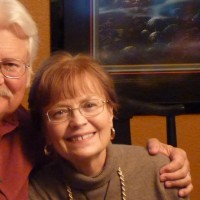
VICTORIA C. SLOTTO (Victoria C. Slotto, Author: Fiction, Poetry and Writing Prompts) ~ a Contributing Writer to Into the Bardo ,attributes her writing influences to her spirituality, her dealings with grief and loss, and nature. Having spent twenty-eight years as a nun, Victoria left the convent but continued to work as a nurse in the fields of death and dying, Victoria has seen and experienced much. A result of Victoria’s life experience is the ability to connect with readers on an intimate level. She resides in Reno, Nevada, with her husband and two dogs and spends several months of the year in Palm Desert, California.
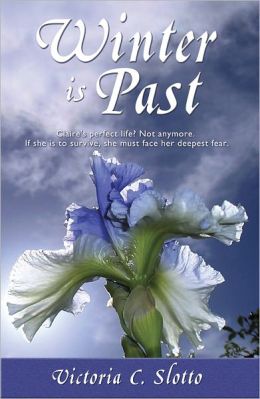
Winter is Past is her first novel. It was published in 2012 by Lucky Bat Books. She has a second novel in process and also a poetry chapbook. Victoria is also an accomplished blogger and poet who has assumed a leadership role in d’Verse Poet’s Pub. You can read more ofher fine poetry HERE.
Photo credit ~ Photo credit ~ A small temple beneath the Bodhi tree, Bodh Gaya, built in 7th century, after the original built by King Ashoka in 3rd century BCE, ca. 1810, British Library, public domain photograph via Wikipedia
♥ ♥ ♥ ♥
Jamie Dedes ~ is a former freelance feature writer and columnist whose topic specialties were employment, vocational training, and business. She finds the blessing of medical retirement to be more time to indulge in her poetry, creative nonfiction, and fiction. She has two novels in progress, one in final edits, and is pulling together a poetry collection. Her primary playground is Musing by Moonlight. She is the founder and editor/administrator of Into the Bardo. Jamie’s mother was diagnosed with cancer the first time at thirty-six. She went three rounds with breast cancer, one with thyroid cancer, and died at seventy-six of breast and colon cancer.



 The BeZine