Posted in Spiritual Practice, story, Terri Stewart

What are you witness to?

tracy-arm-fjord-copy

What are you witness to? What story have you seen? Where has grace moved in your life?

I’ve just returned from vacation. There were so many stories told if I just slowed down and listened or watched. There was the mother holding a young child’s hands as he ran along the pool’s edge; the young man from Indonesia who works day after day with no days off; the staff who rush to the port side of the boat so they can see where we are going or have been, their only contact with a new world from a distance or from behind a camera.

Grace moved in my heart at every encounter with the people and with the striking depth of beauty that we encountered in the natural beauty of Alaska and the surrounding area. Grace moved in my heart when I was able to experience living through the eyes of compassion in this rarefied environment. Love, beauty, and grace coalescing in my rib cage.

I wrote a series of haiku witnessing to the stark beauty in the Tracy Arm Fjord that I offer here along with a photo from that day.  These haiku were primarily inspired by the waters while we were entering into the Tracy Arm Fjord, which were quite different from the waters once we were sitting still.  The arrival waters were deeper, grayer, more choppy and more mysterious.

The photo is from a moment of stillness in waters littered with small icebergs. Click on the photo to see an expanded view. To browse through the unedited photos, you can go to my flickr site.

glacier fed wind

whips across cresting waters

reflecting sun’s glory

frenzied wind

stirring waters to white peaks

be still my soul

shrouded grey waters

revealing iceberg tips

depths hidden

– Terri Stewart

© 2013, essay, haiku, and photograph, Terri Stewart, all rights reserved

Terri StewartTERRI STEWART is Into the Bardo’s  Sunday Chaplain, Senior Content Editor, and Site Co-administrator. She comes from an eclectic background and considers herself to be grounded in contemplation and justice. She is the Director and Founder of the Youth Chaplaincy Coalition that serves youth affected by the justice system. As a recent graduate of Seattle University’s School of Theology and Ministry, she earned her Master’s of Divinity and a Post-Master’s Certificate in Spiritual Direction with honors and is a rare United Methodist student in the Jesuit Honor Society, Alpha Sigma Nu. She is a contributing author to the Abingdon Worship Annual.

Her online presence is “Cloaked Monk.” This speaks to her grounding in contemplative arts (photography, mandala, poetry) and the need to live it out in the world. The cloak is the disguise of normalcy as she advocates for justice and peace. You can find her at www.cloakedmonk.com, www.twitter.com/cloakedmonk,  and  www.facebook.com/cloakedmonk.  To reach her for conversation, send a note to cloakedmonk@outlook.com.
Posted in Photography/Photographer, Poems/Poetry, Rumi, Spiritual Practice, Terri Stewart

Doors

bar_doorsConsider doors. We enter or exit through doors. Sometimes we just look at doors. They lead towards something or away from something.

“As long as you are performing prayer, you are knocking on Allah’s door. And whoever knocks on Allah’s door [constantly], He will open it.” -Ibn Al-Qayyim Al-Jawzi

“The doors we open and close each day decide the lives we live.” -Flora Whittemore

“A man who does not plan long ahead will find trouble right at his door” -Confucius

“Ask, and it will be given to you; seek, and you will find; knock, and it will be opened to you.” Matthew 7:7, Christian Scripture

“In oneself lies the whole world and if you know how to look and learn, the door is there and the key is in your hand. Nobody on earth can give you either the key or the door to open, except yourself.” -Jiddu Krishnamurti

“Knowledge of what is does not open the door directly to what should be.” -Albert Einstein

Lots of thought has been given to doors! Now it is our turn to consider doors. I would like to offer up a lectio divina experience. Lectio divina is an ancient way of “being present
to a text in a heart-centered way.” (Christine Valters Paintner) It is a way of meditating or praying. When we use the lectio divina technique, we see the words we read as living, breathing essence. It becomes an encounter with the sacred. There are four primary movements of lectio (and sorry if this is repeat news!)…

Read (lectio): Read and listen for a word or phrase that creates energy within your body

Reflect (meditatio): Read again and savor the words, delve into them, use your senses to experience them

Respond (oratio): Read again and listen for the invitation coming from the text

Rest (contemplatio): Rest, be still.

Go slowly and be present. I offer you a poem from Rumi.

Lectio:

The bfirehouse_doorreeze at dawn has secrets to tell you.
Don’t go back to sleep.

You must ask for what you really want.
Don’t go back to sleep.

People are going back and forth across the doorsill
where the two worlds touch.

The door is round and open.
Don’t go back to sleep.

From Essential Rumi
by Coleman Barks

Meditatio:

weird_doorThe breeze at dawn has secrets to tell you.
Don’t go back to sleep.

You must ask for what you really want.
Don’t go back to sleep.

People are going back and forth across the doorsill
where the two worlds touch.

The door is round and open.
Don’t go back to sleep.


Oratio:

lots_of_doorsThe breeze at dawn has secrets to tell you.
Don’t go back to sleep.

You must ask for what you really want.
Don’t go back to sleep.

People are going back and forth across the doorsill
where the two worlds touch.

The door is round and open.
Don’t go back to sleep.

Rest:

forboding_door

Shalom and Amen.

~Chaplain Terri

© 2013, post and photos, Terri Stewart, all rights reserved

Terri StewartTERRI STEWART is Into the Bardo’s  Sunday Chaplain, Senior Content Editor, and Site Co-administrator. She comes from an eclectic background and considers herself to be grounded in contemplation and justice. She is the Director and Founder of the Youth Chaplaincy Coalition that serves youth affected by the justice system. As a recent graduate of Seattle University’s School of Theology and Ministry, she earned her Master’s of Divinity and a Post-Master’s Certificate in Spiritual Direction with honors and is a rare United Methodist student in the Jesuit Honor Society, Alpha Sigma Nu. She is a contributing author to the Abingdon Worship Annual.

Her online presence is “Cloaked Monk.” This speaks to her grounding in contemplative arts (photography, mandala, poetry) and the need to live it out in the world. The cloak is the disguise of normalcy as she advocates for justice and peace. You can find her at www.cloakedmonk.com, www.twitter.com/cloakedmonkwww.flickr.com/cloakedmonk and  www.facebook.com/cloakedmonk.  To reach her for conversation, send a note to cloakedmonk@outlook.com.
Posted in Spiritual Practice, story, Terri Stewart

Enter the Story

St. Ignatius of Loyola, Image from WikiMedia Commons

One of the spiritual exercises that St. Ignatius of Loyola recommended was entering the story of scripture using your imagination. Using all your senses, imagine yourself in the story. Today, I am offering this exercise to you.

Below is a story that appeals to me from the Gospel of John. You do not have to be Christian to appreciate the point of this story, I believe. But if you would rather gather another story and do this exercise, I would encourage you to do that!

Sit relaxed, place your feet flat on the ground and read the story. Then close your eyes and reconstruct the scene in your  imagination. What is going on with the men and women in the scene? What do the characters look like? How do the characters react to each other? What are the people saying to one another? What emotions fill their words? As you enter into the scene, sometimes there is the desire to be there. You could place yourself in the scene as one of the characters in the story or as someone brand new.

Early in the morning Jesus came again to the temple. All the people came to him and he sat down and began to teach them. The scribes and the Pharisees brought a woman who had been caught in adultery; and making her stand before all of them, they said to him, “Teacher, this woman was caught in the very act of committing adultery. Now in the law Moses commanded us to stone such women. Now what do you say?” They said this to test him, so that they might have some charge to bring against him. Jesus bent down and wrote with his finger on the ground. When they kept on questioning him, he straightened up and said to them, “Let anyone among you who is without sin be the first to throw a stone at her.” And once again he bent down and wrote on the ground. When they heard it, they went away, one by one, beginning with the elders; and Jesus was left alone with the woman standing before him. Jesus straightened up and said to her, “Woman, where are they? Has no one condemned you?”  She said, “No one, sir.” And Jesus said, “Neither do I condemn you. Go your way, and from now on do not sin again.”

What do you smell? See? Can you feel anything? Can you imagine writing in the dirt? What would you write? Are there smells? Can you hear anything? Is your intuitive sense telling you anything? Where are you in the story? Who are you in the story? What is your story?

Shalom and Amen.

Chaplain Terri

© 2013, post and video, Terri Stewart, All rights reserved

Terri StewartTERRI STEWART is Into the Bardo’s  Sunday Chaplain, Senior Content Editor, and Site Co-administrator. She comes from an eclectic background and considers herself to be grounded in contemplation and justice. She is the Director and Founder of the Youth Chaplaincy Coalition that serves youth affected by the justice system. As a recent graduate of Seattle University’s School of Theology and Ministry, she earned her Master’s of Divinity and a Post-Master’s Certificate in Spiritual Direction with honors and is a rare United Methodist student in the Jesuit Honor Society, Alpha Sigma Nu. She is a contributing author to the Abingdon Worship Annual.

Her online presence is “Cloaked Monk.” This speaks to her grounding in contemplative arts (photography, mandala, poetry) and the need to live it out in the world. The cloak is the disguise of normalcy as she advocates for justice and peace. You can find her at www.cloakedmonk.com, www.twitter.com/cloakedmonk,  and  www.facebook.com/cloakedmonk.  To reach her for conversation, send a note to cloakedmonk@outlook.com.
Posted in Spiritual Practice, Terri Stewart, Uncategorized

Locked Away

locked-away
Locked Away

I read a brief article about potential, gifts, talents, and how we can use those things to actually make a living! Embedded in the exercise that they walked the reader through is a wonderful contemplative exercise. So here we go!

Need:  Paper and writing utensil, timer

Often, as an ice-breaker, when I first meet youth in detention, I ask them to tell me the three best things about themselves. They always come up with one thing. Then most come up with a second thing. The third one is always a struggle. It is often a struggle to recognize the greatness in ourselves…in our own story. We so often lock our gifts away and don’t let other people see the precious gift that we are. We hide our greatness under a bushel, so to speak!

Recently, NBA player, Jason Collins, came out and told the world he was gay. Some would say that is a great act of heroism. I think it is especially interesting that he came out so recently after the Jackie Robinson movie, 42, released. Both are great efforts put forth by African-American men to combat hatred. I also find greatness in the gay youth that shows up to school every day to face bullying or ridicule. One is greatness on a national scale. The other is greatness measured in every day strides.

Now, get comfortable, create a space where your feet are grounded. Put your paper before you and hold your preferred writing utensil(s) in your hand. Hold in your mind a comfortable sense of yourself. Where is your greatness today? Where has it been in the past? What is your yardstick that measures greatness? How will you claim your greatness and let it shine?

Take 5 minutes and write down things that you think are great about yourself! Talents, gifts, actions. Even going back to childhood. Yes, 5 minutes.

Now, take that paper and fold it up. Tuck it away in an accessible location–a purse or a wallet would be great. From now until next Sunday, keep a greatness log! I wonder if we can recognize the greatness in the everyday acts of living. Like yesterday, maybe it was “great” that I gave a homeless man all my change so he could get food. Some days greatness, for me, can be measured by the ability to get out of bed! Perhaps the trick is not to compare your greatness to other people.

Have a great week!

Shalom,

Chaplain Terri
CloakedMonk

© 2013, post and photos, Terri Stewart, All rights reserved

Terri StewartTERRI STEWART is Into the Bardo’s  Sunday chaplain, Senior Content Editor and Site Co-Administrator.  She comes from an eclectic background and considers herself to be grounded in contemplation and justice. She is the Director and Founder of the Youth Chaplaincy Coalition that serves youth affected by the justice system. As a recent graduate of Seattle University’s School of Theology and Ministry, she earned her Master’s of Divinity and a Post-Master’s Certificate in Spiritual Direction with honors and is a rare United Methodist student in the Jesuit Honor Society, Alpha Sigma Nu. She is a contributing author to the Abingdon Worship Annual.

Her online presence is “Cloaked Monk.” This speaks to her grounding in contemplative arts (photography, mandala, poetry) and the need to live it out in the world. The cloak is the disguise of normalcy as she advocates for justice and peace. You can find her at www.cloakedmonk.com, www.twitter.com/cloakedmonk, and www.facebook.com/cloakedmonk.  To reach her for conversation, send a note to cloakedmonk@outlook.com.
Posted in Meditation, Spiritual Practice, story, Terri Stewart

Candle Gazing and a Contemplative Tale

Today’s practice is two tales set to a video recording of three candles. I will confess that this was done in my living room and, well, the candles are not as flickery on the video as they were in my living room. I would suggest getting a candle and looking at it instead of the video screen! Or simply closing your eyes and listening.

Candle gazing is a contemplative meditation technique. In this manner, instead of closing your eyes, you let your eyes rest on the flame of a candle. Let your gaze rest softly, neither focusing too hard or letting the candle leave your gaze. Stay with the candle as it dances and let your mind be free.

This video is about 4 1/2 minutes long. There are a couple of brief moments of silence. Stay with the silence and get through to the other side.

The stories are from one of my favorite books, “Peace Tales: World Folktales to Talk About” by Margaret Read MacDonald. This book found us when my kids were in elementary school. (My youngest is graduating this year! Yikes!!)

Sit back. Relax. Get comfortable. Become grounded. Now listen with your heart.


Namaste, salām, shalom.


© 2013, post and video, Terri Stewart, All rights reserved

Terri StewartTERRI STEWART is Into the Bardo’s  Sunday evening chaplain. You can expect a special post from her each week. She comes from an eclectic background and considers herself to be grounded in contemplation and justice. She is the Director and Founder of the Youth Chaplaincy Coalition that serves youth affected by the justice system. As a recent graduate of Seattle University’s School of Theology and Ministry, she earned her Master’s of Divinity and a Post-Master’s Certificate in Spiritual Direction with honors and is a rare United Methodist student in the Jesuit Honor Society, Alpha Sigma Nu. She is a contributing author to the Abingdon Worship Annual.

Her online presence is “Cloaked Monk.” This speaks to her grounding in contemplative arts (photography, mandala, poetry) and the need to live it out in the world. The cloak is the disguise of normalcy as she advocates for justice and peace. You can find her at www.cloakedmonk.com,www.twitter.com/cloakedmonk, and www.facebook.com/cloakedmonk.  To reach her for conversation, send a note to cloakedmonk@outlook.com.
Posted in folk tale, story, Uncategorized

Why We Shout in Anger

377px-VishnuvishvarupaA Hindu saint who was visiting river Ganges to take bath found a group of family members on the banks, shouting in anger at each other. He turned to his disciples smiled and asked.

‘Why do people shout in anger shout at each other?’

Disciples thought for a while, one of them said, ‘Because we lose our calm, we shout.’

‘But, why should you shout when the other person is just next to you? You can as well tell him what you have to say in a soft manner, ‘asked the saint.

Disciples gave some other answers but none satisfied the other disciples. Finally the saint explained, .

‘When two people are angry at each other, their hearts distance a lot. To cover that distance they must shout to be able to hear each other. The angrier they are, the stronger they will have to shout to hear each other to cover that great distance.

What happens when two people fall in love? They don’t shout at each other but talk softly, Because their hearts are very close. The distance between them is either nonexistent or very small…’

The saint continued, ‘When they love each other even more, what happens? They do not speak, only whisper and they get even closer to each other in their love. Finally they even need not whisper, they only look at each other and that’s all. That is how close two people are when they love each other.’

He looked at his disciples and said.

‘So when you argue do not let your hearts get distant, Do not say words that distance each other more, or else there will come a day when the distance is so great that you will not find the path to return.’
-Author Unknown.

Thank you to Kris Lee for bringing this story to my attention.
Photo Illustration ~ Krishna (Hindu avatar)via Wikipedia and in the public domain.

– Terri Stewart

mailTERRI STEWART is Into the Bardo’s Chaplain, Sr. Consulting Editor, and Site Co-administrator. She comes from an eclectic background and considers herself to be grounded in contemplation and justice. She is the Director and Founder of the Youth Chaplaincy Coalition that serves youth affected by the justice system. As a recent graduate of Seattle University’s School of Theology and Ministry, she earned her Master’s of Divinity and a Post-Master’s Certificate in Spiritual Direction with honors and is a rare United Methodist student in the Jesuit Honor Society, Alpha Sigma Nu. She is a contributing author to the Abingdon Worship Annual.
.
Her online presence is Cloaked Monk.This speaks to her grounding in contemplative arts (photography, mandala, poetry) and the need to live it out in the world. The cloak is the disguise of normalcy as she advocates for justice and peace. You can find her at www.cloakedmonk.com,www.twitter.com/cloakedmonk, and www.facebook.com/cloakedmonk.  To reach her for conversation, send a note to cloakedmonk@outlook.com.
Posted in Bardo News

Welcome and Congratulations …

This evening we get to share some wonderful news with you.

  • We have a new and exciting collaborator, our Resident Story Teller, Naomi Baltuck, and
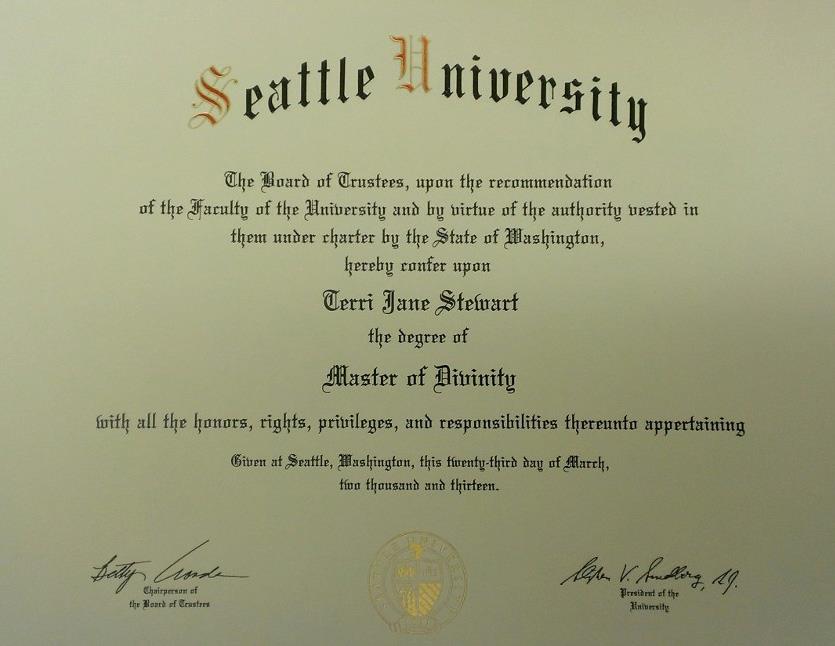
  • We are pleased to announce that our Chaplain and Site Co-Administrator, Terri Stewart, was just awarded a Master’s in Divinity from Seattle University.

NaomiPHOTO1-300ppiNaomi tells us

“I was raised in a family blessed with good stories to tell. Mom told hers over the kitchen table, while Grandma Rose spun her yarns with a kid on each knee. After college I packed my diploma into the saddlebag of my bike and headed west to see what adventures my own story held in store. I taught canoeing in King’s Canyon, worked at the Bar 717 Ranch in the Trinity Alps, and waited tables in the Tetons.

In Seattle, I became a teacher, a professional puppeteer, and a Wet Apple Clogger. It was there that I discovered storytelling, first as a teaching tool, then as a profession. That was almost thirty years ago. I met my husband and raised my family in this silver city by the sea, writing books and telling stories all the while.”

51kAqFGEesL._SY300_31X0wf8BuLL._SL500_Since storytelling is one of Naomi’s major interests and special gifts in life, it’s not surprising to know that she charms us each week with a story in photographs on her blog, Writing Between the Lines, Life from the Writer’s POV. There she shares life and travel adventures. Among her published books are: six books including several on the art and practice of storytelling. Her Amazon page is HERE.

Naomi, an award-winning writer and story-teller, has been a contributing writer here in the past. We love her posts:  they are perfectly executed works of art: careful and caring, symmetrical and clear. Lest you think we are her only admirers, here is what others are saying:

Baltuck is a master storyteller.  Story time is a very special time when Baltuck does the telling.  As she talks she is part mime, part actor, part singer… –The Seattle Times

Perhaps the quality that makes Naomi Baltuck such a fine storyteller is her affinity for and ability to communicate the beauty in life. — The Palo Alto Tribune

Storyteller Naomi Baltuck weaves magic with words…Yakima schoolchildren were treated to a taste of virtuoso storytelling as the West Coast’s best tale-spinner visited Yakima. — The Yakima Herald Tribune

Storyteller Naomi Baltuck makes sense of the world. — Pacific Northwest Magazine

With song and pantomime and the lilting cadence of her speech, Baltuck seemed to have no trouble sweeping her audience away to a world where the myths of the Pacific Northwest came alive. — The Bellingham Herald

Please join us in a warm and grateful welcome to Naomi …

…. and a proud “Congratulations” to Terri who says,

Terri Stewart
Terri Stewart

“An MDIV is a four-year general theology degree. I was terrified when I went back to school. I came from a scientific writing background and landed in territory where you are supposed to use personal pronouns in your papers and in your expression! Whoa!

After the first set of classes, I figured it out and also re-discovered my inner poet and artist. I began writing poetry again, doing art, and stepping into contemplative photography. I took to the more spiritual classes with such a passion that I decided to add on a certificate in Spiritual Direction.

34710_4202703680911_185804454_nI finished the two courses in 5 years except for one silly class that I had dropped earlier and had to take this last January-Medieval Church History. Now there’s a fun topic! In fact, it was a blast. My major papers were on the Court Beguines of the Flemish territory and on Christine de Pizan. I learned so much about women, spirituality, and what real community is by spending time with the Beguines and with Christine. It was amazing. I was also struck by the similarities in our current times and the time directly prior to the Renaissance. Polarization. Duality. The big lie. Denigration of education and intellect. Whisper campaigns. I spent half this particular class going, “Holy moley, batman!”

Anyway, my diploma says that I have rights and privileges earned with this degree. I’m not quite sure what those things are other than I have a student loan to pay back! But I am taking the education that I received and using it in two ways. One, working with incarcerated youth. Two, encouraging people to develop diverse spiritual practices.

I am blessed and privileged to have been able to travel this path. I look forward to the next rabbit trail! (Is that a PhD calling?)”

Terri has been fabulous, actively involved in Bardo from day one. She has a fine sense of timing and is a collaborator in every sense. We are more grateful for her presence here than we can say and know everyone is enjoying her wise, wonderful, and often witty posts.

Posted in Photography/Photographer, Spiritual Practice, Terri Stewart

Contemplative Photography: Listen with the Eye of the Heart

Contemplative photography is a practice I try to observe. So often, I end up reserving it for vacation times. However, with the advent of phone cameras and the increased capabilities they have, contemplative photography is at my fingertips every day! I am reading a book on contemplative photography and would like to share some of the thoughts it is stirring in me and the information it has. The book is Eyes of the Heart: Photography as a Christian Contemplative Practice by Christine Valters Paintner. You can find her at Abbey of the Arts.

Contemplative seeing is described by Carmelite William McNamara as a “long loving look at the real.” Let’s think about what each one of these words means.

  • Long – to see, we need to slow down and notice our surroundings, immerse ourselves into the moment
  • Loving – to see clearly, we need to have a compassion filter that sees beauty in all things, the horrible and the joyful
  • Look at the real – to see things as they are, not how we want them to be

Contemplative seeing also requires a journey from the head down into the heart.

In Buddhism, there is a practice of contemplative photography called Miksang. This is Tibetan for “good eye.” Miksang has the goal of looking at the real without judgement or distinctions like “beautiful” or “ugly.” The goal is to see things as they are without attaching value judgments and to appreciate it. This opens up a third space, seeing things in a creative new way. I am reminded of a visit I made to the women’s prison. It was a spectacular Pacific Northwest day. Brilliant blue skies. Inside the prison, walking across the grounds, I looked up and saw the razor wire. At the same time it was incredibly beautiful and incredibly repulsive. That is the tension that the “good eye” brings.

freedom in the penitentiary

robin sitting still
between barbs of sharpened steel
her spirit will soar

In Christianity, this “good eye” is termed the “third eye” by Richard Rohr. He describes it as the moment when “our heart space, our mind space, and our body awareness are all simultaneously open and non-resistant. I like to call it presence. It is experienced as a moment of deep inner connection, and it always pulls you, intensely satisfied, into the naked and undefended now, which can involve both profound joy and profound sadness. At that point, you either want to write poetry, pray, or be utterly silent.”

The monk, Thomas Merton, started practicing contemplative photography and he said, “How the blank side of a frame house can be so completely beautiful I cannot imagine. A completely miraculous achievement of forms.” Perhaps the good eye or the third eye is simply seeing the miracle.

All this is quite a lead up to the offering I have today of a contemplative photograph. I am going to offer an image and then I encourage you to visit one from Thomas Merton he titled “Sky Hook” and described as the “Only known photograph of God.”

After entering the photograph(s), please consider sitting with the feeling that is created when you shift from head seeing to heart seeing. Gaze lightly into the distance without focusing on any one thing. Be present to the real. After you have considered these photographic offerings, perhaps you would consider gazing around you, holding compassion in your heart and seeing something beautiful. If you have your camera, great! If not, consider the magical moment of holding the image in your heart and then releasing it.

Community
Community

Reflection: What, if anything, has changed? How was the journey from head to heart?

Shalom and Amen.

Chaplain Terri

© 2013, post and photographs, Terri Stewart, All rights reserved

Terri Stewart
Terri Stewart

TERRI STEWART is Into the Bardo’s  Sunday evening chaplain. You can expect a special post from her each week. She comes from an eclectic background and considers herself to be grounded in contemplation and justice. She is the Director and Founder of the Youth Chaplaincy Coalition that serves youth affected by the justice system. As a recent graduate of Seattle University’s School of Theology and Ministry, she earned her Master’s of Divinity and a Post-Master’s Certificate in Spiritual Direction with honors and is a rare United Methodist student in the Jesuit Honor Society, Alpha Sigma Nu. She is a contributing author to the Abingdon Worship Annual.

Her online presence is “Cloaked Monk.” This speaks to her grounding in contemplative arts (photography, mandala, poetry) and the need to live it out in the world. The cloak is the disguise of normalcy as she advocates for justice and peace. You can find her at www.cloakedmonk.com,www.twitter.com/cloakedmonk, and www.facebook.com/cloakedmonk.  To reach her for conversation, send a note to cloakedmonk@outlook.com.
Posted in Spiritual Practice, Terri Stewart, Uncategorized

I am the one who…

There is a spiritual practice called SoulCollage®. The main focus of this practice is to put together a collage that represents various things to you… your inner committee, your community, world archetypes, or totems and chakras. Below is an example of a card I created that represents various voices on my inner committee.

One of My Committee Cards

It isn’t simply the making of the card that is the point, but it is exploring the card. If I look at the card and the various images, I can settle into one (or more) of the images and complete the following sentence.  I am the one who….

  • I am the one who dreams
  • I am the one who prophesies
  • I am the one who walks towards a voice that calls
  • I am the one who is grounded
  • I am the one who flies

I could continue on. What became clear to me after I put these images together is that the holy and the worldly are held together in one place for me. That I need the child-like dreamer to be the one who confronts injustice and demands change. That the holy ferris wheel in my head holds together joy and the sacred. That being grounded allows me to fly. And I could still continue on!

Now it is your turn! I have taken a few photos of various situations, people, animals, things. I am presenting them here. I ask you to locate one photo (maybe more), and enter it and complete the statement:  “I am the one who ___________________ .”

What did you discover?

How was the process for you?

“The greatest hazard of all, losing one’s self, can occur very quietly in the world, as if it were nothing at all. No other loss can occur so quietly; any other loss – an arm, a leg, five dollars, a wife, etc. – is sure to be noticed.”
― Søren Kierkegaard, The Sickness Unto Death

“You are — your life, and nothing else.”
― Jean-Paul Sartre, No Exit

Posted in Contributing Writer, find yourself, Spiritual Practice, Terri Stewart

FINDING YOURSELF Part 2: What Story Do You Have to Tell?

What experience of the presence of the divine can you speak to?

Where has grace moved in your life?

Every time I meet with youth in detention, I am interested in hearing their story. Monday, I heard the story of a young man who is extremely disappointed in himself. So we read the Tales of the Pointless People by Dan Ehrlander. Here we explored that the keeping score, comparing, ourselves to other, leads to spiritual death. Holding yourself responsible and bearing guilt beyond your capacity are two separate things.

“Write your story as it needs to be written. Write it honestly and tell it as best you can. I’m not sure that there are any other rules. Not ones that matter.” ― Neil Gaiman

What story do you have to tell?

sailboat

“It doesn’t interest me what you do for a living. I want to know what you ache for, and if you dare to dream of meeting your heart’s longing.

It doesn’t interest me how old you are. I want to know if you will risk looking like a fool for love, for your dream, for the adventure of being alive.

It doesn’t interest me what planets are squaring your moon. I want to know if you have touched the center of your own sorrow, if you have been opened by life’s betrayals or have become shriveled and closed from fear of further pain! I want to know if you can sit with pain, mine or your own, without moving to hide it or fade it, or fix it.

I want to know if you can be with joy, mine or your own, if you can dance with wildness and let the ecstasy fill you to the tips of your fingers and toes without cautioning us to be careful, to be realistic, to remember the limitations of being human.

It doesn’t interest me if the story you are telling me is true. I want to know if you can disappoint another to be true to yourself; if you can bear the accusation of betrayal and not betray your own soul; if you can be faithless and therefore trustworthy.

I want to know if you can see beauty even when it’s not pretty, every day, and if you can source your own life from its presence.
.
I want to know if you can live with failure, yours and mine, and still stand on the edge of the lake and shout to the silver of the full moon, “Yes!”

It doesn’t interest me to know where you live or how much money you have. I want to know if you can get up, after the night of grief and despair, weary and bruised to the bone, and do what needs to be done to feed the children.

It doesn’t interest me who you know or how you came to be here. I want to know if you will stand in the center of the fire with me and not shrink back.

It doesn’t interest me where or what or with whom you have studied. I want to know what sustains you, from the inside, when all else falls away.

I want to know if you can be alone with yourself and if you truly like the company you keep in the empty moments.”

Oriah Mountain Dreamer*

Shalom,
Terri

* Oriah Mountain Dreamer is the author of several best-selling books: The Invitation (now translated into more than fifteen languages), The Dance, and The Call: Discovering Why You Are Here. Her book, What We Ache For: Creativity and the Unfolding of Your Soul, explores the challenges, rewards, and necessity of doing our creative work. 

mailTERRI STEWART is Into the Bardo’s Sunday Chaplain. You can expect a special post from her each week. She comes from an eclectic background and considers herself to be grounded in contemplation and justice. She is the Director and Founder of the Youth Chaplaincy Coalition that serves youth affected by the justice system. As a recent graduate of Seattle University’s School of Theology and Ministry, she earned her Master’s of Divinity and a Post-Master’s Certificate in Spiritual Direction with honors and is a rare United Methodist student in the Jesuit Honor Society, Alpha Sigma Nu. She is a contributing author to the Abingdon Worship Annual.
.
Her online presence is Cloaked Monk.This speaks to her grounding in contemplative arts (photography, mandala, poetry) and the need to live it out in the world. The cloak is the disguise of normalcy as she advocates for justice and peace. You can find her at www.cloakedmonk.com,www.twitter.com/cloakedmonk, and www.facebook.com/cloakedmonk.  To reach her for conversation, send a note to cloakedmonk@outlook.com.
Posted in Spiritual Practice, Terri Stewart

Listen with the Ear of Your Heart

The phrase “listen with the ear of your heart” comes to us from St. Benedict and the Rule that he developed for his monks. He begins the prologue this way,

“Listen carefully, my son, to the master’s instructions, and attend to them with the ear of your heart.”

Summarizing Jane Tomaine, author of St. Benedict’s Toolbox: The Nuts and Bolts of Everyday Benedictine Living, the divine is before us and within us waiting to be seen. Our challenge is that our busy lives leave us hurrying from task to task. Is it possible to do our work and connect to our heart, mind, and awareness of eternal transcendence? Is it possible to allow ordinary, every-day tasks to reveal to us the divine?

Yes! It is possible

Today, I am offering to you a journey with the idea of listening with the ear of the heart and apply it to an adaptation of lectio divina. Lectio divina is a way of reading that is sacred. It involves four movements. (1) lectio (read), (2) meditation (meditate), (3) oratio (pray), and (4) contemplation (contemplate). However, I am offering a practice with music.  Audio divina, if you will.

This is a piece of music called “Shadows” from the “Diaspora” album by Ibrahim Maalouf. Ibrahim Maalouf is a trumpet player and teacher, composer and arranger. He was born in Beirut, Lebanon, and now lives in Paris, France. His style is uniquely his own. A blend of Arabic tonality and jazz.

The complete movement of audio divina should take approximately 30 minutes to an hour. Feel free to adapt the practice to suit your busy lifestyle (allow the ordinary to be infused with the extraordinary!)

Audio

Please listen.

Now, take a moment to pause. Breathe. In. Out. In. Out. (allow time for the music to echo within you)

What is echoing?

Meditatio

Please play the video again.

Again, take a moment to pause. Breathe. In. Out. In. Out. (allow time for the music to begin resonating within you)

What part is pulling you? What part is pushing you? Is there a particular movement or instrument that is creating energy within?

Oratio

Please play the video again.

Again, take a moment to pause. Breathe. In. Out. In. Out. (allow time for the music to begin pulling you)

Often, prayer is about opening up to possibilities. Do you hear new possibilities? Is there an invitation? Is the energy beginning to coalesce?

Contemplatio

Please play the video again.

Again, take a moment to pause. Breathe. In. Out. In. Out. (allow time for the music to energize you)

Contemplation should lead to action. You have heard the music, entered it’s space, begun to feel it’s pull, now, where is that pull leading you? What is your response?

Shalom,

Terri

© 2013, post and photographs, Terri Stewart, All rights reserved

mailTERRI STEWART is Into the Bardo’s ne Sunday evening chaplain. You can expect a special post from her each week. She comes from an eclectic background and considers herself to be grounded in contemplation and justice. She is the Director and Founder of the Youth Chaplaincy Coalition that serves youth affected by the justice system. As a recent graduate of Seattle University’s School of Theology and Ministry, she earned her Master’s of Divinity and a Post-Master’s Certificate in Spiritual Direction with honors and is a rare United Methodist student in the Jesuit Honor Society, Alpha Sigma Nu. She is a contributing author to the Abingdon Worship Annual.
Her online presence is “Cloaked Monk.” This speaks to her grounding in contemplative arts (photography, mandala, poetry) and the need to live it out in the world. The cloak is the disguise of normalcy as she advocates for justice and peace. You can find her at www.cloakedmonk.com,www.twitter.com/cloakedmonk, and www.facebook.com/cloakedmonk.  To reach her for conversation, send a note to cloakedmonk@outlook.com.
Posted in Spiritual Practice, Terri Stewart

The Bridge

BridgeDuvall, WA
Bridge
Duvall, WA

In my driving to and from the youth detention center, I have discovered that I cross many bridges. I do, after all, live in the Pacific Northwest where it rains and rains and rains. Rarely are the bridges as interesting as the one pictured here. I began to wonder about the nature of bridges. When I look at this one, I see strength, shadow, radiance, and more.

If you took a few moments to enter this photo, what is calling out to you? Where is energy stirring within you? What is shimmering in your body?

Going deeper, now that you are stirring, do you hear an invitation? Seeing anything? Is there a question?

Finally, now that you have felt energy, heard a question, what are you going to do about it? Is there action growing out of your contemplation? Is the action, the act of stillness? An act of justice? An act of compassion for yourself or others? Is the bridge leading you somewhere? Or returning you home?

Random Observation-This particular bridge is found at a round-about. A circular spot in the road that both leads and returns. What if going forward is returning home?

“Sometimes, if you stand on the bottom rail of a bridge and lean over to watch the river slipping slowly away beneath you, you will suddenly know everything there is to be known.” -A. A. Milne

Shalom,
Terri

P.S. For a photo of a round-about, go HERE.

mailTERRI STEWART is Into the Bardo’s new Sunday evening chaplain. You can expect a special post from her each week. She comes from an eclectic background and considers herself to be grounded in contemplation and justice. She is the Director and Founder of the Youth Chaplaincy Coalition that serves youth affected by the justice system. As a recent graduate of Seattle University’s School of Theology and Ministry, she earned her Master’s of Divinity and a Post-Master’s Certificate in Spiritual Direction with honors and is a rare United Methodist student in the Jesuit Honor Society, Alpha Sigma Nu. She is a contributing author to the Abingdon Worship Annual.

Her online presence is “Cloaked Monk.” This speaks to her grounding in contemplative arts (photography, mandala, poetry) and the need to live it out in the world. The cloak is the disguise of normalcy as she advocates for justice and peace. You can find her at www.cloakedmonk.com,www.twitter.com/cloakedmonk, and www.facebook.com/cloakedmonk.  To reach her for conversation, send a note to cloakedmonk@outlook.com.
Posted in Jamie Dedes, Meditation, Spiritual Practice, Teachers

THE BREATH WITHIN THE BREATH

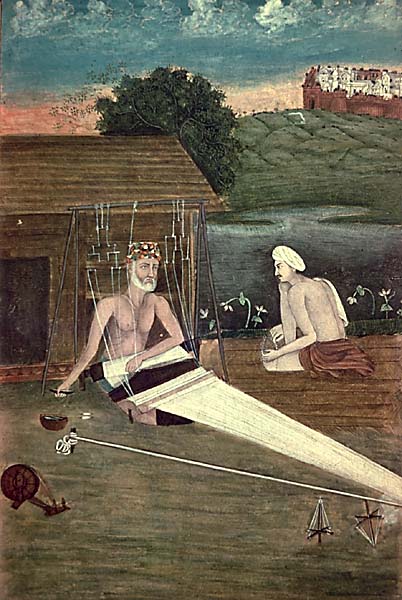
KABIR (1440-1580), MYSTIC POET OF INDIA

One of India’s great poets, Kabir’s gentle influence seems to have been broad and includes Sikhism, Bhakti, and the Sant Mat (path of the saints) sect, Kabir Panthis (Kabir’s Path). Sant Mat’s primary principle is a disciplined inward devotion to the Divine. One branch of that movement is Science of Spirituality under Sant Rajinder Singh Ji Maharaj, who has a substantial following in North and South America as well as India. Sant Mat spiritual practice involves Jyoti and Shabd meditation techniques. Jyoti is a basic practice in which the practitioner assumes a relaxed position and, with mind stilled, repeats any name of God with which s/he is comfortable. Shabd meditation is rather more complicated and involves an initiation process and a focus on the Inner Light and Sound.

In this reading of Kabir by Ram Dass, the core issues of life are explored. J.D.

·

© 2012 Jamie Dedes, All rights reserved

Illustration ~ public domain via Wikipedia

Video uploaded to YouTube by .

Posted in Dharma Talk, Teachers

RENUNCIATION & EASE

Gil Fronsdal (b. 1954), American Buddhist Guiding Teacher, Insight Meditation

Gil was trained as a Vipassana teacher by Jack Kornfield and is part of the Vipassana teachers’ collective at Spirit Rock Meditation Center. He was ordained as a Soto Zen priest at the San Francisco Zen Center in 1982, and in 1995 he received Dharma transmission from Mel Weitsman, the abbot of the Berkeley Zen Center.

He is the guiding teacher of the Insight Meditation Center (IMC) of Redwood City, California. He is one of the best-known American Buddhists. He has a PhD in Buddhist Studies from Stanford University. His many dharma talks available online contain basic information on meditation and Buddhism, as well as subtle concepts of Buddhism explained at the level of the lay person. MORE [Wikipedia]

Here Gil talks about being aware of what takes us away from ease in order to be able to return to ease again.

Video posted to YouTube by  (2008).

Access complete dharma talks by Gil Fronsdal and other Buddhist teachers HERE at the website for Insight Meditation Center, Redwood City, CA, U.S.A.

Photo credits: Gil’s photo courtesy of Insight Meditation Center under under the Creative Commons Attribution 3.0 License; orchid courtesy of Jamie Dedes.