Posted in Creative Nonfiction, Essay, find yourself, memoir, Mortality, Priscilla Galasso

Claiming Rites of Passage

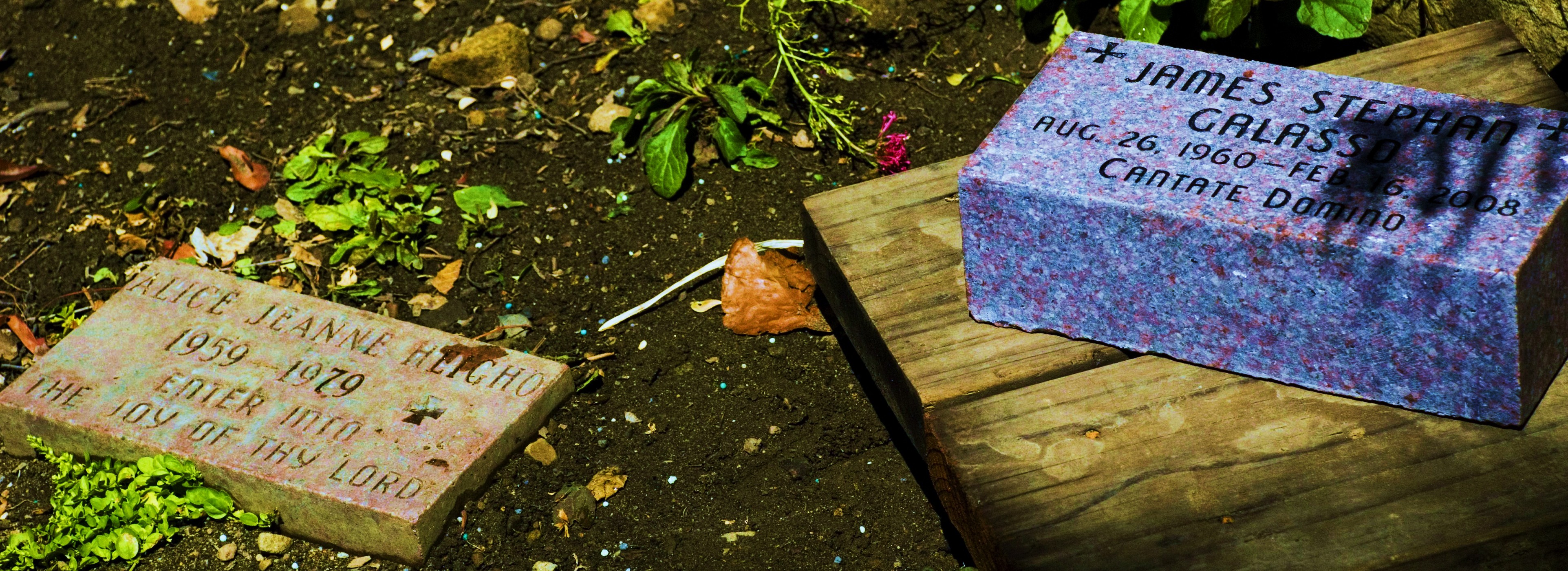
St. Luke's columbarium
St. Luke’s columbarium

A few years ago, I went to an exhibit on mummies at the Milwaukee Public Museum.  It was fascinating.  Listening to the whispered comments and questions of other patrons was fascinating as well.  We have a very scattered cultural approach to death, with so many various ways of marking the rite of passage, including not really marking it at all.

American culture, as a whole, has been dominated by technology to the point that important parts of our lives are relegated to “experts” and taken out of our hands completely.   My mother fought against this trend in the late 50s when she insisted on breastfeeding her babies instead of allowing the “experts” to convince her that artificial formula on an artificial schedule was better for them.

Birth experiences have become sterilized, institutionalized, and anesthetized as well in the mainstream. My 4 were all born in a hospital under the HMO system (but not under any pain killers!) because in my 20s, I wasn’t brave enough to seek more creative options.   However, my sister birthed one of her children at home, and I once assisted a friend who had a home birth.  It’s not impossible to choose to take full responsibility in this event.

Death is another part of life that more and more people deal with by proxy. The hospice movement is a wonderful example of the purposeful effort to maintain the grace and dignity of this stage of life by bringing it back into the home, away from institutions.  I recently watched an Ingmar Bergman movie set at the turn of the century, called Cries & Whispers (well, it’s actually called something in Swedish, but that’s the English title).  This intense family drama deals with the death of a spinster sister from cancer.  The action all takes place at home, in this case an elegant manor.  The doctor’s largest role is in an affair with one of the sisters, in flashback.  When I think of the family drama of my husband’s death, experts and technology played a huge part.  Unfortunately, that became a distraction from entering into the rite of passage, from experiencing the more intimate aspects of the dynamics that were changing my family.  What I mean to say is that it enabled denial.

The last photo taken of me & my husband
The last photo taken of my husband: 11 days before he died at home.

What does it mean to choose to take responsibility for my life?  Not to delegate the more painful or complicated bits to an “expert”, not to live by proxy or by representative?  In which situations do I most often abdicate my ability to decide a course of action?  Are they likely to be mostly financial, political, medical, social, spiritual, emotional or physical?  I am only beginning to wake up and ask myself these questions.  Steve often puts it to me this way: in every situation, you have at least 3 options:  1) Run away or hide  2) Try to change the situation  3) Change yourself.

This is a good time for me to think about aging, about how I want to live and address the changes that are happening now and will continue to happen.  What do I want?  I want to experience life in a more authentic way, not behind a duck blind or a proxy, not behind a curtain of denial or dogma, not by avoiding discomfort or hard work.  I want to make decisions about who I am and how to live proactively.  How do I embody this?  At this point, I am still figuring out who I am and want to be and recognizing places where that has been dictated and I have responded without looking deeper.   My father and my husband took great care of me.  I want to learn to do that myself.   I often dream about Jim returning as if he’d never died.

Last night, I had a powerful dream about him, set in the house I sold, with my young children around.  My consciousness struggled with it; I knew that the house was emptied and I’d moved.  I couldn’t understand why the furniture was back and the place looked so “lived in”.  I couldn’t understand why Jim was there.  He told me he was going out to work because he wanted to support me and the kids.  In a choked whisper, I closed the door behind him and said, “Don’t come back.”  I woke up crying.  Talking about this dream with Steve, I realized that I do want him to come back and float through my subconscious and consciousness without confusing me, without affirming me or correcting me, just visiting.  I suppose when I gain the confidence to affirm and care for myself, my dreams will change and Jim’s place in them as well.  Then we will both move beyond this Bardo and into a different sphere.

—- Priscilla Galasso

© 2013, essay and photograph, Priscilla Galasso, All rights reserved
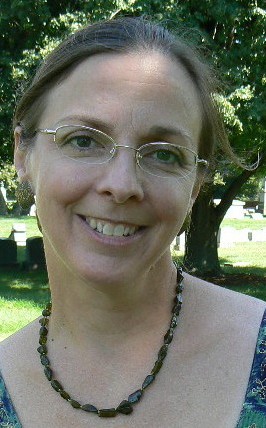
004PRISCILLA GALASSO ~  started her blog at scillagrace.com to mark the beginning of her fiftieth year. Born to summer and given a name that means ‘ancient’, her travel through seasons of time and landscape has inspired her to create visual and verbal souvenirs of her journey.

Currently living in Wisconsin, she considers herself a lifelong learner and educator. She gives private voice lessons, is employed by two different museums and runs a business (Scholar & Poet Books, via eBay and ABE Books) with her partner, Steve.
Posted in Essay, Karen Fayeth

On Tenacity

mymettles

ON TENACITY

by

Karen Fayeth (Oh Fair New Mexico)

Earlier this week I received the results of a competition I had entered, and for which I held out great hope. It was related to my writing and even an honorable mention would have been a huge step forward for me.

While entering I knew it was a long shot, but I really believed I had a chance.

Predictably, when the results were announced I was nowhere in the list, and yes, this got me a little down.

That’s the trouble, sometimes, with having hope. A burgeoning flower bud of belief can so easily get ravaged by insatiable locusts (over dramatic metaphor alert!!!).

When one is a rather sensitive artist type, it’s hard not to feel steamrolled at such times. Then again, what separates the doers from the dilettantes is tenacity.

So after feeling mopey for several days I am starting to rally. In defeat my resolve becomes just that much stronger.
For almost two years I have been using a really wonderful service that forces me to submit writing to literary journals every quarter. They are strict taskmasters and they keep me focused.

Once every three months I send out about thirty submissions, of which most of them are rejected. This means piles and piles of both email and snail mail arrive at my door just to say “you are not a good fit.”

Amazing how something like two hundred rejections can really make a girl immune to the woes. It’s like a pair of ill-fitting shoes. At first it hurts, then it makes a really painful blister, then finally a callus forms. The thin skin has toughened to endure the scraping.

Like that.

This morning I was thinking back to about seven years ago, back before The Good Man and I had married, and he was living in San Francisco’s North Beach. A really cool new art store had opened on Columbus Ave. near his place and I was just beginning my foray into the visual arts. Visual arts were a big departure from writing, which had dominated my creative juices for so long.
I loved everything about the art store and bought quite a few supplies there. One day they had posters up announcing an auction. Customers were invited to submit art works and the store would display them and then at the end of the month, the store auctioned them off for charity.

Great! I was on board. I created an item to give to the auction and when The Good Man turned in my piece for me, he was asked to put a starting bid. Because he loves me and encourages my work, he put the amount of $50 as a starting price instead of starting at zero as most other artists were doing.

Later, when we walked into the store to see my stuff on display, my piece was at the very, very back of the store among the tools and shelves where they stretch canvas. My work was clearly more amateur than the rest of the offerings and it stood out as the only one using the photographic medium, but ok. It was on display which was a huge rush.

When the auction was finished, they called to ask me to come pick up my work. The rather arrogant and sniffly clerk informed me bluntly that my piece was the ONLY one that hadn’t sold (meanwhile, he gave us a flyer so we could attend his exhibit of butt ugly paintings at a local small gallery).

I was, of course, embarrassed beyond belief, humiliated and totally crushed. Being judged by a more experienced (and in my mind, more talented) artist just about did me in.

Just thinking about it still gives me shudders of embarrassment. This morning in the wake of my recent defeat I thought again about this experience. I recalled today that among all the donated pieces, my work was the only one that listed a starting bid.

All others put in a starting bid of $0, and they all sold. Snotty clerk said they didn’t have a lot of bids and bidders. All of this means that at the end of the auction, someone could have thrown $5 at a piece of artwork and would have won.

Today I understand that instead of being sheepish about that whole thing, I should be proud. I may not have sold my work but I valued my art enough to put a price on it.

Which is stronger? Valuing my own work and not selling it at that auction, or giving it away for free, thus saying the value of my work is nothing?

I know which one I choose. Today I have straightened my spine and I feel a little better.

In defeat, my mettle is being tempered, and that only makes me stronger.

© 2013, essay, Karen Fayeth, All rights reserved. Photo by Claudia Akers.
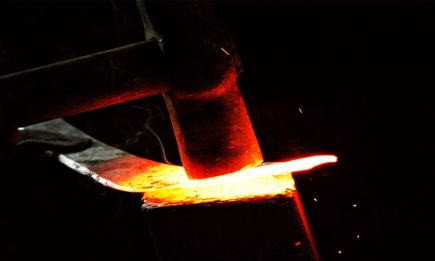
Photo credit ~ Forge, ScienceGuide

webheadshotKAREN FAYETH ~ is one of our regular contributing writers. She is our new tech manager, site co-administrator along with Jamie and Terri, and fiction and creative nonfiction editor. She blogs at Oh Fair New Mexico. Born with the writer’s eye and the heart of a story-teller, Karen Fayeth’s work is colored by the Mexican, Native American, and Western influences of her roots in rural New Mexico complemented by a growing urban aesthetic. Karen now lives in the San Francisco Bay area. When she’s not spinning a tale, she works as a senior executive for science and technology research organization.

Karen has won awards for her writing, photography, and art. Recent publication credits include a series of three features in New Mexico magazine and an essay with the online magazine Wild Violet.  Her latest short story will be published in the May edition of Foliate Oak. Karen’s photography is garnering considerable attention, but her proudest moment was having her “Bromance” (Aubry Huff and Pat Burrell) photo featured on Intentional Talk hosted by Chris Rose and Kevin Millar on MLB TV. She’s a Giant’s fan.

Posted in Essay, Jamie Dedes

ELDER POWER: Growing Strong in Broken Places

ELDER POWER:

Growing Strong in Broken Places

by

Jamie Dedes

Authors, like coins, grow dear as they grow old; It is the rust we value, not the gold. – Alexander Pope

Originally published in the now defunct California Woman.

I come to this place of Elder Power through the experience of a chronic, potentially life-threatening illness. Illness is many things. It is a mentor, not chosen, not welcome, but a mentor nonetheless. It is a challenge that often breaks the bonds of affection, the temper of the spine, and the sharpness of the mind. It is a reminder to everyone involved of his or her fragility and mortality. Everyone is touched: family, friends, and colleagues. Everyone is changed and the good or ill of it is largely choice

My family and friends want me to help others by writing from a more clinical perspective, but it seems to me that the clinical lessons are less important than the life lessons. It is the life lessons that give us the strength to keep going, that are the true value to be shared, and that make us elders. To me “elder” implies more than “senior” or “senior citizen,” which I see as demographic terms for people who have reached retirement age. A senior is someone who has merely put in time, while elder is about attitude and state of mind. Elder implies one who has learned a few things along the way.

As a writer, it is the life lessons, not the clinical ones, which inspire and inform my work. I have learned, for example, that all humans are in process and therefore imperfect; and that, no matter what our differences are, the most important things are to remain open to communication and to accept and release our own follies and those of others. I have learned that neither illness nor threat of death preclude joy. I have learned that people who are joyful rarely do harm to themselves or others. I have learned that fear of death has to be directly addressed and then firmly put aside in favor of the business of living. As the saying goes: “It’s not over until it’s over.” Until then, we have responsibilities to others and ourselves. The only real difference between someone who has a life- threatening illness and someone who doesn’t is that the former is no longer in denial.

“If people bring so much courage to this world, “ wrote Hemingway in A Farewell to Arms, “the world has to kill them to break them. The world beaks everyone, and afterward, many are strong at the broken places. But those that will not break, it kills. It kills the very good and the very brave and the very gentle impartially. If you are none of these it will kill you too but there will be no special hurry.”

I am not good, or brave, or particularly gentle. Sometimes I let it all get me down. I descend into fear. I am impatient with process, with taking meds and going for seemingly endless tests and doctors’ appointments. Maybe that’s why I’ve outlived my original expiration date by ten years. My mother used to say, “Only the good die young.” My best quality may be that under my protective shell of intractability, I actually am willing to be broken and reformed. I suppose only time will tell if I have grown “strong at the broken places.”

So, here I stand, after twelve years of battle, at the dawn of a bright new day in a body that is now significantly disabled and quite a bit older. It’s still a good morning and a good body. I recognize I once dealt with a worse handicap than my current disabilities. That handicap is commonly referred to as “youth.” I survived. Maturity on the other hand is a true boon, a gift to savor and enjoy with layers of luxurious nuance I had not anticipated. I do not long for my youth. I love my graying hair. I love my wrinkles and the loose skin on my neck. I love the mild deformity of my feet. These things remind me that I am still here after all. I will not dye my hair, though I have. I will not get chemical injections or cosmetic surgery. I will not use rejuvenating grooming products that have been tested on defenseless animals. I am inspired by civil-rights-era African-Americans who sported Afros, said essentially “this is who we are and what we look like,” and chanted “black is beautiful.” I am graying. I am wrinkled. It’s all lovely and lyrical and makes me smile. It’s about ripeness, not rottenness. It’s honesty: what you see is what you get. Aging is beautiful. With maturity, one finds character refined and perspective broadened, energy expands and compassion flowers. The experience of joy comes more easily.

As survivors, we owe it to those who have gone on, to live in gratitude for this gift of a long life. How ungrateful and what an insult it is to them for us to bemoan our maturity and yearn for our youth as we so often do. What an incredible waste of time and energy such yearning is. Many don’t survive childhood in their impoverished and war-torn areas. Some others don’t survive childhood due to congenital or other diseases. My sister died by her own hand when she was twenty-seven. I have a wonderful, talented, smart friend in her mid-thirties who will pass within three months from this writing. Like you, I have relatives and friends who didn’t make it to fifty, much less sixty or seventy. All things considered, aging is a gift not a curse.

Some of our power comes from our sheer numbers. I read somewhere that we are some six hundred million strong worldwide. In each of our countries, we represent a huge political constituency, a lucrative market, and an enormous fount of energy, experience, and expertise. If that isn’t power in this modern world, what is? What a force for peace we could be. Some of our power comes from consciousness. We are awake now. We have learned how to live in the moment and how to live joyfully, hugely. That alone is a lesson to share. Some of our power comes from more time and focus. Many of us are retired or semi- retired or on disability, or soon will be. Implicit in that is the time to keep abreast of issues in our communities, countries, and our world. We can take the time and make the effort to get accurate information, to analyze carefully, and to share appropriately; that is, in a well considered, non-inflammatory, non-sensational manner. We can act with grit and grace.

Let us show that we are strong in the broken places. Let those of us who have this gift of long life seize on it and ply our elder power. Let’s live with joy, do good, and have fun. Most of all let us be generous with our love. Soon enough, when the time is ripe, our bodies will return to the earth. Our spirits will go wherever spirits go. The river of earthly life will continue to flow. Our children will see us reflected in the eyes of their children. Our grandchildren will strain to hear our voices in rustling leaves and breezes that whisper to them in the night. They will seek us out in moonlight and the warmth of the sun, in the roar of the oceans and the gentle meandering of a lazy brook. They will find us in the good earth and in the good hearts of the lives we’ve touched with concern and compassion.

© 2009  photo and essay, Jamie Dedes All rights reserved

Posted in Jamie Dedes, Poems/Poetry

MERELY HUMAN

What is staying alive? To possess

A great hall inside a cell.

What is it to be human? by Waldo Williams, Poetry  – April 2008

·

MERELY HUMAN

by

Jamie Dedes

·

finding strength and meaning as we go along,

though often caught in a swirl, dizzy spinning

of our mortality; our gender, time and place –

rash precipitation of preposterous events

and disgraceful cruelty, and the over-heated

flowing of crazy lives and loves, gritty and

grim, yet somehow grace-filled and dauntless –

like weeds pushing up pebbled concrete slabs,

bearing our path’s weight, reaching for the sun

·

Photo credit ~ Jess Norman, Public Domain Pictures.net.

 ·