
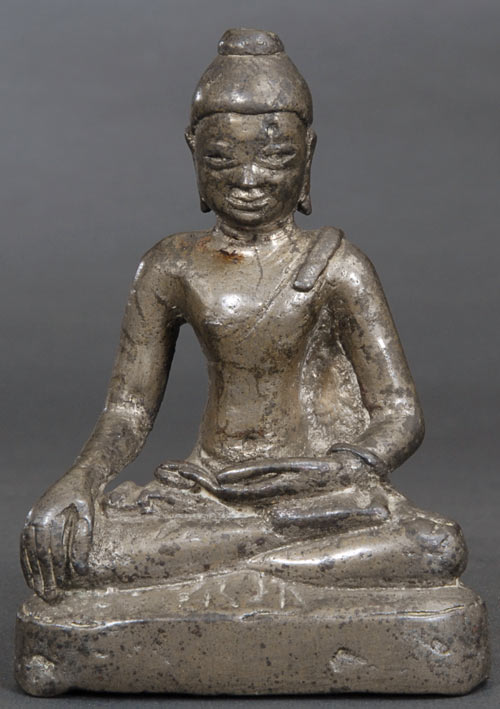
Posted in Buddhism

The Buddha’s Birthday today …

531-080413_5349The Buddha’s Birthday, Vesākha, is a moveable feast.

This year it is celebrated on May 25, 2013 in Western Countries.

In Eastern Countries it is celebrated on the eighth day of the fourth lunar month, April 8.

The Buddha’s Birthday is celebrated in different ways:

On Vesākha day, devout Buddhists and followers alike are expected and requested to assemble in their various temples before dawn for the ceremonial, and honorable, hoisting of the Buddhist flag and the singing of hymns in praise of the holy triple gem: The Buddha, The Dharma (his teachings), and The Sangha(his disciples). Devotees may bring simple offerings of flowers, candles and joss-sticks to lay at the feet of their teacher. These symbolic offerings are to remind followers that just as the beautiful flowers would wither away after a short while and the candles and joss-sticks would soon burn out, so too is life subject to decay and destruction. Devotees are enjoined to make a special effort to refrain from killing of any kind. They are encouraged to partake of vegetarian food for the day. In some countries, notably Sri Lanka, two days are set aside for the celebration of Vesākha and all liquor shops and slaughter houses are closed by government decree during the two days. Also birds, insects and animals are released by the thousands in what is known as a ‘symbolic act of liberation’; of giving freedom to those who are in captivity, imprisoned, or tortured against their will. Some devout Buddhists will wear a simple white dress and spend the whole day in temples with renewed determination to observe the eight Precepts.

Devout Buddhists undertake to lead a noble life according to the teaching by making daily affirmations to observe the Five Precepts. However, on special days, notably new moon and full moon days, they observe the eight Precepts to train themselves to practice morality, simplicity and humility.

Some temples also display a small image of the baby Buddha in front of the altar in a small basin filled with water and decorated with flowers, allowing devotees to pour water over the statue; it is symbolic of the cleansing of a practitioner’s bad karma, and to reenact the events following the Buddha’s birth, when devas and spirits made heavenly offerings to him.

Devotees are expected to listen to talks given by monks. On this day monks will recite verses uttered by the Buddha twenty-five centuries ago, to invoke peace and happiness for the government and the people. Buddhists are reminded to live in harmony with people of other faiths and to respect the beliefs of other people as the Buddha taught.

Bringing happiness to others

Celebrating Vesākha also means making special efforts to bring happiness to the unfortunate like the aged, the handicapped and the sick. To this day, Buddhists will distribute gifts in cash and kind to various charitable homes throughout the country. Vesākha is also a time for great joy and happiness, expressed not by pandering to one’s appetites but by concentrating on useful activities such as decorating and illuminating temples, painting and creating exquisite scenes from the life of the Buddha for public dissemination. Devout Buddhists also vie with one another to provide refreshments and vegetarian food to followers who visit the temple to pay homage to the Enlightened One. 

Paying homage to the Buddha

Tradition ascribes to the Buddha himself instruction on how to pay him homage. Just before he died, he saw his faithful attendant Ananda, weeping. The Buddha advised him not to weep, but to understand the universal law that all compounded things (including even his own body) must disintegrate. He advised everyone not to cry over the disintegration of the physical body but to regard his teachings (The Dhamma) as their teacher from then on, because only the Dhamma truth is eternal and not subject to the law of change. He also stressed that the way to pay homage to him was not merely by offering flowers, incense, and lights, but by truly and sincerely striving to follow his teachings. This is how Buddhists are expected to celebrate Vesak: to use the opportunity to reiterate their determination to lead noble lives, to develop their minds, to practise loving-kindness and to bring peace and harmony to humanity.

A Dharma Talk, the Practice Is Where You Are At:

Text courtesy of Wikipedia. Photo credits ~ the Buddha by Barbara Stone (The List of Buddha Lists) for The Buddha Gallery and courtesy of the curator of the gallery. Video courtesty of Insight Meditation Center, Redwood City, California, featuring Gil Frondal, teacher.

– Compiled by Jamie Dedes

Posted in General Interest, Teachers

VEN. BHIKKHU BODHI, on the Buddha’s birthday an update on Buddhist Global Relief

BGR logo

VESAK 2012
Remembering the Buddha and his teachings
with joy, gratitude, and generosity
[I’m sorry that I could not share this letter with you in a more timely fashion. The Buddha’s birthday was on May 6 this year. Nonetheless, the message is an important one. We are committed to supporting this effort and hope to engage your support as well. Thank you for reading …. J.D.]
Dear Friend,
Buddha statue
The most important holiday in the Buddhist calendar, Vesak, is just around the corner. Starting on the full moon day of May, the month of Vesak celebrates the birth, enlightenment, and passing away of the Buddha. It is a day – and a month – not only for joy and gratitude but also for recollection: for remembering the Buddha’s teachings and making a more earnest effort to practice them.
The first step of Buddhist practice is giving, and the most basic gift is the gift of food. The importance of food can be gauged from the Buddha’s own life story. In the Middle Length Discourses, he tells us that before his enlightenment, he undertook long fasts that reduced his body to a tent of bones. When he saw that the true path to awakening requires deep meditation, he also realized: “It isn’t easy to meditate with an emaciated body.
Boy and girl in Haiti
Let me eat sustaining food such as rice and porridge.” It was only after he regained his strength that he could reach his goal.
Not only is it hard to meditate with an emaciated body, but when one is malnourished it’s hard to do anything – except wait intently for the next meal. Yet close to a billion people around the world endure this fate. It’s to give such people a fresh chance at life that BGR came into being, and this purpose has inspired our work through the years.
We don’t just give handouts. Rather, we seek to make people productive and self-sufficient. We do so in diverse ways: by supporting the education of poor children, especially girls; by creating right livelihood opportunities for women; and by supporting ecologically sustainable small-scale agriculture. In just four years, we’ve already sponsored fifty projects around the world, in Asia, Africa, Haiti, and the U.S. Some of our recent projects include:
  • introducing sustainable agriculture techniques to farmers in Cambodia and Vietnam, thus increasing the productivity and profitability of their rice yield
  • providing seeds and agricultural tools to 150 impoverished families in Cambodia so they can grow cash crops and establish home vegetable gardens
Intensive Rice Cultivation
  • supplying hot, nutritious meals to hungry children in Port-au-Prince, Haiti, through a community-based food program called Lamanjay
  • supporting the education of 200 children in India, mostly girls of the Dalit community, formerly known as “untouchables”
  • training farmers in Kenya and Malawi in ecologically sustainable agriculture
  • teaching breastfeeding practices in the Diffa region of Niger, which profoundly improve survival rates of infants
  • funding the construction of a community garden and orchard in South Africa, in a region stricken by HIV and AIDS
  • providing funds for a greenhouse to grow produce for the poor in the Maryland-Pennsylvania region of the U.S.
White House meeting of Dharmic Religions
Today BGR plays a major role in representing Buddhism on the stage of global giving. In fact, in late April we participated in a historical conference at the White House that brought representatives of the “Dharmic religions” into contact with government agencies in a common commitment to humanitarian service.
We hope to continue our mission long into the future, both in the U.S. and abroad. However, we can’t fulfill our goals without help from friends like you who share our ideals and resonate with our values. Your donations are the key to everything we do: to combating malnutrition, educating poor children, and helping those who cannot help themselves. And because we’re an all-volunteer organization, we use the funds we receive prudently, with care and discretion, to ensure that 85-90% of every dollar goes directly to finance projects.
So, remembering the great compassion the Buddha extended to us, let us extend compassion to others. This Vesak season please bring forth a heart of generosity and support the work of BGR. When you give, you become part of our mission, our partner in giving a helping hand to those who need help. And you experience the joy of knowing that you are truly making a positive difference in this world, a difference that’s transforming lives.
Childen in India
May all blessings be with you and your family, on Vesak and beyond.
Bhikkhu Bodhi's signature
Ven. Bhikkhu Bodhi
Founder and Chairperson
Buddhist Global Relief is a 501(c)(3) organization. Gifts are deductible to the full extent allowable under IRS regulations. You can either donate online via PayPal on the BGR web site or send a check to:
Buddhist Global Relief
PO Box 1611
Sparta, New Jersey 07871 USA
If your company has a Matching Gift Program, please enclose the necessary forms as well.