Posted in Culture/History, Essay, General Interest, Liz Rice-Sosne, poem, Writing

A Culture of Blame

Memorial Day in the USA has come and gone.  I have been thinking a great deal about veterans of war recently.  This is probably due to the really awful press about the U.S. Department of Veterans’ Affairs (Veterans’ Administration or VA)  and Ray Shinseki.  As many know he holds the the post that oversees the VA  The proverbial “they want his head on a platter” underscores the culture of blame in this country – and perhaps worldwide.   I know nothing about Mr. Shinseki, but I do know that there is enough blame to go around.  The change of one man at the top will not right wrongs.

man-pointing-silhouetteThinking about this tragic situation with the VA made me think about the fact that we live in a “culture of blame” in this country.  Watching the news makes it appear that it comes naturally to wish to affix blame immediately for any problem that is discovered among us.  I know it well not just because I have seen it over and over but because I have lived it.  I was raised in a culture of blame.  I know what it feels like to be blamed at a young age for mistakes or problems that may or may not have been caused by me.  I ask myself, why do we do that?  When a problem is discovered anywhere, that problem should be carefully reviewed.  Facts should be gathered.  Then they should be weighed to determine how and where the problem originates.  Pros and cons ought be carefully determined and then decisions made that fix the problem with a solution that makes the entire situation better.  Instead of affixing blame we should fix the problem sooner and faster.  We would then waste less time and make needed changes more quickly.

When I ask myself, “why do we live in a culture of blame?”  I do not have the answer.  Is it a result of the need to be the best and the brightest?  For surely we can be none of those things while we make mistakes.  Is that why we need to make those mistakes belong to another?  That question makes me think back to the time when both my mother and my father stated to me that there are two places in life: “first and last,” with nothing in between.  This was an especially difficult view as they entered their children into competitions during all months of the year.  It is of course a farcical view of life and one that is not true.  This view of life does not allow for mistakes to be made while one is growing up.  And what are the mistakes made along life’s pathway?  They are merely moments of growth.  Without the mistakes that we make, we would not grow, we would not mature and we would not be able to reach our dreams.  Personal mistakes when carefully reviewed and nurtured help us to develop empathy for others.  Empathy is one of the most important of emotions to develop for empathy is the place of caring (for others).
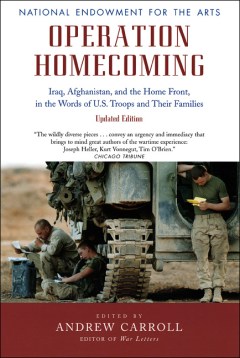
9780226094991I spent two to three years at the VA as a volunteer in 2007 and 8.  At that time I was developing my masters project while there.  I was creating a booklet on creative writing for veterans.  Oddly, due to the bad behavior of the one under whom I served (at the VA) this booklet did not come about.  Instead I was to be responsible for bringing in and overseeing an event.  Upon retrospect, this change was a very good thing.  This event brought to the VA an expert author on creative writing with veterans.  He had spent time in both Iraq and Afghanistan leading writing workshops for veterans  I learned a great deal from him.  My initial desire had been to work with young veterans returning from our most recent wars in Iraq and Afghanistan.  Andrew Carroll edited Operation Homecoming.  This book supported by the National Endowment for the Arts is a collection of writings by service men and women at war.  I recommend it to all.  In my opinion we live in these modern times too far removed from our wars.  And they are our wars.  Those who serve are doing so in the name of freedom whether or not we agree with the current war.  The old adage “war is hell” is very true.  If we (the citizens ) are far removed from war, we will confuse the war with the warrior.  We blame the warrior for the war, then we forget that warrior upon their return home.

While at the VA I worked primarily with those who had been to Vietnam or those who had served during that time.  Not all had seen combat.  As a result of war many were not able to engage life fully.  Writing gave them a way to do that.  Writing about your war experiences allows some of the pressure that you experience to dissipate. By sharing your feelings on paper and then sharing them with a class of like minded people,  some of the pressure is released.  That is a healing moment.  It is something that works for any situation, not just war.  I was able to see much of the good that the VA does.  And although my thesis was changed, I had the opportunity to work with someone who truly loved and cared for her patients.  While at the VA I wrote the following poem.

An Observation

at this table
this quiet place
where they write
this flat surface
where poetry
spills
for the hungry ones
those
who wish to leave
their wars
behind
where recidivism
is high
where
eyes are glazed
stares penetrating
where
nothing is
given away
not even longing
empty bodies
hollowed
angered 
in a
fog
they write

– Liz Rice-Sosne 

© 2014, essay, poem, and portrait below, Liz Rice-Sosne, All rights reserved; illustration “Man Pointing” courtesy of George Hodan, Public Domain Photographs.net; bookcover art, University of Chicago Press, All rights reserved
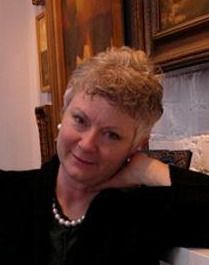
unnamed-2LIZ RICE-SOSNE a.k.a. Raven Spirit (noh where), perhaps the oldest friend to Bardo, is the newest member of The Bardo Group Core Team. She is also our new Voices for Peace project outreach coordinator and our go-to person for all things related to haiku.  She says she “writes for no reason at all. It is simply a pleasure.” Blogging, mostly poetry, has produced many friends for whom she has a great appreciation. Liz is an experienced blogger, photographer and a trained shaman. We think her middle name should be “adventure.”

Posted in Essay, Liz Rice-Sosne, Spiritual Practice

A Second Spiritual Experience – Part Two

During this time in November of 2005 I communed with a Great Horned Owl and a Red-Tailed Hawk each who each resides in Forest Park.  One evening I was meant to take to the hawk, as an act of thanks, a chicken wing and place it upon a particular iron waist-high pole on the edge of the ball fields. It was Friday night. My husband kindly came with me to Straub’s the family grocery where I shop.  He hung back a bit somewhat embarrassed.  On Friday night the place is mobbed.  So, I got in line at the butcher’s counter and waited until my turn. There was a long wait. When it was finally my turn I ordered one chicken wing.  Everyone else in line hearing my request went nuts: “one chicken wing!”  Well no, actually, “just a half of a wing I did not want the drummie.”  People were looking at me in utter disbelief, as though I had wasted their collective time with purpose.  Once I had the wing I left for the park.  The problem there was that there were police everywhere.  It looked as though I was putting some garbage on a post.  But, I fulfilled the task and had no encounters with local law enforcement.  Aside from my request to God, the other thing that initiated my experience was my long conversation with a Vietnam Veteran.

What this experience in its entirety did for me; was to give to me the actual feelings that many war veterans experience during their times in war.  You might wonder: “how could that possibly be?”  I suspect that I was meant to feel what many soldiers felt during war, because I would later work with them at the VA.  For all of my life, veterans were persons to be thought of on Memorial Day and on Veteran’s day, period. I was conceived immediately after WWII.  So, my relation to veterans was not unusual. After my experience in which I sensed the emotional torment of those who have seen battle I was radically changed.  I studied war. I volunteered at the VA for several years and I gained a healthy respect and love for our country’s veterans. I might add I truly gained a deep respect and love for Vietnam Vets as they are of my generation. I also acquired abhorrence for war. I truly came to understand “love the warrior, hate the war.”  Most cannot enter into that cliché and act upon it. It is very tricky and very difficult for it is so political.   But my experience lacked all political thought or sense.

The other thing that I did was write about 20 poems about war, veterans, acts of war … really anything that came out of my experience that year.  My first poem titled: “A Certain Madness.” It came about during one particular writing class that I taught at the VA.  The poem follows.

A Certain Madness

Each one came, soldier, marine, airman, frog, walking quietly as if wrapped within the cocoon of his own world.

War’s sad energy like a gray, heavy mist lay upon the shoulders of each, reality spiking their dull black piercing shadows.

Each man sat at the table abandoned. 
 “Just a word? Coffee please.  May we write yet?”

And then he stood.
 A large and heavy presence, poorly balanced.

He shouted:  “Don’t you see them?
 There, in the corners … there is one in each corner.”

“How dare they come here?
 I ought-a know. 
I was with the CIA.”

Then he sat down defeated, again. 
 He seemed to relax until another
stream of madness crept out of his throat.

“I will NOT be giving you a sample today! 
 There will be no writing samples. 
 THEY … are here for that reason you know, to collect them.”

And I thought to myself: 
“Does the madness hide the pain? Or perhaps this pain drives one mad.”

© Liz Rice-Sosne

unnamed-2LIZ RICE-SOSNE a.k.a. Raven Spirit (noh where), perhaps the oldest friend to Bardo, is the newest member of The Bardo Group Core Team. She is also our new Voices for Peace project outreach coordinator and our go-to person for all things related to haiku.  She says she “writes for no reason at all. It is simply a pleasure.” Blogging, mostly poetry, has produced numerous friends for whom she has a great appreciation. Liz is an experienced blogger, photographer and a trained shaman. We think her middle name should be “adventure.”

Posted in Essay, Shamanism, Spiritual Practice

A Second Spiritual Experience – Part One

I feel privileged to be in the company of those who write here upon The Bardo.  It is an honor.  Though untrue, I often feel as though we write together.  That is comforting to me.

Spiritual experiences are by their very nature exceptionally private.  They can be difficult to speak of due to that private nature and due to the lack of an adequate lexicon.  I am not terribly private.  So, I would like to share one of my own experiences with you, as it radically changed my life.  It was 2005 and I had been retired for two years.  I served on several boards as a volunteer but otherwise I was bored.  So I will say to you before you read further – do not be offended by anything that I say.  This is a personal experience.  I am not proselytizing nor would I ever.  I am merely sharing.

I have never served in the military and I have never been to war.  The closest I came was in 1967-8 when formerly married and living on Okinawa, close to the war in Vietnam.  But that experience bears no relation to this experience.  This experience of which I speak was the second life changing spiritual experience that I have had within my lifetime. The first was Christian in nature in 1973.

This life-changing experience came to me via my plea one day to God: “What do you want me to do? What should I do now?”  At about the same time I began an ongoing conversation with a Vietnam Veteran, a former B-52 Bomber Pilot.  The experiences that followed were all a part the answer to my question. This experience was shamanic in nature. Shamanism is something that I studied in the 80s and 90s. This experience lasted about 6 weeks, it appeared to many that I might be having a “nervous breakdown.”  My friends were worried. My husband trusted me but worried nonetheless.  The experience was very dramatic, very painful and most ecstatic. I knew that I was doing exactly what I was meant to do.  None-the-less, I hung on for dear life. It was extremely hard to remain grounded. To do so I engaged the services of three different people, a body-worker, an exercise therapist and a counselor.  I remember and will recount one particularly humorous thing that happened.  Tomorrow.

unnamed-2LIZ RICE-SOSNE a.k.a. Raven Spirit (noh where), perhaps the oldest friend to Bardo, is the newest member of The Bardo Group Core Team. She is also our new Voices for Peace project outreach coordinator and our go-to person for all things related to haiku.  She says she “writes for no reason at all. It is simply a pleasure.” Blogging, mostly poetry, has produced numerous friends for whom she has a great appreciation. Liz is an experienced blogger, photographer and a trained shaman. We think her middle name should be “adventure.”

Posted in Culture/History, Essay, Naomi Baltuck, Photography/Photographer

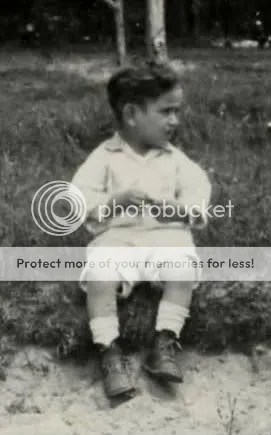
Remembering Uncle Lewis, A Memorial Day Story

One of my earliest memories is of dinner at Grandma Rose’s house.  Her towels, furniture, and closets smelled of mothballs; she even stored her silverware in mothballs.  Mostly, though, I recall standing on Grandma’s couch to study the framed collage of black and white photographs on her wall.  I recognized my father, but knew the other boy in the pictures only by name, and by heart.

Uncle Lewis was my father’s only sibling, younger than my dad by ten years.  We never met, and Daddy never spoke of him.  But they were best friends.  In one picture Lewis was laughing, having been surprised on the toilet by my father with his camera.  The brothers teased Grandma too.  Lewis would yell, “Harry, stop hitting me!”  Grandma would rush in, and scold my father for picking on his brother.  Undaunted, they’d laugh and repeat, until Grandma caught on.

Soon after the attack on Pearl Harbor, Lewis was drafted into the infantry, a shy studious eighteen year old who had never kissed a girl.  My father joined up as an officer.  He pulled a few strings to get Lewis transferred into the 30th ‘Old Hickory’ Division, so the brothers could cross the Atlantic on the same ship.  Lewis wrote letters and post cards home, often addressed to their dog ‘Peanuts.’

“Hey, Peanuts, tell Pa to eat his spinach!”   From the ship he wrote, “Harry and his buddies sneaked me into their cabin.  They gave me chocolate and let me play with their puppy.  Don’t tell anyone, or we’ll all catch it.  They smuggled the pup on board, and officers shouldn’t fraternize with enlisted men…”

While serving in Africa, Italy, England, France, and Germany, Harry was safely behind the front lines.  But Lewis was sent to Normandy two days after the D-Day invasion.  He fought in the hedgerows of France, and in Holland.  “The Dutch ran into the streets and passed out everything from soup to nuts.  As we marched out of there in the middle of the night, you could hear the clink of cognac, whiskey, and wine bottles in the guys’ jackets, amidst all the cursing and the roar of the Jerrys’ planes overhead.”  

To his parents Lewis wrote, “Dear Ma and Pa, today I saw General Eisenhower drive by.”  Or, “Kronk said the war can’t last.  It just can’t.  And he said it with such an angelic look on his face, I believe him!”

But to my father he wrote, “You should see the bruise from where a bullet passed through my shirt, Brub.  It was a close call.”  Or, “They took Julian away.  It’s so lonely here, Brub.  He’s the reason I wouldn’t take that promotion to sergeant.  We dug in together, took care of each other when things got rough.  I don’t know how bad he’s hurt; I just hope he makes it, and escapes this Hell.  Pray for me, Brub. Pray for me.”

On September 20, 1944, the day before his company attacked the Siegfried Line, Staff Sergeant Lewis Baltuck was killed by the blast of a shell.  Twenty years old, he had hardly begun to live.  He was survived by his parents, his dog Peanuts, and his brother Harry.  He never had the time or the opportunity to fall in love and marry.  He left no children to mourn for him—only the Bronze Star and the bronzed baby booties Grandma kept on her bookshelf until the day she died, more than forty years after her son’s death.

Harry married, had seven children, and built his own little house in Detroit.  But for the rest of his life he suffered acutely from the unspeakable burden of depression and Survivor’s Guilt.  When Grandpa Max died, my father became the sole caretaker of his widowed mother.  There was no one to share that burden with, to joke with or jolly her along.  Worst of all, crazed with grief, Grandma Rose blamed Harry for Lewis’s death.

I envied those kids who grew up with cousins to play with, and uncles who cared about them.  Uncle Lewis would’ve been that kind of uncle, and my father would have been a different man, without that black cloud to live under.  When Daddy died in 1965, we lost our connection to my father’s extended family, and our ties to our paternal cultural heritage were nearly lost as well.  But it does no good to dwell on the past or to speculate on what might have been.

Uncle Lewis was right about one thing.  War is Hell.  The price it exacts is impossible to tally, and can never be repaid.  When a soldier is killed, one heart stops beating, but many more are broken.  The wounds inflicted upon whole families are so deep that the scars can still be felt after generations.

I swear my uncle’s little bronze baby booties will never end up on the bargain shelf at the Salvation Army Thrift Store, like so many others I have seen there.  How sad to think that such precious keepsakes might be tossed into the giveaway because no one remembers or cares about the one whose little feet filled them.

I attended the 60th reunion of the Old Hickory Division in Nashville in search of someone who knew my uncle.  I met only one man who remembered him…“a quiet man who didn’t say much, but when he did speak, he was always worth listening to.”

I tell my children that story, and many other stories about their Great Uncle Lewis.  I am confident he will be cherished and remembered, not just for his tragic death, but for his joyful life.

copyright 2012 Naomi Baltuck

NaomiPHOTO1-300ppiNAOMI BALTUCK ~ is a Contributing Editor and Resident Storyteller here at Bardo. She is a world-traveler and an award-winning writer, photographer, and story-teller whose works of fiction and nonfiction are available through Amazon HERE. Naomi presents her wonderful photo-stories – always interesting and rich with meaning and humor – at Writing Between the Lines, Life from the Writer’s POV. She also conducts workshops such as Peace Porridge (multicultural stories to promote cooperation, goodwill, and peaceful coexistence), Whispers in the Graveyard (a spellbinding array of haunting and mysterious stories), Tandem Tales, Traveling Light Around the World, and others. For more on her programs visit Naomi Baltuck.com