 I used to hate her, foolish, a teenager’s hate that can only be explained in a parallel universe where logic doesn’t exist. I was a sixteen-year-old girl in a class with additional studies of mathematics. I was supposed to have the sharp brain, the emotion-free behavior required for someone who was a shining star in solving mathematical problems. Then suddenly there it was: the literature lesson about her and one of her poems I don’t even remember. The teacher decided that I was the one who should talk about her that day because of the first name we shared.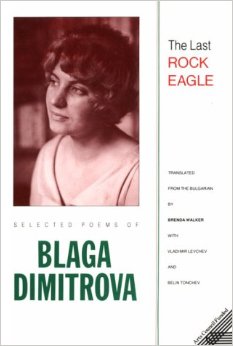
It was a disaster! I hadn’t read a word from what was written in the school books about her and her poetry. When I was asked the question ‘What do you think Blaga Dimitrova’s poem symbolizes?’ all I could think about to answer was, “The only person who really knows what the words in a poem meant is the author herself. We, as readers, can interpret as we feel right and only hope we’ve reached close enough the thoughts of the writer.’ Wrong answer! A bunch of literature critics that wrote the school book of literature, had already decided what her poetry signified, just like they had decided what every other writer we had studied represents with their work.
I got a bad mark that day and I had come to a conclusion that no one should want to be a poet in a country where we are told what to think. The bad mark wasn’t the worst. After the lesson everyone started calling me Dimitrova. I didn’t like it, I could feel it was meant to be a joke with my personality; to label me with the weakness of feelings only poetry could carry because this is what I used to think about poetry and poets – weak people spilling their weaknesses… Ridiculous, isn’t it? And who knew that I would become one of those weak people. Who knew that one day I would learn to squander my emotions elegantly on a piece of paper and love doing it too?
At the same time Blaga Dimitrova was vice president of my country, Bulgaria. That was another reason to dislike her. I didn’t dislike her because she was in politics. Who was I to judge someone I have seen only on tv? I disliked Dimitrova because I couldn’t understand why a sane person would stand to support the President we had at that time, and I just couldn’t understand why he was elected. I didn’t know him either. I was way too naïve and young to have the maturity to understand the political situation, but on his face was written all over “I’m capable of nothing.”
When a year later Blaga Dimitrova resigned from her post as a Vice-President due to a disagreement with the President she gained my respect and with that come the urge to re-evaluate her poetry. It was a shock to find that I actually loved her style, her words. The first poem I read and understood from her was:
Tag
I keep forgetting my clock
to escape the time.
But it catches up with me and I whirl
with the whopping, falling leaves.
I enter the sea with the clock on my wrist
to drown the time.
But it slaps me in the face
with the bells of the foam.
I’m not counting the beats of the pendulum;
I want to put the time away.
But it lands right on my nose
with the first snow.
At night I don’t set the alarm
with the hope the time will stop.
But it’s waiting for me in the cold bed
with love already gone.
– Blaga Dimitrova
Then I read her novel Journey Toward Myself. It’s a book about a girl who tries to escape her past, which is not an easy task in the years of communism, especially if you were born in the wrong family. The message is rather strong and easy to apply to anyone of us. No matter how much we travel and how much we search for the person we are supposed to be, sometimes what we are meant to be is right there where we started our journey.
My favorite quote from Blaga Dimitrova’s book is: “I blessed him with a smile. It dissolved him completely. There was no need for words. I should have tried with a smile at first. I tend to forget that this is my most faithful weapon. I have never thought what impact a smile can have. Only here in the land of rocks and coarse people I found the strength of my smile. It’s worth to travel so far for such a discovery of your own possibilities.”
It’s somewhat hard to explain Blaga Dimitrova’s work and to try to extract a short conclusion that could fit into one review. There is always that special feeling left in the heart after you read her. Maybe that’s why I grew very fond of her poems and stories over the years and maybe that’s why it’s really difficult to fit everything I want to say about her in one blog post.
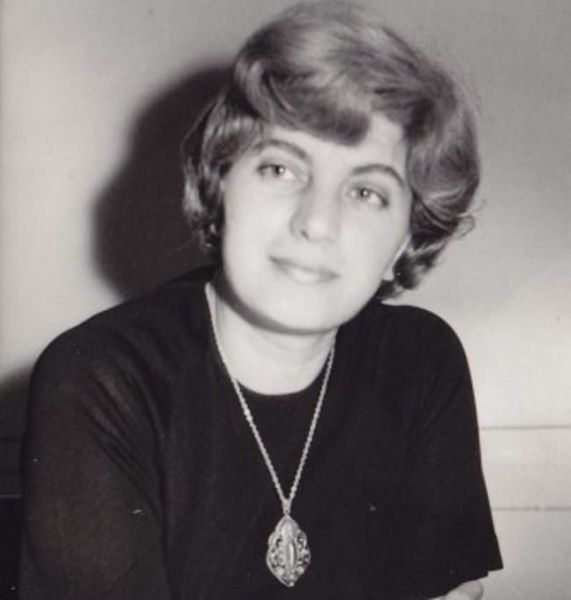
I can tell you that she comes from a family with professional parents. Her mother was a teacher and her father was a lawyer. She attended a roster of prestigious schools and gained an education that supported her talent. She was honored with many literature awards.
One of her books, Avalanche, was made into an acclaimed movie, one of the best Bulgarian movies ever in my opinion. Some of Blaga Dimitrova’s work was forbidden in the 80s, because of the strong anti- communism touch. I could tell you that some people liked her and some not. Be it for her political views, be it for her writing, it doesn’t matter to me. On the 2nd of May in 2003 after a long battle with cancer, Blaga Dimitrova died. She was eight-one years old.
I believe on that day Bulgaria lost a great talent. Many years have passed. I am no longer the sixteen-year-old girl who didn’t know how to appreciate the good things in life. I have left Bulgaria for my own reasons and maybe I am still traveling towards myself to find who I really am. It hurts sometimes when I go back home to see that nothing from great people like Blaga Dimitrova was passed on to the new generation. Sometimes I still feel the burden of the shared name with the poetess, not because I am embarrassed to be connected to the weakness of poetry, but because I am afraid I will not be able to stand up worthy of the name Blaga like Ms. Dimitrova did with her talent. I love so many of Blaga Dimitrova’s poems, it’s hard to choose the best, but this one I had written on my wall in the room where I was living during my years at University. It is the one I cherish most.
Lyrical
In the sunset of every love
occurs pain and sadness.
After sunset every night
comes darkness and silence.
When somebody leaves you,
you don’t have the strength to stop him.
When you see that love dies
you can’t die along with it.
You understand that the dreams have never been real
that you have loved, but there wasn’t love,
that the memories are a pain that has fled already,
that you were happy, but you didn’t notice it.
– Blaga Dimitrova
For everything I have translated in this post, there probably could be a better translation. I’ve said it many times, some poems are best to be read in the language they have been written, but I did the best I could. My thanks to The Bardo Group for the opportunity to share the story and poems of a great Bulgarian poetess with readers here in honor of interNational Poetry Month.
© 2014, essay, Blaga Todorova, All rights reserved
Photo credit ~ Merolina under CCA-SA 3.0 Unported license via Wikimedia Commons
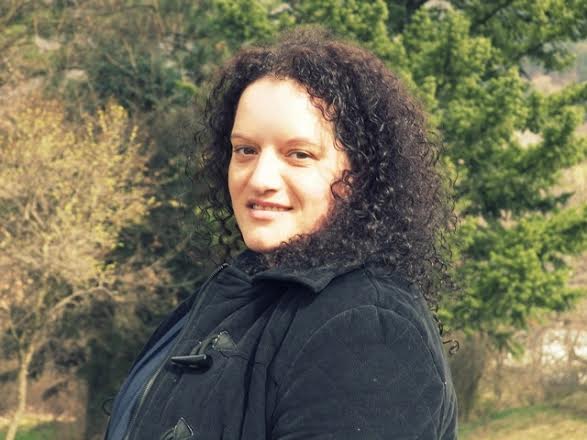 BLAGA TODOROVA (Between the Shadows and the Soul) ~ was born in Bulgaria, lives in Greece and doesn’t stop dreaming about finding new country for herself. She doesn’t consider herself a writer, but just someone who sometimes is lucky enough to be at the right place, with the right person, with the background of the right music that will bring the right words. Blaga has been blogging for many years now and has won the friendship and following of other poets and writers for her insights, humor and sense of romance and of justice. English is not her first language, but she uses it well and it is her favorite language for her favorite artistic pursuit, writing. She has a novel in progress. She is also a rather accomplished photographer.

 The BeZine
Reblogged this on THE POET BY DAY in 2014, My Year of the Horse and commented:
As part of celebrating interNational Poetry Month, Blaga Todorova has written an essay about the Bulgarian poet, Blaga Dimitrova, which is posted today on The Bardo Group blog. Dimitrova was – in addition to being a poet – a writer and the former Vice President of Bulgaria. She was the inspiration for John Updike’s short story “The Bulgarian Poetess” … so read on and link through to the complete post. Two of Blaga Dimitrova’s poems are included there …
LikeLike
we do hate without reason or rhyme sometimes!
LikeLike
I love the recognition of our evolution into self…we’ve all been teenagers, we’ve all passed through places of reflecting others, we all struggle to find the authentic essence of our lives, our thoughts, our names. Beautiful post about the soul work of poetry.
LikeLike
Once again, thank you Jamie for always giving me the chance to participate in beautiful events. Thank you everyone for taking the time to read and leave kind comments!
LikeLike
You are well-named, Blaga. The line that really got to me was the one about no one should be allowed to be a poem in a country where you are told what to think. Gut-smacked me.
LikeLike
I know you have said you don’t consider yourself a writer, but I respectfully disagree, Blaga! Thank you for introducing me to a new poetess. 🙂 I happen to think you are worthy of the name. I may be biased, but I believe that you write beautiful, romantic poems with enough vivid imagery to keep them real for the readers.
LikeLike
Ditto that, Corina!
Jamie
LikeLike
Corina, Victoria- thank you ladies for the kind words! Much appreciated!
LikeLike
The oppressiveness of the communist regime, of any tyranny for that matter, is never more evident than in the suppression of free expression in the form of art and of free thinking in the form of literature … and of poetry in particular. This is so well expressed here from a heart that clearly sounds as if it still feels homeless as a result of such tyranny. If it helps, Blaga, I for one would say your heart is welcome here at the Bardo. Thank you for providing this insightful piece for us.
P.S. I have a view on the kind of person, of whom you make mention early in this essay: those critics, who feel they have to define the inside meaning of the work of well known poets and writers, particularly when that work comes from a deep well of passionate feeling. The need for intellectuals to feel they have to competently define what we read, never ceases to surprise me. Whilst occasionally they might get it right, most times they simply don’t know. We should all be able to interpret the work of poets in our own way; the only way we should share this interpretation with others is to engage them in a mutual love of its art; of its beautiful expressiveness; of its yearning for a less controlling world and the celebration of what elevates the spirit.
LikeLike
Dear PoetJanstie, thank you very much for the wonderful comment! I too have my own theory about people who try to put a certain label of meaning to a poem, to a story or simply to single expression in writing, and it is very close to your theory. The funny part is that I have never liked the way they tried to force on us opinion about writers and their work in school even if I wasn’t sure why exactly I didn’t like it, but few years ago when I started writing and I saw how people interpret my poems and most of the times it was absolutely wrong, then I realized why I didn’t like those labels. But a wrong interpretation of my poems only gave me the prospect of seeing situations and feelings from other angles, which to me is improvement and advantage in life. It’s a subject that couldn’t be discussed in only one plain comment, but yes, I agree with you. As for communism, it wasn’t all that bad, there are few good things that I actually miss. 🙂 All the best to you and once again, thank you for taking the time to read and comment!
LikeLike