

Trauma, Story, and Healing

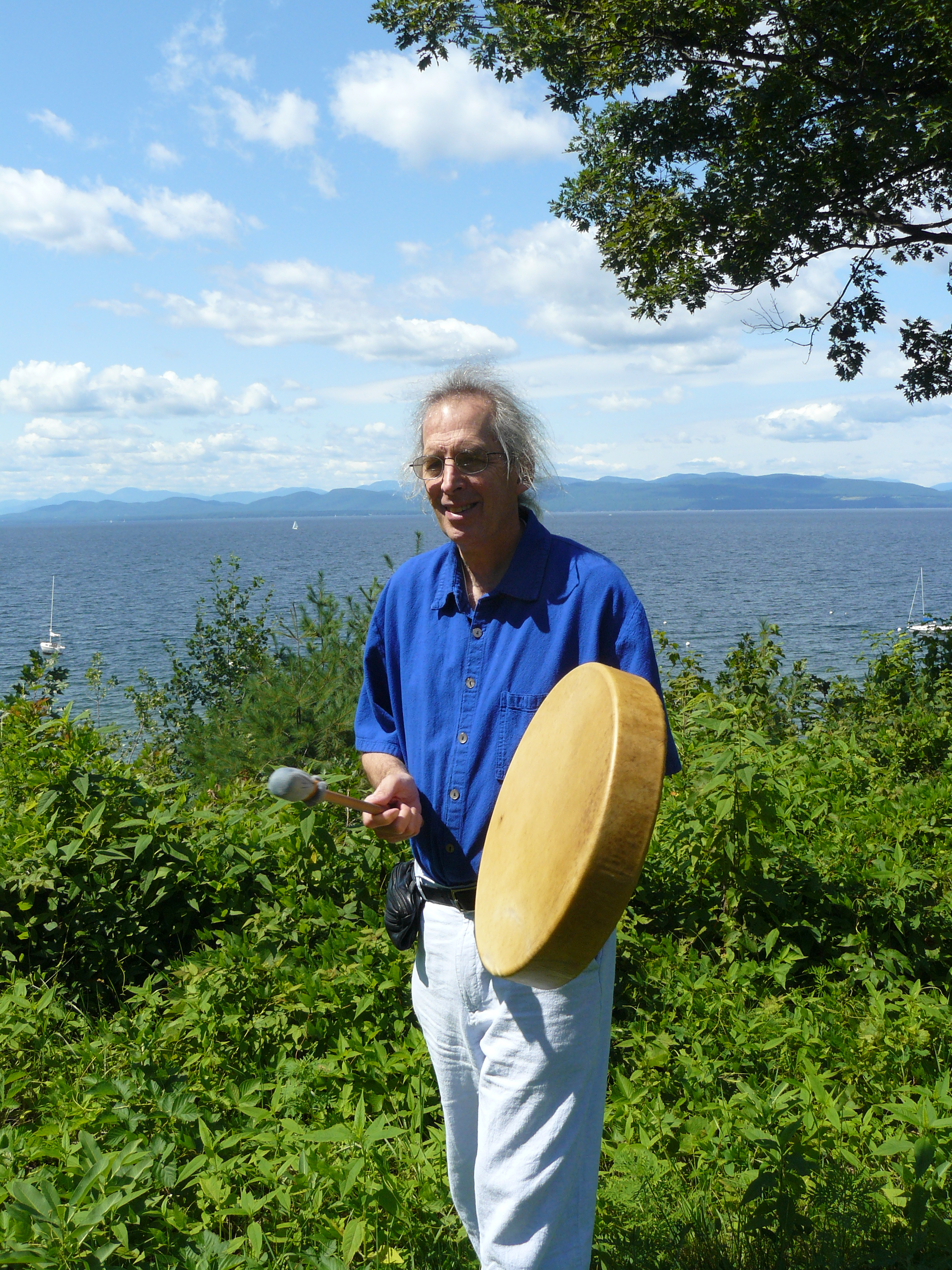 MICHAEL WATSON, M.A., Ph.D., LCMHC (Dreaming the World) ~ is a contributing editor to Into the Bardo, an essayist and a practitioner of the Shamanic arts, psychotherapist, educator and artist of Native American and European descent. He lives and works in Burlington, Vermont, where he teaches in undergraduate and graduate programs at Burlington College,. He was once Dean of Students there. Recently Michael has been teaching in India and Hong Kong. His experiences are documented on his blog. In childhood he had polio, an event that taught him much about challenge, struggle, isolation, and healing.
  The BeZine
Interesting look at healing from PTSD… seems a calming way to deal with it, stepping forward into the unknown to create our own meaning and stories.
LikeLike
Maybe the key is to forgive ourselves and each other when we are afraid, and anything but calm. That is part of the healing journey, too.
LikeLike
We are nothing, if not our stories and memories. The mythologies we shape of ourselves. And yes, it is in the re-weaving, in the examined life that we make ourselves whole. Thank you for penning this, Michael .
LikeLike
Interesting and compassionate way to help from the therapist perspective and one that we can adapt one-on-one, I should think … in the sense of listening and awareness and respect for story. Thanks, Michael.
LikeLike
Hi Jamie! I believe friends can listen and encourage healing. Therapists have a have a unique role but we can’t do all that needs done. Folks need friends to encourage and support them.
LikeLike
Very interesting, Michael. I have come to believe that everyone holds the answers to their healing inside; they can know what it looks like to be more whole and what they need to join the fragmented pieces into a more desirable whole. I love the analogy of the weaver, I also have found the analogy of a jigsaw puzzle helpful. I think the work of the healer is to listen very carefully and to be able to form well timed questions or observations that help people see their selves and their world with new truths. Thanks for writing this post – I always enjoy thinking about the work I did, but haven’t quite let go of in my heart.
LikeLike
Hi Pat, Yes, we hold the answers. It’s just that sometimes we hold them from ourselves! I imagine you still do the work; perhaps the context has changed.
LikeLike
Excellent description about a subject not easily described. I’m going to visit Grandmother Spider and see what she has to say. I experienced childhood abuse and it seems as though I rewove my reaction to my story. However, as I have observed that fear drives everyone I know to some extent, I have also seen that fear lurks beneath my second story. So it’s not gone….just covered up. What has happened is that I identify less with it. A tangled web……is it not.
LikeLike
Hi Gretchen, We humans seem innately driven to create story, to make sense of our experiences. Trauma generates stories that may be difficult to work with, in part because key pieces of the meaning we attribute to it remain hidden. The task of being open to the story can seem daunting, indeed. (Thus the fear?) In spite of this, we move forward with our lives and find healing.
LikeLike
I was doing trauma debriefing in Africa during the war-torn nineties, and healing does happen in many different cutural ways that we could never achieve through psychological colonialism. I love your description that trauma is a crisis of meaning. Meaning is certainly lost in the midst of war, disease, famine and displacement.
LikeLike
Thank you. Trauma work in Africa surely brought you to the heart of the problem. Meaning is lost in trauma, and as you hint, may be regained in the healing process. So much work that needs done around the country and world!
LikeLike
This is the second reminder in less than a week of how our perceptions are culturally-based and how easy it is to misunderstand other if we don’t learn about their world view. Wise observations, Michael and a good basis to move toward self-understanding, too.
LikeLike
Thank you, Victoria. At dinner with colleagues this evening, hours of conversation about things becoming lost in translation, and the challenges of encouraging communities to awaken to the diversity within them. It was a good, if hard, conversation.
LikeLike
I really enjoyed reading this. I agree that context is important, especially when one considers that even though a person may grow to adulthood, the wounded child is still there, inside. Which aspect of the person do you treat and address, or is it a combination of both, just as the person is a combination of both adult/child? Do we listen for the stories told to us by the wounded child or by the adult who has processed the pain/trauma (or perhaps buried it) in order to find the best way to help a person heal? PTSD has been an interest of mine for a long time. I agree with you that there is not a “one-size-fits-all” method of treatment, but do you think that treatment is all that is available? Is there a ‘cure’? Aside from the cornucopia of pharmaceutical drugs available, do you think it’s possible for the traumatized mind to truly become “whole” again or is it destined to *have* to weave a new story made up of the fragments? I’m sorry if my questions are bothersome or unclear. I learn something every time I read your work and it’s nice to be able to directly ask the source. 🙂
LikeLike