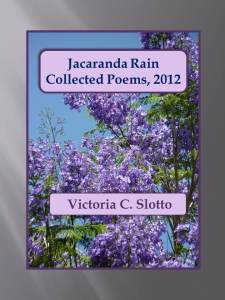
RN, former hospice nurse, kidney transplant survivor, spiritual seeker, novelist, poet—Victoria C. Slotto is the author of two novels: "Winter is Past" and "The Sin of His Father", a collection of poetry: "Jacaranda Rain," and a Kindle Single: "Beating the Odds--Support for Persons with Early Stage Dementia, " all of which are available in e-book and print formats. Use the link on my blog or visit my website at http://victoriacslotto.com/ to purchase. Thank you!
The Love that’s tinged
by Eros
is easier to write,
to live and
to imagine:
the silken touch
of water—
cool caresses in a Lake—
a kiss that tastes
of wine
and sweat.
Subtle sounds of
breath, and
pounding pulses
and images that linger
in the darkness of
a new-moon night.
But as the days grow old
and we, along with them,
diminish,
winter shadows
cannot overwhelm
enduring Love.
You probe the
memory of
a day gone by
and stroke
a shriveled hand.
Then Spring breaks through
in songs of mockingbirds.
– Victoria C. Slotto
I am a visual, hands-on learner. My husband is more auditory. If I’m sitting through a lecture, I need to take notes in order to incorporate the key points being delivered. David will just sit, listen and absorb. It’s disconcerting to both of us when he starts discussing things such as the stock market or how to improve my golf swing and I don’t follow…(and it’s hard to take notes when you’re already in bed.)
People do differ in their favored modes of sensory perception. You may want to touch or taste, while your friend will associate sounds, colors or aromas with a place or event. That’s why it’s important to evaluate descriptions in terms of the senses. Make sure you haven’t just focused on those things that speak to you.
Photo: morethanbranding.com
Last Thursday at dVerse Poets’ Pub, I offered a prompt, asking those who wished to participate to really pay attention to an object, to dissect it with their senses, to let it tell a story or tease out a long forgotten memory.
Here’s what I suggested:
You could begin by enlisting the help of your senses. How does it smell, taste, feel to touch? Describe what you see or hear. Does it make you feel a certain way or engage a memory? Where did you find it? Give some environmental details if appropriate. Are there any verbs that pop into mind when you see this thing?
Go ahead, take it a step further. Is it possible that this artifact can be used metaphorically? Does that stale bread remind you of a relationship, or the gravel beneath your bare feet the pain you find along life’s journey? Does it, perhaps, remind you of someone or something in your own life? Personify it, if you like.
I’d like to share with you some examples from the opening chapter of my novel, The Sin of His Father. The protagonist is at the deathbed of his mother. Here’s how I’ve tried to incorporate the senses:
Sight: “The dim light threw his mother’s profile into an eerie silhouette. It was as though someone had let the air out of a grotesque balloon–the parody of an Irish washer woman paraded down Columbus Drive in downtown Chicago on St. Paddy’s day…”
Taste: “…the taste of bitter coffee he’d sipped a few hours earlier crept up his esophagus and caused him to gag.”
Hearing: “Ellen’s roommate breathed slowly before turning in her sleep. That was the only sound Matt heard, aside from his mother’s raspy breathing, the bubbles of the oxygen humidifier and the gentle hiss of the gas escaping around the small prongs sticking in her nose.”
Touch: “He fondled the smooth bowl of the pipe that waited for his attention in the pocket of his jacket and longed to step outside to indulge his habit.”
Smell: “His mother’s fetid breath stroked his cheek. He wanted to flee the close air of the room and take off into the night.”
Attention to sensory descriptions throughout the process of rewriting is an excellent way to enrich your manuscript. Perhaps you will select a key scene from one of your stories or a poem and rewrite it, utilizing as many senses as you can. Or write a new paragraph or poem that focuses on sensory detail. Check out the post at dVerse if you like for some samples of poetry, including Neruda, Keats and myself.
Photo: thepaleodiet.com
To Participate as a Group:
Write your poem or short prose and post it on your blog or website.
Access Mr. Linky at the bottom of this post and add your name and the direct URL to your post.
Visit others, if you are able, and see what they came up with. Reading each other’s work is, for me, a great way to learn.
Above all, have fun, enjoy the process.
I look forward to reading your work. Victoria
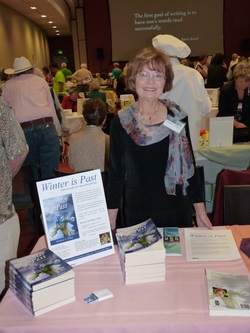
Victoria at the Palm Springs Writer’s Expo March 2012
Since the first writing conference I attended (2004, I believe) I have been involved in writing critique groups. It was for that conference that my work was first accepted for work-shopping and I was sure that I had arrived. A published author led the two-day process and there were about nine of us who submitted work to the other members of the group for critique. It became a turning point for me as a writer. I came to accept the fact that my novel was not quite as brilliant as I perceived it to be.
A few of us from that group went on to meet on a regular basis. Since then I’ve participated in several other critique groups. Here are a few things I’ve learned that have been helpful (in my opinion and from my hands-on experience).
Don’t submit your work before you’ve finished the first draft. It is important for you to have a clear idea of your story line before opening it to critique.
As a group, decide on guidelines at your first meeting. How many members will you have? Will you submit your writing before the meeting? Will you read work aloud at the meeting? How many manuscripts/how many pages will you discuss?
Be sure to balance your positive and negative feedback. Your goal is to build up one another, not destroy. One time a fellow-writer told me, “I would never read this novel.” That discouraged me to the point that I gave up working on it for a few months until I figured out that she was trying to tell me that the prologue was a turn-off.
Give specific advice. For example, instead of saying “This moves too slowly,” try something like “Consider using active verbs instead of passive voice,” or “That long sentence drags down the narrative–maybe if you wrote that paragraph in a few clipped phrases it would be more suspenseful.” Avoid general statements such as, “That just doesn’t work.”
Learn to listen to suggestions without trying to defend yourself. One group that I have been a part of had set the rule of “silence” until all critiques had been given. But take good notes while you listen. I bring a copy of my manuscript and jot down helpful advice in the columns.
Understand the differences between genres. If you write literary fiction, for example, don’t expect the same complexity of characters from your friend who writes sci-fi. And visa versa.
Don’t revise immediately after your meeting, except for grammatical and spelling errors. Definitely do not make significant plot changes. Remember, your story is YOUR story.
At the same time, be open to suggestion. My writing has been much enriched by plot twists or questions posed by members of my critique groups. Ask clarifying questions if needed.
There is a time for critique and a time to write. Understand what works best for you and realize that your needs change at different points in the writing process.
And finally, be grateful to your fellow writers. It was through this process that I have met some of my dearest friends. Don’t forget to celebrate one another’s successes!
Happy writing. Enjoy the process.
Image: teazurs.blogspot.comVictoria at the Palm Springs Writer’s Expo March 2012
Victoria hosts Writers’ Fourth Wednesday – a challenge to writers and poets – from January through October each year. The event always posts at 7 p.m. PST. The next Writers’ Fourth Wednesday is scheduled for February 26. Please join us.
Many writers, myself included, are in love with words. In some traditions, words acquire a sacred dimension. Creation comes into being through God’s word in the Hebrew scripture. The Word became flesh in Christian belief. I often use the letters of the Hebrew alphabet to lead me into meditation as they are considered to hold the power of creation and are full of symbolic meaning and creative energy.
A few years ago I read a book by Rabbi David Cooper titled “God is a Verb.” His understanding is that God has not ceased the work of creation and that God asks us to become co-creators with him. Rabbi Cooper calls this activity of God God-ing and refers to our participation as, for example, David-ing in his case, or, in mine, Victoria-ing. As each of us uses our talents in art or writing or photography we continue the work of creation. So take your own name, add that –ing and go to it!
Image: history.com
For today’s post and writing prompt, I’d like to take a look at the role of verbs. When I first ventured into the world of creative writing, one of my major flaws involved an abundant use of passive voice and boring verbs, hyperbolic adjectives and taxing adverbs…perhaps because so much of my early writing emerged in the context of business. Although I haven’t yet “arrived,” participation in critique groups and reading about the art of writing, offered an important insight: active verbs give life to prose and poetry. My earlier attempts to create character and description often fell flat.
Adverbs and adjectives are part of our language for a reason—to add color, texture and other artistic elements to our verbal armory, but discriminating use of these words, peppered with verbs that rock, do make a difference. While there is a role for telling and judicious use of passive voice, success lies in knowing how to achieve balance.
Here are a couple of examples/definitions of what I’m trying to say:
Passive voice—when something is done to the object: The child was bitten by a bee.
Active voice, the subject is the doer: The bee bit the child.
And overuse of adjectives and adverbs: The hefty pass-kicker adroitly kicked the ball between the goal post in spite of the blustery wind.
I’d like to share a poem posted by fellow poet, Jane Hewey on her blog:
Scar Hopping Copyright: Jane Hewey
Glacial divides bypass
the dusty canyons thrusting
their will. Moons crawl
through midnights; I want
to touch your singular hurt, wrap it with my hands
and light-soaked cloths.
I would warm it through
your thick white skin, force myself
into its cold-singe. I want
to evoke you out of the scar
like arctic char augured
from an eight inch ice hole.
I’ve added italics to some of the singular verb and verb derivatives (such as gerunds) Jane chose. While she does use descriptors, the verbs add so much to the flow and strength of the poem.
I hope this inspire you to write a poem, flash fiction or essay incorporating a rich use of verbs. You may want to select something from your archives that never quite satisfied you and try to spice it us a bit. Maybe it’s heavy on adverbs and adjectives, even bordering on “purple prose.” Or grab a dictionary and discover a verb or two that’s new to you.
Feel free to share your results, if you like. To join in:
Write your poem and post it on your blog or website;
Copy and paste the direct URL to your poem to Mr. Linky at the bottom of this post, adding your name or identifier where he prompts you;
I’ll visit you and comment and we hope that you will visit and encourage one another
Above all, have fun and remember—you are a co-creator!
Special thanks to Jane for allowing me to share her copyrighted poem
Image: foxhugh.com
.
(Portions of this post were recently offered at dVerse Poets’ Pub, another site for which I write each month. If you write poetry and are not familiar with this poetry community, it is a source of excellent articles about all things poetic and offers several prompts each week, including a night for Open Links!)
_____________
Victoria at the Palm Springs Writer’s Expo March 2012
In the background,
he strips thyme and rosemary from their stems,
into a stainless steel bowl.
The scent of herbs, apple pie and ginger
pervades the family room
where
he watches war unfold on A&E.
An enemy’s blood splatters the screen.
I block out the noise of contradiction,
search for words of love and peace
to celebrate the season in verse.
Music sounds an ending.
I raise my head to witness
a good guy die.
No winners here.
A fire dances in the hearth,
then Mozart fills the room.
Will it be in music
that hope will enclose our battered world?
Will winter snow
cover scorched land, satisfy sere hearts?
Will love supplant bullets,
peace settle in the crevices of wounds?
Bells ring at the entrances of a local Walmart
beneath winter solstice sun.
Weeks of waiting, watching, wondering how you held on, how you defied the inevitable.
You clung to life, her tenuous tendrils all that kept you here.
I’ve watched the change death brings when so slow— the fragile, fading waning of vigor.
A life unnoticed— when not a mark is made or sound is heard, you die alone.
But I was there.
This morning, you let go and fluttered to the ground among so many others,
and I was there.
– Victoria C. Slotto
Photo Credit: Mayang.com
I’ve been watching the tree outside the window where I meditate. One leaf, glorious in the height of autumn caught my attention and I kept an eye on it until it dropped. For me, this is a metaphor. In my “past life,” I was in an religious order that watched with the dying 24/7. So often, the person had no one. So many lives go unnoticed. I think of this often when looking at all the leaves on a tree, or a field of sunflowers. And so it is.
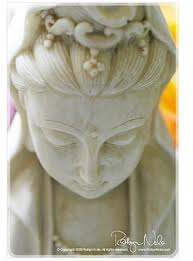
merciful goddess
such compassionate goodness
(womanly essence)
embodies your soul
melds eastern and western worlds
cherry blossoms rain
– Victoria C. Slotto
I find that Quan Yin, the goddess of compassion, mirrors the Virgin Mary in Western Culture. Both figures capture the essence of feminine beauty and loving kindness.
I believe in heroism and, throughout my nursing career, have seen it manifested on a daily basis. More often than not, heroes go unrecognized. I will never downplay the courage of those who serve us–first-responders, members of the military, those who have committed their lives to protect and defend. At the same time, let’s consider some of those heroes who live out their lives in relative obscurity. (That would be most of us).
un-named heroes
i.
a mother waits to hear him say her name,
his father, to play ball.
the child breaks silence only with his piercing cry,
tosses his food, his fists.
the daily fare of parents of autistic children.
Flower Pots (Photo credit: IrishFireside)
ii.
down the street, around the corner,
potted flowers adorn window boxes.
behind closed shutters,
a neighbor/friend (not old)
decides it’s time to let death visit.
a phone call later—cancelled chemo—
he makes his peace and dies.
iii.
outside, sun plays with clouds in azure skies.
inside the empty chapel, darkness fills the stagnant space.
an ancient monk buries his head in his hands,
waits for the shroud of doubt to dissipate.
iv.
dementia creeps through tangled plaques in her brain.
with trembling fingers she punches in numbers,
asks her daughter to come in a hurry
before it’s too late to make her wishes known.
v.
fingering bruises on her face,
the woman ventures out beyond the confines
of the world she knows.
$35.00 and change,
a scrappy paper bag of clothes,
a 3-year-old child in her arms,
she sets out hoping that there’s room for her,
the address of the shelter jotted
on a crumpled envelope
in her pockt—
the pocket of her husband’s red flannel shirt.
vi.
she hates her tattoo.
she hates her body.
sometimes she hates her life.
she longs to be accepted,
still,
she walks away from those kids
when they offer her the drugs.
Eons ago, when I was a student nurse, I did my psychiatric nursing rotation at Patton State Hospital in San Bernardino, California. At the time, before these institutions were decentralized (and before homelessness became an issue) the hospital was a veritable city, caring for over 5000 patients. Many of these were classified as simple schizophrenics, people whose only pathology was that they couldn’t function in society (a number of today’s homeless.)
Image: deviantart.com
One day, the instructor gave us an assignment to spend a day, journaling ALL our thoughts. By the end of the day, I was ready to self-commit myself. I learned that my thought processes, feelings, perceptions—all flit about like the bees and hummingbirds in our flower and vegetable garden. The object of the exercise was to show us that there was a very slim thread between those of us who thought we were normal, and our patients.
In the post-realism period of literary history, the era when James Joyce, William Faulkner, Marcel Proust and other literary greats emerged and opened the door to modernism (1930’s and 1940’s), stream-of-consciousness writing became another literary device in the tool box of both fiction writers and poets. More contemporary figures in the world of poetry who turned to this technique include Jack Kerouac and Sylvia Plath. In stream-of-consciousness writing, the poet or novelist turns to the flow of ideas, observations and emotions that invade our consciousness. Novelist Virginia Woolf described this process as “an incessant shower of innumerable atoms.”
Photo: sameeart.com
This type of writing often produces a fair share of challenges for the reader who may struggle to find a sense of connection between one thought and another. With careful reading, it may become apparent, or maybe not.
Here are a few hints to help you work with reading and writing poetry or prose that uses the stream of consciousness technique.
Choose a topic. You might think of a person, and activity or even a dream. Take a walk, go someplace public.
• Write with pen or pencil on paper. Draw pictures. You may even choose to use your writing journal to jot down your own little (schizophrenic) episodes.
• When you write in your journal, be different. Write with your non-dominant hand, write all over the page, not just in lines, write from bottom to top. Write in spirals or shapes. Forget grammar and syntax.
• Review your writing for any connection you can discover between words and phrases and see where your poem will take you.
• Put your work aside for a while before returning to it.
Image: canyoustayfordinner.com
This can be a very fun and freeing exercise—I hope you enjoy it. Whether or not you choose to share it here is up to you, but if you do, you will give others an opportunity to see it put into practice and thus, to learn from you.
To participate:
• Spend some time playing with your mind, using the above suggestions.
• Write your poem and post it on your blog or website.
• Access Mr. Linky at the bottom of this post and provide your name and the direct URL to your poem.
I look forward to seeing what your muse inspires, to visiting and commenting on your work. This is not a challenge in the sense of a competition, but rather one for you. Thanks for joining.
He wore no smile. Square jaw, set firm,
taut muscles. Skin like latte, stubble-covered,
(more like fuzz.)
Skin too soft for who he was,
who he pretended to be.
Salvadoran sun backlit the scene
set on the borders of insanity.
Not a game he played that day,
a game his peers in other lands
and other times still play.
This was a game of war.
He stared at us, each one, with eyes
too full of sadness for an almost-child.
Compared our passport photos with reality.
And there, upon the submachine gun’s butt—
a smiley face, a message, too.
I wonder–can he smile today,
and can he still believe?
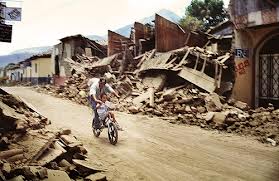
Earthquake–El Salvador 1986
At the height of the civil war in El Salvador, the country suffered a massive earthquake that resulted in much loss of life and many injuries. I spent close to a month there, helping to nurse the wounded not requiring hospitalization. We flew into Guatemala and drove to San Salvador, the capital. On the way, we had to pass through numerous military checkpoints. At one of these stops I observed a young soldier. I’d guess he wasn’t much older than 15 or 16, perhaps younger. There on the butt of his huge machine gun was a smiley face sticker with the words in English that I’ve chosen for the title of this poem.
When will we ever learn?
– Victoria C. Slotto
Invitation: We’d like you to join us – not only as readers – but as writers by putting links to your own anti-war or pro-peace poems in the comment sections. Next week we’ll gather the links together in one post and put them up as a single page headed “Poets Against War.” Thank you!
Victoria at the Palm Springs Writer’s Expo March 2012
I suspect that each of us can identify poets and writers who have had significant influence on our writing. Perhaps some of these who mentor us, whether or not they are aware of their influence, enjoy renown—Poet Laureates, Pulitzer or Nobel Prize winners, for example. Others may be more obscure poets or even those we have met in our blogging communities.
Photo: The Creative Penn
Those of us who have not had the advantage of higher education in our art still have the opportunity to learn independently by reading books on craft of writing and, above all, by drinking in the work of those we admire. Read, read, read is perhaps the wisest advice offered to writers of all ilk. My addiction to the intoxicating world of literary art is supported by the ease of access offered by the Internet and through my Kindle which offers free downloads of so many of our predecessors.
I invite you to take a moment, a pencil, and a piece of paper. Now, sit back and list a dozen or so wordsmiths whose art has helped shape your own. Here’s a sampling of those whom I’ve come up with: Mary Oliver, Jane Kenyon, Stanley Kunitz, Basho, William Wordsworth, Edna St. Vincent Millay, Jane Hirschfield, Robert Frost, William Carlos Williams, Wallace Stevens, Ted Kooser, Dorianne Laux,…oh, and I haven’t even started to think about you who I’ve encountered on the Internet.
A literary allusion in poetry is, simply put, a reference to another literary work. This can encompass sources such as mythology, the Bible, performance art, a novel, visual art or a poem. Think of it as a sort of hypertext, linking the reader to another piece of literature, art, or any form of creative expression. Examples of literary allusion also include ekphrasis and response poetry. Perhaps you are familiar with ekphrasis, when a work of visual art serves as the inspiration for a poem. A response poem is written, as it implies, in response to another poet, a sort of answering-back.
I will use a couple of my own poems as an example so that I don’t mess with copyright infringement.
I think the world will slowly expire, no need for ice, nor even fire. I fear Mother Earth will die of neglect, with a whimper, a sigh. Oh, I suspect she will quietly die.
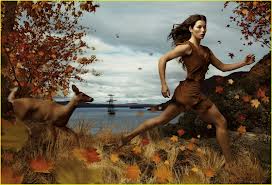
Pocahontas
Google Images
Do you flee
the doe
or imminent change?
Or do you both know
that nothing will ever
be the same?
Will I do the same
as illusions
shatter in my world?
For those of you who would like to play with allusion, in poetry, short fiction or essay, I offer you this prompt:
• Choose a work of art or poem (whatever) that has influenced your own writing and bring your own unique experience to the topic.
• Allude to an existing literary work or piece of art in your own creation
• Write a response poem, if you like. Answer back, either in agreement or opposition to the original piece.
• Write a poem in the style of one of your favorite poets. Be sure to reference the influential source. Include it, if it doesn’t infringe on copyrights…or provide a link if you are able.
• Allow the prompt to take you wherever you want to go. Just write.
To participate (and we hope you will):
• Write and post your work on your blog, citing the sources if you are able to, or providing a link.
• Access Mr. Linky at the bottom of this post and add your name and the direct URL of the poem from your blog or website.
• Visit other participants, if you are able. Read and comment on their submissions, especially those who have made the effort to visit you.
• Enjoy the process. You never know…someday you may make someone else’s list of influencers!
Although I am not Jewish, I have found much nourishment in studying spiritual aspects of Judaism, in particular the Hebrew Alphabet (Aleph Beit). Jewish mystics and scholars believe that God used the letters of the Aleph Beit to bring about creation. Consider the power of the Word.
Source: jewfaq.com
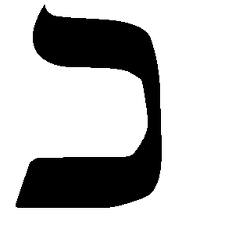
This morning I spent time with the letter Kaph. It means “palm” as in the palm of the hand. There is power in the hand–we raise a hand in blessing, we use our hands in the act of creating, through the hand healers channel their healing energy–think of Jesus, or Reiki Masters. It is intention, kavannah, that enables this power. Kaph is the first letter of kavannah and, as such, invites us to bring intentionality to our daily actions.
Photo Credit: theseedof hope.com
A few hours ago I spent some time doing the domestic thing: folding laundry, doing the dishes, a quick “pick up/put away storm” around the house. The idea of kavannah came to mind and, as I was making the bed, I realized that I can do it grudgingly or with grace. Bringing the intention of love to simple chores transforms them–making our home a blessing. It’s true that this is something I learned at an early age, but it’s something I have to continue to strive to remember. It’s so easy to slip into unconsciousness and go through the actions of every day without awareness.
So, we write. How can kavannah/intention affect this part of our life? What happens when, before we put our palms on the keyboard, we remember that we are instruments of the divine creative Spirit?
The Letter Kaph
This is a re-blog of a post I wrote in July of 2010. As I’ve become more involved in poetry communities, I’d like to add one more thought–the importance of bringing KAVANNAH/INTENTION to our comments. Are comments just to attract more hits, or are they truly there to encourage our fellow bloggers?
Have a wonderful week.
Reference: If you have any interest in learning more about the Hebrew Alphabet, there are a number of books on the subject listed on Amazon.com. The one by Richard Siedman is very accessible. A very erudite scholar, Michael Munk, wrote an in-depth, volume the include Gematria, the study of sacred numbers.
A while back, I attended a writer’s conference session about character development. The speaker suggested using astrological signs as a means to create believable, consistent characters. My knowledge of astrology is scant, but I tried to apply it to the characters in my first novel, Winter is Past. The results weren’t what I’d hoped for.
When I worked in the area of nursing education, human resources and spirituality, I had the opportunity to delve into Myers-Briggs…a personality evaluation tool that assesses behavior based on four areas of response: Introversion versus extraversion, Intuitive versus sensate, Thinking versus Feeling and Perceptive versus Judgmental. The latter may not be so self-explanatory but I use the example of my parents: my dad would be ready to go somewhere 20 minutes ahead of time, while my mother would change her mind a few more times about what she wanted to wear. Think: structured versus easy-going.
I returned to my draft manuscript, and applied the Myers-Briggs, using this tool to help me re-create the major characters with the result of more consistent, believable players. For my second novel The Sin of His Father, I wrote out character profiles before I even began to write, again using the Myers-Briggs. It has made it so much easier.
Photo Credit: vivalamanosphere.com
There is an old book called Please Understand Me that explains all the possible profile combinations and how they play out in real life. If you can find it, it’s been a godsend.
I’m addicted to The Learning Company‘s Great Courses, university level programs presented by the highest quality professors. One of the courses, The Art of Reading is taught by Professor Timothy Spurgin of Lawrence University. The lectures are well-organized, clearly presented and as applicable to writers as to readers.
An important point from the lecture on characters addresses developing round characters. The concept of a round character, as opposed to a flat one, was presented by E. M. Forster in his book, Aspects of the Novel. Simply put, a round character is one who will capture the reader’s interest because of his unpredictability, his complexity and the changes he undergoes during the course of the story. And this is key: “The test of a round character is whether it is capable of surprising in a convincing way.” (Forster)
While a protagonist needs to draw the sympathy of the reader, he should have some character flaws. Inversely, your antagonist should have something that makes him, if not attractive, at least capable of being understood. Just like us–no one is all good or all bad.
As you write, reflect upon your own reaction to the key characters in your manuscript. Are you able to identify with them to some degree? Are there things that, if you were that person, you might be ashamed of or want to change? Are there events or reactions which are surprising without being totally out-of-character (unconvincing)? Is your character someone you would want to know, or avoid?
One thing I find helpful when writing fiction is to base my characters on a composite of people I know or with whom I have been acquainted. You can even take someone who is in the public eye. I try not to use one person because I would never want anyone to say to me, “That’s me, isn’t it?” My mother once thought a character was her because I set a scene in a room in her house! And this secondary character was not, initially, a nice person.
I hope this brief reflection on characters will be helpful to those of you who have an interest in writing fiction. In a future post, I’ll share a character development worksheet that I prepared for a character in novel #2 to give you something to hang your words on!
We’d like to invite you to share a brief paragraph or poem of your own presenting a character you’ve created or known somewhere along the road. There are two ways you can do it:
Preferably, post your description on your own blog or website, then copy and paste the direct URL into the Mr. Linky, which is included at below at the end of this post. He will also ask you to include your name or another identifier.
If you prefer, add your character sketch to the comments section.
It’s nice, though not required to read others and leave a like or comment. I will visit all of them.
Happy writing; enjoy the process!
– Victoria
EDITOR’S NOTE: Mr. Linky is below Victoria’s bio ~
Victoria at the Palm Springs Writer’s Expo March 2012
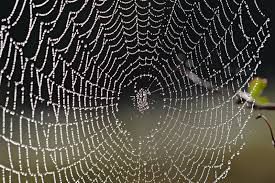
For the Summer Solstice—the longest day of the year, the first day of summer–I turned my meditation corner around, facing my chair looking out the window instead of looking at the eerie but beautiful reflections of the leaves of our ornamental pear tree fluttering on the blank wall of my room. While the images were hypnotic, I couldn’t help but think of Plato in his cave and the thought haunted me that this was illusory beauty.
Photo Credit: Sara Loverling
Looking directly at the trees, deep into our yard and yards beyond our own allowed me to see the play of light and shadow, and only a slight flutter of leaves. For the moment, stillness was able to come in…until illusion reappeared in the form of a bird that land on our roof and projected its shadow onto the side of our neighbor’s house. The shadow appeared long and skinny, almost like a sand piper or a heron, but since we don’t have either of those birds here in Reno, I realized I was once again facing illusion.
As I age, I’m aware of the imperative to dispel the illusions I’ve so carefully fashioned to carry me through life. A few months ago, I began digging through old journals, over forty of them—reviewing life, tearing up pages, letting go of secrets, negative emotions, anger and hurt, unfulfilled dreams, dusting off the mysterious web of illusion and, yes, celebrating growth, insight and success.
Photo: themanagementninja.com
It’s interesting to see how the same old issues that cropped up back in 1988 are no different than those of today. I had to chuckle at my observations on then-Cardinal Ratzinger’s (Benedict XVI) ultraconservative stance that I found alienating to so many. If I’d only known.
And then there was/is my need to control—my perfectionism. I complained that I was only getting 6 hours of sleep because, when I awakened, I thought of how much I had to do and couldn’t go back to sleep. The morning of the Super-moon I was up at 4 AM (couldn’t find it) and, of course, stayed awake thinking of how much I wanted to get done that day. It’s like that most every day.
And thus: illusion. Here I am—approaching the end of another decade of my life, still believing that so much, everything, depends on me. In another ten years, if I’m still playing this wonderful game of life, will it still be the same?
A few questions to reflect upon: What are your illusions? What purpose do they serve? Is it time to do something about them? You can comment if you like, but my intent is just to get you thinking.
VICTORIA C. SLOTTO (Victoria C. Slotto, Author: Fiction, Poetry and Writing Prompts) ~ a Contributing Writer to Into the Bardo ,attributes her writing influences to her spirituality, her dealings with grief and loss, and nature. Having spent twenty-eight years as a nun, Victoria left the convent but continued to work as a nurse in the fields of death and dying, Victoria has seen and experienced much. A result of Victoria’s life experience is the ability to connect with readers on an intimate level. She resides in Reno, Nevada, with her husband and two dogs and spends several months of the year in Palm Desert, California.
Winter is Past is her first novel. It was published in 2012 by Lucky Bat Books. She has a second novel in process and also a poetry chapbook. Victoria is also an accomplished blogger and poet who has assumed a leadership role in d’Verse Poet’s Pub. You can read more ofher fine poetry HERE.
Last Sunday, I chose to practice Sabbath—a tradition that was a strong factor in my growing up years, but that waned with my work as a nurse…patients need care every day of the week. Most of us know and understand the concept of a day of rest, but our frenetic lifestyles tend to get in the way.
Sabbath crisscrosses most cultural, spiritual, religious and secular societies, even pre-dating biblical times. The Babylonian Enuma Elish prescribed a day of repose. In the Genesis creation story, God rested after his six days of work and, I suppose it worked out well so that he added it to those tablets of stone he handed on to his people through Moses. Wicca, Islam. Buddhism, Cherokee teaching and others all caution humans to take a break, chill out, and rest. Wisdom, it seems to me, embraces our need for refreshment, for replenishment of body, mind spirit and emotion, for regeneration and reflection.
For many of us, well, for me anyway, the need to be in control seems to take hold and it becomes oh-so-hard to let go of time, accept idleness and non-productivity and, perhaps, the feeling of uselessness. I suspect that there is a trust issue here. Can I really believe that God will take care of things in my absence? Can I believe that the work of creation on this particular day will go on without my amazing intervention?
So, what kind of things did I, Ms-Doing-Not-Being do?
• Meditation—a bit longer than my ordinary routine.
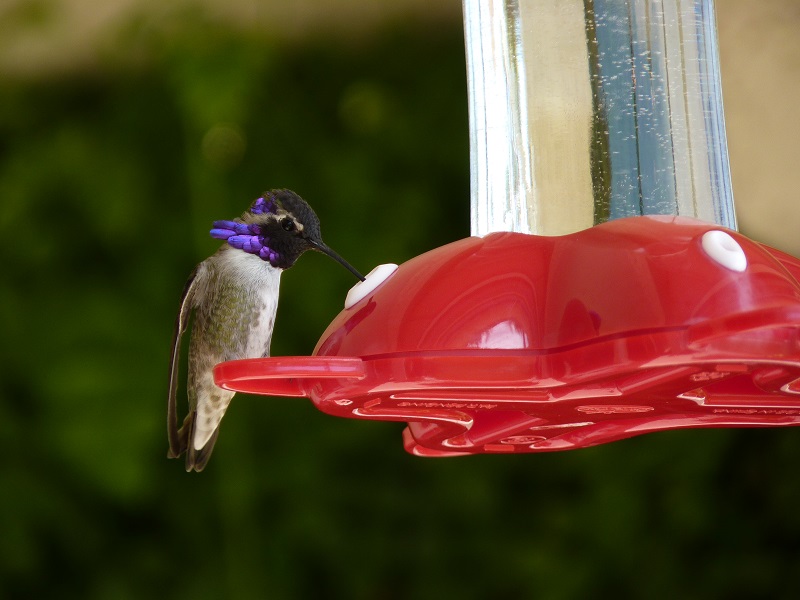
• Journaling. And in the process really waking up to what was happening around me. I wrote of all the wonderful sensory experiences that the pristine late-spring day offered—the finches song, the brilliant orange of the male oriole at our feeder, the spicy scent of new-born flowers and the basil in the vegetable garden. I noticed the play of light and shadow in the now-expansive boughs of the ash tree we planted almost twenty years ago and watched the hummingbirds fly back and forth sipping nectar from both flowers and feeders. I felt the gentle kiss of the breeze and delighted in my dogs’ warm bodies flanking me on either side. I listened to David busy chopping spices in the kitchen.
Photo Credit: D. Slotto
• Spa Stuff. I pampered myself with a Pomegranate/Cranberry exfoliating scrub courtesy of Burt’s Bees, did a manicure/pedicure and, well, thought about taking a nap. I thanked my body for its almost-seven decades of service and praised the many scars that it bears, a reminder of the life-threatening illness I have survived, for now.
• Creativity. Maybe some consider engaging in the creative process to be work. For moi, I allowed the muse to come out and play, more by way of brainstorming than actualizing any project. Sabbath time allows ideas to gestate and gives clarity as to where to take them.
• And, yes, a final confession. I did laundry. So, it wasn’t a perfect Sabbath, but for this woman who tends towards OCD, that’s probably not a bad thing. Besides, we needed clean clothes!
Photo Credit: Bergen Linen
That night I slept well, but will I be able to repeat the experience? My history tells me that this is not something that comes easily to me. I am aware that Sabbath doesn’t have to always be on Saturday or Sunday, or even occupy an entire twenty-four hours. How would life be different if, each day, I remember to tuck in an hour or even minutes for the divine repose, sit back and let go?
VICTORIA C. SLOTTO (Victoria C. Slotto, Author: Fiction, Poetry and Writing Prompts) ~ a Contributing Writer to Into the Bardo ,attributes her writing influences to her spirituality, her dealings with grief and loss, and nature. Having spent twenty-eight years as a nun, Victoria left the convent but continued to work as a nurse in the fields of death and dying, Victoria has seen and experienced much. A result of Victoria’s life experience is the ability to connect with readers on an intimate level. She resides in Reno, Nevada, with her husband and two dogs and spends several months of the year in Palm Desert, California.
Winter is Past is her first novel. It was published in 2012 by Lucky Bat Books. She has a second novel in process and also a poetry chapbook. Victoria is also an accomplished blogger and poet who has assumed a leadership role in d’Verse Poet’s Pub. You can read more ofher fine poetry HERE.
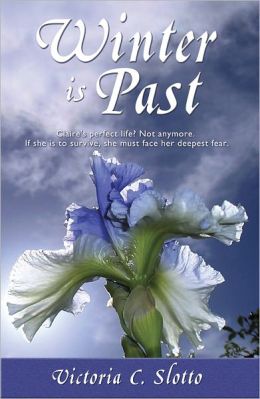
 VICTORIA C. SLOTTO (Victoria C. Slotto, Author: Fiction, Poetry and Writing Prompts) ~ is an accomplished writer and poet. Winter is Past, published by Lucky Bat Books in 2012, is Victoria’s first novel. A second novel is in process. On Amazon and hot-off-the-press nonfiction is Beating the Odds: Support for Persons with Early Stage Dementia. Victoria’s ebooks (poetry and nonfiction) are free to Amazon Prime Members. Link HERE for Victoria’s Amazon page.


















 The BeZine