The BeZine Blog

Posted in Essay, poem, Spiritual Practice, Terri Stewart, Uncategorized

Sacred Space at Disneyland

I am at Disneyland right now! On vacation! Sometimes I find myself frustrated at the crowds around me and at certain comments from my family (just as I’m sure they are frustrated with me at times!). But my husband said something very wise as we cued up for the Haunted Mansion – he said, “It is like a labyrinth.”

It was! The difference being the labyrinth leads to a holy space and returns you on the same path. And a cue leads to an event and you exist on a different path. But do we really need a bunch of tools in our tool kit to create sacred space? Do I need my Mary Oliver book, my Bible, my candles, a labyrinth? Or do I need to simply be open? In this instant, in this place, simply being open became enough.

I proceeded down the path towards the Haunted Mansion with my heart stretched and my ears open to the sounds of conversation, of the mechanisms of the ride, of the water nearby, or the staff. And I felt the connectivity with the cosmos. The sacred was there. In the cue at the Haunted Mansion in Disneyland.

Of course, intellectually, I know this. But experientially, I forget. I get caught up in being right (if it is my family or politics) or caught up in impatience (a 45 minute cue?!). But if I slow down and begin again, I can recall myself to the center and extend my consciousness outward from my body into the world around me. Greeting my loved ones, strangers, trees, all of it – the cosmos.

The cosmos is also within us, we’re made of star stuff. ~Carl Sagan

We just have to remember!

star stuff drifts

through the cosmos

salvation’s quest

It's A Small World (c) 2013, T. Stewart Cell Phone
It’s A Small World
(c) 2013, T. Stewart
Cell Phone

Shalom & Amen!

Terri

P.S. – I’d love for you to drop by www.BeguineAgain.com and see some of the Advent reflections taking place. Today’s reflection is on World AIDS Day from an unsung hero, Tracy Daugherty.

© 2013, post and photos, Terri Stewart, All rights reserved

terriREV. TERRI STEWART is The Bardo Group  Sunday chaplain, senior content editor, and site co-administrator. She comes from an eclectic background and considers herself to be grounded in contemplation and justice. She is the Director and Founder of the Youth Chaplaincy Coalition that serves youth affected by the justice system. As a graduate of Seattle University’s School of Theology and Ministry, she earned her Master’s of Divinity and a Post-Master’s Certificate in Spiritual Direction. She is a contributing author to the Abingdon Worship Annual.

Her online presence is “Cloaked Monk.” This speaks to her grounding in contemplative arts and the need to live it out in the world. The cloak is the disguise of normalcy as she advocates for justice and peace. You can find her at www.cloakedmonk.comwww.twitter.com/cloakedmonk, and www.facebook.com/cloakedmonk.  To reach her for conversation, send a note to cloakedmonk@outlook.com

Posted in Buddhism, teacher

One Man’s View of Karma and Rebirth

STEPHEN BATCHELOR (b. 1953), Buddhist teacher, author, scholar

Author of Buddhism Without Beliefs

In this video, Stephen Batchelor presents his view of Karma and Rebirth and the reasoning that supports his perspective. In the video he mentions “dukkha,” which is an important concept in Buddhism:

Dukkha is commonly explained according to three different categories: The obvious physical and mental suffering associated with birth, growing old, illness and dying. The anxiety or stress of trying to hold onto things that are constantly changing. A basic unsatisfactoriness pervading all forms of existence, due to the fact that all forms of life are changing, impermanent and without any inner core or substance.” Wikipedia

“Stephen Batchelor is a contemporary Buddhist teacher and writer, best known for his secular or agnostic approach to Buddhism. Stephen considers Buddhism to be a constantly evolving culture of awakening rather than a religious system based on immutable dogmas and beliefs. In particular, he regards the doctrines of karma and rebirth to be features of ancient Indian civilisation and not intrinsic to what the Buddha taught. Buddhism has survived for the past 2,500 years because of its capacity to reinvent itself in accord with the needs of the different Asian societies with which it has creatively interacted throughout its history. As Buddhism encounters modernity, it enters a vital new phase of its development. Through his writings, translations and teaching, Stephen engages in a critical exploration of Buddhism’s role in the modern world, which has earned him both condemnation as a heretic and praise as a reformer.” MORE [About Stephen Batchelor from his website]

Photo credit ~ Stephen Batchelor at Upaya Zen Center in New Mexico by ottmarliebert via Wikipedia under CCA-SA 2.0 Generic license.

– compiled by Jamie Dedes

Posted in Poems/Poetry, Victoria C Slotto

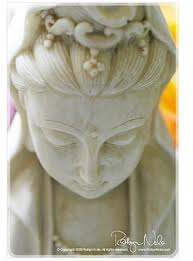
Quan Yin

Photo Credit: robinnola.com

Quan Yin

merciful goddess
such compassionate goodness
(womanly essence)

embodies your soul
melds eastern and western worlds
cherry blossoms rain

– Victoria C. Slotto

I find that Quan Yin, the goddess of compassion, mirrors the Virgin Mary in Western Culture. Both figures capture the essence of feminine beauty and loving kindness.

© 2013, poem and all images, Victoria C. Slotto, All rights reserved

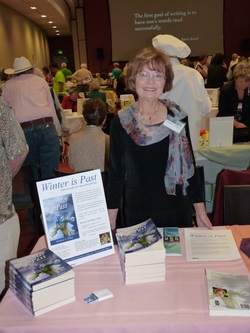
Victoria at the Palm Springs Writer's Expo March 2012
Victoria at the Palm Springs Writer’s Expo March 2012

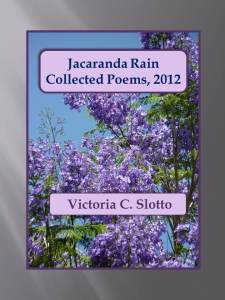
jr-cover-2VICTORIA C. SLOTTO (Victoria C. Slotto, Author: Fiction, Poetry and Writing Prompts) ~ is an accomplished writer and poet. Winter is Past, published by Lucky Bat Books in 2012, is Victoria’s first novel. A second novel is in process. Jacaranda Rain — Collected poems, 2012 is available on Amazon, as is the hot-off-the-press nonfiction, Beating the Odds: Support for Persons with Early Stage Dementia. Victoria’s poetry collection and non-fiction book are free to Amazon Prime Members. Link HERE for Victoria’s Amazon page.

Posted in Christianity, Essay, Jamie Dedes, Peace & Justice

THE TIPPING POINT: Good will from and toward women and men everywhere!

Nativité_de_CostaThis is simultaneously blogged on Rev. Terri Stewart’s blog and my own personal blog.

Today begins the first day of our Terri Stewart’s Advent event. There are many bloggers participating in this event. Each day of the Christian celebration of Advent will be sponsored by a different blogger who will post appropriately on his or her site. Their posts will also go up on Terri’s site and the kick-off is on Into the Bardo today.

If you follow Into the Bardo  regularly, you know that we share work here that is not necessarily religious but is reflective of diverse cultures and spiritual paths and representative of universal human values, however differently they might be expressed. This is a space where we hope you’ll delight in learning how much you have in common with “other” peoples.

We acknowledge that there are enormous theological differences and historical resentments that carve wedges among and within the traditions, but we believe that ultimately self-preservation, common sense, and human solidarity will empower connections and collaboration and overcome division and disorder. We work for the tipping point when compromise – an admittedly imperfect peace – will overcome war and respect for life will topple resentment. That may not happen in our time, but it has to start somewhere and sometime and this is our modest contribution toward an end for which diverse people the world over are working.

For those who are not Christian, Advent is the period of time leading up to the Nativity of Christ (Christmas). It is celebrated somewhat differently by different Christian sects and by Roman and Eastern Catholics and Eastern Orthodox churches. I think the details of the celebrations are less important than the scriptural quote for the day …

James 4:1-3
1 Those conflicts and disputes among you, where do they come from? Do they not come from your cravings that are at war within you? 2 You want something and do not have it; so you commit murder. And you covet something and cannot obtain it; so you engage in disputes and conflicts. You do not have, because you do not ask. 3 You ask and do not receive, because you ask wrongly, in order to spend what you get on your pleasures.

Indeed, where do the conflicts and disputes originate: in the cravings that make us restless within ourselves, in coveting things or situations we don’t have (and may not really need), and in not using right means for just ends? These are appropriate considerations as we approach the annual celebration of the “Prince of Peace,” a celebration which is in the end a call for compassion and understanding.

May our compassion have legs.

PEACE ON EARTH
The tipping point:
GOOD WILL FROM AND TOWARD WOMEN
AND MEN EVERYWHERE!

… and Happy Thanksgiving and Happy Hanukkah to those who are celebrating  …

Follow the entire Advent season
with Terri Stewart HERE.

… If you are so inclined, we would be grateful to have this post reblogged. Thank you! …

– Jamie Dedes

© 2013, essay, Jamie Dedes, All rights reserved
Photo credit ~ Pramzan via Wikipedia under CC A-SA 3.0 Unported 2.5 Generic, 2.0 Generic, 1.0 Generic license

Photo on 2012-09-19 at 20.00JAMIE DEDES ~ Poetry remains a gift in disability and medical retirement. It’s a compact thing that I can still manage. I am the founder and host of Into the Bardo, a spirited international collaborative of word-play, music, art and photography where our core team members function independently and yet with a remarkable synergy. They do everything. They are the stars. I have simply created a space in which to share.

For the past five years I’ve blogged at The Poet by Day, the journey in poem, formerly titled Musing by Moonlight (hence the url). Poetry is my spiritual practice.

Posted in John Anstie, Poems/Poetry

Earth Prayer

[I cannot remember what it was that inspired this poem, but, when all is said and done, I think it and the photo from Max Mitrofanov speak for themselves]

Picture credit: Max Mitrofanov (via triumph.dev1antart.com)
Photo: Max Mitrofanov (via triumph.dev1antart.com)

Dear Earth,
mother of us all,
solar sister,
child of the Universe,
our common blood
was carbon, nitrogen,
oxygen and hydrogen,
in concert with the stars.

Astronomical forces
great voids imploding
then exploding in light
with dust and smell
of a thousand million
godless bombs
driven to extinction
by unlimited energy.

Facing the hideousness
of death at day’s end,
the weight of this life
seems so much lighter,
in the brightness
of our knowledge,
portending reunion
of the atoms we are.

Dear Earth,
mother of us all,
in your patience and
your tolerance of us,
breath a huge sigh
and remind us
who we are and
whence we came.

© 2013 John Anstie

Picture credit: Max Mitrofanov (via tr1umph.deviantart.com)

John_in_Pose_Half_Face351w-rH34dTL._BO2,204,203,200_PIsitb-sticker-arrow-click,TopRight,35,-76_AA300_SH20_OU01_JOHN ANSTIE (My Poetry Library and 42) ~ is a British poet and writer, a contributing editor here at Bardo, and multi-talented gentleman self-described as a “Family man, Grandfather, Occasional Musician, Amateur photographer and Film-maker, Apple-MAC user, Implementation Manager, and Engineer. John participates in d’Verse Poet’s Pub and is a player in New World Creative Union. He’s been blogging since the beginning of 2011. John is also an active member of The Poetry Society (cover1UK).

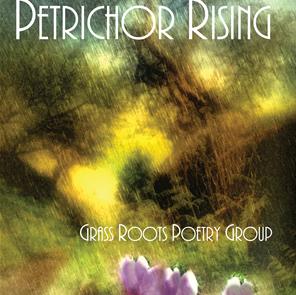
John has been involved in the recent publication of two anthologies that are the result of online collaborations among two international groups of amateur and professional poets. One of these is The Grass Roots Poetry Group, for which he produced and edited their anthology, “Petrichor* Rising. The other group is d’Verse Poet Pub, in which John’s poetry also appears The d’Verse Anthology: Voices of Contemporary World Poetry, produced and edited by Frank Watson.

* Petrichor – from the Greek pɛtrɨkər, the scent of rain on the dry earth.

Posted in Uncategorized

As You Like It (Reflections Upon the Art of Aging)

“All I ask is a tall ship and a star to steer her by…”


My mother and her sister Loena were best friends.  Wherever Loena went, she would sing or hum quietly to herself.  My mother used to introduce her to friends saying, “This is my sister Loena.  Don’t mind her; she hums.”

Mom was the one who used to bust Aunt Loena out of Detroit for road trips.  Sometimes to Washington, D.C. to visit my sister Miriam, to Maine to see my sister Constance, or to see me and my siblings in Seattle, especially if the Tigers were scheduled to play the Mariners.

Driving cross country to attend my wedding, they made a late-night stop at a hamburger joint in Iowa. They were laughing so hard the young man behind the counter came to their table and said, “Ladies, I don’t know where you’re going, but I want to come with you.”

Less than a year after Mom died, my first baby was born.  It was a wonder-full time, if bittersweet.  Aunt Loena’s visit was the next best thing to seeing my mom holding my baby in her arms.  I felt my mother’s presence, watching, smiling, loving.

But it was hard for Aunt Loena to get away.  She spent two decades housebound while caring for her mother-in-law, and then her husband.  No one blamed him for his frustration, but he yelled at everyone who came to visit or offer aid, and fired everyone my aunt hired to help with housework and eldercare.  It was emotionally isolating and physically exhausting.  She never complained, and joked that at least her medical appointments for heart trouble, cataract surgery, and blood transfusions got her out of the house.  Like my mother, she knew how to look for the bright spots.

The 911 response team knew her by name, as she had to call whenever her husband fell out of the recliner where he slept.  It was time for a nursing home.  She visited him twice a day, until she caught meningitis.  Her doctors didn’t think she’d survive.  I flew to Detroit to say goodbye, but Aunt Loena is a two-time cancer survivor, who has come back from the brink so many times she makes Rasputin look like a weenie.  It was a wake-up call, however.  She checked out of the hospital with a bucket list.  My aunt is 86, anemic, subject to dizzy spells and shortness of breath.  Oh, yes, and always up for an adventure, so long as it is wheelchair accessible.

https://i0.wp.com/i1176.photobucket.com/albums/x334/nbaltuck/IMG_7262-2-1.jpg

Aunt Loena with my sister Lee and my son Elijah

Our first adventure was a trip to Seattle.  We knew she had a great time, because wherever we went, she hummed to herself like a purring kitten.  That trip was just a warm-up for her dream trip to New York City.

Aunt Loena in Central Park with Bea and me.

When it was time to leave New York and go our separate ways, it was too sad to say goodbye, so instead we said, “Where to next?”  She’d always wanted to go the Shakespeare Festival in Stratford, Ontario.  So that’s what we did.  My son Eli flew in from college in Maine, I flew from Seattle, and my sister Lee joined us from the Upper Peninsula of Michigan.

 We went in October, to take in the fall colors as well as the plays.
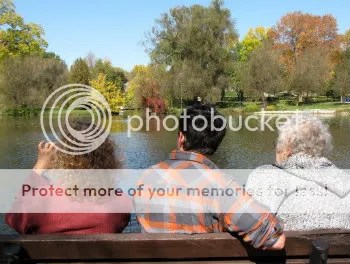
I chose our motel for its name.

https://i0.wp.com/i1176.photobucket.com/albums/x334/nbaltuck/IMG_7280-1.jpg

In Stratford I discovered the secret to longevity–a nightly dose of Miss Vicky’s Salt and Vinegar Potato Chips!  Aunt Loena is a teetotaler, but she’s not afraid of a little salt and grease.  Got sugar?   Bring it on!

Each time we part, I fear another long drive or a cross country flight will prove too much.  We make a date and look forward to it, but  I always check before I make plane reservations.  “You’re sure?”  And she always says, “Oh, yes.  As long as I’m sitting down, it’s almost just the same as sitting at home.”

We promised to bring her to Seattle for fish and chips this summer, but Lee couldn’t make it.  I asked my friend Monica, also a Detroiter, if she’d consider escorting Aunt Loena.  The next morning I got her reply– she would be delighted!  What a gift to us all!  We couldn’t have pulled it off without her.  Monica and Aunt Loena had been hearing about each other for years, and felt like they already knew each other.  We kicked off a week-long PJ party by attending a performance of Cole Porter’s “Anything Goes.”   We also enjoyed Teatro Zinzanni’s very silly but impressive dinner theater show, “Gangsters of Love.”

Aunt Loena made her famous egg salad sandwiches.  Years ago, when we all drove to D.C. to visit our sister Miriam, we weren’t out of Detroit yet when Mom said, “Who’s ready for an egg salad sandwich?”  It was 10am, but so what?  We were ready for another one by lunchtime.

We picnicked at Green Lake–egg salad sandwiches, my brother Lew’s homemade cookies, and Salt and Vinegar Potato Chips.  We couldn’t get to a picnic table, because we didn’t have an all-terrain wheelchair, but from our park bench we had a gorgeous view of the lake.

I would love to take Aunt Loena to Hawaii or Europe; even she feels it might be too far.  But her eyes lit up when she said church friends had gone to a casino, and she thought it might be fun to try her luck just once–if there was a smoke-free one with wheelchair access.  I don’t know anything about casinos, but an internet search and a few phone calls was all it took to locate a smoke-free casino in Toledo, not far from their wonderful zoo.  I sent Aunt Loena home with a roll of quarters and a promise.  Guess where we’re going next spring!

Saying goodbye is hard.  Aunt Loena said Mom always told her, “Whatever happens, we won’t cry.  We’ll smile, kiss the kids goodbye, and stop the car around the corner to do our crying.”  And that’s what they always did, she said.  But this time we all had to cry, just a little.

Most people in my aunt’s situation prefer the security of a recliner, the proximity of their own doctors, and to be in control, even if that just means the remote to the television.  Who can blame them?  With advanced age, circumstances often change, especially where health, finances, and family support are concerned.  Aunt Loena lives her life as an adventure, and adjusts the size of her dreams as necessary.  But for her, everything is icing on the cake.  New York is as good as Hawaii, and Ohio is as good as New York.  But she would be just as happy humming quietly and playing cards with a friend while snacking on a bag of Miss VIcky’s Salt and Vinegar Potato Chips.

I want to grow old like Aunt Loena, to go out swinging or at least singing.  When I told her she was brave for coming all the way to Seattle, she laughed and said, “All I need is a wheelchair, and someone to push it.

You got it, Aunt Loena.  And you don’t even need to ask.

All words and images copyright 2012 Naomi Baltuck

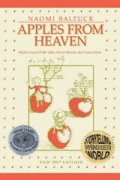
NaomiPHOTO1-300ppi51kAqFGEesL._SY300_NAOMI BALTUCK ~ is a Contributing Editor and Resident Storyteller here410xuqmD74L._SY300_ at Bardo. She is a world-traveler and an award-winning writer, photographer, and story-teller whose works of fiction and nonfiction are available through Amazon HERE. Naomi presents her wonderful photo-stories – always interesting and rich with meaning and humor – at Writing Between the Lines, Life from the Writer’s POV. She also conducts workshops such as Peace Porridge (multicultural stories to promote cooperation, goodwill, and peaceful coexistence), Whispers in the Graveyard (a spellbinding array of haunting and mysterious stories), Tandem Tales, Traveling Light Around the World, and others. For more on her programs visit Naomi Baltuck.com
Posted in Writing

Home Sweet Home

Sometimes it really is all in the family. Today we are pleased to introduce by way of reblog, Beatrice “Bea” Garrard. Bea is a student at Standford University who is now back home in Washington state for the Thanksgiving holiday. She is our own Naomi Baltuck’s daughter. She just started blogging her stories and sketches. Please pop on over, say “hi,” and cheer her on. She’s quite clever. You won’t regret it. Bravo, Bea! Write on … J.D.

Posted in Corina L. Ravenscraft, Essay, Nature, Photography/Photographer, Poems/Poetry

Elder Box Elder

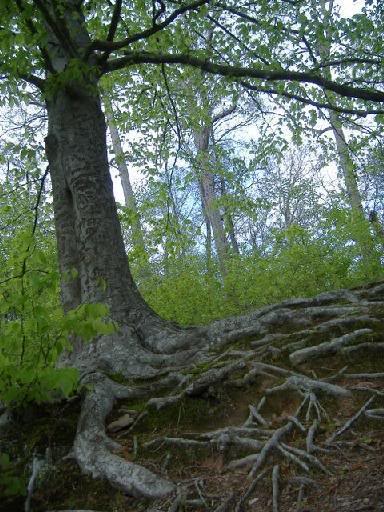
DunbarCaveTree

Editor’s Note: Terri Stewart’s regular Sunday posts are always a surprise. She doesn’t pop them into the blog until near midnight on Saturday, so we don’t get to see them until Sunday a.m….no editorial sneak-preview. In an interesting coincidence (synchronicity?), Corina L. Ravenscraft popped this one to Bardo before Terri’s post for this Sunday went up. It rather serves to reinforce Terri’s message, which we think makes it synchronicity and not coincidence. Like Terri’s post, it’s richly evocative. Enjoy…

.

Gnarled persistence, drove its thick roots down,

Conquered the rocks and divided the dirt.

Spread out its branches, claimed this piece of ground,

When people etched into its bark, it hurt.

.

It survived such scars from their careless blades,

Grew taller, stronger, bore fruit for the birds.

None picnicked beneath to enjoy its shades,

Hard roots ran rampant, to escape the words

.

Carved for all time on its beautiful skin.

There, by the cave, it was brave; weathered storms,

Bent branches without and strong spirit within,

The world demands change and the soul transforms.

.

Soft  spirit deep inside this elder tree,

Expanded, extended life through its roots.

The Native Americans set it free,

And chose its sacred heart wood for their flutes.

– Corina L. Ravenscraft

~ C.L.R. ~ © 2012, photo, poem, essay, All rights reserved

This is a photograph I took some time ago, of a really neat Box Elder tree in the Dunbar Cave Natural Area near my home. This tree has always fascinated me and it makes me sad to see how many people have carved their initials or names into its bark. My friends and I used to call it the “Ringwraith Tree” because it reminded us of the tree where Frodo hid from the Ringwraith, but Box Elders also have a very special place in Native American culture.

The Anasazi flutes were carved from these trees, and the originals were only carved from these trees. It was believed that the tree’s unique, sacred spirit was imparted into each flute carved.

The Anasazi flute is the flute played by Kokopelli, a Native American Indian fertility god. It is also said that the hunch on his back depicted the sacks of seeds and songs he carried. Legend also has it that the flute playing symbolized the transition of winter to spring. Kokopelli’s flute is said to be heard in the spring’s breeze, while bringing warmth. It is also said that he was the source of human conception. Legend has it, everyone in the village would sing and dance throughout the night when they heard Kokopelli play his flute. The next morning, every maiden in the village would be with child.“ For anyone who has never heard the beautiful, haunting sound of this flute, I invite you to watch and listen to the video below.  Enjoy!

Corina-1CORINA L. RAVENSCRAFT (Dragon’s Dreams) ~ is a regular contributor to Into the Bardo. She is a poet and writer, artist and librarian who has been charming us through her blog since 2000, longer than any blogger in our little blogging community.

Posted in Essay, Spiritual Practice, Terri Stewart

Sacred Space in Particles

I am fascinated with astrophysics. And I am probably just skilled enough to be dangerously inept! One thing that just makes my heart flutter is the idea that all matter is already created! We can neither destroy or create matter. (Except that we can, according to the Higgs Boson discovery – but that will be for another discussion!)

In general terms, matter is neither destroyed or created so that essentially the particles we immerse ourselves in are the same particles that have been around forever and ever. The Oxygen molecule I breathe in was perhaps breathed in by some semi-ancient ancestor. Who would I choose to share breath with? Maybe I would connect to some fabulously wonderful pioneering women such as Christine de Pizan or Joan of Arc. Or maybe with some substantial spiritual leaders like Jesus of Nazareth, Gautama Siddartha, or Mary of Magdala. I could be breathing their particles!

I am also breathing the particles that were created at the moment of birth of the cosmos. That rapid expansion of the universe when it really did somehow go from nothing to something. Pushed outward in a violent burst of matter, light, and waves. Culminating in this moment. This time. At least for us. This moment is the culmination. Until the next moment, that is!

So, I was thinking cosmologically in this way and I stumbled across a book called, The Tree. It is a children’s book written by a Pacific Northwest author. I imagined the particularity of matter as residing in the tree. And then I read the story of how this book came about. The author received this story while sitting underneath a Douglas Fir in the Pacific Northwest. He received it as a song, not as a story. He sang it often for various events. Half-heartedly claiming that the tree wrote it.

Later, he was invited to a celebration to celebrate the return of the Madrona Point burial ground to the Lummi people. The tribal chief wanted to hear his song. He sang it. And then offered the story of the song’s origins with the additional wondering, “Did it really come from that ancient Douglas Fir?”

The tribal chief said, “It did. I recognize the tune.” He went on. “It is known in our tradition that each tree has its own song. Our music comes from them. We show our respect for the great trees by singing their songs and playing them on the flute. We must all work to save the ancient groves in our territory.”

Hmm. That is really quite beautiful.

And so, for this offering in the quest towards finding sacred space, I invite you to connect with the particles of the cosmos, the particles of the tree, and to sit back and enter into the story of The Tree.

Shalom and Amen,

Terri

© 2013, post and video, Terri Stewart, All rights reserved

terriREV. TERRI STEWART is Into the Bardo’s  Sunday chaplain, senior content editor, and site co-administrator. She comes from an eclectic background and considers herself to be grounded in contemplation and justice. She is the Director and Founder of the Youth Chaplaincy Coalition that serves youth affected by the justice system. As a graduate of Seattle University’s School of Theology and Ministry, she earned her Master’s of Divinity and a Post-Master’s Certificate in Spiritual Direction. She is a contributing author to the Abingdon Worship Annual. (The 2014 issue just released!)
Her online presence is “Cloaked Monk.” This speaks to her grounding in contemplative arts and the need to live it out in the world. The cloak is the disguise of normalcy as she advocates for justice and peace. You can find her at www.cloakedmonk.com, www.twitter.com/cloakedmonk, and www.facebook.com/cloakedmonk.  To reach her for conversation, send a note to terri@cloakedmonk.com

Posted in Buddhism, Gil Fronsdal, Spiritual Practice

A DHARMA TALK: Being Present

Gil_FronsdalGil Fronsdale is a Buddhist who has practiced Soto Zen and Vipassana since 1975, and is currently a Buddhist teacher who lives in the San Francisco Bay Area. Gil was trained as a Vipassana teacher by Jack Kornfield and is part of the Vipassana teachers’ collective at Spirit Rock Meditation Center. He was ordained as a Soto Zen priest at the San Francisco Zen Center in 1982 and was a Theravada monk in Burma in 1985. In 1995 he received Dharma transmission from Mel Weitsman, the abbot of the Berkeley Zen Center.

He is the guiding teacher of the Insight Meditation Center (IMC) of Redwood City, California. He has a PhD inBuddhist Studies from Stanford University. His many dharma talks available online contain basic information on meditation and Buddhism, as well as subtle concepts of Buddhism explained at the level of the lay person.” Wikipedia

Video uploaded to YouTube by insightmed.
Photo credit ~ Insight Meditation Center, Creative Commons Attribution-NonCommercial-No Deriv 3.0 Unported

Posted in Imen Benyoub

From Imen with Love

1426548_493414027428304_360525756_nOriginally published on Plum Tree Books Facebook Page
.
From Damascus to Istanbul: a child’s memories of a city . . . 
.
Dear Yasmin,
.
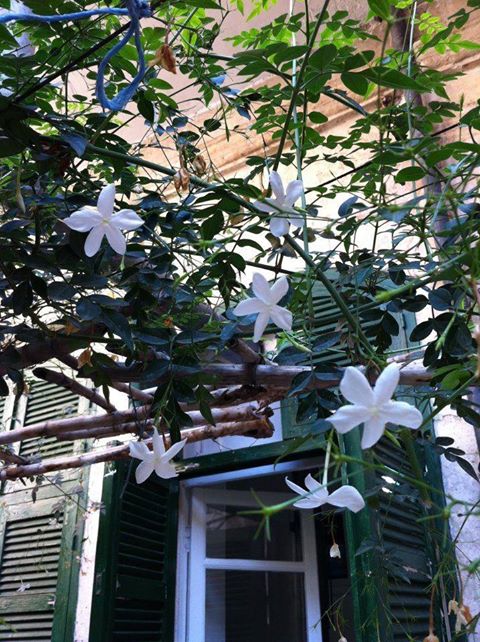
This morning, I saw the first jasmine flowers on our balcony.  They reminded me of you. That’s why I decided to write this letter.
.
We live in Istanbul now. I have new friends and I am learning Turkish. My parents never changed their habits. My father still smokes his hookah while he reads and my mother plants flowers everywhere to feel like our old house in Damascus.
.
Wasn’t it Mahmoud Darwish* who wrote once “Jasmine is a message of longing from nobody to nobody”? They named you after it. Everyone loves the way jasmine clutters like snowflakes at the sides of the road, falling everywhere and scattering scent to greet everyone.
.
Every city has its smells. My grandfather told me once that the heart of Jerusalem smells of spices and musk and Jaffa of oranges and the sea. He said smells are nostalgia and memory and the person can never forget them. Damascus alleys and houses smell of jasmine and rose water. It seems like an eternity passed since we left months ago, since I woke up to the sound of Feirouz singing and smells of freshly baked bread and my mother’s early morning ritual of making coffee and watering the garden.
.
The day we left, she put her gentle hands on my shoulders and gazed at me. Her hazel eyes were full of tears and she said: “Habibi, we have to leave. Go pack your things”. War already broke with news of bombed neighborhoods and dying people reached us daily. My parents tried to keep me away from its ugliness, to cocoon me in a world of poetry and flowers, but the war reached our little world and destroyed it.
.
The war brought death and fear. Houses were ruined. Most people fled. I always ask my mother about you. She said that you left with your family to go Jordan and that you would write to me soon.
.
When we arrived in Istanbul I was angry and my mother silent. We packed what we could take with us; some clothes and family albums, some poetry books my father used to read, a silver ornate dagger that belonged to my grandfather. I took a picture of us together, feeding pigeons in the square of the Umayyad mosque.
.
Istanbul is not so strange, Yasmine, they have bread sellers in the streets, big Bazaars and very old houses of wood, and a long bridge I can see from the window of my auntie’s house. The Adan comes from different places. There are pigeons in squares too. It is a big busy sleepless city. I love my auntie’s studio. It is full of paintings and its windows are always open to let light through. Stillm I felt lonely at the beginning because children did not understand me.
.
I miss Damascus, the clean cats of our neighborhood and my school friends; I miss our trips to Quassioun and watching people dancing dabkah at weddings. I am still waiting for your letter, but now I will send you mine with the first flowers.
.
Didn’t you always love when I told you stories?
.
Firas
.
Mahmoud Darwish ~ Regarded as the national poet of Palestine, he focused on the universal experiences of loss, exile, and identity.
.
Translations:
-Yasmin: a female Arabic name “jasmine”
-Firas: a male Arabic name “perspicacity”
-Feirouz: a very famous Lebanese singer
-Adan: prayer call
-Habibi: “my darling” in Arabic
-Dabkah: a Middle Eastern dance
-Quassioun: a mountain in Damascus

 ©2013, letter and photograph, Imen Benyoub, All rights reserved
.

pictureIMEN BENYOUB ~ is a miltilingual, multi-talented writer, poet, and artist living in Guelma, Algeria. She is a regular contributor to Into the Bardo and to On the Plum Tree and Plum Tree Books Facebook page.

Posted in Essay, Photography/Photographer, Priscilla Galasso, Spiritual Practice

Habit

Habit might be the enemy of Awareness or Mindfulness.  Doing things routinely without thinking is a practice that allows our mind to wander into the past or the future or the make believe without really being present.  Sometimes, this is just what I want to do!  Yes, I admit to blowing up Mah Jong tiles and Free Cell rows when I want to veg out.  But if I want to be truly alive, I try to pay attention to each present moment.

Thich Nhat Hahn gives a wonderful lesson to Oprah Winfrey on drinking tea mindfully in this clip.  Oprah, out of habit, takes a sip of her tea before the meditation even begins.  I smile, thinking, “how embarrassing!” and noting that I probably would have done the same thing if I wasn’t careful.

Habits can be comforting…and they can lull us to sleep.  Do you want to be awake?  Do you feel like there will be plenty of time to be dead later on?  I do.  Except when I don’t.  It takes a lot of psychic energy to be alive!  Think about all that’s involved when you do a simple thing like climb up a short flight of stairs.  Your weight is shifting, balancing, your muscles are contracting, your toes are gripping, your hand may reach out to the banister, your eyes are measuring the height of each step, you’re breathing with the exertion, and all while trying to remember what you’re going upstairs for!  Walking meditation, tea meditation, stairs meditation…it’s all the same practice of mindfulness.

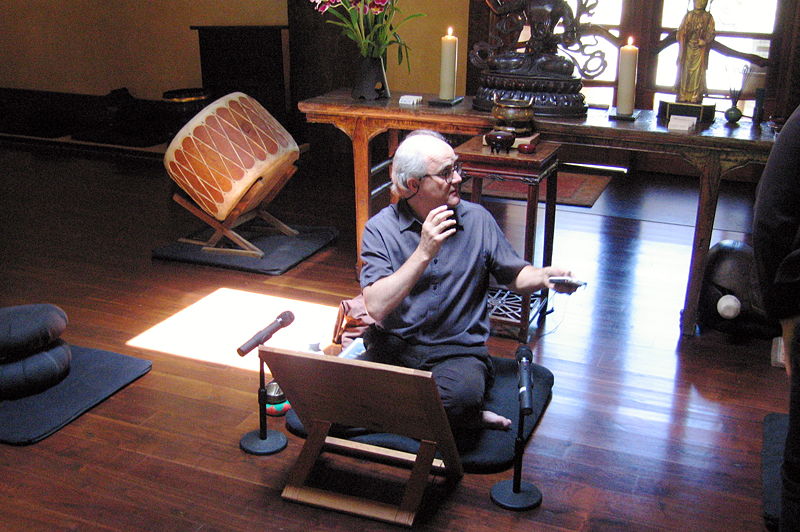
This picture adds another aspect: Steve in meditation.  I see him every day.  I want to be mindful of that miracle.  He’s alive, different, changing, dynamic, and important.  So am I, but I have a long way to go on that one. Appreciating myself is the hardest practice for me.

Habit

– Priscilla Galasso

© 2013, essay and photographs (above and below), Priscilla Galasso, All rights reserved

004PRISCILLA GALASSO ~  started her blog at scillagrace.com to mark the beginning of her fiftieth year. Born to summer and given a name that means ‘ancient’, her travel through seasons of time and landscape has inspired her to create visual and verbal souvenirs of her journey.

Currently living in Wisconsin, she considers herself a lifelong learner and educator. She gives private voice lessons, is employed by two different museums and runs a business (Scholar & Poet Books, via eBay and ABE Books) with her partner, Steve.

Posted in Peace & Justice

From Weaponry to Livingry

164265_234820096661258_1944501766_n

Hunger kills more people every year than AIDS, malaria and tuberculosis combined.

The following statistics are courtesy of the United Nations World Food Programme.

* 842 million people in the world do not have enough to eat. This number has fallen by 156 million since 1990.

* The vast majority of hungry people (827 million) live in developing countries, where 14.3 percent of the population is undernourished.

* Asia has the largest share of the world’s hungry people (some 552 million) but the trend is downward.

* If women farmers had the same access to resources as men, the number of hungry in the world could be reduced by up to 150 million.

* Poor nutrition causes nearly half (45%) of deaths in children under five – 3.1 million children each year.

* One out of six children — roughly 100 million — in developing countries is underweight.

* One in four of the world’s children are stunted. In developing countries the proportion can rise to one in three.

* 80 percent of the world’s stunted children live in just 20 countries.

* 66 million primary school-age children attend classes hungry across the developing world, with 23 million in Africa alone.

* WFP calculates that US$3.2 billion is needed per year to reach all 66 million hungry school-age children.

“God is a verb not a noun.” Buckminster Fuller

May our compassion have legs.

Related articles:

* 2013 World Hunger and Poverty Facts and Statistics by World Hunger Education Service

* An End to World Hunger, Hope for the Future

* How to Help Typhoon Haiyan Survivors

* Help Syrian Refugees

Illustration ~ most likely thelivingmoon.com or, if it’s yours, let us know and we will credit you or take it down. 

– compiled by Jamie Dedes

Posted in Illness/life-threatening illness, Liliana Negoi, Meditation, meditative, Mortality, Nature

On gifts

A couple of days ago I went with my husband to help an old lady friend prepare her apartment for renovating. After moving some furniture around the house and readying the space for the next step, we wanted to leave. The old lady, however, didn’t want to let us go away until she gifted me with some things of hers, including several flower pots, which, she said, were anyway deprived of care, since she doesn’t actually live in that apartment and only comes there once in a while. I took those flowers with gladness, not necessarily because they were gifts, but because they are pieces of life coming from a person whose life is hurrying towards its end.

The lady in question is about 65 years old and suffers from bone cancer in final stage, and despite that, and despite the even worse situation that her own son suffers from multiple sclerosis, she still finds within herself the power to not only smile, but to actually laugh and enjoy what is left of her life, and even make fun of the horrible sickness eating her alive.

While I was preparing those flower pots to take them home, I had a small conversation with her, and one thing that she said remained with me, like a second gift: “There is so little that we actually have in this world, no matter how much we possess!” In her eyes, when she said that, I thought I noticed a glint of pain, but in the next second it was gone, and she told me that she would give me all the rest of the flowers, if I wanted them, and I happily accepted. A strange tone of joy crossed her voice when talking again, as if she was suddenly relieved for the flowers’ fate, and so we established that next time we go to that apartment we would take the rest of the pots too. Then we left.

There are many gifts that we receive in this life. Many objects, many proofs of our evanescent nature. Most of them get lost along the way, and we forget about them, expecting others in exchange. There are, however, irreplaceable gifts, like, for instance, every single day that we live on this earth. Do not let that waste – because at nightfall, the day will have passed anyway – but it’s up to each of us to not let it go in vain.

IMG_9119The flowers that I took from her are now in my own house, making friends with my older vegetal tenants, and I don’t know which gift was more important – the plants, which she turned into a sudden piece of heritage for me, or the splinter of her own life and wisdom that she decided to share with me. I do know though that, even after she will be gone (no matter when that will happen) she will still be alive for me in each of those flowers.

© 2013 Liliana Negoi

Both text and photo belong to Liliana Negoi.

IMG_7667LILIANA NEGOI  (Endless Journey and in Romanian curcubee în alb şi negru) ~ is a member of our core team on Into the Bardo. She is the author of three published volumes of poetry in English, which is not her mother tongue but one that she came to love especially because of writing: Sands and Shadows, Footsteps on the San – tanka collection and The Hidden Well.  The last one can also be heard in audio version, read by the author herself on her SoundCloud site HERE.  Many of her creations, both poetry and prose, have been published in various literary magazines.

Posted in Nature, Poems/Poetry, Renee Espriu

Catching Particles

81226116.9b8fXl5I.dragonflybrightinsunedit4655splintered wood from
a lightning struck tree
catching particles
of afternoon sun

like reflections
of another self
transformed in
Alice’s looking-glass

catching particles
of colored prisms
the waterfall dances
over time’s precipice

& the dragonfly is seen
catching particles
of each ray of sun
season of summer done

– Renee Espriu

© 2013, poem, Renee, Espriu, All rights reserved
Photo credit ~  the original work of rshmd via PBase

c796b9e96120fdf0ce6f8637fa73483cRENEE ESPRIU ~ is a creative prose writer and poet. She began delighting us with her work at Turtle Flight, My Muse & Angels in March 2011. The work she shares with us there includes short stories. Renee is a daughter, mother, grandmother, and seeker of spiritual peace and soul-filled freedom. She’s studied at the graduate level and has attended seminary. She describes her belief system as eclectic, encompassing many faiths. She believes “Nature is the basis of everything that is and everything that is also a part of Nature.”

Posted in Blaga Todorova, Photography/Photographer

On a rainy day …

Rain brings an unexpected peace to central Athens where protests are a regular thing. Here Bulgarian linguist, poet and photographer, Blaga Todorova, captures a certain beauty. J.D.

Between the shadows's avatarBetween the Shadows and the Soul

“Some people walk in the rain, others just get wet.” ― Roger Miller

We have been having couple of days with a very heavy rain and in one of those days I happened to be out with my camera. I didn’t take all the pictures I wanted to, my camera has very limited options when it comes to photographing rain, and I came back home completely wet, but it was exciting and refreshing to walk in the rain, it had this mysteriously sweet taste of something majestic ruling the atmosphere …

The reason why the roads in a very busy town like Athens are completely empty it is not because people here are afraid from the rain, but because that day there was a demonstration taking place. And when we have one of those demonstrations the center of Athens is closed and isolated. I’m not sure how much I approve of…

View original post 93 more words

Posted in Jamie Dedes, Poems/Poetry

Life, Death, and Poetry

Monterey Cypress at Carmel-by-the-Sea

the mindful peace of the cypress beckons,
she bows in the wind but doesn’t break,
she knows well the moments, but nothing of time
her poetry is written in presence, not words

in this business of life, of death and of poetry
today is, i think, best forgotten ~
just a figment, after all, an old locked-room mystery,
stored among a million neurons, a trillion connections,
soundproof, but for the occasional cerebral accident
with its quick crack of a gunshot fading into a yellow eye,
watching with an understandable fatalism

life, as it turns out, is a matter of imagination,
or folly, nurturing the seesaw of grief and joy,
the contrapuntal pulls of yin and yang

we can reframe, but we can’t rewrite
there are no encores

this business of life, of death and of poetry is what it is
and the past is not a salve nor the future a savior,
the same sun that warms words poemed into life
will dry our skin to leather and weld it to bone ~

moss, says the poet, will cover up our names*

it’s best then, i think, to mimic the cypress
to let go the days, the clutter and the noise,
to bow – but not snap – in the wind,
to know well the moments, but nothing of time

– Jamie Dedes

* I Died for Beauty (“Until the moss had reached our lips,/And covered up our names.”), Emily Dickinson

© 2013, poem , Jamie Dedes, All rights reserved
Photo credit ~ Amadscientist via Wikipedia under the Creative Commons Attribution-Share Alike 3.0 Unported license

Photo on 2012-09-19 at 20.00JAMIE DEDES ~ My worldly tags are poet and writer. For the past five years I’ve blogged at The Poet by Day,the journey in poem, formerly titled Musing by Moonlight.  Through the gift of poetry (mine and that of others), I enter sacred space.

Posted in Essay, Spiritual Practice, Terri Stewart

Finding Sacred Space In the Other

This week in my church, it has been filled with conflict and dissension. That makes for a tough week! Let me clarify – structurally, from the upper echelon of the decision-making bodies, there has been a reinforcement of codified discrimination and what I think is just pig-headed wrongness. Ha! I am not feeling very charitable at all. I always have the choice of staying within the system or leaving. But leaving does not really move the ball forward for me. Why? Because my basic anthropology is that we are all connected. Even if I left this system and surrounded myself with folks that were just like me (how irritating that would be!), I am still connected to the people that I find the most frustrating.

Harrumph.

Then, I discovered this exercise written by Troy Bronson in his book Drawn In. It is an exercise for integration and forgiveness. Or perhaps forgiveness and integration. I am fairly certain that full integration is not possible without forgiveness! At any rate, I have adapted his exercise and now I offer it to you as a spiritual practice to aid in integrating those people that drive us bananas.

Take a piece of paper and fold it in half twice so that you have four quadrants. In the bottom right list your enemies: those who mean harm to you and your family; those who are politically opposed to what you are for; those who persecute you and others associated with your causes and passions.

In the bottom left list your friends: advocates for those associated with your religious, political, or social causes. Write all of this so that both groups are at the bottom of the page, with only a crease separating them.

On the Horizon (c) 2013, Terri Stewart
On the Horizon
(c) 2013, Terri Stewart

Now, draw a horizontal line to separate both groups from the empty top half of the page. Read this adapted version of Psalm 121.

I look to the hills!
Where will I find help?
It will come from the immense force
that created the stars, sun, sky,
And earth.

You are protected by Love,
And Love will not sleep
Or stumble
Or snooze.
Love always is.
Protecting you,
Standing at your right side,

The Tree shades us from the sun
The sun will not harm you
Nor will the
Moon.
Protecting you,
Keeping you safe from
All
Dangers.

The incredible creative force
That was, that is, that shall be
Is with you.
Now and always.
Wherever you go.

Reflect on the line, “I look to the hills!” and imagine that the line you’ve drawn is a horizon line made by hills way off at the distance. Imagine your friends and your enemies looking into a future where all things are met with love, justice, and mercy. Where the separating walls between these two groups are healed and taken down. Where the grievances are forgiven. Where they gaze lightly upon one another and see beloved rather than the other.

Now, offer your thoughts to love and reconciliation choosing to step forward into the hills that were once a divider, but now, as we all step into them, cocoon us in beauty.

Adapted from Ephesians 2:11-22

Don’t forget that you used to be the other! The enemy! They used to call you crude and rude. You were a foreigner in this land with no understanding of tradition. You had no hope and were held far away from life giving love.

Creative, responsive love unites all in peace! Breaking down the laws that separate us – that separated us. Following religious rules that are not grounded in loving kindness is not helpful! We all suffer, feel pain. But we are all one, one body united together. We are in this one life together.

You are no longer a stranger or an enemy! You are beloved. Just as those you persecute are beloved. All who went before you are the foundation for who you are today. And it is held together by Love and grown into holy ground where Loving Kindness dwells.

You are part of that holy ground.
You are holy ground.
They are holy ground.
We are
Holy
Ground.

There is no near and no far.
There is only here.
Be one.

Shalom and Amen,

Terri

© 2013, post , Terri Stewart, All rights reserved

terriREV. TERRI STEWART is Into the Bardo’s  Sunday chaplain, senior content editor, and site co-administrator. She comes from an eclectic background and considers herself to be grounded in contemplation and justice. She is the Director and Founder of the Youth Chaplaincy Coalition that serves youth affected by the justice system. As a graduate of Seattle University’s School of Theology and Ministry, she earned her Master’s of Divinity and a Post-Master’s Certificate in Spiritual Direction. She is a contributing author to the Abingdon Worship Annual. (The 2014 issue just released!)
Her online presence is “Cloaked Monk.” This speaks to her grounding in contemplative arts and the need to live it out in the world. The cloak is the disguise of normalcy as she advocates for justice and peace. You can find her at www.cloakedmonk.com, www.twitter.com/cloakedmonk, and www.facebook.com/cloakedmonk.  To reach her for conversation, send a note to cloakedmonk@outlook.com