The BeZine Blog

Posted in Spiritual Practice, Teachers

GREAT JOYFUL PROCLAIMER

Samdech Preah Maha Ghosananda (1929 -2007) 

Buddhist Monk of the Theravada tradition.
Patriarch of Cambodian Buddhism during Pol Pot’s reign of terror
Maha Ghosananda, his Pali Monastic name means joyful proclaimer
He lost his entire family and his friends at Khamer Rouge
Biography HERE
♥ ♥

“Peace is possible!” 
Maha Ghosananda’s motto.

♥ ♥

“Don’t struggle with people, with men. Struggle with the goals and conditions that make men fight each other.”
If a driver is not sober how can he drive a car? If you don’t calm your spirit, you cannot bring peace to the country.”
♥ 
“I do not question that loving one’s oppressors – Cambodians loving the Khmer Rouge – may be the most difficult attitude to achieve. But it is a way of the universe that retaliation, hatred, and revenge only continue the cycle and never stop it. Reconciliation does not mean that we surrender rights and conditions. It means that we see ourselves in the opponent – for what is the opponent but a being in ignorance, and we ourselves are also ignorant of many things. Therefore, only loving kindness and right mindfulness can free us. [From his essay The Human Family.]
♥ 
“We must find the courage to leave out temples
and enter the temples of human experience,
temples that are filled with suffering.
If we listen to the Buddha, Christ or Gandhi, we can do nothing else.
The refugee camps, the prisons, the ghettos
and the battlefields will then become our temples.”
♥ 
I was so taken with the story of this “joyful proclaimer” in Rob’s story yesterday, that I had to do research on him. I don’t think he’s written any books and there are few videos and none with a dharma talk, but the whole of the man’s life was a dharma talk,* an inspired and inspiring one.  J.D.
·
The quotes were gleaned from two sites, which others may wish to visit:
Photo credit –nyana_ponika under under the Creative Commons Attribution-Share Alike 2.0 Generic license via Wikipedia.
* Dharma talk – public discourse. The wonderful thing about dharma is that it is not dogma! J.D.
Posted in Jamie Dedes, Poems/Poetry

WALKING BIG SUR

Everything is the same, the fog says ‘We are fog and we fly by dissolving like ephemera,’ and the leaves say ‘We are leaves and we jiggle in the wind, that’s all, we come and go, grow and fall’ — Even the paper bags in my garbage  say ‘We are man-transformed paper bags made out of wood pulp, we are kinda proud of being paper bags as long as that will be possible, but we’ll be much again with our sisters and the leaves come rainy season’ — The tree stumps say ‘We are tree stumps torn out of the ground by men, sometimes by the wind, we have big tenrils full of earth that drink out of the earth’ — Men say ‘We are men, we pull out tree stumps, we make paper bags, we think wise thoughts, we make lunch, we look around, we make a great effort to realise everything is the same.’  Jack Kerouac, American author, poet, artist, in Big Sur.

WALKING BIG SUR

by

JAMIE DEDES

Spring arrives honeyed and peaceful,

filled with old poems, young flowers,

and the gentle cherished pleasures

of grace-filled lives. Ready now the time

·

for landscape to wreath itself in poppies,

sizzling reds, oranges, yellows, and the

land edged with granite rock dropping

slate gray and sparkling into a cold blue

ocean, filled and flowing tempestuous

·

with sea beings and wild weed. It throws

itself in carefree exhibition along the line

of shore and rock, effervescent with joy,

spinning back out to depths unknown.

·

Congregations of shore birds walk

leaving warm webbed prints in cool sand,

while inland trees, venerable natives,

redwood and madrone, commune with

busy humans and other land animals.

·

Proud old pioneer-families and hopeful

newly-arrive artists sit close and breath

the same salted air and the history of

days gone by and mostly forgotten now.

·

Ancient earth surrendering the spirit

and the wisdom of a fine peoples, not

seen – a sadness after all – displaced by

folks of a different and modern breed.

·

Down by Tassajara Creek, smudged on

a cave wall in white on white, prints

of their small brown hands left talking.

Here! We were here once! Right here!

·

 We walked like you do on two legs.

We fished, hunted, and gathered, bore

our children and mourned our dead

until the Missions and their alien god.

·

Look at us! We are harbingers of your

future and our hands are augers. Our

story is your story waiting to be

written: in white on stone, a promise.

Photo credit – Released into the public domain: A view of the Big Sur coast including the Bixby Bridge courtesy of Calilover via Wikipedia. 

Posted in Jamie Dedes, Poems/Poetry

MOTHER

WHAT OF MOTHER?

by

Jamie Dedes

·

Still living at the edge of forever

in hazy seas of hoary clouds and

from this place we crawled, oh

eons ago, out of her briny womb

·

to sit and sun, warming on rocks

and moving our lives to shores

roaring with sound and surf

casting its wealth of sea shells

·

and seaweed. Onward, inward to

further depths of earth, granite,

lava-flows and flower-decked

valleys, dancing once with bird

·

and bear, sharing an arborous

roof, green, gold, and welcome.

So grateful too and good at our

husbandry. All thrived. Often now

·

crass, careless … soulless,

offending blues-black burdens

of abuse. Maybe too thankless,

some children, de-spirited and

possibly doomed to roiling sea.

What then of this treasure:

Mother Earth.

Photo credit – Peter Griffin, Public Domain Pictures.net.

Posted in Art, Guest Writer

UNDERPAINTING

The artwork and narrative are by Leslie White, copyrighted and all rights reserved.
Please be respectful of Leslie’s art.

♥ ♥ ♥ ♥
With permission this is reblogged from Leslie White’s blog.  I love the way she has pulled together painting technique with our other arts and ideals. Think you will enjoy too. Happy Weekend to all of you from all of us at Into the Bardo … and thanks, Leslie! 🙂 J.D.

♥ ♥ ♥ ♥
UNDERPAINTING

by

Leslie White

I could not believe my good fortune when I found a photo of Grandpa Elliot posted to the wet canvas photo reference library for artists.  It was a must-do for me.

Several bloggers have made mention of underpaintings; the most recent being Amy from Souldipper found here. She asked me about an artist’s use of an underpainting.  I responded something like it is the foundation that we build our final work on. That made me think more on the subject as we were also talking about underpainting our lives with love and kindness.  Then I came across the photo of Grandpa Elliot who has actually underpainted his life with sharing music to millions in New Orleans and becoming part of the project, “Playing for Change”, a CD whose proceeds go to helping others.

The other connection I can make about an underpainting is that it always, for me, sets the tone for where the light will fall in it. BINGO! I see the same in life with passing on kindness. Light is passed on through our kindness to others.  The above stage of my painting illustrates how I carved out areas where I wanted the light to fall.

The above image is the finished result.

I can not think of a better way to start the weekend than this:

Video posted to YouTube by .

Posted in Uncategorized

ULTIMATE WEAKNESS

Martin Luther King, Jr. (1929-1968)

“The ultimate weakness of violence is that it is a descending spiral, begetting the very thing it seeks to destroy. Instead of diminishing evil, it multiplies it. Through violence you may murder the liar, but you cannot murder the lie, nor establish the truth. Through violence you murder the hater, but you do not murder hate.”  Martin Luther King, Jr.

Posted in Uncategorized

A DEEPER DARKNESS

Martin Luther King, Jr. (1929-1968)

(I mourn the loss of thousands of precious lives, but I will not rejoice in the death of one, not even an enemy. Jessica Dovey on Facebook.)

“Returning hate for hate multiplies hate, adding deeper darkness to a night already devoid of stars. Darkness cannot drive out darkness: only light can do that. Hate cannot drive out hate: ony love can do that.” Martin Luther King, Jr.

Posted in Book/Magazine Reviews, Jamie Dedes

BROAD MARGIN

MAXINE HONG KINGSTON (b. 1940)

Chinese-American Author, Poet, Peacemaker, and Professor Emeritus of University of California at Berkeley, California, U.S.A.

Photograph courtesy of the CitySon Philosopher. Taken at Kepler’s Books, Menlo Park, California, U.S.A.

Keep this day. Save this moment;

Save each scrap of moment; write it down.

Save this moment. And this one. And this.

I Love a Broad Margin to My LifeMaxine Hong Kingston

AN EVENING WITH MAXINE HONG KINGSTON

by

Jamie Dedes

I suspect that when many of us think of Buddhist influences on American literature, the first writers we think of are the Beats, but there are also very fine contemporary writers: Maxine Hong Kingston, Lan Cao, Anne Waldman, and Charles Johnson among others. Hence, I was delighted when, as part of the two-week-long celebrations of my sixty-first birthday, the CitySon Philosopher took me to dinner at Cafe Barrone and afterward next door to Kepler’s Books – a favorite among family and friends, the local independent – to hear Maxine Hong Kingston talk about her new book, I Love a Broad Margin to My Life.

Story gives form and pleasure to the chaos that’s life. By the end of the story, we have found understanding, meaning, revelation, resolution, reconciliations. Maxine Hong Kingston

This newest book is a memoir in long poem, in effect like the old-country tradition of writing a poem on a scroll. Flowing. Organic. Seemingly endless. It was occasioned about six years ago by Ms. Kingston’s sixty-fifth birthday. When I dipped a ready toe into its rippling waters of free-verse, my own preference, I was not disappointed.

Going to author presentations is one of our nicer family traditions. Having both already read The Woman Warrior: Memoirs of a Girlhood Among Ghosts, my son and I looked forward to hearing what Ms. Kingston had to say. There’s also a certain amount of local pride. Ms. Kingston was born and raised in Stanford, a university town and the next one over.  She derives from a family of Chinese immigrants with strong culturally inspired story-telling and poetry traditions. This family experience combined with some years in Hawaii and traveling to China and elsewhere enriches Ms. Kingston’s writing and lends vitality, color, and perspective to both her prose and poetry.

Am I pretty at 65?

What does old look like?

Ms. Kingston immediately addresses the  issues of aging and fears of dying, both in her book-presentation and in the book itself. She talks about being superstitious and thinking that as long as she has things to write “I keep living…” She tells the origins of the title: Thoreau. It’s a line from Walden that, she says, also hangs framed over her desk. She explains the Chinese custom of “writing poems back” and tells of her dad who would write poems to her in the margins of her books. Charming! She is now translating these for publication, though that was never her dad’s intention. Or so I would infer. She encourages us to write our own poems in the margins of her book, which certainly are wide.

Ms. Kingston stands in front of us, like a fragile little bird, reading excerpts from the book, which I delight to hear. She is ten years older than me and remembers the same key events: civil rights, women’s rights, Vietnam, Iraq … and so on. She’s lived the immigrant experience. She does indeed sound like a Buddhist. Has the Buddhist sensibility: respect for life, for silence, for present moment.

When Ms. Kingston has finished her presentation and Q & A, my son excuses himself and kindly goes to buy two copies of the book. We stand in line with others, waiting for her to sign our books. Every moment spent attending to writers, talking about books and writing, is precious…even more this one, because I am with my son and the writer happens to be one with whom I share values, gender, and the context of time. She also is a mother with one son.

Finally it is our turn: Ms. Kingston sits tiny and cheerful with pen in hand. She greets us, as cordial as she has been with each reader. She writes my name in big, bold sprawling black letters and “Joy and beauty and delight” and signs her full name,  with “Hong” in Chinese characters. In the privacy of my mind, I think: teachers do indeed come in many guises and Ms. Kingston provides an engaging example of Buddhist values in action and at work.

Finally, my son and I head for his car, for home, and for good reading, just as we so often have over the past forty years. I feel sated. As long as we have dear children, fine friends, authentic authors, and good books to read and our own stories to write, we have everything. Life is indeed full of joy, beauty, and delight. Thank you, Son! Thank you, Ms. Kingston! 


Posted in Jamie Dedes, Poems/Poetry

AUTUMN LEAF

LITTLE AUTUMN LEAF

by

Jamie Dedes

In memory of Mary Kate.

You floated into our lives

an autumn leaf edged in gold,

a tiny froth of smile and grumble,

a lifetime of grit and grizzle.

A mind over-larded and lost

in the never-land of ninety years.

Yours such a small body, such pain.

So bravely, autumn leaf, you chose

the wind on which to float away,

leaving us to the emptiness of your

gray chair and our wistful hearts.

Photo credit – Petr Kratochvil, Public Domain Pictures.net.

Posted in Jamie Dedes, Teachers

CHERISH HOME

Carl Sagan (1934-1996)

American astronomer, astrophysicist, cosmologist, author and popularizer of natural and space science

CARL SAGAN was the David Duncan Professor of Astronomy and Space Sciences and Director of the Laboratory for Planetary Studies at Cornell University. He played a leading role in the American space program since its inception. He was a consultant and adviser to NASA since the 1950’s, briefed the Apollo astronauts before their flights to the Moon, and was an experimenter on theMariner, Viking, Voyager, and Galileoexpeditions to the planets. He helped solve the mysteries of the high temperatures of Venus (answer: massive greenhouse effect), the seasonal changes on Mars (answer: windblown dust), and the reddish haze of Titan (answer: complex organic molecules). MORE [The Carl Sagan Portal. This site is recommended, well worth your time.]

Carl Sagan may not be a teacher in the Buddhist sense, but he is a teacher with a wise and compassionate message. Here Sagan puts things into perspective for all human kind:

Video posted to YouTube by CarlSaganPortal.

Earth as seen from Apollo 17.

“A mote of dust suspended in a sunbeam . . . ” Carl Sagan

Let there be peace.

It’s a decision not a prayer.

Posted in Jamie Dedes, Poems/Poetry

ALL THAT MATTERS

ALL THAT MATTERS

by

Jamie Dedes

Find the body blowing in the wind,

a rag doll to be dusted and draped,

loved with warm baths, oiled with

the scent of lemons, fresh and clean

·

and sat in a chair by a window to

watch the world go by. The zephyr

in the trees rustles like silks once

reserved for proms and weddings.

·

The sound of a car door closing,

no longer a date for dinner out

arriving brushed and blushing. Now

the delivery of air in metal tanks

·

or some other chemical miracle.

Alas and joyfully, we are left to

live a life rich in its simplicity.

Art and kindness call, making for

·

wealth in fact and in deed. The

self-centered life is both unkind

and unhealthy, but poems and

caritas are within the reach of

·

anyone. The tools left now are

old enduring: poetry and charity.

Content! For suddenly by chance

we’re left with all that matters.

·

* caritas  – orthodox Christian concept of compassion, loving kindness, or in Buddhist terms “metta.”

Photo credit – Brunhilde Reinig, Public Domain Pictures.net.

Posted in Dharma Talk, Teachers

RENUNCIATION & EASE

Gil Fronsdal (b. 1954), American Buddhist Guiding Teacher, Insight Meditation

Gil was trained as a Vipassana teacher by Jack Kornfield and is part of the Vipassana teachers’ collective at Spirit Rock Meditation Center. He was ordained as a Soto Zen priest at the San Francisco Zen Center in 1982, and in 1995 he received Dharma transmission from Mel Weitsman, the abbot of the Berkeley Zen Center.

He is the guiding teacher of the Insight Meditation Center (IMC) of Redwood City, California. He is one of the best-known American Buddhists. He has a PhD in Buddhist Studies from Stanford University. His many dharma talks available online contain basic information on meditation and Buddhism, as well as subtle concepts of Buddhism explained at the level of the lay person. MORE [Wikipedia]

Here Gil talks about being aware of what takes us away from ease in order to be able to return to ease again.

Video posted to YouTube by  (2008).

Access complete dharma talks by Gil Fronsdal and other Buddhist teachers HERE at the website for Insight Meditation Center, Redwood City, CA, U.S.A.

Photo credits: Gil’s photo courtesy of Insight Meditation Center under under the Creative Commons Attribution 3.0 License; orchid courtesy of Jamie Dedes.

Posted in Guest Writer, Poems/Poetry

BLOSSOMING

BLOSSOMING

by

Danielle Mari

Awoke with this thought brought to me via dreaming memory. The central image comes from a moment at a wedding I attended years ago, a wonderful celebration of the union of two people incredibly special to me then and even more special to me now.  The man who married these two souls (called Erik and Karen, for those of you keeping score at home), used this metaphor to illustrate the idea of patience. That image remained with me, resurfacing again and again over the years, gaining depth of meaning for me. Here, with apologies to anyone involved on that day, I have made it my own. Hope you enjoy.

Much as you want to

you mustn’t.

Wrest the petals,

force them open,

and you’ll bruise

fragile silken pistils.

·

Much as you cannot

you must.

Wait very patiently,

allow water to

wander up the stem,

fatten the bud.

·

Much as you can

you shall

abide an agenda

set by the sun

whose warm whispers

coax her unfurling.

Danielle is an active participant in a poetry community to which I belong. When I read this poem, I was completely charmed and certainly its message is relevant to all of us “in the bardo”  … and who among us is not? With Danielle’s permission her poem is posted here. For more of Danielle Mari’s fine poetry, visit her at her poetry blog, Mission Improvisational. J.D.

Photo credit – Brunhilde Reinig, Public Domain Pictures.net.

Posted in Jamie Dedes, Poems/Poetry

IT’S WINTER

IT’S WINTER

by

Jamie Dedes

If you are viewing this poem on the home page, you will have to click with your mouse on the subject line of the post for the poem to lay-out properly.

No illusions, no illusions, no lies, no softening of the truth,

no tears, no bargains, though sun shines and birds sing,

Winter is here, I know.

Winter is too crisp and sharp to invite either love or lechery,

and those men, husbands and lovers, see through it to seasons

young and not so inclined to ponder as one man complained,

while I watched the grass die, the leaves dry, the earth harden,

cold winds blowing over the graves that house our bodies.

And I being me was always asking

“Why”

Once Spring danced like wild flowers in the wind,

held dew and promise and smiled like a well-fed babe.

It hadn’t heard the word defeat and didn’t know hate or anger.

Spring liked to play, to romp, to sing and

she hung her question on a tree to ripen –

“Why”

Summer took itself seriously, was wide-eyed with longing, sizzling in the sun.

It wore a red dress and the champagne happiness of a husband and baby

and bravado because Summer is young and youth is bold,

a silver bell that rings and rings and never stops.

Too much is not enough and yet – a tremulous

“Why”

Autumn gently smiled, like Da Vinci’s lady, and danced old dances,

reminisced Begin the Beguine, stepping lightly on brown leaves.

It was lined with gold and muted silks, remembered is manners,

nodded wisely, spoke sagaciously , and was a might too profound.

Haughty with itself, it just knew it knew

“Why”

Winter…Winter is content, sees itself in Time displaced and learned

laughter has meaning and fleshy bonds and boundaries dissolve.

A bit stiff, cold, and slow now, slowing to honor the sacred,

to say “i love you,” to say “it was good,” to say “thank you.”

Sun rise, sun set, and once dormant trees burst forth with green,

sanguine and serene, just a habit now that question

“Why”

Posted in Jamie Dedes, Poems/Poetry

RELIQUARY

RELIQUARY

by

Jamie Dedes

We flew along the freeway yesterday under

a cold coastal expanse of cerulean ceiling.

·

It reminded me of you and how we dusted

the vaults of your mind to rid them of fear

and the old lexicons of grief and guilt, the

whalebone girdles of unfounded faith and

everyday conventions, sticky and saccharine.

I thought of that one sea-green day we spent

·

under just such a sky in a land far away and

how we changed your name then and rewrote

your story to tell of oak trees instead of old times.

You sketched flowers blossoming in the dust

of a spring that promised but never delivered.

Now we don’t speak of men, but of cats with

·

their manner of keeping heart and claws intact.

We tell ourselves stories in music that resounds

in deep sleep. After all the ancient calls to

feral festivals will still and time coming when

we no longer play in margins, memories hung

on our skeletons like Spanish moss on cypress.

·

It pleases me that fissures spin into poemed reliquary

and the pink poeu de soie I wore to our prom that June.

Photo credit: Stupa (reliquary) With Pillars, Gandhara 2nd Century courtesy of PHGCOM under the terms of the GNU Free Documentation License

Posted in Spiritual Practice

ARTIST’S CREED


Video posted to YouTube by Jan Phillips.

Eckhart Tolle.

This resonates for me as I know it must for other creative beings. (Aren’t we all?) I do believe that art comes from sacred space, that doing art is a meditation, and that our art comes through us not from us.

The poem was written by Jan Phillips. Link HERE to her website.


Posted in Essay, Jamie Dedes

MYSTIC POET-PHILOSOPHER

Kahlil Gibran Memorial, Washington, D.C., U.S.A.

Excerpt from

THE PROPHET

by

Khalil Gibran

If you are viewing this poem on the home page, you will need to click with your mouse on the subject line of the post to see the poem laid out properly.

And a man said, Speak to us of Self-Knowledge.
And he answered saying:
Your hearts know in silence the secrets of the days and the nights.
But your ears thirst for the sound of your heart’s knowledge.
You would know in words that which you have always known in thought.
You would touch with your fingers the naked body of your dreams.

And it is well you should.
The hidden well-spring of your soul must needs rise and run murmuring to the sea;
And the treasure of your infinite depths would be revealed to your eyes.
But let there be no scales to weigh your unknown treasure;
And seek not the depths of your knowledge with staff or sounding line.
For self is a sea boundless and measureless.

Say not, “I have found the truth,” but rather, “I have found a truth.”
Say not, “I have found the path of the soul.” Say rather, “I have met the soul walking upon my path.”
For the soul walks upon all paths.
The soul walks not upon a line, neither does it grow like a reed.
The soul unfolds itself, like a lotus of countless petals.

♥ ♥ ♥

The Lebanese-American artist and poet-philospher, Gibran Khalil Gibran, died on this day in 1931. He was born in 1883. He wrote in the Arabic and in English and was from the northern Lebanon town of Bsharri (the ancient name meaning “the house of Ishtar,” after the goddess Ishtar worshiped by the ancient Phoenicians). Bsharri is in the Kadisha Valley below the famed cedar forests of Lebanon. In modern times Bsharri was enclave for Maronite Christians escaping from the Ottoman Turks. Until the late 19th Century/20th Century, Aramaic* was the language of Bsharri. Its influence is still evident in the verbal inflection of its people.

Initially, The Prophet (1923, U.S.), was not well-received by critics, though it met with some success with the public. By the sixties and the counter-culture** it – and all his work – gained greater acceptance and a wider audience. As with other like spirits, Gibran is considered a mystic by some and a charlatan by others. Gibran found wisdom in the transcendent elements of all spiritual traditions he encountered, but was born into a Maronite family.

The Maronites are Eastern Catholics in communion with the Apostolic See (the seat of authority for the Catholic Church based in Rome, Italy), and followers of St. Maron, a Syrian priest of the fifth century. Also from the Aramaic speaking peoples, St Marion was a friend and contemporary of St. John Chrysostom (Turkish) and Anthony the Great (Egyptian) and led a monastic life. Before the rise of the Ottoman Empire and the subsequent Lebanese diaspora, this was the majority population in the Lebanon. 3,500,000 people practice this religion world-wide. In the United States some 200,000 are Maronite.

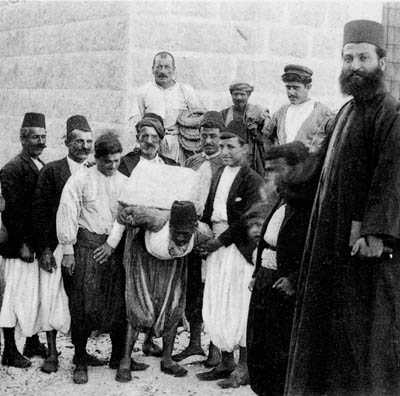
Maronites building a church on Mt. Lebanon, circa 1920s. Public domain photo via Wikipedia.

Video posted to YouTube by . This is a short documentary of about ten minutes.

Gibran Museum in Lebanon courtesy of Xtcrider via Wikipedia. Public domain photo.


Gibran Memorial at Copley Square in Boston, Massachusetts, U.S.A. via Wikipedia. Public domain photo.

1904 – 1930, written in Boston, New York and Paris, where Gibran studied art under Rodin.

* Aramaic, a Semitic language, was the language of Jesus and the Apostles, the literary language and the vernacular of ancient Asia Minor, Syria, Mesopotamia, and Palestine. The Peshitta texts (Old and New Testaments) were written in Aramaic and some claim they are the original New Testament documents.

**counter-culture – a cultural movement initiated mainly in the U.K. and the U.S. It spread though most of the western world between 1958  and 1974 with its peak after 1964. The counter-culture movement of the ’60s created a cultural divide mainly along age lines with youth forming a subculture questioning the social norms of the day and changing many regarding wars (especially Vietnam), sexuality, religion and spirituality, music, drugs, abortion, women’s rights, racial rights, gay/lesbian rights, free speech, environmentalism, dress codes, and so forth. It started in ’58 in London with an act of civil disobedience when students marched to ban the bomb (i.e. nuclear weapons).

Photo credit for Washington, D. C. Memorial – Gyrofrog licensed under Creative Commons ShareAlike 1.0 License.


Posted in Jamie Dedes, Poems/Poetry

SACRED CYCLE

SACRED CYCLE

by

Jamie Dedes

I wrote the first version of this a year ago. I was sitting in a Buddhist center were the children had designed a large mandala in collage to celebrate the Buddha’s birthday, which is April 8. The mandala was filled with pictures and drawings of nature scenes, the Buddha, stupas, and children at play. I was totally engaged by it with its color, movement, and imagination. The children’s mandala came together for me with the Tibetan Buddhist custom of creating mandala of colored sands, which are then blown away to remind us of the impermanence of the material world. This poem is the result. Although it has elements that are consistent with the Buddhist system, I didn’t write it as a Buddhist statement, just an imaginative one.


Is there – could it be – that there’s

more than one god, one eternity,

more than one universe, and Time

at their service, really nothing more

than a simple saffron-robed monk; a

being meditating, mediating realms

of Chaos, pulling colors and lights

and energies into lively mandala,

galaxies of air, fire, earth, blood.

·

And could it be that the blood are

uneasy souls, passing drowsy days

and nights in deep sleep, believing

dark, dank demons whispering …

“The moon never dies.”

But demons do as demons do: they lie.

·

So unready and fearful, poor souls,

when one day wind and fire stormily

march in, tramping on and through

coherence with feet deft and dusty

and in Chaos whirling and roiling,

souls passing into a renewed spin

on fate, singing desperate canticles

to nothingness, to light, to love

·

Time dons its saffron robes

sits in quiet meditation

births lively mandala

another sacred cycle begins …

Photograph of temporary sand-mandala, Drongtse Monastery, Tibet, 1993 via Wikipedia and originally posted to Flickr asamazing sand mandala by Mai Le from San Francisco, CA, USA under GNU Free Documentation License.

Posted in Jamie Dedes, Poems/Poetry

SUNDAY MORNING MIND

MY MIND ON SUNDAY MORNING

by

Jamie Dedes

So Sunday morning I’m in bed with Cleo

She wants to sleep & I get up naked at the table

Writing

And it all snaps into focus

The World inside my head & the cat outside the window

A one-to-one relationship

While I image whatever I imagine …

The Same Old Jazz by Philip Whalen from The Collected Poems of Philip Whalen.


the poet wrote and

in writing awoke

He fell one day into an

iris and drowned in the

color purple. Freedom

rose like a geyser

raining down poems,

engraving each on the

leaf of an old oak.

Photograph of Gypsy (The Cat’s Meow) courtesy of the Cityson Philosopher.