Posted in Essay, Poems/Poetry, Spiritual Practice, story, Terri Stewart

Abandoned, Alone, and Angry

In my faith tradition, Jesus is crucified on the cross. He cries out, “Father, Father, why have you forsaken me?” This is a reference to Psalm 22 which explores emotions of abandonment, anger, and finding hope. I have used this methodology to express the anger and hope that I find for the youth that I work with who are affected by incarceration.

One night when I was working in detention (re: jail for kids), I heard story after story of hopelessness. It came to me that these youth were torn apart by their parents, by the education system, by poverty, by global issues beyond my understanding. One youth was going home the next day. To a crack addicted mother. Why couldn’t he go to his dad? His dad smuggles guns into the country and was a high placed gang member. He was certain he would be dead if he lived with his dad. So to his mom he goes. Where she will offer him drugs and he will become hooked. Again. He said, “I do not have the strength to say no to my mother.”

Another youth, noticably affected with psychological and educational challenges, was from Somalia. He was living with his auntie here. In Somalia, he had seen his parents dragged from their home, his mother raped, and both parents killed in front of him. But instead of investing in mental health centers, we have invested in mental health courts. This young man, clearly with a minimum of PTSD, will be locked up where the focus is on “treatment” (in this setting that means that they admit to crime and say they are sorry) not on therapy.

This makes me so mad! So my heart cries out to all who have let down these children. Let me say it again–children. But in order to do this work, I needed to discover why. The below poem was my journey through the anger to discovering how I can possibly continue to find hope and love in a system that is hopeless and loveless. It is also my way of putting words to the stories that the youth tell. And my own story.

And PS, if you’d like to support my work with these troubled youth, I’d love it!


Psalm
Eli Eli lama sabachthani?

where were you
when the embryo
hatched and was formed
by blood-spattered hyenas
tearing hope from
limb to limb and
laughing gleefully
at the mockery

where were you
when the embryo
fell and love
offered a hit
of a crack pipe
covered in symbols
flashing through
the ghetto offering
escape from the
desolate heat

the hands that
should be reaching
out are cut off at
the wrists bleeding
sanctimonious tripe
in defiance of the call
to love the
least , lost, and lonely
while sentencing each
embryo to death

guilty rings through
the room as we
continue to bleed the
embryo out with
ignorance born of
fear and shame and
the lie of the only way
being my way standing
on the corner shouting
belligerently to
repent or die

revelation rings through
the cosmos as the
embryo marches the
guilty to sheol while
silent tears are birthed
wresting the stumbling
breath of hope into a
silent scream reaching
to the ramparts and
calling forth the final
battle fought with
easter lilies

© 2013, post, Terri Stewart, All rights reserved

© 2009, poem, Terri Stewart, All rights reserved

terriTERRI STEWART is Into the Bardo’s  Sunday chaplain, senior content editor, and site co-administrator. She comes from an eclectic background and considers herself to be grounded in contemplation and justice. She is the Director and Founder of the Youth Chaplaincy Coalition that serves youth affected by the justice system. As a graduate of Seattle University’s School of Theology and Ministry, she earned her Master’s of Divinity and a Post-Master’s Certificate in Spiritual Direction with honors and is a rare United Methodist student in the Jesuit Honor Society, Alpha Sigma Nu. She is a contributing author to the Abingdon Worship Annual.

Her online presence is “Cloaked Monk.” This speaks to her grounding in contemplative arts and the need to live it out in the world. The cloak is the disguise of normalcy as she advocates for justice and peace. You can find her at www.cloakedmonk.com, www.twitter.com/cloakedmonk, and www.facebook.com/cloakedmonk.  To reach her for conversation, send a note to cloakedmonk@outlook.com
Posted in Essay, Spiritual Practice, Victoria C Slotto

Keeping Sabbath

The Paradise

Last Sunday, I chose to practice Sabbath—a tradition that was a strong factor in my growing up years, but that waned with my work as a nurse…patients need care every day of the week. Most of us know and understand the concept of a day of rest, but our frenetic lifestyles tend to get in the way.

Sabbath crisscrosses most cultural, spiritual, religious and secular societies, even pre-dating biblical times. The Babylonian Enuma Elish prescribed a day of repose. In the Genesis creation story, God rested after his six days of work and, I suppose it worked out well so that he added it to those tablets of stone he handed on to his people through Moses. Wicca, Islam. Buddhism, Cherokee teaching and others all caution humans to take a break, chill out, and rest.
Wisdom, it seems to me, embraces our need for refreshment, for replenishment of body, mind spirit and emotion, for regeneration and reflection.

For many of us, well, for me anyway, the need to be in control seems to take hold and it becomes oh-so-hard to let go of time, accept idleness and non-productivity and, perhaps, the feeling of uselessness. I suspect that there is a trust issue here. Can I really believe that God will take care of things in my absence? Can I believe that the work of creation on this particular day will go on without my amazing intervention?

So, what kind of things did I, Ms-Doing-Not-Being do?

• Meditation—a bit longer than my ordinary routine.
• Journaling. And in the process really waking up to what was happening around me. I wrote of all the wonderful sensory experiences that the pristine late-spring day offered—the finches song, the brilliant orange of the male oriole at our feeder, the spicy scent of new-born flowers and the basil in the vegetable garden. I noticed the play of light and shadow in the now-expansive boughs of the ash tree we planted almost twenty years ago and watched the hummingbirds fly back and forth sipping nectar from both flowers and feeders. I felt the gentle kiss of the breeze and delighted in my dogs’ warm bodies flanking me on either side. I listened to David busy chopping spices in the kitchen.

Photo Credit: D. Slotto

• Spa Stuff. I pampered myself with a Pomegranate/Cranberry exfoliating scrub courtesy of Burt’s Bees, did a manicure/pedicure and, well, thought about taking a nap. I thanked my body for its almost-seven decades of service and praised the many scars that it bears, a reminder of the life-threatening illness I have survived, for now.
• Creativity. Maybe some consider engaging in the creative process to be work. For moi, I allowed the muse to come out and play, more by way of brainstorming than actualizing any project. Sabbath time allows ideas to gestate and gives clarity as to where to take them.
• And, yes, a final confession. I did laundry. So, it wasn’t a perfect Sabbath, but for this woman who tends towards OCD, that’s probably not a bad thing. Besides, we needed clean clothes!

Photo Credit: Bergen Linen

That night I slept well, but will I be able to repeat the experience? My history tells me that this is not something that comes easily to me. I am aware that Sabbath doesn’t have to always be on Saturday or Sunday, or even occupy an entire twenty-four hours. How would life be different if, each day, I remember to tuck in an hour or even minutes for the divine repose, sit back and let go?

– Victoria C. Slotto

© 2013, essay, Victoria C. Slotto, All rights reserved

Victoria and Dave Slotto

2940013445222_p0_v1_s260x420VICTORIA C. SLOTTO (Victoria C. Slotto, Author: Fiction, Poetry and Writing Prompts) ~  a Contributing Writer to Into the Bardo ,attributes her writing influences to her spirituality, her dealings with grief and loss, and nature. Having spent twenty-eight years as a nun, Victoria left the convent but continued to work as a nurse in the fields of death and dying, Victoria has seen and experienced much. A result of Victoria’s life experience is the ability to connect with readers on an intimate level. She resides in Reno, Nevada, with her husband and two dogs and spends several months of the year in Palm Desert, California.

Winter is Past is her first novel. It was published in 2012 by Lucky Bat Books. She has a second novel in process and also a poetry chapbook. Victoria is also an accomplished blogger and poet who has assumed a leadership role in d’Verse Poet’s Pub. You can read more ofher fine poetry HERE.


Posted in Essay, find yourself, Guest Writer

Who Would I Be Without My Story

the work of Shakti Ghosal ~

You are what exists before all stories. You are what remains when the story is understood.
Byron Katie, American speaker & author of  The Work

I muse about this Coaching question asked me.

So what is my story? As I think of this, I see its tentacles going into the past.

The year is 1911. A lowly placed accounts clerk of the British Accounts Service in India boards the Kalka Mail train from Calcutta with his family. He is shifting home to Delhi in accordance with the British colonial Government’s decision to shift the administrative capital of the Indian subcontinent there. He is following his work, the only thing he knows that sustains him and his family. He is my grandfather.

east_indian_railway_mail

ast forward fifty years and it is my father in the midst of a career in the Indian Audit and Accounts service. Now settled in Delhi, the capital of independent India. Content with a middle class lifestyle. So grooved in his office work that he feels insecure to take up an exciting consular opportunity in the US. He regrets it citing family constraints.

Fast forward another fifty years and it is I sitting at the desk in my office wondering what next. Having been on a sometimes exciting, sometimes lacklustre roller coaster ride through diverse business areas for three decades, I can claim fair knowledge of the nuts and bolts of corporate working. But like my grandfather and father, I see my work primarily as the means to provide a comfortable life to me and my family.

My story. The story in which working at an office desk equates to life comfort and sustenance. The story which I accept as me. And as I accept, I see it gaining power and dictating what I do. I see it protecting me in a ‘safe box’. As it allows me to peep through my perception coloured lenses and read meaning about the world at large. But as it protects, do I also see it confining and preventing me from setting forth, taking risks and achieving my true potential?

What is it that has embedded this ‘office work’ DNA in me thus? What is it that has made it such an integral part of my story? As I muse, I sense that in my office work DNA resides a gene harking back to the industrial revolution. A gene that through generations has altered my value system. And made me shift towards valuing business growth, productivity and profits over beauty, compassion, love and community ties. Over generations, the gene has also lured me away from simplicity and frugality and towards materialism. An attachment to materialistic possessions which has fuelled insecurity. And has manifested in my life through frantic work schedules, technology tying me down 24X7, scarcely any time to “stop by the woods” or “wander lonely as a cloud”.

So, who would I be without my story? Who would I be if I could shed the above DNA and gene? Would I have that glorious opportunity to start from a place where I am no longer confined and am free to define and implement what I think is important? What do I see?

I see myself slowing down, without the pressures of societal expectations of wealth and ownership. As I take personal responsibility to do that which is meaningful, creative and liberating to me.

I see myself effortlessly crossing those artificial barriers created by economic, social and racial compulsions.

I see in me the birth of a great willingness to learn. From all corners of the world. Unfettered and unhampered by beliefs of my education and experience.

Like the return of the Jedi, I see in me the comeback of the human heart. As I acknowledge intrinsic qualities like Empathy, Faith, Creativity and Interconnectedness and bring them centre stage.

I see how work would look like for me. Passion…. Art…… the pulse of the environment.

photo-0613

Who would I be without my stories?
Like a tree
Without the rustle of the leaves
Winter mind
Kind
Aligned
To the Inside
Inside the inside
A space so wide
It has no centre
Because it is centre

From Caitlin Frost’s Web log

In learning………………… Shakti Ghosal

© 2013, essay and photographs, Shakti Ghosal, All rights reserved

Shakti Ghosal
Shakti Ghosal

SHAKTI GHOSAL ~ has been blogging (ESGEE musgings)since September 30, 2011. He was born at New Delhi, India. Shakti is an Engineer and  Management Post Graduate from IIM, Bangalore. Apart from Management theory, Shakti remains fascinated with diverse areas ranging from World History, Economic trends to Human Psychology & Development.

A senior Management professional, Shakti has been professionally involved over twenty-five years at both International and India centric levels spanning diverse business areas and verticals. With a strong bias towards action and results, Shakti remains passionate about team empowerment and process improvement.

Shakti currently resides in the beautiful city of Muscat in Oman with wife Sanchita, a doctorate and an Educationist. They are blessed with two lovely daughters, Riya and Piya.

Posted in Essay, Poems/Poetry, Writing

Poems for Our Fathers

Photo Credit: Daddy Blogger

I’ve written poems for my mother, my sister, my grandfather, friends, my husband—even my dogs. Today I’m aware that this would-be poet has thus far under-achieved when it comes to reflecting on the role of my fathers (yes, that’s plural) in my life. And yet, they’ve been a central, loving, constant presence. I’ve been blessed.

It’s not exactly true that I’ve ignored them. The man who gave me life, I never knew. He was killed in World War II when I was three months old, leaving my mother a 22-year old war widow. In the interest of brevity, here’s a link to the poem I wrote the year that the anniversary of his death coincided with Easter Sunday.

During the subsequent years, we lived with my maternal grandparents and it was easy to call my grandfather Daddy as soon as I decided it was okay to talk. The man was a wonder, a civil engineer for the Los Angeles Flood Control, quiet, brilliant and loving. He sang baritone, and I remember sitting on his shoulders at Christmas Midnight Mass while he sang “Oh, Holy Night” to the accompaniment of my concert-pianist/organist grandmother. Come to think of it, I wrote of him, years ago, as well, here.

Daddy numero trois came into our lives when I was seven and my mother remarried. He brought along a sister my age—both of whom have now left us. When he died, twelve years ago, I was in the midst of a significant health crisis. I put grief on hold, as I did the desire to pay tribute to this loving, generous man who became as much a father to me as any DNA could assure. So now I’m on a mission.

In the meantime, I turn to poets of all times who have written works that sing of fatherhood—its tenderness and tulmult, its caring and curse. Though I chose to tell my story in glowing terms, we know that life is not always painted in gentle tones of watercolor. Sometimes the rage of red and black might slash across the paper. Often colder tones prevail. Yet, for most of us, something emerges that stays true and evolves throughout a lifetime, washed with a bit of hope and forgiveness.

Today, let me share three poems (or snippets of the one not yet in the public domain) that cover the role of fathers in our lives.

On My First Son
by Ben Jonson

Farewell, thou child of my right hand, and joy;
My sin was too much hope of thee, lov’d boy.
Seven years thou’wert lent to me, and I thee pay,
Exacted by thy fate, on the just day.
O, could I lose all father now! For why
Will man lament the state he should envy?
To have so soon ‘scap’d world’s and flesh’s rage,
And, if no other misery, yet age?
Rest in soft peace, and, ask’d, say here doth lie
Ben Jonson his best piece of poetry.
For whose sake, henceforth, all his vows be such,
As what he loves may never like too much.

Public Domain

English: English playwright, poet, and actor B...
English: English playwright, poet, and actor Ben Jonson (1572-1637) by George Vertue (1684-1786) after Gerard van Honthorst (1590-1656) (Photo credit: Wikipedia)

In this first poem, 17th century poet, Ben Johnson, writes of the death of his first-born son, Benjamin, who died on his 7th birthday. Note that the Hebrew name, Benjamin, translates as “child of the right hand.” The almost stoic tone of this work is deceptive. Johnson mollifies his grief, keeping emotion in check, deriving lessons on detachment. Yes that second-to-the-last couplet belies the true strength of his loss. Often, less is more effective.

***

Those Winter Sundays
by Robert Hayden

Sundays too my father got up early
and put his clothes on in the blueblack cold,
then with cracked hands that ached
from labor in the weekday weather made
banked fires blaze. No one ever thanked him…

…What did I know, what did I know
of love’s austere and lonely offices?

Copyrighted, Excerpts

Photo Credit: Nachi.org

***

Contemporary poet, Robert Hayden, wrote this poem from the point of view of a son who understand, too late, the real meaning of the love his father showed. Because of copyright considerations, I have only quoted small portions of the poem, which I beg you to read in its entirety.

The boy recalls that the father called him when the room was warm, gave him the shoes he had polished. And he remembers as well, “fearing the angers of that cold house.” Every detail in the poem speaks of cold and darkness. He uses monosyllabic words and internal rhyme to create the sounds of almost-alienation, but in the end we have a portrait of love that is silent and devoted to the duties of fatherhood.

To Her Father with Some Verses
by Anne Bradstreet

Most truly honoured, and as truly dear,
If worth in me or ought I do appear,
Who can of right better demand the same
Than may your worthy self from whom it came?
The principal might yield a greater sum,
Yet handled ill, amounts but to this crumb;
My stock’s so small I know not how to pay,
My bond remains in force unto this day;
Yet for part payment take this simple mite,
Where nothing’s to be had, kings loose their right.
Such is my debt I may not say forgive,
But as I can, I’ll pay it while I live;
Such is my bond, none can discharge but I,
Yet paying is not paid until I die.

Public Domain

Second edition title page of Anne Bradstreet's...
Second edition title page of Anne Bradstreet’s poems (Photo credit: Wikipedia)

And I suppose I should end this on a more positive note with 17th century poetess’ Anne Bradstreet’s tribute to her father. Yes, we do own them a debt of gratitude. After all, where where would we be without them. Um, I guess we wouldn’t.

If you want more, I suggest stopping over at The Poetry Foundation’s Website and browsing a bit. I strongly recommend taking a moment to read Dylan Thomas’ well-known Villanelle: Do Not Go Gentle Into that Good Night, and My Papa’s Waltz by Theodore Roethke, also a Villanelle.

SHARE YOUR FATHER’S DAY POEM:

If you are reading this post on my personal blog and care to link in your own Father’s Day poem, access Mr. Linky at the bottom of this post and add your name and the direct URL of your poem. I will look forward to reading it there, and you may want to browse other’s submissions.

If you’re reading this post on Into the Bardo and would like to join in, go  this post on MY BLOG. Hope to see you there!

I do plan to write one for Daddy #3—it’s long overdue.

-Victoria C. Slotto

© 2013, essay, Victoria C. Slotto, All rights reserved

Victoria and Dave Slotto
Victoria at the Palm Springs Writer's Expo March 2012
Victoria at the Palm Springs Writer’s Expo March 2012

VICTORIA C. SLOTTO (Victoria C. Slotto, Author: Fiction, Poetry and Writing Prompts) ~  a Contributing Writer to Into the Bardo ,attributes her writing influences to her spirituality, her dealings with grief and loss, and nature. Having spent twenty-eight years as a nun, Victoria left the convent but continued to work as a nurse in the fields of death and dying, Victoria has seen and experienced much. A result of Victoria’s life experience is the ability to connect with readers on an intimate level. She resides in Reno, Nevada, with her husband and two dogs and spends several months of the year in Palm Desert, California.

Winter is Past is her first novel. It was published in 2012 by Lucky Bat Books. She has a second novel in process and also a poetry chapbook. Victoria is also an accomplished blogger and poet who has assumed a leadership role in d’Verse Poet’s Pub. You can read more ofher fine poetry HERE.

Posted in Essay, memoir, Naomi Baltuck

Mom Always Said…

Hope for the best, expect the worst, and try not to be disappointed.   My mother’s life philosophy was actually pretty upbeat for a kid whose family lost everything during The Great Depression, including her father, who died of Brain Fever when she was only eight.  Grandma Rhea supported her children by sewing and taking in wash.  My mom shared a bed with Grandma, so they could rent out her room to make ends meet.  But they didn’t always quite make it.  In the freezing Detroit winters, they nailed blankets over the windows because they couldn’t afford coal to heat the house.

Their only book was the family bible.  But Mom found a copy of Alice in Wonderland in a box of textbooks left by a renter.  She read it cover to cover.  As soon as she finished, she turned back to the first page and started over.  She had discovered her passion and her escape–in books.

Mom was the first in her family to attend college, working her way through by reading to blind students.  A person of quiet, if impractical passions, Mom passed on normal school and secretarial school to study Classical Greek and Latin, French, German, and Russian.  Italian, too, but she said that hardly counted.  “After Latin,” Mom said, “Italian is a snap.”

I remember going home from college to visit one weekend.  There were index cards by Mom’s reading chair, on the kitchen windowsill, on the nightstand by her bed.  They had strange writing on them.

“It’s Greek,” she explained.  “Passages from The Iliad, by Homer.”

“Why?” I asked.

“I’m memorizing it,” she said.

“But why?”

“For fun, dear.  After I’ve memorized The Iliad, I’m going to memorize The Odyssey.”

As a young college grad, she had never shown any interest in men, and was still living at home while working for the War Department.  Grandma planned on having a spinster daughter to keep her company in her old age, unaware that Mom had already promised herself she would move out and find a place of her own by her 25th birthday, if she hadn’t gotten married by then.   Mom just hadn’t met her intellectual equal.  Then Harry Baltuck came along.

He was handsome, funny, brilliant; every woman in the office had her eye on him.  But he had eyes only for Mom.  She was so nervous on their first date that she threw up in his car.  Actually, she threw up every time they went out.  “But he kept coming back,” she said, laughing.

He was intrigued, and not just because she was determined to remain a virgin until her wedding night.  It was a very quick courtship.

His proposal wasn’t exactly story book.  “Well, what if we made it legal?” he asked.

“Would you wear a ring?” she countered.  And the rest is family history.

They traveled many peaks and valleys in their time.  They had seven children and eighteen years together.  She was still young when widowed, and Mom received several proposals from Daddy’s friends and army buddies; some decent and well-intended, others not so much.  But Mom didn’t take anyone up on his offer.  She never remarried, or even dated.  Books, once again, became her passion and her escape.

In 1989, I sat at her bedside as she lay dying of cancer.  It had been a long hard battle.  Mom looked up and caught her breath.  “Harry,” she whispered.

“What did you say, Mom?” I asked.

“Harry!”  She pointed toward the door, but I saw nothing there.

“Mom, do you see someone?”

“It’s Harry,” she said, nodding.  “He’s standing right there.”

Was it the delusion of a dying woman?  Or the love of her life, who had been patiently waiting for twenty-five years to take her home?

Let’s hope for the best.  Just like Mom always said, you have to hope for the best.

All images and words c2012 Naomi Baltuck

NaomiPHOTO1-300ppi51MC3SKEF0L._SY300_NAOMI BALTUCK ~ is a Contributing Editor and Resident Storyteller here at Bardo. She is a world-traveler and an award-winning writer, photographer, and story-teller whose works of fiction and nonfiction are available through Amazon HERE. Naomi presents her wonderful photo-stories – always interesting and rich with meaning and humor – at Writing Between the Lines, Life from the Writer’s POV.

Naomi also conducts workshops such as Peace Porridge (multicultural stories to promote cooperation, goodwill, and peaceful coexistence), Whispers in the Graveyard (a spellbinding array of haunting and mysterious stories), Tandem Tales, Traveling Light Around the World, and others. For more on her programs visit Naomi Baltuck.com

Posted in Essay, Michael Watson

To Err is Human

Window ViewThis morning I was driving home from one of our favorite bakeries via a well trodden, quietly residential route, one I have walked and driven for more than thirty years. I was lost in thought and focused on the many speed bumps that inhabit that street. I was thinking that the latte had been suburb, and the new pastry way too sweet and most likely going to suppress my immune system for hours. Suddenly I was aware I had run a stop light; seemingly the light had sprung up overnight in the middle of a block.

The light is long overdue and should aid elementary school students cross the sometimes busy street in route to their school. Yet, motorists are not warned of a new light, and the light itself is partially obscured by overhanging branches. (Often the city puts up warning signs for motorists approaching new stop signs and lights.) The light seems an excellent example of a well conceived project inadequately implemented.

I missed the light, in part, because, as I drove down the empty street  I was thinking about writing a post for this blog. Familiarity with the way, and a downward sighted focus on the speed bumps added to the problem. Yet, ultimately, I was a distracted driver and I drove through a red light. Clearly, my responsibility.

I imagine that most of us are doing our best to be kind and attentive to the needs and demands of life. We imagine we have things under control, forgetting our attention is divided, and the ease with which mistakes occur. How often our attention fails and we miss whatever might be important in the moment. How frequently do we become angry with others for doing the same?

Here is a paradox: maybe we take ourselves too seriously. Perhaps we would be happier were we to substitute humor for anger, playful reconsideration for aggression. Humor and playfulness support our presence in the moment and encourage us to forgive one another and ourselves for our misses.  Yes, driving is crucial business, requiring all our facilities and best judgement. Many other tasks are also decidedly important, demanding seriousness of purpose and focus. Yet, we are going to err. Most of the time a bit of laughter is more supportive of learning than is self criticism. A light heart seems to aid the brain in becoming more skillful.

The fretful side of me wonders what other hazards lurk in the midst of well trodden, usually safe paths. Those voices urge focus and attention, reminding me of the real consequences of grave mistakes. Other voices remind me few mistakes are truly harmful. They encourage breath and play, humor as well as focus. Both points of view are important in a world of hazards. I’m wondering where the balance between them lies. What do you think?

– Michael Watson

© 2013, essay and photographs (includes portrait below), Michael Watson, All rights reserved

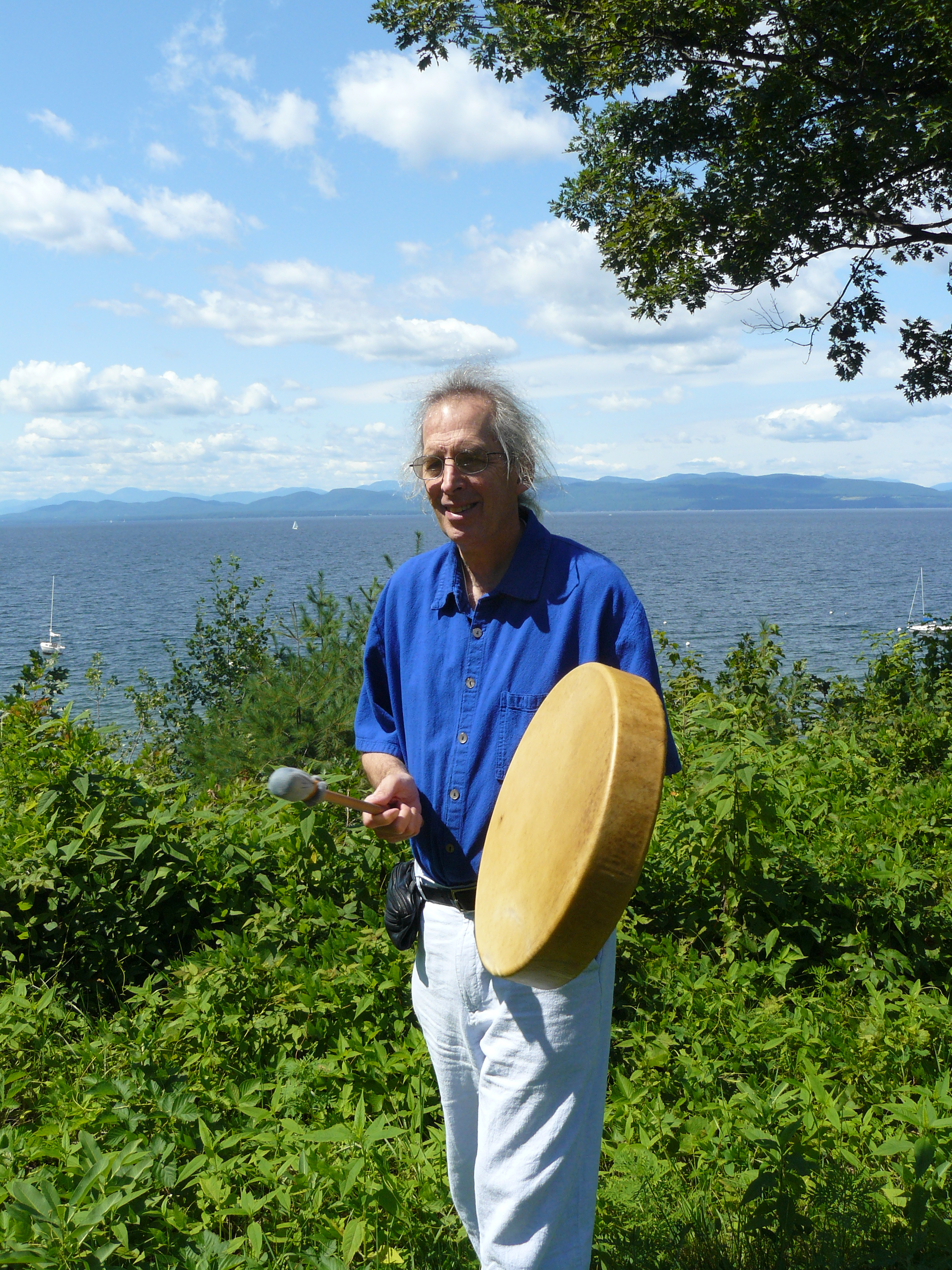
michael drumMICHAEL WATSON, M.A., Ph.D., LCMHC (Dreaming the World) ~ is a contributing editor to Into the Bardo, an essayist and a practitioner of the Shamanic arts, psychotherapist, educator and artist of Native American and European descent. He lives and works in Burlington, Vermont, where he teaches in undergraduate and graduate programs at Burlington College,. He was once Dean of Students there. Recently Michael has been teaching in India and Hong Kong. His experiences are documented on his blog. In childhood he had polio, an event that taught him much about challenge, struggle, isolation, and healing.

Posted in Essay, Nature, Photography/Photographer, Spiritual Practice, story, Story Telling, Photo Story, Terri Stewart

One Foot in Front of the Other

Walking is a spiritual practice that I am predisposed to. After all, photography would not happen unless I walked around! Simply putting one foot in front of the other, time after time, without expectation of arrival at an end point is a contemplative practice. Recently, though, I discovered a new way of viewing walking as a contemplative practice. This practice had an end point and I was completely aware of all the w’s – who, what, when, where, why. I was not letting go and receiving images (well a little). I was literally focused on my feet and putting my feet, one step at a time, on stable ground.

And this is a metaphor. Sometimes, sitting at our desk or listening to our loved ones, can be a practice of just being aware of what is now and putting your best effort towards arriving at the next now. One step at a time.

As you continue reading, consider the questions, “In what area of my life can I start (or continue) putting one foot in front of the other? What new story will be created?

Here is my story.

Monday, I went hiking to Bridal Veil Falls / Lake Serene in the Central Cascade mountains of Washington. It was a spectacular day. (The weather is forecast to be fabulous all week-long in Seattle leading me to believe somebody is playing with our emotions.) I felt confident I could do the +7 mile hike. BUT I forgot to look at the way the path is (smooth vs. rocky) and the grade or “up-ness.”

I started out on the popular path and asked a co-hiker what to expect and she told me it was steep but that it was worth it. And that there were a lot of switchbacks. OK. I can do this! I will just take my time and be careful.

In February of this year, I was going through a diagnosis of Celiac disease. Now most folks just think that this is digestive only. Well, it is not. It causes inflammation in every part of my body. It grew tumors in my ovaries. I had a period for 3 weeks. I was severely anemic. The test didn’t say, “Low,” it said “Alert!” I could not walk up a short hill without being severely out of breath because I had very few mature red blood cells to carry oxygen around. In short, it stank.

And, over the last few years I have had surgery on my left ankle (torn tendon) and my right foot (two! neuromas crowding out my middle toes). I couldn’t walk without pain until, oh, last year after the neuroma surgery. Generally, I count every pain-free step a success. Would my feet hold out? Always a question. And with the ankle surgery, I generally look for nice, solid, flat ground so my ankle will not roll.

Rats! This path is not smooth. Very rocky. Wet sometimes. Muddy sometimes. But mostly rock, rock, rock. Keep my eyes down and make sure my feet land on flat spots! That’s the plan.

Anyway, I started up the path at my own pace. I got a little less than two miles in and found the below sight. I tried really hard to capture this thing that was happening with the sun and the water! It looked like liquid sunshine was pouring off the top of the waterfall. My eyes received the beautiful image of sunshine being poured down the mountain, could my camera receive it? A little.

Walkabouts__2013-06-03_12-05-17

At any rate, it was astounding. And it was the second set of falls I had seen. This mountain is one big slab of granite! (Hence the rocky path) And there is water everywhere. Well, okay, not everywhere, but in a lot of places. It was hard to get a good picture, but earlier, there was a set of falls that were very tall and jagged. But the trees were very overgrown so you could only get glimpses of the splash of light and water. This is the very bottom of that series. I received beautiful images of flowing water.

Walkabouts__2013-06-03_16-17-40

I got past the falls and it was two miles to Lake Serene. I was feeling good so decided my body could do this! I kept on going. And going. Up and up. Picking my way carefully through rocks. Resting when I felt overwhelmed. Then there came a moment when I thought that I was not going to be able to do it. I grounded my feet to the earth and drew on the strength of my God and the strength of the earth. I breathed deeply. This had become a spiritual quest.

I kept on going. But at that moment, I felt like giving up. I soon encountered a woman and her dog. They were resting. (Yay for rest!). I asked her how much further. She said, “When you feel like you have been through the worst possible climb, then it is just a bit more up and a little down and you’re there.”

OK. The worst possible climb. I can surely get to this.

I went up and encountered massive rocky path, with only about a 9″ clearance to skinny through. Surely, this is the worst possible spot.

I kept going and encountered another massive rocky path, with water and slipperiness. Surely, this is the worst possible spot.

Add water and repeat.

Finally, I broke through the shadows of the forest into a sunny meadowy type area (is it a meadow if it is on the side of a mountain?). I looked up and my breath left my body. It. Was. Amazing. I received the most beautiful blues intermingled with a dark granite mountain and white fluffy clouds rising like steam. I remember the story of Moses going up the mountain to be with his God and going into the cloud. This is a place to connect with spiritual strength. I felt strengthened, encouraged, excited, and alive. A complete contrast to how I felt when I was in the shadows.

Walkabouts__2013-06-03_13-56-59

I was now in the sun, with this incredible sight, having passed through at least 5 stretches of the worst climb ever. And I saw another worst climb ever in front of me. But my spirits were jubilant. I was in the light and had left the darkness. Amen!

I kept on going. There was one more seriously worst climb ahead and then I was there. Lake Serene.

Walkabouts__2013-06-03_14-25-52

In fact, this lake feeds into the waterfalls pictured earlier. I had climbed all the way around to the other side. Here is what the top of the waterfall looks like from this same point, just facing the other way.

Walkabouts__2013-06-03_14-25-23

I clambered through the snow a bit and sat at the closest point I could get to the top of the waterfall. Ate lunch. Relaxed a moment.

Time to head back down. Surely, down would be easier! It always is. Mostly.

On the way down, I kept my head down looking to keep my feet planted so my ankle will not turn. I almost made it. Darn it. One misstep and a turned ankle. Choice – fall in a way to minimize injury or try to get that wobbly ankle to hold me up. Quick decision – my ankle will not withstand the effort to stay firmly up. Fall it is! Sheesh. I hate rocky, downhill, paths. Now, cuts and bruises, scratches and blood. I would hate to see what I looked like.

I crossed back in front of the amazing waterfall that poured sunshine and the woman I had met earlier was there with her dog! She was resting. Her dog decided to try to clean up the scratches on my legs a bit (ha ha!). We chatted a bit and she moved on. I stayed and tried to get some more photos of the falls and take a rest. Oh, and to use the water to wash my arm which has a pretty serious scratch(es).

But, gosh darn it, I did it! I am still on the path. I can still walk. My body is sustaining me. This is such a big deal, you have no idea. I was misdiagnosed for at least 20 years. To be able to do this is the most awesomely amazing thing ever. My muscles don’t even hurt as much today as they did on days the inflammation from being celiac made them hurt. (That was a bad sentence, sorry.)

I kept going. And I made it back to my car by about 5:00 p.m.

The quest was complete.

I am proud that I had the perseverance to keep on pushing through. My blood tests still say “alert” on the iron portion, but it is improving. My ankles and feet are okay today. My right arm and right shin are pretty banged up, but as long as nobody touches them (!) I will be fine.

The return hike took 2 hours. It took me 4 hours to go up.

Walking or hiking as a spiritual practice, for me, is typically about opening myself up to the images around me. Receiving images that I sometimes share here or on my blog. This time, though, it transformed into something else. Instead of receiving the beauty around me, I had to dig deep to connect to the strength of the earth, strength of my faith, and to the strength in my own body in order to find sustenance for the journey. This is a new kind of spiritual practice for me.  I had thought, Monday night, that I would not be eager to repeat this experience. But I am. Focusing on putting one foot in front of the other in this way gave me a faith in myself that I sometimes lack. Especially in my own body’s ability to sustain me. That is my new story. I trust my body.

Blessed be.

Shalom and Amen.

~Chaplain Terri

Adapted from a post at my blog. Trials on the Trail.

© 2013, post & photos, Terri Stewart, All rights reserved

terriTERRI STEWART is Into the Bardo’s  Sunday chaplain, senior content editor, and site co-administrator. She comes from an eclectic background and considers herself to be grounded in contemplation and justice. She is the Director and Founder of the Youth Chaplaincy Coalition that serves youth affected by the justice system. As a graduate of Seattle University’s School of Theology and Ministry, she earned her Master’s of Divinity and a Post-Master’s Certificate in Spiritual Direction with honors and is a rare United Methodist student in the Jesuit Honor Society, Alpha Sigma Nu. She is a contributing author to the Abingdon Worship Annual.

Her online presence is “Cloaked Monk.” This speaks to her grounding in contemplative arts and the need to live it out in the world. The cloak is the disguise of normalcy as she advocates for justice and peace. You can find her at www.cloakedmonk.com, www.twitter.com/cloakedmonk, and www.facebook.com/cloakedmonk.  To reach her for conversation, send a note to cloakedmonk@outlook.com

Posted in Essay, Guest Writer

The Noble Art of Reading in Bed

100_0088cropped-bedroom

the work of Valerie Davies

When I was young and naive, and a novice journalist, I wrote an article in a woman’s magazine which began:’ I got most of my education under the bed-clothes’, and went on to discuss children’s reading. Some wag must have been reading his wife’s copy, and the clipping appeared on the office notice-board amid crude male guffaws. Thank you chaps, I got the message. Not a quick learner, but I got there in the end.

Reading under the bed – clothes was the refuge of a child who was sent to bed at seven o clock every night, and allowed to read for fifteen minutes. Fifteen minutes! When I got older, and had more homework bed was set back to seven thirty, but the fifteen minute reading restriction still applied. Only a non-reader could have stipulated this ridiculous time limit, so under the bed-clothes it was. When I had no torch I knelt for hours, freezing in my night-clothes squinting to read by the crack of light under the door from the hall light.

Occasionally I tried the loo or the bathroom, but this was risky, as books aren’t easily hidden by a skinny child under a thin nightie. When I was fourteen I picked up Jane Eyre in the library. It exploded into my consciousness. I felt dazed and obsessed by the strange, compelling self-centred story. I could think of nothing else. I read it over and over again. I read it under the desk at school, in the bus and on the train, and of course, in bed.

Once the parents had gone to bed, I switched my light on with impunity, and read until I had finished Jane Eyre, and then started ‘Villette’, by which time it was heading for five o clock in the morning. Since I had to get up at six to cook my breakfast and catch the school bus at seven am, it seemed safer to stay awake, and soldier on. And having done it once, and finding it was possible to keep going without sleep, I quite often sacrificed my sleep for a good book after that.

Boarding school was tricky, but once again, there was always the bathroom. When I left home and became my own master, reading in bed became one of my favourite pastimes. Mostly literature and poetry in those palmy days. And usually then I had a bowl of apples to munch meditatively as the hours went by, or better still, a bar of chocolate. Sometimes decadence overcame me and I had a glass of lemonade. Marriage and motherhood dished all that of course, and reading in bed became a distant remembered pleasure.

But in the last few years since my husband’s snores have become so loud they wake me even when I’m sleeping in another room, we’ve taken a page out of the Royal Family’s domestic habits, and now sleep in separate rooms. This means I can read without disturbing him, and I’ve raised this noble pastime to a fine art.

Usually three books go to bed with me… something that I call mental knitting, a relaxing series like Georgette Heyer, (a much under-rated, very funny, witty and clever writer) or other light-hearted books like the hilarious Adrian Mole Diaries, or ‘The Jane Austen Book Club’. Georgette Heyer is sort of Jane Austen lite – but the blessed Jane is also a regular companion, along with the Thomas Hardy’s, George Eliot’s, Anthony Trollope’s, to re-read for the sheer pleasure of enjoying their writing again. In theory too, because I know the story, I kid myself I won’t be tempted to read too late. But that is a false premise. And as CS Lewis said, ‘I can’t imagine a man really enjoying a book and reading it only once.’

And then there’s the third category – those which are on the go, sometimes a new novel – Barbara Kingsolver at the moment, but not many of those – a biography, a history, a diary. And for real relaxation I sink into nature journals, often a classic like Flora Thompson’s: ‘Lark Rise at Candleford’ … Annie Dillard, Henry Beston or Ronald Lockley… mostly accounts of gentle, unpolluted country life.

But reading in bed isn’t just books. The bed matters too… preferably by the window… in summer with cool white linen-cotton blend sheets that have a silky feel, in winter comforting coloured flannelette to match the duvet. Pillows – plenty of them, to lean back on and others to support the elbows. Electric blanket a must in cold weather… I use it a bit like the hot tap in the bath… whenever it seems a bit chill, I switch it on until the bed is like toast again, and then prudently switch off again until the next time.

In summer, there’s the bliss of going to bed in day-light, knowing you have hours in front of you before dusk creeps up, before finally switching on the light. In winter, lamps on, curtains pulled, wood fire still burning in the sitting room to keep the house warm for when I emerge to make a cup of tea. And the bed, pyjamas warmed under the bed clothes on the electric blanket, cosy sheets and pillow slips, red mohair rug edged with wine-red satin, and a stash of peppermints to slowly chew as I turn the pages. No sounds, just the murmur of the soft sea, a distant owl, and occasionally a scuffle on the roof as a possum scrambles across. The sound of rain on the roof is good too.

The art of reading in bed is a silent, sybaritic, solitary joy and has nothing to do with going to sleep. It has everything to do with the pleasure of reading, frequently to the detriment of sleep. So I have to confess, in the words of L.M.Montgomery that : ‘I am simply a ‘book drunkard.’ Books have the same irresistible temptation for me that liquor has for its devotee. I cannot withstand them.’

– Valerie Davies

© 2013, essay, photograph, and portrait (below), Valerie Davies, All rights reserved

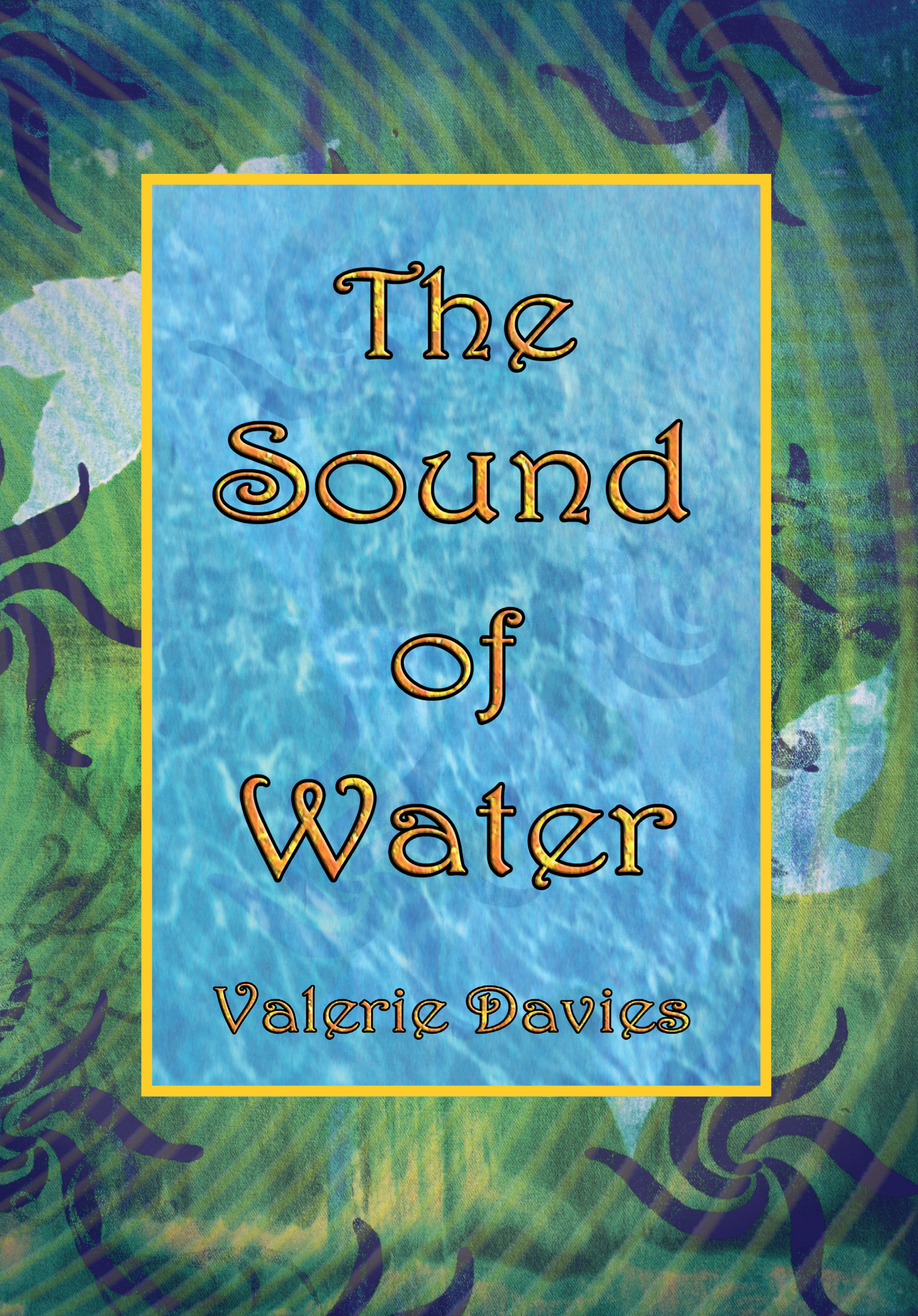
100_036634d750b1228d96f442911457fa49f7d5d3e2d8ea925f4a2067aec04be59b0e280856da42aad7d73b-thumbVALERIE DAVIES  (Valerie Davies.com) ~ our guest writer today, says she’s had an adventurous life, living through the Blitz in England, growing up in a military family, becoming a captain herself, and marrying into the military. Between one thing and another, she’s been around the world and back and had some truly hair-raising adventures. She’s worked as an editor and columnist. Valarie has been blogging for some time now. Her posts are chatty and full of wisdom and humor. They touch the heart. Valerie books are The Sound of Water and Chasing the Dragon. Find them HERE.

Posted in Essay, Naomi Baltuck

Today (we are all survivors)

We are all survivors, of our personal histories, our family lines, and of the human race.  Since the dawn of time, think of the families ended abruptly by a bullet, a spear, a club, a predator, illness, by accident and even by someone’s own hand.

Today is the anniversary of D-Day, the Normandy invasion in 1944.  It was the day my Uncle Lewis was launched onto the Normandy beaches into a cruel war.  I think it no coincidence that today is also the anniversary of my father’s death in 1965.

The day before he died, while his kids ran and laughed and played in the yard, my father planted a walnut tree—just a stick of a sapling–by the side of the house.  Did he know what he was going to do?  Did he plant that tree as his own memorial?

I hope not, because someone else is living in that little house in Detroit, and my Dad’s walnut tree is long gone, cut down in its prime.  This I know, because I drive past each time I go back to visit my Aunt Loena.   So these words must serve as a memorial to a World War II vet who came home without his little brother and best friend.  That was the sin his mother never forgave him for, the sin he could he never quite forgive himself for either.

My army buddy, Jack Oliver, attended boot camp with Uncle Lewis.  He helped me understand that my father was as much a victim of the war as my uncle.  When the War Department tallies the casualties, it counts the dead, the wounded, the missing in action.  But no one ever takes into account the broken hearts and broken families left by the wayside in the wake of war.  If they did, perhaps they would stop sending our children off to fight and die.

But today is a day a of forgiveness, a day of understanding, a day to be thankful that life goes on.  It is a day of sorrow, but most of all, today is a day to love.

– Naomi Baltuck

© 2012, essay and photographs, Naomi Baltuck, All rights reserved

NaomiPHOTO1-300ppi410xuqmD74L._SY300_NAOMI BALTUCK ~ is a Contributing Editor and Resident Storyteller here at Bardo. She is a world-traveler and an award-winning writer, photographer, and story-teller whose works of fiction and nonfiction are available through Amazon HERE. Naomi presents her wonderful photo-stories – always interesting and rich with meaning and humor – at Writing Between the Lines, Life from the Writer’s POV. She also conducts workshops such as Peace Porridge (multicultural stories to promote cooperation, goodwill, and peaceful coexistence), Whispers in the Graveyard (a spellbinding array of haunting and mysterious stories), Tandem Tales, Traveling Light Around the World, and others. For more on her programs visit Naomi Baltuck.com

Posted in Essay, Michael Watson

Troubling the Post-Tribal

On hte BridgeRecently, I found myself in conversation with a diverse group of alternatively oriented, North American,  health care providers, some of whom integrate shamanic practices into their work. As often happens, talk turned to our various efforts to situate ourselves in the broader cultural framework. Inevitably, this proves a thorny conversation.

Identity issues cut deep, exposing the painful questions underlying the increasingly tenuous fabric of Self. When engaged in conversations about our fundamental beliefs about Self we may find ourselves asking: “Who am I? What claims may I make about my experience of Me-ness? In a world that appropriates and commodities everything, how do I understand and situate Self?”

Speaking with my colleagues I was reminded that conversations about traditional modes of living and healing generate additional anxiety. Ethical questions abound: “What constitutes appropriation? Given we learn to be adults through acts of appropriation, what may we respectfully borrow from others? Does our use of another’s knowledge diminish the other? “

My colleagues attempted to circumvent these raw issues by positioning themselves squarely in the “Post Tribal”. At that point I stopped talking and simply listened. While I see myself as situated in the uncomfortable potential space between tribal and urban, I identify strongly with my tribal heritage. From that point of reference it seems to me the idea of Post Tribal is fraught  with problems.  The greatest of these is that it effectively erases the sovereignty and authorship of the world’s thousands of active tribal cultures. In so doing it effectively dismisses any claim to ownership of knowledge, traditions, and practices these cultures may make. The idea of the Post Tribal threatens, once again, to leave tribal people behind and alone. It borrows freely and selectively from Indigenous understanding, and uses these decontextualized bits of knowledge to strengthen the very citadel  of individuality that tribal ways of knowing challenge.  This seems, at best, disrespectful, and at worst genocidal. Either way, such attitudes inflict great harm on the souls of tribal and non-tribal people alike. There must be more heart centered ways for us to negotiate these issues.

Most of my teachers walked the “Soft Path,” the way of the Heart. On this path we are encouraged to balance mind and heart, and to be courageous warriors of the Spirit. We are advised to wrestle lovingly with difficult questions and the challenges of our time. Yet we are also to stand up to tyranny in all its forms. From the place of the Tribal Heart, we can understand that in a world of eight billion people most of us will not live on the land, in tribal communities. That must not stop us from acknowledging and honoring diverse knowledges and ways of living, no matter how easy it would be to do otherwise. Rather, I believe we must, if we are to survive as persons and as a species, tend the garden of diversity, protecting and nurturing the myriad forms of culture and biological life that make Earth home.

As we consider the way onward we may well ask ourselves:”How are we to hold on to the best of the traditions from which we spring? What might we ethically incorporate into our lives from the beliefs and practices of other cultures? What shared knowledge might be of real use in our turbulent times, might aid all of us in moving towards sustainable lifeways?”

The path ahead is challenging and the view is at times bleak. Yet, we do not know how that view, or the terrain, may change around the bend, or on the other side of the mountain. I imagine we are called simply do our best as we walk on. Approaching questions of Self and appropriation with deep thought and great kindness is good to practice  as we journey along together.

– Michael Watson, M.A., Ph.D., LCMHC

© 2013, essay and photographs (includes portrait below), Michael Watson, All rights reserved

michael drumMICHAEL WATSON, M.A., Ph.D., LCMHC (Dreaming the World) ~ is a contributing editor to Into the Bardo, an essayist and a practitioner of the Shamanic arts, psychotherapist, educator and artist of Native American and European descent. He lives and works in Burlington, Vermont, where he teaches in undergraduate and graduate programs at Burlington College,. He was once Dean of Students there. Recently Michael has been teaching in India and Hong Kong. His experiences are documented on his blog. In childhood he had polio, an event that taught him much about challenge, struggle, isolation, and healing.

Posted in Culture/History, Essay, Naomi Baltuck, Photography/Photographer

Remembering Uncle Lewis, A Memorial Day Story

One of my earliest memories is of dinner at Grandma Rose’s house.  Her towels, furniture, and closets smelled of mothballs; she even stored her silverware in mothballs.  Mostly, though, I recall standing on Grandma’s couch to study the framed collage of black and white photographs on her wall.  I recognized my father, but knew the other boy in the pictures only by name, and by heart.

Uncle Lewis was my father’s only sibling, younger than my dad by ten years.  We never met, and Daddy never spoke of him.  But they were best friends.  In one picture Lewis was laughing, having been surprised on the toilet by my father with his camera.  The brothers teased Grandma too.  Lewis would yell, “Harry, stop hitting me!”  Grandma would rush in, and scold my father for picking on his brother.  Undaunted, they’d laugh and repeat, until Grandma caught on.

Soon after the attack on Pearl Harbor, Lewis was drafted into the infantry, a shy studious eighteen year old who had never kissed a girl.  My father joined up as an officer.  He pulled a few strings to get Lewis transferred into the 30th ‘Old Hickory’ Division, so the brothers could cross the Atlantic on the same ship.  Lewis wrote letters and post cards home, often addressed to their dog ‘Peanuts.’

“Hey, Peanuts, tell Pa to eat his spinach!”   From the ship he wrote, “Harry and his buddies sneaked me into their cabin.  They gave me chocolate and let me play with their puppy.  Don’t tell anyone, or we’ll all catch it.  They smuggled the pup on board, and officers shouldn’t fraternize with enlisted men…”

While serving in Africa, Italy, England, France, and Germany, Harry was safely behind the front lines.  But Lewis was sent to Normandy two days after the D-Day invasion.  He fought in the hedgerows of France, and in Holland.  “The Dutch ran into the streets and passed out everything from soup to nuts.  As we marched out of there in the middle of the night, you could hear the clink of cognac, whiskey, and wine bottles in the guys’ jackets, amidst all the cursing and the roar of the Jerrys’ planes overhead.”  

To his parents Lewis wrote, “Dear Ma and Pa, today I saw General Eisenhower drive by.”  Or, “Kronk said the war can’t last.  It just can’t.  And he said it with such an angelic look on his face, I believe him!”

But to my father he wrote, “You should see the bruise from where a bullet passed through my shirt, Brub.  It was a close call.”  Or, “They took Julian away.  It’s so lonely here, Brub.  He’s the reason I wouldn’t take that promotion to sergeant.  We dug in together, took care of each other when things got rough.  I don’t know how bad he’s hurt; I just hope he makes it, and escapes this Hell.  Pray for me, Brub. Pray for me.”

On September 20, 1944, the day before his company attacked the Siegfried Line, Staff Sergeant Lewis Baltuck was killed by the blast of a shell.  Twenty years old, he had hardly begun to live.  He was survived by his parents, his dog Peanuts, and his brother Harry.  He never had the time or the opportunity to fall in love and marry.  He left no children to mourn for him—only the Bronze Star and the bronzed baby booties Grandma kept on her bookshelf until the day she died, more than forty years after her son’s death.

Harry married, had seven children, and built his own little house in Detroit.  But for the rest of his life he suffered acutely from the unspeakable burden of depression and Survivor’s Guilt.  When Grandpa Max died, my father became the sole caretaker of his widowed mother.  There was no one to share that burden with, to joke with or jolly her along.  Worst of all, crazed with grief, Grandma Rose blamed Harry for Lewis’s death.

I envied those kids who grew up with cousins to play with, and uncles who cared about them.  Uncle Lewis would’ve been that kind of uncle, and my father would have been a different man, without that black cloud to live under.  When Daddy died in 1965, we lost our connection to my father’s extended family, and our ties to our paternal cultural heritage were nearly lost as well.  But it does no good to dwell on the past or to speculate on what might have been.

Uncle Lewis was right about one thing.  War is Hell.  The price it exacts is impossible to tally, and can never be repaid.  When a soldier is killed, one heart stops beating, but many more are broken.  The wounds inflicted upon whole families are so deep that the scars can still be felt after generations.

I swear my uncle’s little bronze baby booties will never end up on the bargain shelf at the Salvation Army Thrift Store, like so many others I have seen there.  How sad to think that such precious keepsakes might be tossed into the giveaway because no one remembers or cares about the one whose little feet filled them.

I attended the 60th reunion of the Old Hickory Division in Nashville in search of someone who knew my uncle.  I met only one man who remembered him…“a quiet man who didn’t say much, but when he did speak, he was always worth listening to.”

I tell my children that story, and many other stories about their Great Uncle Lewis.  I am confident he will be cherished and remembered, not just for his tragic death, but for his joyful life.

copyright 2012 Naomi Baltuck

NaomiPHOTO1-300ppiNAOMI BALTUCK ~ is a Contributing Editor and Resident Storyteller here at Bardo. She is a world-traveler and an award-winning writer, photographer, and story-teller whose works of fiction and nonfiction are available through Amazon HERE. Naomi presents her wonderful photo-stories – always interesting and rich with meaning and humor – at Writing Between the Lines, Life from the Writer’s POV. She also conducts workshops such as Peace Porridge (multicultural stories to promote cooperation, goodwill, and peaceful coexistence), Whispers in the Graveyard (a spellbinding array of haunting and mysterious stories), Tandem Tales, Traveling Light Around the World, and others. For more on her programs visit Naomi Baltuck.com

Posted in Creative Nonfiction, Essay, find yourself, General Interest, Guest Writer, Karen Fayeth, meditative

My Moment Of Zen

respiteIn a full to overflowing bathtub, I relax, soaking the ache out of legs and content to be surrounded by water. It’s not long before I slide down, legs crawling up the wall under the shower, head dipping below the surface. My right hand plugs my nose and my left hand covers my eyes like a sleep mask and water fills my ears.

I savor these few moments I have to just float in nothing.

The water amplifies noise but bends the sound waves into something more beautiful. Even the passing fire truck with its shrill siren and blaring horns sounds almost musical when passed through my warm, clear water. The rhythmic hum of the clothes dryer puts me in a trance and I enjoy this until my lungs ask politely and then not so politely if we can surface and take in some new, unused air.

I reluctantly rise up and gasp in a big breath and go under again. It’s just too delicious and quite addictive. This time I think about buying a snorkel so I can stay under the water and still breathe. I’ve considered buying a snorkel so I can stay under my bath water ever since I was a kid.

Even as a child I was drawn to the solace and quiet of being under water. One early evening as I was taking a bath and creating my own sensory isolation chamber, my mother walked in to check on me. As any protective mother of three children would do when presented with the sight of her youngest lying apparently lifeless in a bathtub full of water, she freaked out.

My mother yanked me from the water and shook me hard, shouting my name. I unplugged my nose and uncovered my eyes and said, “What?”

I got a well-deserved and thorough chewing out and was told in no uncertain terms that I was never to simply slide under the water and remain motionless. Ever.

When I later emerged from my bath and got dressed and ran a comb through my unruly long hair, I was confronted by my father who ripped into me for scaring my mother.

I always thought that was quite unfair. I didn’t set out to intentionally scare my mother. I simply wanted a moment, if even half a minute, where I didn’t exist in the world. Where everything was blocked out and time slowed down and sounds bent in pleasing ways.

My solution thereafter was to continue to dunk my head well below water and plug my nose with my right hand. With my left hand, I would raise it above the surface and wave it like the Queen on parade so that any passerby would know I was still conscious, just submerged.

This seemed a suitable solution for all. A nice compromise.

I’ve always wanted to visit one of those sensory isolation tanks. It sounds like a little slice of heaven to me. Floating in a tank with no light and hardly any sound and just the quiet to embrace me. Yes, I think I would love this very much.

The Good Man thinks I’m half a bubble off level to consider this. “I always figure while you are locked in there, the people outside will steal your stuff or do something weird,” he says.

This is how his mind works. This is not how my mind works.

A few years ago we visited a spa in Calistoga, California. The spas in Calistoga are known for their mud baths. You give them money and they allow you to slide your nekkid body into a warm tub of slightly sulphurous goo. The weight of the mud resists your body, you actually have to dig in there. Once settled, you are surrounded and suspended and oh my goodness I could have stayed in there for weeks.

The Good Man did not feel as kindly toward the mud. He said he was antsy the whole time he was in there and ready to vault from the tub. He couldn’t wait for it to be over. I never wanted it to stop.

Perhaps it’s something Freudian that I like to slip into warm suspended places and forget about things for a while. I choose to think it rather normal to want to seek out genuine moments of respite where the world and all its crazy spinning and shouting and clanking and cruelty goes away, for just a moment. For as long as it takes me to hold my breath.

Until I buy a snorkel.

– Karen Fayeth

© Karen Fayeth, copyright 2013, all rights reserved. Bathtub image found on Rodale.com and all rights remain with the website and photographer. Bio photograph by Claudia Akers.

webheadshotKAREN FAYETH ~ is one of our regular contributing writers. She is our new tech manager, site co-administrator along with Jamie and Terri, and fiction and creative nonfiction editor. She blogs at Oh Fair New Mexico. Born with the writer’s eye and the heart of a story-teller, Karen Fayeth’s work is colored by the Mexican, Native American, and Western influences of her roots in rural New Mexico complemented by a growing urban aesthetic. Karen now lives in the San Francisco Bay area. When she’s not spinning a tale, she works as a senior executive for science and technology research organization.

Karen has won awards for her writing, photography, and art. Recent publication credits include a series of three features in New Mexico magazine and an essay with the online magazine Wild Violet. Her latest short story will be published in the May edition of Foliate Oak. Karen’s photography is garnering considerable attention, her photo titled “Bromance” (featuring Aubry Huff and Pat Burrell) was featured on MLB Network’s Intentional Talk hosted by Chris Rose and Kevin Millar.

Posted in Essay

Reflections, In Honor of Mother’s Day


Once, when we were running late, I was waiting impatiently to lift my little boy Eli into his car seat, while he studied a bug on the driveway.  “Hurry up!” I said.  “We’re going to be late.”

Puzzled, my little boy looked up at me and said, “Mommy, why are you using that tone of voice?”

Such a grownup expression from the mouth of the babe!  And it took my breath away.

“You’re right, honey,” I told him. “It’s not the end of the world if we’re late to pre-school, and it wouldn’t be your fault, if we were.”

Eli and I had a good look at the bug, while I quietly reflected upon what kind of parent I wanted to be.  Which memory of me would I want my kids to look back on and remember me by?  My mother once told me, “The best friends you’ll ever have are the ones you raise yourself.”  Bless her!  Bless them!  Bless us all!

I love that tee shirt that says, “Please let me be the person my dog thinks I am.”   But I aspire always to be the person my kids think I am.

All words and images copyright Naomi Baltuck

NaomiPHOTO1-300ppiNAOMI BALTUCK ~ is a Contributing Editor and Resident Storyteller here at Bardo. She is a world-traveler and an award-winning writer, photographer, and story-teller whose works of fiction and nonfiction are available through Amazon HERE. Naomi presents her wonderful photo-stories – always interesting and rich with meaning and humor – at Writing Between the Lines, Life from the Writer’s POV. She also conducts workshops such as Peace Porridge (multicultural stories to promote cooperation, goodwill, and peaceful coexistence), Whispers in the Graveyard (a spellbinding array of haunting and mysterious stories), Tandem Tales, Traveling Light Around the World, and others. For more on her programs visit Naomi Baltuck.com

Posted in Essay, Terri Stewart

Christine de Pizan, Part 3 of 3

This series is an academic article that I wrote on the life of Christine de Pizan, an extraordinary woman of the medieval era. This is part 3. Part 1 is here. Part 2 is here.

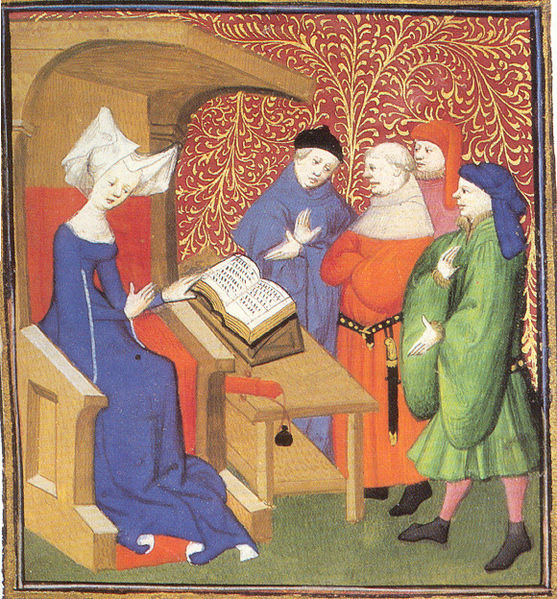
Christine de Pizan lecturing men Image from Wikimedia Commons
Christine de Pizan lecturing men
Image from Wikimedia Commons

In her poems on courtly love, she was able to express her deeply held conviction that “society obliged a woman to pay far too high a price for any momentary pleasure experienced from love outside marriage.”[1] So begins her championship of women aptly captured in “Cupid’s Letter.” During this time of growth for Christine, misogynistic attitudes abounded in the Universities, in court, and in the clergy. Aristotle’s influence held sway over the common understanding of what it was to be female. Every ill of the world was laid at the feet of women. As Christine aptly said in “Cupid’s Letter,”

There are women vilely named,

And often without cause are blamed,

And even those of noble race,

However fair and full of grace.

Lord, what company, what talk—

Women’s honor they freely mock.[2]

“Cupid’s Letter” enjoyed immediate success and was translated into English by Chaucer’s disciple, Thomas Hoccleve.[3] Her work of defending women and removing the tarnish that had been applied to their honor continued in other works including “The Debate of Two Lovers” which showed that true love is joyful, not deceitful or jealous, The Book of the City of Ladies that showed women’s contributions to history through time, The Book of the Three Virtues that sought to inculcate feminine virtues to counteract the misogyny of the time, and concluded with a eulogy poem in honor of Joan of Arc, “Ditie de Jehanne dArc.”

Throughout the time of her writing of poems and books, Christine became embroiled in a literary feud with Jean de Meun who wrote the second half of “The Romance of the Rose.” This became the “first recorded literary quarrel in France.”[4] Christine was inclined to blame the deceit and trickery of the men of her day at the feet of Jean de Meun.[5] “The Romance of the Rose” encouraged men to use whatever means necessary to acquire the woman they wanted in whatever way they wanted.  Jean de Meun belonged to another generation, another social world (not the courtly world of Christine de Pizan), and was primarily a philosopher.[6] He is crude and rude in his references to women and their body parts and advises “opportunism in relations with women, who are seldom virtuous, debauchery being the least of their crimes. The fine clothes of women do not really enhance them, for a dungheap covered with a silken cloth is still a dungheap.”[7] It is with this man and his very popular poem that Christine feels compelled to specifically defend womankind. Interestingly, she counters both in a poetic literary form, written letters, and politically through the official circle of Tignonville and the queen.[8] The chancellor of the University of Paris, Jean Gerson eventually entered the fray, siding with Christine de Pizan.[9]  Eventually, he wrote a treatise against “The Romance of the Rose.”[10] Chancellor Gerson and Christine de Pizan as literary allies were unbeatable and the argument ended (although it was not resolved.)[11] Christine was able to, for the first time, remove the discussion of women “from intellectual circles and [make] it possible for a lay-person, and a woman at that, to take part.”[12] From this point on, she leveraged her fantastic intellect, writing skill, and fame to continue writing about her major concern-“the defense of women against…unjust slander and…hypocrisies of contemporary society.”[13]

Christine de Pizan was a child and woman of privilege. She moved in circles that most people could not enter. She was affected by Petrarch, the University of Bologna, the University of Paris, and by the French Court of Charles V. Typically, a woman of her lifestyle would marry a man, have children, and live on. If her husband died, her task would be to re-marry. Christine did not do this. She educated herself, honed her literary skills and became an unlikely champion of women.

© 2013, post, Terri Stewart, All rights reserved

Terri StewartTERRI STEWART is Into the Bardo’s chaplain, senior content editor, and site co-administrator. You can expect a special post from her each week. She comes from an eclectic background and considers herself to be grounded in contemplation and justice. She is the Director and Founder of the Youth Chaplaincy Coalition that serves youth affected by the justice system. As a recent graduate of Seattle University’s School of Theology and Ministry, she earned her Master’s of Divinity and a Post-Master’s Certificate in Spiritual Direction with honors and is a rare United Methodist student in the Jesuit Honor Society, Alpha Sigma Nu. She is a contributing author to the Abingdon Worship Annual.
Her online presence is “Cloaked Monk.” This speaks to her grounding in contemplative arts (photography, mandala, poetry) and the need to live it out in the world. The cloak is the disguise of normalcy as she advocates for justice and peace. You can find her at www.cloakedmonk.com, www.twitter.com/cloakedmonk, and www.facebook.com/cloakedmonk.  To reach her for conversation, send a note to cloakedmonk@outlook.com.

[1] Willard, Christine de Pizan: Her Life and Works, 61.
[2] Ibid, 62.
[3] Ibid 63-64.
[4] Ibid, 73.
[5] Ibid, 63.
[6] Ibid, 75.
[7] Ibid, 75-76.
[8] Ibid, 77.
[9] Ibid, 80.
[10] Ibid, 84.
[11] Ibid, 86.
[12] Ibid.
[13] Ibid.

Posted in Essay, Terri Stewart

Christine de Pizan, Part 2 of 3

This series is an academic article that I wrote on the life of Christine de Pizan, an extraordinary woman of the medieval era. This is part 2. Part 1 is here.

Christine Presenting Her Book to Queen Isabeau, WikiCommons Images

Christine married Etienne de Castel, a son of a court official, in 1380.[1] It was a love match. Then things took a turn for Christine and her family. Charles V died and the crown’s close association with the academic world came to a close.[2] Tommaso became embroiled in a controversial cure that he had prescribed that “went awry.”[3] This caused the de Pizan family’s economic situation to deteriorate. Tommaso died in 1387.[4] Then in 1390, Christine’s husband died in an epidemic.[5] Christine became the head of a family with three children (one would die in childhood), a widowed mother, and a niece that was living with them. Furthermore, when she tried to settle the estate of her husband, she was met with deception, dishonesty, and lawsuits trying to strip her of her property.[6] Adding to her grief, money that had been reserved for her children’s future and invested was stolen.[7]To make matters worse, she became very ill, describing it as succumbing “like Job.”[8]

Given that Christine was now the head of her family, in France away from other relatives, without income, she had to create a way to support her household. Christine was still welcome at court and witnessed the frivolity of the court of Queen Isabeau and Louis of Orleans.[9] Here, poetry was one of the “principal social accomplishments”[10] and Christine turned her hand to poetry that reflected the Parisian social scene in its glory and ugliness. She proceeded to write poetry that reflected that scene, the grief she was still experiencing, and fond reminiscing of the reign of Charles V. Slowly, her poetry began to gather attention in the rarefied air of the court. Her fortunes began to turn when she was able to meet the earl of Salisbury in 1398.[11] They formed a bond based on love of poetry and he took her son into his own home to raise him with his own son. Then, in 1397, through Charles VI’s aunt, Marie de Bourbon, she was able to secure a place for her daughter at the Abbey of Poissy.[12]

Christine started writing poetry as early as 1394, but speaks of her literary career starting in 1399 after several years spent on self-education.[13] She studied ancient history, sciences, and the books of poets.[14] When she started studying the poets, she said to herself, “Child, be consoled, for you have found the thing that is your natural aspiration.”[15] She found her place. However, she did not take her early poetry very seriously. Her early poetry consisted of ballades, rondeaus, and the virelay.[16] These were well respected forms during her day. In addition, she started growing her own library of books by copying books in her own hand.[17] Christine also started writing letters purely for literary purposes.[18] She was becoming skilled at poetry, letter writing, and at common rhetorical devices used among the educated and courtly elite. Leaning on Plato’s view of women, Christine wrote in “The Mutation of Fortune,” that her change in status caused her to “become a man.”[19] It is this educated, courtly-adept woman that became a powerful voice for the fair and honorable treatment of women.

Christine’s poetry began to be known beyond the French court by approximately the year 1400.[20] She claims that it was because she was such a novelty—being a woman poet—that her work spread widely and rapidly.[21] However, it was probably because she wrote from her own point-of-view, a widowed woman. Her early poems used the court and its characters for the basis of her stories. She discovered that she had a particular talent for working with words and fitting them into poetic forms.[22] But her most striking skill was in expressing her own emotions and experience via literary devices.[23] The theme of grief and widowhood arises frequently in her writing.

© 2013, post, Terri Stewart, All rights reserved

Terri StewartTERRI STEWART is Into the Bardo’s  Sunday chaplain, senior content editor, and site co-administrator. She comes from an eclectic background and considers herself to be grounded in contemplation and justice. She is the Director and Founder of the Youth Chaplaincy Coalition that serves youth affected by the justice system. As a recent graduate of Seattle University’s School of Theology and Ministry, she earned her Master’s of Divinity and a Post-Master’s Certificate in Spiritual Direction with honors and is a rare United Methodist student in the Jesuit Honor Society, Alpha Sigma Nu. She is a contributing author to the Abingdon Worship Annual.
Her online presence is “Cloaked Monk.” This speaks to her grounding in contemplative arts (photography, mandala, poetry) and the need to live it out in the world. The cloak is the disguise of normalcy as she advocates for justice and peace. You can find her at www.cloakedmonk.com, www.twitter.com/cloakedmonk, and www.facebook.com/cloakedmonk.  To reach her for conversation, send a note to cloakedmonk@outlook.com.


[1] Willard, Christine de Pizan: Her Life and Works, 34-35.
[2] Ibid.
[3] Ibid, 38.
[4] Ibid, 39.
[5] Ibid.
[6] Ibid.
[7] Ibid, 40.
[8] Ibid.
[9] Ibid, 42.
[10] Ibid.
[11] Ibid.
[12] Ibid, 43.
[13] Ibid, 44.
[14] Ibid.
[15] Ibid.
[16] Ibid.
[17] Ibid, 45.
[18] Ibid.
[19] Ibid, 48.
[20] Ibid, 51.
[21] Ibid.
[22] Ibid, 53.
[23] Ibid.

Posted in Essay, Terri Stewart

Christine de Pizan, Part 1 of 3

This series is an academic article that I wrote on the life of Christine de Pizan, an extraordinary woman of the medieval era.

Christine de Pizan from Wikispaces.com
Christine de Pizan
from Wikispaces.com

During the lifetime of Christine de Pizan (1364-1430),[1] women were not well respected.[2] However, Christine managed to carve out a unique spot for herself among authors of poetry and rhetorical letters. Along her journey, she also became an unlikely champion of women, women’s roles, and the honorable treatment of women. Unlikely champion because Christine came from a privileged, comfortable background and was discouraged from stepping outside of traditional female roles by her mother.[3] I am going to show that Christine’s background peculiarly gave her the gifts to become not only a gifted author, but the unlikely champion of women. Then, a brief exploration of the misogynistic attitudes present during her lifetime that called forth a response and thrust her into the role of France’s first woman of letters.[4]

Christine de Pizan was born in Venice, Italy.[5] At the time she was born, the city was just recovering from two horrific events – an earthquake followed by the first outbreak of the bubonic plague in 1348.[6] It was thought that these events were punishments from God for Venice’s wickedness at warring with its neighbors and with Genoa.[7] Venice was a port city that was among the first cities hit by the plague due to its status as a maritime trader.[8] As the downfall of Venice was seen to be attributable to the movement of the planets and stars (earthquake), astronomy and astrology were respected and revered sciences.[9] The potential for ad4vanced study in these fields is what drew Tommaso da Pizzano to Venice.

Tommaso da Pizzano arrived in Venice in 1357 from Bologna. He had been studying there towards his degree of doctor in medical studies which would have included studying astrology.[10] Bologna had a reputation as an intellectual center of Europe, a book production center, and a center of secular thought.[11] That is the rarified air that Christine de Pizan’s father came from. Here, Tommaso met Christine’s mother, they married and soon had Christine. It is also in Venice that Tommaso became acquainted with Petrarch, one of the most influential poets[12] of his day.[13] Here the thoughts of Bologna-based on Aristotle’s writings-collided with Petrarch’s thoughts that were grounded in Plato.[14] Plato believed that women had a place in society—they had strengths that differed from men, but strengths none-the-less. Aristotle, however, had a much more subservient view of women.

In the Republic, Plato argues that women must be assigned social roles in the ideal state equal to those of men. Only one generation later, Aristotle, in his Politics, returns women to their traditional roles in the home, subserving men. Plato’s position in the Republic is based upon his view that “women and men have the same nature in respect to the guardianship of the state, save insofar as the one is weaker and the other is stronger.” Nature provides no such equality in Aristotle; in the Politics he flatly declares, “as regards the sexes, the male is by nature superior and the female inferior, the male ruler and the female subject.”[15]

I must say that Plato was not perfect on women, but he was more charitable in his views that Aristotle. Women, for Plato, degenerated from perfection while for Aristotle, they were inferior by nature.[16] Christine de Pizan was born into an environment more influenced by Petrarch and Platonic thought than by the University center’s reliance upon Aristotelian thoughts on women.

Tommaso soon re-established his family in Bologna because of the prestige that being at University brought him.[17] However, he was soon invited to join the courts of both Paris and Hungary. He chose Paris.[18] He left his family for two years in Bologna while he established himself at the French court of Charles V. This allowed him to have the prestige of being at court and being near the University of Paris. In December 1368, Charles V “received at the Louvre the newly arrived family of Tommaso, now transformed into Thomas de Pizan.”[19]

In the courts of Charles V, Christine was given quite a lot of freedom. Charles V has a propensity for intellectual interests.  He cultivated contacts with the University of Paris and built an impressive library. He contracted Nicole Oresme to translate the entire works of Aristotle into French.[20] Christine had access to the king’s library and to his personal study.[21] She later recalled the king with fondness saying, “In my youth and childhood, with my parents, I was nourished by his hand.”[22] Christine was enthralled with intellectual pursuits from a young age.[23] Her father encouraged her in her studies (he had very liberal views on the education of women) while her mother was more traditional.[24] Christine managed to walk a line between her two parents—tending to her traditional roles as a female and pursuing intellectual curiosities at every opportunity.

© 2013, post, Terri Stewart, All rights reserved

Terri StewartTERRI STEWART is Into the Bardo’s  Sunday chaplain, senior content editor, and site co-administrator. She comes from an eclectic background and considers herself to be grounded in contemplation and justice. She is the Director and Founder of the Youth Chaplaincy Coalition that serves youth affected by the justice system. As a recent graduate of Seattle University’s School of Theology and Ministry, she earned her Master’s of Divinity and a Post-Master’s Certificate in Spiritual Direction with honors and is a rare United Methodist student in the Jesuit Honor Society, Alpha Sigma Nu. She is a contributing author to the Abingdon Worship Annual.
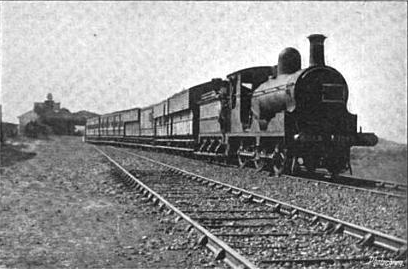
Her online presence is “Cloaked Monk.” This speaks to her grounding in contemplative arts (photography, mandala, poetry) and the need to live it out in the world. The cloak is the disguise of normalcy as she advocates for justice and peace. You can find her at www.cloakedmonk.com, www.twitter.com/cloakedmonk, and www.facebook.com/cloakedmonk.  To reach her for conversation, send a note to cloakedmonk@outlook.com.

[1] Danuta Bois, “Christine de Pisan,” Distinguished Women of Past and Present, http://www.distinguishedwomen.com/biographies/pisan.html (accessed March 12, 2013).
[2] Charity Cannon Willard, Christine de Pizan: Her Life and Works (NY, Persea Books, 1984), 15.
[3] Willard, Christine de Pizan: Her Life and Works, 33.
[4] Ibid, 15.
[5] Ibid, 16.
[6] Ibid.
[7] Ibid.
[8] Cara Murphy, “The Bubonic Plague and the Impact on Venice,” FluTrackers, http://www.flutrackers.com/forum/showthread.php?t=23196 (accessed March 12, 2013).
[9] Willard, Christine de Pizan: Her Life and Works, 17-18.
[10] Ibid, 17.
[11] Ibid.
[12] Petrarch was an Italian humanist.
[13] Willard, Christine de Pizan: Her Life and Works, 19.
[14] Ibid.
[15] Nicholas D. Smith, “Plato and Aristotle on the Nature of Women,” Journal of the History of Philosophy 21.4 (1983): 467-478. Project MUSE. http://muse.jhu.edu/ (accessed March 13, 2013).
[16] John Wijngaards, “Greek Philosophy on the Inferiority of Women,WomenPriests.org, http://www.womenpriests.org/traditio/infe_gre.asp (accessed March 13, 2013).
[17] Willard, Christine de Pizan: Her Life and Works, 20.
[18] Ibid.
[19] Ibid.
[20] Ibid, 21.
[21] Ibid, 28-29.
[22] Ibid, 23.
[23] Ibid, 33.
[24] Ibid.

Posted in Essay, Guest Writer

FROM HARPY’S REVIEW: The 10 Top Relationship Words That Aren’t Translatable Into English

OLYMPUS DIGITAL CAMERA

Published here with the permission of the author, Pamela Haag, who did the original research and writing. It was published on November 18, 2011 on The Big Think, which hosts Pamela’s blog, Harpy’s Review.  I thought it an interesting piece. Apparently, so did a lot of others.  It was blogged and reblogged often and generally without Pamela’s analysis and often without attribution to her. It took a bit of doing to find the source. All other postings I found of this piece were dated subsequent to Pamela’s. J.D.

Here are my top ten words, compiled from online collections, to describe love, desire and relationships that have no real English translation, but that capture subtle realities that even we English speakers have felt once or twice. As I came across these words I’d have the occasional epiphany: “Oh yeahThat’s what I was feeling…”

Mamihlapinatapei (Yagan, an indigenous language of Tierra del Fuego): The wordless yet meaningful look shared by two people who desire to initiate something, but are both reluctant to start. 

Oh yes, this is an exquisite word, compressing a thrilling and scary relationship moment. It’s that delicious, cusp-y moment of imminent seduction. Neither of you has mustered the courage to make a move, yet. Hands haven’t been placed on knees; you’ve not kissed. But you’ve both conveyed enough to know that it willhappen soon… very soon.

Yuanfen (Chinese): A relationship by fate or destiny. This is a complex concept. It draws on principles of predetermination in Chinese culture, which dictate relationships, encounters and affinities, mostly among lovers and friends.

From what I glean, in common usage yuanfen means the “binding force” that links two people together in any relationship.

But interestingly, “fate” isn’t the same thing as “destiny.” Even if lovers are fated to find each other they may not end up together. The proverb, “have fate without destiny,” describes couples who meet, but who don’t stay together, for whatever reason. It’s interesting, to distinguish in love between the fated and the destined. Romantic comedies, of course, confound the two.

Cafuné (Brazilian Portuguese): The act of tenderly running your fingers through someone’s hair.

Retrouvailles (French):  The happiness of meeting again after a long time.

This is such a basic concept, and so familiar to the growing ranks of commuter relationships, or to a relationship of lovers, who see each other only periodically for intense bursts of pleasure. I’m surprised we don’t have any equivalent word for this subset of relationship bliss. It’s a handy one for modern life.

Ilunga (Bantu): A person who is willing to forgive abuse the first time; tolerate it the second time, but never a third time.

Apparently, in 2004, this word won the award as the world’s most difficult to translate. Although at first, I thought it did have a clear phrase equivalent in English: It’s the “three strikes and you’re out” policy. But ilunga conveys a subtler concept, because the feelings are different with each “strike.” The word elegantly conveys the progression toward intolerance, and the different shades of emotion that we feel at each stop along the way.

Ilunga captures what I’ve described as the shade of gray complexity in marriages—Not abusive marriages, but marriages that involve infidelity, for example.  We’ve got tolerance, within reason, and we’ve got gradations of tolerance, and for different reasons. And then, we have our limit. The English language to describe this state of limits and tolerance flattens out the complexity into black and white, or binary code. You put up with it, or you don’t.  You “stick it out,” or not.

Ilunga restores the gray scale, where many of us at least occasionally find ourselves in relationships, trying to love imperfect people who’ve failed us and whom we ourselves have failed.

La Douleur Exquise (French): The heart-wrenching pain of wanting someone you can’t have.

When I came across this word I thought of “unrequited” love. It’s not quite the same, though. “Unrequited love” describes a relationship state, but not a state of mind. Unrequited love encompasses the lover who isn’t reciprocating, as well as the lover who desires. La douleur exquise gets at the emotional heartache, specifically, of being the one whose love is unreciprocated.

Koi No Yokan (Japanese): The sense upon first meeting a person that the two of you are going to fall into love.

This is different than “love at first sight,” since it implies that you might have a sense of imminent love, somewhere down the road, without yet feeling it. The term captures the intimation of inevitable love in the future, rather than the instant attraction implied by love at first sight.

Ya’aburnee (Arabic): “You bury me.” It’s a declaration of one’s hope that they’ll die before another person, because of how difficult it would be to live without them.

The online dictionary that lists this word calls it “morbid and beautiful.” It’s the “How Could I Live Without You?” slickly insincere cliché of dating, polished into a more earnest, poetic term.  

Forelsket: (Norwegian):  The euphoria you experience when you’re first falling in love.

This is a wonderful term for that blissful state, when all your senses are acute for the beloved, the pins and needles thrill of the novelty. There’s a phrase in English for this, but it’s clunky. It’s “New Relationship Energy,” or NRE.  

Saudade (Portuguese): The feeling of longing for someone that you love and is lost. Another linguist describes it as a “vague and constant desire for something that does not and probably cannot exist.”

It’s interesting that saudade accommodates in one word the haunting desire for a lost love, or for an imaginary, impossible, never-to-be-experienced love. Whether the object has been lost or will never exist, it feels the same to the seeker, and leaves her in the same place:  She has a desire with no future. Saudade doesn’t distinguish between a ghost, and a fantasy. Nor do our broken hearts, much of the time.

– Pamela Haag

© 2011, Pamela Haag, All Rights Reserved, posted on Into the Bardo with permission, bookcover design (below) courtesy of HarperCollins, All rights reserved

paperback_300PAMELA HAAG’S work spans a wide, and unusual, spectrum, all the way from academic scholarship to memoir. Thematically, it has consistently focused on women’s issues, feminism, and American culture, but she’s also written on topics as eclectic as the effort to rebuild the lower Manhattan subway lines after 9/11, 24-hour sports radio talk shows, and the experience of class mobility.

Haag’s latest book, Marriage Confidential: The Post-Romantic Age of Workhorse Wives, Royal Children, Undersexed Spouses, and Rebel Couples Who Are Rewriting the Rules, released by HarperCollins in May of 2011, draws on all of these strands of Haag’s unique professional biography to create almost a new genre, a weave of academic expertise, cultural history, creative nonfiction, memoir, storytelling, interviews, and commentary. Pamela’s blog, Harpy’s Review is hosted by Big Think. She writes a regular column, Marriage 3.0, for Psychology Today.

Posted in Essay, Michael Watson

The Past Two Weeks: A View from New England

Grace Church, New Bedford, MAThis past weekend we were visiting family in southeastern Massachusetts, and decided to attend a concert by the virtuoso classical guitarist, Eliot Fisk and friends. The concert was staged in the magnificent Grace Episcopal Church in New Bedford. As we listened to music ranging over several centuries, I found my mind wandering far and wide.

Earlier in the day we had received a phone call from a woman who had run the Boston Marathon and now was preparing for another. She was feeling fearful and becoming increasingly hesitant to run. Could she come in and speak to one of us, maybe get some help sorting out her anxiety? We set a time to meet and went on with our day.

The prior couple of weeks had been quite difficult. We have family and adult children living, or going to school, in Boston. On the day of the Boston Marathon I went in to work as usual. Late in the day a client came in and told me his wife had called and said there had been a bombing at the Marathon. We turned on the office computer and looked at the news feed. At that point, there was a fire at the Kennedy Library as well as reports of possible new bomb blasts, and rumors that additional devices had been found. I explained to my client I have family in Boston, picked up the phone, and called home. Everyone was safe and accounted for. I then called my daughter who lives in the Midwest and reassured her we were all safe. Only then did we settle into the routine of our therapy session.

That session was unique in all my years of practice. I spoke about how surprised I was that I called home instead of forcing myself to wait til after the session. He spoke to feeling remorse at being the bearer of bad news. I expressed my gratitude to him for sharing the news and for being generous in allowing me to check on the safety of my family, and for simply being another human presence in a difficult moment. Together we shared our experience of living in a world where people harm one another in the service of ideology.

On Wednesday I got together with a group of old friends. Naturally, the conversation turned to the week’s events. I spoke about imagining I understood some small part of the anger and hopelessness of the two brothers accused of the bombings. I added I thought they were probably doing their best and we could detest their actions and still hold on to the brothers’ humanity. Perhaps we are all doing as we are able, and sharing, ultimately, a common bond and fate. None of this went over well.

Then came Friday, and New England was back in the middle of terror and chaos. We were hosting Bangladeshi friends who were visiting the U.S. for the first time. I was up early, turned on the radio, and was greeted by reports of shootouts and bombs, again in Boston. One of my stepsons posted to Facebook that his street was blocked off, police were everywhere, and the neighborhood was in lockdown. Once again we were on the phone to Boston and the Midwest; our family members were safe, at least for the moment.

When our Bangladeshi friends awoke and came downstairs (they had luxuriated in long, hot showers, so different from the cold showers available to them at home), we explained the situation to them. They spoke to their compassion for our plight, and told us about one day, a few years ago, when Bangladesh had suffered 400 separate blasts. By early afternoon it was apparent the situation in Boston was under relative control, so we drove up to the mountains where our friends met snow for the first time. They proceeded to frolic, build snow people, and have a snowball fight, all in near 80 degree weather. The next day was cold and windy and we built a fire in the wood stove…… Welcome to Vermont in April!

All this came back as I sat in the enormous vaulted church, surrounded by family and and friends, listening to a remarkable concert drawn from the Western canon. A reception P1050301followed the concert, but we went straight home. Although it was late (the concert lasted well over two hours), the Red Sox were still playing, and winning to boot! It was then, sitting in the family kitchen, surrounded by loved ones, drinking late night decaf cappuccinos, that I finally grasped the healing, normalizing power of baseball.

Sunday we drove home via Boston where we visited more family. The world was abloom, and the streets were filled with happy, playful people. Surprisingly we spoke very little about the events of the proceeding two weeks, other than brief recaps of how folks spent their time during the lockdowns, or decided not to attend the Marathon. Rather, we spoke about the tenacity and resilience of the people of Boston. I guess we should not have been surprised at their resiliency, given their decades of loving support of the Red Sox prior to 2004.

– Michael Watson

© 2013, essay and all photographs include the portrait below, Michael Watson, All rights reserved

michael drumMICHAEL WATSON M.A., Ph.D., LCMHC (Dreaming the World) ~ is a contributing editor to Into the Bardo, an essayist and a practitioner of the Shamanic arts, psychotherapist, educator and artist of Native American and European descent. He lives and works in Burlington, Vermont, where he teaches in undergraduate and graduate programs at Burlington College,. He was once Dean of Students there. Recently Michael has been teaching in India and Hong Kong. His experiences are documented on his blog. In childhood he had polio, an event that taught him much about challenge, struggle, isolation, and healing.