Posted in Guest Writer, Perspectives on Cancer

PERSPECTIVES ON CANCER #12: The Divining Trunk

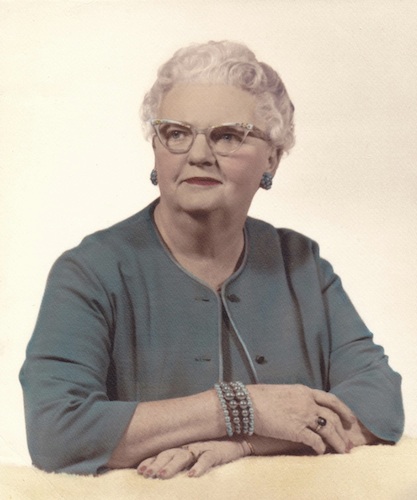
Karen Fayeth’s Grandmother
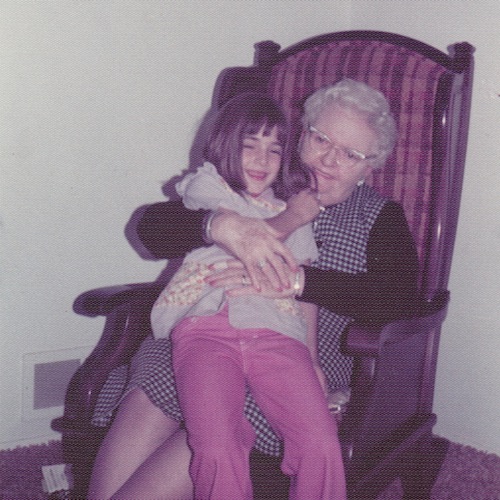
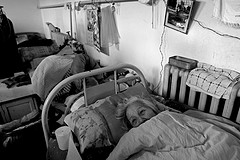
Author Karen Fayeth and her Grandmother

·

THE DIVINING TRUNK

by

Karen Fayeth

The battered metal steamer trunk in my living room, a family heirloom, is crammed full of memories. Sturdy sides hold every photo album and scrapbook that was bestowed upon me in the weeks following my father’s death*.

This pile of memories is like a divination tool. I open the lid and dig in then something useful bubbles to the surface. Something I’ve never seen before or something familiar, but always just the thing I need to see.

One stapled stack of papers catches my eye today. It contains a perfect wood pulp circle of life: my paternal grandparent’s birth certificates, their marriage license, and both death certificates.

Their entire lives are covered off in five pages.

On my grandmother’s death certificate, it lists, “oat cell cancer to left lung” under the cause of death.

Oat cell. Doesn’t that sound very grandma-ish? Like warm oatmeal and a hug, however, a short Google search advises that oat cell is among the most aggressive forms of lung cancer.

Besides, my grandmother wasn’t very oatmeal and hugs anyway. She was something much more urbane.

Which makes her bigger than life in my memory.

When I was about seven, my paternal grandparents made a visit to New Mexico to attend my first communion. My dad grew up in South Bend, Indiana, which to this desert kid may as well have been on the other side of the universe.

In the mid-seventies, Albuquerque wasn’t a very evolved place. Our airport was a small building the color of dry grass next to a hot concrete tarmac shared with the air force base.

The waiting area had memorable soft leather chairs on sturdy wood frames. I’d sink into the smell of leather and through large picture windows watch the planes fly in over the Sandia Mountains.

Passengers would disembark down sturdy metal stairs, eyes blinking in the bright desert sun.

That day I stood there, clutching at my mom, both scared and excited to meet my dad’s parents.

“There they are,” my mom said.

“Where?” I asked, perking up.

“Look, the woman in the coat.”

I looked. Making her elegant way off the plane was my white-haired grandmother. She wore a dress, pearls, stockings and heels. On top of it all she wore a fur-lined overcoat.

No one wore fur, much less an overcoat, in New Mexico.

She carried herself like a movie star, the regal matriarch of my father’s family. Her lipstick was flawless, her porcelain skin showing nary a wrinkle.

Behind her tottered my grandfather, a tall man with a lined face wearing a good suit and a hat. Always a hat.

These people were like something out of a novel. They were big city. Granted, South Bend is no great shakes, but they flew in from Chicago and looked it.

To me they seemed worldly, intelligent, and jaunty in that “Great Gatsby” kind of way.

My Grandmother smelled of perfume and powder and my Grandfather of cigarettes and hair oil. I was in awe. My mother was visibly intimidated by them both so I followed suit.

My 1970’s fashionable bell-bottom jeans and ratty t-shirt now felt tacky and under-dressed, as elegance had just hit our dry, desert wilderness.

Over the course of the visit, I tried desperately to reconcile myself to these people; my family. I clung to my mother, a shy doe-eyed girl from Oregon who in later years would confide to me just how much her in-laws scared the bejeezus out of her. I understood why.

At breakfast one morning, Grandmother sat chain-smoking, leaving perfect lipstick rings on the filter while Grandfather sat quietly, acquiescing to her, always. Something my dad had said made Grandmother mad, and she spoke harshly, her Irish temper flaring.

She shouted down my father, something no one I knew had ever done. I fled from the room, scared out of my gourd.

No one talked back to my father and got away with it. I think that terrified me more than the shouting.

I’d managed to bond with my gentle, comedic Grandfather and did my best to studiously behave in front of my Grandmother, lest she turn her overpowering temper on me.

Several days into the visit, while having an early evening happy hour, my mom cracked open a can of smoked oysters and Grandmother clapped her hands with glee, as this was a favorite treat. She prodded me to try one. It looked like a globby, gray pencil eraser doing an oily shimmy on a cracker.

Wanting desperately to somehow connect with this elegant woman, I took the offering like receiving communion, and chewed. It was tasty and I smiled. Grandmother was pleased, and handed me another, which I quickly ate. She wrapped an arm around me and pulled me close to her warm, fleshy side.

I’d done good.

We were worlds apart, and yet, our mutual love of good food held the power to close the gap.

In the years that followed, I wouldn’t be able to explore any more potential common ground. South Bend and Albuquerque were just too far apart, and it was five years later that my grandmother died. It was the only time I ever saw my father cry, and at age twelve, my first experience with cancer.

I wish I’d known my grandmother more. I wish I could find more ways to say, “oh, I’m just like her” but I can’t.

She was like a shooting star, in my mind a brief bit of glorious celebrity, stolen away far too quickly by the oat cells.

*My father succumbed to complications from pulmonary fibrosis

© Karen Fayeth, copyright 2011, all rights reserved. The family photos are covered under copyright. Please be respectful.

♥ ♥ ♥ ♥

Karen Fayeth ~ A corporate executive, writer, blogger, photographer, and visual artist, Karen was born and raised in New Mexico and moved to the San Francisco Bay area in 1997. Her work blends the influences of Hispanic, Native American, and the deep rural soul of the American West along with her newer city-sense learned in places like San Francisco, Brooklyn, and Boston. She is an award-winning short-story writer, and her baseball photo Bromance was featured on Intential Talk, hosted by Chris Rose and Kevin Millar. New Mexico magazine recently published three features by Karen. She has one published novel and lives with her husband, a cat (Gypsy), and two Siamese fighting fish, Benito and Margaret. Karen’s grandmother died of lung cancer. Karen blogs at Oh Fair New Mexico.

Posted in Guest Writer, Perspectives on Cancer

PERSPECTIVES ON CANCER #11: The Red Dress

Myra Schneider

THE RED DRESS

by

Myra Schneider

My first reaction is: I want it,
can’t wait to squeeze into
a scarlet sheath that promises
breasts round as russet apples,
a waist pinched to a pencil,
hips that know the whole dictionary
of swaying, can’t wait
to saunter down an August street
with every eye upon me.

But the moment I’m zipped in
I can’t breathe and the fabric
hugging my stomach without mercy
pronounces me a frump.
Besides, in the internet café,
where you can phone Tangiers
or Thailand for almost nothing
fourteen pairs of eyes
are absorbed by screens.
No one whistles when I smile
at boxes of tired mangoes
and seedy broccoli heads
outside the Greek superstore.

By now I’m in a fever to undo
the garment and pull it off.
And for all its flaws, for all
that it only boasts one breast,
I’m overjoyed to re-possess
my body. I remember I hate
holding in and shutting away.
What I want is a dress easy
as a plump plum oozing
juice, as a warm afternoon
in late October creeping
its ambers and cinnamons into
leaves, a dress that reassures
there’s no need to pretend,
a dress that’s as capacious
as generosity, a dress that willingly
unbuttons and whispers in the ear:
be alive every minute of your life.

© copyright, Myra Schneider, all rights reserved

The Red Dress from Circling the Core by Myra Schneider, 2008

 ♥ ♥ ♥ ♥

In 2000, Myra Schneider was diagnosed with breast cancer. Writing for her – as for many – was a part of the healing process, if not the cure. She journaled two weeks after diagnosis:

I have to hang onto the thought of friends and the relatives and friends of people I know who have survived for years and years after breast cancer. I owe it to myself to manage my panic and to make this a life experience not a death experience, to concentrate on possibilities, to grab every moment of life I can, to use what has happened for writing, to include the awfulnesses but also the plusses. I mustn’t forget the moments of joy: the sun lying in swathes on the grass, the sharp clean cut of the air, the disc of the sun on water. I must keep the words that came into my head about the snowdrops I saw in a garden when we walked to the shops a couple of hours ago. I think it’s the starting point of a poem. MORE

 ♥ ♥ ♥ ♥

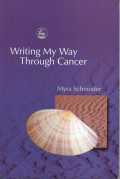
Myra Schneider ~ Myra is a poet, a poetry and writing tutor, and the author of Writing My Way Through Cancer and, with John Killick, Writing Your Self. Her poetry collections, Circling the Core and Multiply the Moon, were published by Enitharmon Press. She has eight published collections. Her long poems have been featured in Long Poem Magazine and Domestic Cherry. She co-edited with Dilys Wood, Parents, an anthology of poems by 114 women about their own parents. She started out writing fiction for children and teens. Currently she lives in North London, but she grew up in Scotland and in other parts of England. She lives with her husband and they have one son. She tutors through Poetry School, London.

Posted in Guest Writer, Perspectives on Cancer, Poems/Poetry

PERSPECTIVES ON CANCER #9: Metastasize, An Awkward Word

·

METASTASIZE, AN AWKWARD WORD

by

Cindy Taylor

·

Metastasize;

an awkward word,

vowels lurking with malice

between those rock hard t’s

and stumbling past that sinister s,

into that endless z…

Even educated women know;

the seeds of broken dreams will gather

nearest to the heart

and grow

until the Gardener’s sharpened shears

snip away the wretched, rotted root.

That puckered rose, that brutal scar,

my brave and beautiful friend;

wear it as a medal:

triumphant, survivor, heroine!

©Cindy Taylor 2008

Photo credit ~ property of MBCCOP Network News

TAKEN TOO YOUNG

Minnie Julia Riperton (1947-1979), American singer-songwriter: In January 1976 Riperton was diagnosed with breast cancer and underwent a modified radical mastectomy. Though she was given just six months to live, she continued recording and touring, and in 1977 she became spokesperson for the American Cancer Society. Riperton was one of the first celebrities to go public with her breast cancer diagnosis, but did not disclose that she was terminally ill. In 1978, Riperton also received the prestigious Society’s Courage Award presented to her at the White House by then-President Jimmy Carter. She died at age 31 on July 12, 1979.

A VOICE SILENCED TOO SOON

Listen:

♥ ♥ ♥ ♥

Cindy Taylor ~ Cindy is a freelance writer, a poet, editor and proofreader. She has an abiding passion for food and wine and an endearing zeal for life, which she shares with us on her award-winning food blog, The Only Cin. Cindy lives in Johannesburg, South Africa with her husband, daughter, and a fine cast of animal friends. Judging from photographs, she has a world-class kitchen and an abundance of red shoes.

Posted in Essay, Guest Writer

PERSPECTIVES ON CANCER #8: A Gift from Cancer

Dilys Wood

·

A GIFT FROM CANCER

by

Dilys Wood

Some friends of mine who suffered cancer and did not survive in the longer term were, as it happens, exceptional people with a special gift for sharing. That’s how I come to know that there can be shared happiness even when a friend is diagnosed with a serious illness. When time is short, inhibition may fly out of the window. You may feel ‘licensed’ to talk freely about every aspect of both your lives.There are no excuses for not doing the things you meant to do together. Boring daily chores just have to give way to what, at normal times, might seem a whim.

In fact, the more ‘whims’ your friend has the more delighted you feel to be able to help, even though, when someone is getting weak, there can be problems. If not used to being a caretaker, you sometimes feel stupid, inadequate and guilty. A few weeks before her death, I took a friend abroad and was in tears of despair at Heathrow airport because I hadn’t allowed for her slow walking and general debility. Why hadn’t I booked help? When we reached our hotel in Amsterdam, I was tired and she was ready for an enjoyable evening. I’d learnt the lesson that energy levels in a cancer patient can be unpredictable: a remarkable will-power may come into play, with a passionate desire to do new things, go places, indulge a little lavish spending, even when out of character.

Within a week or so of her own death, a friend learnt that an aunt was housebound and set off to see her. It should not have been possible for her to take that journey by car, train, tube and bus, but she did it on her own. When she told me the details it was obvious she had had one of the happiest days of her life. This friend was one who talked about everything under the sun, including questioning everyone, from priests to shop-assistants, about their idea of eternity.

Another friend greeted everyone on the street with, “I’ve got terminal cancer”. Far from resenting this – and despite the fact that she had just moved house – her neighbours were soon actively helping in every possible way, visits, shopping, lifts in their cars, re-plumbing her washing-machine. By contrast, I was unhappy when the close family of a dying friend banned visitors from the house in her last fortnight. Did she feel that “closing out” was harsh, as I did, or was it the right decision?

For another friend, dying in a Hospice, things were different. Lying in the bay-window of a large sunny room she was dying in a combined greenhouse and luxury hotel. Surrounded by a mass of cut-flowers and house-plants, her bedside table groaning with fruit and chocolate, she was eager for visitors, warm, loving even while hallucinating. I will never forget her friendly indignation as she pointed to the vision we couldn’t see, “Look a tiger, apricot stripes!”

♥ ♥ ♥ ♥

Dilys Wood ~ Dilys is poet, editor and founder of Second Light Network of Women Poets. She has edited four anthologies of women’s poetry, mainly with Myra Schneider and has published two collections of poetry, Women Come to a Death and Antarctica. She is a great advocate for women poets, especially those who come to the art and craft of it late in life. Dilys mother died of cancer.

♥ ♥ ♥ ♥

INTO THE BARDO·

is now on Facebook and Twitter.

Please join us there.

Posted in Essay, Guest Writer, Perspectives on Cancer

PERSPECTIVES ON CANCER #6: Superhero and Junior Superhero

·

SUPERHERO

·
by
·
Patti Maxwell
·
This is a true story about Lisa, Patti’s daughter, who is doing well now and will make her own contribution to Perspectives on Cancer. J.D.
·
Like everyone younger than logic, she was fearless. Flying high on wings of inexperience, she took risks most learn to avoid and tempted Fate at every turn. She lived in a Land far from reality. She was eternally optimistic: there was plenty of time to grow up, time to move on, time to get ready, and time to get ahead. She had, after all, all the time in the world. There were endless Tomorrows stretched out ahead of her. Playing fast and loose, she beat odds she didn’t even know were against her. She was invincible, indestructible, immortal.
·
And then one day, her Land was invaded by a Monster and his legions. They assaulted many of her givens, and caused the rest to take shelter in denial. The air became rank with fear, as the Monster’s bombs of destruction exploded first here, then there, threatening the very way of life throughout the Land. She had never thought something like that could happen to her, and she was terrified.
·
But the one thing she wasn’t was dumb. She quickly realized that the Monster could not be allowed to run rampant though the Land, and that he had to be stopped before everything was destroyed. Casting fear and denial aside, she dug out her best cape, always useful back in her flying days, and put it on. And she became the first Superhero the Land had known.
She fought with all her might, long and hard and desperately. There were times when she was down, wounded and tired, but she quickly got up again, took up her sword, and resumed the battle. The war raged for many months, and though she won some and lost some, she never lost her will to survive. She fought on, until one day she realized the Monster was gone. She had won.
·
After the war was over and the smoke had cleared, she looked around and surveyed the rubble left behind. Many parts of the Land had been ravaged. Where once there had been bounty, there was now barrenness. Structures had been flattened. Expectations had been unalterably altered.
·
But she knew the Land could be rebuilt, and it was. New structures were erected, looking as good as those taken down by the Monster. The seeds of new prosperity were planted, and new expectations developed.
·
But one unexpected outcome of the war was her realization that life in the Land was perhaps not as eternal as she had once thought. Perhaps there really wasn’t all the time in the world. Though one might suppose that this was a bad outcome, one would be wrong. After having fought and won against the evil Monster, the Land was moved closer to reality and life was made forever better. Foundations and armaments were reinforced, made stronger than before to protect against any future attacks. Social programs were put into place to prepare the Land to be more self-sufficient and successful in the future.
·
So while she occasionally missed the wild and free antics she’d enjoyed before the Monster came, she was happier than ever before. She had learned that, true, there were not endless Tomorrows laid out in front of her, but Today was a much better place.
·
She never really put away her cape after the war, though. Battered and torn though it was, she kept it nearby, just in case she might need it again. She was a Superhero, after all.
·

♥ ♥ ♥ ♥

·

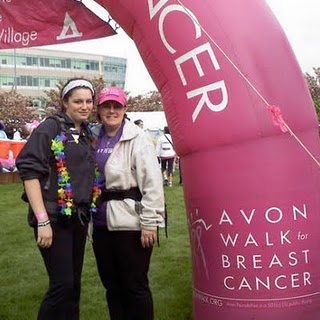
Patti’s daughter, Lisa, and her granddaughter, Emily, at

this May’s Avon Walk for Breast Cancer in Boston, MA, USA

·

JUNIOR SUPERHERO

·

by

·

Patti Maxwell

·

She saw her mother hit by cancer at 33
Watched as she fought back and won
And learned what it takes to be a superhero.
Today they fight for the cure side by side.
·

♥ ♥ ♥ ♥

·

PattiKen is a writer/blogger and was a corporate trainer and technical writer for many years, keeping her creative (and sometimes whimsical) side under wraps. The business world sometimes frowns on creativity.  The opportunity to use her creative brain now is a lot like kicking off those heels at last and wiggling her toes.   Blogging has given her a platform to showcase her writing and has brought many new friends into her life in the process.  Patti is very grateful for both. Patti’s delights us with her short-stories, poems, and her slice of  real-life vignettes. She blogs at:

© PattiKen, Copyright 2010, 2011, All Rights Reserved. Family photo is included in the copyright. Please be respectful.
Posted in Fiction, Guest Writer

PERSPECTIVES ON CANCER #4: Boxes

BOXES

a short story

by

Victoria Ceretto-Slotto

At the end of your life, what will you have to show for it?

The question hurtled across the dark room and caught a ray of light as it passed the door that someone had left ajar. Institutional light.

What’ll you make of yourself? The words howled down the corridors of a time past when she had allowed other people to define her life.

She pulled the ratty shawl she’d knitted tight about bony shoulders covered by a layer of crepe-like skin and rued the dropped stitch she hadn’t bothered to catch as it slipped yet another row towards the mustard-stained fringe.

At the end of your life, when death draws near . . .

The question bounced around in her skull like ping-pong balls in a Lucite box smeared with little kids fingerprints. It was powered by air, she recalled—a project at a science fair that demonstrated random molecular movement? Yes, that was it.

The box was broken now. Molecules split to atoms to neutrons, protons and electrons. And more recently, quarks—whatever the hell they are.

The shattered box of her beliefs, strewn about and discarded like clothes too tight and out-of-style. Like toe-crushing shoes.

She fingered the blanket, threading her fingers in and out of woven sterile cotton: institutional warmth, or lack thereof.

The conundrum chased her around the corners of decades. It unfurled and breathed heavily on the nape of her neck–raspy, persistent. Or was that her roommate once again in respiratory distress?

Her hands lay before her. They were still now—old, used hands with see-through skin. Gnarly knuckles that appeared warped and disfigured like twigs from the oak tree in her backyard. (At home, not in this place).

Hands that had touched, caressed, soothed. Healed even. And sometimes caused pain.

Her distended veins bulged: rivulets crossing the map of her life. She pushed back her skin, stopped the flow, released, and watched dark corpuscles stream back in, carrying life-giving oxygen to her cells. One more day of life—or at least a part of one.

Good-looking veins, she thought, but deceptive like her life had been. Stick a needle in that fat one and it’ll blow or roll.

That’s what fifty plus years of nursing did for her. The knowledge of veins, arteries and blood. And shit, piss and vomit. And worse—much worse. At the end of her life, what would she have to show? That she could read blood vessels?

Service can pass for love, she knew.

If she were her own patient, what would be her diagnosis of herself. Her mind clicked into scientific mode and she began to reflect.

Subjective:

There was the hard, hard heart she carried in a steel box inside her hollow, hallow chest. This woman can’t afford to feel in the face of so much loss: dead babies, dead everyone. Nope, too dangerous look at the subjective. Think it’s better to pass on that one.
A cool breeze blew in from nowhere, walked down the juts of her vertebrae and settled at the base of her spine. Fanning out, the chill expanded and squeezed about her body to embrace the emptiness.

Objective:

Well, these were the facts. Two dead husbands; one dead daughter; a son gone missing; a divorce. Six dead dogs, one cat still alive. Not much money in the bank; a vacant, paid-for house, watched over by a neighbor (along with the cat, of course). A 12’ X 7’ cubicle in a room of three old ladies, surrounded by beige curtains—a hiding place, a box. 13K plus change in credit card debt and no one to leave it to. Ha-ha. A mind that bounces from here to there, imprisoned in a withered body; layers of skin that hang like empty sacks; lost promises.

A memory tossed her into the past: the day they’d painted their house a bright yellow with white trim: the happiness of the color and the joy of standing hand-in-hand with her second husband—the one she really loved because he loved her, too.

She shooed that thought away. Can’t afford to feel, remember?

Assessment:

The box is smashed and fragments of a life that could have been poured out. The diagnosis is clear: Altered reality; meaning deprivation related to . . .” To Nothing.

She’d read an obituary that morning about a woman who had it all wrapped up and tied with a bow, it claimed. Died in profound peace, it said. This mother, wife, friend knew where she wanted to go and went there, or something to that effect. They outlined it for the obituary readers: died surrounded by loved ones who would attend the funeral in the church, it promised. Neatly placed in her box. Amen.

Plan:

That’s what she needed: the answer to the question, she decided, wasn’t in this place. She knew it wasn’t this—not a box-room filled with white sheets, white blankets and a white commode chair. Not the sickly smell of urine and dirty dentures and not a hand-knitted shawl with a dropped stitch and a mustard stain on gray yarn.

She needed a plan with color.

Dragging her legs, numb with cold, to the edge of the bed, she reached for her walker and grasped the rubber handles encrusted with grime—particles of food and feces—and hauled her ass into a standing position. She shuffled slowly into the open corridor with its fluorescent white sheen. Her droopy butt lay bare for all the world to see beneath the open back gown of flimsy gray and pink cross-hatched fabric bleached almost white.

She crept along the hall, stopping briefly at the crash cart that reminded her of OPI “Big Apple Red” nail polish. She palmed the vial of potassium chloride from the unlocked drawer of the cart, concealing it along with a 22 gauge, 1” needle and 5cc syringe. A scarf would do for a tourniquet, she figured and alcohol was academic, wasn’t it?

Approached by the evening shift nurse she requested an AMA. The LPN called the social worker but patient rights won out. As she signed the papers discharging her Against Medical Advice, the team called a taxi and the MD then helped her box her few belongings.

The plan was coming together.

At the end of your life, what will you have to show for it? The phrase rattled in her tin box heart as she slipped the key into the lock of her front door.

Musty odors of cat litter and un-lived-in, unclean linens overwhelmed her.

Purty, her cat mewled with excitement, threaded between her legs, stroking her back to life. Exhausted, she plopped into the overstuffed chair in the front room. A burst of dust enveloped her, but she was home.

She sat there till the early morning sky allowed light to slither around the edges of the curtains.

Purty curled up in her lap and purred and purred. Reaching over she pulled the blinds allowing sunlight to fill the room. Yellow sunlight bounced off yellow walls in her yellow house. It was still there, the yellow she remembered. Joy slipped in.

She thought about the drug stashed in her purse with the syringe, but let it be for the moment. Stretching out her weary limbs, she stood as Purty leaped to the floor.

I need another day she thought and decided in that moment it might be wise to reevaluate her plan. Instead, she wandered through her house in search of color and meaning. Purty, her calico cat, followed her everywhere.

At least have time to find something to show, she told herself, smiling that the last words on her chart were AMA, not RHC. Respirations Have Ceased. Smiling that she was, indeed, OOB.

No, not Out Of BedOut of the box.

As a nurse, I spent much of my time working with the elderly. This fictional account imagines how a retired nurse could feel about her life…if she didn’t have something to turn to–like writing! A bit of an explanation: in nursing, we applied the scientific method to patient assessment using a method called S.O.A.P–that’s what the Subjective (How are you?) Objective (What the nurse can notice) Assessment (Making a nursing diagnosis) and Plan (What to do about it) refer to. Don’t know if this is how it’s done right now…but it’s a good way to problem solve in any life situation. Try it with a problem you’re facing!

Victoria Ceretto-Slotto ~ A former nurse, Victoria is a novelist, poet, artist, and a docent at Nevada Museum of Art. Currently she is hard at work with final edits on her novel, Winter Is Past, recently accepted for publication. A second novel is in progress. Victoria finds inspiration in the mysteries of life, death, art and spirituality. She lives and writes in Reno, Nevada and Palm Desert, California with her photographer husband and two canine kids. Victoria shares some of her poetry on liv2write2day’s blog, where she also provides writing prompts and offers coaching with Wordsmith Wednesday. (Currently she is on hiatus from the blog while she completes the final edits of her book.)

Posted in Guest Writer, Perspectives on Cancer

PERSPECTIVES ON CANCER #3: All Is Not Lost

ALL IS NOT LOST

by

Naomi Estment

We each deal with death in a unique way. I can’t speak for my father; whose hand I held when he succumbed to pancreatic cancer in 1998, aged 62. However, it wouldn’t surprise me if his disease was exacerbated by anguish about my brother’s inexplicable suicide almost fourteen years earlier. Although that type of trauma is tough to come to terms with, I’m certain that acceptance is the key to healing – which is why these quotes resonate deeply:

“Throughout history, there have been women and men who, in the face of great loss, illness, imprisonment, or impending death, accepted the seemingly unacceptable and thus found “the peace that passeth all understanding”.” – Eckhart Tolle, Stillness Speaks

“Acceptance of the unacceptable is the greatest source of grace in this world.” – Eckhart Tolle, Stillness Speaks

In line with the wisdom shared by Jamie in this blog’s About section, I aim to “live fully yet learn non-attachment” while exploring “the meaning of life in the light of death”. My experience is that the peril and passing of those close to us offer a gift of potentially releasing us from the fear of loss, through facing and transcending this (without implying that we bypass grief).

Being married for over sixteen years to an ex-professional superbike racer, who I love with all my heart, has challenged and blessed me in a similar way. For Dave, taking physical risks is as natural as breathing, and has almost cost his life more than once. Through it all, he remains a radiant example of how to live fully. I, on the other hand, have been learning how to “let go to grow”*.

This subject forms the underlying theme of my second novel (in progress), which is encapsulated in the following poem by the same name:

LOST IN LIGHT

Embraced by love
beyond her dreams,
a formless fear
arises inside

What if it all
vanished tomorrow,
never to return her
into the light?

Yet love’s power
beckons her deeper
towards the heart
of the sun

Where she feels the fear
but has to follow,
in order to learn
that there is no loss

Only change –
and pain is caused by
the simple illusion
of holding on

Acceptance
is the answer
to receiving the gift
of grace.

©Naomi Estment

My prayer is that we all find our way back into the sunlight of our soul connections, without melting our wings trying.

*Quote from phenomenal women’s wealth coach, Kendall Summerhawk who shares how the traumatic loss of someone extremely close triggered her own powerful transformation.

Naomi Estment ~  Naomi is a freelance writer and photographer and, with her husband Dave, is the co-owner of  Outdoor Video & Photographic and the Johannesburg-based OV&P Studio. Qualified in portraiture, fashion & glamour photography and master lighting, she’s passionate about the latter, particularly as it pertains to nurturing talent. She is a magazine journalist and has one completed novel (see My Books). Naomi also blogs at Naomi’s Notes where she charms readers with her stories and photographs of South Africa and safari. Occasionally she treats us to one of her very polished poems.  Naomi and Dave share their home with a Norwegian Forest Cat (Jina) and a beautiful German Shepherd (Quest).

Photo credit ~ Brown Sanke Eagle in Flight, Okavango Delta, Botswana by Dave Estment.

Posted in Guest Writer, Poems/Poetry

PASS IT ON

Morning, poet/blogger  and founder of Thursday Poets Rally and Jingle Poetry (now Gooseberry Garden, which includes Sunday Poetry Picnic) is responsible for uniting and encouraging hundreds of poets online. This sweet simple acrostic poem efficiently encompasses the Buddhist spirit of metta (loving kindness) and expresses the internal joy that is quintessentially Morning. Please enjoy … J.D.

K IS FOR KINDNESS

by

Morning

(copyright 2011, all rights reserved)

Kindness is a cool attitude
It enlightens one’s aptitude
Never overlook its power
Don’t be rude, for a moment or an hour.
Nothing is as precious as kindness
Everyday one must shows mindfulness
Stay upbeat
Sweet dreams, never cheat.

·

Illustration ~ courtesy of Morning

·

INTO THE BARDO

is now on Facebook and Twitter.

Please join us there.

Posted in Guest Writer, Poems/Poetry

RIVER URKE, Poet and Writer

RIVER URKE, American Poet and Writer

River Urke lives in Minnesota with her daughter, Willow, and their cat Brownie, dog Odie, and two rats. She lives and loves hugely despite the challenges of MS. 

River is a consultant on Native American culture. Her poems have been published widely. She blogs her poetry at Waabin Ozhibiiwin~ Dawn Writer. You’ll find her articles at Rivers Ruminations and her YouTube Channel at RiverMariaHer work can also be found on MS MuSings, A Monthly Online Magazine by and for those with Multiple Sclerosis. 

River edits The River Paper to which I am a contributing writer effective September 9, 2011. The River Paper is published each Friday.

We’re pleased to introduce River Urke and her work to our readers here … Her photograph and poems are copyrighted and posted on Into the Bardo with permission. J.D.

If you are viewing this on the homepage, you may have to click on the post title to get the poem to layout properly. Thank you!

♥ ♥ ♥ ♥

Envy

by

River Urke

·

I sit outside the day hospital after my infusion

Feeling shitty

Waiting for my taxi to come

·

I am watching all the people walk by

Focusing on their lower half

Not noticing their faces

·

I begin to feel jealous

Their legs keep pace with each other

Their stride is straight and true

·

I look down at my legs

Imagining them amongst the crowd

In the stream headed west

·

No drunken gait

No dropping foot

·

I mingle in their movement

With a sway to my step

My pace is one with theirs

·

A noise wakes me

The taxi approaches to take me home

I pick up my cane

·

I start to head towards the van

I begin to feel eyes upon me

Looking me up and down

·

I freeze at their thoughts of me

Faces revealing their pity

‘A young woman with a cane’

·

My pride pushes forward

Determined not to give in

·

I raise my head high

Stand myself tall

Again I start towards the van

·

Moving forward in my reality.

©River Urke 3/09

The Crippling Effect by River Urke:

Posted in Essay, Guest Writer

THE TILTH OF THE EARTH

Tilth of the Skin

TILTH OF THE EARTH
·
by
·
Amy Nora Doyle  (SoulDipper)
·

Dirt.  Black, soft, moist, cool clumps of sensuous-feeling prairie dirt tumbled through my memory like tumbleweeds bouncing across an open field.

Jamie Dedes wrote about Dirt and conjured memories of pawing hands, wiggly fingers and big noses.  Visions of prairie farmers grabbing fistfuls of healthy humus, fingering it thoroughly, smelling it, working it through rubbed palms, and even tasting it, came back to me with the clarity of a close-up video.

Why did they do this routine?  As a child, I had watched them, riveted and serious, working handfuls of soil as if preparing for surgery.  The world stopped.  Their full attention was on the response of the soil to its handling.  What were those farmers doing?

Nagged by ignorance, I decided to visit an octagenarian who farmed most of her adult life in Manitoba.  Rose is the 88 year old mother of a departed friend.

Driving to Rose’s house, Jamie Dedes was on my mind.  She started this.  She published a post, “Ultimately Dirt”, on her blog titled Into the Bardo.  If you peek at the link, you’ll see there’s a book and a film about the soil of this planet.

Bill Logan wrote “Dirt: The Ecstatic Skin of the Earth”.  He wrote it while living in New York City.  Jamie just happens to come from Brooklyn.  What irony that two urban New Yorkers wake up this prairie person to the phenomenal aliveness of dirt.  It is precious.  We all know we need it to grow anything worth eating, but there’s more to it.  It’s teeming with life.  It’s a full, living organism.  It is home to microscopic life that creates the healthy properties we need in our soil.

I’ve been taking dirt for granted.  I hadn’t thought about how many layers and years of leaves, grasses, manure, and other flora it takes to create the soil that I kicked away and swept off my walkway with impunity.   I hadn’t fully considered the effect of the world’s greed on soil.

When I arrived at Rose’s home, she was sitting outside enjoying her small garden.

Tilth of the Soil

“Rose, this may seem like a dumb question, but I want to ask you about farmers.  When they grabbed a handful of dirt and started doing all those machinations, what were they doing?”

“You mean when they’d squeeze it in their hands?”  I nodded.  “And when they’d rub it between their fingers…sometimes smell it?”

“Yes! That’s what I remember.  Some even tasted it.  I saw some put their tongues on it.  Why?”

“Testing it.” Rose said.

“For what?”

Rose looked at me as though I was a bit simple. “To see if it was okay.”

“Rose, I know they were testing it.  Okay for what?”

“Well, to see if it was ready for planting.”  Her tone indicated that anyone would know this fact.  Obviously this was like asking her to describe looking through blue eyes.

“Okay.  What were they looking for in the soil to know it was ready for planting?”

“Let’s see…moisture.  It shouldn’t be too dry.  If it was, they prayed for a bit of rain.  If it was too wet, they prayed for hot, sunny days.”  She grinned as she paused.  “What else?  It shouldn’t be too sandy.”

“If it was, what would they do about it?”

“Add some good manure probably.”  More silence.  “The soil had to have a good balance of acid and alkaline.   Willows love alkaline.  Where willows grow, you know the soil is too alkaline.  Clay has a lot of alkaline.  Wheat likes a bit of acid.”  She began to rhyme off which crops preferred acid and which prefer alkaline.

“So that tiny gesture told them all they needed to know about planting.  When to plant, what to plant…it even told them if they had to roll out the manure wagons.”  Rose nodded as she listened.

Suddenly she threw up her arms, “Tilth!”

“What?”

“Tilth of the soil.  That’s the word!  They test the tilth of the soil*!”

“Spell that, Rose.  I’ve never heard the word.”

The well-being of our nation depends upon the tilth of the soil. 

No… the well-being of the world depends upon it.

The tilth of our skin has been too much of a big deal – 

Now it’s time to concentrate on the tilth of our planet’s skin.

Tilth of the Earth

* From Wikipedia:

Tilth can refer to two things:

Tillage and a measure of the health of soil.

Good tilth is a term referring to soil that has the proper structure and nutrients to grow healthy crops. Soil in good tilth is loamy, nutrient-rich soil that can also be said to be friable because optimal soil has a mixture of sand, clay and organic matter that prevents severe compaction.

Photo credits ~ Google.ca/search

Posted in Essay, Guest Writer

A FULL LIFE …

Charlie Badenhop

It is my pleasure to introduce the wisdom of my friend, Charlie Badenhop, on our pages. Charlie is the internationally recognized creator of the human potential discipline of Seishindo . He is also a highly respected life-coach, practitioner of self-relations psychotherapy, and neuro-linguistic programming. He first published the essay below in his Seishindo newsletter, Pure Heart, Simple Mind. I find it brings a very important message to our readers. R.R.

·

“A FULL LIFE IS NOT NECESSARILY

A LONG LIFE”

by

Charlie Badenhop

Posted here with permission. All rights reserved.

Are you living your life appreciating what you DO have, or are you lamenting what still seems to be missing?

Three years ago the eight year old daughter of a friend died in a freak accident at school. My friend was devastated and I could not think of any wise words that might console him.

As the weeks rolled by my friend slipped into an ever deeper sense of despair, and nothing anyone said seemed to lift his spirit.

After a few months time he went out-of-town on a business trip, and on the train ride back he engaged in conversation with the woman sitting next to him. The woman sat there and nodded her head often as my friend talked about the death of his daughter. He reported to me that he had the sense of talking and talking and talking, until he finally felt like he had nothing more to say.

As my friend came to a natural state of rest, the woman nodded her head one more time as she took a deep breath, and then said the following, “I can very much feel your pain, and I understand the loss of your child must be devastating.”

“At the same time,” she said, “I wonder if your pain would not be lessened if you celebrated the life your daughter did have.”

“You told me about your daughter’s sense of awe the first time you took her to the ocean, and how you carried her in your arms as you waded out into the water.”

“You also spoke about the many times she sat on your lap and told you about the magical adventures she had during the course of her day.”

“Perhaps the sweetest story you shared was how you told your daughter every night how much you loved her as you tucked her into bed.”

“I’m wondering,” the woman said, “What is it that leads you to believe you and your daughter did not live a full and glorious life together?”

“Is it because she died at eight years old and not at eighty? Certainly it would seem that the quality of one’s life is not tied to the length of one’s life.”

“I would like to gently suggest that you and your daughter did live a full and complete life together. She just didn’t live as long as you had hoped for and expected.”

As the train neared the station the woman continued speaking. “I am seventy-two years old, and in looking back on my life I don’t feel I have shared with anyone, the depth of experience and love you and your daughter had together.”

“On one hand this makes me deeply sad. On the other hand, it wakes me up to the fact that my life is not yet finished. I can begin today to live the life I truly desire.”

“This is the realization that your experience has helped me to understand, and for this wonderful gift I thank you deeply.”

The woman smiled as she stood up, preparing to exit the train. “None of us know how long we have to live. No one has control over the length of their life.”

“The quality of our life on the other hand, is something you can ensure on a daily basis. An emotionally fulfilling life is a complete life, regardless of how many years you live. A life without love seems to take forever to end.”

“We’ll do well to appreciate what we do have, rather than lamenting about what we don’t.”

To the readers of this [blog post], I gently suggest you consider how you want to live your life, in order to ensure that your time on earth is fulfilling and complete.

Posted in Guest Writer, Poems/Poetry

omg rejection letter

Copyright 2011, Charles Martin

Charles Martin blogs at Read Between the Minds. We are pleased to present another of his fine poems on Into the Bardo. J.D.

·

omg rejection letter

by

Charles Martin

·

we regret

to inform you

that your application

for sainthood

has been

denied

please note

this is

no reflection

upon what you’ve been

saying

but

praying for

the poor

the homeless

peace

et cetera

is not

the same as

doing

something

for those individuals

or

areas of concern

your wishful prayers

are indeed

characteristic of

an

admirable personality

and

we appreciate

your frequent

and

considerable

soliloquies with us

but

we’re

rather filled up

with folks

with

good

intentions


Posted in Guest Writer, Poems/Poetry

don’t let the door . . .

copyright cwmartin 2011

When I stared what was to become my flag-ship blog,  Musing by Moonlighttwo-and-a-half years ago, the first poet-blogger I discovered was Charles Martin. I was so enamoured of his work that I not only started following him regularly, but his was the first poetry site I added to my blogroll.

This particular piece is perhaps my favorite of all Charles’. Enjoy! We plan another post from Charles on Tuesday, July 12, but you can always visit him – and I recommend that you do – at his site, Read Between the Minds. Both the photograph and the poem were created by Charles. J.D.

·

don’t let the door ….

by

Charles Martin

·

after you’ve finished
ranting and raving
about how unfair
life has treated you
and
you’ve
told the last person
who will listen
all your misfortunes
perhaps
on your way out
you could take
a moment
to explain
to the child
in north korea
why they’re
always hungry
and to the ones
in angola
what happened
to their mothers
and fathers
you could even
take a second
out of your miserable day
to tell
the little hmong child
why they’re surrounded
by razor wire
of course
that is
if you
have
time


Posted in Essay, Guest Writer

THE HEART OF THE MATTER

My friend and Christian poet and writer, Donna Swanson, writes here about creativity, the  fleeting quality of success, and the things that really matter, like family and gratitude. No matter your definition of God (or not) or whatever your belief system is (or is not), the essence of the message here is core wisdom.  Enjoy! … and thanks to Donna for sharing. J.D.

·

THE HEART OF THE MATTER

by

DONNA SWANSON
·
There have always been creators. To us creating is a display of God’s image in the world. Creating is an ache in our spirit; a compulsive reaching out to those who share life with us. We can no more not create than we can not breathe. Though there is a longing for our creations to be affirmed and applauded – anyone who denies that is lying to you – there is a deeper hunger to do the act of creating. The feel of a brush on canvas; the weight of a pen in the hand; a particular word that completes a poetic phrase: these are to our souls as oxygen is to our lungs. Though no one responds, still we must offer. Perhaps the next painting will invoke a response; the next book, the next poem, the next song…
·
And success? Now, as I look back over my life, I have a much different perspective than I did in my youth. I see those things I created, and they are good. I know they have blessed the few people they have touched. And now I can put them to rest where they belong; in God’s hands. If there comes a time when He wants them widely known, they will be. If not, they were infinitely satisfying in their creation.
·
Again, as I look back over my life, I see the successes that mean so much more than any amount of fame could supply. I asked God to give me acclaim and the praise of my peers. He gave me good children who rise up and call me blessed. I asked God to make me financially successful. He gave me a beautiful home set amidst towering pines given by those I loved. I asked God to make my name known. He gave me a husband who knows me and loves me just as I am.
·
Our family has never been abundantly wealthy, but we have never gone without food or clothes or a warm fire. We did not have expensive indulgences or travel to exotic places, but we’ve had those small blessings that mean most because they were a surprise or a loving gift.
·
Success is relative. Success is fleeting. Success is a carrot leading a donkey down many a rocky road. Success is okay if it happens, okay if it doesn’t. It’s the road one takes to get to the destination that builds the soul. The road has been worth it.
·

·
·
·
Connect with the multi-talented Donna at the links below:
Posted in Guest Writer, Poems/Poetry

COMPASSION

Gayle Rose a.k.a. Bodhirose, Poet Blogger

Bodhirose (Bodhirose’s Blog) has been blogging about family life, things of the spirit, and her ashram-life experiences since August of 2010. In this short time, her sincerity and authenticity has earned her a loyal following. We so appreciate the ideals expressed in her most recent poem, that we asked permission to share it with readers here. J.D.

NO BLAME

by

Bodhirose

Brown or white we won’t demean

Orientation will all be seen

Your beliefs different than mine

That’s okay we’ll be just fine

Call to prayer five times a day

Or none at all, we still can play

The dress you wear is not my same

Makes no difference, there is no blame

Language, culture, a variety

Makes for interesting diversity

Sexual preference, I don’t care

Love of all is my sacred prayer

Discrimination against our own

Is a hateful trait to be de-throned

Release all intolerable distinctions

Of racial, gender, religious institutions

Open mind, open heart

May compassion be our mark

Photograph and poem courtesy of Gayle Walters Rose and Bodhirose’s Blog. All rights reserved, 2011.

Posted in Essay, Guest Writer

EVERYTHING YOU THINK

After a life-changing adventure in South Africa, Amy Nora Doyle – writer and intuitive – begin an adventure: celebrating the ordinary life in an extraordinary way. She blogs at Soul Dipper, where she shares her experiences and channels her guides, the Soul Group Ra. I particularly liked this story, such an honest one. Here Amy finds herself spinning on and making judgements and assumptions about someone, only to learn that she is totally wrong. I think we all can see ourselves in this story as both the judge and the judged. Enjoy! J.D.
·
DON’T BELIEVE EVERYTHING YOU THINK
·
by
·
Amy Nora Doyle
·

A more evolved person would say:  “What’s the big deal?  It’s only a load of lumber.  He’ll probably bring it tomorrow.”

Except, it feels like a big deal.

I put my life on hold to accommodate his schedule.  “Thursday morning before 11:00″, he confirmed on the phone two days ago.  It is now after 6:30 p.m. and the appointed length of lumber has not been delivered as promised.

The spot for storage is cleared.  The prepared dumping site is barren.

Tomorrow is no good.  I have appointments and he has other commitments.  That’s why we agreed that he’d come today.

Good grief, here’s a mature man who is a member of a stalwart island family and he has not kept his word.  He is supposedly trustworthy.

Come to think of it, I have noticed subtle gestures from his wife when I saw them together.  She usually leaves a group setting when he joins the conversation.  He sort of takes over the conversation.

Once she said it was their anniversary.  “Congratulations.  How long have you two been married?” I asked.

“Oh, I’ve only been married to him for 15 years”, she said.  “I was married before.  My first husband died.  The children are from my first marriage.”

The absence of enthusiasm was as good as a confessional.

She continued, “He’s a good man, though.  Been a good father to my children.  But, you know…at times, I find myself wishing he’d talk about something other than his antique cars and farm machinery.  He’s always looking for more information or parts.  I know he wishes the kids would show a little more interest…”

A Gift From My Guides

Yes, I’ve noticed that little ‘something’ whenever we’ve talked.

Let’s face it.  He’s a great hulk of a man who talks too much.  He is not a man of his word.  He bores his wife to death and most people just want to avoid him.  He’s like all the rest of the people who never do what they say.  If anyone asks me about his service, I’m going to be honest.  People like him should not get away with this kind of nonsense.  Look at this!  It’s 7:30 p.m.  No truck, no phone call and no lumber.  And even worse, I did no writing today until now.  I couldn’t concentrate with one ear at the door.  He’s really screwed up my day.

The phone rings.  7:47 p.m.  Why does that time appear on clocks so frequently in my life?  What does it mean?

“Hi, I’ll swing by now and bring your lumber.  I promised I’d call first.”

“Thanks.  See you in a few minutes.”

The poor man.  He’s still working!  It’s going to be dark before he finishes unloading the lumber.  He’s had a hip replacement in his retirement and he’s still working so hard.  He must be starving.  I’ll offer him something to munch on.  I should have told him to not bother tonight.

Suddenly his white truck backs into my driveway.  He parks perfectly by the prepared spot.  He jumps out of the truck and cheerfully sets up the rigging for unloading the lumber all by himself.

“You’re working awfully late, aren’t you?”

“Well, I was doing a little fix-it job for the local Kids Klub and it took a little longer ’cause when I gave one of the young fellas a ride home, turned out his mother needed her washer fixed.  Then, when I got to the lumber yard, some guy had jimmied his loader so I gave him a hand, you know, just so he could get out of my way.  Then Old Rex Thornton drove in and wanted to know what he could do with his old ’49 Chevy.  He figures he’s ripe for the old folk’s home.  So after we had a little chat about it, I suggested we go and have a look at it.  It’s in great shape.  By gar, I think I’ll buy it.  Then he got to showin’ me some of the other stuff that he wants to get rid of.  I know lots of people who will be interested.  Turns out his wife was having trouble with an old clothes line that she still wants to use – you know how women like the bedding to smell fresh…”

Link HERE  and scroll down to read the guided commentary that follows this story on Amy’s site.

Posted in Art, Guest Writer

UNDERPAINTING

The artwork and narrative are by Leslie White, copyrighted and all rights reserved.
Please be respectful of Leslie’s art.

♥ ♥ ♥ ♥
With permission this is reblogged from Leslie White’s blog.  I love the way she has pulled together painting technique with our other arts and ideals. Think you will enjoy too. Happy Weekend to all of you from all of us at Into the Bardo … and thanks, Leslie! 🙂 J.D.

♥ ♥ ♥ ♥
UNDERPAINTING

by

Leslie White

I could not believe my good fortune when I found a photo of Grandpa Elliot posted to the wet canvas photo reference library for artists.  It was a must-do for me.

Several bloggers have made mention of underpaintings; the most recent being Amy from Souldipper found here. She asked me about an artist’s use of an underpainting.  I responded something like it is the foundation that we build our final work on. That made me think more on the subject as we were also talking about underpainting our lives with love and kindness.  Then I came across the photo of Grandpa Elliot who has actually underpainted his life with sharing music to millions in New Orleans and becoming part of the project, “Playing for Change”, a CD whose proceeds go to helping others.

The other connection I can make about an underpainting is that it always, for me, sets the tone for where the light will fall in it. BINGO! I see the same in life with passing on kindness. Light is passed on through our kindness to others.  The above stage of my painting illustrates how I carved out areas where I wanted the light to fall.

The above image is the finished result.

I can not think of a better way to start the weekend than this:

Video posted to YouTube by .

Posted in Guest Writer, Poems/Poetry

BLOSSOMING

BLOSSOMING

by

Danielle Mari

Awoke with this thought brought to me via dreaming memory. The central image comes from a moment at a wedding I attended years ago, a wonderful celebration of the union of two people incredibly special to me then and even more special to me now.  The man who married these two souls (called Erik and Karen, for those of you keeping score at home), used this metaphor to illustrate the idea of patience. That image remained with me, resurfacing again and again over the years, gaining depth of meaning for me. Here, with apologies to anyone involved on that day, I have made it my own. Hope you enjoy.

Much as you want to

you mustn’t.

Wrest the petals,

force them open,

and you’ll bruise

fragile silken pistils.

·

Much as you cannot

you must.

Wait very patiently,

allow water to

wander up the stem,

fatten the bud.

·

Much as you can

you shall

abide an agenda

set by the sun

whose warm whispers

coax her unfurling.

Danielle is an active participant in a poetry community to which I belong. When I read this poem, I was completely charmed and certainly its message is relevant to all of us “in the bardo”  … and who among us is not? With Danielle’s permission her poem is posted here. For more of Danielle Mari’s fine poetry, visit her at her poetry blog, Mission Improvisational. J.D.

Photo credit – Brunhilde Reinig, Public Domain Pictures.net.