Posted in Spiritual Practice, Terri Stewart, Uncategorized

I am the one who…

There is a spiritual practice called SoulCollage®. The main focus of this practice is to put together a collage that represents various things to you… your inner committee, your community, world archetypes, or totems and chakras. Below is an example of a card I created that represents various voices on my inner committee.

One of My Committee Cards

It isn’t simply the making of the card that is the point, but it is exploring the card. If I look at the card and the various images, I can settle into one (or more) of the images and complete the following sentence.  I am the one who….

  • I am the one who dreams
  • I am the one who prophesies
  • I am the one who walks towards a voice that calls
  • I am the one who is grounded
  • I am the one who flies

I could continue on. What became clear to me after I put these images together is that the holy and the worldly are held together in one place for me. That I need the child-like dreamer to be the one who confronts injustice and demands change. That the holy ferris wheel in my head holds together joy and the sacred. That being grounded allows me to fly. And I could still continue on!

Now it is your turn! I have taken a few photos of various situations, people, animals, things. I am presenting them here. I ask you to locate one photo (maybe more), and enter it and complete the statement:  “I am the one who ___________________ .”

What did you discover?

How was the process for you?

“The greatest hazard of all, losing one’s self, can occur very quietly in the world, as if it were nothing at all. No other loss can occur so quietly; any other loss – an arm, a leg, five dollars, a wife, etc. – is sure to be noticed.”
― Søren Kierkegaard, The Sickness Unto Death

“You are — your life, and nothing else.”
― Jean-Paul Sartre, No Exit

Posted in Contributing Writer, find yourself, Spiritual Practice, Terri Stewart

FINDING YOURSELF Part 2: What Story Do You Have to Tell?

What experience of the presence of the divine can you speak to?

Where has grace moved in your life?

Every time I meet with youth in detention, I am interested in hearing their story. Monday, I heard the story of a young man who is extremely disappointed in himself. So we read the Tales of the Pointless People by Dan Ehrlander. Here we explored that the keeping score, comparing, ourselves to other, leads to spiritual death. Holding yourself responsible and bearing guilt beyond your capacity are two separate things.

“Write your story as it needs to be written. Write it honestly and tell it as best you can. I’m not sure that there are any other rules. Not ones that matter.” ― Neil Gaiman

What story do you have to tell?

sailboat

“It doesn’t interest me what you do for a living. I want to know what you ache for, and if you dare to dream of meeting your heart’s longing.

It doesn’t interest me how old you are. I want to know if you will risk looking like a fool for love, for your dream, for the adventure of being alive.

It doesn’t interest me what planets are squaring your moon. I want to know if you have touched the center of your own sorrow, if you have been opened by life’s betrayals or have become shriveled and closed from fear of further pain! I want to know if you can sit with pain, mine or your own, without moving to hide it or fade it, or fix it.

I want to know if you can be with joy, mine or your own, if you can dance with wildness and let the ecstasy fill you to the tips of your fingers and toes without cautioning us to be careful, to be realistic, to remember the limitations of being human.

It doesn’t interest me if the story you are telling me is true. I want to know if you can disappoint another to be true to yourself; if you can bear the accusation of betrayal and not betray your own soul; if you can be faithless and therefore trustworthy.

I want to know if you can see beauty even when it’s not pretty, every day, and if you can source your own life from its presence.
.
I want to know if you can live with failure, yours and mine, and still stand on the edge of the lake and shout to the silver of the full moon, “Yes!”

It doesn’t interest me to know where you live or how much money you have. I want to know if you can get up, after the night of grief and despair, weary and bruised to the bone, and do what needs to be done to feed the children.

It doesn’t interest me who you know or how you came to be here. I want to know if you will stand in the center of the fire with me and not shrink back.

It doesn’t interest me where or what or with whom you have studied. I want to know what sustains you, from the inside, when all else falls away.

I want to know if you can be alone with yourself and if you truly like the company you keep in the empty moments.”

Oriah Mountain Dreamer*

Shalom,
Terri

* Oriah Mountain Dreamer is the author of several best-selling books: The Invitation (now translated into more than fifteen languages), The Dance, and The Call: Discovering Why You Are Here. Her book, What We Ache For: Creativity and the Unfolding of Your Soul, explores the challenges, rewards, and necessity of doing our creative work. 

mailTERRI STEWART is Into the Bardo’s Sunday Chaplain. You can expect a special post from her each week. She comes from an eclectic background and considers herself to be grounded in contemplation and justice. She is the Director and Founder of the Youth Chaplaincy Coalition that serves youth affected by the justice system. As a recent graduate of Seattle University’s School of Theology and Ministry, she earned her Master’s of Divinity and a Post-Master’s Certificate in Spiritual Direction with honors and is a rare United Methodist student in the Jesuit Honor Society, Alpha Sigma Nu. She is a contributing author to the Abingdon Worship Annual.
.
Her online presence is Cloaked Monk.This speaks to her grounding in contemplative arts (photography, mandala, poetry) and the need to live it out in the world. The cloak is the disguise of normalcy as she advocates for justice and peace. You can find her at www.cloakedmonk.com,www.twitter.com/cloakedmonk, and www.facebook.com/cloakedmonk.  To reach her for conversation, send a note to cloakedmonk@outlook.com.
Posted in Spiritual Practice, Terri Stewart

Listen with the Ear of Your Heart

The phrase “listen with the ear of your heart” comes to us from St. Benedict and the Rule that he developed for his monks. He begins the prologue this way,

“Listen carefully, my son, to the master’s instructions, and attend to them with the ear of your heart.”

Summarizing Jane Tomaine, author of St. Benedict’s Toolbox: The Nuts and Bolts of Everyday Benedictine Living, the divine is before us and within us waiting to be seen. Our challenge is that our busy lives leave us hurrying from task to task. Is it possible to do our work and connect to our heart, mind, and awareness of eternal transcendence? Is it possible to allow ordinary, every-day tasks to reveal to us the divine?

Yes! It is possible

Today, I am offering to you a journey with the idea of listening with the ear of the heart and apply it to an adaptation of lectio divina. Lectio divina is a way of reading that is sacred. It involves four movements. (1) lectio (read), (2) meditation (meditate), (3) oratio (pray), and (4) contemplation (contemplate). However, I am offering a practice with music.  Audio divina, if you will.

This is a piece of music called “Shadows” from the “Diaspora” album by Ibrahim Maalouf. Ibrahim Maalouf is a trumpet player and teacher, composer and arranger. He was born in Beirut, Lebanon, and now lives in Paris, France. His style is uniquely his own. A blend of Arabic tonality and jazz.

The complete movement of audio divina should take approximately 30 minutes to an hour. Feel free to adapt the practice to suit your busy lifestyle (allow the ordinary to be infused with the extraordinary!)

Audio

Please listen.

Now, take a moment to pause. Breathe. In. Out. In. Out. (allow time for the music to echo within you)

What is echoing?

Meditatio

Please play the video again.

Again, take a moment to pause. Breathe. In. Out. In. Out. (allow time for the music to begin resonating within you)

What part is pulling you? What part is pushing you? Is there a particular movement or instrument that is creating energy within?

Oratio

Please play the video again.

Again, take a moment to pause. Breathe. In. Out. In. Out. (allow time for the music to begin pulling you)

Often, prayer is about opening up to possibilities. Do you hear new possibilities? Is there an invitation? Is the energy beginning to coalesce?

Contemplatio

Please play the video again.

Again, take a moment to pause. Breathe. In. Out. In. Out. (allow time for the music to energize you)

Contemplation should lead to action. You have heard the music, entered it’s space, begun to feel it’s pull, now, where is that pull leading you? What is your response?

Shalom,

Terri

© 2013, post and photographs, Terri Stewart, All rights reserved

mailTERRI STEWART is Into the Bardo’s ne Sunday evening chaplain. You can expect a special post from her each week. She comes from an eclectic background and considers herself to be grounded in contemplation and justice. She is the Director and Founder of the Youth Chaplaincy Coalition that serves youth affected by the justice system. As a recent graduate of Seattle University’s School of Theology and Ministry, she earned her Master’s of Divinity and a Post-Master’s Certificate in Spiritual Direction with honors and is a rare United Methodist student in the Jesuit Honor Society, Alpha Sigma Nu. She is a contributing author to the Abingdon Worship Annual.
Her online presence is “Cloaked Monk.” This speaks to her grounding in contemplative arts (photography, mandala, poetry) and the need to live it out in the world. The cloak is the disguise of normalcy as she advocates for justice and peace. You can find her at www.cloakedmonk.com,www.twitter.com/cloakedmonk, and www.facebook.com/cloakedmonk.  To reach her for conversation, send a note to cloakedmonk@outlook.com.
Posted in Spiritual Practice, Teachers

Conditions for Inner Happiness

Commercial interests with their advertising industry do not want people to develop contentment and less greed.  Military interests in economic, political, ethnic or nationalist guises, do not want people to develop more tolerance, nonviolence and compassion.  And ruling groups in general, in whatever sort of hierarchy do not want the ruled to become too insightful, too independent, too creative on their own, as the danger is that they will become insubordinate, rebellious, and unproductive in their alloted tasks.” Robert Thurman, Ph.D., American Buddhist, writer, and Je Tsongkhapa Professor of Indo-Tibetan Buddhist Studies at Columbia University

We can never share the above comment by Bob Thurman enough as either a wake-up call or a reminder. We are indeed forever being worked by the media, business, and political interests. Here in Matthieu Ricard’s “The Habits of Happiness” is a discussion of the inner conditions for happiness, which help us maintain a frame of mind that is not susceptible to fool’s gold offered by the “ruling groups.” Jamie Dedes

Video posted to YouTube by TEDtalksDirector

ITEM-175---061229_6429T
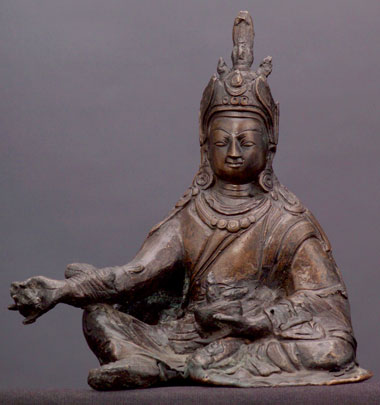
19th Century Padma Sambaba sculpture from Nepal is courtesy of the currator of The Buddha Gallery

Posted in Spiritual Practice, Terri Stewart

The Bridge

BridgeDuvall, WA
Bridge
Duvall, WA

In my driving to and from the youth detention center, I have discovered that I cross many bridges. I do, after all, live in the Pacific Northwest where it rains and rains and rains. Rarely are the bridges as interesting as the one pictured here. I began to wonder about the nature of bridges. When I look at this one, I see strength, shadow, radiance, and more.

If you took a few moments to enter this photo, what is calling out to you? Where is energy stirring within you? What is shimmering in your body?

Going deeper, now that you are stirring, do you hear an invitation? Seeing anything? Is there a question?

Finally, now that you have felt energy, heard a question, what are you going to do about it? Is there action growing out of your contemplation? Is the action, the act of stillness? An act of justice? An act of compassion for yourself or others? Is the bridge leading you somewhere? Or returning you home?

Random Observation-This particular bridge is found at a round-about. A circular spot in the road that both leads and returns. What if going forward is returning home?

“Sometimes, if you stand on the bottom rail of a bridge and lean over to watch the river slipping slowly away beneath you, you will suddenly know everything there is to be known.” -A. A. Milne

Shalom,
Terri

P.S. For a photo of a round-about, go HERE.

mailTERRI STEWART is Into the Bardo’s new Sunday evening chaplain. You can expect a special post from her each week. She comes from an eclectic background and considers herself to be grounded in contemplation and justice. She is the Director and Founder of the Youth Chaplaincy Coalition that serves youth affected by the justice system. As a recent graduate of Seattle University’s School of Theology and Ministry, she earned her Master’s of Divinity and a Post-Master’s Certificate in Spiritual Direction with honors and is a rare United Methodist student in the Jesuit Honor Society, Alpha Sigma Nu. She is a contributing author to the Abingdon Worship Annual.
Her online presence is “Cloaked Monk.” This speaks to her grounding in contemplative arts (photography, mandala, poetry) and the need to live it out in the world. The cloak is the disguise of normalcy as she advocates for justice and peace. You can find her at www.cloakedmonk.com,www.twitter.com/cloakedmonk, and www.facebook.com/cloakedmonk.  To reach her for conversation, send a note to cloakedmonk@outlook.com.
Posted in Spiritual Practice, Uncategorized

I AM …

I AM

THEREFORE I THANK

Cindy Lubar Bishop

American Writer and Singer

Posted in Art, Buddhism, Spiritual Practice

BRIGHTEN THE PATH

IF YOU LIGHT A LAMP

FOR SOMEONE,

IT WILL BRIGHTEN

YOUR OWN PATH.

The Buddha

·

Photo credit ~ Thai Buddha, large stone, 15th – 17th Century courtesy of the curator of The Buddha Gallery.

Posted in Essay, Guest Writer, Spiritual Practice

KAREN ARMSTRONG – A CHARTER FOR COMPASSION GROWS

KAREN ARMSTRONG (b. 1944), British Author, Commentator, Academic

Charter for Compassion

“Karen Armstrong is a former Catholic nun who left the convent to study literature, becoming one of the most provocative and original thinkers on the role of religion in the modern world, and a leading international authority on faiths, religious fundamentalism and monotheism.

Her poignant and captivating talks have sparked worldwide debate and healthy discussion. Her bestselling books, including Twelve Steps to a Compassionate Life and A History of God, examine the differences and the profound similarities between Christianity, Islam, and Judaism, and their impact on world events.

In 2008, she was awarded the TED Prize in recognition and support of her call for a council of religious and spiritual leaders to draw up a “Charter for Compassion” that applies shared moral priorities to foster greater global understanding based on the principles of justice and respect. The project has grown to a considerable international following, and a network of Compassionate Cities is emerging that endorse the Charter and find ways to implement it practically, realistically and creatively.

As a speaker and writer, she asserts that all major religions embrace the core principle of compassion and the Golden Rule, and also emphasizes that many of today’s religions bear similar strains of fundamentalism borne of frustration with contemporary life and current events.”     ( –  Official Biography of Karen Armstrong.)

KAREN ARMSTRONG – A CHARTER FOR COMPASSION GROWS

by

Amy Nora Doyle (souldipper)

Contribution Writer, Into the Bardo

On our tiny island, a group recently finished its study of Karen’s book,“Twelve Steps to A Compassionate Life”.  The same group seized an opportunity, on March 22, to share a live video of Ms. Armstrong accepting a prestigious award from the Simon  Fraser University in Vancouver.  In recognition of her exceptional work with Compassion, Vancouver dedicated 12 days in which to dialogue about compassion, in a variety of ways, throughout the city.

The Charter for Compassion begins:

“The principle of compassion lies at the heart of all religious, ethical and spiritual traditions, calling us always to treat all others as we wish to be treated ourselves. Compassion impels us to work tirelessly to alleviate the suffering of our fellow creatures, to dethrone ourselves from the centre of our world and put another there, and to honour the inviolable sanctity of every single human being, treating everybody, without exception, with absolute justice, equity and respect.”

(The complete Charter is available here.)

.

Karen Armstrong – Simon Fraser University – March 22, 2012

.

Those of us who watched Ms. Armstrong’s acceptance of the SFU award, discussed, at its completion, how we envisioned enhancing compassion in our community.   Though time may provide a more profound conclusion, most of us agreed that Compassion is an inner condition through which each of us may filter our actions and exchanges throughout the community.  In support of this commitment, the local book club, one of 500 worldwide, will again offer a study of Karen’s 12 steps to compassion.

Our group may have been influenced by the Rev. Alisdair Smith, Deacon and Business Chaplain for Christ Church Cathedral in Vancouver.  As he introduced Karen, he shared a phenomenal story about a dear friend – a woman who suffers from severe bouts of depression.  She gave Alisdair permission to share her story with us.

In my words:

The depression became severe enough that the woman knew she had to go to the hospital.  With all the courage, will and determination she could muster, she called an ambulance.

A male attendant rode quietly beside her in the back of the ambulance.  As the vehicle wound its way through traffic, the man remained silent, but dutifully attended to any concern for comfort or safety.

After some time, he turned to face her.  He held her hand and looked into her eyes.  He said, “We are almost at the hospital. I want to tell you that while I have been in your presence, I have discerned that you are a very creative, kind  and intelligent woman.

Therefore, when we arrive, I will step out of this ambulance and wait for you to take my hand so you may step down on your own.  We will walk together to Emergency and you will hold your head high with the dignity that is yours to claim.  There is no reason or need to be or feel embarrassed.

Are you willing?”

The woman did exactly as he suggested.  Her life was transformed.

Though she is still plagued with depression, it only takes a moment to reflect on this incredible act of compassion, performed by a stranger, that dispelled and diminished the degree of debilitating power that depression would otherwise demand.

I watched Karen Armstrong’s Ted Talk in 2008.  I became a member of the Charter for Compassion in 2009.  I committed to being a compassionate person.

Big deal, I thought.  That’s not doing much for the Charter.

I found out it is.

Especially if we each do our best with every opportunity that inevitably comes our way.

I keep forgetting about the hummingbird and the forest fire.

© 2012, essay – Amy Nora Doyle, All rights reserved

© photos ~ courtesy of A Charter for Compassion, all rights reserved, used here under fair use

♥ ♥ ♥ ♥

If you have the time for this 22 minute video, you might find it gratifying to hear Ms. Armstrong’s TED award acceptance. J.D.

Posted in Essay, Jamie Dedes, Spiritual Practice

COMPASSION AT THE CORE


1st Row: Christian CrossJewish Star of DavidHindu Aumkar

2nd Row: Islamic Star and crescentBuddhist Wheel of DharmaShinto Torii

3rd Row: Sikh KhandaBahá’í starJain Ahimsa Symbol

COMPASSION AT THE CORE

by

Jamie Dedes

“Compassion is the pillar of world peace.” H.H. 14th Dalai Lama, A Human Approach to World Peace

The peaceful path of compassion is at the core of all the wisdom traditions, the conduits by which grace flows into our lives. If our species is to overcome current conflicts and truly be at peace with ourselves, we must tread the compassionate path and we must do it with bone and muscle as well as heart and mind. It must be a path where service and meditation converge.

In the Summa Theologiae, the great work of St. Thomas Aquinas, he suggests just that. He defines mercy (a virtue) as “the compassion in our hearts for another person’s misery, a compassion which drives us to do what we can to help him.” He describes mercy as having two aspects “affective” – or emotional – and “effective,” which is positive action.

We all have something to teach. We all have something to learn ~

People from varied traditions come to Buddhism – not to convert – but to learn the meditative skills that Buddhism teaches. Buddhists also have lessons to learn from other religions:

“…many Buddhists are interested in learning social service from Christianity. Many Christian traditions emphasize that their monks and nuns be involved in teaching, in hospital work, caring for the elderly, for orphans, and so on . . .  Buddhists can learn social service from the Christians.” H.H. 14th Dalai Lama, The Buddhist View toward Other Religions

Meditative practice is central to Buddhism. Along with devotions (prayers and religious observance), action (good works) is central to Christianity and the other Abrahamic traditions, which is not to imply that there are no meditative practices or that inward practice is more important than outward action. Rather, each has its place and they are complementary. Our meditative practices enhance tranquility, ensuring that our good works are appropriate and done in the right spirit.

A compassionate heart is moved to embrace and not to judge. A compassionate hand is moved to work and to sacrifice for the greater good. Selflessness, well-seated in compassion, implies action that both materially and spiritually benefits others. The Dalai Lama and Thích Nhất Hạnh, social activists as well as spiritual leaders, are the very breath of compassion and they and the people in the organizations they lead endlessly provide selfless service and share spiritual solace with all.

Buddhism in the West is a relatively new practice. To my knowledge it is only recently that American Buddhists have organized for relief efforts with Buddhist Global Relief (BGR), which in its short life has implemented quite a number of effective projects. The main mission of BGR is hunger, not simply addressing it in its immediacy but also advocating for changes within our global food systems that will ensure social justice and ecological sustainability. BGR was started by American Buddhist monk and scholar, the Ven. Bhikkhu Bodhi, calling attention to the “narrowly inward focus of American Buddhism” and its neglect of social engagement. Moslems, Jews, and Christians have long-standing organizations for global relief and social activism.

It is healing grace when social services are delivered on a nonsectarian basis and without the expectation of conversion. The Koran admonishes (2:257): “Let there be no compulsion in religion.”

We’re each born into a path or choose (or forego) one. Our devotion to one religion shouldn’t prevent respect for the others. Abū al-Muġīṭ Husayn Manṣūr al-Ḥallāğ (Mansur Al-Hallaj, 858-922), the Persian Sufi teacher and poet wrote from his own perspective:

“My heart has opened into every form. It is a pasture for gazelles, a cloister for Christian monks, a temple for idols, the Ka’ba of the pilgrim, the tables of the Torah and the book for Koran. I practice the religion of Love. In whatever directions its caravans advance, the religion of Love shall be my religion and my faith.”

Maybe we humans will come as close to peace and perfection as we can when we combine the “specialties” of Buddhism and the Abrahamic traditions ~

Compassion without meditation can result in cruelty and confusion. Compassion without action is insufficient to address concerns of the human condition.

Orthodox Christianity offers us guidelines for corporal (material) works of mercy:

  • feed the hungry
  • give drink to the thirsty
  • clothe the naked
  • house the homeless
  • visit the sick
  • engage in conscientious activism
  • bury the dead

The guidelines for spiritual works of mercy are:

  • share insight with the spiritually curious
  • counsel the fearful
  • provide brotherly support for those who live unwisely
  • bear wrongs patiently
  • forgive offenses willingly
  • comfort those who are suffering
  • pray (unify with the Ineffable) for the welfare of the living and the dead

In the ideal, these guidelines are not simply implemented in the privacy of our own prayers and meditations or with detachment in supporting civic and religious charities, but one-to-one in our everyday lives and in a spirit of unity. Mystical Judaism teaches us that: “Kindness gives to another. Compassion knows no other.”

There are 114 chapters in the Islamic scriptures, the Koran. Each begins with the principled: Bismillah ir-Rahman ir-Rahim (In the name of God, most Gracious, most Compassionate). This reminds me of the classical Christian ideal expressed in the Koinḗ Greek agápē, the love of Christ or God for humankind. I suspect it is also – like agápē – a call to action: to live in harmony with the Divine and all creation, that is to live with grace and mercy.

Charity, self-control, and compassion are the central virtues of Hinduism. Ahimsa (do no harm) is part of the Hindu ideal of compassion. This implies action, not just abstinence.

Perhaps this wisdom from an unknown saint or bodhisattva provides us the best advice for our own peace of heart and our species’ survival ~

“The true happiness that man has searched for since the dawn of time, that inner gold that awaits any person who holds compassionately the key of generosity: Do something for your fellow-man … and you shall truly have the gold.”

Gratitude is compassion’s fulcrum ~

“The roots of all goodness lie in the soil of appreciation for goodness.” H.H. 14th Dalai Lama

Gratitude is also the emotion that compels us to give back by caring compassionately for our fellow humans and providing responsible and loving stewardship of the animals who are our companions in nature and this mother earth that sustains us. This does, of course, preclude war which is a danger to all living things.

Expressing gratitude in some way to those who are kind and caring is what nurtures their gift of compassion so that the giver can continue to give and also learn to receive. The natural law of balance is then honored.

May our compassionate paths be fully human and traveled quietly, without pronouncement, conceit, sectarianism, or self-righteousness. May our compassion be a thing of the heart and mind -yes! – but also bolstered with bone and muscle and seasoned with gratitude. May all sentient beings find peace.

© 2012, essay, Jamie Dedes All rights reserved

 Illustration ~ religious symbols by Rusus via Wikipedia and released into the public domain

Posted in Jamie Dedes, Meditation, Spiritual Practice, Teachers

THE BREATH WITHIN THE BREATH

KABIR (1440-1580), MYSTIC POET OF INDIA

One of India’s great poets, Kabir’s gentle influence seems to have been broad and includes Sikhism, Bhakti, and the Sant Mat (path of the saints) sect, Kabir Panthis (Kabir’s Path). Sant Mat’s primary principle is a disciplined inward devotion to the Divine. One branch of that movement is Science of Spirituality under Sant Rajinder Singh Ji Maharaj, who has a substantial following in North and South America as well as India. Sant Mat spiritual practice involves Jyoti and Shabd meditation techniques. Jyoti is a basic practice in which the practitioner assumes a relaxed position and, with mind stilled, repeats any name of God with which s/he is comfortable. Shabd meditation is rather more complicated and involves an initiation process and a focus on the Inner Light and Sound.

In this reading of Kabir by Ram Dass, the core issues of life are explored. J.D.

http://www.youtube.com/watch?v=im3SdoVUnj8

·

© 2012 Jamie Dedes, All rights reserved

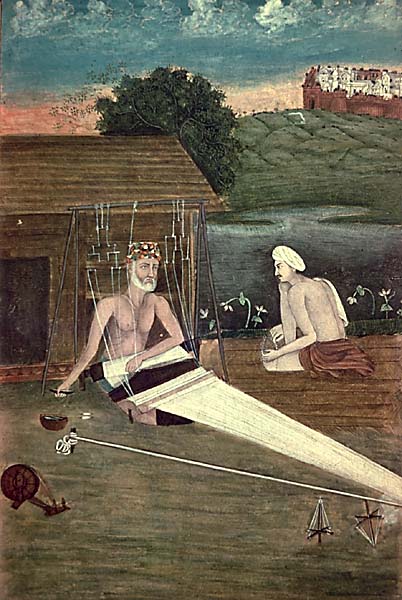
Illustration ~ public domain via Wikipedia

Video uploaded to YouTube by .

Posted in Poems/Poetry, Spiritual Practice

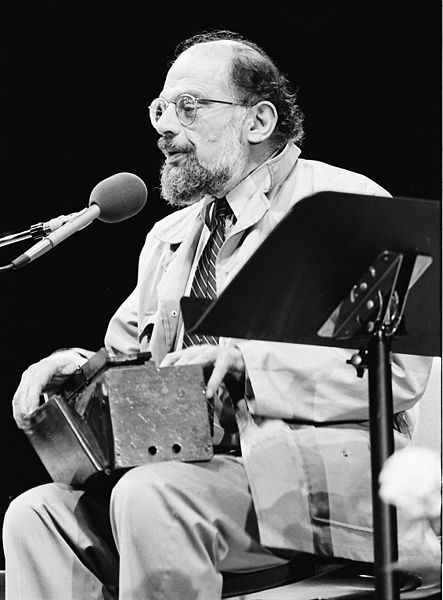
MEDITATION 101: Courtesy of Alan Ginsberg

DO THE MEDITATION ROCK

by

Allen Ginsberg 

is in this collection ~

Collected Works 1947 – 1997, Alan Ginsberg

recommended reading, three thumbs up!

Posted in Spiritual Practice, Teachers

GREAT JOYFUL PROCLAIMER

Samdech Preah Maha Ghosananda (1929 -2007) 

Buddhist Monk of the Theravada tradition.
Patriarch of Cambodian Buddhism during Pol Pot’s reign of terror
Maha Ghosananda, his Pali Monastic name means joyful proclaimer
He lost his entire family and his friends at Khamer Rouge
Biography HERE
♥ ♥

“Peace is possible!” 
Maha Ghosananda’s motto.

♥ ♥

“Don’t struggle with people, with men. Struggle with the goals and conditions that make men fight each other.”
If a driver is not sober how can he drive a car? If you don’t calm your spirit, you cannot bring peace to the country.”
♥ 
“I do not question that loving one’s oppressors – Cambodians loving the Khmer Rouge – may be the most difficult attitude to achieve. But it is a way of the universe that retaliation, hatred, and revenge only continue the cycle and never stop it. Reconciliation does not mean that we surrender rights and conditions. It means that we see ourselves in the opponent – for what is the opponent but a being in ignorance, and we ourselves are also ignorant of many things. Therefore, only loving kindness and right mindfulness can free us. [From his essay The Human Family.]
♥ 
“We must find the courage to leave out temples
and enter the temples of human experience,
temples that are filled with suffering.
If we listen to the Buddha, Christ or Gandhi, we can do nothing else.
The refugee camps, the prisons, the ghettos
and the battlefields will then become our temples.”
♥ 
I was so taken with the story of this “joyful proclaimer” in Rob’s story yesterday, that I had to do research on him. I don’t think he’s written any books and there are few videos and none with a dharma talk, but the whole of the man’s life was a dharma talk,* an inspired and inspiring one.  J.D.
·
The quotes were gleaned from two sites, which others may wish to visit:
Photo credit –nyana_ponika under under the Creative Commons Attribution-Share Alike 2.0 Generic license via Wikipedia.
* Dharma talk – public discourse. The wonderful thing about dharma is that it is not dogma! J.D.
Posted in Spiritual Practice

ARTIST’S CREED


Video posted to YouTube by Jan Phillips.

Eckhart Tolle.

This resonates for me as I know it must for other creative beings. (Aren’t we all?) I do believe that art comes from sacred space, that doing art is a meditation, and that our art comes through us not from us.

The poem was written by Jan Phillips. Link HERE to her website.


Posted in Spiritual Practice, Teachers

A LAMP UNTO YOURSELF

BE A LAMP UNTO YOURSELF

From

Joseph Goldstein in The Experience of Light

As the Buddha was dying, Ananda asked

who would be their teacher after death.

He replied to his disciples

“Be lamps unto yourselves.

Be refuges unto yourselves.

Take yourself no external refuge.

Hold fast to the truth as a lamp.

Hold fast to the truth as a refuge

Look not for a refuge in anyone besides yourselves.

And those, Ananda, who either now or after I am dead,

Shall be a lamp unto themselves,

Shall betake themselves as no external refuge,

But holding fast to the turn as their lamp,

Holding fast to the truth as their refuge,

shall not look for refuge to anyone else besides themselves.

It is they who shall reach to the very topmost height;

But the must be anxious to learn.”

♥ ♥ ♥ ♥

TEACHER

Joseph Goldstein has been leading insight and loving-kindness meditation retreats worldwide since 1974. He is a cofounder of the Insight Meditation Society in Barre, Massachusetts, where he is one of the organization’s guiding teachers. In 1989, together with several other teachers and students of insight meditation, he helped establish the Barre Center for Buddhist Studies. MORE

The Experience of Insight

The Standing Buddha above is courtesy of The Buddha Gallery.com.

Bells - Click image to download.