Many writers, myself included, are in love with words. In some traditions, words acquire a sacred dimension. Creation comes into being through God’s word in the Hebrew scripture. The Word became flesh in Christian belief. I often use the letters of the Hebrew alphabet to lead me into meditation as they are considered to hold the power of creation and are full of symbolic meaning and creative energy.
A few years ago I read a book by Rabbi David Cooper titled “God is a Verb.” His understanding is that God has not ceased the work of creation and that God asks us to become co-creators with him. Rabbi Cooper calls this activity of God God-ing and refers to our participation as, for example, David-ing in his case, or, in mine, Victoria-ing. As each of us uses our talents in art or writing or photography we continue the work of creation. So take your own name, add that –ing and go to it!
Image: history.com
For today’s post and writing prompt, I’d like to take a look at the role of verbs. When I first ventured into the world of creative writing, one of my major flaws involved an abundant use of passive voice and boring verbs, hyperbolic adjectives and taxing adverbs…perhaps because so much of my early writing emerged in the context of business. Although I haven’t yet “arrived,” participation in critique groups and reading about the art of writing, offered an important insight: active verbs give life to prose and poetry. My earlier attempts to create character and description often fell flat.
Adverbs and adjectives are part of our language for a reason—to add color, texture and other artistic elements to our verbal armory, but discriminating use of these words, peppered with verbs that rock, do make a difference. While there is a role for telling and judicious use of passive voice, success lies in knowing how to achieve balance.
Here are a couple of examples/definitions of what I’m trying to say:
Passive voice—when something is done to the object: The child was bitten by a bee.
Active voice, the subject is the doer: The bee bit the child.
And overuse of adjectives and adverbs: The hefty pass-kicker adroitly kicked the ball between the goal post in spite of the blustery wind.
I’d like to share a poem posted by fellow poet, Jane Hewey on her blog:
Scar Hopping Copyright: Jane Hewey
Glacial divides bypass
the dusty canyons thrusting
their will. Moons crawl
through midnights; I want
to touch your singular hurt, wrap it with my hands
and light-soaked cloths.
I would warm it through
your thick white skin, force myself
into its cold-singe. I want
to evoke you out of the scar
like arctic char augured
from an eight inch ice hole.
I’ve added italics to some of the singular verb and verb derivatives (such as gerunds) Jane chose. While she does use descriptors, the verbs add so much to the flow and strength of the poem.
I hope this inspire you to write a poem, flash fiction or essay incorporating a rich use of verbs. You may want to select something from your archives that never quite satisfied you and try to spice it us a bit. Maybe it’s heavy on adverbs and adjectives, even bordering on “purple prose.” Or grab a dictionary and discover a verb or two that’s new to you.
Feel free to share your results, if you like. To join in:
Write your poem and post it on your blog or website;
Copy and paste the direct URL to your poem to Mr. Linky at the bottom of this post, adding your name or identifier where he prompts you;
I’ll visit you and comment and we hope that you will visit and encourage one another
Above all, have fun and remember—you are a co-creator!
Special thanks to Jane for allowing me to share her copyrighted poem
Image: foxhugh.com
.
(Portions of this post were recently offered at dVerse Poets’ Pub, another site for which I write each month. If you write poetry and are not familiar with this poetry community, it is a source of excellent articles about all things poetic and offers several prompts each week, including a night for Open Links!)
_____________
Victoria at the Palm Springs Writer’s Expo March 2012
I am sitting here trying to remember what prompted me to write one haiku per day during the first 6 months of 2012. I was ill, that was the first reason for doing so. I wished to remain connected to my writing community, keep alive my connection with the friends that I had met online. I knew that I could not manage an article daily so I needed to write something short. I decided that haiku was the answer. Was there any shorter form of poetry? The learning and the writing that year became for me a spiritual experience. It taught me to see the world through a new and different lens. I am so grateful for this experience
I have always been drawn to haiku even when young. What can be said in 17 syllables, those three short lines of 5, 7, 5 syllables? It would be easy – just compose three short lines of poetry a day. Those thoughts will tell you just how little I knew of haiku when I began. Experience has shown me that many Americans have little knowledge of haiku seeing it simply as three lines of poetry with the 5-7-5-syllable count. If seen this way the reader and writer of haiku will never be fully satisfied.
The first thing that one should know is that the syllable count fits Japanese words or syllables. Japanese words or syllables are nothing like English language syllables. When attempting to write a haiku there are many things to consider before considering the word count. The second thing that I learned is that it is often written in one line. Just one. In Japan that line is often written from top to bottom. It is vertical. I do not write vertically.
Poignancy in haiku is important. The most important thing about haiku for me is very hard to put into language. For I see haiku as a language all its own. A haiku ties things together. Haiku conveys the depths of nature’s beauty and its power. Haiku shows ones relationship with nature. One haiku can express in a few words what it might take a psychologist an entire magazine article to profess. Haiku can evoke within the reader new understanding. I equate haiku to light. It can dazzle in brightness. It can illuminate a path. It can act as a halo separating yet conjoining reader and writer through the poem. You are placed within the poem. Haiku connects the ancient with the modern, the light with the dark, and nature with man/womankind.
The book to which I turn most often for reference is “The Haiku Handbook, How To Share Write and Teach Haiku,” by William J. Higginson. I would go so far as to say that he has he has “lived” haiku, making his teachings easy to understand and to apply. When writing haiku my goal is to be living in the moment, to be “living haiku.” It is a spiritual moment. I wish to express that moment to you so that you feel what I feel. I believe Higginson tells us that haiku is about the eloquence of sharing those feelings. It is easy to say to your friend: “the sky is beautiful.” But in doing so, you do not really convey what you feel. Nor are you conveying any degree of real beauty. According to Higginson, when we share the depths of what we feel through haiku we are building community. What more important act is there?
The first thing that I do when writing a haiku is search for a kigo. A kigo is a season word and mandatory in haiku. Your haiku should be driven by what you feel for your subject and your choice of kigo. I view the kigo as an anchor. There are numerous kigo databases online. New words are always being added.
We have just experienced a foot of snow here in the midwest. The last time we had so much snow was 1982. This is an immense weather event here. Along with subzero temperatures accompanied by wind many of us are pretty much homebound. I would like to share this large weather experience with you by writing a haiku. I edit and re-edit before I am happy with them. Each of these are a part of my process for creating one haiku.
wall of snow – broken branches dangling from trees (this sounds awkward to me)
or
deep white snow – hidden branches (this coveys little feeling)
or
drifting snow – a chickadee’s cap (this possesses the essence of what I am looking for)
LIZ RICE-SOSNE a.k.a. Raven Spirit (noh where), perhaps the oldest friend to Bardo, is the newest member of The Bardo Group Core Team. She is also our new Voices for Peace project outreach coordinator and our go-to person for all things related to haiku. She says she “writes for no reason at all. It is simply a pleasure.” Blogging, mostly poetry, has produced numerous friends for whom she has a great appreciation. Liz is an experienced blogger, photographer and a trained shaman. We think her middle name should be “adventure.”
She sat there, with the precious stillness of a Tanagra, frozen beneath the cascade of magnolia petals – and all that sunrise was able to do was to jewel her aura with fiery reflexes, as if she was Amaterasu herself, borrowing for a while the limits of flesh with the sole purpose of proving the beauty of her infinity. I was unable to move, unable to make a sound, and for a moment I thought I would see her suddenly float and fly away, her body soaked with light and my eyes drained of all will to blink. Even her voice sounded as if woven from glints, when it stretched towards my senses like an invisible limb:
– The sun doesn’t always rise with the same brilliance. There are dawns when, for various reasons (all, or almost all of them of a scientific nature, of course) what you see growing above the line of the horizon is not that imposing disk of glowing majesty, but a shy red roundel, mat and exuding insecurity, as if it were born untimely from sky’s bleeding wombs. But if you stay there long enough and stare at it, you will witness the victory of plasma over atmosphere and soon the cells from your retina will be burned, as punishment for daring to assist at the visual metamorphosis of our closest star, as if your gaze would have somehow stained that moment of vulnerability…
She paused for a second – a long, ethereal, suspended on the tip of her gaze second – and then she continued:
– I’ve watched such sunrises more than just once from the window of my room. There were times when I saw the sky being flooded with raw sunlight and then suddenly a sparrow with eyes of onyx would come and sit on a branch of the elm tree growing right next to that window. It looked at me cautious, first with an eye, then with the other, and then it would suddenly release from that tiny throat a sample of happiness and freedom, as if to demonstrate me that joy can be found even in the simplest of things. It was that sparrow that taught me how to feel free, beyond the wheels of this chair, and not a sunrise goes by without me hoping you’d find your own sparrow, my son…
LILIANA NEGOI (Endless Journey and in Romaniancurcubee în alb şi negru) ~ is a member of our core team on Into the Bardo. She is the author of three published volumes of poetry in English, which is not her mother tongue but one that she came to love especially because of writing: Sands and Shadows,Footsteps on the San – tanka collection and The Hidden Well. The last one can also be heard in audio version, read by the author herself on her SoundCloud site HERE. Many of her creations, both poetry and prose, have been published in various literary magazines.
This collaboration by the Grass Roots Poetry Group is a wonderful example of how social networking can work at its very best. This feature is the companion piece to John Anstie’s Bardo post on Monday, “To Edit, Perchance to Publish …” and includes an interesting interview with John as well as a brief review of the book. Several take-away lessons from the GRPG collaboration. Enjoy! Jamie
“I always had this notion that you earned your living and that poetry was a grace.” Seamus Heaney (1939-2013), Irish, poet, playwright, translator, educator and Nobel Prize winner
I’m sure my friend, John Anstie, poet and renaissance man, The Bardo Group core team member, and editor of and contributor to Petrichor Rising (eBook and paperback), a 2013 poetry collection of The Grass Roots Poetry Group (GRPG), would prefer that I focused on the poems and the collection. The feature-writer in me loves a good story though. (Forgive me, John!) The coming together of this group and the publication of their collection is as good a story as any and better than most … and hence, I break my usual self-imposed word limit on posts. Read on … You may recognize yourself in some of this …
“I do accounting. I am a writer.” an employee corrected…
The words pierced her heart like sharp daggers. She felt a lump of tears dangerously knotting inside her throat, but she managed to swallow it and raised to find something warmer for the little boy who was trying to fall asleep by her side. Fighting with the need to scream, she put the only old patchy blanket left in the house over the other one already covering the small child, and crammed in the bed by his side, holding him in her arms and trying to help him get warmer. It was indeed cold in the tiny room, she had nothing left to burn in the stove, and the fact that it was freezing that night outside was not of any help either. She had spent whatever penny she still had on a bread, some cheese and a bottle of milk for the little one, and now she tried to ignore the feeling of despair rising within her soul. What was she going to do tomorrow?… A bit dizzy from hunger – was this the sixth or the seventh day since she had eaten last?! – she kissed the boy on his forehead and whispered:
‘Everything will be alright my little love…everything will be alright…just try to get some sleep…’
The child nestled in her arms and soon she was able to hear his regulate breathing, sign that he managed to enter the world of dreams. She realized though that it had gotten so cold in the room that her own breath was forming steams in the air, so she grabbed the coat from the chair next to the bed and put it also on the kid. Her back was beginning to freeze, and she began to shiver and shake, but she remained in the bed, making sure that whatever was left of her body heat was going towards her son. The shadow of a smile blossomed in her tired crying eyes – he was such a wonderful child…and she hated so much that she wasn’t able to give him everything she wanted…’Please, God, help me take care of him’, she prayed, while fighting the pain that was taking control over her chest. […]
[…] The child was dreaming – sweet childhood dreams, decked with chocolate and candies and other things he didn’t dare tell his mother about, for fear of seeing her cry…he loved his mother so much, and he knew she had no means to give him all those things. In his innocent wisdom he had chosen to ignore the typical childhood wishes in the day-to-day life and he dreamed of them only at night…the way he was doing now. Suddenly he saw her face next to him…beautiful and radiant…smiling…his mom was beautiful, and he always thought so, but this time she was such a ravishing appearance that he kept staring at her. She held him in her warm arms, always smiling and kissing him on his hair, and he heard her voice, calm and joyful this time ‘Everything will be alright my little love…everything will be alright…I’m always here…’. Then he felt arms carrying him and a warm light veiling him. ‘You’ll be fine, child, I’ll take care of you’, he heard someone. ‘Mommy, is this what an angel looks like?’, he asked with a feeble voice but got no answer…[…]
[…] Father Christian was carrying the boy in his arms as fast as he could. John was waiting in the carriage for him and when he saw the priest with the child in his arms he hurried down to help him.
‘What happened, father?’
‘We were too late John…she is with God now…she was already dead when I got inside, probably her heart failed because of the cold…but this little fellow here still lives, and I intend to keep him alive. Take me to Mary’s home, I need to leave him in a warm place and then come back and take care of his mother’s funeral…You’ll be fine, child, I’ll take care of you’, he further whispered into the boy’s ear. And then a soft murmur reached his hearing ‘Mommy, is this what an angel looks like?’
LILIANA NEGOI (Endless Journey and in Romaniancurcubee în alb şi negru) ~ is a member of our core team on Into the Bardo. She is the author of three published volumes of poetry in English, which is not her mother tongue but one that she came to love especially because of writing: Sands and Shadows,Footsteps on the San – tanka collection and The Hidden Well. The last one can also be heard in audio version, read by the author herself on her SoundCloud site HERE. Many of her creations, both poetry and prose, have been published in various literary magazines.
Sometimes it really is all in the family. Today we are pleased to introduce by way of reblog, Beatrice “Bea” Garrard. Bea is a student at Standford University who is now back home in Washington state for the Thanksgiving holiday. She is our own Naomi Baltuck’s daughter. She just started blogging her stories and sketches. Please pop on over, say “hi,” and cheer her on. She’s quite clever. You won’t regret it. Bravo, Bea! Write on … J.D.
Editorial note and reminder: In two weeks, Wednesday, October 23, at 7 p.m. we will host a second writing challenge (Writer’s Fourth Wednesday) featuring Victoria C. Slotto, novelist and poet. The subject of this next challenge-yourself exercise is stream-of-consciousness. So writers read on, enjoy, write and mark your calendars for next week’s event. Mr Linky, which enables you to share your work with everyone, will remain open for seventy-two hours. Victoria and Jamie will visit all participants to read and comment.
Here an accomplished story-teller, Karen Fayeth (pronounced “faith” by the way), shares her experience of inspiration, story, and the NYC Midnight Flash Fiction competition.
Each year I enjoy participating in the NYC Midnight Flash Fiction contest. The challenge is to write a 1,000 word story over the course of one weekend.
But there’s more! The approximately 700 participants are divided up into groups and each group is given a genre, location and an object. All three must be incorporated in the resulting story. The tale must truly be in the genre, the majority of the story must take place in the location and the object must show up at some point.
It’s always amazing to see the wide array of stories that come from the same genesis. This assignment of genre, location and object can either be entirely freeing, allowing the writer a head start to leap from, or it can be incredibly constraining. It all depends on what genre, location and object gets assigned.
For the first round of the 2013 contest, I was assigned the romance genre. Bleah. Not my favorite but not awful. The location was a haunted house. Hmm. Possibilities abound, but not really for a romance? Hmm. Ok. And my object was marshmallows.
That was my place to start. Over the course of many of these contests I find the judges tend to like if you use the location and object in unique ways, so I always try to think of a twist or a different facet to use in my story.
I was quite busy over this first weekend of competition, doing some work for my employer and taking care of personal business, so there I found myself Sunday morning with nary a word written and a deadline of 9pm that night.
I opened the windows to my studio and let the light pour in. I felt the breeze through the screens and sat down at my computer to make magic.
Magic. Ha! There I sat looking at the curser on my computer screen, willing the magic to begin. It blinked. I blinked.
No magic was happening.
So I subscribed to the “just write something” theory and got started. I began typing words and thoughts and a character sketch. It was going. The magic was not quite lifting off, but it was certainly gaining speed.
That is when something caught my eye outside of the window. A little splash of orange on that first day of Autumn.
I was surprised to see a Monarch butterfly resting on the bush just to the side of the building where I live.
I rushed to get my camera, attached the longest lens I have, popped the screen out of my window, and began taking photographs.
I’m sure glad I did.
Photo Copyright 2013, Karen Fayeth
This gorgeous lone Monarch Butterfly was hanging out in the warm sun, using the ol’ proboscis to drink some nectar and gathering pollen on spindly legs. You know, general butterfly business.
As I watched, a couple of bees were highly displeased at the presence of the butterfly and kept strafing him (I say him but I looked up Monarch butterflies online and I think this might actually be a female, but I’m not sure).
These bees were executing deep aggressive fly-bys that only caused the butterfly to flap his wings a bit but stay put. The bees were quite persistent. They dive-bombed and I kept snapping away. I have some crazy action shots that I’m still editing.
After a while, the butterfly flew off and I downloaded and looked through my photos, very pleased with the results.
Then I sat back in my chair and smiled. After the visit from Mr. (Ms?) Butterfly, I felt totally motivated and completely creative. I turned back to my story and banged out about 1,300 words in one sitting.
Then I set the story aside and let it percolate while my husband and I went to explore a local street fair.
When we came back I had fresh eyes and gave the story a hard edit. I managed to pare it down to 999 words and submitted it about 45 minutes before the deadline.
Man-oh-man, hitting send on that story sure felt good.
I owe an awesome creative surge to a visit from a pretty orange butterfly on the first day of Autumn.
Karen Fayeth ~ is one of our regular writers. She is our tech manager, site co-administrator along with Jamie and Terri, and fiction and creative nonfiction editor. She blogs at Oh Fair New Mexico. Born with the writer’s eye and the heart of a story-teller, Karen Fayeth’s work is colored by the Mexican, Native American, and Western influences of her roots in rural New Mexico complemented by a growing urban aesthetic. Karen now lives in the San Francisco Bay area. When she’s not spinning a tale, she works as a senior executive for a science and technology research organization.
Karen has won awards for her writing, photography, and art. Recent publication credits include a series of three features in New Mexico magazine, an essay in the online magazine Wild Violet, and a short story in Foliate Oak. Her story “What Leibniz Never Learned” will appear in the Fall edition of The Storyteller.
I suspect that each of us can identify poets and writers who have had significant influence on our writing. Perhaps some of these who mentor us, whether or not they are aware of their influence, enjoy renown—Poet Laureates, Pulitzer or Nobel Prize winners, for example. Others may be more obscure poets or even those we have met in our blogging communities.
Photo: The Creative Penn
Those of us who have not had the advantage of higher education in our art still have the opportunity to learn independently by reading books on craft of writing and, above all, by drinking in the work of those we admire. Read, read, read is perhaps the wisest advice offered to writers of all ilk. My addiction to the intoxicating world of literary art is supported by the ease of access offered by the Internet and through my Kindle which offers free downloads of so many of our predecessors.
I invite you to take a moment, a pencil, and a piece of paper. Now, sit back and list a dozen or so wordsmiths whose art has helped shape your own. Here’s a sampling of those whom I’ve come up with: Mary Oliver, Jane Kenyon, Stanley Kunitz, Basho, William Wordsworth, Edna St. Vincent Millay, Jane Hirschfield, Robert Frost, William Carlos Williams, Wallace Stevens, Ted Kooser, Dorianne Laux,…oh, and I haven’t even started to think about you who I’ve encountered on the Internet.
A literary allusion in poetry is, simply put, a reference to another literary work. This can encompass sources such as mythology, the Bible, performance art, a novel, visual art or a poem. Think of it as a sort of hypertext, linking the reader to another piece of literature, art, or any form of creative expression. Examples of literary allusion also include ekphrasis and response poetry. Perhaps you are familiar with ekphrasis, when a work of visual art serves as the inspiration for a poem. A response poem is written, as it implies, in response to another poet, a sort of answering-back.
I will use a couple of my own poems as an example so that I don’t mess with copyright infringement.
I think the world will slowly expire, no need for ice, nor even fire. I fear Mother Earth will die of neglect, with a whimper, a sigh. Oh, I suspect she will quietly die.
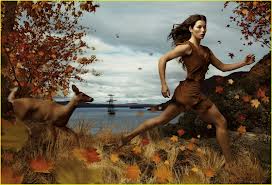
Pocahontas
Google Images
Do you flee
the doe
or imminent change?
Or do you both know
that nothing will ever
be the same?
Will I do the same
as illusions
shatter in my world?
For those of you who would like to play with allusion, in poetry, short fiction or essay, I offer you this prompt:
• Choose a work of art or poem (whatever) that has influenced your own writing and bring your own unique experience to the topic.
• Allude to an existing literary work or piece of art in your own creation
• Write a response poem, if you like. Answer back, either in agreement or opposition to the original piece.
• Write a poem in the style of one of your favorite poets. Be sure to reference the influential source. Include it, if it doesn’t infringe on copyrights…or provide a link if you are able.
• Allow the prompt to take you wherever you want to go. Just write.
To participate (and we hope you will):
• Write and post your work on your blog, citing the sources if you are able to, or providing a link.
• Access Mr. Linky at the bottom of this post and add your name and the direct URL of the poem from your blog or website.
• Visit other participants, if you are able. Read and comment on their submissions, especially those who have made the effort to visit you.
• Enjoy the process. You never know…someday you may make someone else’s list of influencers!
Editorial note and reminder: Next Wednesday, September 25, at 7 p.m. we will host a second writing challenge (Writer’s Fourth Wednesday) featuring Victoria C. Slotto, novelist and poet. The subject of next week’s challange is Literary Allusion. So writers read on, enjoy, write and mark your calendars for next week’s event. Mr Linky, which enables you to share your work with everyone, will remain open for seventy-two hours. Victoria will visit all participants to read and comment.
Here British poet, author and poetry teacher, Myra Schneider offers some thoughts on the possibilities and pitfalls of narrative poetry …
Myra Schneider
Narrative poetry is so different from lyrical that in many respects it is like another medium. A narrative poem needs to be structured as carefully as a novel and is likely to be less dense than a short poem yet it must still carry a sense of poetry, be more than condensed prose. What excites me most about this form is the chance to use voices very different from my own, to explore character, viewpoints and situations over a period of time. A narrative can express an idea in graphic action rather than in presenting it as an argument. Importantly, this medium can offer a route to writing about material which couldn’t be tackled in any other way.
Narrative poems are often rooted in difficult childhood and family experience. The great pitfall here is the danger of simply relating events as they happened intermixed with an outpouring of feelings. Releasing every detail of a painful memory on paper may be essential as a starting point but of course raw writing needs to be transformed to communicate to others. Selection, structuring and sometimes a measure of fictionalizing are necessary to convey the underlying truth to the reader. Widening the context beyond the narrator’s own reactions is likely to be a valuable contribution to the poem.
Donald Atkinson in his semi-autobiographical book-length A Sleep of Drowned Fathers and Kate Foley in her much shorter poem The Don’t Touch Garden have both written brilliant narratives with lively dialogue and sharp imagery showing different viewpoints in telescoped scenes which feature key moments or situations. Atkinson presents family life and traces his relationship with a violent and abusive father to a climactic incident when he is in his teens. His mother, who is trying to stand up for the children, calls him to help when her husband attacks her. The boy punches his father who collapses and it comes home to the reader that in reality the brutal man is very weak. The last sections show him as rich, isolated, sad and dying by accident in an appalling sex parlour. Yet what emerges is the narrator’s compassion and love for his father.
In The Don’t Touch Garden the narrator is an adopted child trying to make sense of the feeling that she didn’t fit with her mother. The climax of her story is the discovery of a bundle papers which reveal her identity. The adoptive mother is as much a focus as the child and there are graphic scenes which depict sympathetically the story of her background, marriage, and longing to have a child. Foley’s father, with whom she had a much easier relationship, is characterized in telling scenes. Important too is the wartime period in which the child grew up. There are very poignant moments in this many-stranded narrative which is told with wit, humour and economy.
The memory of childhood and relationships with parents can bring up such a welter of material it is difficult to find a route to a poetic narrative even though there is a strong urge to do so. This was my experience. I wanted to write about the way I was dominated by my father during my childhood and adult life and decided to create a fictional parallel with a main character whose life was very different life from mine. However, I couldn’t keep the fictional equivalent of my father under control. He ‘demanded’ sections in his voice which showed him behaving exactly as my father did. The result was he blotted out the daughter character and the poem didn’t develop properly. Discouraged after six months, I almost abandoned the poem but Mimi Khalvati gave me some encouraging feedback and I saw how to proceed. Looking back I realize I needed to write these ‘father scenes’ to clear an overwhelming anger out of my head. When I began again I confined the father to a few short scenes and fleshed out the narrative, widening the canvas with characters all of whom had difficulties to face in their lives. After about eighteen months the compressed novel Becoming found its shape.
Of course childhood and difficult personal relationships connected with it is only one source of personal subject matter for poems with a narrative element. Many poets (and non-poets) feel the need to write about the death of someone close and such poems often have a narrative drive. Understandably there is a desire to record every detail of a last illness but, as magazine editors and poetry judges are all too aware, writers often fall into the trap of offering a sad but drawn out story in which the material hasn’t been transformed.
Douglas Dunn’s moving book-length sequence, Elegies, about his wife Lesley’s illness and his own life after she died has a narrative thread but it is worth noting it barely touches on medical details and it doesn’t hammer out the harrowing day to day decline of his wife’s strength. What Dunn does is to make skilful shifts in chronology so that poems which recall incidents when Lesley was well are juxtaposed with graphic moments during the illness such as the couple looking at a hanging mobile of three seagulls made by a friend, the night before she died. These poems are sad yet celebratory and reveal the kind of person she was. The later part of the book traces the stages of grief and mourning which Dunn goes through as he re-lives events and finds ways of continuing to connect with his lost wife. Very controlled language and different kinds of strict form counterpoint the overwhelm of grief in this very moving sequence.
Many different kinds of personal material can trigger narrative poems. Gwyneth Lewis’s book-length Hospital Odysseywas inspired by her husband’s serious cancer illness and the frustration and fear she endured while he was undergoing treatment in an NHS hospital with all its inadequacies. Lewis turned the experience not into a painful account but a hugely inventive epic in nine books. She drew on the quest tradition, in particular Dante, but also created an extraordinary world in which matrons and consultants turn into creatures, diseases are personified, and microbes hold a manic ball. Maris, the heroine, is accompanied by two helpers rather as Dorothy was in the Wizard of Oz. Her search for her husband, Hardy, and for a way to find a cure that would save his life, takes her deeper and deeper into the underworld of hospital which perhaps is also a metaphor for the space in the human body. Lewis, following the literary tradition, sometimes addresses the reader and she is speaking for herself when she says the odyssey is one of healing that takes place in the head:
…….I won’t feel well
till this poem’s finished and I find what I mean
about health and loving. It’s a hospital,
this place I am constructing line by line.
There is satire and burlesque, as well as extremes of feeling in this complex and ambitious story. The whole, written in five line rhyming stanzas, is an extraordinary achievement and a wonderful illustration of how trauma can be transformed into a work of art which universalizes it.
Life experiences which have no direct connection with personal difficulties can also be the basis of narrative. I found it exciting to draw on my years of teaching disabled adults in writing Voicebox. The poem is entirely fiction but the trigger for the pivotal character, William, was a composite of clients I worked with, each of whom was wheelchair-bound and had speech problems. William, frustrated by his disabilities and his over-protective mother, is intelligent but antagonistic towards his mother, generally obstreperous and he lives mostly in fantasy. His outlet for self-expression is via his computer. Inventing him was liberating, great fun and extended my writing. Here is a brief excerpt from a poem he wrote after he’s seen a heron in a local park he went to with Katie, a neighbour and teacher, who’s taken an interest in him.
At middnight when the moon
berns whitely in the sky
William kreeps out to kiss his grilfrend
and heron snaps his beek at Mum
awders her to come to the park…
The thirty page poem is written in the voices of the four main characters, one of whom is Millie, William’s mother. All of them are in one sense or another finding their voices. I had already delved into this subject which has been an issue in my life. In Voicebox I found a new way to explore it.
Drawing on myth or fable also offers possibilities for narrative poems. In her book-length sequence, Meadowland, Louise Gluck harnessed the Odysseus story in a remarkable way. She interweaves poems in which Penelope, Telemachus (the son of Odysseus and Penelope) and Circe, in particular, put forward their own views. These offer a modern interpretation of the legend which connects with the story, also told in voice, of two contemporary un-named characters, whose marriage is falling apart. There is cutting humour as well as tenderness and pain in these poems which clearly reflect on personal experience. Gluck often draws on myth. In her book-length sequence Vita Nova, which has a strong sense of mourning, she turns to the Orpheus and Eurydice story. Classical stories, when used effectively as a base, heighten and universalize subject matter. Anne Cluysenaar makes the narrative of The Epic of Gilgamesh a frame for Clay, a long poem with different strands of reference including a strong meditative element.
I found re-telling the Orpheus story in contemporary terms and placing it in the London Underground offered surprising opportunities. With its many escalators, corridors and dark tunnels the Underground always fills me with a sense of drama and often seems to equate with Hades and other metaphorical underworlds. Details about the buskers, the dreadful suicides on the line, individuals I’d observed such as a thin pale girl with syringe marks all the way up her arm, gathered in my head. I pictured Eurydice following Orpheus up a long escalator before collapsing and envisaged him as a flute-playing busker who falls for a drug addict. Then I saw the drug pusher on whom Eurydice had been dependent, as the underworld king who would separate the couple. Other parallels suggested themselves. The myth seemed to strengthen my story and it allowed me to treat contemporary material I would not otherwise have dared to touch.
Historical characters and events can also be potent subject matter for narrative poems. It is crucial, however, in using this kind of material or classical stories that the poet brings something new to it. If there isn’t a re-interpretation or if the poet hasn’t found in the original material a driving point which gives the poem an illuminating focus the result is likely to be little more than a re-telling and will fail because it has no life of its own.
Elaine Feinstein was drawn to Lorenzo da Ponte, Mozart’s librettist, because she identified strongly with his sense of always being an outsider. His story was a strange one. The son of a poor Jewish tanner he was assimilated into European culture by the accident of family baptism and education, managed to move from a profligate life in Venice to the Emperor’s Court in Vienna and then, when out of favour, he made his way to New York. Amazed by his nerve and his ability to live on his wits as much as his talent, she conceived the narrative as a dramatic monologue, making da Ponte look back over his past with all its ironies at the point when he is living a humdrum life in America. The skilfully written poem, a salute to the librettist’s survival, points up the ironies of his ever-changing fortunes. It moves swiftly through his story but with graphic detail and the teller sometimes steps out of chronological order to make comments. The five line rhyming verses in iambics are a marvellous counterpoint to the subject matter. Form, of course, whether strict or free is as crucial in a narrative poem as any other.
Dilys Wood
Dilys Wood’s poem, The South Pole Inn, was triggered by a desire to write about early Antarctic exploration but she knew she must find an indirect approach to this well-documented subject. She hit on the idea of a dramatic narrative set in Ireland long after the main expeditions, intending to show the heroism of the men through the eyes of a woman. She chose Nell, wife of Tom Crean one of the participants, set the action in the Creans’ inn in Ireland and interwove the expedition material with references to the Irish troubles. She also invented a love-affair between Nell and Frank Worsley, another member of the expeditions, presenting him as a man who was more understanding of women than Tom. Combining fact and fiction was a challenge. There were others, in particular researching into the Irish Troubles and life in Western Ireland in the 1920s and later. She went to Ireland to see the South Pole Inn and the area round it. She also had to make sure the voices of its characters, were authentic. Nell was perceived as a capable woman frustrated by the way her husband sidelines her from ‘male’ action and as her story developed the theme of woman’s role became a major one. It was a tussle to control the plot and integrate the themes but after several drafts a remarkable poem emerged.
Carolyn Norton, a long narrative poem is included in this collection
Research, which is often essential when using known sources for a narrative poem, can also be a pitfall. It is all too easy to be carried away by fascinating information and include it without considering whether it is really relevant. Driven by anger that 150 years ago women were so powerless and that many women in the world still are, I wanted to write a poem about Caroline Norton. She was the first person in Victorian times to gain some rights for married woman and my intention was to highlight this as I felt she should be much better known. The problem was how to select details from her complicated life which would show how much she had to fight against and endure so that the reader would recognize the significance of her achievements. To do this, however carefully I selected, many facts needed to be included but the danger was the poem would read simply as an account. It was only when I hit upon the idea of a repeat with variations such as “What she did”, “What she didn’t do” to give a rhythm and act as a hook for selecting material, that I could begin.
In the last twenty years or so narrative poetry has reassumed its place as an important genre for some leading poets writing in English, including Derek Walcott and Les Murray. There isn’t space here to examine the wide canvasses of their epics, Omeros and Fredy Neptune. Omeros is set mainly in St. Lucia and Walcott weaves together fictional narratives based on the island’s present, past and his own experiences, creating some parallels with the Iliad. The island has played a crucial part in Walcott’s life and in this poem, among others, it features as a dominant character. I should mention that place often plays key role in narrative and this applies to several of the poems I’ve written about in this essay – Hospital Odyssey, for example. In Fredy Neptune Murray writes in an alter ego as a rough and ready Australian of German origin to produce a verse novel written as Fredy’s fantasy adventures. These take him to many parts of the world and incorporate the history of the period from the end of World War 1 to soon after the end of World War 2. Early in the story the shock of seeing Armenian women burnt to death by a mob makes him his lose his sense of touch, a condition which has metaphorical implications. In the later part of book he rescues a mentally disabled German boy. This strand of the story, which is haunting, was a way for Murray to write about his autistic son.
Omeros and Fredy Neptune are among the highest poetic achievements of our age. There are many pitfalls to be faced in writing poetic narrative but I hope I’ve shown the possibilities of the mode are unending.
Publications:
A Sleep of Drowned Fathers, Donald Atkinson, Peterloo 1989
Migrations, Anne Cluysenaar, Cinnamon Press 2011
Elegies, Douglas Dunn, Faber 1985
Gold, Elaine Feinstein, Carcanet 2000
Night & Other Animals, Kate Foley, The Green Lantern Press 2002
Meadowlands, Louise Gluck, Carcanet 1998; Vita Nova, Carcanet 2009
A Hospital Odyssey, Gwyneth Lewis, Bloodaxe 2010
Fredy Neptune, Les Murray, Carcanet 1998
Becoming, Myra Schneider 2007; Multiplying The Moon (Voicebox, Orpheus in the Underground), Enitharmon 2004, What Women Want, Second Light Publications 2012
Omeros, Derek Walcott, Faber 1990
Antarctica, Dilys Wood, Greendale Press 2008
The illustrations were not included in the original article and were added here by me. The portraits are the property of Myra Schneider and Dilys Wood and copyrighted. Book cover art is copyrighted and used here under fair use. J.D.
chopped and chewed and swallowed –
down we go
on eternity’s throat,
one bite of salty clay after another
to be recycled
and become the burnt sienna skies
of some obscure tomorrow.
fate chimes its’ eyelashes
like some odalisque its’ coin belt –
the boatman’s pockets are always full
with tradition’s eye seals.
we are but stairs
for humanity’s pretended
e-volution,
we circle meanings
like eagles circle unseen angels
up-above,
without ever touching them,
we live to ignore
and ignore to learn
the reason why history is repeating –
and talking tall
we show our real essence –
the spoiled mud flowing in our veins
keeps bringing bitter smiles
on god’s resigned mouth: ever non-grown-ups, these earthlings…
– fautly darwinism is the opening poem from Liliana Negoi’s poetry volume The Hidden Well, and can be heard in the author’s own reading on SoundCloud HERE.
.
LILIANA NEGOI (Endless Journey and in Romaniancurcubee în alb şi negru) is the author of three published volumes of poetry in English, which is not her mother tongue but one that she came to love especially because of writing: Sands and Shadows,Footsteps on the San – tanka collection and The Hidden Well. The last one can also be heard in audio version, read by the author herself on her SoundCloud site HERE. Many of her creations, both poetry and prose, have been published in various literary magazines.
A while back, I attended a writer’s conference session about character development. The speaker suggested using astrological signs as a means to create believable, consistent characters. My knowledge of astrology is scant, but I tried to apply it to the characters in my first novel, Winter is Past. The results weren’t what I’d hoped for.
When I worked in the area of nursing education, human resources and spirituality, I had the opportunity to delve into Myers-Briggs…a personality evaluation tool that assesses behavior based on four areas of response: Introversion versus extraversion, Intuitive versus sensate, Thinking versus Feeling and Perceptive versus Judgmental. The latter may not be so self-explanatory but I use the example of my parents: my dad would be ready to go somewhere 20 minutes ahead of time, while my mother would change her mind a few more times about what she wanted to wear. Think: structured versus easy-going.
I returned to my draft manuscript, and applied the Myers-Briggs, using this tool to help me re-create the major characters with the result of more consistent, believable players. For my second novel The Sin of His Father, I wrote out character profiles before I even began to write, again using the Myers-Briggs. It has made it so much easier.
Photo Credit: vivalamanosphere.com
There is an old book called Please Understand Me that explains all the possible profile combinations and how they play out in real life. If you can find it, it’s been a godsend.
I’m addicted to The Learning Company‘s Great Courses, university level programs presented by the highest quality professors. One of the courses, The Art of Reading is taught by Professor Timothy Spurgin of Lawrence University. The lectures are well-organized, clearly presented and as applicable to writers as to readers.
An important point from the lecture on characters addresses developing round characters. The concept of a round character, as opposed to a flat one, was presented by E. M. Forster in his book, Aspects of the Novel. Simply put, a round character is one who will capture the reader’s interest because of his unpredictability, his complexity and the changes he undergoes during the course of the story. And this is key: “The test of a round character is whether it is capable of surprising in a convincing way.” (Forster)
While a protagonist needs to draw the sympathy of the reader, he should have some character flaws. Inversely, your antagonist should have something that makes him, if not attractive, at least capable of being understood. Just like us–no one is all good or all bad.
As you write, reflect upon your own reaction to the key characters in your manuscript. Are you able to identify with them to some degree? Are there things that, if you were that person, you might be ashamed of or want to change? Are there events or reactions which are surprising without being totally out-of-character (unconvincing)? Is your character someone you would want to know, or avoid?
One thing I find helpful when writing fiction is to base my characters on a composite of people I know or with whom I have been acquainted. You can even take someone who is in the public eye. I try not to use one person because I would never want anyone to say to me, “That’s me, isn’t it?” My mother once thought a character was her because I set a scene in a room in her house! And this secondary character was not, initially, a nice person.
I hope this brief reflection on characters will be helpful to those of you who have an interest in writing fiction. In a future post, I’ll share a character development worksheet that I prepared for a character in novel #2 to give you something to hang your words on!
We’d like to invite you to share a brief paragraph or poem of your own presenting a character you’ve created or known somewhere along the road. There are two ways you can do it:
Preferably, post your description on your own blog or website, then copy and paste the direct URL into the Mr. Linky, which is included at below at the end of this post. He will also ask you to include your name or another identifier.
If you prefer, add your character sketch to the comments section.
It’s nice, though not required to read others and leave a like or comment. I will visit all of them.
Happy writing; enjoy the process!
– Victoria
EDITOR’S NOTE: Mr. Linky is below Victoria’s bio ~
Victoria at the Palm Springs Writer’s Expo March 2012
JAMIE DEDES ~ My worldly tags are poet and writer. For the past five years I’ve blogged at The Poet by Day,the journey in poem, formerly titled Musing by Moonlight. Through the gift of poetry (mine and that of others), I enter sacred space.
I’ve written poems for my mother, my sister, my grandfather, friends, my husband—even my dogs. Today I’m aware that this would-be poet has thus far under-achieved when it comes to reflecting on the role of my fathers (yes, that’s plural) in my life. And yet, they’ve been a central, loving, constant presence. I’ve been blessed.
It’s not exactly true that I’ve ignored them. The man who gave me life, I never knew. He was killed in World War II when I was three months old, leaving my mother a 22-year old war widow. In the interest of brevity, here’s a link to the poem I wrote the year that the anniversary of his death coincided with Easter Sunday.
During the subsequent years, we lived with my maternal grandparents and it was easy to call my grandfather Daddy as soon as I decided it was okay to talk. The man was a wonder, a civil engineer for the Los Angeles Flood Control, quiet, brilliant and loving. He sang baritone, and I remember sitting on his shoulders at Christmas Midnight Mass while he sang “Oh, Holy Night” to the accompaniment of my concert-pianist/organist grandmother. Come to think of it, I wrote of him, years ago, as well, here.
Daddy numero trois came into our lives when I was seven and my mother remarried. He brought along a sister my age—both of whom have now left us. When he died, twelve years ago, I was in the midst of a significant health crisis. I put grief on hold, as I did the desire to pay tribute to this loving, generous man who became as much a father to me as any DNA could assure. So now I’m on a mission.
In the meantime, I turn to poets of all times who have written works that sing of fatherhood—its tenderness and tulmult, its caring and curse. Though I chose to tell my story in glowing terms, we know that life is not always painted in gentle tones of watercolor. Sometimes the rage of red and black might slash across the paper. Often colder tones prevail. Yet, for most of us, something emerges that stays true and evolves throughout a lifetime, washed with a bit of hope and forgiveness.
Today, let me share three poems (or snippets of the one not yet in the public domain) that cover the role of fathers in our lives.
On My First Son by Ben Jonson
Farewell, thou child of my right hand, and joy; My sin was too much hope of thee, lov’d boy. Seven years thou’wert lent to me, and I thee pay, Exacted by thy fate, on the just day. O, could I lose all father now! For why Will man lament the state he should envy? To have so soon ‘scap’d world’s and flesh’s rage, And, if no other misery, yet age? Rest in soft peace, and, ask’d, say here doth lie Ben Jonson his best piece of poetry. For whose sake, henceforth, all his vows be such, As what he loves may never like too much.
Public Domain
English: English playwright, poet, and actor Ben Jonson (1572-1637) by George Vertue (1684-1786) after Gerard van Honthorst (1590-1656) (Photo credit: Wikipedia)
In this first poem, 17th century poet, Ben Johnson, writes of the death of his first-born son, Benjamin, who died on his 7th birthday. Note that the Hebrew name, Benjamin, translates as “child of the right hand.” The almost stoic tone of this work is deceptive. Johnson mollifies his grief, keeping emotion in check, deriving lessons on detachment. Yes that second-to-the-last couplet belies the true strength of his loss. Often, less is more effective.
***
Those Winter Sundays by Robert Hayden
Sundays too my father got up early and put his clothes on in the blueblack cold, then with cracked hands that ached from labor in the weekday weather made banked fires blaze. No one ever thanked him…
…What did I know, what did I know of love’s austere and lonely offices?
Copyrighted, Excerpts
Photo Credit: Nachi.org
***
Contemporary poet, Robert Hayden, wrote this poem from the point of view of a son who understand, too late, the real meaning of the love his father showed. Because of copyright considerations, I have only quoted small portions of the poem, which I beg you to read in its entirety.
The boy recalls that the father called him when the room was warm, gave him the shoes he had polished. And he remembers as well, “fearing the angers of that cold house.” Every detail in the poem speaks of cold and darkness. He uses monosyllabic words and internal rhyme to create the sounds of almost-alienation, but in the end we have a portrait of love that is silent and devoted to the duties of fatherhood.
To Her Father with Some Verses by Anne Bradstreet
Most truly honoured, and as truly dear, If worth in me or ought I do appear, Who can of right better demand the same Than may your worthy self from whom it came? The principal might yield a greater sum, Yet handled ill, amounts but to this crumb; My stock’s so small I know not how to pay, My bond remains in force unto this day; Yet for part payment take this simple mite, Where nothing’s to be had, kings loose their right. Such is my debt I may not say forgive, But as I can, I’ll pay it while I live; Such is my bond, none can discharge but I, Yet paying is not paid until I die.
Public Domain
Second edition title page of Anne Bradstreet’s poems (Photo credit: Wikipedia)
And I suppose I should end this on a more positive note with 17th century poetess’ Anne Bradstreet’s tribute to her father. Yes, we do own them a debt of gratitude. After all, where where would we be without them. Um, I guess we wouldn’t.
If you want more, I suggest stopping over at The Poetry Foundation’s Website and browsing a bit. I strongly recommend taking a moment to read Dylan Thomas’ well-known Villanelle: Do Not Go Gentle Into that Good Night, and My Papa’s Waltz by Theodore Roethke, also a Villanelle.
SHARE YOUR FATHER’S DAY POEM:
If you are reading this post on my personal blog and care to link in your own Father’s Day poem, access Mr. Linky at the bottom of this post and add your name and the direct URL of your poem. I will look forward to reading it there, and you may want to browse other’s submissions.
If you’re reading this post on Into the Bardo and would like to join in, go this post on MY BLOG. Hope to see you there!
I do plan to write one for Daddy #3—it’s long overdue.
Victoria and Dave SlottoVictoria at the Palm Springs Writer’s Expo March 2012
VICTORIA C. SLOTTO (Victoria C. Slotto, Author: Fiction, Poetry and Writing Prompts) ~ a Contributing Writer to Into the Bardo ,attributes her writing influences to her spirituality, her dealings with grief and loss, and nature. Having spent twenty-eight years as a nun, Victoria left the convent but continued to work as a nurse in the fields of death and dying, Victoria has seen and experienced much. A result of Victoria’s life experience is the ability to connect with readers on an intimate level. She resides in Reno, Nevada, with her husband and two dogs and spends several months of the year in Palm Desert, California.
Winter is Past is her first novel. It was published in 2012 by Lucky Bat Books. She has a second novel in process and also a poetry chapbook. Victoria is also an accomplished blogger and poet who has assumed a leadership role in d’Verse Poet’s Pub. You can read more ofher fine poetry HERE.
Last May, while traveling in France, my sister and I went to Giverny to visit Monet’s Garden. The line to enter was horrendous, and once we got past the ticket booth, we became part of the swarm of tourists overrunning his house and garden. We must have heard a dozen different languages spoken, people from all over the globe had come to see for themselves the inspiration for Monet’s most famous paintings.
It was eye candy, a stunning profusion of color! But instead of the rare and exotic flora I expected, all the flowers were, well, your regular garden variety. Irises, roses, tulips, pansies, alyssum, forget-me-nots…nothing I don’t grow in my own garden. Yet they were artfully arranged by height, texture, and color to maximize the effect. And after all, they were in Monet’s Garden.
I wanted to capture at least the illusion of solitude and serenity, and to photograph the garden as I thought it must have been back in Monet’s day. I waited for lulls in tourist traffic to get my shots. But while waiting, I watched hoards of humanity shuffling by, and I caught glimpses of peoples’ lives that I found as moving as anything I saw in those historic gardens. Mothers and children, old couples holding hands, a little boy with eyes only for the baby chicks, an awkward teenaged boy who had eyes only for the teenaged chicks, and a family with four generations of women all sharing a park bench.
While we writers strive to capture a mood or feeling or effect, we should also observe the stories happening all around us.
The first is like a very pretty still life, or a posed portrait of Mother Nature. The other is a very real, sometimes messy picture of the world, brimming with humanity, and all the joy and heartbreak that life and love have to offer.
There is beauty in it all.
All images and words c2012 Naomi Baltuck
NAOMI BALTUCK ~ is a Contributing Editor and Resident Storyteller here at Bardo. She is a world-traveler and an award-winning writer, photographer, and story-teller whose works of fiction and nonfiction are available through Amazon HERE. Naomi presents her wonderful photo-stories – always interesting and rich with meaning and humor – at Writing Between the Lines, Life from the Writer’s POV.
Naomi also conducts workshops such as Peace Porridge (multicultural stories to promote cooperation, goodwill, and peaceful coexistence), Whispers in the Graveyard (a spellbinding array of haunting and mysterious stories), Tandem Tales, Traveling Light Around the World, and others. For more on her programs visit Naomi Baltuck.com
THE GREAT JOY OF THE BLOGGING HOBBY: IT COMBINES CREATIVITY WITH SOCIAL NETWORKING AND SELF-EDUCATION. The operative word in that statement is “joy.” I should know. I enjoy blogging so much that I have five personal blogs and one collaborative blog (this one), and they are all for fun, not money. (Ads are WordPress ads, not mine or ours.)
As I write this, WordPress.com alone hosts 72,467,611 sites with over 351 million people viewing more than 2.5 billion pages each month. WordPress.com users produce about 500,000 new posts and 400,000 new comments on an average day. While not all of these are personal (hobbyist) blogs, it’s probably safe to guess that most are. [Those stats found HERE.]
UNDER THE MICROSCOPE
professional view:
the study that inspired this post
Hobbyist Bloggers Are Us: Personal blogging is a mostly American phenomenon, but it’s a recreational pastime that is gaining participation across the globe.
Using five measures of the NEO Personality Inventory, two sociological studies of American bloggers determined that individual differences based on the Big Five factors [neuroticism, extraversion, agreeableness, openness to experience, and conscientiousness] can predict who among us is likely to blog. It may not surprise you to learn that “openness to new experience” is a trait those of us who gravitate to blogging are likely to have. It might dismay you to learn that “high in neuroticism” is also one of our traits.
NONPROFESSIONAL OPINION
this would be me: I beg to differ
My best nonprofessional (I’m not a social scientist) and totally biased opinion about who blogs and why: My perception is that it is an outlet for the creative impulse, sharing information, and networking with people who have the same interests. This is an admittedly narrow view: My focus is writers and poets, amateur and professional. I don’t generally read mommy blogs or web journals or other such.
As an inveterate reader of blogs, bloggers seem to be as rich with family and friends and spiritual support as any other group with which I’m involved, but they are often solitary when it comes to an interest in poetry, reading, photography or art and so on. Even when they live in a densely populated area, there may be no access to poetry groups, writers’ groups, or book clubs. Blogs then become a meeting place for these shared interests. While we could share our poems, essays, or fiction with family and friends, this sharing may not be well-received and anyway – why? The idea of constantly pulling out our poems or other creative efforts to show at every gathering doesn’t necessarily appeal. It feels rather like the creative version of multilevel marketing wherein you display whatever you’re selling, corner your best friends, and impose on them to buy.
It is also clear that some bloggers are using their blogs to practice their English skills, hone their writing skills, and get feedback on their work. For writers (amateur or professional) there is no better discipline than forcing oneself to produce consistently and on schedule. Blogging provides a good structure for this. It is also an excellent place to test our more creative experiments.
VALUE ADDED
whole world living
Bloggers often engage in whole-world living. With a growing international base, what an education to visit the sites of people around the world who are just regular folks – like neighbors – and not personalities, politicians, or commercial interests. The perspective from the ground is refreshing, informative, and sometimes inspiring. There are heroes everywhere.
HONOR AMONG BLOGGERS
to paraphrase John Locke, access is not license
Just my opinion ~ Personal pride and honor as well as respect for the original creative works of others – often born of long hard hours – dictates courtesy when reblogging or otherwise introducing a work: acknowledgement, link backs, by lines, and copyrights protections are always in order regardless of circumstance.
I am proud of our blogging community where, except in very rare cases, you will find refined moral compass, personal dignity, and the rights and concerns of others are respected. Professionalism (used here in the sense of competence and conduct, not occupation) is always in order for personal bloggers like us as well as the pro-bloggers.
INTERNATIONAL WOMEN’S DAY is on March 8. If you are searching for blogging themes this month (festivities are month-long and not restricted to the one day), you’ve got them here. This global event creates space to celebrate economic, political, and social contributions of women. Governments, organizations, charities, and women’s groups choose themes that reflect gender issues, which may have a global or a local focus. No reason why you can’t choose a theme for a post or poem that relates to issues most significant to you. Or, you can stick with a theme that is the focus in your community. You’ll find the themes listed in the blog roll HERE along with lists of events in your area. Some of the themes being explored this year are:
Empower Rural Women – End Hunger and Poverty (United Nations)
Connecting Girls, Inspiring Futures (International Women’s Day 2012 Website)
Equal pay for work of equal value (European Parliament)
AND SINCE WE ARE CELEBRATING WOMEN, WHY NOT TWO OF OUR OWN?: Two poets and writers in our blogging community recently had new books accepted for publication. They are Victoria C. Slotto (an Into the Bardo contributing writer) and Heather Grace Stewart. Congratulations ladies!
·
Meet and greet Victoria on March 21 if you are in Southern California:
Victoria will be at a book fair in Rancho Mirage on March 21st at the Rancho Mirage Library 10AM to 2PM.
·
If you live in Quebec, mark your calendar’s for Heather’s launch party in May.
Carry On Dancing Launch PartyMay 8, 2012: 4873 St. Laurent Blvd. Doors open 8:30 p.m. Bar & coffee bar Music by Kimberly Beyea & Jim Bland. Can’t wait to celebrate with you! Details HERE.
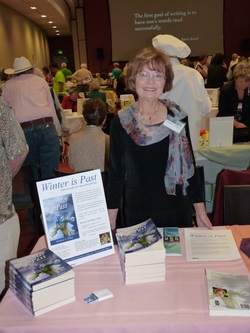
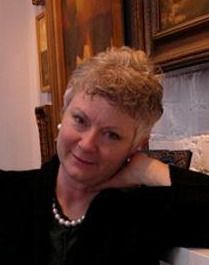
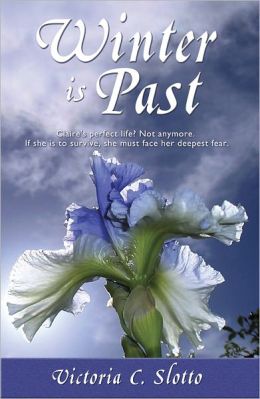 VICTORIA C. SLOTTO (Victoria C. Slotto, Author: Fiction, Poetry and Writing Prompts) ~ is an accomplished writer and poet. Winter is Past, published by Lucky Bat Books in 2012, is Victoria’s first novel. A second novel is in process. On Amazon and hot-off-the-press nonfiction is Beating the Odds: Support for Persons with Early Stage Dementia. Victoria’s ebooks (poetry and nonfiction) are free to Amazon Prime Members. Link HERE for Victoria’s Amazon page.











 The BeZine