A poor widow was living with her two sons and their wives. They treated her shamefully, but the old woman had no one to turn to with her woes and nowhere else to go, so day after day she suffered in silence. Her sonsand daughters-in-law mocked her, and begrudged her every crumb of bread, every grain of rice. Even as the widow starved, her misery grew.
One day, when she could no longer bear the pain, she slipped out of the house and walked down the road. She had no idea where she was going, until she came to a house so decrepit there wasn’t even a roof left. She felt strangely drawn to the deserted house and stepped inside.
To her surprise, she found herself telling the nearest wall her grievances against her firstborn son, whom she had showered with love from the first time she felt him quickening inside her, and who now had no use for her.
As she finished, the wall crashed to the ground under the weight of her sorrow, and she felt her burden grow lighter.
She turned to the next wall and the tears flowed as she described the cruelty of her first son’s wife…
…who gave her only rags to wear and threatened to send her out with a bowl to beg.
The second wall collapsed and she grew lighter still.
She told the third wall about her second son’s ill treatment…
…and the fourth wall her complaints against his wife.
When she was finished, the old woman stood amidst the wreckage, watching the dust settle. She still had nowhere else to go, but as she turned homeward to face her life, just for the telling of the tale, she felt lighter in body and spirit than she had in a long, long time.
–Retold in Apples From Heaven, Copyright 1994 & 2016 Naomi Baltuck.
Poems clutter the landscape of my mind with bite-sized portions easily committed to memory, ready to be pulled out in a moment of need or want. In the art of healing and living hugely, poetry is warp and weft.
Whether I am writing poetry or reading it, poetry gifts to me those blessed eureka moments, the moments when I understand myself or another, can put a name to the demons, or simply realize that I am not alone in my joy or sorrow. Think of W. H. Auden’s Funeral Blues and the simple line, “Pack up the moon and dismantle the sun.” I am getting older, approaching elderly, and though I am always making new friends, I’m of an age where I lose a friend or two each year, sometimes more. Bereft at the loss of someone precious and shocked that the earth hasn’t stood still, I think of this line and know that in this circumstance, everyone feels what I do . . .
. . . and all it takes is one disappointment in love to relate to Mad Girl’s Love Song by Silvia Plath, “I dreamed that you bewitched me into bed/And sung me moon-struck, kissed me quite insane./(I think I made you up inside my head.)
Of the many poets I dearly love, I particularly appreciate Ruth Stone for her quality of giving things their true names and for the practicalities embedded in her poems. “Dear children,/You must try to say/Something when you are in need./Don’t confuse hunger with greed;/And don’t wait until you are dead.”
Ruth Stone was an American poet and poetry teacher born into an impoverished family at Roanoke, Virginia in 1915. She lived most of her life in rural Vermont, attended the University of Illinois at Urbana-Champaign, won many awards for her poetry and was a finalist for the Pulitzer Prize for her last collection, What Love Comes To: New & Selected Poems (2008). She was wry, bold, conversational, edgy, philosophical and used the language and imagery of the natural sciences to good effect. Her second husband, the poet Walter Stone, committed suicide leaving her with three young children and an experience that indelibly etched itself on her life, heart and poetry. She once remarked that she spent the rest of her life writing to him and those poems were no doubt healing poems for her.
Not Expecting an Answer
This tedious letter to you,
what is one Life to another?
We walk around inside our bags,
sucking it in, spewing it out.
Then the insects, swarms heavier
than all the animals of the world.
Then the flycatchers on the clothesline,
like seiners leaning from Flemish boats
when the seas were roiled with herring.
This long letter in my mind,
calligraphy, feathery asparagus.
When Ruth Stone won the Whiting Writers’ Award, she got plumbing for her house. When she received the Walter Cerf Award for Lifetime Achievement in the Arts at the National Book Awards, she said “I’ve been writing poetry or whatever it is since I was five or six years old, and I couldn’t stop, I never could stop. I don’t know why I did it.… It was like a stream that went along beside me, you know, my life went along here . . . and all along the time this stream was going along. And I really didn’t know what it was saying. It just talked to me, and I wrote it down. So I can’t even take much credit for it.”
Ruth Stone died in 2011 leaving behind thirteen collections of literary dim sum. This poem, which gave its name to a collection that I just purchased, is a new favorite.
In the Next Galaxy
Things will be different. No one will lose their sight, their hearing, their gallbladder. It will be all Catskills with brand new wrap-around verandas. The idea of Hitler will not have vibrated yet. While back here, they are still cleaning out pockets of wrinkled Nazis hiding in Argentina. But in the next galaxy, certain planets will have true blue skies and drinking water.
In the scant two-minute video that follows, the writer Elizabeth Gilbert(Eat, Pray, Love) shares the revealing story of her meeting with Ruth Stone.
If music be the food of love, play on ” ~ William Shakespeare, Twelfth Night Act I Scene I ~ Duke Orsino’s opening line.
One of the first lines of Shakespeare I had ever read, as a teenager, came from this play that I studied for English Literature at the age of 16. It still resonates in me today. I passed English Literature at ‘O’ Level, but not with any great distinction. Maybe if I’d had the talent, intellectual aptitude and whatever other indeterminate qualities and quantities, be they genetic or environmental, I might have been more distinguished in my appreciation of the literary arts; maybe even more accomplished as a writer or musician, instead of starting out my adult life as I did, as an engineer, or a ‘reluctant metallurgist’, as I sometimes introspectively muse. Thereby hangs another tale, for another time.
Photo: John Anstie (1972)
But that’s history; it’s part of what made me the person I am and I am grateful for that and all the subsequent opportunities that I fell upon as a result of the path I took, not least of all in my personal life. If I am unlikely to ‘make it’ as a writer, if any one of us, who sometimes aspire with our pens in whatever corner of literary endeavour we may hang out, there is something else that happens in that endeavour; something that possibly only time, ageing and accumulated wisdom can reveal. This is quite simply that, if you seek, you will eventually find.
Alongside an early appreciation of literature, which Shakespeare, Thomas Hardy and a host of classical poets afforded me in my school years, came also an appreciation of music, albeit not through education and training; rather through my exposure to the music through singing as a treble in the Church choir and at school, through the music scene of the 60’s and 70’s and the saving grace of my decision to sell a car and by a good guitar with the proceeds (a Yamaha FG140, to be precise), which provided me with an escape from, and therapy to help in my resolution of some challenging times.
I guess, out of a deep desire to make music, which thus far had been confined to playing my guitar and singing mostly on my own or small groups of friends, eventually, after what I call a thirty-five year spell in a creative desert, came an opportunity to make music with other likeminded people. More’s the point, I was able to find the time to join and regularly attend rehearsals in a mixed voice choir. It was here that I first discovered the true joy, not only of the music and singing in harmony, but of sharing that love with others.
And now, for the past two years, I have been singing and performing regularly with one of the best Barbershop Choruses in the UK, as well as with a local chamber choir, whose MD has managed to attract some significant musical talent … and me! A year ago, I also formed a mixed barbershop quartet with some singing friends. Additionally, through the barbershop chorus, I facilitate a regular quartet night. I am, you might say, in at the deep end and making up for lost time! This all sits beside other occasional duets with a musical neighbour and the recent setting up of a five piece folk ensemble; and next year, I have already put my name down to allow myself (to be persuaded) to form a male barbershop quartet through the resources of Hallmark of Harmony, some time early next year.
The latest step in the development of this absorbing hobby is that I have found myself being asked, nay commissioned to write lyrics. I’ve written poetry for several years and, during that time, often dabbled with writing song lyrics too. Now it seems to be happening. Am I living the dream or am I kidding myself? We’ll have to wait and see … and I shall have to keep close to my very supportive wife, who is unstinting in her support of my ‘hobby’. Long may that last, as well as my ability to keep up the energy levels needed to perform at this level, but singing is something many can continue to enjoy well into old age. I am always hopeful of singing at my own 100th birthday party!
Whilst a painting may have the power of a thousand words, for me, music, singing, poetry, musical composition and songwriting are closely interwoven art forms that, when combined in the most skilful way, I’d venture to say they are probably the most powerful of the art forms. When you encounter a song, with a great melody and poetic lyrics, the combination of which is so synergistic and performed with such passion that it hits you with a power that is unforgettable, makes your heart ache or makes you smile, then you know you have engaged with the highest form or art.
This experience is a quest, of which I will never tire. As long as I can breathe, I will sing. It has the power to change lives, to provide a therapy that no pharmacy can give you. Whilst I could never advocate that it replaces a true faith, whatever denomination you may choose, I have witnessed on many occasions, first hand, the healing power of singing in harmony with my friends. Singing takes you several steps beyond just listening to music. You only have to witness once the tears in the eyes of a grown man, when they feel that perfectly pitched chord sung in harmony, and when they have just performed a particularly moving rendition of a favourite song, to know how unique and powerful this experience truly is.
If I have an headache, I generally take a pill. But are we really sure that only medicines are able to heal our illnesses? Deborah Alma, poet and poemedic, said no. Also poetry can give us a great hand to face our problems, in particular those that are hidden in our deepness. We had a brief chat about Deborah’s wonderful work and this is what came out.
Mendes: The theme of this issue is the healing power of art. Before asking you about The Emergency Poet, I would like to know your personal experience with art self-healing.
Deborah: That’s an interesting question and quite a difficult one to answer briefly. I think my own experience is like most people’s extremely varied, very common and often very unconscious.
The moments that stand out for me I suppose were in the compulsion I felt to write myself through and out of an abusive and damaging relationship, watching my own grandmother’s solace in reading poetry after the death of her husband and as she was dying. I remember also being overwhelmed by an exhibition in London of the works of Frieda Kahlo and how bravely she painted her pain. I have worked for a few years with people with dementia and at the end of their lives using poetry.
For me, there is no doubt that art is where we can best connect with each other in ways that are intimate, empathetic and authentic.
MENDES: Now it’s the time of the Poemedic as you like to call yourself. A white coat, a stethoscope and a poetry book are the main objects you need when you ask your patients to open themselves up and then you suggest to them the right poem. What happens when patient and poem match each other?
Deborah: Ah this has been the most amazing thing for me! I had no idea when I started prescribing poetry just how much this process can work. People love to have a poem hand-picked for them after some careful listening. They see the gift and make it their own. It seems to bring a lot of joy, and sometimes relief and comfort.
Mendes: Why people are frightened about reading poems and how can people involved in culture help readers to start loving poetry?
Deborah: I think that something happens, at least in the UK in secondary school where often pupils are asked to examine texts as though they were a forensic scientist, pulling out the meaning and the poet’s intention, leaving the student with a sense that somehow poems are difficult, like a puzzle to be decoded rather than being asked to respond emotionally and intuitively. They also seem to stop writing creatively themselves and being a writer yourself is the easiest way into loving poetry.
I think that there is a certain amount of snobbery in the poetry world, that asserts that poetry is not for everyone, that likes to encourage this perception of difficulty. Certainly some poetry is ‘difficult’ and the reader is rewarded and flattered by understanding it, its clever tricks, its craft, its vocabulary; but instead of saying it is just for us few, I believe we can help others in. This comes from reading widely, from a developing confidence in approaching a poem and through being invited in. This is what I aim to do with Emergency Poet, invite them in.
Mendes:You worked also with people with dementia. How can it help, in this case, reading poetry?
Deborah: I have worked using poetry with people with dementia and also with people in care homes and in hospice care for the last five years. As a poet I do know something about what it is to be intimate and honest and authentic. The thread joining poetry and these areas of work for me is this intimacy and honesty. Poetry I believe, more than any other art, with the exception perhaps of music, (and they have much in common), speaks as though directly from one human being to another. It is about connection and empathy.
Most of the people that I’ve worked with who have some degree of dementia, are from the generation that learnt poetry by heart at school. As a poet working with a small group of people in a care home or day care centre I have often had the experience described so beautifully in Gillian Clarke’s poem Miracle on St David’s Day that describes the poet reading Wordsworth’s much-loved poem Daffodils in a care setting somewhere, where the words of the poem long ago learnt by heart , ignite something deep inside the mind of a long mute man;
“He is suddenly standing, silently, huge and mild, but I feel afraid. Like slow movement of spring water or the first bird of the year in the breaking darkness, the labourer’s voice recites The Daffodils.”
It is a gift and a privilege to be the one who brings this to a group of people. I worked with a group of people with sight-loss last year and as I started to read Masefield’s ‘I must go down to the sea again, to the lonely sea and sky…’ and to have at least twenty voices take it up with me, one woman reciting it word perfect all the way to the end was a joy to all present and it brings a tear to my eye even now as I write this and remember it.
Mendes: Best and the worst experience you have had with the Emergency Poet?
I think the best experiences I have had with Emergency Poet, and I have had so many, was when taking the ambulance to Bristol Southmead Hospital for a few days and parking near the other ambulances and prescribing poetry to patients, stressed staff and visitors . There was something very uplifting for people , (one woman still attached to her drip and in slippers) answering questions that were gentle, uplifting and being given the gift of a poem. It worked really well there. I’m starting to work in hospices prescribing poetry, which is wonderful and intense and extremely rewarding.
Bad experiences are usually to do with bad weather, wind , rain and cold! The hardest thing for me is to prescribe poetry to people who have never really read at all, not even as children.
Mendes: We always need a box of aspirin in our pockets. Who is, for you, the poetical aspirin? Can you suggest us any “everyday” poems?
Mendes: The ambulance is riding down the street. What and when is the next stop?
Deborah: It’s quiet over the winter because of the weather, but the next stop is to set up an inside surgery and run a workshop on compassion at a conference in London for Psychology and Psychological Therapies which will be fascinating for me. I will have fun having psycotherapists on my couch!
To know more about Deborah Alma and her work, you can visit her website The Emergency Poet, The world’s first and only mobile poetic first aid service.
Here are a few poems by Deborah Alma
Deep Pockets
I sit in the kitchen
in a yellow-striped dress
with deep pockets
thrusting my hands deep
there is string, a pin,
garden wire and three
sweet-pea seeds.
I sit sullen like a child.
On the table a roughly made
grey plate with flecks of blue
and four chocolate dainty cakes
and five of us in this house.
Pink Pyjama Suit
Five, I must have been,
just five, blonde kid
in my pink, shiny shalwar kameez.
Auntie, Karachi, pinched my cheeks,
Chorti pyara,
like a doll
like a little blonde doll.
Walk this way, try some dancing.
Behen! Now you have your little blonde doll
to play with!
Mummi-ji, I don’t want to wear it to school.
North London laughs too easily,
makes fools of us and this mix-up family, this
half-caste council-estate bastard.
Miss Minchin, one arm shorter than the other
knew how North London could laugh, and said:
Knock on all six doors and tell them
Miss Minchin says I must show the children
my clothes from Pakistan.
Mummi-ji, the glass on the doors is too high
and all those eyes
as I turn round and round, up on teachers’ tables
to twist in my pretty pink pyjama suit
like a little blonde doll.
On Sleeping Alone
oh my oh my what big teeth you have letters of love smelling of sandalwood in your special box of disappointment and raging not sleeping soundly remembering that you should be the start of the happy ever after story not the little girl swallowed whole to be saved by the woodman and his wielded axe
wolves in sheep’s clothing
grannies’ bonnets tied with a ribbon under their sweet little chins
now I sit tight on the lid
Pandora was not heavy in her hips like me not grounded by her own strong living days and nights
I am drawn instead to my own songs to let them sing in the fresh air love letters to myself wearing the blue slip with the butterfiles I take up the pretty teapot for one the scracthy pen the days the life floating lonely happy and sad
This month’s theme at the BeZine is “The Healing Value of the Arts”. The Arts have an intrinsic value in and of themselves, of course, but most of the time when people read or hear the word “Art”, they don’t associate it with healing or medicine. And yet, there is a very real power in art to be and do exactly that. I want to share a personal story with you about how art really can change a person’s life and help them heal.
My brother-in-law, whom I will call “TW”* for the sake of this post, is a proud USMC and Army National Guard veteran who served our country for almost a decade. He did tours in Bosnia and Iraq and when he returned to the States, he was not the same vibrant, easy-to-laugh young man who first enlisted. The things he witnessed and experienced overseas changed his mind to such a degree that his everyday functioning was affected. You see, TW suffers from severe, debilitating PTSD. There are good days and bad days, but on the bad days, his body freezes up and he has problems performing simple tasks that you and I might take for granted. He has been known to curl up into a fetal ball for hours at a time, trying to escape the monstrous hell his memory is reliving.
Of course, he has meds which his doctor prescribed for him, and they help…to a degree. But the most amazing treatment of all has been his painting. His art has helped save him more than any pill ever could. TW builds and paints hundreds of miniature figurines and it has become much more important to him than a simple hobby. He agreed to answer some questions about how this type of Art has changed his life and how it continues to help him get better.
Q: How did you get started in using painting to handle your PTSD? TW:I was having so many panic attacks, and when that happens, there are a lot of times it’s something that you’re not aware of until you’re right in the middle of it. It’s like your body does its own thing, it floods with adrenaline, the nerves go haywire and it gets hard to control your emotions. That’s something you learn as a marine…you learn the ultimate control, you don’t feel fear or rage or any of that, because having emotions over there can get you or your buddies killed. So to not be able to control it like that makes me feel like I need to do better somehow.
I tried video games for awhile, but they didn’t help the same way that painting does. They say “idle hands are the devil’s work”, well, an idle mind is just as bad and I got sick and tired of being afraid all the time. So I was looking for an outlet, something to take the place of the fear, you know? Back in high school, I kind of messed around with models a little bit, so I thought, “Here’s something tangible to keep my mind and hands busy” and it just grew from that.
Q: How often do you paint and for how long at a time? TW:At least once a week, but sometimes a lot more. It just depends on when inspiration hits, and if or when I need it. I’ve learned some of my triggers, but the attacks can still creep up on me and can happen at any time. If I feel like one is starting, then I can take some meds and start focusing on my painting and it helps calm me down almost immediately. I usually paint for a few hours, but sometimes it can go all day. It just depends.
Q: Why do you think it helps? TW:Well, this may sound weird, but it’s a routine I do. I have several steps, and those steps have steps. Like, I prepare my work space, and that might be two or three steps. Then I pick out my paints and brushes, and that’s a couple more steps, and so on. It’s a ritual, and it helps calm my mind by giving me something tangible to focus on, one thing at a time.
Another part of it is the ethos of the figurines I paint. What I mean is that the lore behind the models is something that empowers me. These figures, they’re Space Marines, so of course I can relate to that part of it, but it’s a fantasy world, too – they’re soldiers who don’t ever feel fear, they never get PTSD; I can command troops and build my own army without any of the weaknesses of real people. I mean, they’re super-human, genetically engineered warriors. So being able to pour myself into that…helps me feel better about myself, helps me be stronger.
Q: Have you told your doctor about it and has it affected what kinds or the amounts of medicine(s) you take? TW:Yeah, I did tell him about it and it’s encouraged for patients like me to keep busy and calm. He called it a constructive focus, so that I can come back to reality with a possible different perspective, from a different place mentally. As far as the meds go, I can tell you this: before I started painting, I used to drink, a lot – to escape all of it…and now I don’t. I have a pretty good schedule for the meds I do have to take, but on days when I decide to paint, I don’t need some of them because I just don’t have any attacks on those days.
Plus, if I’m going through a period of insomnia, which happens more than I want, I can paint and come down enough that I can actually get to sleep. Most of the time, though, I like to paint during the high sun of the afternoon and my doctor has encouraged that, because the sunshine helps with my moods, too. It also helps me see how the models look with details that show up in natural light that don’t always show under artificial light.
Q: Do you think it could help other veterans like you and have you mentioned it to anyone else whom it might help? TW:Yeah, I do. I mean, it’s not for everybody, and some people might find it boring, but it’s helped me become more patient, keeps me calm and focused. Making sure all the details come out right is a good challenge for me. A couple of my buddies are vets, too, although they’re from different units, and I’ve told them how much it helps. But everybody has to find what works for them, and I think it’s good if you already have an interest in it, like I used to be sort of interested in it in high school. But I recommend that anybody should try it because you never can tell. I know it’s worked for me and I think it would work for other people, too.
_________________________________________________________
Don’t let anyone ever tell you that Art can’t heal. I’ve witnessed it, so I know that it can. I know TW’s case isn’t the only one, or the only way that art has helped someone. Look around, pay attention. I bet you can find ways that The Arts heal people, too. 🙂
*When I asked my brother-in-law what nickname I should use for this piece, he said to call him “The Wizard”. It’s a private joke with his doctor, about the ‘powers’ that each of them have to help TW get better. I abbreviated it to keep it from being too distracting to read.
A couple of days after the election my wife, Jennie, and I found ourselves teaching a master class at the Expressive Arts Therapies Summit in New York City. The class, an exploration of the uses of puppetry for clinical and social change, was an all-day affair, and we were teaching the afternoon portion. In the room with us were a group of long-time mental health clinicians and a few students and educators. All were artists as well.
Jennie and I had worked all summer on a brief toy theatre/object theatre performance that we hoped would introduce the group to some of the key concepts and concerns we wanted to share with them. The “play” was about the efforts of a village to resist loosing their beloved land to ruthless politicians and developers. Unfortunately, we could not decide on an ending, although we tried many. With each new idea, the structure of both the set and the play changed; this became a grueling process.
The day before the class we were sitting in a restaurant across Central Park from the Met, having breakfast, when we settled on the idea that, rather than having an ending, we would stop the performance and shift into Forum Theatre, in which the audience is invited to come up and try out a number of alternative endings. Sure enough, audience members gleefully presented a series of very satisfying endings, most of which we had not thought of.
Jennie then announced that as there seemed to be a good deal of angst in the room, we were, with the permission of the participants, going to teach less and focus on facilitating their creation of short performances. She reassured everyone that whatever happened and whatever was said was to remain in the room. Immediately a woman in the back of the room stood, introduced herself as an experienced clinician, and said, “I just want to get an AK-47 and start shooting people.” There followed a collective gasp. (Wow! What a brave person!) Jennie asked whether others had similar thoughts, and many hands went up, mine included. Suddenly, there was breathing space in the room!
The discussion that followed made room for tears and fears, much anger, and a tiny bit of hope. There was also a good deal of laughter as twenty-five clinicians of diverse ethnicities and sexual orientations compared post election notes. A couple of hours later five groups of clinician-artists presented the plays they had spontaneously developed. The creativity, visual engagement, and deeply held feeling of the pieces resulted in works of rare beauty and power.
At the conclusion of the class, participants spoke with us about the palpable relief they felt in being able to safely put aside their clinician role and give expression to their raw experience. Others stopped us in the halls the following day to share similar thoughts. Clearly, playing with puppets had allowed much healing.
We were not surprised. Puppets have long held a special role in many cultures, freely saying and doing much that would be dangerous or forbidden for mere humans. They carry a sense of the uncanny, seeming to act independently from, and often, in spite of, their human collaborators. Puppets have a propensity for truth telling that can leave the observer moved, mirth filled, and/or dumbfounded. They seem inherently suited to healing.
We have put away the set for our puppet play, although if we can find an ending that works we may take it out and make a video. We’re talking about creating the next piece of toy/object theatre. For the moment though, we are still processing the events of the past few months. I wonder whether those experiences will feed the next play, or whether the piece will arise from something we have not yet encountered or imagined. We’ll see.
He lay silent, wordless
trapped in a body of pain
no movement possible
no hope of recovery.
Outside the trees sang their arias
conducted by the breeze
it was a painting of life
his eyes rested on the light.
She sat beside him stroking his hand
passing the touch of life with every stroke
as she read poetry the soft words
familiar rhythms entered his ears
brought healing peace through this sense
as the day slipped into evening’s song
the poems became prayers.
Poetry finds you when you are broken, insists on taking you into its fold, puts your pieces together and then you never leave.
It struck me when I was standing at the doorway of my home one July that the sunshine over the mussaenda was a rare shade of rose-gold and that the leaves under it were a luminous green. The street noises seemed to recede as if the stage had been taken over by some other troupe and sure enough, there was a sudden onset of activity. An excited squirrel ran up and down the guava tree, a few babblers screamed and the jackfruit tree came to life with bird cries. All because there was a long rat snake slithering leisurely across the sunlit ground. There had been stray tears on my cheek and I was a dam on the verge of a collapse but then the other world swung in and took over from me.
I was privy to nature’s poetry slam. I wanted nothing to capture it, not a camera, or a laptop nor pen and paper. A poem followed by several others swung its legs over the cacophony of humdrum routines and marched into me settling deep into waiting trenches filling me up with purpose and with immense joy. While steadily ploughing up the driest top soil and turning it over to the elements to ravage, it was changing me.
I remembered Stanley Kunitz’s translation of Akhmatova’s lines
“No foreign sky protected me,
no stranger’s wing shielded my face.
I stand as witness to the common lot,
survivor of that time, that place.”
Writing a poem is akin to exercising. To begin is difficult at times because it is easier to wallow in conceptual dramas and imaginary hammocks than to sit in one place and write or type. Think about the singular joy of munching on peanuts and reading fitness magazines on the couch compared to going running on a cold day.
Some poems are difficult to birth even while being exhilarating with senses functioning at heightened awareness and making one sore with the intensity of thought . Once begun, every thought zooms into the present; nature, politics and emotions collide, collaborate and confound the notions of what constitutes poetry. The end comes when the experience has gone through like a sword and untwisted all the overlapping images to give one’s vision a clarity that is brighter than the sunbathed green leaves of the mussaenda.
Winner of the T.S Elliot award 2012 Poet John Burnside said,“Poetry reminds us that lakes and mountains are more than items on a spreadsheet; when a dictatorship imprisons and tortures its citizens, people write poems because the rhythms of poetry and the way it uses language to celebrate and to honour, rather than to denigrate and abuse, is akin to the rhythms and attentiveness of justice. Central to this attentiveness is the key ingredient of poetry, the metaphor, which Hannah Arendt defined as “the means by which the oneness of the world is poetically brought about”. It’s that power to bring things together, to unify experience as “the music of what happens”, that the best poetry achieves.”
It also unifies the people reading it and the poets who write it because we search for affirmation, for reassurance that our feelings and experiences are shared by someone else somewhere and that we aren’t all alone though our pursuit of the game is almost always solitary.
While the visualized poem changes a lot after being handed over to language, the thing that is most changed at the end of the writing is me. I feel kindly and tolerant to all forms of obstacles and injustices that were hindering the poem till then, feeling mostly gratitude for the crash course on changing perception. If there is more indecision, more poems might be written.
As David Biespiel says”You become a poet when you navigate your poem’s labyrinths of mutability, not to a point of stasis, but to a point where your discoveries blossom into ecstasy, intoxication, even beatitude — or, to downplay that bit of grandiosity, into clarity, insight, judgment, understanding, private vision.”
And believe me language plays a mighty role here – give it all the vocabulary and range you can and the poem rushes through like a thing on fire. Don’t let anyone tell you that language doesn’t matter. It does. It does. It does. You wouldn’t want to be subjected to an operation if your doctor uses an rusty, blunt knife he found while swimming in the ocean. It is the same thing with poetry. Hone your weapons before you go to war. Because after that poem is written, you are healed of whatever ailed you. The better your poem, the better you feel. I have no complaints about life as long as I can write because there somewhere between the thought and the written word, lies my wetland, my wildlife reserve, my sanctuary.
Leaving you with Amiri Baraka’s lines from Preface to a Twenty Volume Suicide Note
“Lately, I’ve become accustomed to the way
The ground opens up and envelopes me
Each time I go out to walk the dog.
Or the broad edged silly music the wind
Makes when I run for a bus…
“Truth is ugly. We possess art lest we perish of the truth.” – Nietzsche
Civilization kills. We are living in apocalyptic times. The Anthropocene is here; humans are dominating and destroying the Earth. Like all civilizations in history, though, ours will fall back into the dust, and Earth will absorb it in some fashion. I get angry with humans because of this. Our arrogance and hubris and stupidity is truly abhorrent. I would wash my hands from all association with my species if I could, but for two things: music and food. I am willing to forgive everything for Puccini and Marcona almonds sauteed in butter and thyme.
Perhaps it is nothing but hedonism to feel that my pleasure in a fine meal at La Reve on Tuesday might bring me back from the brink of utter despair. The “Holiday Train” event in the village late that afternoon had created horrific traffic congestion with black-clad pedestrians pushing strollers into the dark streets while some pop Christmas frenzy blared over a loudspeaker. I felt truly Scroogeish; humans are complete humbug. But then the ambiance of a Parisian bistro — chattering guests and tremulous accordion melodies — and the buttery oak in the Chardonnay spread its warmth over that cold, post-Truth fear surrounding my heart. I asked Irene, our Asian-American server, about how the chef prepared the pumpkin soup. We talked about how roasting brings out the deeper flavors of vegetables and stock bones and what items on the menu were gluten-free. By the time I had savored my way through triple-cream brie, salmon, lamb and chocolate caramel, I was ready to admit atonement of the human race was possible.
The next day, however, my thoughts turned dark again. How could I justify the expense of that meal, even though almost half of the cost to me was covered by a gift certificate? How had the animals invested in that meal been treated? How far had the ingredients traveled on fossil fuels to get to my plate? My awareness of suffering may have been dulled for a time, but it was not erased. I may have been treated quite well, but was I healed?
Healing. In Western culture, it’s about fixing pathology. In Eastern culture, it’s about making whole. Awareness is about opening up to understand the whole, the complete Oneness of the Universe. “Life is suffering” is the first noble Truth in Buddhism. Suffering is in the Oneness. Arising from the awareness of suffering are two responses (at least): Fear and Compassion.
I experience my fear for the human race and my compassion for it as well, blended contrapuntally. To recognize that only as thoughts criss-crossing my brain might drive me mad. To see that reflected in a complex pairing of wine and cheese or in the first act duet of Mimi and Rudolfo in La Boheme saves me from perishing from the ugly truth. I will never comprehend the Truth, although I live it every day. Making, enjoying, or experiencing Art is as close as I may ever come to holding the Whole in my heart. I believe that those who practice Meditation seek to do the same, while sparing the harm caused in producing Art.
May we all find a way to happiness, a way not to perish from the Truth, a way to be at peace with the Whole.
Godbody is a slang name for the members of the urban, Black empowerment/ youth movement/ called the Nation of the Five Percent/
Or should I say Five Percenters/ who are considered/ to be a splinter/ Nation of Islam Group/ A troop/ fierce as any woman without make-up or sleep/ cold as midwinter/
At least they were in my eyes/ I was slightly older than five/ when I used to watch them organize/ the intellectual thugs in my hood with the wits to survive/
Which got me thinking about what would make the culture of poetry thrive/
Vibrate at high frequencies/ and give off good vibes/ with a philosophy that doesn’t deprive/ the inspired who keep the culture alive/
And I came up with “Godbody”
I never heard anyone argue after the statement “God is Love” Maybe that’s because/ we are all familiar with the power that binds/ even if it’s just on a subconscious level/
And if it’s easy to see/ when you apply Godbody/ in a literal sense to this philosophy/ which will always be with us like the force is to the rebels/
Now pause and think/
If the right leg and left leg constantly fought about/ who was longer or who was stronger/ Godbody wouldn’t progress/
When the right hand doesn’t know what the left is doing it’s hard for Godbody to get dressed/
If there was no balance between the right side of your brain when it calculates/ and the left side when it desires to create/ quick and in a hurry you’d go crazy fast/
If the right side of your mouth kissed with love/ But the left only spoke on fear/ Your mouth would write checks that your ass couldn’t cash/
The flaw in our current philosophy/ that focuses on ME, ME, ME/ is that we view ourselves as separate/
Don’t you see? This Godbody/ philosophy/ focuses on the urgency/ of harmony/ in the art community/
The right leg and left represent the talent and the platform/ that move the culture forward which is the body/
The right hand and the left are pop culture and the underground/ reminding me of Kanye West/ and Mos Def/ how they both get down/ with one on the low and the other the life of the party/
The right side of the brain and the left represent/ the common people and the one percent/ who own 40 percent of the nation’s wealth/
One has the illusion of control/ one has true control but they ain’t so bold/ because they lack knowledge of self/
Which brings me back to the nation of the five percent/ why would I relent?/ Because when you break this shit down it really all makes sense/
Godbody/ Meaning man and woman are one body/ The promoter and the artist are one body/ Musicians and iTunes/ dope poets and packed rooms/ are all one body/
So stop frontin’/ Collaborate and build something/ be the reason for the rebirth/ of a higher sense of self worth/
I’ve been playing my part/ bleeding ink for this art/ signing off saying peace to the Gods and the Earths
After the election I find it difficult to write (just, justly) about (love, loving kindness, grace). Followed, as the election was, by the death of Leonard Cohen whose songs and as described (by those who knew him), whose personal life embodied grace, the task has become more difficult. I have lost my balance. I have fallen into (judgment, in this case, harsh judgment). Beauty seems cut off from the Crown, (Understanding and Wisdom) disconnected from (love and judgment). All balance has left me, I stumble up and down stairs as though falling, red faced, my prophetic legs unstable, my right knee (eternally) in sharp pain, my left leg (splendidly) leaning against a wall.
by Michael Dickel
And if these words confuse you, then they have communicated an aspect of my state, some limbs of the tree that sustains me. I will not explain. These fragments may not hold. I will try to find some pieces of the puzzle and lay them on the floor, without hope of putting the image together again. For the image shatters, overfull of signification. Its pieces slide into sounds, letters, words, phrases, a life sentence of confusion.
We may discern that the tree grows. We may figure out most or all of how it grows. However, ask the tree why it grows and it will simply rustle in the air of your breath.
Under the Palm Tree, Devorah sat in judgment. She was a warrior and a leader, yet her judgment was not harsh. She led because her judgment was seen as righteous and fair. My family name as I was born to it, Dickel, does not transliterate into the Hebrew aleph-bet very well. However, Dekel does work in Hebrew letters, דקל, and is a common enough family name in Hebrew. So when my wife and I registered our marriage in Israel, we changed our family name to Dekel. Dekel means (date) palm. I (am) a palm tree. I cannot explain.
——————
In the 16th C., Moses Cordevero “discovered” or “wrote down” ancient (oral) texts, or simply wrote them as new texts. These are prominent among the received texts, part of the basis of Kabbalah (which means Reception, Received, but idiomatically, Revelation). One book is The Palm Tree of Devorah. At once it seems a text about how to be a good judge, like Devorah, and how to transcend our lives of judgment to obtain a Oneness with Keter, the Crown of Creation. Some excerpts, from Daniel Matt’s book, The Essential Kabbalah: The Heart of Jewish Mysticism (including his notes / commentary after the boldface text):
Your face should always be shining. Welcome each person with a friendly countenance. For with regard to Keter Elyon, the supernal crown, it is said: “In the light of the king’s face is life.” No redness or harsh judgment gains entrance there. So, too, the light of your face should never change; whoever looks at you will find only joy and a friendly expression. Nothing should disturb you. (85 from Moses Cordevero Tomer Devorah original 16th C., Warsaw: Joel Levensohn 1873)
“In the light of the king’s face is life.” Proverbs 16:15. CF Mishnah, Avot 1:15: “Welcome each person with a friendly countenance.”
redness The color of harsh judgment. (192)
Your mouth should produce nothing but good. The words you speak should be Torah and an expression of goodwill. Never generate angry or ugly words, curses, or nonsense. Let our mouth resemble the upper mouth, which is never closed, never silent, never withholding the good. Speak positively, always, with benevolent words.
All of these good qualities gather under the banner of humility, each one constituting a limb in Keter above…
It is impossible, of course, to conduct yourself according to these qualities constantly. Accustom yourself to them little by little. The essential quality to attain, the key to them all, is humility, for this is the very first aspect of Keter, under which all of the rest are subsumed. (85–86 from Moses Cordevero Tomer Devorah original 16th C., Warsaw: Joel Levensohn 1873)
So should your wisdom be accessible to all. Teach people what will be useful to them, according to each one’s capacity, pouring out to each as much wisdom as you can. Don’t let anything deter you.…Be careful not to give more than the mind of the recipient can hold, to prevent any mishap…
As Binah, Understanding, sweetens all powers of judgment, neutralizing their bitterness, so should you return to God and correct each flaw. If you meditate on returning every day, you stimulate Binah to illuminate each day.… (87 from Moses Cordevero Tomer Devorah original 16th C., Warsaw: Joel Levensohn 1873)
power of judgment Hebrew, dinim (דינים), powers of the sefirah of Din, harsh judgment. (192)
Do not say that returning is good only for the holy portion within you; the evil portion, too, is sweetened, in the manner of this quality. Do not think that because you incline toward evil there is no remedy. This is false. If you do well, rooting yourself in Returning, you can ascend there through the goodness rooted there. For the root of every supernal bitterness is sweet; you can enter through this root and make yourself good; your intentional sins turn into merits. The misdeeds you committed have been accusing you from the Left Side. Once you return completely, you raise those deeds and root them above. Those accusers are not annihilated but ameliorated, rooted in holiness. (88 from Moses Cordevero Tomer Devorah original 16th C., Warsaw: Joel Levensohn 1873)
the Left Side The demonic dimension, which branches out from the sefirah of Din, harsh judgment, located on the left side of the sefirotic tree. (192)
How should you train yourself in the quality of Hesed, Love? The basic way you enter the mystery of Hesed is by loving God to the extreme, not abandoning devotion for any reason at all, since nothing attracts you in the least, compared to loving God. (88 from Moses Cordevero Tomer Devorah original 16th C., Warsaw: Joel Levensohn 1873)
——————
The Ten Sefirot
The sefirot (plural, singular sefirah), according to Jewish Mysticism, could be thought of as a series of vessels through which the energy of Creation / Creator (Keter) flow
from Ayin, אין, Nothingness, through Keter, the Crown (Head) of (Divine) Will
through the Point-Beginning of Wisdom (Hokhmah) and the Palace or Womb of Understanding (Binah)
into the Right Arm of (Hesed) Love (loving kindness, Grace) and the Left Arm of Power-Judgment (Din, Gevurah)
converging into (Tiferet) Beauty-Compassion-Mercy (Heaven, Sun, Harmony, Blessed Holy One)
into the right leg of Eternity-Prophecy (Nezah) and the Left Leg of Splendor-Prophecy (Hod)
converging once again into (Yesod) Foundation-Righteous One-Covenant (Phallus symbolic) and
flowing into the Presence as the Divine Feminine Aspect of God, the Shekhinah, from where it flows into the world / people.
The sefirot of convergences make up a central column, also.
These all make up a (symbolic) body, Adam (mankind, human) that is gender fluid (womb, phallus, Shekhinah all together). They comprise The Tree of Life. “The tree grows upside down,” its roots in the top, “an image familiar to us from many myths” (Scholem 42). “…Its trunk embraces the central and thereby conciliating forces; while the branches or limbs which grow out of it as various points encompass the contradictory forces of divine activity in Hesed and Din” (Scholem 42). The sefira of Hesed is love. The sefira of Din is judgment.
The sefirot could be a galaxy of stars, if you wish. The flow of this energy is two way. Jacob, when he dreamed of the ladder, saw messengers / angels going up and down the ladder (Gen. 28:12). (Not down and up.) The sefirot can also reveal themselves to our awareness as a ladder. The energy of Creation Returns in emanations toward Creator, Ayin,אין, Nothingness, and flows back down. Messengers going up and down, and up again. Hesed and Din must be in a dynamic balance to reach the convergence that is beauty-compassion-mercy in one direction or the duality (in triadic-balance with Keter) of understanding and wisdom in another.
Perhaps the emanations resemble particles falling into a Black Hole. As they hit the event horizon, they double, one continuing, one reflecting out, but as entangled entities. As below, so above; as above, so below. Perhaps the emanations resemble a Big Bang where time flows in both directions—beginning to end, end to beginning. Probably I don’t understand anything and do not have the wisdom to convey ( nothing(ness) ) אין.
However we might choose or be able to imagine them, the sefirot must be in balance. They are fractal—at all levels of the universe from quantum bits to macrocosmic, identical at all magnifications. They are Chaos. Ordered. Theory. The Shape. Everything.
And the opposite of love is not hate. It is harsh judgment. From harsh judgment flows, from us flows, the demonic dimension. For we are nothing but sefirot, energy, emanations of the Big Bang. For all I know.
A glimpse behind the curtain.
Pay no attention to the man behind the keyboard.
——————
It doesn’t matter which you heard,
the holy or the broken Hallelujah…
——————
It is taught in the Mystery of Mysteries: The king’s head is arranged according to Hesed and Gevurah [another term for the sefiraDin]. Hairs are suspended from his head, waves upon waves, which are all an extension, and which serve to support the upper and lower worlds: princes of princes, masters of truth, masters of balance, masters of howling, masters of screaming, secrets of Torah, cleannesses and uncleannesses—all of them are called “hairs of the king,” that is to say, the extension that proceeds from the holy king, and it all descends from Atika Kadisha [Ancient Holiness].
The forehead of the kin is the visitation of the wicked. When they are called to account because of their deeds, and when their sins are revealed, then is it called “the forehead of the king,” that is to say, Gevurah [Din]. It strengthens itself with its judgments, and extends itself to its extremities.… (Zohar, II, 122b–123a, cited in Scholem 53)
In the next three Sefiroth, we find Hesed (grace or love), Din or Gevurah (severity or judgment), and Rahamim or Tif’ereth (mercy, also known as splendor or beauty), in which the extremes are united and conciliated.Again, it is no coincidence that this sphere is defined by moral forces. (Scholem 42–43)
——————
Hate is not the opposite of love.
Harsh judgment is the opposite of love. Out of the imbalance of harsh judgment (as opposed to judgment per se) and love comes hate. From hate comes the demonic dimension. The demons come from within. This is true for one. It is true for society. It is true of our human world right now, many nationalities, many Nationalisms.
They sit in judgment of us. We sit in judgment of them.
Out of the raised left arm of harsh judgment comes the demonic dimension.
Do not confuse this notion of left or right as anything to do with political camps or spatial dimensions as we know them. They are convenient and familiar shorthand for this side and another side that pull against each other. The image of Adam in the sefirot is a mirror image of the viewer. We see ourselves in everything. The tree is more complex, three dimensional, a series of branchings and series of branchings from those branchings.
The tree is an inadequately simple image because we know it. We see trees. We think we understand.
I don’t understand.
The purpose of all of the rhetoric. The flow of all of the hate. The riling noisy din of social media. Servers flickering. Serving up harsh judgments. All of us. Count me in…I’ll share that meme.
This carries. Comments. Brings. Back. Returns to. A beginning of sorts of bringing. Together or apart, I don’t know.
A furrowed red forehead with notable hair flying loose. “Hairs are suspended from his head, waves upon waves, which are all an extension.” In a weave over skin, the redness spouted its harsh judgments, a forehead extended to the extremities of the. Beast.
We called it hate, but he used harsh judgment of immigrants, of minorities, of liberals, of Hillary Clinton. He called up the judgmental. Yes. KKK. Yes. NAZIs. Yes. Bigots.
But. Also. And. Yes. Us.
Those who cried out against him and his followers. With harsh judgment. In harsh judgment. Becoming harsh. Judgment.
And the social media full of Din, the din, the noise, The Judgment. Without looking with love at the followers and asking, “how can I love them?”
Did you think Judgment Day meant someone else’s judgment? Something else’s Judgment? Perhaps it means the day that harsh judgment won. The election. No matter which person won, harsh. Judgment. Reigned.
I don’t love them. I judge them.
Don’t mistake me for saying we need to accept these harsh judgments of others that cast them as enemies—not immigrants, not those who are not “mainstream,” not those who are not “white,” an empty and meaningless category without inscription, a blank page signifying emptiness.
Please understand that the power (Gevurah) he wielded was not only over his followers. He triggered us. He caused us to judge. We answered. Off balance. We fell. Into hate. Fed by (our own) harsh judgment (of ourselves? our darker reflections? our shadows?). Which fed harsh judgment. The demonic dimension. Our demons.
We became part of the fire storm. Redness. Smoke. Mirrors reflecting our fears of who we really are back at us. And we became what we feared.
As did his supporters. They fell off balance into harsh judgment.
Trump fueled and fanned those flames. But so did all of the detractors on all other sides. A raging firestorm of harsh judgment—of Clinton. Of Obama. Of the Right. Of the Left. Of the alt-Right. Of Progressives. Of Boomers. Of Millennials. Clinton of Trump. (Some) progressives of Clinton. Of media. Media of anyone who sold viewers to their advertisers. Of those who voted for third party candidates. Those who voted for third parties of we who voted in the lie of the two-party system. Of those who didn’t judge. Of those who didn’t vote. Of others who judged.
——————
There is room for judgment, to be sure. But it must be balanced by Hesed—grace and love.
I did not have that balance. I did not see that balance.
If we want to counter the redness of the demon with wild strands of hair, we must not join with “masters of howling, masters of screaming.”
I must find in myself Hesed, (love, loving kindness, grace).
We must find. Hesed. We must spread it outward. Emanate it up. And down. And up. We must remember that the opposite of love is not hate, that hate begets hate but arises from harsh judgments (being judgmental).
We must be less harsh in our judgments and more loving in our responses.
I must be less harsh in my judgments. Of you. Of me.
This is not to go to the other extreme. Hesed out of balance lacks boundaries, leaves us open and vulnerable, without defenses of any kind. Ready to be eaten.
We must judge, but justly, with love. And find solutions for people, not attack people as though they are problems.
We must call out the demonic dimensions with Hesed and send them back into Din. We must call out in love, to balance the mess we are in.
But we must also hold ourselves and others accountable for our (mis)judgments out of feelings of superiority.
We are all human. We all live in the world. We have divine potential, each and every one, even the orange redness with the wild hair.
And we all have demonic potential, each and every one, even the orange redness with the wild hair.
We must judge which is prevalent. With Hesed, love and grace.
And love is not the opposite of hate. But it brings a balance of judgment that leads from hate to beauty-compassion-mercy in one direction and to understanding and wisdom in the other.
Love must balance our judgment and guide our actions. Good must be on our tongues.
I don’t know how. I am angry. I am hurting. I am full of harsh judgments. I want to find a balance, though. And I want to remember that
…love is not a victory march
It’s a cold and it’s a broken Hallelujah…
I pick up my guitar and fall as much as sit down. My right knee screams in pain. My left knee sags. My right arm tingles, as fingers pluck the six strings. My left fingers press the notes, jarring my left arm to life as I make the chords: C – Am – C – Am -F – G – C – G – C – F – G -Am – F – G – Em – Am
I’ve heard there was a secret chord
That David played and it pleased the Lord
But you don’t really care for music, do you?
Well it goes like this:
The fourth, the fifth, the minor fall and the major lift
The baffled king composing Hallelujah
I’ve read this past week that Leonard Cohen wanted Hallelujah to convey all of the possible moments, good and bad, when praise might come to our lips—the cold, the broken, the holy…
Hallelujah
Hallelujah
Hallelujah
Hallelujah
“Rabbi Tarphon taught us that while it is not our responsibility to finish the work of perfecting the world, we are not free to desist from it either.” —Rabbi Marcia A. Zimmerman, Alvin & June Perlman Senior Rabbinic Chair, Temple Israel, Minneapolis, MN in a letter to her congregation after the election.
——————
Matt, Daniel C. The Essential Kabbalah: The Heart of Jewish Mysticism. San Francisco: Harper Collins. 1995. Citations from the 1997 Castle Books edition.
I believe in a higher power. I don’t know what this mystical being’s name is: God, Jehovah, Buddha, Elohim, Allah or any of the attributes used to reference this power. I believe in Jesus, Muhammad and Elijah, the prophets sent to enlighten the people. I don’t think if you believe in one you will perish for not believing in the other.
I don’t believe for one to walk with head high among the righteous they must be able to quote the scriptures from any one of the Bible interpretations or from the Torah or Quran. I don’t think the goodness of a person is judged by the faith he can justify but by his behavior.
Yes, we all have our differences, we show concern for those we care for. That is easy, but can you show care for one you think of as your enemy, someone who doesn’t believe in the same God or who doesn’t cover their head or eats the flesh of an animal you believe is unclean? Can you show concern and respect to one whose skin color is different from yours or who speaks a different language, which you might not understand?
Jesus, born a Jew in the Middle East, walked miles in the desert performing acts of kindness for the most unsavory kind. He wanted nothing in return. He didn’t pass a plate for tithes for His Father. He didn’t reject the thief, the prostitute or the lame. He fed the hungry and welcomed all into his fold. What a wonderful man. He was called a king, actually king of the Jews.
The governor, the king, the law-makers were unhappy, afraid of this self-proclaimed leader spreading love and kindness, feeding the hungry, and healing the lame. They felt he had to be stopped. So Jesus was beaten unmercifully, abused and tortured for loving fellow human beings. Then he was executed before his followers to incite fear.
For 2000 years this same tactic has been used from slavery and war and to justify police states. This vicious and brutal behavior is used against other human beings to promote fear above love and compassion.
Greed and inhumanity are the swords that keep the meek quietly accepting the teachings of a God who taught us about unconditional love. Some who are self-righteous in their piety are two-faced and use the name of God to justify abuse and murder.
I believe in loving my fellow human beings. I believe in appreciating what surrounds me: the sun rising, the birds singing, trees blooming, laughter, and the sun setting at the end of each day. Yes the shining moon, twinkling stars, rain, snow … all of that nature offers gives me hope.
I can’t quote the scriptures. I don’t attend a church, but every word I utter is a prayer for a world of harmony. My thoughts for healing, happiness and comfort are my prayers for my family and friends. My every action, my behavior, every act I perform is my scripture.
My temple, my church is in my heart. My fellowship is with each person with whom I communicate. I passionately speak out against injustice and those who are mischief makers.
I believe in spreading love, compassion and happiness but unlike an ostrich I refuse to keep my head stuck in the sand as the mayhem in the world explodes around me.
I try not to promote negativity but it exists. Hiding behind rainbows won’t make the rain stop. I face evil head on and reveal it so that those with goodness can see who the enemy is and stand with me to eliminate or at least decrease its hold on humanity.
My new next-door neighbor is aging and physically challenged, although he’s probably around my age. He walks with a limp, speaks slowly and wears a hearing aid. He gets around our 56-acre property on an electric golf cart. He also wears a camouflage cap, hunts, and works on his prized stock car engine in the garage. I’ve met him on just a few occasions. The last time was during the summer when the Conservation Foundation held a meeting at his home. He told us that his dog, Reggie, was also hard of hearing and was concerned when one of the guests let the dog out in the process of coming in to the meeting.
After a week of settling in to our new home to the south of his, it was time to pay a visit, introduce my partner Steve, and discuss things like garbage pick-up and snow removal. Dave met us at the door and led us to the living room. The dog bed was empty. Dave sat down in his recliner facing the blank TV. An Elton John tune from the 70s played on the radio.
“Where’s Reggie?” I asked.
“Reggie died…on the sixth…of September.”
I dropped to my knees on the carpet in front of Dave’s chair so that I could look him in the eye. He looked like he might begin to cry.
“Oh, Dave! I am so sorry!”
Dave began to talk, haltingly at first. He told the story of how he noticed changes in his beloved companion, of decisions he had to make, and how his life had been altered. I listened and kept eye contact. The conversation changed to the present and more mundane matters, and I got up off the floor. Dave asked us to sit down on his couch.
“Don’t worry, I vacuumed the dog hair off the seat already.”
We visited for another half hour. I saw Dave laugh for the first time. And smile, and stretch, and tell jokes. We negotiated an agreement about the garbage, and he recommended a good Toyota mechanic. On the way out, I noticed a paw print plaque on a box with Reggie’s name on it.
“Oh, did you get that from the vet? My daughter got one for our cats when they passed.”
“Yeah…”
I told him I was sorry again and that we’d be seeing him around.
I have never had a dog.
I don’t remember thinking about dropping to my knees in grief at the news of Reggie’s death. I just did. I needed to look in Dave’s eyes as he spoke. Grief is a familiar friend, even if Dave was not yet.
I have a Bernie bumper sticker on my car.
I don’t know how Dave votes, and I was surprised that Wisconsin went to Trump. Now that I live in a rural community and not in Milwaukee, I see lots of folks who look like Dave.
I am a stranger here.
I work here on behalf of the land. I came to live here so that I can know it better. I am just beginning to know the people who have worked and lived here before me. I don’t know how well I’ll fit in with them, but I am very interested in seeing the adventure unfold.
I want to show loving-kindness wherever I go. This is my opportunity: this place, this day.
(from Wildmind Buddhist Meditation:
Metta is friendliness, consideration, kindness, generosity.
Metta is the basis for compassion. When our Metta meets another’s suffering, then our Metta transforms into compassion.)
I had no idea what to write for this month’s BeZine theme: Metta. Metta is also known as loving-kindness. It’s a practice often found in Buddhism, but also in other religions. It builds empathy and compassion for self, others, and the world around us. I was going to talk about random acts of kindness and senseless beauty, and while it’s a subject I adore, it didn’t seem quite right. As I was thinking about what to write and searching for some inspiration, the perfect story presented itself. I’d like to share it with all of you because to me, it sums up what the idea of loving-kindness is all about. Enjoy, be inspired (and maybe have a kleenex handy 😉 ).
The earth quaked again in Italy and every hope of a normal day, a day without disquiet, went down with the houses and churches. All the State is in a state of emergency. In the chaos and fear and the concrete falling, it’s often difficult to remember our humanity. Some people were wounded. Some died.
Into this chaos and consternation, into this suffering came a group of artists. They decided to make a difference in a rather unique way. Generally donations are of food, money, clothes and other things, gathered and generously sent to people who are living these painful moments. These things are necessary. They address basic material needs, but what about beauty, art, culture and all those goods that help people to feel human? The Mantuan songwriter and balladsinger, Wainer Mazza, along with the Mantuan photographer Gianni Bellesia decided to collect as many works of art as possible to donate to earthquakes victims.
On Saturday, October 29th, artists, writers and songwriters gathered socially to share their interest in culture and tradition. Each participant in that gathering brought paintings and books, and thirty donations were collected from all over the province of Mantua. The hope of Mazza and Bellesia is that more people will donate art to lend beauty to a place destroyed by nature and to help heal the people who lost their homes.
In April next year the first houses will be delivered to Arquata del Tronto and Amatrice people. At the same time the donations will be sent to the mayors of the towns for distribution. This is a wonderful example of charitas (charity), one of the three theological virtues.
This slideshow requires JavaScript.
The artists and philanthropists involved in the first donation evening were: Kiara Rossato, Wainer Mazza, Alfredo “Fredon” Facchini, Elena Bello, Claudia Vivian, Bianca Maria Solli, Katia Tonini, Bianca Bertazzoni, Alfonso Bertazzoni, Grazia Badari, Mendes Biondo, Elisa Macaluso e Desi Bronzati.
All the stars and planets were aligned…Just after the election I had a birthday, which I share with my binary brother, Lewis. In sixty years we’ve never spent a birthday apart. Like so many of us, he was shocked, saddened, crushed by the election results. There was only one thing to do. We played space age hooky, beamed him out of the office and transported ourselves to the Seattle Center.
Specifically, to the EMP, which is celebrating 50 years of Star Trek.
I hardly remember life before Star Trek. And talk about The Next Generation! My children absorbed Star Trek by osmosis in utero. As I ascended the stairs to the EMP tribute, the Star Trek theme song elicited a visceral response that only gets stronger as I get older. I’ve lived long enough now to see many of these stories played out on my planet in real time.
The Star Trek universe was built upon a future where poverty was eliminated, equality and diversity went hand in hand, and the good of the many took precedence over the few. Humans had learned to cooperate, and put an end to war. All of Earth and the Federation of Planets collaborated on peaceful missions of exploration. What a concept! A bit rosy, but a vision worth striving for.
Lew and I arrived early and shared the floor with only a few others, including a very cute couple in Star Fleet uniforms.
Lew and I shared a womb for nine months, and managed to both fit into a Borg Regeneration Chamber too.
Star Trek had action and adventure, but was also thoughtful and intelligent. Writers could get away with astute critical social commentary, because it was all happening in another universe. Thinly veiled stories posed tough questions about civil rights, social disparity and racism in our own society.
Martin Luther King was marching for basic civil rights and a place at the lunch counter for African Americans when Classic Trek was filmed, featuring a black woman as fourth in command on the bridge of the Starship Enterprise.
It wasn’t long before a woman would captain the Federation Starship Voyager.
A black man was in command of the space station, Deep Space Nine.
Julian Bashir, whose Arabic name means “bringer of good news,” was the doctor on DS9.
In the original series Lt. Sulu was played by George Takei, who is gay. Fifty years later, in the most recent Star Trek movie, writers gave Sulu a child and a husband, a powerful tribute to the actor who first brought Sulu to life. More importantly, it was an unwavering moral and political statement of inclusiveness that brought tears to my eyes.
For just a little while, it felt good to be in a place of Equal Opportunity bridges, and not walls. Right now we are in the middle of our own episode, so scary it seems like science fiction, with the world we’ve worked so hard to build spinning out of control. The incidence of hate crimes is rising dramatically. Social security is threatened. Fifty years of social progress is at risk as minorities, immigrants, women, LGBTQ, people with disabilities, and the poor are in danger of being disenfranchised. The environment is on the brink of ruin beyond recovery because in this episode The Almighty Dollar is worshipped at all costs. In this story, we don’t have other worlds to relocate to after we’ve ruined this planet. Too many episodes begin with civilizations that have self-destructed, or are ruled by uncaring masters who live in the clouds in their own decadent paradise, while the workers they exploit to maintain their lifestyle live in a harsh ugly world. You probably saw “Patterns of Force,” the episode pictured below; there are people old enough to have lived through that reality, and who recognize the signs in our country today.
If we wait until the 24th century to be rescued, or for ‘enlightenment’ to kick in, we’re going to find ourselves back in the Dark Ages wondering what happened. Anyone who has watched Star Trek knows how difficult it is to travel back in time to change the future. Star Trek’s writers say, “…start by picking a resolution…then plan each step so it drives the story toward the ending you want…”
Every episode needs conflict to give a story purpose and move the plot forward. Star Trek writers created a terrifying foe called The Borg...”individuals who have been captured and assimilated…and transformed into mindless worker drones…What’s frightening about the Borg is not their violence…They are unhampered by empathy for other beings, believing their way is perfection…The Borg are, in essence, a virus that uses civilizations as its hosts.”
Can you see where our country is headed? We will NOT be assimilated. Our story must end with a world where people of every race, religion, gender, and sexual orientation live and work together, without fear of banishment, punishment or judgement simply for being who they are. Our story must end with respect, inclusivity, and compassion for all. We must do whatever it takes to make it so. The reason Star Trek has become such a lasting legacy is because it is hopeful and empowering and delivers a message we need to hear. The captain’s chair is ready. Let’s take our tall ship, keep an eye on that star to steer her by, and go full speed ahead, warp factor 10. Whatever happens, please remember…Resistance is NOT futile. It is the only way we ever have or ever will make any headway, and it will be a crucial message to the next generation.
As the latest election newscast droned on, the old man sighed and muted the television.
“Y’know, I’ve met a couple of presidents. And some presidential candidates, too,” Grandpa Ed Duryea said to thirteen-year-old Grace one afternoon.
“You did? Which ones?”
“Well, there were Gerald Ford and Jimmy Carter back during the Bicentennial. That’s 1976 to you youngsters who may not care that this country has a proud history spanning almost 250 years.”
“I know that,” Grace said with a tiny pout.
“Even met Trump and Hillary Clinton, though neither when they were running for President then,” Ed said.
“Really?”
“Yup. Then there was Rodney Schuyler Beauchamp.”
“Who?” Grace said, her eyes widening.
“You never heard of Rodney Beauchamp?” her Pa said.
“Of course not. Nobody by that name ever ran for president,” Grace said.
“Well, that’s where you’re wrong, Gracie. And Beauchamp was probably the most presidential man I’ve ever met,” Ed replied. The old man then walked out to the kitchen for another mug of coffee.
“You can’t just leave me hanging here with that bit of information and just walk away, Pa,” Grace said as she followed her grandfather into the kitchen. “Who the heck was Rodney Beauchamp?”
Ed stirred some creamer into his mug of Colombian Suprema. He clinched a larger smile down to his wry grin, the one that Grace knew could bring on a great tale of his reporter days or an even greater lie.
“1970 it was. Rodney lived on a farm with his brother Roland near Mooers Forks, up on the Quebec border. Got tired of all these hippies and privileged draft dodgers running through his place day and night to sneak into Canada,” Ed said, nudging his glasses up the bridge of his nose.
“I read about that. Some guys refused to be drafted into the Vietnam War and ran off to Canada. Right?”
“Correct, hon. It was as divisive a time in our history as I’ve seen in my sixty-odd years. Peaceful protest turned into violent police, even military, pushback. Racial strife leading to flaming riots in big cities from coast to coast. And Roland’s orchards and pastures became his own Ground Zero of protest. He was ticked off at the government and wasn’t going to take it anymore,” Pa said.
“So that’s why he decided to run for President?” Grace asked. She rocked her chair closer to her grandfather.
“Not…exactly.”
“But you said…”
“I said he was ticked off, but there’s a little more to the story. See, those bachelor farmers don’t have much of a life but cultivating, herding and milking, from before dawn to after sundown. Their pastime is reading their Bibles and the news. In the Beauchamp brothers’ case, that wasn’t just the Adirondack Enterprise, but included the Montreal Gazette…a major newspaper without any biases here in the States.”
“So?” Grace said, blinking.
“So Rodney and Roland looked at the whole American geopolitical scene as world citizens, not just North Country farmboys. And they didn’t take kindly to how we got neck-deep in the Big Muddy of the Mekong with that whole Tonkin Gulf decision letting LBJ essentially declare war, when it’s actually the role of Congress, not the President. They felt the powers that be had ripped and set fire to their Constitution. That and all those boys tearing up their farm on the road to Canada settled Rodney’s decision.”
“To run for President…”
“Actually, to BE President. He figured if the Constitution was no longer the law of this land, he’d make it the law of his own land. So Rodney declared his two hundred acres the sovereign United State of America and himself as its President,” Ed said with that grin again.
“Awww, Pa…” Grace said, pushing her chair back and turning to leave the kitchen.
“After the United State army——Roland——chased off some conscientious interlopers by seasoning their backsides with light shotgun loads and rock salt, the State Police found out there was a new country between the old USA and Canada. Rodney and Roland chased them off, but then US marshals declared war on their United State. They stormed the farmhouse before dawn. Roland was ready, but outgunned. That’s when Rodney declared an armistice. The Feds put Border Patrol officers on Rodney’s boundary with Canada and the influx of ‘undesirable aliens’ coming through Rodney’s United State national cow pasture dropped a trickle,” Ed said.
“Sure, Pa,” Grace called from the living room.
Ed shook his head and recalled the last words he heard Rodney say before they hauled him off to jail and put Roland in the back of the coroner’s station wagon.
“You have no standing in my country. You don’t have jurisdiction to make me do or not do anything. I’m a proud citizen and President of this United State and here, under our constitution, I decide those things. And you can’t stop us. This is just the beginning. Your failed nation no longer has a moral or political center, no rudder. You’re adrift. I don’t think you’ll ever get back to being the real United States anymore,” Rodney Beauchamp said.
“That was one tough old bird,” Ed said under his breath.
He pulled his laptop in front of him and clicked up the New York Times’ site. After reading a few stories there, he visited the Plattsburgh Press-Republican’s site. After ten minutes, he returned to the den where he and Grace had started this history lesson. She had changed the channel from CNN to Fox, which she always laughed at, but her grandfather shook his head at both channels.
“You know, Gracie, not too many days have gone by since they took old Rodney away that I haven’t seen something that made me think he was onto something with that ripped-up Constitution idea. I’ve seen it twisted and folded and sometimes mutilated by the ruling class and the common man alike,” he said, slumping into his leather chair. He knew he couldn’t stand to watch any more election fallout stories. His constitution couldn’t take much more.
“Would you turn on the PBS station, please, Gracie? I think it’s time for Daniel Tiger’s Neighborhood. I think I need my sense of right, wrong and the fair treatment of your fellow man…or tiger… reinforced.”
A glance at the online newspaper
and I close that window
but not before several others open in me
and in each one is a different country
The numbers of those dead
would terrify a math book
All I see are1.5 million homeless
800,000 of them, children
Another opens closer to home
where dubious crusades for equality
take place between dogs and men
and where people fall like electrocuted mosquitoes
Smog from their pyres will hang as
torn washing does from choked balconies
till the next festival of communal hatred
repaints the sidewalks red
More windows fly open with alarming alacrity
I reach into me
to pull out a thorn stuck within
A thorn that plugs a hole
through which I see scattered seeds
buried like land mines around me
their distorted shapes deprived of sunlight
screaming wildly:
“Don’t mingle with him servant’s kid”
“Avoid him drunkards”
“Shoo her away beggars”
“Keep a watch on your shoes buskers”
“Don’t let him touch you lepers”
“Don’t bring her home orphaned”
Don’t fall in love with a child of a different god
These are failed seeds
They might sprout but their tentacles can never grow
the soil being barren,
intrinsically lacking the fecund humus of hatred and irrationality
This soil, prepared with wisdom and watered with care
can receive
only the seeds of love





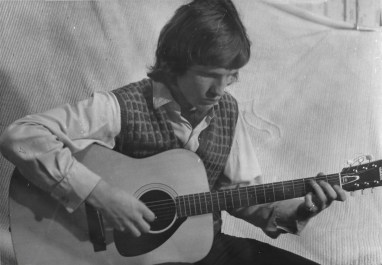


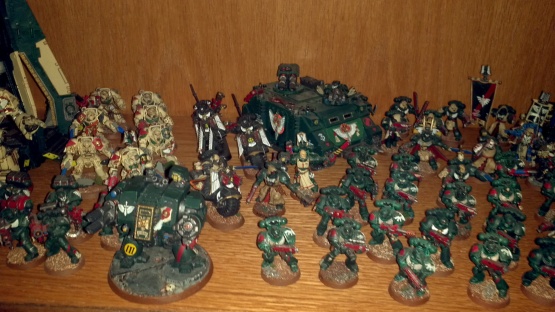





 In the 16th C., Moses Cordevero “discovered” or “wrote down” ancient (oral) texts, or simply wrote them as new texts. These are prominent among the received texts, part of the basis of Kabbalah (which means Reception, Received, but idiomatically, Revelation). One book is The Palm Tree of Devorah. At once it seems a text about how to be a good judge, like Devorah, and how to transcend our lives of judgment to obtain a Oneness with Keter, the Crown of Creation. Some excerpts, from Daniel Matt’s book, The Essential Kabbalah: The Heart of Jewish Mysticism (including his notes / commentary after the boldface text):