Archives: Projects
Nature … Place … Community
If we are to understand such a vast topic as Environmental Justice, we have to understand that these words are too large and unfocused to do much more than just introduce the conversation. In searching for language that is large enough to encompass the feelings and perceptions we have towards this wild, ancient and incredibly complex earth, we run the risk of losing the very meaning we’re trying to express.
Sometimes the words loom so big that ideas about where we live become completely abstract. Discussions in science and academic (i.e rational) philosophy often go this way. “Environment” can be defined in a precise way and so can “Justice.” It can seem like this is a good way to frame an issue, but it often does so by cutting the heart out of our dynamic, living world, by pinning a butterfly onto a board, where we can look at it, test it, measure it…but not love it or have a living relationship with it. This game of being “objective” can help us see some things more clearly, but at the risk of distancing us from what is actually with us, around us, under our feet. Cleaning our windshields can help us see better and make better choices, but it can’t help us care. That has to come from somewhere else.
Alternately, the large encompassing language can jam our circuits, confuse us, scare us even. What can an “environment” be? How much does my “environment” overlap with a neighboring “environment”, and what is the right or “just” relationship between these various “environments”? How far do we have to go before there is “Justice”? These questions are too complex and too big to answer with any confidence. And so, knowing we feel something, we take the large encompassing words and water them down so that we hear them or use them as cliches, as small things more our size, that we can turn over in our hands and minds and do something about today. A restored prairie? An oak savannah (with hiking trails and benches)? A beach, a park, a mountain top? How nice! Let’s take a picture and carry a guide book in our pocket. At this size, EJ seems so much more manageable.
And yet, something about the phrase ‘Environmental Justice’ can get a conversation started. Because, in fact, many of us do have incredibly meaningful thoughts and feelings about this expansive world, that was here before us, that we are products of and present living parts of, and that will continue to exist (in some form) after we die. We have had experiences, flesh and blood, sensual and intellectual, about this complex, living, changing, moving system of life. We have a desire to express, or to understand, something that is bigger than us, something that we’re a part of but that we can’t ever ultimately control. And all of this – this odd, baffling, awesome experience – we think is important, though it can be damned difficult to say exactly why.
Great, Steve. But what is to be done? How do we get from (a) knowing that something is important to (b) putting energy into actually making changes that are good, that feel satisfying, that will last? Well, I’m no guru or Nostradamus, but I think there is a kernel of wisdom without which all active efforts to “save the planet”’ will fail. It goes like this.
-
Caring is 1000 times more important than being clever.
-
Caring takes practice. Caring is hard work.
-
It is difficult to care about abstract things. The best healing work happens locally, day by day.
-
The hard work of caring comes from taking personal responsibility. It must be personal. It is not an obligation. It’s a choice.
-
The reward for caring is perhaps (but not certainly) a better world. What is certain is that by practicing caring you will gain in wisdom, compassion and humility. And so will any human community that you’re a part of.
-
Any path to “saving the planet” will require human cultures and communities that are wiser, more compassionate and far, far more humble.
© Steve Wiencek
Cruel Legacy
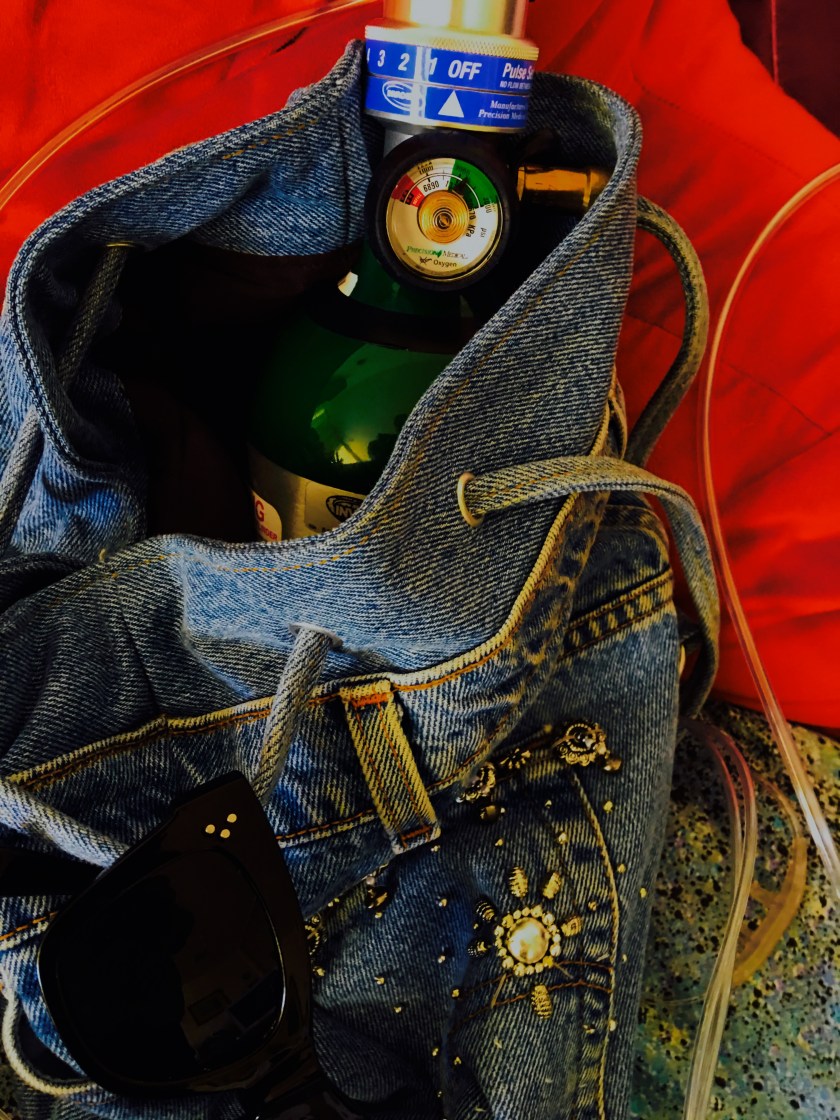 At the time in our history when we started to see nature as something apart from us, when we gave up our shamanic instincts and in our hubris separated them from our growing science, when we devolved from stewardship and one-with to ownership and power-over, we set ourselves up for a world of multifaceted pain and disruption. One result in modern times is environmentally induced disease caused by xenobiotic substances that result in cancers, autoimmune disorders and interstitial lung diseases (ILDs).
My concern here – as a powerful and noteworthy example of the impact of industrial pollutants and of wars and other violence to the earth and its inhabitants – is interstitial lung disease. I have hypersensitivity pneumonitis, an ILD that can be caused by smoking. I am a lifelong non-smoker. Everyone – EVERYONE – is at risk of ILD, smokers or not, and so are other animals. We know that in the United States and England, the numbers suffering from ILD are growing. No matter where in the world we live and what we do for work, we all need to recognize and acknowledge this as part of the complicated package of environmental injustices.
Our lungs are the only organs that are exposed and immediately vulnerable to industrial pollutants and inhaled chemicals, dust and other particulate matter in the air. One study tells us, “Lung cancer is the number one cause of cancer-related deaths in humans worldwide. Environmental factors play an important role in the epidemiology of these cancers.”
Consider the two hundred ILDs: These are diseases that affect the tissue and space around the air sacs (alveoli) of the lungs resulting in scaring (fibrosis). We – and other animals – can’t breath through scar tissue, which is not permeable. Hence the exchange of carbon dioxide and oxygen is inhibited. The result is a slow, horrifying and painful death by suffocation. This is mitigated for people like me who have access to healthcare, supplemental oxygen and medications like prednisone and mycophenolate mofetil. People living in poverty, in war-torn areas or working at risky occupations in third-world countries, get no such relief and no palliative care is available to them in the final stages. This is unimaginably cruel.
While the most common interstitial lung diseases are considered idiopathic, they can result from exposure to certain chemicals– including medications – and from secondhand smoke and occupational exposure to agents such as asbestos, silica and coal dust. They may also evolve from an autoimmune reaction (hypersensitivity pneumonitis) to agents in the environment, some of which might be naturally occurring and benign for many people.
Forbes Magazine cites lung disease as one of the continuing legacies of 9/11, the result of “toxic collections of airplane fuel, asbestos, fiberglass, metal, plastic, garbage, waste materials, fecal material, human remains and who knows what else.” In reading this description, one can’t help but think also of the people of Syria and other regions of war and conflict. It is not uncommon for soldiers returning from war to report newly developed respiratory disorders.
Industry, war and conflict, greed and denial, all combine to put the very ground we live on at risk, the air we breath, and the precious functioning of our lungs … We rightly worry about and advocate for issues of deforestation, pollution, hunger, dislocation, destruction of property and other issues of environmental injustice. Not the least of our motivations, concerns and advocacy must be for the sake of our lungs. It’s a fight for the very breath that enlivens us.
© 2016, words and photograph, Jamie Dedes, All rights reserved
Regicide

The tide is out way downstream
in the great harbor, so the reed-ringed
pool at riverside here is wading depth
for a single spindly-legged heron.
She picks her way around, slowly folding
her leg up then extending it to wakelessly
enter the water in a slow-motion
hunter’s march toward the center
of her soggy dining room. All the while
she searches mightily for crabs and shiners
in its strangely sheened shallows.
Her movements are hard-wired
through uncountable generations
of her kind for whom the Hudson
has been home and larder.
They all walked the same gyre as she,
striding toward the middle of the pool
in successively smaller circles,
as if attached to an ever-shortening string
winding ‘round a pole to its mid-pool end.
But an intruder has claimed the throne there,
and she nervously diverts her attention between it
and the scant dinner darting just beyond her reach.
Blue and broad-chested, the interloper
carries a scent familiar to her now, always
in the air but never so strong as today.
A darning needle hums through the heat,
as a barge glides by, its wake shaking
the outsider to life. Fearful, the natural hunter
beats its wings and surrenders to the leaking
fuel drum that scatters swirling rainbows
across the water and its venom to the
muddy bottom of this realm where once
ruled lean grey princes and princesses.
©2016,words and photograph, Joseph Hesch
Trespass
This is a series of haiku I wrote reflecting on people who trespassed into a bird sanctuary so they could get the “right” photograph. The photos were taken across two days at the same location. Both days, there were people stepping into the Dungeness National Wildlife Refuge off-limits area. Hiking guidelines here. Shalom, Terri.
footsteps trespassing
coastal bird sanctuary
seahawk stands guard
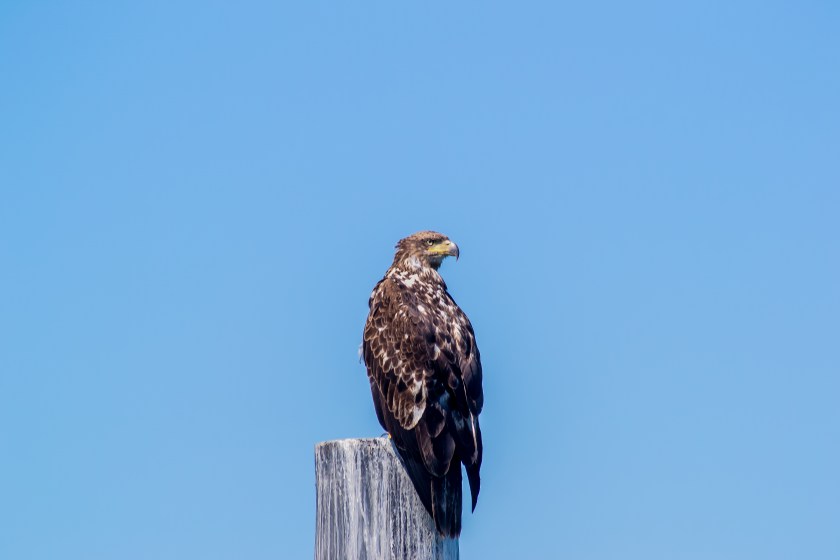
disturbing the shore
stopping to examine shells
pocketing the forbidden
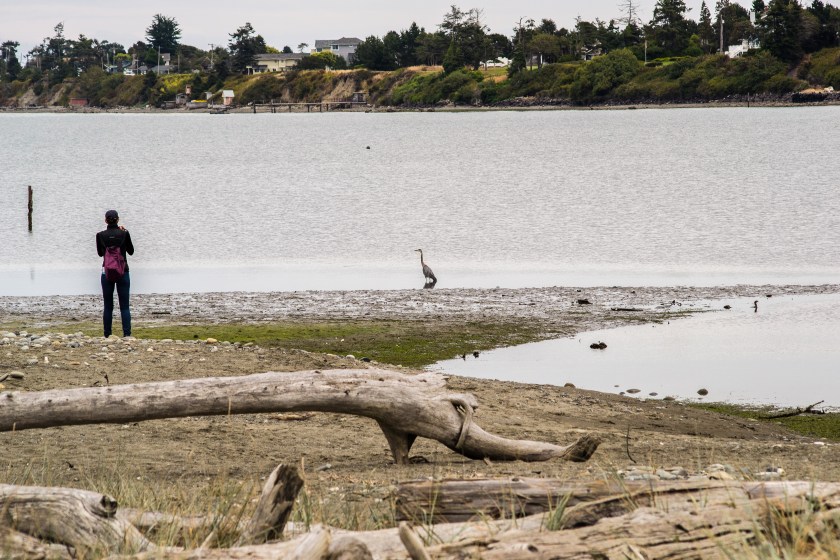
ignorant touches
disturbing nature’s balance
the seahawk is gone

Photo and haiku by Rev. Terri Stewart. Covered under Creative Commons licensing: (CC BY-ND-SA).
Dawn Chorus
It starts with one.
One skylark singing.
One Carson warning.
Then the robins and blackbirds join in.
The early birds, like Carson.
Then the wrens and warblers
as the daylight warms them.
Listen.
Can you hear them?
The warning calls are warming up as well,
strengthening their numbers
as the bird song
dies away.
Listen.
Listen.
Can you hear them?
Listen.
Don’t sleep.
Don’t wait
to hear
the silence.
© Lynn White
First published by Ealain, Extinctions Issue 7, April, 2015
How Will I Behave Here?
September 15, 2016
“Environmental Justice” is a rather fancy framework – two words with seven total syllables to convey a concept. Let me give you a simpler structure – one question to ask yourself as often as possible. How will I behave here? Five important words make up this question, and each one can continue to yield insight the more time you spend with it.
Let’s start with the subject – ‘I’. Bringing awareness to how you think of yourself is a huge step in understanding – not just for environmental justice, but for Life in general. Know thyself. What are you biologically? How do you fit in the ecosystem or the food chain? Do you have a beginning or an ending? What does it take for you to survive the middle? Who are you psychologically? What has influenced that and what makes that change?
The direct object in the sentence is ‘here’. What is the Here that you relate to ? I suggested in the writing prompt “Tell Me: What IS Environmental Justice?” that our contributing authors may look at the environment from a perspective of Nature, Place or Community. As you ask yourself this question on a daily or more frequent basis, Here will be increasingly specific.
Now the verb: ‘behave’. It’s the act of acting; perhaps it’s all verbs in one. What we do matters. In my work as a volunteer at a Nature Center, I learned a short maxim for Environmental Education. It was made up of 4 words beginning with ‘A’: Awareness, Appreciation, Attitude and Action. Action is the outcome of our character. A lot goes into making us who we are, but it’s who we are that will most influence what we do. There are those who hope to influence action from the top down and employ legislation, incentives and consequences. There are those who hope to influence action from the bottom up and employ education, compassion and liberty. Behavior is often the event that gets a conversation started, the outward and visible sign of internal forces. We see video clips in the news and wonder, “Why THAT behavior?” (the Oregon rock tippers, graffiti in National Parks, buffalo calf rescuers, photographers disturbing marine life, etc.)
The word ‘will’ in the question can be both a verb tense and a noun and makes a great pondering point. What is your Will? What do you desire, hope for, intend, long for, want, choose and champion? You get to bring all your personal energy into this question. You will behave in some way. You will act or refrain from acting one way or another, and this will make a difference.
Finally, we’re left with the very first word: HOW? This is where we’re invited to expand our imaginations and reach toward infinity. This is where creative people can lead and model and catapult the status quo toward a more distant target. It is also where we can entrench ourselves in habits, in conservative approaches that allow for little or incremental change, in comfortable measures of disturbance offset by self-congratulation. This HOW will be the expression of our will and our identity.
So, think and ask: How will I behave here? That is how you will engage in Environmental Justice.
And you will engage, whatever you do.
Priscilla Galasso, Contributing Editor
with Steve Wiencek, Guest Editor
Soil isn’t sexy … neither is war
A dirty argument for sustainability, social justice, and peace
In the late 1980s, one of my guests on a community radio program I hosted came from a soil conservation group. She discussed the importance of soil—healthy, living soil, not chemically-supported but dead soil. She emphasized the importance of developing organic farming and turning back the trend of agribusiness mass farming that depleted soils and then added chemicals back to support the plants—but did nothing for the living soil.
She admitted that “talking about dirt isn’t sexy,” and that her group had a lot of work to do to get people’s attention. A friend of mine told me after the show, which he had listened to, that she was right. Dirt isn’t sexy.
Soil may not be sexy but treating it well could help solve climate change.
Ignoring it could lead to our extinction.
Do I have your attention?
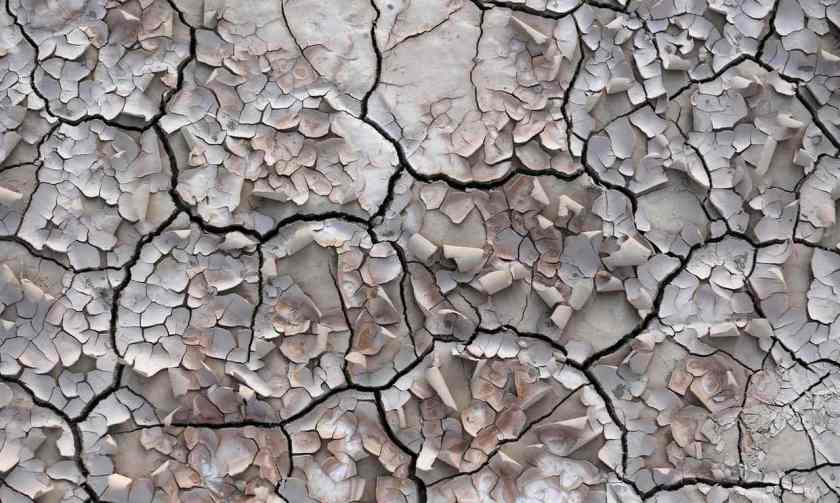
Now, 30 years later, The Guardian has run an article about soil as “the best shot at cooling the planet.” In it, Jason Hickel discusses an overlooked, “… simpler, less glamorous solution…” to climate change:
“It has to do with soil…40% of agricultural soil is classed as ‘degraded’ or ‘seriously degraded.’ In fact, industrial farming has so damaged our soils that a third of the world’s farmland has been destroyed in the past four decades.”
Industrialized forestry and agricultural practices have largely depleted organic material from the soil. The organic materials give the soil life. They also lock in carbon dioxide—second only to the oceans in its ability to do so. Hickel writes that soil “holds four times more carbon than all the plants and trees in the world.”
While dirt is not sexy, it is incredibly important.
Hickel goes so far as to say the science about regenerating soil is exciting:
“Scientists and farmers around the world are pointing out that we can regenerate degraded soils by switching from intensive industrial farming to more ecological methods – not just organic fertiliser, but also no-tillage, composting, and crop rotation. Here’s the brilliant part: as the soils recover, they not only regain their capacity to hold CO2, they begin to actively pull additional CO2 out of the atmosphere.”
A few years after the radio show, the Somalian novelist Nurrudin Farrah and I listened to a National Public Radio program while driving somewhere in the Twin Cities. The man being interviewed spoke extensively about economic colonization of farming in “underdeveloped” countries. He argued that hunger and poverty in the “Third World” was not about a lack of capacity to produce food or other necessities, but about multi-national corporations paying for crops they could sell for maximum profits in the “Developed World” and a system that then sold the farmers food they could have grown instead.
Farrah, a “post-colonial” author exiled at the time from Somalia, turned to me and said, “This man knows what he’s talking about.” The “development” that the U.S. and Europe pushes is an economic colonization of the so-called “under-developed” countries, he explained. The process of “Globalization” serves to develop pipelines of resources to multinational corporations, to develop markets to sell back those resources in the form of those corporations’ products (the push for “open markets”)—and simultaneously to develop cheap-labor markets to do the processing.
It is all about profits, not about providing for the economic needs of the people living there. Or anywhere. It is not about developing the countries into stronger systems for their citizens. It is about taking. Depleting. Degrading. As we are doing with the soil.
Agribusinesses push large corporate farming (and de-forestation) in order to profit share-holders—they have little interest in food production or sustainability per se. Farmers around the world who could grow food for their families and neighbors are pushed to grow cash crops—sugar cane and pineapple are two prominent examples. Beef cattle are grown on deforested lands, with the meat going to developed countries’ groceries and restaurants, with the fast food industry a huge consumer. Cotton is a major crop in some Middle Eastern countries. Cotton fields do not produce food, and do not produce cotton for local clothing needs but for high-thread count sheets and other luxury items sold in other countries.
If the farmers want food and clothing, they need to buy it from other multinational corporations.
This story is well known. It is not unlike the trade triangle England set up between itself, its Caribbean colonies, and its North American colonies. It is run by capitalists now, not governments, but the capitalists often control the local governments. Increasingly, the capitalists influence and control the national governments globally, in both the “developed” and “developing” countries.
This influence includes fighting against environmental regulations.
The “regenerative” farming practices Hickel writes about will not be easy to implement, especially against the will of corporate interests. They could lead to more economic justice globally, deriving from local farmers producing agricultural products for local consumers. This change won’t come about without a fight, though.
That’s half the story. A major effect of the economic displacement that this “development” has on the citizens of the country has been displacement of people.
More and more people move to urban centers, seeking income with which to pay their way into the system. There are increasing social and economic pressures as people press into the cities, increased competition that often fractures along ethnic, racial, and religious division. And increased armed conflict.
The other half of the story of the degradation of healthy soils is war. War results from it. War causes it. And right now, the world is at war.
Last year, almost to the day as I write this, the Middle East and North Africa choked on dust from September 6th to the 9th. An “unusual” storm disrupted normal living, even shutting down the Syrian air force. “The influx of dust triggered a rash of canceled flights, closed ports, and a suspension of daily activities for many people,” according to “Dust Storm,” an article on NASA’s Earth Observatory website.
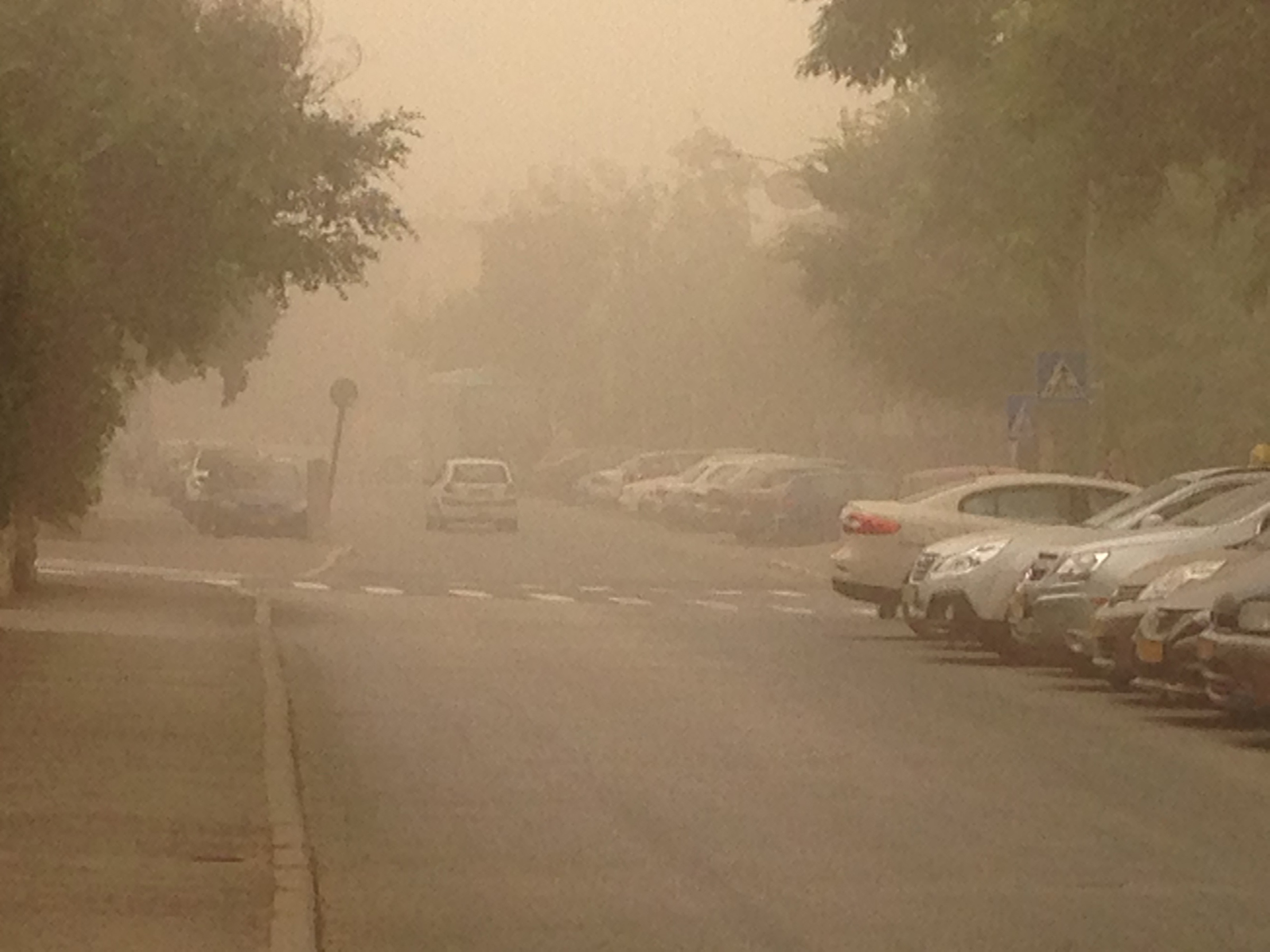
People died. The pollution count for Jerusalem was 173 times normal, and the Environmental Protection Ministry in Israel advised everybody to stay inside, according to an article in The Times of Israel. Temperatures also rose to higher than normal, over 100 in Jerusalem in September.
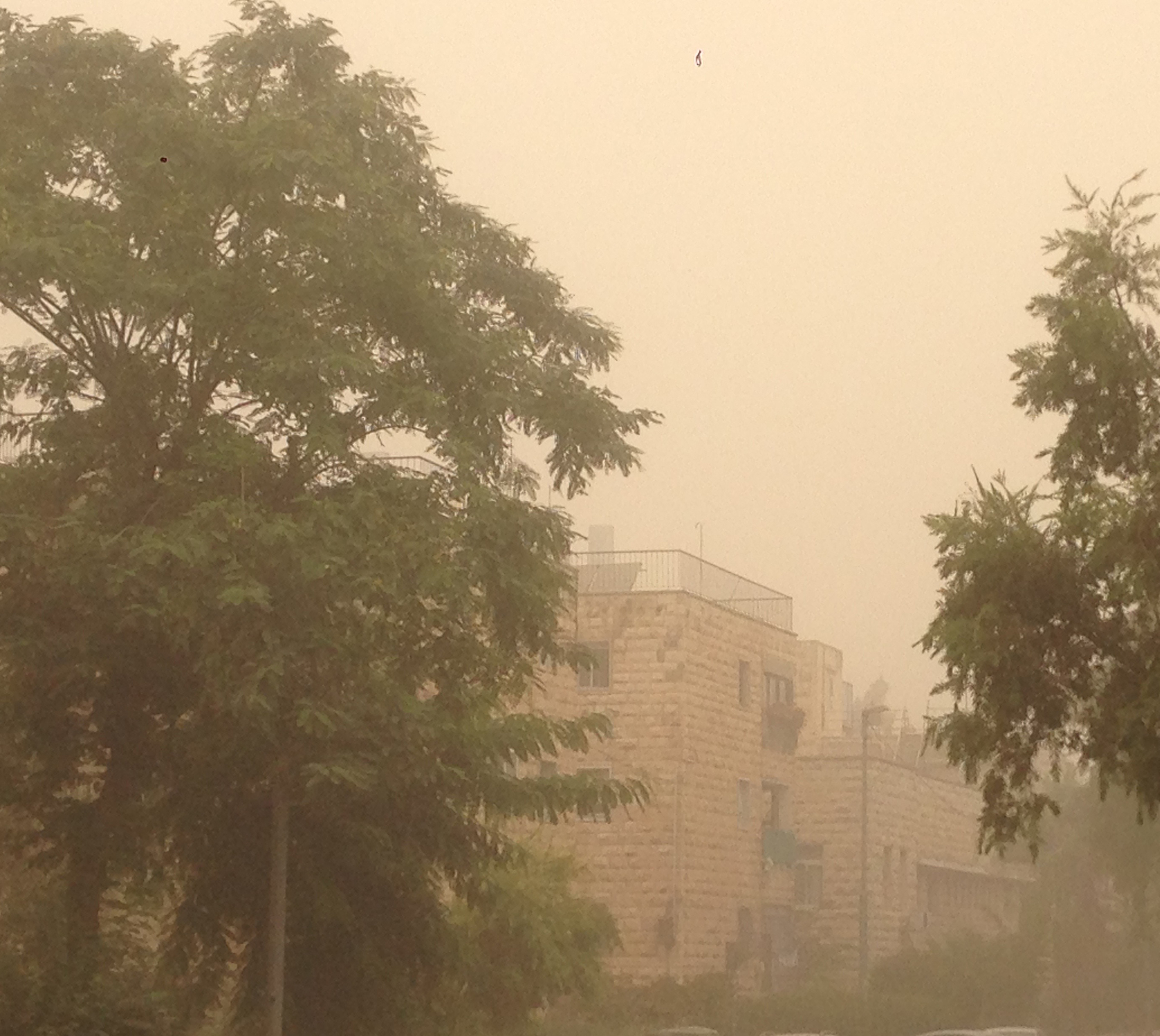
If you don’t know the Middle East, you might imagine that dust storms like this occur daily, weekly, or at least monthly. They don’t. Not like this. I’ve lived in Jerusalem almost ten years now, and I have experienced dust storms. None was this intense. And dust storms are more common in the Spring.
This 2015 storm was unusual for many reasons—scale, intensity, timing, and accompanying heat.
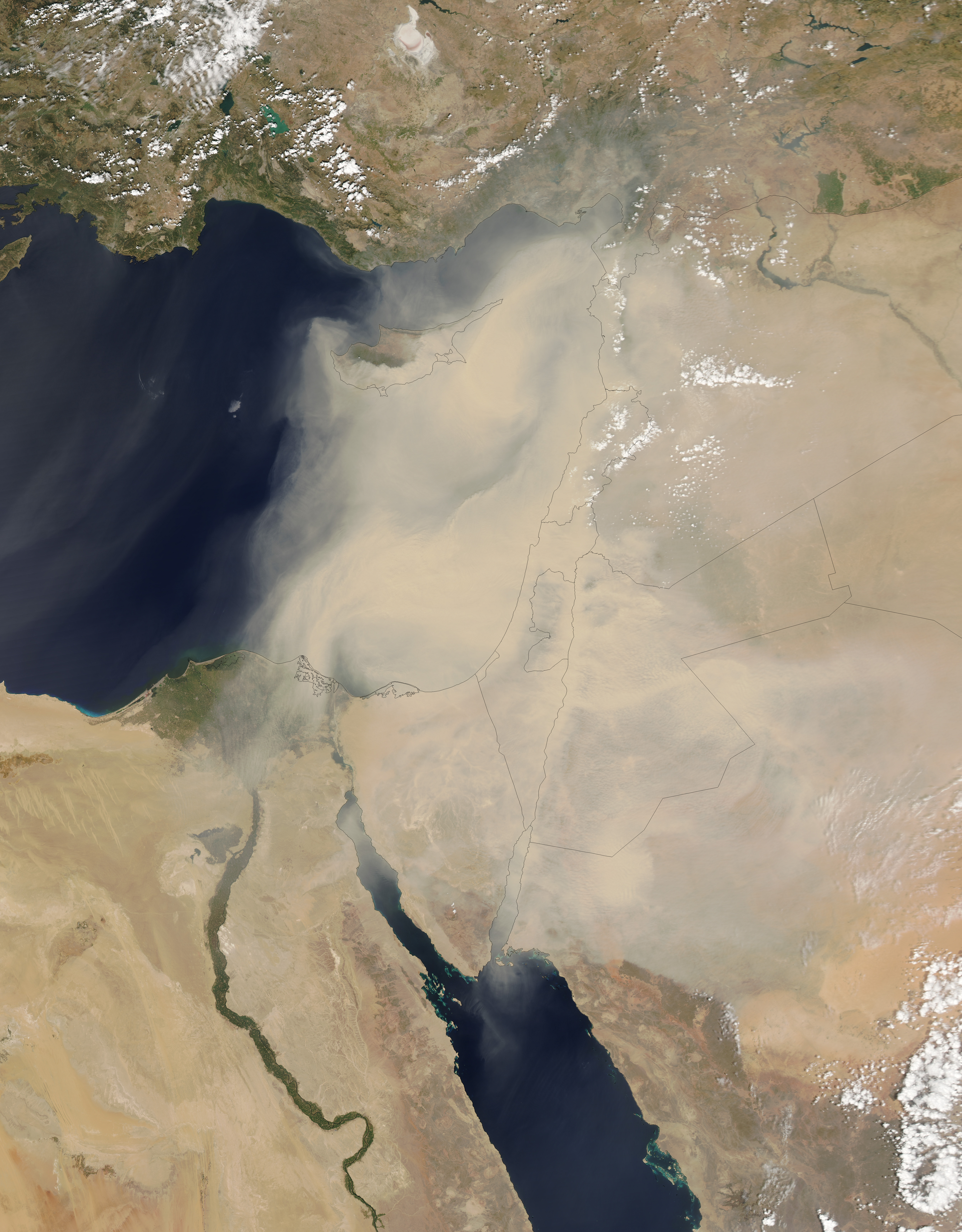
And, as it turns out, its roots likely were in degraded farming lands related to both climate change and war. And all of this is instigating not only dust storms, but quite possibly the humanitarian crisis of the displaced refugees.
Six month before this particular storm, in March 2015, Craig Welch wrote Climate Change Helped Spark Syrian War, Study Says, for the National Geographic website. It opens with this paragraph, which should give us all pause:
“A severe drought, worsened by a warming climate, drove Syrian farmers to abandon their crops and flock to cities, helping trigger a civil war that has killed hundreds of thousands of people, according to a new study published Monday.”
The authors of the study from The Proceedings of the National Academy of Sciences recognize that many social and political factors contributed to the civil war, of course. However, they “compiled statistics showing that water shortages in the Fertile Crescent in Syria, Iraq, and Turkey killed livestock, drove up food prices, sickened children, and forced 1.5 million rural residents to the outskirts of Syria’s jam-packed cities—just as that country was exploding with immigrants from the Iraq war,” according to Welch.
The severity of the drought and other weather conditions, according to their data, was outside the normal variability of weather in the region.
The social and economic pressures of the urban influx caused by soil degradation likely related to climate change, was probably a major contributing factor to the conflict that has been going on for years now, displacing millions of refugees.
While there are limits to the study, and perhaps the civil war would have erupted had there been no drought—the fact remains that the drought, at the least, increased tensions and the numbers of refugees.
This complicates the arguments about whether the refugees are economic, political, or war refugees. Depending where they come from, they could be all three.
And the three are interwoven—from the economic system that encourages farming practices that degrade the soil, to climate change-drive droughts, to the political climate in the region, there are many lines of connection and interconnection.
The need for sustainability, social justice, and peace weaves throughout this story of soil.
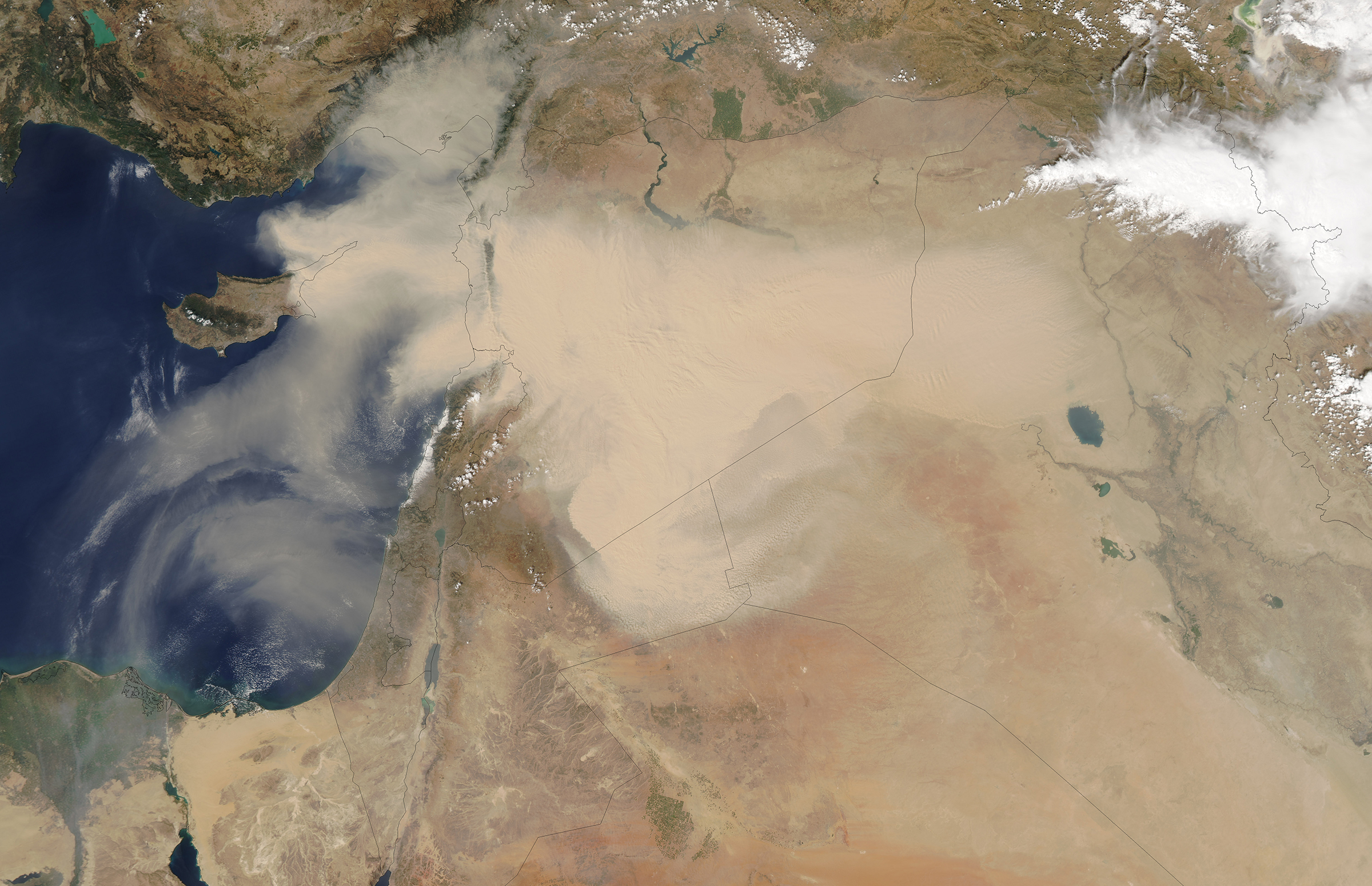
Some called the September 6–9, 2015, sandstorm “unprecedented.” It was.
A month after the storm, Zafrir Rinat reported in Haaretz, an Israeli newspaper, that “Israeli scientists this week confirmed that one factor behind the heavy dust storm that hit the Middle East recently is changes in the use of land in northern Iraq and Syria.”
Two factors were identified—a decrease in farming in Northern Syria, which had preceded even the recent drought, and “military activity, which has caused harm to the soil crust in Syria.” In other words, the already drought-hardened soil was further degraded by tanks, artillery, trucks, bombs pulverizing it.
Instruments recorded the largest dust particles for a storm in that twenty-year time period since they have been in use.
Winds picked up the violated soil. And as they moved along, a dust storm of unprecedented proportions hit the region.
The storm of soil degradation could wipe us all out.
This is not a sexy story. It is, though, an important one.
—Michael Dickel
Climate Change
—a long drought in Syria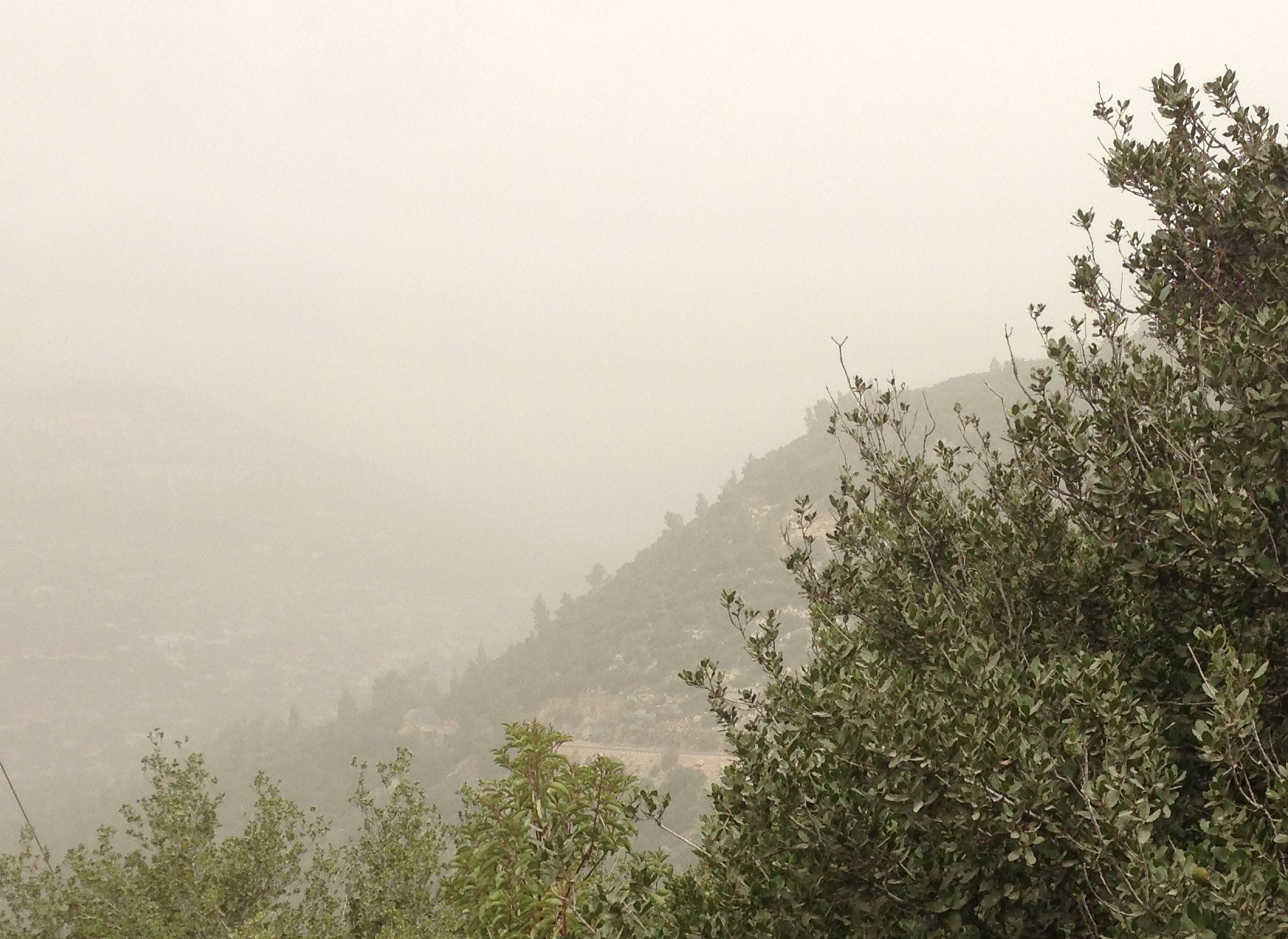
depletes soil and farmers
(those lower classes) migrate
to cities as their fields fail.
Amid the oppression
repression
degradation—
discontent and hopelessness
burn across the region.
Arab Spring and the Syrian Civil War
mobilize war machines—
climate change of another sort—
tanks, artillery, armored vehicles, bombs—
crushing the soil,
crushing the crust.
And the bombs bursting
in air, scattering dust.
What farmers remain are killed,
driven out by ISIS, Syrian Army, or Rebels,
driven out by inability to farm and raise food
and what they scratch from the soil
gets stolen by the armies—
driving the refugee crisis,
driving across the old fields,
driving further depletion,
destruction of top soil.
And a year ago,
winds picked up the dust,
created a widely destructive
work of art, a dust storm
to end all dust storms,
a world war of dust storm
from Syria to Cypress out in the sea.
The effects of climate change
multiplying, driving more refugees
into more widespread urban areas
amid the oppression
repression
degradation—
discontent and hopelessness
across the ever-widening region.
—Michael Dickel
“Rounded with a Sleep” — Time-Scales, MXEs, and Climate Change (Part 2)
 In Part 1, I said that the “only” substantive issues remaining to be dealt with vis a vis global, anthropogenic climate change are political and ideological, not scientific. That’s like saying that the “only” problem in dealing with Hurricane Katrina was that there was “Gosh … lotsa water!”. This is not without precedent. Scientific issues that impinge on ideological, especially religious, issues are exceptionally delicate, requiring uncommon levels of finesse. What makes the political dimensions of climate change unique is that, to a degree not shared by other such volatile issues, the literal survival of the human species is at stake, nothing less. Discussing a hotter Earth will require a correspondingly cooler rhetoric.
Problem is, especially if you are talking to a conservative individual or audience, all the above is virtually guaranteed to make your audience less likely — not more likely — to take the issue of global warming / climate change seriously. No matter the degree of unanimity in the literature and among members of the scientific community (the 97% being bandied about is extensively backed up by climatological literature), there is something about citing scientific conclusions, together with the relevant numbers, that makes one’s pro-climate-change argument less credible among the people who are skeptical. I strongly suspect that this paradoxical-sounding effect is traceable to the fact that (a) conservatives are much more likely than liberals / progressives to be religiously observant, and to be much more observant within theologically conservative traditions, which has the effect of (b) rendering the time-scales of the foregoing MXEs much more problematical in the minds of conservatives than in the minds of liberals / progressives.
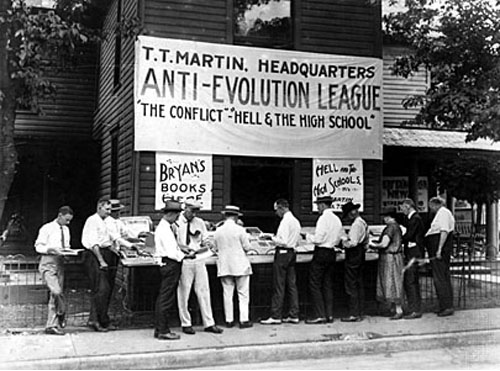
If I am religiously conservative, I am much more likely to believe in a young — or at least much younger — earth than someone to the left of me, ideologically. Consequently, when the latter cites climate-change precedents that rely on time-scales measured in several-hundred-million years, as with the end-Permian event, a conservative with a religiously grounded chronology reacts with reflexive skepticism: the dinosaurs could not have been killed off 65 million years ago if the entire planet is only 6 thousand or 10 thousand years old. (Ironically, this argument is often advanced by people who insist that they believe in the authority of the Bible, but the 6-thousand-year number is found nowhere in the Bible. It was calculated by Anglican Bishop James Ussher, Archbishop of Armagh, in the 17th century.) Add to that the conservative tendency to equate academic attainments with religious skepticism or even outright atheism (which statistics substantiate), and an additional layer of skepticism is added. The issue is more a clash of ideologies than science: more a matter of climatologists than climatology. At that point dialogue degenerates into some stereotyping that, if applied to gay people and African Americans, would elicit outrage — and the signal about climate change gets lost in the noise of ideological jingoism.

Bottom line: in enlisting public support of actions to mitigate global warming, what strategy might avoid the self-defeating effects of a premature appeal to scientific literature and scientific consensus? This is not a question of intellectual integrity. Rather, it is a question of what works. It is a question of what works because of the brute fact that, at least in Western, European-derived, First World democracies, governments respond to people, and if the people en masse do not consider climate change a priority, then neither will their governments. Reversing climate change is inevitably going to cost money, great massifs of money, and if the heart of people is not in the issue, neither will the money be there (Matthew 6:21). Besides, even on the level of intellectual integrity, the prior questions are “Whose intellect?” and “Whose integrity?” I would venture two suggestions, one drawn from personal experience; the second just common sense:
(1) While thinking globally in public, speak and argue locally in private.
That means leaving the rigorously scientific “paleo” climatological substantiation for climate change in the background, at least initially. Omit references to 65 million or 250 million years ago, the 40 or 50 or 100 thousand years it took for the end-Permian event to extinguish 90% of all life on earth, the inferences to be drawn from the iridium layer laid down by the meteor / comet that marks the boundary between the Cretaceous and Tertiary epochs, etc., etc. Leave all that out. Yes, it’s important. Yes, it’s real. But if you are talking to and debating with people who are not conversant, even on the level of an interested and educated layperson, with the various esotericisms that support conclusions about climate change — and certainly if you are talking to and debating with people with a pre-existing “hermeneutic of suspicion” vis a vis science — bringing up data from remote geological epochs is virtually guaranteed to be counterproductive. Paradoxical as it may sound, the rigorous science detracts from the credibility of one’s arguments. But the paradox is not real, only apparent: you are doing politics now, not a research colloquium.
Instead, talk in terms that are local, both in terms of space and time. For example, when my wife and I moved to Seattle from Boston 25 years ago, we were gratified to discover that, though very few houses had even window air conditioners, much less central air, there would only be a handful of days in a typical Seattle summer when any kind of air conditioning would have been really nice. Most of the time, we could leave windows open on opposite sides of the house, and the prevailing breeze blowing between the two windows would be ample — and there were only a few days during a typical summer when we needed to do that. But at about the 15- or 20-year mark, summers became so warm that we finally broke down, bit the financial bullet, and had central air installed. By that time, summers in Seattle had become warm enough for long enough that air conditioning was cost-effective. After roughly 20 years, my wife and I concluded that, yes, the climate was changing, becoming warmer, and these changes were gradually becoming perceptible. Keeping our house habitably cool requires no complex excursions into Christian, or any other, theology.
Which leads me to my second bit of advice:
(2) Leverage the young-earth ideology itself as a means of rendering the issue of anthropogenic climate change both credible and urgent.
Empirical science being as it may, if the entire cosmos was indeed created 6,000 years ago, then, once the empirical reality of climate change has been conceded, the time-line of climate change is far, far more compressed than anyone, even professional climatologists, realized at first. So the issue is correspondingly more urgent. I am no being sarcastic in the least when I say that people who believe the earth was created in 6,000 years and that the eschaton could occur in the next few days should – for reasons of pure logic alone – be in the forefront of efforts to address global warming. We may not have to wait for “the elements [to] melt with fervent heat” (II Peter 3:10). Indeed, in a sense St. Paul could not have anticipated “Now is the day of salvation” (II Cor. 6:2). There is no point in arguing about whether the earth is 6 thousand years old if the earth, as is surely the case, will not be habitable for another 6 hundred years.
Consequently, one would be well advised to discuss the precedents for climate change that are well within the accepted chronology of a typical conservative-evangelical Christian audience. Stay well away from time expressions that have to be expressed in floating-point scientific notation, e.g., 6.5 x 10⁷, 2.5 x 10⁸, 4 x 10⁹, etc. There is abundant short term data indicating the reality of global warming on time intervals comparable to a few human generations. One interesting by-product of these so-called “dT” (variation in temperature, temperature-differential) studies is that local cooling is entirely consistent with the overall trend of global warming. And all of this is easily contained within the 6,000-to-10,000-year history of the planet demanded by conservative religious ideologies. So, Superstorm Sandy is entirely consistent, on a near-continental, short-term scale with global warming on a planet-wide, long-term scale. (Incidentally, this is a good reason to use the term “climate change” in preference to “global warming”: the former term carries no implicit bias as to the scale of the change in terms of space or time.) Finally, based on the data supporting such comparatively short-term studies of climate change, one can – while remaining strictly within the several-millennia range of conservative chronologies – reference model-based predictions of what is likely to happen to the earth’s climate in the next, say, century or two. One need not reference time-frames measured in millennia or geological epochs to elicit concern, even alarm, about climate change.
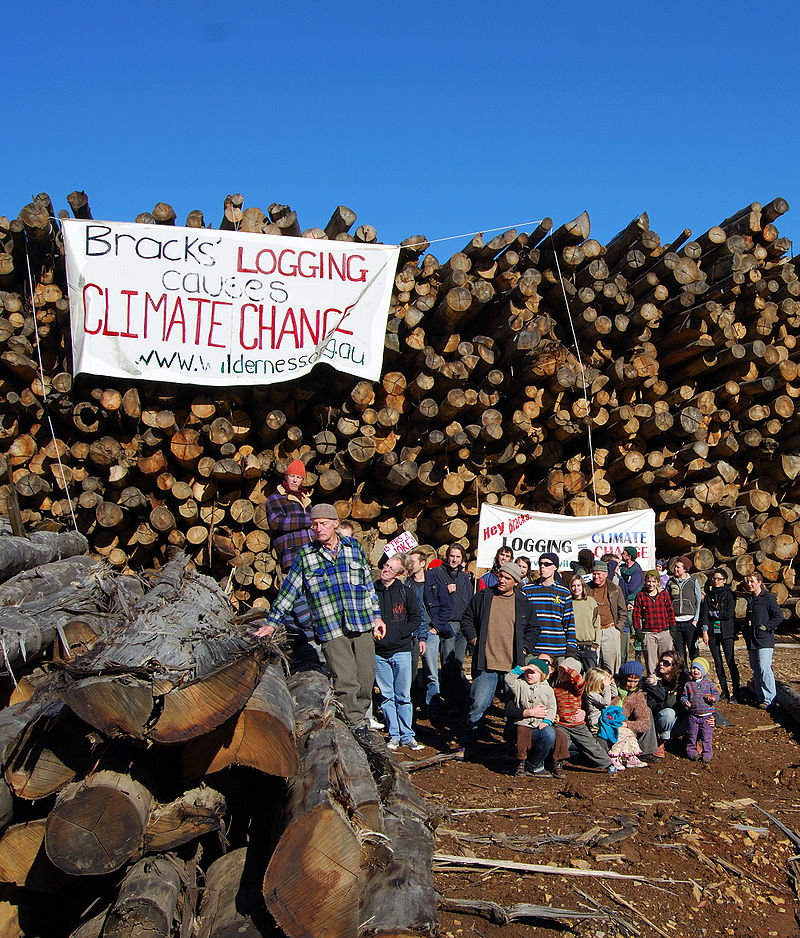
Far too much discussion of climate change in progressive / left-of-center venues these days tends to begin with debates about science only to degenerate into ridiculing others’ religious beliefs. This has two immediate effects: (1) it makes us on the left feel warm and fuzzy, because it makes fun of others’ anti-scientific, flat-earth biases; but it does so at the cost of (2) in the long run making conservatives like Mike Pence and Ted Cruz – granted, lost causes to the climate-change issue – more credible to large swathes of the conservative population than people who believe in the urgency of the global-warming issue. Meanwhile, Earth’s transformation into Venus proceeds apace. I vehemently disagree with the Pences and the Cruzes and the other climate-change deniers as much as Prof. Richard Dawkins. But I disagree with Prof. Dawkins’ reaction. He says, basically, “Ignore them.”
The problem with that reaction may be stated in two words: They Vote.
James R. Cowles
Image credits:
Temperature variation chart: Richard A. Rohde … Creative Commons by SA 3.0
Anti-evolution gathering: Mike Licht … Creative Commons 2.0 generic
Climate change protest photo … Peter Halasz … CC BY-SA 3.0
Anti-evolution gathering: Mike Licht … Creative Commons 2.0 generic
Climate change protest photo … Peter Halasz … CC BY-SA 3.0
~ Last Call ~

A sweet, cheerful song no longer heard,
The species who sang it, now gone.
EXTINCT now labels this beautiful bird.
The O’o Bird’s sad story is done.
We’ve burnt all the trees and drained all the lakes,
Chasing the money, whatever it takes.
We’ve polluted the rivers and trashed all the seas,
Butchered the elephants, poisoned the bees.
We’ve strip-mined the mountains,
Fracked the stone, deep below.
Buried black tons of sludge
With that “clean” nuclear glow.
We keep building cities,
Crowding animals out,
Pour concrete slabs to dam rivers,
And then whine about drought.
We’ve been warned about Warming,
Money calls it a ‘hoax’.
But ALL the life on this planet
Pays the price of those ‘jokes’.
What will it take to change Mankind’s ways?
Can the world survive human beings’ greedy thrall?
Perhaps, like that bird, we’re in our last days…
And the Earth can recover once we’ve sung our last call.
~ C.L.R. ~ © 2016
– Corina Ravenscraft
“Rounded with a Sleep” — Time-Scales, MXEs, and Climate Change (Part 1)
We are such stuff
As dreams are made on, and our little life
Is rounded with a sleep.
William Shakespeare, The Tempest, Act IV, sc. 1
In my more optimistic and mellow moments, I sometimes reflect that, really, there are two climates at issue in the climate change / global warming debate: the physical climate and the rhetorical climate that always accompanies the discussion. In the former, it is imperative that human beings mitigate, and hopefully prevent, change. In the latter, it is equally imperative that change be encouraged by our refusing to succumb to the temptation to engage in ideological bear-baiting of people whose political and religious conservatism renders them irrationally skeptical of climate change. As the earth warms, it is critically important to recognize that, because we inhabit a shared planet, the rhetoric must be kept cool.
Over the years, I have become convinced initially against my will that anthropogenic — human-caused — climate change is a significant threat. But I find that even those who accept the reality of anthropogenic climate change sometimes err on the side of optimism because our habit of thinking and speaking in human life time-scales powerfully influences the way we talk about climate change and how we perceive the associated transformations. Our language determines our perceptions.

Let’s consider some actual time-scales. How long has subspecies homo sapiens sapiens been around? The literature indicates that the best estimate of when this latest model of human being evolved — with a large brain, upright carriage, opposable thumbs, a voicebox supple enough to accommodate verbal communication, etc. — was 150,000 years ago. But to simplify calculations, let’s use the roundest number possible that still keeps us within the taxonomic ballpark, and say (optimistically) 200,000 years ago.
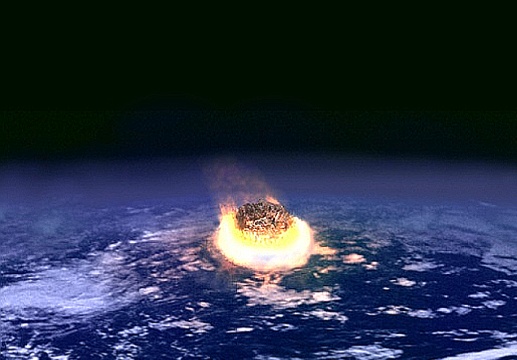
This begs an important question: given the immensity of the geological time-scales involved in comparison to a single human life, or even several human generations, even if we were in the middle of a Major Extinction Event (an MXE), would we even know it?
I’m thinking in particular of the so-called “Late Permian (or end-Permian) Extinction” — a.k.a. The Great Dying — of 250 million years ago. During this period, all the Continents were still fused together into a mega-Continent usually called “Pangaea” (archaic Greek for “all the Earth”), and the end- / late-Permian MXE seems to have been triggered by stupendous volcanic activity in present-day Siberia (the “Siberian traps”), on a scale not seen since the initial formation of the planet. This “primed” the climate-catastrophe pump by ejecting massive quantities of greenhouse (and other) gases into the atmosphere. Once begun, a vicious cycle ensued: the mean temperature of the planet rose initially, which resulted in the melting of methane and CO2 previously locked in ice, which perpetuated the process and caused it to become self-sustaining.
Now let’s do some calculations, just to put matters into temporal perspective. Relative to the elapsed time for the end-Permian MXE, the human race has been around for 2 x 10⁵ / 2.5 x 10⁸ of the 250 million years: about 8/100 0f 1% of that time. So if we compress the 250 million years since the end-Permian MXE to a 365-day year, where the end-Permian MXE began on 1 January, it turns out that homo sapiens sapiens has been around for about 7 hours — say from 5 in the afternoon til midnight on 31 December. Look at it still another way: from the time the volcanism on the plains of Siberia started until the Great Dying was finally consummated is usually estimated to be about 100,000 years, a very brief interval of time, geologically speaking. (Although some estimates are as low as 40,000 to 50,000 years; 100,000 years, while certainly arguable and credible, is definitely in the high range.) However, if we use the real number of 150,000 years for the tenure of homo sapiens sapiens on planet Earth, the 100,000 years of the Great Dying comprises about 2/3 of the time required to establish our species. It took less time for the end-Permian MXE to destroy 90% of all life than for evolution through natural selection to establish human beings as the dominant species of earth. (And dramatically less time than that, if we use the “mid-range” 40,000-50,000-year estimates.) We have little cause to indulge any taste for species jingoism: homo sapiens sapiens has been around only a bit longer than it took to destroy virtually all life on earth 250 million years ago. (One of the reasons the end-Permian MXE was especially lethal was because, 250 million years ago, virtually all life on earth was in the oceans. Evolution’s eggs were all in the aquatic basket, and when the planetwide ocean chemistry changed … I leave the rest to your imagination.) So, in terms of geological time-scales, human beings are an afterthought, an asterisked footnote on the final page of the great, continuously edited Book of Life. How’s that for humbling?
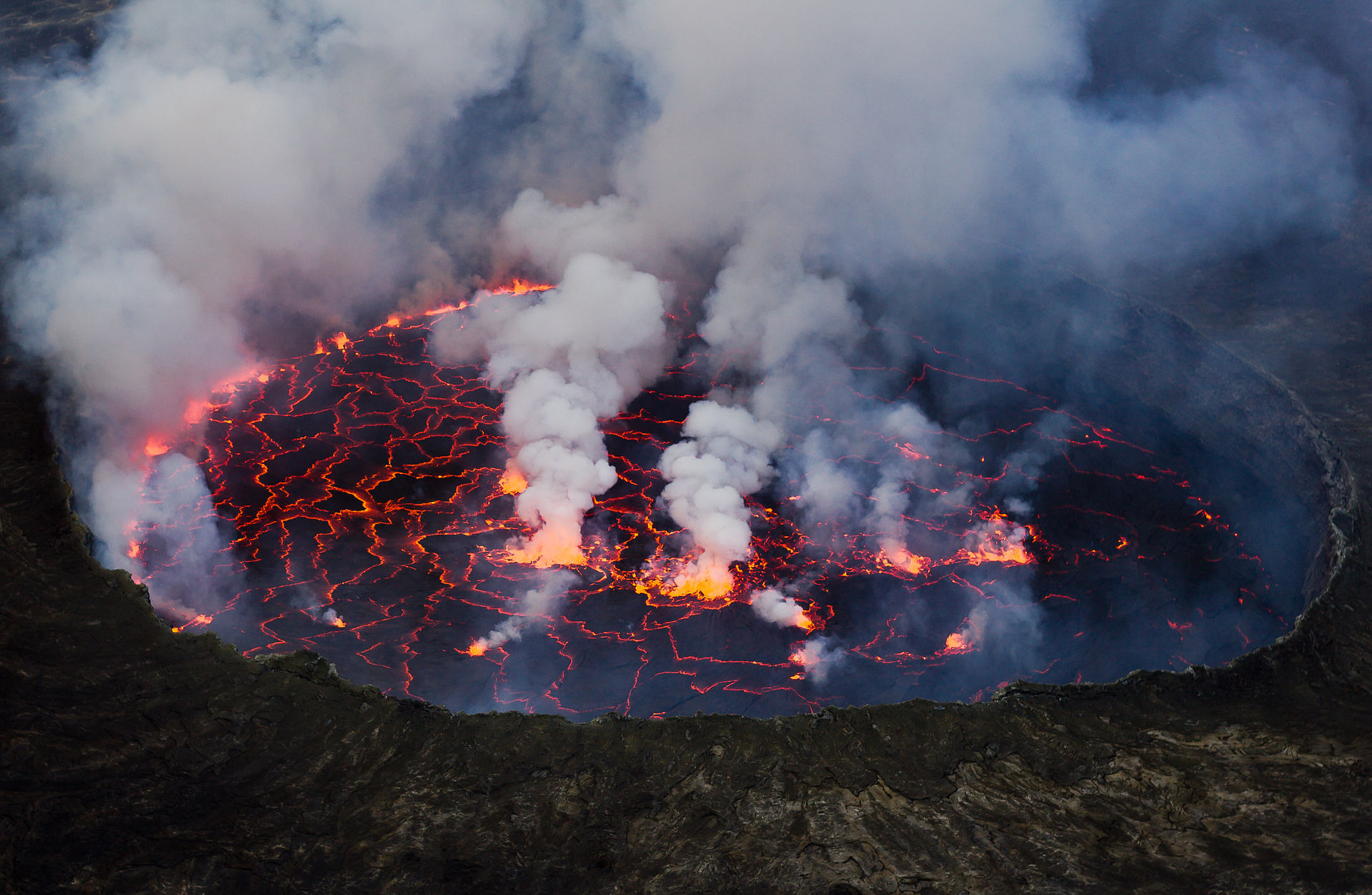
All the foregoing is on a scientific footing that, within the usual limits of experimental and observational uncertainty, has been exhaustively substantiated by literally thousands of observers over time doing literally hundreds of thousands of particular, discrete observations at hundreds of sites on Earth, and by thousands of historical, diachronic (“through time”) observations of the planet’s climate stretching back multiple millions of years. The existence and reality of anthropogenic — “human-caused” – climate change is as firmly established as evolution through natural selection and the fact that the Earth orbits the sun. The remaining questions concern issues of detail, not substance. “Granted the end-Permian extinction occurred about 250 million years ago, did the eradication of all life on earth (i.e., mostly in the oceans) take 100,000 years or ‘only’ 50,000 years?” The only substantive problems remaining vis a vis anthropogenic climate change are purely ideological – often religious – and political, and concern how best to enlist broad-based popular support for the measures that must be taken to arrest, and hopefully roll back, global climate change.
James R. Cowles
Image credits:
“Extinction word-cloud”: Keith Kloor … “Discovery” magazine … 28 Jan 2013
Chixulub meteor image … NASA … Public domain
Volcanic eruption, Lake Nyiragongo … Creative Commons by SA 3.0
Chixulub meteor image … NASA … Public domain
Volcanic eruption, Lake Nyiragongo … Creative Commons by SA 3.0
Another Kind of Beauty
 on the Atlantic Seaboard they’re paralyzed under
the weight of snow drifts, the detritus of blizzards;
their stark bare branches of oak, elm and maple
etch dark veins into an icy-gray cast-over sky
on the West Coast we’re breaking out magnolias
and blades of tender spring grass are unfurling;
the slight warmth tempts us to pull early spring
like a wool blanket around us or perhaps a blessing
along the stretch of Big Sur the sea strikes stone
and the air explodes, bright and wet with spume,
the green-patinated brine salts our mouths;
above us cloud turrets mimic white-capped waves
standing here, consumed by an unutterable infinity,
our hands and eyes and mind are in cahoots to
imitate nature in the most apt way they’re able,
with our sketch pad, pen and colored pencils
a quick wingless flight into that dancing sea and
we surface with visions grasped tight in our fists,
our eyes are blinded by palette colors, our pencils
bear witness to the gift of another morning,
another kind of beauty; undulating, animated
and so unlike the silent white majesty of snow
© 2013, poem, Jamie Dedes, All rights reserved; public domain photograph of Big Sur 2008 via Wikipedia
Hoping It Regenerates … Again!

Jerry Ingeman
Oil painting
Jerry Ingeman lives in rural Minnesota, near the Twin Cities. His work is showing at the Cream City Tattoo Gallery, St Cloud, MN, from Sept. 5–Oct. 7. This painting is part of the show, titled Surreal Deal.
Environmental Injustice
Development and sustainability
Without any question should go hand in hand?
The world its people demand stability
A fair global market, nothing underhand.
Give a living wage and every child a school
Treat no man doglike, no woman as a maid
Weren’t we made equal: look at His grandeur
Look isn’t there ample—what’s the masquerade.
Look, for every man there’s also a woman
So why’s there all this rape and pillaging
The land can’t provide any more gold bullion
Haven’t you had enough? Stop dispiriting
-Every one of us with your warmongering.
Let’s have meaningful relations with neighbours
We’ve had enough of your scandalmongering
We know it’s all about scheming payoffs.
Fill their pockets, don’t care about tomorrow
I’m just living for today as life was made
That’s the business I’m in, so keep your sorrow
If nothing else, corruption will still pervade
That’s the attitude our children are faced with
Are raised with and aspire to live. I’m afraid.
Hazardous material is so much pith
A cleaner fairer world – it’s just a charade.
© 2016 Mark Heathcote
Meditating on Ancient Oak
The bark of the old oak shows its wrinkles, scars
written on the vellum of its years, a new ring
spans the finger of its heart, a summer’s history
almost soldered as its sparse leaves crinkle;
sap withdraws in August Drop before painting
the oak then falling to mulch and feed the tree.
This oak has seen our planet change with time
its rivers tamed, fields, and its villages and coasts
redrawn, kings’ rule and die as all men do
their legacy and palaces razed or democratized.
Its seen Sahara’s sands creep to the sea,
ice thicken or melt around the pole’s,
jungles spread, retreat and species change
men flee from famine, war, women weep
and children starve or die upon the sea.
Encased within the chrysalis of power
oligarchs, dictators wield transient decrees
with the cold eyes and furrowed faces age bestows;
for gold and power strips their hearts, yet
their bones will lay with poor men in the earth.
Whose riches can sustain both man and beast
if kindly managed like this ancient oak,
tending to all a share that gives food and cloak
and with respect shelter from the storms of life.
Stripped bones give no hint of state or faith
when they rise with movement of the plant’s shell?
Ground by magma, rock, wave or fire to dust
they may well blow upon the wind to fall
on foreign fields forgotten by their folk.
Each of us is but an oak leaf in Earth’s time;
life a summer’s span before September’s age,
precursors November’s fall to earth and death’s
transformation to mulch to feed the oak afresh.
© Carolyn O’Connell
The Power of Place
 Last night was unseasonably hot and humid, making sleep illusive. Sometime after two this morning, a thunder storm passed slowly through, pushing the humidity away and bringing in a gusty and cool northwesterly breeze, and relief.
The past few weeks have witnessed a massive gathering of Native people from many tribes, and their allies, to stop construction of the proposed $3.8 billion Dakota Access pipeline. The gathering, which mainstream media have labeled “a protest,” is an attempt to protect both sacred lands and the planet. It is the latest example of a clash of cultures and worldviews that constitutes an immense divide between worlds. One one side are Indigenous people, and their allies, who understand the land to be alive and attentive; on the other side are governments and industries who deny the land has any consciousness, and who place short term economic gain above the value of treaties or the welfare of the planet.
As I thought about this post, I found myself thinking back to reading the early books of Carlos Castaneda. I first read Castaneda in my early twenties, and was captivated less by his use of psychedelics than by Don Juan’s insistence that places are holy and powerful. I was also fascinated by Castaneda’s total inability to understand place; I’ve wondered since whether Carlos was playing with us, making fun of the dominant European culture’s refusal to grant place awareness, choice, or power.
A while back I found myself in conversation about Castaneda, who remains a highly controversial figure. While he is revered by some, others perceive him as a charlatan, or worse, as a violent cult leader. I am reminded that Barbara Myerhoff, one of the most respected anthropologists of her generation, and a friend of Castaneda, firmly insisted he had indeed trained with a shaman. She also laughed when Castaneda appropriated her stories of shamanic training for use in his books; Carlos, she thought, was the consummate trickster. Unfortunately, Myerhoff died of breast cancer young, and was not around to witness, and comment on, Castaneda’s later writing and behavior.
I was raised to understand that places have the capacity to heal us. They may also hold us, offering safety and comfort, and, as Don Juan famously said, power. In our age of placelessness, this may seem an odd idea indeed, yet it is the knowledge given by my teachers, and my life experiences. I was taught that we may journey to sacred places, in body or spirit, and ask for aid for self or others, and that seemingly insignificant locales can hold immense power, which they can choose to share, or not.
Without rootedness in place, we cannot understand the true nature of the world, nor our belonging within it. Yet, those who are driven by greed would prefer us to be placeless, to be without spirit or connection, and thus be good consumers of that which does us harm. They take umbrage when we resist their invitations to see the world as lifeless. We are, it would seem, engaged in a battle for our very souls.
It no longer matters to me that some dismiss our understanding of place as mere superstition. In the end experience is the great teacher, showing us what is of value in our lives. Through living I have come to understand that places are good to visit and to build relationships with. In life, we may return to place, offer gratitude, and find renewal; at death, we may revisit beloved places, and say farewell before we head off to whatever adventures await. Without place, we are indeed lost.
– Michael Watson
All Things Are Connected
The chief of a certain village had many advisors.

If there was something he wanted done, he would order it done, and it would be done.”Is it a good thing?” the chief would ask. Whether it was a wise decision or no, his counselors always agreed. Those who did not were beaten. There was one counselor who never said ‘yes’ and never said ‘no.’ This counselor would consider the matter and reply, “All things are connected.”

One night when the chief couldn’t sleep, he became aware of the noisy croaking of the frogs in the nearby marshes. Once it came to his attention, he found himself listening for it each night. The sound annoyed him so much he ordered all the frogs killed.

“Do you agree with my plan?” he asked. His counselors all agreed, except for the one, who warned, “All things are connected.” “Pah!” said the chief, and that night he sent his people to the marshes to kill frogs.

They killed frogs and they killed frogs until there were no frogs left to kill.

“Ah,” said the chief. “Now I shall be able to sleep.”
That night he slept very well, and for many nights thereafter.

But one night he heard another annoying sound. “Zzzzzz…Zzzzz…Zzzzzzzzzzzz…”
He summoned his counselors. “The mosquitoes are worse than the frogs! Why didn’t you tell me they would rise in swarms and eat us alive without the frogs to eat them? Tonight I will send my people to the marshes to kill all the mosquitoes!” So they killed mosquitoes and they killed mosquitoes. But as many they killed, there were many more left. The mosquitoes made life so miserable that everyone left their fields and homes to start new lives far away, until the village was deserted, except for the chief and his family.

All day long the chief sat alone in his hut, swatting mosquitoes and muttering, “All things are connected.” But it was too late for the frogs. Too late for the village. Too late for the chief. Finally he too moved away.
The wise understand that all things are connected…

By the ground we walk on…

By the air we breathe…

By the the water we drink…

By the rhythm of the heart.

All things are connected…

…and hang by a delicate thread.

Where is the balance between give and take?

Can we learn the difference between just enough…

…and too much?

All…

…things…

…are…

…connected.

What kind of world do we want to leave our children?

The answer is in our hands.

All words and images copyright 2016 Naomi Baltuck

