I have been living with a chronic potentially life-threatening illness for many years now. It’s enlightening and not just because of what I’ve learned about myself.
It’s interesting to observe reactions to physical disability, in my case that means visible life-support (oxygen). Sometimes we actually become invisible – especially if our hair is graying – and sometimes we are treated with kindness (always appreciated) or with an inappropriate solicitude (a definite no-no). You don’t need to shout at me. You don’t need to read forms to me. My lung capacity and functions are issues, not my hearing, my mental acuity or my ability to take care of myself and negotiate the world. Honestly, chronic exhaustion and needing help lifting, carrying or shopping are inconveniences, irritating and often frustrating, but not earth shattering. We learn to live with and work around such challenges. We adapt.
On the other hand, since my move into disabled-senior housing, I’m distressed to see that people with emotional and psychological disabilities – disabilities that are only evident because of inappropriate behaviors – are often relentlessly treated with disrespect, even scorn. It’s as though inner demons are a moral indictment and yet the complications of psychological and emotional disability seem to me to be more intractable and far-ranging than physical constraints. Physical disabilities in and of themselves don’t keep us from loving, finding joy and hope in life or having dreams.
Part of the problem with the word ‘disabilities’ is that it immediately suggests an inability to see or hear or walk or do other things that many of us take for granted. But what of people who can’t feel? Or talk about their feelings? Or manage their feelings in constructive ways? What of people who aren’t able to form close and strong relationships? And people who cannot find fulfillment in their lives, or those who have lost hope, who live in disappointment and bitterness and find in life no joy, no love? These, it seems to me, are the real disabilities.” Fred Rogers, The World According to Mister Rogers: Important Things to Remember
“Photography. It’s like music … It’s like your favorite song, something you can listen to over and over and over again. You try to explain it to some and you can’t. That’s the feeling it gives me. It’s like traveling and you want to tell everyone how great it was … and I have that experience every time I pick up a camera.” Wendy Alger
My friend, Wendy Alger, is a talented photographer, now still active though legally blind. Wendy pursued the craft of photography as a hobby until another friend of hers suggested that she become a photographer. Wendy thought that sounded just right and a natural thing to do since both her parents were enthusiasts. Wendy’s dad supported her new goal and gave her one of his cameras and some lenses. And so the story begins …
At that time, Wendy owned an old ’68 Mustang. She’d drive around, listening to music. When something called out to her, she’d stop and take photographs. Thus Wendy began to learn what subjects appealed. “I photographed everything that felt right and compelled me to keep taking photographs.” Slowly, she discovered the artful photographer within and her own distinctive style. “I enrolled at the Academy of Art University in San Francisco and trained there, where I learned manual SLR. I also learned how to use a dark room.”
I am always surprised and delighted with the remarkable results Wendy manages despite the limitations of retinitis pigmentosa. She takes advantage of newer technologies, which facilitate the continued practice of her craft. “I use a digital camera and I can check my pictures on the camera instead of in a dark room. Nowadays, my darkroom is a laptop, Photoshop and Photoshop Lightroom. These allow me to transform and print my images at home. I also use visual memory … I remember feeling to get through a photo session.”
Wendy’s long-term goal:
“To have my artwork displayed in the same building as Walker Evans in my lifetime – not after – during! My vision problems are not stopping me. I never even think about that. After I was diagnosed and as soon as I got the money I bought my digital camera.”
Here is a small gallery of Wendy’s recent work with a digital camera. The photo at the head of the post and the first one below are self-portraits. Wendy’s photographs are copyright protected. You can see more of her work HERE. She’s now in the process of updating her site.
Today is cool and rainy and the garden seems grateful. Although we are now into June, the songbirds greeted the rain this morning with noisy jubilation.
Friday I attended an ethics conference that sought to address ethical concerns of mental health professionals. As too often happens, the presenters seemed more concerned with legal issues than with the moral and ethical issues that drive clients to seek aid. At the end of a mind numbing, profoundly frustrating day, a colleague told me that his spouse had been diagnosed with a rare cancer. Apparently the cancer can largely be managed, but at a cost of $175,000 per year. My colleague and his partner had sought aid from their insurers, but were denied. Fortunately, she is a vet, and the cancer was deemed likely to be service related, so the cost will be covered by the V. A.
Driving home, I thought about a former student who died of breast cancer a few years ago, when she was in her early forties. For some years she had been on a cancer medication that was affordable and effective. However, the manufacturer decided it was no longer financially viable and, although knowing this would likely be a death sentence for a number of women, discontinued production; my student, who had been vital and deeply engaged in our community, died a few months after that. I also know a man who uses an expensive anti-cancer drug to control prostate cancer. Although his insurance covers almost half the cost, his portion of the cost would be out of reach of most of the folks.
The new model for cancer treatment is to render the illness a chronic condition. This strategy offers much hope, yet, given the greed and indifference demonstrated by the pharmaceutical industry, also opens the door too much misery. There seem three likely, perhaps overlapping, outcomes if current trends continue: a system that only treats the wealthy; a system that bankrupts patients before abandoning them; and a world in which healthcare absorbs most of every dollar.
I wonder: what solace or advice are we healers and health care practitioners to offer patients caught between terminal cancer and impossible medication costs? What sort of moral sense are we to make of what seems, increasingly, to be a form of indentured servitude? Why are there not more voices for change, within government and medicine, and in the population at large?
This problem of affordability is also faced by the vast majority of individuals and families with disability. We have been looking for a vehicle that could accommodate a lift, and my scooter, and are again reminded that it is very expensive to be disabled; accessibility is costly, both to the public, and particularly, to those who are disabled. I wonder how my parents managed the expense of having a Polio child, especially after the March of Dimes withdrew support from Polios, post vaccine. With the vaccine, and the subsequent end of the epidemics, fundraising focused on other illnesses, leaving over a million Polio survivors, and our families, to fend for themselves. This after promising support for as long as it was needed; for many of us this would be a lifetime!
Thinking about the ways catastrophic illness becomes a rich resource for non-profits and corporations alike, I am reminded of the wider arc of U.S. history. The U.S. grew wealthy by stealing the land, culture, and resources of Indigenous people, before reaching out to plunder much of the rest of the world. Now, as the world challenges our country’s domination of markets, resources, and peoples, corporations have begun to use the techniques and technologies they honed on others, on us, and are doing so in an increasingly blatant, hungry, and soul-destroying manner. (They have become Windigo.) I find myself enraged and heartbroken that the promise of humanely managing disability, cancer, and other illnesses, as chronic conditions, moves ever closer to being a nightmare.
The Rock of Gibraltar is a monolithic limestone promontory so sturdy it was known in ancient times as one of the Pillars of Hercules. It marked the end of the known world. 30,000 years ago one of its caves sheltered a little band of Neanderthals. In 710 A.D. a Moorish castle was built by the Berber chieftain Tariq inb-Ziyad, who gave the Rock his name. In Arabic it is Jebel Tariq, or the Mount of Tariq. It has endured 14 sieges throughout its rocky history. Against all odds, the British held The Rock against the Nazis in WWII. It has proven such a stronghold that it inspired the saying, “solid as the Rock of Gibraltar,” and is used to describe a person or situation that cannot be overcome and does not fail.
It makes me reflect upon the people in my life who are as solid as the Rock of Gibraltar, who I can count on without fail.
Thank you, Thom, dear husband, for being my rock. In so many ways, you marked the beginning of my world. Constance, dear sister, so aptly named, thank you for the friendship of a lifetime that began with two little Neanderthals sheltering in a cave carved from the Rock–our little tribe has withstood the test of time. Dear Eli and Bea, you’ve rocked my world since the day you were born, my stronghold of comfort and joy. Rock stars, every one.
I’ve been thinking a lot about the meaning of the word “friend”. The theme of this month’s The BeZine is “The Joys of Friendship” and I got to thinking about how that word has changed over the years and a few things about it that I have noticed.
Most people I know tend to separate their friends into categories. I know someone who classifies them as “A, B & C” friends; “A” friends are the closest, “B” friends the next closest and so on. The “A” friends include best friends and those in the “Circle of Trust”.
Others might say they have friends vs. acquaintances. Still others prefer to separate their “real life” friends from their “online/Facebook” friends (although I believe that friendships formed online can be just a strong, lasting and influential as those made in real life).
Why do we do this? Why do we categorize, classify and separate our friends? I think, in part, it comes down to having to prioritize some people above others. Friendship has often been compared to a garden, in that you have to “water” it, pull the “weeds” and otherwise “tend” to it in order for it to thrive. In other words, you have to devote time and energy to it. Otherwise, it wilts and fades, even dies. There are only so many hours in a day, and if you try to devote all your waking hours to your friends, then you neglect yourself and your own, personal “garden”. That has to be tended, too. I think real friends will understand this, and even encourage it.
Of course everyone has probably encountered “frenemies” (think of the saying “With friends like that, who needs enemies?”) or “fair-weather” friends. A lot of times you don’t know if a person is a true friend until things get tough. That is the litmus test of a real friendship – if they will stand by you through good times AND bad, if you can count on them to be there for you when life throws you a curve-ball, then consider yourself lucky to have such a person in your life.
For those of you who have a hard time making human friends, don’t forget that sometimes animals can be the best of friends! To me, they pretty much embody all of the qualities of a good friend: They listen, they care, they can empathize, provide you with joy and laughter, comfort you when you’re sick or sad, be there for you when you need someone to talk to…just because they can’t talk back, doesn’t mean they can’t communicate.
I have had many friendships over the course of my life so far. Some have been much closer than others. Some have stood the test of time, while others faded. Some who I thought would be there forever are no longer part of my life. Some come in and out of my life in cycles, and we pick up right where we left off, as if no time had passed at all.
In closing, I would like to share a bit of wisdom that I discovered a long time ago. The author is anonymous (which I find especially fitting) and it has given me something to ponder many times, at different points in my life. Maybe it will resonate with some of you, as well. 🙂 Cherish your friends while you have them. Life is far too short not to.
I had all but disqualified myself from writing about Friendship this month. “I have no friends,” I thought, envisioning ladies’ magazine coffee klatch groups, beer commercials and Facebook statistics. I don’t have the requisite exercise buddy, shopping buddy, or the Oprah-sanctioned “5 Friends Every Woman Should Have”. That little childhood rhyme started playing in my head: nobody likes me, everybody hates me, I guess I’ll go eat worms.
I’ve decided to re-frame the topic.
I do not have a lot of friends. I do not make a point to get together with acquaintances to socialize. I am an introvert and was raised by introverts. I didn’t have birthday parties or play dates as a kid. I had one good friend who lived two doors down, and we played together almost every day. He was a year younger than I and a boy. When I was in 5th grade, a girl joined my Sunday school class, bringing the class total to three – myself, the rector’s son, and this new best friend. She still sends me Christmas cards. When I moved from Illinois to California the summer before high school, I had to start all over. After a year, I had made a good friend who was a year older than I. She was a bit bossy, but she connected me to the Girl Scout troop, the school choir, the Italian club, and my husband. I was 15 when she introduced us. I was 45 when he died. Later that year, I met someone online – a bookseller who’d just finished a course in Spiritual Psychology. I’d found my new best friend. We’ve been together for almost 8 years.
photo credit: Carol Toepke
What I know about Friendship is not about quantity. It is about quality. I think I have enjoyed all the important health benefits that Friendship adds to life distilled into a few precious draughts. To feel that freedom that creates well-being, we have to be able to establish a trust that allows me to be completely myself; we have to create a safe vulnerability. Honesty, copious communication, time, and kindness are the key ingredients. For me, this doesn’t happen easily. It takes concerted effort. More often, I find myself in relationships with mentors or students. I feel quite comfortable as a student or a teacher. Those are roles I can hide in. To be in a true friendship, I have to come out of hiding and operate in an arena of wholeness and equality…which is far more risky. A tremendous accomplishment of my 24 year marriage is that I know that I can survive and thrive while being fully open to another human being. Still, I suppose it has to be the right human being. And those are rare.
The love of a true friend is extraordinary. It goes beyond the giddiness of fun, beyond the pleasantries of companionship, beyond the nobility of human kindness, beyond the affirmation of attraction. The love of a true friend is challenging. It asks you to be entirely forthcoming. It asks you to question your habits and assumptions. It asks you to change and react to change. It asks you to be the best you can be. And it asks you to challenge your friend in return. Because of this dynamic love, life is never boring and your relationship never goes stale. Because of the trust you build, you can enter into the most intense realities of life with some security and the sense of adventure. As my husband used to say after another trip to the hospital, “Never a dull moment!”
My calendar is not full of lunch dates or parties; my phone doesn’t ring for days at a time. Still, I have tasted the best of Friendship and grown braver, healthier, happier and wiser. And no worms were harmed.
Friendship is an essential safety net in life’s trapeze act. It is the theme for this month’s edition of The BeZine.
It is such an important feature of human existence that life would not be the same without it. In fact, I would argue that our lives would not continue, as we know it, without friendship. If this is to be fully understand, then we might have to get thoroughly psychoanalytical, but you can breathe a sigh of relief because, thankfully, I’m not qualified! In fact, it isn’t the purpose of this piece to answer the question why? It’s purpose, perhaps most importantly, is to recognise it and, above all, to celebrate it.
You know the friends you have and that they come in many different colours … incidentally, a thought just popped into my head. As a fan of poetry, I momentarily ponder on my metaphorical use of that word, ‘colour’ and I wonder what colour you would attach to each form of your own friendships?
Can you count how many of each of these you have in your life’s ‘address book’ … soul-mates, close friends, friends, acquaintances, people you’d like to know better, people you haven’t met but would like to, people with whom you share a passion, and, one of life’s great anticipations, people you’ve yet to meet, including those you may have come to know well through their writings on social media, but have never met? There is yet another, very important category of friendship, which I cannot find a name for. I was reminded of it just last week, when an old college friend of mine, whom I’d not seen for well over thirty years, arrived in our city and made contact.
It is the friend you got to know very well in your formative years, maybe at school or college, but one with whom you lost touch or simply haven’t crossed paths with for many years. When this type of friend arrives back in your life, doesn’t it seem just like you take up where you left off! Perhaps more astonishingly, in my experience, in spite of following different paths, you find that you still share a surprisingly common perspective and agreement on many aspects of life. This holds true for several of my old school and college friends, including my most recent encounter. This is the one kind of friendship that surprises me most. It does, perhaps, assert my view that the friendships we make in our formative years are the single most important determinant of the course of our future lives, careers and maybe even our health.
In reality, the fact that our childhood friendships run deeper than you’d expect, indicates a clear understanding of how vulnerable and influenceable we are then, to the influences around us; and there are no influences more powerful than our childhood mates, including those we’d like to have as mates.
My personal answers maybe these: I have one soul-mate, my wife. There are a handful of people who run close, as soul-mates, these are my own children and close family. Close friends are not those who necessarily were the blood brothers and soul sisters of our youth, principally because I and my wife didn’t stay in the places of our birth, we moved a lot throughout our early childhood and formative teenage years, but, for the most part, our close friends are those with whom we have grown up during the years of our arrival in adulthood and the growing up of our own children. Close friends are those that last through the years. They may not share a common passion, but have been there through all our trials and tribulations; their friendships transcend vested interest; perhaps for them, I should replace the word ‘passion’ with the words ‘shared challenges’.
The one kind of friendship, that has evolved particularly strongly recently, for us, are the voluntary and hobby groups with whom we have become associated since retirement. Volunteer work brings you into the company of like minded people; people who are prepared to give up their time for the benefit of others. They therefore tend to be a great bunch of people to be around; a group with whom you find common purpose. There can be no greater driver of harmony in the world than a worthy common cause.
For me, if there is a single most important group to evolve in this category of friendship, it is represented by the music groups of which I am, or have been a member, quartets, choirs and chorus with whom I sing. Singing in harmony, particularly a cappella, has no equal for me when it comes to making live music; just the human voice and a sharing of something that is sometimes difficult to describe except as a therapy, a gift or a very legal high! It forms bonds, not just within your own group, but across all groups, nationally and internationally.
I have been privileged enough to have experienced the so-called ‘Afterglow’ of performance with a Barbershop Chorus, at both national and international level, when, with beer in hand, you can walk around and drop in on any number of groups of singers, whom you may never have met before, and join in with their song. Likewise, you will welcome anyone from another group to your own, to do the same.
Isn’t this just one of the greatest ways to foster harmonious (a fine dual purpose word) international relations … and lasting friendships. It certainly has for me.
I never thought I could pick one of the books I’ve read over my lifetime that has changed my life. Some are like electricity when I read them; some just make me comforted. Some challenge me. It’s like picking one of my children. I thought at first there would be no way I could do it.
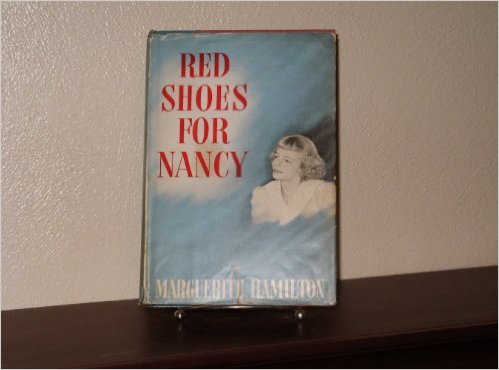
The book that changed my life was called Red Shoes for Nancy (Lippencott, 1955) by Marguerite Hamilton. It was about a young girl called Nancy who had lymphohemangioma, an extremely rare and crippling disease affecting the lymph nodes and blood vessels. I’m sure disability activists would find something to be offended at in this story, but I was so relieved that there was a story about someone older than I was who was living with a disability, even though our conditions weren’t the same.
It’s been out of print a long time, so if you find a copy, it usually costs two or three hundred dollars.
I read it over and over for years, and I’d love to get my hands on a copy one day. The story gave me hope for having some kind of life, even though Nancy did pass away at a young age.
The Morning brews its own stories
On the jogging legs
Of age ripened by wisdom.
The youth walks on with
the agility of ambition,
The sunrise embraces both
with the glistening shade of transience.
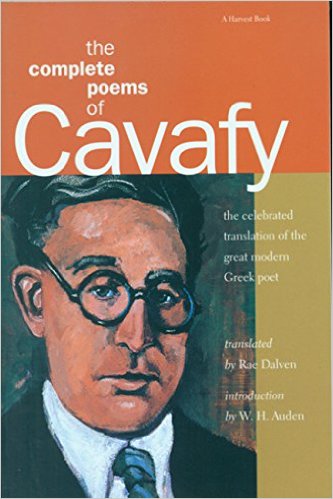
There are few questions that will get me in trouble. One is “What is the book that changed your life?” There are many possible answers. It could be the first book that I ever read when I was a child or the first erotic book that taught me about sex, love and sexual maturity. But to be sincere, there is a collection of poems that I always keep in my mind as a sort of rosary for difficult moments or big changes of my life. The book that changed my life is the one that serves me as a lighthouse but also as windmill to constantly fight with. I’m talking about the collection of poems, also known as The Canonof Costantino Cavafy. I discovered this book some years ago, seated in a university classroom, listening to a boring lesson about methaphysics. Suddendly my attention was captured by the verses that came from the lips of the Professor:
And if you can’t shape your life the way you want,
at least try as much as you can
not to degrade it
by too much contact with the world,
by too much activity and talk.
Try not to degrade it by dragging it along,
taking it around and exposing it so often
to the daily silliness
of social events and parties,
until it comes to seem a boring hanger-on.
Although I was taken with those verses, I forgot them for some time until I encountered them once again. This time in a colorful book on the shelf of a bookshop. They sat there with a captivating time: May there be many a summer morning. That book was the Canon of Cavafy.
I had never imagined a book of poems would give me the strength to go on with my studies. In those days I thought about the effective worth of my academic choices. I studied philosophy, which is not exactly the right matter to study for a brillant and well-payed working career. I felt depressed and sad till these verses started to ring out in my mind and demonstrated that humanistc studies can be a good resource for the whole of life:
And even more honor is due to them
when they foresee (as many do foresee)
that in the end Ephialtis will make his appearance,
that the Medes will break through after all.
I started thinking that finding my way and realizing my plans would have been possible if I had was as committed to my endeavors as the Spartans were against the Medes. So I committed myself to my studies, but that is not the only part of my life that the Greek poet’s worlds helped me to change for the better.
I grew up in a country town where great projects and events and possibilities were almost impossible to find. I felt a sort of immediate contact with Cavafy thoughts when he wrote:
With no consideration, no pity, no shame,
they have built walls around me, thick and high.
And now I sit here feeling hopeless.
I can’t think of anything else: this fate gnaws my mind
because I had so much to do outside.
During that period I tried to find my way in another city, hoping to find something better than things offered by my small home-town. I was sure that Milan would be exactly the kind of metropolis that I needed. I was wrong because cement is cement either in Mantua or in Milan; trees are trees either in the countryside and in the great city. I understood then that if I wanted to find my own path, I needed to create it by myself … and Cavafy, in that period, was present with his wise words:
You won’t find a new country,
won’t find another shore.
This city will always pursue you. You will walk
the same streets, grow old in the same neighborhoods,
will turn gray in these same houses”.
I was concerned thinking of myself closed in a “neighborhood cage,” as deprived of the opportunity to see the world, to know other kinds of people, to realize my projects. After that day of interior crisis, I’ve transformed my shoulders, always ready to rucksack of carry shells and little stones from the “other-where”.
I decided to change my language, to start writing in English instead of Italian, to change my way of thinking, to watch in another way the world that surrounded me. I discovered wonderful things in that country town that I hated for a long time, recognized as decadent that illusionary metropolis I’ve lived in for some years, and learned reached our to people from all over the world – people such as you.
Many books changed my life, suggesting to me a different way when facing a crossroads, but the Canon showed me the possibility of the voyage. It illuminated the shoes that were resting next to my bed and kicked my bum with the mystical and wonderful words of Ithaka:
As you set out for Ithaka
hope the voyage is a long one,
full of adventure, full of discovery.
Laistrygonians and Cyclops,
angry Poseidon—don’t be afraid of them:
you’ll never find things like that on your way
as long as you keep your thoughts raised high,
as long as a rare excitement
stirs your spirit and your body.
Laistrygonians and Cyclops,
wild Poseidon—you won’t encounter them
unless you bring them along inside your soul,
unless your soul sets them up in front of you.
Hope the voyage is a long one.
May there be many a summer morning when,
with what pleasure, what joy,
you come into harbors seen for the first time;
may you stop at Phoenician trading stations
to buy fine things,
mother of pearl and coral, amber and ebony,
sensual perfume of every kind—
as many sensual perfumes as you can;
and may you visit many Egyptian cities
to gather stores of knowledge from their scholars.
Keep Ithaka always in your mind.
Arriving there is what you are destined for.
But do not hurry the journey at all.
Better if it lasts for years,
so you are old by the time you reach the island,
wealthy with all you have gained on the way,
not expecting Ithaka to make you rich.
Ithaka gave you the marvelous journey.
Without her you would not have set out.
She has nothing left to give you now.
And if you find her poor, Ithaka won’t have fooled you.
Wise as you will have become, so full of experience,
you will have understood by then what these Ithakas mean.
Three books about three cities and one shared history. Three books about war, genocides, refugees, and victims but also about courage, tolerance, love, and sacrifice. Three books that demonstrate how generous and resilient a human spirit can be, even in the darkest times.
As a person who lives in peace, but also lives in a country with a long history of colonialism, revolutions and a civil war…I can’t live without remembering those caught in wars, their suffering and death, their humiliating status as refugees. As we often confront a wall of silence in the face of daily atrocities that deepen my anger, nothing helps to ease my helplessness and my rage at not being able to improve the situation except through my writing and poetry, which I use to make their stories known. My words are my homage.
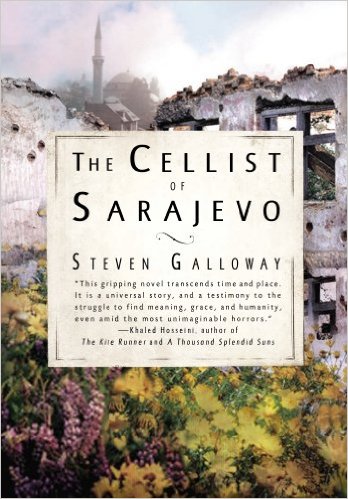
The Cellist of Sarajevo by Steven Galloway. In my memory the Bosnian war is deeply connected with our stories as Algerians of those who suffered the calamities of civil war (1991 – 2002) in the years of my childhood when my father was targeted by the terrorists in a world that fostered my mother’s breakdown.
Sarajevo was under siege (1992-1995) and the characters in this book represent a daily reality of people trying to survive in every possible way: the cellist (Vedran Smailoviç) who played Albinoni’s Adagio to honour Sarajevans who died in a queue in front of a bakery; Kenan who struggles to keep his family alive as he crosses the city to bring water, knowing that a wrong move will cost him his life; Dragan who sent his family away when the war broke and remained alone to face uncertainty and fear; Arrow, a Serb sniper who shoots for Bosnian forces to protect the besieged city while reminiscing about her university years and a former life that seems like a dream.
In Sarajevo, survival is an act of defiance. People learn to cope though no one knows when a bullet will end their life. They learn to embrace every moment of happiness, get used against their will to horror but never let it break them from within. wartime and siege reveal the true nature of humans.
****
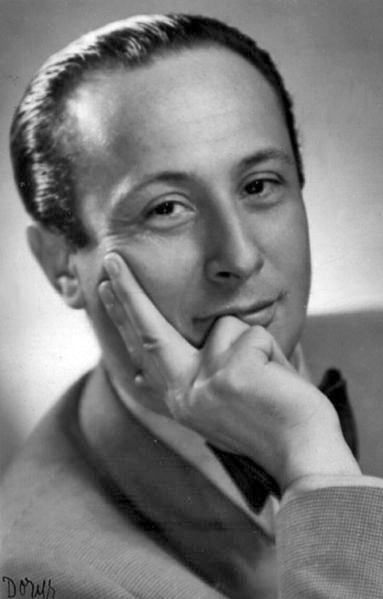
The Pianist by Wladislaw Szpielman. This is the extraordinary story of a Polish musician who wrote about his survival during the Second World and the extremely difficult years in Nazi occupied Warsaw. This book might never have reached us. It was banned by the Communists soon after the end of war and it took the whole world more than fifty years to finally know this young musician’s poignant testimonies.
Władysław Szpilman (1911-2000), Polish pianist and classical composer
Wladislaw lived with his family in Warsaw and worked in Polish radio station. When the Germans invaded the city, their lives radically changed. A series of cruel and unjust laws against Jews were enacted and implemented. They start with forcing Jews to wear the star of David to mark them for the creation of the Warsaw ghetto where half a million Jew were crammed in unspeakably atrocious conditions. When the deportations to the concentration camps started Szpielman was miraculously saved by a policeman who recognized him and loved his music. The rest of his family was sent to Treblinka with hundreds of thousands of other Jews. This was the first of so many escapes that kept the pianist alive in ruined Warsaw.
Szpielman wrote about Polish resistance and friends who helped him hide in apartments, brought him food despite the danger of death penalty for all those who helped Jews. One German officer, Wilm Hosenfeld who was the opposite of the brutal, merciless SS officers helped Szpielman in the last months of the occupation, but was himself captured by the Russians and died in a Soviet labour camp.
The Pianist is not just a testimony and a life account, it is the voice of all those victims, Jews and non Jews alike, who lost their lives in a useless war. It is a reminder of the strength and compassion of human spirit and how one can remain true to one’s own beliefs in a time of absent morality.
****
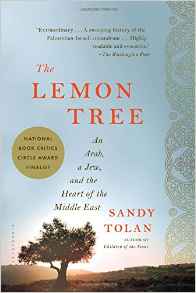
The Lemon Tree by Sandy Tolan, the last of my books is a story of a rare and real friendship that blossomed between Dalia Ashkenazi Landau, a Bulgarian Jew, and Bashir Al Khayri, a Palestinian in a country both claim his own.
Sandy Tolan traces the stories of the two families: the Ashkenazis, who fled Europe to Palestine after the holocaust, for the promise of better life for all the Jews in the land of Israel and Al Khayris, a prominent and wealthy family from Lod (city in occupied Palestine) who fled the atrocities of Zionist gangs in 1948. When Bashir and his family became refugees in Ramallah (a city in the West Bank), Dalia and her family started a new life in Lod.
When Bashir goes back to the city one summer day he feels confused, everything is strange and unwelcoming – the language, the people, the street names. He finds Dalia in his childhood house, which was built by his family and now taken by others. Here starts a precious friendship between two people who try to make sense of everything. Bashir’s unflinching and inexhaustible quest for freedom meets with Dalia’s dreams of peace despite the tightening grip of Israeli occupation in a sixty years span of exile, prison, confiscation, killings and racism.
This is a book of hope, of deep humanity found in two persons who chose not to be enemies. It is one of the best about the ongoing Israeli Palestinian conflict because it teaches us that stories of reconciliation and hope can exist even amid the most unlikely circumstances, in this case one land and two nations.
my being
is a jigsaw puzzle
one of those
more than
a
thousand pieces
kind
so it’s
just
impossible
for me
to name
a single love
that
has influenced me
for all time
i mean
each piece
of the puzzle
has been colored
and
defined
by
a different
love
so
there can be
no
singularity
no
single
book
can claim
the fame
or
blame
for
what
this mind
conveys
Going looking for my first poetry
holding my doubters spear
looking for those foundational words
that purified and exhilarated,
and bound me in,
until I had to shout my way free.
Mankind’s savage streak,
is broad.
Weapons always close to hand.
Ready to rage, tear and flatten.
‘Collateral damage’ has slipped easily
into language, weaponry
into stock portfolios.
Big business profits, as death
is viewed in units and the bottom line
means more than life.
This is not humanity.
There is no brotherhood,
strong enough to overcome the need
for blood and money.
Some of us lack wealth and mourn the lost,
some of us take death at any cost.
The gnarlers of the night
come seeking their prey,
with spikes and false-runed stones.
Alleys wash up the desperate fodder
who beg and grovel for more sweet poison,
that stains cities, drains life.
Only the merciful few stand against them.
Scoop up the fallen.
Apply pressure to the wound
that continuously seeps.
The elephants are skilfully carved.
Sundered from dried logs
by gnarled hands in pinched villages.
Bargained for a pittance too paltry
for such dextrous dedication.
Straw-swaddled they are truck-trundled
to a cities dust, where the poor sleep
in dark shadows of public buildings,
use a fountain to wash.
In a warehouse swagged with shadows,
small boys sit, cross-legged,
coned in sky-lit light where dust motes
float in choking constellations,
speckle shifting air.
Tepid air holds taints of betel-nut breath,
gaseous farts from bellies full of hunger,
the fibrous bite of coir and cotton.
Some boys shape coats for the elephants.
Bright flutters of sequin-starred fabric,
that lure tourists eyes.
The last boy adds string.
Intricately knots about each elephant
an artistic representation of a Howdah.
His finger-skin is crusted with calluses,
an indentation where scissor handles dig,
mark his index finger with a deep notch.
He makes another reef,
follows the elephant in his daydreaming.
Crosses seas and continents,
sighs for things he will never have,
hopes for a little fish with his rice.
Remember that last summer beach,
the silk sand of South China seas,
sifting between your toes,
its talcum powder grain,
the shiver down your spine
whenever you hear a Mozart serenade,
the thrill of a popped cork,
the plumpness of a toddler,
the heat of red softened by a dash of white,
a lover’s sigh, your mother’s smile,
your best friend’s white lie.
That’s Tuscany Superb.
Now you smell the blush.

 I have been living with a chronic potentially life-threatening illness for many years now. It’s enlightening and not just because of what I’ve learned about myself.




 I never thought I could pick one of the books I’ve read over my lifetime that has changed my life. Some are like electricity when I read them; some just make me comforted. Some challenge me. It’s like picking one of my children. I thought at first there would be no way I could do it.