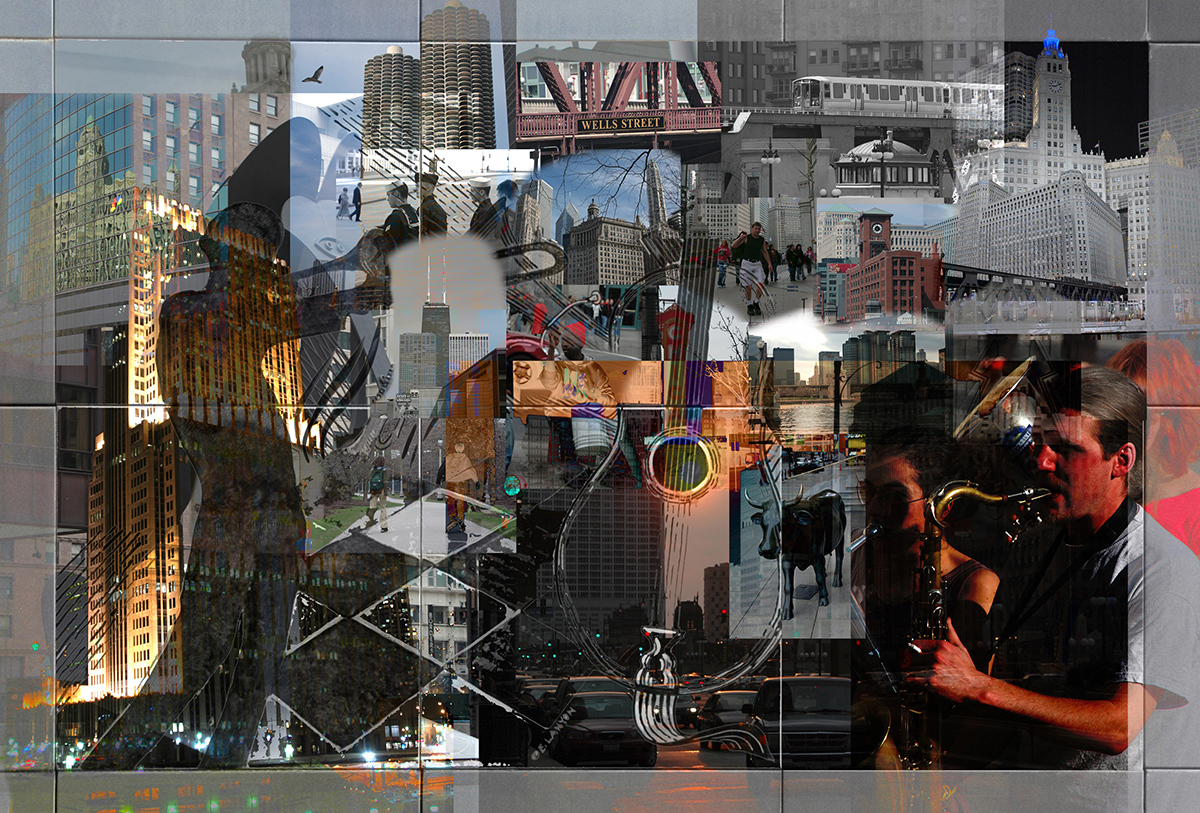
Lieber: Absolutely, the afternoon we saw her. Johnny Otis told us to come down to his garage in the back of his house, where he used to rehearse. He wanted us to listen to his people and see if we could write some tunes for them. MORE [via LAMENT FOR A STRAIGHT LINE, Jim Macnie’s Music Blog from: David Fricke‘s interview with Leiber & Stoller in 1990.]
At the risk of offending Elvis fans, I prefer Thorton’s version.
Jerry Lieber, the lyricist half of the team of Lieber & Stoller (Hound Dog and Jail House Rockamong others), died on August 22.
In 1953, Big Mama’s version was on Billboard’s R & B charts for seven weeks. Presley’s version in 1956 made Billboard’s R & B, pop, and country-and-western charts. It was on the charts for eleven weeks.
This season Charles Hazelwood, award-winning conductor, pioneers an extraordinary project as he assembles Britain’s first ever national disabled orchestra, Paraorchestra.(See www.paraorchestra.co.uk). What is also interesting here is the adaptive equipment.
It’s nine in the morning and I’ve been going for hours.
The ground shook in Nepal, the riots in Baltimore— the preachers praise the winners then they blame the sinners,
but all I think about is another cup of coffee before I shower.
All I want is another cup of coffee before I shower.
It’s nine in the morning and I’m already weary.
The politicians jockey with faces serious and sallow— they stitch up innocence from the pockets of the rich,
but as I stare at my screen my eyes just become bleary.
All I want is another cup of coffee before I shower.
It’s nine in the morning and my work sighs and waits.
The bankers line up, the merchants sell their weapons— Syria, Libya, Iran, Irag, wars with customers for the stores,
but I worry about my retirement investments’ sorry state.
All I want is another cup of coffee before I shower.
Nine in the morning, or maybe nine at night.
The chaos dances to the wild fire light, the darkness
wraps us in its smothering traps, depleting what’s left
of meaning and hope, but I, I just survive with my fright.
All I want is another cup of coffee before I shower.
It’s nine in the morning and I can’t put on my shoes.
I don’t understand why I feel so depressed, do you?
My screens bring me the news, entertain, I see a lot,
but I sit and I wonder, I wonder who invented the blues?
All I want is another cup of coffee before I shower.
It’s nine in the morning, I’ve been going for hours.
The ground shook in Nepal, the riots in Baltimore— the preachers, they praise the winners while they blame the sinners,
but all I think about is another cup of coffee, another cup of coffee
before I shower. All I want is another
cup of coffee before I shower.
All I think about is another cup of coffee
before I take my morning shower.
In 1971, I was a junior in high school. Two friends of mine who were seniors and I made up what we called the “editorial triumvirate” of Early Wine, our high school literary magazine. (I was the first editor who wasn’t a senior; I don’t know if I was the last, but after what we put out as a magazine, possibly I was the last.) I wrote poetry—well, the “poetry” of a 16 year-old. I thought I understood and knew it all. And at the same time, I felt as though no one understood me amid waves of massive insecurity about all of the little codes and clues and hints about which I knew nothing at all. Adolescence.
One day at the record store, I came across a new Pete Seeger album, Rainbow Race and bought it. I don’t think that it is a very well known album of his, but I listened to it endlessly. It was in a stack of vinyl records that I typically played on Friday afternoons, getting ready to go out—along with David Crosby (If I Could Only Remember My Name), Incredible String Band (Liquid Acrobat as Regards the Air), Pink Floyd (Meddle)—granted, an odd mix. Who remembers stacking vinyl records on the long spindle of the changer and letting them play?
This song, Words, Words, Words, suited my adolescent angst. However, more than that, it likely shaped my sense of epistemology, of how we really don’t understand words, how we get tangled up in questions of meaning, how the structures they appear to build so easily come tumbling down… While I was still 16, and at the time thought that others were the ones who didn’t understand the words, the message of this wise and humble man tell me (us) that he also didn’t understand them planted a seed:
If I only understood them,
While my lips pronounced them,
Would not my life be changed?
I’m not sure that we can truly understand words the way an Other understands them. Part of understanding language, for me, is to remember that we all read the words from our own context and experience. While I may try to paint a particular image or idea with words, what it “means,” rather than being 16-year old sure of itself, shifts with the lighting and the seasons, with the perspectives of each reader.
This does not mean that every perspective is as acute or as accurate as every other perspective. However, it does suggest the necessity or empathy and compassion in writing and speaking—even or especially when communicating with those with whom we disagree. We might actually find that the Other’s perspective makes sense in context and from that Other’s experience, even if we still feel there are errors produced from the perspective and context. Experience, identity, so many things shape our understanding of the world. I hope to learn to better listen for those shaping forces and to the Other, toward an empathy of hearing, reading, speaking and writing.
So, here, for your listening pleasure, Pete Seeger singing Words, Words, Words from the album Rainbow Race.
Words, words, words
In my old Bible
How much of truth remains?
If I only understood them,
While my lips pronounced them,
Would not my life be changed?
Words, words, words
In Tom’s old Declaration
How much of truth remains?
If I only understood them,
While my lips pronounced them,
Would not my life be changed?
Words, words, words
In my old songs and stories
How much of truth remains?
If I only understood them,
While my lips pronounced them,
Would not my life be changed?
Words, words, words
On cracked old pages
How much of truth remains?
If my mind could understand them,
And if my life pronounced them,
Would not this world be changed?
Addressing this topic is a tricky proposition for me. How do I write about “Music” after a lifetime of being in its company, serious collegiate study, professional and semi-professional music-making and now coming to an ever-changing place of informal interaction with it? It is as daunting as writing about “Being Female”.
My partner Steve, who has a more organic and brilliant relationship to music than I, often asks me, “What is music? Is this Music?” My definitions are vague. John Cage hears music in the sound of traffic. Why not? Steve stands by a babbling brook or a wide lake shore, closes his eyes and begins to wave and conduct the irregular but compelling rhythms. Music is an experience. It is felt and lived, by humans, most certainly, and perhaps by oceans, birds and the cosmic spheres. We can pick it apart, measure it scientifically, codify and teach it and all but kill it while still trying to communicate something beyond all those characteristics. I taught Voice lessons for a few years, giving rudimentary information on practical aspects of sound production and score-reading, but when it came time for a student to prepare for performance, I said something like, “Feel your confidence; trust your instrument; let go and SING!”
The music of the soul, singing, is not without dukkha, the intrinsic suffering of human life. Aside from Art or Artifice, singing is a conduit for emotion as vulnerable and raw as any primal utterance. Those who have guessed this often try to manipulate it or manufacture it for their own uses. Or they try to lose their egos and get as close to being on the edge as they can. Who are the great “emotive” singers you can name? Judy Garland is our favorite. Her story and her relationship with her music is a painful one, but we love to hear her inimitable voice and styling. I used to play my Wizard of Oz record over and over again and try to sound just like her…before I was 10. Before I knew much about suffering at all. She was all of 16 on the recording. She kept singing that song throughout her career. She knew exactly how to wring all the pathos of her life from that melody by the time she died. She did it repeatedly, convincingly each time.
Just two days ago, I read a passage about Singing that struck me with an entirely new impact. It is from Frederick Douglass’ own autobiography about his life as an African-American slave. It will haunt me now whenever I hear Spirituals or make up my own bluesy tunes in passing. This is written in Chapter II, a memory from before he was 10 years old:
“The slaves selected to go to the Great House Farm, for the monthly allowance for themselves and their fellow-slaves, were peculiarly enthusiastic. While on their way, they would make the dense old woods, for miles around, reverberate with their wild songs, revealing at once the highest joy and the deepest sadness. They would compose and sing as they went along, consulting neither time nor tune. …The hearing of those wild notes always depressed my spirit, and filled me with ineffable sadness. … To those songs I trace my first glimmering conception of the dehumanizing character of slavery… If any one wishes to be impressed with the soul-killing effects of slavery, let him go to Colonel Lloyd’s plantation, and, on allowance-day, place himself in the deep pine woods, and there let him, in silence, analyze the sounds that shall pass through the chambers of his soul,—and if he is not thus impressed, it will only be because “there is no flesh in his obdurate heart.” I have often been utterly astonished, since I came to the north, to find persons who could speak of the singing, among slaves, as evidence of their contentment and happiness. It is impossible to conceive of a greater mistake. Slaves sing most when they are most unhappy. The songs of the slave represent the sorrows of his heart; and he is relieved by them, only as an aching heart is relieved by its tears. At least, such is my experience. I have often sung to drown my sorrow, but seldom to express my happiness. Crying for joy, and singing for joy, were alike uncommon to me while in the jaws of slavery. The singing of a man cast away upon a desolate island might be as appropriately considered as evidence of contentment and happiness, as the singing of a slave; the songs of the one and of the other are prompted by the same emotion.”
Song pouring forth like tears for the relief of an aching heart. Music is a channel for all the emotion that lives within us, be it deep sorrow, longing, suffering, yearning, passion, joy or triumph. Have you never brought an embryonic ache to maturity by playing the right music? Have you not fed a wild impulse by stomping out an insistent rhythm and letting your voice, your body move along with it? Music is my companion, my teacher, my soul mate. It accompanies me as I discover myself, like my breath, my heartbeat. It is biological and intellectual, a genius of Life like an inalienable right. I could not endure existence without it; I can not imagine Freedom without it.
My late husband was a singer, a gifted tenor. When he died, 300 people came to his memorial service to sing their good-byes – solos, congregational hymns and choir pieces. They sang as the living and imagined that there must be Music after death. They could not bear it to be otherwise. Though Death is entirely unknown and a very different (and luckier, as Walt Whitman would say) experience, I would not be surprised if there was music in it. Perhaps it is the very essence of all experience, conscious or not.
Music is an essential practice in my family. My dad sang. My aunt. My grandmother. And when I say they sang, I mean the kind of music that mournfully peels you off of the floor, props you up, and holds you entranced. Or the kind that lifts you to the sky while the clouds peel away revealing a glaring brightness that confirms that joy, indeed, does come with the morning.
That kind of singing!
My mom played the jukebox. I played the piano and sang a little. My brother carried the tradition in a new way finding his muse in the French Horn and in speaking the words of music as a DJ for public radio. Music. It was there all the time.
Then I had children. And I discovered music that will dissolve your soul. Together, with other voices in concert, I swept away by their music. Tears running down my face. Una voce they tore my heart out, reformed it, and planted it back into my body as if I was merely a tin man.
Then came guitar, ukulele, and flute. Music. There is an extra seat at the table for her. It is always occupied.
When my youngest came out as transgender in 9th grade, the biggest conversation we had about starting the SRS* process was what if? What if he had to give up singing? What if music left? What if testosterone changed his voice so much that he had no voice? Or at least, not the voice he was accustomed to. The voice. It had to go. That was terrifying. It had seemed that music swirled through his DNA more than being girl or being boy. But now, it was different. Being masculine was a life-saving necessity.
I say life-saving because it was. The cuts and scars that were being inflicted by his beautiful soprano and developing body were draining his spirit. The volley of notes that danced in his blood were landing like grenades.
There would be no music dancing if he did not survive.
Suddenly, over and against the children’s choir that had swept him away, swept me away, there was a terrifying drum beat that defined a new reality
We, I say we because hello, motherhood, entered into hormone therapy. The soprano was replaced by an alto and then replaced by a tenor. His voice is now lower than his older brother’s. He is not amused. Now they sing together. Two tenors harmonizing. A new rhythm.
And what a gift his music teacher was! He documented the discovery of his new voice. Recording the same song over and over through changes and octaves. Layering him into his own choir singing the most beautiful song I have ever heard.
I am me.
Music. It was there all the time.
Shalom,
Colin singing one of his own creations at his recital. Sorry for the recording quality!
Left hand wraps the neck of my Larrivee
and I press four fingers into a G-major shape.
I like the fuller sound of my pinky on the high E,
ring finger on the B, both third fret.
G, C9, D, the I-IV-V progression.
Then E-A-B. All nice big cowboy chords,
twelve bars, like the progression
from January to December.
It’s always like that…the years,
the mindless strumming through life.
This past one was good to great,
with its share of sad, so I turn the chords
into 7ths and play it all as a slow Blues.
E7-E7-E7-E7/A7-A7-E7-E7/B7-B7-E7-B7
Repeat, repeat, repeat.
This gets pretty boring, the passage
of chords, of days, of months,
unless I throw in some solo runs.
I sometimes show off
(for myself, up in my Lair).
You know, just to be free of Life’s structure.
But this thing has to end.
I can hear my critics downstairs,
so, as I come back ’round to Bar 11,
I go grab my I Chord, the E,
and let it ring nice and long,
closing my eyes to remember it
until my next time.
They have a word for finishing up
on that tonic chord. We resolve back to it.
Just like in that last bar of a year,
a life, we end things with resolution.
Shhh… it’s still ringing.
Sergey Khachatryan is an Armenian violinist, born in Yerevan in 1985. Since 1993 he has lived in Germany were he gave his first orchestral concert at the age of nine in the Kurhaus Wiesbaden.He made his New York City debut in 2006, playing Beethoven Violin Concerto in Avery Fisher Hall under the baton of Oslo Vanska. in 2013 he played Shostakovich’s first Violin Concerto with the Seattle Symphony and Ludovic Morlot conducting.
Here he plays Groong, by the famous Armenian musician Gomidas ( 1869-1935 ) considered founder of the Armenian National School of music, educated at the Frederick William University in Berlin. Gomidas traveled and gave lectures and performances throughout Europe, Turkey, Egypt. The well known musicians: Vincent D’Andy, Gabriel Fore, Camille Sen-Sans, Claude Debussi were very fond of his music. He toured villages and collected over 3000 Armenian folk songs and many were adapted to choir singing. Gomidas was spared his life by intervention during the Armenian Genocide but he suffered from mental breakdown not being able to tolerate the atrocities and was in and out of mental hospitals, dying in Paris in 1935.
This particular song Groong (crane) is about longing for motherland, asking a crane where is it coming from and if it has news from home…..
(August’s theme at the BeZine is Music. This is a piece I wrote some years ago and it never felt finished, so I thought I would revise it and set it here for all you fine readers to enjoy.
I didn’t know my maternal grandfather (we grand-kids called him “Grand-e”, rhymes with candy) that well, as he died when I was young. But I have seen the pictures and heard many tales of his prankish sense of humor. He was a large, jolly man who loved to tell jokes and laugh. He also sang songs while playing the mandolin and was quite nimble on his feet for having such a hefty frame. My mother kept his mandolin in wonderful condition and examining it helped inspire this piece.)
They say he used to dance and sing, when he played his mandolin. I’ve heard the stories a thousand times, about my “Grande”, Marvin.
I only have vague memories — he passed when I was young. I look at his instrument with wonder, about whiskey and jigs, songs sung.
I marvel at the oiled, mellow wood, aged well, without a crack. I hear the thin, tuned silvery strings, and sometimes wish him back…
If only to see his merry moves, or watch his sausage-fingers play. I can hear and picture it perfectly, and I wonder what he’d say,
if he knew,
how cherished this family memory was? Would he strum the words, and dance them, too?
If the world could reverse, and time stand still, I’d dance at my grand-father’s side and then, I’d hug him, love him, and ask for a tune. And I’d listen to him pluck his mandolin.
Theirs was band made of
a slide guitar and a violin,
a duo whose members each played
with one ear tuned inwardly,
the other absently to their partner.
They’d jam beneath the broadleaf oak,
whose canopy protected them
from the cold and cleansing rain
that often followed them there.
Their compositions were made
of dreamy minor chords,
swooping sad harmonies,
the call and response of
each one’s own weepy blues and
dissonant solos in F and B.
Such duos never last, though.
Once each their storms stopped,
its rain still fell from the ancient leaves,
echoes no one wished to hear.
Strings drenched in the shadowy
drops of Me never sing so well
as under the sunny skies of Us.
Didn’t matter to them. They always
played with their eyes closed.
– Joseph Hesch
For both literature and creative writing courses, I like to use poems set to music in my teaching (as well as songs written as songs), which helps students hear (and sing) the music of poetry. Songs and poems have intimate links. It is interesting that in Hebrew, the word for poetry, שירה [sheer-AH], is derived from שיר [sheer], song. שיר also means poem, although the word “poem” has been Hebraized now, as well פואמה [po-EM-ah]. In Biblical Hebrew, I have been told, only one word speaks to both.
Songs are poems, in their own right. And possibly, poems were songs in the long, long, past even before Biblical time, sung before they were spoken, spoken before they were written. So, it is not surprising, today, to find many poems set to music or songs inspired by poems, with variations made to fit the music or modern language.
Paul Simon’s Richard Cory takes a poem by Edwin Arlington Robinson, and updates its images and language, while staying close to Robinson’s original (from a book of persona poems about different people in a New England town):
Richard Cory
Whenever Richard Cory went down town,
We people on the pavement looked at him:
He was a gentleman from sole to crown,
Clean favored, and imperially slim.
And he was always quietly arrayed,
And he was always human when he talked;
But still he fluttered pulses when he said,
“Good-morning,” and he glittered when he walked.
And he was rich—yes, richer than a king—
And admirably schooled in every grace:
In fine, we thought that he was everything
To make us wish that we were in his place.
So on we worked, and waited for the light,
And went without the meat, and cursed the bread;
And Richard Cory, one calm summer night,
Went home and put a bullet through his head.
And Paul Simon’s 1960s version (lyrics in the sub-titles):
While browsing through books one day, still in high school, I came across Robinson’s poem and discovered that Simon’s song had roots. At first, I wondered what that meant about Simon’s originality. Yet, by then I knew that Shakespeare borrowed his stories and even some of his text from other sources. I thought, okay, cool. Simon reads literature. He knows what he’s doing. He’s a writer, not just a popular musician. And Richard Cory remains a song that I very much like. And a poem that I like, too.
Another, more subtle poem, Pequeño Vals Vienés (Little Vienna Waltz) by Federico García Lorca, inspired Leonard Cohen’s This Waltz, which is more closely translated from Lorca than Richard Cory by Simon. In fact, Lorca influenced Cohen to the point where he named his daughter, Lorca, in honor of the poet. Here is Cohen singing, with Spanish sub-titles:
And here, Luigi Maria Corsanico reads the Lorca poem in Spanish, with Tchaikovsky in the background and images of painting by Renata Brzozowska, a lovely combination of arts:
A little while back, I taught a first-year literature course at Bar-Ilan University, in Israel. The first day of our poetry unit, I played Israeli singer-songwriter David Broza’s song based on Elizabeth Bishop’s poem, One Art. Unfortunately, the only YouTube video I found for the song has poor song, so I use my CD of Broza’s Live at Masada album (where he’s joined by Jackson Browne and Shawn Colvin). At the same time, I project the words to the poem. Here is the official audio site for an earlier album with a version of the song, which is not as good, but still good enough. You will have to scroll to the track for The Art of Losing, his title for the song:
For a completely different take on Bishop’s poem, here is a new music composition with piano and baritone, composed by Luis Passos:
For my course, I skipped Passos’ composition, and moved to another Broza song. words directly from a poem by Percy Bysshe Shelley, If You Don’t Kiss Me. Again, I projected the words of the poem so the students could see the relationship between the original poem and the song:
David Broza’s Official YouTube Channel includes a web series from around 2010, Poetry from the Bench, where he sits on a bench in a garden reading poems by poets such as Lorca, Liam Rector, W. H. Auden, Israeli poet and his fellow singer-songwriter, Meir Ariel, in the original languages. Of course, there are a lot more videos with his music, too, well worth the listening.
Of course, my course also looked at Richard Cory and This Waltz. The students felt this musical introduction to poetry opened them to its pleasures. We enjoyed the poems and the songs together, and then reading poetry became more akin to listening to music than to an analysis and decoding chore. Yes, we did start to talk about the poems, the lines, the metaphors, and we analyzed them. First though, we enjoyed them. And the music helped, as one of the pleasures of poetry.
I leave you with Natalie Merchant (joined by Susan McKeown) singing Emily Dickinson, Because I Could Not Stop for Death:
The song comes on, in the random,
shuffling way life occurs,
the happenstance of seeing one another
across a parking lot and you
studiously ignoring or maybe
running away. The song comes on
and I’m confronted with the
old decision to ignore, or to skip,
or to turn the whole thing off.
The song comes on, and once
I’d hit Repeat because once
I connected it with you. Even now
I do, seeing you in the long ago,
before the collapse of
a make-believe house constructed
on some fantasy Sandman’s leavings.
All those nights of
Repeat…Repeat…Repeat.
So the song comes on and I reach
for the Skip button to run from
its first two bars. I know each beat
and note by two memories. And I pause.
The heartbeat of it, the voice,
they don’t belong to you anymore,
they belong to the song.
And the song remains the same.
I’m the one who’s changed,
Turn it up.
sometimes you hear only part of the music for the noise of life hides the melody we hear just that part outside the heart but if you could hear all the love flowing from every pore of those who care for those forgotten like notes not transcribed then you would hear the real symphony that you have sought
Out under the maples, noon light
dappling the scene like drops of sun,
Joe strums his Martin, humming along
his own accompaniment. His fingers
glide along the ebony board,
pressing the strings into tuneful
Cs and Gs, and even the F-sharps
and B-minors that come out like
the ragged brushing of steel-string
corduroy trouser legs when I try them.
I’m a little jealous as I watch
and listen, hacking away at
my fallow word garden,
pressing my uncalloused fingers down
in search of the chords
to some sort of art, too.
Mine is an arrhythmic melody
played on a soulless keyboard,
the worksong of one lost in empty silence.
I heard it first from the angels
who whispered in my ear
the last five nights, while
dark dappled on dark and
my instrument gathered dust
as it lay upon the pillow.
Mine is a solo piece, I know,
but I hear the angels humming
along with me anyway.
It’s the end of the drive, the night fallen down into the sleeping dream-state of the union, awareness a jazz guitar and stand-up bass drumming on the sidewalls of our tires doggedly flashing past the cold air. Smoke and cigarettes, the lovely woman sleeps by the string bass with a coat to keep it warm and we all want a picture but Aaron—only Aaron— took photos of the band through the curtains from outside the house while nobody noticed and everybody came, engineers hovering in the basement and writers full of liquor dancing to the rhythm of cow bells.