When you have given all, then lost,
is this the colour of blame?
The love that drips from your sweet lips
and drowns someone in shame.
When young, their hue was vestal white,
their innocence on view.
As you would vanquish suitors all,
just one will conquer you.
The age of love, engorged with red,
this procreative flower
would then attract them and their charm
laid helpless in your bower.
But summer’s heat and light turned blue
in autumn’s lengthened shade
and, as the scented bloom decays,
a nation’s colours fade.
When you have given all and lost,
is this the colour of blame?
The love that drips from your sweet lips
and drowns someone in shame.
[This was originally the first of a series of picture prompts, which produced some searing poems from the Grass Roots Poetry Group, all of which can be seen here]
These fields of lavender stretch
like bolts of corduroy from where we bask
in this soleil d’été, imaginary
Theo and I. Their perfume sweet
and intoxicating, when we need not
their breath, for we are living a dream.
A breeze combs the wales this way
and that. They sway like tiny willows
to the aeolian flute come up from the sea,
that brilliant reflector of the Sun’s face
and never to be my own.
For I am heir to the darkness,
yang to shining yin of this Arles light.
I shall record my impressions of it for you,
because I shall not see you again.
I am leaving soon, dark dawn drawing me
in its charcoal-covered hands, drawing me
as a stick man of two-dimensions, drawing me
smaller and smaller as I approach
that distant vanishing point out there
on these fields of lavender.
[I’ve heard Ekphrasis* described as one of the ugliest words in the English language. In writing this poem, I would like to try and make it ironic]
In this, another war poem, at the same time I both celebrate and mourn the destiny of millions of horses in the front lines on World War 1. Here, I may talk about a strong stallion with great heritage from the same lines as purebred battle horses that served knights of old before war became so mechanised. The first world war was the turning point between the old and new ages of war, in which the military cavalry masters of the old order clashed with the new; and the result was an unmitigated armageddon, an unprecedented tragedy of slaughter in blood and mud … there is no undue irony in this great stallion’s story, insofar as its consequences, though its life is spared, its mental health is not, like so many human members of the armed forces who serve on or near to the front lines, who physically survive but who are consumed, through trauma, by some degree of mental illness.
Her gentle hand enwrapped his nose
and pulled it to her face.
Behind his nostril, where there is
the very softest place,
she kissed him tenderly and smelt
the scent of peerless blood
that coursed his veins and caused his mane
to tremble with a power
that came from generations of
highbred aristocracy.
This kind of power was visible,
it rippled like a lake
that caught a sudden gust of wind,
and shimmered, glistening.
He’d knightly strength for greater things
and so it proved to be.
A friend of friends, an officer,
had visited to see
and beamed at his magnificence
there was no doubt for him
that this beast was set to ride
for glorious history…
…until his inglorious return,
a sight that broke her heart.
His eyes had depth of understanding
she knew too well. Their look,
injected as they were with fear,
but not the normal kind
– the kind that came from healthy gallops
over his favourite fell.
No. This fear, its source was made …
(what she saw then choked her eyes)
… made from inner visions of
an unspeakable kind of hell;
mud-filled craters’ stench of death,
through endless shock of shell, but
unshakeable loyalty to his charge
despite his spirit’s knell.
In time the empty frame that stood
motionless in the field,
with timeless care she tended him,
though never fully healed
the scars that stiffened weary spirit
that caused him so much pain,
but filled with love and trust once more
the noble steed regained
a hint of what he used to feel:
excitement for the day,
security in his domain,
where once he held full sway;
desire that burned in his dark eyes
to lead her in his way
back to the stable where he’d sink
his nose in soft sweet hay.
the brown bag prophet said i ain’t no philosophy barely finished high school but i’ve been reading different things bout’ the critical spirit how it can hold back religious enlightenment you know by asking too many questions trying to get to the bottom of things rather than accepting the rituals place before you as others have done but i was wondering why anyone would want to plant a seed that cannot grow
Not wounded for me
But using your healing to heal my wounds
Why do you offer your pain as a balm to soothe others?
You could focus on your own depths that you know well
Instead of seeking to understand the hearts of others
Why so unselfish?
Who are you?
I come to offer my pain as a balm
I come to show you healing exists.
Here are my scars. They are proof of healed pain.
What do you say when you don’t know what to say?
What do you do when you don’t know what to do?
Where do you go when you don’t know where to turn anymore?
You’ve used up all your chances. No one wants to know you.
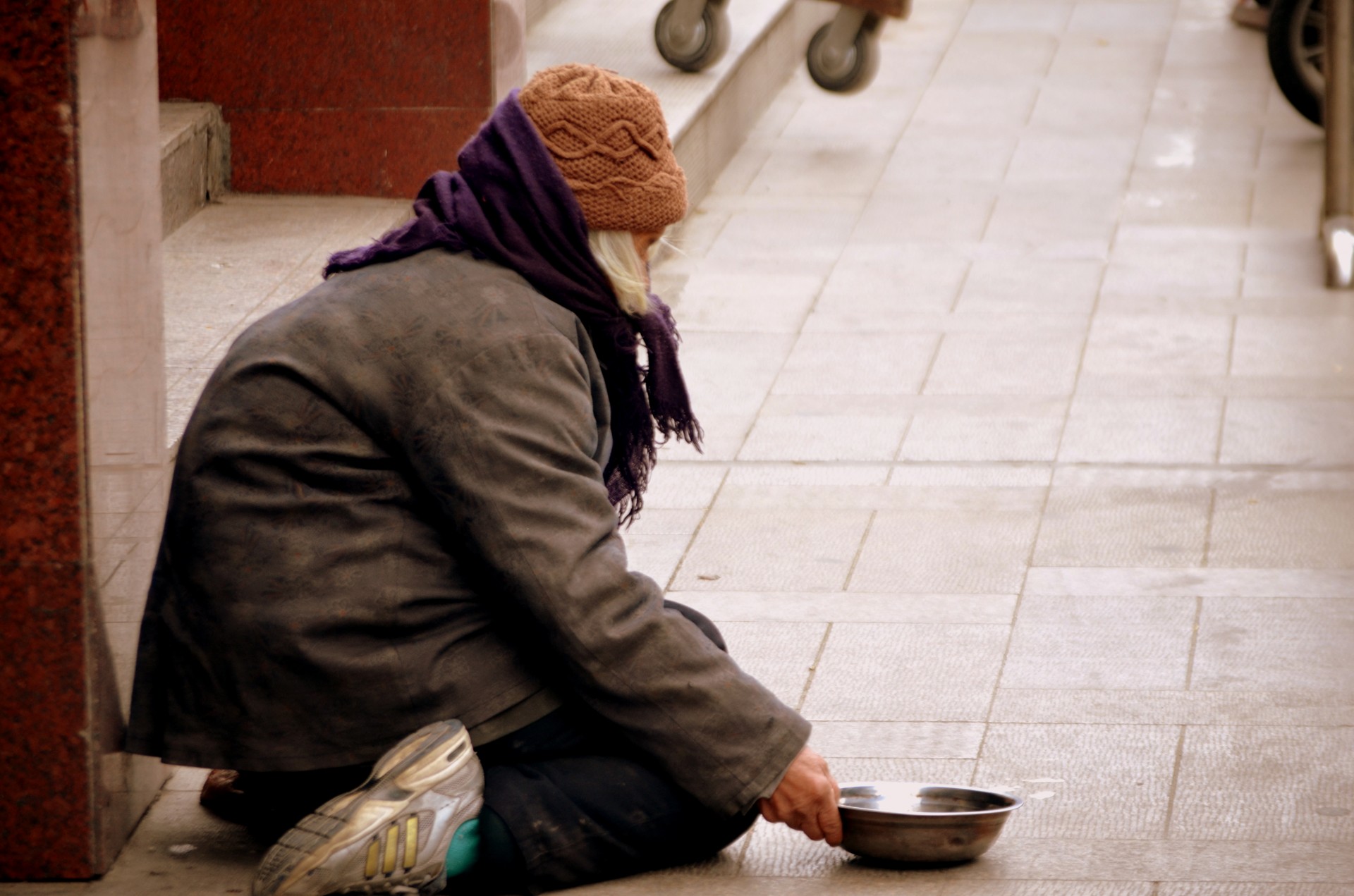
They say pull yourself up by your bootstraps, but the straps keep breaking.
People turn away when you try to meet their eyes because they’re afraid
Afraid you’re going to ask them for something that’s just too damn hard to give.
How can you find your way out of this mess?
There is no fairy godmother,
You won’t win the Publisher’s Clearing House Sweepstakes
You won’t win the Powerball or the State Lottery
All you want is something like a normal life.
With friends who want to spend time with you
Where you can spend money on things that make you feel good sometimes.
But somehow or other, it feels like you’ve fallen on the side of the undeserving.
[This photo taken by Mark Tipple for an article published in ‘Demotix‘ in February 2009]
He was muttering as if
he was trying to describe
a vision he couldn’t share
with her; with anyone.
It was of something he’d never
seen before this moment;
a moment when she saw a look
on his face that carried away
all her fears; all her tears.
She felt no longer worried,
no longer afraid of the future;
only afraid that she could not
see what he could see;
this apparition, the vision
that transformed his face
to serenity, to happiness,
that even they in all their life
together, had never seen.
Something beautiful that
he could clearly see,
but not she.
Then, she, involuntarily
felt angry, full of rage
a sudden torrent of emotion
filled and puffed her tear-strewn face
As if he’d been unfaithful;
as if he would desert her;
after all these years.
How could he do that!
As if…
…something changed,
not in him, but her;
she felt what he was seeing,
that illuminated his face as if…
…and now she was incredulous.
She could not now believe
what he was thinking, seeing…
could not, would not entertain
the thoughts that entered her;
thoughts she could not fight;
that flowed so unexpectedly
like snow drifts in a storm
a snow filled wind
of blinding light;
of cool refreshing crystals
looking like white flowers;
a sea, an ocean of stocks.
And out of this there grew
the tallest trees of evergreen
protecting all beneath
their heavenly canopy.
As if.
Then he fell very still
relieved of his exertions,
of trying to tell her
all that he could see
and it was very quiet.
They’d dreamt for all their days
of this idea of heaven
a screen to pull down over
their lifelong view..
This poem was prompted firstly by the slightly surreal photograph above it, and is, in one sense, ‘Ekphrastic’. Secondly, it was inspired mostly strongly by a programme I watched some time ago on BBC television, entitled “The Toughest Place to Be.” It was a programme, which for me was well worth watching, if for no other reason than that it reminded me of how fortunate I am, living as I do, in the affluent west.
If ever I think that I have any complaints about the effect on my finances of austerity and the economic downturn or, on the other hand, I have some boxes to tick before I depart this mortal coil, as I make my plans, I think about these ‘workers’ who are as good as destitute and trapped in poverty, in the kind of stomach churning stench that this environment presents; trapped not only for their own lifetime, but also the future for their children…
Bantar Gebang – Courtesy Mark Tipple
I’ve read about organisations that are working to change things. No doubt the major ones, like UNICEF, who are concerned particularly about the plight of children in these conditions, and like the International Labour Organisation trying to set up schools for the children, who have to live and start working in these places at all too young an age. If there’s anything at all that I can do, at the very least, it is to raise the consciousness of anyone and everyone, who should care about the inhuman effects of economic ‘growth’ and exploitation.
“As If” is a poem that describes the death of the head of a family that scrapes—in the most literal sense—a sparse living off a massive waste landfill site just outside Jakarta, Indonesia. They have no sick pay, no minimum wage, no pension, no allowance for their children’s education. They live a life devoid of human dignity…even in death.
oh for the love of god
i need to get packing
i heard some folks
in washington
are gonna
repeal medical coverage
to help pay the bills
and then the 13th amendment
something about needing
cheap labor
so i need to get
my things in order
but where will i go
i can’t head for reservations
cause they’re checking
lineage if there’s a casino
and if there’s no casino
the 13th has
already been repealed
i could go to france
since i’m not a gypsy
i’d be okay in israel
since i only have one
or two arab friends
but on second thought
they have army draft
and i couldn’t shoot
anyone who looked like me
you know having
eyes, mouth, nose, etc.
i’m not japanese
so i could go china
but not germany
germany’s already said
diversity’s dead
england’s out
our rules came
from there first
maybe I could
just hitch a ride
on one of those
space shuttles
death does not have one face but many some hidden behind corporate logos where money the antipsychotic drug reduces the side effects of moral responsibility while others faces parade in public agencies the second line of social injustice holding high parasols of indifference to block out the light of morality and justice they’re the kind of reapers whose scythes are laws laws with razor-sharp rules bleeding any hope from those seeking to be free from the social roles prescribed to them those seeking to be free battle an army of reapers reapers who bring death and those who bring death do not value life no matter what the color
((September is an extra special month here at the BeZine. We are celebrating 100TPC (100 Thousand Poets for Change) in an effort to call awareness to global poverty. In the words of one of the Co-founders for 100TPC, Michael Rothenberg II, “500 events in over 100 countries, 100 Thousand Poets for Change Global Day, September 26, 2015. Thank you for keeping the initiative alive. 5 years of community building. Peace, Sustainability and Justice!”
Below is my humble offering to the movement. Please come share your own work with us on September 26 and check out some of the others as we dare to make a real difference for those in need.))
*********
Matthew 25:40 by Cameron John Robbins
“And the King shall answer and say unto them, Verily I say unto you, Inasmuch as ye have done it unto one of the least of these my brethren, ye have done it unto me.” ~ Matthew 25:40 KJV Bible
*********
~ Under ~
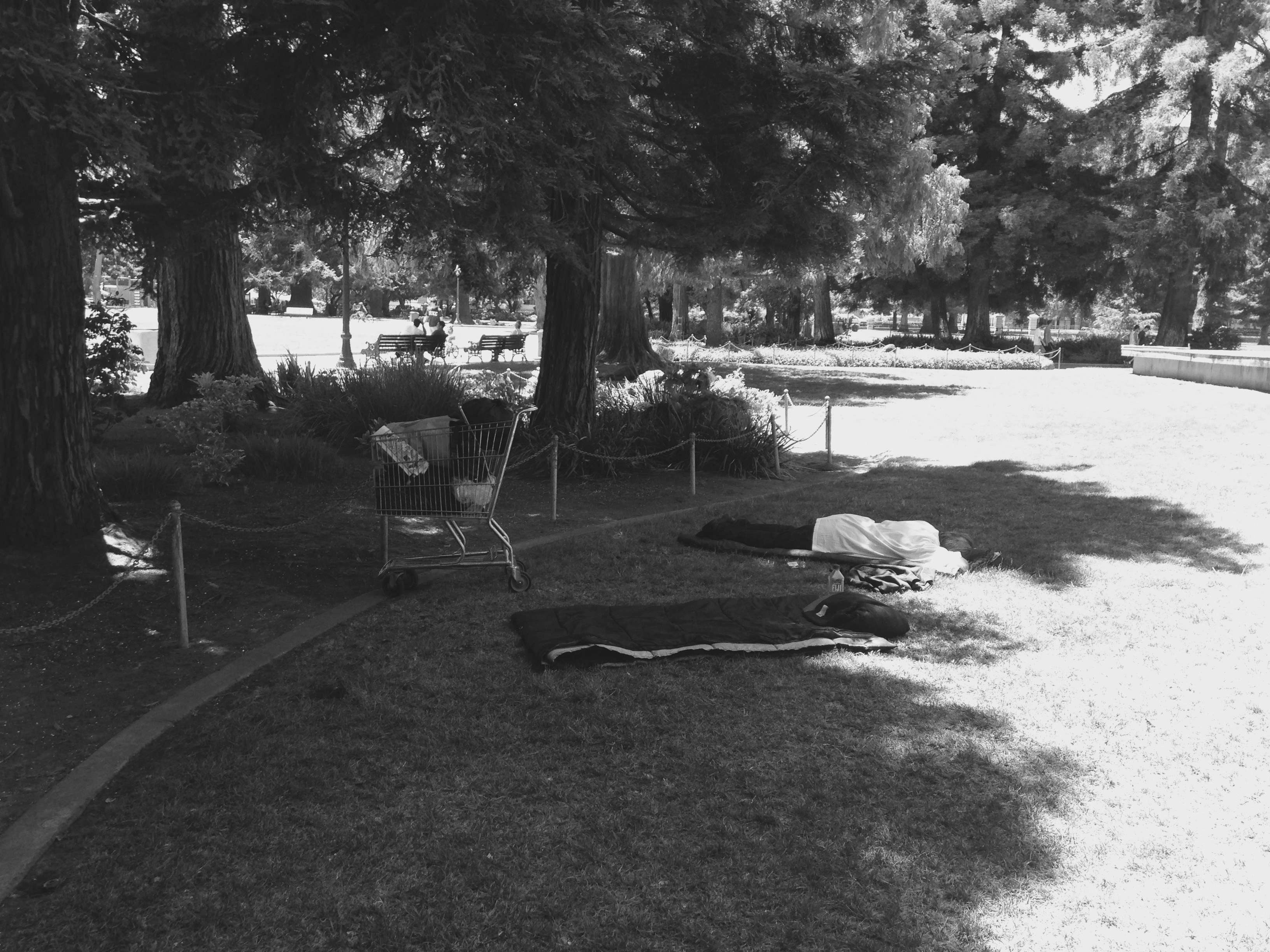
Homeless Joe, has nowhere
to go. He lives under a bridge;
not a troll, just poor.
(Not in some third-world country, no).
Crazy Jane lives under
a delusion—from voices
of people not here anymore.
(In the land of the free and the home of the brave).
Carmen, a single mother of five,
lives under the stigma
of using food stamps to eat.
(In America, the poor are victimized, you know).
Speed-freak Charlie lives under
the influence of the drugs
which keep him wandering the streets.
(How many poor would that daily latte save?)
All of them, under poverty’s yoke.
Under society’s up-turned nose.
Homeless, hungry and in many ways “broke,”
Do you really think this is the life that they chose?
(How about walking a mile in their…feet?)
What they truly need is understanding, To help them get back to dignity’s door. Out from under all the senseless branding, Back to being visible people once more.
hello poverty
my old friend
I knew you’d find me again
but you can’t touch me this time
I am no longer helpless and without help
I will find ways to sustain us when things get low
I will face challenges with peace and love
I am learning that God and the Universe will help
take care of all our needs
I am learning that sometimes our wants might have to wait
but God and the Universe might help us figure that out too.
I don’t feel so alone anymore.
That’s the thing about poverty.
You don’t talk about it
except when you’re being interviewed
to show you deserve help.
It sets you apart
It keeps you alone.
Walking down the road I saw a man in tattered clothes.
I couldn’t help but wonder what had led to his defeat. Tell me, if you would, about this life that you have chosen, or did you have no choice except this life, upon the street?
I handed him a buck or two and said, Here, take a seat.
Upon a rusted old park bench we hunkered in to meet. You’re curious, my boy, he said, why do you want to know? I want to understand you, sir, to see what makes you so.
That money that I gave to you, I know you’ll give to others. I wonder, how do you survive while giving to your brothers?
A smile broke across the wrinkled landscape of his face,
the pain I’d seen inside his eyes seemed suddenly erased.
You may not really want to hear the story I will tell, it happened many years ago—a place not far from hell. The name, you’ve heard—‘twas Auschwitz, a camp they took us Jews the horrors that surrounded me tempted me to choose
to take my life before they could subject me to a death without the grace of dignity. I wanted to be free. But then some words came tumbling from the darkness of my mind Words spoken by a holy man I heard in years behind.
The teacher’s voice was strong, it traveled straight into my core of all I understand of God, of what we’re living for. Such good there that can be done in Auschwitz late at night— your hope can be a gift to those who tremble in their fright.
And what I learned back then—the truths that saved me from despair— I carry them within my soul, there’s so much need to care. So I refuse to see my life a symbol of defeat. Much good there is, my son, that now awaits me in that street.
The old man stood and shook my hand and left me with his smile
I sat, transfixed, upon that bench, alone, for quite a while.
Now I withhold my judgment when I see another homeless guy
and wonder still at wealth, within, that money cannot buy.
—Victoria C Slotto
The anecdote related in this poem is derived from a story related by Rabbi Schlomo Carlebach. I read it in “The Oracle of Kabbalah” by Richard Seidman. This book deals with the hidden meaning underlying the Hebrew Aleph Beit.
the unconscionable dance in the canyons of power,
lined with megalithic buildings, the edifice complex
of the spin-meister’s lie, that the demigods can do
anything – anything – walking this asphalt valley
a parade, flailing lemmings trussed and trusting their
die-cut dreams to the pitiless whim of the military/
industrial/medical alliance, whose war-cries are of
greed and arrogance, believing they’ll live forever,
today’s sovereignty, tomorrow’s guarantee. But it’s
all delusion – cultures die and the hope-crushing
architects of cuts and austerity measures are like
the rich man in the Lazarus story, there’ll be
some kind of backlash, some kind of hell to pay …
“I believe terrorism cannot be won by the military action. Terrorism must be condemned in the strongest possible language. We must stand solidly against it and find all the means to end it. We must address the root cause of terrorism to end terrorism for all time to come. I believe that putting resources into improving the lives of the poor is a better strategy than spending it on guns.
Peace should be understood in a human way, in a broad social, political and economic way. Peace is threatened by unjust economic, social and political order, absence of democracy, environmental degradation and absence of human rights.
Poverty is the absence of all human rights. The frustrations, hostility and anger generated by abject poverty cannot sustain peace in any society. For building stable peace, we must find ways to provide opportunities for people to live decent lives..” Excerpt from Poverty is a Threat to Peace, Muhammad Yunus, Noble Peace Prize speech, 2006





 The BeZine