Posted in 100,000 Poets, Musicians, Artists and Activists for Change, General Interest, Video

READY, SET, GO … The backstory on 100,000 Poets for Change …

100_Thousand_Poets_for_Change_logoThe Bardo Group “100,000 Poets for Change” event page is HERE. Beginning 27 September (tomorrow), we’ll post work on Peace and Justice for one week as our participation. We invite others to link their own work to ours and, although the title is “poets” everyone (artists, activists, writers, musicians, bloggers) is welcome. Shortly after the event, we’ll collect your links into a page to create a commemorative collection like we did last year for Poets Against War.
More details are on The Bardo Group event page. Instruction on how to add your link will be provided on this blog within the text of each day’s post. We have designed our participation as a virtual event to accommodate bloggers and those who are homebound or otherwise unable to take to the streets. At least one core team member will visit your site if you link in and we hope that you will visit others as well.

Meanwhile, many of the wide variety of activities this event inspires will be livestreamed by event coordinators and participants. Please continue to check out 100 Thousand Poets for Change for videos and photographs from the world over and The Bardo Group blog for posts from our own collective.

An 2012 (year two) interview with founders Michael Rothberg and Terri Carrion.

The backstory on 100,000 Poets for Change brought to you courtesy of Wikipedia:

100 Thousand Poets for Change, or 100TPC, is an international grassroots educational organization focusing on the arts, especially poetry, music, and the literary arts. It was founded in 2011 by Michael Rothenberg and Terri Carrion, and focuses on a world-wide event each September.

HISTORY: 100 Thousand Poets for Change was initially conceived by Michael Rothenberg and Terri Carrion in March, 2011, as a worldwide set of events to take place simultaneously on September 24, 2011. Literary event organizers volunteered to host associated events in their own cities or schools. On September 13, 2011, the city of Santa Rosa, California, declared September 24, 2011, to be “100 Thousand Poets for Change Day” and Stanford University offered to archive all documentation and audiovisual records of the event posted on the 100TPC web site.

Ultimately, 700 events in 550 cities in 95 countries took place on September 24 in conjunction with 100TPC, and the event was described as the largest poetry event in history. Considering the series of events to be a success, Rothenberg and co-founder Terri Carrion decided to pursue non-profit status for 100 Thousand Poets for Change and establish an annual event in September of each year.

STRUCTURE: 100TPC was founded in Guerneville, California, but most organizational tasks are done by individual organizers of local events. Event organizers in individual cities volunteer to create an event in association with 100TPC. The organization’s central office then publicizes the event through its web site, social media outlets, and conventional press releases. The relationship between most local organizers and the 100TPC headquarters remains informal, conducted primarily through e-mail. Organizers do not become officers or employees of 100TPC. Organizers can communicate with each other through the 100 TPC Organization & Communication Hub, a Facebook group available to 100TPC event organizers, where they are encouraged, but not required, to work together and to learn about each other’s events to help develop event ideas. Local organizers, then, have full control over the style and structure of their events—their only obligation is to register their event with the main 100TPC web site. Some events are free; others charge an entry fee and donate proceeds to charity.

Most 100TPC events take place in September. Each year, the central organizers pick a Saturday in September as “100 Thousand Poets for Change Day” and focus their publicity on that date. Some organizers choose to create 100TPC events at different points throughout the year.

The concept of “Change” in the name 100 Thousand Poets for Change refers to social change, but is otherwise broadly defined and dependent on the definitions of individual organizers or poets. 100TPC events do not necessarily share political or philosophical orientation. The 100TPC web site describes the “change” as having only to fall “within the guidelines of peace and sustainability.

– Wikipedia 

.
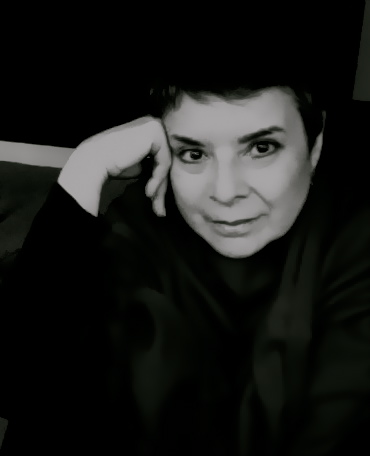
Photo on 2014-03-31 at 17.16 #3unnamed-18JAMIE DEDES (The Poet by Day)~ I started blogging shortly after I retired as a way to maintain my sanity and to stay connected to the arts and the artful despite being mostly homebound. My Facebook pages are: Jamie Dedes (Arts and Humanities) and Simply Living, Living Simply.

With the help and support of talented bloggers and readers, I founded The Bardo Group because I feel that blogging offers a means to see one another in our simple humanity, as brothers and sisters and not as “other.” Effective October 4, 2014, I pass the administration of the blog to Terri Stewart (Beguine Again).  Tthe Beguine Again collaborative and The Bardo Group are coordinating a consolidation of the two groups. I remain as poetry liaison and a member of the Core Team.

“Good work, like good talk or any other form of worthwhile human relationship, depends upon being able to assume an extended shared world.” Stefan Collini (b. 1947), English Literary Critic and Professor of English Literature at Cambridge

Posted in 100,000 Poets, Musicians, Artists and Activists for Change, General Interest, Writers' Fourth Wednesday, Writing

THE MIGHTY PEN: poets and writers as change agents

The Patchwork Scribble Factory back in the early '80s when we still used typewriters, printed manuscripts and sent them by snail mail.
The Patchwork Scribble Factory back in the ’70s when we still used typewriters, typed manuscripts and submitted them by snail mail after making photocopies.

Writers, poets and other artists are often the change agents in a world that seeks the balance of reason to counter violence, injustice or stagnation.

On Saturday, 27 September, 100,000 Poets (and Writers, Musicians, Artists and Activists) will join in cities and towns around the world to explore and inspire positive changes for issues of human rights, poverty, hunger, climate, and peace-making. You can learn more about that effort and see what’s happening in your area by linking HERE.

The Bardo Group is hosting a virtual event as a vehicle to facilitate blogger participation and also for those who may not live near an off-line event or who may be homebound. Tomorrow, we are jump-starting our participation with our traditional Writers’ First Wednesday prompt. Novelist, poet and writing coach, Victoria C. Slotto will host Got Change? and you are invited to share your thoughts and work by linking in through Mister Linky or by leaving comments or links in the comment section.

Please join us on The Bardo Group blog tomorrow for Victoria’s Writers’ Fourth Wednesday.

Details on our virtual participation with 100,000 Poets for Change event are HERE.

© 2014, photograph, Jamie Dedes, All rights reserved

.

Photo on 2014-03-31 at 17.16 #3unnamed-18JAMIE DEDES (The Poet by Day)~ I started blogging shortly after I retired as a way to maintain my sanity and to stay connected to the arts and the artful despite being mostly homebound. My Facebook pages are: Jamie Dedes (Arts and Humanities) and Simply Living, Living Simply.

With the help and support of talented bloggers and readers, I founded The Bardo Group because I feel that blogging offers a means to see one another in our simple humanity, as brothers and sisters and not as “other.” I am the poetry liaison and a member of the Core Team. Terri Stewart (Beguine Again) is in the lead position and the Beguine Again collaborative and The Bardo Group are coordinating a consolidation of the two groups.

“Good work, like good talk or any other form of worthwhile human relationship, depends upon being able to assume an extended shared world.” Stefan Collini (b. 1947), English Literary Critic and Professor of English Literature at Cambridge
Posted in Disability, Essay, General Interest, Mental Health, Michael Watson

The Olympics, Polio, and the Medicine Wheel, Part Two

community-seatingThe Olympics have come to a close; the Paralympics follow. Saturday evening Jennie and I watched a Gimp DVD. She is planning to show it to her Expressive Therapies class, along with some material from Bill T. Jones. Its been a while since we last saw Gimp in performance so revisiting their work was a revelation.

The Paralympics is a much-needed, if under-reported competition for athletes who happen to be disabled. The Gimp Project is a collective of dancers, able-bodied and disabled. The Paralypics is a contest; Gimp is a collaboration exploring the world of disability experience.  The first seeks perfection, the latter revels in the beauty of imperfection. The Paralympics pursue inclusion, abet separate and unequal; Gimp tells stories, often casting light on the processes that marginalize and exclude.

There is a remarkable invisibility surrounding these processes, although many activists, academics, and artists have sought to illumine them. It matters little whether these forces  exclude persons on the basis of ethnicity, race, disability, or other difference, the effect is consistent. The systems are pervasive and largely invisible; they are also profoundly human.

The Medicine Wheel holds all of human experience, offering us a view of life as a whole. There is a place on the Wheel for everything that can be encountered, even a space for our collective fear of otherness and contagion. The Wheel reminds us that we will each encounter all that is, whether directly or through the experiences of others. Our fates are inexorably woven together; the fate of each is that of all.

As we meditate on the Wheel we are encouraged to consider that while they seem real, both safety and isolation are illusory, transitory states. The last few months I have found myself wandering the wilderness that is part of the Post Polio experience. Recent health concerns continue to bring up ancient unresolved feelings, along with worries about the future. I have been repeatedly thrown back to the fear and pain of the acute illness and post-illness recovery, and the social isolation imposed on me as a Polio. I am also reminded the effects of the virus continues to impact my life and thus the lives of those I hold dear.

I’ve been exploring the experience of Post Polio through the wisdom of the Wheel. For me, now, Post Polio lies in the North, the place of aging, teaching, and eventually, making preparations to return to the Spirit World. (The North is also the place of preparation for rebirth!) The journey is complicated as I find myself trying to make sense of my nearly lifelong disability from a place on the Wheel where it is also my task to embrace a declining body.

Part of the task is to acknowledge my fear of erasure. We live in an epoch in which Polio was eradicated; we are, for most purposes, a Post-Polio world. I was taught I had survived the virus and should get on with life, ignoring, as much as possible, the devastation to my body and psyche. Yet the path of forgetting and ignoring is fraught with difficulties; the way of assimilation or “passing” is thorny. The normative prescription offers the possibility of inclusion, yet to follow that road is to participate in a collective act of erasure, to become invisible, and thus lose Self.

Every human being comes to a place where s/he is vulnerable; each of us eventually faces the treat of erasure and the powerful emotions that accompany that threat. In a culture addicted to perfection, and dismissive of difference and need, such moments carry added fear and shame. How odd such an essentially human experience is marginalized, leaving so many to face the North filled with loneliness and dread.

As a society we increasingly relegate the task of accompanying folks on the journey through the North to the health care profession and the clergy. As a result, we have marginalized the insight and wisdom that may accompany disability, experiences of trauma, and aging.  In doing so we create great suffering for the very young we profess to idolize, for we deny them context. How are they, in the face of ceaseless messages about the centrality of competition and perfection, to know they are all loveable, all sacred, beautiful, and desirable in their humanness and imperfections?

Our collective focus on perfection sells products and drives our economy, yet blinds us to the fate of our neighbors and the world. Our deeply held collective desire for safety encourages us to abandon our elders, young people, and children, threatens our very being as a species, and steals our Souls. Still, as prophesy insists, we have options. We can risk relearning the wisdom of the elders, symbolized by the Medicine Wheel, accept the complexity and terror of being human, and journey together into a Sixth World. There are, if we make it so, seats for all at the table.

– Michael Watson, Ph.D.

© 2013, essay and photographs (includes the one below), Michael Watson, All rights reserved

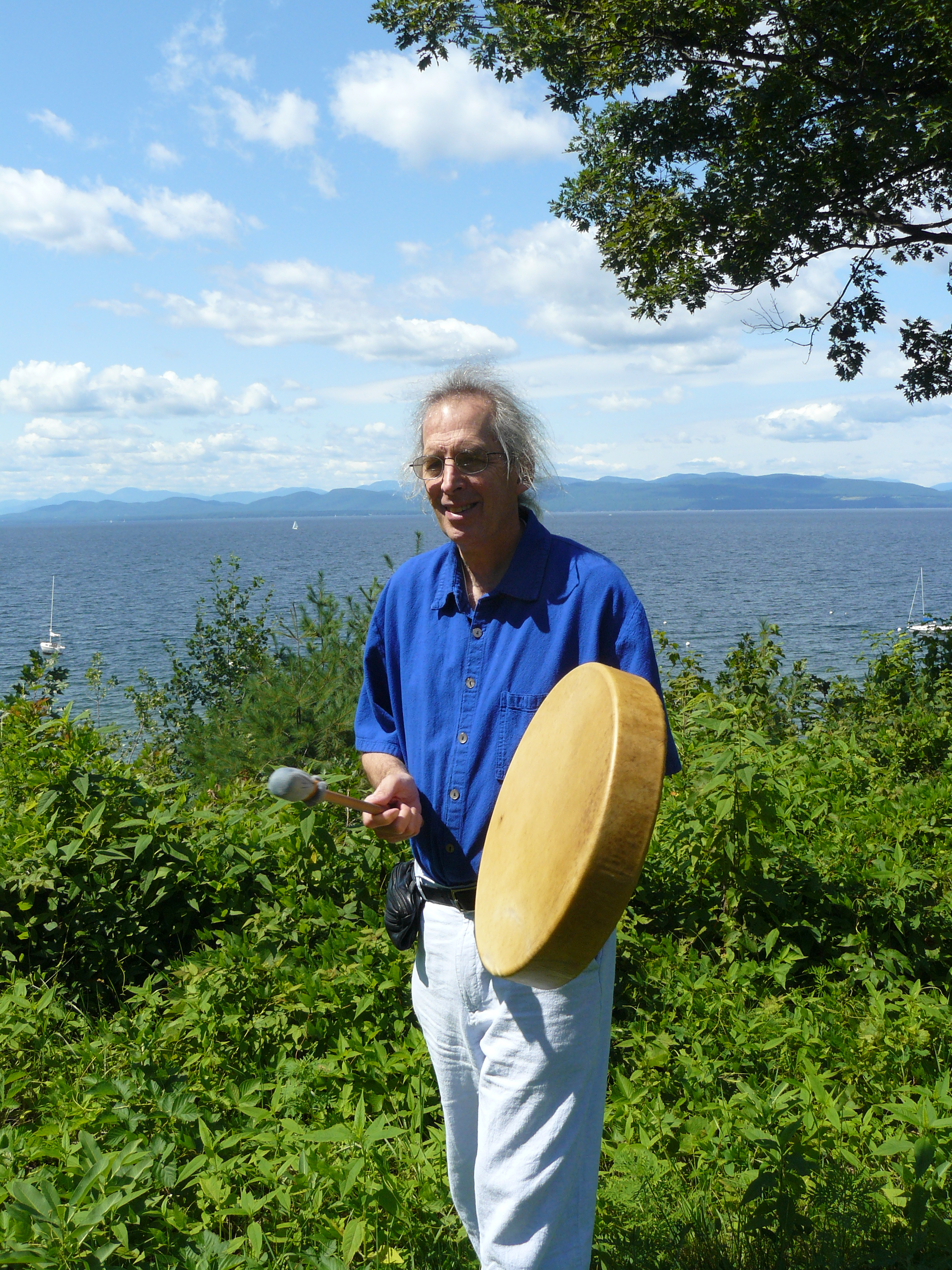
michael drumMICHAEL WATSON, M.A., Ph.D., LCMHC (Dreaming the World) ~ is a contributing editor to Into the Bardo, an essayist and a practitioner of the Shamanic arts, psychotherapist, educator and artist of Native American and European descent. He lives and works in Burlington, Vermont, where he teaches in undergraduate and graduate programs at Burlington College,. He was once Dean of Students there. Recently Michael has been teaching in India and Hong Kong. His experiences are documented on his blog. In childhood he had polio, an event that taught him much about challenge, struggle, isolation, and healing.