Posted in justice, Peace & Justice, Terri Stewart

Sabbath and Syria

by Terri Stewart (Beguine Again)

“Faith is not the clinging to a shrine but an endless pilgrimage of the heart.”
~Rabbi Abraham Joshua Heschel

Trevor Hudson, in his book A Mile in My Shoes, describes living daily life as living daily pilgrimage into the suffering of others. Life as a daily pilgrimage includes:

  • Being present,
  • Listening, and
  • Noticing

I was thinking of this as I was pondering the great tragedy that is taking place in Syria. Bodies are washing up on the shores of the Mediterranean of little children and families fleeing. It is simply horrifying. An excellent explanation of what is happening is here.

About 6 years ago, when I first started working at the juvenile detention center, I was playing cards with some boys in the detention center. As we played games, the boys were sharing their stories. One of the boys happened to be from Syria. He left Syria and moved to the states after seeing his parents murdered in front of him. He came here to live with his auntie. He could barely read or write. He was in detention for violent behavior. Imagine that. He had anger issues. I thought it was horrifying then. It seems it just keeps on getting worse.

Trevor Hudson would have us travel into the suffering as a pilgrim, not as a voyeur or as a consumer, but as a sacred journey. Being present to pain. Listening to their stories without imposing outside values. And noticing. Noticing who they are. Sometimes that is the most sacred gift of all. I think on that day years ago, for that young man from Syria, that is what he longed for. Simply to be noticed.

Maybe this Sabbath day we can take a moment and be present to those who suffer near us. Take a pilgrimage with them–a sacred journey into the heart.

Shalom,

terri

pilgrimage of the heart

Posted in Culture/History, Essay, General Interest, Priscilla Galasso

Good Gawd, Y’all!

Another school shooting hit the news yesterday. The impact seems dull. Repetition has begun to numb my response. The predictable media storm continues, but just as raindrops seem less penetrating after your clothes are soaked, I simply can’t absorb this horror. And that is rather shocking.

 I Googled “List of school shootings in the U.S.” The Wikipedia article’s chronology goes by decade, starting with the 1760s. There is one entry there. The next listing is 9 decades later. Two items there. The narration continues to list shootings for every decade. When we get to this millennium, the bullet points are replaced by a chart. From 2000 – 2010, there are 46 different shooting events chronicled. From 2010 – 2014 (n.b. Not even half a decade!) there are 65, including yesterday’s. And I may have lost count of one while scrolling down through the list.

Obviously, this storm is escalating. This is a flood. Our country is awash in violence being perpetrated against school children. School children! What can that be about? What madness has overtaken our culture that young people at their studies have become targets? I’m pretty sure it’s not so much about the targets as it is about target practice.

 Our culture has target practice deeply embedded in its psyche and readily available in its entertainment, military and politics. Angry? Take aim. Proud? Take aim. Patriotic? Take aim. Need security? Take aim. Impoverished? Needy? Insulted? Invisible? Defiant? Miffed? Whatever the uncomfortable feeling you have, you can get relief by pulling out a weapon and taking aim at some target. Children in school apparently make a pretty easy gallery.

 This approach is like using the same tool for every situation, no matter what it is. Would you use a hammer to wind your watch or play your piano or punch down your bread dough or crochet a sweater? No. And how did you learn to lay your hands on the appropriate tool for each of these situations? Most likely, at a very young age, you watched someone do it. A role model. Perhaps a parent or grandparent. Someone you trusted, who spent time with you, doing everyday kinds of things.

P1040287

 Let’s look around. Where are the role models that are pulling out weapons for every crisis? Where are the role models who are negotiating, discussing, creatively engaging, brainstorming and experimenting with different non-violent approaches? Who are the role models who have multiple tools in their belts and use the appropriate ones for the situation? And violence, what is it good for? Is it ever the best tool for the job?

 And, c’mon, let’s be creative. Why does our entertainment have to follow this unimaginative formula of violence? There are a million other options. There are a million other roles to play. Playing something different will make us smarter, wiser, more flexible, more open, more like children. School children….our vanishing resource.

© 2014, essay and photograph, Priscilla Galasso, All rights reserved

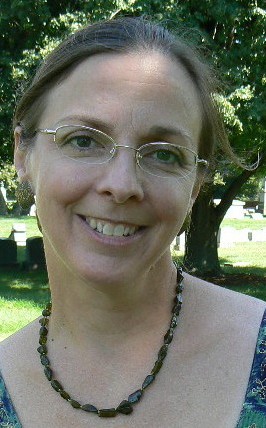
004PRISCILLA GALASSO ~ started her blog at scillagrace.com to mark the beginning of her fiftieth year. Born to summer and given a name that means ‘ancient’, her travel through seasons of time and landscape has inspired her to create visual and verbal souvenirs of her journey.

Currently living in Wisconsin, she considers herself a lifelong learner and educator. She gives private voice lessons, is employed by two different museums and runs a business (Scholar & Poet Books, via eBay and ABE Books) with her partner, Steve.

Posted in Essay, Michael Watson, Spiritual Practice, teacher

Ceremony and the Raven

Evening, Lake ChamplainThis morning we put aside our frustration and despair and spoke with the land and spirits. The mosquitoes, which had been fierce, quieted their attack, and even the birds calling stopped to listen. We like to open the altar outside whenever the weather allows, but of late have not had the heart to do so. The last time we opened the altar was the only time all summer we have heard the calls of the Hermit Thrush.

We awoke feeling sad and angry. The news on the racial, social, and climate fronts has been heartbreaking. We’ve been feeling overwhelmed, unable to see how we might contribute significantly to much-needed change. We’ve also been asked to aid others who are thinking they should do more than they possibly can. We remind others to do only what they are able. As we do so we remind our many selves to do the same, even as some selves feel frightened and desperate for change.

In the brief ceremony we spoke to the Creator, Pachamama, and the spirits about our gratitude for our lives and our concerns for the present and future. We acknowledged we humans are not caring for the futures of our grandchildren, let alone those of all species who will follow us in seven generations. This is a great sadness.

After the ceremony we came in to respond to e-mail and do other tasks. Online, we discovered a brief video posted to Facebook. In the video, a wild raven, perched on a fence, allows a woman to remove porcupine quills from its face. After each quill is removed, the raven squawks and complains, then allows the woman to soothe it and remove the next quill. How familiar!   (Watch video.)

Watching the video, we were once again reminded that ravens are immensely intelligent creatures, that humans are not the only ones who seek aid from others, and that all life forms are profoundly interconnected, in life as in story. We were also reminded that small things, even removing quills from an injured animal, can be powerful ceremony, and profoundly healing to those in an ever-widening circle.

– Michael Watson, Ph.D.

© 2013, essay and photographs (includes portrait below), Michael Watson, All rights reserved

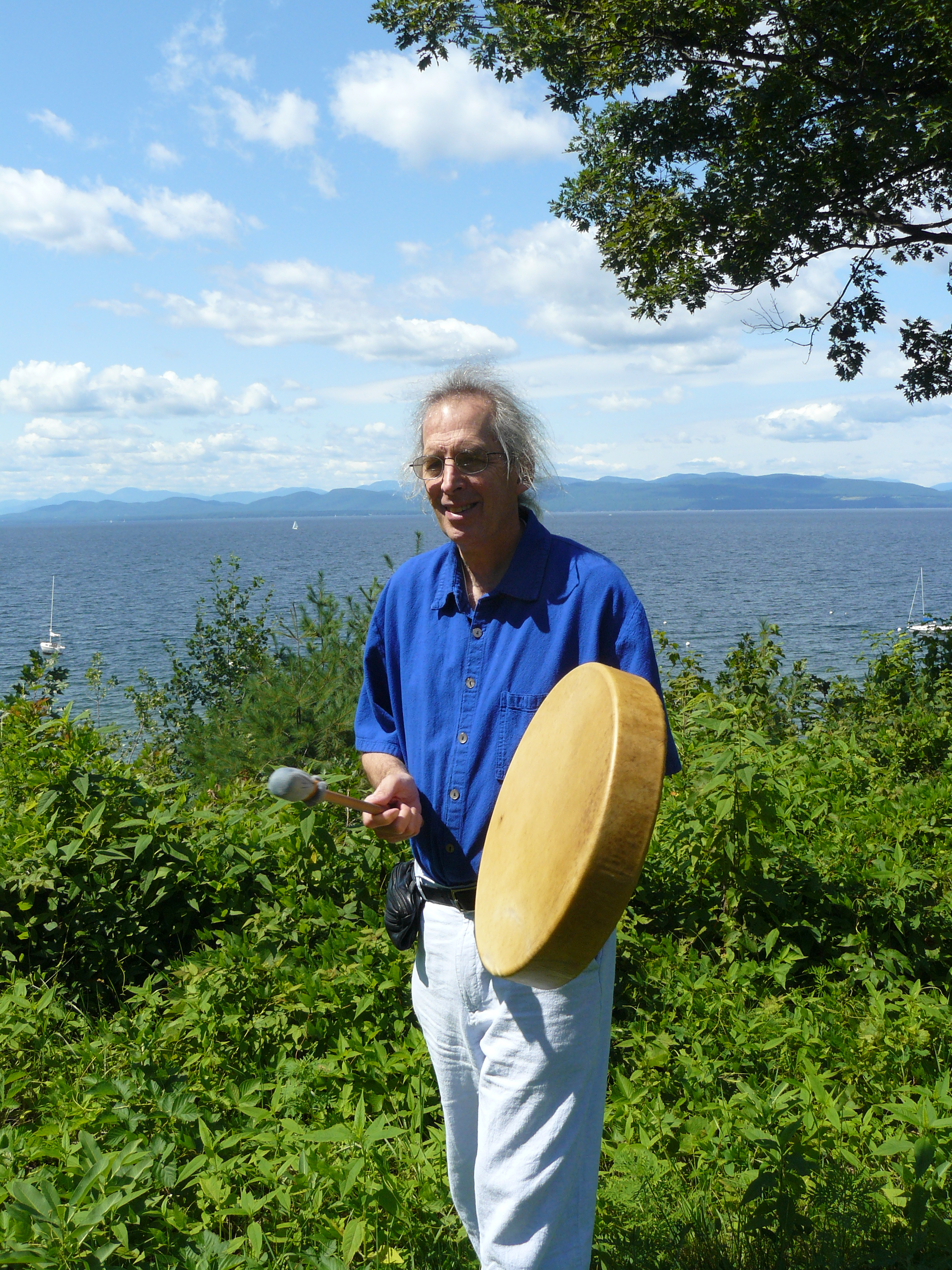
michael drumMICHAEL WATSON, M.A., Ph.D., LCMHC (Dreaming the World) ~ is a contributing editor to Into the Bardo, an essayist and a practitioner of the Shamanic arts, psychotherapist, educator and artist of Native American and European descent. He lives and works in Burlington, Vermont, where he teaches in undergraduate and graduate programs at Burlington College,. He was once Dean of Students there. Recently Michael has been teaching in India and Hong Kong. His experiences are documented on his blog. In childhood he had polio, an event that taught him much about challenge, struggle, isolation, and healing.

Posted in Essay, Poems/Poetry, Spiritual Practice, story, Terri Stewart

Abandoned, Alone, and Angry

In my faith tradition, Jesus is crucified on the cross. He cries out, “Father, Father, why have you forsaken me?” This is a reference to Psalm 22 which explores emotions of abandonment, anger, and finding hope. I have used this methodology to express the anger and hope that I find for the youth that I work with who are affected by incarceration.

One night when I was working in detention (re: jail for kids), I heard story after story of hopelessness. It came to me that these youth were torn apart by their parents, by the education system, by poverty, by global issues beyond my understanding. One youth was going home the next day. To a crack addicted mother. Why couldn’t he go to his dad? His dad smuggles guns into the country and was a high placed gang member. He was certain he would be dead if he lived with his dad. So to his mom he goes. Where she will offer him drugs and he will become hooked. Again. He said, “I do not have the strength to say no to my mother.”

Another youth, noticably affected with psychological and educational challenges, was from Somalia. He was living with his auntie here. In Somalia, he had seen his parents dragged from their home, his mother raped, and both parents killed in front of him. But instead of investing in mental health centers, we have invested in mental health courts. This young man, clearly with a minimum of PTSD, will be locked up where the focus is on “treatment” (in this setting that means that they admit to crime and say they are sorry) not on therapy.

This makes me so mad! So my heart cries out to all who have let down these children. Let me say it again–children. But in order to do this work, I needed to discover why. The below poem was my journey through the anger to discovering how I can possibly continue to find hope and love in a system that is hopeless and loveless. It is also my way of putting words to the stories that the youth tell. And my own story.

And PS, if you’d like to support my work with these troubled youth, I’d love it!


Psalm
Eli Eli lama sabachthani?

where were you
when the embryo
hatched and was formed
by blood-spattered hyenas
tearing hope from
limb to limb and
laughing gleefully
at the mockery

where were you
when the embryo
fell and love
offered a hit
of a crack pipe
covered in symbols
flashing through
the ghetto offering
escape from the
desolate heat

the hands that
should be reaching
out are cut off at
the wrists bleeding
sanctimonious tripe
in defiance of the call
to love the
least , lost, and lonely
while sentencing each
embryo to death

guilty rings through
the room as we
continue to bleed the
embryo out with
ignorance born of
fear and shame and
the lie of the only way
being my way standing
on the corner shouting
belligerently to
repent or die

revelation rings through
the cosmos as the
embryo marches the
guilty to sheol while
silent tears are birthed
wresting the stumbling
breath of hope into a
silent scream reaching
to the ramparts and
calling forth the final
battle fought with
easter lilies

© 2013, post, Terri Stewart, All rights reserved

© 2009, poem, Terri Stewart, All rights reserved

terriTERRI STEWART is Into the Bardo’s  Sunday chaplain, senior content editor, and site co-administrator. She comes from an eclectic background and considers herself to be grounded in contemplation and justice. She is the Director and Founder of the Youth Chaplaincy Coalition that serves youth affected by the justice system. As a graduate of Seattle University’s School of Theology and Ministry, she earned her Master’s of Divinity and a Post-Master’s Certificate in Spiritual Direction with honors and is a rare United Methodist student in the Jesuit Honor Society, Alpha Sigma Nu. She is a contributing author to the Abingdon Worship Annual.

Her online presence is “Cloaked Monk.” This speaks to her grounding in contemplative arts and the need to live it out in the world. The cloak is the disguise of normalcy as she advocates for justice and peace. You can find her at www.cloakedmonk.com, www.twitter.com/cloakedmonk, and www.facebook.com/cloakedmonk.  To reach her for conversation, send a note to cloakedmonk@outlook.com
Posted in Essay, Michael Watson

To Err is Human

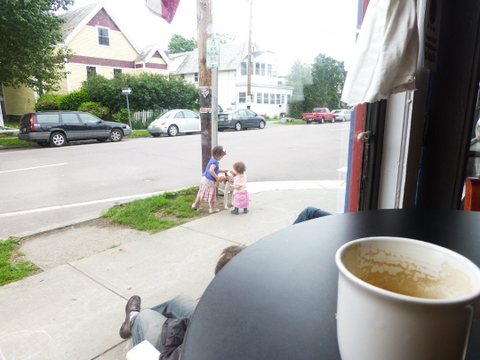
Window ViewThis morning I was driving home from one of our favorite bakeries via a well trodden, quietly residential route, one I have walked and driven for more than thirty years. I was lost in thought and focused on the many speed bumps that inhabit that street. I was thinking that the latte had been suburb, and the new pastry way too sweet and most likely going to suppress my immune system for hours. Suddenly I was aware I had run a stop light; seemingly the light had sprung up overnight in the middle of a block.

The light is long overdue and should aid elementary school students cross the sometimes busy street in route to their school. Yet, motorists are not warned of a new light, and the light itself is partially obscured by overhanging branches. (Often the city puts up warning signs for motorists approaching new stop signs and lights.) The light seems an excellent example of a well conceived project inadequately implemented.

I missed the light, in part, because, as I drove down the empty street  I was thinking about writing a post for this blog. Familiarity with the way, and a downward sighted focus on the speed bumps added to the problem. Yet, ultimately, I was a distracted driver and I drove through a red light. Clearly, my responsibility.

I imagine that most of us are doing our best to be kind and attentive to the needs and demands of life. We imagine we have things under control, forgetting our attention is divided, and the ease with which mistakes occur. How often our attention fails and we miss whatever might be important in the moment. How frequently do we become angry with others for doing the same?

Here is a paradox: maybe we take ourselves too seriously. Perhaps we would be happier were we to substitute humor for anger, playful reconsideration for aggression. Humor and playfulness support our presence in the moment and encourage us to forgive one another and ourselves for our misses.  Yes, driving is crucial business, requiring all our facilities and best judgement. Many other tasks are also decidedly important, demanding seriousness of purpose and focus. Yet, we are going to err. Most of the time a bit of laughter is more supportive of learning than is self criticism. A light heart seems to aid the brain in becoming more skillful.

The fretful side of me wonders what other hazards lurk in the midst of well trodden, usually safe paths. Those voices urge focus and attention, reminding me of the real consequences of grave mistakes. Other voices remind me few mistakes are truly harmful. They encourage breath and play, humor as well as focus. Both points of view are important in a world of hazards. I’m wondering where the balance between them lies. What do you think?

– Michael Watson

© 2013, essay and photographs (includes portrait below), Michael Watson, All rights reserved

michael drumMICHAEL WATSON, M.A., Ph.D., LCMHC (Dreaming the World) ~ is a contributing editor to Into the Bardo, an essayist and a practitioner of the Shamanic arts, psychotherapist, educator and artist of Native American and European descent. He lives and works in Burlington, Vermont, where he teaches in undergraduate and graduate programs at Burlington College,. He was once Dean of Students there. Recently Michael has been teaching in India and Hong Kong. His experiences are documented on his blog. In childhood he had polio, an event that taught him much about challenge, struggle, isolation, and healing.

Posted in folk tale, story, Uncategorized

Why We Shout in Anger

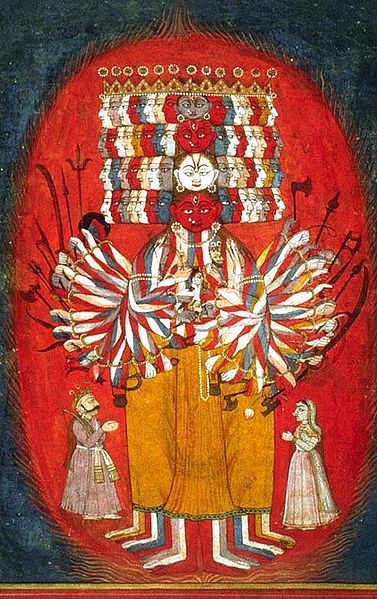
377px-VishnuvishvarupaA Hindu saint who was visiting river Ganges to take bath found a group of family members on the banks, shouting in anger at each other. He turned to his disciples smiled and asked.

‘Why do people shout in anger shout at each other?’

Disciples thought for a while, one of them said, ‘Because we lose our calm, we shout.’

‘But, why should you shout when the other person is just next to you? You can as well tell him what you have to say in a soft manner, ‘asked the saint.

Disciples gave some other answers but none satisfied the other disciples. Finally the saint explained, .

‘When two people are angry at each other, their hearts distance a lot. To cover that distance they must shout to be able to hear each other. The angrier they are, the stronger they will have to shout to hear each other to cover that great distance.

What happens when two people fall in love? They don’t shout at each other but talk softly, Because their hearts are very close. The distance between them is either nonexistent or very small…’

The saint continued, ‘When they love each other even more, what happens? They do not speak, only whisper and they get even closer to each other in their love. Finally they even need not whisper, they only look at each other and that’s all. That is how close two people are when they love each other.’

He looked at his disciples and said.

‘So when you argue do not let your hearts get distant, Do not say words that distance each other more, or else there will come a day when the distance is so great that you will not find the path to return.’
-Author Unknown.

Thank you to Kris Lee for bringing this story to my attention.
Photo Illustration ~ Krishna (Hindu avatar)via Wikipedia and in the public domain.

– Terri Stewart

mailTERRI STEWART is Into the Bardo’s Chaplain, Sr. Consulting Editor, and Site Co-administrator. She comes from an eclectic background and considers herself to be grounded in contemplation and justice. She is the Director and Founder of the Youth Chaplaincy Coalition that serves youth affected by the justice system. As a recent graduate of Seattle University’s School of Theology and Ministry, she earned her Master’s of Divinity and a Post-Master’s Certificate in Spiritual Direction with honors and is a rare United Methodist student in the Jesuit Honor Society, Alpha Sigma Nu. She is a contributing author to the Abingdon Worship Annual.
.
Her online presence is Cloaked Monk.This speaks to her grounding in contemplative arts (photography, mandala, poetry) and the need to live it out in the world. The cloak is the disguise of normalcy as she advocates for justice and peace. You can find her at www.cloakedmonk.com,www.twitter.com/cloakedmonk, and www.facebook.com/cloakedmonk.  To reach her for conversation, send a note to cloakedmonk@outlook.com.