Posted in General Interest, The BeZine, The BeZine Table of Contents

The BeZine, Volume 2, Issue 1, Nov. 2015 (At-risk Youth)

15 November 2015

Welcome to our first issue that is focusing on at-risk youth. Our mission today in our topical section is to share stories and poems that cause us to think about youth in a different way. Who are at-risk youth? Where are they?

Often, they seem invisible to the world until they are splashed across the news in dramatic headlines. We can all remember the photos of dead children washing up on the seashore…refugees fleeing Syria. And in the US, just a few days ago, a young boy, age 8, killed a 1 year old. Why? Because he was the babysitter in charge and she would not stop crying. I am often appalled at the reactions we have to children with extreme behaviors. What skills do we expect an 8 year old to have?

Sigh.

And so, we, at The Bardo Group, have written of the children of the world that are marginalized and at-risk for a wide range of disasters. This is a special topic for me. I run the Youth Chaplaincy Coalition which provides chaplaincy and mentoring to incarcerated youth. I have included three pieces in this edition that are close to my heart. One, Eli, Eli, lama sabachthani. This poem is the first one I wrote in reaction to the stories I heard in detention. I wanted to put the parents, and God, on trial. And so I did. I wasn’t happy with the answer I received! And yet, it gave me so much hope. The second piece, an essay titled Mentoring At-Risk Youth, tells you a little more directly about who I am and what I do. Last, is the poem, A True Story. You may guess that it is a true event and you would be correct! It happened this year and it made me very angry.

St. Augustine says, ““Hope has two beautiful daughters – their names are anger and courage; anger at the way things are, and courage to see that they do not remain the way they are.”

Hope, anger and courage have driven me to move through the pain and challenge of working with these particular youth.

A small collection from people I work with that all explore what it is like to work with incarcerated youth. They are all new to the BeZine so let’s give them a resounding welcome! Justin Almeida offers an essay, Finding Life in Detention. Lisa Ashley, MDIV, has a poem, at risk youth, that names what is really at risk when you work with youth in detention—your heart is at risk!  And Natasha Burrowes drops the mic in Untitled.

Closely related to Natasha’s discussion of who is really at risk is Charles Martin’s, at risk… It is a great question. Who is really at risk when we allow our children to be the victims of poverty, crime, and other forces? Is it really just the child? Or is there something larger?

Incarcerated youth, across the board, have increased rates of trauma when compared to other youth. The ACES test (Adverse Childhood Experiences) scores incarcerated youth as having a 92 out of 100. I think I would be a bowl of jello if I had that high of a trauma score. Christina Conroy explores living through a traumatic childhood in her autobiographical poem, Legacy. Also writing autobiographically is Kimberly Wilhelmina Floria in Validating Myself. It made my heart grow two more sizes! Also cracking my heart is Jamie Dedes’ Heading Home autobiographical poem regarding suicide. Sometimes, I wish I knew what that special something is that manages to give children resiliency. Heart breaking. Or I wish I had a magic wand that would right the world’s wrongs.

Also writing from experience is Trace Lara Hentz’s essay, Angel Turned Inside. Lara was introduced to us by Team Member Michael Watson and is new to these pages. Her essay explores the tragedy that was the movement westward in the US and the use of adoption as a weapon against American Indians and First Nations. I am aware of this tragic history because of my knowledge of church history which is horrifyingly replete with church support of taking children from their families and putting them into orphanages.

Knife Notes—a Poem, from Michael Dickel, explores the relationship between the past and the future for Joe. I am especially moved by the truthful reflection of how kids who are hurting treat each other.

“It is the paramount duty of the state to make ample provision for the education of all children residing within its borders, without distinction or preference on account of race, color, caste, or sex.” That is a quote from Washington state’s constitution. Unfortunately, we simply fail our children. John Antsie’s article, Education, Common Sense … and The Future, explores two simple things regarding education-one thing to change and one thing to hope for.

One thing that the youth I work with almost unanimously face is addiction issues. Jamie Dedespiece, scag dancing, explores in vivid, concise imagery the relationship between addiction and poverty.

With “Thinking Continually of Those at Risk,” by Priscilla Galasso, you will be surprised at where she starts and where she finishes! She speaks a truth that resonates, “We can so easily provide food, shelter, and opportunity to our youth with the systems we have devised, but those systems have become mine fields where kids are sabotaged on the journey.”

Sometimes we attempt to sabotage journeys with needless judgment regarding what makes a real parent. John Nooney explores his experience of adoption and the sometimes senseless absorption of people asking, “Have you found your birth-mother?” in his essay, Some Thoughts on Adoption.

In my research of how to interrupt the school to prison pipeline, I have found two interesting statistics. One, children who miss 24+ days of Pre-K or Kindergarten are more likely to become incarcerated. And two, children who personally own five books of their own have better life outcomes than those who do not. I have also recently run across an article pointing towards the importance of librarians in achievement for children. Corina Ravenscraft points out the importance of libraries in These Hallowed Halls of Hope.” Libraries are, indeed, an oasis of peace in a concrete jungle.

One thing is trite but true, it does indeed, take a village to raise our children.

Thank you for moving through my rambling reflections with me. I hope that your heart is moved to consider how we support and work with those who are at-risk.

Shalom & Amen!
Terri Stewart

Theme: At-Risk Youth

Lead Features

Eli Eli Lama Sabachthani, Terri Stewart
Untitled, Natasha Burrowes
Validating Myself, Kimberly Wilhelmina Floria
At-risk, Charles W. Martin

Poetry

Legacy, Christina Conroy
At-risk Youth, Lisa Ashley, MDIV
A True Story, Terri Stewart
Heading Home, Jamie Dedes
Knife Notes—a poem, Michael Dickel
scag dancing, Jamie Dedes

Essays/Features

Mentoring At-Risk Youth, Terri Stewart
Finding Life in Detention, Justin Almeida
Education, Common Sense … and The Future, John Antsie
These Hallowed Halls of Hope, Corina Ravenscraft
Thinking Continually of Those at Risk, Priscilla Galasso
A Teenager Who Fled Syria, NPR and World Vision
Rapid Re-Housing Best Available Crisis Intervention for Homeless Families and Youth, National Alliance to End Homelessness

Special Features: Adoption

November is National Adoption Month in the United States

Some Thoughts on Adoption and “real” parents v adoptive parents, John Nooney
Angel Turned Inside, The Fight for Native American Families, Trace Lara Hentz

General Interest

Poetry

How Can I Justify My Life If I Do Not Justify His Own?, K. A. Bryce
Second Light Network of Women Poets: Celebrating Anothologies of Women’s Poety, Jamie Dedes

Photo Essay

Some Early Seasonal Cheer, Corina Ravenscraft

Photo Story

The Secret Object I Keep Hidden in My Underwear Drawer, Naomi Baltick

Essays

Deportment for the Soul, Sue Vincent

paint-prints-of-youths-hands

BIOS WITH LINKS TO OTHER WORKS BY OUR CORE TEAM AND GUEST WRITERS

FOR UPDATES AND INSPIRATION “LIKE” OUR FACEBOOK PAGE, THE BARDO GROUP/BEGUINE AGAIN

MISSION STATEMENT

Back Issues Archive
October/November 2014, First Issue
December 2014, Preparation
January 2015, The Divine Feminine
February 2015, Abundance/Lack of Abundance
March 2015, Renewal
April 2015, interNational Poetry Month
May 2015, Storytelling
June 2015, Diversity
July 2015, Imagination and the Critical Spirit
August 2015, Music
September 2015, Poverty (100TPC)
100,000 Poets for Change, 2015 Event
October 2015, Visual Arts (First Anniversary Issue)

Posted in General Interest, Terri Stewart

Religious Community, Social Justice, Incarcerated Youth: An Interview with Terri Stewart

I “met” Terri Stewart online in 2011 when I visited her blog Beguine Again, which at that time was entitled Cloaked Monk. “Beguine” Again – after the Beguines, a lay semi-monastic Christian order of the 13th-16th centuries in Northern Europe. It was committed to – among other things – caring for the sick and the poor.

I was impressed with Terri’s commitment to spiritual ritual and her openness to the wisdom and beauty in religious traditions, including traditions other than her own. I valued her respect for diversity, both social and spiritual, so I eventually invited her to become the Sunday Chaplain for what was then a blog entitled Into the Bardo.

Since that time, we’ve evolved into a group (The Bardo Group) of clerics and poets, writers and other creatives representing varied traditions and cultures and sharing the core values of respect and nonviolence. We work in the interest of peace, sustainability and social justice. We publish The BeZine. Our thirteenth issue comes out on November 15th. The theme is At-risk Youth. Terri is taking the lead for that issue, making this the perfect time for readers and colleagues to get to know her better. Hence this interview … Enjoy!

Youth Chaplaincy Program Founder, Terri Stewart. Christmas at the King County Youth Detention Center, Seattle, Washington

Jamie: I have a sense that you were committed to social justice long before you decided to study theology and become a minister. Is that correct? What was the stimulus and what was the first project on which you worked?

Terri: When I first joined the church in 2001, I was looking for a connection to community. What I discovered was inequality in the church and an avoidance of social issues that drove wedges between people. It was like that uncomfortable Thanksgiving dinner. Everybody is at the table, but only a few were allowed at the grown-up’s table. And! disagreements were glossed over for the sake of unity.

My biggest issue with the church was its lack of inclusion for LGBTQIAP individuals. In response to that, and as a mirror of the greater structure of the United Methodist Church (UMC) world-wide church, I founded the Church & Society committee. This was an attempt to get people talking and to be able to step into social issue learning and leadership. I soon found myself embroiled in controversy as two issues marched through Washington state. In 2004, there was a church trial in the town next to my home town that was an attempt to defrock a lesbian pastor. Also, just prior to the trial, I was involved in a march on the capitol in Olympia for marriage equality.

The upshot was that I was yelled at like I was a child! “Are you trying to destroy the church?”

Then, when I went to seminary, I chose a Jesuit (The Society of Jesus) institution. Liberation theology, post-colonial theology, process theology…all of these things continued to crack me open to the human condition and to the interconnectedness of all that is.

As my first forays into social justice was basically full inclusion for LGBTQIAP individuals within the UMC church, I would count myself unsuccessful. The UMC church continues to have harmful language in its official rulebook (the ominously named Book of Discipline). I continue to advocate and am on the national board of Reconciling Ministries Network. Our goal has been full inclusion. I think we are beginning to realize that we need a second goal, that of creating safe space.

Also! At the same time this was all swirling around, I started volunteering with Kairos Prison Ministry in 2003. Kairos provides spiritual renewal retreats within the prison setting. Working with Kairos (Ancient Greek for “the right time” as opposed to chronos which is “watch time”) started me on a path towards understanding the full systems that impact the lives of those who are incarcerated.

Jamie: How and when did the focus transition to incarcerated youth? What is the most important thing you would like us to understand about the youth being served?

Terri: As I worked with Kairos, I started out working with incarcerated men. Then with incarcerated women. And then with women whose loved ones were incarcerated. I worked my way into leadership positions. Eventually, we thought, “What about youth whose loved ones are incarcerated?” So we wrote a program just for them.

At the same time, I was called into ordained ministry. I went to seminary. In my second year of seminary, I was required to do an internship. My internship was at the King County Youth Detention Center (KCJDC), Seattle, Washington. I basically never left.

The thing to know about the youth at KCJDC and at the state level institutions I serve, is that they are traumatized youth. The average ACE (Adverse Childhood Experiences) score for incarcerated youth is 92 out of 100. Most of us would be in therapy with that high of a score! Instead, these youth are incarcerated. We could change that by having trauma informed teaching practices in communities where generational trauma has occurred or by having mental health centers with trauma treatment available. Destigmatizing therapy would be grand!

Jamie: Tell us about Youth Chaplaincy Coalition, how other ministers may get involved and what the public can do to help.

Terri: The Youth Chaplaincy Coalition developed out of my internship at KCJDC. We realized that there was a need to organize, train, and supervise religious volunteers so that the youth would get the best care possible.

While we started at KCJDC, we now are state-wide. I run a mentoring program called MAP that aids youth in developing transition plans for when they go home. Since the kids go home all over Washington, I need volunteers in every city!

My dream is to teach people across the world how the MAP program works and how easy it is to walk with those affected by incarceration. There is also a training called “Healing Communities” that teaches communities how to use their gifts in aid of those affected by incarceration. If every church was a Healing Community and every city had trained mentors, we could transform the world! Well, we could at least change one child’s life. If you want to be involved or talk to me, you can email me at YCC-Chaplain@thechurchcouncil.org

My biggest need is financial support. I take a very small stipend and am responsible for all my own fundraising needs. I often make decisions this way, “Should I do my work today? Or should I do fundraising today?” Although I should view fundraising as work, I often give it a lower prioritization! So donations would be especially appreciated. I persuaded the Church Council of Greater Seattle to adopt the organization so we are a legit 501c3 and we have an accountant doing all the financial stuff! That is a great gift to me!

Donations can be sent to:
Youth Chaplaincy Coalition
PO Box 18467
Seattle, WA 98118

Be sure and put YCC or Youth Chaplaincy on the memo line.

Jamie: What made you decide to go into ministry? What is the most rewarding aspect of that commitment?

Terri: When I first experienced a call to ministry, I thought I was going bananas. My first reaction was, “Who me?” or “I must be over-tired!” The call I experienced felt like a direct communication from the Divine telling me to go deeper. As I went deeper into understanding the call of ministry, I discovered it was a call to ordained ministry.

The most rewarding part of the commitment to a sacramental ministry is when I see a person’s eyes light up with the understanding that they are, indeed, holy and good—a living sacrament.

Jamie: Tell us about “cloaked monk” and the place of ritual in our lives.

The Cloaked Monk developed out of a commitment to daily spiritual practices in ordinary life (the monk part) and that I was kind of disguised—like wearing a cloak!

I believe that ritual marks out sacramentality in our daily lives. Sacramentality is that connection to one another and to the Divine. It is a way of marking time that moves away from chronological time (Greek: chronos) and into marking the fullness of time (Greek: kairos). It also allows us to fully be present without living in the past or rushing into the future. This is especially important in our transient age of moving here and there faster and faster. Rituals grounded in generational practices connect us through time and space to another age. There is also the place for new rituals created that uplift new and modern experiences that our ancestors would never have imagined. They can be a celebration, a grounding, a remembering, or a lament.

The ancient Celts had thin places. They were places that the veil between the earth and beyond seem especially vulnerable to one another. Places where the things of heaven could pass to the earth and where things of the earth could pass to heaven. Stonehenge is one such place. Or labyrinths. Ritual, when it is meaningful, creates this thin place.

Jamie: Why should readers care about people and issues that don’t seem to touch their lives directly?

Terri: Unfortunately, it seems that issues of justice and mercy do not intersect with ordinary lives. Incarceration seems far away from us. Refugees in Syria seem far away. Violence in Palestine seems so very far away. But it all tangles together like my bag of knitting yarn. I am a very poor knitter. My yarns always get tangled and I don’t know what to do. And when it is in my bag, it will suck in all the other little things in there! Resources or things I might need become tangled up in the yarn. Those are resources that I need. They might be resources that others need.

In Washington, we spend about $9,600 per student to educate them. We spend about $45,000 per prisoner to incarcerate them. What we know is that by reading scores in the 4th grade, we can predict incarceration rates because we do not fully fund our schools. What if we were able to direct our resources into education? All students would benefit.

I imagine that it is like boats rising in a tide. A rising tide raises all boats. Yours, mine, everyone’s!

This slideshow requires JavaScript.

© 2015, most words and all photographs, Terri Stewart, All rights reserved

Posted in justice, Peace & Justice, Terri Stewart

Sabbath and Syria

by Terri Stewart (Beguine Again)

“Faith is not the clinging to a shrine but an endless pilgrimage of the heart.”
~Rabbi Abraham Joshua Heschel

Trevor Hudson, in his book A Mile in My Shoes, describes living daily life as living daily pilgrimage into the suffering of others. Life as a daily pilgrimage includes:

  • Being present,
  • Listening, and
  • Noticing

I was thinking of this as I was pondering the great tragedy that is taking place in Syria. Bodies are washing up on the shores of the Mediterranean of little children and families fleeing. It is simply horrifying. An excellent explanation of what is happening is here.

About 6 years ago, when I first started working at the juvenile detention center, I was playing cards with some boys in the detention center. As we played games, the boys were sharing their stories. One of the boys happened to be from Syria. He left Syria and moved to the states after seeing his parents murdered in front of him. He came here to live with his auntie. He could barely read or write. He was in detention for violent behavior. Imagine that. He had anger issues. I thought it was horrifying then. It seems it just keeps on getting worse.

Trevor Hudson would have us travel into the suffering as a pilgrim, not as a voyeur or as a consumer, but as a sacred journey. Being present to pain. Listening to their stories without imposing outside values. And noticing. Noticing who they are. Sometimes that is the most sacred gift of all. I think on that day years ago, for that young man from Syria, that is what he longed for. Simply to be noticed.

Maybe this Sabbath day we can take a moment and be present to those who suffer near us. Take a pilgrimage with them–a sacred journey into the heart.

Shalom,

terri

pilgrimage of the heart

Posted in Peace & Justice, Spiritual Practice, Terri Stewart

LISTEN and LOVE: Working with At-Risk Youth

Listen, Listen, Love, Love: Working with At-Risk Youth, an open letter from our own Rev. Terri Stewart. I appreciate what she’s doing – I’ve worked with at-risk youth too – so I wanted to share this with everyone.  J.D.

1381796454ha80uHi! I’m Terri Stewart, the founder of the YOUTH CHAPLAINCY COALITION, Seattle, Washington. I work with youth who are affected by incarceration. That can be youth who are in prison, youth who have left prison, or youth whose parents have been or are in prison. There is a consistent theme – prison.

“Then the righteous will answer him, ‘Lord, when was it that we saw you hungry and gave you food, or thirsty and gave you something to drink? 38 And when was it that we saw you a stranger and welcomed you, or naked and gave you clothing? 39 And when was it that we saw you sick or in prison and visited you?’ 40 And the king will answer them, ‘Truly I tell you, just as you did it to one of the least of these who are members of my family, you did it to me.’”(Matthew 25:37-40)

I love working with these youth and their families. My typical week is filled with driving from Woodinville to Seattle to Snoqualmie to Kirkland to Yakima and back home again. At least it isn’t all in one day!

Why do I do this crazy amount of driving? Because we practice what I call Extreme Accompaniment ministry. An Accompaniment ministry is when you walk with someone listening and loving. You don’t walk in front, leading them. You don’t walk behind, pushing them. You walk with them, wherever their path leads. Sometimes that path starts at King County Youth Detention Center and leads to Echo Glen Children’s Home in Snoqualmie and then to the Ridgeview Girl’s Group Home in Yakima! It can be a circuitous route! But Extreme Accompaniment has the possibility to cause restoration, transformation, and healing unlike any other method.

The difficulty of this method lies in its intensity and commitment. There are few called to travel with a marginalized youth for 12 months or more. But that is what makes it Extreme! And it is extremely fun! Extremely fulfilling! Extremely challenging! And Extremely transformative!

Right now, the ministry has 3 needs: volunteers, donations, and committed, daily prayer warriors.

Prayer Warriors: I always lecture the volunteers that work for me that their spiritual grounding comes first—without great spiritual practices of Bible reading, prayer, and accountability groups, they will not be able to maintain a healthy ministry. Given that, I list prayer warriors as the #1 priority! The spiritual grounding of the chaplaincy comes first.

Volunteers: We need people to join in the task of Extreme Accompaniment. If you feel called to a 12 month commitment of one-on-one relationship with a youth affected by incarceration, we need to talk!

There are three exciting ways this can be experienced:

Neighborhood Youth Mission Team: This is the Extreme Accompaniment of following a youth from incarceration at King County Youth Detention Center to wherever that youth’s path may go.

Mentors in Mission: This program works with youth before they are incarcerated who are in the at-risk category—from low-income homes and with incarcerated parents. This is a weekly mentor opportunity/meeting combined with the mission work of creating a community garden for the youth’s family. A ministry two-fer! You help a child and you feed their family!

Kairos Prison Ministry Torch Mentoring: Here, you commit to participating to a spiritual renewal retreat within a detention setting where you will meet a youth and walk beside them for the time after the retreat until they move on to their next steps.

Additionally, we need administrative support to maintain our Facebook, Twitter, and web presence. A data entry specialist to do a few hours of work a week. And traditional chaplain volunteers to enter the detention centers.

Donations: Currently, all the financing comes from what little time I have left over to devote to raising funds. That means not very much! We need donations to buy supplies, pay for gas, buy Bibles, etc.

If you would like more information about any of these items or opportunities, please contact me at YCC-Chaplain@TheChurchCouncil.org or call me at 425-531-1756.

Shalom,

Rev. Terri Stewart

Youth Chaplaincy website
Youth Chaplaincy Facebook Page
Chaplaincy Program Ministers to Some of Seattle’s Most Troubled Youngsters, The Seattle Times

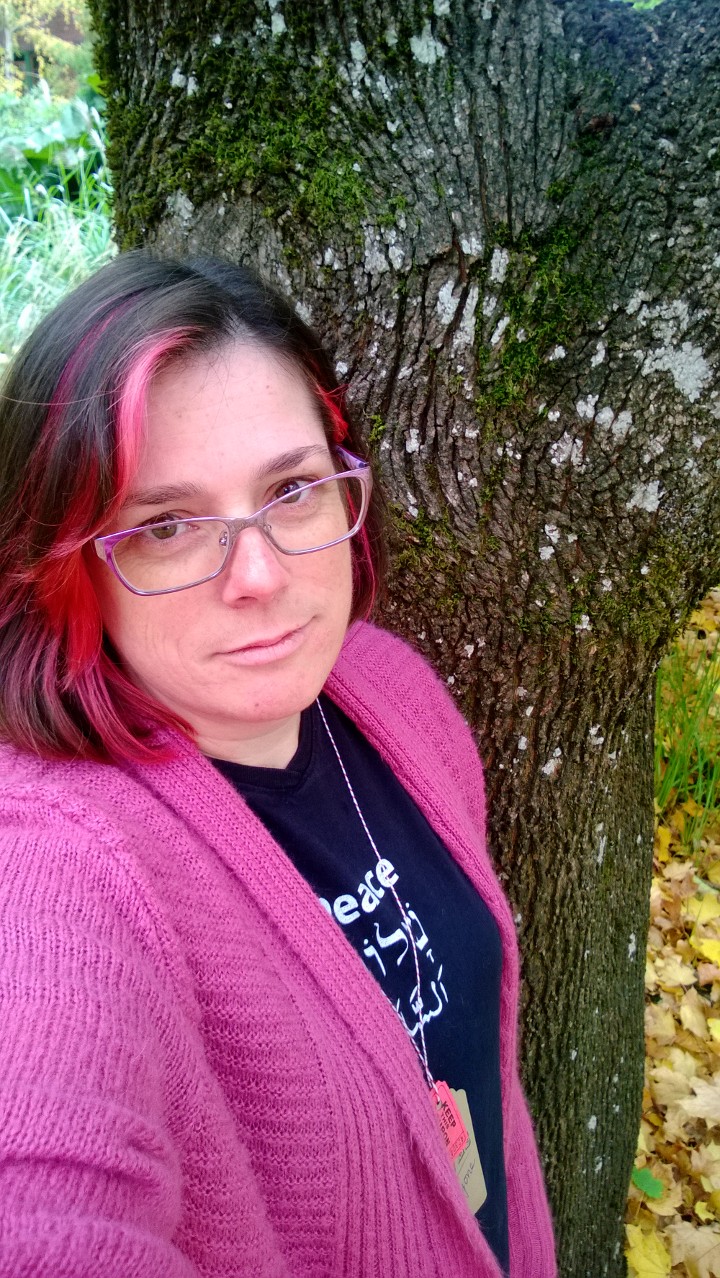
WP_20131026_034REV. TERRI STEWART is Into the Bardo’s  Sunday chaplain, senior content editor, and site co-administrator. She comes from an eclectic background and considers herself to be grounded in contemplation and justice. She is the Director and Founder of the Youth Chaplaincy Coalition that serves youth affected by the justice system. As a graduate of Seattle University’s School of Theology and Ministry, she earned her Master’s of Divinity and a Post-Master’s Certificate in Spiritual Direction. She is a contributing author to the Abingdon Worship Annual. (The 2014 issue just released!)

Her online presence is Cloaked Monk. This speaks to her grounding in contemplative arts and the need to live it out in the world. The cloak is the disguise of normalcy as she advocates for justice and peace. You can find her at www.cloakedmonk.com, www.twitter.com/cloakedmonk, and www.facebook.com/cloakedmonk.  To reach her for conversation, send a note to cloakedmonk@outlook.com