Posted in Christianity, General Interest, Spiritual Practice, Video

GET SERVICE, a message about compassion and understanding …


Courtesy of the Fellowship Bible Church of Little Rock, AR via friends Laurel D. and Brian B. Thank you!

Today is Ash Wednesday, the first day of the forty-day Lenten season which honors Christ’s contemplative forty-days in the desert. Whether or not you are Christian or even religious, this is a good time of year to step back,  take a breath and prepare for your personal spring and renewal.

Posted in Christianity, Meditation, Poems/Poetry, Spiritual Practice, Victoria C. Slotto

The Challenge of Light–Advent Reflection

The people walking in darkness
    have seen a great light;
on those living in the land of deep darkness
    a light has dawned.  Isaiah 9:2

Photo Credit: Mike Freisen

The Challenge of Light

i.

advent is not about the coming

of a sweet baby.

it is not about sentimental,

trumped up emotion.

advent challenges us

to an adult acceptance

of the kingdom of god,

to social imperatives,

to self-forgetfulness,

to letting go,

to a deliberate emptiness.

ii.

we like to make the Christ

into a perpetual baby.

we can cuddle a baby,

a baby asks nothing of us.

the Christ is so much more demanding.

iii.

advent doesn’t just happen

the four weeks leading up to Christmas.

our lives our one huge advent.

our lives are about bringing light

into this dark world.

iv.

in advent and winter we wait for light.

do we forget it’s up to us

to be light in the darkness

of a world that is

confused

stumbling

blinded

afraid?

v.

it’s easy to get hung up

in religion,

in practice,

in institutional think.

it’s easy to feel complacent

because we go to church,

because we give money.

the litmus test

is giving of ourselves,

is embracing mystery.

advent is not just a passive waiting.

it allows that we are responsible

to be light-bearers.

– Victoria C. Slotto

© 2013, poem, Victoria Slotto, All rights reserved

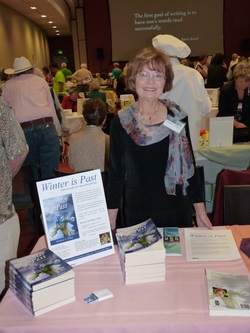
Victoria at the Palm Springs Writer's Expo March 2012
Victoria at the Palm Springs Writer’s Expo March 2012

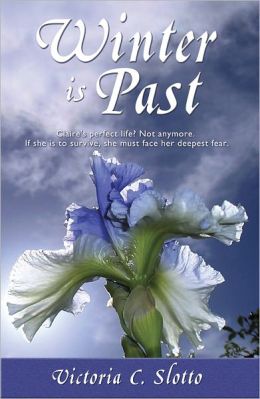
2940013445222_p0_v1_s260x420VICTORIA C. SLOTTO (Victoria C. Slotto, Author: Fiction, Poetry and Writing Prompts) ~ is an accomplished writer and poet. Winter is Past, published by Lucky Bat Books in 2012, is Victoria’s first novel. A second novel is in process. On Amazon and hot-off-the-press nonfiction is Beating the Odds: Support for Persons with Early Stage Dementia. Victoria’s ebooks (poetry and nonfiction) are free to Amazon Prime Members. Link HERE for Victoria’s Amazon page.

Editor’s note: Congratulations, Victoria, on that the long awaited publication of print copies of Jacaranda Rain, Collected Poems, 2012, Beautifully done.

Posted in Essay, John Anstie, Poems/Poetry

A Ballad for Stabat Mater (Mothering Day)

Archetypal Gothic Lady of Sorrows from a triptych by the Master of the Stauffenberg Altarpiece, Alsace c. 1455

I had written a poem for Mothering Sunday, or Mother’s Day as it is commercially known, which was a few months ago, now. However, I somehow felt it an appropriate story to raise here on Into The Bardo. This is because of the meaning I understand the word ‘Bardo’ has; that is to say a ‘transitional state’ that the Stabat Mater must have entered whilst having to process the extreme emotions provoked by such a harrowing experience, perhaps not the transitional state intended by Buddhist groups, who conceived of this condition, but a transitional state that will, more likely, have provided a protective blanket to help her through the pain.

The poem A Ballad for Stabat Mater struck me on several levels. I had already previously written a poem for my son’s thirtieth birthday (The Fourth Age of Man), basing it on William Shakespeare’s Seven Ages of Man (a monologue, which he wrote to open his play, “As You Like It”). Incidentally, I found it particularly poignant to note that my son had almost reached the same age as Jesus Christ was alleged to be, when his own mortal life ended. So, the latter never had the chance to taste the next three ages; or, perhaps, he lived all seven in that short span of life?

This poem, written in the form of a ballad, was, once again, influenced by Shakespeare’s “Seven Ages of Man”, but this time includes all seven ages. Also, it was, perhaps not surprisingly, heavily influenced by the Stabat Mater, that unforgettable and extraordinarily moving image of this religious icon, Mary, the mother of all mothers, as she stood and watched her own son die, painfully. Stabat mater dolorosa, meaning the sorrowful mother stood, is a masterful understatement. How many mothers could submit themselves to such unbelievable pain! And yet all mothers do, albeit mostly to a lesser extreme, for as long as they live.

I salute all mothers, however good or bad a mother you may think you are, you have still had to suffer for your children.

I hope you enjoy the poem.

A Ballad for Stabat Mater

Do you remember radiance
of one who’s always there
the taste of swollen mamilla,
the scent of her sweet hair.

Whose kiss and gentle healing touch
was cooling with a balm
that soothed your painful childish graze
and injured pride becalmed.

Who taught you that a healing touch
and kiss could lead to more;
whilst she embraced competing love,
you found what love is for.

She stood as you went off to war,
to fight life’s bitter battles.
She taught you all you need to know
to rise above mere chattels.

As wisdoms, many, come to you,
from battles won or lost,
a mother’s love transcends it all
and never counts the cost.

In your old age you may well see
your children bear their own,
revealing then the seeds of love
that Stabat Mater’s sown.

When dotage dims your consciousness,
confusion blurs your view,
expect a revelation that
her love has seen you through.

– John Anstie

© 2012 John Anstie, poem and portrait below, All rights reserved
Photo credit ~ Mater Delorosa by Alsace, Haut-Rhin, Colmar Unterlinden Museum via Wikipedia under Creative Commons Attribution 2.0 Generic

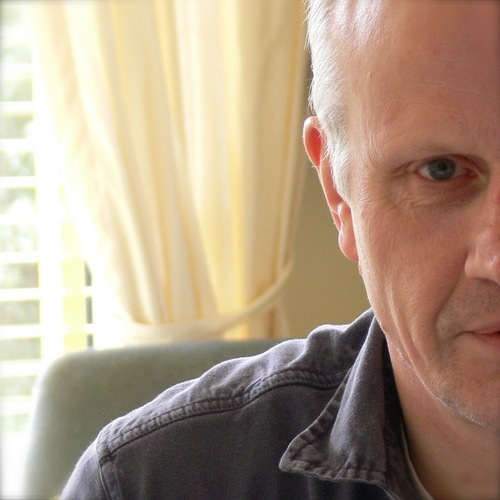
John_in_Pose_Half_Face3JOHN ANSTIE (My Poetry Library and 42) ~ is a British poet and writer, a contributing editor here at Bardo, and multi-talented gentleman self-described as a “Family man, Grandfather, Oc casional Musician, Amateur photographer and Film-maker, Apple-MAC user, Implementation Manager, and Engineer.  John participates in d’Verse Poet’s Pub and is a player in New World Creative Union. He’s been blogging since the beginning of 2011. John is also an active member of The Poetry Society (UK).

product_thumbnail.php51w-rH34dTL._BO2,204,203,200_PIsitb-sticker-arrow-click,TopRight,35,-76_AA300_SH20_OU01_

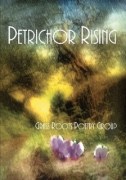
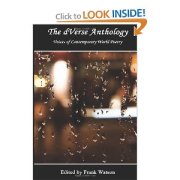
John has been involved in the recent publication of two anthologies that are the result of online collaborations among two international groups of amateur and professional poets. One of these is The Grass Roots Poetry Group, for which he produced and edited their anthology, “Petrichor* Rising. The other group is d’Verse Poet Pub, in which John’s poetry also appears The d’Verse Anthology: Voices of Contemporary World Poetry, produced and edited by Frank Watson.

Petrichor – from the Greek pɛtrɨkər, the scent of rain on the dry earth.