

It’s hard to imagine, but in 1949 Hollywood descended on my little home town of Much Wenlock. Both its locations and inhabitants featured in David O. Selznick’s screen version of Mary Webb’s 1917 novel, Gone to Earth. The film’s star, Oscar-winner Jennifer Jones, certainly looks the part, and in this respect she well conjures the book’s central character, the untamed but doomed spirit that is Shropshire lass, Hazel Woodus.
As an American, Jones of course had to receive specialist drilling in the Shropshire dialect, a form of speech which these days is scarcely heard, but would have been the norm during Webb’s childhood. She writes it very clearly in the book’s dialogue, and Jones makes a good stab at it, but it perhaps sounds overdone to modern ears. People in England do not speak like this any more.

Mary Webb herself spent her adolescence in Much Wenlock, and for the rest of her too-short life lived in various parts of rural Shropshire. She knew country ways intimately. Her writing is rooted always in the landscapes of her own growing up – the upland wilds and rugged long-gone lead-mining and peasant farming communities, the small market towns. But although she observes the hardship and poverty with a keen eye, she has tended to be dismissed as a writer of the romantic and rustic, her work parodied in Stella Gibbons’ Cold Comfort Farm.
In her day, though, she had some very well known literary admirers including Rebecca West and John Buchan (Thirty-Nine Steps). I think her novels deserve a rediscovery. Her themes are still relevant today: male attitudes to women being one of them; human cruelty and wilful destructiveness for another.
In Gone to Earth, the central character, Hazel Woodus, is eighteen, motherless, and living in an isolated cottage with her coffin-making, bee-keeping father, Abel. Her only companion is a tame fox, Foxy, and her only guidance in life is dubiously received from her dead mother’s book of gypsy spells.
Two men want her: the Baptist Minister who marries her and tries to protect what he sees as her innocent spirit, and the fox-hunting landowner who wants only bodily possession. Hazel herself is torn between respectable conformity and her growing sexual awareness. And if I tell you that the term ‘gone to earth’ is the huntsman’s cry when a fox goes underground to escape the hounds, you will know that the story does not end well.
In other senses the book’s plot may be purely allegorical. Above all, it is about the pointless destruction of natural beauty and freedom. Webb was writing it at a time when three of her younger brothers were fighting in the World War 1 trenches.
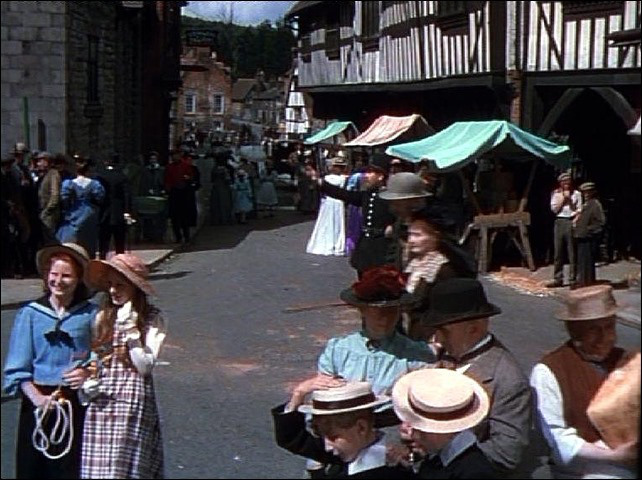

Much Wenlock 1949 in outside and inside the medieval Guildhall: scenes from Gone to Earth, director Michael Powell
 The making of the film did not run altogether smoothly, and there are perhaps some parallels between Hazel as an object of male possession and control , and the position of the film’s star, Jennifer Jones. She had had an affair with the executive producer, David O. Selznik, and by 1949 they were married. He wanted Gone to Earth to be solely a showcase for her, and he did not think the film’s makers, the fabulous storytelling team of director Michael Powell, and screenwriter, Emeric Pressburger, (The Red Shoes, The Life and Death of Colonel Blimp) had done her justice. He even took them to court for not producing what was in the script. He lost the case, but he still had the right to make an alternative version.

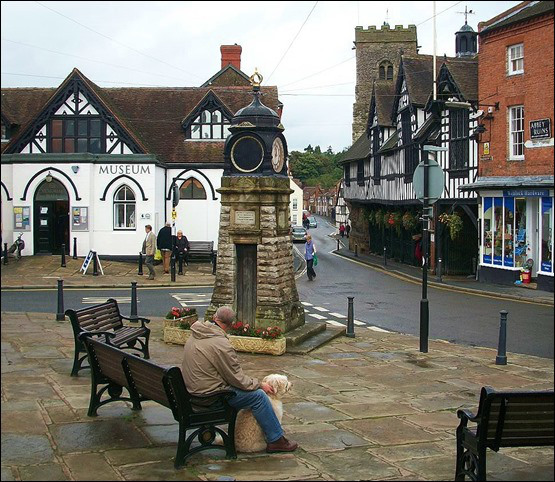
The upshot was that for the 1952 American release, renamed The Wild Heart , he chopped all the scenes that did not make the most of Jones, had new scenes shot, and to make sense of the makeover added a commentary by Joseph Cotton. The film was not well received, and so did not serve his purpose. Only recently has the original Powell and Pressburger version been fully restored.
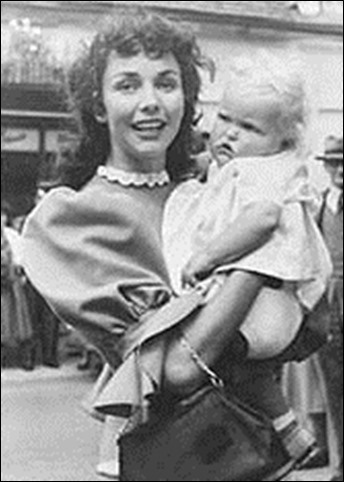
Hazel goes to the Devil’s Chair
For more on Mary Webb:
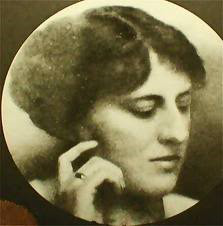
“This year’s discovery has been Mary Webb, author of Gone to Earth. She is a genius, and I shouldn’t mind wagering that she is going to be the most distinguished writer of our generation.” — Rebecca West, review of Gone to Earth in the Times Literary Supplement, August 30, 1917
Mary Webb: neglected genius for the synopsis of Gone to Earth and also for details of her other works.
– Tish Farrell
© 2014, Tish Farrell, All rights reserved; photographs either as indicated above or in public domain

 TISH FARRELL (Writer on the Edge) ~ is an award-winning English writer of fiction and non-fiction for young adults. In the 1990s, after a career in Museum Education, she went to live in Kenya, East Africa. It was here that she began writing for the African Children’s Literature market. An anthropologist by training, she was dismayed at the lack of contemporary fiction that reflected young Africans’ lives in their increasingly urbanised world.
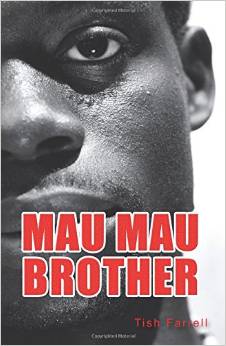
Her first short novel, Jessicah the Mountain Slayer, about a Nairobi street girl, and a picture book Flame Tree Market were published by Zimbabwe Publishing House, Zimbabwe and Phoenix Publishing, Kenya. Both books won awards at the 1996 Zimbabwe International Book Fair and have remained in print in both countries ever since. In the United States her short fiction has appeared in the multi-award winning Cricket and Cicada Magazines. Now living back in England, she writes novelised short stories for reluctant teen readers for Ransom Publishing. The most recent title, Mau Mau Brother, tells the story of the 1950s Kenya uprising from the viewpoint of a Kikuyu boy. She has also just published a Kindle novella e-book, Losing Kui. This new edition was originally published by Cicada Magazine and is suitable for adults and young adults alike. Go here for more about her Books
Tish blogs about Africa, the ancient Shropshire town of Much Wenlock where she lives, writing, and much else besides at: http://tishfarrell.wordpress.com/


 The BeZine