 The Olympics have come to a close; the Paralympics follow. Saturday evening Jennie and I watched a Gimp DVD. She is planning to show it to her Expressive Therapies class, along with some material from Bill T. Jones. Its been a while since we last saw Gimp in performance so revisiting their work was a revelation.
The Paralympics is a much-needed, if under-reported competition for athletes who happen to be disabled. The Gimp Project is a collective of dancers, able-bodied and disabled. The Paralypics is a contest; Gimp is a collaboration exploring the world of disability experience. The first seeks perfection, the latter revels in the beauty of imperfection. The Paralympics pursue inclusion, abet separate and unequal; Gimp tells stories, often casting light on the processes that marginalize and exclude.
There is a remarkable invisibility surrounding these processes, although many activists, academics, and artists have sought to illumine them. It matters little whether these forces exclude persons on the basis of ethnicity, race, disability, or other difference, the effect is consistent. The systems are pervasive and largely invisible; they are also profoundly human.
The Medicine Wheel holds all of human experience, offering us a view of life as a whole. There is a place on the Wheel for everything that can be encountered, even a space for our collective fear of otherness and contagion. The Wheel reminds us that we will each encounter all that is, whether directly or through the experiences of others. Our fates are inexorably woven together; the fate of each is that of all.
As we meditate on the Wheel we are encouraged to consider that while they seem real, both safety and isolation are illusory, transitory states. The last few months I have found myself wandering the wilderness that is part of the Post Polio experience. Recent health concerns continue to bring up ancient unresolved feelings, along with worries about the future. I have been repeatedly thrown back to the fear and pain of the acute illness and post-illness recovery, and the social isolation imposed on me as a Polio. I am also reminded the effects of the virus continues to impact my life and thus the lives of those I hold dear.
I’ve been exploring the experience of Post Polio through the wisdom of the Wheel. For me, now, Post Polio lies in the North, the place of aging, teaching, and eventually, making preparations to return to the Spirit World. (The North is also the place of preparation for rebirth!) The journey is complicated as I find myself trying to make sense of my nearly lifelong disability from a place on the Wheel where it is also my task to embrace a declining body.
Part of the task is to acknowledge my fear of erasure. We live in an epoch in which Polio was eradicated; we are, for most purposes, a Post-Polio world. I was taught I had survived the virus and should get on with life, ignoring, as much as possible, the devastation to my body and psyche. Yet the path of forgetting and ignoring is fraught with difficulties; the way of assimilation or “passing” is thorny. The normative prescription offers the possibility of inclusion, yet to follow that road is to participate in a collective act of erasure, to become invisible, and thus lose Self.
Every human being comes to a place where s/he is vulnerable; each of us eventually faces the treat of erasure and the powerful emotions that accompany that threat. In a culture addicted to perfection, and dismissive of difference and need, such moments carry added fear and shame. How odd such an essentially human experience is marginalized, leaving so many to face the North filled with loneliness and dread.
As a society we increasingly relegate the task of accompanying folks on the journey through the North to the health care profession and the clergy. As a result, we have marginalized the insight and wisdom that may accompany disability, experiences of trauma, and aging. In doing so we create great suffering for the very young we profess to idolize, for we deny them context. How are they, in the face of ceaseless messages about the centrality of competition and perfection, to know they are all loveable, all sacred, beautiful, and desirable in their humanness and imperfections?
Our collective focus on perfection sells products and drives our economy, yet blinds us to the fate of our neighbors and the world. Our deeply held collective desire for safety encourages us to abandon our elders, young people, and children, threatens our very being as a species, and steals our Souls. Still, as prophesy insists, we have options. We can risk relearning the wisdom of the elders, symbolized by the Medicine Wheel, accept the complexity and terror of being human, and journey together into a Sixth World. There are, if we make it so, seats for all at the table.
– Michael Watson, Ph.D.
© 2013, essay and photographs (includes the one below), Michael Watson, All rights reserved
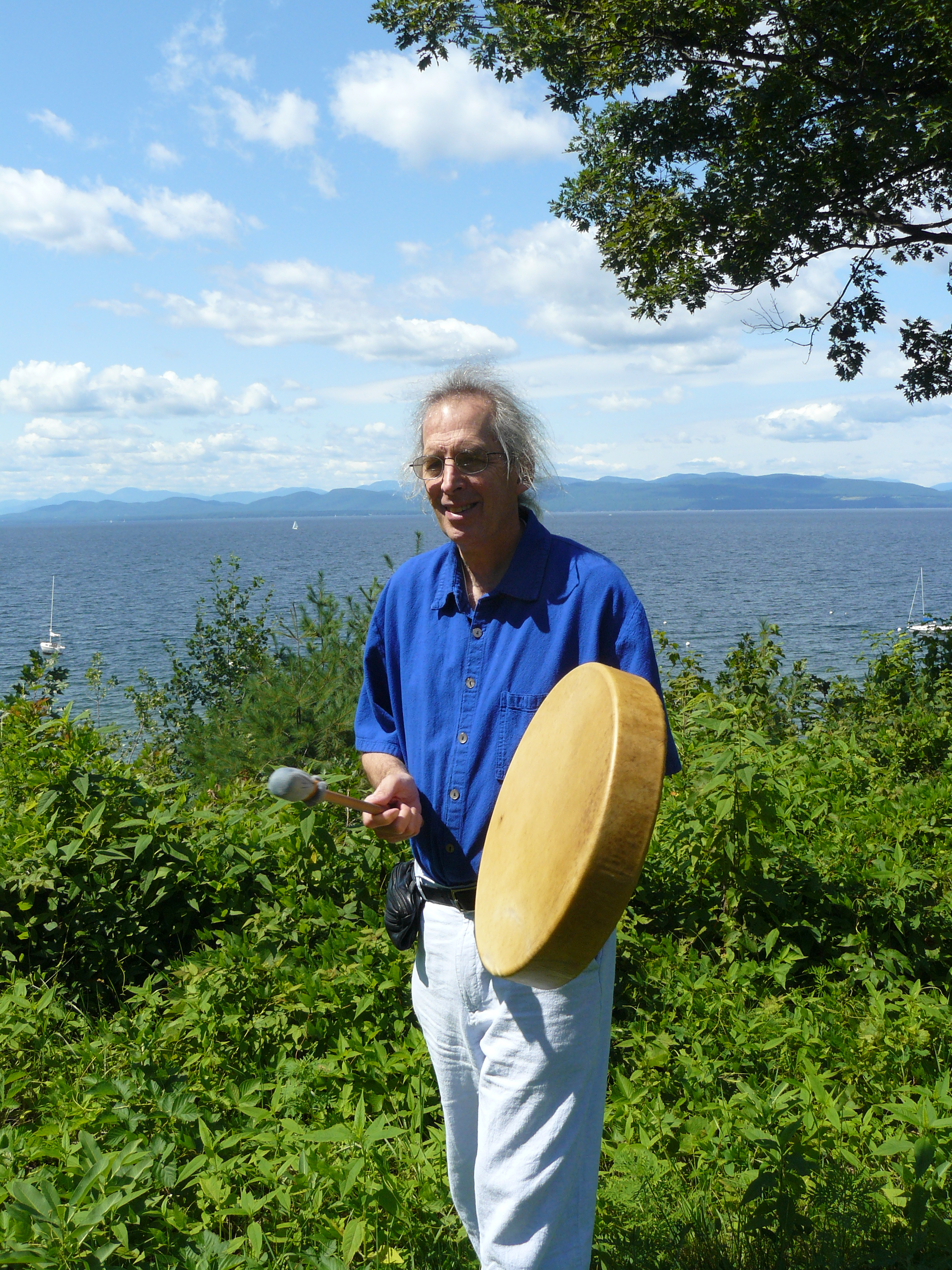 MICHAEL WATSON, M.A., Ph.D., LCMHC (Dreaming the World) ~ is a contributing editor to Into the Bardo, an essayist and a practitioner of the Shamanic arts, psychotherapist, educator and artist of Native American and European descent. He lives and works in Burlington, Vermont, where he teaches in undergraduate and graduate programs at Burlington College,. He was once Dean of Students there. Recently Michael has been teaching in India and Hong Kong. His experiences are documented on his blog. In childhood he had polio, an event that taught him much about challenge, struggle, isolation, and healing.

 The BeZine