Posted in General Interest

Still

Mad dogs and Englishmen go out in the noonday sun.  And so do we.  It was over a hundred degrees, and the sun blazed down from a cloudless sky.   The plaza was nearly deserted as we approached Batalha Monastery, and I was wilting.  Still, it’s a UNESCO World Heritage Site, and we couldn’t miss it.

Batalha Monastery, the ‘Monastery of Battle’, was begun by King Joao I to commemorate his victory of the Portuguese over the Castilians in the Battle of Aljubarrota in 1385.

I was glad I came.

In the cloisters, time stands still.  The view hadn’t changed in six centuries.

Inside the church the stained glass softened the harsh sunlight.

A dramatic tomb for King Joao and Queen Phillipa of Lancaster depicted the royal couple with joined hands, symbolizing the alliance between Portugal and England.  Surrounding bays contained the tombs of their four younger sons.  I’d already seen so many tombs that week, and couldn’t muster the energy to snap a shot, although I was moved to photograph the stillness of the Royal Cloister.

I found the symmetry soothing.

And then I stepped into The Unfinished Chapel, where rests the tomb of their eldest son, King Duarte and his wife, Leonor of Aragon. Their final resting place was less monumental, and still uncompleted, without even a roof.  Their chapel too was designed to house the tombs of their descendants, but that hadn’t happened either.  Duarte and Leonor were its sole occupants.

Duarte’s story was also less remarkable than his dad’s.  His reign was short, troubled, and plagued by poor choices.  He preferred writing to war, and was likely better at it.  He began The Art of Riding on Every Saddle“…in accordance with the saying that writing books is an endless task, which I do for my own relaxation and entertainment…I am going to write…with the objective of improving the riding skills of those who decide to read my writings in good will…”

That book, like his chapel, was also unfinished.  Duarte died young, swept away by the plague, leaving his wife to mourn.  From that day on, she signed her name “the sad queen.”  She lived only a few more years, her short regency also plagued with conflict.  Sadly, she died in exile.  But she rests beside her husband.
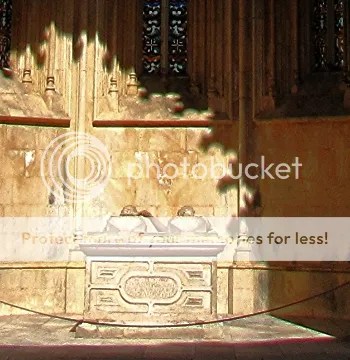
Their tomb, their accomplishments, and their lives might have been less glorious than those of their victorious parents.  But their unfinished tomb is open to the sun and the breeze, the infinite sky.  The sad queen and her husband, in gentle and loving repose, seem less a statement of diplomatic alliance than a forever snapshot of a loving couple, still tenderly holding hands after all these years.

I think I’d rather be remembered for my pen than my sword, and would rather be successful in love than in war, or even in my writing.

Still, plague notwithstanding, I’m going to finish my damn book.

All words and images copyright 2013 Naomi Baltuck

NaomiPHOTO1-300ppi51kAqFGEesL._SY300_NAOMI BALTUCK ~ is a Contributing Editor and Resident Storyteller here410xuqmD74L._SY300_ at Bardo. She is a world-traveler and an award-winning writer, photographer, and story-teller whose works of fiction and nonfiction are available through Amazon HERE. Naomi presents her wonderful photo-stories – always interesting and rich with meaning and humor – at Writing Between the Lines, Life from the Writer’s POV. She also conducts workshops such as Peace Porridge (multicultural stories to promote cooperation, goodwill, and peaceful coexistence), Whispers in the Graveyard (a spellbinding array of haunting and mysterious stories), Tandem Tales, Traveling Light Around the World, and others. For more on her programs visit Naomi Baltuck.com
Click here for more interpretations of The Weekly Photo Challenge: Reflections.

Posted in General Interest, Naomi Baltuck, Photo Essay, Photography/Photographer

Look On My Works, Ye Mighty

Teachers, parents, siblings, mentors of every kind leave their mark upon us.  I was in the fifth grade at Isaac Newton Elementary school in Detroit when my teacher, Mrs. Chapman, had us memorize Ozymandias, a poem composed in 1818 by Percy Bysshe Shelley.  Then we had to recite it to our classmates.

I walked to the front of the room and paused, a dramatic device storytellers employ to command the attention of their audience.  Actually, I was just trying not to throw up: it was my first public solo performance.  I was terrified, but it was also electrifying to be able to convey such a compelling story, such unforgettable imagery.   Not only did I not throw up, but I got an A.  And I never forgot that poem.

My mother used to recite poetry to us, like “Daffodils” by Wordsworth and “The Highwayman” by Alfred Noyes.  Over the years I’ve shared Ozymandias and other gems (okay, sometimes I sing jingles from the TV commercials I watched as a kid), to a certain captive audience–my children.  Occasionally I recognize my own words reflected back to me from the mouths of my babes.  Sometimes to my chagrin, but most often to my surprise and delight.

My son Eli is home between teaching assignments…

…and tonight Bea returns from Stanford on spring break.  It will be so good for us all to be back together again.  My ritual, when the kids depart for school, is to tidy their rooms, change the sheets, and drop a tear or two as I make their rooms ready for them to come home to the next time…and they are always grateful.

The last time Eli left I was tempted to hire a bulldozer…

…but it’s like spending a little quiet time with that absent child.

Last night, in a burst of inspired procrastination (he was tired of reorganizing his own room), Eli decided to surprise Bea by cleaning her room, and not just the sort of tidying I do, but a thorough reorganization, including the mountain of books stacked haphazardly in the corner, that pile of her things parked just inside the door, not to mention the surprise found in a teacup discovered under a pile of stuff on her desk.  It’s either a science experiment or a strange new life form.  It took Eli over five hours.  He found so many new ways and places to shelve books that they almost fit on her shelves now!

But nothing comes without a price tag.  In fact, after Eli was finished, everything had a tag on it.  Oh, yes.  He had made his mark.

I love this one…

But my absolute favorite touch was the greeting on the door.

I howled with laughter. “Oh, good,” said Eli. “I didn’t know if you’d get the reference.”  “Do I get the reference?” I asked, launching into a recitation of Ozymandias.  “How did you think of it?”  He said he remembered it from all the times I’d recited it.  Of course I  ran to find my book of Shelley…

When I opened it up in search of the poem, I saw that someone else had made her mark.  Upon the book…


…and maybe even upon me.

The poetry and the stories we pass from generation to generation enrich and prepare us for the struggles we will face, within ourselves and in the outside world.  I believe they will outlast the Mighty and their monuments to themselves, and, I hope, their wars.

Thanks, Mom.  Thanks, Mrs. Chapman.  Thank you, son.  And welcome home, Bea!

All images and words (except for Mr. Shelley’s, of course) copyright Naomi Baltuck

NaomiPHOTO1-300ppi51kAqFGEesL._SY300_NAOMI BALTUCK ~ is a Contributing Editor and Resident Storyteller here410xuqmD74L._SY300_ at Bardo. She is a world-traveler and an award-winning writer, photographer, and story-teller whose works of fiction and nonfiction are available through Amazon HERE. Naomi presents her wonderful photo-stories – always interesting and rich with meaning and humor – at Writing Between the Lines, Life from the Writer’s POV. She also conducts workshops such as Peace Porridge (multicultural stories to promote cooperation, goodwill, and peaceful coexistence), Whispers in the Graveyard (a spellbinding array of haunting and mysterious stories), Tandem Tales, Traveling Light Around the World, and others. For more on her programs visit Naomi Baltuck.com

Click here for more interpretations of The Weekly Photo Challenge: Reflections.

Posted in General Interest, John Anstie, poem, Poems/Poetry, poetry

An Apology from Your Grandfather

(for Nathaniel)

This poem was written last November shortly after the birth of my third grandchild, a second grandson, and the first child of my son and his wife. I put it away for a while to ‘rest’, because I felt it wasn’t quite there; that it still needed something to make it work. Three months later, following several edits and adjustments, whilst it is perhaps less like poetry and more a narrative, (and was it Leonardo da Vinci himself who said that a work of art is never complete, only abandoned?) I have decided that I should let it go. I hope my grandson, when he’s old enough, all my grandchildren and onward generations, may find some use or ornament for it, to give them perspective on their own situations, whatever they may be, and to help guide them in their journeys through life …

The countryside was flush with gold
to celebrate your arrival; the season
was in suspense, as if to make
your first tiny footprint on the earth,
amidst the clamour of a thousand nativities,
as if a gift of God for this, your birth,
a special and harmonious event.

At the cusp, where Autumn meets with Winter,
a splash of golden hair defined you;
the gilding of a perfect crown,
was like the golden fleece,
that vaunted prize of Ancient Greece
in Jason’s time, when boys grew into men
before the age of their true making.

Your first year, centenary of a date
when Europe burned with anticipation
of conflict, a bloody affair, for which
no true atonement was ever offered,
for which we feel a great collective guilt
but which, we hope, will remain
a part of history. Not your future.

Your future shall be focused,
neither on the clock that ticks,
that divides time into segments of life;
that numbs the mind with endless drudge;
that defines your living to the end;
nor shall it confine your path
to the relentless quest for gain.

It is not control that you shall seek,
but access to a pantheistic knowledge,
enabling a different class of power,
the faculty for influence over those,
who misused the privilege they have,
that we, your forebears, allowed them.
For this I repentantly apologise.

If nature no longer holds its strength to live,
to refresh itself, to recover its flush and thrive,
it will be human beings, who prevailed
on its demise, for which there’s no excuse.
Beyond mere human frailty, there seems no will
to cease remorseless greed and just survive.
But the Earth owes us a big fat nothing!

So, if my undoubted compassion
does not have wings; if I do not transform
my rising anger into constructive deeds,
in such a way to help move hearts and minds
in concert, so to invest in change;
if thus, and I’m too frail or weak,
remorse will overcome my heart.

But have I yielded to our defeat?
No. I’ll neither submit to this old foe
nor will my pen cease in my hand,
whilst ever I have breath and mind
to speak out from the crowd.  I find
it sad to say that much is left to do,
which leaves an adverse legacy for you.

What do I expect of you, or you of you?
I know that I can ask, but cannot make;
I know you’re blessed with your own will,
but you will find that one thing will prevail:
the greatest force for life is family;
a force defying selfishness and greed,
which always gives us hope in time of need.

It shall be fuel that fills you, every day,
from your Stabat Mater, your Trojan Father,
whose care and energy will long endure,
imbuing you with superhuman strength,
for which there is no substitute;
that no amount of gold will ever buy.
Integrity and truth is born of this.

There is one thing I know will light your way,
’till time and tides are done and trees are gone.
This energy and fortitude, integrity
and strong desire, will all be borne
to you and, through you, to your children;
and so, through them, ancestral grace
will lead them to conquer the World!

It is the one enduring human quality
that is, more than mere emotion,
the omniscient and greatest power of all;
one word, one gift, which represents
life’s longing for itself, from me to you,
a kind of magic that will heal the World
… with pure, undying, unconditional Love.

© 2013 John Anstie

John_in_Pose_Half_Face3

JOHN ANSTIE (My Poetry Library and 42) ~ is a British writer and poet, a contributing editor here at Bardo, and multi-talented gentleman self-described as a “Family man, Grandfather, Occasional Musician, Amateur photographer and Film-maker, Apple-MAC user, Implementation Manager, and Engineer. John participates in d’Verse Poet’s Pub and is a player in New World Creative Union. He’s been blogging since the beginning of 2011. John is also a member of The Poetry Society (UK).

*****

product_thumbnail-3.php

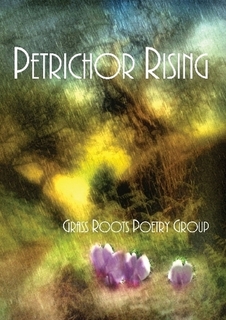
51w-rH34dTL._BO2,204,203,200_PIsitb-sticker-arrow-click,TopRight,35,-76_AA300_SH20_OU01_John has been involved in the recent publication of two anthologies that are the result of online collaborations among two international groups of amateur and professional poets. One of these is The Grass Roots Poetry Group, for which he produced and edited their anthology, “Petrichor* Rising. The other group is d’Verse Poet Pub, in which John’s poetry also appears The d’Verse Anthology: Voices of Contemporary World Poetry, produced and edited by Frank Watson.

Petrichor – from the Greek pɛtrɨkər, the scent of rain on the dry earth.