Posted in Illness/life-threatening illness, Liliana Negoi, Meditation, meditative, Mortality, Nature

On gifts

A couple of days ago I went with my husband to help an old lady friend prepare her apartment for renovating. After moving some furniture around the house and readying the space for the next step, we wanted to leave. The old lady, however, didn’t want to let us go away until she gifted me with some things of hers, including several flower pots, which, she said, were anyway deprived of care, since she doesn’t actually live in that apartment and only comes there once in a while. I took those flowers with gladness, not necessarily because they were gifts, but because they are pieces of life coming from a person whose life is hurrying towards its end.

The lady in question is about 65 years old and suffers from bone cancer in final stage, and despite that, and despite the even worse situation that her own son suffers from multiple sclerosis, she still finds within herself the power to not only smile, but to actually laugh and enjoy what is left of her life, and even make fun of the horrible sickness eating her alive.

While I was preparing those flower pots to take them home, I had a small conversation with her, and one thing that she said remained with me, like a second gift: “There is so little that we actually have in this world, no matter how much we possess!” In her eyes, when she said that, I thought I noticed a glint of pain, but in the next second it was gone, and she told me that she would give me all the rest of the flowers, if I wanted them, and I happily accepted. A strange tone of joy crossed her voice when talking again, as if she was suddenly relieved for the flowers’ fate, and so we established that next time we go to that apartment we would take the rest of the pots too. Then we left.

There are many gifts that we receive in this life. Many objects, many proofs of our evanescent nature. Most of them get lost along the way, and we forget about them, expecting others in exchange. There are, however, irreplaceable gifts, like, for instance, every single day that we live on this earth. Do not let that waste – because at nightfall, the day will have passed anyway – but it’s up to each of us to not let it go in vain.
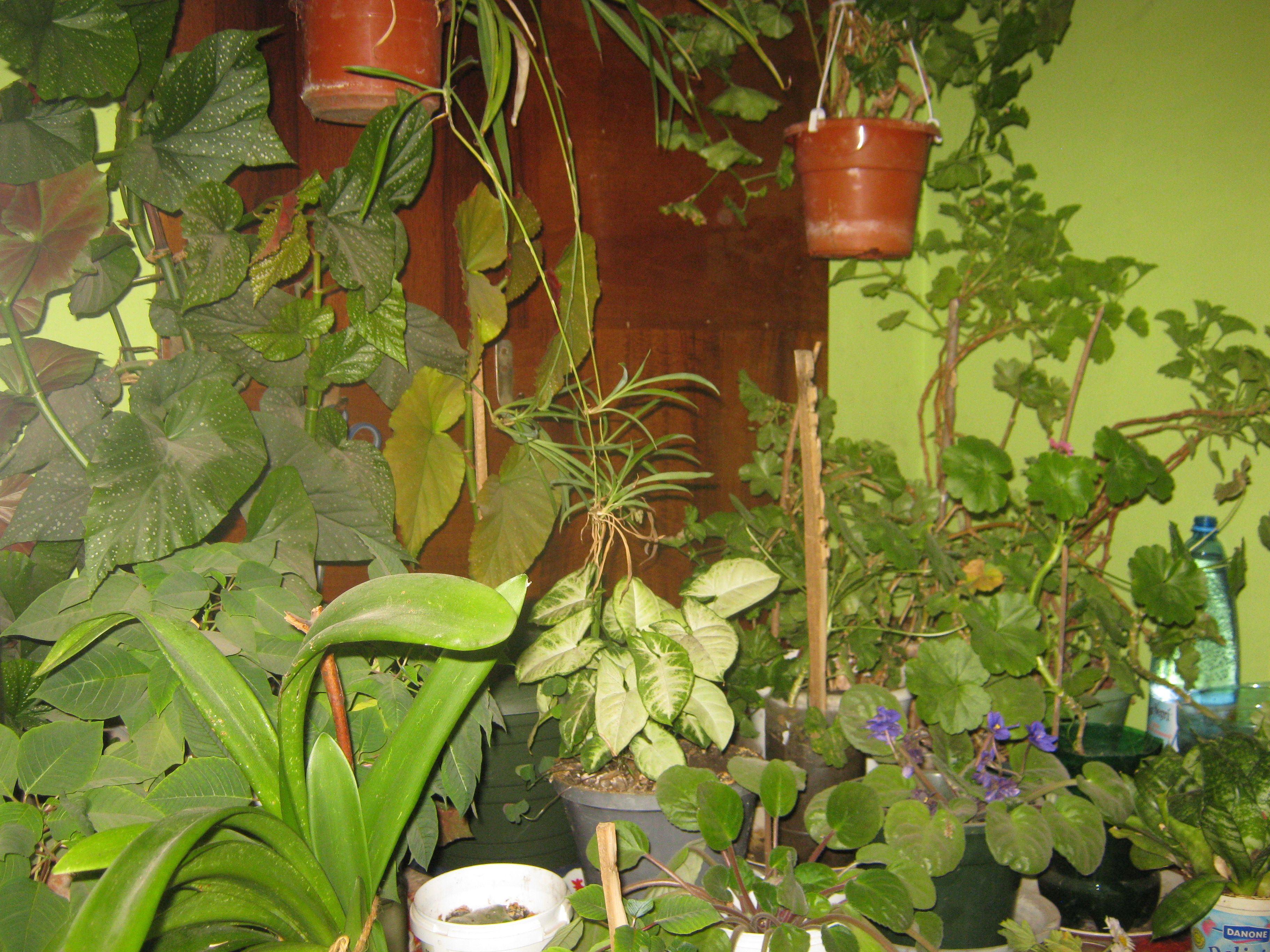
IMG_9119The flowers that I took from her are now in my own house, making friends with my older vegetal tenants, and I don’t know which gift was more important – the plants, which she turned into a sudden piece of heritage for me, or the splinter of her own life and wisdom that she decided to share with me. I do know though that, even after she will be gone (no matter when that will happen) she will still be alive for me in each of those flowers.

© 2013 Liliana Negoi

Both text and photo belong to Liliana Negoi.

IMG_7667LILIANA NEGOI  (Endless Journey and in Romanian curcubee în alb şi negru) ~ is a member of our core team on Into the Bardo. She is the author of three published volumes of poetry in English, which is not her mother tongue but one that she came to love especially because of writing: Sands and Shadows, Footsteps on the San – tanka collection and The Hidden Well.  The last one can also be heard in audio version, read by the author herself on her SoundCloud site HERE.  Many of her creations, both poetry and prose, have been published in various literary magazines.
Posted in Liliana Negoi, Meditation, meditative, Nature, Poems/Poetry

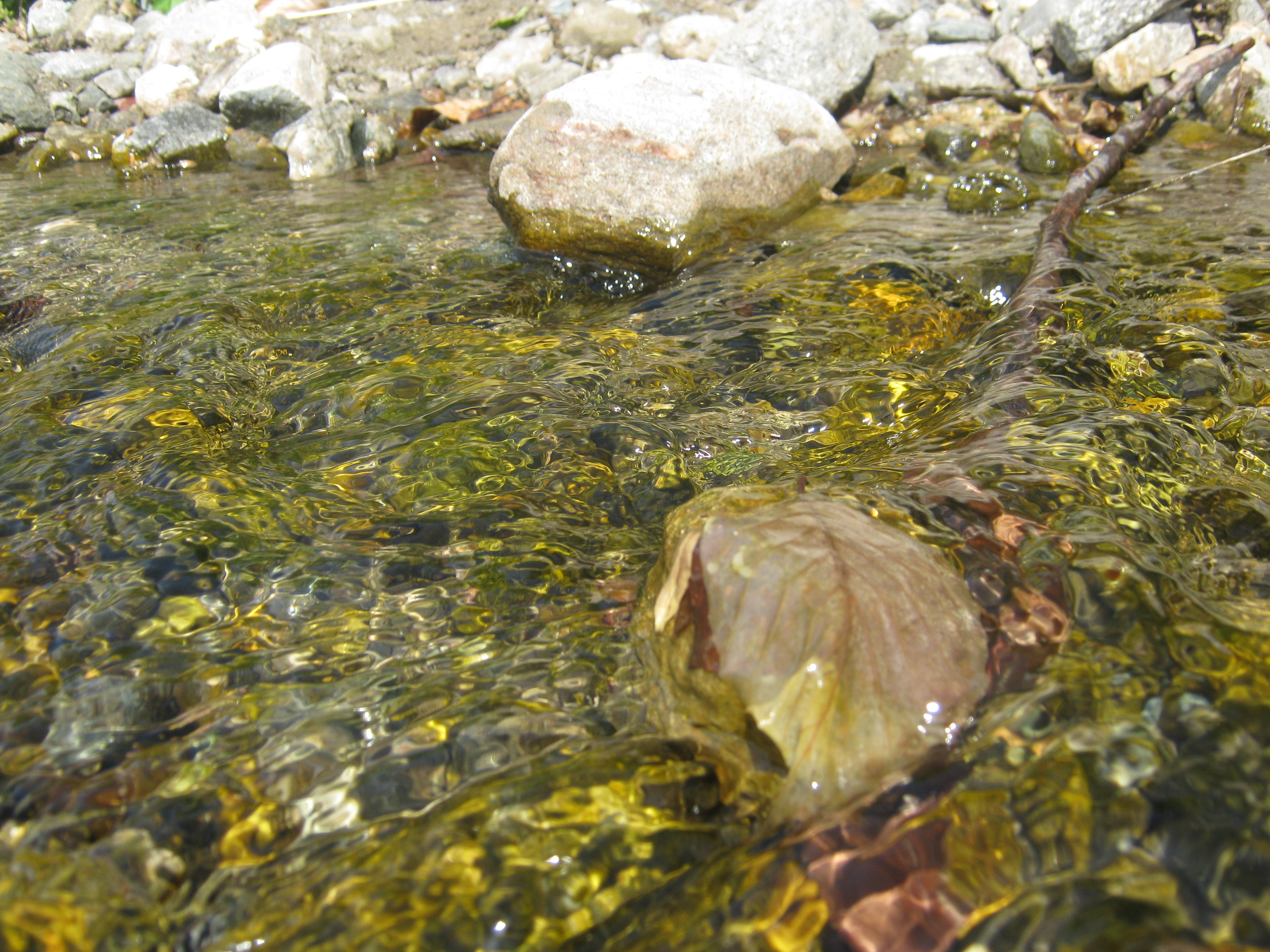
panta rhei – sestina

IMG_7742

sometimes a river dances shining blue,
reflecting in its ripples wind’s soft chime,
allowing leaves to shiver in its true
embrace, like rosaries of dust and time –
when river whirls like that, enjoy the view,
‘tis then that all the strings around it rhyme.

and when the river, wind and sunlight rhyme
you’ll see that suddenly all shades of blue
will turn to playful sheens, and all the view
will twin the chink of angels’ voices chime –
when river whirls like that, it means it’s time
to clear your heart and hear it beating true.

you’ll be amazed how simple and how true
is the entire universe’s rhyme
when you ignore the bounds of space and time
and dip your mind in river’s hues of blue –
the bonds of nature’s dreams are just a chime
embroidered on world’s gossamery view.

just breathe – inhale the beauty of the view
and feel its fragrance, delicate and true,
imbibe yourself with river’s purling chime.
when river’s waves will be your breathing’s rhyme
you will have learned a drop of wisdom blue
to nurture you until the end of time.

you’ll see that there’s no past or future time –
‘tis only present guiding all the view.
the uselessness of human clocks’ true-blue
becomes overt when what they draw as true
within the river’s dancing doesn’t rhyme,
when it reflects the world within a chime.

the river whirls and whispers in its chime
of ancient lessons crossing over time
to match the future lessons’ ageless rhyme –
when river dances, bringing to your view
the timeless wisdom shining bright and true,
just listen to its ever-knowing blue –

within the rhyme of river’s whirling chime
the neverending blue dissolves the time –
raw view of nature’s essence streaming true.

– Liliana Negoi

© 2013, photographs and poem, Liliana Negoi, All rights reserved

The audio version of the above poem can be listened to on Soundcloud. More about the sestina form can be learned from here and about panta rhei here.

IMG_7667LILIANA NEGOI  (Endless Journey and in Romanian curcubee în alb şi negru) ~ is a member of our core team on Into the Bardo. She is the author of three published volumes of poetry in English, which is not her mother tongue but one that she came to love especially because of writing: Sands and Shadows, Footsteps on the San – tanka collection and The Hidden Well.  The last one can also be heard in audio version, read by the author herself on her SoundCloud site HERE.  Many of her creations, both poetry and prose, have been published in various literary magazines.
Posted in Liliana Negoi, Meditation, meditative, mystic, Nature, Spiritual Practice

On miracles

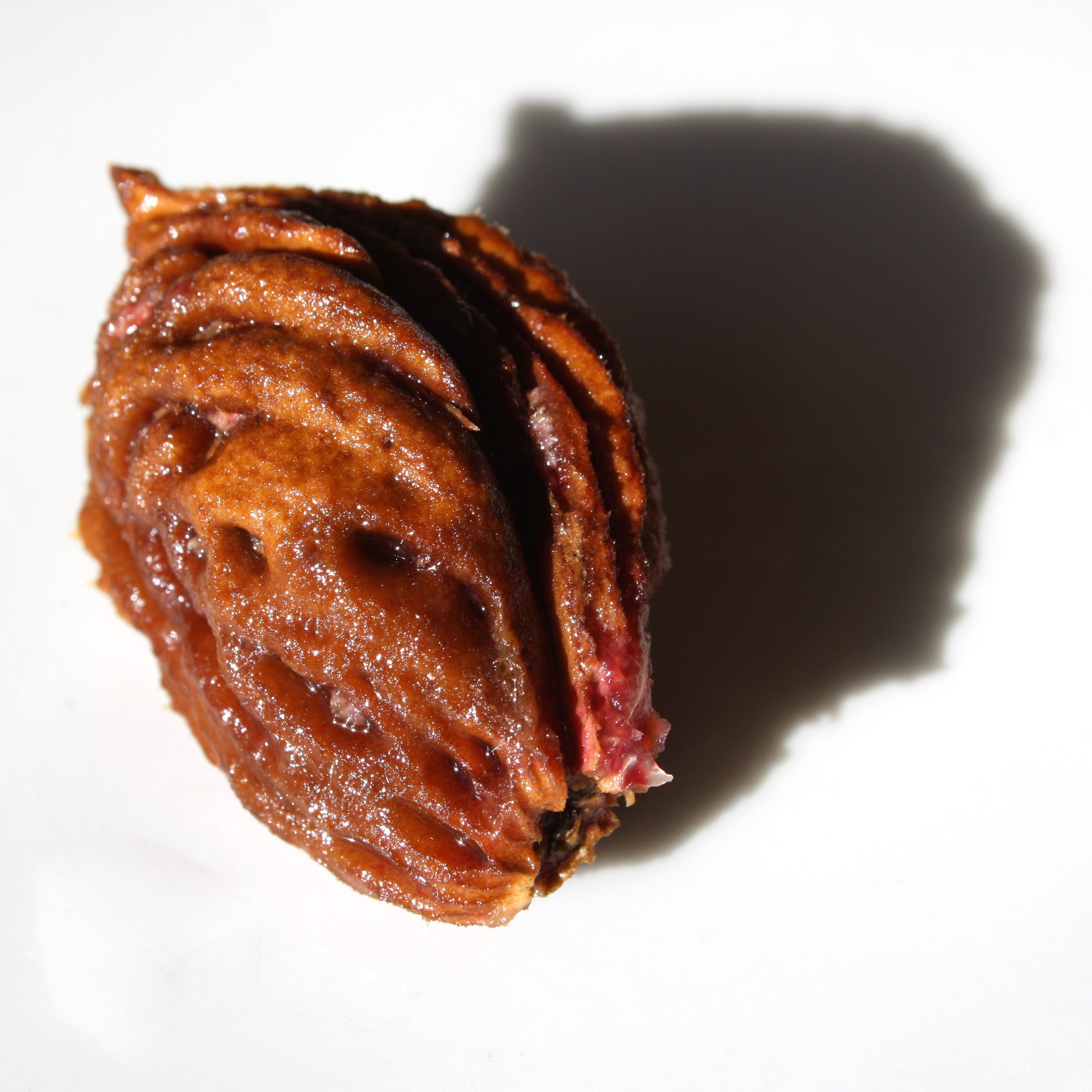
peach-pitMy younger son found a peach pit today, and in his innocence decided to plant it. So he dug a hole, put the pit inside it, covered it and then watered it. He said “I put as much water as it needed to grow. And it will grow. I think tomorrow it will grow.” I smiled at his confident statement and as he moved further I found myself ardently hoping that his tree would indeed grow, not necessarily in order for us to have a peach tree in the yard (though it would be nice – note to self, plant a peach tree a.s.a.p.) but because I want my children to find reasons to believe in miracles in about everything – especially when they help creating them.

The word “miracle” originates from the Late Latin miraculum, meaning “wonder”, “marvel”, from mirari – “to wonder at”. Apparently, as the Merriam-Webster dictionary explains to us, the word’s first known use was in the 12th century. However, miracles happened before that time for sure, even if they were named differently. People used this word or others to point towards “events not ascribable to human power or the laws of nature and consequently attributed to a supernatural, especially divine, agency”. If you come to think of it, miracles birthed and killed gods through the means of man’s limited power of understanding, because in certain people they touched their fear, while in others they touched their curiosity. That’s how religion and science were born.

The best thing about miracles though is that they make us grow. All of us. One way or another they push us higher, farther, and even if officially they stop being miracles in the second when we discover their explanation, they still remain miracles in our hearts, because due to them we expanded our knowledge.

Maybe there will be no peach tree growing from that pit. But I do know that in my child’s heart, the peach tree rooted already – and THAT is more important than anything else.

© 2013 Liliana Negoi

The image used was taken from http://www.photos-public-domain.com/2012/03/10/peach-pit/.

IMG_7667LILIANA NEGOI  (Endless Journey and in Romanian curcubee în alb şi negru) ~ is a member of our core team on Into the Bardo. She is the author of three published volumes of poetry in English, which is not her mother tongue but one that she came to love especially because of writing: Sands and Shadows, Footsteps on the San – tanka collection and The Hidden Well.  The last one can also be heard in audio version, read by the author herself on her SoundCloud site HERE.  Many of her creations, both poetry and prose, have been published in various literary magazines.

Posted in find yourself, Liliana Negoi, meditative, Mortality

On diamonds

Some say that “diamonds are a girl’s best friends”. When you first hear that, it tends to sound very…material, shallow-meaning, But if you take a little time to think about it, you will understand that it’s actually a very true statement. Diamonds are not only a girl’s best friends, but often even mirrors.

Quoting Wikipedia:

“In mineralogy, diamond (from the ancient Greek αδάμας – adámas “unbreakable”) is a metastable allotrope of carbon, where the carbon atoms are arranged in a variation of the face-centered cubic crystal structure called a diamond lattice. Diamond is less stable than graphite, but the conversion rate from diamond to graphite is negligible at standard conditions. Diamond is renowned as a material with superlative physical qualities, most of which originate from the strong covalent bonding between its atoms. In particular, diamond has the highest hardness and thermal conductivity of any bulk material.”

Very scientific, precise and cold. Allow me though to warm things up a little bit, by pointing out one of the most beautiful similarities between diamonds and humans: they are both carbon based. Maybe this would explain in a certain measure so many women’s attraction towards these gems. After all, they can always say “Hey, it’s family! And family should stick together!” :)

But did you know that a diamond is just as fragile as it is hard? That it only takes for a tiny scratch on one of its edges for it to simply crack into shards? The hardest known thing to man is also of an unbelievable fragility. And here, diamonds relate, again, to women (well, they would relate to men too, but you know men, they would never admit they’re fragile :) ). The same can happen to the strongest one of us. We are diamonds until someone (or something) finds that exact spot where just a tiny scratch tears us to pieces. Sometimes we get fixed, sometimes not. However, the essence remains the same.

I’m a woman. And diamonds are indeed my best friends. Because I’m one of them.

Marilyn-Monroe-Diamonds-29664

© 2013 Liliana Negoi

____________________________________________________

The text is mine, the image was taken from http://www.fansshare.com/gallery/photos/535118/marilyn-monroe-diamonds/?displaying

.

IMG_7667LILIANA NEGOI (Endless Journey and in Romanian curcubee în alb şi negru)  is the author of three published volumes of poetry in English, which is not her mother tongue but one that she came to love especially because of writing: Sands and Shadows, Footsteps on the San – tanka collection and The Hidden Well.  The last one can also be heard in audio version, read by the author herself on her SoundCloud site HERE.  Many of her creations, both poetry and prose, have been published in various literary magazines.

Posted in Liliana Negoi, Peace & Justice, Poems/Poetry

POETS AGAINST WAR, #6: conjugating wars by Liliana Negoi

product_thumbnail-1.phpchippy charmed blade in Moira’s hand
cries for blood,
begs for blood,
slashing carmine canopies
for the sake of the flow,
grinning its ivory fang
at the lavish crimson gush
drenching sands and drowning wills.
on the red river
crucified Jesus floats,
watching clouds on skies in flames
twinning the boulders of coagulated sins
crawling along the muddy shores,
wondering  if those were the sins
for which he drank the cup.
in the meantime carnivorous swords
keep fueling the flood,
making sure that the river’s level stays always high enough,
as if that would get the floating cross closer to the skies.
not that it mattered anyway –
after all, there’s plenty of that bloody slime
smelling like putrid faith
to fuel a thousand more crusades

– Liliana Negoi

© 2012, poem, book-cover art, and portrait, Liliana Negoi, All rights reserved

– conjugating wars is one of the poems included in Liliana Negoi’s poetry volume The Hidden Well, and can be heard in the author’s own reading on SoundCloud at the following link:   conjugating wars

Invitation: We’d like you to join us – not only as readers – but as writers by putting links to your own anti-war or pro-peace poems in the comment sections. Next week we’ll gather the links together in one post and put them up as a single page headed “Poets  Against War.”  Thank you!

IMG_7667LILIANA NEGOI  (Endless Journey and in Romanian curcubee în alb şi negru) ~ is a member of our core team on Into the Bardo. She is the author of three published volumes of poetry in English, which is not her mother tongue but one that she came to love especially because of writing: Sands and Shadows, Footsteps on the San – tanka collection and The Hidden Well.  The last one can also be heard in audio version, read by the author herself on her SoundCloud site HERE.  Many of her creations, both poetry and prose, have been published in various literary magazines.

Posted in meditative, Poems/Poetry, Writing

faulty darwinism

product_thumbnail-1.phpchopped and chewed and swallowed –
down we go
on eternity’s throat,
one bite of salty clay after another
to be recycled
and become the burnt sienna skies
of some obscure tomorrow.

fate chimes its’ eyelashes
like some odalisque its’ coin belt –
the boatman’s pockets are always full
with tradition’s eye seals.

we are but stairs
for humanity’s pretended
e-volution,
we circle meanings
like eagles circle unseen angels
up-above,
without ever touching them,
we live to ignore
and ignore to learn
the reason why history is repeating –
and talking tall
we show our real essence –

the spoiled mud flowing in our veins
keeps bringing bitter smiles
on god’s resigned mouth:
ever non-grown-ups, these earthlings…

– Liliana Negoi

© 2012 Liliana Negoi, All rights reserved

– fautly darwinism is the opening poem from Liliana Negoi’s poetry volume The Hidden Well, and can be heard in the author’s own reading on SoundCloud HERE.

.

IMG_7667LILIANA NEGOI (Endless Journey and in Romanian curcubee în alb şi negru)  is the author of three published volumes of poetry in English, which is not her mother tongue but one that she came to love especially because of writing: Sands and Shadows, Footsteps on the San – tanka collection and The Hidden Well.  The last one can also be heard in audio version, read by the author herself on her SoundCloud site HERE.  Many of her creations, both poetry and prose, have been published in various literary magazines.
Posted in Essay, General Interest, Meditation, Nature

Bonsai

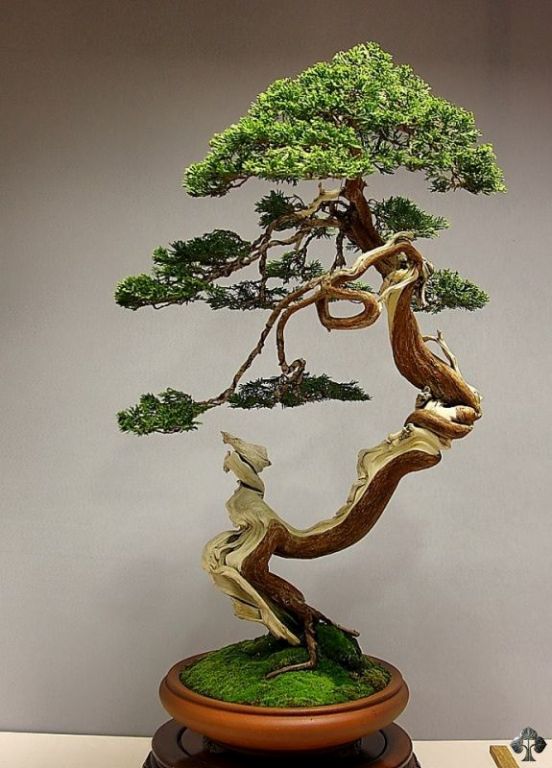
08-juniper-bonsai-blasco-pazI saw a bonsai tree earlier. Exquisitely arranged, perfect in its appearance. I admired it in awe, and then a thought crossed my mind and I couldn’t get rid of it: what exactly was it that I admired in a mutilated tree? The art of “educating” a plant to grow according to our own will? The way the small tree manages to “forget” about the cutting and the clumping and the trimming and the wiring and the all-together contortionism to which it is subjected, and simply grows?

What is the real beauty of a bonsai? Does it reside in the smallness? But smallness is relative – related to our own size. Do we create bonsais in order for them to make us feel bigger? An identical tree, though bigger than us, would be smaller than a mountain. But then again, an identical though bigger tree wouldn’t appear just as beautiful in different circumstances. We’d look at it with pity and say “poor tree, so twisted”, without realizing that the twisted one is our own view.

So, is it actually about the circumstances in which we look at it? Do we actually love the hidden wisdom of nature, letting us believe that we subdued it and forced it into shape, when in fact nature simply followed its course, surviving the circumstances? Is that what impresses? Or maybe the apparent resignation and submission of the tree under our touch?

Does the bonsai feel the awe in the eyes of his beholders? Does that comfort it in any way? Does our admiration in front of it MATTER? Or maybe what we actually do is subconsciously enjoy the tacit guilt spicing our admiration – a milder form of sadism under the pretext of art and beauty, excusing the cruelty. At this point at least half of you, dear readers, will protest and talk to me about the secular tradition of bonsai aesthetics and say that it’s not a proof of cruelty. Is it now? *smiling* Foot binding in China used to also be done under the pretext of beauty. How interestingly simple is actually the human essence…

But let me not divagate.

I liked the sight of that little bonsai. I sipped its beauty with all my strength and loved it and assumed the guilt for loving it – with awareness, with humility and shame. That bonsai bears the mark of human artistry – and maybe that is the “lesson” after all.

– Liliana Negoi

© 2013, essay, portrait below, and book cover art, Liliana Negoi, All rights reserved
Illustration ~ Juniper bonsai by Jose Luis Blasco Paz – the original one can be seen on http://www.bonsaiempire.com/blog/top10-bonsai.

IMG_7667the hidden well front coverLILIANA NEGOI (Endless Journey and in Romanian curcubee în alb şi negru) began to write poetry at eighteen – by accident – as she herself likes to remember, and has been exploring the depths of language ever since. Currently she is the author of three published volumes of poetry in English – which is not her mother tongue but one that she came to love especially because of writing: Sands and Shadows, Footsteps on the San – tanka collection and The Hidden Well.  The last one can also be heard in audio version, read by the author herself on her SoundCloud site HERE.  Many of her creations, both poetry and prose, have been published in various literary magazines.

Posted in Essay, Music, Spiritual Practice

Pondering – on silence

the work of Liliana Negoi

389px-Faras_Saint_Anne_(detail)I was reading about John Cage today and his famous piece, 4’33”. As you may know, that is a composition conceived in 1952, meant for any instrument (or combination of instruments), and the score instructs the performer(s) to not play the instrument(s) during the entire duration of the piece, which is meant to consist of the sounds of the environment that the listeners hear while it is performed, although it is commonly perceived as “four minutes thirty-three seconds of silence”.

The reason why I was reading that is less important, the irony was that there was an awful amount of noise around me while I was plunging into Cage’s reasons to write a piece about silence. Now, precisely at the time when I was sort of praying for a miracle that would stop all that noise, my eyes fell on the fragment quoted below:

“In 1951, Cage visited the anechoic chamber at Harvard University. An anechoic chamber is a room designed in such a way that the walls, ceiling and floor absorb all sounds made in the room, rather than reflecting them as echoes. Such a chamber is also externally sound-proofed. Cage entered the chamber expecting to hear silence, but he wrote later, ‘I heard two sounds, one high and one low. When I described them to the engineer in charge, he informed me that the high one was my nervous system in operation, the low one my blood in circulation.’ Cage had gone to a place where he expected total silence, and yet heard sound. ‘Until I die there will be sounds. And they will continue following my death. One need not fear about the future of music.’ The realisation as he saw it of the impossibility of silence led to the composition of 4′33″.”

And lo! While I was reading that, the huge noise around me stopped, and I was able to hear the music of my neurons, chewing on the relative silence suddenly fallen upon my surroundings . Quite a poetic coincidence, if I may add.
But coming back to the point, what people grew to call as “silence” is merely the absence of sounds. An absence otherwise relative, as demonstrated by the quote above – for our own body always plays its own music, above the absolute state of silence. Sometimes we like it, sometimes we don’t, simply because silence, like all things, is sometimes necessary, and other times it should be replaced by something else. There can be silence in the middle of the storm, as well as it can lack in the middle of some anechoic chamber. What matters most is not the physical silence that we experience, but the mental one, when the mind comes to that state of silence called peace – because that is when we actually “hear” our soul.

– Liliana Negoi

© 2013, essay, portrait below, and book cover art, Liliana Negoi, All rights reserved
Illustration ~ St. Anne by an anonymous painter in Faras, which was a major city in Lower Nugia between what is now Egypt and the Sudan. It is housed in the National Museum in Warsaw and the photograph of it is released into the U.S. Public Domain.

IMG_7667the hidden well front coverLILIANA NEGOI (Endless Journey and in Romanian curcubee în alb şi negru) began to write poetry at eighteen – by accident – as she herself likes to remember, and has been exploring the depths of language ever since. Currently she is the author of three published volumes of poetry in English – which is not her mother tongue but one that she came to love especially because of writing: Sands and Shadows, Footstep on the San – tanka collection and The Hidden Well.  The last one can also be heard in audio version, read by the author herself on her SoundCloud site HERE.  Many of her creations, both poetry and prose, have been published in various literary magazines.