Posted in folk tale, story, Uncategorized

Why We Shout in Anger

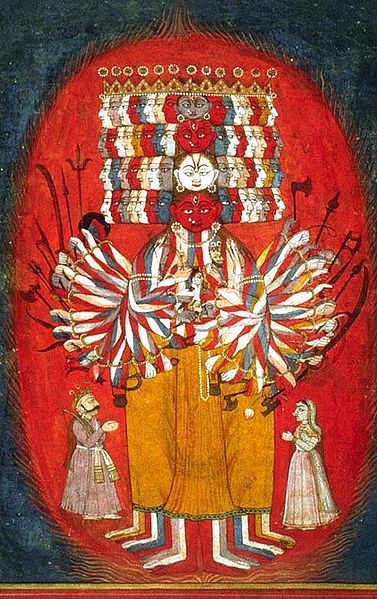
377px-VishnuvishvarupaA Hindu saint who was visiting river Ganges to take bath found a group of family members on the banks, shouting in anger at each other. He turned to his disciples smiled and asked.

‘Why do people shout in anger shout at each other?’

Disciples thought for a while, one of them said, ‘Because we lose our calm, we shout.’

‘But, why should you shout when the other person is just next to you? You can as well tell him what you have to say in a soft manner, ‘asked the saint.

Disciples gave some other answers but none satisfied the other disciples. Finally the saint explained, .

‘When two people are angry at each other, their hearts distance a lot. To cover that distance they must shout to be able to hear each other. The angrier they are, the stronger they will have to shout to hear each other to cover that great distance.

What happens when two people fall in love? They don’t shout at each other but talk softly, Because their hearts are very close. The distance between them is either nonexistent or very small…’

The saint continued, ‘When they love each other even more, what happens? They do not speak, only whisper and they get even closer to each other in their love. Finally they even need not whisper, they only look at each other and that’s all. That is how close two people are when they love each other.’

He looked at his disciples and said.

‘So when you argue do not let your hearts get distant, Do not say words that distance each other more, or else there will come a day when the distance is so great that you will not find the path to return.’
-Author Unknown.

Thank you to Kris Lee for bringing this story to my attention.
Photo Illustration ~ Krishna (Hindu avatar)via Wikipedia and in the public domain.

– Terri Stewart

mailTERRI STEWART is Into the Bardo’s Chaplain, Sr. Consulting Editor, and Site Co-administrator. She comes from an eclectic background and considers herself to be grounded in contemplation and justice. She is the Director and Founder of the Youth Chaplaincy Coalition that serves youth affected by the justice system. As a recent graduate of Seattle University’s School of Theology and Ministry, she earned her Master’s of Divinity and a Post-Master’s Certificate in Spiritual Direction with honors and is a rare United Methodist student in the Jesuit Honor Society, Alpha Sigma Nu. She is a contributing author to the Abingdon Worship Annual.
.
Her online presence is Cloaked Monk.This speaks to her grounding in contemplative arts (photography, mandala, poetry) and the need to live it out in the world. The cloak is the disguise of normalcy as she advocates for justice and peace. You can find her at www.cloakedmonk.com,www.twitter.com/cloakedmonk, and www.facebook.com/cloakedmonk.  To reach her for conversation, send a note to cloakedmonk@outlook.com.
Posted in Jamie Dedes, Peace & Justice, Poems/Poetry

Bodies of Their Bodies

hands-together-871294932977UgOgrateful for the backward glance of memory
to those days when life was about bottles
and diapers, walks in the park and baking
cookies for little hands and greedy mouth,
when the mornings were written in wonder,
months honey-combed with baby kisses
and the fascination of intrepid first steps …

in solidarity with other parents i will them
memories laced with gratitude, not the pain
of lost dreams, of lost bodies of their bodies,
the fragile students silenced in the corridors
of relative privilege after an insane rampage
or the everyday streets streaming blood in
Harlem and Bayview/Hunter’s Point where
uncelebrated kids live foreshortened lives

 and those are the children of democracy
there are these too, children of oppression
what of them? – tiny starved brown humans
that line the arenas of hunger and war, where
soundless tears of voiceless parents drown
the vestiges of hope while we  share our pain,
so sure the world will grieve along with us

© 2013, poem, Jamie Dedes, All rights reserved
Photo credit ~ Vera Kratochvil, Public Domain Pictures.net

Photo on 2012-09-19 at 20.00JAMIE DEDES ~ My worldly tags are poet and writer.  I’m in my fifth year of blogging at The Poet by Day, the journey in poem, formerly titled Musing by Moonlight.  Through the gift of poetry (mine and that of others), I enter sacred space.

Posted in Essay, Jamie Dedes

GREAT ACTS OF LOVE

PEARL BUCK (1892 – 1973)

American Novelist and Humanitarian

Pulitzer Prize, 1932

Nobel Prize for Literature, 1938

I give you the books I’ve made,

Body and soul, bled and flayed.

Yet the essence they contain

In one poem is made plain,

In one poem is made clear:

On this earth, through far or near,

Without love there’s only fear.

Essence by Pearl Buck

GREAT ACTS OF LOVE

by

Jamie Dedes

I view Pearl Buck, whom I started reading when I was twelve, as a sort of spiritual mother. You can imagine my joy then to find a copy of her one book of poetry in a used bookstore. It is the only book she wrote that I had not read. It sat dusty and torn and – while clearly once well-loved by someone – it was now hidden in an out-of-the-way place, untouched and unrecognized for its simple beauty.

In brief, eloquent, deft strokes, Ms. Buck’s poems do indeed express the great message of both her work as a novelist and writer and as a humanitarian  …

“WITHOUT LOVE THERE IS ONLY FEAR”


Born on June 28, 1892 in Virginia, Pearl Buck was the daughter of missionaries. She grew up in China and spoke Chinese before she ever spoke English. She was a prolific writer with most of her books inspired by her experiences in Asia. In the 1920s, before the publication of her books, her stories and essays began appearing in influential American and Chinese publications.

Of Ms. Buck’s novels, The Good Earth is the most well-known. It was her second novel and became a best seller. She also wrote a number of nonfiction books including memoir and a cookbook. Her poetry collection, Words of Love, was published in 1974, a year after her death. It is now out of print.  It is gracefully illustrated by Jeanyee Wong and was published by The John Day Company, the publishing firm founded by Ms. Buck’s second husband, Richard Walsh.

Throughout her career, Ms. Buck wrote heroically, acutely, and compassionately of women’s rights, immigration issues, mixed-race children, adoption… and, of course, China. She was blacklisted in the 50s for her political and social views. But Ms. Buck’s life was not just about words of love. It was about great acts of love.

Most of Pearl Buck’s humanitarian work was toward mitigating the poverty and discrimination suffered by children.Ms. Buck founded Welcome House, Inc, which was the first international interracial adoption agency. She adopted – if I remember correctly  – ten children herself. Her initial efforts to help mixed-race children were inspired by their rejection in Asia, especially in Korea. There mixed-race children fathered and left behind by American soldiers were barred from any social, educational, and civic privileges, as were the mothers of mixed-race children. Today Ms. Buck’s books still stand as ambassadors of her love and humanity and as introductions to China before Mao.

Here Anchee Min, Chinese-American author, discusses her reasons for writing Pearl of China, a fictionalized account of Pearl Buck’s life.

© 2012, essay, Jamie Dedes, All rights reserved

Ms. Buck’s photograph is in the public domain.

Video posted to YouTube by  .

Posted in Essay, Jamie Dedes, Spiritual Practice

COMPASSION AT THE CORE


1st Row: Christian CrossJewish Star of DavidHindu Aumkar

2nd Row: Islamic Star and crescentBuddhist Wheel of DharmaShinto Torii

3rd Row: Sikh KhandaBahá’í starJain Ahimsa Symbol

COMPASSION AT THE CORE

by

Jamie Dedes

“Compassion is the pillar of world peace.” H.H. 14th Dalai Lama, A Human Approach to World Peace

The peaceful path of compassion is at the core of all the wisdom traditions, the conduits by which grace flows into our lives. If our species is to overcome current conflicts and truly be at peace with ourselves, we must tread the compassionate path and we must do it with bone and muscle as well as heart and mind. It must be a path where service and meditation converge.

In the Summa Theologiae, the great work of St. Thomas Aquinas, he suggests just that. He defines mercy (a virtue) as “the compassion in our hearts for another person’s misery, a compassion which drives us to do what we can to help him.” He describes mercy as having two aspects “affective” – or emotional – and “effective,” which is positive action.

We all have something to teach. We all have something to learn ~

People from varied traditions come to Buddhism – not to convert – but to learn the meditative skills that Buddhism teaches. Buddhists also have lessons to learn from other religions:

“…many Buddhists are interested in learning social service from Christianity. Many Christian traditions emphasize that their monks and nuns be involved in teaching, in hospital work, caring for the elderly, for orphans, and so on . . .  Buddhists can learn social service from the Christians.” H.H. 14th Dalai Lama, The Buddhist View toward Other Religions

Meditative practice is central to Buddhism. Along with devotions (prayers and religious observance), action (good works) is central to Christianity and the other Abrahamic traditions, which is not to imply that there are no meditative practices or that inward practice is more important than outward action. Rather, each has its place and they are complementary. Our meditative practices enhance tranquility, ensuring that our good works are appropriate and done in the right spirit.

A compassionate heart is moved to embrace and not to judge. A compassionate hand is moved to work and to sacrifice for the greater good. Selflessness, well-seated in compassion, implies action that both materially and spiritually benefits others. The Dalai Lama and Thích Nhất Hạnh, social activists as well as spiritual leaders, are the very breath of compassion and they and the people in the organizations they lead endlessly provide selfless service and share spiritual solace with all.

Buddhism in the West is a relatively new practice. To my knowledge it is only recently that American Buddhists have organized for relief efforts with Buddhist Global Relief (BGR), which in its short life has implemented quite a number of effective projects. The main mission of BGR is hunger, not simply addressing it in its immediacy but also advocating for changes within our global food systems that will ensure social justice and ecological sustainability. BGR was started by American Buddhist monk and scholar, the Ven. Bhikkhu Bodhi, calling attention to the “narrowly inward focus of American Buddhism” and its neglect of social engagement. Moslems, Jews, and Christians have long-standing organizations for global relief and social activism.

It is healing grace when social services are delivered on a nonsectarian basis and without the expectation of conversion. The Koran admonishes (2:257): “Let there be no compulsion in religion.”

We’re each born into a path or choose (or forego) one. Our devotion to one religion shouldn’t prevent respect for the others. Abū al-Muġīṭ Husayn Manṣūr al-Ḥallāğ (Mansur Al-Hallaj, 858-922), the Persian Sufi teacher and poet wrote from his own perspective:

“My heart has opened into every form. It is a pasture for gazelles, a cloister for Christian monks, a temple for idols, the Ka’ba of the pilgrim, the tables of the Torah and the book for Koran. I practice the religion of Love. In whatever directions its caravans advance, the religion of Love shall be my religion and my faith.”

Maybe we humans will come as close to peace and perfection as we can when we combine the “specialties” of Buddhism and the Abrahamic traditions ~

Compassion without meditation can result in cruelty and confusion. Compassion without action is insufficient to address concerns of the human condition.

Orthodox Christianity offers us guidelines for corporal (material) works of mercy:

  • feed the hungry
  • give drink to the thirsty
  • clothe the naked
  • house the homeless
  • visit the sick
  • engage in conscientious activism
  • bury the dead

The guidelines for spiritual works of mercy are:

  • share insight with the spiritually curious
  • counsel the fearful
  • provide brotherly support for those who live unwisely
  • bear wrongs patiently
  • forgive offenses willingly
  • comfort those who are suffering
  • pray (unify with the Ineffable) for the welfare of the living and the dead

In the ideal, these guidelines are not simply implemented in the privacy of our own prayers and meditations or with detachment in supporting civic and religious charities, but one-to-one in our everyday lives and in a spirit of unity. Mystical Judaism teaches us that: “Kindness gives to another. Compassion knows no other.”

There are 114 chapters in the Islamic scriptures, the Koran. Each begins with the principled: Bismillah ir-Rahman ir-Rahim (In the name of God, most Gracious, most Compassionate). This reminds me of the classical Christian ideal expressed in the Koinḗ Greek agápē, the love of Christ or God for humankind. I suspect it is also – like agápē – a call to action: to live in harmony with the Divine and all creation, that is to live with grace and mercy.

Charity, self-control, and compassion are the central virtues of Hinduism. Ahimsa (do no harm) is part of the Hindu ideal of compassion. This implies action, not just abstinence.

Perhaps this wisdom from an unknown saint or bodhisattva provides us the best advice for our own peace of heart and our species’ survival ~

“The true happiness that man has searched for since the dawn of time, that inner gold that awaits any person who holds compassionately the key of generosity: Do something for your fellow-man … and you shall truly have the gold.”

Gratitude is compassion’s fulcrum ~

“The roots of all goodness lie in the soil of appreciation for goodness.” H.H. 14th Dalai Lama

Gratitude is also the emotion that compels us to give back by caring compassionately for our fellow humans and providing responsible and loving stewardship of the animals who are our companions in nature and this mother earth that sustains us. This does, of course, preclude war which is a danger to all living things.

Expressing gratitude in some way to those who are kind and caring is what nurtures their gift of compassion so that the giver can continue to give and also learn to receive. The natural law of balance is then honored.

May our compassionate paths be fully human and traveled quietly, without pronouncement, conceit, sectarianism, or self-righteousness. May our compassion be a thing of the heart and mind -yes! – but also bolstered with bone and muscle and seasoned with gratitude. May all sentient beings find peace.

© 2012, essay, Jamie Dedes All rights reserved

 Illustration ~ religious symbols by Rusus via Wikipedia and released into the public domain

Posted in Jamie Dedes, Poems/Poetry

LOVE UNDER THE SHADOWS

“Ever has it been that love knows not its own depth until the hour of separation.” Kahlil Gibran

LOVE UNDER THE SHADOWS

by

Jamie Dedes

nothing moves, not even the reluctant beat

of your heart, which once danced with mine

and made rough sense of life, now so like

·

summer noon when all is still, even bees

and your gray eyes that happily feasted

on mine and shared my lamentations

·

death too grieves at the sorry circumstance

of such fools whose trivial discontents and

untoward presumptions fade into nothing

·

tears that we embraced the world and the

flesh and neglected the shadows that rode our

backs where angel wings more rightly rest

·

© 2012 poem, Jamie Dedes All rights reserved

Photo credit ~ Michael Drummond, Public Domain Pictures.net

Posted in Jamie Dedes

I DANCE FOR THEM

from a rain forest

Here the dancer stops

to regain her balance

and re-elaborate the distance

In the Empire of Light, Michael Palmer

·

I DANCE FOR THEM

by

Jamie Dedes

·

We danced in step we four, a pas de quatre on river rocks,

me dreaming wild of unicorns and rainbows.

In that faraway place of  raging river, ancient Cloister –

escaping to the city with my once-young mother,

embracing antique stories told in graceful moves and music

made for those with better breeding, more cultivated minds.

·

Home, our home, a place of first loves, unfounded hope

where simmering, Sidto* served soup to my sister,

a dark-olive girl-fugue in tar black  and char dust.

In that place whirling with church spires and myrtle trees,

hooting and shrieking, we strode tortured shores,

then buried our anger in silence, bitter as bile.

I broke my ballerina legs in a premature grand jeté.

I failed to heal those fissured old hearts.

·

We were lost then, somewhere out in crazy time, lazy mind –

passing green humid summers, silver crisp winters,

fielding the slings of earth-bound distress. Home  . .  .

At home, such a tangled skein of love and lies and ties,

where, by some bogey breeze, we danced lockstep on river rocks,

me dreaming wild of unicorns and rainbows . . .

Solitary now, alone now above rainforest layers of fertile mind –

my energy moves triumphant, a pas marché on gray status clouds,

which rain down hard-won poems in roses, willow greens, and light.

With twice found hope and tender love, I dance for them.

·

Sidto – grandmother, derived from the Arabic.

Dance terms:

  • pas de quatre – a dance for four.
  • grand jette – a broad, high leap with one leg stretched forward and one stretched behind. In effect, a “split” that is airborne.
  • pas marché – the regal marching-step of the premiere danseuse, the principal female dancer in a ballet company

© poem, 2011, 2012 Jamie Dedes, All rights reserved

Illustration courtesy of Fran Hogan, Public Domain Photograph.net.

Posted in Jamie Dedes, Poems/Poetry

DREAMING OF THE SHEIK

I’m the Sheik of Araby,

Your love belongs to me.

At night when you’re asleep

Into your tent I’ll creep.

The Sheik of Araby, lyrics by Harry B. Smith and Francis Wheeler, music by Ted Snyder, written in 1921 in response to the popularity of Rudolph Valentino and the movie The Sheik.

·

DREAMING OF THE SHEIK

by

Jamie Dedes

·

Oh yes, I’d say she’s about seven in that picture

Blue-black hair, curls bursting and tied with string

Hands folded neatly, one little foot turned in

·

With dark doe eyes staring at the waiting world

Long lashed and bright with hope and longing

What future did those clear sparkling eyes behold

·

What music played the strings of that young heart

She must have dreamt of men and marriage,

Well, she would assume love as young people do

·

Some standard dreams maybe, the house with

A white porch and rocker, a picket fence and

A back yard of rich dark earth, flowers and fruit

·

Sweet children would be a part of this fairy-dream

Roses for birthdays, lilies at Easter, and garland in May

Christmas trees and mistletoe and other such …

·

As she watered rubby beets and greens on the fire escape

And helped her mother with chores and siblings

No doubt she dreamed dreams gifted by movies, magazines

·

As she tied her worn boots, getting ready for school,

Smoothing her hand-me-down dress, then running

Down the steps and on through the slums …

·

She must have dreamed then of ocean mists and

Fresh air, streets with trees and well-groomed homes

And well-polished horseless-carriages for transit

·

When she grew old enough did she wait hopeful

On well-worn curbs under jaundiced street lights

A ghetto-bound Diana waiting for her handsome Sheik

·

And he, the Sheik looking for his Sheba, did he find her

Did he take her hand as she stood lovely, innocent

And did he soon leave her only to be followed by another

·

Did each Sheik stay long enough to steal her heart

And riding off take another piece of her, a souvenir

Of yearning and promise, love and gullibility …

·

Is that why she lies here now, eyes grown pale, heart empty

And a silent wail rising from the sacred depths of her being

“The movies and the magazines”, she says, “they lied …”

Then whispered softly: “When Valentino died, women

lined the streets for his funeral cortége and cried  … “

·

Rudolf Valentino as the Sheik and Agnes Ayers as Lady Diana.

“Women are not in love with me but with the picture of me on the screen. I am merely the canvas on which women paint their dreams. ”
Rudolph Valentino – 1923

Video posted to YouTube by tengirlsag

© 2009, 2010, 2011 Jamie Dedes, All rights reserved

Posted in Guest Writer, Perspectives on Cancer

PERSPECTIVES ON CANCER #28: Living With Dying

LIVING WITH DYING

by

Gayle Walters Rose

 When my mother’s best friend, Katherine, became ill with stomach cancer, her daughter enlisted Katherine’s friends to be of support as she went through her chemotherapy treatment and subsequent recuperation.  Her daughter lived out-of-state and had a medical practice and could not be with her day-to-day.

I had known Katherine my entire life.   She was one of the most positive, bright lights I had ever known.  Her daughter and I had spent much time together as children, which included many hours swimming in the beautiful lake that they lived on.  Katherine’s husband had died many years prior.

Her daughter was very organized and efficient with setting up people in shifts to take turns staying with Katherine during her illness.  Sometimes this included remaining overnight with her.  But Katherine had a very independent nature, even at age 87, and at times would insist that she was OK and send us home.  Her daughter had tried her best to convince Katherine to move to North Carolina and stay with her family, but Katherine always refused.  She had been there for over 50 years.  During one afternoon, she confided in me that she would never leave her beloved home on the lake.   The house had an enclosed porch that overlooked the water and we would sit out there for hours as we talked and relaxed.  Her eyes would occasionally scan the lake and she would comment on a bird that had caught her eye or an activity by a neighbor around the water’s edge.

We were able to share ourselves like never before.  She regaled me with all kinds of stories from her past and shared intimate feelings.  She told me she was totally at peace and was not fearful of death.  I felt somehow as if I were a vessel for her to pour her heart into and was so grateful that I could be of service to her in this way.

I marveled at her serenity during this difficult time.  There was no “battle”, just gentle, quiet acceptance and the allowing of what was.  She illustrated to me what it meant to live in the moment.  Her ease and even emotions were a gift to me as well.

One day she tired as we had been sitting on the porch for quite some time and so we retired to her bedroom.  Climbing into her bed, I propped myself next to her as we watched television.  A short time later, as I noticed her eyes getting heavy, I told her I would leave and let her sleep.  Lowering myself down on the bed so I could look into her eyes, I held her hands in mine and told her how much I loved her.  She smiled at me with beaming love in her clear, sweet, blue eyes and told me how beautiful I was.  Tears pooled in my eyes as I realized, in that moment, what grace she possessed.

Katherine died quietly in her sleep with hospice in attendance several months after her diagnosis.  Her bedroom window was open to the lake.

© photograph and essay, Gayle Walters Rose, 2011. All rights reserved. No re-blogging or publishing without the permission of the author.

♥ ♥ ♥ ♥

Gayle Walters Rose ~ lives in Winter Park, Florida and has been blogging since August of 2010. She is an adventurous writer, experimenting with various forms of poetry and with fiction and creative nonfiction.Gayle comes from a large family, and she is the mother of grown daughters. Much of her writing is about nature or things of the spirit. Early in life, she lived in an ashram and often shares that experience and its lessons.

Gayle’s favorite quote is “Never think there is anything impossible for the soul. It is the greatest heresy to think so. If there is sin, this is the only sin; to say that you are weak, or others are weak.” (Swami Vivekananda)  You’ll find Gayle blogging at Bodhirose’s Blog, where she is much appreciated by the online poetry community for her fine work and because she is genuine.

Posted in Guest Writer, Poems/Poetry

PERSPECTIVES ON CANCER #24: More Than Love At First Sight

MORE THAN LOVE AT FIRST SIGHT

by

Dan Roberson

I said, “I
fell in love with you at first sight,”

You said, “Oh,
it was a crazy night,”

I said, “The
moon was beautiful and bright,

But I couldn’t see anything but you,”

 ·

You said, “I
don’t think that was true,

You came in with
someone dressed in blue,”

I said, “I’ll
have to admit once more you’re right,

Let’s just
forget about love at first sight,”

 ·

It was not
as important as I thought it would be,

It was a
step in the right direction, don’t you agree?

We were
newlyweds ready to begin,

Confident we
could change the world, again and again,

 ·

But it was the
second step, or maybe it was three or four,

When we
connected deeply, right at heart’s door,

Steps five
or six, we really began to communicate,

Every day I
grew more in love, it was such a happy state,

 ·

Knowing your
love for me was also deep,

Made it so
easy to have a restful sleep,

Love at
first sight seemed unreal and so long ago,

As life
expanded our love continued to grow,

 ·

We were stepping
into our future, two of a kind,

I was so
crazy about you as if I’d lost my mind,

Years went
by so quickly with you at my side,

And I still
thought of you as my beautiful bride,

 ·

When you
were stricken with that terrible disease,

I had to
tell you “I love you” to put your mind at ease,

I still
loved you when your hair began to fall,

It didn’t
change the way I felt, no, not at all,

 ·

The moon outside
is breathtaking and luminous tonight,

But you’re
lying here cold in the middle of the night,

Your frail
body is still beautiful to my sight,

I’ll lie
beside you until morning’s early light,

 ·

Remembering
tears and laughter we shared,

The ways we showed
each other we cared,

How we
worked through our problems every day,

Learned to
forgive and to often pray,

 ·

We didn’t
let disagreements go on long,

As we trusted
each other we were twice as strong,

I didn’t
really understand love at first sight,

We took our
turns at being wrong and right,

 ·

Now you’ve
left this earth on your final flight,

And my heart
is filled with love at last sight.

·

@ poem and artist’s rendering of Dan, Dan Roberson, all rights reserved. No reblogging or pinting without the permission of the author.

♥ ♥ ♥ ♥

Dan Roberson ~ lives in Kansas City, Missouri.  He says, ” I celebrate life. I retired from teaching and now I’m looking for new parades to lead, or to follow. I’m alone, still hoping to be a published author, and trying to stay on my chosen path. I have no anchor to hold me down and I’m ready to rid myself of possessions that impede progress. I want my imagination to soar. I’m open to learning about new worlds, new countries and languages, and different ways to look at things I thought I knew. Every day is a bonus day and I look forward to the challenges it brings. I’m finding out that technology is fast and getting faster and there is much information that I need to learn.”  You’ll find Dan at My Blog.

Posted in Guest Writer, Perspectives on Cancer, Poems/Poetry

PERSPECTIVES ON CANCER #22: Bath

BATH

by

Myra Schnieder

·

Kindness, an Irish lilt in her voice,

spares me the effort of running the water

and supports my elbow when, stripped

of everything but wound dressings,

I take a giant step into the tub.

·

Warm water wells into my crotch,

unlocks spine, lullabies stomach.

Is it because I’ve passed through

extremity that this comfort is intense

as the yellow daffodils trumpet?

·

Yesterday – my raw body stranded

by the basin, chill sprouting on my skin

while a Chinese student nurse

conscientiously dabbed each

helpless area – is miles away.

·

Dimly, I remember a stark room

and the high-sided saltwater bath

I was dipped in a few days

after giving birth. As Kindness

babies my back with a pink flannel

·

I’m reborn though maimed, ageing.

And this pool of bliss can no more

be explained than the song that pours

from a lark as it disappears into

stitchless blue, the seed circles

·

that cram a sunflower’s calyx,

day splashing crimsons

and apricot golds across the sky

before it seeps into the silence

of night, the way love fountains.

 ·

© 2011, Myra Schneider, all rights reserved. This poem is posted on Into the Bardo  with the permission of  Ms. Schneider. Any further reposting requires her permission. 

Photo credit ~ amazon preparing for a battle (Queen Antiop or Armed Venus), byPierre-Eugène-Emile Hébert 1860 (National Gallery of ArtWashington, D.C.), public domain photograph via Wikipedia

·

Bath is an excerpt from:

Writing My Way Through Cancer  Jessica Kingsley Publishers (2003), and

Multiplying The Moon  Enitharmon (2004)

Editor’s note: The opening poems of Multiplying the Moon are Myra Schneider’s response to her experience of terrible illness. In the aftermath of fighting breast cancer, she found herself writing poems that explore transience, death, and survival from many different angles. The main theme of `Voicebox,’ the long fictional narrative in the middle of the book, is communication; the poem follows the connections and disconnections between its main characters. In a short poem sequence, the poet draws on findings from the 1901 census to re-create her father’s early life, and the understanding she gains helps her to feel a new closeness with him. This is united by the theme of investigation of the self and its relationship with the outside world.

♥ ♥ ♥ ♥

Myra Schneider ~ was born in London in 1936 and grew up on the Firth of Clyde. She is the author of four poetry collections from Littlewood, three novels for children from Heinemann, and has three poetry collections published by Enitharmon: Exits, The Panic Bird and Insisting on Yellow. With John Killick she has written Writing for Self-Discovery  (Vega, Chrysalis Books) which was re-published in 2002. Her book Writing My Way Through Cancer, was published by Jessica Kingsley in 2003. The book is her fleshed-out journal from the year 2000 when she was diagnosed with breast cancer. It includes poem notes and poems and a section of therapeutic writing ideas.

Posted in Guest Writer, Perspectives on Cancer, Uncategorized

PERSPECTIVES ON CANCER #15: Rise and Fall

RISE AND FALL

by

Umamaheswari Anandane

·
A reptile delaminates
as I watch my rusted skin
sketched with patterns of time
under the leaves
that subsides in the woods
·
Rise and fall of all seasons
Into the Bardo I swim
·
I fathom that every soul has a day
to dismantle from
its temporary shield
which acknowledged them of its short stay
·
I learned that the time come
to bestow my last kiss
in this embodiment where I learned
the true meaning of Love
Having called upon
is a gift bestowed on
I accepted it with love
·
Now I surrender myself
to those open arms
I got more learning to do
away from this body
to experience the memoir of the unknown
·
© 2011 Umamahswari Anandane, all rights reserved
Photo credit ~ courtesy of cohdra, morgueFile

♥ ♥ ♥ ♥

Umamahswari Anandane lives in India and is a poet, writer, blogger, and a self-described “simple woman.”  She is an accomplished engineer with multi-lingual skills who discovered in herself a passion for writing poems and fiction.  Ennai kandu peedi paarkalaam, her first novel, is in Tamil (a Dravidian language spoken predominantly by the Tamil peoples of the Indian subcontinent and the official language of Sri Lanka and Sinagpore) is due out in a few months. Find more of her poetry at Inside My Poem Book, a blog. Uma also blogs at Perpetual Mind where, among other things, she explors Tamil arts and Vedic math. Hers is a mind that never stops.
Posted in Teachers

PEACE …

BUDDHA  

Hatred does not cease by hatred, but only by love; this is the eternal rule.

14th DALAI LAMA, TENZIN GYATSO

We can never obtain peace in the outer world until we make peace with ourselves.

RUMI

Out beyond ideas of wrong-doing and right doing

there is a field. I’ll meet you there.

RABBI HILLEL THE ELDER

What is hateful to thyself do not do to another. That is the whole law, the rest is commentary.

PARAMAHANSA YOGANANDA

Kindness is the light that dissolves all walls between souls, families, and nations.

ST. PAUL THE APOSTLE

So now faith, hope, and love abide, these three; but the greatest of these is love.

PEACE AND LOVE:

DECISIONS, NOT PRAYERS

Artist’s rendition: Reflection Memorial

Site of the Twin Towers, New York City

IN MEMORY

Posted in Teachers

LISTEN TO YOUR HEART

·

MAHATMA GANDHI 1869 -1948), India’s peaceful activitst

“You must be the change you want to see in the world.”

·

PEACE

·

LOVE

 ·

STEWARDSHIP

IN LOVING MEMORY

for

THE FALLEN

and

THEIR FAMILIES

Posted in Jamie Dedes, Poems/Poetry

FROM THE BEGINNING

Family photo subject to copyright.

·

Every year without knowing it I have passed the day

When the last fires will wave to me

And the silence will set out

For the Anniversary of My Death, W.S. MerwinThe Second Four Books of Poems

FROM THE BEGINNING

by

Jamie Dedes

It was yesterday

that I retrieved my soul at last

moved by the placid persuasion of a psalm

reminding me of my rootedness

in the archives of heaven

 ·

In earlier times

life lay ahead, a rhythm of reciting tones

a paced chant before all that somber news

and facing facts and quiet homely work

of peacemaking for your sake

 ·

But this morning

I awoke a fading mendicant nun

reading my own rich requiem Mass

celebrating my heart’s trove

and your constant love

 ·

A few more breaths

and I’m a whisper in your ear

an old story of someone who birthed you

now melting into the great Forever

leaving us only a hallowed cord

 ·

From the beginning, Son

your spirit was to us a joy dancing

a perfect poem finely etched in old gold

holding fast to beauty and grace

faithful to your own gentle spirit

 ·

Listen to the hollows in the wind.

Listen, Son –

how love encircles and

echoes from the small Beginning  ….

into the great Forever

Posted in Spiritual Practice, Teachers

GREAT JOYFUL PROCLAIMER

Samdech Preah Maha Ghosananda (1929 -2007) 

Buddhist Monk of the Theravada tradition.
Patriarch of Cambodian Buddhism during Pol Pot’s reign of terror
Maha Ghosananda, his Pali Monastic name means joyful proclaimer
He lost his entire family and his friends at Khamer Rouge
Biography HERE
♥ ♥

“Peace is possible!” 
Maha Ghosananda’s motto.

♥ ♥

“Don’t struggle with people, with men. Struggle with the goals and conditions that make men fight each other.”
If a driver is not sober how can he drive a car? If you don’t calm your spirit, you cannot bring peace to the country.”
♥ 
“I do not question that loving one’s oppressors – Cambodians loving the Khmer Rouge – may be the most difficult attitude to achieve. But it is a way of the universe that retaliation, hatred, and revenge only continue the cycle and never stop it. Reconciliation does not mean that we surrender rights and conditions. It means that we see ourselves in the opponent – for what is the opponent but a being in ignorance, and we ourselves are also ignorant of many things. Therefore, only loving kindness and right mindfulness can free us. [From his essay The Human Family.]
♥ 
“We must find the courage to leave out temples
and enter the temples of human experience,
temples that are filled with suffering.
If we listen to the Buddha, Christ or Gandhi, we can do nothing else.
The refugee camps, the prisons, the ghettos
and the battlefields will then become our temples.”
♥ 
I was so taken with the story of this “joyful proclaimer” in Rob’s story yesterday, that I had to do research on him. I don’t think he’s written any books and there are few videos and none with a dharma talk, but the whole of the man’s life was a dharma talk,* an inspired and inspiring one.  J.D.
·
The quotes were gleaned from two sites, which others may wish to visit:
Photo credit –nyana_ponika under under the Creative Commons Attribution-Share Alike 2.0 Generic license via Wikipedia.
* Dharma talk – public discourse. The wonderful thing about dharma is that it is not dogma! J.D.
Posted in Uncategorized

A DEEPER DARKNESS

Martin Luther King, Jr. (1929-1968)

(I mourn the loss of thousands of precious lives, but I will not rejoice in the death of one, not even an enemy. Jessica Dovey on Facebook.)

“Returning hate for hate multiplies hate, adding deeper darkness to a night already devoid of stars. Darkness cannot drive out darkness: only light can do that. Hate cannot drive out hate: ony love can do that.” Martin Luther King, Jr.

Posted in Jamie Dedes, Poems/Poetry

IT’S WINTER

IT’S WINTER

by

Jamie Dedes

If you are viewing this poem on the home page, you will have to click with your mouse on the subject line of the post for the poem to lay-out properly.

No illusions, no illusions, no lies, no softening of the truth,

no tears, no bargains, though sun shines and birds sing,

Winter is here, I know.

Winter is too crisp and sharp to invite either love or lechery,

and those men, husbands and lovers, see through it to seasons

young and not so inclined to ponder as one man complained,

while I watched the grass die, the leaves dry, the earth harden,

cold winds blowing over the graves that house our bodies.

And I being me was always asking

“Why”

Once Spring danced like wild flowers in the wind,

held dew and promise and smiled like a well-fed babe.

It hadn’t heard the word defeat and didn’t know hate or anger.

Spring liked to play, to romp, to sing and

she hung her question on a tree to ripen –

“Why”

Summer took itself seriously, was wide-eyed with longing, sizzling in the sun.

It wore a red dress and the champagne happiness of a husband and baby

and bravado because Summer is young and youth is bold,

a silver bell that rings and rings and never stops.

Too much is not enough and yet – a tremulous

“Why”

Autumn gently smiled, like Da Vinci’s lady, and danced old dances,

reminisced Begin the Beguine, stepping lightly on brown leaves.

It was lined with gold and muted silks, remembered is manners,

nodded wisely, spoke sagaciously , and was a might too profound.

Haughty with itself, it just knew it knew

“Why”

Winter…Winter is content, sees itself in Time displaced and learned

laughter has meaning and fleshy bonds and boundaries dissolve.

A bit stiff, cold, and slow now, slowing to honor the sacred,

to say “i love you,” to say “it was good,” to say “thank you.”

Sun rise, sun set, and once dormant trees burst forth with green,

sanguine and serene, just a habit now that question

“Why”