Posted in First Peoples, Peace & Justice, Writing

Honoring the true history of indigenous peoples

Eel River, Humboldt County, California

The Wiyot lived in the Humboldt Bay area of Northern California and they live in my dreams. For about a year-and-half we made our home in Humboldt County, an area about 200 miles north of San Francisco on the far North Coast. It’s a place dense with redwood forests, wild rivers, and creeks that run dry in the summer and overflow in the winter. If you live in a rural area or grew up in one, you might take such things for granted. Having lived in paved-over cities all my life, they seemed magical to me.

Our four acres were rich with sequoia, madrone, oak, and twenty-eight fruit trees. Blue jays flew in to feed in the morning. Quail families visited at night. They marched down our drive in orderly formation. Hawks and hummingbirds put on air shows. Rosemary thrived unattended. There was a beautiful lush 100-year-old rosebush. There were wild roses too. They gifted us hips for homemade cough syrup.

Scotch Broom
Scotch Broom

The colors there were brilliant and varied: smog-free blue skies (you could see the stars at night!), rich brown earth, a population of purple iris in a grove of California bay laurel, orange cosmos and red dahlias, yellow scotch broom lining our creek-side in the company of cascading Japanese quince. The Japanese quince provided ample housing for Rufus hummingbirds. Nearby, Queen Ann’s lace stood unbent by the wind. When it went to seed we collected the seeds for cooking. They have a taste somewhere between carrot and caraway.

The spread of blackberry bushes was both wonder and wealth. They seemed never to run out of fruit. I gathered some almost every morning for breakfast and every morning I thought of the women in buckskins who preceded me more than a century ago. Perhaps there was a mother who stood on this spot, picking blackberries for her son too.

I think the peace, quiet and simplicity of that place made it easy to imagine the first peoples as they might have lived there in other times. I could see them tending fires, boiling and drying acorns and then grinding them for flour, bathing in the river, raising their children, gathering wood, hunting and enjoying sacred ceremony. I knew the very same ancient sequoia that watched over us had watched over them.

Humboldt Bay near Eureka, traditional Wiyot lands
Qual-a-wa-loo (Humboldt Bay) near Eureka, traditional Wiyot lands, The 1860 Wiyot Massacre happened on Indian Island

Finally, I did some research. I was sad but not surprised to find that the area was once inhabited by an indigenous people –  the Wiyot people – who were decimated in a genocide ~

Wiyot Mother and Child

“Eureka newspapers of the time exulted at the night massacres conducted by the “good citizens of the area”. Good haul of Diggers and Tribe Exterminated! were 2 headlines from the Humboldt Times. Those who thought differently about it were shut up by force. Newspaper publisher and short story writer Bret Harte called it “cowardly butchery of sleeping women and children” — then had to flee ahead of a lynch mob that smashed his printing presses.” MORE [Wiyot Tribal Council Page]

Note: Originally written in 2012, I’ve posted this today as a an acknowledgement of Indigenous Peoples’ Day, October 12. More than 40 US jurisdictions celebrate Indigenous Peoples’ Day; the majority of these have replaced Columbus Day with this holiday, but some jurisdictions celebrate both Columbus Day and Indigenous Peoples’ Day.

In addition to reading here, please also treat yourself to Michael Watson’s post Silence, Story, and Healing, a short and thoughtful piece.

© 2012, Jamie Dedes, All rights reserved; Photo credit ~ Eel River by Jan Kronsell and released into the worldwide public domain; Scotch Broom by Danny S. – 001 under CC BY-SA 3.0; Humboldt Bay near Eureka by Tony via Wikipedia and Licensed under CC A 2.0 Generic; Wiyot Mother and Child, Humboldt State University

WRITING PROMPT, Not for writers only

Perhaps you too grew up in a time and place where the history books taught a one-sided view of the land you live on and the people who originated there. Perhaps, like me, you had to get out of school and meet new people, read books that weren’t sanctioned by academic authority and do your own research to learn about the devastation that was  and is rained upon indigenous people all over the world … the violence, the slavery and the genocide. Perhaps you are a descendent of the original people who suffered so and know the truth from the stories of your elders. Perhaps your roots are in the nations of empire and you are saddened that they perpetrated or were complicit in such unimaginable injustice.

We can’t change what happened in the past but  we can make sure that lies aren’t propagated and that the truth is told and shared. Whether or not you are a writer, try this exercise: write a poem, short story, essay or article that illustrates some aspect of colonialism, racial bias and stereotype, or the modern complications of colonial history. Doing research and writing about our feelings are good ways to clarify circumstance and clear out unconscious bias. That’s one of the possible benefits of journaling, for example.  If you are a professional poet or writer, you have the tools to help set the record straight and win a small victory for the human race.

– Jamie Dedes (The Poet by Day)

Posted in Corina L. Ravenscraft, poem, story

A few bits of Soul Sustenance – A story, a quote and a poem

One of the things I like about parables or fables is that they have seeds of truth and wisdom condensed into “bite-sized” amounts of reading. I enjoy looking for new ones which I haven’t read and sometimes come across old favorites. For those of you seeking “Truth” (and all that the word with a capital “T” entails) I offer the following story:

The seeker of truth

“After years of searching, the seeker was told to go to a cave, in which he would find a well. ‘Ask the well what is truth’, he was advised, ‘and the well will reveal it to you’. Having found the well, the seeker asked that most fundamental question. And from the depths came the answer, ‘Go to the village crossroad: there you shall find what you are seeking’.

Full of hope and anticipation the man ran to the crossroad to find only three rather uninteresting shops. One shop was selling pieces of metal, another sold wood, and thin wires were for sale in the third. Nothing and no one there seemed to have much to do with the revelation of truth.

Disappointed, the seeker returned to the well to demand an explanation, but he was told only, ‘You will understand in the future.’ When the man protested, all he got in return were the echoes of his own shouts. Indignant for having been made a fool of – or so he thought at the time – the seeker continued his wanderings in search of truth. As years went by, the memory of his experience at the well gradually faded until one night, while he was walking in the moonlight, the sound of sitar music caught his attention. It was wonderful music and it was played with great mastery and inspiration.

Profoundly moved, the truth seeker felt drawn towards the player. He looked at the fingers dancing over the strings. He became aware of the sitar itself. And then suddenly he exploded in a cry of joyous recognition: the sitar was made out of wires and pieces of metal and wood just like those he had once seen in the three stores and had thought it to be without any particular significance.

At last he understood the message of the well: we have already been given everything we need: our task is to assemble and use it in the appropriate way. Nothing is meaningful so long as we perceive only separate fragments. But as soon as the fragments come together into a synthesis, a new entity emerges, whose nature we could not have foreseen by considering the fragments alone.” ~ Author Unknown Source

For those of you unfamiliar with the wonderful sounds of a Sitar (the instrument mentioned in the story above), I offer the following beautiful example from one of the greatest players of our time, Ravi Shankar:

In addition to truth, one also needs moments of stillness and meditation to keep balance in life. The photo below is mine, but the quote is Lao Tzu’s:

Be stillAnd lastly, a poem written a while ago about something I rarely get to witness, since I’m a night-owl by nature:

~ Sunrise Sighs ~

Today, for the first time in a small while, I was awake to witness a fresh sunrise.

The purpled-pink fingers crept up like a smile,

gently waking the crisp air of still-sleepy skies.

Vaporous flames of bright orange hues, licking the velvet of dew-kissed dawn,

Sleep promised me a solid, deep, dreamless snooze,

But rapt in my awe, I stayed awake and gazed on.

I love the quiet, hushed hours of Night; they keep me content in a solitary peace,

But the rare, glimpsed glory of Morning’s soft light

Makes me ache with a sweetness that begs for release.

~ C.L.R. ~ ©

effecd1bf289d498b5944e37d8f4ee6fAbout dragonkatet Regarding the blog name, Dragon’s Dreams ~ The name comes from my love-affairs with both Dragons and Dreams (capital Ds). It’s another extension of who I am, a facet for expression; a place and way to reach other like-minded, creative individuals. I post a lot of poetry and images that fascinate or move me, because that’s my favorite way to view the world. I post about things important to me and the world in which we live, try to champion extra important political, societal and environmental issues, etc. Sometimes I wax philosophical, because it’s also a place where I always seem to learn about myself, too, by interacting with some of the brightest minds, souls and hearts out there. It’s all about ‘connection(s)’ and I don’t mean “net-working” with people for personal gain, but rather, the expansion of the 4 L’s: Light, Love, Laughter, Learning.

Posted in Jamie Dedes, Poems/Poetry

SILENCE AT NOON

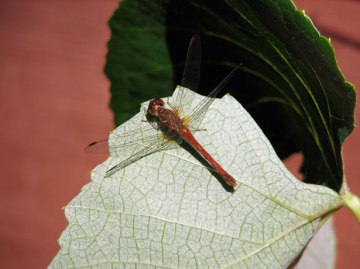
Deep in the sun-searched growth the dragon-fly

Hangs like a blue thread loosened from the sky ~

So this wing’d hour is dropt to us from above.

Dante Gabriel Rossetti, Silent Noon

SILENCE AT NOON

by

Jamie Dedes

The days are filled with noise and moods

but silence lies here at noon

like stillness between heartbeats

and the Ever speaks

through dragonflies breathing vineyards

and a million bees humming the same tune

Caravans of monks and nuns

leave messages in dead languages

and encrypted ritual

as they walk their pathways across bridges

known for their span and silver beauty

Like a revered teacher’s stupa

or a gothic Cathedral

those bridges spin toward heaven

stop short

and trip to the other side

Nothing changes

The same whispered stories

fill your rattling lungs with grief

The only truth is in the silence at noon

doing duty as shawl, shield, and salvation

·

© 2012, poem, Jamie Dedes, All rights reserved

Photograph ~ Arcana Dea, Public Domain Pictures.net