Thunberg in front of the Swedish parliament, holding a “Skolstrejk för klimatet” (transl. School strike for the climate) sign, Stockholm, August 2018 courtesy of Anders Hellberg under CC BY-SA 4.0 license
to be like Greta Thunberg
you must become yourself
completely as though there
were no prison of skin to stay inside
no ego to say don’t try
no doors to close
the kind of bravery that moves
lives is not second hand
it is the ultimate it’s like an
we can do it trip
the magic liberation of person
we’ve been dreaming for
the closeness of fish in water
pure semiosis and pre-verbal closeness
“…we continue to encourage and support participation in the 100TPC global event, with the hopes that we can encourage poets, musicians and artists to stay vocal and engaged in these difficult times. It is so easy to feel hopeless and lose heart when it seems the world is coming apart around us. 100TPC hopes to counter despair and disillusionment, encourage and support celebration through the arts of peace, justice and sustainability. This is the good fight for us and we will continue to provide a global platform and venue.” 100TPC Cofounder Michael Rothenberg in a recent email to me.
There’s a lot going on around Global 100,000 Poets and Others for Change (100TPC.org) and this is the point each year when I like to share special updates along with a sampling of the posters for the event.
Yesterday Michael Rothenberg announced that there were 500 events registered for Global 100TPC (September 28) and Read a Poem To A Child Week (September 23-28). Yes! We’re jazzed about that news.
At The BeZine Michael Dickel and I are collaborating on the September 15 issue, themed social justice in honor of 100TPC. 100TPC concerns itself with Peace (our March issue theme), SustainABILITY (our June issue theme), and Social Justice (our September issue theme).
Over the past year and especially the past month or so, we’ve had some changes to The BeZine activities and publishing policy. Modified guidelines will be available soon … would have been sooner if I hadn’t been in-and-out of the hospital so much. Our Mission remains the same and you can see from it why we are so partial to 100TPC. Please always read our Mission Statement, an issue of the Zine, and the guidelines before submitting work to bardogroup@gmail.com
The BeZine blog is hosting a month long series in solidarity with the climate action events that are taking place around the world, These events include Greta Thunberg’s and also the U.N. Climate Change Summit 2019.
(Please note the first post on the Zine blog is always a copy of the front page of the most recent published issue of the Zine. If you scroll down, you’ll access the rest of the blog posts.)
And …
The BeZine 100,000 Poets and Others Banner, 2019 is by our resident artist, Corina Ravenscraft
On September 28, we’ll host our annual 24 hour Virtual The BeZine 100TPC. Everyone is invited to come read, listen, and contribute. If you want to contribute work the post that day will provide instruction for doing so. It’s easy. We encourage the sharing of art, photography, poetry, fiction, creative nonfiction, and music videos. Michael Dickel will moderate and I’ll be present for back-up.
Here’s a sample of the banners from events around the world. Enjoy!
This slideshow requires JavaScript.
BECOME INVOLVED
Register your event for 100TPC and Read a Poem to a Child Week at 100tpc.org
Freely accessible Sound Cloud playlist of 100TPC Read a Poem to a Child Initiative
– Jamie Dedes, Managing Editor
The BeZine
ABOUT
The Bardo Group Beguines are pleased to present THE BEZINE, an eZine published each quarter. The people who visit here to read, “Like,” and comment are as integral to this community as are the contributors. Visitors lend their energy, support, imagination and insights to this evolving effort. Comments are open and kindly expressed perspectives and suggestions are welcome.
The team is comprised of Naomi Baltuck, cloakedmonk (Terri Stewart), James R. Cowles, Jamie Dedes, Michael Dickel, Priscilla Galasso, Christy Darby Hendrick, Joseph Hesch, Lana Phillips, PoetJanstie (John Anstie), Ruth Jewel, dragonkatet (Corina Ravenscraft), Charles W. Martin, Michael Watson,
The goal of this collaborative is to foster proximity and understanding through our shared love of the arts and humanities and all things spirited and to make – however modest – a contribution toward personal healing and deference for the diverse ways people try to make moral, spiritual and intellectual sense of a world in which illness, violence, despair, loneliness and death are as prevalent as hope, friendship, reason and birth.
We share work here that is representative of universal human values however differently they might be expressed in our varied religions and cultures. We feel that our art and our Internet-facilitated social connection offer a means to see one another in our simple humanity, as brothers and sisters, and not as “other.”
We acknowledge that there are enormous theological differences and historical resentments that carve wedges among and within the traditions and ethnic or national groups, but we believe that ultimately self-preservation, common sense, and human solidarity will empower connections and collaboration and overcome division and disorder.
We ply our art, meditations, and prayer toward that tipping point when compromise – an admittedly imperfect peace – will overcome war and respect for life will topple resentment. That may not happen in our time, but it has to start somewhere and sometime and this is our modest contribution toward an end for which diverse people the world over are working and praying.
Follow to enjoy every issue of The BeZine. The BeZine is a volunteer effort, a gift of love.
Editors note: While this piece does not directly relate to climate change, we do know that climate change is creating varied effects that impact access to clean water and food. Thus it is important to include “Don’t pollute my future!” in our September series on climate change and its impact.
In 2015, 5.9 million children under age five died. The major causes of child deaths globally are pneumonia, prematurity, intrapartum-related complications, neonatal sepsis, congenital anomalies, diarrhoea, injuries and malaria. Most of these diseases and conditions are at least partially caused by the environment. It was estimated in 2012 that 26% of childhood deaths and 25% of the total disease burden in children under five could be prevented through the reduction of environmental risks such as air pollution, unsafe water, sanitation and inadequate hygiene or chemicals.
Children are especially vulnerable to environmental threats due to their developing organs and immune systems, smaller bodies and airways. Harmful exposures can start as early as in utero. Furthermore, breastfeeding can be an important source of exposure to certain chemicals in infants; this should, however, not discourage breastfeeding which carries numerous positive health and developmental effects (4). Proportionate to their size, children ingest more food, drink more water and breathe more air than adults. Additionally, certain modes of behaviour, such as putting hands and objects into the mouth and playing outdoors can increase children’s exposure to environmental contaminants.
A report released by the Rainforest Action Network, BankTrack, Indigenous Environmental Network, Oil Change International, Sierra Club, and Honor the Earth, and endorsed by over 160 organizations around the world, reveals that 33 global banks have provided $1.9 trillion to fossil fuel companies since the adoption of the Paris climate accord at the end of 2015. The amount of financing has risen in each of the past two years.
Of this $1.9 trillion total, $600 billion went to 100 companies that are most aggressively expanding fossil fuels. Alarmingly, these findings reveal that the business practices of the world’s major banks continue to be aligned with climate disaster and stand in sharp contrast to the recent IPCC special report on global warming. That report, Global Warming of 1.5 °C, clearly outlined the critical need for a rapid phase-out of fossil fuels and estimates that the world’s clean energy investment needs are $2.4 trillion per year up to 2035.
Banking on Climate Change 2019 is the tenth annual fossil fuel report card and the first ever analysis of funding from the world’s major private banks for the fossil fuel sector as a whole. Expanded in scope, the report adds up lending and underwriting to 1,800 companies across the coal, oil and gas sectors globally over the past three years. The report also tracks fossil fuel expansion by aggregating data on which banks are financing the 100 companies most aggressively expanding fossil fuels.
Banking on Climate Change 2019 reveals that the four biggest global bankers of fossil fuels are all U.S. banks — JPMorgan Chase, Wells Fargo, Citi, and Bank of America. Barclays of England, Mitsubishi UFJ Financial Group (MUFG) of Japan and RBC of Canada are also massive funders in this sector. Notably, JPMorgan Chase is by far the worst banker of fossil fuels and fossil fuel expansion — and therefore the world’s worst banker of climate change. Since the Paris Agreement, JPMorgan Chase has provided $196 billion in finance for fossil fuels, 10% of all fossil fuel finance from the 33 major global banks.
JPMorgan’s volume of finance for fossil fuels 2016-2018 is a shocking 29% higher than the second placed bank, Wells Fargo. The bank stands out even more from its peers in its volume of financing for the top companies expanding fossil fuel extraction and infrastructure: since the Paris climate agreement, JPMorgan Chase’s $67 billion in finance for the expanders is fully 68% higher than that of Citi, in distant second place.
With Morgan Stanley and Goldman Sachs in 11th and 12th places respectively in the fossil fuel financing league table, all of the big six U.S. banking giants are in the top “dirty dozen” bankers of climate change. Together, U.S. banks account for 37% of all global fossil fuel financing. Collectively, the U.S. banks are the biggest source of funding for fossil fuel expansion since the Paris Agreement was adopted.
Barclays, the top European banker of fracking and coal, leads as the worst European bank, with $85 billion poured into fossil fuels and $24 billion into expansion. Japan’s worst fossil fuel bank, MUFG, funded $80 billion in fossil fuels overall and $25 billion in fossil fuel expansion. RBC, the world’s top banker of tar sands, leads in Canada, banking fossil fuels at $101 billion. The world’s top banker of coal power, Bank of China, qualifies as China’s worst banker of fossil fuels, with $17 billion funneled into expansion from 2016-2018.
The report also grades banks’ future-facing policies regarding specific fossil fuel sectors and fossil fuels overall. In assessing restrictions on financing for fossil fuel expansion, no banks scored above a C-range grade, and most bank grades were in the D range. No banks have made commitments to phase-out fossil fuel financing in alignment with a 1.5°C-aligned Paris-compliant trajectory, despite the fact that numerous banks and bankers — including JPMorgan Chase CEO Jamie Dimon — have declared their support for the Paris Agreement.
The report also analyzes the banks’ unacceptably poor performance on human rights, particularly Indigenous rights, as it relates to the impacts of specific fossil fuel projects, and climate change in general. The case studies detailed in the report — from the Indigenous-led opposition to each of the three major proposed tar sands oil pipelines in North America, to the fragile Arctic National Wildlife Refuge under threat from drilling, to German utility RWE’s plans to expand an open-pit lignite coal mine while destroying the 12,000-year-old Hambach Forest — all highlight that banks lack effective energy and human rights policies to prevent them from financing these highly problematic projects and the companies behind them.
Statements:
Alison Kirsch, Climate and Energy Lead Researcher at Rainforest Action Network:
“Alarming is an understatement. This report is a red alert. The massive scale at which global banks continue to pump billions of dollars into fossil fuels is flatly incompatible with a livable future. It’s an insult to logic, to science and to humanity that since the groundbreaking Paris Climate Agreement, financing for fossil fuels continues to rise. If banks don’t rapidly phase out their support for dirty energy, planetary collapse from man-made climate change is not just probable — it is imminent.“
Johan Frijns, Director of BankTrack:
“We’re faced with ever worsening climate change impacts worldwide, and the latest IPCC report provides a stark 2030 deadline for the deep cuts in global CO2 emissions needed to avoid full climate breakdown. Yet banks continue to throw their billions at the fossil fuel industry, while announcing minor policy tweaks here and endorsements of the latest toothless ‘responsible finance’ initiative there. One wonders what on earth it will take for banks to finally change course and fully abandon the fossil fuel sector. Campaigners will be demanding exactly this at this year’s upcoming bank AGMs, armed with this report’s shocking new findings.”
Tom Goldtooth, Executive Director of Indigenous Environmental Network:
“These banks are funding a future that will cost the well-being of the next seven generations of life and beyond. Indigenous prophecy now meets scientific prediction. Mother Earth and Father Sky are out of balance. Indigenous knowledge and western science both clearly demand that we must rapidly divest from fossil fuels in order to avoid complete climate disaster. Any financial institution that refuses to take action should be stripped of its social license to operate and be held accountable for its investments.”
Stephen Kretzmann, Executive Director of Oil Change International:
“We’re deep in a hole on climate. There are people making ladders, and they think we can make it to the top – but – there are also people making shovels, and every day they dig the hole deeper. The people with the ladders don’t think they’ll be able to reach the top if the hole gets much deeper. The banks in this report are funding the people with shovels, devoting billions to the expansion of fossil fuel reserves which, when burned, will ensure the failure of the Paris Climate Agreement. Financing the expansion of any part of the oil, gas, or coal industry is now clearly climate denial, and we demand that it stop.”
Ben Cushing, Sierra Club Beyond Dirty Fuels Campaign Representative:
“At a time when science tells us we need to rapidly transition to clean energy, major American banks are placing themselves on the wrong side of history by continuing to offer a blank check to the fossil fuel industry. The global outcry for financial institutions to stop financing climate destruction will only grow louder and more powerful until these banks get the message and pull their support for dirty fossil fuels once and for all.”
Tara Houska, Campaigns Director of Honor The Earth:
“Financial institutions are funding the destruction of our planet. Climate crisis is a reality that will be shared by every living being — we need change, we need it now. It is a question of our shared survival that banks must respond to. We cannot drink money.”
Rainforest Action Network has a 30+ year history challenging corporate power and systemic injustice to preserve forests, protect the climate and uphold human rights through frontline partnerships and strategic campaigns.
The Indigenous Environmental Network works with Indigenous Peoples nationally and globally on a rights-based approach addressing environmental, economic and energy injustices of an extractive economy and developing the power and capacity for a just transition for building sustainable indigenous communities.
BankTrack is the global tracking, campaigning and NGO support organisation targeting the operations and investments of commercial banks.
Oil Change International is a research, communication, and advocacy organization focused on exposing the true costs of fossil fuels and facilitating the ongoing transition to clean energy.
The Sierra Club works to safeguard the health of our communities, protect wildlife, and preserve our remaining wild places through grassroots activism, public education, lobbying, and litigation.
Honor The Earth is an indigenous women-led organization focused on protecting Mother Earth through the arts, music, advocacy, supporting grassroots efforts and empowering tribal nations with renewable energy solutions.
This infographic shows that there will (predicted) be more plastic in the oceans than fish by 2050 / courtesy of Thomastastic under CC BY-SA 4.0 license
The morning starts with a tiresome battle to slit
and peel skin that fits smoothly as a seal’s.
It’s encasing two tubs of vitamin capsules
but my fingers can’t find leverage and anger
blazes as the sleek containers continue to cling
in their see-through wrapping like inseparable lovers.
Nowadays, everything arrives cosied in plastic:
sultanas, tissues, pears, jumpers, knickers,
the mattress that was tricky to manoeuvre upstairs,
those newly-erected six-storey flats I scanned
yesterday as I walked over Regent’s Canal, each
swaddled in the stuff as if it couldn’t cope with rain.
In the night I dreamt I struggled through a wild sea
to an island of unrotted rubbish and weakling palms.
A sound of laboured breathing rose from the debris
and I knew plant roots underneath were striving
to survive. A dead grouper stared from a pram
which had lost all its wheels, someone screamed.
I turned, was just in time to see a woman
on a bed with legs parted and a midwife plucking
from her womb a baby sheathed in plastic sheeting.
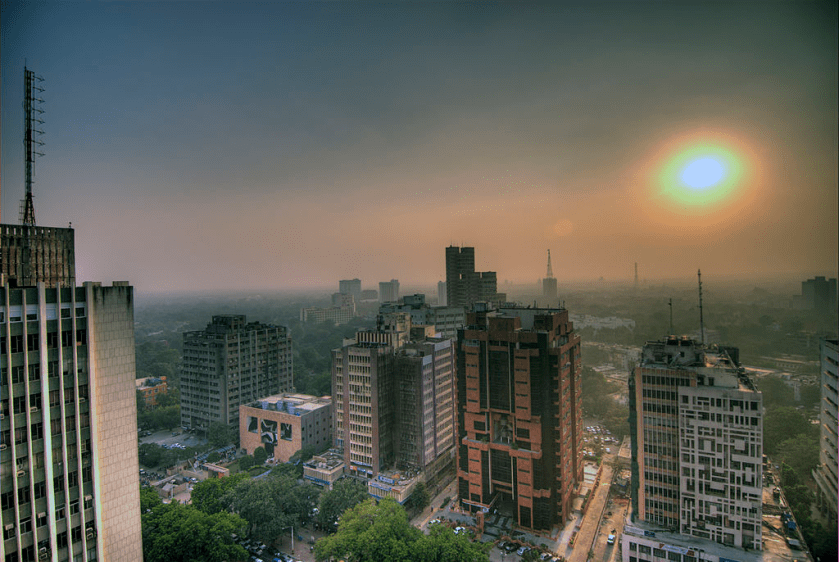
A painted watercolour sky is
pristine clean in the early sun
smudges of fiery gulmohur chase
the sprawling hills into a blur of dust
A vital landscape seemingly unspoiled
Intricately coloured country birds
perched on highly strung power lines
preen and warble warnings as
the disintegrating farmer meddles
with the earth, sealing their lives
Smoggy frames come hurtling
with purple plumed skies
billboards flash urgent signs
that smash into a million excuses
which keep us from listening
to the eloquent eucalyptuses
whispering the same tale
repeatedly
in an instinctive language
we all recognise
Instead
we choose to watch the scene fade
like a memory crumbling at the edges
like a last goodbye
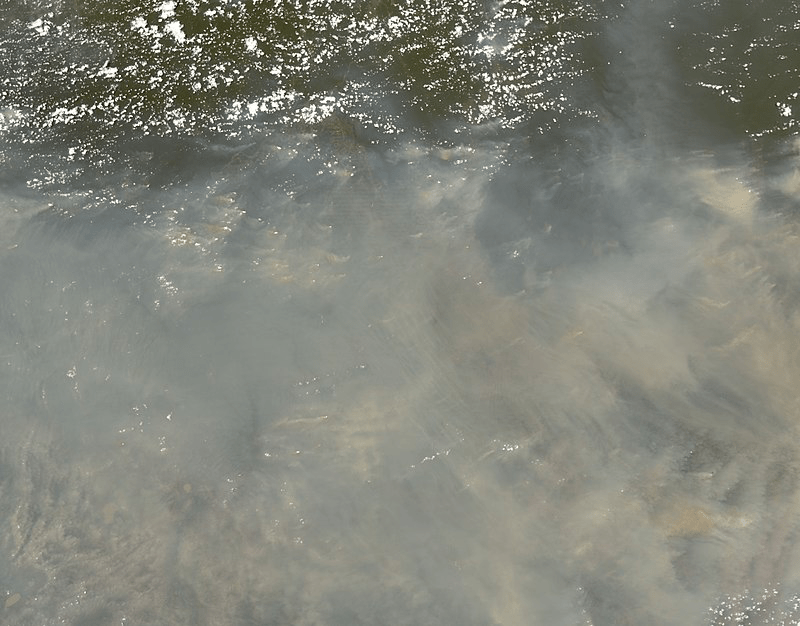
This image shows one consequence of forest clearing in the Amazon: thick smoke that hangs over the forest. / Jesse Allen and Robert Simmon – NASA Earth Observatory / public domain photograph
I didn’t write for sometime
Didn’t feel the urge to do it
Overwhelmed by the reality flow
The muses fainted
The cracks from the floor swallowed them
Another layer of dust lavishingly spread at my feet
Vacuum, void, nothingness
Powerless, exhaustion
Mainly, emptied and knocked down by the atrocities of these times
The bad news are followed by more bad news
Fake or true, an instrument of manipulation
The muses got swirled under this tsunami wave called reality
No wish for survival left
In their foggy eyes I saw the doom
With the next wave poetry will leave too
The curtain of smoke from the Amazonian forests will envelope slowly our poetry buds
The lungs will succumb in desperate attempts to form a rhyme or to keep the rhythm in this intricate nightmare
The muses, already dust under our paved ways, can’t save us anymore
They donated us the last amount of oxygen
Their last breath, already
We are left intoxicated with our egoes
We will fall, one by one as the trees of that far away forest did
Reinforcing trust in science, focusing on perseverance may shift views, inspire action, according to studies.
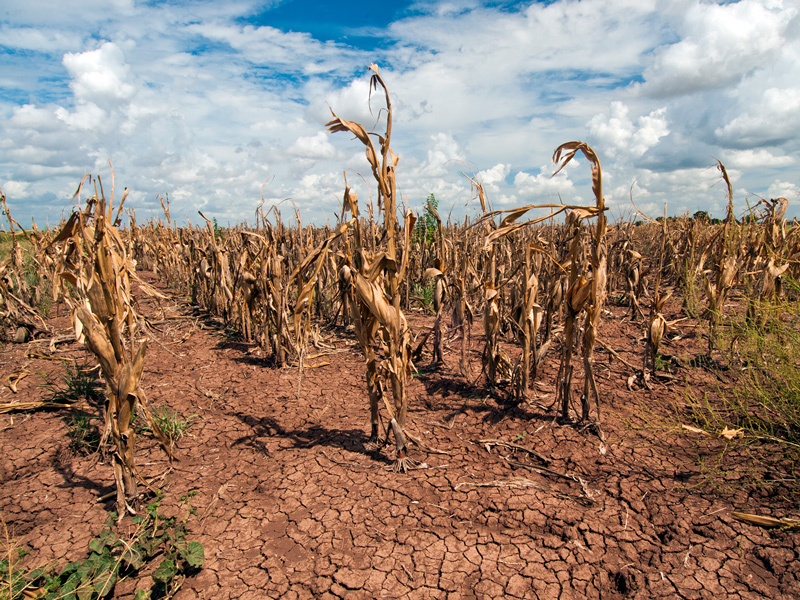
Texas Corn Crops effected by drought. / Bob Nichols, USDA / Public Domain
Having productive conversations about climate change isn’t only challenging when dealing with skeptics, it can also be difficult for environmentalists, according to two studies presented at the annual convention of the American Psychological Association.
The first of the studies found that reinforcing belief and trust in science may be a strategy to help shift the views of climate change skeptics and make them more open to the facts being presented by the other side.
“Within the United States, bipartisan progress on climate change has essentially come to a standstill because many conservatives doubt the findings of climate science and many liberals cannot fathom that any rational human can doubt the scientific consensus on the issue,” said Carly D. Robinson, MEd, of Harvard University, who presented the research. “These opposing perspectives do not create a starting point for productive conversations to help our country address climate change. Our goal was to find an intervention that might change the current situation.”
Though previous research has shown that social pressure to disbelieve in climate change stems from the political right and that conservatives’ trust in science has eroded, Robinson and her colleagues theorized that most people would find at least some branches of science credible. Leveraging those beliefs could lead climate skeptics to shift their views, they said.
“When people are faced with two or more opposing beliefs, ideas and values, it tends to create discomfort, which can lead people to becoming more open-minded about a particular issue,” said Christine Vriesema, PhD, of the University of California, Santa Barbara and a co-author of the study.
The researchers surveyed nearly 700 participants from the U.S. Half were given surveys about their belief in science (e.g., “How credible is the medical data that germs are a primary cause of disease?” and “How certain are you that physicists’ theory of gravity accurately explains why objects fall when dropped?”) and their belief in climate science (e.g., “How credible is the climate science data that ocean temperatures are rising?” and “How certain are you that global warming explains many of the new weather patterns we are seeing today?”). The other half was only surveyed about their belief in climate science. All participants reported if they considered themselves politically liberal, moderate or conservative.
“As we predicted in our pre-registration, conservatives reported a greater belief in climate science if they were asked questions first about their belief in other areas of science,” said Robinson. “For climate skeptics, it likely became awkward to report on our survey that they believed in science while at the same time, denying the findings of climate science. That dissonance led many to adjust their beliefs to show greater support for the existence of climate change.”
The findings showed that beliefs in climate science are malleable and not fixed, said Robinson.
“We were pleasantly surprised that a brief, two-minute survey changed skeptics’ views on climate change,” said Robinson. “It is exciting to know that in real-world settings, we might be able to have more productive climate conversations by starting from a place of common belief.”
The second study showed that igniting a sense of resilience and perseverance can increase action and engagement around climate change for people who work in aquariums, national parks and zoos.
“Many educators working at these institutions reported wanting to talk about climate change and visitors reported wanting to hear about it, yet many educators still felt uncomfortable bringing the topic into their conversations because they were worried about being able to communicate effectively,” said Nathaniel Geiger, PhD, of Indiana University who presented the research.
The study included 203 science educators from zoos, aquariums and national parks who were part of a yearlong communication training program from the National Network of Ocean and Climate Change Interpretation designed to build participants’ confidence in talking about climate change. The training consisted of study groups, group assignments, readings, discussions and weekend retreats. During the last six months of the program, participants worked to integrate what they had learned into their jobs.
Survey data were collected one month before and one month after the training program and again six to nine months later.
Geiger and his colleagues examined two components of hopeful thinking to see which one might lead to the success of the training program: agency (e.g., enthusiasm, a sense of determination) and pathways (e.g., resilience and perseverance strategies) and how those influenced participants’ reports of engagement about climate change.
Participants rated their “agency thinking” (e.g., “I energetically do all I can do to discuss climate change” and “I anticipate that efforts to discuss climate change will be pretty successful”) and their “pathways thinking” (e.g., “I can think of many ways to discuss climate change”) in each survey. The science educators also reported the frequency with which they discussed climate change with the general public and visitors to their institutions, ranging from never to daily.
Geiger and his team found that pathways thinking was more successful at inspiring conversations about climate change than agency.
“Our findings suggested that portions of the training that taught how to persevere and be resilient in the face of difficult climate change conversations may have been the most effective at promoting discussion,” Geiger said.
The training program also increased the frequency with which the science educators spoke about climate change with visitors, from less than once per month prior to the training to more than two or three times per month afterward, he said.
“We found it uplifting that the training program showed such a robust effect at promoting these difficult discussions,” said Geiger. “We believe that climate change advocates and educators will find this work helpful toward meeting their goal of crafting more effective training programs to boost climate change engagement.”
We were grateful for bug screens on our trip to the Amazon, but the natural world often defies human-made barriers.
For instance, we shared The Hammock Room at the Research Center with a tarantula. He wasn’t as interested in us as we were in him.
It was a reminder to shake out our shoes each morning before getting dressed. Insects and critters found their way into our little sanctuary, but it was the ones I couldn’t see that bugged me.
We ventured into the jungle with Orlando, our guide. In spite of the heat and 90+ percent humidity, we covered as much skin as possible with clothing, and sprayed the rest with repellant. Nighttime mosquitoes carry malaria, daytime ones dengue fever, and I forget which ones carry yellow fever, but I didn’t want to be breakfast for anybody.
Below are a few of my own unofficial rules of the jungle for the timid traveler.
Rule of the Jungle #1– bring mosquito repellent!
Fallen trees and leaves, mud, and overnight storms in the tropical rainforest made hiking challenging.
We wore rubber boots to keep our feet dry. Bea stepped in a puddle deeper than anticipated, and water poured into her boot.
Rule of the Jungle # 2–Watch your step!
Orlando uprooted several small trees, and cut the trunks off with his machete to make tea from the bark to relieve his mother’s arthritis. He replanted the roots in the fertile soil, so the tree would survive. Maybe the tea really was for his mom, but it was a tactful way of providing us with walking sticks to help balance on slippery walkways.
Rule of the Jungle #3–Take the hand extended to you, and be grateful for kindness in any form or guise.
So many trees and leaves were poisonous, covered with harmful insects or razor-sharp edges. Another guest at the Research Center slipped and braced herself on a porcupine tree. It left dozens of venomous barbs in in her hand, which swelled up painfully. The nearest doctor was hours away, so her guide cut the barbs out with pins and a knife, and gave her anti-biotics.
Rule of the Jungle #4–Don’t touch ANYTHING!
Rule of the Jungle # 5–There are exceptions to any rule.
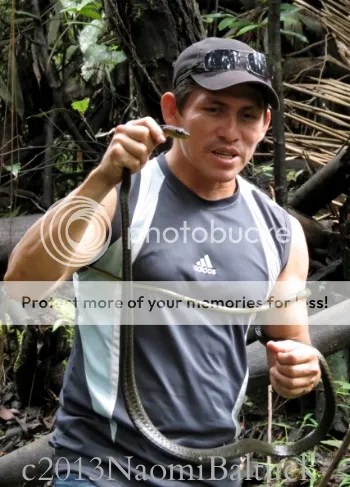
Orlando caught Olive Whip Snake with his bare hands.
He showed us how to handle a snake without getting bitten…
Orlando’s grandfather was a shaman. “My grandfather said if you can get a snake to wrap around you, it will become gentle and give you its energy.” As soon as it wrapped around him, the snake grew calm, and then Orlando released it into a tree.
Rule of the Jungle #6–Be as open to new experiences as you can without endangering yourself or others.
Rule of the Jungle #7–Bring your camera!!
We caught many tantalizing glimpses of wildlife, but they were often quicker than I was when it came to focusing the camera.
However, some critters obligingly held still for me.
Occasionally I would be rewarded with a shot like this.
Or this….
Or this…
Or this…
Or this…
Rule of the Jungle #8–Only you can know what it requires for you to glean the most meaning and satisfaction out of your jungle experience or your life. Do no harm, be respectful, but make up your own rules, and break them whenever necessary.
Conservation group calls to declare a planetary emergency and act to keep forests standing and healthy in the fight against the climate crisis.
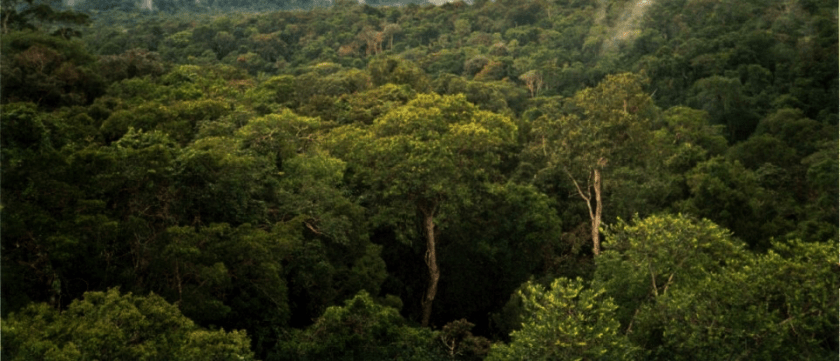
Amazon Rainforest in South America courtesy of Phil P Harris under CC BY-SA 2.5
View of Amazon basin forest north of Manaus, Brazil. Image taken from top of a 50 m tower for meteorological observations, and the top of vegetation canopy is typically 35 m. The image was taken within 30 minutes of a rain event, and a few white ‘clouds’ above the canopy are indicative of rapid evaporation from wet leaves after the rain.
The first-ever global assessment of forest biodiversity, Below the Canopy, shows that monitored forest-dwelling wildlife populations have shrunk on average by more than half (53%) since 1970. The new report by World Wildlife Fund (WWF) highlights the multitude of threats forest-living species are facing and shows that habitat loss and degradation, primarily caused by human activity, is the cause of 60% of the threats to forests and forest species. Declines were greatest in tropical forests, such as the Amazon rainforest.
The landmark report shows forests, which are home to well over half of the world’s land-based species and one of our most important carbon sinks, are vital to the health of the planet. Forest wildlife, in turn, provides vital functions to keep forests healthy and productive, such as pollinating and dispersing seeds and other crucial roles that affect natural regeneration and carbon storage. If we are to reverse the decline in biodiversity worldwide and avoid climate crisis, we need to safeguard forests and the species that live in them.
WWF is calling on world leaders to declare a planetary emergency and secure a New Deal for Nature and People by 2020 to stop climate breakdown, safeguard our planet’s remaining natural spaces, and make our consumption and production model more sustainable. Protecting and restoring forests must be at the heart of this agreement.
“Forests provide us with the essentials for life on our planet, yet these same forests depend on the wildlife that reside in them to maintain their health and vitality,” said Shubash Lohani, Senior Director, Forests, World Wildlife Fund. “This report is a wake-up call that we can’t stand idle when it comes to protecting our forests and the abundant life that keep nature’s diversity intact. Immediate action is needed on a global scale to protect and restore nature while keeping our forests right side up.”
Remarkably, we know relatively little about real changes to the species that live in our forests at a global level. The Forest Specialist Index, developed by WWF following the Living Planet Index methodology (used within WWF’s flagship Living Planet Report), focuses on species that depend entirely on forests, which means this indicator provides an accurate representation of forest ecosystem health. UNEP-WCMC co-led the analysis and modelling for this report in collaboration with the Zoological Society of London (ZSL). The Forest Specialist Index shows that monitored populations of forest-living birds, mammals, amphibians and reptiles declined, on average, by 53% between 1970 and 2014, the most recent year for which data is available. Most of this loss is occurring in the tropics, where there is most wildlife to lose.
“The first step towards protecting threatened wildlife is understanding trends in their populations and what drives their decline. By focusing our well-established Living Planet Index to create a new indicator for forest species, we can look below the canopy to see how wildlife within those forests are faring,” said Louise McRae, Conservation Scientist, Zoological Society of London and report author. “Our analysis does just this, and reveals that many of the animal species that rely entirely on forests are dropping in number. Using this new indicator, we can continue to track forest wildlife and measure progress towards international agreements and biodiversity targets.”
The Forest Specialist Index also assessed whether forest cover alone – the most commonly used indicator globally – was an accurate indication of the health of wildlife below the canopy. The research found that while tackling deforestation and increasing forest cover are both essential to restore nature, these are steps alone are not sufficient.
While the findings of the Forest Specialist Index paint a gloomy picture of the state of forest biodiversity, conservation success stories show us that forest-dwelling animals can recover with the right interventions. From monkeys in Costa Rica to gorillas in central and east Africa, the report highlights a number of solutions that have successfully helped populations of forest animals thrive again.
Protecting wildlife and reversing the decline of nature requires urgent global action. The report points to 2020 as a crucial year for securing international agreements for a New Deal for Nature and People, through a commitment by heads of state at the 75th United Nations General Assembly. World leaders are also expected to review the progress made on the UN Sustainable Development Goals, the Paris Agreement and, crucially, negotiate new 10-year targets for the UN Convention on Biological Diversity (CBD). Forests need to be front and centre of this New Deal for Nature and People because of their importance for biodiversity conservation, climate change mitigation and people, through the provision of ecosystem services, such as water and air purification, nutrient cycling, soil erosion control, and supplies of food, wood and other products.
About the Below the Canopy Report
The Below the Canopy report is the world’s first ever global assessment of forest-living species populations. The full report will be available to view here on August, 13 2019.
About World Wildlife Fund
WWF is one of the world’s leading conservation organizations, working in 100 countries for over half a century. With the support of more than 5 million members worldwide, WWF is dedicated to delivering science-based solutions to preserve the diversity and abundance of life on Earth, halt the degradation of the environment and combat climate change. Visit http://www.worldwildlife.org to learn more and keep up with the latest conservation news by following @WWFNews on Twitter.
The United Nations has opened additional places for civil society groups to participate in the 2019 Climate Action Summit, in recognition of the crucial role of civil society in driving forward urgent climate action.
Successful applicants will join global leaders in the General Assembly at UN Headquarters in New York on September 23, as well as working meetings across the Summit’s key action areas, to be held on September 21 and 22.
These places are in addition to more than 200 invitations that are already being issued to civil society representatives, including over 100 youth representatives. More than 600 young people will also participate in the Secretary-General’s Youth Climate Summit at UN Headquarters on 21 September.
The announcement is being made in conjunction with the 68th United Nations Civil Society Conference, which was held in Salt Lake City from 26 to 28 August, convened by the UN’s Department of Global Communications.
UN Secretary-General’s Special Envoy for the Climate Action Summit, Luis Alfonso de Alba said the UN was responding to the overwhelming demand for increased participation from civil society.
“With carbon pollution increasing and the global thermometer rising, we are seeing the impacts of climate change getting worse every day, causing huge damage to people, communities, and ecosystems everywhere. But the movement to tackle climate change is gaining momentum, as people and organizations everywhere are demanding action. The Climate Action Summit will be a moment for civil society to join with leaders from across government and politics to push climate action into a higher gear. The voices, solutions, and engagement of civil society are more vital than ever.”
HEADS-UP: SEPTEMBER 5 DEADLINE
Civil society groups – in all countries and across all fields – who are working to drive forward positive climate actions and solutions are encouraged to apply for the additional positions by submitting a short written submission by September 5 at https://reg.unog.ch/event/31641/.
Applications will be assessed by a panel consisting of UN representatives leading broader engagement with civil society and experts on the Sustainable Development Goals.
The application review process will take into account gender and regional balance when assessing candidates. Reviewers will also recognize the resilience and leadership of individuals from marginalized and vulnerable communities, including but not limited to indigenous and tribal communities, people living with disabilities, refugees, LGBTQ and otherwise. Candidates must also clearly demonstrate a commitment to addressing the climate crisis and advancing solutions, including through leadership positions, partnerships with other stakeholders, and evidence of impact.
Successful applicants will be notified by September 9.
For media inquiries and interview requests on this announcement, please contact:
Dan Shepard, UN Department of Global Communications: shepard@un.org
Esra Sergi, UN Department of Global Communications: sergie@un.org
For media inquiries on the United Nations Civil Society conference, please contact:
Felipe Quipo, UN Department of Global Communications: queipo@un.org
Follow @ladealba on Twitter for the latest news on the Climate Action Summit.
This month in solidarity with Greta, the September 20-27 Global Climate Strike (info and sign-up HERE), and in support of the U.N. Climate Change Summit 2019, we are posting climate material.
We are still open for submissions to this effort: poems, feature articles, fiction, creative nonfiction, art and photography, music videos, documentary videos on climate change for The BeZine blog is open through September 10, 2019. Your original previously published work may be submitted as long as you own the copyright. NO simultaneous submissions.
Email submissions to bardogroup@gmail.com.
Please note in your subject line: For the climate change blog.
All honors to Contributing Editor Michael Dickel for coming up with this idea.
– Jamie Dedes, Managing Editor
*The Greta Thunberg Drawing is all over the Internet. A bit of research reveals that it is by Rick Frausto and is part of his pen and ink “Visual Activism” series. It is available for purchase.
The compilation and curriculum are the result of a collaboration among 100,000 Poets for Change, Florida State University, and Reading Is Fundamental with selections from The John MacKay Shaw Childhood in Poetry Collection of Florida State University Libraries Special Collections and Archives.
August 26, 2019: THANKS to Michael Dickel (Meta/ Phor(e) /Play) for putting together this post for us on behalf of The BeZine and for his interview of Randy Thomas. This post was originally done for last year’s event, but the SoundCloud playlist is still up and has grown a bit. I’m posting it today to remind you of this charming resource. / Jamie Dedes
August 2018: Thanks to 100 Thousand Poets for Change co-founders Michael Rothenberg and Terri Carrion, and especially to our 100TPC friend, Voice-Over legend Randy Thomas, we have the honor of presenting a compilation of children’s poems read by master Voice Artists and created for the 100TPC community in support of the 100 Thousand Poets for Change ReadA Poem To A Childinitiative. / Michael Dickel
Randy Thomas and the other voice actors / voice over artists in the playlist (further down) volunteered their talent and time to Read a Poem to a Child!
Thomas started her career as a radio personality and DJ in New York, LA, Detroit, and Miami. She’s announced for the Oscars, Emmy Awards, Tony Awards, Entertainment Tonight, The Rock-n-Roll Hall of Fame Inductions, The Kennedy Center Honors, and much more. You likely have heard her announce:
The BeZine asked Randy Thomas a couple of questions about how this came to be:
The BeZine: What inspired you to organize these wonderful readings by VO artists for Read a Poem for a Child?
Randy Thomas: I am always intrigued when invited to use my voice in a positive way that gives back to the community. My dear friend Michael Rothenberg, a world-renown poet told me about his effort to share a poem with a child during one specific week. He found interest from all over the world. It’s wonderful.
The BeZine: You have inspired a number of voice artists to contribute their voices—how did that happen?
Randy Thomas: The Facebook community of voice actors and friends that I have seemed to rally behind this idea. We all have our own audio booths to record quality audio in, and they are all being so generous with their time and Voice sharing these poems. I am proud to have played a small part in this beautiful effort.
You can hear the amazing results below, in the embedded SoundCloud playlist.
Please feel free to play these recordings
for children around the world!
These may be played right here from this post or go HERE.
Thank you Randy Thomas
and brilliant VO artists
for sharing your talent for the children!
This is a global event. Events scheduled for the “Read A Poem To A Child” initiative will take place from September 23th – 28th and will include readings in bookstores, schoolrooms, community centers, public parks and at private homes. Co-founder Terri Carrion explains that, “All you have to do is read a poem to a child in any setting that is convenient, and you can sign up on our website at http://100tpc.org/sign-up/”
IN SOLIDARITY WITH THE GLOBAL YOUTH CLIMATE STRIKE
CALLING YOUTH & ADULTS
CALL FOR SUBMISSIONS of poems, feature articles, fiction, creative nonfiction, art and photography, music videos, documentary videos on climate change for The BeZine blog is open through September 10, 2019. In solidarity with the world’s youth, we’ll post work on Climate Change throughout September. Your original previously published work may be submitted as long as you own the copyright. NO simultaneous submissions. Please note in your subject line: For the climate change blog. Email submissions to bardogroup@gmail.com. All honors to Contributing Editor Michael Dickel for coming up with this idea.
The shape of the dreamcatcher is a circle because it represents the circle of life and how forces like the sun and moon travel each day and night across the sky. The dreamcatcher web catches the bad dreams during the night.
The night air is filled with good and bad dreams. The legend of the dreamcatcher is that it captures the bad spirits and filters them in so protecting us from evil and letting through only the good dreams. It is believed that each carefully woven web will catch bad spirit dreams in the web and disappear by perishing with the first light of the morning sun.
“There may be times when we are powerless to prevent injustice, but there must never be a time when we fail to protest.” Elie Wiesel
Toward the end of June this year I was introduced to Kella Hanna-Wayne’s (Yopp) work via a Facebook link shared by my colleague here at The BeZine, Contributing Editor Michael Dickel, which he in turn received from his daughter. I subsequently included info on Kella and her post HERE. That’s the way the world moves these days. Though technology and social networking are mixed blessings in some respects, they’re effective tools for people like Kella and I who have work to which we are committed but deal everyday with serious physical disabilities that constrain (in my case prohibit) activity outside the home.
The link of which I speak was to a post in which Kella provided some well-considered guidelines and resources for protesting the migrant travesties on the U.S. Southern Border. As I investigated Kella’s site, I was impressed with her thoroughness and clarity. I wrote to her about doing an interview on for our activist poets, writers, and friends. She agreed. Here it is. Read on. / Managing Editor, Jamie Dedes
JAMIE: Kella, you have taken on such a range of causes, all of them important, critical. Not everyone can do that. I hear people talk about “compassion burnout,” which is understandable but irritating. It’s a luxury oppressed people don’t have. I usually respond with “pick a cause. Pick one cause and focus on that.” What’s your advice?
KELLA: I think all of us, including activists, can agree that social justice is simply overwhelming. There are so many causes, there’s so much to learn about every cause, and to make things even more complicated, the needs of each cause are constantly progressing and changing. It’s a lot to keep up with.
But one of the fundamental ideas behind my blog is that there are a basic set of guidelines that you can follow that will help you understand any source of oppression. Instead of learning about male privilege, and then white privilege, and then financial privilege, why not learn how the concept of privilege works so that you can apply it to any new cause you learn about? There are so many challenges marginalized groups face that they have in common with one another: microaggressions, oppressive language, policing of their emotions/bodies, even difficulty accessing medical care. I think that if you learn the functionality of the oppressive systems that are at work and all the basic components of social justice, it enables you to support these groups of people much more effectively and thoroughly than if you were trying to learn one cause at a time from scratch.
I also think that even if you do choose to focus primarily on one cause, it’s important to be aware of the basics of the other ones because social justice issues are all inextricably connected to each other and ignoring the way intersectionality impacts the problems that we’re tackling tends to leave holes in our solutions.
JAMIE:What then are the steps activists can take to minimize burnout?
KELLA: No matter how narrow your focus, social justice issues are far bigger than any one person can solve. Because activism has to be a collective effort, I think it’s really important to recognize that completely fixing the problem is an impossible standard to hold yourself to. You are one piece in a much larger effort to create change. Even when you are focusing on what is within your personal power, you have to be realistic about what you can actually accomplish. If there are 20 different tasks that you could do as an activist and each one is individually within your ability to do, it’s likely doing all 20 of them is not. You have to choose what it is that you are going to do.
To make that choice, I recommend focusing on forms of activism that…
Are sustainable so that you can continue to do them over time
Are empowering to you so that you feel motivated to continue
Aren’t deeply upsetting or draining in such a way that the cost of the task is greater than the positive impact the action has
Feel right to you.
Which forms of activism meet those criteria is going to be different for everyone. For example, I believe that calling your representatives is an effective way to impact the future of our country but I find making phone calls incredibly anxiety-inducing and I have to spend a lot of energy to get myself to make one. That’s not a good use of my resources. On the other hand, writing comes easily to me, I find it rewarding, and it’s something that a lot of other people can’t contribute. I can accomplish way more by writing on behalf of activism than I could if I were using the same amount of resources to make phone calls. Whenever I feel the push to do more for a cause, I re-center on the importance of my writing and how much I’m offering in the work I already do.
A philosophy I carry around with me wherever I go is that everyone has something of value to offer. You have to find what your offering is.
JAMIE: Tell us about Yopp Academy.
KELLA: Yopp Academy is a section of my blog that focuses on educational material. It’s where I’m outlining that basic set of social justice guidelines I mentioned earlier.
To distinguish the amount of prior knowledge that’s needed to understand a given article, I used a college-style course numbering system, so articles are sorted into 100 level, 200 level, 300 level, etc. If you’re brand new to social justice, you start with the 100 level articles and work your way up. It really does function like a set of college courses in that articles of higher levels directly reference ideas from the level 100 articles, so the more of them you read together, the better your understanding will be of the subject as a whole.
The articles I have published currently only go up to level 300 because I’ve been putting my focus on establishing all the basic concepts before adding more advanced stuff. I’m currently working on a lesson plan of over 40 educational articles to serve as a foundation of knowledge which you can use regardless of your level of involvement with activism, which will include higher-level articles in the future.
JAMIE:Tell us about your Facebook debates.
KELLA: I’ve always had a lot of friends on facebook who are into social justice and some of them have such large friends list that anytime they posted something controversial, it would spark a discussion/debate. I started jumping into these discussions and offering my opinion and I got a reputation for being good at explaining basic social justice concepts to people who weren’t familiar with them and for clearly outlining the problems in someone else’s argument.
I used Facebook debates to practice my writing, increase my own understanding of social justice, it introduced me to a bunch of other amazing people that cared about the same things, and because managing my disability/mental illnesses made traditional activism prohibitive, it gave me a way to be involved in causes I cared about. Spending so much time arguing with people who I disagreed with also gave me a lot of insight into the places people were most likely to have holes in their understanding of our social systems which in turn has really informed the content and the structure of my blog. I often say the reason I started a blog in the first place was that I got tired of writing out the same explanations/arguments over and over again, and just wanted to write out the article once to link to every time I came across the same issue again.
I know I differ from a lot of people in that I believe debates on social media, even the “unproductive” ones, are an important branch of activism. Not only do they spread information to larger audiences of people (while only 10 people might be commenting, 1,000 could be reading the comments) but they serve as a means of socializing bigots to understand that their bigotry will be met with hassle and frustration rather than easy acceptance like they’re used to. I think that practice has a lot more power than people think it does.
JAMIE: So many people – like you and me – live with chronic, even catastrophic, illness. What can these illnesses teach us about social justice and advocacy?
KELLA: If you hold a conference for activism regarding chronic illness but you organize it in a similar way that you would any other business conference, your collection of speakers, organizers, and attendants are likely to be mostly healthy people rather than chronically ill people. If it’s energy-intensive to leave your house/travel, if you need frequent breaks or a special housing set up, if you have extensive food restrictions or you need to hire a carer to accompany you, it’s going to be very difficult, resource costly, and risky to go to a conference that healthy people can attend with ease. Even in attempting to center the chronically ill, if you organize from the perspective of a healthy person, you will leave chronically ill out of their own activism. That’s because the default systems that we have in place for most aspects of society make it very difficult for chronically ill people to participate let alone succeed.
Anytime you design a solution for the social issues chronically ill people face, you have to start by adapting your mindset and prioritizing accommodation of an experience that you’re not familiar with, or you’ll fail at your advocacy from the beginning.
And this idea is not at all exclusive to chronic illness. You see the same problem with white people organizing on behalf of people of color, cis people organizing for trans people, abled people organizing for disabled people, etc. You have to go in understanding that in order for your advocacy to be successful, you have to dismantle the relevant oppressive systems that are within your scope of power and create new systems, a new foundation before you attempt to build any kind of structure on top.
JAMIE: Your site is about eighteen months old as we work on this post. What are the goals for the next couple of years?
KELLA: I’m still very much working out what my ideal version of Yopp would be or what I want it to accomplish but so far, my concrete plans are:
Switch over to a new, more modern and accessible website
Finish writing the basic building blocks for Yopp Academy (all 40 of them!!)
Build up my Patreon supporter base– my first goal is $800 a month
Acquire enough sponsorships that I can publish up to 4 times a month
KELLA HANNA-WAYNE (Yopp) is a disabled, chronically/mentally ill freelance writer who is the editor, publisher, and main writer for Yopp, a social justice blog dedicated to civil rights education, elevating voices of marginalized people, and reducing oppression; and for GlutenFreeNom.Com, a resource for learning the basics of gluten-free cooking and baking. Her work has been published in Ms. Magazine blog, Multiamory, Architrave Press and is forthcoming in a chapter of the book Twice Exceptional (2e) Beyond Learning Disabilities: Gifted Persons with Physical Disabilities. For fun, Kella organizes and DJ’s an argentine tango dancing event, bakes gluten-free masterpieces, sings loudly along with pop music, and makes cat noises. You can find her on Facebook, Twitter, Patreon, Medium, and Instagram.


 “…we continue to encourage and support participation in the 100TPC global event, with the hopes that we can encourage poets, musicians and artists to stay vocal and engaged in these difficult times. It is so easy to feel hopeless and lose heart when it seems the world is coming apart around us. 100TPC hopes to counter despair and disillusionment, encourage and support celebration through the arts of peace, justice and sustainability. This is the good fight for us and we will continue to provide a global platform and venue.” 100TPC Cofounder Michael Rothenberg in a recent email to me.


 Editors note: While this piece does not directly relate to climate change, we do know that climate change is creating varied effects that impact access to clean water and food. Thus it is important to include “Don’t pollute my future!” in our September series on climate change and its impact.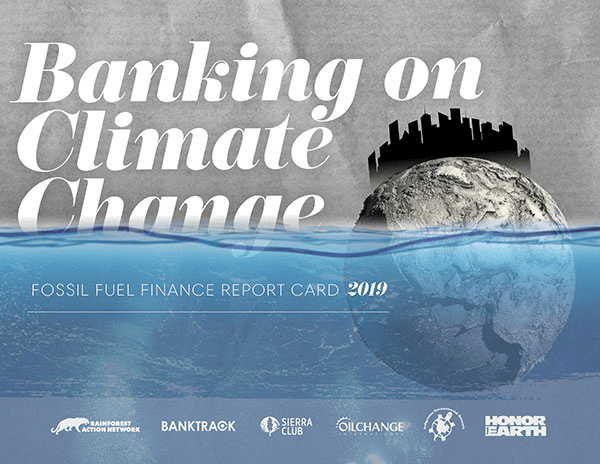











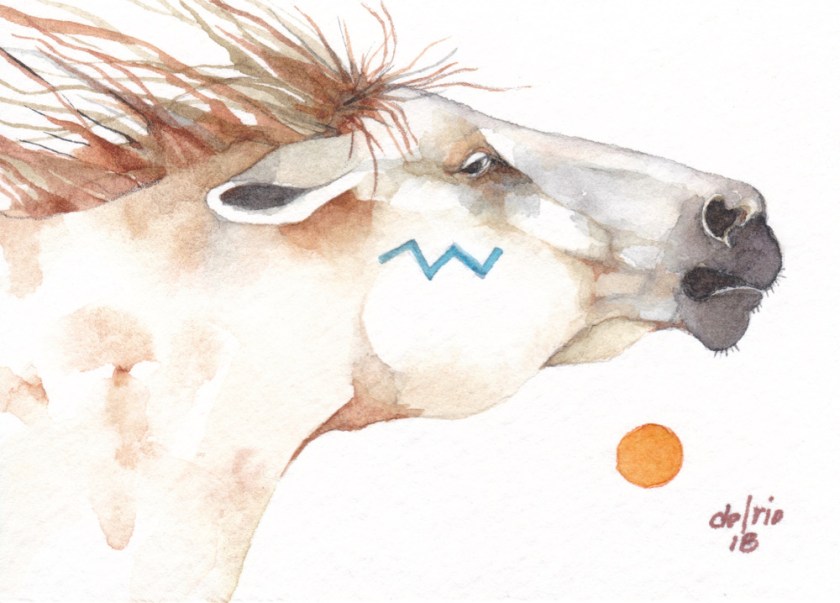 watercolor 2018

 The BeZine
