Posted in Uncategorized

Light from the Times

Food prices rising. Proposed Food Stamp cuts would boot 5 million people from the program. Americans following this blog may want to consider voicing their opinions to the people on the Hill. The Ven. Bhikhu Bodhi outlines this situation today on his blog, Buddhist Global Relief. J.D.

Bhikkhu Bodhi's avatarBuddhist Global Relief

Ven. Bhikkhu Bodhi

On Wednesday of last week, the same day that I was writing my recent blogpost highlighting the need not to make cuts to food stamps–“Nourishing Change,” published August 1st–the New York Times published an article about the likely impact that cuts in funding for food stamps would have on the poor.  I only got to see the Times article Friday afternoon (August 2nd) through a link sent to me in an email. While my post was written independently, the Times article confirms my case.

The article, “House Plan on Food Stamps Would Cut 5 Million From Program,” by Ron Nixon, features a study released on Tuesday by the Health Impact Project in Washington, which points out that if the House proposal to cut food stamps by $20.5 billion were enacted, 5 million people would lose eligibility for the program. Of these, a half million…

View original post 731 more words

Posted in Essay, General Interest, Guest Writer, Shakti Ghosal

Wishing You a Garbage-Free Week Ahead

418px-NYC_taxis

the work of Shakti Ghosal

One day I hopped in a taxi and we took off for the airport. We were driving in the right lane when suddenly a black car jumped out of a parking space right in front of us.

My taxi driver slammed on his brakes, skidded and missed the other car by just inches!

The driver of the other car whipped his head around and started yelling at us.

My taxi driver just smiled and waved at the guy.I mean, he was really friendly.

So I asked, ‘Why did you just do that? This guy could almost ruin your car and sent us to the hospital!’

This is when my taxi driver taught me what I now call, ‘Law of the Garbage Truck’  He explained that many people are like garbage trucks. They run around full of garbage, full of frustration, full of anger, and full of disappointments.

As and when their garbage piles up, they need a place to dump it and sometimes they’ll dump it on you.

Don’t take it personally. Just smile, wave, wish them well, and move on. Don’t take their garbage and spread it to other people at work, at home, or on the streets. The bottom line is that successful people do not let garbage trucks take over their day.

Life’s too short to wake up in the morning with regrets, So … Love the people who treat you right. Pray for the ones who don’t.

Life is 10 % what you make it.

AND

90 % how you take it!

Do resolve to have a great, garbage – free week ahead……..

in learning ……………….Shakti Ghosal

© 2013, essay, Shakti Ghosal, All rights reserved
Photo credit ~ Joseph Plotz via Wikipedia under Creative Commons Attribution 3.0 license.

Shakti Ghosal
Shakti Ghosal

SHAKTI GHOSAL ~ has been blogging (ESGEE musgings)since September 30, 2011. He was born at New Delhi, India. Shakti is an Engineer and  Management Post Graduate from IIM, Bangalore. Apart from Management theory, Shakti remains fascinated with diverse areas ranging from World History, Economic trends to Human Psychology & Development.

A senior management professional, Shakti has been professionally involved over twenty-five years at both international and India centric levels spanning diverse business areas and verticals. With a strong bias towards action and results, Shakti remains passionate about team empowerment and process improvement.

Shakti currently resides in the beautiful city of Muscat in Oman with wife Sanchita, a doctorate and an educationist. They are blessed with two lovely daughters, Riya and Piya.

Posted in Art, Buddhism, Jamie Dedes, Poems/Poetry, Spiritual Practice

Wabi Sabi

Japanese tea house: reflects the wabi sabi aesthetic, Kenroku-n Garden
Japanese tea house: reflects the wabi sabi aesthetic, Kenroku-en Garden

if only i knew
what the artist knows

about the great
perfection in imperfection

i would sip grace slowly
at the ragged edges of the creek

kiss the pitted
face of the moon

befriend the sea
though it can be a danger

embrace the thunder of a waterfall
as if its strains were a symphony

prostrate myself atop the rank dregs on the forest floor,
worshiping them as a breeding ground for fertile seeds
and the home of a million small lives

if i knew what the artist knows,
then i wouldn’t be afraid to die,
to leave everyone

i would be sure that some part of me
would remain present
and that one day you would join me
as the dusky branch of a river or the
bright moment of the flowering desert

if i knew what the artist knows,
i would surely respond body and soul
to the echo of eternity in rough earthy things

i would not fear decay or work undone
i would travel like the river through its rugged, irregular channels
comfortable in this life; imperfect, impermanent, and incomplete

© 2013, poem, Jamie Dedes, All rights reserved,
Photo credit ~ from Pictures section of OpenHistory via Wikipedia under Creative Commons Attribution-Share Alike 3.o Unported license

Photo on 2012-09-19 at 20.00JAMIE DEDES ~ My worldly tags are poet and writer. For the past five years I’ve blogged at The Poet by Day,the journey in poem, formerly titled Musing by Moonlight.  Through the gift of poetry (mine and that of others), I enter sacred space.

Posted in Uncategorized

Nostalgia

the work of Priscilla Galasso in response to the weekly photo challenge from WordPress

Oh, boy.  It’s a dangerous thing to invite a widow and empty-nester to post a blog on the theme Nostalgic!  Contemplating the past can lead to maudlin stretches and lots of used Kleenex™, even if I don’t have a glass or two of wine first.  I don’t think that would be at all edifying to the blogging community, so I’m going to try hard to steer away from that.  I hope to write and show something that is true about a time that has come and gone.

Life is characterized by impermanence.  Our kids don’t stay little; our loved ones don’t stay alive forever.  What we live is present moments.  If we try to hang on to them and make them more permanent or attach our happiness to them, we are in for a world of frustration.  As we get farther away from present moments, it’s hard to remember what they were really like.  We lose perspective.  That wonderful family outing…did I yell at the kids that day?  I don’t remember.  I probably lost patience at least once.  Did my kids remember that?  How did they feel?  How did they heal?  Or is it all, as my mother often puts it, ‘a merciful blur’?

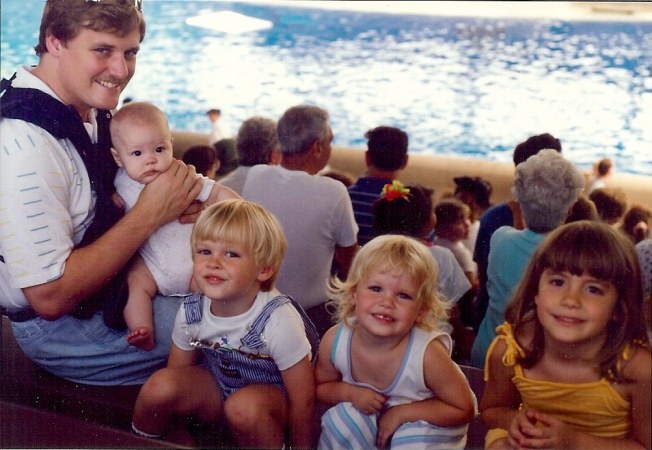
Brookfield Zool dolphin show, August 1991. Jim (RIP), Emily, Josh, Becca and Susan (who will be wed in less than three weeks).

In my current life, I see a lot of families on outings with their children, since I work at two different family museums.  Families interact in all sorts of ways.  I try to look at them with compassion and tolerance remembering what I can about how challenging it is to raise four kids at one time.  The important thing is to BE KIND in the present moment.  With your kids or someone else’s.  If the world is to be a good place to live, it’s important that all seven billion of us humans remember to BE KIND.  And this is not a glib solution.  If you think deeply about being kind, you’ll see that it is a profound power in the universe.   BE KIND to your fellow humans.  BE KIND to every living thing.  BE KIND to yourself first, and feel what that is like.  It is peace.  It is well-being and health.  It is life.  Don’t settle for feeling nostalgic about a time when you felt the world was a kinder place to live.  Make it a kinder place to live this very moment by acting kindly!

– Priscilla Galasso

© 2013, essay and photographs, Priscilla Galasso, All rights reserved

004PRISCILLA GALASSO ~ is a contributor to Into the Bardo. She started her blog at scillagrace.com to mark the beginning of her fiftieth year. Born to summer and given a name that means ‘ancient’, her travel through seasons of time and landscape has inspired her to create visual and verbal souvenirs of her journey.

“My courage is in the affirmation of my part in co-creation”, she wrote in her first published poem, composed on her thirtieth birthday and submitted alongside her seven-year-old daughter’s poem to Cricket magazine. Her spiritual evolution began in an Episcopal environment and changed in pivotal moments: as a teenager, her twenty-year-old sister died next to her in a car crash and, decades later, Priscilla’s husband and the father of her four children died of coronary artery disease and diabetes in his sleep at the age of forty-seven  Awakening to mindfulness and reconsidering established thought patterns continues to be an important part of her life work.

Currently living in Wisconsin, she considers herself a lifelong learner and educator. She gives private voice lessons, is employed by two different museums and runs a business (Scholar & Poet Books, via eBay and ABE Books) with her partner, Steve.

Posted in Essay, Guest Writer, Music, Poems/Poetry, teacher

MY TRUMPET TEACHER IS A POET: Is that cool?

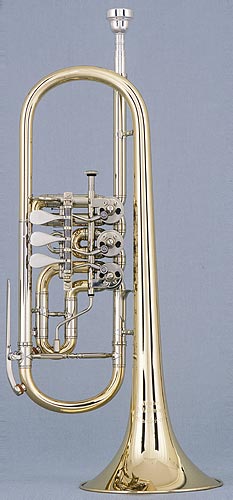
Trumpet_in_c_germanthe work of Kim Moore (Kim Moore, poetry), originally published in Artemis poetry and posted here with Ms. Moore’s permission and that of the publisher

When I was first asked to write an article exploring the links between being a poet and a trumpet teacher, my first reaction was panic. How could I possibly link my poetry life and my teaching/music life together? In my head they occupy two very separate spaces. Whilst pondering this, I grumpily thought of how often they seem to leech time and energy from each other, and it was this thought that made me realise they must be linked in some way and gave me the confidence to start writing.

I’ve only just started telling pupils that I write poetry – they often just look at me strangely. Then they ask what I write about – I usually change the subject and make them play a scale or something – because what poet likes to be asked what they write about? Especially when you are asked by a ten year old who is not going to be impressed by an airy flourish of my hand and a vague reference to gender politics.
.
At the beginning of 2012 I told one of my teenage pupils I’d got a job working as a poet in a men’s prison for ten weeks. He looked at me in disbelief, then did that clicking knuckles thing that’s all the rage with young people, before exclaiming with delight ‘You’re gonna get stabbed!’ followed by another click of his knuckles. When I appeared the next week with no puncture wounds, triumphant, he’d forgotten about the conversation already.
.
I’ve been working as a full time brass teacher for seven years – but in September 2012 I decided to reduce my contract down to four days a week to give myself more time to write. I teach in about 16 primary schools a week delivering a programme called ‘Wider Opportunities’ where every child in the class gets a brass instrument as well as the teacher and teaching assistants. I also run two brass bands and teach small groups of children as well.
.
I think the most important part of my job is to show both adults and children that music is for them. I can relate to thinking that it is not you see – being the only child in the school not allowed in the choir age eleven. The same thing happens in poetry – people think it is not for them – but it is surprising how many people in conversation will admit they have written a poem or ‘always wanted to learn to play a musical instrument’.
.
As I’m writing this article, I can see more and more connections. The role of peripatetic teacher is always that of an outsider – I’m not attached to any school and this loneliness is reminiscent of the work of being a poet, or a writer. My two worlds creep closer when I think of the way I had to learn as a new teacher, that my hope of guiding young players who spent every spare minute practising (as I did) off to music college was unlikely. I had to learn to let go of what I wanted, to understand that if my enjoyment of my job, my success, was measured by how much my pupils practised and whether they went off to music college, I would be a Very Miserable Teacher. I had to learn to listen to what my pupils wanted – and this transaction is often non-verbal because sometimes they don’t know either. Doesn’t this sound like poetry? The act of letting go, of relinquishing control is precisely what writing is to me. I learnt as a poet as well, that if I measured success by publication or prizes I would be a Very Miserable Poet.
.
Another part of my job is conducting a junior band. This is going to sound harsh, but conducting is all about imposing your will on the group. There is no room for anyone else to be creative. In fact, rehearsing is more like editing a poem – practising the same section over and over again, breaking the band down into parts so you can hear the weakest links – is exactly like reading your own poem over and over again, to find a line that will give way under scrutiny.
.
Teaching music and writing poetry are ultimately an act of balance – they both have that feeling of walking a tightrope, of words being vastly important. I often find myself using the same catchphrases when I’m teaching – they almost become your own personal clichés. I made a list of mine and turned it into a poem – it made it into my first pamphlet at the last minute and on the advice of my editor, Ann Sansom rather than any passion for it on my part – maybe it reminded me too much of work – but it is often the poem that people comment on – the most surprising people will confess they used to play a brass instrument or will say ‘I remember my trumpet teacher saying that to me when I was small’. And of course, the lines in my poem are not mine at all, really. They were given to me by my trumpet teacher and I remembered them, and repeated them to my pupils, like a poem, learnt by heart.
.
Teaching the Trumpet

I say: imagine you are drinking a glass of air.
Let the coldness hit the back of your throat.

Raise your shoulders to your ears, now let
them be. Get your cheeks to grip your teeth.

Imagine you are spitting tea leaves
from your tongue to start each note

so each one becomes the beginning of a word.
Sing the note inside your head then match it.

At home lie on the floor and pile books
on your stomach to check your breathing.

Or try and pin paper to the wall just by blowing.
I say: remember the man who played so loud

he burst a blood vessel in his eye? This was
because he was drunk, although I don’t tell

them that, I say it was because he was young,
and full of himself, and far away from home.

– Kim Moore

© 2013, essay and poem and portrait (below), Kim Moore, All rights reserved
Photo credit ~ trumpet by Benutzer:Achias under Creative Commons Attribution-ShareAlike 3.0 Unported license

Society of Authors Awards June 2011 Kim Moore  Eric Gregory AwardsKIM MOORE (Kim Moore, poetry) ~ works as a peripatetic brass teacher in Cumbria. In 2011kim-moore-if-we-could-speak-like-wolves_1 she won an Eric Gregory Award and the Geoffrey Dearmer Prize, and in 2012 her first pamphlet  If We Could Speak Like Wolves was a winner in the Poetry Business Pamphlet competition, judged by Carol Ann Duffy. It was selected as one of the Independent’s ‘Books of the Year’. Kim has been published in various magazines including The Rialto, Poetry Review, The TLS, Magma, and ARTEMISpoetry. She is currently working on her first collection. You can sample more of her poetry on her blog HERE.

,

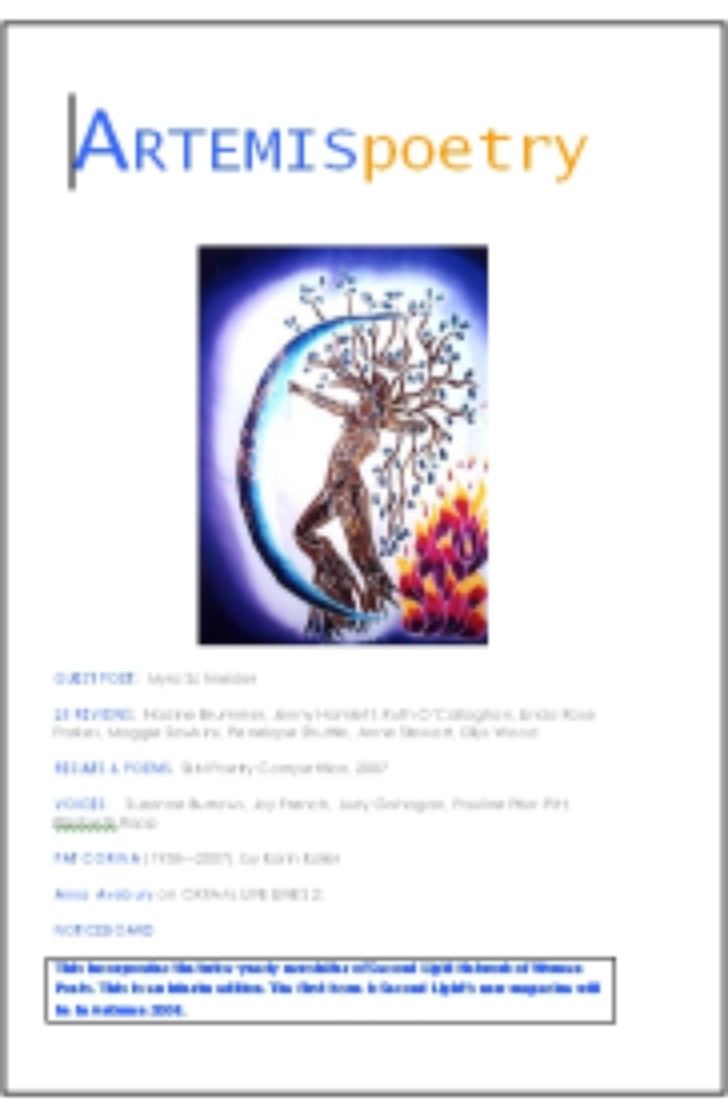
artemis-1ARTEMIS poetry ~  the bi-annual journal (November and May) of the Second Light Network , a professional association of women poets. The journal is published under their Second Light Publications imprint. Members receive a copy as part of their membership benefits. Issues are available to non-members by subscription at £9 p.a. or as a one-off purchase at £5 a copy (plusp&p).

Posted in Culture/History, General Interest, Guest Writer, Karen Fayeth, memoir

For the Love of a Good Cuppa

A couple years ago, my husband and I had the chance to celebrate the Fourth of July with some good friends. There were six of us total (three couples), and we met at our friend’s house for a special treat.

One of our crew had just recently returned from a trip to Ethiopia. She and her husband are in process of adopting an adorable baby boy and she had to make a visit to work through the paperwork with the local courts.

While in country visiting her baby son and patiently working though the long process, she was treated on several occasions to the Ethiopian coffee ceremony.

On our Fourth of July holiday, she wanted to share this ceremony with us, her friends.

About the coffee ceremony, here’s a quote from Ethiopian ambassador Haile-Giros Gessesse:

“Coffee has social value in our society. It is deep rooted in our culture. The coffee ceremony in local areas is used mainly for social gatherings. In the mornings and evenings parents, especially mothers gather together for a coffee ceremony and also use it as a platform for exchanging information in their surroundings. It is a means of communication. When people sit down they usually spend three hours finalizing the ceremony, starting with the preparation, and then roasting to brewing it.”

Our friend had hauled home a big bag of green coffee beans, water hulled (the good stuff) not fire hulled, and we sat outside in the beautiful sun while she told us about the ceremony.

First, she roasted the beans on the grill. We watched as she shook and swirled the pan, much like a slow Jiffy pop motion.

When we all agreed that it looked like the beans were at a good medium roast each of us took in a whiff of the fantastic aroma from the pan.

Then we took turns using a mortar and pestle to smash the beans down to a nice grind. Every person took their turn and everyone contributed.

It was satisfying work to smash, smash, smash those crispy beans and release the beautiful scent and oils.

Once ready, the grinds were placed into a French press and once brewed, a round of coffee was poured into six cups.

This fresh roasted coffee was delicious! It had a floral aroma and tasted so light and mild. This coffee was perfect with just a touch of sugar and nothing else.

In keeping with tradition, we had three rounds of coffee while we discussed our lives, the news of the day, baseball, and got caught up with each other. This is an essential part of the ceremony, sharing community, support, and friendship.

Now, I love a great cup of coffee, but I rarely drink caffeinated coffee. After three cups I was ready to clean my house top to bottom, jog a thousand miles, and throw a 98mph fastball.

But it was a happy caffeinated high shared with dear friends.

I was honored to be a part of the ceremony and I can hardly wait until our friends bring home their baby boy. I hope to we can continue to give him a sense of community and family, maybe even over a cuppa or two…or three.

– Karen Fayeth

© 2013, essay, Karen Fayeth, All rights reserved
Photo and quote from a CRIEnglish.com article by Wei Tong.

webheadshotKAREN FAYETH ~ is one of our regular writers. She is our tech manager, site co-administrator along with Jamie and Terri, and fiction and creative nonfiction editor. She blogs at Oh Fair New Mexico. Born with the writer’s eye and the heart of a story-teller, Karen Fayeth’s work is colored by the Mexican, Native American, and Western influences of her roots in rural New Mexico complemented by a growing urban aesthetic. Karen now lives in the San Francisco Bay area. When she’s not spinning a tale, she works as a senior executive for science and technology research organization.

Karen has won awards for her writing, photography, and art. Recent publication credits include a series of three features in New Mexico magazine and an essay with the online magazine Wild Violet. Her latest short story “Quick, Quick Slow” was published in the May edition of Foliate Oak. Karen’s photography is garnering considerable attention, her photo titled “Bromance” (featuring Aubry Huff and Pat Burrell) was featured on MLB Network’s Intentional Talk hosted by Chris Rose and Kevin Millar.

Posted in Jamie Dedes, Poems/Poetry

It Was the Golden Light

800px-Dovedale_by_Moonlight_-_Oberlini awoke
it was the golden light
the moon camping out
casting my room in the
glow of its fire

i thought
for a moment
unsure of my place
forgetting
what city
what state
what day

seconds passed
soundless
slowly peeling away
the veil, the confusion
i melted into
the golden light
breathed myself
into sleep again
done

and done
as easily perhaps
as breathing into
eternal sleep
so frail and fragile
is this anchor
this silver thread
this castle of solitude
this just me
inside me
inside life

© 2013, poem, Jamie Dedes, All rights reserved,  
Illustration ~ from Allen Memorial Art Museum (Oberlin College) a photograph Joseph Wright of Derby’s (English Derby, 1734-1797) Dovedale by Moonlight (ca.1784-85). Description/details HERE.

Photo on 2012-09-19 at 20.00JAMIE DEDES ~ My worldly tags are poet and writer. For the past five years I’ve blogged at The Poet by Day,the journey in poem, formerly titled Musing by Moonlight.  Through the gift of poetry (mine and that of others), I enter sacred space.

Posted in Bardo News, John Anstie, Victoria C. Slotto

Welcome John Anstie and Victoria C. Slotto to Bardo’s Core Team

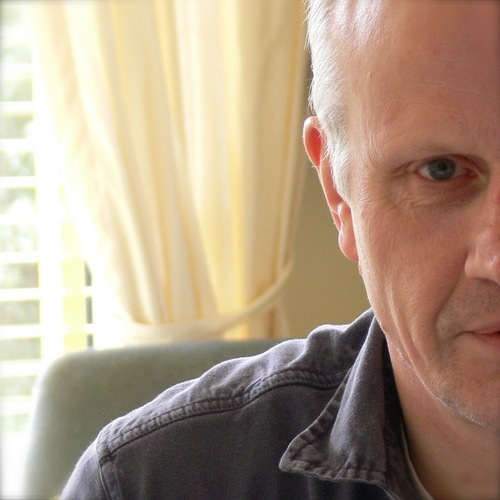
John_in_Pose_Half_Face3JOHN ANSTIE  (My Poetry Library and Forty Two) ~ As near as we can determine, John’s been blogging since early 2011.

For twenty years, he was a Rugby Union player with an ‘eight-pack’, which was helped in the early days by a school run on the same lines as Gordonstoun as well as by farming and working as a leather factory packer and security guard. The ‘eight pack’ was not helped, John admits, by becoming an ice cream seller. He’s also earned his keep as metallurgical engineer, marketing manager, export sales manager, and managing director of his own company. He’s a poet and blogger, a would-be musician with a piano and a forty-year-old Yamaha FG140 acoustic guitar. He is a singer in and chairman of a local amateur choir. He is also a would-be photographer with drawers full of his own history. John’s an occasional but lapsed ‘film’ maker. In his other life, he doubles as a husband, father, grandfather, uncle, cousin, friend and family man. In sort, it would seem John leads a well-rounded life and a rich one in terms of both arts and family. We’re wanting to call him a renaissance man, of which we have several in residence here along with a fine group of renaissance women.

John’s prose and poetry tells us everything else we need to know about him … or at least all that he’s currently prepared to tell us. He has just completed an anthology of the poetry of nine poets who met two years ago on Twitter. He produced and steered the book entitled  “Petrichor Rising.”  It’s publication will be announced shortly by Aquillrelle. The story of this project’s evolution and naming is interesting and enlightening. You can read it HERE. Among other things, it’s another thumbs-up for connecting to like-minded folks through social media.

Victoria and Dave Slotto

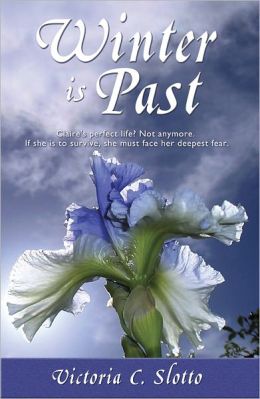
VICTORIA SLOTTO (Victoria C. Slotto, Author)had her first novel – 2940013445222_p0_v1_s260x420Winter is Past – published last year. Her second novel is in progress as is a poetry chapbook. Victoria is a gifted writer and poet, and we are proud and delighted to feature her here. It is gratifying to see how well Victoria incorporates important insights and ideals into the narrative flow of her novel, her flash fiction, and her poetry. If you have occasion to read her novel, you will not soon forget the spirit of her major protagonist, Claire.

Victoria attributes her writing influences to her spirituality, her dealings with grief and loss, and nature. Victoria spent twenty-eight years as a nun. When she left the convent, she continued to work as a nurse in the fields of death and dying and she has seen and experienced much. Because of her experience, Victoria is able to connect with her readers on an intimate level.

Victoria resides in Reno, Nevada, with her husband and two dogs and spends several months of the year in Palm Desert, California. Winter is Past, her first novel, was published by Lucky Bat Books. Victoria is also an accomplished blogger, sharing her fine poetry with us HERE and participating in a leadership role on d’Verse Poets Pub.

SOMETHING NEW AT INTO THE BARDO:  As part of her participation here, Victoria will be bring something quite new to Bardo, a reader-participation post once a month. The ETA to be announced. This participation will be in the form of a writing challenge. We’re doing this in acknowledgement of the many, many talented writers who are so kind and supportive, reading here, “liking,” and often commenting. Readers will be able to participate by entering their post link through MisterLinky, which most of you have used but further explanation will be forthcoming for newbies. Victoria and Jamie look forward to reading your entries and hope that you will also read one another’s work.

Posted in Peace & Justice

Orhan Pamuk: The Fear of Being Left Outside, What Literature Needs to Address

Orhan Pamuk (b. 1952), Istanbul Turkey, Novelist
Orhan Pamuk (b. 1952), Istanbul Turkey, Novelist ~ photo courtesy of Mr. Pamuk

“What literature needs most to tell and investigate today are humanity’s basic fears: the fear of being left outside, and the fear of counting for nothing, and the feelings of worthlessness that come with such fears; the collective humiliations, vulnerabilities, slights, grievances, sensitivities, and imagined insults, and the nationalist boasts and inflations that are their next of kin … Whenever I am confronted by such sentiments, and by the irrational, overstated language in which they are usually expressed, I know they touch on a darkness inside me. We have often witnessed peoples, societies and nations outside the Western world–and I can identify with them easily–succumbing to fears that sometimes lead them to commit stupidities, all because of their fears of humiliation and their sensitivities. I also know that in the West–a world with which I can identify with the same ease–nations and peoples taking an excessive pride in their wealth, and in their having brought us the Renaissance, the Enlightenment, and Modernism, have, from time to time, succumbed to a self-satisfaction that is almost as stupid.”

—Orhan Pamuk, Nobel Lecture (translation by Maureen Freely), 2006
.
This seem the perfect piece to expand on Michael Watson’s post yesterday and his comment, “. . . we seem to be caught up in the Bardo, spinning endless fantasies derived from fear, greed, and anger” … and we would add “hubris.”  So just some thoughts for us as poets and writers, artists and musicians, therapists, clerics bloggers … and simply as humans beings.
.
Is Orhan Pamuk’s statement fair? How do you feel about it?.
Posted in Essay, General Interest, Jamie Dedes, justice, Nature

The Wiyot of Eel River

I was at the Redwood Shores library the other day. They had a small display on the Ohlone Tribe. It made me think again of the Wiyot. They live in my dreams. Their name is pronounced Wee-yhot and it means Eel River. That was their home.

In the mid-eighties, for about a year-and-half, we lived near the Eel River in Humboldt County, an area about 200 miles north of San Francisco. It’s stunning and peaceful with dense redwood forests, wild rivers, and creeks that run dry in the summer and overflow in the winter. If you live in a rural area or grew up in one, you might take such things for granted. Having lived in cities all my life, it was magical to me. In the midst of that feral earth, in the stillness of leafy green days and velvet blue nights, it was easy for me to imagine the first peoples as they might have lived there in other times.

I fancied I could see them tending fires, boiling and drying acorns and then grinding them for flour, bathing in the river, raising their children, and hunting, gathering, and enjoying sacred ceremonies and tribal celebrations. I knew the same ancient sky-scrapping sequoias that watched over us had watched over them.

Our place was just short of four acres and rich with sequoia, madrone, oak, and some forty fruit trees. Blue jays flew in to feed in the morning and the quail marched down to visit at nightfall. Hawks and hummingbirds put on air shows. Rosemary thrived unattended. There was a beautiful lush 100-year-old rosebush. There were wild roses too. They gave us rose hips for cough syrup. Witches Broom lined our creek side with bright yellow. There were cascades of Japanese quince, which provided ample housing for the hummingbirds. Queen Ann’s lace* danced in the wind like ladies dressed for a ball. When they went to seed I collected the seeds for use in cooking. They have a taste somewhere between a carrot and caraway seed. The great bursts of blackberry bushes were a visual and edible delight.

I gathered fresh fruit almost every morning and every morning I thought of the people who preceded me more than a century ago and who picked berries there just like me. I did some research and found out that our property was once inhabited by the Wiyot peoples whose numbers were almost decimated in a genocide.

“Eureka newspapers of the time exulted at the night massacres conducted by the “good citizens of the area”. Good haul of Diggers and Tribe Exterminated! were 2 headlines from the Humboldt Times. Those who thought differently about it were shut up by force. Newspaper publisher and short story writer Bret Harte called it “cowardly butchery of sleeping women and children” — then had to flee ahead of a lynch mob that smashed his printing presses.” MORE [Wiyot Tribal Council Page]

* WARNING: If you are tempted to gather the seeds from Queen Ann’s lace, think twice. I didn’t know it at the time but it is hard to distinguish them from hemlock, which is poisonous. 

© 2012, Jamie Dedes, All rights reserved
Photo credit ~ Eel River by Jan Kronsell and released into the worldwide public domain.

Photo on 2012-09-19 at 20.00JAMIE DEDES ~ My worldly tags are poet and writer. For the past five years I’ve blogged at The Poet by Day,the journey in poem, formerly titled Musing by Moonlight.  Through the gift of poetry (mine and that of others), I enter sacred space.

Posted in Poems/Poetry

Reading Rilke’s Swan …

I think it was Borges who used to remind us that poetry began as an oral tradition and that in these days of print it is still meant to be read out loud. This hit home for me recently when a friend read one of my own poems at a funeral service and when British poet, John Anstie, recorded his reading of another of my poems. Even though I had written these poems and labored over their births, they gained a freshness and new perspective for me in the hands of these good poets who also happen to be good at oral delivery. On that note, I take special joy in the poetry of David Whyte and I particularly appreciate his skilled readings of his own work and that of other poets. In the video below David reads and interprets Rilke’s The Swan and Walcott’s Love After Love. I listen to his readings of these two renown poems several times a week and never tire of hearing them. Jamie Dedes

LoResPublicityPoet David Whyte grew up with a strong, imaginative influence from his Irish mother among the hills and valleys of his father’s Yorkshire. He now makes his home, with his family, in the Pacific Northwest of the United States.

The author of six books of poetry and three books of prose, David Whyte holds a degree in Marine Zoology and has traveled extensively, including living and working as a naturalist guide in the Galapagos Islands and leading anthropological and natural history expeditions in the Andes, the Amazon and the Himalaya. He brings this wealth of experience to his poetry, lectures and workshops.

His life as a poet has created a readership and listenership in three normally mutually exclusive areas: the literate world of readings that most poets inhabit, the psychological and theological worlds of philosophical enquiry and the world of vocation, work and organizational leadership.

An Associate Fellow at Templeton College and Said Business School at the University of Oxford, he is one of the few poets to take his perspectives on creativity into the field of organizational development, where he works with many European, American and international companies. In spring of 2008 he was awarded an honorary doctorate from Neumann College, Pennsylvania.

In organizational settings, using poetry and thoughtful commentary, he illustrates how we can foster qualities of courage and engagement; qualities needed if we are to respond to today’s call for increased creativity and adaptability in the workplace. He brings a unique and important contribution to our understanding of the nature of individual and organizational change particularly through his unique perspectives on Conversational Leadership.

portrait and bio courtesy of David Whyte


Video uploaded to YouTube by tjmjkm.

Posted in General Interest, Terri Stewart

Remembering What Came Before

As many know, today in the United States – July 4 – (I think it is already July 5 is some parts of the world) we celebrate our Independence Day, something that means a lot to us and may be greeted with mixed feelings if you live elsewhere in the world. Hence, I apprecate Terri’s handling of this occasion on her blog. I would also submit, that whatever good we reap in the world, whatever good this human race is able to accomplish, is done on the shoulders of those who came before us and laid the groundwork for equality and human rights. No matter our race or nationality, we all owe a debt to such diverse peacemakers as Martin Luther King, Thich Nhat Hanh, Nelson Mandla and Dennis Brutus and others on a list too long to share here. If you have someone whose work of peace and love is particularly meaningful to you, perhaps you will tell us who and why in the comment section. Thank you! Jamie Dedes

Posted in John Anstie, Poems/Poetry

Fortune

the work of John Anstie

They see our hard earned fortune there,
in marbled city suites,
floating on a silky sail,
the nap of leather seats.

We had the opportunity,
the pool of genes in code,
a secret reservation for
a public school and Spode.

We had the opportunity
to own the reason why,
that predicates no chance for those
unable to comply.

Our felony, was founded on
a life of common good,
to serve as flotsam in the sea
of guns and power and food.

Consuming guns and power and food,
an irony indeed
that helps the cause of those, who crave
a hope of being freed?

It’s more because they need the work
to feed their flesh and blood;
prevent starvation, declining health
and keep them from the flood.

But threats to blood will ensure
their easy motivation.
So much to recommend the source
of limitless privation.

They have much more, by way of help:
attention of the press;
the poets and the playwrights too,
but nothing of redress.

It’s irony to say ’twas fuelled,
on rapid growth by debt
who is to benefit thereby,
who is to win and, yet …

who is to say what fortune means
if nothing else but luck?
Should we condemn all those who have,
who wouldn’t give a buck

for those whose sad congenital crime,
their birthright, is to blame,
for them, their lot, their plight, their fight,
but who should feel the shame..?

– John Anstie

© 2013, poem and portrait (below), John Anstie, All rights reserved

John_in_Pose_Half_Face3JOHN ANSTIE (My Poetry Library and 42) ~ is a British poet and writer. We are happy to share this poem by way of a preliminary introduction to John and his work. John is joining us as part of the core team and will post under his own name.

Meanwhile, this multi-talented gentleman is self-described as a “Family man, Grandfather, Occasional Musician, Amateur photographer and Film-maker, Apple-MAC user, Implementation Manager, Engineer and general all-round good egg.” This he tells us with tongue firmly planted in cheek. Add grace and humor to the list.

John participates in d’Verse Poet’s Pub and is a primary player in New World Creative Union. He’s been blogging since 2009. John is also an active member of The Poetry Society (UK). He says of his work, “Much of my writing and my poetry focuses on the future and the important part that our children, and the way we treat them, play in this. It also spans a diversity of life’s experiences, some moving war poetry and particularly observations of life for a modern generation. I am in the process of steering a collaboration of grass roots poets to publication.” John’s poetry collection is about to hit the bookstores. More on that another day. Jamie Dedes

Posted in Jamie Dedes, Poems/Poetry

Vision Quest

1369841075r8a7x Writing in a far and broken country
my pen knows its kinship with the dark forest,
asks direction of its trees, celebrates its quiet amity
over the din of plastic medicine vials, the 40-foot
serpentine specter of cannulae, the hiss and sigh
of an oxygen compressor amid layered silences.

We are named on a long list of regional poets.
The region is the sickroom where the palm and
birch outside the window know their meaning.

Lend a shaman ear.

Trees will speak, will tell you that we are found.
We are here, not lost in our vessels but found
in the hallowed company of shaman poets

on a vision quest
Call it illness.
Call it artful.

Strike up the hill. Cry out for the Sacred Dream,
for the purpose of your life and its contusions.

A comforting infinity breaks through any grieving
fiercely embraced: The great dream comes to you.
The trees come to you. They speak in their voices,
which are – after all – your true voice . . .

Whenever life takes, it leaves behind the key to its
wide and wild essence. Unlock the door. Listen …
the voices offer solace and the privilege of poetry.

© 2013, poem, Jamie Dedes, All rights reserved
Photo courtesy of morgueFile

Photo on 2012-09-19 at 20.00JAMIE DEDES ~ My worldly tags are poet and writer. For the past five years I’ve blogged at The Poet by Day,the journey in poem, formerly titled Musing by Moonlight.  Through the gift of poetry (mine and that of others), I enter sacred space.

Posted in Jamie Dedes, Nature, Poems/Poetry

The Return of Primordial Night

Nyx, Greek Goddess of the Night

our parent’s ghosts harvested wildflowers
near the beach at Big Sur

they were deaf to the threat in thunder,
but we were trapped in the rain and waves
and the overflow from the melting ice

weeds began to grow in freezers and
once the lights went out the rugs unraveled,
and the sheep reclaimed their wool

the computers went down
their screens black as the wicked water,
in whirling chaos they morphed into drums

every fetus turned in the womb,
the men went to the mountain tops
and the women sheltered in caves

the souls of saints and sinners
were run through a cosmic wash cycle
after the spin dry, we started anew

only the shades of our parents remain,
they’re waiting for us at Big Sur
buried under the Santa Lucia Mountains

© 2012, Jamie Dedes, All rights reserved
Painting ~ La Nuit by William-Adolphe Bouguereau (1825 – 1905) via Wikipedia and in the public domain.

Photo on 2012-09-19 at 20.00JAMIE DEDES ~ My worldly tags are poet and writer. For the past five years I’ve blogged at The Poet by Day,the journey in poem, formerly titled Musing by Moonlight.  Through the gift of poetry (mine and that of others), I enter sacred space.

Posted in Essay, Jamie Dedes, memoir, Poems/Poetry

EMPTY NEST PART II: Given Wings

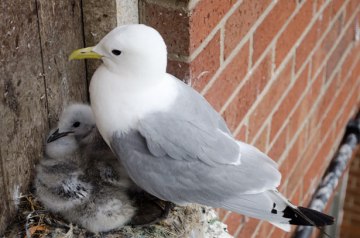
seagull-and-chicksThis is why you were born, to pass me by,
DNA of our ancestors, it’s your turn to fly,
to be the center, the triumph, the culmination.

Though not quite zero at bone and marrow, you ~
are a merry new story, adhering to Conrad’s dictum,
with shocks and surprises in every line and chapter.

Your book, your life, your metaphor, wearing truth
as your dermis, seeking tears, not blood, and
like all good art you changed me for the better,

having read you, I’ll never be the same. So time,
My Heart, time now to fly, to leave this nest,
the generations on which you stand, this is why
you were born, now it’s your turn to fly …

Note: Conrad’s dictum is that the writer’s first responsibility is to help the reader see.

The great American novelist and educator, Toni Morrison, once wrote that it is the job of parents to provide their children both safe harbor and wings. This poem was written some time ago to convince myself, not my son. He did what son’s naturally do.

Time has seen our roles reverse in some ways. My son has the most generous heart and has had my back for thirteen years, ushering me to my pulmonologist/critical care specialist and through sundry procedures and surgeries (always my advocate), moving me to new digs each time I have to downsize, taking me home with him when I couldn’t be left alone, keeping me in computers and tech toys. Yet, our children are our children. As Naomi said yesterday in Part I, “. . .  long after they’ve gone gray, long after they are elderly orphans…they will still be our babies. “

From my vantage point as my mother’s daughter and my son’s mother, I’ve learned that making family is just another kind of love story, one in which love is not circumscribed. As we pass this love along to succeeding generations, it grows in depth and breadth. We are better people for it and the whole world becomes a better place. In the end, even mom’s are given wings and the nest in never truly empty when love remains to fill in the spaces.

– Jamie Dedes

© 2013, poem, essay, and photos below, Jamie Dedes, All rights reserved
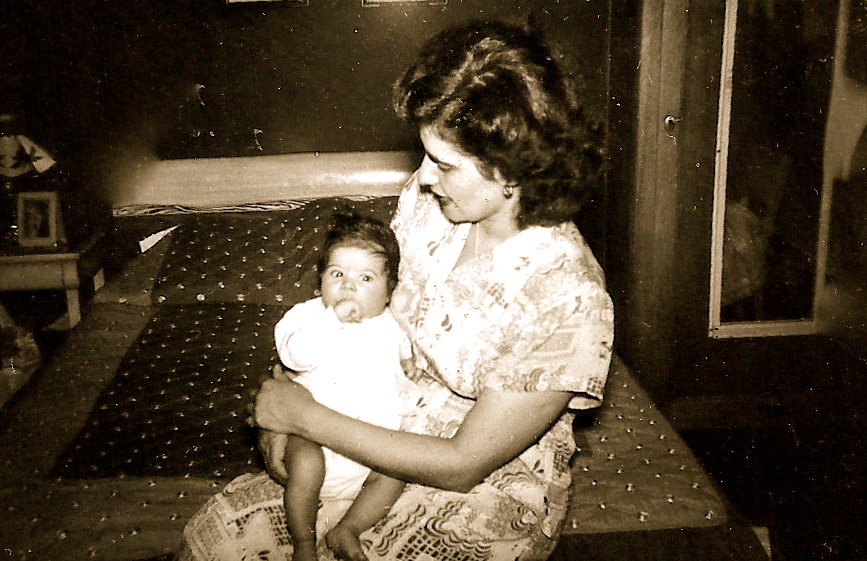
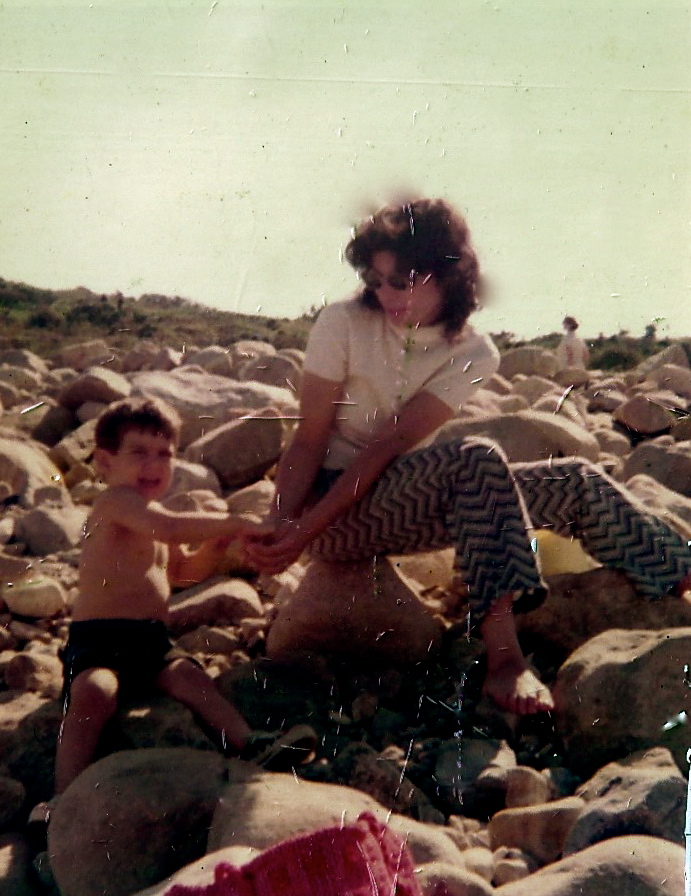
Photo credit ~ Seagull and Chicks by George Hodan, Public Domain Photographs.net; portait and family photos below are under copyright as well. Please be respectful.

Photo on 2012-09-19 at 19.54MomJAMIE DEDES is a poet and the founder of Into the Bardo. She is a former freelance feature writer and columnist whose topic specialties were employment, vocational training, and business. She finds the blessing of medical retirement to be opportunity to play: to indulge in writing poetry, creative nonfiction, and fiction.

Jamie’s primary playground is The Poet by Day, the journey in poem (formerly Musing by Moonlight) where at any time you can read five of her most recent poems along with a growing collection of Sunday posts on poetry, poets, and writers.  She finds inspiration everywhere and in everyone. Her work is informed by the values of the multicultural/multiracial environment and classical Eastern and Roman Christianity in which she was raised as well as by a more recent introduction to Buddhism. Jamie has an abiding faith in the value of a life of the mind and spirit to heal and in the inestimable value of art and music, poetry and writing as spiritual practice.

Posted in Art, find yourself, Guest Writer, Music

Underpainting With Love and Kindess

work by Leslie White 
.
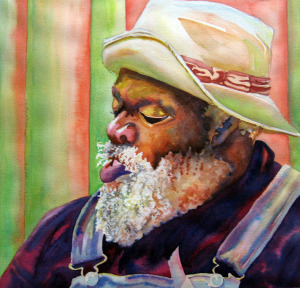
I could not believe my good fortune when I found a photo of Grandpa Elliot posted to the wet canvas photo reference library for artists.  It was a must-do for me..Several bloggers have made mention of underpaintings; the most recent being Amy from Souldipper found here. She asked me about an artist’s use of an underpainting.  I responded something like it is the foundation that we build our final work on. That made me think more on the subject as we were also talking about underpainting our lives with love and kindness.  Then I came across the photo of Grandpa Elliot who has actually underpainted his life with sharing music to millions in New Orleans and becoming part of the project, “Playing for Change”, a CD whose proceeds go to helping others.The other connection I can make about an underpainting is that it always, for me, sets the tone for where the light will fall in it. BINGO! I see the same in life with passing on kindness. Light is passed on through our kindness to others.  The above stage of my painting illustrates how I carved out areas where I wanted the light to fall.

grelliot

The above image is the finished result.

I can not think of a better way to start the weekend than this:

Video posted to YouTube by .

– Leslie White

leslieblue6LESLIE WHITE (lesliepaints) ~ is a guest writer here and an artist, teacher, book illustrator, and blogger. She’s been blogging since March 2009 and appreciated for the skill and beauty she shares. Her gifts to us are mini-lessons in a artistic technique. Often there is value added with life lessons, such as the one presented here.  Leslie shares information on new art products and techniques and enriches our understanding of and appreciation for art.  Her blog-posts go a long way toward encouraging others. She often enchantes us by sharing the work of her granddaughter and her students.


Posted in Bardo News

HONORING SACRED SITES/WORLD PEACE AND PRAYER DAY 6/20-23, 2013

800px-2009_07_09_camino_cielo_paradise_137World Peace and Prayer Day
June 20 -23, 2013
Live Oak Campground Santa Ynez

Chief Arvol Looking Horse –Spiritual Leader for the Lakota, Dakota and Nakota Sioux Nations invites all to join him in an annual international interfaith gathering. There is also a continued prayer in their homelands, while he gathers June 20 – 23 in ancestral Chumash territory, at Live Oak Camp in the Santa Ynez Valley. The public is invited to attend, free of charge, for all or part of the four-day gathering.

Chief Looking Horse is the 19th Generation Keeper of the Sacred White Buffalo Calf Pipe, who is committed to helping “All Nations, All Faiths, One Prayer” to fulfill the joining of nations in pursuit of peace through the honoring of sacred sites. He began the WPPD gathering in 1996 to help the healing of Mother Earth, after the birth of a white buffalo calf indicated a time of global crisis – according to Lakota prophesy. It has been held every year since, on June 21. WPPD is hosted in places of continued need of environmental protection. Now in its 18th year in collaboration with local people and spiritual leaders of all faiths, who are responding to the attention of the importance of Mother Earth and her sacred sites. It began as a prayer held in the four directions of Turtle Island. Beginning in the Black Hills, a.k.a “Heart Of Everything That Is” and grew to be held on every continent that continues today.

On Thursday June 20th a sacred fire will be lit and kept alive for four days. We understand the sacred fire is Universal to all Cultures. Invited speakers and First Nations People will speak about the environmental issues and the importance of protecting sacred sites. Earth Education and art making for children and adults will include puppet making and an ephemeral art piece that will cumulate in a closing message from the children. A full listing of each day’s events can be found at http://www.worldpeaceandprayerday.com

WPPD is organized every year by volunteers and funded entirely by donations. Contributions can be made by visiting:http://www.worldpeaceandprayerday.com

Announcement via Michael Watson (Dreaming the World and Into the Bardo) and by  RAVEN REDBONE

Photo credit ! Chumash art on the walls of Painted Cave in the mountains above Santa Barbara by Doc Searls on his Flickr site  under Creative Commons Attribution-Share-Alike 2.0 Generic license.