Posted in Buddhism

BUDDHIST GLOBAL RELIEF: 2012 WALK TO FEED THE HUNGRY

Ven. Bikkhu Bodhi Leading WalkBy Carla Prater – Planning for the 2012 Walk to Feed the Hungry is now in full swing. We have walks planned for the month of October in Ann Arbor, Chicago, Los Angeles, New York City, San Francisco, and another in the Southern San Francisco Bay Area, Seattle, and Sherwood Forest in England. We have a wonderful group of coordinators heading up these events, which are all run by local committees. Please check our website over the summer as we post more information about these events and look for information on how you can participate!

Walk Guides

As part of our planning for the October walks, we have compiled a Local Coordinator’s Guide and an Administrative Guide. The Coordinator’s Guide is a resource for local committees that are holding the walks, with information and tips we have learned over the last two years. The Administrative Guide will focus on what the BGR staff and volunteers can do to make the process smoother for the local committees. We hope these Guides together will make our 2012 Walks the best ever!

© 2012, Buddhist Global Relief, All rights reserved

Posted in Uncategorized

AN HOMAGE TO THE DALAI LAMA

This is a perfect way to honor the Dalai Lama on his birthday. It is from Corina at “Dragon’s Dream.” Do read on … J.D.

dragonkatet's avatar~ Dragon's Dreams ~

Today is the Dalai Lama’s 77th birthday. “Tenzin Gyatso was born in Taktser of Qinghai on July 6, 1935. While recognised by Tibetans as being the reincarnation of the 13th Dalai Lama two years later, he was formally given the status of the 14th Dalai Lama only on November 17, 1950, at the age of 15. ” ~ dnaindia.com

There are many people who want to celebrate this man, his kindness and promotion of non-violence, but there are many who still cannot because of harsh government oppression.

According to the Associated Press, exiled Tibetans in Nepal were banned from observing His Holiness’ birthday, and were blocked by police from entering the school where a birthday party was to be held. The reason being that Tibetan ceremonies and observances can lead to anti-Chinese protests. ” ~ Huffington Post.com

Yes, the United States considers China an ally, but you really…

View original post 298 more words

Posted in General Interest, Jamie Dedes

Le Ennui de Henri

“Je suis seul à sentir ce tourment.”

“I alone feel this torment.”

Henri, Le Chat Existentiel

Another little Bardo on The Light Side. Kudos to the brilliant Will Braden for imagining such a wonderful script for Henri. I posted this on my personal blog, The Writer by Day, where it seem to be very much enjoyed. It is charming and funny; but, it does also serve to remind us of how we humans can torture ourselves by misreading the intentions of our fellows or occasionally turning everything into drama. Without a doubt, Henri, like many of our younger brothers and sisters in nature, is a teacher. J.D.

Video, Script, and Voice ~ 

Posted in Essay, Guest Writer, Uncategorized

THE AGE OF DISCONTINUITY AND THE CHINESE SHI

Shakti Ghosal

Fluidity and discontinuity are central to the reality in which we live. (1990), Mary Catherine Bateson (b. 1939), American writer and cultural anthropologist

THE AGE OF DISCONTINUITY AND THE CHINESE SHI

by

Shakti Ghosal (ESGEE musings)

 The other day, I sat leafing through the yellowing pages of that half a century old Peter Drucker classic, ‘The Age of Discontinuity’. This book never ceases to amaze me at the prescient feeling it can generate even after so many decades. Drucker of course could not have envisioned the internet and today’s information flows but his book does ask the question, “As technology becomes ubiquitous, how would we need to cope?” He also challenged us “to be prepared for the complexities”. Big discontinuities that he saw so many years back……. as yet unresolved.

Since the dawn of history, Mankind has experienced discontinuities brought in by adoption of learnt skills and technology. As the first human learnt how to seed and grow plants, Mankind did a makeover from a wandering lifestyle to that of settlers on land. Then with the successive arrivals of the steam engine and electricity, the agrarian lifestyle started morphing into industrial clusters and an associated urban way of life.

And so has been the cycle. A periodic massive disruption of the way we live, the way we work, the way we trade, all leading to a discontinuity. But always, Mankind returned back to stability. Adjusting back into the equilibrium of a new socio-economic format, till the next bout of discontinuity.

But methinks we now have reached a different arena. A space and time where technologies are no longer stabilizing. If at all, they seem to be changing at a faster and faster pace. One needs to just see what is happening to computing, information and communication to appreciate this.

As I reflect, I am left wondering if we are facing the mother of all discontinuities, a shift to a world without stability. A world in which extreme social and economic disruptions become the norm. Be it the ongoing financial turmoil in the global markets. Be it increasing volatility in commodity prices. Be it companies losing out their leadership positions at an increasing rate. Be it product life cycles becoming shorter and shorter. I wonder if these indeed be the symptoms of a world becoming increasingly unstable.

So how do we, the individuals, cope with such constant discontinuities and loss of stability? Wired as we are to cherish stability and continuity in life, how do we retain our balance and sanity?

I think of the Chinese concept of Shi. Simply put it signifies a propensity based on situation. So whenever there is the propensity to play out to an extreme, there also occurs the tendency to self correct and reverse course. And herein lies the magic of Shi- embodying the spirit of dancing in the moment.

Shi is a belief. It promotes lightness and a dynamic view of our world. In Shi, everything is in a state of becoming. So as we focus on the flows and the lightness of the moment, we lose our obsession with discrete people, objects or situations. Shi allows a holistic appreciation of the complex webs of relationships among people, objects and the broader environment.

In a world fast losing traditional reference points, the future may well belong to those who adopt a Shi mindset. Those who embrace the lightness of relationships and flows rather than the heaviness of resource ownership. I believe it would be these ‘dancers of the moment’ who would lead the world in this era of uncertainty and discontinuity.

Acknowledgements:

1  The Age of Discontinuity: Guidelines to our changing society

by Peter F Drucker,1969.

2.   The Propensity of Things: Toward a History of Efficacy in China

by Francois Julien,1999.

© 2012, Shakti Ghosal, All rights reserved

Shakti Ghosal ~ has been blogging (ESGEE musgings) since September 30, 2011. He was born at New Delhi, India. Shakti is an Engineer and  Management Post Graduate from IIM, Bangalore. Apart from Management theory, Shakti remains fascinated with diverse areas ranging from World History and Economic trends to Human Psychology and Development.

A senior management professional, Shakti has been professionally involved for over twenty-five years at both international and India centric levels spanning diverse business areas and verticals. With a strong bias towards action and results, Shakti remains passionate about team empowerment and process improvement.

Shakti currently resides in the beautiful city of Muscat in Oman with wife Sanchita, a doctorate and an educationist. They are blessed with two lovely daughters, Riya and Piya.

Posted in Essay, Guest Writer

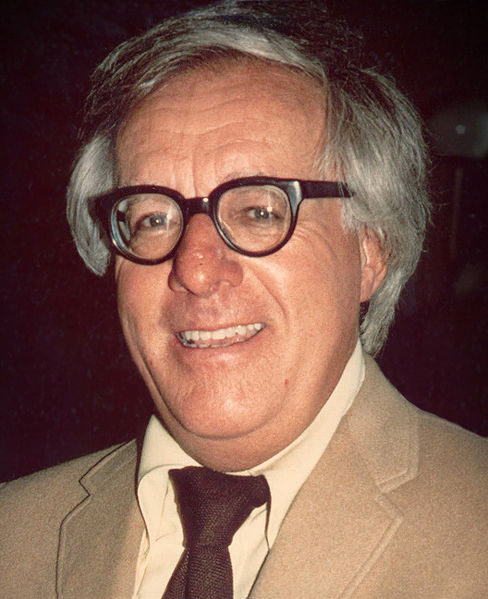
RAY BRADBURY FLYING UP AMONG THE STARS …

RAY DOUGLAS BRADBURY (1920-2012), American Writer

While there were many salutes to Ray Bradbury upon his death on June 5th, I encountered none as charming and well-targeted as Colin’s.  J.D.

RAY BRADBURY:

InFLYING  UP AMONG THE STARS

by

Colin Blundell (colinblundell)

Forty years ago, I began teaching ‘English’ to 11-16 year-olds in a comprehensive school in a suburb of Luton, Bedfordshire UK—Stopsley High School. A class of 4th year boys was well on the way to defeating me till I discovered that reading Ray Bradbury short stories to them was a really good way of keeping them quiet for a whole lesson and even inspiring them to think and write. Ray Bradbury was the key that opened doors for these boys who had mostly been rejected by the system they found themselves enslaved by. Admittedly, by report, some of them later did a stretch in prison but not a few of them went on to get degrees, to become teachers and hold responsible jobs in local industry. I have sadly lost touch with all of them.

The short story that seemed to have the most immediate effect, and the one I always associate with that period of my life, was The Murderer from The Golden Apples of the Sun (1953). It was the story that perhaps meant most to me, one I could put my heart and soul into the reading thereof.

Music moved with him in the white halls. He passed an office door: ‘The Merry Widow Waltz’. Another door: ‘Afternoon of a Faun’. A third: ‘Kiss Me Again’. He turned into a cross corridor: ‘The Sword Dance’ buried him in cymbals, drums, pots, pans, knives, forks, thunder, and tin lightning. All washed away as he hurried through an anteroom where a secretary sat nicely stunned by Beethovens Fifth. He moved himself before her eyes like a hand; she didnt see him. His wrist radio buzzed.
“Yes?”
“This is Lee, Dad. Don’t forget about my allowance.”
“Yes, son, yes. Im busy.”
“Just didnt want you to forget, Dad,” said the wrist radio. Tchaikovsky’s ‘Romeo and Juliet’ swarmed about the voice and flushed into the long halls.

Where are we? What’s going on? Forty years back there was no such thing as a mobile phone; the wrist radio is part of Ray Bradbury’s accurately terrifying vision of the future, which is now: the mobile phone is a symbol for the way life for many people seems to be threaded on messages from an imagined other place, messages, usually of no real consequence, that materialise to interrupt life while it is being lived, to divert attention from the concentrated flow of existence.

Once upon a time, you were able to move from experience to experience without the feeling that at any moment your flow was going to be interrupted by messages from an outer space which is not yours; life has changed and with it consciousness—it’s no longer a direct relationship between you and mountain, river, birdsong, zebra, touch of skin, and sensation of wind but something mediated by a mechanical drive to make contact with somebody to express the connection in some dull-witted way, or have it interrupted by somebody else’s account of their own experience of zebras and so on…

I do not remember that piped music was everywhere when I was growing up (I don’t think it was) but it’s more or less impossible to avoid the intrusiveness of the assault on the ears nowadays. The person with the switch assumes that it’s OK to bombard us with Muzak; most people don’t notice that it is washing over them—it’s the mechanical norm.

One might just consider oneself lucky to have Beethoven’s Fifth or L’après-midi d’un faune swarming about the long halls of the supermarket rather than the latest pop-crap but on the whole, instead of having others impose their banal choices on me, I prefer to organise my own listening schedule just when I want it to happen and not otherwise.

Ray Bradbury is simplistically referred to as a Science Fiction writer but it’s more the case that he is of that fraternity that seems to be plugged into the way things are going in fact rather than as fiction—those who are sufficiently tuned into human trends and weaknesses to understand where things are heading. H.G. Wells was another member of the clan.

“Prisoner delivered to Interview Chamber Nine.”
He unlocked the chamber door, stepped in, heard the door lock behind him.
“Go away,” said the prisoner, smiling. The psychiatrist was shocked by that smile. A very sunny, pleasant warm thing, a thing that shed bright light upon the room. Dawn among the dark hills. High noon at midnight, that smile. The blue eyes sparkled serenely above that display of self-assured dentistry.
“I’m here to help you,” said the psychiatrist, frowning. Something was wrong with the room. He had hesitated the moment he entered. He glanced around. The prisoner laughed. “If you’re wondering why it’s so quiet in here, I just kicked the radio to death.”

At length we find that our hero is Mr Albert Brock, who calls himself ‘The Murderer’. The psychiatrist, who intends to put him right, deems him violent, but Brock says that his violence is only towards ‘machines that yak-yak-yak…’

He quickly demonstrates his murderous intentions.

“Before we start…” He moved quietly and quickly to detach the wrist radio from the doctor’s arm. He tucked it in his teeth like a walnut, gritted, heard it crack, handed it back to the appalled psychiatrist as if he had done them both a favour. “That’s better.”

I often feel like doing this to mobile phones and other beeping implements on trains when my quiet reading is interrupted by them.

Deviant Behaviour

The psychiatrist asks Brock to talk about his deviant behaviour.

“Fine. The first victim, or one of the first, was my telephone. Murder most foul. I shoved it in the kitchen Insinkerator! Stopped the disposal unit in mid-swallow. Poor thing strangled to death. After that I shot the television set! … Fired six shots right through the cathode. Made a beautiful tinkling crash, like a dropped chandelier…”
“Suppose you tell me when you first began to hate the telephone.”

Because the telephone used to upset me as a child and because I would still rather not talk over the telephone I used to read the following explanation to my classes with extreme relish and rhetorical gusto, loudly and at increasing speed.

“It frightened me as a child. Uncle of mine called it the Ghost Machine. Voices without bodies. Scared the living hell out of me. Later in life I was never comfortable. Seemed to me a phone was an impersonal instrument. If it felt like it, it let your personality go through its wires. If it didn’t want to, it just drained your personality away until what slipped through at the other end was some cold fish of a voice, all steel, copper, plastic, no warmth, no reality.
It’s easy to say the wrong things on telephones; the telephone changes your meaning on you. First thing you know, you’ve made an enemy. Then, of course, the telephone’s such a convenient thing; it just sits there and demands you call someone who doesn’t want to be called. Friends were always calling, calling, calling me. Hell, I hadn’t any time of my own. When it wasn’t the telephone it was the television, the radio, the phonograph. When it wasn’t the television or radio or the phonograph it was motion pictures at the corner theatre, motion pictures projected, with commercials on low-lying cumulus clouds. It doesn’t rain rain any more, it rains soapsuds. When it wasn’t High-Fly Cloud advertisements, it was music by Mozzek in every restaurant; music and commercials on the buses I rode to work. When it wasn’t music, it was inter-office communications, and my horror chamber of a radio wrist watch on which my friends and my wife phoned every five minutes. What is there about such ‘conveniences’ that makes them so temptingly convenient? The average man thinks, Here I am, time on my hands, and there on my wrist is a wrist telephone, so why not just buzz old Joe up, eh? …I love my friends, my wife, humanity, very much, but when one minute my wife calls to say, “Where are you now, dear?” and a friend calls and says, “Got the best off-colour joke to tell you. Seems there was a guy…”

The climax came when Brock ‘…poured a paper cup of water into the intercommunications system’ at his office which shorted the electrics and had everybody running around not knowing what to do with themselves. Then Brock ‘got the idea at noon of stomping my wrist radio on the sidewalk. A shrill voice was just yelling out of it at me, This is People’s Poll Number Nine. What did you eat for lunch? I kicked the Jesus out of the wrist radio!’

A Solitary Revolution

Brock decided to ‘start a solitary revolution, deliver man from certain ‘conveniences’… Convenient for anybody who, out of boredom or aimlessness wanted a diversion.. “Having a shot of whisky now. Thought you’d want to know…” Convenient for my office, so when I’m in the field with my radio car there’s no moment when I’m not in touch…’

Why on earth should we ever wish to be ‘in touch’ with people, with contacts, with a million or so connections on the Internet, with ‘friends’ on Facebook? Why do we feel a need to communicate our insignificant ideas to anybody who will, we imagine, click in on a regular basis? Why am I writing this?

We are living the Twentieth Century illusion of total connectedness; we imagine an audience; we think we are making something happen. We are not. All that’s happened is that our concept of the world has changed; we like to think that we are all in it together—it could well be that this has affected the shape of ‘consciousness’ itself.

Why is it that the bosses imagine now that they can extend the working day 24 hours a day, 7 days a week by  constantly having workers ‘in touch’? We let them get away with it.

In touch! There’s a slimy phrase. Touch, hell. Gripped! Pawed, rather. Mauled and massaged and pounded by FM voices. You can’t leave your car without checking in: “Have stopped to visit gas-station men’s room.” “Okay, Brock, step on it!” “Brock, what took you so long?” “Sorry, sir.” “Watch it next time, Brock.” “Yes, sir!”

Brock progressed his one-man revolution by spooning a quart of French chocolate ice cream—chosen because it was his favourite flavour— into the car radio transmitter.

The psychiatrist asked what happened next.

Silence

“Silence happened next. God, it was beautiful. That car radio cackling all day, Brock go here, Brock go there, Brock check in, Brock check out, okay Brock, hour lunch, lunch over, Brock, Brock, Brock… I just rode around feeling of the silence. It’s a big bolt of the nicest, softest flannel ever made. Silence. A whole hour of it. I just sat in my car, smiling, feeling of that flannel with my ears. I felt drunk with Freedom!”

Then Brock rented himself a ‘portable diathermy machine’. Now, if ever there was a sensible invention this is one. Often, especially on trains, I’ve thought to myself, “If only I had a  ‘portable diathermy machine’, I could turn it on and silence all the inane chat, all the music blasting out of half-wit headphones, all the tapping and beeping that so disturbs me…”

I’ve even thought of trying to invent something that would do the trick. I once met a man who said he could help though there might be issues of legality. Brock, c’est Moi, I thought.

In the story, the effect of Brock’s murderous impulses was striking.

“There sat all the tired commuters with their wrist radios, talking to their wives, saying, ‘Now I’m at Forty-third, now I’m at Forty-fourth, here I am at Forty-ninth, now turning at Sixty-first.”

“I’m on the train…”

“One husband cursing, ‘Well, get out of that bar, damn it, and get home and get dinner started, I’m at Seventieth!’ And the transit-system radio playing Tales from the Vienna Woods, a canary singing words about a first-rate wheat cereal. Then—I switched on my diathermy! Static! Interference! All wives cut off from husbands grousing about a hard day at the office. All husbands cut off from wives who had just seen their children break a window! The Vienna Woods chopped down, the canary mangled! Silence! A terrible, unexpected silence. The bus inhabitants faced with having to converse with each other. Panic! Sheer, animal panic!”
“The police seized you?”
“The bus had to stop. After all, the music was being scrambled, husbands and wives were out of touch with reality. Pandemonium, riot, and chaos. Squirrels chattering in cages! A trouble unit arrived, triangulated on me instantly, had me reprimanded, fined, and home, minus my diathermy machine, in jig time.”

The psychiatrist, namby-pamby liberal democrat, suggests that Brock could have joined a club for gadget-haters, got up a petition, asked for a change in the law… Brock says he did all these things and more but he still found himself in an undemonstrative minority. The psychiatrist says that the majority rules.

“But they went too far. If a little music and ‘keeping in touch’ was charming, they figured a lot would be ten times as charming. I went wild! I got home to find my wife hysterical. Why ? Because she had been completely out of touch with me for half a day. Remember, I did a dance on my wrist radio? Well, that night I laid plans to murder my house… It’s one of those talking, singing, humming, weather-reporting, poetry-reading, novel-reciting, jingle-jangling, rockaby-crooning-when-you-go-to bed houses. A house that screams opera to you in the shower and teaches you Spanish in your sleep. One of those blathering caves where all kinds of electronic Oracles make you feel a trifle larger than a thimble, with stoves that say, ‘I’m apricot pie, and I’m done,’ or ‘I’m prime roast beef, so baste me!’ and other nursery gibberish like that. With beds that rock you to sleep and shake you awake. A house that barely tolerates humans, I tell you. A front door that barks: ‘You’ve mud on your feet, sir!’ And an electronic vacuum hound that snuffles around after you from room to room, inhaling every fingernail or ash you drop. Jesus God… ”

The psychiatrist suggests he minds his language.

“Next morning early I bought a pistol. I purposely muddied my feet. I stood at our front door. The front door shrilled, ‘Dirty feet, muddy feet! Wipe your feet! Please be neat!’ I shot the damn thing in its keyhole! I ran to the kitchen, where the stove was just whining, ‘Turn me over!’ In the middle of a mechanical omelet I did the stove to death. Oh, how it sizzled and screamed, ‘I’m shorted!’…  Then I went in and shot the television, that insidious beast, that Medusa, which freezes a billion people to stone every night, staring fixedly, that Siren which called and sang and promised so much and gave, after all, so little…”

Having been arrested for destroying other people’s property, Brock was sent to the Office of Mental Health to be straightened out by a psychiatrist. Brock is unrepentant and says he’d do it all over again. The psychiatrist checks that he’s ready to take the consequences

“This is only the beginning,” said Mr. Brock. “I’m the vanguard of the small public which is tired of noise and being taken advantage of and pushed around and yelled at, every moment music, every moment in touch with some voice somewhere, do this, do that, quick, quick, now here, now there. You’ll see. The revolt begins. My name will go down in history!”

He’s prepared to admit that all gadgets were initially dedicated to making life less of a drudgery.

They were almost toys, to be played with, but people got too involved, went too far, and got wrapped up in a pattern of social behaviour and couldn’t get out, couldn’t admit they were in, even.

The gadgets have now become an unquestioned part of life. The next generation grows up with all the e-things and cannot understand old fogies like me wanting to, as they might see it, put the clock back.

Brock points out the irony that he ‘…got world-wide coverage on TV, radio, films… That was five days ago. A billion people know about me now. Check your financial columns. Any day now. Maybe to-day. Watch for a sudden spurt, a rise in sales for French chocolate ice cream!

Brock looks forward to spending six months in jail, free from noise of any kind.

The psychiatrist’s diagnosis announced over the tannoy system is that Brock seemed convivial but ‘…completely disorientated’ refusing ‘… to accept the simplest realities of his environment and work with them…’

A Story to Shape the Soul

Re-reading Ray Bradbury’s brilliant short story on the day I heard of his death at 91, I realise, not for the first time, how much it has shaped my being; my disgust with the way the world is now, my refusal to compromise, my sense of horror at the way people are sucked into A Influences and diverted by gadgetry from the things that really matter: the life of the soul, responses to Nature and all that comes under the heading of Understanding properly nurtured by Knowledge and Being… Indiscriminate working with the realities of one’s environment means giving in to crass stupidity, mass resignation to the way things are fostered by Big Business brain-washing and the endless traps of Capitalism.

Accept nothing unless it nurtures the soul. Verify everything for yourself, says Gurdjieff…

Brock walks cheerfully to prison looking forward to a nice ‘bolt’ of silence. Meanwhile for the psychiatrist normal life resumes…

Three phones rang. A duplicate wrist radio in his desk drawer buzzed like a wounded grasshopper. The intercom flashed a pink light and click-clicked. Three phones rang. The drawer buzzed. Music blew in through the open door. The psychiatrist, humming quietly, fitted the new wrist radio to his wrist, flipped the intercom, talked a moment, picked up one telephone, talked, picked up another telephone, talked, picked up the third telephone, talked, touched the wrist-radio button, talked calmly and quietly, his face cool and serene, in the middle of the music and the lights flashing, the two phones ringing again, and his hands moving, and his wrist radio buzzing, and the intercoms talking, and voices speaking from the ceiling. And he went on quietly this way through the remainder of a cool, air-conditioned, and long afternoon; telephone, wrist radio, intercom, telephone, wrist radio, intercom, telephone, wrist radio, intercom, telephone, wrist radio, intercom, telephone, wrist radio, intercom, telephone, wrist radio…

End of a Story…

What I would dearly love to know is whether The Murderer penetrated the soul’s of the lads I taught all those years ago as much as it has penetrated mine. Amongst others, Paul, Martin Chris, Richard, Stephen, John and also Chris & Pete who went off to swim unwillingly amongst the stars in the 1970’s.

If any of you should chance to read this, please get in touch, as they say…

Colin Blundell ~ (colinblundell) warns us that if we’re into sound-bites, we’re going to be disappointed. His writing is generous, informative, and covers the range: poetry, fiction, and philosophical tomes. When he isn’t writing he is busy making music and hand-made paperback books, painting watercolours, and going on long-distance motorbike treks. He’s left off being a wage-slave in 1991. He is now an independently teaching Neuro-Linguistic Programming (NLP), Accelerated Learning, Steven Covey’s Seven Habits, Change Management, Problem-solving and Time Management, and the art and practice of the Enneagram.

Posted in General Interest, Jamie Dedes, Teachers

MADEMOISELLE, Teaches Lessons in Courage and Compassion

ANDREE GEULEN-HERSCOVICI (b. 1921), Belgian 

Saved 300 Jewish children during the Holocaust

LESSONS IN COURAGE AND COMPASSION

by

Jamie Dedes

With love for her students who would surely face death at the hands of the Nazis,  Andree Geulen (then a twenty-year-old teacher) hung the Star of David on her Cross of Jesus and one-by-one walked three-hundred children out of the Holocaust and into life. They called her Mademoiselle. Her story is a lesson in courage and compassion.

There are unsung heroes in this story too. They are the men and women who subsequently took these children in at risk to themselves. They raised and presented the children as their own. They taught them to put on the face of Christianity for safety sake while secretly teaching them to honor their own Judaism.

Laurel D. sent me this video with a song that was written to honor Andree Geulen-Herscovici. The complete story is embedded in the video. The song was written to honor Mrs. Geulene-Herscovici’s 90th birthday, as you will note in the video.

·

Andree Geulen-Herscovici, May 1998, at the reunion of children who had been saved during the war at Chateau Jamoigne, Belgium: Her comment HERE. (Must read.)

Belgian woman who saved 300 children in the Holocaust gets honorary Israeli citizenship HERE.

© 2012, Jamie Dedes, All rights reserved

Video uploaded to YouTube by  

Photo credit ~ Andree Geulen, Maison des Justes Histoire

Posted in Essay, General Interest, Guest Writer

THE STORY OF A WAR AND A QUIET MAN

Normandy American Cemetery

“My army buddy, Jack Oliver, attended boot camp with Uncle Lewis.  He helped me understand that my father was as much a victim of the war as my uncle.  When the War Department tallies the casualties, it counts the dead, the wounded, the missing in action.  But no one ever takes into account the broken hearts and broken families left by the wayside in the wake of war.  If they did, perhaps they would stop sending our children off to fight and die.” Naomi Baltuck

REMEMBERING UNCLE LEWIS

by

Naomi Baltuck (Writing Between the Lines)

One of my earliest memories is of dinner at Grandma Rose’s house.  Her towels, furniture, and closets smelled of mothballs; she even stored her silverware in mothballs.  Mostly, though, I recall standing on Grandma’s couch to study the framed collage of black and white photographs on her wall.  I recognized my father, but knew the other boy in the pictures only by name, and by heart.

Uncle Lewis was my father’s only sibling, younger than my dad by ten years.  We never met, and Daddy never spoke of him.  But they were best friends.  In one picture Lewis was laughing, having been surprised on the toilet by my father with his camera.  The brothers teased Grandma too.  Lewis would yell, “Harry, stop hitting me!”  Grandma would rush in, and scold my father for picking on his brother.  Undaunted, they’d laugh and repeat, until Grandma caught on.

Soon after the attack on Pearl Harbor, Lewis was drafted into the infantry, a shy studious eighteen year old who had never kissed a girl.  My father joined up as an officer.  He pulled a few strings to get Lewis transferred into the 30th ‘Old Hickory’ Division, so the brothers could cross the Atlantic on the same ship.  Lewis wrote letters and post cards home, often addressed to their dog ‘Peanuts.’

“Hey, Peanuts, tell Pa to eat his spinach!”   From the ship he wrote, “Harry and his buddies sneaked me into their cabin.  They gave me chocolate and let me play with their puppy.  Don’t tell anyone, or we’ll all catch it.  They smuggled the pup on board, and officers shouldn’t fraternize with enlisted men…”

While serving in Africa, Italy, England, France, and Germany, Harry was safely behind the front lines.  But Lewis was sent to Normandy two days after the D-Day invasion.  He fought in the hedgerows of France, and in Holland.  “The Dutch ran into the streets and passed out everything from soup to nuts.  As we marched out of there in the middle of the night, you could hear the clink of cognac, whiskey, and wine bottles in the guys’ jackets, amidst all the cursing and the roar of the Jerrys’ planes overhead.”  

To his parents Lewis wrote, “Dear Ma and Pa, today I saw General Eisenhower drive by.”  Or, “Kronk said the war can’t last.  It just can’t.  And he said it with such an angelic look on his face, I believe him!”

But to my father he wrote, “You should see the bruise from where a bullet passed through my shirt, Brub.  It was a close call.”  Or, “They took Julian away.  It’s so lonely here, Brub.  He’s the reason I wouldn’t take that promotion to sergeant.  We dug in together, took care of each other when things got rough.  I don’t know how bad he’s hurt; I just hope he makes it, and escapes this Hell.  Pray for me, Brub. Pray for me.”

On September 20, 1944, the day before his company attacked the Siegfried Line, Staff Sergeant Lewis Baltuck was killed by the blast of a shell.  Twenty years old, he had hardly begun to live.  He was survived by his parents, his dog Peanuts, and his brother Harry.  He never had the time or the opportunity to fall in love and marry.  He left no children to mourn for him—only the Bronze Star and the bronzed baby booties Grandma kept on her bookshelf until the day she died, more than forty years after her son’s death.

Harry married, had seven children, and built his own little house in Detroit.  But for the rest of his life he suffered acutely from the unspeakable burden of depression and Survivor’s Guilt.  When Grandpa Max died, my father became the sole caretaker of his widowed mother.  There was no one to share that burden with, to joke with or jolly her along.  Worst of all, crazed with grief, Grandma Rose blamed Harry for Lewis’s death.

I envied those kids who grew up with cousins to play with, and uncles who cared about them.  Uncle Lewis would’ve been that kind of uncle, and my father would have been a different man, without that black cloud to live under.  When Daddy died in 1965, we lost our connection to my father’s extended family, and our ties to our paternal cultural heritage were nearly lost as well.  But it does no good to dwell on the past or to speculate on what might have been.

Uncle Lewis was right about one thing.  War is Hell.  The price it exacts is impossible to tally, and can never be repaid.  When a soldier is killed, one heart stops beating, but many more are broken.  The wounds inflicted upon whole families are so deep that the scars can still be felt after generations.

I swear my uncle’s little bronze baby booties will never end up on the bargain shelf at the Salvation Army Thrift Store, like so many others I have seen there.  How sad to think that such precious keepsakes might be tossed into the giveaway because no one remembers or cares about the one whose little feet filled them.

I attended the 60th reunion of the Old Hickory Division in Nashville in search of someone who knew my uncle.  I met only one man who remembered him…“a quiet man who didn’t say much, but when he did speak, he was always worth listening to.”

I tell my children that story, and many others about their Great Uncle Lewis.  I am confident he will be cherished and remembered, not just for his tragic death, but for his joyful life.

© 2012, essay and family photos, Naomi Baltuck, All rights reserved

Photo credit ~ Normandy American Cemetery: I doctored this (taken in 2010) so that the original colors would not lend a dissonant note to the post. The photo was taken by Harald Bishoff and uploaded to Wikipedia under Creative Commons Attribution-Share Alike 3.0 Unported. J.D.

Naomi Baltuck ~ has been blogging (Writing Between the Lines) since December 2011. She shares her days and her thoughts in the true spirit of weblog, a dairy of sorts. Her posts are perfectly executed works of art: careful and caring, symmetrical and clear. Her interests are eclectic but her family is certainly her center. We are proud to have her as a contributing writer. J.D.

Posted in Essay, Guest Writer

Gratitude by any other name is still gratitude. A bit different from our usual style but still in the spirit of “Into the Bardo:” we share this blog post with thanks to to Chris (Introspections During Quiet Time) who wrote it. J.D.

Introspections During Quiet Time's avatarDuring Quiet Time

Image

I truly enjoy the small things in life. The other day one of these things (I call them “little wins”) happened and it got me to thinking about the little wins that we all get and about what mine are specifically. So, these are just the little things that somehow can turn a bad day around on a dime:

  • I can’t stress how excited I get when I grab a soda from one of the vending machines or coolers at a supermarket and I pop it open, only to find it is partially frozen! It’s like having built in ice cubes. I also love when a couple of pieces of ice come out when you are taking a drink and you have to crunch the ice as loud as possible. Why? because. That’s why!
  • I enjoy playing basketball and making shots from half court is sweet but when I am…

View original post 762 more words

Posted in Spiritual Practice, Uncategorized

I AM …

I AM

THEREFORE I THANK

Cindy Lubar Bishop

American Writer and Singer

Posted in Essay, Jamie Dedes

GREAT ACTS OF LOVE

PEARL BUCK (1892 – 1973)

American Novelist and Humanitarian

Pulitzer Prize, 1932

Nobel Prize for Literature, 1938

I give you the books I’ve made,

Body and soul, bled and flayed.

Yet the essence they contain

In one poem is made plain,

In one poem is made clear:

On this earth, through far or near,

Without love there’s only fear.

Essence by Pearl Buck

GREAT ACTS OF LOVE

by

Jamie Dedes

I view Pearl Buck, whom I started reading when I was twelve, as a sort of spiritual mother. You can imagine my joy then to find a copy of her one book of poetry in a used bookstore. It is the only book she wrote that I had not read. It sat dusty and torn and – while clearly once well-loved by someone – it was now hidden in an out-of-the-way place, untouched and unrecognized for its simple beauty.

In brief, eloquent, deft strokes, Ms. Buck’s poems do indeed express the great message of both her work as a novelist and writer and as a humanitarian  …

“WITHOUT LOVE THERE IS ONLY FEAR”


Born on June 28, 1892 in Virginia, Pearl Buck was the daughter of missionaries. She grew up in China and spoke Chinese before she ever spoke English. She was a prolific writer with most of her books inspired by her experiences in Asia. In the 1920s, before the publication of her books, her stories and essays began appearing in influential American and Chinese publications.

Of Ms. Buck’s novels, The Good Earth is the most well-known. It was her second novel and became a best seller. She also wrote a number of nonfiction books including memoir and a cookbook. Her poetry collection, Words of Love, was published in 1974, a year after her death. It is now out of print.  It is gracefully illustrated by Jeanyee Wong and was published by The John Day Company, the publishing firm founded by Ms. Buck’s second husband, Richard Walsh.

Throughout her career, Ms. Buck wrote heroically, acutely, and compassionately of women’s rights, immigration issues, mixed-race children, adoption… and, of course, China. She was blacklisted in the 50s for her political and social views. But Ms. Buck’s life was not just about words of love. It was about great acts of love.

Most of Pearl Buck’s humanitarian work was toward mitigating the poverty and discrimination suffered by children.Ms. Buck founded Welcome House, Inc, which was the first international interracial adoption agency. She adopted – if I remember correctly  – ten children herself. Her initial efforts to help mixed-race children were inspired by their rejection in Asia, especially in Korea. There mixed-race children fathered and left behind by American soldiers were barred from any social, educational, and civic privileges, as were the mothers of mixed-race children. Today Ms. Buck’s books still stand as ambassadors of her love and humanity and as introductions to China before Mao.

Here Anchee Min, Chinese-American author, discusses her reasons for writing Pearl of China, a fictionalized account of Pearl Buck’s life.

© 2012, essay, Jamie Dedes, All rights reserved

Ms. Buck’s photograph is in the public domain.

Video posted to YouTube by  .

Posted in Jamie Dedes, Meditation, Teachers

YOUR PRESENCE IS REQUESTED

Br. David Stendl-Rast

This is just in from Br. David’s team at Gratefulness.org. I think it’s a wonderful opportunity and, since the event will be live-streamed by Sounds True, you can attend no matter where in the world you live and at no charge. J.D.

We have long wanted to host a summit at which world-class speakers – friends of Br. David’s through his decades of travels – could mutually envision fresh pathways for the global community to live in harmony and compassion. People from all walks of life could gather at this summit to find renewing insight desperately needed in chaotic times. Now this dream is coming to fruition:

Pathways to Gratefulness

David Whyte, Angeles Arrien, Chungliang Al Huang, Roshi Joan Halifax, Fritjof Capra, Chip Conley, and more than a dozen other extraordinary speakers, musicians, and dancers will be with us at “Pathways to Gratefulness” in San Francisco’s Palace of Fine Arts on Saturday, June 23rd. Your presence makes this event a vital catalyst! We cannot wait to see many of you in person. And no one need miss this opportunity, thanks to live-streaming:

Live, SoundsTrue: Celebrating Gratitude

Live-stream footage will be online free of cost until July 31st . Thank you so much to those of you who are offering donations to help make live-streaming available to all.

Please take a moment to forward this message to your friends. This helps us tremendously since, without your help, we cannot reach all the people who would benefit from this event. Your participation in “Pathways to Gratefulness” brings you further in touch with a groundswell of grassroots commitment to keep alive the true dignity and joy of being human.

© 2012, Gratefulness.org, A Network for Grateful Living

Photo credit ~ Verene Kessler via Wikipedia and generously released into the public domain with the caveat that the photographer be attributed.

Video uploaded to YouTube by 

Br. David ~ is notable for his work fostering dialogue among the faiths and for exploring the congruence between science and spirituality. Early in his career he was officially designated by his abbot to pursue Catholic-Buddhist dialogue. He studied with several well-known Zen masters. He is the author of feature articles, chapter contributions to collections, and books. Among the most notable are Belonging to the Universe (with Frijof Capra) and The Music of Silence: A Sacred Journey Through the Hours of the Day (with Sharon Lebell). Br. David is the co-founder of A Network for Grateful Living, dedicated to the life-transforming character of gratitude.

Posted in Jamie Dedes, Music

THE LIFE AND MUSIC OF MARILYNN MAIR

MARILYNN MAIR

American composer, mandolinist, professor, writer, and poet

Concert performer, recording artist, professor of music, mother of two musically talented kids, director of America’s pre-eminent summer school for mandolin and guitar — any one or two of these can be a full-time job, but Marilynn manages to do them all. MORE  [MANDOZINE]

However untrained my ear may be, I immediately appreciated that there was something exciting and fresh in the audios Marilynn Mair uploaded to her blog Celebrating a Year. The reason for the freshness was that it was Brazilian jazz, called choro, something with which I was not familiar. I think the first audio might have been Isso, which was written by Marilynn and performed by her and Luiz Simas on Meu Bandolim, their CD released 2010. [Sample] I was hooked. I sent the link around to all my music-loving family and friends.

Choro (pronounced SHOH-roh) is best described in American terms as “the New Orleans jazz of Brazil.” It is a complex popular musical form based on improvisation, and like New Orleans jazz, blues, or ragtime, grew from a formalized musical structure and many worldly influences. But to the people of South America, choro is Brazil. It is life. MORE  [Saint Paul Sunday]

As lutes go, I was most familiar with the oud of my Lebanese/Turkish background; but I also grew up among Brooklyn Italians and enjoyed their mandolino [The Serenade of Italy]. The European instruments have the oud as a common ancestor. Curious, I quieried Marilynn about choro and in response she gifted me with two of her seven CDs. That was my virgin venture into the delightful sounds of this distinctly Brazilian music. Now it’s an addiction.

Marilynn is professor of music at Roger Williams University at Bristol, Rhode Island. Each year, she travels to Brazil to continue research, study, and teaching. In fact, as I write this, she’s on her way to Rio to teach a class of mandolinists at the Universidade Federale and to write music. She always shares her adventures with us on Celebrating a Year, her blog.

The set of compositions that Marilyn is currently writing is a series of hybrid choro in which Marilynn uses themes from classical music and jazz to creat Brazilian music. She finished three: Um Quinto do Ludwig, a bossa nova based on the first movement of Beethoven’s 5th symphony; Farrapo (Rag) based on Scott Joplin’s The Entertainer, and Sonatinha based on Beethoven’s Sonatina in C for Mandoline. These trips may be a change of scenery for Marilynn, but they’re not a break from the work she loves. She’ll be hard at it on the next three compositions, one of which is to be based on Piazzola’s Milonga do Angel.

Next on her agenda is SummerKeys, a music camp providing students of mandolin and guitar with a week private lessons, plucked-string ensambles, concerts, new friends and mentors. SummerKeys is at Lubec, Maine. (Info and registration for that is HERE should you be interested.)

Marilynn’s newest book, available on Amazon, is Brazilian Choro – A Method for Mandolin.  Her website [Maryilynn Mair Madolin] is a generous source of information on mandolin, choro, and Brazil including feature articles and her Brazil Log.

With all of her professional activities, it’s hard to believe that Marilynn also participated in the 2010 National Novel Writing Month (NaNo). She did this in solidarity with her equally talented brother – engineer and author – Ian Mair (Death in Mexico). Marilynn completed her 50,000 word commitment entirely in poem, writing to Edward Hopper paintings in décima joining the décima with free-verse as a narrative with the décima as soliloquies. This is much like Cuban musical décima, which were often interspersed with instrumental improvisation.  I asked her why décima:

It was originally a Spanish poetry form first published in 1591. I was drawn to it because in the migration to the Americas the form survived and flourished as an improvisational song form. It has such a strict form and that’s surprising. No one improvises sonnets. As a song form, particularly in Cuba, it added four-line intros or outros, and improvised instrumental interludes between décimas. That worked for my manuscript because I could use the four-line piece to introduce or explain a décima’s connection to the plot line. And the interludes became free verse connectors dealing more specifically with the protagonist’s changing state of mind and emotions. But this all really developed in the process of writing all month.

I started writing décima earlier this year because I was intrigued by the form, and since no one seems to be writing them in English, or ever has, it seemed more “my” form to explore. I liked what I was coming up with so decided to go with that for NaNo rather than the more obvious villanelle or an iambic pentameter ballad.

Marilynn’s poetry is featured on her blog [Celebrating a Year] each Wednesday, where you can also catch up with her daily musings and photography. Marilynn is  a contributing writer here at Into the Bardo. Her most recent contribution is Shred the Social Safety Nets.

By way of close, here’s Marilyn playing mandolin at a recording studio in Brazil with Grupo Água no Feijão Tocando Assanhado. They are recording the CD Meu Bandolim.  Enjoy!

Marilynn Mair, mandolin, bandolim
Solo & Duo, Enigmatica, Água No Feijão
Author, The Complete Mandolinist- A Comprehensive Method
Co-author, Brazilian Choro – A Method for Mandolin
Director, The American Mandolin & Guitar Suitcase Seminars
http://www.marilynnmair.com/

“I sing of brooks, of blossoms, birds, and bowers
Of April, May, of June, and July flowers.” – Robert Herrick

– Jamie Dedes·

© 2012, essay, Jamie Dedes, All rights reserved

Photo credit ~ portrait by Romulo Aguiar (musician) and © 2012 Marilynn Mair

Video #1 uploaded to YouTube by thefeedRWU.

Video #2 uploaded to YouTube by . Link to HERE for a recent article about Marilynn by Jim McGraw.

Posted in Jamie Dedes, Poems/Poetry

BLACK DAYS IN THE SUDAN


We can run away from bombs, but not from hunger.” Sudan‘s refugees in South Sudan, report of Amnestyus.org 2012

·

I wrote this back in the 80s in response to an essay on the “black days” by someone from the Sudan.  

·

Have you read about them –

“Black Days” in the Sudan?

They are hunger-and-thirst days

When the supply of water –

One liter per person for two weeks

. . . is gone

When their food, one meal a day

For fourteen days

. . . is gone,

and the waiting and wasting begins –

four, five, fifteen days

Until more food and water

then Black Days again –

They are days of laying-in.

Conserving energy.

Some survive.

·

If you want and are able, you can make a donation to the Fill the Cup of the World Food Programme. They say $1 fills four cups.

© 2012, poem, Jamie Dedes, All rights reserved

Photo credit ~ mother and malnurished child, Darfur, taken by USAID and in the public domain

Posted in Jamie Dedes, Poems/Poetry

NO-BALONEY SANDWICHES

“ONE’S-SELF I sing—a simple, separate Person.” Walt Whitman, Leaves of Grass

·

For Zabaida on her 98th birthday.

Maybe next time around …

 NO-BALONEY SANDWICHES

by

Jamie Dedes

·

This is dedicated to all those fine beings . . .

Those who are blatantly themselves

You know the ones I mean –

Some, when seedlings, had folks

who jabbed a finger yelling: You! You! You!

accusing them of being quintessentially themselves

. . . as though that was wrong.

They are the YOUs who come from multi-colored places

and varied dreams

with hearts woven of wonderlush.

They are womanish or manish.

They are childlike and adultish.

They run from the gray streets to the green forest.

They take to long-lost roads and never-found pathways

with their song in a backpack and

a brown-bag lunch of no-baloney sandwiches.

When they elder they arrive back at the beginning

knowing who are they are

. . . and why.

·

© 2012, poem, Jamie Dedes, All rights reserved

Photo credit ~ Jon Sullivan’s “Woman on the Beach”

Posted in Marlene McNew, Poems/Poetry

MARATHON

Our treasured Marlene is not to be undone by Parkinson’s Disease. A former professional accountant, she is a master-level skier, participates in marathons, is an award-winning dancer, paints, writes poetry, and  . . . that’s just the short-story.  J.D.

MARATHON 

by

Marlene G. McNew (Strange Gift)

·

Decay’s process cannot be stopped.
In dark shadows of age, watch illness burn
all signs of pink that we treasure.
We become a residue of memory.

·

Ravaged, by the weight of the thought
we seek a path of the heart
lit by fire that burns within,
the will to endure anything,
a power to persist.

·

A marathon holds a promise of pain,
a challenge built upon reason, a test
for mind and body; a sacrifice
a vow of suffering in the name of hope.

·

A marriage of preparation and outcome,
of cooperation of heart with mind,
it is emergence from a cave,
the acceptance of help.
Is is a war against defeat

·

the making of a miracle.

·

© 2012, poem and video, Marlene’s and Carmen’s photographs, Marlene G. McNew, All rights reserved

Photo credit ~ Athletic Shoes, Vincent van der Heijden via Wikipedia and licensed under Creative Commons Attribution Generic 2.0


CARMEN McNEW

MARLENE G. McNEW ~ began exhibiting symptoms of Parkinson’s Disease (P.D.) eight years ago. Her blog (Strange Gift) is a vehicle for sharing her experiences with P.D. and her many, many interests. She maintains a lovely home in Northern California where she lives with her husband and a much-loved rescued golden retriever, Carmen.

Marlene is a master skier, but for the past several years she’s been able to incorporate into her life increasing involvement in the arts. She expresses her beautiful spirit through poems and paintings.  She also has a strong interest in dance, having been a competition level ballroom dancer.  Other interests include cooking.  

She is currently preparing for a marathon and is registered for the Mighty Mermaid sprint triathlon (1/4 mile open water swim, 12 mile bike, 2 mile run/walk) through Team in Training with the Leukemia Lymphoma Society. Marlene originally started her blog when she was getting ready for the Nike Women’s Marathon (half marathon walk) and raising funds for the Leukemia Lymphoma Society. Her YouTube channel is SkiDisiple. J.D.

Posted in Uncategorized

Not the easiest thing in the world to transition to an entirely plant-based diet, but it’s the ideal presented by many spiritual paths and advocated by increasing numbers of health providers. This “maven” tells the story of her transition. She signed up for a month, then went on to a second, then a third …… I’ve reblogged her story here because her sensible strategy might work for others who are caught between habit and ideal. J.D.

Posted in Teachers

FOLLOWING YOUR PATH

“IF YOU CAN SEE YOUR PATH LAID OUT IN FRONT OF YOU STEP BY STEP,

YOU KNOW IT’S NOT YOUR PATH.

YOUR OWN PATH YOU MAKE WITH EVERY STEP YOU TAKE.

THAT’S WHY IT’S YOUR PATH.”

Joseph Campbell (1904-1987)

American mythologist, educator, writer

 ·
·
Posted in Teachers

OPENING DOORS

“FOLLOW YOUR BLISS

AND THE UNIVERSE WILL OPEN DOORS FOR YOU

WHERE THERE WERE ONLY WALLS.”

Joseph Campbell (1904-1987)

American mythologist, educator, writer

·

Photo credit ~ Zondor via Wikipedia under the Creative Commons Attribution-ShareAlike 3.0 unported license.

·