“Life is short and art long, the crisis fleeting, experience penniless and decision difficult”
~ Hippocrates.
As a young man, John was sporting and fit. It was then as much his recreational therapy as a cappella harmony singing, music, walking in the hills and writing is now. Playing Rugby Union for over twenty years, encouraged in the early days by a school that was run on the same lines and ethos as that famous Scottish public school, Gordonstoun, where our own headmaster had been as a senior master. This gave shape and discipline to a sometimes precarious early life.
His fitness was enhanced not only by playing rugby, but also by working part time jobs in farming, as a leather factory packer and security guard, but probably not helped, for a short time, selling ice cream!
His professional working life was spent as a Metallurgical Engineer, Marketing Manager, Export Sales Manager, Implementation Manager and Managing Director of his own company. Thirty five years spent, apparently in a creative desert, raising a family, pursuing a career and helping to pay the bills, probably enriched his experience, because his renaissance, on retirement, realised a hidden creative talent as a writer of prose and poetry. He also enjoys music, with a piano and a fifty-two year old Yamaha FG140 acoustic guitar. He sings bass in three a cappella harmony groups: as a founding member of a mixed voice chamber choir, Fox Valley Voices and barbershop quartets. He is also a member of one of the top barbershop choruses in the UK, Hallmark of Harmony (stage name of the Sheffield Barbershop Harmony Club), who, for the eighth time in 41 years, became UK Champions in 2019. He is also a would be (once upon a time or 'has been') photographer with drawers full of his own history, and an occasional, but lapsed 'film' maker. In his other life, he doubles as a Husband, Father, Grandfather, Brother, Uncle, Cousin, Friend and Family man.
What he writes is sometimes autobiographical, often political, sometimes dark and frequently pins his colours to the mast of climate change and how a few humans are trashing the Earth. In 2013, he published an anthology of the poetry (including his own) of an international group of poets, who met on Twitter in 2011. He produced, edited and steered the product of this work, "Petrichor Rising", to publication by Aquillrelle.
His sort of strap-line reads: “ iWrite iSing iDance iChi iVolunteer ”
This poem was written last November shortly after the birth of my third grandchild, a second grandson, and the first child of my son and his wife. I put it away for a while to ‘rest’, because I felt it wasn’t quite there; that it still needed something to make it work. Three months later, following several edits and adjustments, whilst it is perhaps less like poetry and more a narrative, (and was it Leonardo da Vinci himself who said that a work of art is never complete, only abandoned?)I have decided thatI should let it go. I hope my grandson, when he’s old enough, all my grandchildren and onward generations, may find some use or ornament for it, to give them perspective on their own situations, whatever they may be, and to help guide them in their journeys through life …
The countryside was flush with gold
to celebrate your arrival; the season
was in suspense, as if to make
your first tiny footprint on the earth,
amidst the clamour of a thousand nativities,
as if a gift of God for this, your birth,
a special and harmonious event.
At the cusp, where Autumn meets with Winter,
a splash of golden hair defined you;
the gilding of a perfect crown,
was like the golden fleece,
that vaunted prize of Ancient Greece
in Jason’s time, when boys grew into men
before the age of their true making.
Your first year, centenary of a date
when Europe burned with anticipation
of conflict, a bloody affair, for which
no true atonement was ever offered,
for which we feel a great collective guilt
but which, we hope, will remain
a part of history. Not your future.
Your future shall be focused,
neither on the clock that ticks,
that divides time into segments of life;
that numbs the mind with endless drudge;
that defines your living to the end;
nor shall it confine your path
to the relentless quest for gain.
It is not control that you shall seek,
but access to a pantheistic knowledge,
enabling a different class of power,
the faculty for influence over those,
who misused the privilege they have,
that we, your forebears, allowed them.
For this I repentantly apologise.
If nature no longer holds its strength to live,
to refresh itself, to recover its flush and thrive,
it will be human beings, who prevailed
on its demise, for which there’s no excuse.
Beyond mere human frailty, there seems no will
to cease remorseless greed and just survive.
But the Earth owes us a big fat nothing!
So, if my undoubted compassion
does not have wings; if I do not transform
my rising anger into constructive deeds,
in such a way to help move hearts and minds
in concert, so to invest in change;
if thus, and I’m too frail or weak,
remorse will overcome my heart.
But have I yielded to our defeat?
No. I’ll neither submit to this old foe
nor will my pen cease in my hand,
whilst ever I have breath and mind
to speak out from the crowd. I find
it sad to say that much is left to do,
which leaves an adverse legacy for you.
What do I expect of you, or you of you?
I know that I can ask, but cannot make;
I know you’re blessed with your own will,
but you will find that one thing will prevail:
the greatest force for life is family;
a force defying selfishness and greed,
which always gives us hope in time of need.
It shall be fuel that fills you, every day,
from your Stabat Mater, your Trojan Father,
whose care and energy will long endure,
imbuing you with superhuman strength,
for which there is no substitute;
that no amount of gold will ever buy.
Integrity and truth is born of this.
There is one thing I know will light your way,
’till time and tides are done and trees are gone.
This energy and fortitude, integrity
and strong desire, will all be borne
to you and, through you, to your children;
and so, through them, ancestral grace
will lead them to conquer the World!
It is the one enduring human quality
that is, more than mere emotion,
the omniscient and greatest power of all;
one word, one gift, which represents
life’s longing for itself, from me to you,
a kind of magic that will heal the World
… with pure, undying, unconditional Love.
JOHN ANSTIE (My Poetry Library and 42) ~ is a British writer and poet, a contributing editor here at Bardo, and multi-talented gentleman self-described as a “Family man, Grandfather, Occasional Musician, Amateur photographer and Film-maker, Apple-MAC user, Implementation Manager, and Engineer. John participates in d’Verse Poet’s Pub and is a player in New World Creative Union. He’s been blogging since the beginning of 2011. John is also a member of The Poetry Society (UK).
*****
John has been involved in the recent publication of two anthologies that are the result of online collaborations among two international groups of amateur and professional poets. One of these is The Grass Roots Poetry Group, for which he produced and edited their anthology, “Petrichor* Rising“. The other group is d’Verse Poet Pub, in which John’s poetry also appears The d’Verse Anthology: Voices of Contemporary World Poetry, produced and edited by Frank Watson.
* Petrichor – from the Greek pɛtrɨkər, the scent of rain on the dry earth.
[This impressive one man a cappella video wall production of Imogen Heap’s composition “Hide and Seek” brings me to another parallel of poetry. I should say that, whilst I much prefer live performance to what seems to be music’s equivalent of Photoshop’s adjustment and stitching process in photography, the main focus of the piece rests on this particular song written by Heap. Heap’s own production of it became a significant international hit when it was chosen to play out the finale of series two of “The O.C.” in 2005. It also featured in the film “The Last Kiss” amongst others a year or two later.
I chose this cover rather than her own production, because, well, because I have my own preference for a polyphonic choral sound. She is one of those impressively industrious creative musicians, who manage to make music and rhythm from an extraordinary array of instruments and production techniques. She is a singer, songwriter and producer with her own record label, which must take a lot of doing – being a creative and managing the show require a whole lot of different skills and aptitudes – hence my admiration for such talent, but, above all this, she wrote lyrics, which come close to poetry in their use of metaphor and their inclination to conjure absorbing imagery that leaves a lot open to interpretation. Great lyrics, nay poetry, is what separates journeyman songwriters from the great ones. I’d like to know what you think. I hope you derive some enjoyment from this piece, either in the performance, or the words, or both. My favourite lines are “Ransom notes keep falling out your mouth. Mid-sweet talk, newspaper word cut-outs.” What do you think?]
“Hide And Seek”
Where are we? What the hell is going on?
The dust has only just begun to fall,
Crop circles in the carpet, sinking, feeling.
Spin me ’round again and rub my eyes.
This can’t be happening.
When busy streets amass with people
Would stop to hold their heads heavy.
Hide and seek.
Trains and sewing machines.
All those years they were here first.
Oily marks appear on walls
Where pleasure moments hung before.
The takeover, the sweeping insensitivity of this still life.
Hide and seek.
Trains and sewing machines. (Oh, you won’t catch me around here)
Blood and tears,
They were here first.
Mmm, what you say?
Mm, that you only meant well? Well, of course you did.
Mmm, what you say?
Mm, that it’s all for the best? Of course it is.
Mmm, what you say?
Mm, that it’s just what we need? And you decided this.
What you say?
Mmm, what did you say?
Ransom notes keep falling out your mouth.
Mid-sweet talk, newspaper word cut-outs.
Speak no feeling, no I don’t believe you.
You don’t care a bit. You don’t care a bit.
(hide and seek)
Ransom notes keep falling out your mouth.
Mid-sweet talk, newspaper word cut-outs.
(hide and seek)
Speak no feeling, no I don’t believe you.
You don’t care a bit. You don’t care a bit.
(hide and seek)
You don’t care a bit.
You don’t care a bit.
You don’t care a bit.
(hide and seek)
You don’t care a bit.
You don’t care a bit.
JOHN ANSTIE (My Poetry Library and 42) ~ is a British poet and writer, a contributing editor here at Bardo, and multi-talented gentleman self-described as a “Family man, Grandfather, Occasional Musician, Amateur photographer and Film-maker, Apple-MAC user, Implementation Manager, and Engineer. John participates in d’Verse Poet’s Pub and is a player in New World Creative Union. He’s been blogging since the beginning of 2011. John is also a member of The Poetry Society (UK).
*****
John has been involved in the recent publication of two anthologies that are the result of online collaborations among two international groups of amateur and professional poets. One of these is The Grass Roots Poetry Group, for which he produced and edited their anthology, “Petrichor* Rising“. The other group is d’Verse Poet Pub, in which John’s poetry also appears The d’Verse Anthology: Voices of Contemporary World Poetry, produced and edited by Frank Watson.
* Petrichor – from the Greek pɛtrɨkər, the scent of rain on the dry earth.
I recently found inspiration from a story told to me by a local woman, about her father. After his application to join the forces, at the outset of World War Two, was rejected for reasons of invalidity, he and his wife ended up living a life of subsistence on the edge of the moors a short way up the road from here, near a place, which is one of our favourite local walks. She told me that her father had laid claim to an MOD Nissen hut, abandoned after the First World War, which provided a base for them to scratch a living. Some of the stories she told us of her father, revealed an unusual perspective of wartime life. He told her of the need for the long time tenants to vacate the old farm, the ruins of which lie just below the horizon in the photograph, which was then used as target practice for tanks sitting on the reservoir’s damn. This farm is named ‘North America’, seemingly because its last tenants emigrated to North America.
Her father told of watching the surreal images of the glow of fires burning from bombing raids on Sheffield, ten miles to the South West and of the German bombers circling above to take another run at the city, as well as the occasional bomber crashing on the moors. One such crash produced a surprising result, when her father went up onto the moors to investigate, he returned with a German officer, who claimed he never wanted to be a part of the war and pleaded with her parents to allow him to stay and work for them, incognito. They did this for him, until the authorities found out and came to take the reluctant German officer away. The stones that lie amidst the ruins of what was once a healthy moorland farming community, if they could speak to us now, would tell one hell of a tale of human history.
What life there was around these stones when they
relate their story; most of it to tell
of shallow graves that churned to deafen men,
that scoured their souls and took them off to hell.
A far-off high command, then turned to those,
whose livelihood lay barren on the moors,
who toiled their flesh to bone, and on their clothes
the mud that turned to blood beyond these shores.
And if you wake to sounds that beat your drums
with shock and awe, expunging breath like skeet,
recalling tales your father told, the thrums
of flying ordnance, far off orange heat.
That piercing distant flaming glow that looks
so harmless in the stillness of the night;
that gave him time to listen, as he brooks
a merlin’s prey befalling nature’s plight.
His art, tattooed upon his weathered face,
like scars upon the Langsett landscape, where
your story lies beneath; but save this place;
these stones have memories, and tears to spare.
Across the water, calm reflects the shapes
in space that stretches to infinity;
a universe that sees these human apes
pass through in a micro-blink. Sublimity.
JOHN ANSTIE (My Poetry Library and 42) ~ is a British poet and writer, a contributing editor here at Bardo, and multi-talented gentleman self-described as a “Family man, Grandfather, Occasional Musician, Amateur photographer and Film-maker, Apple-MAC user, Implementation Manager, and Engineer. John participates in d’Verse Poet’s Pub and is a player in New World Creative Union. He’s been blogging since the beginning of 2011. John is also an active member of The Poetry Society (UK).
*****
John has been involved in the recent publication of two anthologies that are the result of online collaborations among two international groups of amateur and professional poets. One of these is The Grass Roots Poetry Group, for which he produced and edited their anthology, “Petrichor* Rising“. The other group is d’Verse Poet Pub, in which John’s poetry also appears The d’Verse Anthology: Voices of Contemporary World Poetry, produced and edited by Frank Watson.
* Petrichor – from the Greek pɛtrɨkər, the scent of rain on the dry earth.
This year marks the centenary of the beginning of a war that should have ended all wars. My thoughts for this piece were inspired, nay possibly provoked, by commentary from two recent sources.
The first was an item on the BBC’s Newsnight. This was a contention by some commentator that the perspective of the horrors of the Great War had swung “too far to the left”!
The second came from somewhere inside those compartments of my brain that store data from my professional life in commerce and trade. It relates to how successful companies aim to keep the balance sheet healthy (and the shareholders or directors happy).
It doesn’t matter which political regime is in government – left, centre or right – we keep going to war, somewhere in the world, for some reason, the truth of which is often illusory. So, whichever social, political or historic perspective we decide to adopt to absolve ourselves of the guilt, brought on by the inhuman horror of war, it alters neither the fatal results on the lives of so many, nor its lasting and damaging effects on the survivors and future generations.
Any company, developing a new product for market, will want it to succeed in the market. If the product fails to sell in sufficient quantities or survive against the competition, then would they carry on producing it and pushing it into the market, expending their valuable resources on a failing campaign? The answer is a resounding NO! They would either review and redevelop the product, remodel its placement in the market or withdraw it altogether!
An army, like a commercial company, has as its main resource what any organisation should value most, it’s people. Their operations in the field have to be managed in a way that ensures the highest probable success at the lowest possible cost. So the generals (and their political masters), who presided over operations at the front in the First World War, failed! It still hurts now, even after nearly one hundred years, that, by any measure, the obscene loss of young lives in that war was a failure on a catastrophic scale. However great was the threat that existed from Central Europe’s ‘Triple Alliance’ (Germany, Austria-Hungary and Italy), they could have managed that threat with far better strategy, better tactics.
Surely few could have foreseen the horrors that would follow but, years later, with countless tomes of historical reportage, documentary … and some of the most poignant poetry ever written … there comes a time for reconciliation; a time for present leaderships to face the truth, admit their predecessors were wrong and apologise to the descendants of all those lost and hurt by such bad management. I think it is important for any civilisation, if it is not to descend into a dark Orwellian future, if it’s peoples are not to be subjugated by fear of war, foreign invasion and death, that its leadership, regardless of political colour, must be able to stand up and face the truth, admit their failures and apologise for taking us to war, any war! We all need to seek truth and reconciliation.
It has been said that we should not ‘celebrate’ but rather ‘commemorate’ the First World War at its anniversary. I disagree. I believe we should celebrate it, which means that, once we acknowledge it was a complete failure because of its decimation of life, it should serve as an unforgettable beacon that we will always celebrate for reminding us of the value of life.
JOHN ANSTIE (My Poetry Library and 42) ~ is a British poet and writer, a contributing editor here at Bardo, and multi-talented gentleman self-described as a “Family man, Grandfather, Occasional Musician, Amateur photographer and Film-maker, Apple-MAC user, Implementation Manager, and Engineer. John participates in d’Verse Poet’s Pub and is a player in New World Creative Union. He’s been blogging since the beginning of 2011. John is also an active member of The Poetry Society (UK).
* * * * *
John has been involved in the recent publication of two anthologies that are the result of online collaborations among two international groups of amateur and professional poets. One of these is The Grass Roots Poetry Group, for which he produced and edited their anthology, “Petrichor* Rising“. The other group is d’Verse Poet Pub, in which John’s poetry also appears The d’Verse Anthology: Voices of Contemporary World Poetry, produced and edited by Frank Watson.
* Petrichor – from the Greek pɛtrɨkər, the scent of rain on the dry earth.
“Will you still need me, will you still feed me …”
At the time of writing this, when the Beatles and the Stones were playing out yet another rock and roll battle at the Grammy‘s, I was reminded of this song, which, if not their greatest hit, is one of their most memorable because it passes the ‘Old Grey Whistle Test‘.
In the fifty years since their major ‘battles’ for supremacy in the charts, in which these two famous bands were engaged, our life expectancy has increased by almost ten years*. So, the perspective of a young man in the mid-1960’s of someone in the seventh decade of their life, would have been of an old grouch off the end of the scale of life. At sixty-four, however, I find myself with better prospects of success for carrying out my ambitions in retirement, than I would have had fifty years ago.
Life expectancy, the quantity of life, is, whichever way you look at it, merely a statistic and is of little value on its own; we need quality of life as well. I watch as my 95 year old step-mother soldiers on, despite the continual but manageable ailments, with which she has to cope. Her complaints are nothing if not a physical body that is slowly wearing out, but they remind me that old age is not for the faint-hearted. I am conscious of the aches and pains that I have to deal with already, but, in my more insightful moments, I am constantly grateful that they are occasional or, if regular, not chronic (and by ‘chronic’, I mean permanent, lifelong conditions).
Perhaps the most important point about this is the effect that living with illness or pain, be it arthritis or any one of several age related chronic conditions, can severely reduce the quality of our life. I know that I truly have little to complain about, but I am acutely aware that I still, sometimes, have a grumpy disposition, which leads me to appear rude and dissatisfied, even when I know I am not dissatisfied – setting aside a kind of world-weariness that comes from my daily observations of what the human race is up to – but sometimes I need some help not to allow myself to become a grouch, especially with my wife of nearly forty years, who doesn’t deserve it.
If there were a universal prayer that I’d like to say here, it would be: please grant me a greater equanimity and remind me that I should be grateful for the ability, I know I already have, to see and enjoy the beauty, both visible and invisible, which is in so many parts of our lives. Above all, let me not forget to afford the elderly my understanding for them.
“Give me your answer, fill in a form Mine for evermore Will you still need me, will you still feed me, When I’m sixty-four?”
JOHN ANSTIE (My Poetry Library and 42) ~ is a British poet and writer, a contributing editor here at Bardo, and multi-talented gentleman self-described as a “Family man, Grandfather, Occasional Musician, Amateur photographer and Film-maker, Apple-MAC user, Implementation Manager, and Engineer. John participates in d’Verse Poet’s Pub and is a player in New World Creative Union. He’s been blogging since the beginning of 2011. John is also an active member of The Poetry Society (UK).
*****
John has been involved in the recent publication of two anthologies that are the result of online collaborations among two international groups of amateur and professional poets. One of these is The Grass Roots Poetry Group, for which he produced and edited their anthology, “Petrichor* Rising. The other group is d’Verse Poet Pub, in which John’s poetry also appears The d’Verse Anthology: Voices of Contemporary World Poetry, produced and edited by Frank Watson.
* Petrichor – from the Greek pɛtrɨkər, the scent of rain on the dry earth.
Nelson Mandela (1918-2013), Anti-Apartheid Revolutionary, Politician and former President of South Africa (first Black president, and philanthropist
I was saddened by the news of Nelson Mandela’s passing. Whilst it was not unexpected, his death has set in train much reflective thought, not only about the man he was, but also about his leadership, which was imbued with a kind of power to bring people together that is rarely seen amongst today’s political leaders.
In an essay and a poem, previously published in the summer, here on the Bardo, the word ‘fortune’ featured large in their purpose. The essay, “Fortes Fortuna Adiuvat”, was also recorded in two parts and broadcast on Roger Alan Baut’s rather unique ‘Blue Sky Highway’ Episode 3 (on BlogTalk Radio). I did eventually write an epilogue over on ‘Forty Two‘, in which I told the story of my chance encounter with a devout Christian, who harboured rather bitter feelings toward Islam. Whilst not the subject of this post, it does focus on the fortune I sometimes feel, particularly inspired by great lives, whose vision spans across the whole spectrum of human purpose, beliefs and faiths. Nelson Mandela inspired those feeling in me.
There is a need to ask the question: has this man set the standard for world leadership and will any politician be capable of taking up his mantle; will just one world leader step out of their political comfort zone and turn Mandela’s legacy into a blueprint for a new future order?
Madiba, his tribal name, the man from Qunu, had fortune for sure, in that he was clearly born with the genetic foundation of a strong constitution; he was also, somehow, able to show courage of an exceptional kind, in all sorts of ways.
As an angry young man, he fought against an oppressive regime, who felt that segregation was the only way they could manage to control a population – and preserve the security of their / the nation’s (delete whichever you think is least applicable) interests. This was Apartheid, the slogan adopted in 1948 by the Afrikaner National Party, which the white regime maintained until February 1991, not long after Mandela’s release.
It took several years of concerted protest and sanctions from the international community eventually to bring about the release of Mandela and his fellow political conspirators. That might have been the end of it, but Mandela somehow mustered the magnanimity and strength to leave his anger and resentment inside the prison cell, which had confined him for twenty seven years. Not only this, but his new regime set up the Truth and Reconciliation Commission, which was an extraordinary attempt to bring about reconciliation between the oppressors and the oppressed and to learn how to forgive.
I feel very fortunate to have witnessed the effects of one man, who was supported by many of his own friends and fellow strugglers as well as by the many anti-apartheid movements and protests around the world, and sanctions, which the persistent pressure from those protest movements eventually brought to bear on political establishments.
Each of us is born with a unique footprint, a unique perspective, but each of us can also learn from our environment and from great lives. Nelson Mandela was a great man, a charismatic leader. His fortune was his birthright, his genes, which will have imbued him with some of the characteristics that enabled him to endure the privation of incarceration, absorb and process the positive and healing forces that worked on his mind during that time. The environment that surrounded him will have forged the spirit that underpinned the great leader and human being he came to be.
Human progress toward a better order in the world, toward peace, has as it’s building blocks, the example laid by such great lives. Mandela’s legacy therefore leaves us with an opportunity. Future leaders of the world don’t have to be imprisoned, to be freedom fighters or terrorists, to qualify as great leaders, but they, like each new generation, can learn the obvious lessons from the generation before them. Here’s hoping there will be more Nelson Mandela’s, who have the courage to step out of their comfort zone, to step away from anger and resentment, to show that fortune does favour the bold.
There has been much poetry written about this man; such was his influence and inspiration. I wrote this at the time of his death, amidst the chaos of some severe storms over the UK (hence the opening reference):
“Twenty Seven Years”
As the West winds blew their fury the earth let out a cry; as if to deny the awful truth, it was more than just a sigh. As if one life had greater value than all of this; all of the love that a world full of great lives could bear; bear to contemplate the loss of a legend, but whose wisdom will be immortal …
How many years in a small, small room
with the same view through the bars.
How many years of breaking stone
that broke his view of the stars.
How many years of prayer and pain,
to grow his wings and fly,
like soaring eagle, dancing crane,
over mountains in the sky.
How many years to find his truth,
and reconciliation
that helped empower his legacy
from the torment of a nation.
How long did it take to forge his spirit,
imbue his captors’ tears
with the power of his forgiveness
after twenty seven years.
JOHN ANSTIE (My Poetry Library and 42) ~ is a British poet and writer, a contributing editor here at Bardo, and multi-talented gentleman self-described as a “Family man, Grandfather, Occasional Musician, Amateur photographer and Film-maker, Apple-MAC user, Implementation Manager, and Engineer. John participates in d’Verse Poet’s Pub and is a player in New World Creative Union. He’s been blogging since the beginning of 2011. John is also an active member of The Poetry Society (UK).
John has been involved in the recent publication of two anthologies that are the result of online collaborations among two international groups of amateur and professional poets. One of these is The Grass Roots Poetry Group, for which he produced and edited their anthology, “Petrichor* Rising“. The other group is d’Verse Poet Pub, in which John’s poetry also appears The d’Verse Anthology: Voices of Contemporary World Poetry, produced and edited by Frank Watson.
* Petrichor – from the Greek pɛtrɨkər, the scent of rain on the dry earth.
Fortune seems to be the word of the moment for me; it keeps recycling itself and coming back to haunt me! On the one hand I’m not surprised, because I feel I’ve had my fare share of it. I was born into a middle class family, privately educated, for the most part and afforded the grants to enable me to attain undergraduate as well as postgraduate degrees. As a result of this start in my life, my career path has enabled me to get jobs in disciplines that require scientific, engineering and management skills, which later led to positions outside my original education and training, including giving me sufficient wit to own and manage my own company for a while.
Recently, I become involved, through the initiative and actions of Peter Wilkin, a Poet friend and co-author of the anthology, “Petrichor Rising”, which we published in July this year, in a charitable project, which is an early rising star of the social networks, called the Rucksack Project.
The Rucksack Project is relatively little known charitable concern, set up within the last two years by one man, Matthew White. It is not a registered charity because it does not accept donations. Instead, it empowers people physically to contribute their time along with the resources of local charity shops to make up a rucksack containing several essential material items aimed at helping to sustain homeless people against the cold Winter weather.
Whilst in the process of preparation for this rucksack ‘drop’, which is planned to take place in Bradford, UK, on 21st December, I was recently told a story by a fellow chorister of his meeting with a homeless person. In brief he had passed the gentleman of the road on his way to a well-known fast food restaurant for a quick bite. Because my friend didn’t have any change, instead, whilst getting his own meal, he bought and extra meal and a cup of hot coffee. On his way back to where they were performing, he explained why he hadn’t stopped before and gave the homeless person the meal and coffee he’d just purchased and carried on his way.
Within a few paces, he felt the meal, still in its bag, fly past his left ear; clearly, it wasn’t wanted by its homeless recipient. My friend uttered his displeasure to us with the swift judgement of one who maybe hasn’t experienced at first hand, the kind of issues that drives people to become homeless, which include alcoholism and drug addiction; which in turn can be caused by pre-existing mental health issues, neglect or abuse, particularly as children. Or perhaps my friend had just not thought about it long enough to come to a more humane conclusion.
I would say to anyone who has not been touched in some way by a mental health issue, in a family member or a friend, or who has not come across a child or teenager, who has been abused – either physically or mentally – and consequently disenfranchised from family life; tossed into the precarious position of depending on the largesse of others or the state; they are not work shy wasters! Instead of throwing charity at them and running, try sitting down beside them, talk to them and find out what is their story … and listen. If they have become an agitated addict, this won’t be easy, but do try, because you may be surprised how much it means to them to be treated like a fellow human being, like equals. It behoves us to remember how lucky we are. There but for fortune go we.
JOHN ANSTIE (My Poetry Library and 42) ~ is a British poet and writer, a contributing editor here at Bardo, and multi-talented gentleman self-described as a “Family man, Grandfather, Occasional Musician, Amateur photographer and Film-maker, Apple-MAC user, Implementation Manager, and Engineer. John participates in d’Verse Poet’s Pub and is a player in New World Creative Union. He’s been blogging since the beginning of 2011. John is also an active member of The Poetry Society (UK).
John has been involved in the recent publication of two anthologies that are the result of online collaborations among two international groups of amateur and professional poets. One of these is The Grass Roots Poetry Group, for which he produced and edited their anthology, “Petrichor* Rising“. The other group is d’Verse Poet Pub, in which John’s poetry also appears The d’Verse Anthology: Voices of Contemporary World Poetry, produced and edited by Frank Watson.
* Petrichor – from the Greek pɛtrɨkər, the scent of rain on the dry earth.
[Terri’s latest enchanting piece, “Sacred Space for Particles”, brought back to me a poem I wrote after seeing an absolutely riveting documentary – on the BBC’s often excellent science programme, “Horizon” – about the search, by Particle Physicists for the Higgs Boson particle. It’s a pretty crude poem, but encapsulates the essence of what my scientific training allowed me to understand, with a sprinkling of poetic licence]
How far can poets go, then,
down into ‘icle physics?
To discover parts of subatomic mass,
so small it is beyond minute
and, in just a second, what happens is
really unbelievable, beyond imagination.
Protons collide with protons
and create a random mess
of particles, so mini and invisible,
that they cannot find them all!
There’s one they really had to find:
and in ten years, they found top quark.
So small it was that it could not be seen
or heard or measured, but they did…
they did, the clever buggers, they did!
I can see and hear and feel him
stirring in his grave; Albert is excited
at the very thought of contemplating
the distinct possibility that space-time,
(that is the space-time he invented)
could actually be outside the universe
or is that what he meant by relativity?
Is it perhaps, therefore inside itself?
Who will win the race to tell?
We know they’ll find a smaller particle
[they say they know of one already] that’s
smaller than top quark, so small it cannot be,
it couldn’t even exist, until another brain
turned it round and called it by
a human name; Higgs-Boson is…
Well, he is like a wanted criminal
only, so romantic, all the greatest
physicists and philosophers of the world
want a piece of him, or her.
They have a huge accelerator,
deep under mountains, under ground,
where no harm can come to us.
They justify the billions by saying
that the quest is so enjoyable;
so much a part of human instinct
to enquire about the boundaries,
[if they exist at all] of our perception..
..of reality, by physics and philosophy.
The journey’s worth the cost, they say,
but all the poets, they know so much more.
They know the nature of the universe
may be measured in very ‘icle parts,
so small, so infinitesimally small,
that we suspect they are beyond
description using epithets. Oh no,
they’re under the spell of mathematics!
No earthly words suffice, not there.
Even the ancient Greeks didn’t know this;
their Alpha has been squared, and will
Omega cubed and integration, calculus
return the answer they all crave?
Or will the search for ultimate smallness,
through fuzziness, get us to the end?
Is the start to finish of a shrinking universe,
rather like a journey round the Circle line?
So we could arrive back at the point
where it all started; where we all began:
four dimensional Space-time Relativity.
The structure of the universe, a hologram?
Could we be a product of our imagination?
To recapitulate, then, we are in search
for something that is so damned small,
that we can’t see it, hear it, measure it
in any human way at all!
And yet, theoretical physicists claim
that one day soon, they will exclaim
Eureka! We have found Higgs-Boson!
But if they can’t describe it mathematically,
the beginning and the end of everything
is the poetical imagining of unreality.
JOHN ANSTIE (My Poetry Library and 42) ~ is a British poet and writer, a contributing editor here at Bardo, and multi-talented gentleman self-described as a “Family man, Grandfather, Occasional Musician, Amateur photographer and Film-maker, Apple-MAC user, Implementation Manager, and Engineer. John participates in d’Verse Poet’s Pub and is a player in New World Creative Union. He’s been blogging since the beginning of 2011. John is also an active member of The Poetry Society (UK).
John has been involved in the recent publication of two anthologies that are the result of online collaborations among two international groups of amateur and professional poets. One of these is The Grass Roots Poetry Group, for which he produced and edited their anthology, “Petrichor* Rising“. The other group is d’Verse Poet Pub, in which John’s poetry also appears The d’Verse Anthology: Voices of Contemporary World Poetry, produced and edited by Frank Watson.
* Petrichor – from the Greek pɛtrɨkər, the scent of rain on the dry earth.
” … To edit perchance to publish: ay, there’s the rub;
For in that edit of death what publishings may come
When we have shuffled off this mortal coil,
Must give us pause … “
(Editing liberties taken with Hamlet’s famous soliloquy, with thanks and apologies to William Shakespeare)
Jamie Dedes suggested that I should write about my experience of publishing. I thought about this, but came to a conclusion that it would be pretentious to do so, because it would appear like someone, who had just successfully completed their first length of the swimming pool, writing a book on swimming the English channel! However, there is something to write about in any experience, however humble. So, I decided instead to write about it from a perspective, where I have a little more to offer. This is the business of writing the English language.
Designing the book’s layout, selecting and agreeing cover designs, which fonts to use, finding someone to write a foreword, or not, decide who should write the introduction is much to do with publishing. Reading it all front to back, back to front, several times over, has more to do with being competent in the language and brings much to bear on the business editing!
To cast a glance at the experience I had in publishing “Petrichor Rising“, before the publisher came along, thinking that we might have to self-publish, I designed the layout, asked one of the group to write the introduction and, after playing with the idea of asking an award winning published poet I know to write a foreword (with the vain idea that it might give the book some kudos), eventually decided to write it myself. All that remained was to get the covers designed and … Edit!
After several runs through it, I got to a point where I needed to ask ‘editorial questions’ of the contributing poets, which were in a variety of different forms. I felt sure that, if I were to uphold the integrity of the book, I was compelled to verify some of the simplest things, like spelling, grammar, English usage, the odd neologism and even the position of punctuation marks.
My golden rule was always that I should change not one single word without the consent of any of the authors. So, I grabbed the horns! Accordingly, I received a variety of responses, which ranged from unquestioning acceptance of my suggested edits, through “no that’s the way I intended it” to a significant re-editing of a poem. This was, or so I thought, one of the final hurdles to publication.
I eventually submitted the whole book to the publisher, who, within a short time had clearly read it through very thoroughly, because they returned it with a whole list of further edits, which comprised of spelling errors, general typo’s, even punctuation and the odd grammatical error! An even greater shock to my pride was that a number of them were within my own writings! I had to agree with almost all of them! What am I like! Evidently rather poor at self-editing!
As for English grammar, there are some rules that I’m keen on. Even in poetry, I prefer to write English in complete sentences between full stops, with any main or subordinate clauses that have a subject and a predicate, any phrases suitably punctuated, words chosen for their proper meaning, as defined by a recognised dictionary (my preferred backstop is Fowler’s Concise Oxford English Dictionary) spelled correctly and, particularly in poetry, with no unnecessary repetition.
Amongst the rules I use, that I can rarely bring myself to break, include the use, in comparisons, of certain prepositions after the word ‘different’. My personal loyalty lies with the traditional ‘from’; there are no circumstances under which ‘from’ cannot be used in this context; the alternatives used are ‘to’ (don’t know where this came from, but it is widely used in the media) and ‘than’ (more popular in North America), which sometimes permits a greater economy of words when ‘different’ is followed by a clause. So, in my book, it should be “different from”.
The next one is the split infinitive. Once again, I would argue that there are no circumstances in which the infinitive form of a verb has to be separated from its preposition (‘to’) by any other word. The only possible exception could be in poetry, where one might want to split the infinitive for the sake of maintaining consistent scansion. Even then, I would argue that there is no sentence that cannot be re-written in a different way, expressed with different words, to achieve the same effect; such is the variety of the English language.
Poets and writers have a great responsibility to communicate accurately, however perverse, complex or deep the story line. This super-fast digital age, with its plethora of social communication devices, has encouraged a laziness in the use of language and, therefore, a greater risk of misinterpretation, which transfers to our working lives too. In the last twenty-five years of my working life, I witnessed a tendency for the generation, who have grown up with the digital computer age, to be ‘quick’, to empty the overloaded inbox as fast as they can and, in so doing, often write incomplete sentences that are easily misunderstood and that consequently waste time in clarification or, worse still, cause decisions to be wrong!
Economy of words is important in all writing, particularly poetry, which can only be enhanced by choosing the right words and concatenating them so as to achieve the meaning intended and, in this way, one should always aspire to achieve synergy, which is to say making the whole, the final result, greater than the sum of its parts. Shortening sentences, however, for the sake of speed is just lazy and symptomatic of an unwillingness to think more carefully about the language.
I hope, in any future attempt to publish a book, that I will remember this; remember how important it is to communicate our meaning accurately, and, thereby, truthfully. As far as I am concerned, I am still learning.
JOHN ANSTIE (My Poetry Library and 42) ~ is a British poet and writer, a member of the core team here at Bardo, and multi-talented gentleman self-described as a “Family man, Grandfather, Occasional Musician, Amateur photographer and Film-maker, Apple-MAC user, Implementation Manager, and Engineer. John participates in d’Verse Poet’s Pub and is a player in New World Creative Union. He’s been blogging since the beginning of 2011. John is also an active member of The Poetry Society (UK).
John has been involved in the recent publication of two anthologies that are the result of online collaborations among two international groups of amateur and professional poets. One of these is The Grass Roots Poetry Group, for which he produced and edited the anthology, “Petrichor* Rising“. The other group is d’Verse Poet Pub, in which John’s poetry also appears in The d’Verse Anthology: Voices of Contemporary World Poetry, produced and edited by Frank Watson.
[It is two years since I had what I can only describe as a powerful spiritual experience. I wrote about it at some length in an essay entitled “Child-God: Model for our Future… or Victim of our Failure?“. In brief, it was the result of spending a few short hours with my new grandson, my eldest daughter’s second child, in my arms, in the presence of my family. He was then a mere 7 days old. Last week, my son’s wife delivered me another grandson, whom I held for the first time at the age of five days. Although delivered at full term, he is still so tiny and vulnerable and it doesn’t matter how many new-born babies I see, their smallness never ceases to surprise me. The experience of holding my latest grandson, reminded me of this poem] …
I walked and wandered,
we talked, I sang,
but also had to sit awhile
for what seemed like an age.
You’d had a surfeit at the bar
you had leaked a bit
from both ends…
and seemed uncomfortable,
unhappy, not surprisingly.
This meant I had to change
your clothes completely!
I struggled for a while,
wishing this messy,
ear-rending moment away
but then…
amidst your own discomfort,
over which you sadly held
little or no control,
I saw a light, it wasn’t bright,
but bright enough;
slow burning, illuminating;
an oh so gentle warmth
that melted my impatient heart
and conferred on me
an unexpected gift
that no amount of money
could ever buy.
How is it that
we all spend so much time
chasing dreams;
seeking solutions
to problems we created;
searching for answers
to humanity’s eternal questions?
Craving, wanting, longing,
ever wishing for a bit
of luck, good fortune,
a favourable turn of dice;
that our numbers will come up
in life’s great lottery.
Don’t we all sometimes wish
for an elusive piece
of impossible magic,
the simple thought of which
dopes our senses
stupefies our rational thought;
makes us wish
that each of our Mondays
was a Friday;
dissolving our conscious lives
into hopelessness
and misery?
How then our dark, dark souls
so easily fall prey
to the business solutions
of Beelzebub;
to the chemical dependencies
of a crowded world;
the release afforded by
a liquid paradise;
perversely powdered
…perfection?
And yet…
and yet you,
all ten pounds of you,
after venting your lungs
– designed to strengthen them
against future exertions –
were unexpectedly becalmed.
As if absorbed by my plight,
your eyes lit up
by dark pools of the universe
and sucked me in…
hook, line and sinker.
Why could I not see this before,
this embodiment of all that’s good;
this absolute alcohol,
intoxicating, enthralling
absorbing and healing my soul,
melting my heart
into complete and utter
submission to your will.
And when you started to cry again,
it didn’t hurt so much,
the pain in my head subdued
as my whole system absorbed
this powerful essence
of you.
You then relaxed
and shuddered with a sigh
and I felt your body go
completely limp.
It was as if you
had made up your mind
to place your trust in me.
I felt an awesome responsibility.
Then, at once, I looked at you,
as if transformed;
you had cast your magic spell,
as if you had become the very thing
that, instinctively, I know you are;
know that you, who have
no knowledge,
no biass or understanding,
no prejudice, no judgement,
no hint of avarice or greed,
must be protected
from the repeated corruption
that man bestows upon man;
woman upon woman;
protected at all costs,
at any price…
with my life.
You are the Child-God,
the spiritual repository
of all of mankind’s hopes
and dreams:
JOHN ANSTIE (My Poetry Library and 42) ~ is a British poet and writer, a contributing editor here at Bardo, and multi-talented gentleman self-described as a “Family man, Grandfather, Occasional Musician, Amateur photographer and Film-maker, Apple-MAC user, Implementation Manager, and Engineer. John participates in d’Verse Poet’s Pub and is a player in New World Creative Union. He’s been blogging since the beginning of 2011. John is also an active member of The Poetry Society (UK).
John has been involved in the recent publication of two anthologies that are the result of online collaborations among two international groups of amateur and professional poets. One of these is The Grass Roots Poetry Group, for which he produced and edited their anthology, “Petrichor* Rising“. The other group is d’Verse Poet Pub, in which John’s poetry also appears The d’Verse Anthology: Voices of Contemporary World Poetry, produced and edited by Frank Watson.
* Petrichor – from the Greek pɛtrɨkər, the scent of rain on the dry earth.
[I cannot remember what it was that inspired this poem, but, when all is said and done, I think it and the photo from Max Mitrofanov speak for themselves]
Photo: Max Mitrofanov (via triumph.dev1antart.com)
Dear Earth,
mother of us all,
solar sister,
child of the Universe,
our common blood
was carbon, nitrogen,
oxygen and hydrogen,
in concert with the stars.
Astronomical forces
great voids imploding
then exploding in light
with dust and smell
of a thousand million
godless bombs
driven to extinction
by unlimited energy.
Facing the hideousness
of death at day’s end,
the weight of this life
seems so much lighter,
in the brightness
of our knowledge,
portending reunion
of the atoms we are.
Dear Earth,
mother of us all,
in your patience and
your tolerance of us,
breath a huge sigh
and remind us
who we are and
whence we came.
Picture credit: Max Mitrofanov (via tr1umph.deviantart.com)
JOHN ANSTIE (My Poetry Library and 42) ~ is a British poet and writer, a contributing editor here at Bardo, and multi-talented gentleman self-described as a “Family man, Grandfather, Occasional Musician, Amateur photographer and Film-maker, Apple-MAC user, Implementation Manager, and Engineer. John participates in d’Verse Poet’s Pub and is a player in New World Creative Union. He’s been blogging since the beginning of 2011. John is also an active member of The Poetry Society (UK).
John has been involved in the recent publication of two anthologies that are the result of online collaborations among two international groups of amateur and professional poets. One of these is The Grass Roots Poetry Group, for which he produced and edited their anthology, “Petrichor* Rising“. The other group is d’Verse Poet Pub, in which John’s poetry also appears The d’Verse Anthology: Voices of Contemporary World Poetry, produced and edited by Frank Watson.
* Petrichor – from the Greek pɛtrɨkər, the scent of rain on the dry earth.
This is primarily for Remembrance Day, at the 11th hour of the 11th day of the 11th month, the Armistice. It speaks not just, as used to be so often the case, those who gave up their lives in war, but for all those countless others, from civilian and service life, who suffered as a result of war, their lives damaged in so many different ways. It begs the question: “what is the point of war?”
In all that’s written of this day
I will say only this:
for every single life that’s lost
hereafter may be bliss,
but not the kind of bliss that you
can feel of heavenly truth,
those dreamy summer days that lost
the innocence of youth.
It isn’t here that rapture’s found
nor magic hearts of oak.
Instead, to free the body’s hurt
and love of life that broke,
in time, the route from suffering,
when they could fight no more,
was caring for their brotherhood,
and yielding life to war.
How soon forgot the agony,
the torture of their ends
and freeing them from all the tears
that tragedy portends.
By all the loved ones left behind
a lasting price is paid.
For they must live with pain of loss,
their own release delayed.
By all the soldiers left behind
another price is paid.
For they must live with damaged soul
a mind forever frayed.
So on remembrance day be sure,
when you recall the lost,
remember too the broken soul,
their bliss a greater cost.
JOHN ANSTIE (My Poetry Library and 42) ~ is a British poet and writer, a contributing editor here at Bardo, and multi-talented gentleman self-described as a “Family man, Grandfather, Occasional Musician, Amateur photographer and Film-maker, Apple-MAC user, Implementation Manager, and Engineer. John participates in d’Verse Poet’s Pub and is a player in New World Creative Union. He’s been blogging since the beginning of 2011. John is also an active member of The Poetry Society (UK).
John has been involved in the recent publication of two anthologies that are the result of online collaborations among two international groups of amateur and professional poets. One of these is The Grass Roots Poetry Group, for which he produced and edited their anthology, “Petrichor* Rising“. The other group is d’Verse Poet Pub, in which John’s poetry also appears The d’Verse Anthology: Voices of Contemporary World Poetry, produced and edited by Frank Watson.
* Petrichor – from the Greek pɛtrɨkər, the scent of rain on the dry earth.
[I’ve heard Ekphrasis* described as one of the ugliest words in the English language. In writing this poem, I would like to try and make it ironic]
In this, another war poem, at the same time I both celebrate and mourn the destiny of millions of horses in the front lines on World War 1. Here, I may talk about a strong stallion with great heritage from the same lines as pure bread battle horses that served knights of old before war became so mechanised. The first world war was the turning point between the old and new ages of war, in which the military cavalry masters of the old order clashed with the new; and the result was an unmitigated armageddon, an unprecedented tragedy of slaughter in blood and mud … there is no undue irony in this great stallion’s story, insofar as it’s consequences, though its life is spared, its mental health is not, like so many human members of the armed forces who serve on or near to the front lines, who physically survive but who are consumed, through trauma, by some degree of mental illness.
Her gentle hand enwrapped his nose
and pulled it to her face.
Behind his nostril, where there is
the very softest place,
she kissed him tenderly and smelt
the scent of peerless blood
that coursed his veins and caused his mane
to tremble with a power
that came from generations of
highbred aristocracy.
This kind of power was visible,
it rippled like a lake
that caught a sudden gust of wind,
and shimmered, glistening.
He’d knightly strength for greater things
and so it proved to be.
A friend of friends, an officer,
had visited to see
and beamed at his magnificence
there was no doubt for him
that this beast was set to ride
for glorious history…
…until his inglorious return,
a sight that broke her heart.
His eyes had depth of understanding
she knew too well. Their look,
injected as they were with fear,
but not the normal kind
– the kind that came from healthy gallops
over his favourite fell.
No. This fear, its source was made …
(what she saw then choked her eyes)
… made from inner visions of
an unspeakable kind of hell;
mud-filled craters’ stench of death,
through endless shock of shell, but
unshakeable loyalty to his charge
despite his spirit’s knell.
In time the empty frame that stood
motionless in the field,
with timeless care she tended him,
though never fully healed
the scars that stiffened weary spirit
that caused him so much pain,
but filled with love and trust once more
the noble steed regained
a hint of what he used to feel:
excitement for the day,
security in his domain,
where once he held full sway;
desire that burned in his dark eyes
to lead her in his way
back to the stable where he’d sink
his nose in soft sweet hay.
* Ekphrasis or ecphrasis, from the Greek description of a work of art, possibly imaginary, produced as a rhetorical exercise, and is a graphic, often dramatic, description of a visual work of art.
JOHN ANSTIE (My Poetry Library and 42) ~ is a British poet and writer, a contributing editor here at Bardo, and multi-talented gentleman self-described as a “Family man, Grandfather, Occasional Musician, Amateur photographer and Film-maker, Apple-MAC user, Implementation Manager, and Engineer. John participates in d’Verse Poet’s Pub and is a player in New World Creative Union. He’s been blogging since the beginning of 2011. John is also an active member of The Poetry Society (UK).
John has been involved in the recent publication of two anthologies that are the result of online collaborations among two international groups of amateur and professional poets. One of these is The Grass Roots Poetry Group, for which he produced and edited their anthology, “Petrichor* Rising“. The other group is d’Verse Poet Pub, in which John’s poetry also appears The d’Verse Anthology: Voices of Contemporary World Poetry, produced and edited by Frank Watson.
* Petrichor – from the Greek pɛtrɨkər, the scent of rain on the dry earth.
The first and only time, in my life so far, that a piece of music has inspired me to write a poem directly about it, was when I heard a piece of music, composed by Sir John Tavener in 1982 and performed by Harry Christophers’ The Sixteen, whose eighteen members produce the most sublime choral sound I’ve ever heard. It was only by listening to the music, not particularly paying much attention to the words, that I was inspired to write this piece, which is a Haiku Triplet. It wasn’t until a little time after completing the poem, which was originally intended as a devotion to my wife, that I discovered an interesting connection between the music and a famous poet, who inspired Tavener to compose it in the first place. Only when I listened to the words, did I discover that Tavener had based his composition on William Blake‘s poem The Lamb, part of Blake’sSongs of Innocence and Experience, published in 1789. A full circle had thus turned, from poem to music and back again. I find it quite stirring that William Blake’s poem inspired John Tavener to write music to it and, in turn, Tavener’s music alone, my own poem, whose theme turns back to Blake’s original, perhaps because I think the wording of my poem can also be interpreted as devotional in a religious sense. My original title was in fact The Lamb, because that is the title of Tavener’s composition.
John Tavener
The most significant feature of this composition, which had the greatest impact on my poetic inspiration, is the way that the music cycles alternately between a seemingly discordant, if not quite atonal, series of musical passages and delicious, heart melting harmonies. It had the most striking effect on me. I should confess that I didn’t particularly like the piece at first, but now, every time I listen to it, I am transfixed and cannot help myself tearing up and choking at its beauty. It seems simply to mirror the cycles of life’s experience – from its hardest and most difficult periods to its happiest and most joyous moments and, with it, our responsibility to stay strong, particularly for those we love, through good times and bad, from the discordant times to the harmonious ones.
I cannot find a YouTube recording of The Sixteen singing this piece, but because of its brevity and simplicity, it is important to hear it with the purity and perfection of the best voices, in order to capture its depth and spirit, and the Tenebrae Choir, founded by Nigel Short of the famous King’s Singers, here provide the nearest thing I can find to this quality:
I think I’ve captured the essence of the Japanese poetic form of haiku, which is the seventeen-syllable 5-7-5 three-line verse structure with a requirement to contain “season words,” or Kigo. The choice of this poetic form was very deliberate, not least because it is, by its very nature, capable of distilling the essence of its subject and because Tavener’s composition is also brief, at only three and a half minutes.
Notwithstanding the background, the fascinating influences, coincidences and connections, this poem was and is dedicated to my wife, with whom I have shared a few highs and lows during our nearly forty years together.
This may seem an odd thing to suggest you do, but, in spite of the fact that the choir is singing Blake’s words, I do like to read my poem (contemplatively), whilst listening to the music at the same time …
I leave it to you.
Devotion
(aka “The Lamb”)
From the coldest snow
To the warmest sun you go
And I go with you
From blossom of spring
To golden leaves of autumn
I bathe in your light
From the beginning
To ending of the seasons
I am ever yours.
[The poem was also published on the Marriott Love Poems Competition website in March 2011; it didn’t win any prizes, but gave me a bit of a buzz for a short while].
Photo credits ~ Blake sketch by by John Flaxman circa 1804 and in the U.S. public domain; Tavener by Clestur via Wikipedia and under Creative Commons Attribution 3.0 Unported license
You Tube video uploaded by shawshank4u
JOHN ANSTIE (My Poetry Library and 42) ~ is a British poet and writer, a contributing editor here at Bardo, and multi-talented gentleman self-described as a “Family man, Grandfather, Oc casional Musician, Amateur photographer and Film-maker, Apple-MAC user, Implementation Manager, and Engineer. John participates in d’Verse Poet’s Pub and is a player in New World Creative Union. He’s been blogging since the beginning of 2011. John is also an active member of The Poetry Society (UK).
John has been involved in the recent publication of two anthologies that are the result of online collaborations among two international groups of amateur and professional poets. One of these is The Grass Roots Poetry Group, for which he produced and edited their anthology, “Petrichor* Rising“. The other group is d’Verse Poet Pub, in which John’s poetry also appears The d’Verse Anthology: Voices of Contemporary World Poetry, produced and edited by Frank Watson.
* Petrichor – from the Greek pɛtrɨkər, the scent of rain on the dry earth.
Jalāl ad-Dīn Muhammad Rumi (1207-1273), Persian poet, jurist and theologian, and Sufi mystic
I’m trying to follow the theme of an essay, which I wrote for Into the Bardo, “Fortes Fortuna Adiuvat (Fortune Favours The Bold)”, which was published here at the beginning of August. It was a deeply thoughtful piece that probably comes from my own anxieties at the state of the world. In consequence, it became an overly long and involved treatise, in which I tried to encapsulate my understanding of what needs to happen to rescue the human race from itself.
An impossible dream, you might say, and you could be right. However, a couple of weeks after publishing it, I stumbled upon something that struck me between the eyes! It was an eight hundred year old poem, which felt as if it were a personal message from somewhere unknown! Also, another article that was posted here on Into The Bardo, last Saturday,A Biassed Mind Cannot Grasp Reality: A Message from the Dalai Lama, (Excerpts from His Holiness the Dalai Lama’s address to the inter-faith seminar organised by the International Association for Religious Freedom, Ladakh Group, in Leh on 25 August), spoke of how human ‘agitation’ was the cause of many of our woes. This was a particularly enlightening read; I recommend it to you highly.
The first three verses of this poem, appeared from Rumi’s Facebook page and struck me in a number of ways, not least of all because it represents a special milestone in the recognition of so much that I believe about the human condition, which is to recognise our own individuality, our own convictions and that, I would argue, we should take responsibility for our own actions. I had, therefore to seek out its source and find the rest of the poem, written by that much revered Thirteenth Century Persian poet, jurist, theologian and Sufi mystic, Jalāl ad-Dīn Muhammad Rūmī.
“Everything you see has its roots in the unseen world” – isn’t this the space between our ears?
“Why do you weep? The source is within you” – ditto
I have, for a long time, recognised that, whilst we may cover ourselves with a veneer of sophistication, we cannot hide from the frailty of our very human condition. The Industrial Revolution, the engineering and technology, which has resulted over the following two hundred and fifty years, may have produced some remarkable examples of our ingenuity, but the problems of the world that remain, which are, for the most part, of our own making, are the same in essence as they were when this poem was written nearly eight hundred years ago, when humans were still humans, but without the technology. It seems a strange irony that this could be a sign that our resultant wealth, which is far more widely distributed than it was eight hundred years ago, has blurred our vision of life’s purpose, whilst at the same time (certainly in the case of this post) aided it, with computer technology.
When we’ve learned this lesson, when we’ve learned, not just how to recognise this fact, but how to respond to it, to imbue the young minds of future generations with the knowledge that they need to discover how they are going to embrace all cultures, all religions and all manner of human personalities (because we adults have not made a great job of it so far and are clearly not entirely capable of teaching them) then, and only then, will we be truly able to move on as a race … and awaken to that much vaunted new dawn, that enlightenment.
I give you the words of one, who probably knew much more and was more qualified than most of us living today to understand the human condition …
A Garden Beyond Paradise
Everything you see has its roots
in the unseen world.
The forms may change,
yet the essence remains the same.
Every wondrous sight will vanish,
every sweet word will fade.
But do not be disheartened,
The Source they come from is eternal—
growing, branching out,
giving new life and new joy.
Why do you weep?—
That Source is within you,
and this whole world
is springing up from it.
The Source is full,
its waters are ever-flowing;
Do not grieve,
drink your fill!
Don’t think it will ever run dry—
This is the endless Ocean!
From the moment you came into this world,
a ladder was placed in front of you
that you might transcend it.
From earth, you became plant,
from plant you became animal.
Afterwards you became a human being,
endowed with knowledge, intellect and faith.
Behold the body, born of dust—
how perfect it has become!
Why should you fear its end?
When were you ever made less by dying?
When you pass beyond this human form,
no doubt you will become an angel
and soar through the heavens!
But don’t stop there.
Even heavenly bodies grow old.
Pass again from the heavenly realm
and plunge into the ocean of Consciousness.
Let the drop of water that is you
become a hundred mighty seas.
But do not think that the drop alone
becomes the Ocean—
the Ocean, too, becomes the drop!
JOHN ANSTIE (My Poetry Library and 42) ~ is a British poet and writer, a contributing editor here at Bardo, and multi-talented gentleman self-described as a “Family man, Grandfather, Oc casional Musician, Amateur photographer and Film-maker, Apple-MAC user, Implementation Manager, and Engineer. John participates in d’Verse Poet’s Pub and is a player in New World Creative Union. He’s been blogging since the beginning of 2011. John is also an active member of The Poetry Society (UK).
John has been involved in the recent publication of two anthologies that are the result of online collaborations among two international groups of amateur and professional poets. One of these is The Grass Roots Poetry Group, for which he produced and edited their anthology, “Petrichor* Rising“. The other group is d’Verse Poet Pub, in which John’s poetry also appears The d’Verse Anthology: Voices of Contemporary World Poetry, produced and edited by Frank Watson.
* Petrichor – from the Greek pɛtrɨkər, the scent of rain on the dry earth.
Archetypal Gothic Lady of Sorrows from a triptych by the Master of the Stauffenberg Altarpiece, Alsace c. 1455
I had written a poem for Mothering Sunday, or Mother’s Day as it is commercially known, which was a few months ago, now. However, I somehow felt it an appropriate story to raise here on Into The Bardo. This is because of the meaning I understand the word ‘Bardo’ has; that is to say a ‘transitional state’ that the Stabat Mater must have entered whilst having to process the extreme emotions provoked by such a harrowing experience, perhaps not the transitional state intended by Buddhist groups, who conceived of this condition, but a transitional state that will, more likely, have provided a protective blanket to help her through the pain.
The poem A Ballad for Stabat Mater struck me on several levels. I had already previously written a poem for my son’s thirtieth birthday (The Fourth Age of Man), basing it on William Shakespeare’s Seven Ages of Man (a monologue, which he wrote to open his play, “As You Like It”). Incidentally, I found it particularly poignant to note that my son had almost reached the same age as Jesus Christ was alleged to be, when his own mortal life ended. So, the latter never had the chance to taste the next three ages; or, perhaps, he lived all seven in that short span of life?
This poem, written in the form of a ballad, was, once again, influenced by Shakespeare’s “Seven Ages of Man”, but this time includes all seven ages. Also, it was, perhaps not surprisingly, heavily influenced by the Stabat Mater, that unforgettable and extraordinarily moving image of this religious icon, Mary, the mother of all mothers, as she stood and watched her own son die, painfully. Stabat mater dolorosa, meaning the sorrowful mother stood, is a masterful understatement. How many mothers could submit themselves to such unbelievable pain! And yet all mothers do, albeit mostly to a lesser extreme, for as long as they live.
I salute all mothers, however good or bad a mother you may think you are, you have still had to suffer for your children.
JOHN ANSTIE (My Poetry Library and 42) ~ is a British poet and writer, a contributing editor here at Bardo, and multi-talented gentleman self-described as a “Family man, Grandfather, Oc casional Musician, Amateur photographer and Film-maker, Apple-MAC user, Implementation Manager, and Engineer. John participates in d’Verse Poet’s Pub and is a player in New World Creative Union. He’s been blogging since the beginning of 2011. John is also an active member of The Poetry Society (UK).
John has been involved in the recent publication of two anthologies that are the result of online collaborations among two international groups of amateur and professional poets. One of these is The Grass Roots Poetry Group, for which he produced and edited their anthology, “Petrichor* Rising“. The other group is d’Verse Poet Pub, in which John’s poetry also appears The d’Verse Anthology: Voices of Contemporary World Poetry, produced and edited by Frank Watson.
* Petrichor – from the Greek pɛtrɨkər, the scent of rain on the dry earth.
“Ha-ha!” I might hear you say, on seeing this headline, “I must read this… the secrets of life” or, more likely, “not another promise of everlasting joy, health and happiness… I don’t believe it!”
Well, maybe you should, but don’t get too excited, at least until I’ve told you what it’s about!
So, if I were to tell you that it takes some lessons from classical Greek mythology, a legendary Italian Poet, Dante Alighieri, who is, some say, the father of the Italian language; a knock on the door of our own Poet and Playwright, Mr William Shakespeare, by reference to that famous soliloquy in ‘Hamlet’, as well as from a little known South African, Eugene N Marais, who did some fascinating and revealing research on the social life of ants; and that it is a poem called… The Secrets of Life then will you have a different reaction? Or will you think it’s a bit overly preachy?
I hope not and trust you will give it a read and tell me what you think about it and, perhaps, give me your alternative views.
What it does come down to for me is the need for some contentment, a reduction in the stress induced in all of us by, on the one hand a fundamental, genetic and unconscious driving force and, on the other, a conscious material greed; one which can help us survive, the other can cause us to fail to find happiness. There is a balance, somewhere.
I’d like to invite you to read the poem that follows, and tell me where you think that balance is, for you.
Thank you for reading.
The Secrets of Life
The riptide pulled and weighed us down,
swimming in our shoals.
It bent us in our will to win,
oh weary, sorry souls.
Oh tiresome, terrifying days
when scholars moved to preach
that all of Christendom was ours,
but always out of reach.
Oh weary, sorry souls, I cried
for all of us, who’re driven,
wherein unconscious mind, so tuned,
lays bare the ego given.
Always, it seems, beyond our reach,
genetics never fail
to teach us how we must survive,
not how to trim the sail.
Ego’s given winds may blow,
but odysseys must end.
For quests beyond our human bounds,
Inferno may portend.
Just when this sea of troubles weighed
too much on mortal coil,
the magic of encircling arms
became the perfect foil.
So I reset the sails for home,
embracing Vesta’s heart;
discovered Marais’ secret strength:
in concert, ne’er apart.
JOHN ANSTIE (My Poetry Library and 42) ~ is a British poet and writer, a contributing editor here at Bardo, and multi-talented gentleman self-described as a “Family man, Grandfather, Oc casional Musician, Amateur photographer and Film-maker, Apple-MAC user, Implementation Manager, and Engineer. John participates in d’Verse Poet’s Pub and is a player in New World Creative Union. He’s been blogging since the beginning of 2011. John is also an active member of The Poetry Society (UK).
John has been involved in the recent publication of two anthologies that are the result of online collaborations among two international groups of amateur and professional poets. One of these is The Grass Roots Poetry Group, for which he produced and edited their anthology, “Petrichor* Rising“. The other group is d’Verse Poet Pub, in which John’s poetry also appears The d’Verse Anthology: Voices of Contemporary World Poetry, produced and edited by Frank Watson.
* Petrichor – from the Greek pɛtrɨkər, the scent of rain on the dry earth.
[This piece was started some months ago, before I wrote the poem Fortune, featured here on the Into The Bardo a few weeks ago. That poem and this piece focus on a common theme, which is, perhaps more than any other in my writing life, a constant thread of philosophical thought for me. This is that, however much we may be short on fortune, there is never cause to give up on our hopes and dreams, or more realistically, our ‘visualisation’ of what we want from this life.]
~~~~~~~~~~~~~~~~~~~~~~~~~~~~~~~~~~~~~~~~~~~~~
Picture, via Google Images and courtesy Canvas Art (www.the-canvas-art-shop.co.uk)
“Oh what a tangled web we weave, When first we practise to deceive!”
(Sir Walter Scott, Marmion, Canto vi. Stanza 17.
Scottish author and novelist: 1771 to 1832).
Some days are better than others . . .
The better ones allow me to indulge myself in my passions. I could have walked the dog and come back feeling refreshed, or have attended a rehearsal with the Waldershelf Singers and feel utterly uplifted, or complete a piece of prose or, better, a poem and feel a sense of release. On other days, I feel disillusioned, cynical, angry, like throttling public figures (politicians) to within an inch of telling them what a bunch of useless, self-interested, lying, cheating ne’er-do-wells they are! … which they are, almost to a man (and woman) …
Why is it that, once human beings attach themselves to an organisation, an establishment, a business, a company, a corporation, a religion, or they declare their political affiliations, somehow, they lose the ability to tell the truth, assuming their integrity would allow them to differentiate between the truth and a lie, in the first place. They become overly deferential, assume the organisation’s rules are right and, worst of all, become somewhat apathetic and are inclined to assume the ‘elders’, senior leaders of the organisation are right and therefore entitled to our undying respect.
This subjugation of self, a denial of the person that was borne into this world, through that infinitely variable process, driven at its lowest level by chemistry and physics, in turn determined by the relevant genetic ‘pool’ and nurtured by the geographic, economic, demographic, societal and political environments it is our fortune, or misfortune, to have grown up in, is undeniable. This denial of the uniquely wired ‘self’ and its particular talents and aptitudes, opinions and attitudes, and the ability to discern right from wrong, truth from the lie, and I mean the real truth, the kind that only you yourself will know deep inside, is almost guaranteed.
Does it have to be this way?
I think that I’ve come to hold this position rather late in life. Questioning authority is the stuff of rebellious youth, isn’t it? When we didn’t know any better, few had any time for the opinions of young people, anyway!
Is it so, because we are too shallow? … I don’t think so, not for everyone, anyway.
Is it because we are too lazy or unable to think for ourselves … almost certainly for some.
Is it because we have to earn a living? … inevitably a contributory factor.
Is it due to the fact that, as human beings, in spite of our incredible capacity for ingenuity, we are still very insecure; none of us are ever entirely in control of our lives and I mean NONE of us, given the uncertainties of our own health and particularly of the natural world and what Mother Earth herself can throw at us! We therefore have to enwrap ourselves with a protective external blanket, woven by someone else’s dreams or designs, at one extreme by the premeditated manipulation of tyrannical leadership or, at another, simply by the desire to ensure the annual bonus, a generous pension, public honours, a knighthood … or simply the reassurance of knowing from where our next meal will come?
Is it because we are all limited in our capacity to take on too much information, store all the factors affecting any number of problems that face us each day; wrapped up in life’s complexity that sometimes threatens to overwhelm us, wouldn’t we prefer to take an easier option and permit others to make decisions for us, which acts as a perverse kind of freedom? Herein lies a major truth. But it’s not easy for managers and leaders either.
Contrary to the impression we might receive from those in stations so elevated, it may act as some comfort to those who aren’t to know that the higher up the ladder of success we go, in whatever field of human endeavour, the more insecure we get. Why, you ask? It is because we have our limits, all of us, and some of us are more limited than others; that is our birthright, given the variable abilities, with which we are endowed, the tactics and strategies we have learned and been taught to cope; it is the way we are wired. The higher up the ladder of success all this leads us, the stronger becomes our inclination, consciously and unconsciously, to hang on to whatever we’ve got; the more inclined we become to develop further selfish strategies to aid this survival process. That’s what it is to be human, well, at least to be an animal. Being human does, nevertheless, endow us with an extra ability: high intellect and, with it, a great responsibility and, yet, this tendency, this seemingly irresistible force, does inevitably lead to greed.
So what happens!
We get our heads down and graft, manoeuvre, wheel and deal, whatever it takes to gain influence, fame, attention, success, with whatever vanity or hope or need that has the greatest hold on our hearts, minds … and stomachs.
At some future moment in time, we then find ourselves, well, what’s the best word to describe it … trapped, yes trapped by our ambitions, needs, material greed, more than by hopes and dreams.
I should say something about dreams. Before you think I’m about to crush them, I’m not. As one who writes poetry and pieces of prose like this, I find dreams are just as important as the ambitions of a professional footballer I know, who learned, early on in his journey through that precarious profession, that visualising your goals (figuratively as well as literally in his case), that is imagining yourself scoring the goal, over and over again, is a truly powerful and effective way of motivating yourself to feel better about your abilities and potential. This is, for me, an unexpected way in which to feed the creative imagination; such is the process that leads to the products of human ingenuity as well as understanding and success. But, a word of warning about dreams! They can also be manipulative! They can be induced and ‘used’ by others to manipulate control over lives – take advertising, particularly on the television, as one example! We need to learn how to distinguish good from bad dreams, your own from other people’s dreams, just as we should be able to tell the difference between good and evil.
Now, I’m not necessarily talking about conspiracy theories here, about demons and evil people, who sit in back rooms and scheme to overthrow regimes or gain control of whole populations. No, I’m talking, for the moment at least, about the demons inside our heads; the ones that lead us to the point of paranoia, the fear of not being ‘successful’, wearing the right ‘fashion’, living in the right district, driving the right car, appearing in all the right ‘places’, doing what’s apparently ‘right’ in society … tricky concept this, but I’ll try to explain my thinking.
If you were to ask a child of five or six to tell you their dreams of how to make the world a better place, wouldn’t they give you magical answers, which involve the charm of fairy tale characters and imaginative, not to say unusual (and, sadly, unlikely) conclusions to their stories?
If you were to pose that same question to a child in their mid ‘teens, wouldn’t their answer be tainted with a little more realism, perhaps even a touch of hopeless, hormonal cynicism, whilst still retaining some of that childhood naiveté, a lack of what we grown-ups would call wisdom?
If you were to ask a grown up poet or a philosopher, I think their answer would come out in one of several subtle ways, but one thing is for sure, any poet, with integrity, that I know, would try to address all of the issues that confront us head on, in an honest way. This is perhaps because they rarely make a living from their writings and, therefore have no vested (financial) interest in it, other than for the integrity of their material and perhaps for a bit of recognition!
Even Poets …
Yes, even poets and philosophers have to live and pay their ‘rent’. So, somewhere along the path of life, we have to align ourselves with an organisation or two, toe the line and obey the rules. We most certainly should obey the law and, if we don’t agree with it, don’t break it, lobby to change it! There is nothing wrong with toeing the line, provided there is a fair share of integrity within the organisation; provided that we don’t lose sight of our own personal integrity, justice, beliefs, values and, above all else, what we know, deep down inside, makes each of us unique individuals, our identity.
For those, who are born with a genetic code that, given the right environment, encouragement and education, predestines them to a life of leadership and possibly even greatness, let us not forget that for those of us, who remain, whilst we may not have had the good fortune of the same faculties and opportunities, we do nevertheless represent the vast majority of the population of the world. So, if we do still have a vote in what can reasonably be described as a democracy, then we must use it or lose it! If we have the ability to write, we should do it! We must make our mark upon the paper, make our feelings, our values and beliefs known. Whilst we still have the freedom to do so, we have the ability to depose those in power who do conspire to deceive us, who have been corrupted by their privilege and who would continue to weald the power they have from such privilege for self interest. Otherwise we get what we deserve. If that happens to be a comfortable life that we’ve achieved by subordinating our own integrity, it is our choice, but, from where I am now in my life, I know that I would sooner follow and trust someone who refused to allow themselves to be trapped by the material rewards of compromising complicity, than one who, in the fullness of time, would be racked with regret, that they didn’t follow their conscience and their dream of a better life … a better world.
It would be wrong of me, however, to leave you with my totally cynical outlook, without mentioning that, thank God, there are some remarkable people in this world, who, at and on all sorts of levels, do remarkable work on behalf of their fellow human beings. Whether they be local community charity workers and volunteers, international aid workers or the likes of the inspired Mother Teresa of Calcutta’s Missionaries of Charity foundation, they are all driven, by some degree of selflessness, to improve the lot of the less fortunate and I have nothing but admiration for them.
If there is a moral to my tale, this long and rambling piece of prose, it is that I believe life can become much less complex, when we stop trying to satisfy someone else, when we discover the very best in ourselves. However unfair, unjust or unreasonably difficult life seems to be sometimes, we should never allow ourselves to give in to the pessimism that results from a state of despair at the world, to roll over on our backs with our legs in the air! We must never believe that someone else, whether it be a single person or a large faceless organisation, either has control over us or is beyond control by the voting, lobbying, plural us. For writers and poets in particular, as long as we can breath and weald a pen, we can do something, however small, and collectively we are able to make a difference, even if we don’t feel we can hop on the next flight to Africa, we musn’t allow ourselves to believe that we can’t still bring something to the table from our own unique armoury of intellectual skills. We can, above all, in our own way, be winners. It takes courage to step out of the crowd, but courage comes in many colours, one of which is being true to your innermost convictions. Fortune really can favour the bold.
[If you don’t already read it, you could do worse than by starting to read poetry now. Good poetry should open the eyes that are shut, elevate the spirit that is depressed and enrich the soul that is impoverished. Good poetry is the highest form of literature, which should tell us the way it is and feed us with deep insights that we would otherwise not experience; and I mean insights and creative thought that will enable change, not only in your own life, but also others.]
JOHN ANSTIE (My Poetry Library and 42) ~ is a British poet and writer, a contributing editor here at Bardo, and multi-talented gentleman self-described as a “Family man, Grandfather, Occasional Musician, Amateur photographer and Film-maker, Apple-MAC user, Implementation Manager, Engineer and general all-round good egg.” This he tells us with tongue firmly planted in cheek. Add grace and humor to the list.
John participates in d’Verse Poet’s Pub and is a player in New World Creative Union. He’s been blogging since 2011. John is also an active member of The Poetry Society (UK). He says of his work, “Much of my writing and my poetry focuses on the future and the important part that our children, and the way we treat them, play in this. It also spans a diversity of life’s experiences, some moving war poetry and particularly observations of life for a modern generation.
Also a member of Grass Roots Poetry Group John steered their anthology, Petrichor* Rising, into publication. It is now in print and available for purchase. “Petrichor Rising takes you on a journey that exposes you to the full spectrum of emotions, from barely concealed despair to hope, from love to sorrow, with a clear appreciation of nature’s value and humanity’s shortcomings. It rides a roller-coaster that moves you to consider many of life’s challenges from a different perspective, as all good poetry should. It is at once haunting, yet shocking, with aching nostalgia alongside enchanting stories of dragons. It gives you optimism and hope tinged with shadows of doubt. It writes about places never seen and humanity’s uncaring nature, in prosodic social commentaries and observations of the minutest details of life, mood, atmosphere and romance. It contains clever writing that brings you close to the edge of society, still capable of moving you, but not pulling any punches. It has poetry with a universal appeal covering subjects as varied as the loss of a cat or a harrowing account of the 7/7 London bombings, poetry that focuses on the roots of all that makes us respond to life and long for something better.”
* Petrichor – from the Greek pɛtrɨkər, the scent of rain on the dry earth.
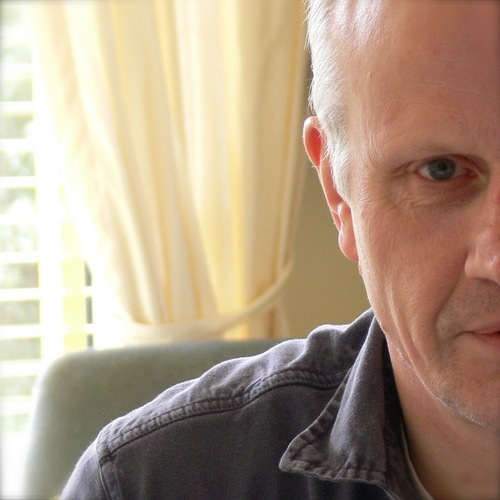
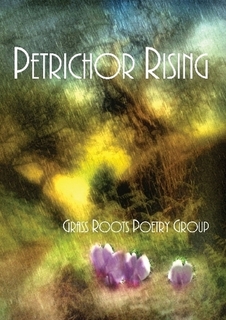
 John has been involved in the recent publication of two anthologies that are the result of online collaborations among two international groups of amateur and professional poets. One of these is The Grass Roots Poetry Group, for which he produced and edited their anthology, “Petrichor* Rising“. The other group is d’Verse Poet Pub, in which John’s poetry also appears The d’Verse Anthology: Voices of Contemporary World Poetry, produced and edited by Frank Watson.

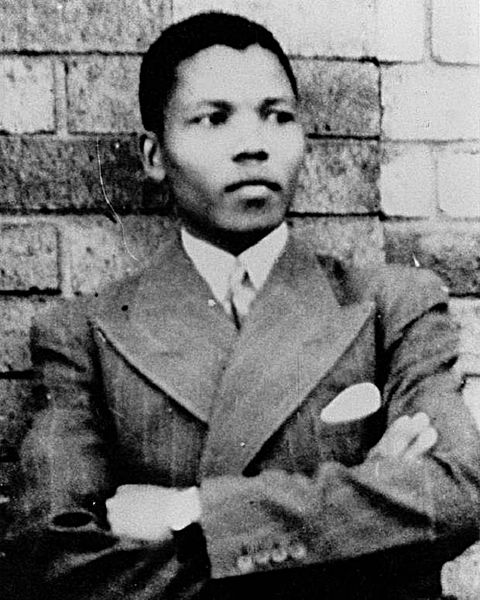
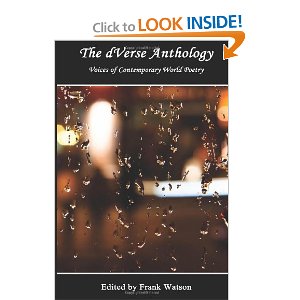


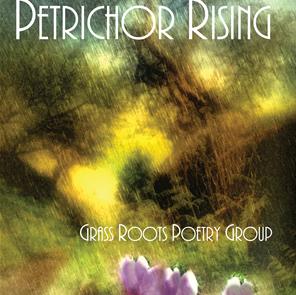




,_oeuvre_du_Maître_du_retable_de_Stauffenberg,_actif_au_15ème_siècle_(Musée_d%27Unterlinden,_Colmar).jpg)
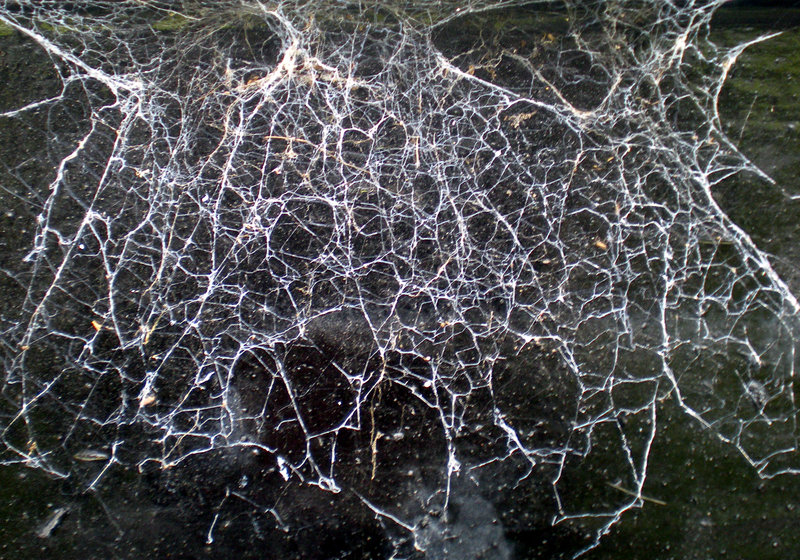
 The BeZine