The BeZine Blog

Posted in Fiction, Niamh Clune

New Shoots

Martha pushed the wave of hair from her mouth. It curled defiantly, springing back to long-established disobedience. Persistent, she thought, me and my curls.

Grey now, her hair once tumbled in fiery splendour, was alive, misbehaved ~ a shimmering red-gold, tossed easily by whispers of season’s change. Though faded, red gold still flecked her grey.

She had always loved Autumn ~ even in Spring ~ loved passion’s ripening, bearing fruit, swelling, dying and finding peace in Earth’s dormancy.

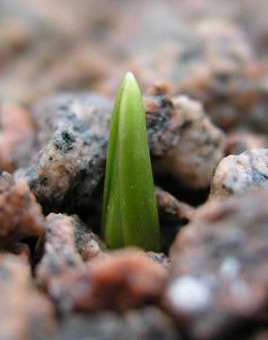
Gazing from her bedroom window upon the now silent, winter-ravaged garden made barren by endings, she noticed the first thin, green shoot pushing its way through frozen earth in reach of sun. It broke that ground disallowing any weight that might prevent discovery of new life. It pierced the earth, pushed it aside and reached upwards with unashamed vigour.new shoots (1) - Copy.png

Martha remembered many springs ~ the spring in her step, the song in her heart, the smell of freshly broken soil, the scent of blossom on the air, new love ~ the excitement of life begun when there were many springs to come.

The young shoot clamouring for sky stabbed her heart. That green shard ~ that razor sharp needle did not speak of hope or new beginnings ~ nor solace, expectancy, or the trumpeted arrival into a fresh season.

She would not see flowers sown by him; she would not smell soil fresh-turned by him. She would not gather herbs for an evening feast. Birds could not sing her wounded heart awake or delight with soaring melody. Her garden was empty and silent.

She moved across the room. At her dressing-table, she opened the drawer, and taking scissors between her slender fingers, she pulled the offending curl straight, and cut.

Round after round, tinged still with autumn fire, tumbled to the ground, where it lay still and final.

– Niamh Clune

© 2013, story and photograph, Niamh Clune, All rights reserved

430564_3240554249063_1337353112_n-1orange-petals-cover_page_001DR. NIAMH CLUNE (On the Plum Tree) ~ is the author of the Skyla McFee series: Orange Petals in a Storm, and Exaltation of a Rose. She is also the author of The Coming of the Feminine Christ: a ground-breaking spiritual psychology. Niamh received her Ph.D. from Surrey University on Acquiring Wisdom Through The Imagination and specialises in The Imaginal Mind and how the inborn, innate wisdom hidden in the soul informs our daily lives and stories. Niamh’s books are available in paperback (children’s books) and Kindle version (The Coming of the Feminine Christ). Dr. Clune is the CEO of Plum Tree Books and Art. Its online store is HERE.  Niamh’s Amazon page is HERE.

Posted in animals/animal welfare/interspecies connections, Environment/Deep Ecology/Climate Change, Liliana Negoi, Nature

On Christmas

Don’t let the title fool you . . .  because this post is prescheduled and because I will not write about Christmas in the traditional way, mainly because it isn’t today (as in “today, when I’m actually writing this text”) and also because everybody writes about Christmas these days, so I thought that a change would be good. Therefore I’ll write about the things that are going through my mind in this moment.

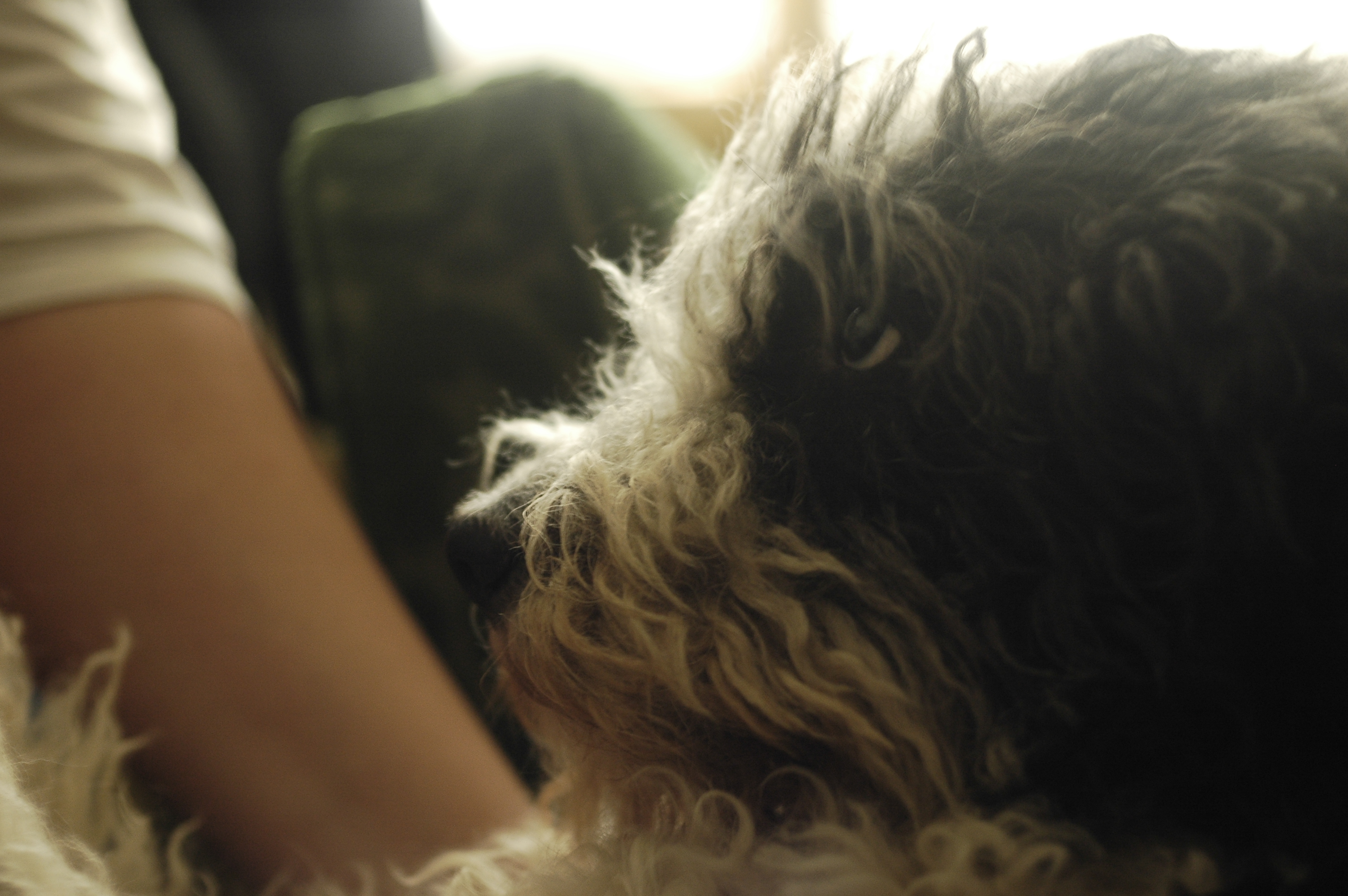
It’s rather early now, while I’m writing this, and the only company I have at this time is that of my dog, Bella, who constantly pushes me with her nose, in search for my hand. And while I caress her and look at her, I cannot help seeing the need for love in her eyes. She’s a member of our family for about ten years now (which is a lot of time for a dog) and everybody loves her. Some would say she’s been lucky. And the thought that pops in my mind now is “why do animals need to be lucky in order for people to love them”?

What did animals (in general) ever do wrong in order to deserve the harsh treatment given to them by certain representatives of the human species (otherwise nothing else than some supposedly evolved mammals)? Think about the stray dogs or cats, the experiments on mice and monkeys and other animals, the cruel hunting parties menacing with extinction certain species, and the list could go on.

I was asking myself at some point in time what is the purpose of flies – I honestly can’t stand them, and I’m sure that most of you can say the same – and a friend of mine told me that they simply are food for birds, and it’s good that they exist, because otherwise the birds would have to find food from other sources, and who knows what those would be?! His answer left me thinking. We already know that, should bees be extinct, everybody, but EVERYBODY on the face of the planet would have to suffer, that affected would be the ecosystem. The fact that we haven’t yet found out the hidden purpose of some animal, insect or plant doesn’t mean that it has none. It simply means that our understanding is still VERY limited. And that should make us cautious, careful, when interacting with all the life forms on our planet. And first of all with the planet itself – the biggest living organism with which we ever interacted directly.

I once bumped into a highly caustic text which stated that “should any animal species go extinct, so would the rest of life on earth, but should humankind go extinct, life on this planet would flourish.” Now, I like to think that we’re not THAT indispensable on this planet – such thought would be too painful. But what if we are? This acid poison of the “what if” should make us all stop for a second from what we’re doing and ponder. Maybe then we’d realize that it isn’t the dog that is lucky for having lived with us for ten years, but we are the lucky ones, having had for ten years such a loyal and loving friend. We are the lucky ones to have been born on a planet with so much potential, a place of such an indescribable beauty. We are the lucky ones to benefit from all the resources of this splendid parent we call Mother Earth. And we should all be thankful for that.

I think it’s not that bad, to see your luck in the eyes of a loving dog, on a Saturday morning :). Merry Christmas to all of you!

_DSC0787

© 2013 Liliana Negoi

____________________________________________________

The text is mine, the image (my dog, Bella) was taken some years ago by a very dear friend of mine, Mihai :).

IMG_7667LILIANA NEGOI  (Endless Journey and in Romanian curcubee în alb şi negru) ~ is a member of our core team on Into the Bardo. She is the author of three published volumes of poetry in English, which is not her mother tongue but one that she came to love especially because of writing: Sands and Shadows, Footsteps on the San – tanka collection and The Hidden Well.  The last one can also be heard in audio version, read by the author herself on her SoundCloud site HERE.  Many of her creations, both poetry and prose, have been published in various literary magazines.

Posted in Music

A Gift to Share With You … whether or not you are celebrating Christmas

WISHING EVERYONE

MUSIC, POETRY, ART

~ HEALING ~

From The Bardo Group Core Team

John Anstie

Naomi Baltuck

Terri Stewart

Corina Ravenscraft

Jamie Dedes

Josepth Hesch

Karen Fayeth

Victoria C. Slotto

Liz Rice-Stone

Michael Watson

Niamh Clune

Priscilla Galasso

Lily Negoi

Charlie Martin

Posted in Poems/Poetry, Victoria C Slotto

SALVATION Army

Photo Credit: Deviant Art
Photo Credit: deviantart

In the background,
he strips thyme and rosemary from their stems,
into a stainless steel bowl.
The scent of herbs, apple pie and ginger
pervades the family room
where

he watches war unfold on A&E.
An enemy’s blood splatters the screen.
I block out the noise of contradiction,
search for words of love and peace
to celebrate the season in verse.

Music sounds an ending.
I raise my head to witness
a good guy die.
No winners here.

A fire dances in the hearth,
then Mozart fills the room.

Will it be in music
that hope will enclose our battered world?
Will winter snow
cover scorched land, satisfy sere hearts?
Will love supplant bullets,
peace settle in the crevices of wounds?

Bells ring at the entrances of a local Walmart
beneath winter solstice sun.

– Victoria C. Slotto

Photo Credit: Sacramento Bee

© 2013, poem, Victoria C. Slotto, All rights reserved

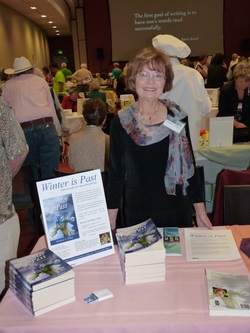
Victoria at the Palm Springs Writer's Expo March 2012
Victoria at the Palm Springs Writer’s Expo March 2012

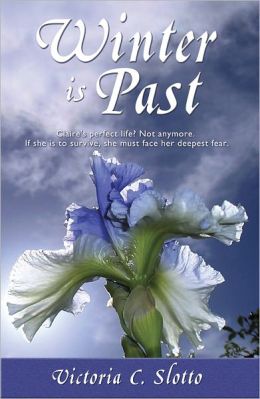
2940013445222_p0_v1_s260x420VICTORIA C. SLOTTO (Victoria C. Slotto, Author: Fiction, Poetry and Writing Prompts) ~ is an accomplished writer and poet. Winter is Past, published by Lucky Bat Books in 2012, is Victoria’s first novel. A second novel is in process. On Amazon and hot-off-the-press nonfiction is Beating the Odds: Support for Persons with Early Stage Dementia. Victoria’s ebooks (poetry and nonfiction) are free to Amazon Prime Members. Link HERE for Victoria’s Amazon page.

Editor’s note: Congratulations, Victoria, on that the long awaited publication of print copies of Jacaranda Rain, Collected Poems, 2012, Beautifully done.

Posted in Aaron Shepard, story

The Christmas Truce, 1914

This story was written by children’s author, Aaron Shepard, and was originally published in Australia’s School Magazine, April 2001. Mr. Shepard allows it to be reblogged with credit and copyright intact.

The Christmas Truce is a short story based on the true events of the famous Christmas Eve truce of 1914, which Arthur Conan Doyle wrote of as “one human episode amid all the atrocities.”  The story is longer than the ones we generally post, but this is a Christmas Eve gift and offered as something we can share with the children in our lives, aged nine or up. You will find that it is a story very much in the spirit of The Bardo Group.

Parents and educators will find stories and scripts for children’s plays at Mr. Shepard’s website HERE.

Copyright © 2001, 2003 by Aaron Shepard. May be freely copied and shared for any noncommercial purpose. 

Our thanks to Gail Walters Rose (Bodhirose’s Blog) for this one.

The story is formated as a letter ….

THE CHRISTMAS TRUCE
by
Aaron Shepard
.
Christmas Day, 1914

My dear sister Janet,

It is 2:00 in the morning and most of our men are asleep in their dugouts—yet I could not sleep myself before writing to you of the wonderful events of Christmas Eve. In truth, what happened seems almost like a fairy tale, and if I hadn’t been through it myself, I would scarce believe it. Just imagine: While you and the family sang carols before the fire there in London, I did the same with enemy soldiers here on the battlefields of France!

As I wrote before, there has been little serious fighting of late. The first battles of the war left so many dead that both sides have held back until replacements could come from home. So we have mostly stayed in our trenches and waited.

But what a terrible waiting it has been! Knowing that any moment an artillery shell might land and explode beside us in the trench, killing or maiming several men. And in daylight not daring to lift our heads above ground, for fear of a sniper’s bullet.

And the rain—it has fallen almost daily. Of course, it collects right in our trenches, where we must bail it out with pots and pans. And with the rain has come mud—a good foot or more deep. It splatters and cakes everything, and constantly sucks at our boots. One new recruit got his feet stuck in it, and then his hands too when he tried to get out.

Through all this, we couldn’t help feeling curious about the German soldiers across the way. After all, they faced the same dangers we did, and slogged about in the same muck. What’s more, their first trench was only 50 yards from ours. Between us lay No Man’s Land, bordered on both sides by barbed wire—yet they were close enough we sometimes heard their voices.

Of course, we hated them when they killed our friends. But other times, we joked about them and almost felt we had something in common. And now it seems they felt the same.

Just yesterday morning—Christmas Eve Day—we had our first good freeze. Cold as we were, we welcomed it, because at least the mud froze solid. Everything was tinged white with frost, while a bright sun shone over all. Perfect Christmas weather.

During the day, there was little shelling or rifle fire from either side. And as darkness fell on our Christmas Eve, the shooting stopped entirely. Our first complete silence in months! We hoped it might promise a peaceful holiday, but we didn’t count on it. We’d been told the Germans might attack and try to catch us off guard.

I went to the dugout to rest, and lying on my cot, I must have drifted asleep. All at once my friend John was shaking me awake, saying, “Come and see! See what the Germans are doing!” I grabbed my rifle, stumbled out into the trench, and stuck my head cautiously above the sandbags.

I never hope to see a stranger and more lovely sight. Clusters of tiny lights were shining all along the German line, left and right as far as the eye could see.

“What is it?” I asked in bewilderment, and John answered, “Christmas trees!”

And so it was. The Germans had placed Christmas trees in front of their trenches, lit by candle or lantern like beacons of good will.

And then we heard their voices raised in song.

Stille nacht, heilige nacht . . . .

This carol may not yet be familiar to us in Britain, but John knew it and translated: “Silent night, holy night.” I’ve never heard one lovelier—or more meaningful, in that quiet, clear night, its dark softened by a first-quarter moon.

When the song finished, the men in our trenches applauded. Yes, British soldiers applauding Germans! Then one of our own men started singing, and we all joined in.

The first Nowell, the angel did say . . . .

In truth, we sounded not nearly as good as the Germans, with their fine harmonies. But they responded with enthusiastic applause of their own and then began another.

O Tannenbaum, o Tannenbaum . . . .

Then we replied.

O come all ye faithful . . . .

But this time they joined in, singing the same words in Latin.

Adeste fideles . . . .

British and German harmonizing across No Man’s Land! I would have thought nothing could be more amazing—but what came next was more so.

“English, come over!” we heard one of them shout. “You no shoot, we no shoot.”

There in the trenches, we looked at each other in bewilderment. Then one of us shouted jokingly, “You come over here.”

To our astonishment, we saw two figures rise from the trench, climb over their barbed wire, and advance unprotected across No Man’s Land. One of them called, “Send officer to talk.”

I saw one of our men lift his rifle to the ready, and no doubt others did the same—but our captain called out, “Hold your fire.” Then he climbed out and went to meet the Germans halfway. We heard them talking, and a few minutes later, the captain came back with a German cigar in his mouth!

“We’ve agreed there will be no shooting before midnight tomorrow,” he announced. “But sentries are to remain on duty, and the rest of you, stay alert.”

Across the way, we could make out groups of two or three men starting out of trenches and coming toward us. Then some of us were climbing out too, and in minutes more, there we were in No Man’s Land, over a hundred soldiers and officers of each side, shaking hands with men we’d been trying to kill just hours earlier!

Before long a bonfire was built, and around it we mingled—British khaki and German grey. I must say, the Germans were the better dressed, with fresh uniforms for the holiday.

Only a couple of our men knew German, but more of the Germans knew English. I asked one of them why that was.

“Because many have worked in England!” he said. “Before all this, I was a waiter at the Hotel Cecil. Perhaps I waited on your table!”

“Perhaps you did!” I said, laughing.

He told me he had a girlfriend in London and that the war had interrupted their plans for marriage. I told him, “Don’t worry. We’ll have you beat by Easter, then you can come back and marry the girl.”

He laughed at that. Then he asked if I’d send her a postcard he’d give me later, and I promised I would.

Another German had been a porter at Victoria Station. He showed me a picture of his family back in Munich. His eldest sister was so lovely, I said I should like to meet her someday. He beamed and said he would like that very much and gave me his family’s address.

Even those who could not converse could still exchange gifts—our cigarettes for their cigars, our tea for their coffee, our corned beef for their sausage. Badges and buttons from uniforms changed owners, and one of our lads walked off with the infamous spiked helmet! I myself traded a jackknife for a leather equipment belt—a fine souvenir to show when I get home.

Newspapers too changed hands, and the Germans howled with laughter at ours. They assured us that France was finished and Russia nearly beaten too. We told them that was nonsense, and one of them said, “Well, you believe your newspapers and we’ll believe ours.”

Clearly they are lied to—yet after meeting these men, I wonder how truthful our own newspapers have been. These are not the “savage barbarians” we’ve read so much about. They are men with homes and families, hopes and fears, principles and, yes, love of country. In other words, men like ourselves. Why are we led to believe otherwise?

As it grew late, a few more songs were traded around the fire, and then all joined in for—I am not lying to you—“Auld Lang Syne.” Then we parted with promises to meet again tomorrow, and even some talk of a football match.

I was just starting back to the trenches when an older German clutched my arm. “My God,” he said, “why cannot we have peace and all go home?”

I told him gently, “That you must ask your emperor.”

He looked at me then, searchingly. “Perhaps, my friend. But also we must ask our hearts.”

And so, dear sister, tell me, has there ever been such a Christmas Eve in all history? And what does it all mean, this impossible befriending of enemies?

For the fighting here, of course, it means regrettably little. Decent fellows those soldiers may be, but they follow orders and we do the same. Besides, we are here to stop their army and send it home, and never could we shirk that duty.

Still, one cannot help imagine what would happen if the spirit shown here were caught by the nations of the world. Of course, disputes must always arise. But what if our leaders were to offer well wishes in place of warnings? Songs in place of slurs? Presents in place of reprisals? Would not all war end at once?

All nations say they want peace. Yet on this Christmas morning, I wonder if we want it quite enough.
Your loving brother,
Tom
– Aaron Shephard
Aaron Shepard allows this piece to be reblogged with credit and copyright intact. Mr. Shephard’s home page is HEREThe photograph (via Wikipedia) is in the public domain: A cross, left near Ypres in Belgium in 1999, to commemorate the site of the Christmas Truce in 1914. The text reads:
1914 – The Khaki Chum’s Christmas Truce – 1999 – 85 Years – Lest We Forget.


Posted in Christianity, Poems/Poetry, Victoria C Slotto

Stars and Midnight Blue

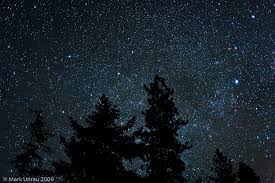
Photo Credit: scienceblogs.com

i.
white rose in winter
miracles we don’t expect
our God comes to earth

ii.
silent star-filled night
newborn hope envelopes earth
flurries of pure joy.

iii

christmas eve arrives
children with eyes wide-open
stars and midnight blue

– Victoria C. Slotto

The title of this poem comes from a stunning Christmas album by Enya.
© 2013, poem, Victoria C. Slotto, All rights reserved

Victoria at the Palm Springs Writer's Expo March 2012
Victoria at the Palm Springs Writer’s Expo March 2012

2940013445222_p0_v1_s260x420VICTORIA C. SLOTTO (Victoria C. Slotto, Author: Fiction, Poetry and Writing Prompts) ~ is an accomplished writer and poet. Winter is Past, published by Lucky Bat Books in 2012, is Victoria’s first novel. A second novel is in process. On Amazon and hot-off-the-press nonfiction is Beating the Odds: Support for Persons with Early Stage Dementia. Victoria’s ebooks (poetry and nonfiction) are free to Amazon Prime Members. Link HERE for Victoria’s Amazon page.

Editor’s note: Congratulations, Victoria, on that the long awaited publication of print copies of Jacaranda Rain, Collected Poems, 2012, Beautifully done.

Posted in Bardo News, Uncategorized

BARDO NEWS: reader and writer achievements, Victoria’s books, the growth of Niamh Clune’s independent press, Second Light Network calls for submissions

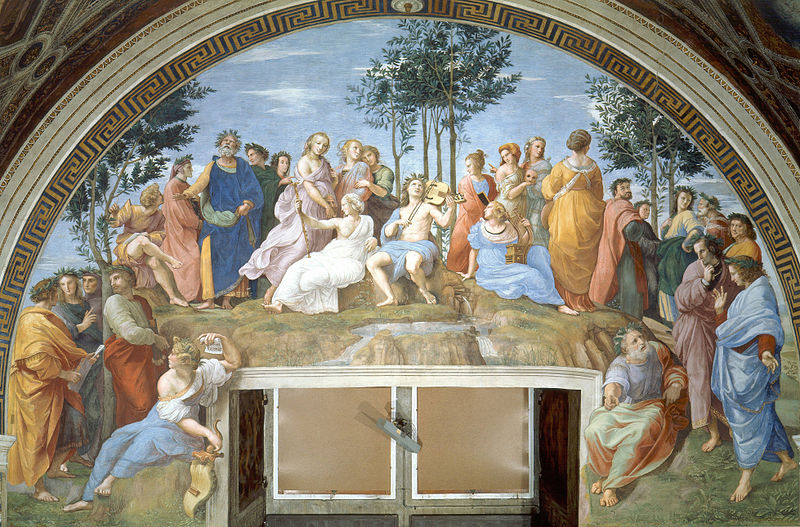
800px-Rafael_-_El_Parnaso_(Estancia_del_Sello,_Roma,_1511)WE CLOSE THE YEAR WITH KUDOS ALL AROUND for prodigious bloggers of every ilk with their plans for 2014 and their successes in 2013. So many of our readers and writers rose to the WordPress challenge of a post a day. Others took on special challenges related to seasonal changes or holiday events or their own personal sense of adventure. To name just a few:

  • From November 28 on, Terri Stewart (Slow Down, Begin Again: Spiritual Practices in Context) incorporated the work of many bloggers into a creative and joy-filled Advent Light event.
  • Instead of counting down on an Advent calendar, Priscilla Galasso (scillagrace) has been counting the free gifts we all get every day in a series of Advent essays that are beautifully written and both thoughtful and though provoking.
  • John Nooney (Johnbalaya), a faithful reader here, successfully incorporated his prodigious works from several blogs into one compact blog where he shares his many talents and interests including essays, poems, short stories, photography, and a love of music.
  • Beatrice Garrard (Adventures in Hats) started her first blog and will be joining us in 2014 as our college reporter with a monthly news post covering the arts and other topics of interest to us.
  • Liz  Rice-Sosne a.k.a. Raven Spirit (Noh Where) a devoted friend to Bardo has joined us as a core team member and will take an active leadership role in our collective Voices for Peace project. This is no small gift to us since she is also now a volunteer teacher of English-as-a-Second language. We hope she’ll share her thoughts and experiences on that effort as well. We have officially partnered our Voices for Peace project with 100,000 Poets, Musicians and Artists for Change.

There are many among us who don’t aspire to publication, but many do and they have successfully sold work to magazines and anthologies, won contests, and/or attracted publishers or chose to self-publish.

Victoria Slotto's Mom
Victoria Slotto’s Mom

Not the least is Victoria C. Slotto whose first novel was published in 2012 by Lucky Bat Press. From that experience she moved on to publish Jacaranda Rain: Collected Poems, 2012, now in a newly-minted paperback edition, and  Beating the Odds: Support for Persons with Early Stage DementiaWe took the time to read the latter this month and found it to be chockfull of commonsense suggestions that are easily incorporated into daily activities with which you can encourage your loved one. This work was inspired by Victoria’s care of her elderly mother and her experiences as a nurse.

The first section, Shoring Up Memory!, is alone worth the price of admission. She advises phone logs, maintaining a memory board and lists, and a commitment to maintaining a Day Timer and a journal. Other advice includes simplifying life: no over-booking, doing what can be done to minimize stress, and reworking the home so that it is as danger-free as possible. She provides information on getting legal advice, creating a team of helpers (our term, not hers), finding doctors and other health care providers. Victoria emphasizes the importance of physical and mental exercises, faith and prayer, and family support. Well done, Victoria. (Photo copyright, Victoria Slotto, All rights reserved.)

PLUM TREE BOOKS and THE BARDO GROUP have tied the knot and are collaborating to evolve our collective of artists and musicians, poets and writers, encouraging fellowship and appreciation.  Plum Tree Books (PTB) CEO, Niamh Clune, writes about PTB’s latest effort: “This is the bones of the news…  I have created, Plum Tree Books ~ INSIGHTS ~ A magazine about publishing, writing, children’s books, illustrating and poetry. I am receiving so many of your wonderful poems, and requests from people who would like to write for Plum Tree Books, that I thought this would be a great chance to expand our horizons and include more of your work as well as sharing insights into how we are growing, creating, and collaborating. This is all part of building the Plum Tree Books’ platform to give some of the wonderful talent expressed through FaceBook, blogs and The Bardo Group a broader exposure. Coming in January!”

A FINAL REMINDER ABOUT THE SECOND LIGHT NETWORK’S CALL FOR SUBMISSIONS FOR THEIR 2014 ANTHOLOGY. The deadline is 15 January 2014.

51rk8frRwfL._SY344_BO1,204,203,200_Her Wings of Glass (the title a quotation from Sylvia Plath) is to be a 200 page anthology that will complement but not repeat Second Light’s previous anthology (with Arrowhead Books), Images of Women. The focus of this anthology is ‘big issues’, for example the future of the planet, good and evil aspects of our relationship with the natural world and with each other, different aspects of our imaginative understanding of ‘who we are’.

The invitation is for up to six poems per submission, not more than 200 lines in total, with three copies of each poem to Dilys Wood at 3, Springfield Close, East Preston, West Sussex, BN16 2SZ, by January 15th 2014 together with the administrative fee of £5 (Second Light members) or £8 (non-members). Cheques payable to ‘Second Light’ or pay online at the poetry p f (online shop (filter to ‘Wings’). Non-UK submissions may be sent by e-mail as .doc or .pdf attachments, only to Second Light Administrator (poet Anne Stewart. ) Anne Stewart is a fabulous help with your technical questions. [Check out Anne’s poems HERE.]

Issue 11, November 2013 of ARTEMISpoetry is available now through Second Light Network and submissions are currently being accepted for the next issue. Details HERE.

BLOGGERS IN PLANET LOVE: This is a heads-up on our event in the planning for Valentine’s Day 2014. Details to be determined and announced. Look for more news about this collaborative effort addressing climate and environmental concerns and the meaning of nature in our lives.

WRITERS’ FOURTH WEDNESDAY with Victoria C. Slotto will resume on 22 January 2014, running every month up-to-and-including 22 October 2014.

… and, as the saying goes “last but not least” … a WW I memorial project of John Anstie’s (My Poetry Library and 42church group from Christ Church Stocksbridge featuring poet Ian McMillan …

Best wishes for the New Year from all of us to all of you. If you missed the deadline for this post, feel free to leave your announcement in the comments section. If you have something you’d like us to include in the next news post, leave a note here in the comment section as well or under any upcoming post and someone will get back to you. The next news post will go up on January 26, Sunday at 7 p.m. PST. The deadline for news submissions is Friday, January 24.

– The Bardo Group

Posted in Essay, Spiritual Practice, Terri Stewart

Sacred Space in Music

Probably most of us connect to music of some sort. And we all have our favorites. My favorites are a moving target…sometimes Katy Perry and sometimes Arvo Part. I’d like to consider that all music is sacred in some way. The creative spirit arriving and making something new. But, I admit, I can be an old fuddy duddy when I hear some of the music the youth I work with listen to. On the other hand, it is definitely a creative expression of their understanding of life; it is a way that they share their story.

What I’d like to consider for an exercise in capturing sacred space today, is not just any old music or reflection on your favorite song, but an exercise of audio divina. Listening with a contemplative spirit. I have chosen the Amen chorus from Handel’s Messiah. I chose this because Amen, strictly translated, means “So be it!” and it is a soaring and beautiful ending to this grand piece of music. So get comfortable! Here we go!

The earth has music for those who listen.”  ― George Santayana

I invite you to use this extraordinary listening and enter into the contemplative prayer practice of Audio Divina using the video and the steps outlined below.

  1. Explore the music. Listen once. Journal any notes you wish to make about the piece.
  2. Go deeper, listen a second time. Where were your ears drawn? What feelings rose up? Engaging your imagination, enter the music. Where are you? What are you doing? Do you see something differently from this vantage point? What relationships do you notice? Journal your reflections.
  3. Allow the music to lead you into a time of meditation Silently, offer prayers of gratitude, intercession, lament, confession, or praise – whatever wells up in you. If you wish, journal these prayers.
  4. Adjust your sitting position so that you are comfortable. You can continue listening to the music with your eyes closed.  Release tension in your neck, shoulders, arms, hands, legs and feet. Breathe deeply and slowly. Find your quiet center.  Rest in this quiet for 10-15 minutes, being open to all that is within you. Allow thoughts to drift past you as if they were clouds. If your mind wanders, that is okay, call it back to attention when you are able. At the end of this time, slowly open your eyes. Breathe deeply. Journal any insights you want to remember, actions you are invited to take, and any thoughts or feelings that are present. You may have only had random thoughts flying though your mind the entire time. Journal about that. Be gentle with yourself and have no expectations of grand revelations. The point is to practice and to offer quiet time to be attentive .
  5. Close by lifting up your gratitudes and thanksgivings.

If this music does not appeal, use this same process with music of your choice.

It is not often that we get the chance to listen to something-not for the pleasure it gives us, but for what it can teach us. I hope you can find a little sacred space in the music you choose to learn from.

Shalom and Amen,

Terri!

For a longer experience that delves into the beautiful music of Handel’s Messiah. You could listen to Part 3 (below).

© 2013, post, Terri Stewart, All rights reserved

terriREV. TERRI STEWART is Into the Bardo’s  Sunday chaplain, senior content editor, and site co-administrator. She comes from an eclectic background and considers herself to be grounded in contemplation and justice. She is the Director and Founder of the Youth Chaplaincy Coalition that serves youth affected by the justice system. As a graduate of Seattle University’s School of Theology and Ministry, she earned her Master’s of Divinity and a Post-Master’s Certificate in Spiritual Direction. She is a contributing author to the Abingdon Worship Annual. (The 2014 issue just released!)

Her online presence is “Cloaked Monk.” This speaks to her grounding in contemplative arts and the need to live it out in the world. The cloak is the disguise of normalcy as she advocates for justice and peace. You can find her at www.beguineagain.com ,www.twitter.com/cloakedmonk, and www.facebook.com/cloakedmonk.  To reach her for conversation, send a note to cloakedmonk@outlook.com

Posted in Christianity, Meditation, Poems/Poetry, Spiritual Practice, Victoria C. Slotto

The Challenge of Light–Advent Reflection

The people walking in darkness
    have seen a great light;
on those living in the land of deep darkness
    a light has dawned.  Isaiah 9:2

Photo Credit: Mike Freisen

The Challenge of Light

i.

advent is not about the coming

of a sweet baby.

it is not about sentimental,

trumped up emotion.

advent challenges us

to an adult acceptance

of the kingdom of god,

to social imperatives,

to self-forgetfulness,

to letting go,

to a deliberate emptiness.

ii.

we like to make the Christ

into a perpetual baby.

we can cuddle a baby,

a baby asks nothing of us.

the Christ is so much more demanding.

iii.

advent doesn’t just happen

the four weeks leading up to Christmas.

our lives our one huge advent.

our lives are about bringing light

into this dark world.

iv.

in advent and winter we wait for light.

do we forget it’s up to us

to be light in the darkness

of a world that is

confused

stumbling

blinded

afraid?

v.

it’s easy to get hung up

in religion,

in practice,

in institutional think.

it’s easy to feel complacent

because we go to church,

because we give money.

the litmus test

is giving of ourselves,

is embracing mystery.

advent is not just a passive waiting.

it allows that we are responsible

to be light-bearers.

– Victoria C. Slotto

© 2013, poem, Victoria Slotto, All rights reserved

Victoria at the Palm Springs Writer's Expo March 2012
Victoria at the Palm Springs Writer’s Expo March 2012

2940013445222_p0_v1_s260x420VICTORIA C. SLOTTO (Victoria C. Slotto, Author: Fiction, Poetry and Writing Prompts) ~ is an accomplished writer and poet. Winter is Past, published by Lucky Bat Books in 2012, is Victoria’s first novel. A second novel is in process. On Amazon and hot-off-the-press nonfiction is Beating the Odds: Support for Persons with Early Stage Dementia. Victoria’s ebooks (poetry and nonfiction) are free to Amazon Prime Members. Link HERE for Victoria’s Amazon page.

Editor’s note: Congratulations, Victoria, on that the long awaited publication of print copies of Jacaranda Rain, Collected Poems, 2012, Beautifully done.

Posted in Joseph Hesch, poem, poetry

Silent Night in Arbor Hill

Sheridan Avenue, Albany, N.Y.
Sheridan Avenue, Albany, N.Y. (Photo credit: chuckthewriter)

I saw them emerge from the shadow of shadows
that blanketed the alley connecting
Orange Street to Sheridan Avenue,
a vacant-eyed lane of abandoned houses
you wouldn’t wish to travel in
well-strapped daylight. Into the hazy edge
of a lemon-light circle beneath the lone
strobing street lamp they edged,
this young couple and their baby.
Behind him, the young man dragged
a shopping trolley that held a suitcase,
some groceries and a few presents.
The young woman held her infant close
against her breast to protect it—
from the cold or the city, I couldn’t judge—
as the snow decided it was its time.
As I drove past, upon the railings
of the darkened doorways, tiny lights
blinked and from within one a familial
brightness shone as they entered.
A once-a-year peace came over all
of us in that place, at that time,
and I thought “What a fine night,”
that silent night in Arbor Hill.

© Joseph Hesch 2013

This is the true Christmas Eve story of leaving my office in the old Times Union newspaper building during my years working there, inside the eastern edges of the Arbor Hill neighborhood in downtown Albany. I couldn’t believe what I saw, either. But there they were, this tiny family. That tableau has stayed with me for seven years. And today, between noon and 1:00, it became yours, too. A most peaceful and joyous of holidays to you all, friends.

– Joseph Hesch

© 2013, poem,  Joseph Hesch,  All rights reserved

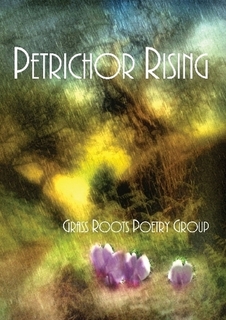
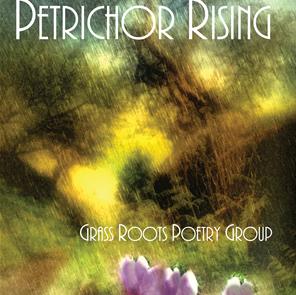
Hesch Profileproduct_thumbnail-3.phpJOSEPH HESCH (A Thing for Words) is a writer and poet from Albany, New York , an old friend of Bardo and a new core team member. Joe’s work is published in journals and anthologies coast-to-coast and worldwide. He posts poems and stories-in-progress on his blog, A Thing for Words.  An original staff member at dVerse Poets Pub website, Joe was named one of Writers Digest Editor Robert Lee Brewer’s “2011 Best Tweeps for Writers to Follow.” He is also a member of the Grass Roots Poetry Group and featured in their 2013 poetry anthology Petrichor Rising.

Posted in Christianity, Liliana Negoi, Meditation, meditative, Mortality, mystic, Spiritual Practice

On giving

DSC_0313My kids had a small festivity at kindergarten. They sang songs, and recited poems, and then Santa Claus came and gave gifts to all of them…overall it was nice. And obviously crowded, because for each of the kids in the festivity, there was at least one adult in the public in front of them, admiring them and cheering them and…doing whatever adults do when attending their children’s festivities.

After we left, when we got back home and the kids opened their presents and began to play, I couldn’t help thinking about the children of this world whose Christmas gift may not be big enough as to contain more than some fruit, let alone toys or other things. And that’s sad, because, above all, Christmas is a time of giving. Not because of Santa Claus, but because of its original meanings. Go beyond the birth of Christ, which was a gift in itself, given to the world (yes, I know that according to some new calculations Christ was actually born in spring, but it’s the symbol I’m talking about here), go back to those times of yore, when the only thing celebrated during this period of the year was the winter solstice – the joy that, after slowly shortening its gift of daily light for six months, the sun was beginning to turn the wheel around and days were starting to “grow” again. This was the gift people got back then – light. More light. Which, come to think about it, is such an awesome and priceless gift!

Anyway, the point of this pondering was that of reminding you all that, even if I don’t believe that giving should be the appanage of Christmas time alone but a way of life, I do believe that this is a good time to remember about all the gifts that we have ever been given, no matter by whom, and to try and imagine how our lives would have been had we not received those. Starting with the gift of life from our parents, and to the gift of blessings from our children.

And if you can, if you have the means, help those in need by filling their Christmas time with a little more light. You don’t have to give huge gifts – the simple fact that someone thought about them and gave them anything at all will be more than what they would expect. And their joy when receiving your present will be a priceless gift you give yourselves.

© 2013 Liliana Negoi

The photo attached was taken from http://morguefile.com.

IMG_7667LILIANA NEGOI  (Endless Journey and in Romanian curcubee în alb şi negru) ~ is a member of our core team on Into the Bardo. She is the author of three published volumes of poetry in English, which is not her mother tongue but one that she came to love especially because of writing: Sands and Shadows, Footsteps on the San – tanka collection and The Hidden Well.  The last one can also be heard in audio version, read by the author herself on her SoundCloud site HERE.  Many of her creations, both poetry and prose, have been published in various literary magazines.

Posted in Br. David Steindl-Rast, Film/Documentaries/Reviews, Meditation, Music

The Ultimate Grace of Gratitude

The heart of this little gem is the gift of the very dear Br. David Steindl-Rast. If you are familiar with Br. David’s philosophy, writing, and voice, you will have immediately recognized who wrote and delivered the narrative though for some strange reason he is not credited.

BROTHER DAVID STEINDL-RAST (b. 1926)

Viennese, Catholic Benedictine Monk

Br. David is notable for his work fostering dialogue among the faiths and for exploring the congruence between science and spirituality. Early in his career he was officially designated by his abbot to pursue Catholic-Buddhist dialogue. He studied with several well-known Zen masters. He is the author of feature articles, chapter contributions to collections, and books. Among the most notable are Belonging to the Universe (with Frijof Capra) and The Music of Silence: A Sacred Journey Through the Hours of the Day (with Sharon Lebell). Br. David is the co-founder of A Network for Grateful Living, dedicated to the life-transforming character of gratitude.

THE FILMMAKER

Louie Schwartzberg, the film-maker, is an American and well-known for his time-lapse photography. The short-film here is one of several – each with a different theme – which you can find on YouTube.

THE MUSIC

The mood music background is by composer Gary Malkin. “He is founder of Musaic and Wisdom of the World™, a media production company and web site. He is also the co-founder of Care for the Journey, a care-for-the-caregiver initiative for healthcare professionals.” MORE

Video uploaded to YouTube by 

Photo credit ~ Br. David Steindl-Rast, courtesy of Verena Kessler. She has released the photograph into the public domain.

Posted in Corina L. Ravenscraft, Poems/Poetry

~ Epic Every Day ~

Image borrowed from graffitizen.com

Image borrowed from graffitizen.com

Of all the heroes and heroines,
The ones unsung,
Are the ones I like best.
Of all the super-heroes’ skins,
Quiet humility cloaks the best-dressed.
They give the rest of the world a smile,
Those “little people” all over the planet,
Selflessly making our lives worthwhile,
Whose sacrifices we take for granted.
If you can read this,
Thank a teacher.
Free to speak your thoughts?
Thank a soldier.
The “value” of the jobs of each were,
In the minds of each beholder.
My superheroes are the common men,
And women who “practice random acts
Of kindness and senseless beauty”, and,
Whose inner radiance attracts.
This goes out to all of you, who,
Give of yourselves each and every day,
Practice compassion, speak kindly to
Those who need YOU to guide their way.
All of you, who sing and dance with light,
All of you, who speak for the voiceless masses.
All of you, who make the world’s wrongs right,
All you Clark Kents with your taped-up glasses…
You may not wear capes,
Or an “S” on your chest,
But YOU’RE the superheroes that I like best!
You have my thanks,
And admiration, too.
The world is so much better
Because of people like YOU!

~ C.L.R. ~ © 2011

Corina-1CORINA L. RAVENSCRAFT (Dragon’s Dreams) ~ is an old friend of The Bardo Group and a new member of the Core Team. She is a poet and writer, artist and librarian who has been charming us through her blog since 2000, longer than any blogger in our little blogging community.  In her engaging “about” on her blog HERE, Corina says, “I’m not a materialistic person, because I’ve learned that it’s not the “things” in life which really count, but the people you connect with, whose lives you touch or who touch yours. I don’t take anyone or anything for granted because I know from experience that it can all disappear in the blink of a cosmic eye.  People and animals are so much more important (and interesting!) to me than any kind of material possessions.”

Posted in Uncategorized

Unreality

[Terri’s latest enchanting piece, “Sacred Space for Particles”, brought back to me a poem I wrote after seeing an absolutely riveting documentary – on the BBC’s often excellent science programme, “Horizon” – about the search, by Particle Physicists for the Higgs Boson particle. It’s a pretty crude poem, but encapsulates the essence of what my scientific training allowed me to understand, with a sprinkling of poetic licence]

461px-Candidate_Higgs_Events_in_ATLAS_and_CMSHow far can poets go, then,
down into ‘icle physics?
To discover parts of subatomic mass,
so small it is beyond minute
and, in just a second, what happens is
really unbelievable, beyond imagination.
Protons collide with protons
and create a random mess
of particles, so mini and invisible,
that they cannot find them all!
There’s one they really had to find:
and in ten years, they found top quark.
So small it was that it could not be seen
or heard or measured, but they did…
they did, the clever buggers, they did!

I can see and hear and feel him
stirring in his grave; Albert is excited
at the very thought of contemplating
the distinct possibility that space-time,
(that is the space-time he invented)
could actually be outside the universe
or is that what he meant by relativity?
Is it perhaps, therefore inside itself?
Who will win the race to tell?
We know they’ll find a smaller particle
[they say they know of one already] that’s
smaller than top quark, so small it cannot be,
it couldn’t even exist, until another brain
turned it round and called it by
a human name; Higgs-Boson is…

Well, he is like a wanted criminal
only, so romantic, all the greatest
physicists and philosophers of the world
want a piece of him, or her.
They have a huge accelerator,
deep under mountains, under ground,
where no harm can come to us.
They justify the billions by saying
that the quest is so enjoyable;
so much a part of human instinct
to enquire about the boundaries,
[if they exist at all] of our perception..
..of reality, by physics and philosophy.
The journey’s worth the cost, they say,
but all the poets, they know so much more.

They know the nature of the universe
may be measured in very ‘icle parts,
so small, so infinitesimally small,
that we suspect they are beyond
description using epithets. Oh no,
they’re under the spell of mathematics!
No earthly words suffice, not there.
Even the ancient Greeks didn’t know this;
their Alpha has been squared, and will
Omega cubed and integration, calculus
return the answer they all crave?
Or will the search for ultimate smallness,
through fuzziness, get us to the end?
Is the start to finish of a shrinking universe,
rather like a journey round the Circle line?

So we could arrive back at the point
where it all started; where we all began:
four dimensional Space-time Relativity.
The structure of the universe, a hologram?
Could we be a product of our imagination?
To recapitulate, then, we are in search
for something that is so damned small,
that we can’t see it, hear it, measure it
in any human way at all!
And yet, theoretical physicists claim
that one day soon, they will exclaim
Eureka! We have found Higgs-Boson!
But if they can’t describe it mathematically,
the beginning and the end of everything
is the poetical imagining of unreality.

– John Anstie

© 2011, poem, John Anstie, All rights reserved
Photo credit ~ LHC -CHERN Cocument Server licensed under CC A-SA 3.0 Unported License

John_in_Pose_Half_Face351w-rH34dTL._BO2,204,203,200_PIsitb-sticker-arrow-click,TopRight,35,-76_AA300_SH20_OU01_JOHN ANSTIE (My Poetry Library and 42) ~ is a British poet and writer, a contributing editor here at Bardo, and multi-talented gentleman self-described as a “Family man, Grandfather, Occasional Musician, Amateur photographer and Film-maker, Apple-MAC user, Implementation Manager, and Engineer. John participates in d’Verse Poet’s Pub and is a player in New World Creative Union. He’s been blogging since the beginning of 2011. John is also an active member of The Poetry Society (cover1UK).

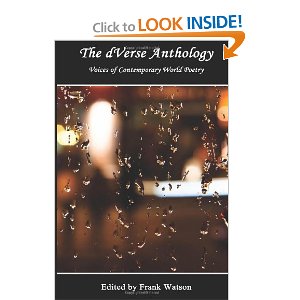
John has been involved in the recent publication of two anthologies that are the result of online collaborations among two international groups of amateur and professional poets. One of these is The Grass Roots Poetry Group, for which he produced and edited their anthology, “Petrichor* Rising. The other group is d’Verse Poet Pub, in which John’s poetry also appears The d’Verse Anthology: Voices of Contemporary World Poetry, produced and edited by Frank Watson.

* Petrichor – from the Greek pɛtrɨkər, the scent of rain on the dry earth.

Posted in Naomi Baltuck, Photo Essay, Photography/Photographer

Making Correct Change

Imagine a time when Manhattan was all forest.  Now the surviving trees are like living things herded into a corral of concrete and steel.

We have careened through time like a car without brakes…

In our wake a city of skyscrapers has sprung up where once a forest grew, but the city remembers its roots…

The past lurks, like a silent ghost, peeking out from dirty windows in the attic…

…or a little lost child, peering from between the legs of strangers in a crowd.

Beneath all the the glitz and glamor and bright lights…

…the old grand dame still thrives.

From past and present must come the future.

If we proceed with caution…

…careful reflection…

…and respect for all living things…

…the heart of the city will always be strong.

All images and words copyright 2013 Naomi Baltuck

NaomiPHOTO1-300ppi51kAqFGEesL._SY300_NAOMI BALTUCK ~ is a Contributing Editor and Resident Storyteller here410xuqmD74L._SY300_ at Bardo. She is a world-traveler and an award-winning writer, photographer, and story-teller whose works of fiction and nonfiction are available through Amazon HERE. Naomi presents her wonderful photo-stories – always interesting and rich with meaning and humor – at Writing Between the Lines, Life from the Writer’s POV. She also conducts workshops such as Peace Porridge (multicultural stories to promote cooperation, goodwill, and peaceful coexistence), Whispers in the Graveyard (a spellbinding array of haunting and mysterious stories), Tandem Tales, Traveling Light Around the World, and others. For more on her programs visit Naomi Baltuck.com

Posted in Jamie Dedes, John Anstie, Poems/Poetry, Poets/Writers, Writing

“Petrichor Rising” and how the Twitterverse birthed friendships that in turn birthed a poetry collection

This collaboration by the Grass Roots Poetry Group is a wonderful example of how social networking can work at its very best. This feature is the companion piece to John Anstie’s Bardo post on Monday, “To Edit, Perchance to Publish …” and includes an interesting interview with John as well as a brief review of the book. Several take-away lessons from the GRPG collaboration. Enjoy! Jamie

Jamie Dedes's avatarJamie Dedes' THE POET BY DAY Webzine

product_thumbnail-3.php“I always had this notion that you earned your living and that poetry was a grace.” Seamus Heaney (1939-2013), Irish, poet, playwright, translator, educator and Nobel Prize winner

I’m sure my friend, John Anstie, poet and renaissance man, The Bardo Group core team member, and editor of and contributor to Petrichor Rising (eBook and paperback), a 2013 poetry collection of The Grass Roots Poetry Group (GRPG), would prefer that I focused on the poems and the collection. The feature-writer in me loves a good story though. (Forgive me, John!) The coming together of this group and the publication of their collection is as good a story as any and better than most … and hence, I break my usual self-imposed word limit on posts. Read on … You may recognize yourself in some of this …

“I do accounting. I am a writer.” an employee corrected…

View original post 1,770 more words

Posted in Jamie Dedes, Poems/Poetry

Our Cassandra

 ♥

Our Cassandra’s agony

torments

in poems of prophecy

and breaks our hearts

upon the stone

of her insanity

She calls on death

to visit

one self-appointed night

And we,

her guardian angels,

wearied by her fight

Still

we soldier on

with all our might


©2012,poem,Jamie Dedes,All rights reserved * Illustration ~painting/Cassandra by Evelyn De Morgan (1885-1919), U.S. public domain photograph

Photo on 2012-09-19 at 20.00JAMIE DEDES ~ My worldly tags are poet and writer. I am in my sixth year of blogging at The Poet by Day,the journey in poem, formerly titled Musing by Moonlight.  Poetry is my spiritual practice. Through the gift of poetry (mine and that of others), I enter sacred space.

Posted in Essay, Spiritual Practice, story, Terri Stewart

Sacred Space: Myth-Adventures

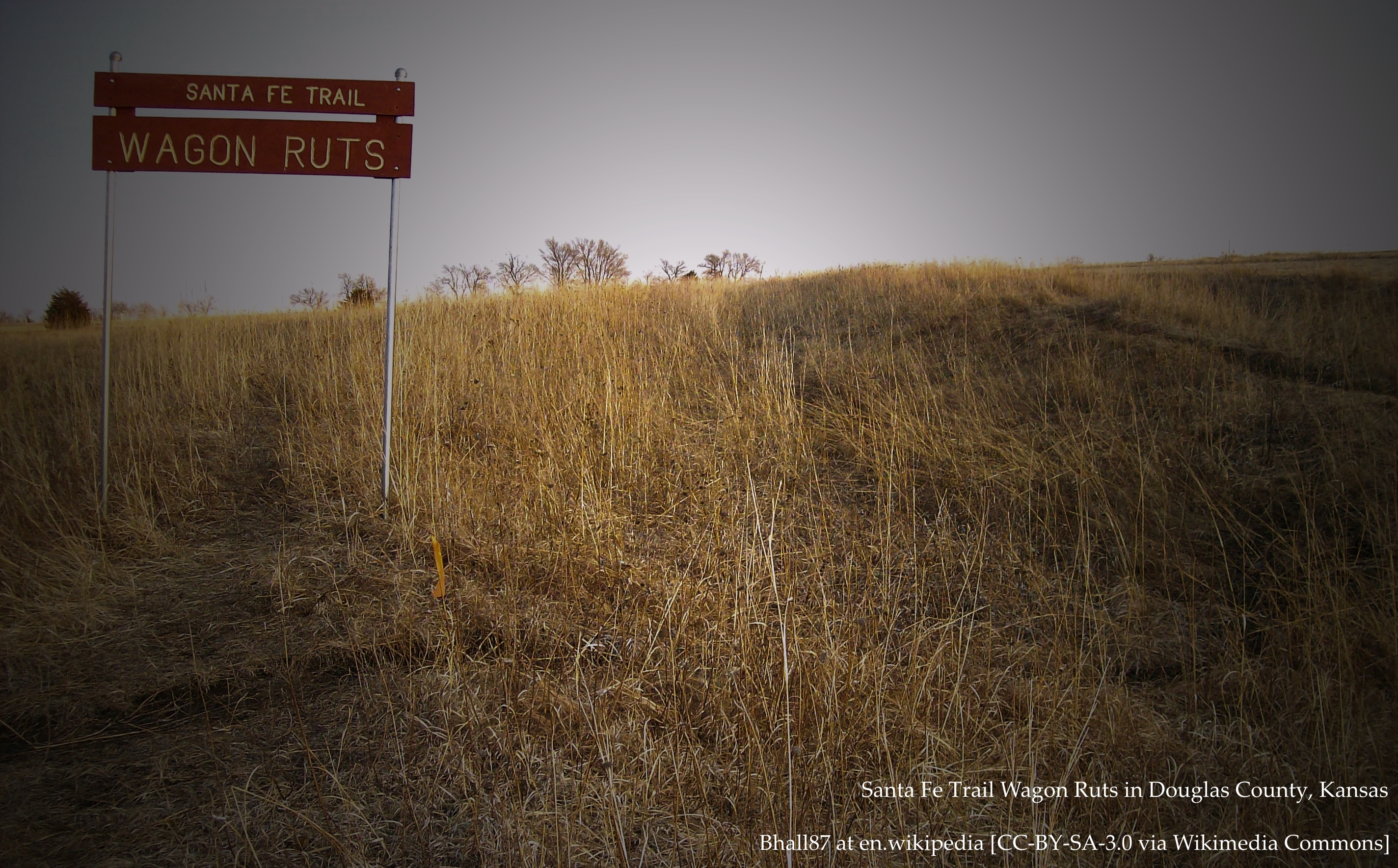
wagonrutts
Wagon Ruts

When I was a little girl, I thought, “I should have been a pioneer woman!” I thought I was strong, and self-reliant. Well, I was. But I am certainly glad that I was not born a pioneer woman or I would have died in child-birth somewhere on the western horizon. The myth of the pioneer woman, though, has stayed with me through time as it is definitely incorporated in some aspects of my personality.

Some of these traits are as named…strong, self-reliant. But I would also add creative, thinking of new ways to do things, starters, innovators, and backbones of their society and of the family. These are all mythical traits with connection to real and imagined features. What I learned as a young girl, where in Colorado I could still see the tire tracks through the prairie, was a one-sided view of a pioneer person.

The truth of the matter is that in order for western expansion to happen, people had to be pushed out and that was the indigenous peoples of North America. So an innovator, starter, pushy pioneer woman and her family was actually displacing native peoples. Bummer. They did not teach us that story in elementary school! Therefore, there is part of that mythology to let go of. The “surviving at all costs” thinking needs to be tempered with an awareness of what it means to negotiate power and an understanding of my own social location.

And there is the other part of my mythology. It stems from a story about my grandfather. He was 1 of 17 kids. Fact. I was told or heard somewhere along the way that my grandfather’s mother was Native American. This would have been one of the tribes from New York. Probably the Cayuga. Who knows? It is a great myth for a girl to latch onto. My pioneer woman is married to a strong, amazing (17 kids!) indigenous woman. That is fun. But what exactly do you do with that when it is hearsay and unsubstantiated? Holding the story became enough. Even when I got older and researched on ancestry.com, I did find the names of the two women that would have been the probable mothers to my grandfather, one was traceable further, the other was simply “Miss Kitty.” Hypothetically, that would be her. Cool. That makes me a smidge of everything. It also explains the profound connection I have with the land of my birth. It does not merely go back hundreds of years, but perhaps thousands. Steadfastness.

And then there is my spiritual mythology. I am a Christian and have a liberal understanding of what scripture is. I don’t hold it tightly in a literal way. But I do hold it tightly in a mythological way. There are amazing stories if we read with subtext and if I read, “In the beginning, there was a formless void.” I can easily imagine everything that the “Big Bang” teaches us from a science standpoint. Spectacular. The Big Bang becomes a new mythology or a new creation story to be incorporated into my life and beliefs.

What is the point of all this myth and where am I going with it?

Myth seems to the story, spoken or unspoken, that we live our lives by. I spend a lot of time talking to people about telling their story. What is your story? What does it tell you? How does it give you life? And stories do not always give life.

Thursday, I was sitting in the juvenile detention center with a youth. He opened up to me in a way he hasn’t in the last 12 months I have known him. He told me more about gangs and gang mythology than I had ever heard before. Oh, he would not have used the words “gang mythology,” but there it was.

“Miss Terri, do you know why we don’t ever say the word donut?”

“Uh, no. I’m not sure I was ever even aware you didn’t say donut.”

“Well, when King David was killed he was in the donut shop. So we don’t say donut out of respect for King David.”

I was mightily confused. King David? King David never went to a donut shop! Donut shops are not even in the Bible! Then it finally dawned on me. He was talking about a gang leader, David Barksdale. Now, I am certain that there has been a conflation of David Barksdale with local gang happenings for reasons that are beyond this discussion, but the point is that it is their myth. Their story. It defines who they are even to the point that they go for “pastries” not “donuts.” (Other parts of their myth – no fish on Friday because of a similar reason, and wear red every Friday to honor their fallen comrades. Oh, and the leaders don’t listen to the young people just like every organization in existence.)

With this conflation of stories about their gang leaders, they recover David Barksdale who did some extraordinary things with his leadership. (Stick with me…this is odd). David Barksdale was from the 1960s/1970s. He died in 1974. He became tired of the killing between gangs and united gangs in Chicago so that they came together in a truce. At that point, he started several social service programs aimed at helping his people have better opportunities. That’s a pretty good myth. (It goes bad again, but at his death and afterwards.)

This young person’s myth was defining who he was in extraordinary ways. He ritualized the mythology of the gang. And in this case, the overall mythology is not life-giving. I would describe it ultimately as death-dealing. So personal mythology or our personal story are very important. They can put or keep us on a trajectory towards greater life or towards death.

Please, let’s choose life.

I asked myself, “What is the myth you are living?” and found that I did not know. So…I took it upon myself to get to know “my” myth, and I regarded this as the task of tasks…I simply had to know what unconscious or preconscious myth was forming me. ~C. G. Jung, The Portable Jung

How do we get to know our myth? What can we recognize as myth? Can we have an understanding that our myths are sacred story created just for us? Here are fundamental questions that typically pop up in mythologies (from Your Mythic Journey):

  • Where did I come from?
  • Why is there something rather than nothing?
  • Why is there evil in the world?
  • What happens to me when I die?
  • With whom do I belong?
  • How close should I be to my individual family members, lover, or friends?
  • What are my duties?
  • What is taboo?
  • What is the purpose of my life, my vision?
  • Whom should I imitate?
  • Who are the heroes and heroines?
  • Who are the villains?
  • Who is the enemy?
  • What are the stages along life’s way?
  • Who are my helpers, guides, allies?
  • What is disease?
  • How can I be purified, healed?
  • What should I do with bounty, wealth, surplus?
  • What is my relationship to animals?

That is a lot of questions and a lot of potential for a variety of answers. The question I don’t see on this list that I would include is “What do I do with suffering?” or “Why do people suffer?” But it is a great list and a great starting point for examining your own personal mythology to see where you are maintaining sacred space (life-giving) or profane space (death-dealing).

Today, if you have time, hold just one of these questions in your mind and explore your personal mythology. As we can see just from the questions, our personal myth illuminates our relationship to the world and the types of actions we take in the world. My wish for you is that you write a story that is life giving for yourself and for the world. Transforming the cosmos into sacred space.

Shalom and Amen.

~Terri

© 2013, post, Terri Stewart, All rights reserved

terriREV. TERRI STEWART is Into the Bardo’s  Sunday chaplain, senior content editor, and site co-administrator. She comes from an eclectic background and considers herself to be grounded in contemplation and justice. She is the Director and Founder of the Youth Chaplaincy Coalition that serves youth affected by the justice system. As a graduate of Seattle University’s School of Theology and Ministry, she earned her Master’s of Divinity and a Post-Master’s Certificate in Spiritual Direction. She is a contributing author to the Abingdon Worship Annual. (The 2014 issue just released!)

Her online presence is “Cloaked Monk.” This speaks to her grounding in contemplative arts and the need to live it out in the world. The cloak is the disguise of normalcy as she advocates for justice and peace. You can find her at www.beguineagain.com , www.twitter.com/cloakedmonk, and www.facebook.com/cloakedmonk.  To reach her for conversation, send a note to cloakedmonk@outlook.com