For the Summer Solstice—the longest day of the year, the first day of summer–I turned my meditation corner around, facing my chair looking out the window instead of looking at the eerie but beautiful reflections of the leaves of our ornamental pear tree fluttering on the blank wall of my room. While the images were hypnotic, I couldn’t help but think of Plato in his cave and the thought haunted me that this was illusory beauty.
Photo Credit: Sara Loverling
Looking directly at the trees, deep into our yard and yards beyond our own allowed me to see the play of light and shadow, and only a slight flutter of leaves. For the moment, stillness was able to come in…until illusion reappeared in the form of a bird that land on our roof and projected its shadow onto the side of our neighbor’s house. The shadow appeared long and skinny, almost like a sand piper or a heron, but since we don’t have either of those birds here in Reno, I realized I was once again facing illusion.
As I age, I’m aware of the imperative to dispel the illusions I’ve so carefully fashioned to carry me through life. A few months ago, I began digging through old journals, over forty of them—reviewing life, tearing up pages, letting go of secrets, negative emotions, anger and hurt, unfulfilled dreams, dusting off the mysterious web of illusion and, yes, celebrating growth, insight and success.
Photo: themanagementninja.com
It’s interesting to see how the same old issues that cropped up back in 1988 are no different than those of today. I had to chuckle at my observations on then-Cardinal Ratzinger’s (Benedict XVI) ultraconservative stance that I found alienating to so many. If I’d only known.
And then there was/is my need to control—my perfectionism. I complained that I was only getting 6 hours of sleep because, when I awakened, I thought of how much I had to do and couldn’t go back to sleep. The morning of the Super-moon I was up at 4 AM (couldn’t find it) and, of course, stayed awake thinking of how much I wanted to get done that day. It’s like that most every day.
And thus: illusion. Here I am—approaching the end of another decade of my life, still believing that so much, everything, depends on me. In another ten years, if I’m still playing this wonderful game of life, will it still be the same?
A few questions to reflect upon: What are your illusions? What purpose do they serve? Is it time to do something about them? You can comment if you like, but my intent is just to get you thinking.
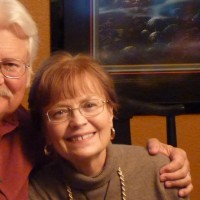
VICTORIA C. SLOTTO (Victoria C. Slotto, Author: Fiction, Poetry and Writing Prompts) ~ a Contributing Writer to Into the Bardo ,attributes her writing influences to her spirituality, her dealings with grief and loss, and nature. Having spent twenty-eight years as a nun, Victoria left the convent but continued to work as a nurse in the fields of death and dying, Victoria has seen and experienced much. A result of Victoria’s life experience is the ability to connect with readers on an intimate level. She resides in Reno, Nevada, with her husband and two dogs and spends several months of the year in Palm Desert, California.
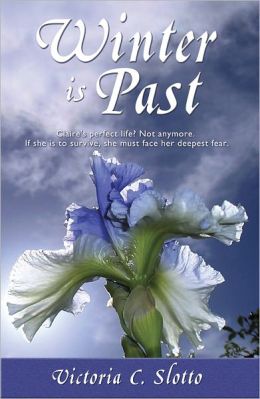
Winter is Past is her first novel. It was published in 2012 by Lucky Bat Books. She has a second novel in process and also a poetry chapbook. Victoria is also an accomplished blogger and poet who has assumed a leadership role in d’Verse Poet’s Pub. You can read more ofher fine poetry HERE.
aunt bea and i were sitting on the front porch when a political campaigner stopped to solicit our vote to which aunt bea replied lawd lawd lawd you folks done lost your mind promising prosperity when there ain’t even enough money to pay the rent and children are wearing grandparent hand-me-downs to school while carrying church sponsored lunches just so they’ll have something to eat and you fools are telling me that a vote for your candidate will bring back the good-old-days when the hell was that
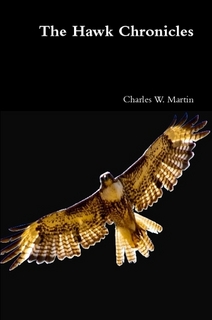
. CHARLES W. MARTIN (Reading Between the Minds) — earned his Ph.D. in Speech and Language Pathology with an emphasis in statistics. Throughout Charlie’s career, he maintained a devotion to the arts (literature/poetry, the theater, music and photography). Since his retirement in 2010, he has turned his full attention to poetry and photography. He publishes a poem and a photographic art piece each day at Read Between the Minds, Poetry, Photograph and Random Thoughts of Life. He is noted as a poet of social conscience. Charlie has been blogging since January 31, 2010. He has self-published a book of poetry entitled The Hawk Chronicles and will soon publish another book called A Bea in Your Bonnet: First Sting, featuring the renown Aunt Bea. In The Hawk Chronicles, Charlie provides a personification of his resident hawk with poems and photos taken over a two-year period.
My Love for Mountian is a video poem by Marlene McNew.
Marlene McNew “Veni, Vidi, Vici”
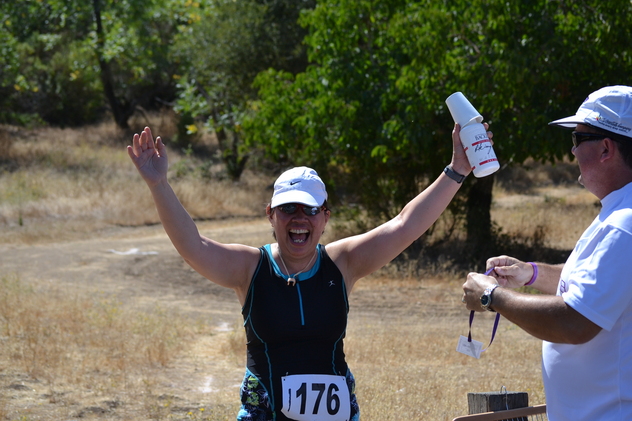
Marlene McNew ~ is a contributing writer to Into the Bardo. Shebegan exhibiting symptoms of Parkinson’s Disease (P.D.) nine years ago. Her blog (Strange Gift) is a vehicle for sharing her interests and her experiences with P.D. Marlene is a master skier and triathlon competitor. She expresses her beautiful spirit through poems and paintings. Her YouTube channel is SkiDisiple.
Food prices rising. Proposed Food Stamp cuts would boot 5 million people from the program. Americans following this blog may want to consider voicing their opinions to the people on the Hill. The Ven. Bhikhu Bodhi outlines this situation today on his blog, Buddhist Global Relief. J.D.
On Wednesday of last week, the same day that I was writing my recent blogpost highlighting the need not to make cuts to food stamps–“Nourishing Change,” published August 1st–the New York Times published an article about the likely impact that cuts in funding for food stamps would have on the poor. I only got to see the Times article Friday afternoon (August 2nd) through a link sent to me in an email. While my post was written independently, the Times article confirms my case.
The article, “House Plan on Food Stamps Would Cut 5 Million From Program,” by Ron Nixon, features a study released on Tuesday by the Health Impact Project in Washington, which points out that if the House proposal to cut food stamps by $20.5 billion were enacted, 5 million people would lose eligibility for the program. Of these, a half million…
One day I hopped in a taxi and we took off for the airport. We were driving in the right lane when suddenly a black car jumped out of a parking space right in front of us.
My taxi driver slammed on his brakes, skidded and missed the other car by just inches!
The driver of the other car whipped his head around and started yelling at us.
My taxi driver just smiled and waved at the guy.I mean, he was really friendly.
So I asked, ‘Why did you just do that? This guy could almost ruin your car and sent us to the hospital!’
This is when my taxi driver taught me what I now call, ‘Law of the Garbage Truck’ He explained that many people are like garbage trucks. They run around full of garbage, full of frustration, full of anger, and full of disappointments.
As and when their garbage piles up, they need a place to dump it and sometimes they’ll dump it on you.
Don’t take it personally. Just smile, wave, wish them well, and move on. Don’t take their garbage and spread it to other people at work, at home, or on the streets. The bottom line is that successful people do not let garbage trucks take over their day.
Life’s too short to wake up in the morning with regrets, So … Love the people who treat you right. Pray for the ones who don’t.
Life is 10 % what you make it.
AND
90 % how you take it!
Do resolve to have a great, garbage – free week ahead……..
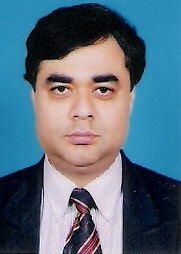
SHAKTI GHOSAL ~ has been blogging (ESGEE musgings)since September 30, 2011. He was born at New Delhi, India. Shakti is an Engineer and Management Post Graduate from IIM, Bangalore. Apart from Management theory, Shakti remains fascinated with diverse areas ranging from World History, Economic trends to Human Psychology & Development.
A senior management professional, Shakti has been professionally involved over twenty-five years at both international and India centric levels spanning diverse business areas and verticals. With a strong bias towards action and results, Shakti remains passionate about team empowerment and process improvement.
Shakti currently resides in the beautiful city of Muscat in Oman with wife Sanchita, a doctorate and an educationist. They are blessed with two lovely daughters, Riya and Piya.
Have you had that day? Ever? When your last nerve has been strung and compassion, justice and mercy have fled your body? I have that day sometimes. Usually, on those kind of days I like to retreat to sacred space. Space that can be my family, my friends, my books, my camera…some place where I can be filled up with the qualities that have leeched out.
But sometimes that is not possible!
I could be at the detention center where I work. Conflict and craziness do sometimes abound among the incarcerated and sometimes among the staff and volunteers. One night I was working and a fight broke out right in front of me. Other nights, down the hall. As staff rush towards the chaos, I sit frozen (as I am instructed to do) and then proceed in the opposite direction. I often retreat to the library where the clanging is at least muted.
Or I could be at my home and expectations meet reality and voices rise in anger or disappointment threads the air. Then my retreat is not a retreat. Mostly, we are loving. But there are times when love seems miles away.
During those times, I need to create sacred space where it seems that there is no room for it. Hopefully, I am not alone in feeling this way! I would like to offer you one simple practice that can be done anywhere at any time. You can create your own sacred space with a piece of paper and a pen. No! This is not a writing assignment. It is a wholeness assignment.
Temenos (Greek) is sacred space. Or land that is set aside for royalty or the priesthood. In Ancient Greece, it would be the place reserved for worshiping the gods. Jung further expands on the concept of temenos as a place where you can encounter your unconsciousness, bringing the shadow into the light. A place of healing, acceptance, worship, encounter, and sacredness.
I am connecting these ideas to the ancient labyrinth where, at the very center, is the temenos.
I have a portable labyrinth that is used in my work with incarcerated youth. Teens can be so funny when they first encounter the labyrinth! They look at it as a maze, at first. But then as they slowly progress through the turns of the labyrinth, focusing on their chosen word or phrase, something happens. Softness overtakes them. They slow down. The rhythm of the room deepens. Their shields begin to drop. Sometimes, they arrive at the center and just sit for a long time. It is also a place of safety, even in the midst of incarceration, a place of danger.
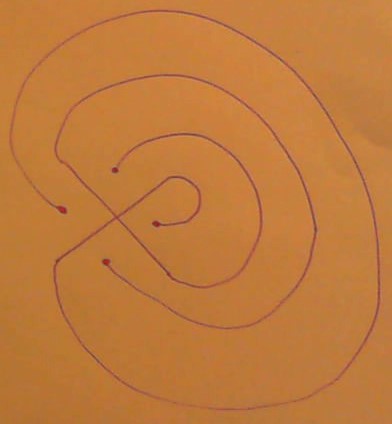
However, we are not all blessed to have a labyrinth stored in our garage! Luckily, we do not need the full meal deal to create a labyrinth. Just pen and paper (or crayon and paper!).
As you set about creating your own labyrinth, set your intentions. When I am in the detention center and do this, I am often focused on peacefulness. Then, when you are done, walk the labyrinth with your finger. Focus on your intention. It is said that there are three stages to walking a labyrinth.
Purgation: purging yourself of your thoughts that are attached to the world.
Illumination: opening yourself to enlightenment, inspiration, reception of the other
Union: becoming one with ______________ . I will let you fill in the blank with your understanding of what we are in union with. This could be anything from unity with self, others, the cosmos, the divine. This is where we sit and hold the space.
It only takes a minute to draw a labyrinth and to create an opportunity for your own sacred space no matter where you are or what your are doing. It could be as simple as a doodle on a napkin at lunch!
REV. TERRI STEWART is Into the Bardo’s Sunday chaplain, senior content editor, and site co-administrator. She comes from an eclectic background and considers herself to be grounded in contemplation and justice. She is the Director and Founder of the Youth Chaplaincy Coalition that serves youth affected by the justice system. As a graduate of Seattle University’s School of Theology and Ministry, she earned her Master’s of Divinity and a Post-Master’s Certificate in Spiritual Direction. She is a contributing author to the Abingdon Worship Annual. (The 2014 issue just released!)
Eight years ago we purchased a dilapidated cottage, took it down to studs, and with the aid of a brilliant contractor, built a wonderful home. Since then we have developed much-loved gardens on our small plot of urban land.
As the late effects of Polio have become more challenging for me to manage, Jennie has become the tender of those beds. We both care deeply about the garden’s well-being, but much of my limited energy is needed for our healing and teaching work. I am grateful to Jennie for reminding me that healing and teaching are also forms of gardening, other ways of working with spirit.
In the seven years we have lived in our home we’ve been quietly working with the spirits of the land. This is a tad challenging as we live in a residential neighborhood and all ceremony is public. My teachers always said one should be polite, humble, and do ceremony anyway. This simple advice turns out to be remarkably complex in practice.
The spirits of the land are often profoundly responsive to gratitude and ceremony. One evening during our most recent Asia trip we were asked to do a simple traditional shamanic ceremony for a group of college students. This was to be a simple show-and-tell, yet, as sometimes happens, the ceremony took on a momentum of its own, becoming profoundly moving and healing for all present.
When we returned home to Vermont we told our friend and colleague, Julie Soquet, about the experience. Julie listened to our story, considered it for a moment, then said, “The spirits of the land must be really alive and receptive there.” I was stunned by her naming of the missed obvious. Local gods and spirits are routinely honored in both India and Hong Kong, and Jennie and I had spoken after the ceremony about how we felt the presence, support, and appreciation of the spirits. (There was an active shrine directly across the street from where we were conducting the ceremony.)
The other night, in dream, I was reminded we are loaned our bodies for our stay here on Pachamama. Our bodies are sacred; they are Medicine bundles. At the end of our lives we give our bodies back to the Earth. Pachamama asks that we grow the spirit and power of these bundles, so that when we return them they benefit Her and all beings. In the dream I was asked simply to keep this in mind as I made my way through what remains of my walk here. There were no other instructions, no “shoulds”, no “musts”. Expressing gratitude to the myriad beings who make our lives possible is part of that way of walking and gardening. I wonder how these simple, profound truths will enter into our work.
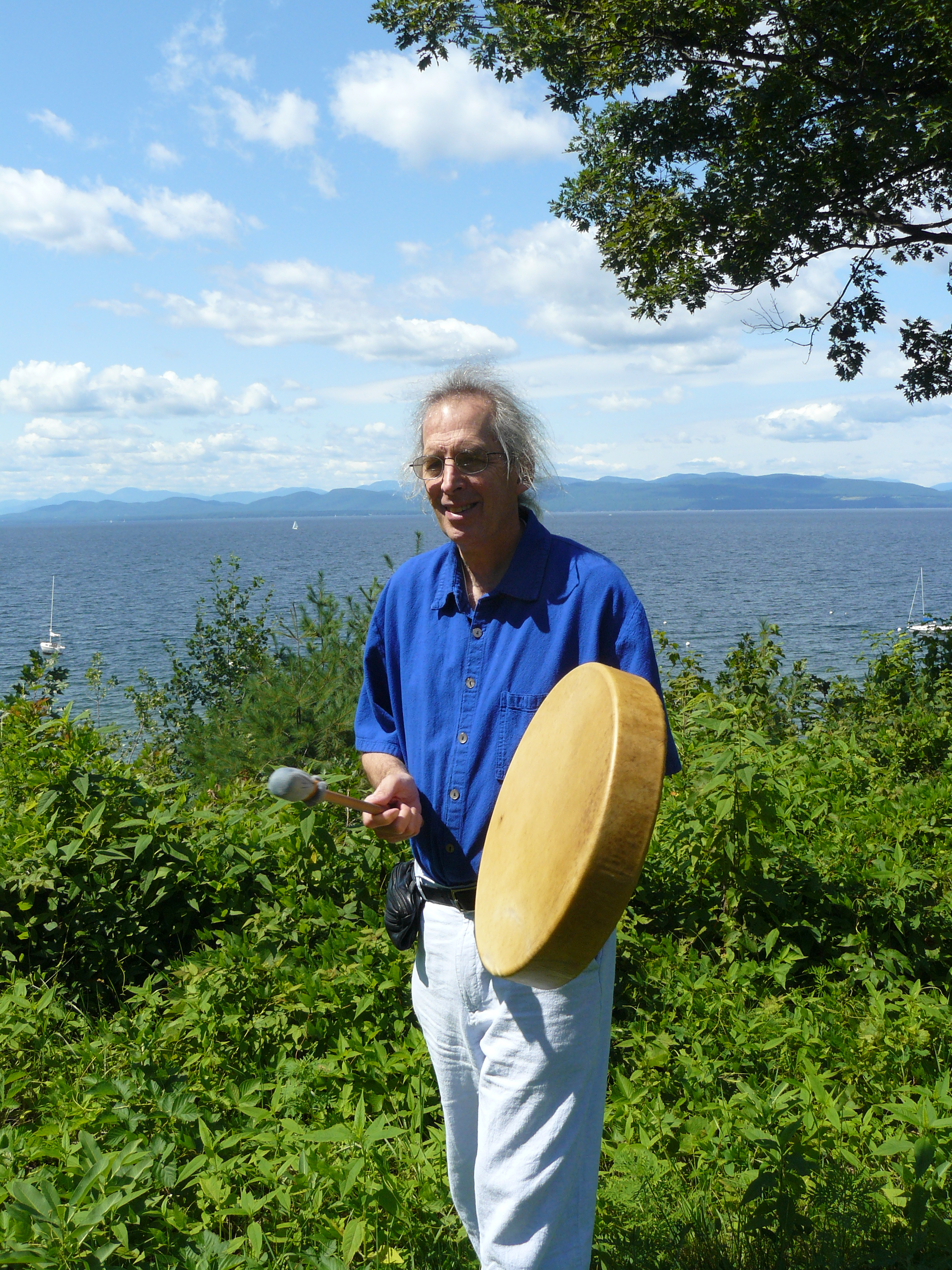
MICHAEL WATSON, M.A., Ph.D., LCMHC (Dreaming the World) ~ is a contributing editor to Into the Bardo, an essayist and a practitioner of the Shamanic arts, psychotherapist, educator and artist of Native American and European descent. He lives and works in Burlington, Vermont, where he teaches in undergraduate and graduate programs at Burlington College,. He was once Dean of Students there. Recently Michael has been teaching in India and Hong Kong. His experiences are documented on his blog. In childhood he had polio, an event that taught him much about challenge, struggle, isolation, and healing.
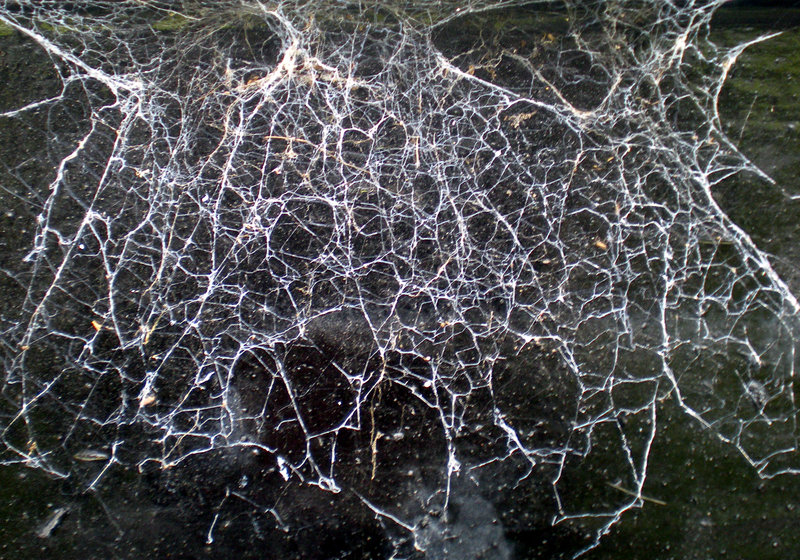
[This piece was started some months ago, before I wrote the poem Fortune, featured here on the Into The Bardo a few weeks ago. That poem and this piece focus on a common theme, which is, perhaps more than any other in my writing life, a constant thread of philosophical thought for me. This is that, however much we may be short on fortune, there is never cause to give up on our hopes and dreams, or more realistically, our ‘visualisation’ of what we want from this life.]
~~~~~~~~~~~~~~~~~~~~~~~~~~~~~~~~~~~~~~~~~~~~~
Picture, via Google Images and courtesy Canvas Art (www.the-canvas-art-shop.co.uk)
“Oh what a tangled web we weave, When first we practise to deceive!”
(Sir Walter Scott, Marmion, Canto vi. Stanza 17.
Scottish author and novelist: 1771 to 1832).
Some days are better than others . . .
The better ones allow me to indulge myself in my passions. I could have walked the dog and come back feeling refreshed, or have attended a rehearsal with the Waldershelf Singers and feel utterly uplifted, or complete a piece of prose or, better, a poem and feel a sense of release. On other days, I feel disillusioned, cynical, angry, like throttling public figures (politicians) to within an inch of telling them what a bunch of useless, self-interested, lying, cheating ne’er-do-wells they are! … which they are, almost to a man (and woman) …
Why is it that, once human beings attach themselves to an organisation, an establishment, a business, a company, a corporation, a religion, or they declare their political affiliations, somehow, they lose the ability to tell the truth, assuming their integrity would allow them to differentiate between the truth and a lie, in the first place. They become overly deferential, assume the organisation’s rules are right and, worst of all, become somewhat apathetic and are inclined to assume the ‘elders’, senior leaders of the organisation are right and therefore entitled to our undying respect.
This subjugation of self, a denial of the person that was borne into this world, through that infinitely variable process, driven at its lowest level by chemistry and physics, in turn determined by the relevant genetic ‘pool’ and nurtured by the geographic, economic, demographic, societal and political environments it is our fortune, or misfortune, to have grown up in, is undeniable. This denial of the uniquely wired ‘self’ and its particular talents and aptitudes, opinions and attitudes, and the ability to discern right from wrong, truth from the lie, and I mean the real truth, the kind that only you yourself will know deep inside, is almost guaranteed.
Does it have to be this way?
I think that I’ve come to hold this position rather late in life. Questioning authority is the stuff of rebellious youth, isn’t it? When we didn’t know any better, few had any time for the opinions of young people, anyway!
Is it so, because we are too shallow? … I don’t think so, not for everyone, anyway.
Is it because we are too lazy or unable to think for ourselves … almost certainly for some.
Is it because we have to earn a living? … inevitably a contributory factor.
Is it due to the fact that, as human beings, in spite of our incredible capacity for ingenuity, we are still very insecure; none of us are ever entirely in control of our lives and I mean NONE of us, given the uncertainties of our own health and particularly of the natural world and what Mother Earth herself can throw at us! We therefore have to enwrap ourselves with a protective external blanket, woven by someone else’s dreams or designs, at one extreme by the premeditated manipulation of tyrannical leadership or, at another, simply by the desire to ensure the annual bonus, a generous pension, public honours, a knighthood … or simply the reassurance of knowing from where our next meal will come?
Is it because we are all limited in our capacity to take on too much information, store all the factors affecting any number of problems that face us each day; wrapped up in life’s complexity that sometimes threatens to overwhelm us, wouldn’t we prefer to take an easier option and permit others to make decisions for us, which acts as a perverse kind of freedom? Herein lies a major truth. But it’s not easy for managers and leaders either.
Contrary to the impression we might receive from those in stations so elevated, it may act as some comfort to those who aren’t to know that the higher up the ladder of success we go, in whatever field of human endeavour, the more insecure we get. Why, you ask? It is because we have our limits, all of us, and some of us are more limited than others; that is our birthright, given the variable abilities, with which we are endowed, the tactics and strategies we have learned and been taught to cope; it is the way we are wired. The higher up the ladder of success all this leads us, the stronger becomes our inclination, consciously and unconsciously, to hang on to whatever we’ve got; the more inclined we become to develop further selfish strategies to aid this survival process. That’s what it is to be human, well, at least to be an animal. Being human does, nevertheless, endow us with an extra ability: high intellect and, with it, a great responsibility and, yet, this tendency, this seemingly irresistible force, does inevitably lead to greed.
So what happens!
We get our heads down and graft, manoeuvre, wheel and deal, whatever it takes to gain influence, fame, attention, success, with whatever vanity or hope or need that has the greatest hold on our hearts, minds … and stomachs.
At some future moment in time, we then find ourselves, well, what’s the best word to describe it … trapped, yes trapped by our ambitions, needs, material greed, more than by hopes and dreams.
I should say something about dreams. Before you think I’m about to crush them, I’m not. As one who writes poetry and pieces of prose like this, I find dreams are just as important as the ambitions of a professional footballer I know, who learned, early on in his journey through that precarious profession, that visualising your goals (figuratively as well as literally in his case), that is imagining yourself scoring the goal, over and over again, is a truly powerful and effective way of motivating yourself to feel better about your abilities and potential. This is, for me, an unexpected way in which to feed the creative imagination; such is the process that leads to the products of human ingenuity as well as understanding and success. But, a word of warning about dreams! They can also be manipulative! They can be induced and ‘used’ by others to manipulate control over lives – take advertising, particularly on the television, as one example! We need to learn how to distinguish good from bad dreams, your own from other people’s dreams, just as we should be able to tell the difference between good and evil.
Now, I’m not necessarily talking about conspiracy theories here, about demons and evil people, who sit in back rooms and scheme to overthrow regimes or gain control of whole populations. No, I’m talking, for the moment at least, about the demons inside our heads; the ones that lead us to the point of paranoia, the fear of not being ‘successful’, wearing the right ‘fashion’, living in the right district, driving the right car, appearing in all the right ‘places’, doing what’s apparently ‘right’ in society … tricky concept this, but I’ll try to explain my thinking.
If you were to ask a child of five or six to tell you their dreams of how to make the world a better place, wouldn’t they give you magical answers, which involve the charm of fairy tale characters and imaginative, not to say unusual (and, sadly, unlikely) conclusions to their stories?
If you were to pose that same question to a child in their mid ‘teens, wouldn’t their answer be tainted with a little more realism, perhaps even a touch of hopeless, hormonal cynicism, whilst still retaining some of that childhood naiveté, a lack of what we grown-ups would call wisdom?
If you were to ask a grown up poet or a philosopher, I think their answer would come out in one of several subtle ways, but one thing is for sure, any poet, with integrity, that I know, would try to address all of the issues that confront us head on, in an honest way. This is perhaps because they rarely make a living from their writings and, therefore have no vested (financial) interest in it, other than for the integrity of their material and perhaps for a bit of recognition!
Even Poets …
Yes, even poets and philosophers have to live and pay their ‘rent’. So, somewhere along the path of life, we have to align ourselves with an organisation or two, toe the line and obey the rules. We most certainly should obey the law and, if we don’t agree with it, don’t break it, lobby to change it! There is nothing wrong with toeing the line, provided there is a fair share of integrity within the organisation; provided that we don’t lose sight of our own personal integrity, justice, beliefs, values and, above all else, what we know, deep down inside, makes each of us unique individuals, our identity.
For those, who are born with a genetic code that, given the right environment, encouragement and education, predestines them to a life of leadership and possibly even greatness, let us not forget that for those of us, who remain, whilst we may not have had the good fortune of the same faculties and opportunities, we do nevertheless represent the vast majority of the population of the world. So, if we do still have a vote in what can reasonably be described as a democracy, then we must use it or lose it! If we have the ability to write, we should do it! We must make our mark upon the paper, make our feelings, our values and beliefs known. Whilst we still have the freedom to do so, we have the ability to depose those in power who do conspire to deceive us, who have been corrupted by their privilege and who would continue to weald the power they have from such privilege for self interest. Otherwise we get what we deserve. If that happens to be a comfortable life that we’ve achieved by subordinating our own integrity, it is our choice, but, from where I am now in my life, I know that I would sooner follow and trust someone who refused to allow themselves to be trapped by the material rewards of compromising complicity, than one who, in the fullness of time, would be racked with regret, that they didn’t follow their conscience and their dream of a better life … a better world.
It would be wrong of me, however, to leave you with my totally cynical outlook, without mentioning that, thank God, there are some remarkable people in this world, who, at and on all sorts of levels, do remarkable work on behalf of their fellow human beings. Whether they be local community charity workers and volunteers, international aid workers or the likes of the inspired Mother Teresa of Calcutta’s Missionaries of Charity foundation, they are all driven, by some degree of selflessness, to improve the lot of the less fortunate and I have nothing but admiration for them.
If there is a moral to my tale, this long and rambling piece of prose, it is that I believe life can become much less complex, when we stop trying to satisfy someone else, when we discover the very best in ourselves. However unfair, unjust or unreasonably difficult life seems to be sometimes, we should never allow ourselves to give in to the pessimism that results from a state of despair at the world, to roll over on our backs with our legs in the air! We must never believe that someone else, whether it be a single person or a large faceless organisation, either has control over us or is beyond control by the voting, lobbying, plural us. For writers and poets in particular, as long as we can breath and weald a pen, we can do something, however small, and collectively we are able to make a difference, even if we don’t feel we can hop on the next flight to Africa, we musn’t allow ourselves to believe that we can’t still bring something to the table from our own unique armoury of intellectual skills. We can, above all, in our own way, be winners. It takes courage to step out of the crowd, but courage comes in many colours, one of which is being true to your innermost convictions. Fortune really can favour the bold.
[If you don’t already read it, you could do worse than by starting to read poetry now. Good poetry should open the eyes that are shut, elevate the spirit that is depressed and enrich the soul that is impoverished. Good poetry is the highest form of literature, which should tell us the way it is and feed us with deep insights that we would otherwise not experience; and I mean insights and creative thought that will enable change, not only in your own life, but also others.]
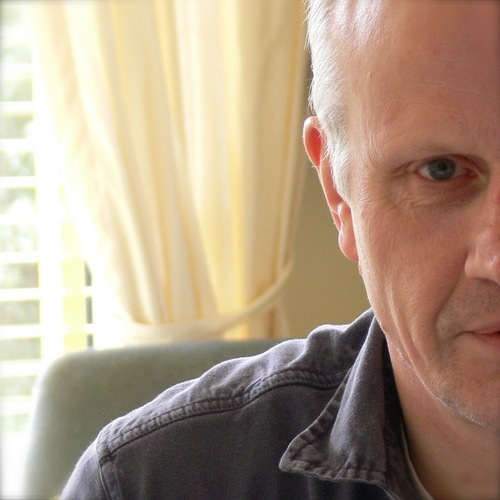
JOHN ANSTIE (My Poetry Library and 42) ~ is a British poet and writer, a contributing editor here at Bardo, and multi-talented gentleman self-described as a “Family man, Grandfather, Occasional Musician, Amateur photographer and Film-maker, Apple-MAC user, Implementation Manager, Engineer and general all-round good egg.” This he tells us with tongue firmly planted in cheek. Add grace and humor to the list.
John participates in d’Verse Poet’s Pub and is a player in New World Creative Union. He’s been blogging since 2011. John is also an active member of The Poetry Society (UK). He says of his work, “Much of my writing and my poetry focuses on the future and the important part that our children, and the way we treat them, play in this. It also spans a diversity of life’s experiences, some moving war poetry and particularly observations of life for a modern generation.
Also a member of Grass Roots Poetry Group John steered their anthology, Petrichor* Rising, into publication. It is now in print and available for purchase. “Petrichor Rising takes you on a journey that exposes you to the full spectrum of emotions, from barely concealed despair to hope, from love to sorrow, with a clear appreciation of nature’s value and humanity’s shortcomings. It rides a roller-coaster that moves you to consider many of life’s challenges from a different perspective, as all good poetry should. It is at once haunting, yet shocking, with aching nostalgia alongside enchanting stories of dragons. It gives you optimism and hope tinged with shadows of doubt. It writes about places never seen and humanity’s uncaring nature, in prosodic social commentaries and observations of the minutest details of life, mood, atmosphere and romance. It contains clever writing that brings you close to the edge of society, still capable of moving you, but not pulling any punches. It has poetry with a universal appeal covering subjects as varied as the loss of a cat or a harrowing account of the 7/7 London bombings, poetry that focuses on the roots of all that makes us respond to life and long for something better.”
* Petrichor – from the Greek pɛtrɨkər, the scent of rain on the dry earth.
the first years of the journey to death can be long and quite boring its slow pace lulls the traveler into a false sense of immortality and a lack of appreciation of the small miracles along the way the first kiss a lover’s long embrace a kind word offered when only tears paint what the heart feels or a gentle touch after a nightmare to comfort the soul’s fears all these things seem unimportant during the trek from one life milestone to the next routine milestones that occupy the mind as it travels but all too soon the journey is over and all that is left are some old photos fading as quickly as the memory of those moments of true love
CHARLES MARTIN (Reading Between the Minds) — earned his Ph.D. in Speech and Language Pathology with an emphasis in statistics. Throughout Charlie’s career, he maintained a devotion to the arts (literature/poetry, the theater, music and photography). Since his retirement in 2010, he has turned his full attention to poetry and photography. He publishes a poem and a photographic art piece each day at Read Between the Minds, Poetry, Photograph and Random Thoughts of Life. He is noted as a poet of social conscience. Charlie has been blogging since January 31, 2010. He has self-published a book of poetry entitled The Hawk Chronicles and will soon publish another book called A Bea in Your Bonnet: First Sting, featuring the renown Aunt Bea. In The Hawk Chronicles, Charlie provides a personification of his resident hawk with poems and photos taken over a two-year period.
Couples come in all shapes and sizes. They always have, since the beginning of time.
Life is short, and often cruel. Finding true love, or even a true friend is not just a comfort.
It’s a miracle.
But I’ve seen it with my own two eyes. True love happens.
It is easy to recognize when you see it.
Love…
..in all its many forms…
…is a gift to us all. It fills the world with light.
Let it shine!
All words and images copyright Naomi Baltuck 2012
NAOMI BALTUCK ~ is a Contributing Editor and Resident Storyteller here at Bardo. She is a world-traveler and an award-winning writer, photographer, and story-teller whose works of fiction and nonfiction are available through Amazon HERE. Naomi presents her wonderful photo-stories – always interesting and rich with meaning and humor – at Writing Between the Lines, Life from the Writer’s POV. She also conducts workshops such as Peace Porridge (multicultural stories to promote cooperation, goodwill, and peaceful coexistence), Whispers in the Graveyard (a spellbinding array of haunting and mysterious stories), Tandem Tales, Traveling Light Around the World, and others. For more on her programs visit Naomi Baltuck.com
The waters are rising. We have had many days of rain the past couple of months and the rivers are running high, many in flood. Here on the western flank of Vermont rain falls in the mountains and tumbles through rocky streams to the rivers, then into the lake. We are told the water is too cold, high, and fast for swimming, yet people, refusing to honor the Nature of the torrent, go swimming, often creating unhappy outcomes.
We are each a force of Nature, although we tend to forget this, individually and collectively. We seem to easily lose connection with the great powers that lie embodied within us, ignoring the joys and dangers they offer. It is so very easy to identify with mind or brawn, money and might, missing the deep connection implicit in recognizing one’s own Nature. Or perhaps we lose any connection to the force of our Nature, imagining we are powerless or fearful of the energies we intuit within us.
Power is a loaded word, drenched in the abuses ingrained in our various forms of governance, education, and sadly, even family and community. Too often power is power over rather than power with or through. Yet the shamans have always taught that we are each, like the raging river, a force to be honored and reckoned with. Shamanism, like zen, opens doorways to the realization of one’s true Nature. Dare we walk through?
MICHAEL WATSON, M.A., Ph.D., LCMHC (Dreaming the World) ~ is a contributing editor to Into the Bardo, an essayist and a practitioner of the Shamanic arts, psychotherapist, educator and artist of Native American and European descent. He lives and works in Burlington, Vermont, where he teaches in undergraduate and graduate programs at Burlington College,. He was once Dean of Students there. Recently Michael has been teaching in India and Hong Kong. His experiences are documented on his blog. In childhood he had polio, an event that taught him much about challenge, struggle, isolation, and healing.
Japanese tea house: reflects the wabi sabi aesthetic, Kenroku-en Garden
if only i knew
what the artist knows
about the great
perfection in imperfection
i would sip grace slowly
at the ragged edges of the creek
kiss the pitted
face of the moon
befriend the sea
though it can be a danger
embrace the thunder of a waterfall
as if its strains were a symphony
prostrate myself atop the rank dregs on the forest floor,
worshiping them as a breeding ground for fertile seeds
and the home of a million small lives
if i knew what the artist knows,
then i wouldn’t be afraid to die,
to leave everyone
i would be sure that some part of me
would remain present
and that one day you would join me
as the dusky branch of a river or the
bright moment of the flowering desert
if i knew what the artist knows,
i would surely respond body and soul
to the echo of eternity in rough earthy things
i would not fear decay or work undone
i would travel like the river through its rugged, irregular channels
comfortable in this life; imperfect, impermanent, and incomplete
JAMIE DEDES ~ My worldly tags are poet and writer. For the past five years I’ve blogged at The Poet by Day,the journey in poem, formerly titled Musing by Moonlight. Through the gift of poetry (mine and that of others), I enter sacred space.
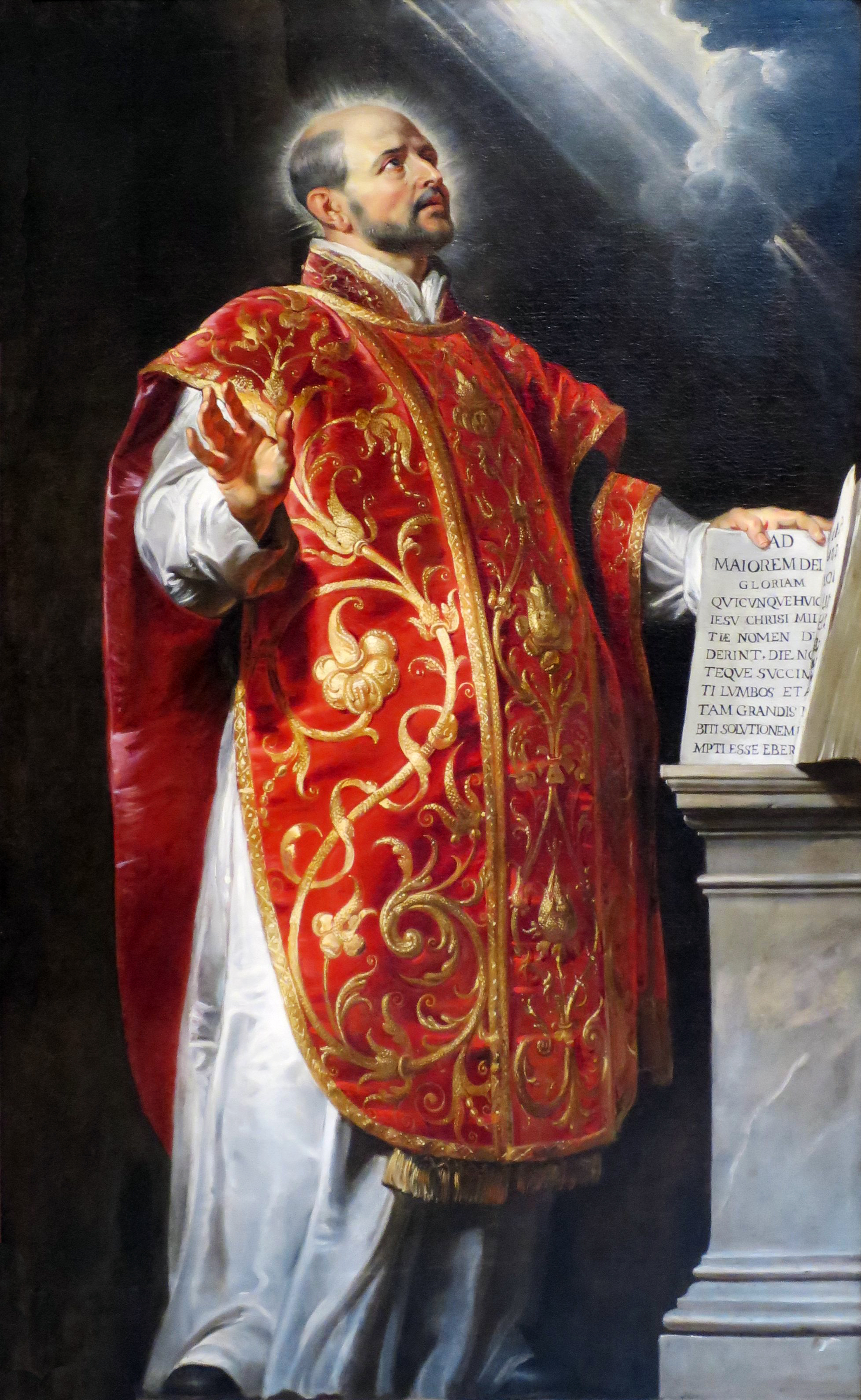
St. Ignatius of Loyola, over time, became very concerned with spiritual practices. He developed one particular method that uses the imagination. It is sometimes called “Ignatian Contemplation.” Ignatian Contemplation uses the imagination as its center piece. In particular, using scripture and entering it using all the senses–feel the heat of the day, the dust in the road, or the smell of livestock. Enter the story in a complete way.
Today, I offer to you the story of the first king of Israel, Saul, and how he became the king. I ask you to use all your senses to enter the story. You may enter it as one of the characters or you may be a bystander. You may even be livestock! Whatever you choose, extend your reading of the story into your senses–taste, touch, smell, sight, sounds.
Take a moment and ground yourself. Sit comfortably, whatever that means for you. Take a breath in and release it.
Saul was at home, hanging out with his family and some of the donkeys escaped. Now Saul was a young, teenage boy–not viewed as a testosterone filled leader (although he is reported to be quite handsome!). Saul’s task, assigned by his family, was to go get the donkeys and return them home!
So Saul goes on the road. He looked here and there, and the donkeys were not there. He looked over there and over here, and the donkeys were not there. Finally, the servant travelling with Saul says, “Let’s go ask the seer in town!” The seer was the prophet Samuel.
Saul travels to the seer, Samuel. Samuel tells Saul that he is destined to control the future of the Israelites. Saul says, “I’m a Benjamite, from the smallest clan! Surely not me!”
Samuel and Saul eat and then Samuel anoints Saul to become the king. Samuel then sends Saul on his way home.
Saul travels home with Samuel’s instructions. He travels home and even encounters other prophets on the road, goes into a prophetic frenzy with them, and continues towards home.
Upon his arrival home, his uncle asks, “Where have you been?!”
Saul said, “Well, we couldn’t find the donkeys, so we visited Samuel.” Saul says nothing of the anointing by Samuel, the prophetic frenzy on the side of the road, or of being made king! Nothing!
Then, Samuel comes to seek Saul out. Samuel gathers all the tribes together to “determine who will be king.” Samuel “casts lots.” (Throws dice!) Among the gathered tribes, he throws his dice, and Lo! The Tribe of Benjamin is chosen. Among the families in the tribe of Benjamin, he throws his dice, and Lo! The family of Matri was chosen. Among the people in the family of Matri, Samuel throws his dice, and Lo! Saul is chosen king.
But Saul is not there! They go to find him and he is hiding in the supply closet. Then Saul becomes the king.
…
What questions did that raise for you? Where were you in the story? Who were you? What will you become?
REV. TERRI STEWART is Into the Bardo’s Sunday chaplain, senior content editor, and site co-administrator. She comes from an eclectic background and considers herself to be grounded in contemplation and justice. She is the Director and Founder of the Youth Chaplaincy Coalition that serves youth affected by the justice system. As a graduate of Seattle University’s School of Theology and Ministry, she earned her Master’s of Divinity and a Post-Master’s Certificate in Spiritual Direction. She is a contributing author to the Abingdon Worship Annual. (The 2014 issue just released!)
i asked the brown bag prophet if he’d heard about the new round of demonstrations for justice he said yes and why don’t you-all go sing another verse of we shall overcome with any luck at all you’ can harmonize with the voices i’ve heard before and let your blood be washed away from these concrete streets of freedom washed away into the ocean of history like those well-intentioned folks now rotting in their graves with copper pennies as their only reward and please don’t bother me with your these things take time bull i ain’t got time i got this corner and you got nothing
. CHARLES W. MARTIN (Reading Between the Minds) — earned his Ph.D. in Speech and Language Pathology with an emphasis in statistics. Throughout Charlie’s career, he maintained a devotion to the arts (literature/poetry, the theater, music and photography). Since his retirement in 2010, he has turned his full attention to poetry and photography. He publishes a poem and a photographic art piece each day at Read Between the Minds, Poetry, Photograph and Random Thoughts of Life. He is noted as a poet of social conscience. Charlie has been blogging since January 31, 2010. He has self-published a book of poetry entitled The Hawk Chronicles and will soon publish another book called A Bea in Your Bonnet: First Sting, featuring the renown Aunt Bea. In The Hawk Chronicles, Charlie provides a personification of his resident hawk with poems and photos taken over a two-year period.
Is a door the way in or the way out? It depends…are you coming or going?
We find many interesting doors in life.
Sometimes we know just what we need…
Other times the choice is not so clear…
Some doors are lovely…
Others scary…
Some are daunting…
It would be nice if we could sneak a peek…
Some doors are difficult to get to…
Still others can be hard to find…
Or best avoided…
But you never can tell which door…
…will open up onto a new friendship…
…or a loving family…
Which is why we must not be afraid to step out into the sunshine, or forget to invite someone in out of the cold.
Reach for the doorknob….
…..and see what you can find.
All words and images Copyright 2012 Naomi Baltuck
All images and words copyright Naomi Baltuck
NAOMI BALTUCK ~ is a Contributing Editor and Resident Storyteller here at Bardo. She is a world-traveler and an award-winning writer, photographer, and story-teller whose works of fiction and nonfiction are available through Amazon HERE. Naomi presents her wonderful photo-stories – always interesting and rich with meaning and humor – at Writing Between the Lines, Life from the Writer’s POV. She also conducts workshops such as Peace Porridge (multicultural stories to promote cooperation, goodwill, and peaceful coexistence), Whispers in the Graveyard (a spellbinding array of haunting and mysterious stories), Tandem Tales, Traveling Light Around the World, and others. For more on her programs visit Naomi Baltuck.com
My daughter Bea and I were having a little fun with shadows on the grounds of Dover Castle.
It made me think about writing–and life. Life puts the raw material into our hands, and it’s up to us to mold it into whatever work of art we envision. Look for the right light and context, and you can do so much with so little, and to great effect.
All images and words copyright Naomi Baltuck
NAOMI BALTUCK ~ is a Contributing Editor and Resident Storyteller here at Bardo. She is a world-traveler and an award-winning writer, photographer, and story-teller whose works of fiction and nonfiction are available through Amazon HERE. Naomi presents her wonderful photo-stories – always interesting and rich with meaning and humor – at Writing Between the Lines, Life from the Writer’s POV. She also conducts workshops such as Peace Porridge (multicultural stories to promote cooperation, goodwill, and peaceful coexistence), Whispers in the Graveyard (a spellbinding array of haunting and mysterious stories), Tandem Tales, Traveling Light Around the World, and others. For more on her programs visit Naomi Baltuck.com
the brown bag prophet was sitting in the public library trying to beat the summer heat he gestured for me to come over and said i get confused sometimes especially when i attempt to think logically about the government and the law for example when snowden outed the government it was called a crime but when the government outed an ambassador’s wife as a cia operative it was called political revenge i personally would have called mr rove’s actions treason but political revenge sounds somehow like she deserved it for serving her country can you see how i might be confused about what’s fair game
. CHARLES W. MARTIN (Reading Between the Minds) — earned his Ph.D. in Speech and Language Pathology with an emphasis in statistics. Throughout Charlie’s career, he maintained a devotion to the arts (literature/poetry, the theater, music and photography). Since his retirement in 2010, he has turned his full attention to poetry and photography. He publishes a poem and a photographic art piece each day at Read Between the Minds, Poetry, Photograph and Random Thoughts of Life. He is noted as a poet of social conscience. Charlie has been blogging since January 31, 2010. He has self-published a book of poetry entitled The Hawk Chronicles and will soon publish another book called A Bea in Your Bonnet: First Sting, featuring the renown Aunt Bea. In The Hawk Chronicles, Charlie provides a personification of his resident hawk with poems and photos taken over a two-year period.
Today, I want to try a very simple meditation / body prayer. It involves movement of the arms, breathing, intention, and if you choose, your particular word for the divine or that which transcends.
Take a moment for contemplation. Turn your eyes inward and find two desires.
“You are what your deepest desire is. As your desire is, so is your intention. As your intention is, so is your will. As your will is, so is your deed. As your deed is, so is your destiny.” ~ Upanishads
First-your desire for yourself. This wish could be for love, for kindness, for healing. What you feel you need at this moment.
Second-your wish for the world. This wish could be peace, love, kindness. What you feel is your unique gift of intention for the world. All that is present in the cosmos.
“He has told you, O mortal, what is good; and what does the Lord require of you but to do justice, and to love kindness, and to walk humbly with your God?” ~ Micah
These desires will be your intentions.
As always, do this as you are able.
…
Sit comfortably however you like. Be aware of the earth supporting you. Take a moment to feel the groundedness and the ground of all being.
The breathing / motion pattern is this:
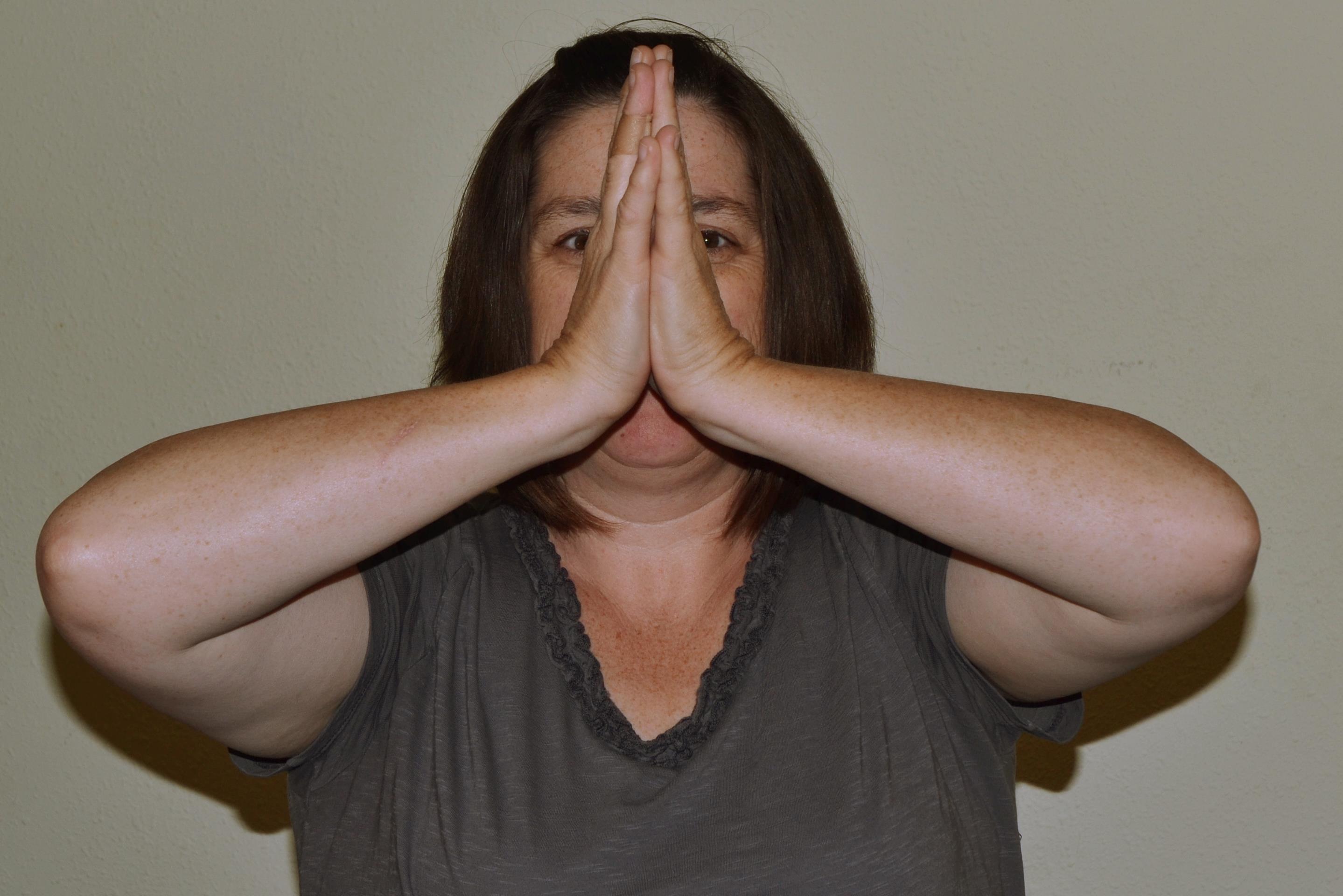
Arms loosely at sides … Inhale … and move arms to overhead in a prayer position, (hands flattened together)
Hands Overhead, Prayer Position
On exhale … Hands descend to chest / heart level while holding intention for self. Intentionally cross your eyes, your lips as you end at your heart.
Descending Towards the Heart“om”
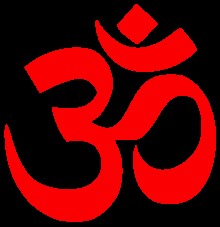
Express, outloud or however you feel comfortable, the particular word that encompasses the divine for you. Divine being interconnectedness to all, that which transcends all, that which is lived within, or the languaging that you choose. This could be the Sanskrit “om” (pictured), the Aramaic “abwoon” which is father, or any of the myriad words that are symbols that stand in for the divine.
Hands at heart level … Inhale
On exhale … Hands push outward, forward and go slowly to the sides (right arm going right / left arm going left). Do this while holding your intention for the world.
Pushing Intention To the World
Express, outloud or however you feel comfortable, the particular word that encompasses the divine for you.
Bring your arms gently down to your sides.
Repeat this simple meditation for as long as it feels comfortable to do so. If you desire, close the meditation with an Amen (“so be it.”)
REV. TERRI STEWART is Into the Bardo’s Sunday chaplain, senior content editor, and site co-administrator. She comes from an eclectic background and considers herself to be grounded in contemplation and justice. She is the Director and Founder of the Youth Chaplaincy Coalition that serves youth affected by the justice system. As a graduate of Seattle University’s School of Theology and Ministry, she earned her Master’s of Divinity and a Post-Master’s Certificate in Spiritual Direction. She is a contributing author to the Abingdon Worship Annual. (The 2014 issue just released!)



 VICTORIA C. SLOTTO (Victoria C. Slotto, Author: Fiction, Poetry and Writing Prompts) ~ a Contributing Writer to Into the Bardo ,attributes her writing influences to her spirituality, her dealings with grief and loss, and nature. Having spent twenty-eight years as a nun, Victoria left the convent but continued to work as a nurse in the fields of death and dying, Victoria has seen and experienced much. A result of Victoria’s life experience is the ability to connect with readers on an intimate level. She resides in Reno, Nevada, with her husband and two dogs and spends several months of the year in Palm Desert, California.
















 The BeZine