Writing in a far and broken country
my pen knows its kinship with the dark forest,
asks direction of its trees, celebrates its quiet amity
over the din of plastic medicine vials, the 40-foot
serpentine specter of cannulae, the hiss and sigh
of an oxygen compressor amid layered silences.
We are named on a long list of regional poets.
The region is the sickroom where the palm and
birch outside the window know their meaning.
Lend a shaman ear.
Trees will speak, will tell you that we are found.
We are here, not lost in our vessels but found
in the hallowed company of shaman poets
on a vision quest Call it illness.
Call it artful.
Strike up the hill. Cry out for the Sacred Dream,
for the purpose of your life and its contusions.
A comforting infinity breaks through any grieving
fiercely embraced: The great dream comes to you.
The trees come to you. They speak in their voices,
which are – after all – your true voice . . .
Whenever life takes, it leaves behind the key to its
wide and wild essence. Unlock the door. Listen …
the voices offer solace and the privilege of poetry.
JAMIE DEDES ~ My worldly tags are poet and writer. For the past five years I’ve blogged at The Poet by Day,the journey in poem, formerly titled Musing by Moonlight. Through the gift of poetry (mine and that of others), I enter sacred space.
While traveling in Argentina, we visited La Recoleta Cemetery in Buenos Aires. Since 1822, nearly 5,000 mausoleums have been constructed in the highest fashion of the times, from Baroque and Neo-Gothic to Art Deco and Art Nouveau. La Recoleta is a city for the dead, with elegant marble tombs neatly laid out in blocks over fourteen acres.
Some are maintained, for love or pride. Others, like the poet Shelley’s statue of Ozymandias, have fallen into disrepair, covered with spider webs and graffiti, littered with broken glass and faded plastic flowers. Feral cats stare warily from their marble perches and skulk away sideways if approached.
We saw the grave of Eva Peron, and other statesmen, poets, generals, and presidents.
More interesting to me was the final resting place for a mother and her infant. They were not famous, but clearly they were loved. Did she and the child die in childbirth? Were they swept away by an epidemic, leaving behind the grieving husband and father who erected this memorial? Was he able to pick up the pieces of his broken life to find happiness again?
Wherever we go, we will find reminders of all the stories in this world that will never be told. When I took this photograph, I could be certain of only two things. Both mother and child were subject to an early and tragic demise. And, as seen by the lush green fern sprouting from the dust collecting in the cracks in the stone, life goes on.
All images and words copyright Naomi Baltuck
NAOMI BALTUCK ~ is a Contributing Editor and Resident Storyteller here at Bardo. She is a world-traveler and an award-winning writer, photographer, and story-teller whose works of fiction and nonfiction are available through Amazon HERE. Naomi presents her wonderful photo-stories – always interesting and rich with meaning and humor – at Writing Between the Lines, Life from the Writer’s POV. She also conducts workshops such as Peace Porridge (multicultural stories to promote cooperation, goodwill, and peaceful coexistence), Whispers in the Graveyard (a spellbinding array of haunting and mysterious stories), Tandem Tales, Traveling Light Around the World, and others. For more on her programs visit Naomi Baltuck.com
I am away working with youth affected by incarceration this weekend. I recently read the below meditation and found it to be moving. I hope you will also find inspiration. Terri
From Richard Rohr’s Daily Meditation
Center for Action and Contemplation
The Invisible Spiral of Violence
“If you cannot recognize evil on the level of what I call the world, then the flesh and the devil are inevitable consequences. They will soon be out of control, and everything is just trying to put out brush fires on already parched fields. The world or “the system” is the most hidden, the most disguised, and the most denied—but foundational—level of evil. It’s the way cultures, groups, institutions, and nations organize themselves to survive.
It is not “wrong” to survive, but for some reason group egocentricity is never seen as evil when you have only concentrated on individual egocentricity (“the flesh”). That is how our attention has been diverted from the whole spiral of violence. The “devil” then stands for all of the ways we legitimate, enforce, and justify our group egocentricity (most wars; idolization of wealth, power, and show; tyrannical governments; many penal systems; etc.), while not now calling it egocentricity, but necessity!
Once any social system exists, it has to maintain and assert itself at all cost. Things we do inside of that system are no longer seen as evil because “everyone is doing it.” That’s why North Koreans can march lockstep to a communist tyranny, and why American consumers can “shop till they drop” and make no moral connections whatsoever. You see now why most evil is hidden and denied, and why Jesus said, ‘Father forgive them, they don’t know what they are doing.’ (Luke 23:34) We don’t.”
Shalom and Amen
Chaplain Terri
Illustration ~ photograph of opaque watercolor over graphite on gray-green woven paper circa 1886 by James Tissot (1836-1902) and released into the public domain.
RICHARD ROHR, OFM is a globally recognized ecumenical teacher bearing witness to the universal awakening within Christian mystical and the Perennial Tradition. He is a Franciscan priest of the New Mexico Province and founder of the Center for Action and Contemplation. MORE
The foundational elements of The Perennial Tradition are: 1.) There is a Divine Reality underneath and inherent in the world of things. 2.) There is in the human soul a natural capacity, similarity, and longing for this Divine Reality. 3.) The final goal of existence is union with this Divine Reality.
TERRI STEWART is Into the Bardo’s Sunday chaplain, senior content editor, and site co-administrator. She comes from an eclectic background and considers herself to be grounded in contemplation and justice. She is the Director and Founder of the Youth Chaplaincy Coalition that serves youth affected by the justice system. As a graduate of Seattle University’s School of Theology and Ministry, she earned her Master’s of Divinity and a Post-Master’s Certificate in Spiritual Direction with honors and is a rare United Methodist student in the Jesuit Honor Society, Alpha Sigma Nu. She is a contributing author to the Abingdon Worship Annual.
JAMIE DEDES ~ My worldly tags are poet and writer. For the past five years I’ve blogged at The Poet by Day,the journey in poem, formerly titled Musing by Moonlight. Through the gift of poetry (mine and that of others), I enter sacred space.
This was written to honor the courage and strength of a young woman who is being jumped-out of a gang. She is doing it for her child and for God. Perpetua was an early Christian martyr who, while imprisoned, kept her child with her for a time. She was imprisoned for the sake of her belief in the Christ-child. This young woman is being jumped-out for the sake of her child. We know of Perpetua because she was educated enough to keep a diary. There are fragments of this diary in existence today. She stayed with her child in prison until she was done nursing him. At that time, he was taken away from her and given to her family to raise.
Gangs and the fear they create are a scourge and it breaks my heart. If we could lift people out of poverty and the resultant system failures (failure of healthcare, failure of education) these kids, who join gangs by the age of 7 or 8, might have a shot at turning life around. In the long run, it is much cheaper to educate someone than it is to imprison them. In the US, there are approximately 800,000 gang members. El Salvador has at least 50,000 while Mexico is at 100,000 at least. There are about 90,000 in Japan and over 160,000 in China. Italy has at least 25,000. (Source: Wikipedia). This is a world-wide problem with real, heart-breaking consequences.
TERRI STEWART is Into the Bardo’s Sunday chaplain, senior content editor, and site co-administrator. She comes from an eclectic background and considers herself to be grounded in contemplation and justice. She is the Director and Founder of the Youth Chaplaincy Coalition that serves youth affected by the justice system. As a graduate of Seattle University’s School of Theology and Ministry, she earned her Master’s of Divinity and a Post-Master’s Certificate in Spiritual Direction with honors and is a rare United Methodist student in the Jesuit Honor Society, Alpha Sigma Nu. She is a contributing author to the Abingdon Worship Annual.
This is why you were born, to pass me by, DNA of our ancestors, it’s your turn to fly, to be the center, the triumph, the culmination.
Though not quite zero at bone and marrow, you ~ are a merry new story, adhering to Conrad’s dictum, with shocks and surprises in every line and chapter.
Your book, your life, your metaphor, wearing truth as your dermis, seeking tears, not blood, and like all good art you changed me for the better,
having read you, I’ll never be the same. So time, My Heart, time now to fly, to leave this nest, the generations on which you stand, this is why you were born, now it’s your turn to fly …
Note: Conrad’s dictum is that the writer’s first responsibility is to help the reader see.
The great American novelist and educator, Toni Morrison, once wrote that it is the job of parents to provide their children both safe harbor and wings. This poem was written some time ago to convince myself, not my son. He did what son’s naturally do.
Time has seen our roles reverse in some ways. My son has the most generous heart and has had my back for thirteen years, ushering me to my pulmonologist/critical care specialist and through sundry procedures and surgeries (always my advocate), moving me to new digs each time I have to downsize, taking me home with him when I couldn’t be left alone, keeping me in computers and tech toys. Yet, our children are our children. As Naomi said yesterday in Part I, “. . . long after they’ve gone gray, long after they are elderly orphans…they will still be our babies. “
From my vantage point as my mother’s daughter and my son’s mother, I’ve learned that making family is just another kind of love story, one in which love is not circumscribed. As we pass this love along to succeeding generations, it grows in depth and breadth. We are better people for it and the whole world becomes a better place. In the end, even mom’s are given wings and the nest in never truly empty when love remains to fill in the spaces.
JAMIE DEDES is a poet and the founder of Into the Bardo. She is aformer freelance feature writer and columnist whose topic specialties were employment, vocational training, and business. She finds the blessing of medical retirement to be opportunity to play: to indulge in writing poetry, creative nonfiction, and fiction.
Jamie’s primary playground is The Poet by Day, the journey in poem (formerly Musing by Moonlight) where at any time you can read five of her most recent poems along with a growing collection of Sunday posts on poetry, poets, and writers. She finds inspiration everywhere and in everyone. Her work is informed by the values of the multicultural/multiracial environment and classical Eastern and Roman Christianity in which she was raised as well as by a more recent introduction to Buddhism. Jamie has an abiding faith in the value of a life of the mind and spirit to heal and in the inestimable value of art and music, poetry and writing as spiritual practice.
…even as it goes speeding down the track of no return.
From here.
To here.
Like a river, it flows, with its twists and turns, its highs and lows.
But mostly highs.
But it’s just as they say.
Time…
…and tides wait for no one.
Childhood, theirs–not ours–slips away like water through our fingers.
Or a kite caught up in a strong wind.
As warm and wonderful as a hug, but just as fleeting.
Suddenly they’re all grown up; intelligent, creative, compassionate human beings, ready to make their contributions to the world. Which is the whole point, isn’t it?
Their childhood is a gift…
…we gave to each other.
It has its season, and then it’s gone…
Off they go to seek their fortunes.
Dang! And just when they learned how to cook!
But here’s something they won’t know until they have children of their own. Long after our kids are parents, long after they’ve gone gray, long after they are elderly orphans…they will still be our babies.
Neither time nor tides can ever change that.
All words and images copyright 2013 Naomi Baltuck
NAOMI BALTUCK ~ is a Contributing Editor and Resident Storyteller here at Bardo. She is a world-traveler and an award-winning writer, photographer, and story-teller whose works of fiction and nonfiction are available through Amazon HERE. Naomi presents her wonderful photo-stories – always interesting and rich with meaning and humor – at Writing Between the Lines, Life from the Writer’s POV. She also conducts workshops such as Peace Porridge (multicultural stories to promote cooperation, goodwill, and peaceful coexistence), Whispers in the Graveyard (a spellbinding array of haunting and mysterious stories), Tandem Tales, Traveling Light Around the World, and others. For more on her programs visit Naomi Baltuck.com
a verizon service truck pulled away from aunt bea’s just as I drove up i asked if she’d had phone difficulties she said no i had one of those business lines installed with an automatic phone dialer it randomly calls either the irs or iran when it calls the irs it asks when the next dance lesson is going to be held and when it calls iran it just selects some random number says as-salam then hangs up i just want to see if the nsc is doing their ss kgb secret police thing maybe they’ll send one of those handsome fbi or partying cia agents around to ask me personal questions
CHARLES W. MARTIN, Ph.D. (Reading Between the Minds) ~ Throughout Charlie’s educational training and career in speech and language therapy, he maintained a devotion to the arts (literature/poetry, the theater, music and photography). He was a published poet before he completed his graduate work. Since his retirement in 2010, he has turned his full attention to his poetry and photography. He publishes a poem and a photographic art piece each day on his blog. Charlie has been blogging since January 31, 2010. He is hugely popular for his poetry, his ethic, and his support of other poets and bloggers.
Recently Charlie self-published a book of poetry entitled The Hawk Chroniclesand will soon publish another book called A Bea in Your Bonnet: First Sting. The Hawk Chronicles is available through both Lulu and Amazon. In The Hawk Chronicles, Charlieprovides a personification of his resident hawk with poems and photos taken over a two year period. By invitation Charlie has shown his photographs in local businesses that display the works of outstanding artists.
Here, in the Pacific Northwest, there is a unique descriptor that books have been written about. It is the “none zone.” As in, “What is your religious preference?”
Answer: “None.”
I live here, in the none zone. However, there is a curious thing that happens as soon as the sun comes out. People start going up into the mountains climbing as high and as far as their bodies will let them. Going on a trail, you will never be alone. There are always people traveling with you. I thought, today as I hiked, “This is Pacific Northwest church!” Meaning people are seeking a mystical experience by going up as high as they can and as deep into nature, away from the cities, as they can.
Long ago, I mean a really long time ago, about 3,000 BCE or so, the ancient semitic worldview was quite different from our worldview. The world was flat, the mountains held up the dome of heaven, the concept was that the higher you went up the mountain, the closer you got to the divine. A concrete example of this is the many times that Moses went up the mountain in Hebrew scripture. He goes up to speak to God and comes back down to lead the people. I have included a picture depicting the ancient semitic worldview.
The picture doesn’t quite get across the idea that the highest mountain top was considered to be directly underneath the throne of heaven. So if you could get to the tippy top, you could be the closest to the divine.
In many ways, the folks here, although not religious, are seeking an experience of transformation that happens at the top of the mountain.
Seeing the beauty in sparkling water or the dappled shadows of leaves on the trail. Hearing delighted laughter as a child discovers the lake around the corner or standing still while a bird communes with you. Each act of curiosity, amazement, and even perseverance is an act of transformation. And transformation expands your heart, maybe even up to three times (odd reference to the Grinch here-“and his heart grew three times that day”)!
Hiking, for me, feeds into my spiritual practice of contemplative walks. Coincidentally, it feeds into the ancient pattern of going to the top of the mountain to experience the divine. It is not only the ancient semitic people that did this! I am reminded particularly of the Blackfeet from Heart Butte, Montana. Their most sacred spot (no photos) is at the top of a mountain. There is a tree and people carry their prayers and offerings to that tree and put them there. It feels sacred. It is the holder of dreams and hopes. Hopefully, that is what our spiritual practices lead us to! A place inside our bodies that can hold dreams and hopes–and great sorrow.
Mountains are both physical and metaphorical. Not all of us can climb up a mountain (I am not going to go all the way to the top of Mt. Rainier!). But we all face challenges. Our challenges can either be transformational or they can get us stuck in the mud. So all of this is really a wind-up to get to the questions!
What is your mountain?
Can you go up it?
Do you need to go around it?
Is there a creative, third way to approach the mountain?
What spiritual practices will strengthen you for the journey?
And now I’m suddenly remembering a children’s song / chant called, “Goin’ on a Bear Hunt.”
Can’t go over it!
Can’t go under it!
Oh no!
We’re gonna go through it!
What do you have to go through? And how will you go through it?
TERRI STEWART is Into the Bardo’s Sunday chaplain, senior content editor, and site co-administrator. She comes from an eclectic background and considers herself to be grounded in contemplation and justice. She is the Director and Founder of the Youth Chaplaincy Coalition that serves youth affected by the justice system. As a graduate of Seattle University’s School of Theology and Ministry, she earned her Master’s of Divinity and a Post-Master’s Certificate in Spiritual Direction with honors and is a rare United Methodist student in the Jesuit Honor Society, Alpha Sigma Nu. She is a provisional elder in the United Methodist Church and a contributing author to the Abingdon Worship Annual.
In my faith tradition, Jesus is crucified on the cross. He cries out, “Father, Father, why have you forsaken me?” This is a reference to Psalm 22 which explores emotions of abandonment, anger, and finding hope. I have used this methodology to express the anger and hope that I find for the youth that I work with who are affected by incarceration.
One night when I was working in detention (re: jail for kids), I heard story after story of hopelessness. It came to me that these youth were torn apart by their parents, by the education system, by poverty, by global issues beyond my understanding. One youth was going home the next day. To a crack addicted mother. Why couldn’t he go to his dad? His dad smuggles guns into the country and was a high placed gang member. He was certain he would be dead if he lived with his dad. So to his mom he goes. Where she will offer him drugs and he will become hooked. Again. He said, “I do not have the strength to say no to my mother.”
Another youth, noticably affected with psychological and educational challenges, was from Somalia. He was living with his auntie here. In Somalia, he had seen his parents dragged from their home, his mother raped, and both parents killed in front of him. But instead of investing in mental health centers, we have invested in mental health courts. This young man, clearly with a minimum of PTSD, will be locked up where the focus is on “treatment” (in this setting that means that they admit to crime and say they are sorry) not on therapy.
This makes me so mad! So my heart cries out to all who have let down these children. Let me say it again–children. But in order to do this work, I needed to discover why. The below poem was my journey through the anger to discovering how I can possibly continue to find hope and love in a system that is hopeless and loveless. It is also my way of putting words to the stories that the youth tell. And my own story.
where were you
when the embryo
hatched and was formed
by blood-spattered hyenas
tearing hope from
limb to limb and
laughing gleefully
at the mockery
where were you
when the embryo
fell and love
offered a hit
of a crack pipe
covered in symbols
flashing through
the ghetto offering
escape from the
desolate heat
the hands that
should be reaching
out are cut off at
the wrists bleeding
sanctimonious tripe
in defiance of the call
to love the
least , lost, and lonely
while sentencing each
embryo to death
guilty rings through
the room as we
continue to bleed the
embryo out with
ignorance born of
fear and shame and
the lie of the only way
being my way standing
on the corner shouting
belligerently to
repent or die
revelation rings through
the cosmos as the
embryo marches the
guilty to sheol while
silent tears are birthed
wresting the stumbling
breath of hope into a
silent scream reaching
to the ramparts and
calling forth the final
battle fought with
easter lilies
TERRI STEWART is Into the Bardo’s Sunday chaplain, senior content editor, and site co-administrator. She comes from an eclectic background and considers herself to be grounded in contemplation and justice. She is the Director and Founder of the Youth Chaplaincy Coalition that serves youth affected by the justice system. As a graduate of Seattle University’s School of Theology and Ministry, she earned her Master’s of Divinity and a Post-Master’s Certificate in Spiritual Direction with honors and is a rare United Methodist student in the Jesuit Honor Society, Alpha Sigma Nu. She is a contributing author to the Abingdon Worship Annual.
.
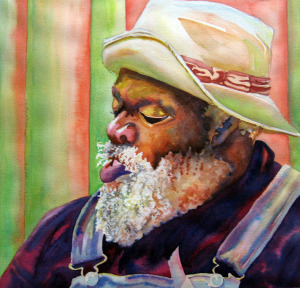
I could not believe my good fortune when I found a photo of Grandpa Elliot posted to the wet canvas photo reference library for artists. It was a must-do for me..Several bloggers have made mention of underpaintings; the most recent being Amy from Souldipper found here. She asked me about an artist’s use of an underpainting. I responded something like it is the foundation that we build our final work on. That made me think more on the subject as we were also talking about underpainting our lives with love and kindness. Then I came across the photo of Grandpa Elliot who has actually underpainted his life with sharing music to millions in New Orleans and becoming part of the project, “Playing for Change”, a CD whose proceeds go to helping others.The other connection I can make about an underpainting is that it always, for me, sets the tone for where the light will fall in it. BINGO! I see the same in life with passing on kindness. Light is passed on through our kindness to others. The above stage of my painting illustrates how I carved out areas where I wanted the light to fall.
The above image is the finished result.
I can not think of a better way to start the weekend than this:
LESLIE WHITE (lesliepaints) ~ is a guest writer here and an artist, teacher, book illustrator, and blogger. She’s been blogging since March 2009 and appreciated for the skill and beauty she shares. Her gifts to us are mini-lessons in a artistic technique. Often there is value added with life lessons, such as the one presented here. Leslie shares information on new art products and techniques and enriches our understanding of and appreciation for art. Her blog-posts go a long way toward encouraging others. She often enchantes us by sharing the work of her granddaughter and her students.
Last Sunday, I chose to practice Sabbath—a tradition that was a strong factor in my growing up years, but that waned with my work as a nurse…patients need care every day of the week. Most of us know and understand the concept of a day of rest, but our frenetic lifestyles tend to get in the way.
Sabbath crisscrosses most cultural, spiritual, religious and secular societies, even pre-dating biblical times. The Babylonian Enuma Elish prescribed a day of repose. In the Genesis creation story, God rested after his six days of work and, I suppose it worked out well so that he added it to those tablets of stone he handed on to his people through Moses. Wicca, Islam. Buddhism, Cherokee teaching and others all caution humans to take a break, chill out, and rest. Wisdom, it seems to me, embraces our need for refreshment, for replenishment of body, mind spirit and emotion, for regeneration and reflection.
For many of us, well, for me anyway, the need to be in control seems to take hold and it becomes oh-so-hard to let go of time, accept idleness and non-productivity and, perhaps, the feeling of uselessness. I suspect that there is a trust issue here. Can I really believe that God will take care of things in my absence? Can I believe that the work of creation on this particular day will go on without my amazing intervention?
So, what kind of things did I, Ms-Doing-Not-Being do?
• Meditation—a bit longer than my ordinary routine.
• Journaling. And in the process really waking up to what was happening around me. I wrote of all the wonderful sensory experiences that the pristine late-spring day offered—the finches song, the brilliant orange of the male oriole at our feeder, the spicy scent of new-born flowers and the basil in the vegetable garden. I noticed the play of light and shadow in the now-expansive boughs of the ash tree we planted almost twenty years ago and watched the hummingbirds fly back and forth sipping nectar from both flowers and feeders. I felt the gentle kiss of the breeze and delighted in my dogs’ warm bodies flanking me on either side. I listened to David busy chopping spices in the kitchen.
Photo Credit: D. Slotto
• Spa Stuff. I pampered myself with a Pomegranate/Cranberry exfoliating scrub courtesy of Burt’s Bees, did a manicure/pedicure and, well, thought about taking a nap. I thanked my body for its almost-seven decades of service and praised the many scars that it bears, a reminder of the life-threatening illness I have survived, for now.
• Creativity. Maybe some consider engaging in the creative process to be work. For moi, I allowed the muse to come out and play, more by way of brainstorming than actualizing any project. Sabbath time allows ideas to gestate and gives clarity as to where to take them.
• And, yes, a final confession. I did laundry. So, it wasn’t a perfect Sabbath, but for this woman who tends towards OCD, that’s probably not a bad thing. Besides, we needed clean clothes!
Photo Credit: Bergen Linen
That night I slept well, but will I be able to repeat the experience? My history tells me that this is not something that comes easily to me. I am aware that Sabbath doesn’t have to always be on Saturday or Sunday, or even occupy an entire twenty-four hours. How would life be different if, each day, I remember to tuck in an hour or even minutes for the divine repose, sit back and let go?
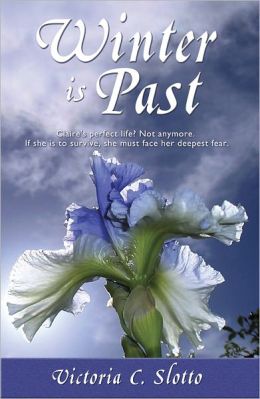
VICTORIA C. SLOTTO (Victoria C. Slotto, Author: Fiction, Poetry and Writing Prompts) ~ a Contributing Writer to Into the Bardo ,attributes her writing influences to her spirituality, her dealings with grief and loss, and nature. Having spent twenty-eight years as a nun, Victoria left the convent but continued to work as a nurse in the fields of death and dying, Victoria has seen and experienced much. A result of Victoria’s life experience is the ability to connect with readers on an intimate level. She resides in Reno, Nevada, with her husband and two dogs and spends several months of the year in Palm Desert, California.
Winter is Past is her first novel. It was published in 2012 by Lucky Bat Books. She has a second novel in process and also a poetry chapbook. Victoria is also an accomplished blogger and poet who has assumed a leadership role in d’Verse Poet’s Pub. You can read more ofher fine poetry HERE.
Chief Arvol Looking Horse –Spiritual Leader for the Lakota, Dakota and Nakota Sioux Nations invites all to join him in an annual international interfaith gathering. There is also a continued prayer in their homelands, while he gathers June 20 – 23 in ancestral Chumash territory, at Live Oak Camp in the Santa Ynez Valley. The public is invited to attend, free of charge, for all or part of the four-day gathering.
Chief Looking Horse is the 19th Generation Keeper of the Sacred White Buffalo Calf Pipe, who is committed to helping “All Nations, All Faiths, One Prayer” to fulfill the joining of nations in pursuit of peace through the honoring of sacred sites. He began the WPPD gathering in 1996 to help the healing of Mother Earth, after the birth of a white buffalo calf indicated a time of global crisis – according to Lakota prophesy. It has been held every year since, on June 21. WPPD is hosted in places of continued need of environmental protection. Now in its 18th year in collaboration with local people and spiritual leaders of all faiths, who are responding to the attention of the importance of Mother Earth and her sacred sites. It began as a prayer held in the four directions of Turtle Island. Beginning in the Black Hills, a.k.a “Heart Of Everything That Is” and grew to be held on every continent that continues today.
On Thursday June 20th a sacred fire will be lit and kept alive for four days. We understand the sacred fire is Universal to all Cultures. Invited speakers and First Nations People will speak about the environmental issues and the importance of protecting sacred sites. Earth Education and art making for children and adults will include puppet making and an ephemeral art piece that will cumulate in a closing message from the children. A full listing of each day’s events can be found at http://www.worldpeaceandprayerday.com
WPPD is organized every year by volunteers and funded entirely by donations. Contributions can be made by visiting:http://www.worldpeaceandprayerday.com
it must be painful for them to write, those poets in tough-times and hard places
where blood and tears and poverty contaminate the air, stain the sidewalks, and consume the people
the blood must be soul-sick and rusted and tasting of acid, not salt, and the poems meant to heal the writer and stroke the cheeks of the wounded, to dry their eyes and gently kiss their gray heads
to poem under such conditions must be like walking shoeless on glass shards
perhaps the most sacred thing in the dream-time meadow of poets’ desire is light
can you awaken to meet the Divine on the battlefield, in the camps, in government housing or in the ghettos?
if so, you are a saint, not simply a lyrist
2.
in my small world, my civilized world, people fall asleep reading or after making love or playing in the yard with their children
if they wander it is through books and planned travel
there are luxuries
there is food
there is cleanliness and paper on which to write
no bombs are dropping
there is almost certain dignity
3.
in San Francisco we walk along the beach at night, near the Cliff House
we walk to the sound of the waves, the sound of the Universe chanting its praise
our feet are bare and relish the comfort of cool sand
the air is clear and cold and easy to breathe, tasting of salt and smelling of sea life
here is a pristine moment of peace
i want to bequeath this peace to you, to everyone, as though it were a cherished heirloom
it is really a birthright
i want to plunge into the waters and gather the oceans to offer as sacramental wine in my cupped hands
i want to braid the seaweed into garlands for everyone to wear, hanging over their hearts, a symbol of affection
i want to collect pine cones from the trees that congregate along the coast and feed them to the children to remind them to love the earth and all its creatures, themselves included, and to say …
do not make war in your heart or upon your mother’s body
JAMIE DEDES ~ My worldly tags are poet and writer. For the past five years I’ve blogged at The Poet by Day,the journey in poem, formerly titled Musing by Moonlight. Through the gift of poetry (mine and that of others), I enter sacred space.
“You are what exists before all stories. You are what remains when the story is understood.”
Byron Katie, American speaker & author of The Work
I muse about this Coaching question asked me.
So what is my story? As I think of this, I see its tentacles going into the past.
The year is 1911. A lowly placed accounts clerk of the British Accounts Service in India boards the Kalka Mail train from Calcutta with his family. He is shifting home to Delhi in accordance with the British colonial Government’s decision to shift the administrative capital of the Indian subcontinent there. He is following his work, the only thing he knows that sustains him and his family. He is my grandfather.
ast forward fifty years and it is my father in the midst of a career in the Indian Audit and Accounts service. Now settled in Delhi, the capital of independent India. Content with a middle class lifestyle. So grooved in his office work that he feels insecure to take up an exciting consular opportunity in the US. He regrets it citing family constraints.
Fast forward another fifty years and it is I sitting at the desk in my office wondering what next. Having been on a sometimes exciting, sometimes lacklustre roller coaster ride through diverse business areas for three decades, I can claim fair knowledge of the nuts and bolts of corporate working. But like my grandfather and father, I see my work primarily as the means to provide a comfortable life to me and my family.
My story. The story in which working at an office desk equates to life comfort and sustenance. The story which I accept as me. And as I accept, I see it gaining power and dictating what I do. I see it protecting me in a ‘safe box’. As it allows me to peep through my perception coloured lenses and read meaning about the world at large. But as it protects, do I also see it confining and preventing me from setting forth, taking risks and achieving my true potential?
What is it that has embedded this ‘office work’ DNA in me thus? What is it that has made it such an integral part of my story? As I muse, I sense that in my office work DNA resides a gene harking back to the industrial revolution. A gene that through generations has altered my value system. And made me shift towards valuing business growth, productivity and profits over beauty, compassion, love and community ties. Over generations, the gene has also lured me away from simplicity and frugality and towards materialism. An attachment to materialistic possessions which has fuelled insecurity. And has manifested in my life through frantic work schedules, technology tying me down 24X7, scarcely any time to “stop by the woods” or “wander lonely as a cloud”.
So, who would I be without my story? Who would I be if I could shed the above DNA and gene? Would I have that glorious opportunity to start from a place where I am no longer confined and am free to define and implement what I think is important? What do I see?
I see myself slowing down, without the pressures of societal expectations of wealth and ownership. As I take personal responsibility to do that which is meaningful, creative and liberating to me.
I see myself effortlessly crossing those artificial barriers created by economic, social and racial compulsions.
I see in me the birth of a great willingness to learn. From all corners of the world. Unfettered and unhampered by beliefs of my education and experience.
Like the return of the Jedi, I see in me the comeback of the human heart. As I acknowledge intrinsic qualities like Empathy, Faith, Creativity and Interconnectedness and bring them centre stage.
I see how work would look like for me. Passion…. Art…… the pulse of the environment.
Who would I be without my stories?
Like a tree
Without the rustle of the leaves
Winter mind
Kind
Aligned
To the Inside
Inside the inside
A space so wide
It has no centre
Because it is centre
SHAKTI GHOSAL ~ has been blogging (ESGEE musgings)since September 30, 2011. He was born at New Delhi, India. Shakti is an Engineer and Management Post Graduate from IIM, Bangalore. Apart from Management theory, Shakti remains fascinated with diverse areas ranging from World History, Economic trends to Human Psychology & Development.
A senior Management professional, Shakti has been professionally involved over twenty-five years at both International and India centric levels spanning diverse business areas and verticals. With a strong bias towards action and results, Shakti remains passionate about team empowerment and process improvement.
Shakti currently resides in the beautiful city of Muscat in Oman with wife Sanchita, a doctorate and an Educationist. They are blessed with two lovely daughters, Riya and Piya.
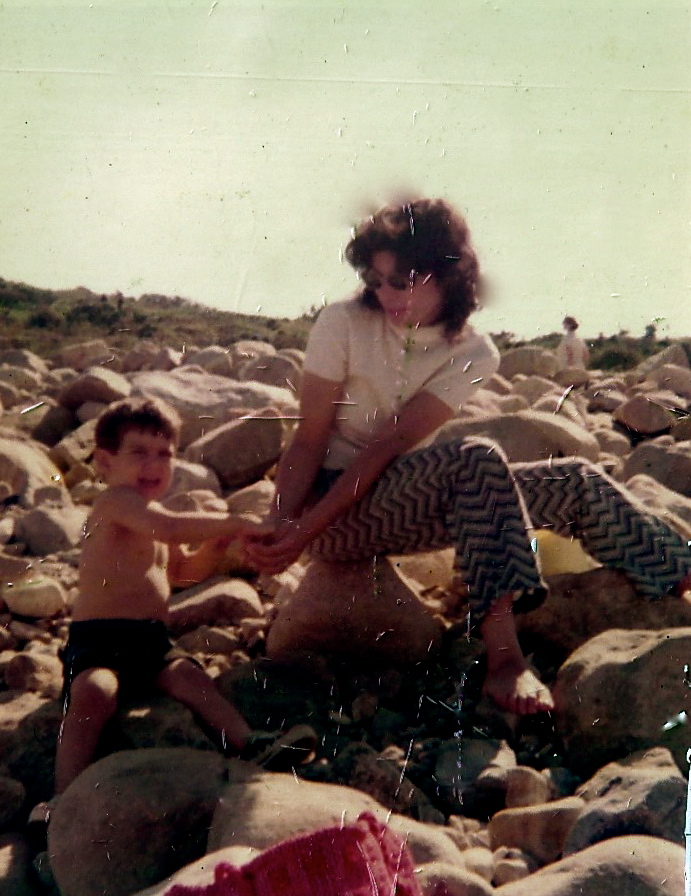
My wish is for her to grow up in a world where people are judged for who they are, and not by the color of their skin, not for who they love, who they worship, by their gender, or the size of their bank account. My wish is for this world to become our world, where ‘live and let live’ is only the starting point, and where my children, your children, all children become ‘ours’ to educate, to heal, to care for so they are prepared and able to help make our world a better place.
NAOMI BALTUCK ~ is a Contributing Editor and Resident Storyteller here at Bardo. She is a world-traveler and an award-winning writer, photographer, and story-teller whose works of fiction and nonfiction are available through Amazon HERE. Naomi presents her wonderful photo-stories – always interesting and rich with meaning and humor – at Writing Between the Lines, Life from the Writer’s POV. She also conducts workshops such as Peace Porridge (multicultural stories to promote cooperation, goodwill, and peaceful coexistence), Whispers in the Graveyard (a spellbinding array of haunting and mysterious stories), Tandem Tales, Traveling Light Around the World, and others. For more on her programs visit Naomi Baltuck.com
One of the most difficult things that humans do is make meaning from their current situation. In seminary, we were asked to do any assignment called, “This I Believe.” I still treasure the product of that assignment and will share it below. If you’re curious about the origins of the meaning of the word belief in Christian Biblical literature, there is a brief summary here. Regardless, here are a few questions to ponder and be thoughtful about –
What is belief?
How is belief lived out in your life?
Does belief evolve over time?
If belief evolves over time, what does that mean?
Could your belief be a particular window into the world?
Or is your belief the only particular window into the world?
windows
as i look behind
i see a path of aged stone
worn away at the edges
cementing to its neighbor
existing since the
apple flew from the tree
as i look ahead
i see tangles and brambles
and flowers and warmth
and my foot reaches out
as the stone peeks
through the grasses
for a moment
while i hesitantly
test the ground
of all being
as i place my foot
down on the rock
the path is solid and
the tangles and brambles
dissolve into nothing
as the daisies lean towards
the sun gesturing
for me to proceed
as i look up
i see a mansion
welcoming me with
the scent of lavender
and love
calling out like
mama greeting me
after a long summer
away at camp
as i reach the door
i turn the handle
shaking and trembling
with fear and awe
standing at the portal
that leads to
a new place of belonging
as i step forward
realizing this is home
my ragged teddy bear
is waiting for me
on the worn chair
joy glinting off his
button eye
Papa! Mama!
i am home!
“In the garden, child.”
as i look out
i suddenly notice
the windows
each stained to create
a beautiful invitation
of loving encouragement
and lively warmth
leading to the garden
as i run from window
to window i am stunned
by the rainbow of promise
that dances before
my eyes
until i see him
and i am caught
by his image
as love overwhelms me
and my heart dances
and the garden glistens
through the
tears in my eyes
as i peek into the garden
i see Papa waiting for me
and my hand reaches out
to touch the beauty of
him and passes
through the glass
holding me in surprise
while i walk through the
window into the light
enraptured with him
i run to Papa
and leap into His arms
knocking Him back and
He receives me with
a chuckle and twirls
me headily through the
clouds with laughter
born of love and
grace.
Terri Stewart, May, 2009
…
Post and photo, Terri Stewart, (c) 2013 All Rights Reserved
…
TERRI STEWART is Into the Bardo’s Sunday chaplain, senior content editor, and site co-administrator. She comes from an eclectic background and considers herself to be grounded in contemplation and justice. She is the Director and Founder of the Youth Chaplaincy Coalition that serves youth affected by the justice system. As a graduate of Seattle University’s School of Theology and Ministry, she earned her Master’s of Divinity and a Post-Master’s Certificate in Spiritual Direction with honors and is a rare United Methodist student in the Jesuit Honor Society, Alpha Sigma Nu. She is a contributing author to the Abingdon Worship Annual.
I’ve written poems for my mother, my sister, my grandfather, friends, my husband—even my dogs. Today I’m aware that this would-be poet has thus far under-achieved when it comes to reflecting on the role of my fathers (yes, that’s plural) in my life. And yet, they’ve been a central, loving, constant presence. I’ve been blessed.
It’s not exactly true that I’ve ignored them. The man who gave me life, I never knew. He was killed in World War II when I was three months old, leaving my mother a 22-year old war widow. In the interest of brevity, here’s a link to the poem I wrote the year that the anniversary of his death coincided with Easter Sunday.
During the subsequent years, we lived with my maternal grandparents and it was easy to call my grandfather Daddy as soon as I decided it was okay to talk. The man was a wonder, a civil engineer for the Los Angeles Flood Control, quiet, brilliant and loving. He sang baritone, and I remember sitting on his shoulders at Christmas Midnight Mass while he sang “Oh, Holy Night” to the accompaniment of my concert-pianist/organist grandmother. Come to think of it, I wrote of him, years ago, as well, here.
Daddy numero trois came into our lives when I was seven and my mother remarried. He brought along a sister my age—both of whom have now left us. When he died, twelve years ago, I was in the midst of a significant health crisis. I put grief on hold, as I did the desire to pay tribute to this loving, generous man who became as much a father to me as any DNA could assure. So now I’m on a mission.
In the meantime, I turn to poets of all times who have written works that sing of fatherhood—its tenderness and tulmult, its caring and curse. Though I chose to tell my story in glowing terms, we know that life is not always painted in gentle tones of watercolor. Sometimes the rage of red and black might slash across the paper. Often colder tones prevail. Yet, for most of us, something emerges that stays true and evolves throughout a lifetime, washed with a bit of hope and forgiveness.
Today, let me share three poems (or snippets of the one not yet in the public domain) that cover the role of fathers in our lives.
On My First Son by Ben Jonson
Farewell, thou child of my right hand, and joy; My sin was too much hope of thee, lov’d boy. Seven years thou’wert lent to me, and I thee pay, Exacted by thy fate, on the just day. O, could I lose all father now! For why Will man lament the state he should envy? To have so soon ‘scap’d world’s and flesh’s rage, And, if no other misery, yet age? Rest in soft peace, and, ask’d, say here doth lie Ben Jonson his best piece of poetry. For whose sake, henceforth, all his vows be such, As what he loves may never like too much.
Public Domain
English: English playwright, poet, and actor Ben Jonson (1572-1637) by George Vertue (1684-1786) after Gerard van Honthorst (1590-1656) (Photo credit: Wikipedia)
In this first poem, 17th century poet, Ben Johnson, writes of the death of his first-born son, Benjamin, who died on his 7th birthday. Note that the Hebrew name, Benjamin, translates as “child of the right hand.” The almost stoic tone of this work is deceptive. Johnson mollifies his grief, keeping emotion in check, deriving lessons on detachment. Yes that second-to-the-last couplet belies the true strength of his loss. Often, less is more effective.
***
Those Winter Sundays by Robert Hayden
Sundays too my father got up early and put his clothes on in the blueblack cold, then with cracked hands that ached from labor in the weekday weather made banked fires blaze. No one ever thanked him…
…What did I know, what did I know of love’s austere and lonely offices?
Copyrighted, Excerpts
Photo Credit: Nachi.org
***
Contemporary poet, Robert Hayden, wrote this poem from the point of view of a son who understand, too late, the real meaning of the love his father showed. Because of copyright considerations, I have only quoted small portions of the poem, which I beg you to read in its entirety.
The boy recalls that the father called him when the room was warm, gave him the shoes he had polished. And he remembers as well, “fearing the angers of that cold house.” Every detail in the poem speaks of cold and darkness. He uses monosyllabic words and internal rhyme to create the sounds of almost-alienation, but in the end we have a portrait of love that is silent and devoted to the duties of fatherhood.
To Her Father with Some Verses by Anne Bradstreet
Most truly honoured, and as truly dear, If worth in me or ought I do appear, Who can of right better demand the same Than may your worthy self from whom it came? The principal might yield a greater sum, Yet handled ill, amounts but to this crumb; My stock’s so small I know not how to pay, My bond remains in force unto this day; Yet for part payment take this simple mite, Where nothing’s to be had, kings loose their right. Such is my debt I may not say forgive, But as I can, I’ll pay it while I live; Such is my bond, none can discharge but I, Yet paying is not paid until I die.
Public Domain
Second edition title page of Anne Bradstreet’s poems (Photo credit: Wikipedia)
And I suppose I should end this on a more positive note with 17th century poetess’ Anne Bradstreet’s tribute to her father. Yes, we do own them a debt of gratitude. After all, where where would we be without them. Um, I guess we wouldn’t.
If you want more, I suggest stopping over at The Poetry Foundation’s Website and browsing a bit. I strongly recommend taking a moment to read Dylan Thomas’ well-known Villanelle: Do Not Go Gentle Into that Good Night, and My Papa’s Waltz by Theodore Roethke, also a Villanelle.
SHARE YOUR FATHER’S DAY POEM:
If you are reading this post on my personal blog and care to link in your own Father’s Day poem, access Mr. Linky at the bottom of this post and add your name and the direct URL of your poem. I will look forward to reading it there, and you may want to browse other’s submissions.
If you’re reading this post on Into the Bardo and would like to join in, go this post on MY BLOG. Hope to see you there!
I do plan to write one for Daddy #3—it’s long overdue.
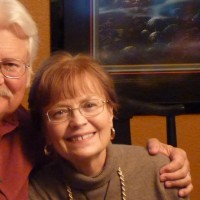
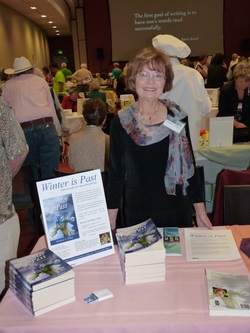
Victoria and Dave SlottoVictoria at the Palm Springs Writer’s Expo March 2012
VICTORIA C. SLOTTO (Victoria C. Slotto, Author: Fiction, Poetry and Writing Prompts) ~ a Contributing Writer to Into the Bardo ,attributes her writing influences to her spirituality, her dealings with grief and loss, and nature. Having spent twenty-eight years as a nun, Victoria left the convent but continued to work as a nurse in the fields of death and dying, Victoria has seen and experienced much. A result of Victoria’s life experience is the ability to connect with readers on an intimate level. She resides in Reno, Nevada, with her husband and two dogs and spends several months of the year in Palm Desert, California.
Winter is Past is her first novel. It was published in 2012 by Lucky Bat Books. She has a second novel in process and also a poetry chapbook. Victoria is also an accomplished blogger and poet who has assumed a leadership role in d’Verse Poet’s Pub. You can read more ofher fine poetry HERE.
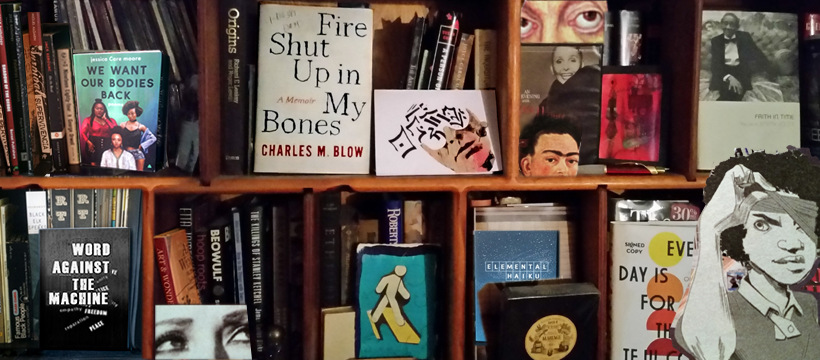
 Writing in a far and broken country
 JAMIE DEDES ~ My worldly tags are poet and writer. For the past five years I’ve blogged at The Poet by Day,the journey in poem, formerly titled Musing by Moonlight. Through the gift of poetry (mine and that of others), I enter sacred space.




_-_La_Nuit_(1883).jpg "William-Adolphe_Bouguereau_(1825-1905)_-_La_Nuit_(1883)")

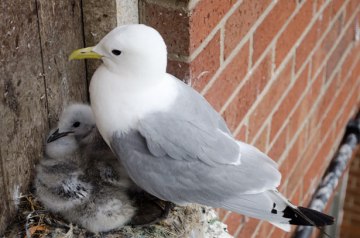

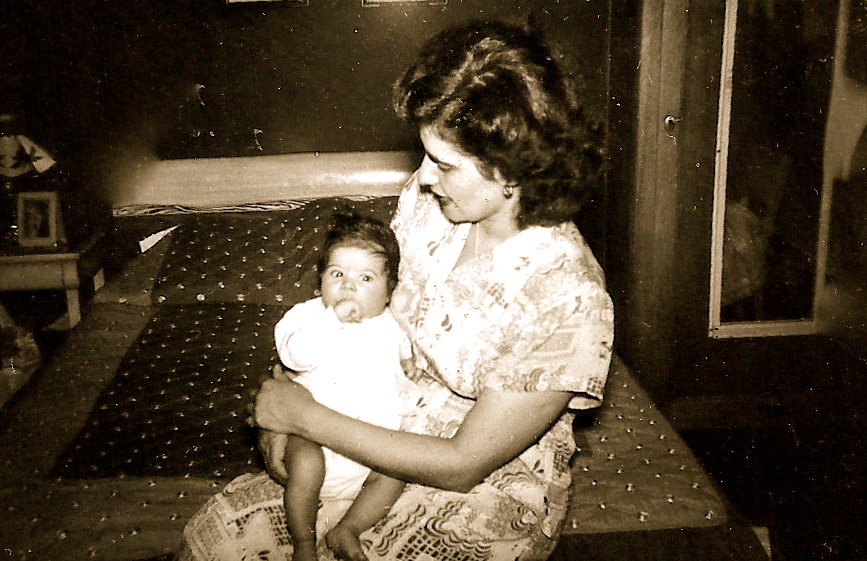













 That is my wish.


 The BeZine