The BeZine Blog

Posted in Jamie Dedes, Poems/Poetry

The Gods of Our Making

Ares_Ludovisi_Altemps_Inv8602_n2“And Caesar’s spirit, raging for revenge,
With Atë by his side come hot from hell,
Shall in these confines with a monarch’s voice
Cry “Havoc!” and let slip the dogs of war,
That this foul deed shall smell above the earth
With carrion men, groaning for burial.”
Julius Caesar Act 3, scene 1

we have need of gods
an ancient irony
like blood that needs heat
to sweat out the mysteries
to rage in revenge
to reconcile sacrifice
to repel condemnation
to simmer our gratitude
for the many wonders
as misunderstood
as all the horrors

relieve us we pray
in our righteous moments
from the sins of others
their guns, their bombs
their swords of hate
lives and livelihoods cut short
in genocides renamed –
semantics play large
in wars of loathing
and vile justifications

relieve us we pray
from children killing children
from executions in the street
from brothers killing brothers
from sisters unleashed
like the dogs of war
like a belly full of cancer
like an aorta swelling

our gods cry ‘havoc’
in traps set by rulers
by teachers at schools
and in places of worship
by parents at dinner table
our legs immobilized
like wolves ensnared
we chew at our feet
attempts at freedom
cripple and break us
and everywhere
mouthing lies
groaning in denial
bowing to gutter rats
scraping to vultures
the false gods of our making

– Jamie Dedes

© 2012, poem and portrait (below), Jamie Dedes, All rights reserved

Photo credit ~ the “Ludovisi Ares”,  Ares- the Greek God of War and Bloodlust via Wikipedia by Marie-Lan Nguyen and generously released into the public domain.

Photo on 2012-09-19 at 20.00JAMIE DEDES ~ My worldly tags are poet and writer. For the past five years I’ve blogged at The Poet by Day,the journey in poem, formerly titled Musing by Moonlight.  Through the gift of poetry (mine and that of others), I enter sacred space.

Posted in Culture/History, Essay, Naomi Baltuck, Photography/Photographer

Remembering Uncle Lewis, A Memorial Day Story

One of my earliest memories is of dinner at Grandma Rose’s house.  Her towels, furniture, and closets smelled of mothballs; she even stored her silverware in mothballs.  Mostly, though, I recall standing on Grandma’s couch to study the framed collage of black and white photographs on her wall.  I recognized my father, but knew the other boy in the pictures only by name, and by heart.

Uncle Lewis was my father’s only sibling, younger than my dad by ten years.  We never met, and Daddy never spoke of him.  But they were best friends.  In one picture Lewis was laughing, having been surprised on the toilet by my father with his camera.  The brothers teased Grandma too.  Lewis would yell, “Harry, stop hitting me!”  Grandma would rush in, and scold my father for picking on his brother.  Undaunted, they’d laugh and repeat, until Grandma caught on.

Soon after the attack on Pearl Harbor, Lewis was drafted into the infantry, a shy studious eighteen year old who had never kissed a girl.  My father joined up as an officer.  He pulled a few strings to get Lewis transferred into the 30th ‘Old Hickory’ Division, so the brothers could cross the Atlantic on the same ship.  Lewis wrote letters and post cards home, often addressed to their dog ‘Peanuts.’

“Hey, Peanuts, tell Pa to eat his spinach!”   From the ship he wrote, “Harry and his buddies sneaked me into their cabin.  They gave me chocolate and let me play with their puppy.  Don’t tell anyone, or we’ll all catch it.  They smuggled the pup on board, and officers shouldn’t fraternize with enlisted men…”

While serving in Africa, Italy, England, France, and Germany, Harry was safely behind the front lines.  But Lewis was sent to Normandy two days after the D-Day invasion.  He fought in the hedgerows of France, and in Holland.  “The Dutch ran into the streets and passed out everything from soup to nuts.  As we marched out of there in the middle of the night, you could hear the clink of cognac, whiskey, and wine bottles in the guys’ jackets, amidst all the cursing and the roar of the Jerrys’ planes overhead.”  

To his parents Lewis wrote, “Dear Ma and Pa, today I saw General Eisenhower drive by.”  Or, “Kronk said the war can’t last.  It just can’t.  And he said it with such an angelic look on his face, I believe him!”

But to my father he wrote, “You should see the bruise from where a bullet passed through my shirt, Brub.  It was a close call.”  Or, “They took Julian away.  It’s so lonely here, Brub.  He’s the reason I wouldn’t take that promotion to sergeant.  We dug in together, took care of each other when things got rough.  I don’t know how bad he’s hurt; I just hope he makes it, and escapes this Hell.  Pray for me, Brub. Pray for me.”

On September 20, 1944, the day before his company attacked the Siegfried Line, Staff Sergeant Lewis Baltuck was killed by the blast of a shell.  Twenty years old, he had hardly begun to live.  He was survived by his parents, his dog Peanuts, and his brother Harry.  He never had the time or the opportunity to fall in love and marry.  He left no children to mourn for him—only the Bronze Star and the bronzed baby booties Grandma kept on her bookshelf until the day she died, more than forty years after her son’s death.

Harry married, had seven children, and built his own little house in Detroit.  But for the rest of his life he suffered acutely from the unspeakable burden of depression and Survivor’s Guilt.  When Grandpa Max died, my father became the sole caretaker of his widowed mother.  There was no one to share that burden with, to joke with or jolly her along.  Worst of all, crazed with grief, Grandma Rose blamed Harry for Lewis’s death.

I envied those kids who grew up with cousins to play with, and uncles who cared about them.  Uncle Lewis would’ve been that kind of uncle, and my father would have been a different man, without that black cloud to live under.  When Daddy died in 1965, we lost our connection to my father’s extended family, and our ties to our paternal cultural heritage were nearly lost as well.  But it does no good to dwell on the past or to speculate on what might have been.

Uncle Lewis was right about one thing.  War is Hell.  The price it exacts is impossible to tally, and can never be repaid.  When a soldier is killed, one heart stops beating, but many more are broken.  The wounds inflicted upon whole families are so deep that the scars can still be felt after generations.

I swear my uncle’s little bronze baby booties will never end up on the bargain shelf at the Salvation Army Thrift Store, like so many others I have seen there.  How sad to think that such precious keepsakes might be tossed into the giveaway because no one remembers or cares about the one whose little feet filled them.

I attended the 60th reunion of the Old Hickory Division in Nashville in search of someone who knew my uncle.  I met only one man who remembered him…“a quiet man who didn’t say much, but when he did speak, he was always worth listening to.”

I tell my children that story, and many other stories about their Great Uncle Lewis.  I am confident he will be cherished and remembered, not just for his tragic death, but for his joyful life.

copyright 2012 Naomi Baltuck

NaomiPHOTO1-300ppiNAOMI BALTUCK ~ is a Contributing Editor and Resident Storyteller here at Bardo. She is a world-traveler and an award-winning writer, photographer, and story-teller whose works of fiction and nonfiction are available through Amazon HERE. Naomi presents her wonderful photo-stories – always interesting and rich with meaning and humor – at Writing Between the Lines, Life from the Writer’s POV. She also conducts workshops such as Peace Porridge (multicultural stories to promote cooperation, goodwill, and peaceful coexistence), Whispers in the Graveyard (a spellbinding array of haunting and mysterious stories), Tandem Tales, Traveling Light Around the World, and others. For more on her programs visit Naomi Baltuck.com

Posted in Spiritual Practice, story, Terri Stewart

Connecting to Our Story

New Life, New Story
New Life, New Story

Often times, we look back at our lives and we can see the story. But is that story really the heart of the matter? How do we connect to the heart of our story in the present moment? Taking meaning from what is now to illuminate what was then.

At the core of every moment lies the heart of the cosmos, and my heart, and yours.

~Margaret D. McGee, Haiku–the Sacred Art

Today, I’d like to try a technique that Margaret McGee teaches in her book referenced above. She uses it to teach haiku. If you feel comfortable with that, I would definitely encourage you! If you feel there is another creative form calling forth from you, then use that–music, dance, poetry.

You will need up to 20 minutes for this exercise. Review all the steps before you start, unless you’re like me, in which case you just jump in!

Make a chart something like this (you probably will need extra room under sight!):

table

Now, if it is possible, find a nice place outside to sit comfortably and to take in your surroundings.

Relax, breathe deeply, look around.

  • Now–What do you smell? It’s spring–are there flowers blooming? Can you smell them? Not all smells are serene! It could be something else altogether!
  • Then–Close your eyes. Let go and stroll through your memories. Is there a particular scent from your past (last week? childhood?) that is arising for you?
  • Now–Write down the first thing you see! And keep on filling it in. Our eyes can take in so many things! We can see, arguably, over 100,000 different colors! What words can you create that describes the individuality in what you see?
  • Then–Close your eyes. Let go and stroll through your memories. Is there a particular color or scene from your past that is arising for you?

Continue on in this pattern for each category.

Now, get a fresh sheet of paper or use the back of your grid. Choose a few images from your lists that are resonating with you and with each other. These images may all be from the present moment or they may be from past moments. In particular, if you want to use the present to cast meaning on your past story, search for threads that connect across time.

Go and do! Create your artwork (or soulwork) in haiku, other poetry forms, photography, collage, painting, mandala, essay, etc. Whatever way calls to you. Take time now to make meaning and to add to the depth and meaning of your own story.

table2

For me, what is resonating is the bitterness of coffee, addiction, wind that is too strong. Yikes–what can I do with that?

stormy winds of spring

whistle through my breaking heart–

promises unkept

Aaah, well, this exercise today seems to have brought up some memories. What is clear to me is that our stories are never finished. We can continue to add meaning and to find new meaning and to have alternate meanings! A surplus of meaning.

The full story behind this new story has been started before if you would like to read it.

Shalom,

Chaplain Terri

© 2013, essay, haiku, and photograph, Terri Stewart, all rights reserved

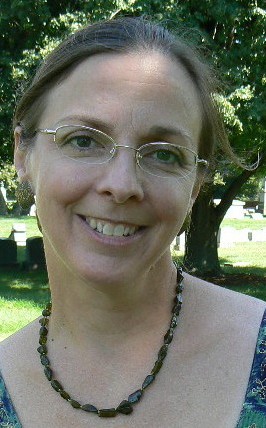
Terri StewartTERRI STEWART is Into the Bardo’s  Sunday Chaplain, Senior Content Editor, and Site Co-administrator. She comes from an eclectic background and considers herself to be grounded in contemplation and justice. She is the Director and Founder of the Youth Chaplaincy Coalition that serves youth affected by the justice system. As a recent graduate of Seattle University’s School of Theology and Ministry, she earned her Master’s of Divinity and a Post-Master’s Certificate in Spiritual Direction with honors and is a rare United Methodist student in the Jesuit Honor Society, Alpha Sigma Nu. She is a contributing author to the Abingdon Worship Annual.

Her online presence is “Cloaked Monk.” This speaks to her grounding in contemplative arts (photography, mandala, poetry) and the need to live it out in the world. The cloak is the disguise of normalcy as she advocates for justice and peace. You can find her at www.cloakedmonk.com, www.twitter.com/cloakedmonk,  and  www.facebook.com/cloakedmonk.  To reach her for conversation, send a note to cloakedmonk@outlook.com.
Posted in Buddhism

The Buddha’s Birthday today …

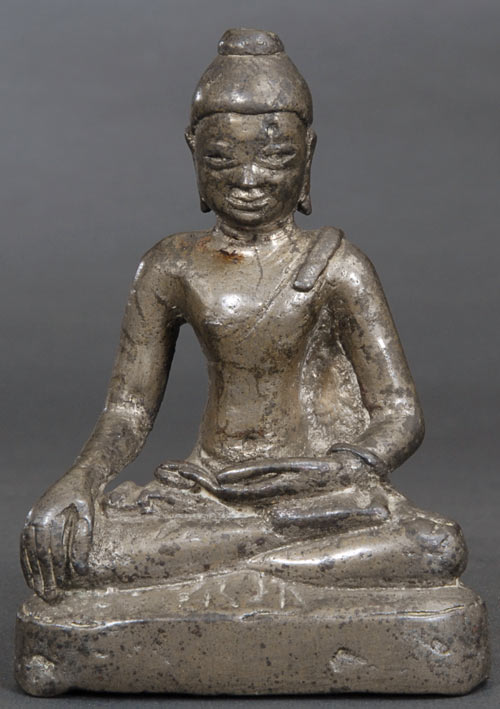
531-080413_5349The Buddha’s Birthday, Vesākha, is a moveable feast.

This year it is celebrated on May 25, 2013 in Western Countries.

In Eastern Countries it is celebrated on the eighth day of the fourth lunar month, April 8.

The Buddha’s Birthday is celebrated in different ways:

On Vesākha day, devout Buddhists and followers alike are expected and requested to assemble in their various temples before dawn for the ceremonial, and honorable, hoisting of the Buddhist flag and the singing of hymns in praise of the holy triple gem: The Buddha, The Dharma (his teachings), and The Sangha(his disciples). Devotees may bring simple offerings of flowers, candles and joss-sticks to lay at the feet of their teacher. These symbolic offerings are to remind followers that just as the beautiful flowers would wither away after a short while and the candles and joss-sticks would soon burn out, so too is life subject to decay and destruction. Devotees are enjoined to make a special effort to refrain from killing of any kind. They are encouraged to partake of vegetarian food for the day. In some countries, notably Sri Lanka, two days are set aside for the celebration of Vesākha and all liquor shops and slaughter houses are closed by government decree during the two days. Also birds, insects and animals are released by the thousands in what is known as a ‘symbolic act of liberation’; of giving freedom to those who are in captivity, imprisoned, or tortured against their will. Some devout Buddhists will wear a simple white dress and spend the whole day in temples with renewed determination to observe the eight Precepts.

Devout Buddhists undertake to lead a noble life according to the teaching by making daily affirmations to observe the Five Precepts. However, on special days, notably new moon and full moon days, they observe the eight Precepts to train themselves to practice morality, simplicity and humility.

Some temples also display a small image of the baby Buddha in front of the altar in a small basin filled with water and decorated with flowers, allowing devotees to pour water over the statue; it is symbolic of the cleansing of a practitioner’s bad karma, and to reenact the events following the Buddha’s birth, when devas and spirits made heavenly offerings to him.

Devotees are expected to listen to talks given by monks. On this day monks will recite verses uttered by the Buddha twenty-five centuries ago, to invoke peace and happiness for the government and the people. Buddhists are reminded to live in harmony with people of other faiths and to respect the beliefs of other people as the Buddha taught.

Bringing happiness to others

Celebrating Vesākha also means making special efforts to bring happiness to the unfortunate like the aged, the handicapped and the sick. To this day, Buddhists will distribute gifts in cash and kind to various charitable homes throughout the country. Vesākha is also a time for great joy and happiness, expressed not by pandering to one’s appetites but by concentrating on useful activities such as decorating and illuminating temples, painting and creating exquisite scenes from the life of the Buddha for public dissemination. Devout Buddhists also vie with one another to provide refreshments and vegetarian food to followers who visit the temple to pay homage to the Enlightened One. 

Paying homage to the Buddha

Tradition ascribes to the Buddha himself instruction on how to pay him homage. Just before he died, he saw his faithful attendant Ananda, weeping. The Buddha advised him not to weep, but to understand the universal law that all compounded things (including even his own body) must disintegrate. He advised everyone not to cry over the disintegration of the physical body but to regard his teachings (The Dhamma) as their teacher from then on, because only the Dhamma truth is eternal and not subject to the law of change. He also stressed that the way to pay homage to him was not merely by offering flowers, incense, and lights, but by truly and sincerely striving to follow his teachings. This is how Buddhists are expected to celebrate Vesak: to use the opportunity to reiterate their determination to lead noble lives, to develop their minds, to practise loving-kindness and to bring peace and harmony to humanity.

A Dharma Talk, the Practice Is Where You Are At:

Text courtesy of Wikipedia. Photo credits ~ the Buddha by Barbara Stone (The List of Buddha Lists) for The Buddha Gallery and courtesy of the curator of the gallery. Video courtesty of Insight Meditation Center, Redwood City, California, featuring Gil Frondal, teacher.

– Compiled by Jamie Dedes

Posted in Guest Writer, Poems/Poetry

String Theory

600px-Calabi-Yau-alternate

the work of TJ Therein

Don’t ask me how, don’t ask me why
But energy will never die
It merely changes shape and form
Regardless of faith and decorum
All things are bound by this dharma
This my friend is part of Karma
We will die and in death disperse
Seeds upon wind of universe
On what ground those seeds settle and grow
Is something no one can really know
Some say angels with halos and wings
But we know nothing of these things
There is more to elephant than just tusk
And our bodies no more than mortal husk
It is the fruit that it contains
That baffles our little birdbrains
It confounds the fool as it does the wise
Because energy never dies

– Timothy James Therien

© 2013, poem and portrait (below), Timothy James Therien, All rights reserved
Photo credit ~ Scientific American cover, November 2007, under Creative Commons Attribution Share-Alike License 2.5 generic via Wikipedia

Snapshot_20110301_2TIMOTHY JAMES “TJ” THERIEN (Liars, Hypocrites & The Development of Human Emotions) ~ is a guest writer today on Into the Bardo. He has been blogging since November 2012 and has already garnered a significant and loyal following. He says in another poem “I am not a writer … I am possessed by unseen spirit/And my hand is so moved/Words dictated to me by inner voice/Muse speaks when she wants to speak…” That sounds an awful lot like work coming from sacred space. TJ tells us that he was born 1968 in Toronto, Ontario, Canada and current resides in The Eastern Townships, Quebec, Canada. He’s lived briefly in Calgary, Alberta, Canada, and Parry Sound, Ontario Canada. He participates in Poet’s Corner. His “About” is posted HERE.

Posted in Spiritual Practice, story, Terri Stewart

What are you witness to?

tracy-arm-fjord-copy

What are you witness to? What story have you seen? Where has grace moved in your life?

I’ve just returned from vacation. There were so many stories told if I just slowed down and listened or watched. There was the mother holding a young child’s hands as he ran along the pool’s edge; the young man from Indonesia who works day after day with no days off; the staff who rush to the port side of the boat so they can see where we are going or have been, their only contact with a new world from a distance or from behind a camera.

Grace moved in my heart at every encounter with the people and with the striking depth of beauty that we encountered in the natural beauty of Alaska and the surrounding area. Grace moved in my heart when I was able to experience living through the eyes of compassion in this rarefied environment. Love, beauty, and grace coalescing in my rib cage.

I wrote a series of haiku witnessing to the stark beauty in the Tracy Arm Fjord that I offer here along with a photo from that day.  These haiku were primarily inspired by the waters while we were entering into the Tracy Arm Fjord, which were quite different from the waters once we were sitting still.  The arrival waters were deeper, grayer, more choppy and more mysterious.

The photo is from a moment of stillness in waters littered with small icebergs. Click on the photo to see an expanded view. To browse through the unedited photos, you can go to my flickr site.

glacier fed wind

whips across cresting waters

reflecting sun’s glory

frenzied wind

stirring waters to white peaks

be still my soul

shrouded grey waters

revealing iceberg tips

depths hidden

– Terri Stewart

© 2013, essay, haiku, and photograph, Terri Stewart, all rights reserved

Terri StewartTERRI STEWART is Into the Bardo’s  Sunday Chaplain, Senior Content Editor, and Site Co-administrator. She comes from an eclectic background and considers herself to be grounded in contemplation and justice. She is the Director and Founder of the Youth Chaplaincy Coalition that serves youth affected by the justice system. As a recent graduate of Seattle University’s School of Theology and Ministry, she earned her Master’s of Divinity and a Post-Master’s Certificate in Spiritual Direction with honors and is a rare United Methodist student in the Jesuit Honor Society, Alpha Sigma Nu. She is a contributing author to the Abingdon Worship Annual.

Her online presence is “Cloaked Monk.” This speaks to her grounding in contemplative arts (photography, mandala, poetry) and the need to live it out in the world. The cloak is the disguise of normalcy as she advocates for justice and peace. You can find her at www.cloakedmonk.com, www.twitter.com/cloakedmonk,  and  www.facebook.com/cloakedmonk.  To reach her for conversation, send a note to cloakedmonk@outlook.com.
Posted in Contributing Writer, Poems/Poetry

Hot Chocolate With Mary

oliver1

the work of Victoria C. Slotto

The leaves of an elm splash
dappled sunlight on the forest
floor. A chill lingers in the
air so we share hot chocolate
from a thermos, pour the creamy
liquid into insulated mugs.

Age does not prevent her
from sprawling on the earth
she loves so passionately.
She leans against the tree’s
stout trunk, says, “I’m yours.”

My mouth is dry like when
the dentist stuffs it full of
cotton rolls. Disbelief numbs
me till she laughs—a sound
as real as songs of her beloved
birds that sing their prayers
in unison from the surrounding
branches and marshy meadows.

“I’m yours,” she says again,
reminding me I’m here to do
the interview I’ve wished for,
nurtured in my imagination
since I discovered her.

“Your life,” I coax, knowing
that but a single word suffices.

As for myself
I swung the door open and there was
The wordless singing world. And I ran for my life.

“You ran to it?”

“Yes, immersed myself in beauty.”
While on and on the sparrow sings.

“And aging? If you don’t mind, that is.”

In the deep fall, don’t you imagine the leaves think
how comfortable it will be to touch
the earth…?”

…and what shall I wish for myself but,
being so struck by the lightning of years
to live with what is left, loving.

“Any regrets?”

There wasn’t
time enough for all the wonderful things
I could think of to do

In a single day…

“If you could choreograph your death?”

…Maybe on a midsummer night’s eve,
And without fanfare.

“About death?”

So it is
if the heart has devoted itself to love, there is
not a single inch of emptiness. Gladness gleams
all the way to the grave.

“And after?”

If there’s a temple, I haven’t found it yet,
I simply go on drifting, in the heaven of grass
and the weeds.

She takes her leave.
I watch her walk across the fields,
stopping to listen
or to follow the flight of a heron.
She’s alone now
with Percy her dog
and memories of having lived well.

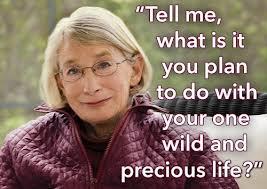
I would do just about anything to spend an hour with Mary Oliver, a poet who has touched my life and my writing so deeply. This is an imagined interview. The responses in italics are all snippets of her poetry chosen from  New and Selected Poems, Volume Two.

– Victoria C. Slotto

Victoria and Dave Slotto
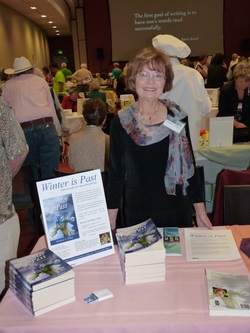
Victoria at the Palm Springs Writer's Expo March 2012
Victoria at the Palm Springs Writer’s Expo March 2012

VICTORIA C. SLOTTO (Victoria C. Slotto, Author: Fiction, Poetry and Writing Prompts) ~  a Contributing Writer to Into the Bardo ,attributes her writing influences to her spirituality, her dealings with grief and loss, and nature. Having spent twenty-eight years as a nun, Victoria left the convent but continued to work as a nurse in the fields of death and dying, Victoria has seen and experienced much. A result of Victoria’s life experience is the ability to connect with readers on an intimate level. She resides in Reno, Nevada, with her husband and two dogs and spends several months of the year in Palm Desert, California.

Winter is Past is her first novel. It was published in 2012 by Lucky Bat Books. She has a second novel in process and also a poetry chapbook. Victoria is also an accomplished blogger and poet who has assumed a leadership role in d’Verse Poet’s Pub. You can read more ofher fine poetry HERE.

Posted in Poems/Poetry, Video

OUR REACH WAS NEVER QUITE ENOUGH: Ray Bradbury at his charming best reading a poem

Video uploaded to YouTube by JPLnews.

41us4g0+esL._SL500_SY300_IF ONLY WE HAD BEEN TALLER

The fence we walked between the years
Did balance us serene;
It was a place half in the sky where
In the green of leaf and promising of peach
We’d reach our hands to touch and almost touch the sky,
If we could reach and touch, we said,
‘Twould teach us not to, never to, be dead.

We ached and almost touched that stuff;
Our reach was never quite enough.
If only we had taller been,
And touched God’s cuff, His hem,
We would not have to sleep away and go with them
Who’ve gone before,
Who, short as we, stood tall as they could stand
And hoped by stretching thus to keep their land,
Their home, their hearth, their flesh and soul.
But they, like us, were standing in a hole.

O, Thomas, will a Race one day stand really tall
Across the Void, across the Universe and all?
And measured out with rocket fire,
At last put Adam’s finger forth
As on the Sistine Ceiling,
And God’s hand come down the other way
To measure Man and find him Good,
And Gift him with Forever’s Day?
I work for that.

Short man. Large dream. I send my rockets forth between my ears,
Hoping an inch of Good is worth a pound of years.
Aching to hear a voice cry back along the universal Mall:
We’ve reached Alpha Centauri!
We’re tall, O God, we’re tall!

– Ray Bradbury

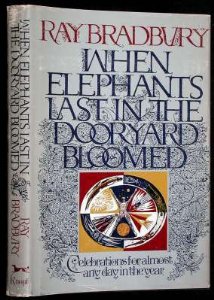
Ray Bradbury’s When Elephants Last in the Doorway Bloomed is a collection of poems in which he writes wistfully about childhood and about inventors, scientist, and explorers, often using religious imagery.

Posted in Photography/Photographer

Ice Age Spring

This slideshow requires JavaScript.

This Ice Age Spring was photographed in Wisconsin.

– Priscilla Galasso

© 2013, photographs including the portrait below, Priscilla Galasso, All rights reserved

004PRISCILLA GALASSO ~ is a new contributor to Into the Bardo. She started her blog at scillagrace.com to mark the beginning of her fiftieth year. Born to summer and given a name that means ‘ancient’, her travel through seasons of time and landscape has inspired her to create visual and verbal souvenirs of her journey.

“My courage is in the affirmation of my part in co-creation”, she wrote in her first published poem, composed on her thirtieth birthday and submitted alongside her seven-year-old daughter’s poem to Cricket magazine. Her spiritual evolution began in an Episcopal environment and changed in pivotal moments: as a teenager, her 20-year old sister died next to her in a car crash and, decades later, Priscilla’s husband and the father of her four children died of coronary artery disease and diabetes in his sleep at the age of 47.  Awakening to mindfulness and reconsidering established thought patterns continues to be an important part of her life work.

Currently living in Wisconsin, she considers herself a lifelong learner and educator. She gives private voice lessons, is employed by two different museums and runs a business (Scholar & Poet Books, via eBay and ABE Books) with her partner, Steve.

Posted in Photography/Photographer, Poems/Poetry, Rumi, Spiritual Practice, Terri Stewart

Doors

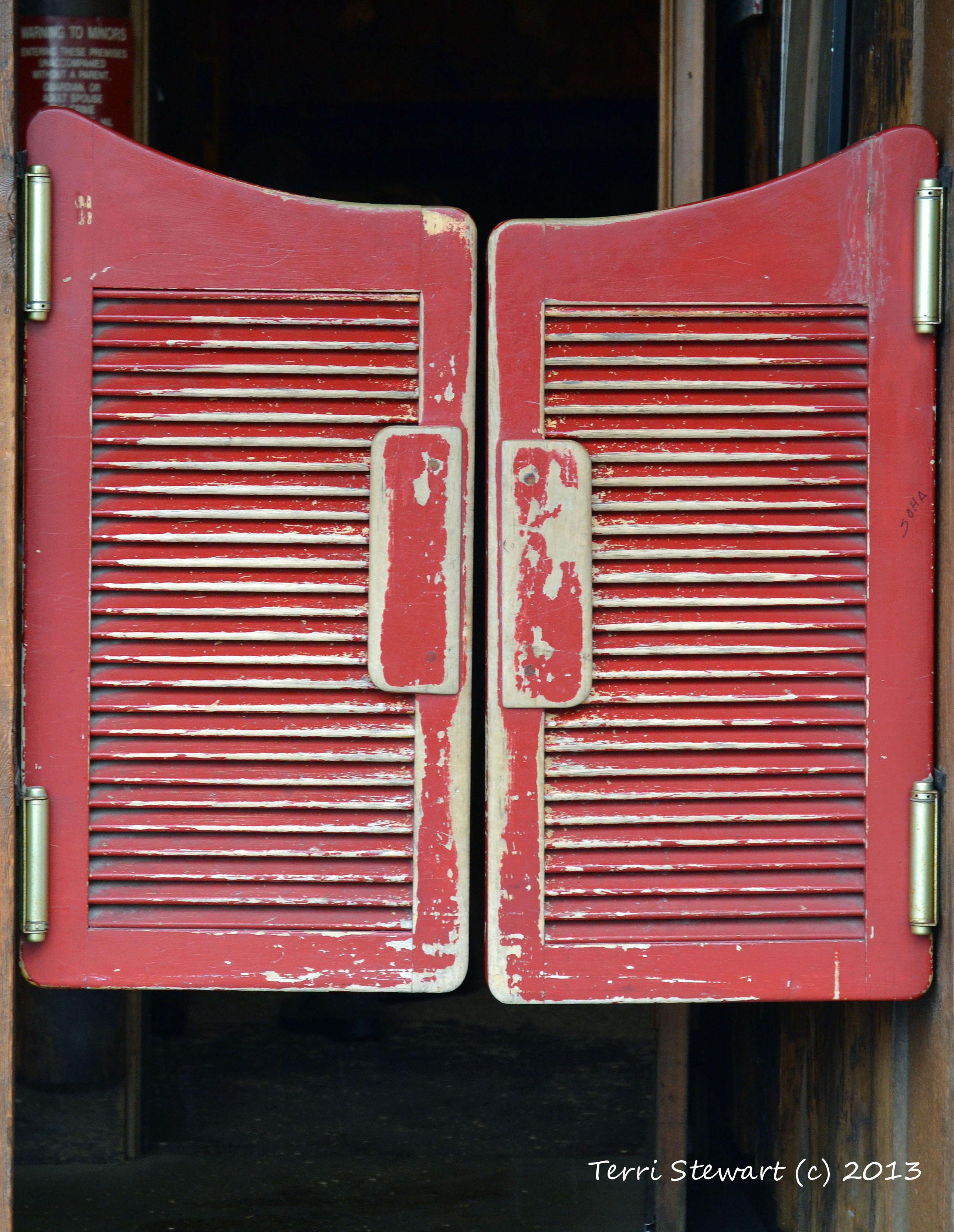
bar_doorsConsider doors. We enter or exit through doors. Sometimes we just look at doors. They lead towards something or away from something.

“As long as you are performing prayer, you are knocking on Allah’s door. And whoever knocks on Allah’s door [constantly], He will open it.” -Ibn Al-Qayyim Al-Jawzi

“The doors we open and close each day decide the lives we live.” -Flora Whittemore

“A man who does not plan long ahead will find trouble right at his door” -Confucius

“Ask, and it will be given to you; seek, and you will find; knock, and it will be opened to you.” Matthew 7:7, Christian Scripture

“In oneself lies the whole world and if you know how to look and learn, the door is there and the key is in your hand. Nobody on earth can give you either the key or the door to open, except yourself.” -Jiddu Krishnamurti

“Knowledge of what is does not open the door directly to what should be.” -Albert Einstein

Lots of thought has been given to doors! Now it is our turn to consider doors. I would like to offer up a lectio divina experience. Lectio divina is an ancient way of “being present
to a text in a heart-centered way.” (Christine Valters Paintner) It is a way of meditating or praying. When we use the lectio divina technique, we see the words we read as living, breathing essence. It becomes an encounter with the sacred. There are four primary movements of lectio (and sorry if this is repeat news!)…

Read (lectio): Read and listen for a word or phrase that creates energy within your body

Reflect (meditatio): Read again and savor the words, delve into them, use your senses to experience them

Respond (oratio): Read again and listen for the invitation coming from the text

Rest (contemplatio): Rest, be still.

Go slowly and be present. I offer you a poem from Rumi.

Lectio:

The bfirehouse_doorreeze at dawn has secrets to tell you.
Don’t go back to sleep.

You must ask for what you really want.
Don’t go back to sleep.

People are going back and forth across the doorsill
where the two worlds touch.

The door is round and open.
Don’t go back to sleep.

From Essential Rumi
by Coleman Barks

Meditatio:

weird_doorThe breeze at dawn has secrets to tell you.
Don’t go back to sleep.

You must ask for what you really want.
Don’t go back to sleep.

People are going back and forth across the doorsill
where the two worlds touch.

The door is round and open.
Don’t go back to sleep.


Oratio:

lots_of_doorsThe breeze at dawn has secrets to tell you.
Don’t go back to sleep.

You must ask for what you really want.
Don’t go back to sleep.

People are going back and forth across the doorsill
where the two worlds touch.

The door is round and open.
Don’t go back to sleep.

Rest:

forboding_door

Shalom and Amen.

~Chaplain Terri

© 2013, post and photos, Terri Stewart, all rights reserved

Terri StewartTERRI STEWART is Into the Bardo’s  Sunday Chaplain, Senior Content Editor, and Site Co-administrator. She comes from an eclectic background and considers herself to be grounded in contemplation and justice. She is the Director and Founder of the Youth Chaplaincy Coalition that serves youth affected by the justice system. As a recent graduate of Seattle University’s School of Theology and Ministry, she earned her Master’s of Divinity and a Post-Master’s Certificate in Spiritual Direction with honors and is a rare United Methodist student in the Jesuit Honor Society, Alpha Sigma Nu. She is a contributing author to the Abingdon Worship Annual.

Her online presence is “Cloaked Monk.” This speaks to her grounding in contemplative arts (photography, mandala, poetry) and the need to live it out in the world. The cloak is the disguise of normalcy as she advocates for justice and peace. You can find her at www.cloakedmonk.com, www.twitter.com/cloakedmonkwww.flickr.com/cloakedmonk and  www.facebook.com/cloakedmonk.  To reach her for conversation, send a note to cloakedmonk@outlook.com.
Posted in Naomi Baltuck, Story Telling, Photo Story

Black and White (or Not)

A black and white photo is light and dark, its sharp contrasts easy on the eye.

Perhaps black and white is easier on the mind as well.  No difficult decisions, no wavering, no questioning right from wrong.  But real life is in color, with many subtle hues and shades.  Condemned prisoners who crossed over The Bridge of Sighs in Venice got one last peek at their beloved city.  Did they see their world in terms of black and white, or in color?  Perhaps one’s perception depended upon whether one was looking in or out, whether one was coming or going.

It is easy to cast judgements, until you have walked a mile in another person’s shoes, looked into her eyes, heard his story.  The world is not black and white.  It is the color of flesh and blood, with many gray areas.  What is the color of a human tear?

All images and words by Naomi Baltuck, copyright 2012

For another facet of this topic,  check out this link by Carbon Leaf, The War Was in Color, and my post Remembering Uncle Lewis.

– Naomi Baltuck

NaomiPHOTO1-300ppiNAOMI BALTUCK ~ is a Contributing Editor and Resident Storyteller here at Bardo. She is a world-traveler and an award-winning writer, photographer, and story-teller whose works of fiction and nonfiction are available through Amazon HERE. Naomi presents her wonderful photo-stories – always interesting and rich with meaning and humor – at Writing Between the Lines, Life from the Writer’s POV. She also conducts workshops such as Peace Porridge (multicultural stories to promote cooperation, goodwill, and peaceful coexistence), Whispers in the Graveyard (a spellbinding array of haunting and mysterious stories), Tandem Tales, Traveling Light Around the World, and others. For more on her programs visit Naomi Baltuck.com

Posted in Bardo News

Introducing …

It is my pleasure to provide a formal introduction to two of the newer members of Bardo’s core creative team:

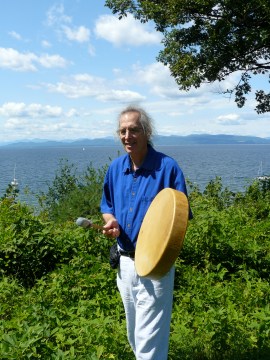
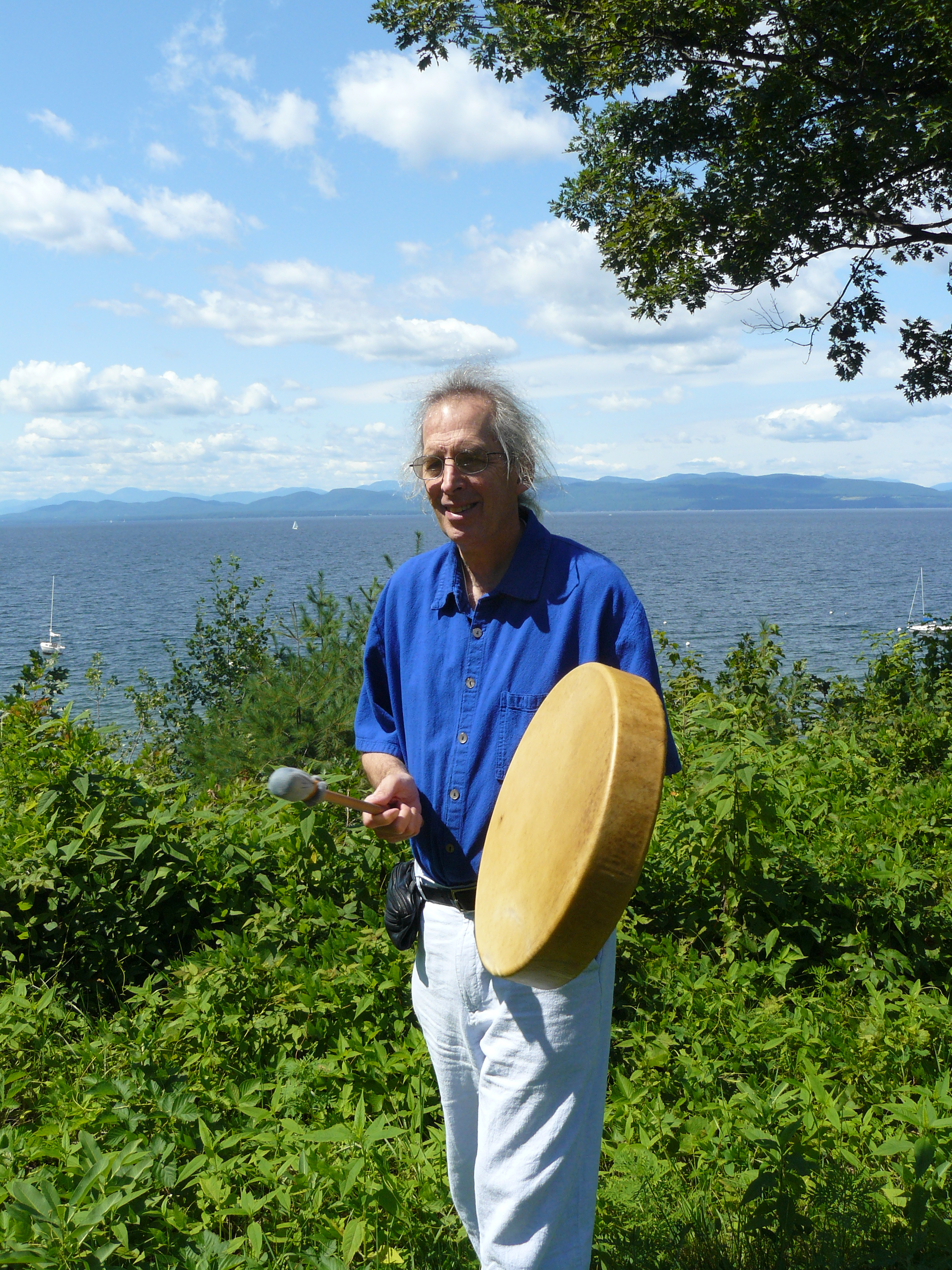
michael drumMICHAEL WATSON, M.A., Ph.D., LCMHC (Dreaming the World) ~ is a practitioner of the Shamanic arts, a psychotherapist, educator and artist of Native American and European descent. Michael tells us that in childhood he had polio, an event that taught him much about challenge, struggle, isolation, and healing. He shares his personal, professional, and shamanic experiences and insights at Dreaming the World, as well as here at Into the Bardo.

Michael lives and works in Burlington, Vermont, which is nestled snugly between Lake Champlain and the Green Mountains. (He says that most days he can see the Adirondack Mountains across the lake.) He teaches in undergraduate and graduate programs at Burlington College, where he was once Dean of Students. Recently he returned home from teaching in India and Hong Kong.

Michael is mixed blood*, which makes his genealogy “confounding at best.” His father’s father was Native American from the Black Hills (most probably Lakota). His mother was Native American from Indiana, possibly Shawnee. Periodically someone on the distaff side of the family “discovers” their grandmother’s actual tribal affiliation, but “those discoveries tend to morph.”

In attempting to discover family roots, Michael says there are many genealogical stone walls, as befits a family in hiding. His mother’s family identified as hailing from the British Isles, although there were rumors of more recent Cherokee ancestry. “My father said our family is Native on both sides. Mom was from Texas, and both families very aware of the racism Natives face in their respective states. Anyway, my family did not speak much about being Indian and we don’t have tribal affiliation. Identity politics are strong in the United States and being mixed blood teaches one much about living in between easily defined categories.”

9709-008In 2002, Michael’s teachers told him he must become more visible and teach. That was not a simple directive to fulfill. He had always been taught that one never calls oneself a shaman or medicine person: only the elders and teachers, and the people one aids, can speak to who is, or is not, a shaman. Traditionally, when asked about being a shaman the appropriate response is, ” My teachers, and my teachers’ teachers, were shamans”. In many native communities, persons who claim to be shamans are highly suspect. “I was taught to always run the other direction when confronted with someone claiming to be a shaman. Yet, the world has changed and I do not live in traditional culture. The time is near when the ancient teachings and healing practices of First Nations people will find their rightful place in the world. My teachers believe it is now important for visionary healers to stand true and straight, to acknowledge our training, and to share the teachings and practices we know.”

in the United States “mixed blood” usually indicates a mix of European and Native American, not Hispanic or Black.

webheadshotKAREN FAYETH (Oh Fair New Mexico)~ Writer, blogger, photographer, visual artist: these are all words that can be used to describe Karen Fayeth and her work. A native of New Mexico, Karen moved to the San Francisco Bay Area in 1997 and was immediately inspired and engaged by the vibrant arts community, which is so woven into the local way of life. Karen blends the influences of the cultures where she grew up, including Hispanic, Native American, and the deep rural soul of the American West along with a newer city-sense acquired in places like San Francisco, Brooklyn, Boston, London, Singapore, and San Jose, Costa Rica.

A storyteller at heart, Karen’s main medium is words and writing, but she recognizes that words don’t always tell the tale. Karen expanded her studies to the visual arts including paint, clay, papier-mache and photography. She’s learned to craft stories using a combination of both words and images.

Karen’s been blogging at Oh Fair New Mexico since March of 2007. Her writing is featured in publications including New Mexico Magazine, Wild Violet Literary Magazine, and Foliate Oak. Her photography is regularly displayed as a part of an annual Localvision photography show and she’s received special note for her photographs of well-known baseball players. (She’s an avid baseball fan.) Karen’s won awards for her writing, photography, and crafts. When she is not spinning a tale or clicking her Canon, she works as a senior level executive for a science and research organization. She lives in the San Francisco Bay Area with her husband and her cat, and she can sometimes be found entertaining friends, family, and colleagues with her endearing sense of humor and her San Mateo County Fair blue-ribbon green chile chicken enchiladas. Yes! She even won an award for her cooking.

– Jamie Dedes

© 2013, photographs, Michael Watson and Karen Fayeth respectively, All rights reserved

Posted in Guest Writer, Poems/Poetry

Goulash

687px-2009-09-gulasch-pörkölt-paprikas-3

the work of Myra Schneider

A crucial ingredient is the right frame of mind
so abandon all ideas of getting on. Stop pedalling,
dismount, go indoors and give yourself masses of time.
Then begin by heating a pool of oil in a frying pan
and, Mrs. Beeton style, take a dozen onions
even though the space you’re working in is smaller
than the scullery in a Victorian mansion. Pull off
the papery wrappings and feel the shiny globes’ solidity
before you chop. Fry the segments in three batches.
Don’t fuss about weeping eyes, with a wooden spoon
ease the pieces as they turn translucent and gold.
When you’ve browned but not burnt the cubes of beef
marry meat and onions in a deep pan, bless the mixture
with stock, spoonfuls of paprika, tomato purée
and crushed garlic. Enjoy the Pompeian-red warmth.
Outside, the sun is reddening the pale afternoon
and you’ll watch as it sinks behind blurring roofs,
the raised arms of trees, the intrepid viaduct.
In the kitchen’s triumph of colour and light the meat
is softening and everything in the pot is seeping
into everything else. By now you’re thinking of love:
the merging which bodies long for, the merging
that’s more than body. While you’re stirring the stew
it dawns on you how much you need darkness.
It lives in the underskirts of thickets where sealed buds
coddle green, where butterflies folded in hibernation,
could be crumpled leaves. It lives in the sky that carries
a deep sense of blue and a thin boat of moon angled
as if it’s rocking. It lives in the silent larder and upstairs
in the airing cupboard where a padded heart pumps
heat, in the well of bed where humans lace together.
Time to savour all this as the simmering continues,
as you lay the table and place at its centre a small jug
in which you’ve put three tentative roses and sprigs
of rosemary. At last you will sit down with friends
and ladle the dark red goulash onto plates bearing
beds of snowhite rice. As you eat the talk will be bright
as the garnets round your neck, as those buried
with an Anglo-Saxon king in a ship at Sutton Hoo,
and the ring of words will carry far into the night.

– Myra Schneider

Circling The Core (Enitharmon Press 2008)

© 2009, poem, portrait (below), and book cover art (below), Myra Schneider, All rights reserved and presented here with the permission of the poet. Photo credit ~ Pot of Goulash by Ralf Rolestschek via Wikipedia under Creative Commons Attribution-NonCommercial-NonDiriviative 3.0 U.S.

IMG_0032-1circling core_22MYRA SCHNEIDER ~ is a poet, a poetry and writing tutor, and the author of Writing My Way Through Cancer and, with John Killick, Writing Your Self. Her poetry collections, Circling the Core and Multiply the Moon, were published by Enitharmon Press. She has eight published collections. Her most recent work What Women Want was published earlier this year by Second Light Publications.

Myra’s long poems have been featured in Long Poem Magazine and Domestic Cherry. She co-edited with Dilys Wood, Parents, an anthology of poems by 114 women about their own parents. She started out writing fiction for children and teens. We first discovered Myra through her much-loved poem about an experience with cancer, The Red Dresswhich she generously shared with readers here in our Perspectives on Cancer series in 2011.

Currently Myra lives in North London, but she grew up in Scotland and in other parts of England. She lives with her husband and they have one son. Myra tutors through Poetry School, London. Her schedule of poetry readings is HERE.

Posted in Creative Nonfiction, Essay, find yourself, General Interest, Guest Writer, Karen Fayeth, meditative

My Moment Of Zen

respiteIn a full to overflowing bathtub, I relax, soaking the ache out of legs and content to be surrounded by water. It’s not long before I slide down, legs crawling up the wall under the shower, head dipping below the surface. My right hand plugs my nose and my left hand covers my eyes like a sleep mask and water fills my ears.

I savor these few moments I have to just float in nothing.

The water amplifies noise but bends the sound waves into something more beautiful. Even the passing fire truck with its shrill siren and blaring horns sounds almost musical when passed through my warm, clear water. The rhythmic hum of the clothes dryer puts me in a trance and I enjoy this until my lungs ask politely and then not so politely if we can surface and take in some new, unused air.

I reluctantly rise up and gasp in a big breath and go under again. It’s just too delicious and quite addictive. This time I think about buying a snorkel so I can stay under the water and still breathe. I’ve considered buying a snorkel so I can stay under my bath water ever since I was a kid.

Even as a child I was drawn to the solace and quiet of being under water. One early evening as I was taking a bath and creating my own sensory isolation chamber, my mother walked in to check on me. As any protective mother of three children would do when presented with the sight of her youngest lying apparently lifeless in a bathtub full of water, she freaked out.

My mother yanked me from the water and shook me hard, shouting my name. I unplugged my nose and uncovered my eyes and said, “What?”

I got a well-deserved and thorough chewing out and was told in no uncertain terms that I was never to simply slide under the water and remain motionless. Ever.

When I later emerged from my bath and got dressed and ran a comb through my unruly long hair, I was confronted by my father who ripped into me for scaring my mother.

I always thought that was quite unfair. I didn’t set out to intentionally scare my mother. I simply wanted a moment, if even half a minute, where I didn’t exist in the world. Where everything was blocked out and time slowed down and sounds bent in pleasing ways.

My solution thereafter was to continue to dunk my head well below water and plug my nose with my right hand. With my left hand, I would raise it above the surface and wave it like the Queen on parade so that any passerby would know I was still conscious, just submerged.

This seemed a suitable solution for all. A nice compromise.

I’ve always wanted to visit one of those sensory isolation tanks. It sounds like a little slice of heaven to me. Floating in a tank with no light and hardly any sound and just the quiet to embrace me. Yes, I think I would love this very much.

The Good Man thinks I’m half a bubble off level to consider this. “I always figure while you are locked in there, the people outside will steal your stuff or do something weird,” he says.

This is how his mind works. This is not how my mind works.

A few years ago we visited a spa in Calistoga, California. The spas in Calistoga are known for their mud baths. You give them money and they allow you to slide your nekkid body into a warm tub of slightly sulphurous goo. The weight of the mud resists your body, you actually have to dig in there. Once settled, you are surrounded and suspended and oh my goodness I could have stayed in there for weeks.

The Good Man did not feel as kindly toward the mud. He said he was antsy the whole time he was in there and ready to vault from the tub. He couldn’t wait for it to be over. I never wanted it to stop.

Perhaps it’s something Freudian that I like to slip into warm suspended places and forget about things for a while. I choose to think it rather normal to want to seek out genuine moments of respite where the world and all its crazy spinning and shouting and clanking and cruelty goes away, for just a moment. For as long as it takes me to hold my breath.

Until I buy a snorkel.

– Karen Fayeth

© Karen Fayeth, copyright 2013, all rights reserved. Bathtub image found on Rodale.com and all rights remain with the website and photographer. Bio photograph by Claudia Akers.

webheadshotKAREN FAYETH ~ is one of our regular contributing writers. She is our new tech manager, site co-administrator along with Jamie and Terri, and fiction and creative nonfiction editor. She blogs at Oh Fair New Mexico. Born with the writer’s eye and the heart of a story-teller, Karen Fayeth’s work is colored by the Mexican, Native American, and Western influences of her roots in rural New Mexico complemented by a growing urban aesthetic. Karen now lives in the San Francisco Bay area. When she’s not spinning a tale, she works as a senior executive for science and technology research organization.

Karen has won awards for her writing, photography, and art. Recent publication credits include a series of three features in New Mexico magazine and an essay with the online magazine Wild Violet. Her latest short story will be published in the May edition of Foliate Oak. Karen’s photography is garnering considerable attention, her photo titled “Bromance” (featuring Aubry Huff and Pat Burrell) was featured on MLB Network’s Intentional Talk hosted by Chris Rose and Kevin Millar.

Posted in Buddhism, Michael Watson, Shamanism, Spiritual Practice

Spring, Ritual, and the Great Mystery

P1050397When I first began learning the ways of shamanism, more than thirty years ago, my Cherokee teacher used to speak to me about the similarities between Buddhism and Native American thinking. She was particularly fascinated by Tibetan Buddhism, and had traveled to Asia to meet with Tibetan teachers. I was intrigued, but not particularly interested in learning more. I was still trying to sort out my relationship to Native America. Adding Buddhism to the mix was quite simply beyond me.

Recently, I’ve been reading Bringing Zen Home, by Paula Kane Robinson Arai. The book is a marvelous piece of ethnographic writing examining the ways a group of Japanese women use domestic zen practices as healing tools. If one only read the early sections on ritual, the book would be a worthy purchase. Reading Arai’s words reminded me of my first teacher. I imagine she would love the book, especially the author’s focus on gratitude,  joy, kindness, and ritual as sources of connection to All That Is. She would also, I believe, deeply appreciate the discussion of Dogen, and his weaving together of form and formlessness.

This week Nature gave expression to the form/formlessness paradox. A few days ago there were buds on the trees, then in a single day, as if arising from nothing, innumerable umbrels of furled leaf and flower replaced them. The umbrels, in turn, transformed into flowers in full bloom, then immature seeds. Now the trees have largely leafed out; the entire process seemed to occur overnight, a green, fiery, big bang. Engaging Nature’s seasonal changes, we are reminded that the progression of the year is a ritual, encompassing and illuminating the patterns of Self as we unfurl, transform, and perhaps, seek rebirth. Our very lives enact, and reenact, the great patterns of the natural world.

I’ve also been reading Patrisia Gonzales’ Red Medicine: Traditional Indigenous Rites of Birthing and Healing. In this volume Gonzales reminds us that human birth is another expression of the paradox. We know how pregnancy happens, yet the miracle of personhood challenges any simple reductionism. In quite a few Native traditions reincarnation is a given. One just expects those who pass on to be reborn to the family line, often announcing their intent by appearing to their prospective mother in a dream. Life and death are doors through which we pass, nothing more than state changes. Yet we do not know, ultimately, where we come from or whither we go; that remains a Great Mystery, of which we are all, innately, a part.

In their respective books Arai and Gonzales discuss ritual as serving to connect women to the Great Mystery, and in so doing, offering the possibility of an expanded perspective and healing. Their ideas echo those offered me by teachers in Native traditions from both North and South America, although rather than the term, “ritual”, my teachers often utilized “ceremony”.  As a mature practitioner, I encourage those who come to me for healing to create meaningful rituals in their daily lives, to “practice.” I also strongly advocate for ceremony. Like ritual, ceremony seeks to make evident the sacred nature of our lives, to encourage gratitude, and to embody participants in the experience of self as cosmos. When rituals and cerem0ny work, we are transported into an awareness of being part of, and supported by, All That Is. Of the two, perhaps ceremony is more social, often engaging communities in support of those seeking healing.

Reading the work of these thoughtful authors has reminded me of  my first teacher’s wisdom, insight, and clarity. Looking back those many years, I now see her efforts to broaden my perception in a new, more favorable light. I am grateful for her kindness and teachings.

– Michael Watson

© 2013, essay and all photographs include the portrait below, Michael Watson, All rights reserved

michael drumMICHAEL WATSON M.A., Ph.D., LCMHC (Dreaming the World) ~ is a contributing editor to Into the Bardo, an essayist and a practitioner of the Shamanic arts, psychotherapist, educator and artist of Native American and European descent. He lives and works in Burlington, Vermont, where he teaches in undergraduate and graduate programs at Burlington College,. He was once Dean of Students there. Recently Michael has been teaching in India and Hong Kong. His experiences are documented on his blog. In childhood he had polio, an event that taught him much about challenge, struggle, isolation, and healing.

Posted in Creative Nonfiction, Jamie Dedes

For the Record: Remembering Mom

Mom and Me 1950, Brooklyn
Mom and Me
1950, Brooklyn

First publication: March 15, 2012, Connotation Press

I am the keeper of the dreams and the memories, the matrix where the generations converge, the record-book held between familial bookends. I am responsible for passing her life on to him that she may continue to live and that he may understand the consequences of history and culture as common people do.

He is the vindication of hope, his and ours. Her heart is the place were hope started. I can hardly think of my son without also thinking of my mother. They are the two people I love most in this world, though one of them – Mom – is no longer here. So for the record, I’m not sure why, but the occasional pancake breakfasts I had with her at Oscar’s of the Waldorf are on my mind. We had rituals we honored until life had its way with her.

______

We spent time savoring the hotel before going into Oscar’s for breakfast. The Waldorf was decorated with so much gold color that despite the muted lighting we felt we were having our moment in the sun. The jewel-colored furnishings and plush carpeting invited us to find a place to sit. We indulged in wide-eyed rounds of people watching. The businessmen seemed busy with self-importance. The women fussed with their manifest charm. We always stopped in the ladies’ room with its uniformed attendants continually present. They provided each guest with a freshly laundered terry-cloth towel and double-wrapped soaps, lavender-scented. Mom would tip the attendant a quarter and give me a quarter to tip her too.

Waldorf Lobby & Clock

An important ritual was a visit to the Waldorf Astoria Clock in the main lobby. I’ve read that it’s there still, all two tons of it. It’s a place where people find one another. I’ll meet you at the clock. Everyone knows that means the clock inside the Waldorf-Astoria at Park Avenue. It’s a towering thing, the actual clock sitting below a replica of the Lady Liberty, hope of immigrants, and above some bronze carvings and an octagonal base of marble and mahogany. Standing near the clock gave us the sense of a history of which we were not a part. It offered the illusion of privilege, the true secret spice that made the blueberry pancakes at Oscar’s so delicious. The famed maître d’hôtel, Oscar Tschirky, Oscar of the Waldorf, was no longer there. He died in 1950, the year I was born.

_______

My mom loved the Waldorf and Oscar’s blueberry pancakes as she did everything she felt characteristic of culture and good breeding. Being well bred meant you recognized quality in a person or product: women who wore pearls, men who always tipped their hats in greeting, and dresses with wide hems. Well-bred meant you didn’t swear or use colloquialisms.  It meant that if you were a boy you never cried. If you were a girl you didn’t display your intelligence. You didn’t run. You didn’t shout. You never went out without wearing hat, gloves, and girdle.  You sacrificed sports and ballet at nine. You didn’t risk turning any tidbit of excess fat into unseemly muscle.

Given my illegitimate birth – which occurred when my mother was thirty-six – combined with our roots, peasant not patrician, and our working-class status in this country, it seemed Mom was forever posturing. Nonetheless, over time I convinced myself that my mother was indeed a most cultivated person. Hence my birth had to be a virgin birth. That would explain my father’s absence, though there was no kindly Joseph to lend an aura of respectability. Mom advised me never to kiss a boy. Kissing could cause pregnancy. Well, yes, if one thing leads to another, but how would my mom know?

'50s Style Theater seating
’50s Style Theater seating

Mom’s interest in culture was insatiable. What she viewed as high culture most people would see as popular culture. We consumed it regularly and with religious fervor. We were fickle about our temples of worship. We opened our hearts at the Harbor Theater on Wednesday night, the RKO on Saturday afternoon, the Loew’s Alpine on Sunday, and for whatever reruns were on television at any given time. Because of movies we knew what to dream. They were our world; their luminaries our goddesses and gods. Audrey Hepburn, goddess of fashion. Cyd Charisse, goddess of posture. Katherine Hepburn, the great goddess of elocution. Grace Kelly inspired us to wear pearls, however faux our own five-and-dime pearls were. We did our best to meet the standard. Fred Astaire, Gene Kelly, and Jimmy Stewart were the gentlemen gods who shaped our expectations of men.

Our home back then was a one-bedroom Brooklyn apartment on the top floor of a six-story four-section complex that was built in the 1920s before the Wall Street Crash of 1929. Each of the four sections had an elevator, often in disrepair. Our apartment had French windows, which we found romantic and from which we could see the lights of the Verrazano-Narrows Bridge at night. The bridge didn’t open until 1964 and so it came to our landscape late. The requisite fire escape was outside the kitchen window, the only window without a radiator below its sill. It made a fine place to sit and read, write stories, and watch the cars below and the clouds above.

Our apartment, D61, was often blessed with rain in the form of leaks. Manna dropped from the ceiling in the guise of paint chips. If the people downstairs were too noisy, we tapped on the wood floor with the end of a broomstick. When there was no heat or hot water we consulted with the landlord’s wife, a common woman whose carelessly open closet displayed a frowzy collection of cotton house-dresses and limp lifeless sweaters. Mom always sniffed as we walked away, her sensibility offended. She said the woman’s hair was entirely too long and youthfully styled for someone of her station and maturity.

I remember my mother as so refined that when conflict arose between us she never fought or yelled or slammed a fist on the table. After a quiet well-barbed soliloquy, she went silent. If Mom’s anger was white-hot, she might not talk to me for years. The last episode of protracted silence extended from my fifteenth birthday until after my marriage. I no longer remember my original offense but a rebellious marriage to someone of a different ethnicity did nothing to serve the cause of reconciliation.

________

00000001There’s my mother, the little girl on your left. She’s about seven in that sepia photograph – circa 1921 – where she stands alongside her mother and three of her six siblings. My mother’s mother is pregnant and in her mid-twenties. There would be four more children that survived out of eighteen pregnancies. Mom told me my grandmother was married off at twelve to a seventeen-year-old boy-man with something of a temper. They immigrated to this United States of America after the first two children were born, one boy (thank God!) and one girl.

I often look at that photograph of my mother and wonder what she was thinking. What did she long for? As she made her way around the old neighborhood and tried to grow beets in a wooden box on the tenement fire escape, certainly she dreamed of dressing in the latest rage. When, through the aegis of the New York Times Fresh Air Fund, she spent a month each summer at the Muzzi’s farm upstate, no doubt she fantasized about living where the air is clear and the spaces packed tight with solitude and well-occupied with growing green things. She often talked with longing of the fresh vegetables at the Muzzi’s and of a large accommodating farm kitchen.

Mom once landed a part in an elementary-school version of Aïda and got to wear a costume and make-up. Her father had her remove the red lipstick that was provided by a teacher. As an adult, Mom collected lipsticks. You wouldn’t believe how many different shades of red there are and how poetic the names: autumn rose, wild ruby, crimson dew …

Over time, the hope of being valued by a good man, of living in a garden apartment with something more than an efficiency kitchen, moved slowly out of reach. As Mom grew older, less nubile, and more invisible, she became more artful with her war paint and her dress. She no longer wore what jewelry she had as decoration, but as amulets.

Her decline must have started when she was pregnant with me. Coincident with that, she was diagnosed with cancer for the first time. Through the years and bit by excruciating bit, she lost organs: a breast now, then her thyroid, then her womb, a kidney and finally the second breast and lymph glands. I’m just a shell, she’d tell me before warming her soul by the cold fire of a movie screen. She would fight cancer on-and-off all her life. When the end came, she died in my arms of breast and colon cancer. She was seventy-six.

Mom was a good numbers person, always able to find work as a full-charge bookkeeper. When I was twelve, a particularly exciting opportunity came her way. A prospective employer flew her – a Kelly Girl ®, forty-eight years old – to D.C. for a trial assignment and a job interview. When she arrived, she found the possibility of permanent employment required a full medical exam. The exam, along with work history and evaluation, would be submitted to the board for review. All those men would see it. They might even discuss her lack of womanly organs at the board meeting, complete with board notes for the record. Embarrassed, Mom declined the interview, packed her bag, and found her way to the airport. That afternoon, she arrived back in New York at Idlewild.

Subway Station
Our Subway Station

The next morning, without even a nod to the well-bred goddesses and gods of mortal fancy, Mom threw on some clothes and grabbed my hand. An hour or so later we were in Manhattan. We went straight into Oscar’s. We didn’t stop in the hotel lobby for people-watching or give quarters to the ladies’ room attendant. We didn’t pay our respects to the Waldorf Astoria Clock. We just ate. Rather, I should say I watched. Mom ate. She cut her pancakes at punitive angles and made doleful jabs at the pieces with her fork. When she finished her serving, she moved on to mine. By the time Mom gulped her third coffee, paid the bill, and left a grudging tip, even my child-mind understood that our visits to Oscar’s for blueberry pancakes would no longer be part of a wistful dream. Lacking sacred ritual, they would devolve into compulsion. This was the beginning of Mom eating much too much and of me not eating quite enough. While Mom endeavored to bury her dreams, I sought to scrap their bones bare and set them free.

© 2012, memoir/family photographs and portrait (below), Jamie Dedes, All rights reserved /the photographs which include my mother are a part of our family album but they’re also covered by copyright. Please be respectful. Waldorf Lobby & Clock courtesy of New York Architecture. Theater seating by Reddi  via Wikipedia under Creative Commons Attribution-Share Alike 3.0 unported license. Subway station by David Shakelton via Wikipedia under Creative Commons Attritution-Share Alike 3.0 unported license.

Photo on 2012-09-19 at 20.00JAMIE DEDES ~ My worldly tags are poet and writer.  I’m in my fifth year of blogging at The Poet by Day, the journey in poem, formerly titled Musing by Moonlight.  Through the gift of poetry (mine and that of others), I enter sacred space.

Posted in Contributing Writer, Perspectives on Cancer, Uncategorized

The Divining Trunk

The battered metal steamer trunk in my living room, a family heirloom, is crammed full of memories. Sturdy sides hold every photo album and scrapbook that was bestowed upon me in the weeks following my father’s death*.

This pile of memories is like a divination tool. I open the lid and dig in then something useful bubbles to the surface. Something I’ve never seen before or something familiar, but always just the thing I need to see.

One stapled stack of papers catches my eye today. It contains a perfect wood pulp circle of life: my paternal grandparent’s birth certificates, their marriage license, and both death certificates.

Their entire lives are covered off in five pages.

On my grandmother’s death certificate, it lists, “oat cell cancer to left lung” under the cause of death.

Oat cell. Doesn’t that sound very grandma-ish? Like warm oatmeal and a hug, however, a short Google search advises that oat cell is among the most aggressive forms of lung cancer.

Besides, my grandmother wasn’t very oatmeal and hugs anyway. She was something much more urbane.

Which makes her bigger than life in my memory.

When I was about seven, my paternal grandparents made a visit to New Mexico to attend my first communion. My dad grew up in South Bend, Indiana, which to this desert kid may as well have been on the other side of the universe.

In the mid-seventies, Albuquerque wasn’t a very evolved place. Our airport was a small building the color of dry grass next to a hot concrete tarmac shared with the air force base.

The waiting area had memorable soft leather chairs on sturdy wood frames. I’d sink into the smell of leather and through large picture windows watch the planes fly in over the Sandia Mountains.

Passengers would disembark down sturdy metal stairs, eyes blinking in the bright desert sun.

That day I stood there, clutching at my mom, both scared and excited to meet my dad’s parents.

“There they are,” my mom said.

“Where?” I asked, perking up.

“Look, the woman in the coat.”

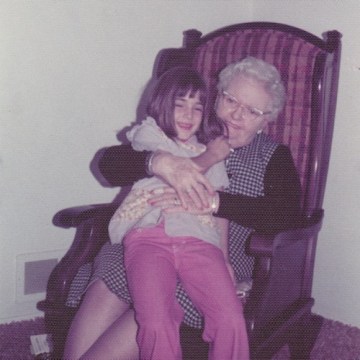
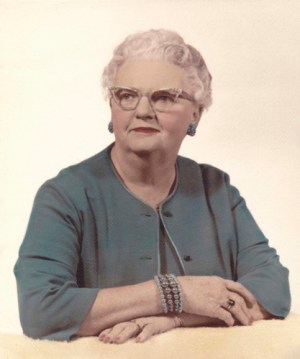
I looked. Making her elegant way off the plane was my white-haired grandmother. She wore a dress, pearls, stockings and heels. On top of it all she wore a fur-lined overcoat.

No one wore fur, much less an overcoat, in New Mexico.

She carried herself like a movie star, the regal matriarch of my father’s family. Her lipstick was flawless, her porcelain skin showing nary a wrinkle.
Behind her tottered my grandfather, a tall man with a lined face wearing a good suit and a hat. Always a hat.

These people were like something out of a novel. They were big city. Granted, South Bend is no great shakes, but they flew in from Chicago and looked it.

To me they seemed worldly, intelligent, and jaunty in that “Great Gatsby” kind of way.

My Grandmother smelled of perfume and powder and my Grandfather of cigarettes and hair oil. I was in awe. My mother was visibly intimidated by them both so I followed suit.

My 1970’s fashionable bell-bottom jeans and ratty t-shirt now felt tacky and under-dressed, as elegance had just hit our dry, desert wilderness.

Over the course of the visit, I tried desperately to reconcile myself to these people; my family. I clung to my mother, a shy doe-eyed girl from Oregon who in later years would confide to me just how much her in-laws scared the bejeezus out of her. I understood why.

At breakfast one morning, Grandmother sat chain-smoking, leaving perfect lipstick rings on the filter while Grandfather sat quietly, acquiescing to her, always. Something my dad had said made Grandmother mad, and she spoke harshly, her Irish temper flaring.

She shouted down my father, something no one I knew had ever done. I fled from the room, scared out of my gourd.

No one talked back to my father and got away with it. I think that terrified me more than the shouting.

I’d managed to bond with my gentle, comedic Grandfather and did my best to studiously behave in front of my Grandmother, lest she turn her overpowering temper on me.

Several days into the visit, while having an early evening happy hour, my mom cracked open a can of smoked oysters and Grandmother clapped her hands with glee, as this was a favorite treat. She prodded me to try one. It looked like a globby, gray pencil eraser doing an oily shimmy on a cracker.

Wanting desperately to somehow connect with this elegant woman, I took the offering like receiving communion, and chewed. It was tasty and I smiled. Grandmother was pleased, and handed me another, which I quickly ate. She wrapped an arm around me and pulled me close to her warm, fleshy side.

I’d done good.

We were worlds apart, and yet, our mutual love of good food held the power to close the gap.

In the years that followed, I wouldn’t be able to explore any more potential common ground. South Bend and Albuquerque were just too far apart, and it was five years later that my grandmother died. It was the only time I ever saw my father cry, and at age twelve, my first experience with cancer.

I wish I’d known my grandmother more. I wish I could find more ways to say, “oh, I’m just like her” but I can’t.

She was like a shooting star, in my mind a brief bit of glorious celebrity, stolen away far too quickly by the oat cells.

*My father succumbed to complications from pulmonary fibrosis

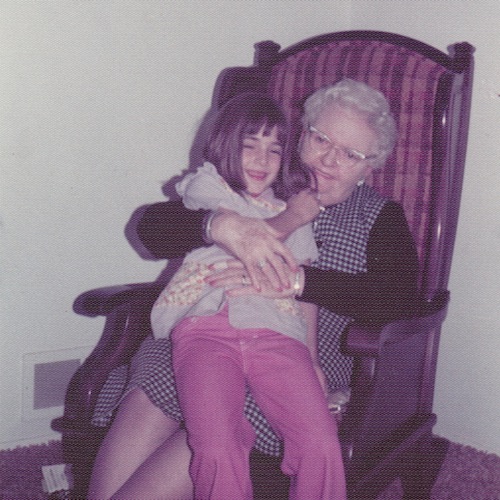
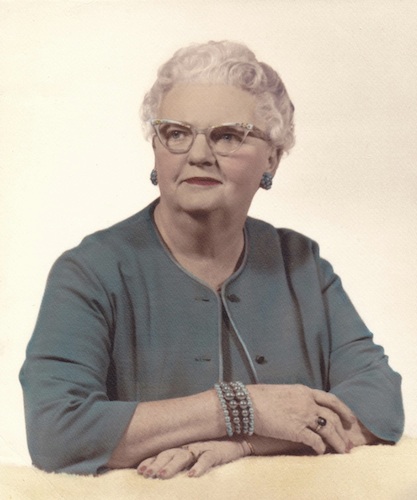
© Karen Fayeth, copyright 2011, all rights reserved. The family photos of the author and her grandmother are covered under copyright. Please be respectful.

webheadshotKAREN FAYETH ~ is one of our regular contributing writers. She is our new tech manager, site co-administrator along with Jamie and Terri, and fiction and creative nonfiction editor. She blogs at Oh Fair New Mexico. Born with the writer’s eye and the heart of a story-teller, Karen Fayeth’s work is colored by the Mexican, Native American, and Western influences of her roots in rural New Mexico complemented by a growing urban aesthetic. Karen now lives in the San Francisco Bay area. When she’s not spinning a tale, she works as a senior executive for science and technology research organization.

Karen has won awards for her writing, photography, and art. Recent publication credits include a series of three features in New Mexico magazine and an essay with the online magazine Wild Violet.  Her latest short story will be published in the May edition of Foliate Oak. Karen’s photography is garnering considerable attention, her photo titled “Bromance” (featuring Aubry Huff and Pat Burrell) was featured on MLB Network’s Intentional Talk hosted by Chris Rose and Kevin Millar.


Posted in Spiritual Practice, story, Terri Stewart

Enter the Story

St. Ignatius of Loyola, Image from WikiMedia Commons

One of the spiritual exercises that St. Ignatius of Loyola recommended was entering the story of scripture using your imagination. Using all your senses, imagine yourself in the story. Today, I am offering this exercise to you.

Below is a story that appeals to me from the Gospel of John. You do not have to be Christian to appreciate the point of this story, I believe. But if you would rather gather another story and do this exercise, I would encourage you to do that!

Sit relaxed, place your feet flat on the ground and read the story. Then close your eyes and reconstruct the scene in your  imagination. What is going on with the men and women in the scene? What do the characters look like? How do the characters react to each other? What are the people saying to one another? What emotions fill their words? As you enter into the scene, sometimes there is the desire to be there. You could place yourself in the scene as one of the characters in the story or as someone brand new.

Early in the morning Jesus came again to the temple. All the people came to him and he sat down and began to teach them. The scribes and the Pharisees brought a woman who had been caught in adultery; and making her stand before all of them, they said to him, “Teacher, this woman was caught in the very act of committing adultery. Now in the law Moses commanded us to stone such women. Now what do you say?” They said this to test him, so that they might have some charge to bring against him. Jesus bent down and wrote with his finger on the ground. When they kept on questioning him, he straightened up and said to them, “Let anyone among you who is without sin be the first to throw a stone at her.” And once again he bent down and wrote on the ground. When they heard it, they went away, one by one, beginning with the elders; and Jesus was left alone with the woman standing before him. Jesus straightened up and said to her, “Woman, where are they? Has no one condemned you?”  She said, “No one, sir.” And Jesus said, “Neither do I condemn you. Go your way, and from now on do not sin again.”

What do you smell? See? Can you feel anything? Can you imagine writing in the dirt? What would you write? Are there smells? Can you hear anything? Is your intuitive sense telling you anything? Where are you in the story? Who are you in the story? What is your story?

Shalom and Amen.

Chaplain Terri

© 2013, post and video, Terri Stewart, All rights reserved

Terri StewartTERRI STEWART is Into the Bardo’s  Sunday Chaplain, Senior Content Editor, and Site Co-administrator. She comes from an eclectic background and considers herself to be grounded in contemplation and justice. She is the Director and Founder of the Youth Chaplaincy Coalition that serves youth affected by the justice system. As a recent graduate of Seattle University’s School of Theology and Ministry, she earned her Master’s of Divinity and a Post-Master’s Certificate in Spiritual Direction with honors and is a rare United Methodist student in the Jesuit Honor Society, Alpha Sigma Nu. She is a contributing author to the Abingdon Worship Annual.

Her online presence is “Cloaked Monk.” This speaks to her grounding in contemplative arts (photography, mandala, poetry) and the need to live it out in the world. The cloak is the disguise of normalcy as she advocates for justice and peace. You can find her at www.cloakedmonk.com, www.twitter.com/cloakedmonk,  and  www.facebook.com/cloakedmonk.  To reach her for conversation, send a note to cloakedmonk@outlook.com.